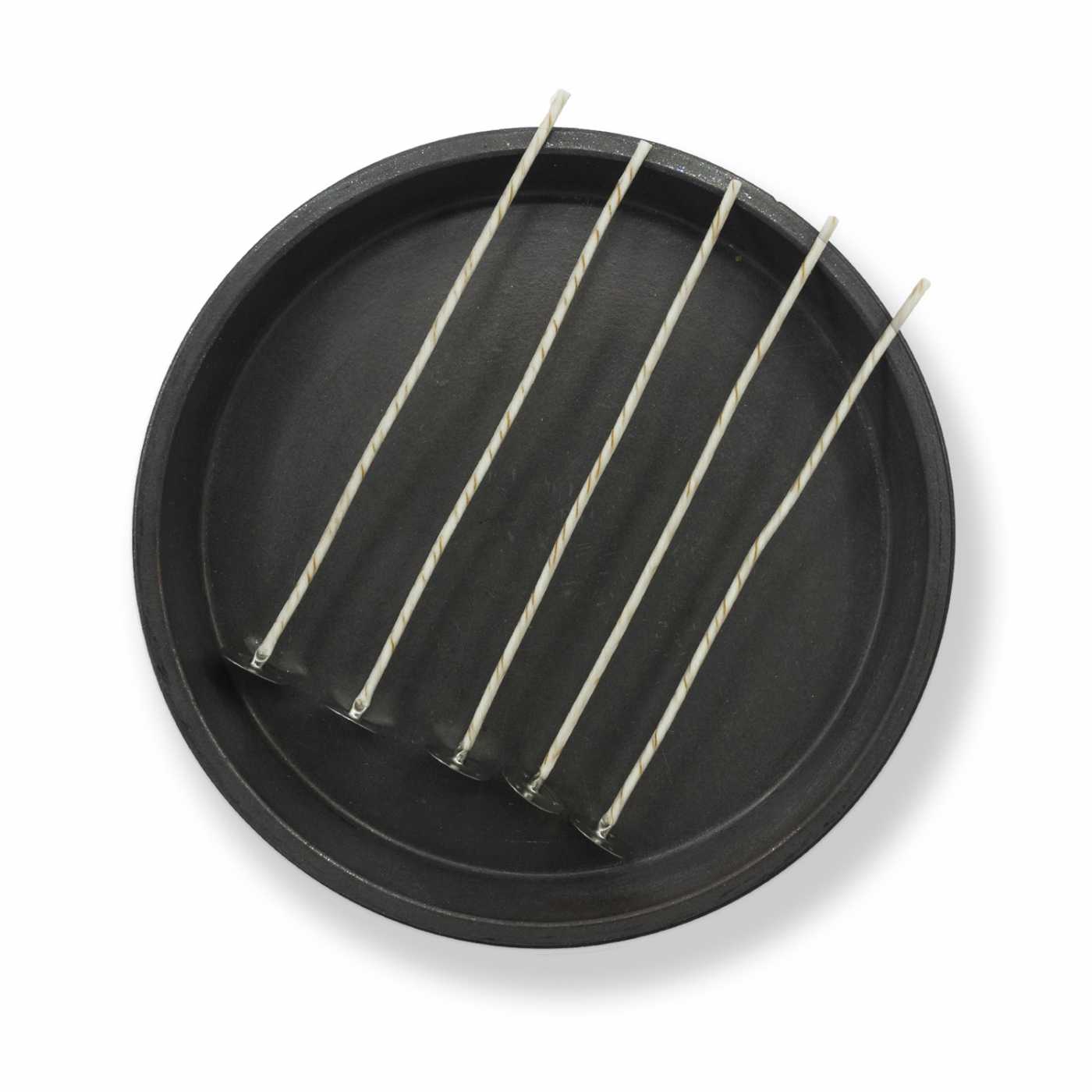
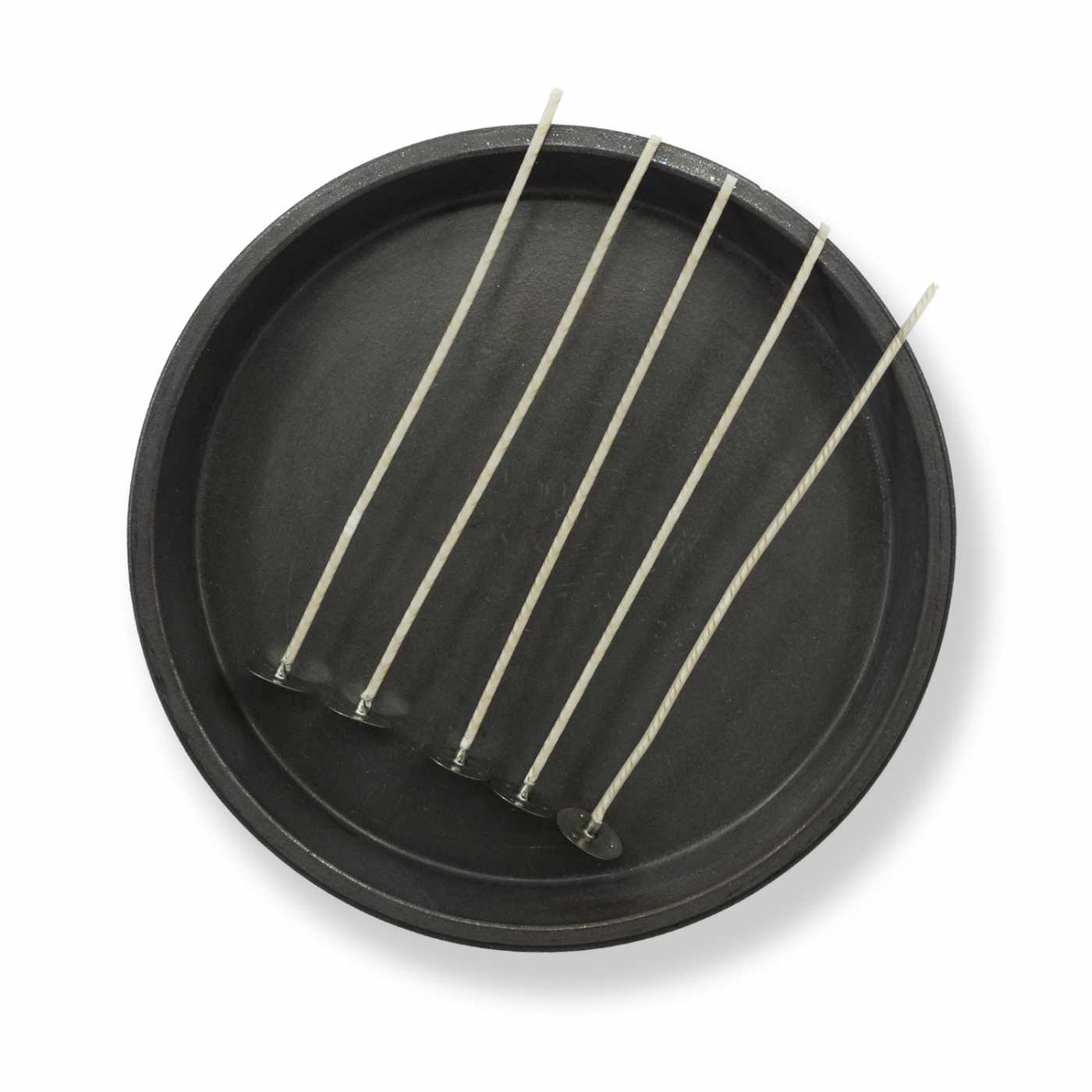
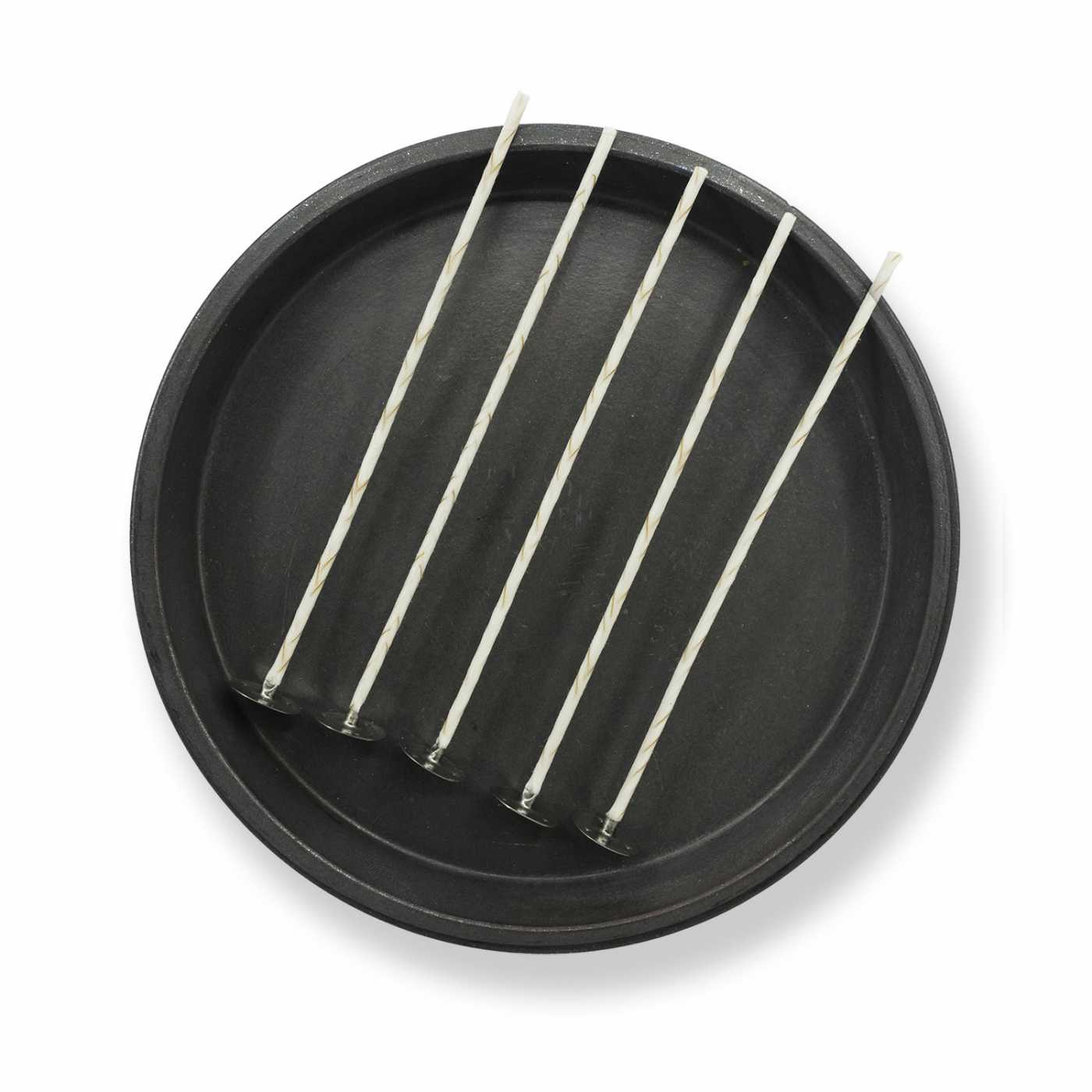
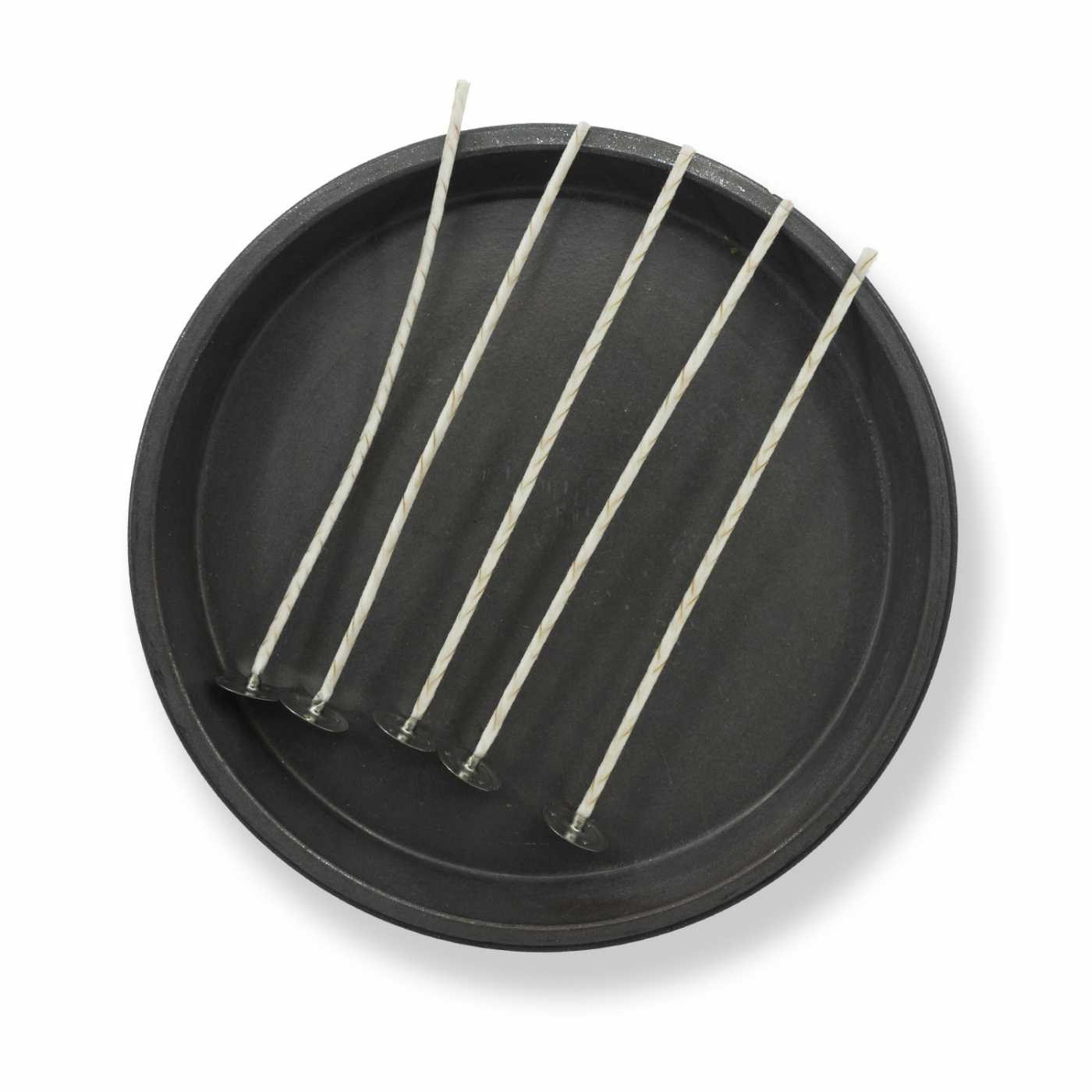
Wooden wick, .04 crackling, dual, 6.4 mm – complete with stand, 100 pcs
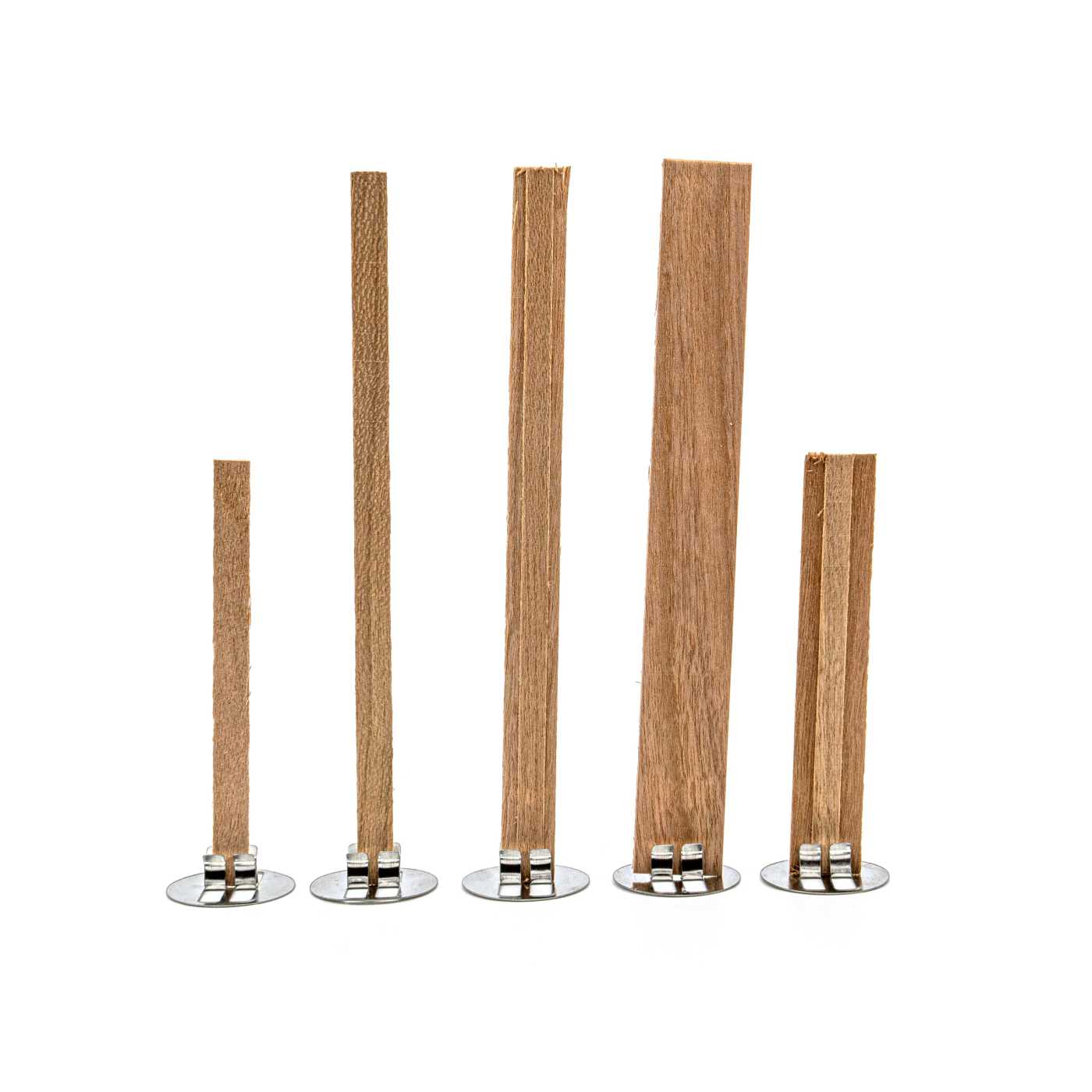
Wooden wick, .04 crackling, dual, 6.4 mm gives a container candle a wide, calm flame and a soft crackling reminiscent of a fireplace. This is a flat wick from the Crackling Dual series: two thin wooden slats joined into a single wick that produce a sound during burning that a cotton wick cannot. The pack contains 100 pieces, each with a metal stand.
The designation .04 refers to the slat thickness as defined by the manufacturer; a higher number means a thicker slat. This is the thinner variant, which in practice suits smaller and medium-sized containers. The wicks are made in the USA from certified wood; the manufacturer describes them as natural, allergen-free, and biodegradable.
Key features
- Crackling during burning – the dual construction of two slats causes the flame to crackle gently. The effect is most noticeable in a quiet environment and is the main reason this wick type is chosen.
- Wide and low flame – the flat wick produces a broader, tongue-shaped flame that heats the wax surface more evenly across its width. This helps achieve a full melt pool and reduces tunnelling in the container.
- Calm burn – a wooden wick burns more slowly and with less flickering than a cotton wick of the same width. Suitable for candles where fragrance and visual effect are meant to take precedence over flame intensity.
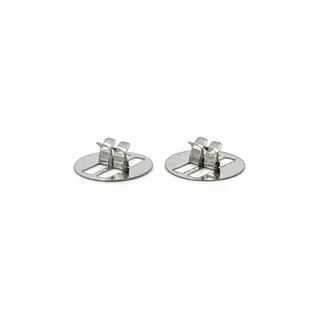
- Metal stand included – each wick comes with its own metal base with a circular foot that holds it upright on the bottom of the container while pouring and as the wax sets. The same stand type is used for straight, dual, and cross wooden wicks.
How to work with the wick
First slide the wick into the slot of the metal stand so that it holds firmly. Then adhere the stand to the bottom of the container using a wick sticker, double-sided tape suitable for candles, or a drop of hot wax. The container must be clean and dry before adhering, otherwise the base will come loose when warm wax is poured.
Wax is poured at the standard pouring temperature for the given wax. Unlike a cotton wick, there is no need to keep the wooden wick taut or centred during pouring. Once the wax has fully set, trim the wick to the final height above the wax surface.
A wooden wick must be trimmed considerably shorter than a cotton wick, leaving it just barely above the wax surface. A wooden wick that is too long burns with a tall flame, smokes, and will extinguish after a short while because the molten wax cannot reach its tip.
Before the first light, it is a good idea to let the candle cure for several days so that the wax and fragrance blend settle. The first burn should last long enough for the entire top layer of wax to melt right to the edge of the container. This prevents tunnelling during subsequent use.
Suitable for candles such as
- Candles in glass containers and jars – the primary application. A flat wick with a stand is designed for container candles, not freestanding ones.
- Soy and other plant-based waxes – natural waxes with a lower melting point pair well with the thinner .04 slat. The specific combination should always be tested.
- Coconut-soy and blended waxes – soft waxes with good scent throw, with which the flat wick produces a clean melt pool.
- Scented candles with a higher fragrance oil load – the calm, wide flame promotes fragrance release from the melt pool. At high fragrance oil concentrations, however, a thicker slat should also be considered.
Good to know
Wooden wicks are more sensitive to correct sizing than cotton wicks. The result depends on the container diameter, wax type, fragrance oil quantity and type, and any added dyes. For this reason, every new formulation is tested on a sample candle — ideally with two or three wick thicknesses side by side — before production begins.
The .04 slat is among the thinner options. If the flame shrinks after the first few minutes, the wick drowns in the molten wax, or the candle extinguishes on its own, the wick is too thin for that particular wax and container combination and a thicker slat should be used. If it burns tall, produces soot, and the glass overheats, trim it or use a thinner wick or smaller container.
The wick can be trimmed before use with scissors or wick trimmers to the container height; the wick length is listed in the specifications. The wick is intended for single use in a candle. The metal stand can be removed from the container after the candle has burned down, allowing the container to be reused.
Frequently asked questions
Why does a wooden wick crackle?
The crackling comes from the dual construction of two thin wooden slats that produce soft crackling sounds during burning, similar to a fireplace. The crackling is most noticeable with a correctly trimmed wick and a fully melted top wax layer. A wick that is too long or too short crackles less, so it is worth fine-tuning the length on a test candle.
How short should a wooden wick be trimmed?
A wooden wick is trimmed just above the wax surface — considerably shorter than a cotton wick. A longer wick burns with a tall, smoking flame and will extinguish after a short time because the molten wax cannot reach its tip. It should be trimmed before the first light and before each subsequent burn to remove the charred end.
Why does a wooden wick go out?
The most common causes are a wick that is too thin for the given wax and container, a wick that is too long, or a fragrance oil load that is too high. The .04 slat is the thinner variant; if the flame weakens and the wick drowns in the wax, a thicker slat will help. If it burns tall and smokes, the wick needs to be trimmed. The decision should always be based on a test candle, not on a sizing chart.
Is the .04 wooden wick suitable for soy wax?
Yes, the thinner .04 slat is commonly used with soy and other plant-based waxes, especially in smaller and medium-sized containers. Soy wax has a lower melting point and a softer melt, which suits a flat wick. The specific combination of wax, fragrance oil, and container diameter should always be tested, as performance varies with the formulation.
How is the metal stand fixed to the bottom of the container?
The stand is adhered to the clean, dry bottom of the container using a wick sticker, double-sided tape suitable for candles, or a drop of hot wax. The wick is inserted into the stand slot before adhering so that it is easy to handle. A firmly attached stand holds the wick upright in the centre of the container and can be removed once the candle has burned down.
What is the difference between a wooden wick and a cotton wick?
A wooden wick burns with a calmer, wider, and lower flame, produces a crackling sound, and is trimmed much shorter than a cotton wick. A cotton wick is more forgiving with different waxes and it is easier to find the right size. A wooden wick requires more precise matching with the wax and container, but the reward is the characteristic appearance and sound of the candle.




 100× Wooden wick, .04 crackling, double, 6.4 mmDrevený knôt, .04 praskajúci, zdvojený, 6,4 mm ZASOBA