Beeswax Soap smells of what it is made from: a gentle scent of beeswax and oils. What you smell on your skin is therefore decided by your perfume or cream, not by the soap.
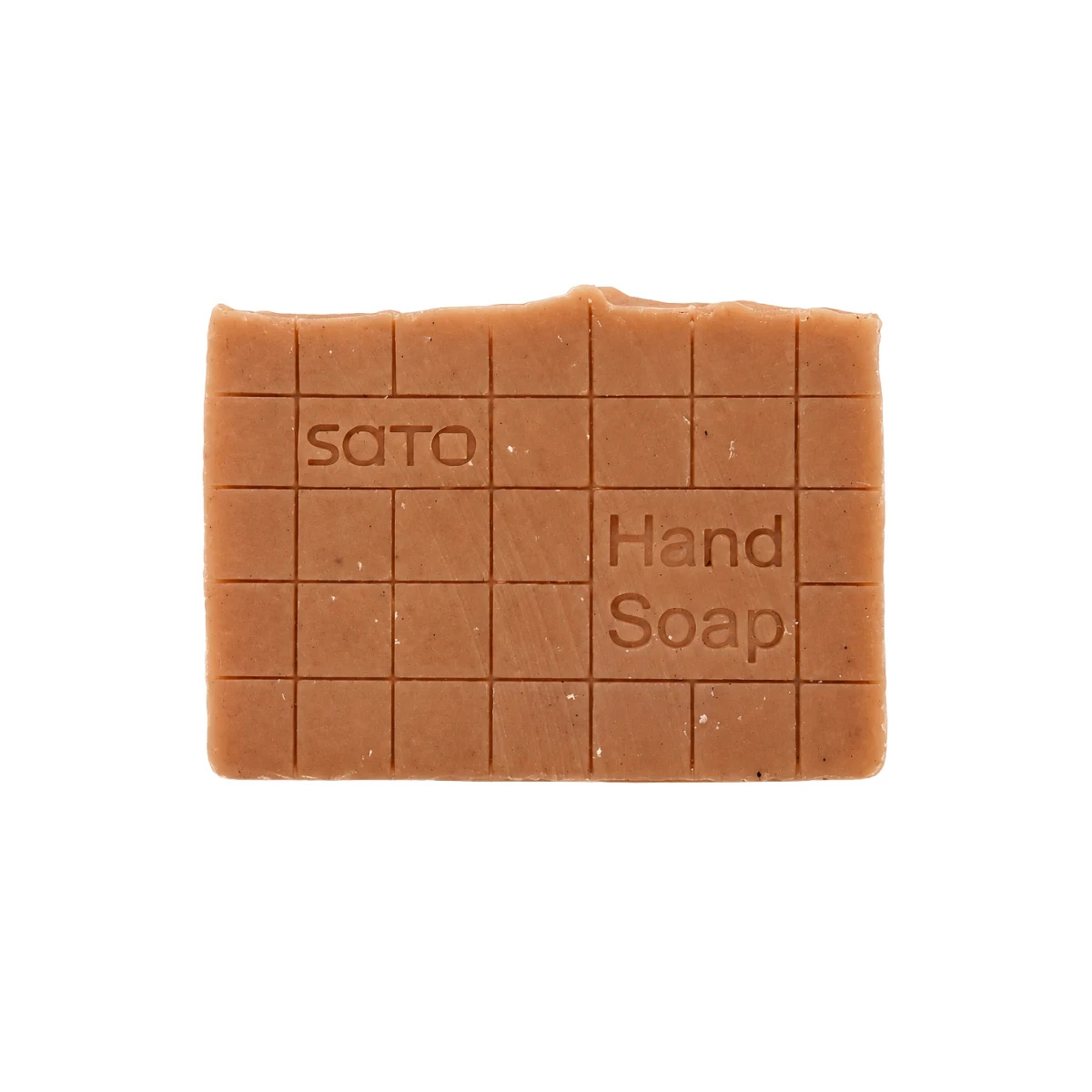
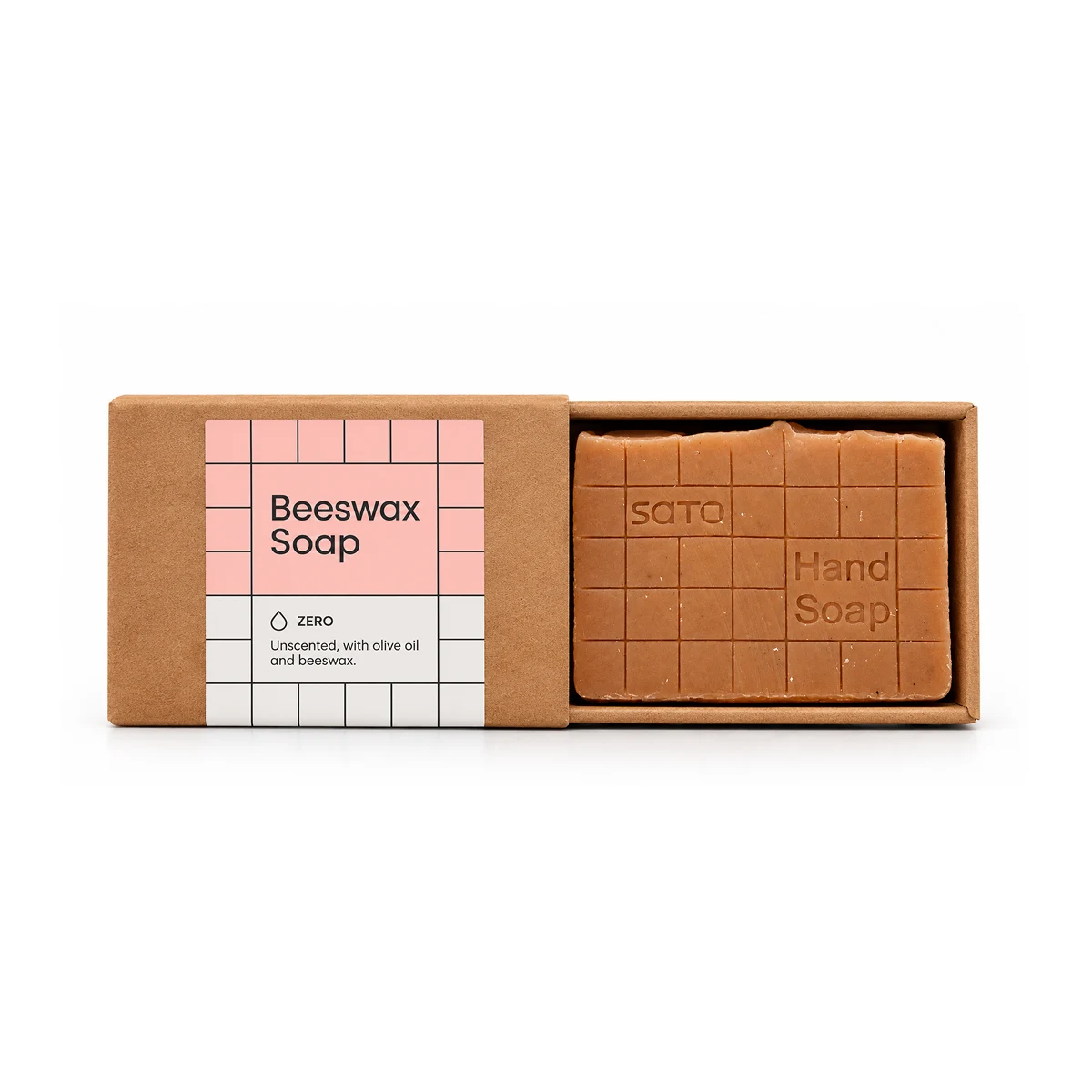
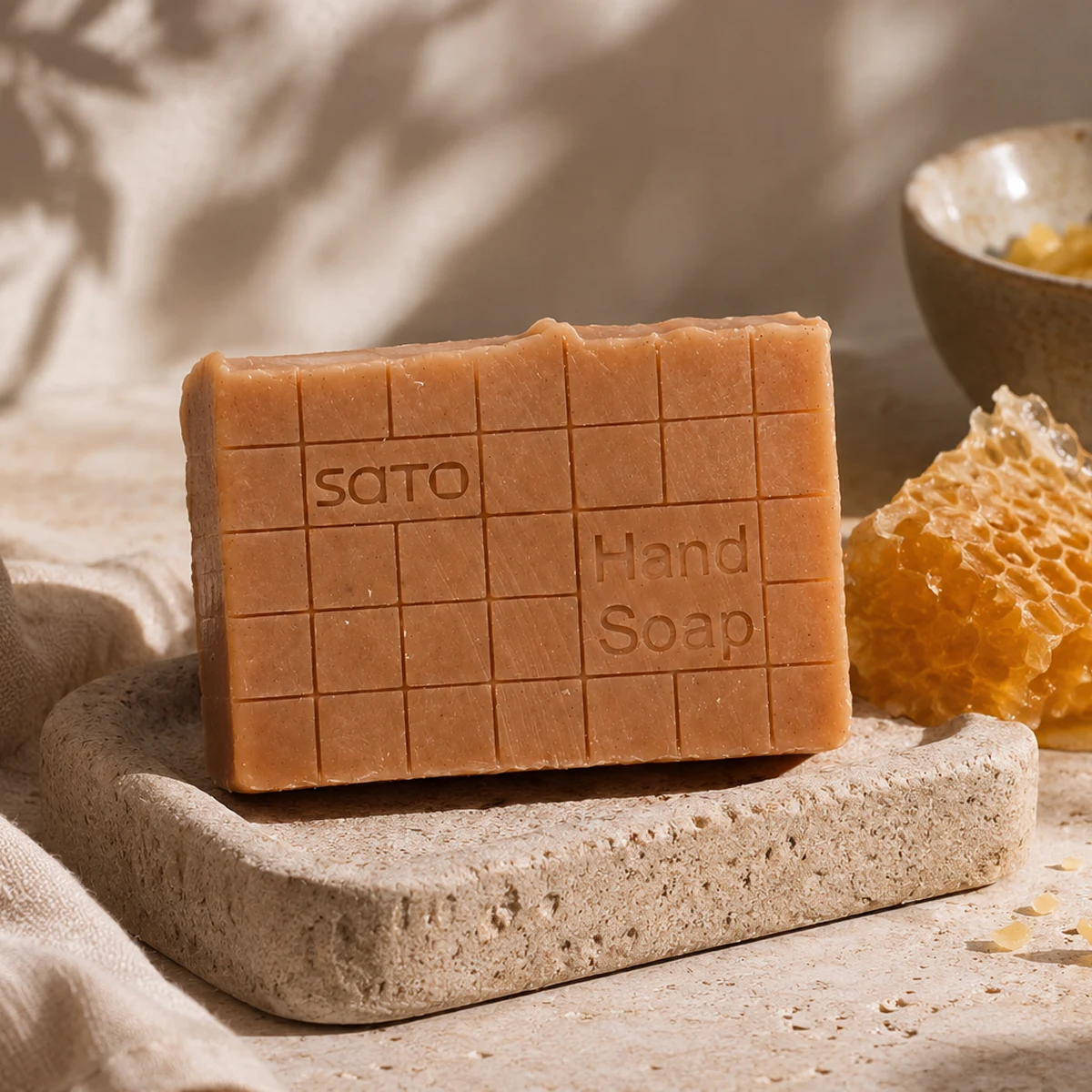
It is firm in the hand, with a warm cocoa colour and a sato imprint. It produces a creamy lather. It is cold process soap, made in Slovakia to our own recipe.
Zero edition
Beeswax Soap belongs to our Zero edition. Zero products have no added fragrance, neither perfume nor essential oils. They are for those who are bothered by fragrances or sensitive to them. The soap only cleans; it does not add a scent.
Why beeswax
Beeswax has three roles in this soap. Together with the oils, it gives the soap its own delicate scent, which nothing masks. It gives it firmness: during production only part of it is turned into soap and the rest remains in it as wax, so the soap holds its shape and dissolves more slowly in water. And it is precisely this remaining wax that also contributes to the smooth feel on the skin when washing, as wax is known in cosmetics as an emollient. In the SATO range, only this soap contains it.
Made by the cold process
When oils turn into soap, glycerine is also formed, a substance that binds moisture. In cold process soap making it is not separated out. All of it stays in the soap and helps you avoid that tight feeling on your skin after washing.
The recipe also includes a superfat of approximately 5%. Part of the oils is deliberately not turned into soap and reaches your skin as you wash. After production the soap still cures, part of the water evaporates from it and it hardens.
Ingredients and why we chose them
At SATO we have a simple commitment: we only put ingredients into our products that serve a purpose, and we choose each one so that it does its job as well as possible. Nothing extra. Here is the full list of ingredients in Beeswax Soap, with the reason we chose each one.
- Olive pomace oil – the base of the soap. Olive soap has been made in the Mediterranean for centuries, and the famous Castile soap from Spain is built on olive oil. It gives a gentle, creamy lather and cleans the skin mildly. Pomace oil is obtained from what is left of the olives after pressing.
- Coconut oil – thanks to it, a rich lather forms as soon as the soap is wet. Coconut soap lathers even in hard water, and even in sea water, which is why sailors once took it on board. It gives the soap firmness and helps where olive oil alone would not be enough.
- Water – sodium hydroxide dissolves in it so that it can combine with the oils. We use only demineralised water in production, which does not bring minerals from tap water into the soap.
- Sodium hydroxide – without it, soap does not form. Lye for soap used to be obtained from ash, and for hard soap from the ash of coastal plants. Today it is made industrially and weighed precisely into the soap. It combines with the oils and turns them into soap and glycerine. Our recipe is calculated so that all of it is used up and part of the oils remain free, so there is no trace of it in the finished soap.
- Castor oil – the thickest of the oils in this soap. It thickens the lather and makes it more stable, so it lasts in your hands while you wash.
- Salt – plain, just without iodine. It helps the soap harden so that it does not soften as quickly in the soap dish.
- White beeswax – the ingredient the soap is named after. For one kilogram of wax, bees consume several kilograms of honey, so it is a more precious ingredient than it seems. White wax is made by bleaching yellow wax, so it has a weaker smell and a lighter colour.
- Cocoa – food-grade cocoa, the kind you know from the kitchen. It gives the soap a warm brownish-orange shade, so no other dye is needed. The Aztecs paid with cocoa beans; here, cocoa colours the soap. Naturally.
Ingredients (INCI): Olea Europaea Husk Oil, Cocos Nucifera Oil, Aqua, Sodium Hydroxide, Ricinus Communis Seed Oil, Sodium Chloride, Cera Alba, Theobroma Cacao Seed Powder.
In brief
Fragranceno added fragrance, a mild scent of wax and oils
Productioncold process, in Slovakia
Superfatapproximately 5%
Ingredients of natural origin90% according to ISO 16128*
Colourfrom cocoa
For washinghands and body
* The only ingredient that lowers this figure is sodium hydroxide, without which a solid soap cannot be made.
How to use
- Wet the soap and work up a lather in your palms or on a washcloth.
- Spread the lather over damp skin.
- Rinse with water.
- Between uses, let the soap dry on a soap dish with drainage; it will last longer.
Avoid contact with the eyes; if the soap gets into them, rinse them with water.
Frequently asked questions
What does a soap with no added fragrance smell like?
Mild, of the beeswax and oils it is made from. It is the smell of the raw materials, not perfume, so it does not compete with anything for attention. There is no honey in it, although beeswax might suggest otherwise.
Is it for hands or for the body too?
For both. The soap says “Hand Soap”, but soap cannot read what is written on it. Work up a lather in your palms or on a washcloth and spread it over your whole body.
Can I wash my hair with the soap?
We do not recommend it. Technically it will work, but you will not like the result. The soap is alkaline, so hair can feel rough afterwards, and in hard water a dull film can remain in it. Hair wants shampoo; hands and body want this soap.
How long does the soap last?
It depends on how often you wash with it and where it spends its time between uses. Beeswax, salt and curing all work to keep it firm. The soap’s greatest enemy, however, is a puddle of water in the soap dish, in which the soap goes soft. A soap dish with drainage, for example a
wooden soap dish, wins that war for you.
How does it differ from other SATO soaps?
It is the only one with no added fragrance and the only one with beeswax. The other four in our collection,
Black Clay Soap,
Goat Milk Soap,
Hemp Soap and
Pumice Hand Soap, are built on shea butter and are scented with essential oils. If you fancy a fragrance, choose one of them. If you prefer something natural, stay with Zero.