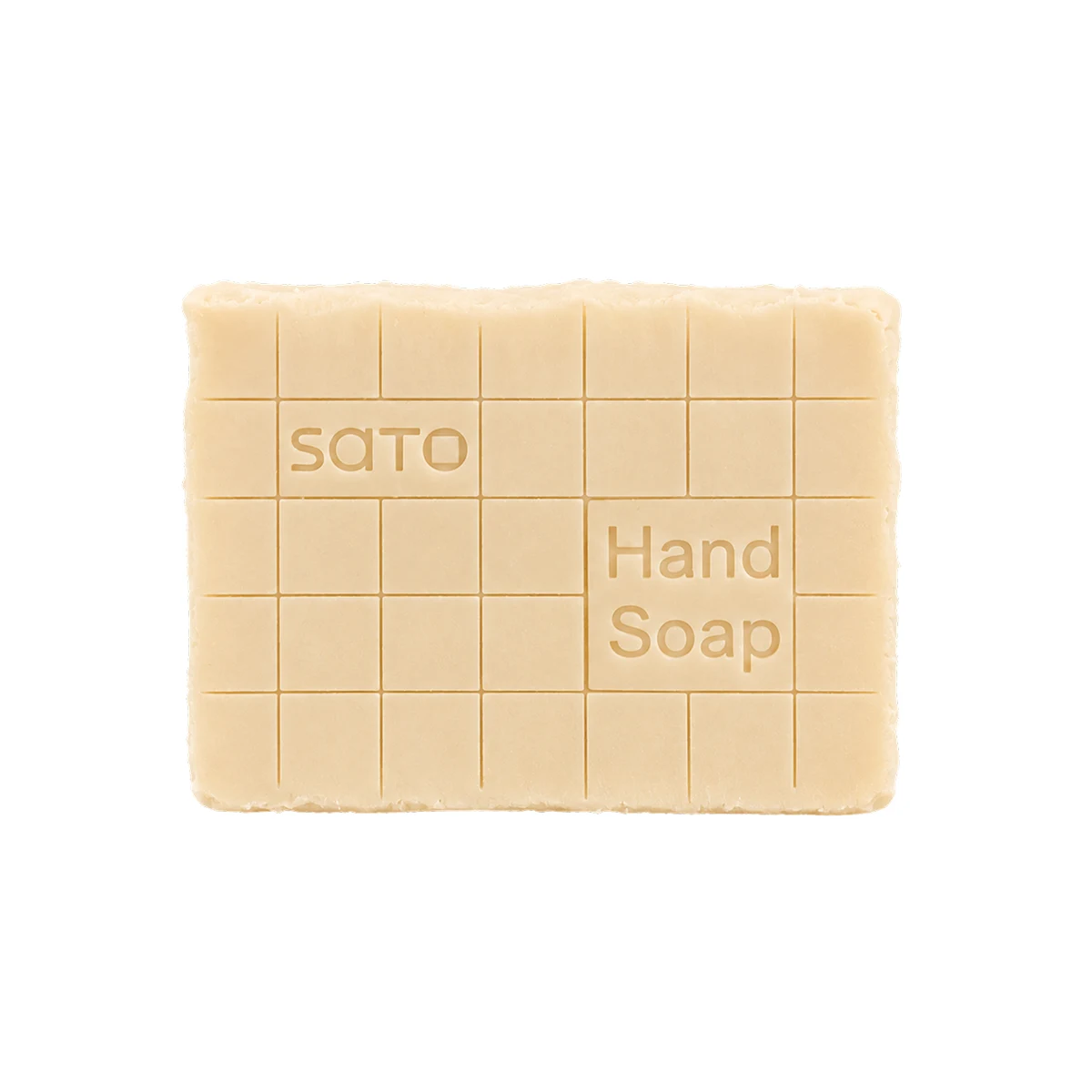
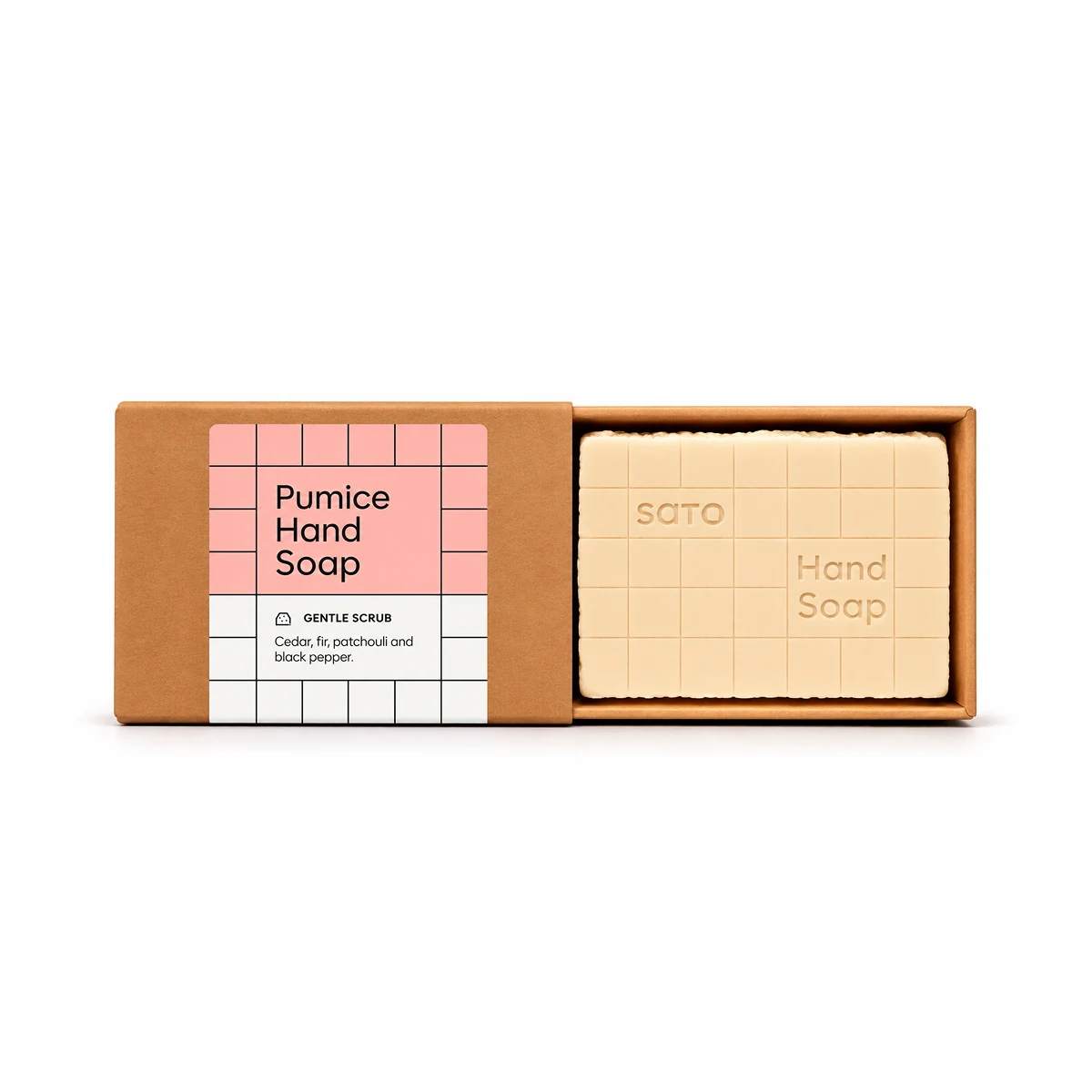
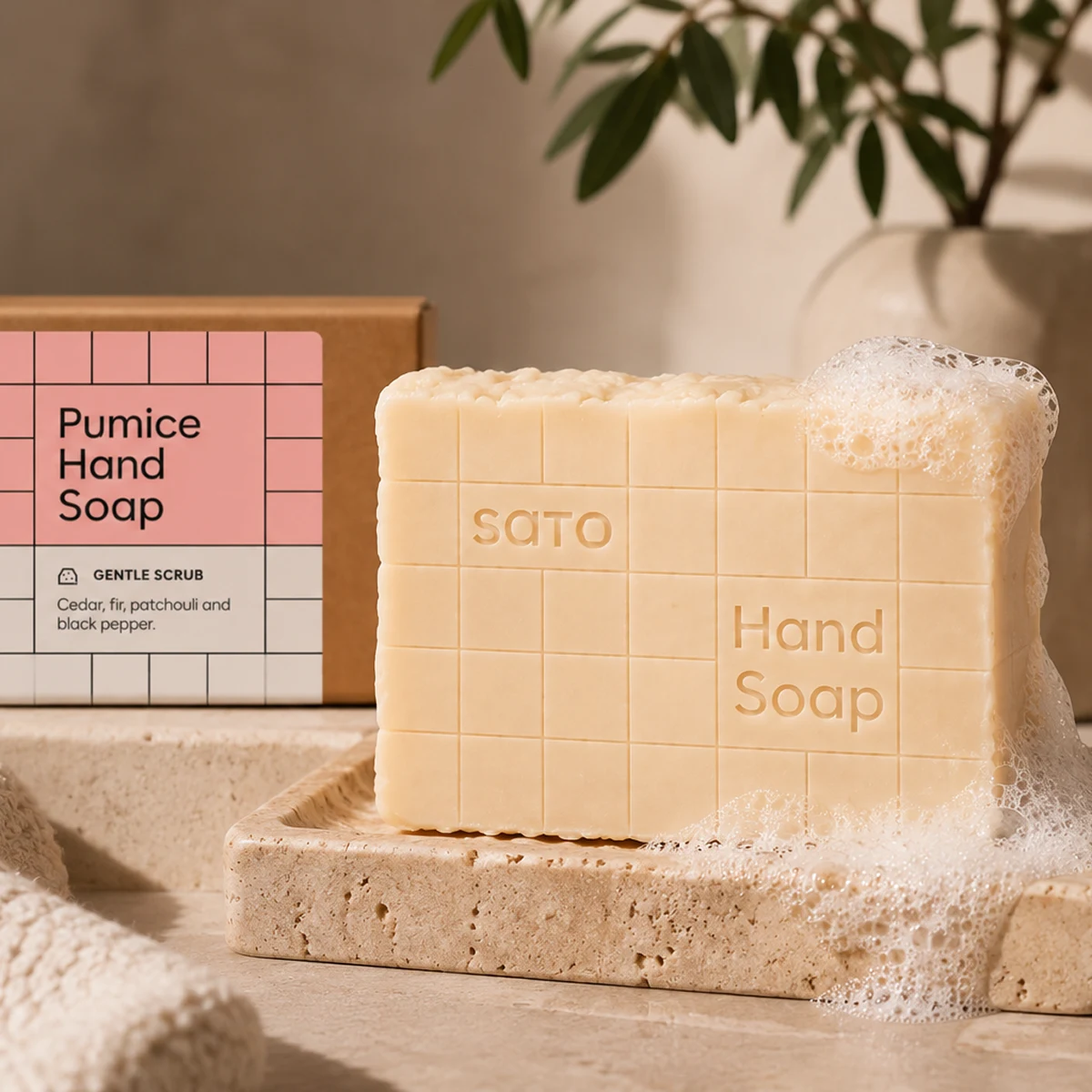
Pumice Hand Soap is a gently exfoliating soap for hands and the whole body. Finely ground pumice and Moroccan clay help remove dead skin cells as well as dried-on dirt from the workshop or the garden while you wash, and give the skin a pleasant massage.
You can feel tiny grains in your palm that do not scratch the skin, and the lather smells woody: of cedar, fir, patchouli and black pepper. It is made by the cold process method in Slovakia to our own recipe.
Why pumice and Moroccan clay
The scrub in this soap is gentle on purpose. The pumice is ground to a fine powder, so with a circular motion it gives the skin a pleasant massage and helps remove dead skin cells, but does not scratch it. The clay binds the grease and dirt that cling to the skin, and the lather then rinses both away.
Pumice is a volcanic rock. It forms when lava full of gases cools quickly, leaving a stone that is all tiny bubbles, often so light that it floats on water. In the soap, what matters is not its ability to float but its fine grains.
Moroccan clay, known as rhassoul, is mined in the Atlas Mountains and people have been washing with it for centuries. Its fine particles bind sebum and support the scrubbing effect of the pumice. One ingredient therefore does two jobs in the soap.
Hands deserve a regular scrub. They are in water, around soap and at work more often than any other part of the body, and dead skin cells stay on them until something gently removes them. With this soap you can take care of that during everyday washing.
Made by the cold process
In cold process soap making, the oils and butter are not heated to a high temperature. The conversion into soap runs slowly.
The glycerine that forms during this conversion stays in the soap in full. It binds moisture and leaves the skin supple after washing, which is welcome after a scrub.
The recipe has a superfat of approximately 6%: this portion of the oils remains unsaponified and nourishes the skin even as you wash.
The finished soap then cures. Part of the water evaporates from it, the soap hardens and lasts longer.
Ingredients and why we chose them
At SATO we follow a simple rule: only an ingredient that has a job to do goes into a product. We list the ingredients as they enter production. Most of the oils and the butter are converted into soap and glycerine during the process.
- Coconut oil – provides the lather and washes grease away well. In a soap that also cleans hands after the workshop, this is exactly the property you want on your side.
- Demineralised water – sodium hydroxide dissolves in it so that it can meet the oils. It is demineralised so that it adds nothing extra to the recipe.
- Shea butter – obtained from the nuts of a tree that grows in the African savannas and takes years to give its first harvest. It gives the soap firmness and a creamy lather, and the unsaponified portion nourishes the skin.
- Olive pomace oil – obtained from what remains after olives are pressed. Olive oil is one of the oldest soap-making ingredients. It softens the lather and makes the soap milder.
- High oleic sunflower oil – resists oxidation better than regular sunflower oil and helps the soap stay fresh until the end.
- Sodium hydroxide – without it, soap does not form. During production it is fully used up converting the oils, and no free sodium hydroxide remains in the finished soap.
- Salt – firms up the soap so that it keeps its shape longer in the soap dish.
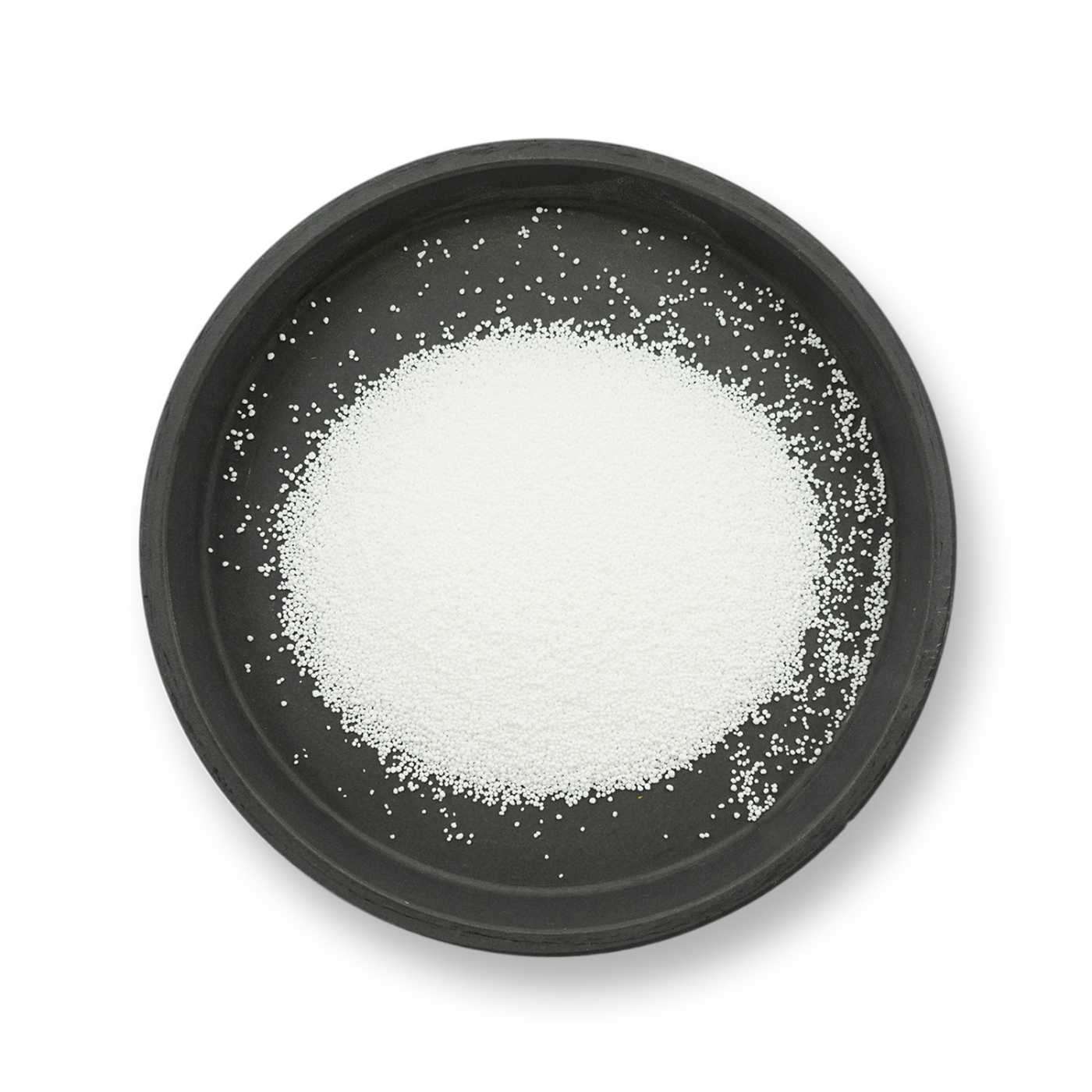
- Pumice – a volcanic rock ground to a fine powder. It gently massages the skin and helps remove dead skin cells without scratching it.
- Moroccan clay – rhassoul, whose name comes from the Arabic word for washing. It binds sebum and makes the scrub gentler.
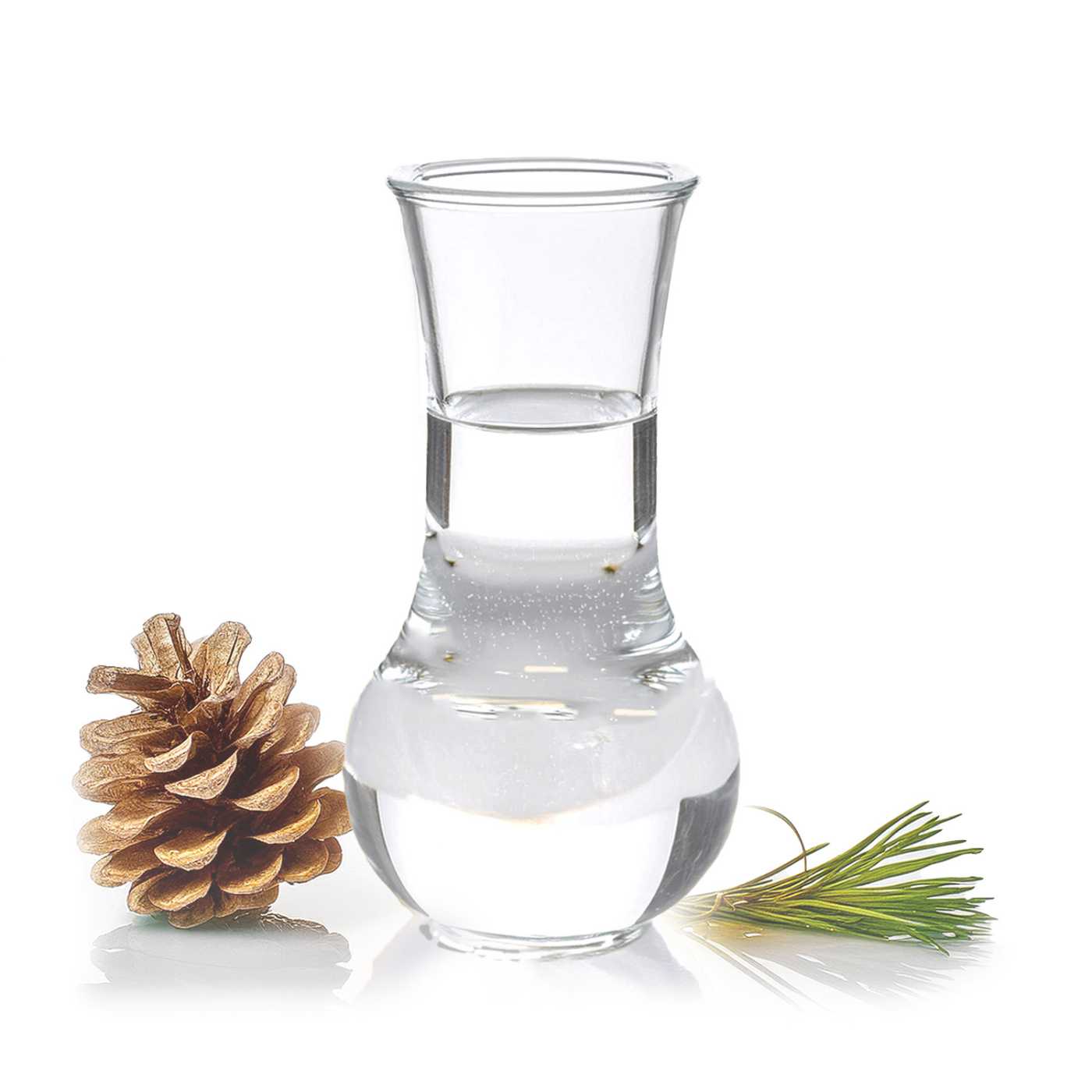
- Siberian fir essential oil – distilled from needles and young twigs. It adds a note of fir needles to the woody fragrance.
- Cedarwood essential oil – the Atlas cedar grows in the same mountain range as Moroccan clay. In this soap they meet again, and the cedar forms the woody base of the fragrance.
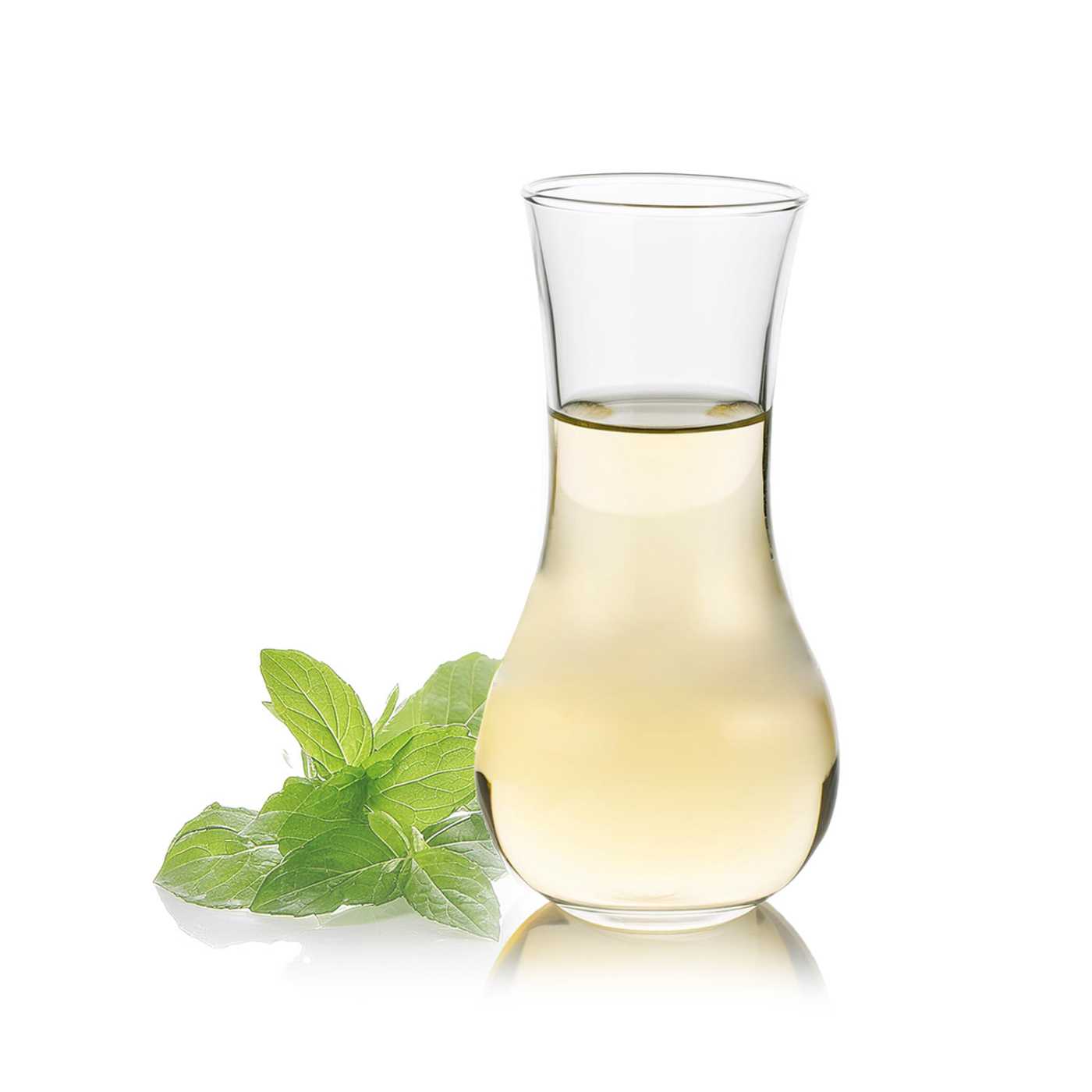
- Black pepper essential oil – pepper was used as payment in the Middle Ages. In the soap it livens up the woody fragrance.
- Patchouli essential oil – patchouli leaves were once used to layer fabrics on the journey from India to Europe. Here it complements the fir and cedar.
Ingredients (INCI): Cocos Nucifera Oil, Aqua, Butyrospermum Parkii Butter, Olea Europaea Husk Oil, Helianthus Annuus Seed Oil, Sodium Hydroxide, Sodium Chloride, Pumice, Moroccan Lava Clay, Abies Sibirica Oil, Cedrus Atlantica Bark Oil, Piper Nigrum Fruit Oil, Pogostemon Cablin Leaf Oil, Beta-Caryophyllene, Limonene, Pinene, Terpinolene.
At a glance
Fragrancecedar, fir, patchouli, black pepper (essential oils only)
Scrubgentle, from ground pumice and Moroccan clay
Productioncold process, in Slovakia
Superfatapproximately 6%
Ingredients of natural origin90% according to ISO 16128*
For washinghands and the whole body
* The only ingredient that lowers this figure is sodium hydroxide, without which a solid soap cannot be made.
Usage
- Wet the soap and work up a lather in your palms or on a washcloth.
- Massage the skin of your hands or body with circular motions.
- Rinse with water.
- Between uses, let the soap dry on a soap dish with drainage.
Do not use on the face or on irritated or broken skin. Avoid contact with the eyes; if it gets into them, rinse with water.
Frequently asked questions
What does it smell like?
Woody. Fir and cedar smell like a workshop full of wood, the place people most often come from when they reach for this soap. Patchouli complements them and black pepper adds a spark. The fragrance consists of essential oils only.
What does it feel like?
Slightly grainy. In your palm you can feel tiny grains of pumice that give the skin a pleasant massage but do not scratch it. Your hands decide how strong the scrub is; a circular motion is enough. After rinsing, the skin feels smooth to the touch, and the glycerine and unsaponified oils leave it supple.
Is it for hands or for the body as well?
For both. Take the name Hand Soap as a recommendation; the scrub is gentle enough for the body too. The soap has its limit elsewhere: it does not belong on the face or on irritated or broken skin.
How often can I use it?
Whenever you wash your hands. The scrub is gentle, so the skin tolerates it regularly, and hands, which are in water and at work most often, deserve it the most.
Can I wash my hair with it?
We do not recommend it. The soap is alkaline and can leave a dull film in hair, especially in hard water. The pumice would also take longer to rinse out of your hair than you would enjoy. Hair wants a shampoo.
How long does the soap last?
It depends on how much work you give it and where it rests between shifts. Salt and curing make it firm. It cannot cope with standing water, in which every soap goes soft. A
wooden soap dish with drainage solves this problem for you.
How does it differ from the other SATO soaps?
In its pumice and its woody fragrance. It shares the oil base and the same superfat with
Black Clay Soap and
Goat Milk Soap, which smell different.
Hemp Soap is based on hemp oil and has a herbal fragrance of rosemary, marjoram, sage and thyme. The only soap in the range without added fragrance is
Beeswax Soap from the Zero edition.