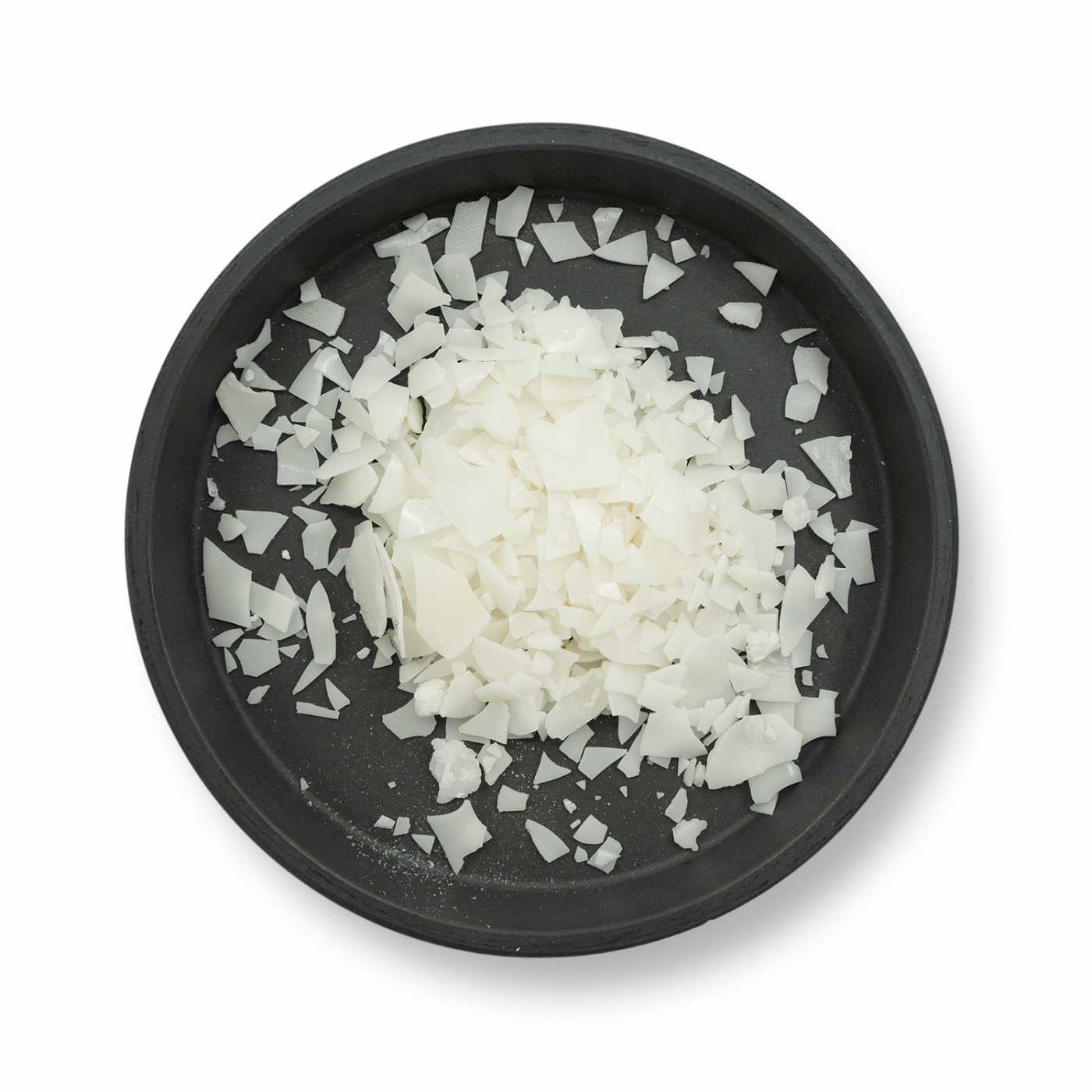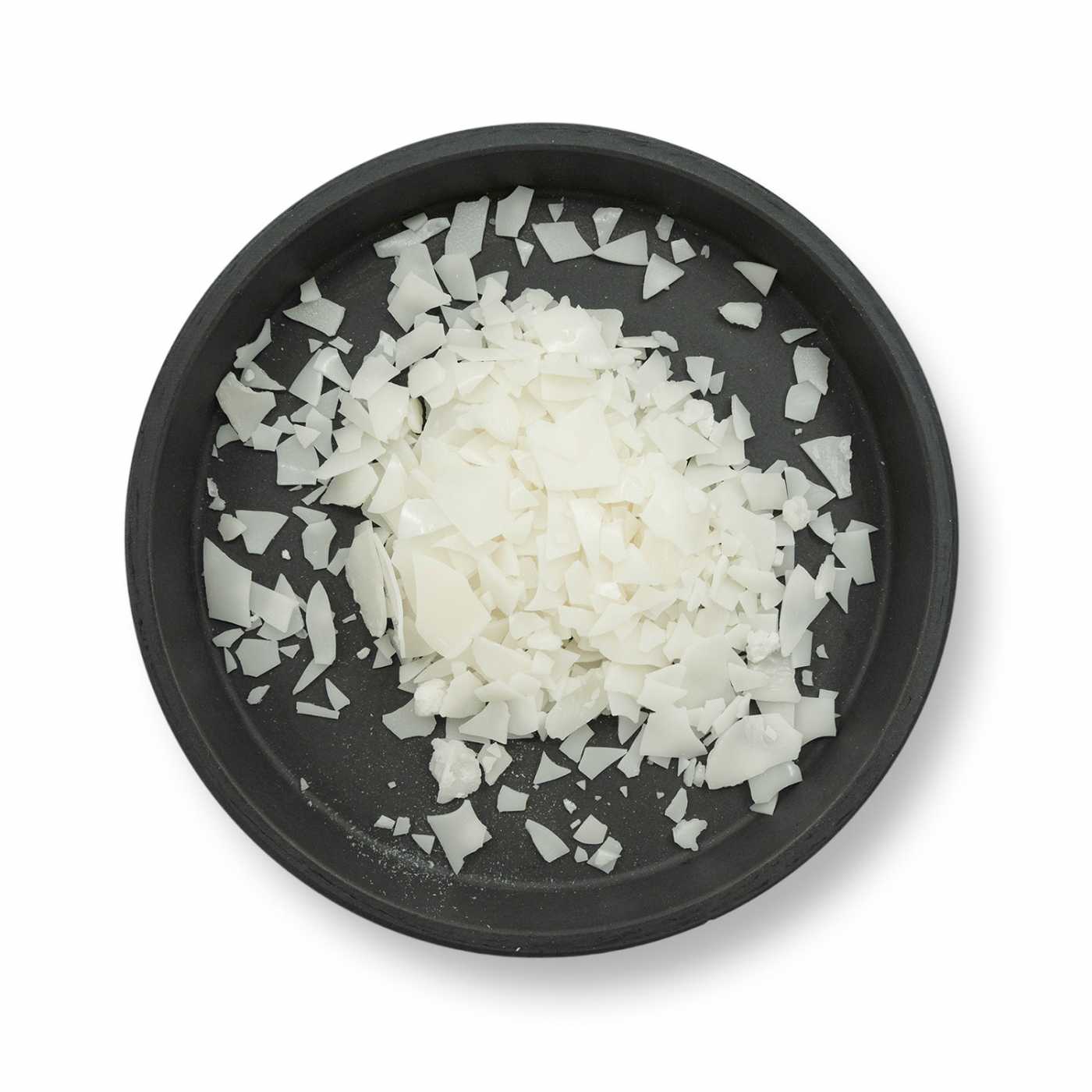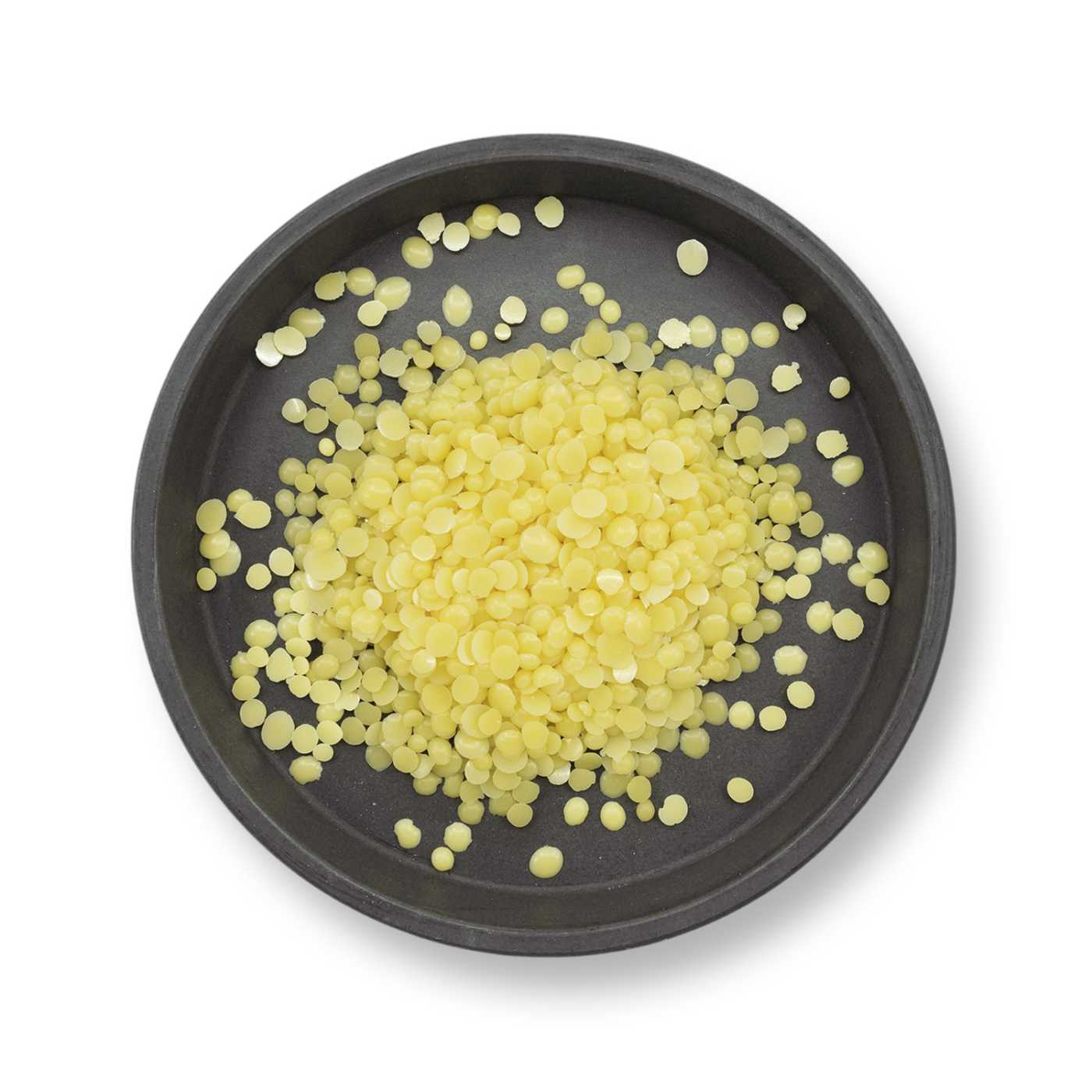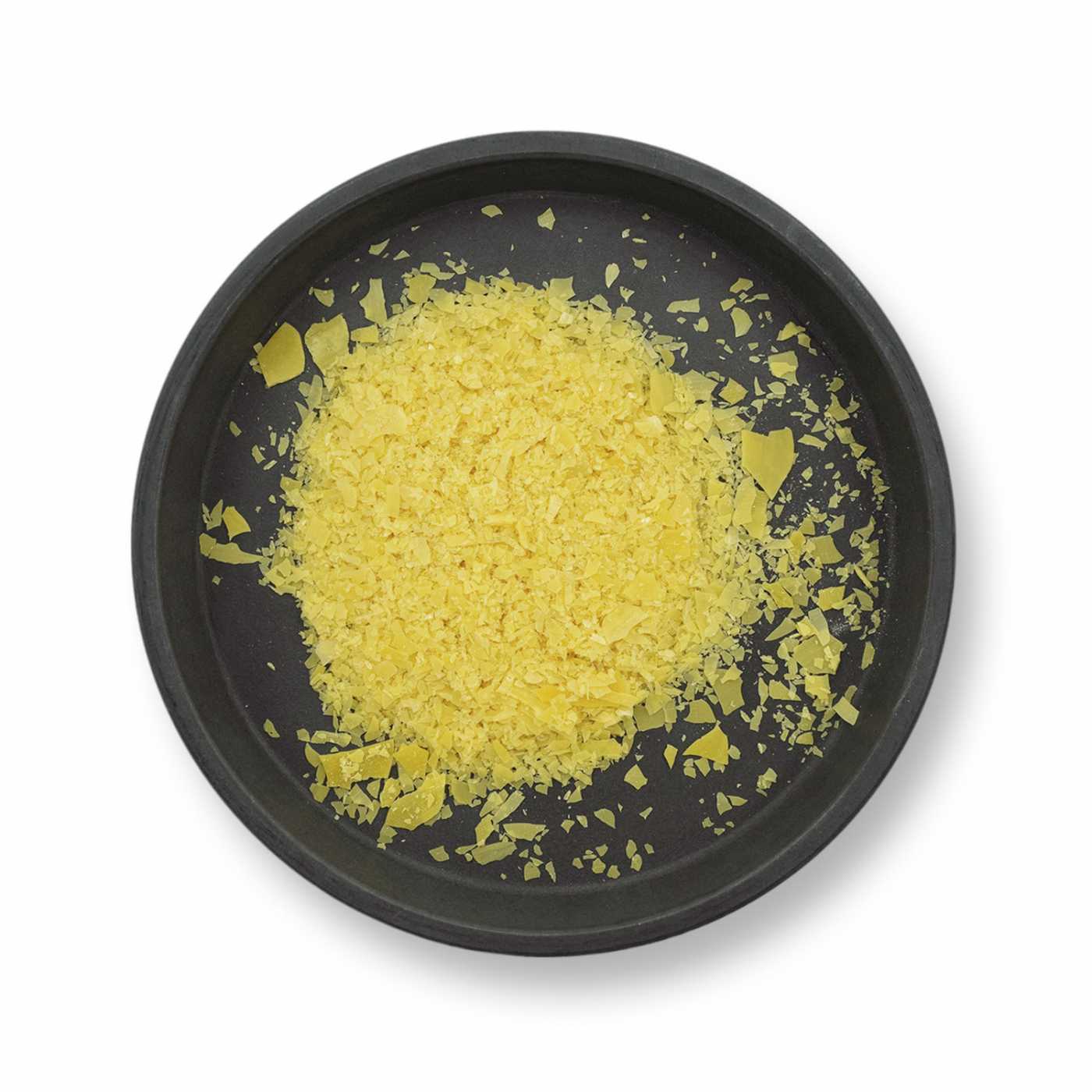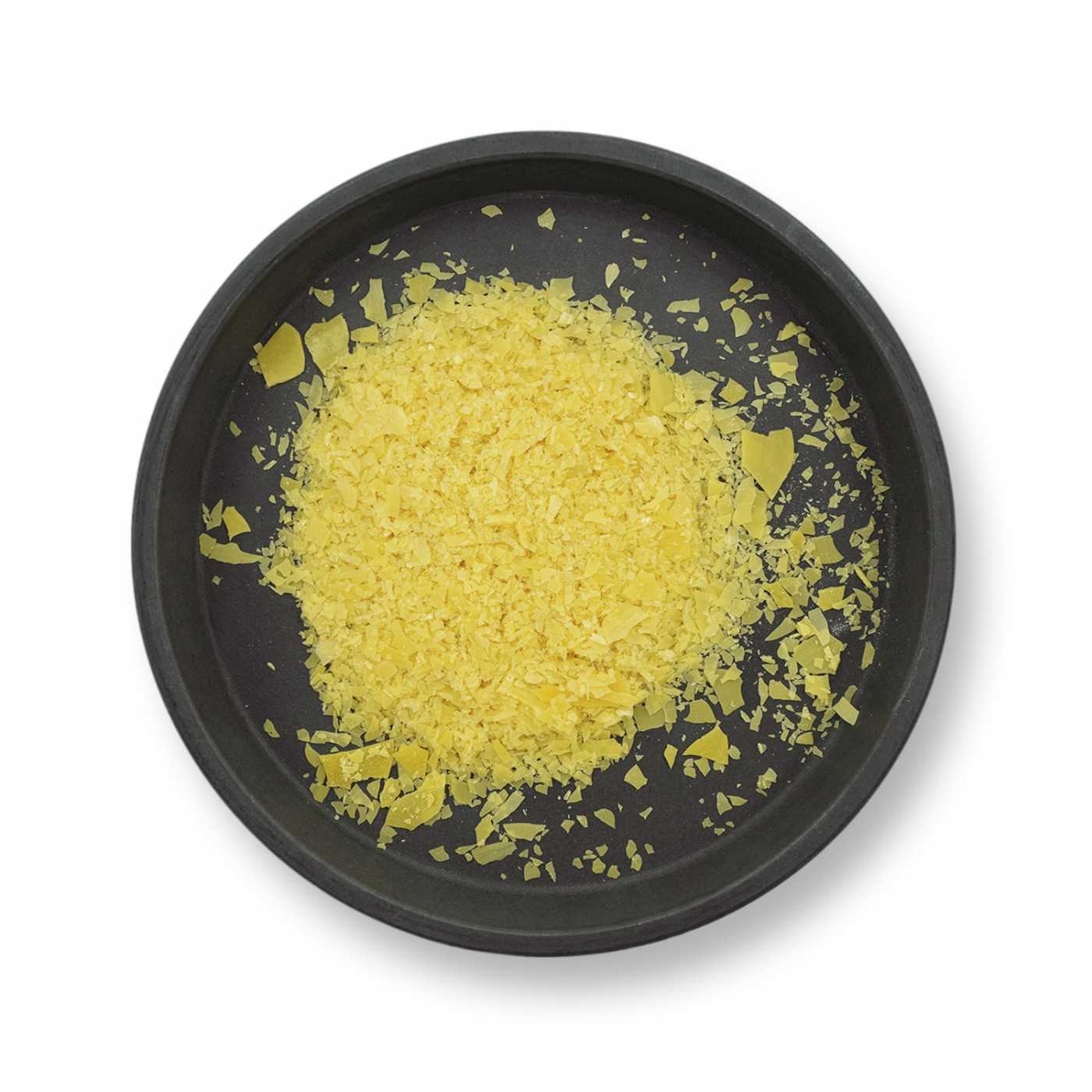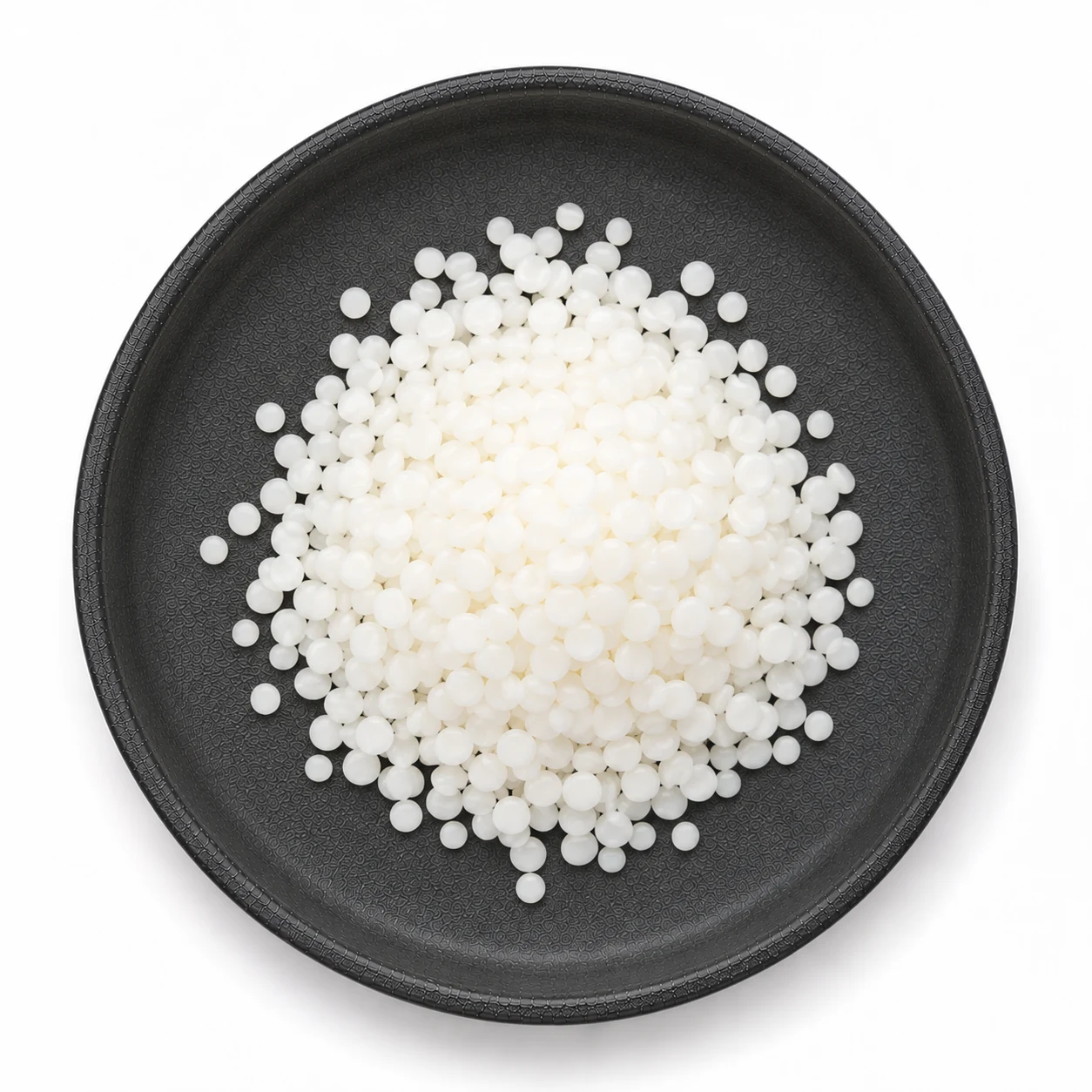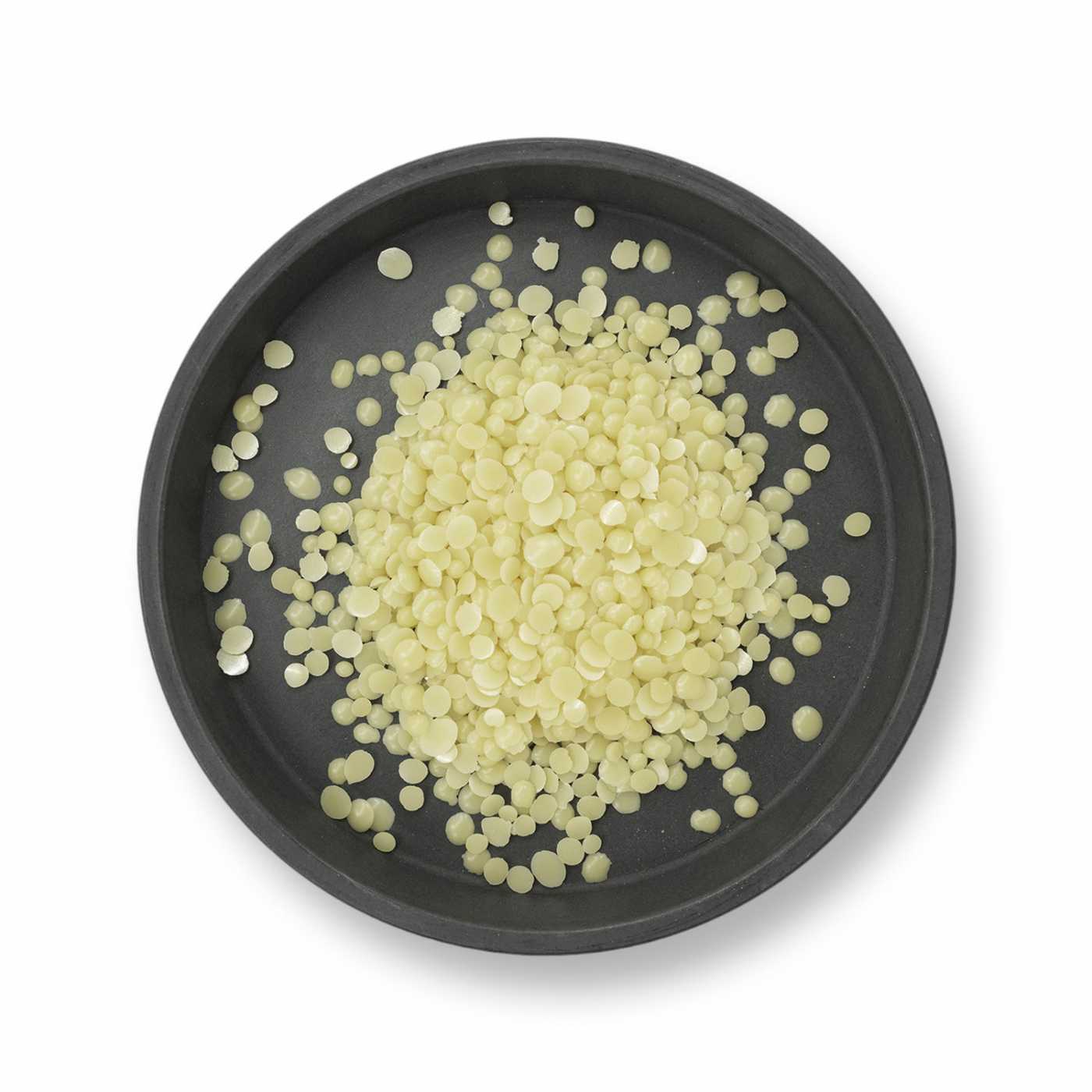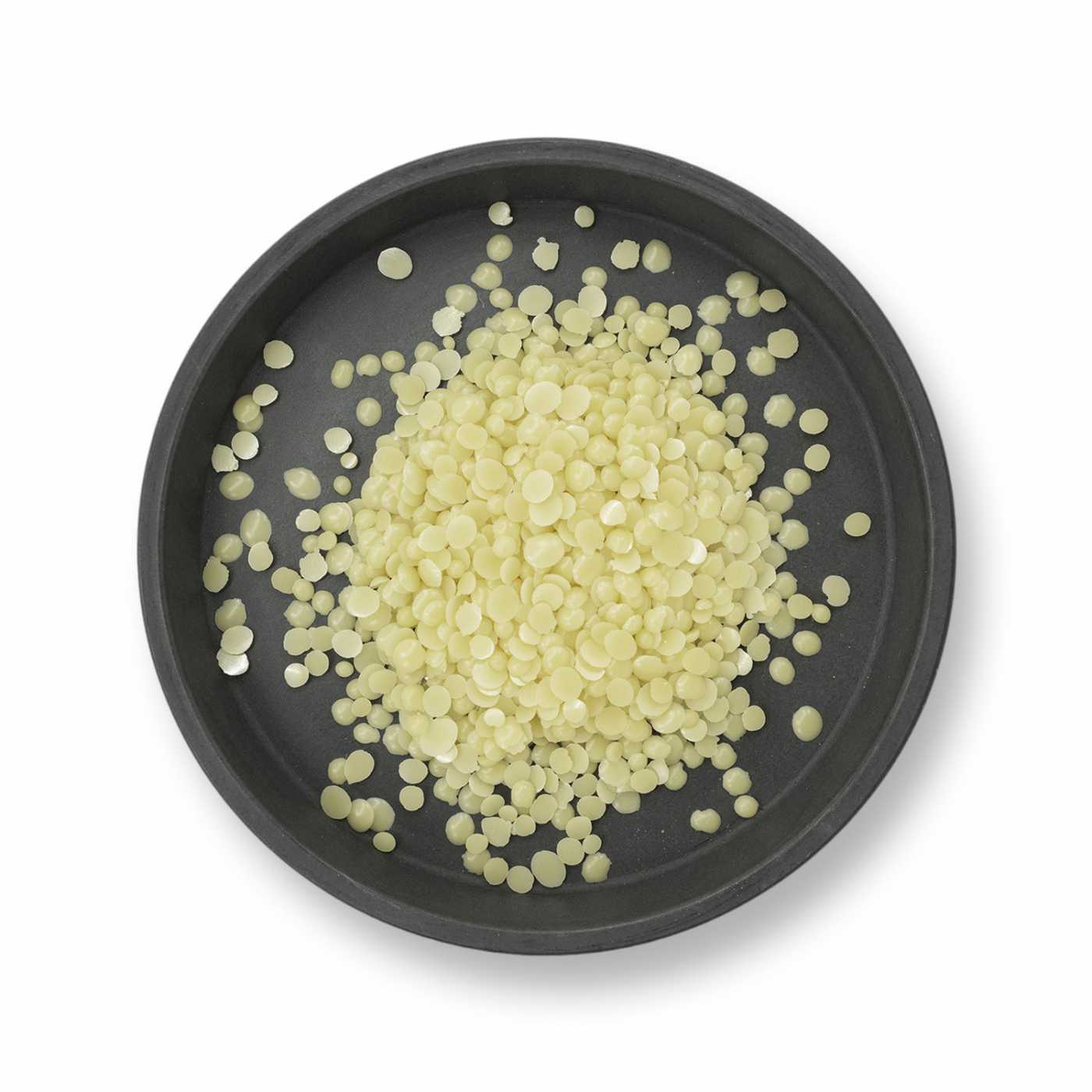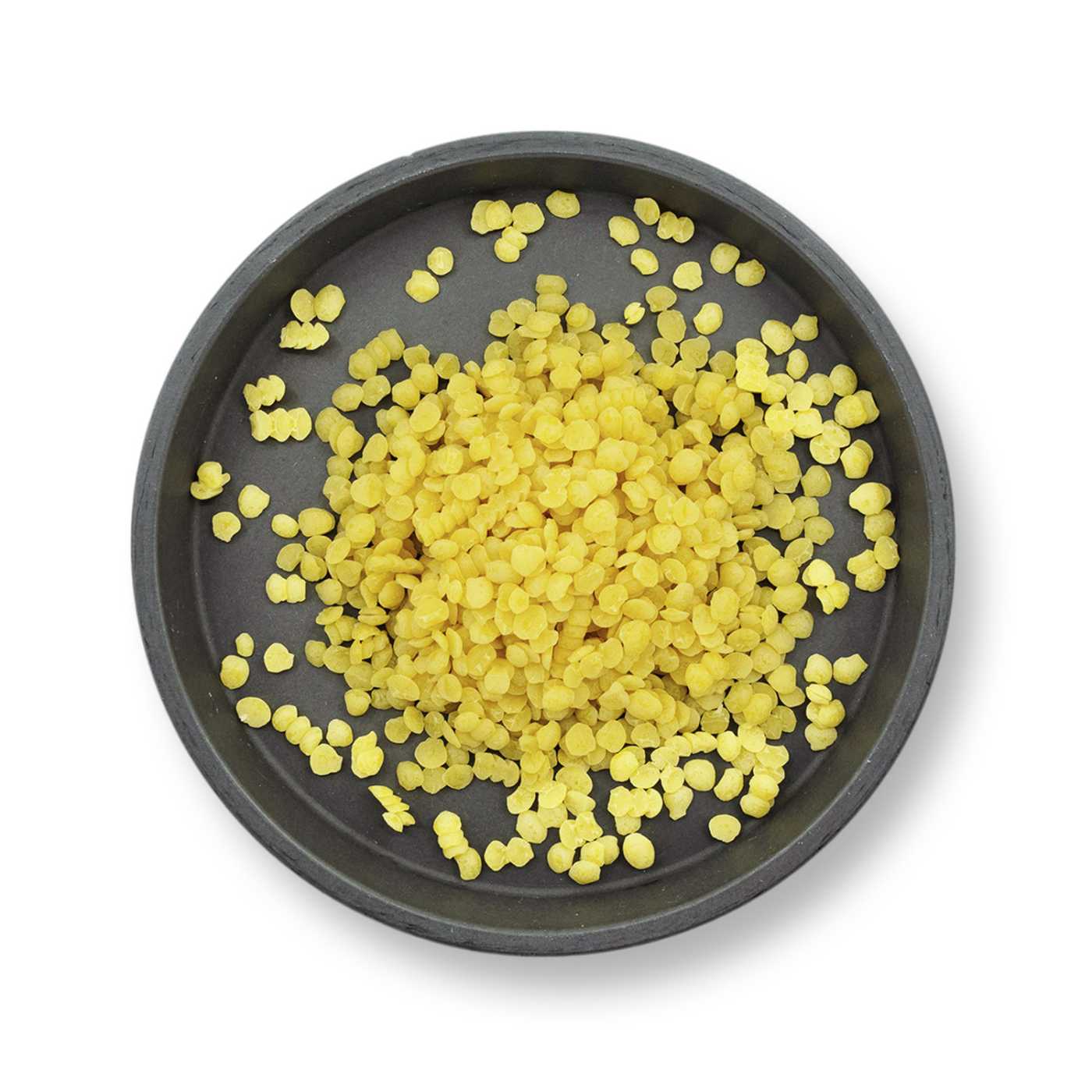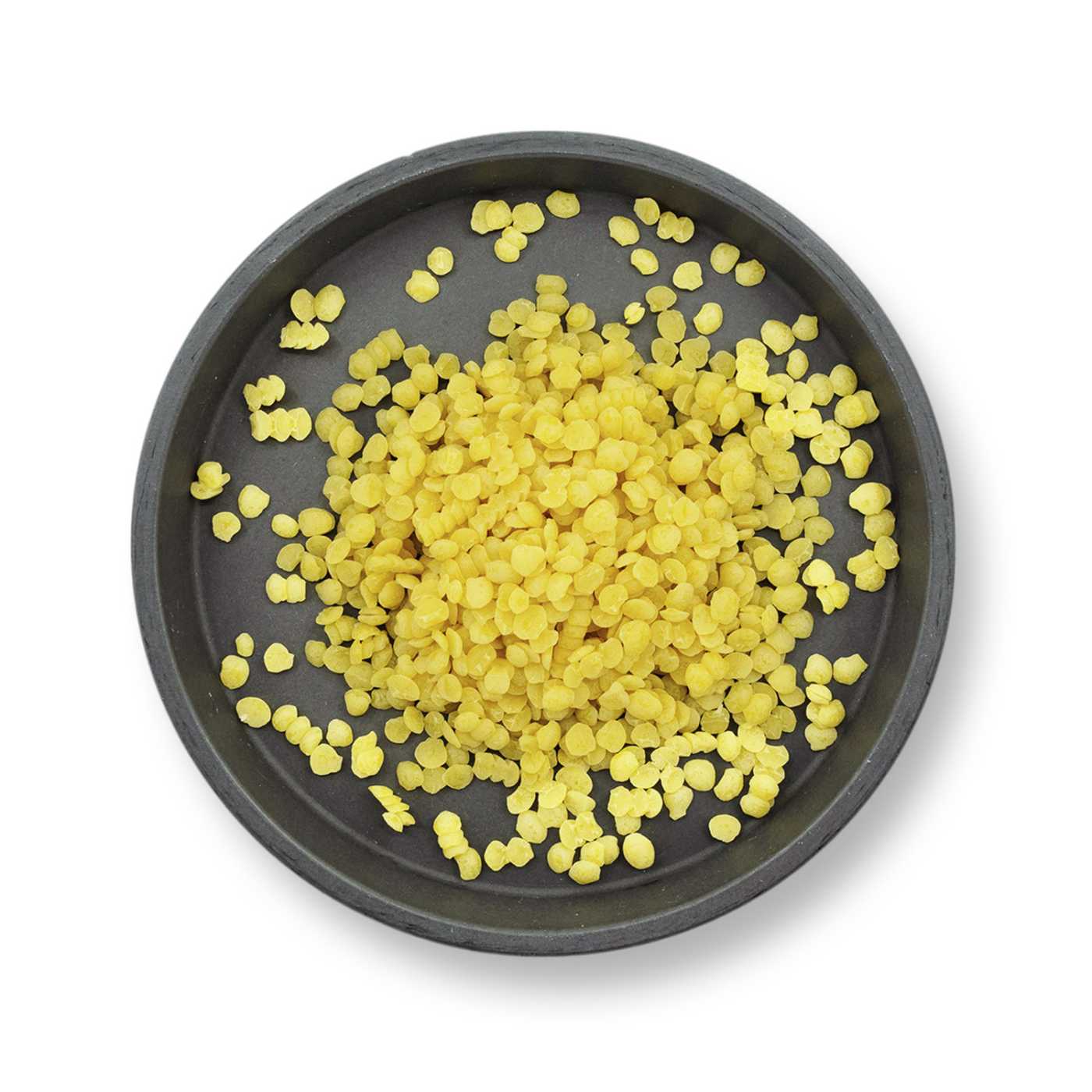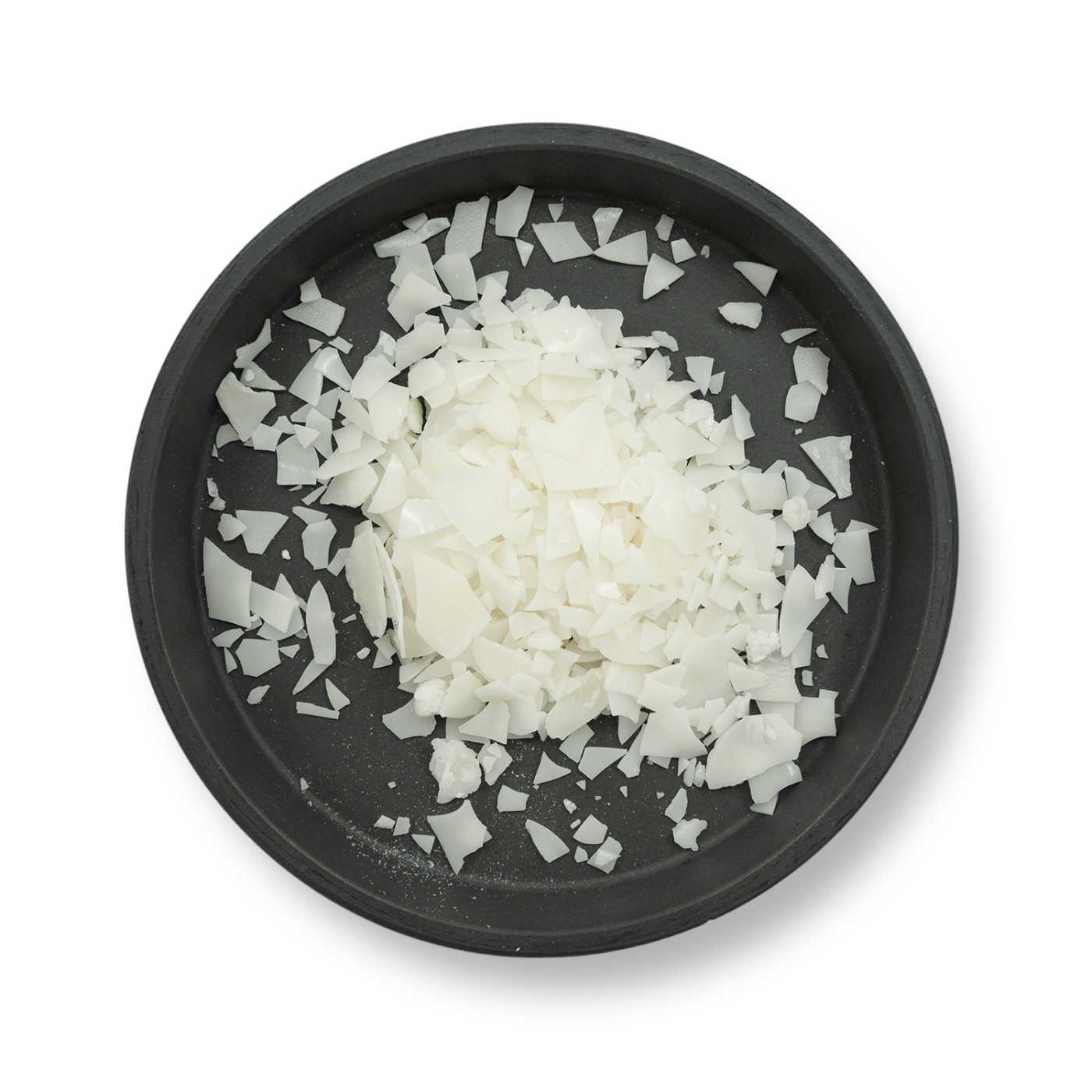
Almond Wax, 200 g
Pre-order€7.59(€37.95/kg)

23 products in this category
5 in stock now
4.9 out of 5 · 663 ratings
Documentation for every product
Showing 23 of 23 products
In a water-free formulation, wax is the structural element. It raises the melting point of the butter-and-oil blend, which is why a lip balm holds in its stick, a massage bar keeps its shape in the palm and a stick deodorant does not melt in your pocket. Individual waxes differ in hardness and melting point – by combining them you tune the texture and surface of the product exactly to your needs.
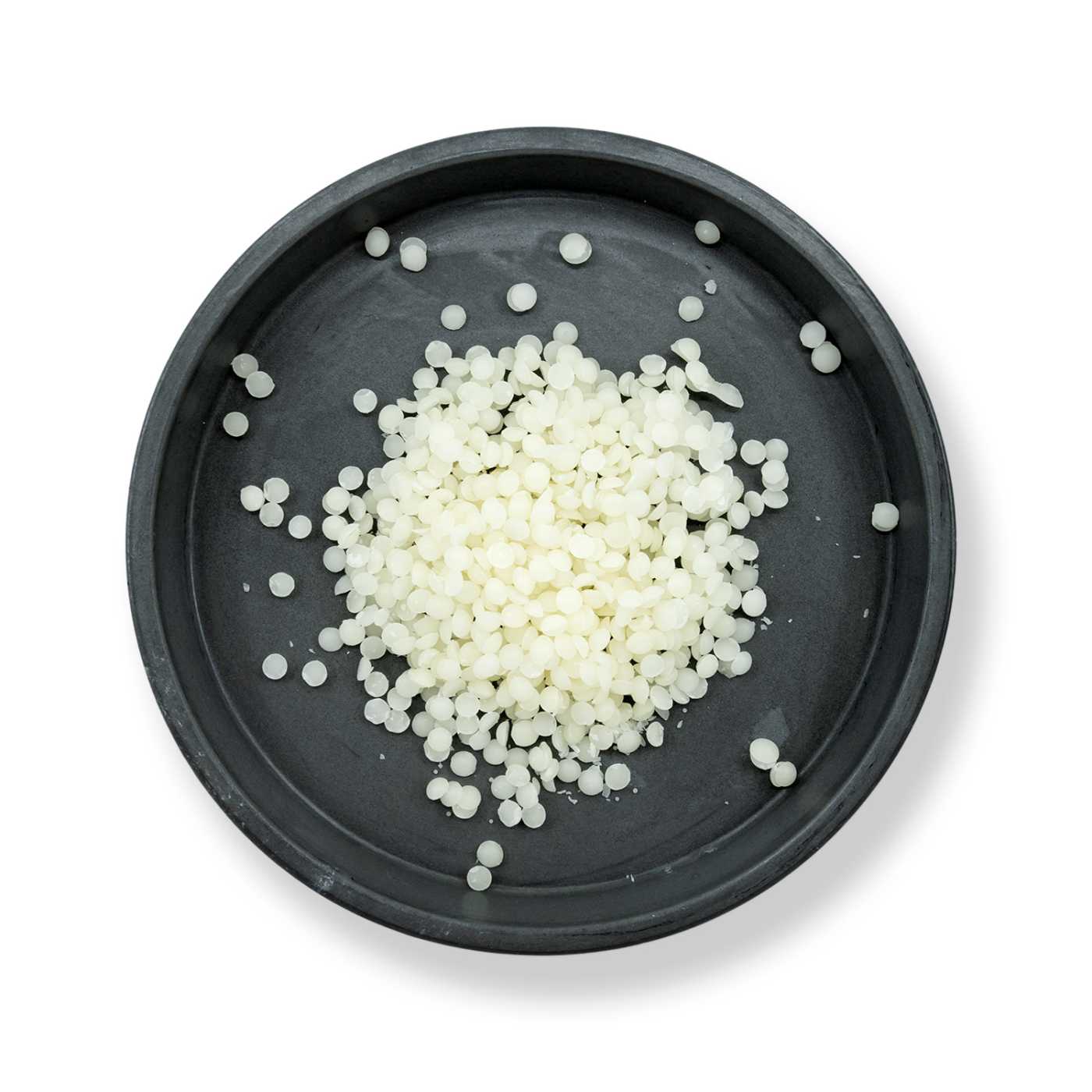
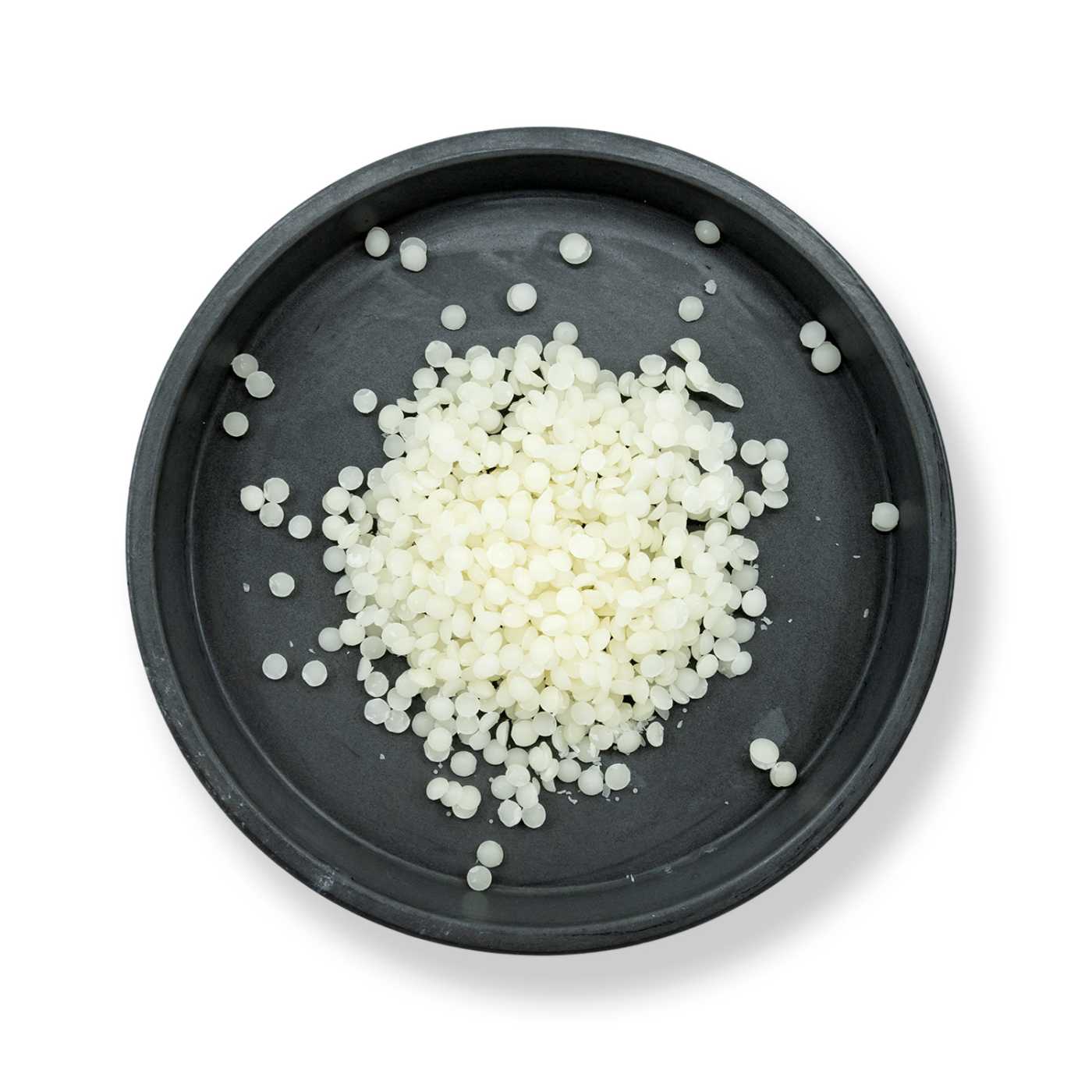
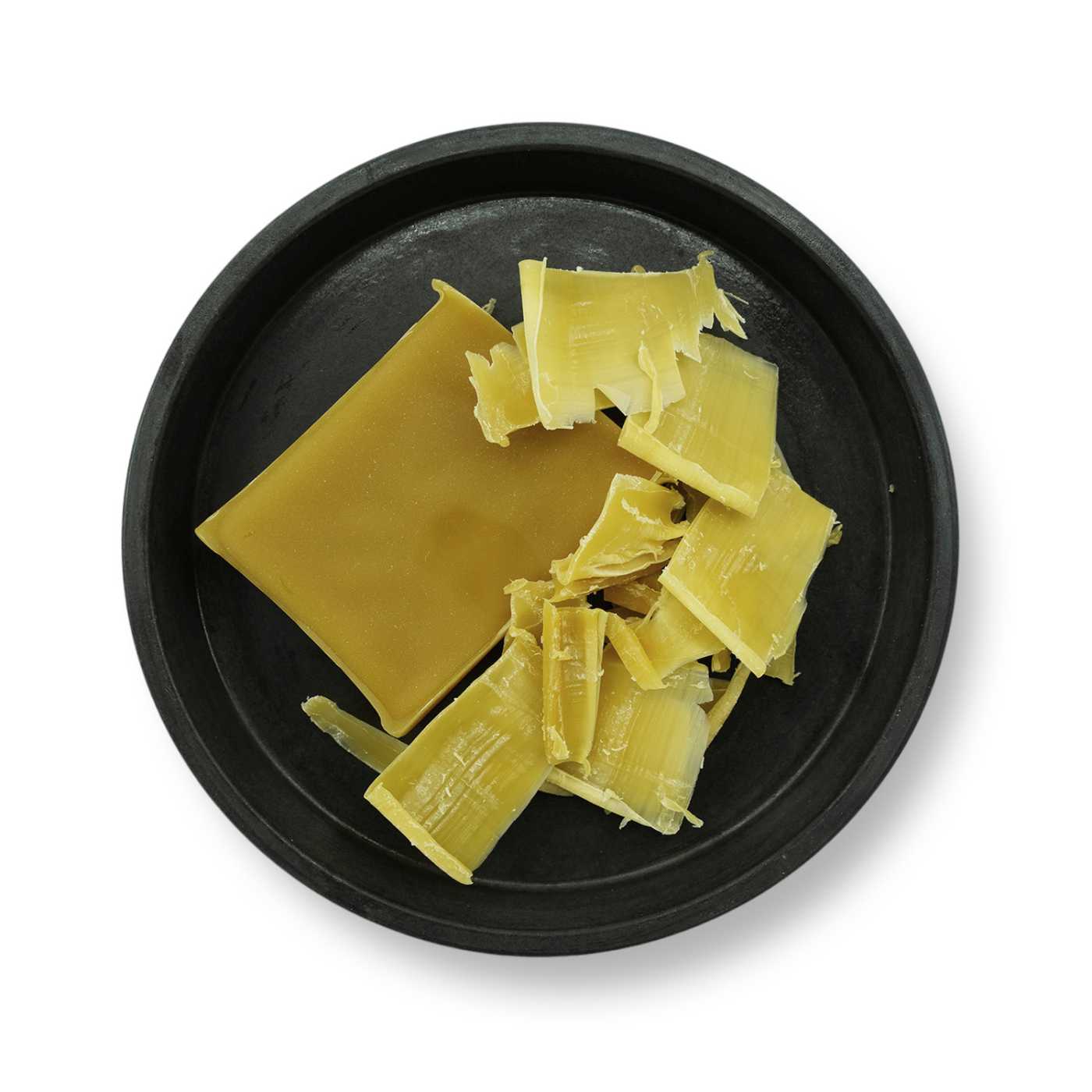
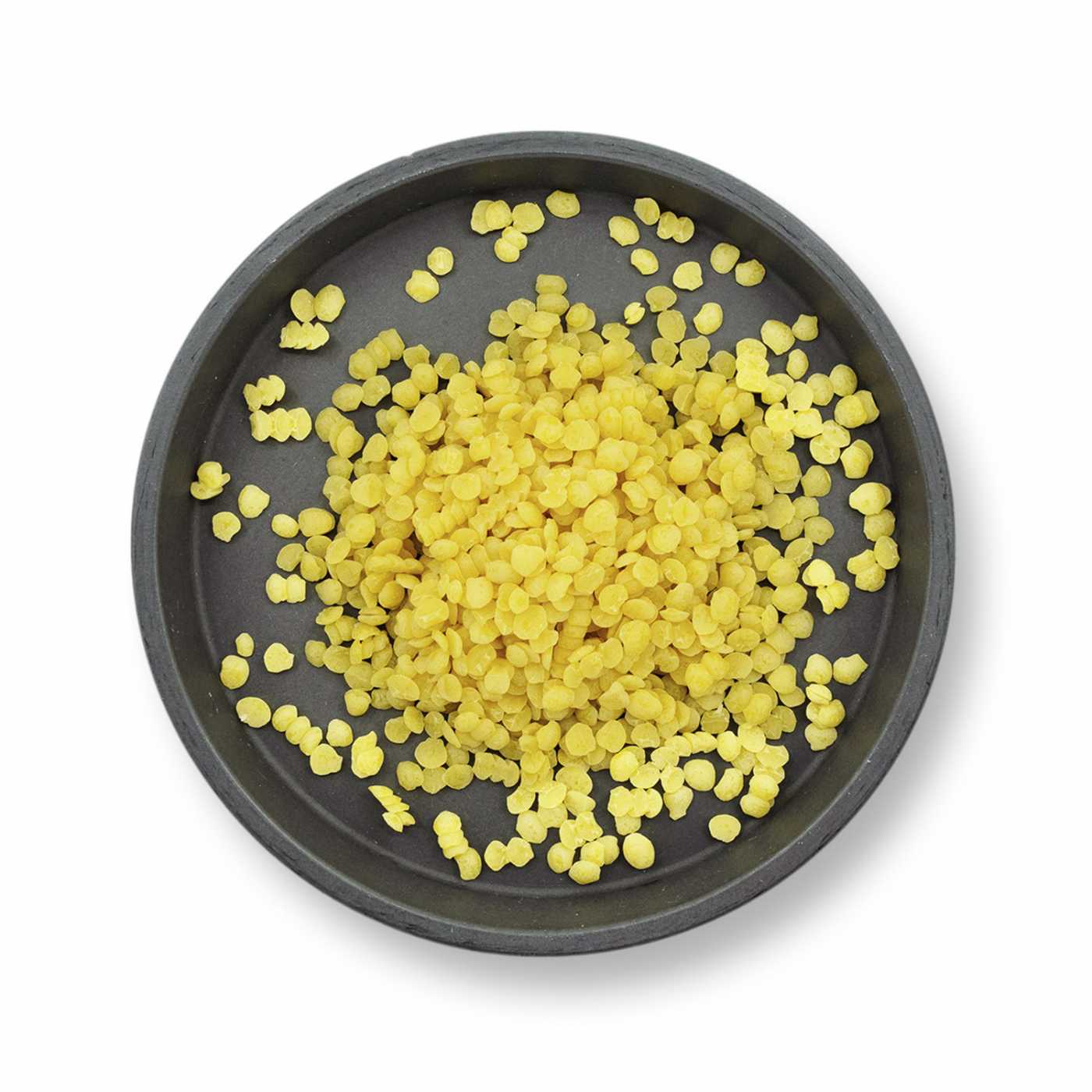
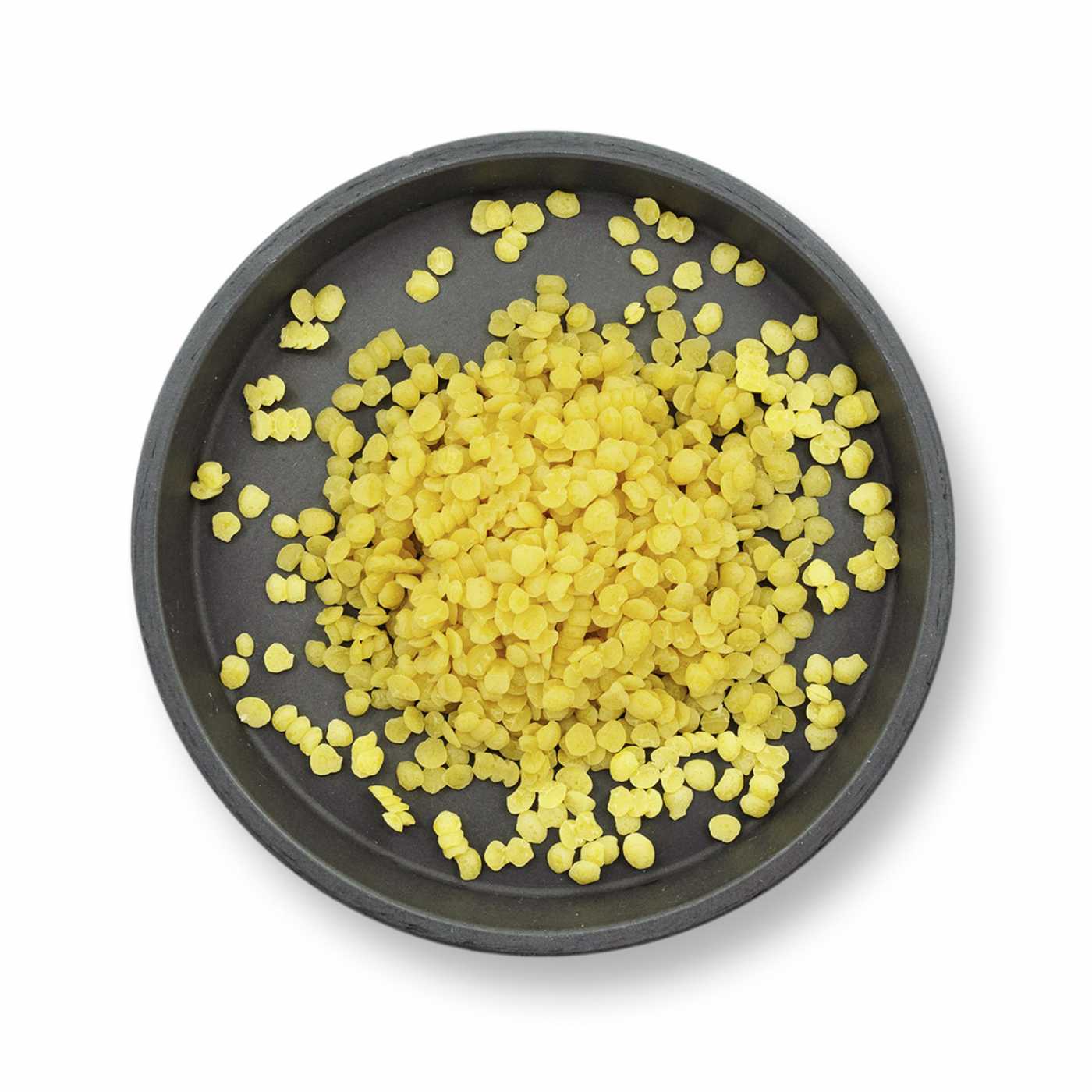
Beeswax firms up balms and forms a protective film on the skin. It comes in three forms: granulated yellow, which is easy to weigh and melt (100 g for €3.35, available up to 5 kg), filtered white with a more neutral colour for pale formulations, and natural in the block, in pieces of roughly 1 kg.
If the product is to be purely plant-based, four alternatives of differing character can take the place of beeswax: candelilla is a popular vegan substitute for balms, carnauba increases hardness and adds gloss, rice bran wax improves texture and stability. The range is completed by gentler specialities – jojoba and almond wax in packs from just 50 g.
This category focuses on waxes for cosmetics; from a candle-maker's point of view its main offering is beeswax. Soy and blended waxes formulated for container candles, pillars and scented melts for aroma lamps – Golden Wax, EcoSoya and KeraSoy – have their own section in candle making, together with wicks and fragrances tested for burning.
Packs range from 50 and 100 g for first experiments to 5 kg for workshops, and the price per kilogram drops noticeably with volume: granulated beeswax comes to €25.70/kg in the 5 kg pack versus €33.50/kg at 100 g. Every wax is supplied with an SDS, a certificate and technical data for processing. You will find the solid fats you will be firming up with wax among the cosmetic butters.
Plant waxes: candelilla is the most common vegan substitute in balms, carnauba adds hardness and gloss, rice bran wax improves texture and stability. They are not interchangeable with beeswax one to one – they differ in hardness and melting point, so after a swap always verify the wax ratio on a small test sample.
The proven choice is beeswax, which firms the balm and forms a protective film; in a vegan version candelilla, possibly topped up with carnauba for a harder, glossier surface. You tune the firmness of the finished balm with the ratio of wax to butters and oils – the more wax, the firmer the stick. Packs of 50 or 100 g are enough for first trials.
From this category's range, beeswax is the one traditionally used for candles. Container candles, pillars and scented melts for aroma lamps, however, call for specialised soy and blended waxes – Golden Wax, EcoSoya or KeraSoy – which you will find in the Candle making category together with wicks and fragrances tested for burning.
Every wax comes with a safety data sheet (SDS), an analytical certificate (COA) and technical data for use – material for the product information file as well as for setting temperatures during processing. The documentation is available with every pack, from 50-gram pouches to 5-kilogram packs for workshops.