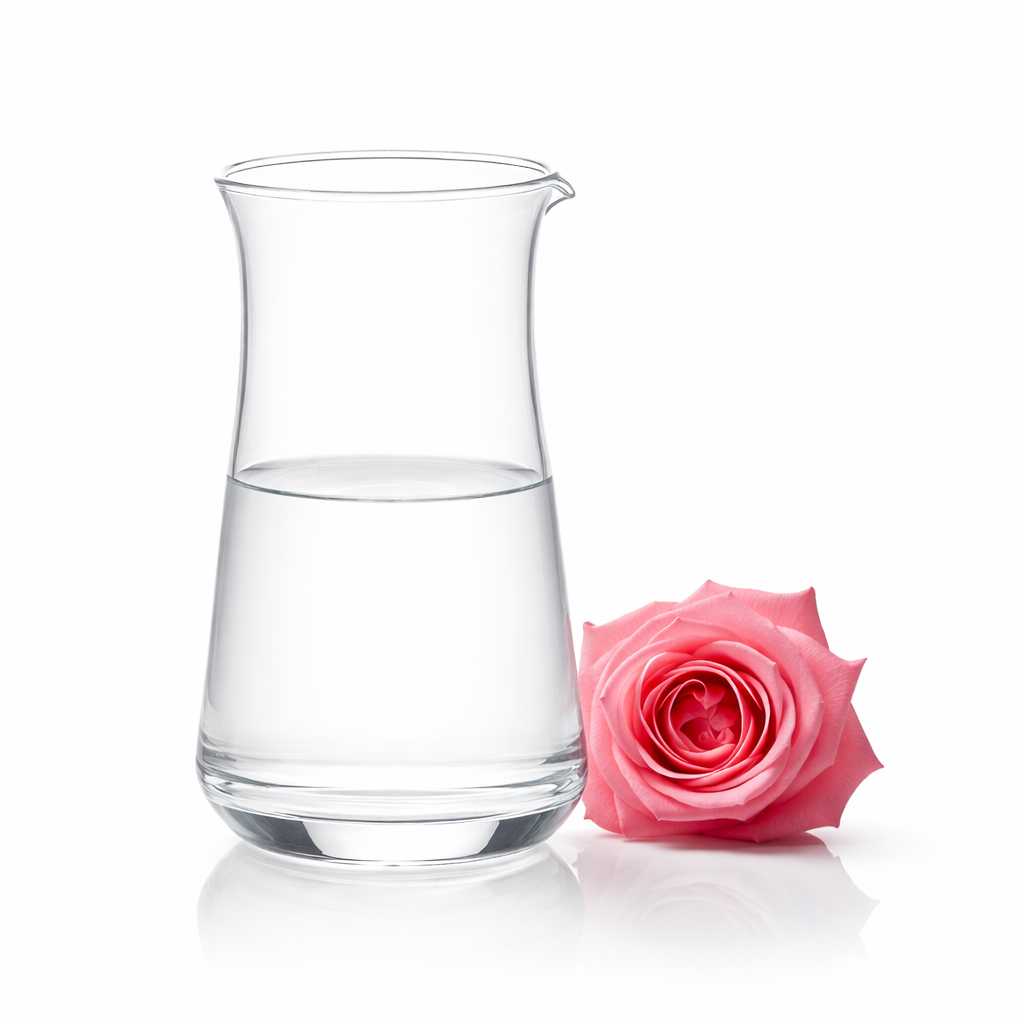
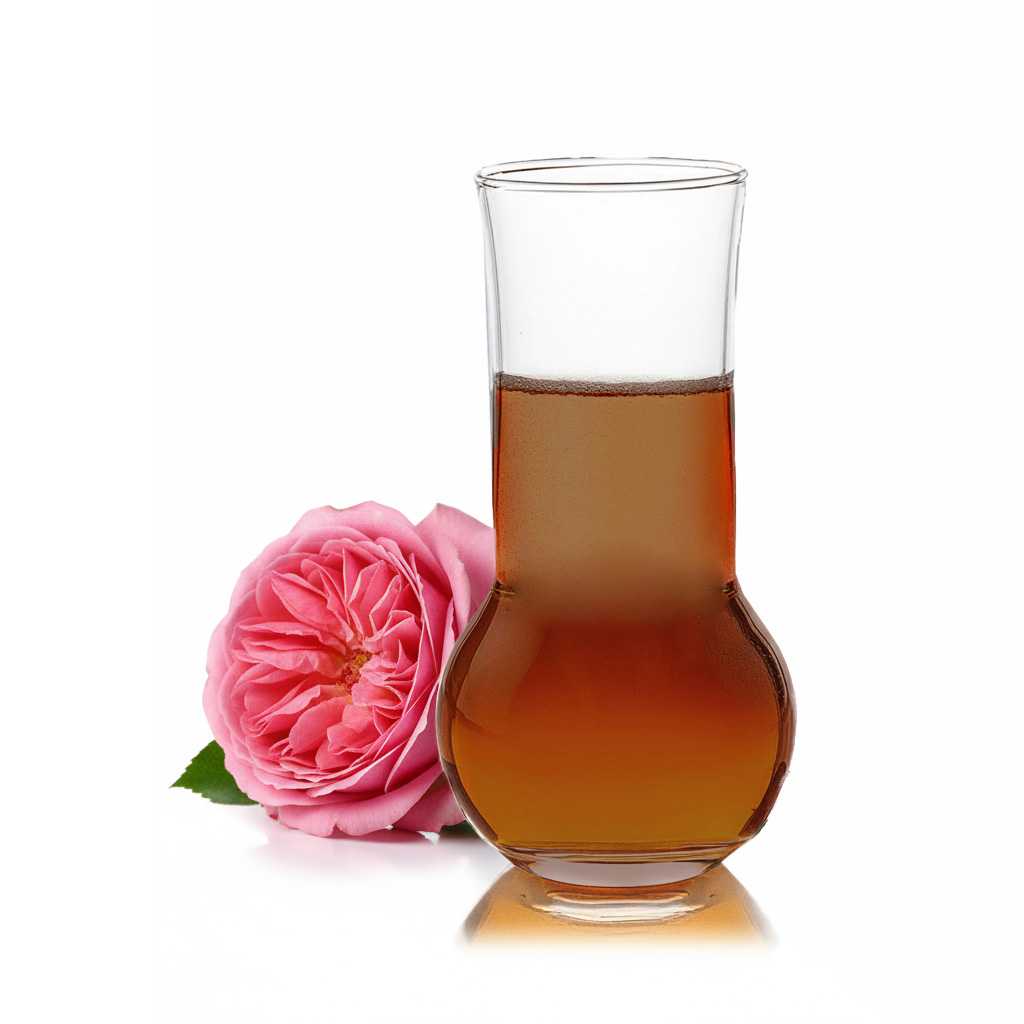
Rose water from damask rose is produced by steam distillation of fresh petals and in formulations serves as the aqueous phase with its own active effect. It hydrates and soothes the skin and imparts a natural scent of fresh roses to the product without added essential oil. The raw material is of organic quality, suitable for vegan cosmetics, and the petals come from European growing regions. It is most commonly used in tonics, facial mists, and light emulsions for sensitive, dry, and mature skin.
Key benefits
- Hydration and soothing – the aqueous base with rose flower components helps the skin retain moisture and reduces the feeling of tightness after cleansing. Suitable for formulations for sensitive and dry skin.
- Fresher and more even skin tone – as a tonic after cleansing, it refreshes the skin and prepares it for serum or cream. With regular use, it supports a more balanced complexion.
- Antioxidant support – in formulations for mature skin, it complements active ingredients targeting elasticity and regeneration.
- Natural fragrance – the sweet floral scent of roses comes directly from the distillation, so the product can be fragranced without separate perfuming.
- Carrier for active ingredients – water-soluble active components, such as hyaluronic acid, panthenol, or plant extracts, dissolve in it just as they would in distilled water.
Use in formulation
The floral water is soluble in water and alcohol, it does not dissolve in oils. It is added to the aqueous phase and can replace part or all of the water in the formulation; the recommended dosage is 1 – 100 %. In tonics, mists, and gel products it forms the base. In emulsions it replaces distilled water fully or, for example, partially, depending on how pronounced the scent should be.
When making an emulsion, it is heated together with the aqueous phase. The raw material's own pH is in a mildly acidic to neutral range; for the finished formulation, a range of pH 4 – 6 is recommended. The hydrolat tolerates electrolytes, common preservatives, fragrances, acidic and neutral pH, as well as oxidising and reducing agents.
If the rose scent in the finished emulsion should be more pronounced, add a portion of the floral water only after the emulsion has cooled and seal the container immediately.
The raw material is preserved with a system based on benzyl alcohol, benzoic acid, and dehydroacetic acid, supplemented with tocopherol. This preservation protects the hydrolat itself, not the finished product. After mixing with other ingredients — particularly extracts, gels, and additional water — the preservation of the entire formulation must be addressed separately and verified by challenge testing.
The product contains fragrance allergens listed in Annex III of Regulation (EC) No 1223/2009. Account for these in the ingredient list and labelling of the finished product.
Suitable for products such as
- Tonics and facial mists – the aqueous base sprays well and remains clear without a thickener; the hydrolat can make up the majority of the formulation.
- Serums and gels – combined with hyaluronic acid or aloe vera gel, it creates lightweight hydrating products for sensitive and dry skin.
- O/W creams and lotions – replaces water in the aqueous phase and imparts fragrance to the emulsion without additional perfume.
- Eye and lip area care – the mild scent and soothing character are suited to eye gels, compresses, and balms with an aqueous phase.
- Rinse-off products – micellar waters, cleansing gels, and face masks, where the hydrolat improves both the scent and the feel during application.
- Body and hand preparations – body mists after showering, hand creams, and refreshing sprays.
Good to know
Rose water is a clear, colourless to slightly hazy liquid. A faint haze is a natural property of the distillate and is not a batch defect. The scent is sweet and distinctly floral, like fresh roses. When used in products with their own fragrance, note that the two scents will combine. The petals come from Bulgaria.
The hydrolat and rose essential oil are produced in the same distillation, but they are two distinct raw materials. Rose water contains the water-soluble components of the flower and is therefore not suitable for anhydrous oils, balms, or butters. Fragrance in an oil-based product is provided by the essential oil; water in a balm is incorporated using an emulsifier.
Frequently asked questions
Is damask rose water suitable for anhydrous products?
No, it is not suitable for anhydrous products. The hydrolat dissolves in water and alcohol, but not in oils, so in an oil, balm, or butter it would form a separate layer. A rose character in an oil-based product can be provided by rose essential oil or an oil macerate. If you want to introduce an aqueous component into a balm, use an emulsifier and make an emulsion.
Can rose water replace water in a cream?
Yes, damask rose water can replace part or all of the water in the aqueous phase of an emulsion. The recommended dosage is 1 – 100 %, depending on how pronounced the scent should be and what proportion of the formulation the aqueous phase constitutes. The hydrolat is heated together with the other aqueous components. When a stronger scent emphasis is desired, a portion is added only after the emulsion has cooled.
Does a finished product containing rose water need to be preserved?
Yes, any finished product with an aqueous phase must always be preserved. The raw material contains its own preservation system based on benzyl alcohol, benzoic acid, and dehydroacetic acid, but this protects only the hydrolat itself. After mixing with other ingredients, the conditions change, so choose a preservative based on the complete formulation and verify it with a challenge test.
What is the difference between rose hydrolat and rose essential oil?
The hydrolat is the aqueous component from steam distillation; the essential oil is its concentrated oily fraction. Rose water is dosed in tens of percent, dissolves in water, and replaces the aqueous phase. Essential oil is dosed in tenths of a percent, requires a solubiliser in aqueous products, and has a considerably stronger scent. For sensitive skin and the eye area, the hydrolat is typically chosen.
Is rose water suitable for sensitive skin and the eye area?
Yes, damask rose water is used for sensitive, dry, and mature skin and in products for the eye and lip area. It has a soothing and hydrating effect and does not require added essential oil. However, it contains natural fragrance allergens, so for leave-on products we recommend patch testing on a small area of skin and declaring the allergens in the labelling.