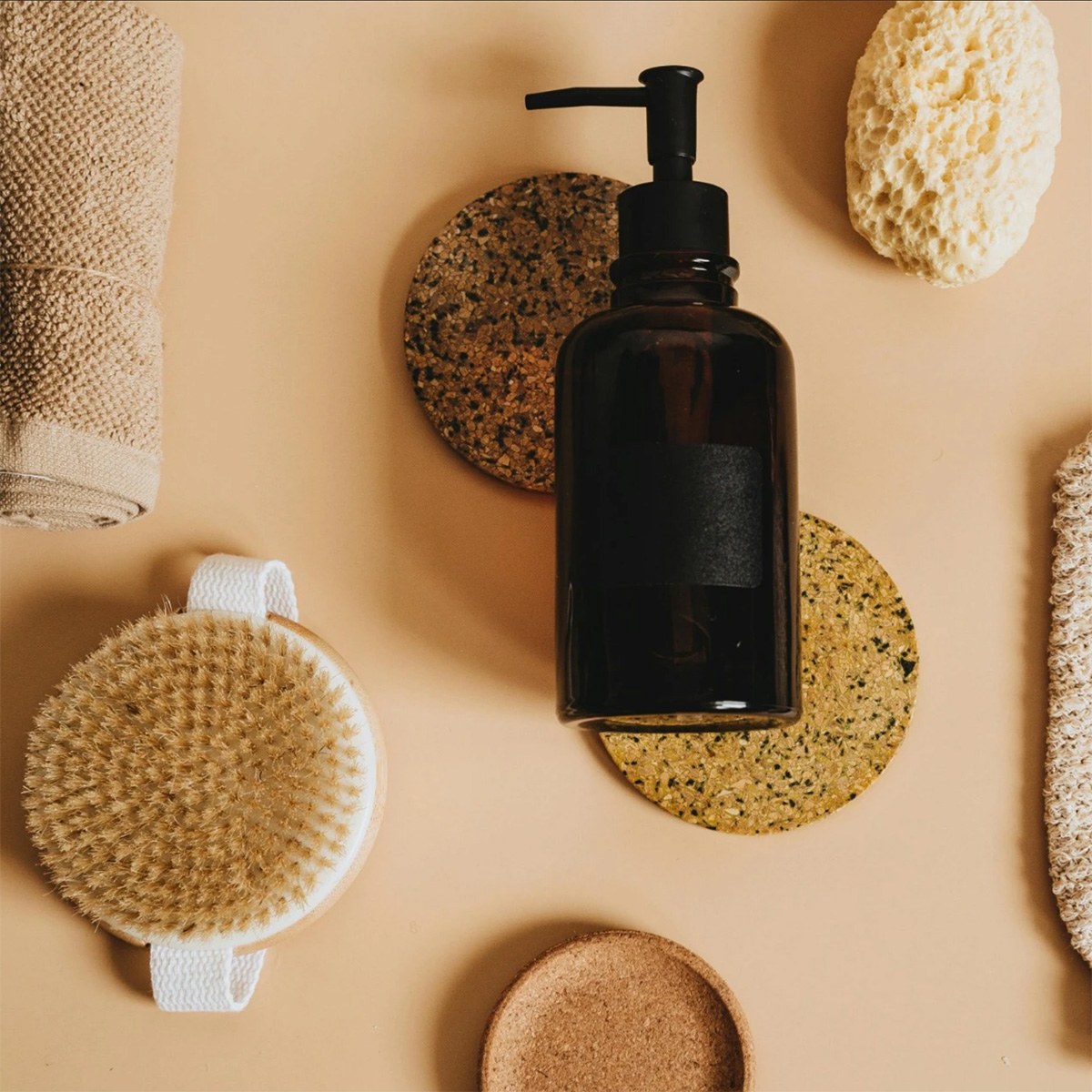
A foaming shower scrub combines fun with usefulness — and you can make one at home. We bring you two simple recipes for making basic foaming shower scrubs, which you can, of course, modify as you wish. Give free rein to your imagination and experiment with fragrances, colours, and various exfoliants and oils.
About this recipe
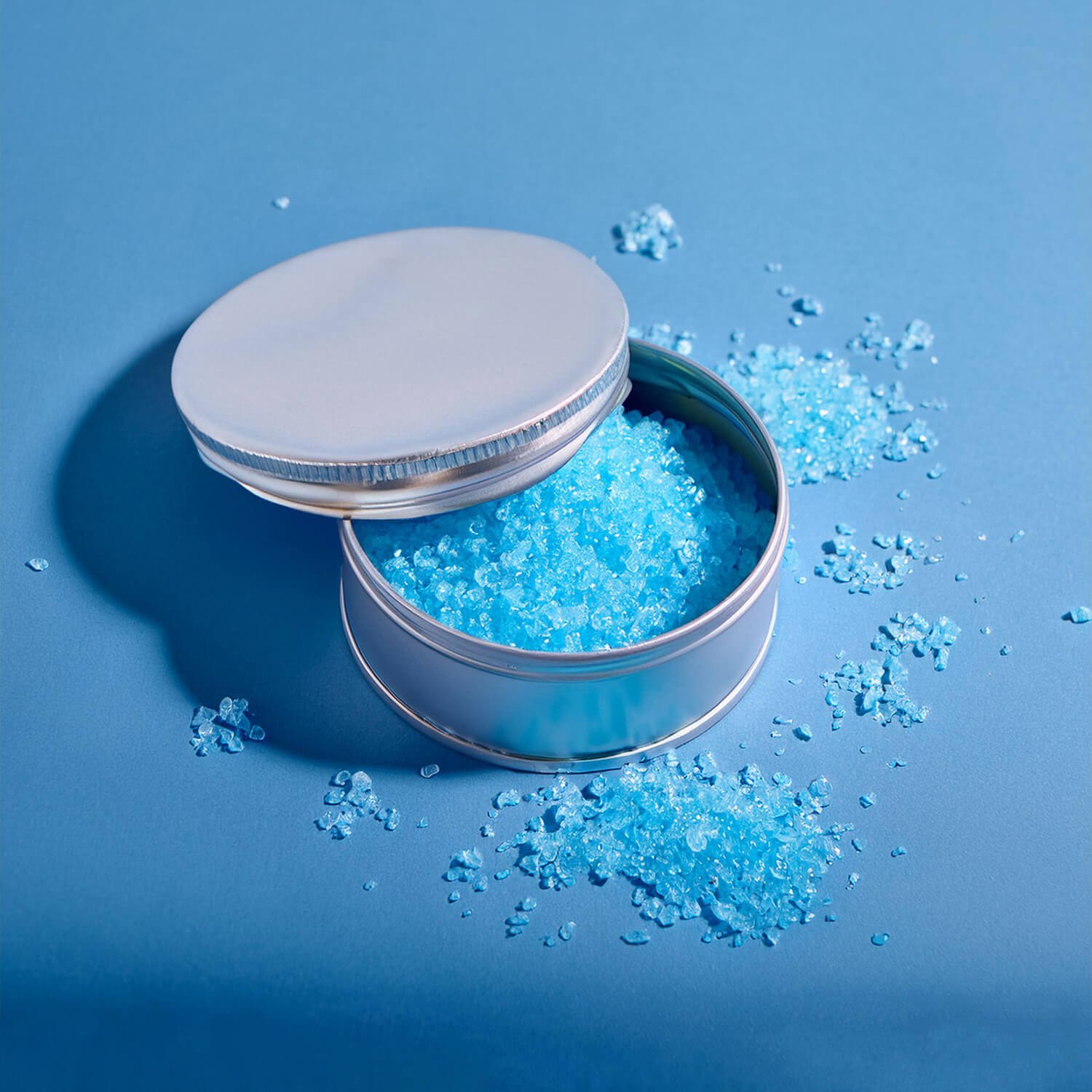
You will find two recipes for making shower scrubs, which differ in the type of exfoliant used, as well as in the proportion of the individual ingredients, thanks to which each of the scrubs creates a different feel on the skin. You can choose a gentle and fluffy scrub with pumice powder, or a somewhat firmer version for more effective removal of hardened and dead skin using Epsom salt.
Regardless of which of the two recipes you choose, the method remains the same when preparing both shower scrubs.
Key benefits
- Two recipes, one method
The scrubs differ in the type of exfoliant and in the proportion of the ingredients, but the method of preparation is the same for both.
- Foams and degreases
SCI and Lamesoft PO 65 are the two surfactants responsible for the foaming and degreasing effects of the shower scrub.
- Gentle or rougher
Pumice powder is very gentle on the skin, while Epsom salt is a somewhat rougher variant — suitable especially for dry and hard skin, for example on the feet.
- Conditions the skin
Mango butter conditions the skin, glycerine provides it with moisture and suppleness, and Sodium PCA alleviates the signs of dry skin.
- A recipe tailored to you
You can modify most of the ingredients according to your needs, or leave some of them out if you do not have them at hand.
Product properties
Key ingredients in the recipe
The foaming shower scrub contains many ingredients that you can modify according to your needs, and some of them can also be left out if you do not have them at hand. By understanding the role of the individual ingredients in the recipe, you can substitute them more easily and prepare a recipe tailored exactly to your needs.
Ground pumice powder
Pumice powder is a fine grey dust that is very gentle on the skin — in the first recipe it plays the role of the abrasive substance, the exfoliant. Together with the other exfoliants, it can be replaced with any other exfoliant: the choice is really broad, from ground shells of various nuts to sugar, salt or ground coffee and the like. It may happen that you will have to adjust the proportion of cetearyl alcohol and emulsifier so that the scrub is firm enough for good scooping from the container and for use.
Epsom salt
Epsom salt is a somewhat rougher variant of a scrub, suitable especially for dry and hard skin, for example on the feet. In the second recipe it replaces the pumice powder and at the same time forms the predominant component of the product — a scrub made with it is firmer and removes hardened and dead skin more effectively.
SCI — sodium cocoyl isethionate
SCI, together with Lamesoft PO 65, is one of the two surfactants responsible for the foaming and degreasing effects of the shower scrub. That is precisely why these two ingredients cannot be omitted — it would no longer be a foaming shower scrub; you would obtain only an ordinary shower scrub, which will indeed remove dead skin, but will not foam. SCI is a very fine powder that is easily released into the air, so put on a respirator when working with it.
Lamesoft PO 65
Replacing the surfactants is challenging: a major change in their ratio or their replacement with other substances may cause the emulsion, and the whole product, to break. If you must swap one of the surfactants, replace Lamesoft with the liquid surfactant cocamidopropyl betaine, but you will obtain a product with slightly different foaming and degreasing properties. When choosing surfactants, always make sure that they are compatible, i.e. do not combine surfactants with opposite charges — anionic with cationic.
Olivem 1000
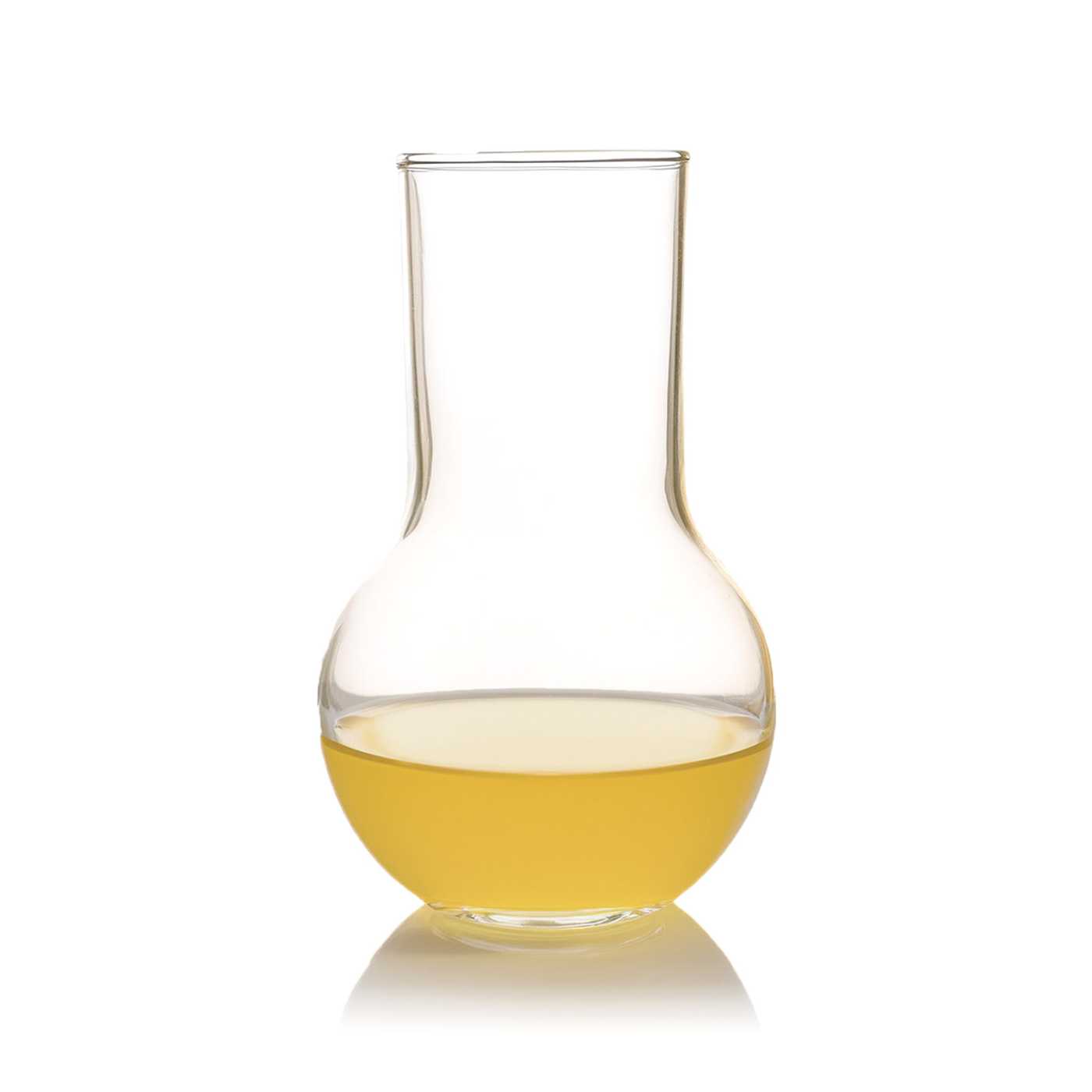
Our recipes use the emulsifier Olivem 1000. It is a great emulsifier for beginners — you can use it to prepare a wide range of products, from body lotions and creams to shower scrubs. If you do not have Olivem 1000 at hand, you can replace it, for example, with the emulsifier Beautyderm K10 or another one, but keep in mind that each emulsifier is slightly different, which can be reflected in the final consistency of the product.
Other ingredients
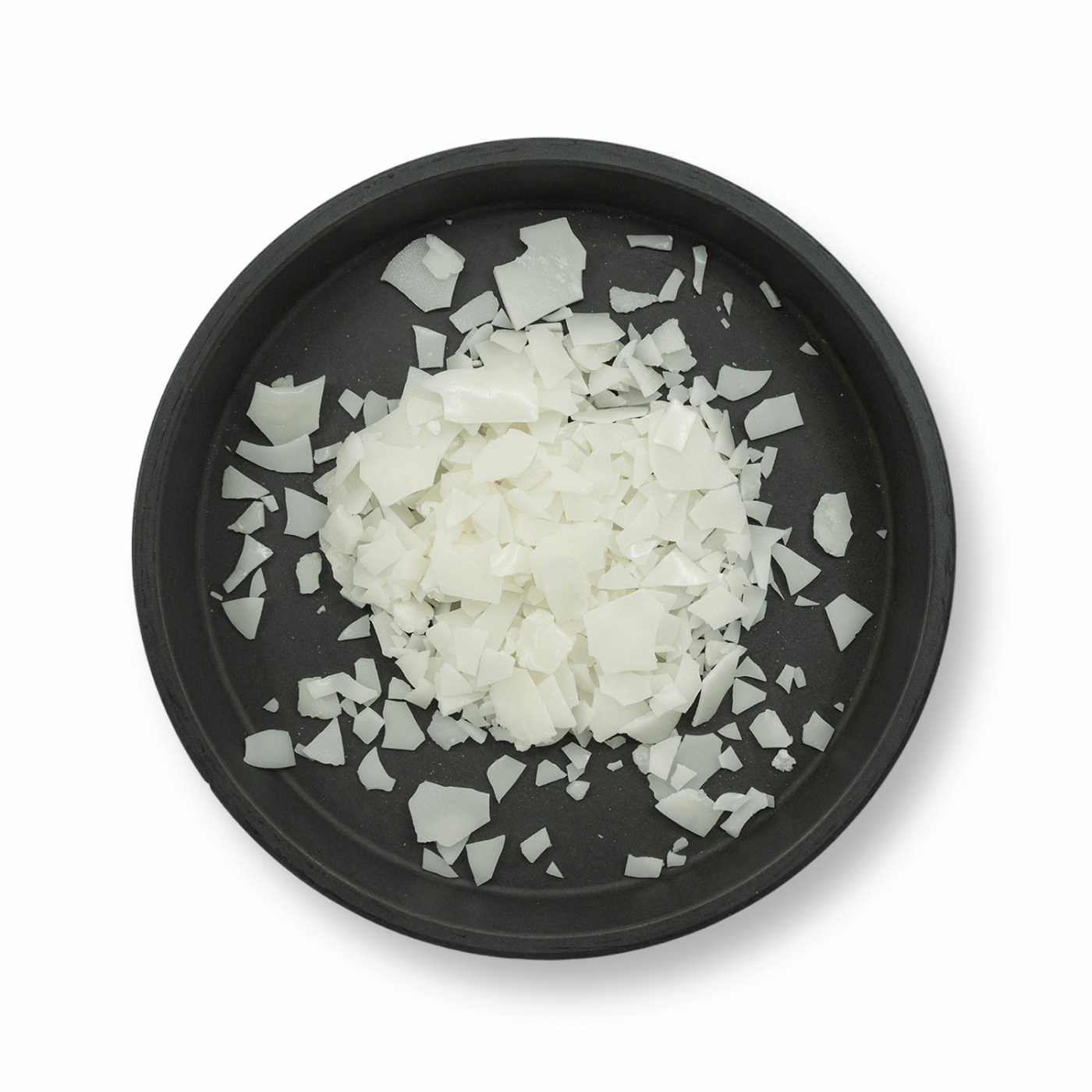
Cetearyl alcohol was used in the recipe to give firmness to the finished mixture of foaming shower scrub. It also has mild emulsifying properties, so it combines well with oils and emulsifiers. An excellent substitute is cetyl alcohol, which has similar properties. You can also reach for stearic acid; again, however, using the same amount as cetearyl alcohol may give you a mixture with a slightly different consistency. By increasing the content of the thickener you will obtain a firmer scrub; conversely, lowering the content will bring you closer to a creamy consistency.
Mango butter is a great nurturing butter for the skin. It is far from your only choice, though — you can choose any other vegetable oil or butter. If you increase the proportion of fat in the product, you will obtain a scrub that is more emollient and conditioning to the skin; conversely, by reducing the proportion of oil or butter in the recipe, you will obtain a more foaming and degreasing foaming shower scrub.
Demineralised water creates a suitable environment for dissolving the surfactants. Even this, however, can be replaced by floral waters, hydrolats, which will at the same time gently scent your product — choose a hydrolat that suits your skin best, or prepare a mixture of several hydrolats.
Glycerine has the role in the recipe of providing the skin with moisture and suppleness. That is also why it is good to incorporate it into the water phase. If you do not have it at the moment, though, you can leave it out completely and replace it with a larger amount of exfoliant.
Mica powders gave the scrubs their beautiful colours. They are easily incorporated into the water or oil phase. You can leave them out of the recipe completely — in that case the product will have the colour of the predominant component, i.e. the exfoliant: with pumice powder the scrub will be grey, while with ground nut shells or jojoba beads it will take on a brown colour.
Fragrance oils offer a wide palette of fruity, floral and woody scents that you can combine in various ways. If you prefer essential oils, you can use them in place of the fragrance oil. Another option is to avoid fragrance altogether, if you wish.
Sodium PCA is an excellent moisturising agent for the skin, and so during showering it helps to nourish the skin and alleviate the signs of dry skin. It has similar properties to glycerine. It can be left out of the recipe completely, but if you want to give your shower scrub a touch of luxury, we recommend keeping it.
Euxyl PE 9010 is a preservative. Since the recipe contains water, a preservative has to be used; Euxyl 9010 has the advantage that it acts in a wide pH range, so it is not necessary to adjust the pH of the product before adding it. It can be replaced by any other broad-spectrum preservative that acts in a wide pH range (i.e. not only in an acidic but also in a neutral pH).
Formulation (100 g)
The ingredient content is given in percentages by weight, so it corresponds to a batch of 100 g of finished scrub. We have prepared two variants — one with pumice powder and one with Epsom salt; each has its own shopping list and table, and the method is the same for both.
Variant 1 — shower scrub with pumice powder
Shop the ingredients for this recipe
Untick what you already have- Lamesoft PO 65, 100 mlrecipe uses 6,00 gin stock€3.19
- Olivem 1000, 100 guses 5 gin stock€12.90
 Sodium PCA 50%, 30 mlrecipe uses 5,00 gin stock€2.61
| Phase / ingredient | Content |
|---|---|
| Water phase | |
| Demineralised water | 7.00 % |
| SCI | 7.00 % |
| Lamesoft PO 65 | 6.00 % |
| Vegetable glycerine | 8.50 % |
| Mica powder — Deep Ocean Blue | 0.50 % |
| Oil phase | |
| Cetearyl alcohol | 0.50 % |
| Mango butter | 6.00 % |
| Olivem 1000 | 5.00 % |
| Final phase | |
| Euxyl 9010 — preservative | 1.00 % |
| Fragrance oil — Bali Body Spa | 1.00 % |
| Sodium PCA | 5.00 % |
| Exfoliant | |
| Pumice powder | 50.00 % |
| Packaging | |
| Aluminium jar, 60 ml | — |
Variant 2 — shower scrub with Epsom salt
Shop the ingredients for this recipe
Untick what you already have- Lamesoft PO 65, 100 mlrecipe uses 6,00 gin stock€3.19
- Olivem 1000, 100 guses 3 gin stock€12.90
- Sodium PCA 50%, 30 mlrecipe uses 1,00 gin stock€2.61
| Phase / ingredient | Content |
|---|---|
| Water phase | |
| Demineralised water | 7.00 % |
| SCI | 6.00 % |
| Lamesoft PO 65 | 6.00 % |
| Vegetable glycerine | 8.50 % |
| Mica powder — Gold Sparks | 0.50 % |
| Oil phase | |
| Cetearyl alcohol | 2.00 % |
| Mango butter | 7.00 % |
| Olivem 1000 | 3.00 % |
| Final phase | |
| Euxyl 9010 — preservative | 1.00 % |
| Fragrance oil — Bali Body Spa | 1.00 % |
| Sodium PCA | 1.00 % |
| Exfoliant | |
| Epsom salt | 57.00 % |
| Packaging | |
| Glass jar, 50 ml | — |
Method
Regardless of which of the two recipes you choose, the method remains the same when preparing both shower scrubs. In the following lines you will find out how to do it.
- Disinfection
Disinfect all containers and tools that will come into contact with the raw materials or the product (for example using ethanol).
- Water phase into the bath Water phase
Put on a respirator (SCI is a very fine powder that is easily released into the air), and ideally gloves as well. In one container mix the water, glycerine, SCI, Lamesoft and mica powder, cover with aluminium foil and place in a water bath. From this moment on, a respirator will no longer be needed.
- Oil phase Oil phase
Into a second container (heat-resistant) weigh out the mango butter, cetearyl alcohol and the emulsifier — Olivem 1000. Cover with aluminium foil and leave to heat in the water bath until melted.
- Combining the phases and whipping Water + oil phase
Once melted, pour the water phase into the oil phase (i.e. the phase with the mango butter) and immediately start mixing with a hand mixer until it is whipped to a creamy consistency.
- Preservative, fragrance and exfoliant Final phase
Finally, add the preservative, fragrance oil and Sodium PCA and mix well. Then add the exfoliant (Epsom salt/pumice powder) and mix well again.
- Filling into the container
Fill into the chosen container, for example an aluminium or glass cream jar.
Packaging and storage
For packaging the shower scrub, jars with a wide neck are suitable, as they make it easier to scoop out the product. This category includes mainly glass, plastic or aluminium cream jars with a volume of at least 50 ml for easier handling.
After use, the product must always be closed properly, which will prevent additional unwanted water from getting into it. Thanks to this too, your product will stay fresh for longer. We also recommend storing it out of direct sunlight and in a cooler place, if possible.
Warning
You can experiment with homemade recipes to achieve the properties you want. The final result, however, can be influenced by many factors, such as humidity, temperature, the quality of the ingredients or the way they are stored.
Before using any ingredient to make a cosmetic product, familiarise yourself with its properties, recommended dosage, storage conditions and safe handling. Every ingredient can have the potential to trigger an allergic reaction in sensitive individuals, so before using the product we recommend finding out whether you are allergic to any of the ingredients or to the product as a whole, for example by means of a patch test.
If you have very sensitive or very acne-prone skin, or you have other skin and health problems, we recommend that you consult a medical professional before applying a new product to the skin, whether it is a homemade cosmetic product, a pure ingredient or a commercially available product.
Frequently asked questions about the recipe
Practical questions about the foaming shower scrub — swapping the exfoliant, the surfactants, preservation and storage.
Can I replace the pumice powder or Epsom salt with a different exfoliant?
Yes, the exfoliants mentioned can be replaced with any other exfoliant. The choice is broad — from ground shells of various nuts to sugar, salt or ground coffee. It may happen that you will have to adjust the proportion of cetearyl alcohol and emulsifier so that the scrub is firm enough for good scooping from the container.
Can SCI and Lamesoft PO 65 be left out or replaced?
They cannot be left out — without them it would no longer be a foaming shower scrub, but only an ordinary shower scrub, which will remove dead skin but will not foam. Replacing them is challenging, because a major change in the ratio of the surfactants may cause the emulsion to break. If you must swap one, replace Lamesoft with the liquid surfactant cocamidopropyl betaine — you will obtain a product with slightly different foaming and degreasing properties.
Why is there a preservative in the recipe?
Because the recipe contains water. On top of that, a foaming scrub is used primarily during showering and bathing, so there is a risk that excess water will get into it, for example when scooping with wet hands. Euxyl 9010 acts in a wide pH range, so the pH of the product does not need to be adjusted before adding it.
How do I get a firmer or, conversely, a creamier scrub?
By increasing the content of the thickener (cetearyl alcohol) you will obtain a firmer scrub; conversely, lowering the content will bring you closer to a creamy consistency. The proportion of fat works in a similar way: more oil or butter means a scrub that is more emollient and conditioning, while less fat gives a more foaming and degreasing product.
How should the scrub be packaged and stored?
Jars with a wide neck are the ones to go for — glass, plastic or aluminium cream jars with a volume of at least 50 ml. After use, always close the product properly so that no further unwanted water gets into it, and store it out of direct sunlight and in a cooler place.
Conclusion
So, friends — did you manage to make your foaming shower scrub? It was fun, wasn’t it? We really enjoyed making the shower scrub, and we enjoyed using it even more.
If you have any questions about the manufacturing process or the ingredients themselves, feel free to write to us at [email protected]. Share your observations and ideas with us so that we can keep improving the procedures for you. Until we see each other again, we wish you a beautiful, creative day.
Until soaping-off, friends.
You will find the exfoliants, surfactants, vegetable butters and mica powders from both recipes in the Handymade range of ingredients.