Ethanol 96%, Denatured, Vegetable, 1 l
Pre-order€6.99(€6.99/l)

Candle waxes
Pack size1 kg5 kg
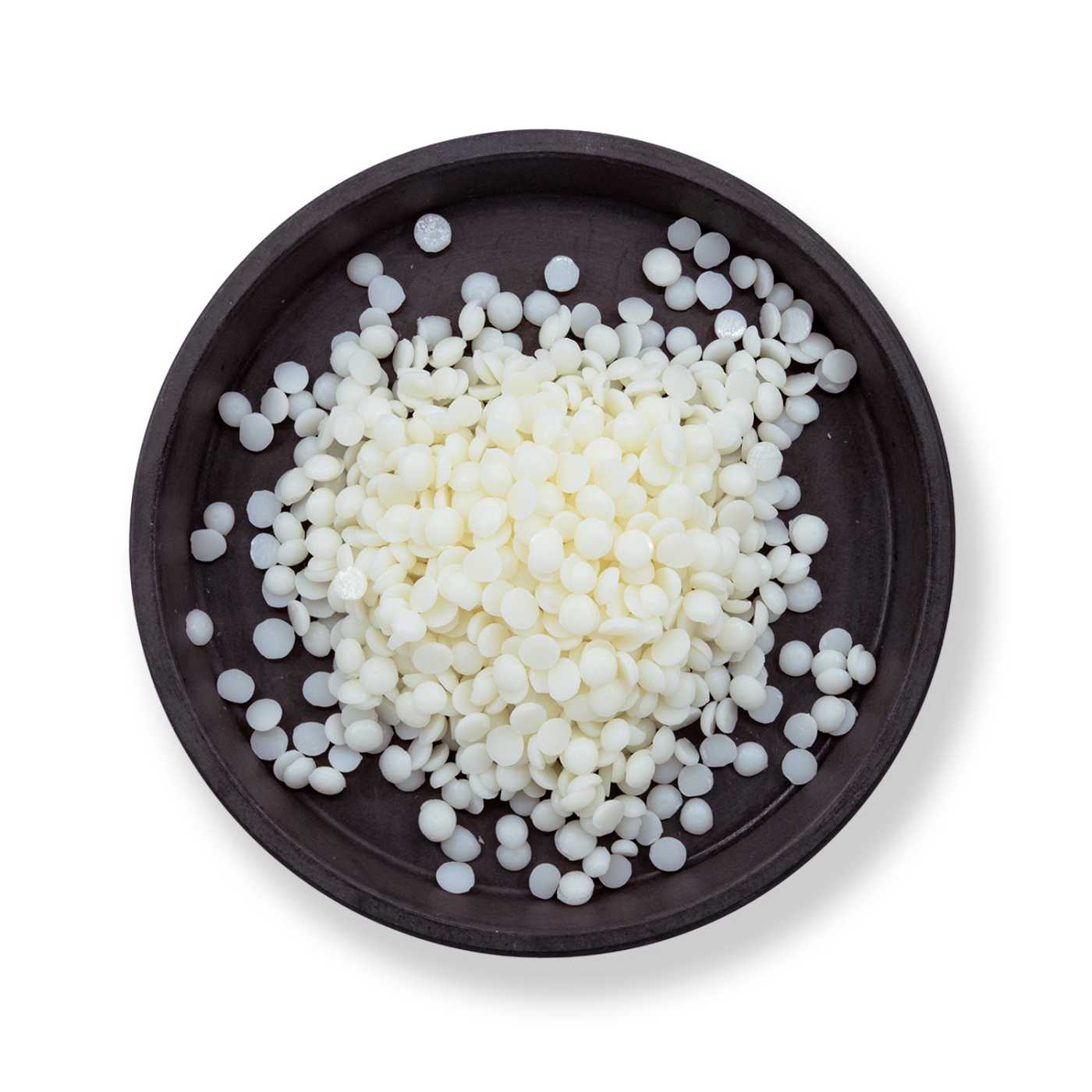
KeraSoy massage soy wax is a soft vegetable wax made from hydrogenated soybean oil, developed for container candles . full description
Lowest price in the last 30 days: €9.99
KeraSoy massage soy wax is a soft vegetable wax made from hydrogenated soybean oil, developed for container candles. It melts at a low temperature, adheres well to glass and needs no additives other than fragrance and dye. It is suitable for scented candles in glass or tins and is also used as a base for massage candles.
The wax is paraffin-free and contains no ingredients of animal origin; it is labelled Vegan. It is readily biodegradable.
It is a soft wax with a low melting point. It melts at 42–48 °C (typically around 45.5 °C) and solidifies at 34–42 °C (typically around 39 °C). At room temperature it is a white to cream-coloured solid with a neutral odour.
It dissolves in vegetable oils and is insoluble in water.
Melt the wax with constant stirring at a temperature of up to 85 °C and no longer than necessary. Brief overheating to 90 °C will not harm it, provided it is cooled quickly afterwards. At higher temperatures the wax may change colour.
The material of the vessel also affects the colour. Copper and zinc speed up the colour change. Stainless steel is the most suitable, although ordinary steel is also acceptable. We recommend monitoring the temperature with a digital thermometer.
The wax tolerates no more than 10–12% fragrance. Fragrances developed for natural waxes perform best in it. Fragrances intended for paraffin candles more often cause fragrance sweating onto the surface, an unattractive candle surface or a poorer flame. Add the fragrance only once the wax has cooled to pouring temperature, as close to pouring as possible, and stir it in thoroughly.
This limit applies to candles intended for burning. It does not indicate a safe amount of fragrance or essential oils for the skin. A massage candle is applied to the skin, so it is assessed as a cosmetic product.
The wax can be coloured with most oil-soluble candle dyes: powder, liquid, blocks and chips. Powder dye is mixed into wax heated to about 75 °C and stirred until fully dissolved. It can also be dissolved in the fragrance first and added afterwards. With liquid dyes, blocks, chips or an uncoloured candle, it is enough to heat the wax to 70 °C. A small amount of black dye gives a deeper, richer shade.
The wax adheres best to glass when it is poured close to its solidifying point, at approximately 45–55 °C. The containers should be clean and at least at room temperature. Preheating the containers to 45–50 °C improves adhesion. If the surface or adhesion is not as you would like, adjust the pouring temperature in steps of 5–10 °C up or down.
A single pour is enough in most containers. Large containers may need a top-up pour. Use a small amount of wax slightly hotter than for the first pour, and add it before the candle has cooled completely. A top-up on a completely cold candle holds less well in the container.
Leave the candles to cool undisturbed at a temperature of around 25 °C and wait 48 hours after pouring before the burn test.
Natural waxes generally need a thicker wick than paraffin. The choice is also affected by the fragrance, the dye and the shape of the container. Every combination of container, wax, dye, fragrance and wick must therefore be tested by burning.
During the test, observe the width of the melt pool and the cleanliness of the flame. The size and depth of the pool also determine how the fragrance spreads into the room. Trim the wick to about 6 mm before burning.
Candle leftovers and failed pieces can be melted again and the wax reused, provided it is not overheated or heated for a long time.
When working with hot wax, we recommend safety glasses and impermeable gloves. Do not inhale the fumes from molten wax. The flash point of the wax is above 150 °C.
The wax contains no known skin allergens and is not classified as carcinogenic, mutagenic or toxic to reproduction.
Only customers with a delivered order can write reviews.