
+421 950 333 113info@handymade.store

Spend over €100 for discounted shipping!

Candle fragrance oils

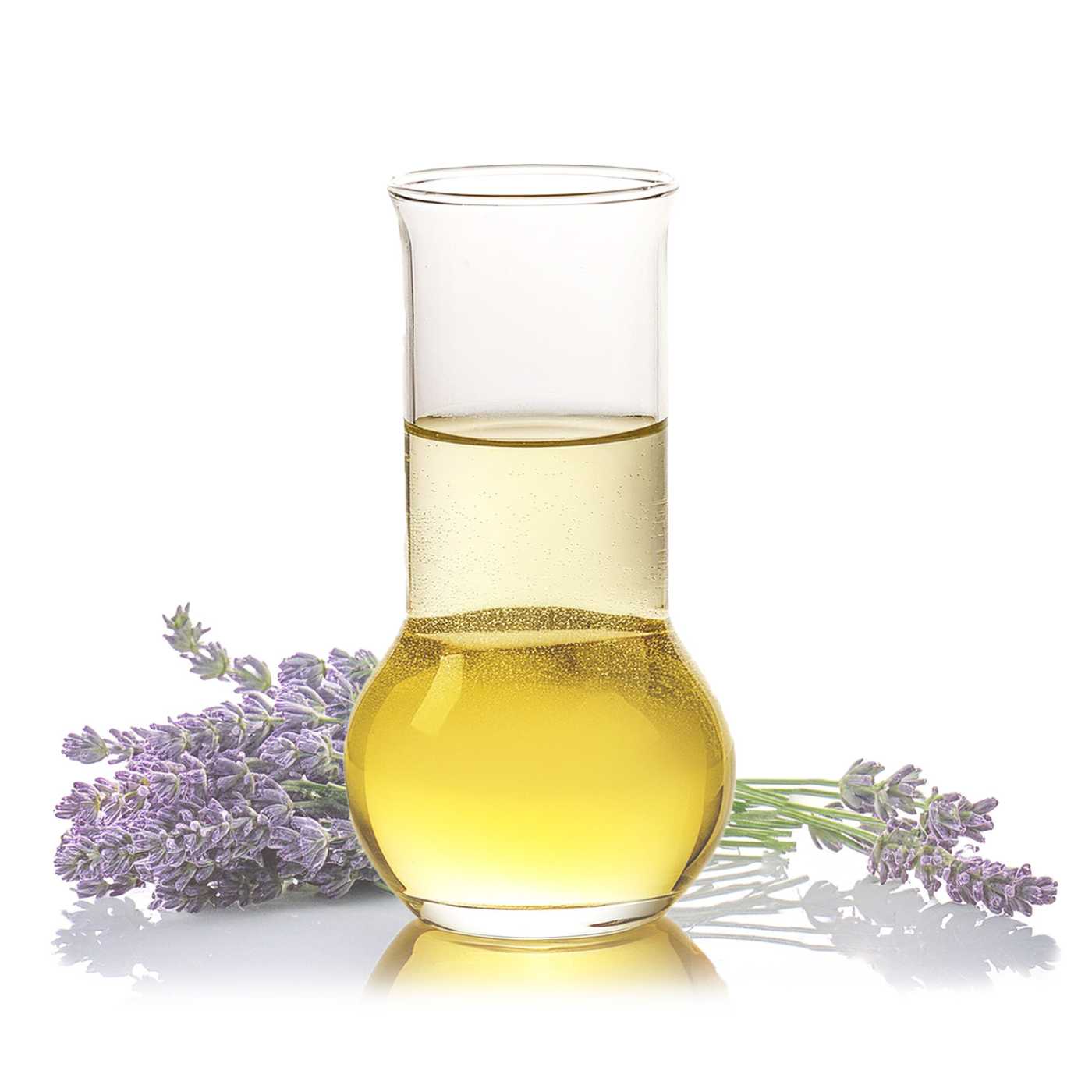
Lavender Essential Oil, Herbal, 5 l

Pack size10 ml100 ml500 ml1 l5 l

Narrow-leaved lavender essential oil is both a fragrance and an active ingredient in cosmetics. It is obtained by steam distillation of fresh flowers of Lavandula angustifolia and is supplied as a 100% pure natural oil. full description

AvailabilityIn stock · last 1 pack
Product codeEON045_5
€695.52incl. VAT€139.10/l

Lowest price in the last 30 days: €695.52

Product description

Narrow-leaved lavender essential oil is both a fragrance and an active ingredient in cosmetics. It is obtained by steam distillation of fresh flowers of Lavandula angustifolia and is supplied as a 100% pure natural oil. It brings the familiar scent of lavender to your products, along with properties traditionally attributed to it: antimicrobial and anti-inflammatory action, a deodorising effect and support for skin regeneration.

As a fragrance ingredient, it is compatible with alcohol bases. As an active ingredient, it is added to products for oily, problem and acne-prone skin. It is used in face, body and hair care, in soaps and bath products, in deodorants, candles and diffusers.


Main components of the oil

Narrow-leaved lavender oil has a high ester content and a low camphor content. The total ester content, expressed as linalyl acetate, is in the range of 38.5–52.5%. Linalyl acetate alone makes up 30–42% and linalool 22–34%. The oil contains at most 0.6% camphor and at most 2% 1,8-cineole. Smaller amounts of cis- and trans-β-ocimene, lavandulyl acetate and terpinen-4-ol are also present.


Effects and uses

  • Antimicrobial action – traditionally used in products for oily and acne-prone skin, in deodorants and in cleansing products. It complements the effect of the formulation, but it does not replace a preservative system.
  • Anti-inflammatory action – one of the properties traditionally attributed to lavender. In creams and oils for problem skin, it is used as a supporting ingredient. The effect in the finished product depends on the usage rate and the rest of the formulation.
  • Deodorising action – the fragrance masks unwanted odours and, together with the antimicrobial action, complements the function of deodorants and foot care products.
  • Regeneration support – added to oil serums, balms and hand creams for the care of stressed skin.
  • Fragrance – the characteristic lavender fragrance. In a finished product, it works on its own or as part of a composition with other essential oils.
  • Candles – candles of all types, including container candles, in an amount up to the IFRA limit for category 12.

Use in formulations

The oil is soluble in oils and in alcohol and insoluble in water. In emulsions, it is added to the oil phase or only during the cooling phase, and in anhydrous products directly. The recommended processing temperature is below 40 °C, so it is incorporated only after the phases have been combined and the mixture is cooling, and it is stirred in briefly. In water-based products such as toners and facial mists, a solubiliser is required. Without it, the oil separates and reaches the skin undiluted.

There is no single universal usage rate. The maximum permitted amount in the finished product is determined by the IFRA limit for the given product category, for example category 1 for lip products or category 9 for soaps and shampoos. You can find the limits for all categories in the IFRA certificate in the Product documentation section.

Its compatibility with alcohol allows use in eaux de parfum, hair sprays and hand sanitisers. In bath salts and bath bombs, the oil belongs in the oil part of the formulation. In candles, it is dosed according to the IFRA limit for category 12 and added to the wax after it is removed from the heat. The flash point of the oil is above 90 °C.


Suitable for products such as

  • Face creams, serums and toners – for oily and acne-prone skin, added during the cooling phase (IFRA category 5B).
  • Body oils, lotions and balms – fragrance and support for skin regeneration (category 5A).
  • Hand creams and hand sanitisers – category 5C, where its compatibility with alcohol is also used.
  • Deodorants and antiperspirants – deodorising effect (category 2).
  • Shampoos, shower gels, solid and liquid soaps – rinse-off products of category 9.
  • Leave-in conditioners, hair sprays and gels – leave-on products for hair and scalp (category 7B).
  • Bath salts and bombs, candles, diffusers – a fragrance ingredient for aromatherapy and home fragrance.

Good to know

The flowers for distillation are harvested in July and August, and the oil comes from Bulgaria. Its light yellow colour has practically no effect on the colour of the finished product.

It is always incorporated into products in diluted form and is not applied directly to the skin undiluted. It is used on the face, body, hands, hair and scalp. For sensitive skin, we recommend testing the finished product for tolerance on a small area.

The oil contains known skin allergens and is classified under the CLP Regulation (pictograms GHS07 and GHS08). It is not classified as CMR. For the finished product, allergen labelling must be taken into account. Details on safe handling can be found in the safety data sheet.


Frequently asked questions

Is narrow-leaved lavender essential oil soluble in water?
No, it does not dissolve in water; it dissolves in oils and in alcohol. For this reason, it is incorporated into toners, facial mists or water-based fresheners with the help of a solubiliser. Without it, the oil floats on the surface and reaches the skin undiluted. In emulsions, it is added to the oil phase or during cooling.
How much lavender essential oil should I add to a cream?
There is no uniform usage rate; the upper limit is governed by the IFRA limit for the product category. Face creams and toners belong to category 5B, hand creams to 5C, and body creams and oils to 5A. The specific values for each category are in the IFRA certificate in the Product documentation section. Within the limit, the dose is chosen according to the desired intensity of the fragrance.
At what temperature should lavender essential oil be added to an emulsion?
The recommended processing temperature is below 40 °C. The oil is therefore not added to the hot oil phase but only during the cooling phase of the emulsion, once the mixture has thickened and the temperature has dropped below this level. It is then stirred in briefly. The same principle applies to balms and butters: add it to the melted mixture only after it has partially cooled.
Can lavender essential oil replace a preservative in a cream?
No, it does not replace a preservative system. The antimicrobial action of lavender is used as a supporting property in products for oily and problem skin, but it cannot protect a product with a water phase from microbial growth. Creams, toners and other water-based products need a proven preservative and a stability test.
Is narrow-leaved lavender essential oil suitable for candles?
Yes, in candles it belongs to IFRA category 12 and has a flash point above 90 °C. It is dosed within the limit stated in the IFRA certificate and added to the wax after it is removed from the heat. For every new wax and dose, we recommend a test burn to check the fragrance intensity and the behaviour of the wick.

Parameters

INCI
Lavandula Angustifolia Oil
CAS No.
90063-37-9 / 8000-28-0
EC number
289-995-2
Product colour
Yellow
Processing method
Steam distillation
Appearance
Oily liquid
Free from
parabens
Recommended processing temperature
< 40 °C
Application area
FaceHairScalpBodyHands
Application type
Leave-onRinse-off
Biodegradability
Readily biodegradable
Natural Index (NI ISO 16128)
1,00
Natural Origin Index (NOI ISO 16128)
1,00
Renewable Carbon Content (RCC)
100 %
Volume
5000 ml

Product documentation

CoACertificate of Analysis
batch BB202603030PDF ↓
batch BB2026503030PDF ↓
TDSTechnical Data Sheet
Physical parameters and processingPDF ↓
IFRAIFRA Certificate
batch BB202603030PDF ↓
AllergensAllergen Declaration
batch BB202603030PDF ↓
SDSSafety Data Sheet
Available for purchased products —
Download all (ZIP)

5 PDF files in one archive

Learn how to work with it

From our blog
Ludivine D.29 Sept 2026FR

Verified purchase

Variant: Esenciálny olej, levanduľa úzkolistá, 100 ml

Finally a large size

Translated automatically

Slávka20 Aug 2026SK

Verified purchase

A versatile essential oil — This essential oil must never be missing in our home - versatile, fragrant and at a great price.

Translated automatically

Monika9 Aug 2026SK

Verified purchase

Lavender — A very nice, sweeter scent.. I also use it when making homemade cosmetics

Translated automatically

Veronika F.19 Nov 2026SK

Verified purchase

sirje K.15 Nov 2026EN

Verified purchase

(11 reviews)