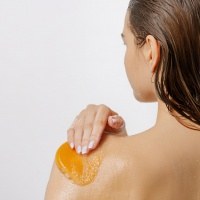
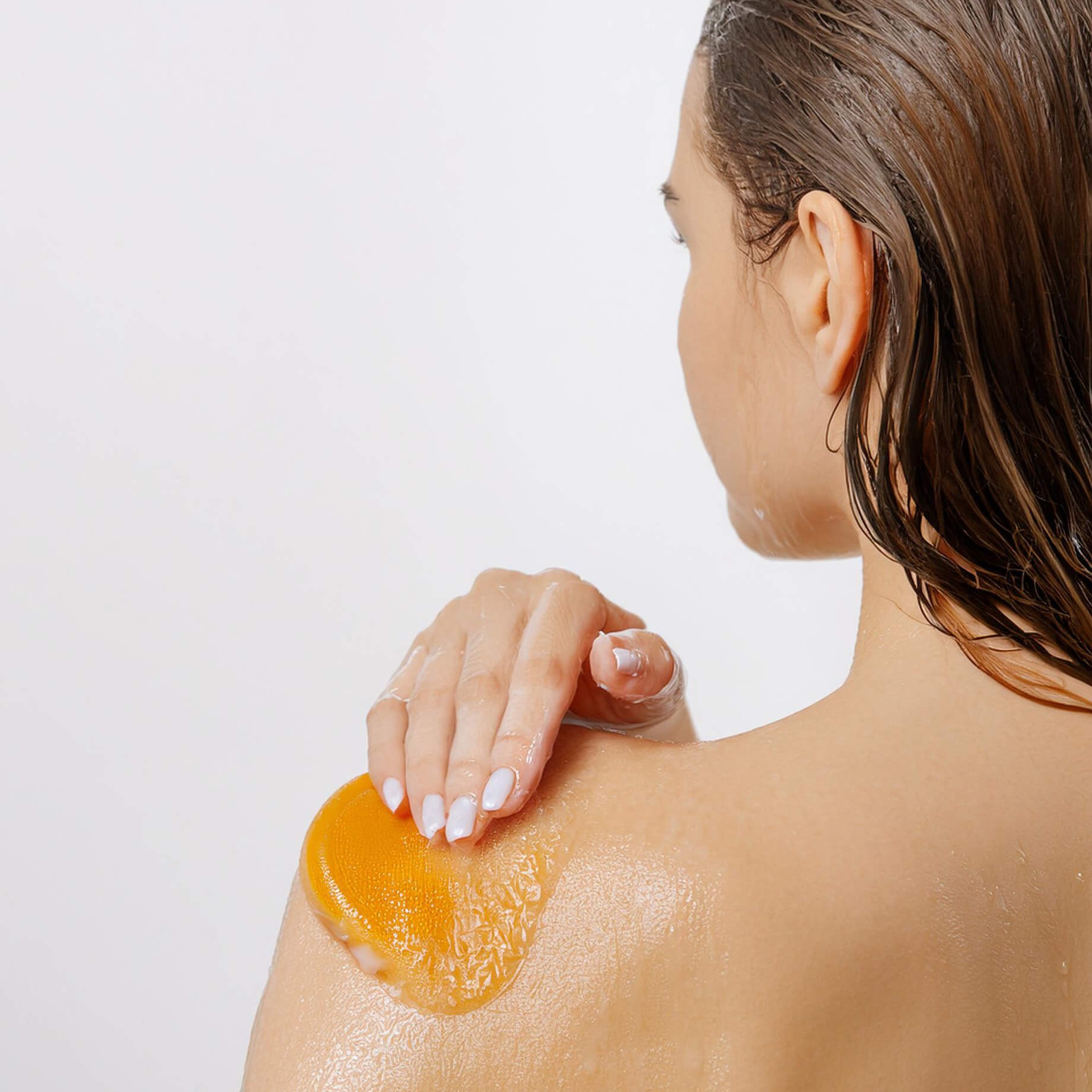
Refreshing shower gel is a men’s shower gel which, with its fresh grapefruit fragrance, can also enchant women. It creates a feeling of cleanliness and freshness and is perfect not only for everyday use, but also after sports activity. Thanks to its pleasant orange colour, this product will remind you of grapefruits not only with its scent, but also with its appearance.
About this recipe
This excellent recipe for a refreshing shower gel was prepared by Ivana Jačalová. To make it we need a base made up of surfactants — in this case two surfactants were chosen, a classic glucoside in combination with cocamidopropyl betaine. It is precisely thanks to the surfactants that the shower gel forms foam and has cleansing effects; in addition, these substances enable the dissolution of essential and vegetable oils and menthol, since the other components of the product are water-based.
Main benefits
- Refreshing and cooling
A small amount of menthol gives a fresh scent as well as a cooling sensation on the skin after using the shower gel.
- Fresh grapefruit fragrance
Grapefruit essential oil is dominant, complemented by lime and the woody base notes of patchouli.
- For men, but for women too
By simply swapping the fragrances and colours you can easily conjure up both a men’s and a women’s version of the shower gel.
- Great after sport
It creates a feeling of cleanliness and freshness — perfect for everyday use as well as after sports activity.
- Grapefruit colour
Mica powders give the product a pleasant orange colour and, thanks to the surfactants used, they do not settle to the bottom of the bottle.
Product properties
Key ingredients in the recipe
If you want to adapt the refreshing shower gel according to your own ideas, you are in the right place. Below you will learn more about the role of the individual ingredients in the recipe and about their possible substitutions.
Decyl glucoside
The first representative of the surfactants in the refreshing shower gel is decyl glucoside. Glucosides in general are characterised by an alkaline pH, and therefore it is necessary to lower the pH by adding, ideally, an organic acid. However, glucosides provide a rich and stable foam and are well compatible with xanthan gum. In addition, they help to dissolve even small amounts of oils in the product.
There are also other surfactants on the market that you can use as substitutes. Before choosing a surfactant, however, make sure that the surfactants used are mutually compatible, i.e. do not use a combination of cationic and anionic surfactants — the opposite charge will result in the formation of a precipitate.
Cocamidopropyl betaine
The second surfactant in our recipe for the refreshing shower gel is cocamidopropyl betaine. This mild surfactant is a great complement to decyl glucoside, as together they help to keep the mica powders in suspension and provide a gentle and creamy foam.
When replacing this surfactant, the same applies as in the case of decyl glucoside. If you find the product too degreasing and irritating, reduce the amount of surfactants. Conversely, when increasing them, proceed carefully and do not exceed the manufacturer’s recommendations.
Xanthan gum
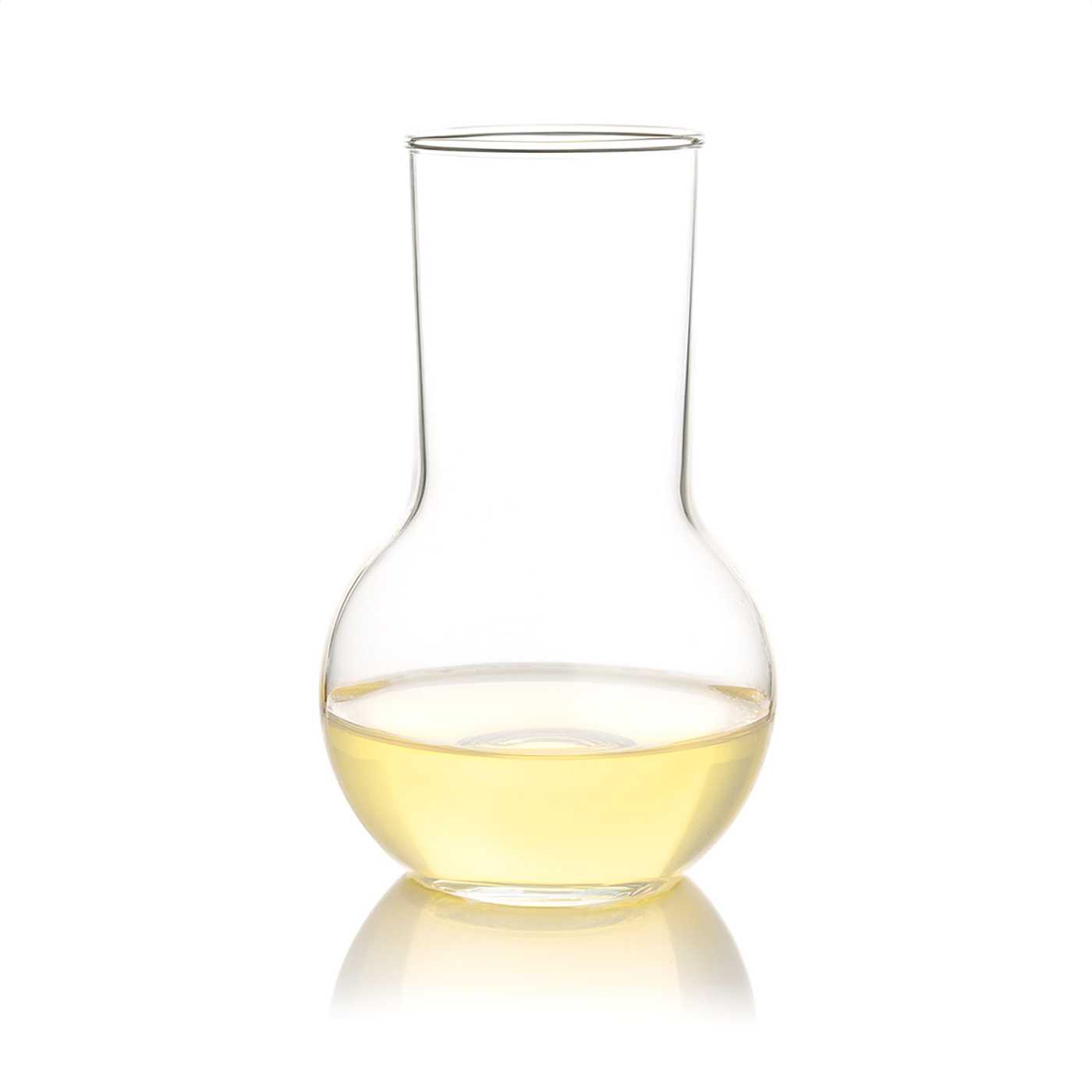
If we want to make a shower gel, it is necessary to thicken the surfactants used. Powdered thickening agents such as xanthan gum are often used for this purpose. This gum has the advantage that it is stable over a wide pH range and provides viscous and stable gels. If you wish to have a more liquid product, reduce the amount of xanthan gum by 0.1 to 0.2 %. Conversely, increase the content of xanthan gum by the same amount. Xanthan gum thickens intensely, so proceed carefully when adding or reducing it. Even a small change in the dose is reflected in the overall consistency of the product.
Menthol
What makes our shower gel refreshing? The key to success is the use of a small amount of menthol. This substance not only gives a fresh scent, but also a cooling sensation on the skin after using the shower gel.
Menthol can be omitted from the product, or its proportion increased by tenths of a percent if you want a stronger cooling and refreshing effect. If you do not use it in the recipe, you can skip the heating step.
Cosgard preservative
A natural preservative for many products is Cosgard. This broad-spectrum preservative is effective against yeasts, bacteria and moulds, and thus provides comprehensive protection against the overgrowth of microorganisms in the product. The only limitation of the use of this preservative is its efficacy in acidic pH — it is therefore necessary to lower the pH of the product below 5.5 for the preservative to be active.
Be sure not to omit the use of a preservative; the product contains water and will therefore spoil quickly if you do not preserve it. Cosgard can be replaced with another broad-spectrum preservative that is also effective in acidic pH.
Other ingredients
Glycerine is an excellent moisturising ingredient which forms the basis of many recipes. This alcohol is very well soluble in water; it is a clear, syrupy liquid. Thanks to its hydrating abilities, it hydrates not only the skin, but also powdered ingredients, especially thickeners such as xanthan gum. If possible, do not omit glycerine from the recipe, otherwise the time needed to obtain a uniform gel-like consistency will be prolonged. If you would like to increase the moisturising effect of the product, add 1 % sodium PCA.
Mica powders — in other words ground mica — were selected to colour the product. These powders are available in many colour shades, so do not hesitate to use one or combine your favourites. You can also increase the proportion of these substances in the product by a few tenths of a percent. An advantage of the surfactants used is also the fact that the mica powders will not settle to the bottom in the finished product. However, if you want a colourless product, there is nothing easier than omitting the given mica powders from the product and replacing them with water or glycerine. If you want to turn the product into a women’s one, you can also add glitter and replace the essential oils used.
Demineralised water is essential, since we are making a water-based product. Do not use ordinary tap water or boiled water — such water is not completely freed from minerals, which would otherwise disrupt the stability of the product, the efficacy of the preservative and so on. Part or all of the water in the recipe can be replaced with floral hydrolats of your choice. However, bear in mind that hydrolats often have a different pH than water, and thus the amount of lactic acid needed to adjust the pH will also change.
Fractionated coconut oil was chosen as the oil component of this product. Unlike traditional coconut oil, this oil is always liquid — a colourless, clear and odourless oil, and so it affects neither the colour nor the fragrance of the final product. It is obtained by selecting only certain fractions of regular coconut oil, thanks to which it remains liquid even at ordinary temperatures. It can be replaced with any other vegetable oil, however strongly coloured oils such as raspberry seed or rosehip oil can influence the final colour of the product. The vegetable oil can also be completely omitted if you do not use menthol in the product (menthol needs to be dissolved in oil), or its dose can be reduced by tenths of a percent. When increasing its content, proceed carefully, as surfactants are able to emulsify only small amounts of oil (usually up to 5 %).
Essential oils give the product a great fresh fragrance. We reached for an excellent grapefruit essential oil, which is the most dominant in the overall fragrance of the product. Although it is a citrus essential oil, you do not need to fear photosensitivity, provided you do not have extremely sensitive skin — the shower gel is a rinse-off product, and therefore only a minimum or no essential oil remains on your skin after showering. A complement to the grapefruit is lime. Its fresh fragrance will give you a great boost and balance the stronger woody notes of patchouli, which are used to create the base notes of the fragrance. If you wish to have an unfragranced product, leave out the essential oils and replace them with water or a vegetable oil. Alternatively, you can reach for synthetic fragrance oils, which offer a broader palette of scents than classic essential oils.
Lactic acid was chosen in this product for pH adjustment. Its advantage is that it is supplied in the form of a solution, and thus there is no need to prepare your own solution as in the case of citric acid. At the same time lactic acid is fairly concentrated, and therefore you will use relatively little of it — often an amount measured in drops. Do not forget that the amounts of lactic acid stated are only indicative: for each product it is necessary to measure the pH individually and gradually add lactic acid until you reach a pH in the range of 4.5 to 5.5.
The recipe (100 g)
The ingredient contents are given in percentages by weight, so they correspond to a batch of 100 g of finished shower gel. The recipe is divided into four phases: phase A is a thick paste of glycerine, mica powders and xanthan gum, phase B is the water-and-surfactant base, phase C is the oil part with menthol, which needs to be gently heated, and phase D is added only once the mixture has cooled down.
Shop the ingredients for this recipe
Untick what you already have- Cocamidopropyl Betaine, 100 mlrecipe uses 15,00 gin stock€1.79
| Phase / ingredient | Content in % |
|---|---|
| Phase A | |
| Vegetable glycerine | 5,00 % |
| Mica powder Golden Pumpkin | 0,03 % |
| Mica powder Coppery Blush | 0,01 % |
| Xanthan gum | 1,00 % |
| Phase B | |
| Demineralised water | 64,39 % |
| Decyl glucoside | 10,00 % |
| Cocamidopropyl betaine | 15,00 % |
| Phase C | |
| Fractionated coconut oil | 1,80 % |
| Menthol | 0,20 % |
| Phase D | |
| Grapefruit essential oil | 0,60 % |
| Lime essential oil | 0,40 % |
| Patchouli essential oil | 0,20 % |
| Lactic acid 80 % | 0,37 % |
| Cosgard preservative | 1,00 % |
| Packaging and tools | |
| Disc top bottle | — |
| pH test strips | — |
Method
- Disinfection
Thoroughly disinfect all tools, vessels and packaging that will come into contact with the product or the ingredients, for example with ethanol.
- Thick paste Phase A
Into a vessel weigh the phase A ingredients (glycerine, mica powders and xanthan gum). Mix well until a thick paste is formed.
- Surfactant base Phase B
In a second vessel mix the phase B ingredients. Ideally, first weigh the surfactants — decyl glucoside and cocamidopropyl betaine — before adding the water. Then mix all three substances well, but at the same time carefully, so that not too much foam is formed.
- Combining the phases Phase A + B
Add the mixture of phase B ingredients to the phase A ingredients. Mix carefully.
- Dissolving the menthol Phase C
Into a heat-resistant vessel weigh the phase C ingredients (coconut oil and menthol). Start to heat gently in a water bath until the menthol is completely dissolved. Then stir the mixture into the rest of the ingredients, i.e. into the mixture of phases A and B.
- Essential oils Phase Dbelow 40 °C
Wait until the mixture cools to room temperature (but at least below 40 °C) and add the individual essential oils. Mix the blend well again to combine the ingredients.
- pH adjustment Phase DpH 4.5 – 5.5
Using pH test strips check the pH and lower it by adding lactic acid drop by drop. Do not forget to check the pH value continuously until you reach the range from 5.5 to 4.5.
- Preserving and filling Phase D
After adjusting the pH, add the Cosgard preservative. Mix it well into the product and fill the shower gel into the selected disinfected bottle.
Tips and tricks
If you encounter problems when making the refreshing shower gel, we have prepared tips and tricks for you which will help you to prevent them and make the whole process easier.
Always try to mix the powdered ingredients — in this case xanthan gum and mica powders — with glycerine. Thanks to this, a gel-like consistency without lumps will form faster. Ideally, leave the finished mixture to stand overnight; in the morning you will see the final gel-like consistency and viscosity, because right after mixing the ingredients it takes a while before the mixture thickens.
To dissolve the menthol it is necessary to heat the oil. Do not try to dissolve menthol in water, this substance dissolves only in oils. A short gentle heating is sufficient as long as you are not making large quantities of shower gel. As soon as the menthol crystals have disappeared, you can remove the mixture from the water bath.
Do not add the preservative or the essential oils, and do not adjust the pH, in a hot mixture (above 40 °C), as this will lead to degradation and loss of efficacy of these ingredients.
Do not forget to adjust the pH of the product. Decyl glucoside is strongly alkaline, and therefore the product would not be suitable for your skin and could irritate it. The stated amount of lactic acid is however only indicative — it depends on the dosing accuracy, the quality of the ingredients, as well as on the changes you make to the recipe. Therefore, add the lactic acid drop by drop and continuously check the pH until you reach the desired range of 4.5 to 5.5.
Warning
As mentioned, you can experiment with homemade recipes in order to achieve the properties you want. However, the final result can be influenced by many factors, such as humidity, temperature, the quality of the ingredients or their storage.
Before you use any ingredient for making a cosmetic product, familiarise yourself with its properties, recommended dosage, storage conditions and safe handling. Every ingredient may have the potential to trigger an allergic reaction in sensitive individuals, and therefore before using the product we recommend finding out whether you suffer from an allergy to any of the ingredients or to the overall product, for example by means of a patch test.
If you have very sensitive or very acne-prone skin, or you have other skin or health problems, we recommend that you consult a medical professional before applying a new product to the skin, whether it is a homemade cosmetic product, a pure ingredient or a commercially available product.
Frequently asked questions about the recipe
Practical questions about the refreshing shower gel — pH adjustment, dissolving menthol, consistency and possible ingredient substitutions.
Why does the pH of the shower gel need to be adjusted?
Decyl glucoside is strongly alkaline, and therefore the product would not be suitable for your skin and could irritate it. In addition, the Cosgard preservative is only effective in acidic pH. Add the lactic acid drop by drop and check the pH continuously until you reach the range of 4.5 to 5.5 — the stated amount of 0.37 % is only indicative.
How do I dissolve menthol correctly?
To dissolve menthol it is necessary to heat the oil. Do not try to dissolve menthol in water, this substance dissolves only in oils. A short gentle heating in a water bath is enough; as soon as the menthol crystals have disappeared, you can remove the mixture from the bath.
Why are the preservative and the essential oils not added to a hot mixture?
Above 40 °C these ingredients degrade and lose their efficacy. The same applies to pH adjustment — wait until the mixture cools to room temperature, but at least below 40 °C.
How do I make the gel thinner or thicker?
If you want a more liquid product, reduce the amount of xanthan gum by 0.1 to 0.2 %; otherwise increase the content by the same amount. Xanthan gum thickens intensely, so proceed carefully — even a small change in the dose is reflected in the overall consistency.
Can I leave out the mica powders?
Yes. If you want a colourless product, simply omit the mica powders from the recipe and replace them with water or glycerine. Thanks to the surfactants used, the mica powders do not settle to the bottom in the finished product, so you can even increase their proportion by a few tenths of a percent.
What can I use instead of fractionated coconut oil?
Any other vegetable oil — strongly coloured oils such as raspberry seed or rosehip oil can, however, influence the final colour of the product. The oil can also be completely omitted if you do not use menthol in the product. When increasing its content, proceed carefully, as surfactants are able to emulsify only small amounts of oil (usually up to 5 %).
Conclusion
The refreshing shower gel will please mainly men, but it can also enchant women. We recommend trying its great refreshing effect in the shower shortly after exercising. If you do not have one at home yet, make it according to our instructions. We would like to thank Ivana Jačalová very much for the excellent tutorial in this article.
If you have any questions, do not hesitate to contact us at [email protected].
See you soon for more creating, friends.
You will find the surfactants, xanthan gum, menthol and essential oils from this recipe in the Handymade range of ingredients.