10% off everything in Base IngredientsStock up

+421 950 333 113info@handymade.store

SALTS

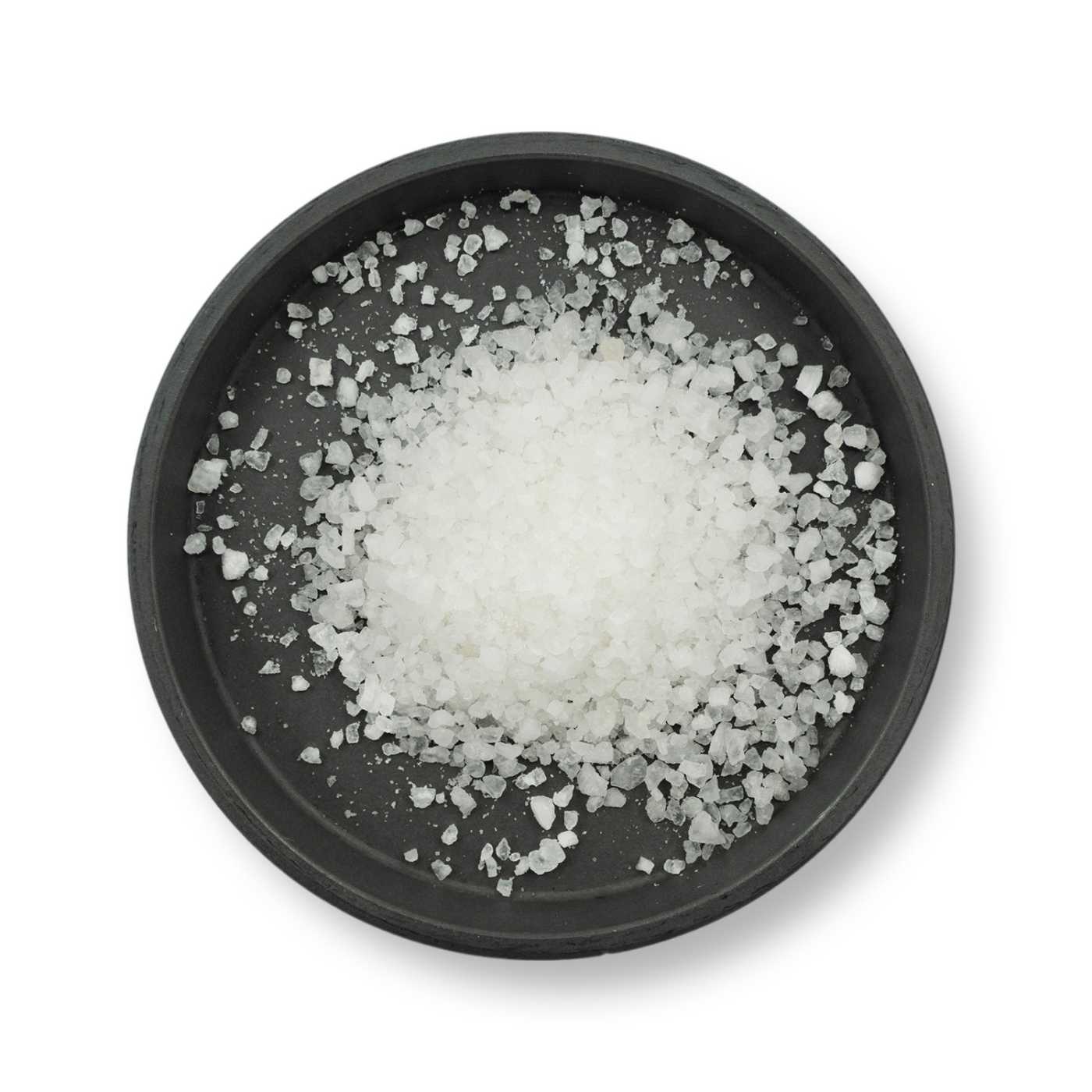
Sea Salt, Coarse, 1 kg

Pack size1 kg5 kg25 kg

Coarse sea salt from the European coast has two distinct roles in cosmetic making. In large amounts, it forms the base of bath salts and body scrubs, where its large crystals come into their own. full description

AvailabilityIn stock · 8 packs
Product codeSOL008_1
Batch260131
Best before01/2029
€1.52incl. VAT−10 %Original price €1.69€1.52/kg

Lowest price in the 30 days before the discount: €1.69

Promotion DIY Essentials until 13 NovAll promotion items

Product description

Coarse sea salt from the European coast has two distinct roles in cosmetic making. In large amounts, it forms the base of bath salts and body scrubs, where its large crystals come into their own. In small amounts, it thickens shower gels, shampoos and other surfactant-based products. It is obtained by crystallisation from seawater followed by drying, with no additives.

It is supplied in both food grade and cosmetic grade. The same salt is therefore suitable for body recipes, foot salt soaks and the kitchen.


What it is suitable for

  • Bath salts – the base of most recipes. The coarse crystals can be coloured, scented with essential or fragrance oils and combined with dried herbs. They dissolve gradually in the bath.
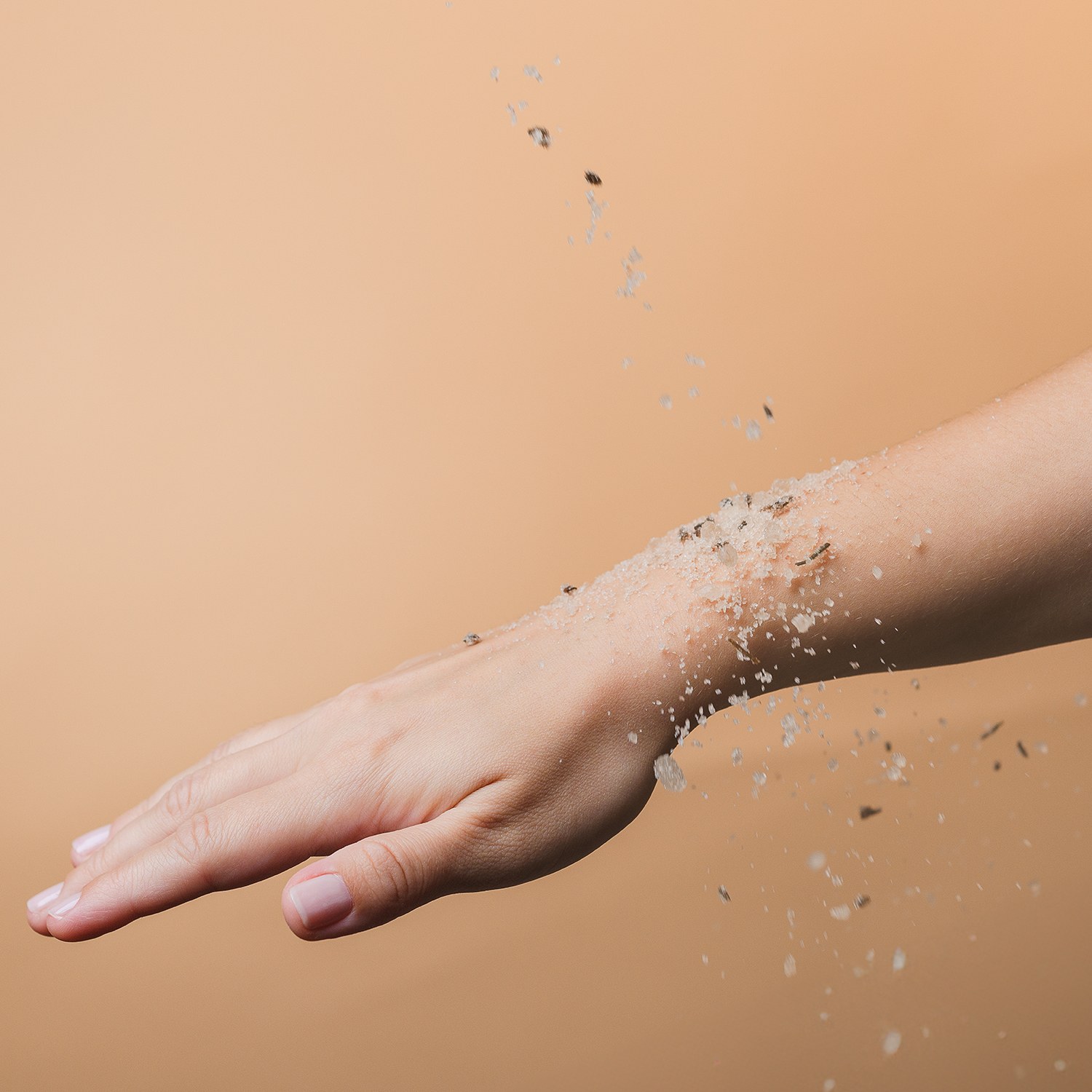
  • Body scrubs – the large grains exfoliate dead skin cells more strongly than fine salt or sugar. They are especially suitable for feet, elbows and thicker body skin.
  • Thickening surfactant-based products – at a usage rate of 0.5–2%, it increases the viscosity of shower gels, shampoos and liquid soaps based on anionic surfactants.
  • Soaps and bath bombs – it is used to make salt soaps and as an addition to ordinary cold process soap. In bath bombs, it forms a dry ingredient alongside baking soda and citric acid.
  • Deodorants and scalp scrubs – salt appears in deodorant recipes and in salt scrubs for the scalp, which are rinsed out after application.

Use in formulations

Salt belongs in the water phase. In surfactant-based products, it works well to prepare a concentrated solution in a small amount of water and add it to the finished surfactant mixture in portions, while stirring. Viscosity keeps rising for a short time after each addition until the salt has dissolved completely, so it is assessed only after a few minutes. Coarse crystals dissolve more slowly than fine salt. When the salt is poured directly into a thick gel, undissolved grains therefore remain at the bottom.

When thickening surfactants, proceed in steps of 0.5% and observe how the formulation behaves. With salt, viscosity increases only up to a certain point, and once that point is exceeded it starts to fall again. The point is different for every combination of surfactants, so it is verified by testing on a small batch.

The processing temperature should not exceed 80 °C. Salt tolerates acidic, neutral and alkaline pH and can be combined with anionic, amphoteric and non-ionic surfactants. The thickening effect is most evident in systems with an anionic surfactant.

In bath salts and scrubs, the salt does not dissolve; it serves as a carrier for fragrance, colour and oils. Essential or fragrance oil is mixed in drop by drop so that it is distributed evenly. Water-soluble dyes are added in a very small amount of liquid so that the salt does not start to absorb moisture. If the oils from the bath salt are to disperse in the bath rather than float on the surface, a solubiliser, for example Polysorbate 80, is added to them.

In cold process soap, the salt is dissolved in distilled water before sodium hydroxide is added to it. In salt soaps, where it makes up a large share of the mass, the coarse grain can feel scratchy in the finished soap. For this purpose, a finer salt is therefore chosen, or coarse salt is crushed before use.


Good to know

Sodium chloride is an electrolyte. In gel products thickened with carbomer or other salt-sensitive polymers, viscosity drops markedly after it is added, and sometimes the gel breaks down completely. Some emulsifiers react in a similar way. In such recipes, salt is added only after verification in a small test batch, or not at all.

Salt attracts moisture from the air. Bath salts and scrubs with added liquid or oil clump together if they are left open in a humid environment. The finished product is filled into well-sealing packaging, optionally with a moisture-absorbing sachet.

With salt scrubs, bear in mind that the coarse grain irritates open cuts and freshly shaved skin. For the face or sensitive areas, finely ground salt or sugar is more suitable. In an oil-based scrub, salt grains are heavier than the oil and settle at the bottom on standing, so the product is stirred before use.

The raw material is not classified as hazardous and does not require a safety data sheet. Ordinary hygiene in production is sufficient when working with it.

It should not be confused with Epsom salt. Epsom salt is magnesium sulfate, a different substance with a different composition and different behaviour in the bath. Coarse sea salt differs from fine sea salt only in grain size. Fine salt dissolves faster and is suitable for face scrubs, while coarse salt lasts longer in a bath mixture and looks more striking.


Frequently asked questions

Is coarse sea salt soluble in water?
Coarse sea salt is completely soluble in water, but because of the crystal size it dissolves more slowly than fine salt. In surfactant-based products, it is therefore recommended to dissolve it beforehand in a small amount of water and add it as a solution. In the bath, the coarse grains dissolve within a few minutes at normal bath temperature, which is not a disadvantage for bath salts.
How much sea salt should I add to a shower gel or shampoo to thicken it?
To thicken a shower gel or shampoo, sea salt is used at an approximate rate of 0.5–2% of the weight of the formulation. It is added gradually, in portions, to the finished surfactant mixture. Viscosity rises only up to a certain point and falls again above it. The exact value depends on the type and amount of surfactants, so it is always verified on a small batch.
Is sea salt suitable for a bath bomb?
Sea salt is suitable for a bath bomb as a dry ingredient alongside baking soda and citric acid. The coarse crystals do not dissolve in the bomb and remain visible, which is used for decorative layers or the surface. In the bath, they then dissolve together with the rest of the bomb.
Can I thicken a carbomer gel with coarse sea salt?
A carbomer gel cannot be thickened with sea salt; on the contrary, the salt thins it. Salt is an electrolyte, and gels based on carbomer or other salt-sensitive polymers become thinner or break down after it is added. The thickening effect is most evident in surfactant systems with an anionic surfactant. In gel and emulsion formulations, salt is added only after a stability test on a small batch.
Can I use coarse sea salt for a face scrub?
Coarse sea salt is not recommended for a face scrub; a finer salt is more suitable. The coarse grain gives strong mechanical exfoliation, which suits feet, elbows and thicker body skin, but on the face it can scratch the skin. For face scrubs, the salt is ground before use or replaced with fine salt or sugar.
What is the difference between sea salt and Epsom salt for the bath?
Sea salt is sodium chloride obtained from seawater, while Epsom salt is magnesium sulfate, so they are two different substances. Both dissolve in the bath and serve as a carrier for fragrance and colour, but they have different compositions and behave differently in a formulation. In bath salts, they are often combined, while only sodium chloride is used to thicken surfactants.

Parameters

INCI
Sodium Chloride
CAS No.
7647-14-5
EC number
231-598-3
Product colour
White
Country of origin
Croatia
Processing method
DryingCrystallisation
Formulation phase
Water phasePost-addition
Function in formulation
Active ingredient
Recommended processing temperature
< 80 °C
Recommended usage rate
0,5 – 2 %
Solubility
Water-miscible
Application type
Leave-onRinse-off
Suitable for
All skin types
Biodegradability
Not applicable
Natural Index (NI ISO 16128)
1,00
Natural Origin Index (NOI ISO 16128)
1,00

Product documentation

TDSTechnical Data Sheet
Physical parameters and processingPDF ↓
SDSSafety Data Sheet
Available for purchased products —
Download all (ZIP)

1 PDF file in one archive

Learn how to work with it

From our blog
Gábor P.2 Nov 2026HU

Verified purchase

flawless

Translated automatically

Szilvia9 Aug 2026HU

Verified purchase

Sea salt — I use it as an additive

Translated automatically

Michal9 Aug 2026SK

Verified purchase

Good salt — An ingredient

Translated automatically

Peter9 Aug 2026SK

Verified purchase

It is a great product — Excellent sea salt as an additive to the bath.

Translated automatically

Marianna H.13 Oct 2026SK

Verified purchase

Variant: Morská soľ, hrubozrnná, 1 kg
(6 reviews)