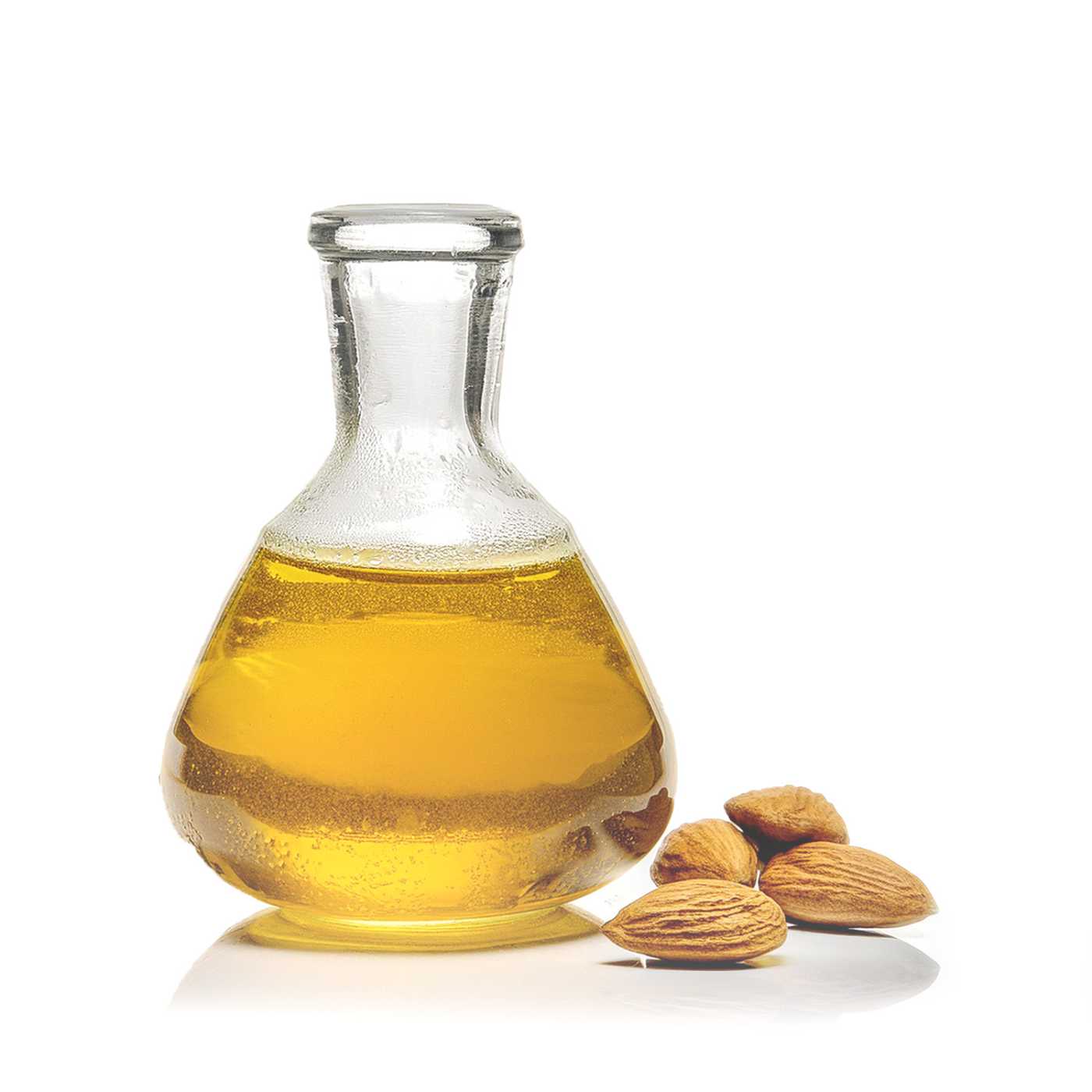
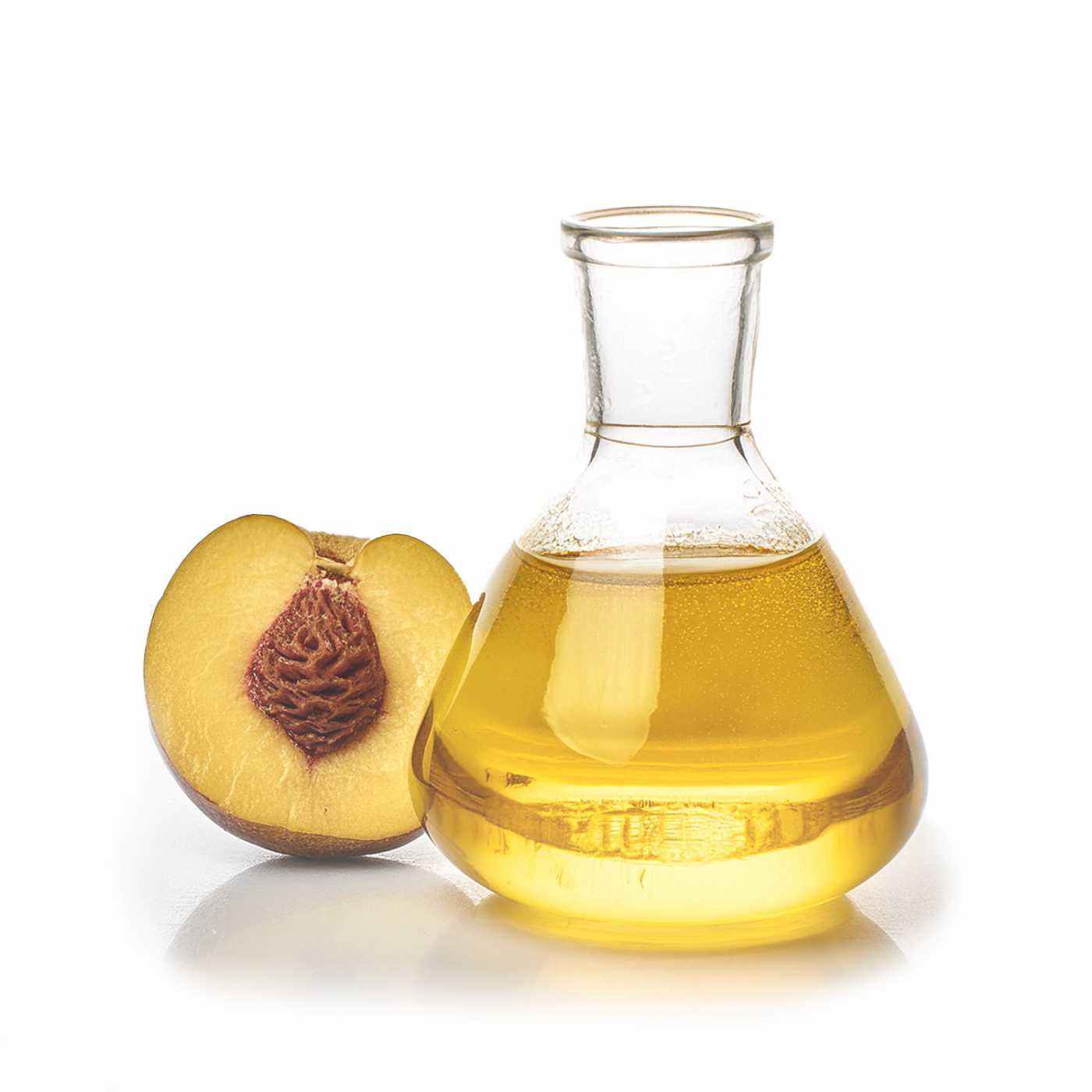
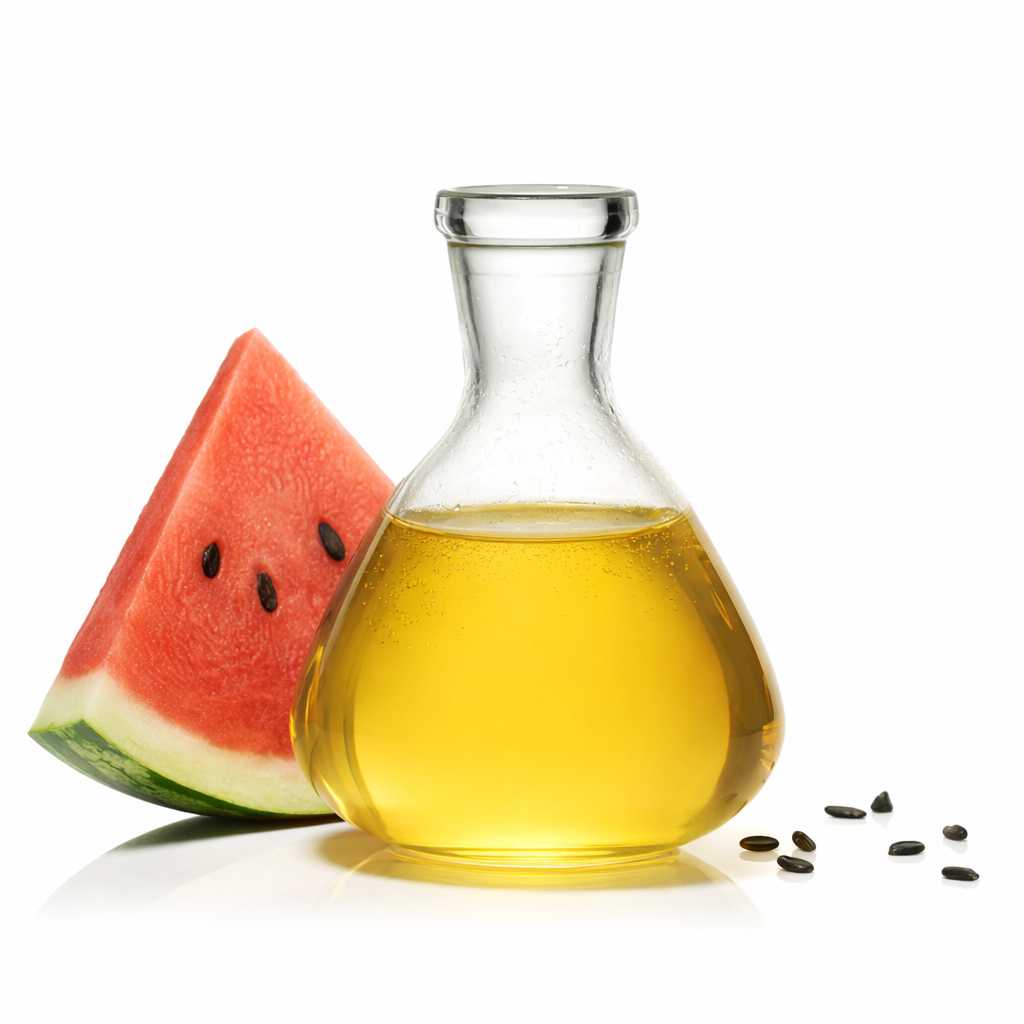
Almond oil, refined is one of the basic carrier oils for creams, body and massage oils, butters and hair care. It is pressed from sweet almonds (Prunus dulcis) of European origin and after refining, filtration and deodorisation has no scent of its own, so it brings nothing to the product that would mask the fragrance or alter its colour. It nourishes and softens the skin and supports barrier repair, while in hair it helps with moisture and shine. It is supplied in food-grade and cosmetic grade and meets the requirements of the BP73 pharmacopoeial specification.
What the oil does in skin and hair
- Emollient – softens the skin and leaves a smooth, non-sticky film that reduces water evaporation. The skin feels more supple and elastic afterwards, which is especially appreciated for dry and stressed skin on the hands, feet and body.
- Carrier for active ingredients – dissolves oil-soluble substances, essential oils, oil extracts and vitamins and distributes them evenly across the skin. It is therefore the base of oil serums, massage blends and scalp treatments.
- Fatty acid composition – oleic acid (60–75%) predominates, complemented by linoleic acid (20–30%). Oleic acid gives the oil a fuller feel and good spreadability; linoleic acid is one of the acids the skin uses to maintain its barrier, and an oil with its share does not feel heavy.
- Neutral scent and light colour – refined oil is odourless and has a pale yellow tint. It is suitable for fragranced products where only the chosen scent should be noticed, as well as for fragrance-free baby cosmetics.
- Hair and scalp – according to the manufacturer's data, it adds moisture to hair, smooths it, makes combing easier and does not weigh it down. It is therefore used in oil treatments, end serums and scalp care products.
- Further manufacturer claims – the manufacturer also states antioxidant activity, support for skin elasticity and firmness, and an evening of skin tone. These effects are based on their materials and depend on the dose and the rest of the formulation in the finished product.
Use in formulation
The oil is added to the oil phase and dosed in the range of 1–100% depending on the product type. It tolerates heating during emulsification; the recommended processing temperature is up to 80 °C, so it can be melted together with waxes and butters or heated with the cream's oil phase. It is insoluble in water, only partially soluble in alcohol, and mixes with other oils, butters, waxes and esters without restriction. It contains a maximum of 1% free fatty acids, so it introduces only low acidity into the formulation.
In emulsions it forms part or all of the oil phase; in anhydrous products (body oils, massage oils, balms) it can be the main component or the complete base. It cannot be incorporated into water-based tonics and sprays without a solubiliser.
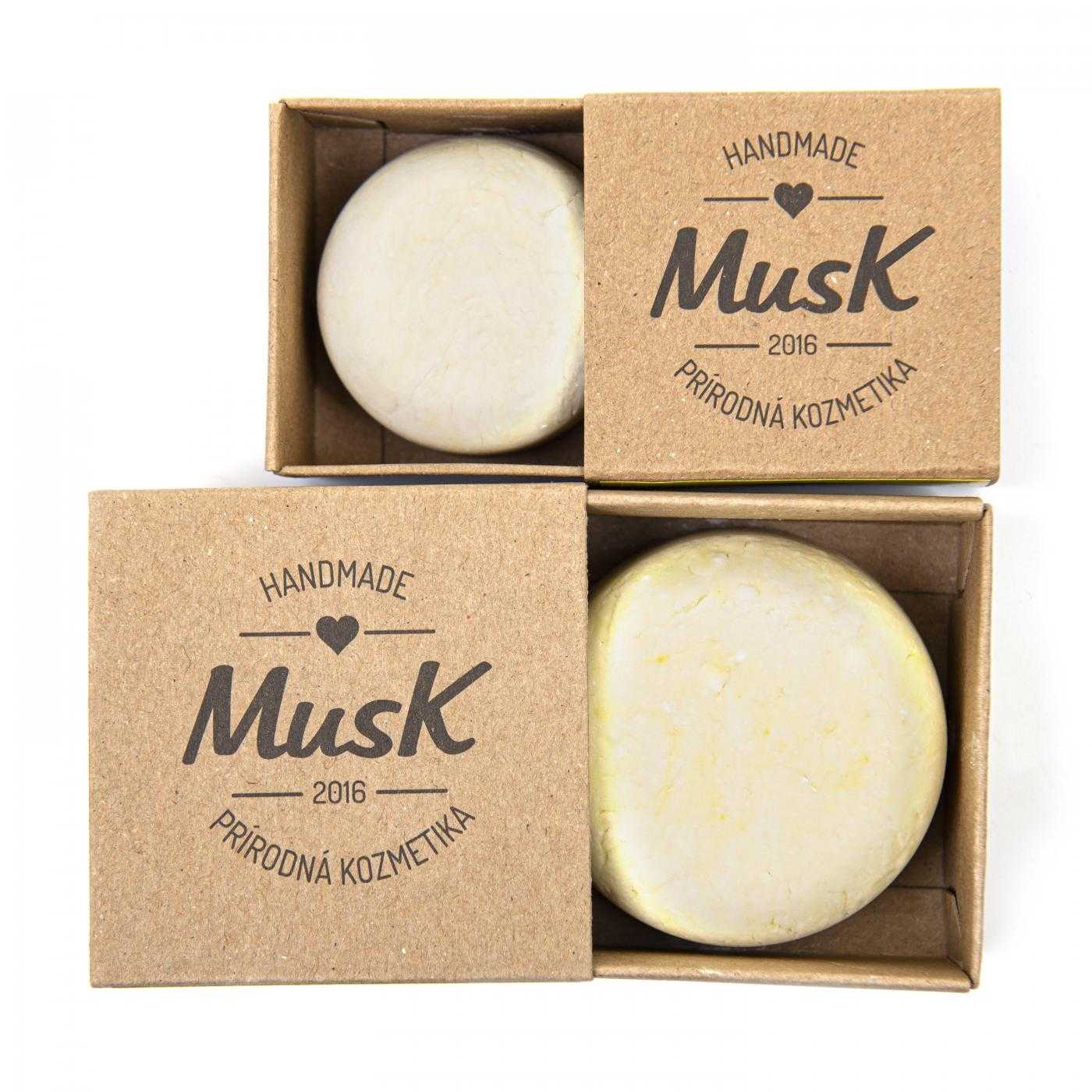
In cold process soap it is used as part of the oil blend. When calculating the lye, use a saponification value of 188–196 mg KOH/g. Oils with a high proportion of oleic acid produce a softer bar on their own, so it is combined with harder fats such as coconut oil or shea butter.
For products in which the oil makes up most of the formulation and are used over a longer period (body and facial oils, serums), add an antioxidant such as Tocopherol at 0.1–0.5%. This will extend the time before the product's scent begins to change.
Suitable for products such as
- body and massage oils – on its own or as a base blend with essential oils; spreads smoothly and does not stick,
- creams, body lotions and facial emulsions – as the main oil of the oil phase, including products for sensitive and baby skin,
- facial oils and serums – carrier for oil-soluble active ingredients, including eye-area preparations,
- lip balms, ointments and sticks – combined with wax and butters it gives a softer consistency,
- nail and cuticle care – oil drops and nail pens,
- hair oils, masks and scalp serums – in pre-wash treatments and leave-in end serums,
- cold process soaps – as the conditioning part of the oil blend,
- food use – the oil is food grade, so it is also suitable for the kitchen, for example in dressings.
Good to know
Refined almond oil differs from unrefined mainly in what it lacks: scent, most of the colour and some of the accompanying substances. The result is a raw material with consistent properties from batch to batch, low acidity and a neutral character that behaves predictably in emulsions and does not compete with the fragrance. Unrefined cold-pressed oil, on the other hand, retains a delicate almond aroma and more accompanying substances, which is valued in purely natural oils with no added fragrance. The choice depends on whether the oil should be seen and smelled in the product.
The oil is vegan, contains no palm oil derivatives, preservatives or alcohol, and is readily biodegradable. It is not subject to CLP classification, so no safety data sheet is required.
Almonds are a food allergen. In food use, they must be declared on the product label. For cosmetics, the oil contains none of the fragrance allergens listed in Annex III of Regulation (EC) No 1223/2009; however, people with an allergy to almonds and nuts should first test products containing almond oil on a small area of skin.
Frequently asked questions
Is refined almond oil suitable for sensitive and baby skin?
Yes, refined almond oil is fragrance-free, has low acidity and is suitable for all skin types including sensitive and baby skin. It is used in baby massage oils, creams and preparations for dry skin. For people with an allergy to almonds and nuts, we recommend testing the product on a small area of skin first.
What is the difference between refined and unrefined almond oil?
Refined almond oil is odourless and has only a pale yellow tint; unrefined has a delicate almond aroma and a darker colour. Refining also removes free fatty acids and some of the accompanying substances, making the oil more stable in emulsions and non-competing with the fragrance. Unrefined retains more of its natural character and is chosen for oils without added fragrance.
Can almond oil be used on its own, without dilution?
Yes, almond oil can also be used in pure form as a body, massage or hair oil. Dosage of 1–100% covers use from a small proportion in a cream to a standalone product. When used on its own, we recommend adding an antioxidant to help the oil resist oxidation for longer.
How is almond oil added to a cream and does it tolerate heating?
Almond oil is added to the oil phase of a cream and can be heated together with the emulsifier and waxes; the recommended processing temperature is up to 80 °C. In cold-process manufacturing with a suitable emulsifier, it is simply mixed into the oil part of the formulation. In anhydrous balms it is melted together with waxes and butters, and the proportion is chosen according to the desired softness of the product.
Does almond oil dissolve in water or in alcohol?
Almond oil does not dissolve in water and only partially in alcohol. To incorporate it into water-based tonics and sprays, a solubiliser or emulsifier is needed. In alcohol-based products it will cloud or separate at higher proportions, so for clear alcoholic products, oils and esters that are fully soluble in
ethanol are chosen.
Is almond oil suitable for cold process soap and what is its saponification value?
Yes, refined almond oil is used in cold process soap as the conditioning part of the oil blend. The saponification value is 188–196 mg KOH/g, which the lye calculator takes into account. For a sufficiently hard bar, it is combined with harder fats such as coconut oil or shea butter.