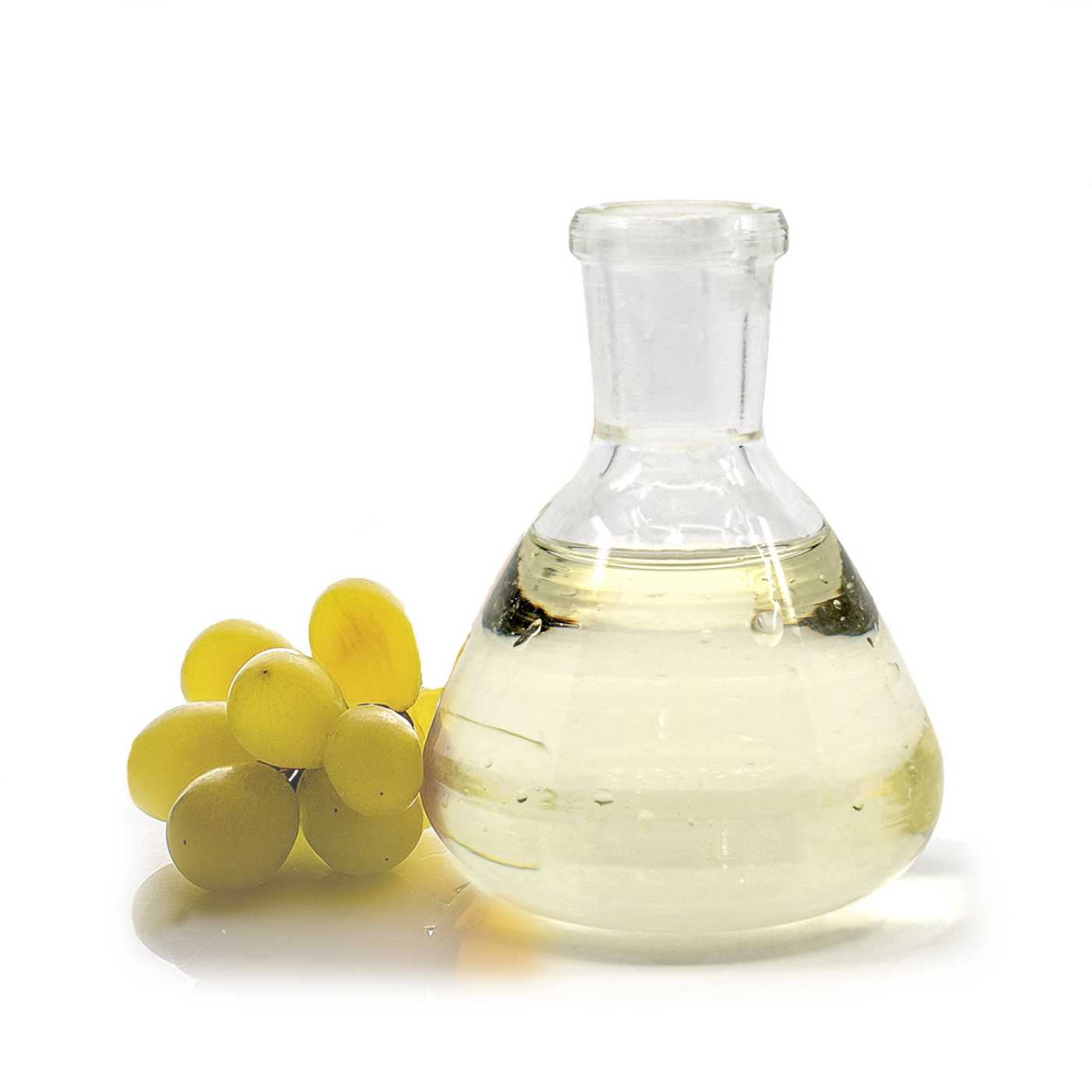
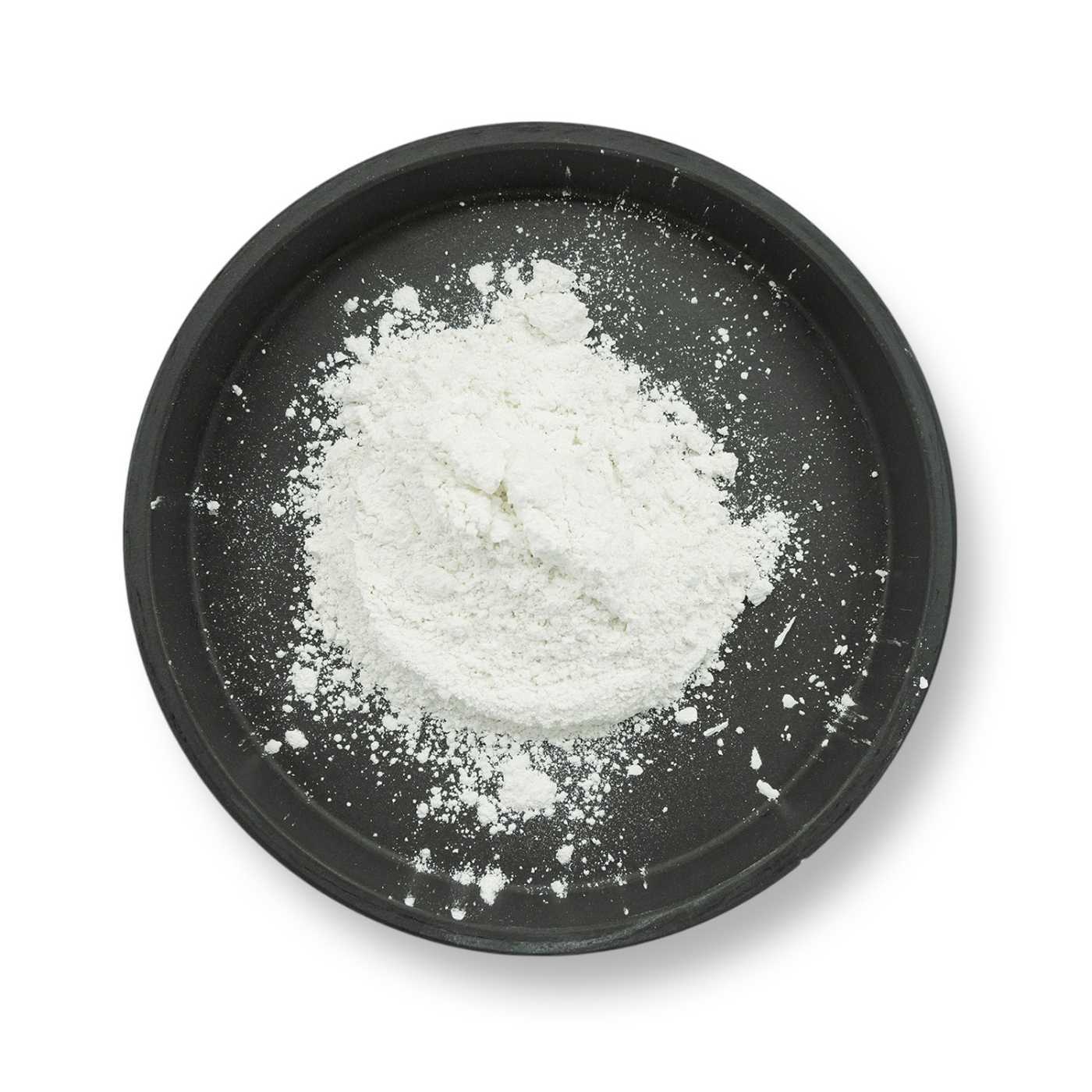
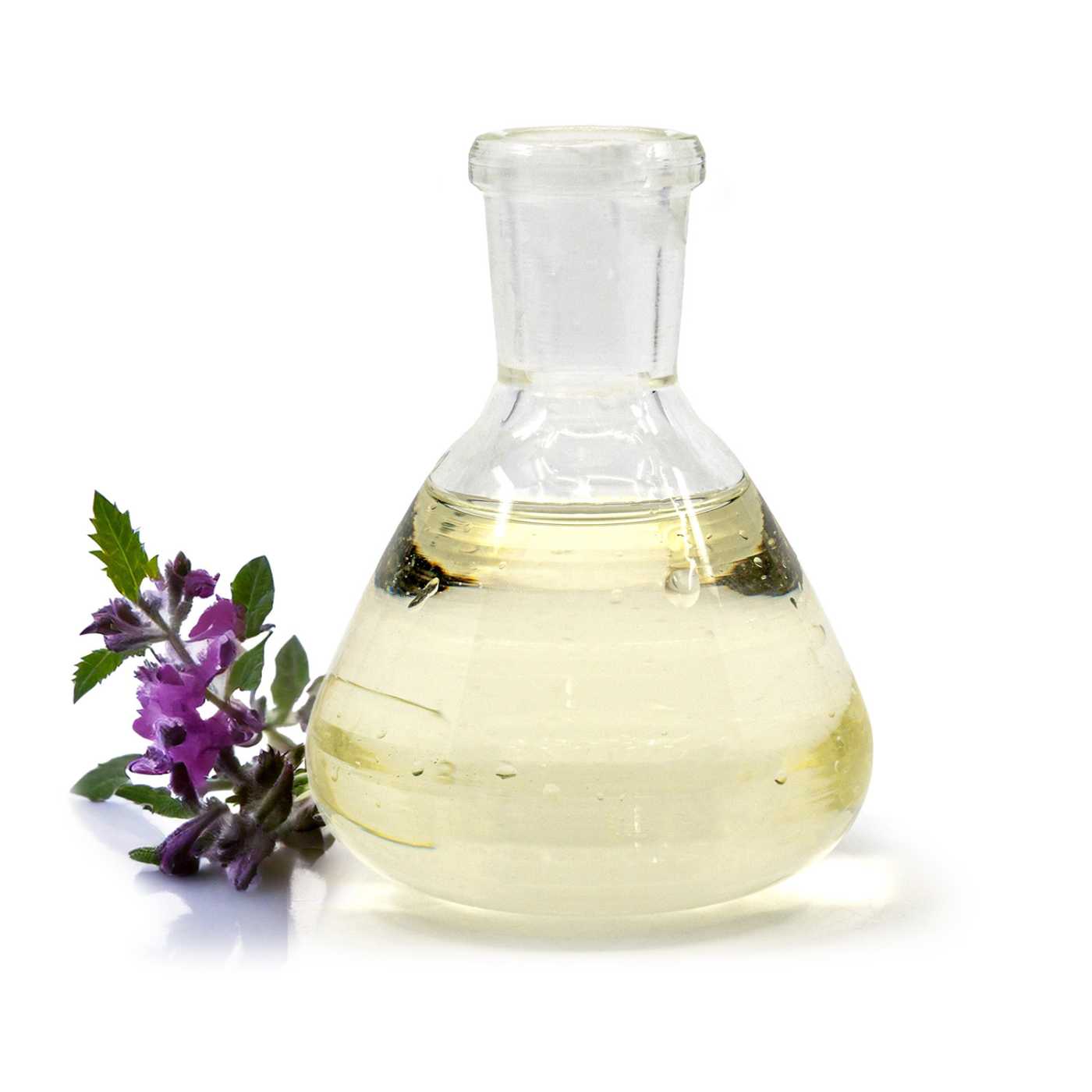
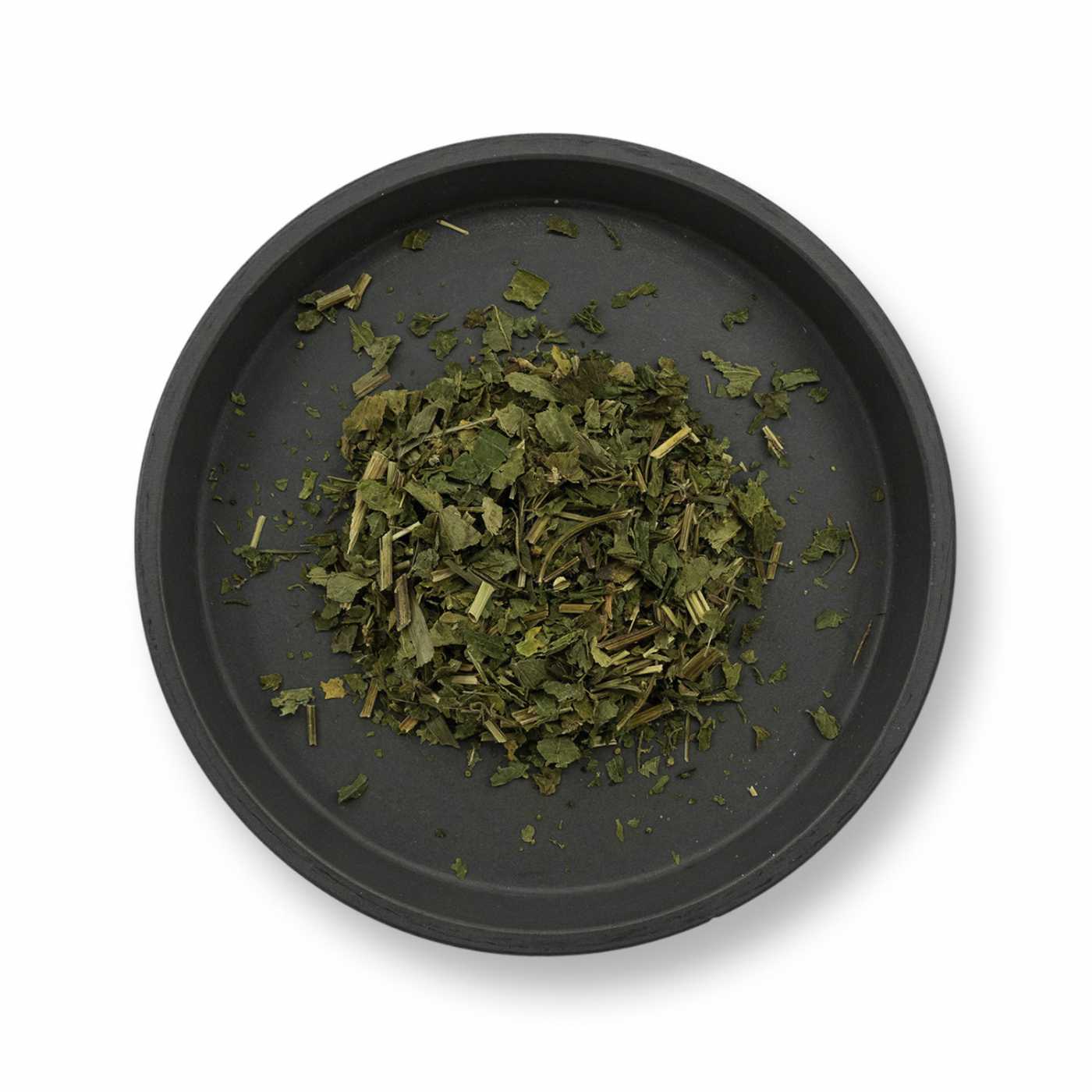
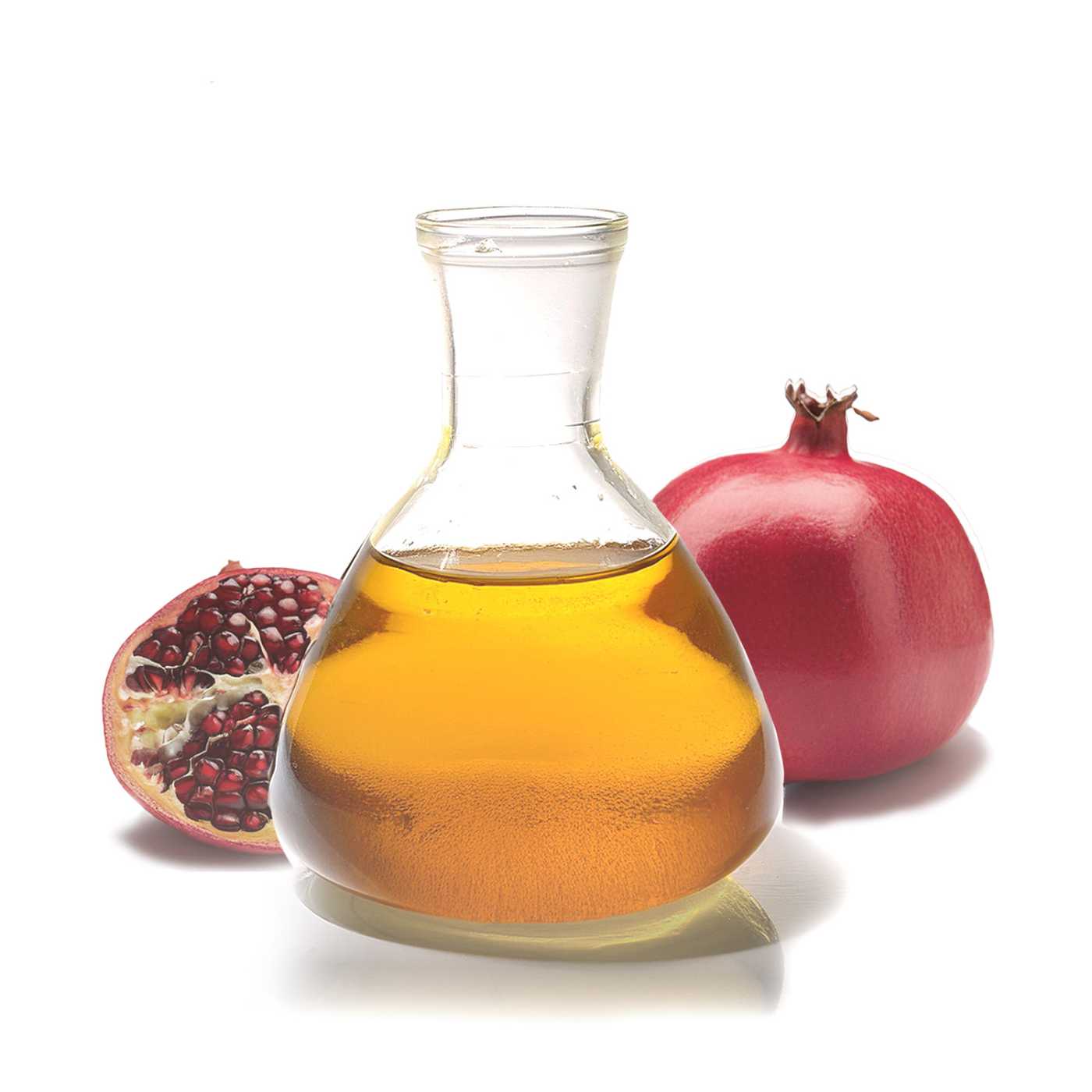
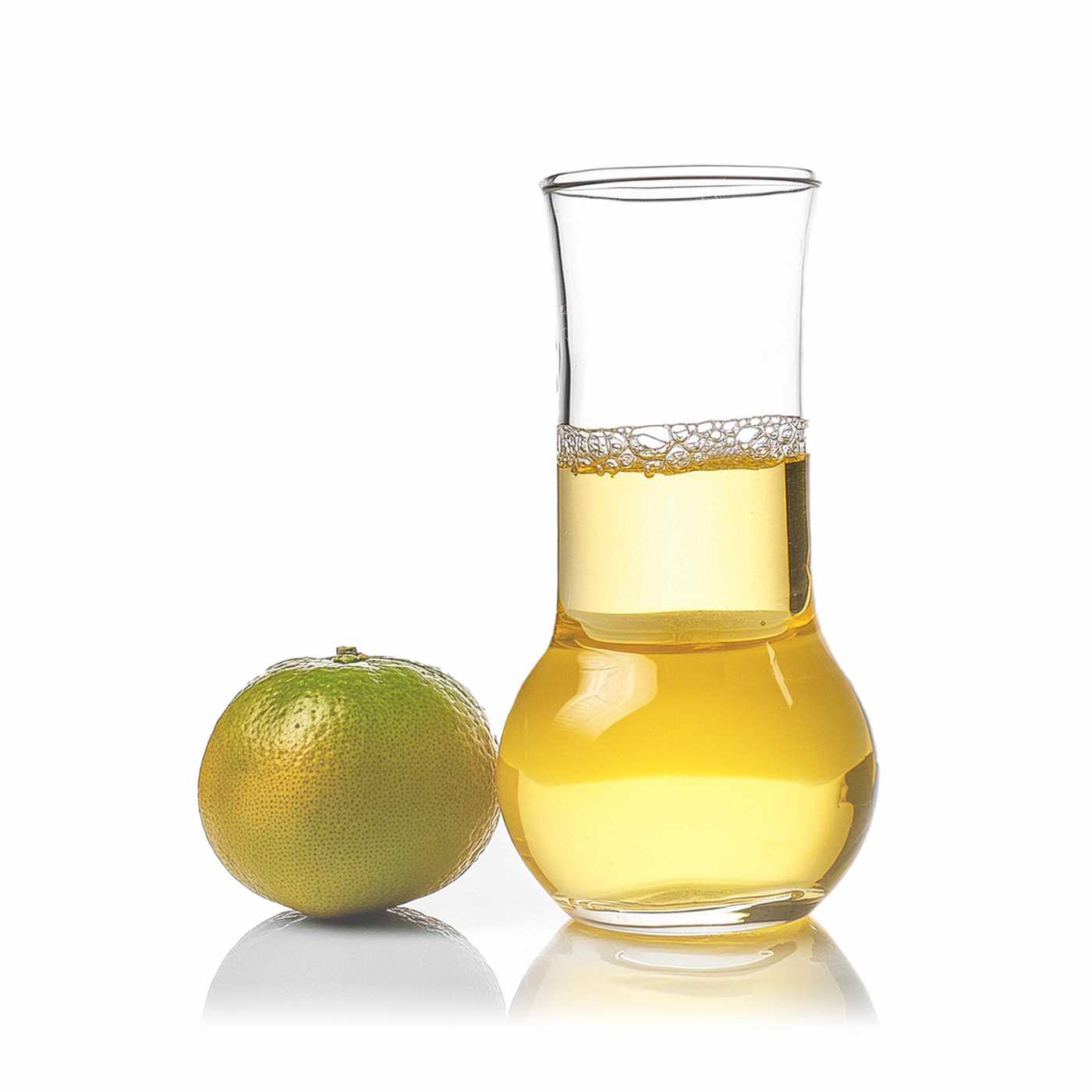
Refined grapeseed oil is one of the lightweight vegetable oils. It absorbs quickly into the skin, leaves no greasy film, and with a high content of linoleic acid supports hydration and skin barrier repair. It is suitable wherever the final product needs to be light: in facial and body oils, serums, light emulsions, hair oils, and massage blends.
The oil is obtained from the seeds of Vitis vinifera grapes of European origin by pressing and extraction, followed by refining. This removes impurities, most of the pigment and the natural scent. The resulting oil is virtually odourless and does not introduce anything to the formula that would alter its colour or fragrance, allowing essential oils and fragrance compositions to shine through. The product is vegan and has not been tested on animals.
Key benefits
- Light texture – the oil absorbs quickly and without a greasy feel, making it suitable even for people who avoid heavier oils. The manufacturer indicates it is suitable for all skin types.
- High linoleic acid content – it accounts for 60 – 76 % of the fatty acids. According to the manufacturer, the oil supports skin barrier repair and helps prevent moisture loss from the skin.
- Antioxidants – according to manufacturer data, the oil contains antioxidant components that help protect the skin against free radicals. The manufacturer also attributes a soothing effect on irritated skin to it.
- Virtually odourless and light in colour – refining removes the natural aroma and most of the pigment, so the oil does not affect the sensory properties of the finished product. Suitable for lightly fragranced and fragrance-free formulas.
- Hair and scalp – this lightweight oil does not weigh down the hair, adds shine and improves combing. According to the manufacturer, it helps control frizz and improves the appearance of dry and damaged hair.
Use in formulation
The oil is insoluble in water and belongs to the oil phase. In anhydrous products (facial and body oils, massage blends, oil serums) it is used directly, even as the sole base component. The recommended usage rate is 1 – 100 % depending on the product type: in emulsions as one of the emollient components, in oil serums and massage oils it often makes up the majority of the base.
The recommended processing temperature is below 40 °C. When adding to emulsions, it is best to add it during the cooling phase or incorporate it additionally after the emulsion has formed. If the formula requires inclusion in the heated oil phase, keep both the time and temperature of heating to the necessary minimum.
An oil with a high content of unsaturated fatty acids is sensitive to light and heat. Fill the finished product into dark or opaque containers and store in a cool place.
In cold-process soap, grapeseed oil is used as one of the components of the oil blend. When calculating the lye, use a saponification value of 182 – 194 mg KOH/g.
Suitable for products such as
- Facial oils and oil serums – a lightweight base for skin that rejects heavier oils.
- Light day creams, body milks and lotions – emulsions with a fresh feel on the skin.
- Massage oils and aromatherapy blends – a carrier for essential oils that lets their fragrance come through.
- Hair oils, serums for ends and scalp care products – shine and easier combing without weighing down the hair.
- Lip balms, body butters and after-sun balms – softening and supporting hydration.
- Cold-process soaps, bath salts and bath bombs – skin stays soft after bathing.
The oil is intended for rinse-off and leave-on products and according to the manufacturer has no compatibility restrictions with common cosmetic raw materials.
What's good to know
Refining involves degumming, neutralisation, bleaching and deodorisation. As a result, the oil has lost most of the accompanying substances that give unrefined oils their characteristic colour and scent. The refined variant is the choice when you need a neutral raw material that does not affect the colour and scent of the product. If the character of the oil is meant to be part of the formula, choose the cold-pressed, unrefined version.
The oil contains no fragrance allergens or palm oil derivatives and is not classified as hazardous, so no safety data sheet is issued for it. It has cosmetic, food and pharmaceutical quality.
Frequently asked questions
Is grapeseed oil suitable for oily and combination skin?
Yes, refined grapeseed oil is a lightweight oil that absorbs quickly and leaves no greasy film. The manufacturer indicates it is suitable for all skin types. The high linoleic acid content and light texture are the reasons formulators often choose it for facial oils and serums for skin that rejects heavier oils.
Can grapeseed oil be heated?
Grapeseed oil is recommended to be processed at temperatures below 40 °C. It is therefore preferably added to emulsions during the cooling phase or incorporated additionally after the emulsion has formed. If heating in the oil phase cannot be avoided, it should be brief and as mild as possible. In anhydrous products, the oil is blended without heating.
Does refined grapeseed oil have a scent?
Refined grapeseed oil is virtually odourless. Refining removes the natural aroma and most of the pigment, so it does not introduce any fragrance or colour to the product. This is why it is used as a base for massage and aromatherapy oils, where the scent of the added essential oils or fragrance composition should stand out.
What is the difference between refined and cold-pressed grapeseed oil?
Refined grapeseed oil is light in colour, virtually odourless and does not introduce its own colour or aroma into the formula. It has undergone degumming, neutralisation, bleaching and deodorisation, which remove impurities and accompanying substances. Cold-pressed oil retains its own colour and scent. Choose the refined variant when you do not want to affect the sensory properties of the product; choose the unrefined one when the character of the oil is part of the formula.
Is grapeseed oil suitable for cold-process soap?
Yes, soap is among the applications the manufacturer lists for grapeseed oil. In cold-process soap it is used as one of the oil blend components, typically together with other oils and butters. When calculating the lye, use a saponification value of 182 – 194 mg KOH/g. The same oil is also suitable for bath salts and bath bombs.