Rice Bran Oil, Cold Pressed, Organic, 100 ml
Pre-order€8.99Original price €9.99(€89.90/l)

Candle fragrance oils

Pack size5 ml10 ml
Blue Tansy essential oil is used in cosmetics as an active ingredient with a soothing effect on the skin and also as a fragrance component with a herbal scent. full description
Lowest price in the last 30 days: €29.19
Blue Tansy essential oil is used in cosmetics as an active ingredient with a soothing effect on the skin and also as a fragrance component with a herbal scent. It is obtained by steam distillation of annual tansy flowers. It is most often added to products for irritated or reddened skin, massage oils and scalp care.
The plant grows and is distilled in North Africa, which is also the origin of its other common name, Moroccan blue chamomile. Despite the name, it is not true chamomile. Botanically it belongs to the genus Tanacetum, so the two oils are not interchangeable in a formulation. The oil is certified as vegan.
The following properties are stated by the manufacturer in its marketing materials. They are cosmetic claims, and how they show in the finished product depends on the usage rate and the rest of the formulation.
The oil is soluble in oil and in alcohol and does not dissolve in water. In anhydrous products it is mixed directly into the oil phase, and in emulsions it is added only after the finished emulsion has cooled. In purely water-based products, such as toners or sprays, it is incorporated using a solubiliser, and both clarity and stability need to be checked on the finished product.
The right time to add it is the cooling phase, or it can be worked into the finished base afterwards. Essential oils are volatile, so the oil is not added to the hot oil phase before emulsification.
Weigh the essential oil in advance and mix it into the cooled emulsion while stirring continuously. Write down the weighed amount so that you keep the same fragrance and colour intensity in the next batch.
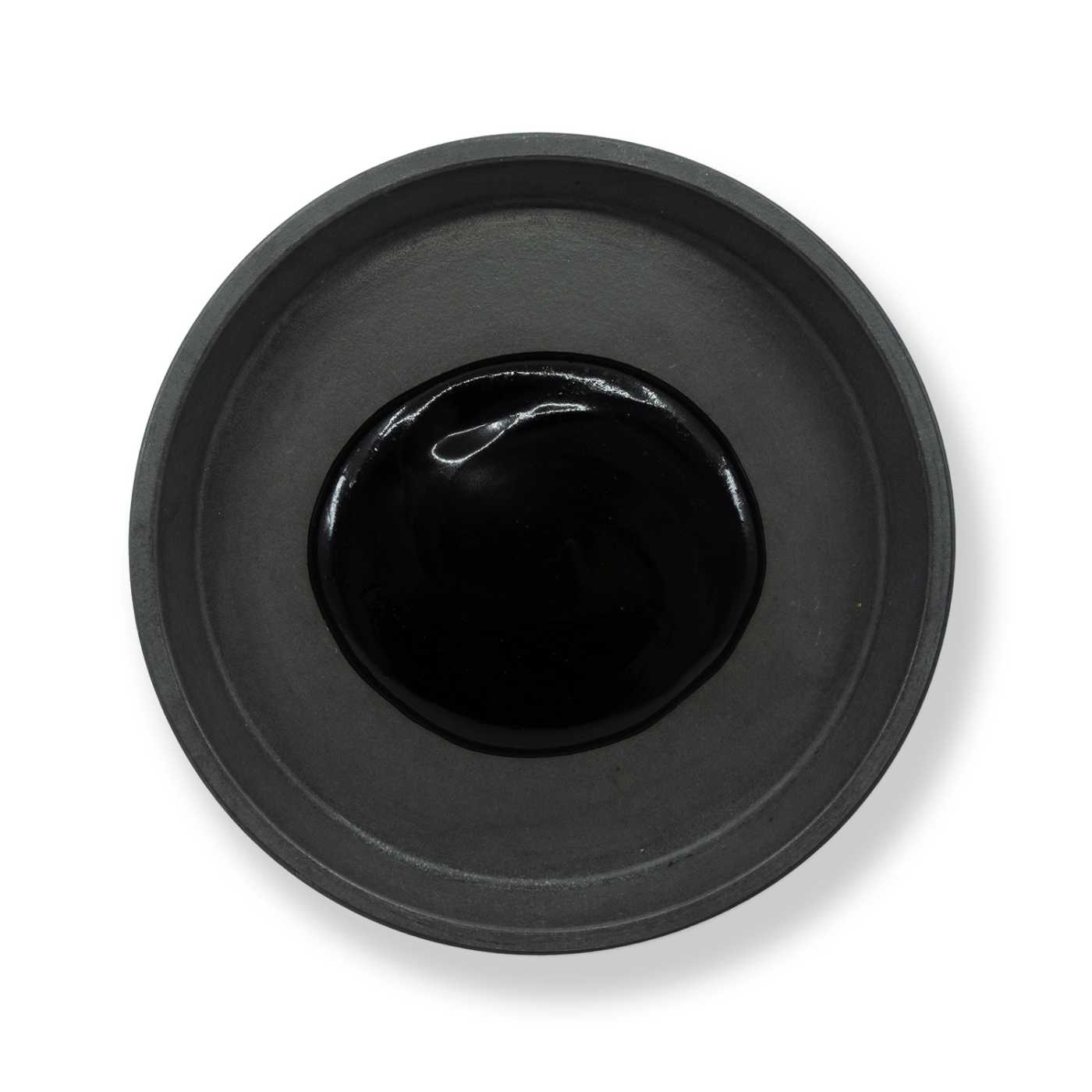
Consider the colour of the finished product as early as the formulation design stage. The oil is dark blue and may give a bluish tint to a white cream or a clear oil. The intensity depends on the amount and on the colour of the other ingredients, so it is worth preparing a small test sample.
There is no single recommended usage rate for this oil. The manufacturer does not state a range, and the maximum amount in the finished product is determined by the IFRA limit for the specific product category. The categories differ according to where and for how long the product stays on the skin. Different limits apply to lip products (category 1), deodorants (category 2), face creams (category 5B), rinse-off shampoos and soaps (category 9) and candles (category 12).
Before each formulation, check the limit for the category of your product in the IFRA certificate, which you will find in the Product documentation section. The substance is classified under the CLP Regulation and contains hazardous substances, so follow the safety data sheet when handling it.
The oil is intended for leave-on and rinse-off products for the face, body, hands, hair and scalp. In shampoos, shower gels and soaps, its amount is governed by the IFRA limit for category 9.
The safety classification requires attention. The product is classified as CMR under Regulation (EC) No 1272/2008 because of its p-Cymene content and carries the GHS02 (flammable), GHS05 (corrosive), GHS07 (irritant, sensitisation), GHS08 (serious health hazard) and GHS09 (environmentally hazardous) pictograms. The undiluted oil is therefore not applied to the skin. Details on safe handling are in the safety data sheet, which is available with the product.
The essential oil does not replace a preservative in the finished product. The manufacturer states the antimicrobial properties as a cosmetic claim about the effect on the skin. Water-based and emulsion products need their own preservative system.
When combining it with other active ingredients, a stability test of the finished formulation is recommended. A change in colour or scent, or phase separation after several weeks, will point to a problem before the product reaches the customer.

excellent smell and colour


Variant: Esenciálny olej, Blue Tansy, Vratič, 10 ml