What essential oils are
Essential oils are highly concentrated natural extracts obtained from various parts of plants, such as flowers, leaves, bark, roots or fruits. They contain aromatic compounds that give plants their scent and can have a variety of effects. Each essential oil has its own unique properties.
In this guide you will learn how to store essential oils correctly, how long they last, what photosensitivity means, what the IFRA standards are for, and how to combine oils into perfumes and scented blends according to the seasons.
How and in what to store oils
How and in what should you store essential oils? On the market you will find essential oils packaged in a variety of bottles. What packaging is best for storing essential oils?
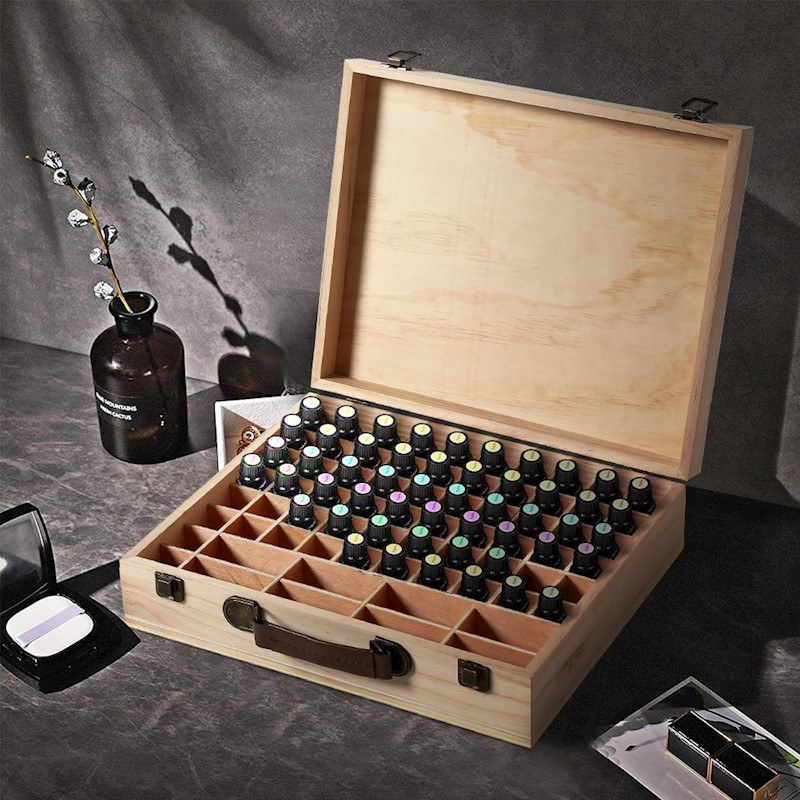
Glass bottle – YES, dark
Although transparent, colourless bottles do not themselves cause damage to the oil, they do not prevent the penetration of UV rays, which damage the quality of the oil. Therefore, dark coloured, ideally amber glass vials are recommended.
Aluminium containers – YES, with an epoxy lining
These are only suitable if the inside of the bottle is coated with epoxy resin. They are then suitable for shorter-term use and are the ideal choice for transporting essential oil.
Metal or stainless steel containers – YES
Stainless steel has a definite YES in this case.
Plastic containers – NO
Again, a definite NO here – the petrochemicals contained in the plastic can work negatively with essential oils, and essential oils tend to absorb into the plastic, so you will then find it very difficult to wash the plastic clean.
The exception is already diluted essential oils in the form of moisturisers or massage oils, where storing such blends is allowed to a certain extent and for a certain period of time.
Where not to store essential oils
Do not keep essential oils in hot, bright or humid places, for example in the bathroom, near radiators or stoves, on window sills or other sunny surfaces, or in places where the temperature fluctuates constantly. It is precisely these temperature fluctuations in the room that can cause the quality of the oil to deteriorate, or significantly accelerate its ageing.
In such cases the oil is often unusable earlier than the product label indicates.
Exactly what harms oils, and how long the individual types last, is covered below.
The shelf life of essential oils
The shelf life of an oil is influenced by four main factors – heat, oxygen, light and moisture.
Tip: if you really only use your oils a few times a month, you can put them in the fridge. The quality will not suffer – on the contrary, an oil stored this way in the right container and properly sealed will keep for longer.
Heat
High temperatures accelerate the ageing of the oil, and with flammable essences they are also a safety risk.
Safety: because essential oils are flammable, they should never be stored near an open flame or other sources of heat or fire, such as sunlight, candles and radiators/stoves/cookers/burners. Every essential oil has its own unique temperature at which it ignites, so by exposing it to high temperatures you are both accelerating the loss of the oil’s quality and, in the more dangerous case, risking it catching fire.
Oxygen
Essential oils exposed to air (oxygen) oxidise and their volatile components fade, which means, among other things, that the intensity of the aroma is reduced and, of course, so is the level of nourishing benefits. That is why it is important to seal the containers immediately after use.
Note: oils that oxidise do not have to be thrown away straight away, as long as they are the kinds that can be used for household cleaning. For that purpose their oxidation does not matter. They should, however, be avoided when applied to the skin or in aromatherapy.
Light
If you use a glass container for storage, choose a dark coloured one so that UV rays cannot penetrate through it – brown vials are ideal, but you can also use blue or green ones. In addition to a dark bottle you also need to choose a dark place and not expose them to direct sunlight, which heats up the bottle and the oil. This is doubly true if you choose metal containers.
Moisture
Moisture can get into oil bottles very quickly if you leave them uncovered for a longer time. As a result, the oils look cloudy or beads of water form inside the bottles.
Besides the smell, you can also assess visually whether the quality of the oil has deteriorated – the oil is not clear but somehow hazy, and it may also look as though it has thickened. It may, however, happen that the oil shows none of these signs.
Shelf life by type of oil
Is there anything else that can affect the shelf life of an essential oil? Yes. It is the essential oil itself. Because essential oil is obtained from plants by a process of steam distillation, it is not a standardised product. Every plant is specific. In the case of essential oils, sellers are required to state a standard minimum shelf life. With proper handling and storage you can extend the life of your essential oil by several months, or perhaps years.
Oils therefore break down (in other words, they undergo a process of oxidation) differently according to their specific properties. For example, citrus oils oxidise significantly faster than oils with a woody or earthy aroma (such as sandalwood). Patchouli even acquires a more pronounced scent as it matures.
Citrus – 6 – 12 months – these are fresh, energising scents such as lemon, lime, grapefruit, orange, bergamot.
Herbal – 1 – 3 years – warm, slightly spicy, slightly sweet, delicately floral or woody, camphorous scents – these are uplifting, deodorising scents such as eucalyptus, tea tree, frankincense, pine, fir, rosemary, lemongrass, ravensara.
Spicy – 2 – 6 years – sweet, woody – balancing, invigorating, cleansing scents such as basil, cedarwood, sage, lavender, palmarosa, thyme, rosewood.
Fruity – 3 – 7 years – floral, woody to spicy – balancing scents that inspire and calm, such as clove, helichrysum, chamomile, jasmine, wintergreen.
Woody – 4 – 15 years – earthy, warm, spicy – grounding, calming scents such as ginger, black pepper, myrrh, patchouli, sandalwood, ylang-ylang.
Photosensitivity: citrus oils and the sun
When using essential oils you may come across the term photosensitivity. What does it mean? It refers to the ability of some essential oils to potentially cause skin irritation if, after being applied to the body, those oils are exposed to sunlight. There is no need to worry, though – it only applies to a small group of essential oils that may contain such ingredients.
These are primarily citrus essential oils. They contain substances called furanocoumarins, which increase the skin’s sensitivity to UV rays. Applying products with these oils to the skin, especially during the summer, may cause increased sensitivity of the skin to UV rays. There are, however, a few tips on how to avoid these unwanted effects.
How to prevent irritation
Use photosensitive essential oils preferably in rinse-off products, such as shampoos or shower gels. That way they will not stay on the skin and cause possible sensitivity.
If you have a favourite cream or facial toner with these oils, apply it to your face in the evening. That way you will not expose your skin to UV rays. It is also possible to apply products with photosensitive essential oils to skin covered by clothing and so on. It is therefore better to keep these essential oils for products for the winter season, when we wear thicker layers of clothing.
First aid for irritated skin
If an allergic reaction or redness appears on your skin, whether due to photosensitivity or just a common allergy, proceed as follows:
-
Rinse immediately
Start rinsing the skin under a stream of running water straight away.
-
Wipe off the excess oil
After a few minutes it is a good idea to wipe off any excess essential oil, or product containing it, with a clean tissue or cotton pad and a vegetable oil that you tolerate well.
-
Rinse again
Then rinse the skin again under a stream of cold running water.
Essential oils and the IFRA standards
When it comes to preventing allergic reactions, it is also a good idea to follow the IFRA standards. This is the International Fragrance Association, which issues recommendations, sets recommended limits and bans the use of certain fragrance substances in the cosmetics and food industries.
The IFRA standards regulate the use and maximum doses of essential and fragrance oils in various products, with regard to the health of users and the protection of the environment. Some fragrance ingredients can be irritant in higher concentrations, and it is precisely by keeping to their recommended limits in cosmetics that you can prevent possible irritation or allergic reactions on the skin.
How to find out the maximum dose
-
Determine the type of product
To find out the maximum recommended dose of essential oil for your product, you need to know what kind of product it is – that is, whether you are going to make a shampoo, a face cream, a balm for baby skin or a lip product such as a lipstick.
-
Find the IFRA category
IFRA currently divides cosmetic products into 12 categories according to their use. These are, for example, products applied to the lips; rinse-off products for the hands and body; products applied to the hair, and so on. The complete list of the individual categories can be found on the IFRA website, along with detailed descriptions.
-
Read off the maximum dose
Once you know the category of your product, you can sometimes find the maximum dose of the fragrance oil directly in the information given with the product by the manufacturer. For each product category there is a maximum dose in per cent, which tells you how much of the total weight of the product the essential or fragrance oil in question may make up.
Top, middle and base notes
Did you know that with the help of essential oils you can mix your own perfume, made exactly to measure? To achieve a harmonious combination of scents every time, it is a good idea to mix essential oils that have top, base and middle perfume notes.
Knowing the art of combining essential oils appropriately will make it easier not only to make perfumes, but also to create new essential oil blends for diffusers, aroma lamps or ordinary cosmetic products.
Top notes
The subtle top notes, or the head of the fragrance, are the first thing you smell when you use a perfume or a scented cosmetic product. They are usually scents that are light, yet at the same time these notes are fairly strong, even sharp, so that you notice them first. These are scents that wear off fairly quickly – you can smell them for roughly 5 to 10 minutes after applying the product. If you want to detect them in your favourite products, smell the product as soon as you open it.
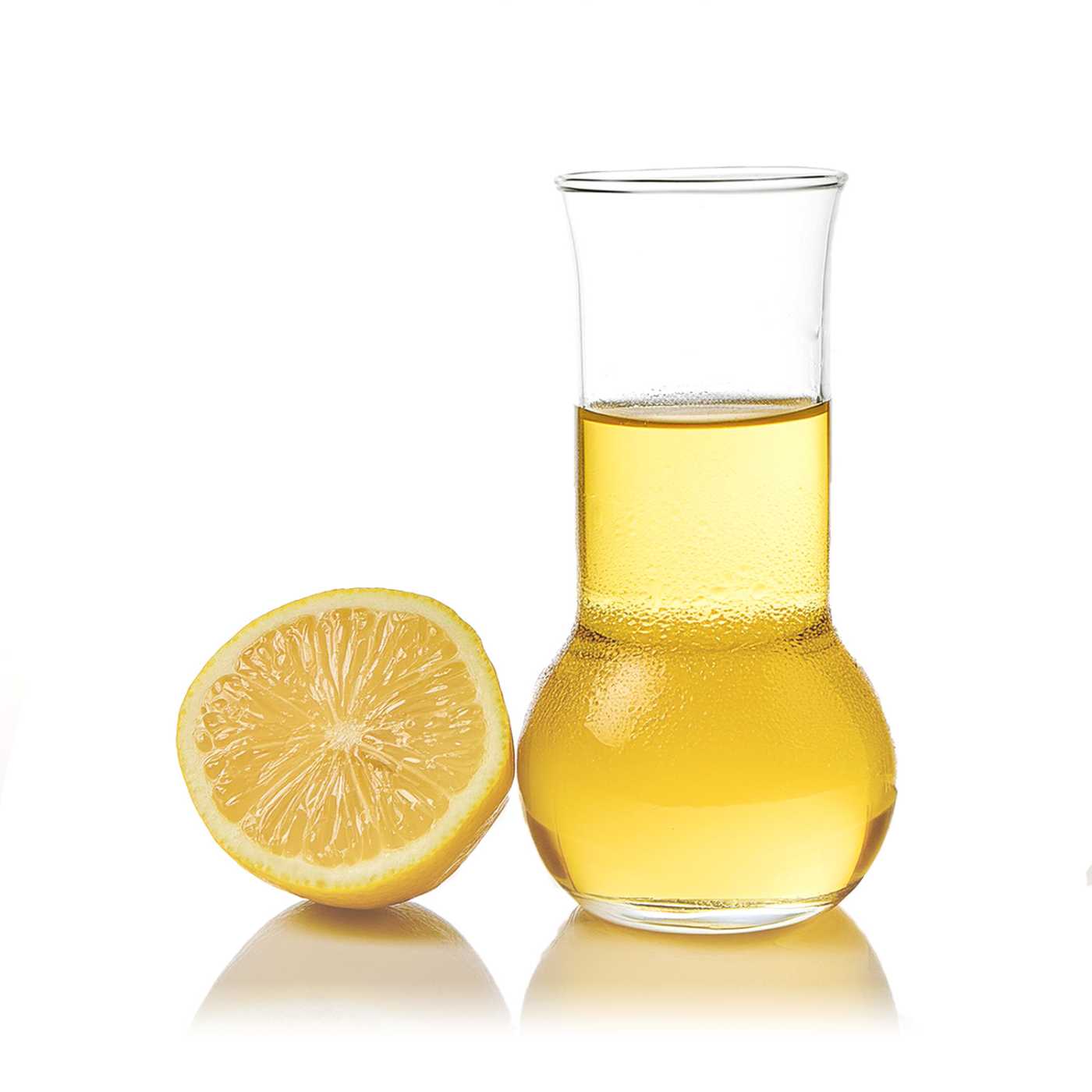
The common essential oils considered to be top notes are primarily citrus essential oils, especially lemon, orange or lime, and bergamot. Among the other essential oils you can find here are mint (peppermint), tea tree and eucalyptus. Lavender is usually included in this group, although it can also be described as a middle note. You will not go wrong, though, if you choose lemongrass, verbena or thyme as top notes.
Middle notes
The next scent you will smell after the top notes in your perfume is the middle notes, or the heart of the perfume. It is these components that make up the main part of the perfume, and they can last for several hours, usually two to three. Particularly popular are the various floral scents, which combine well with lighter citrus top notes and woody base essences.
The classic middle notes are primarily floral scents such as lavender, geranium, ylang ylang and lemon balm. You can also find some spices in this group, such as essential oils from cinnamon bark or leaf, coriander, clove and sage. Conifer essential oils, such as fir or pine, also belong here.
Base notes
The last scent you will smell in your perfume or cosmetic product is the base notes. These scents begin to appear a few hours after you apply the product and can last all day, and it is thanks to them that you can enjoy the scent of your perfume for longer.
The base notes are primarily stronger, heavier scents, which often characterise essential oils from various woods. Here you can find essential oil from cedarwood, rosewood or sandalwood. Other base notes include black pepper, vetiver and frankincense, myrrh or patchouli, and juniper.
Oils by season
We have prepared an overview of essential oils for every season. Thanks to it you can create your own essential oil blends for diffusers or aroma lamps and change them depending on the time of year.
Spring
Many people associate spring with fresh scents, and the same is true when using essential oils. Floral and delicate citrus essential oils are especially suitable for scenting your home.
Try, for example, geranium essential oil with its pleasant floral, geranium-like scent and calming effects. You can also reach for an absolute classic – lemon essential oil, which combines beautifully with other oils. If you want a slightly sweeter citrus scent, reach for essential oil of mandarin, clementine for instance.
Be sure not to overlook tea tree essential oil either, which is great for cleaning as part of cleaning or laundry products. You can also reach for soothing and cleansing essential oils such as rosemary, sage or mint essential oil.
Spring blends: Try a blend of equal parts mint, lemon and lavender essential oil.
A walk in a freshly blooming garden will be brought to mind by a blend of geranium (3 drops), coriander (3 drops) and orange (2 drops).
Summer
The scents of your summer holiday can be enjoyed all year round with the pleasantly fragrant essential oils that many of us associate with summer. Lavender, sweet orange and peppermint definitely belong here. The atmosphere of summer can also be evoked by ylang ylang essential oil, or cedarwood or juniper.
Summer blends: A tropical blend of 4 parts patchouli, 2 parts red orange and 1 part ylang ylang.
A sweet scent that brings a positive mood is a blend of equal parts orange, frankincense and bergamot.
Another interesting combination, reminiscent of exotic cocktails, is a blend of 2 parts grapefruit and sandalwood with 3 parts orange.
Autumn
Essential oils can also remind you of walks through the woods among the fallen leaves, or of an evening with a book in hand by the fire. The sweeter, heavier essential oils are particularly popular. These are mainly various woody and earthy scents such as cedarwood or fir. You can also reach for rosemary or cinnamon.
Autumn blends: A pleasant autumn scent is given by a blend of 3 parts orange combined with two parts coriander and cinnamon.
A chai latte will be brought to mind by a blend of equal parts coriander, cinnamon and black pepper essential oil.
You can also try a blend of equal parts rosemary, clove, lemon and eucalyptus essential oil.
Winter
You can also conjure up a Christmas atmosphere in your home using essential oils and cosmetics made with them. Traditionally you can reach for essential oil of cinnamon bark, clove and coriander, or wintergreen. Christmas is also associated with fir essential oil, as well as myrrh, red orange and frankincense.
Winter blends: A winter forest will be brought to mind by a blend of equal parts wintergreen, vetiver and fir essential oil.
You can create a Christmas atmosphere with a combination of equal parts clove, cinnamon and orange essential oil.
The smell of home after baking Christmas biscuits is conjured up by a blend of 2 parts fir and orange essential oil and one part lemongrass and lemon essential oil.
Scenting your home without a diffuser
Do not have a diffuser or other “expert equipment” at home for dispersing essences? We have four simple alternatives for you.
Pine cones
Head out into the woods with the children or your pets and gather some pine cones, for example – they open up beautifully in the warmth, they make a lovely natural decoration, and when you drizzle them with oils they will gradually release a pleasant scent as the air moves around the room.
A bowl of rice
A bowl of rice is another interesting solution – fill a small bowl with dry rice and add 15 to 20 drops of your oil blend. Stir with a teaspoon. Since the scent does not spread from the bowl as intensely as from a diffuser, you can place several such bowls around your flat or house.
A spray bottle
The absolute easiest way to disperse scent around a room is to use a spray bottle – in the bottle, mix demineralised water, roughly 15 to 20 drops of essences and a solubiliser (a solvent for essential oils – a natural substance that increases the solubility of various compounds in a water solution), and your scented spray is ready.
A natural candle
Or make a natural candle and add a few drops of your fragrance blend while making it. That way a calm mood will be brought on not only by the sight of the warm flame of the burning candle, but also by the aroma being released.
Frequently asked questions
What packaging is best for essential oils?
A dark glass vial (ideally amber), or a stainless steel container. An aluminium bottle is suitable if its inside is coated with epoxy resin. Plastic is not suitable – the exception being already diluted blends, such as massage oils.
How long do essential oils last?
It depends on the type of oil: citrus oils last six to twelve months, herbal oils one to three years, spicy oils two to six years, fruity oils three to seven years and woody oils as much as four to fifteen years. With proper handling and storage you can extend the life of an oil by several months or even years.
What is photosensitivity?
The ability of some essential oils (primarily citrus ones) to cause skin irritation if, after being applied to the body, they are exposed to sunlight. It helps to apply them in the evening, in rinse-off products or to skin covered by clothing.
How do I find out the maximum dose of an essential oil according to IFRA?
Find out which IFRA category your product belongs to. For each category there is a maximum dose in per cent, which tells you how much of the total weight of the product the essential or fragrance oil in question may make up. Sometimes you will find it given with the product by the manufacturer.
You will find most of the essential oils from these blends – from fresh citrus to warm woody notes – in our e-shop. Send us your thoughts and ideas at [email protected].