Lip gloss can be made in the comfort of your own home, from basic raw materials and without a lip gloss base or similar blends. Since pigments are part of the lip gloss, an emulsifier has been added, which helps keep these substances evenly dispersed. Because we need a fairly fluid lip gloss (so that it can be applied with a roll-on), it is necessary to shake the lip gloss before use – the pigments will sink to the bottom over time.
About this recipe
The tutorial was prepared for us by Ivana Jačalová. We have prepared three recipes for lip gloss for you, in which we observed the settling of the added mica powder depending on the amount of emulsifier used. The result is a fluid lip gloss filled into a glass roll-on — you only need to shake it before each use.
Main benefits
- From basic raw materials
You make the gloss completely from scratch, without using a ready-made lip gloss base or similar blends.
- Three tested formulations
Variants without emulsifier, with 1 % and with 3 % Olivem 1000 — we compared how quickly the mica powder settles to the bottom in each of them.
- Subtle shimmer and colour
Mica powder gives the gloss both colour and a subtle shimmer; you can combine shades to get the result you want.
- No water, no preservative
The product contains neither water nor water-based raw materials, so there is no need to add a preservative.
- Your own scent and taste
You choose the intensity of the scent yourself by changing the dosage of the lip balm flavour.
Product properties
Key raw materials in the recipe
Find out more about the raw materials used, or their possible variations, so that you can prepare a product exactly according to your requirements.
Olivem 1000
The raw material that keeps the mica powder dispersed for a longer period is precisely the emulsifier Olivem 1000. This emulsifier, even at low concentrations, carries dispersed pigments best and does not thicken the product too much.
You can also omit Olivem 1000 entirely, if you do not mind that the pigment will settle to the bottom quickly and that the product will need to be shaken even more thoroughly before application. You can also try other emulsifiers, but we recorded the best result with Olivem 1000.
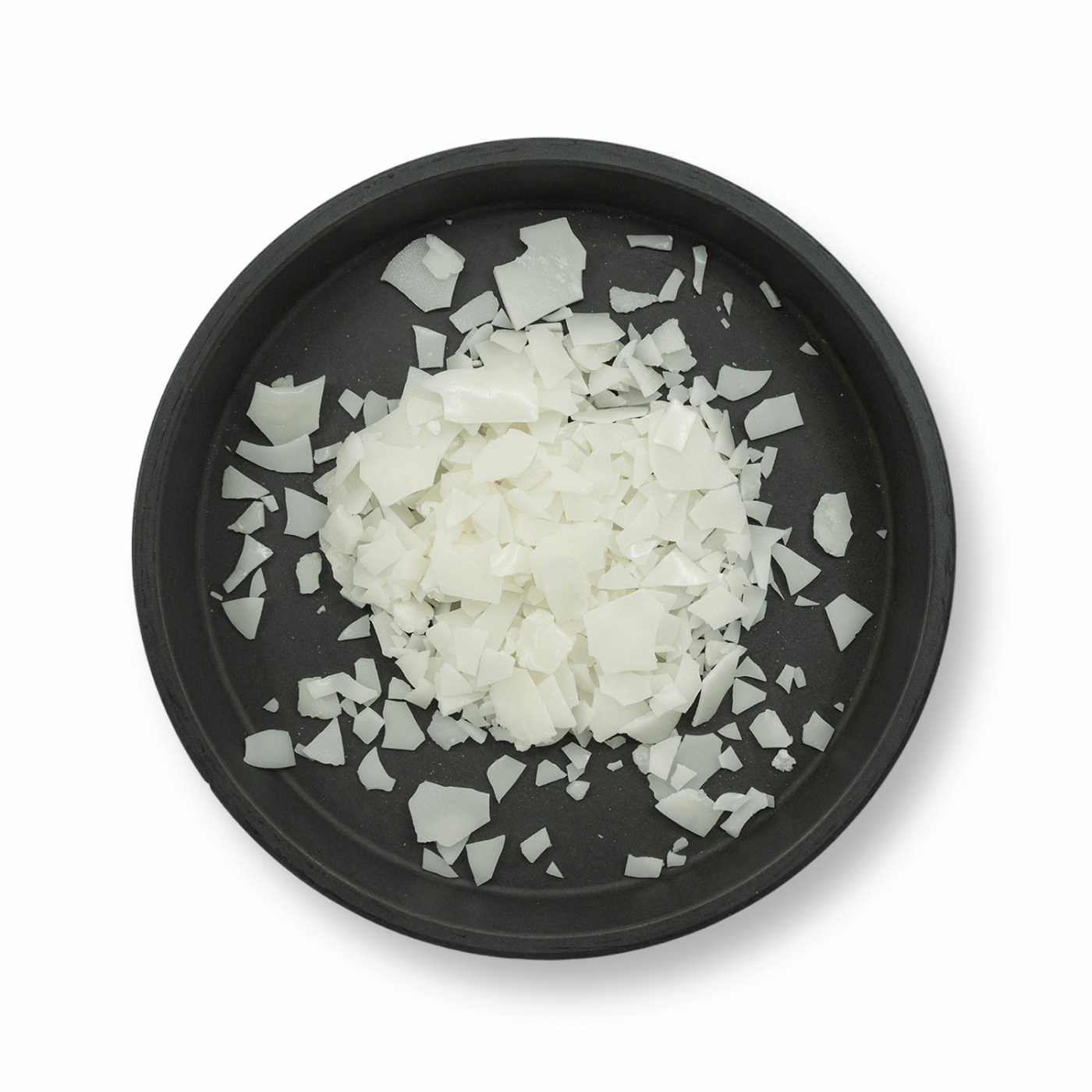
Coconut oil
Coconut oil is an excellent raw material for thickening and slightly increasing the viscosity of the product, while it melts on contact with the skin and so does not make the product too difficult to apply. However, do not increase its content in the product too much; in larger doses it thickens the product, making it no longer possible to apply the lip gloss with a roll-on.
Fractionated coconut oil
One of the versions of classic coconut oil is fractionated coconut oil. This oil is liquid even at normal temperatures, colourless and with a minimal scent. That is why it is a great addition to lip glosses, because it lets the colours of the pigments used stand out and has a low viscosity, which makes application easier. In addition, it gives products a high gloss. Fractionated coconut oil is obtained from classic oil by isolating only certain fractions – parts of this oil that are liquid even at normal room temperatures.
Castor oil
An oil with high viscosity is precisely castor oil. In this recipe it is key, because it helps slow down the sinking of the mica powder particles to the bottom of the container. It can be replaced with another vegetable oil, but prefer oils with a higher viscosity. Ideally, however, castor oil should not be omitted from the recipe.
Almond oil
An excellent oil with a light colour, which does not disturb the colour shade of the mica powder, is precisely almond oil. This oil is well tolerated by the skin, and the refined version is also odourless. That is why this oil is an ideal addition to lip gloss. You can replace it with any other vegetable oil. However, prefer those with a neutral or no scent and minimal colour, such as apricot kernel oil or fractionated coconut oil, or MCT caprylis.
Mica powder
It is mica powders that give the lip gloss its subtle shimmer and colour. These powders are available in a wide range of colours, so everyone will truly find something for themselves. You can use a single shade or combine several until you create the colour result you want.
Sunflower lecithin
A protective and softening substance for the lips is precisely sunflower lecithin. This substance makes applying the lip gloss more pleasant and modifies its texture. Lecithin can also be completely omitted from the product or replaced with soy lecithin. The disadvantage is that it takes a longer time to dissolve, so if you are in a hurry, omit this raw material.
Tocopherol – vitamin E
The lip gloss does not contain water or water-based raw materials, so it is not necessary to add a preservative. On the other hand, the oils used will oxidise over time (the product then changes its scent, possibly its colour, and is no longer suitable for further use). Pronounced oxidation of the oils can be delayed by adding an antioxidant – vitamin E. Both tocopherol and vitamin E (tocopherol) are suitable for this product, as vitamin E is added only after the gloss has cooled and so is not exposed to elevated temperatures at which it could break down. If you do not have vitamin E at hand, you can omit it, but the product will then have a shorter shelf life.
Flavour for lip balm
Your lip gloss can also have a pleasant scent and taste, thanks to flavours for lip balms. These flavours can also be used in lip glosses or other lip products. They are oily substances that are added in the cooling phase. You can therefore choose the intensity of the scent yourself by changing the dosage of these flavours.
Alternatively, you can reach for essential oils, for which it is stated that they are safe to use on the lips (you will find the information in the IFRA standards). The flavour can also be completely omitted.
Formulation (100 g)
The formulation is given in percentages by weight — for a 100 g batch the percentages correspond to grams. The three variants differ in the proportion of the emulsifier Olivem 1000: the first is without emulsifier, the second with 1 % and the third with 3 % Olivem 1000 together with a higher proportion of castor oil.
Gloss 1 — without emulsifier
| Phase / ingredient | Amount |
|---|---|
| Phase A – heated in a water bath | |
| Fractionated coconut oil | 11.50 g |
| Coconut oil | 14.00 g |
| Castor oil | 23.00 g |
| Almond oil | 40.00 g |
| Mica Cool Pink | 1.00 g |
| Sunflower lecithin | 9.50 g |
| Phase B – after cooling below 40 °C | |
| Tocopherol, vitamin E | 0.50 g |
| Exotic Fruit flavour | 0.50 g |
| Packaging | |
| Glass roll-on 5 ml | 1 pc |
Gloss 2 — with 1 % Olivem 1000
Shop the ingredients for this recipe
Untick what you already have- Olivem 1000, 100 guses 1 gin stock€12.90
| Phase / ingredient | Amount |
|---|---|
| Phase A – heated in a water bath | |
| Olivem 1000 | 1.00 g |
| Coconut oil | 1.00 g |
| Castor oil | 51.00 g |
| Almond oil | 40.00 g |
| Mica Cool Pink | 1.00 g |
| Sunflower lecithin | 5.00 g |
| Phase B – after cooling below 40 °C | |
| Tocopherol, vitamin E | 0.50 g |
| Exotic Fruit flavour | 0.50 g |
| Packaging | |
| Glass roll-on 5 ml | 1 pc |
Gloss 3 — with 3 % Olivem 1000
Shop the ingredients for this recipe
Untick what you already have- Olivem 1000, 100 guses 3 gin stock€12.90
| Phase / ingredient | Amount |
|---|---|
| Phase A – heated in a water bath | |
| Olivem 1000 | 3.00 g |
| Castor oil | 51.00 g |
| Almond oil | 39.00 g |
| Mica Cool Pink | 1.00 g |
| Sunflower lecithin | 5.00 g |
| Phase B – after cooling below 40 °C | |
| Tocopherol, vitamin E | 0.50 g |
| Exotic Fruit flavour | 0.50 g |
| Packaging | |
| Glass roll-on 5 ml | 1 pc |
Procedure
- Disinfection
All the raw materials and tools you are going to use should be disinfected, for example with ethanol.
- Phase A in a water bath
Weigh the raw materials of phase A into a heat-resistant container and place it in a water bath. Heat until all the raw materials have melted and combined.
Phase A - Cooling and phase B
Stir the mixture well and let it cool. As soon as the temperature drops below 40 °C, you can add the raw materials of phase B (vitamin E (tocopherol) and the lip balm flavour).
Phase Bbelow 40 °C - Filling into the container
Before pouring the mixture into the container, stir it thoroughly once again, so that no pigment is left settled at the bottom.
- Done
The product is ready for use.
Comparison of the three glosses
We have prepared three different types of lip gloss for you, which differ in the proportion of emulsifier. The goal was to find a combination where the gloss is still fluid enough to be dispensed with a roll-on, while the mica powder settles to the bottom as little as possible.
In the first case, no emulsifier was used – the mica powder therefore settled to the bottom significantly as soon as the roll-on had been filled. Moreover, after a while it was very difficult to shake the gloss, so we do not recommend this lip gloss recipe.
In the second case, an addition of the emulsifier Olivem 1000 was chosen, which helps keep part of the mica powder evenly dispersed in the product. 1 percent of Olivem 1000 was added. As a result, the mica powder settled to the bottom much more slowly than in the first case. In addition, the mixture was still fluid enough to be applied with a roll-on.
To slow down the settling of the mica powder further, in the third case the proportion of Olivem 1000 was increased to 3 %, as was the proportion of castor oil, which is quite viscous and so holds the pigment dispersed better. This combination of raw materials still created a lip gloss fluid enough for roll-on application, while the mica powder sank the most slowly.
In each of the tested recipes, however, the mica powder settled to the bottom over time, so the product has to be shaken again before use. The resulting product is thus a compromise between fluidity for good application with a roll-on and thickening with an emulsifier to slow down the settling of the mica powder. A larger amount of Olivem 1000 would increase the viscosity so much that the product could no longer be applied with a roll-on.
If you do have a tube applicator for gloss at hand, feel free to add approximately 10-14 % beeswax instead of Olivem 1000 and part of the almond oil. Thanks to the beeswax the pigment will stay suspended and the gloss will have a thicker consistency that a squeezable balm tube can handle.
Warning
As mentioned, you can experiment with homemade recipes to achieve the properties you want. The final result, however, can be influenced by many factors, such as humidity, temperature, the quality of the raw materials or the way they are stored.
Before you use any raw material to make a cosmetic product, familiarise yourself with its properties, its recommended dosage, its storage conditions and safe handling. Every raw material may have the potential to cause an allergic reaction in sensitive individuals, so before using the product we recommend finding out whether you are allergic to any of the raw materials or to the product as a whole, for example by a patch test.
If you have very sensitive or very acne-prone skin, or other skin and health problems, we recommend consulting a medical professional before applying a new product to the skin, whether it is a homemade cosmetic product, a pure raw material or a commercially available product.
Frequently asked questions about the recipe
Practical questions about homemade lip gloss — pigment settling, substitutes for raw materials, preservation and filling into a tube.
Why does the gloss need to be shaken before use?
Pigments (mica powder) are part of the gloss and they sink to the bottom over time. In each of the tested recipes the mica settled to the bottom after a while — the product therefore has to be shaken again before use. The recipe is a compromise between fluidity for roll-on application and thickening with an emulsifier to slow down the settling.
Can I omit or replace Olivem 1000?
Yes, you can omit Olivem 1000 entirely — the pigment will then settle to the bottom quickly and the product will need to be shaken more thoroughly before application. You can also try other emulsifiers, but we recorded the best result with Olivem 1000.
What can I replace almond oil with?
With any other vegetable oil — but prefer those with a neutral or no scent and minimal colour, such as apricot kernel oil or fractionated coconut oil, or MCT caprylis.
Does lip gloss have to contain a preservative?
No — the gloss contains neither water nor water-based raw materials, so there is no need to add a preservative. The oils used will oxidise over time, though; you can delay the oxidation by adding an antioxidant — vitamin E. Without it the product will have a shorter shelf life.
Can I fill the gloss into a tube instead of a roll-on?
Yes. If you have a tube applicator for gloss, add approximately 10-14 % beeswax instead of Olivem 1000 and part of the almond oil. The pigment will stay suspended and the gloss will have a thicker consistency that a squeezable tube can handle.
Can I use essential oils instead of a flavour?
Yes, you can also reach for essential oils for which it is stated that they are safe to use on the lips (you will find the information in the IFRA standards). The flavour can also be completely omitted.
Mica powders in a wide range of colours, oils and flavours for lip balms are all part of the Handymade.sk range.