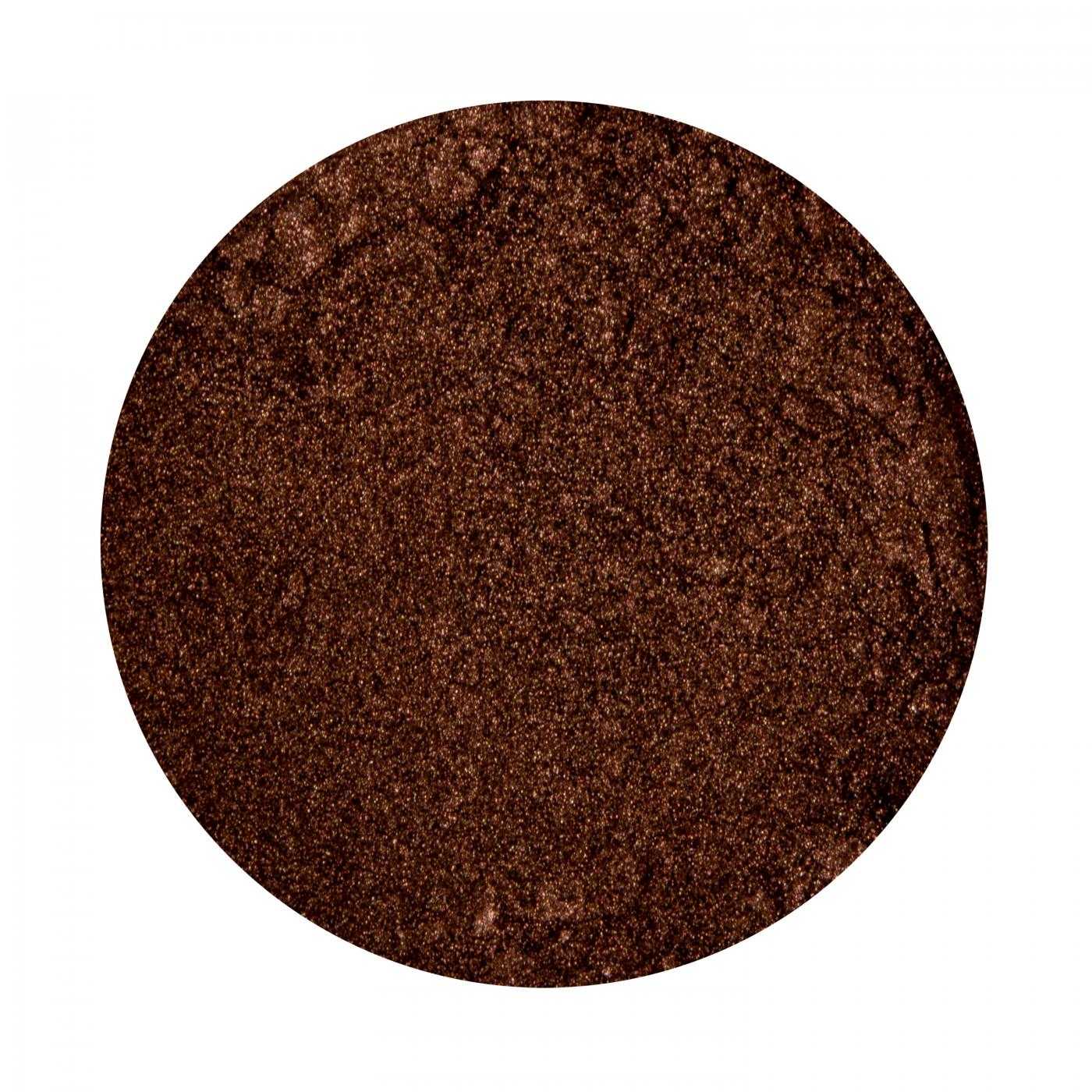
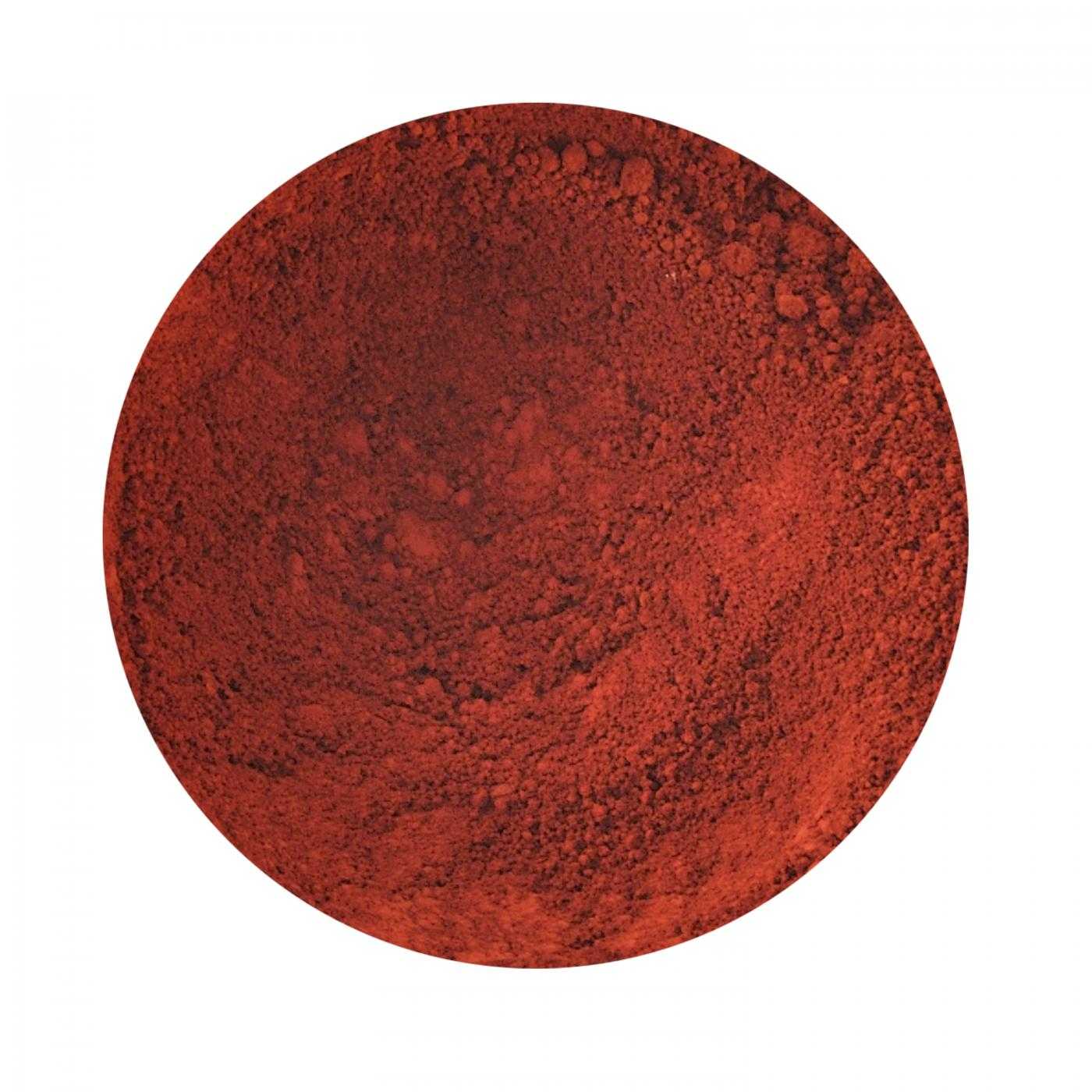
Mica Chestnut Brown is a pearlescent pigment powder of European origin that gives products a glossy chestnut brown shade. It colours decorative cosmetics, balms, soaps, bath bombs and candles. It is mixed into the formulation at the very end and also withstands hot pouring.
How the colour and shine are created
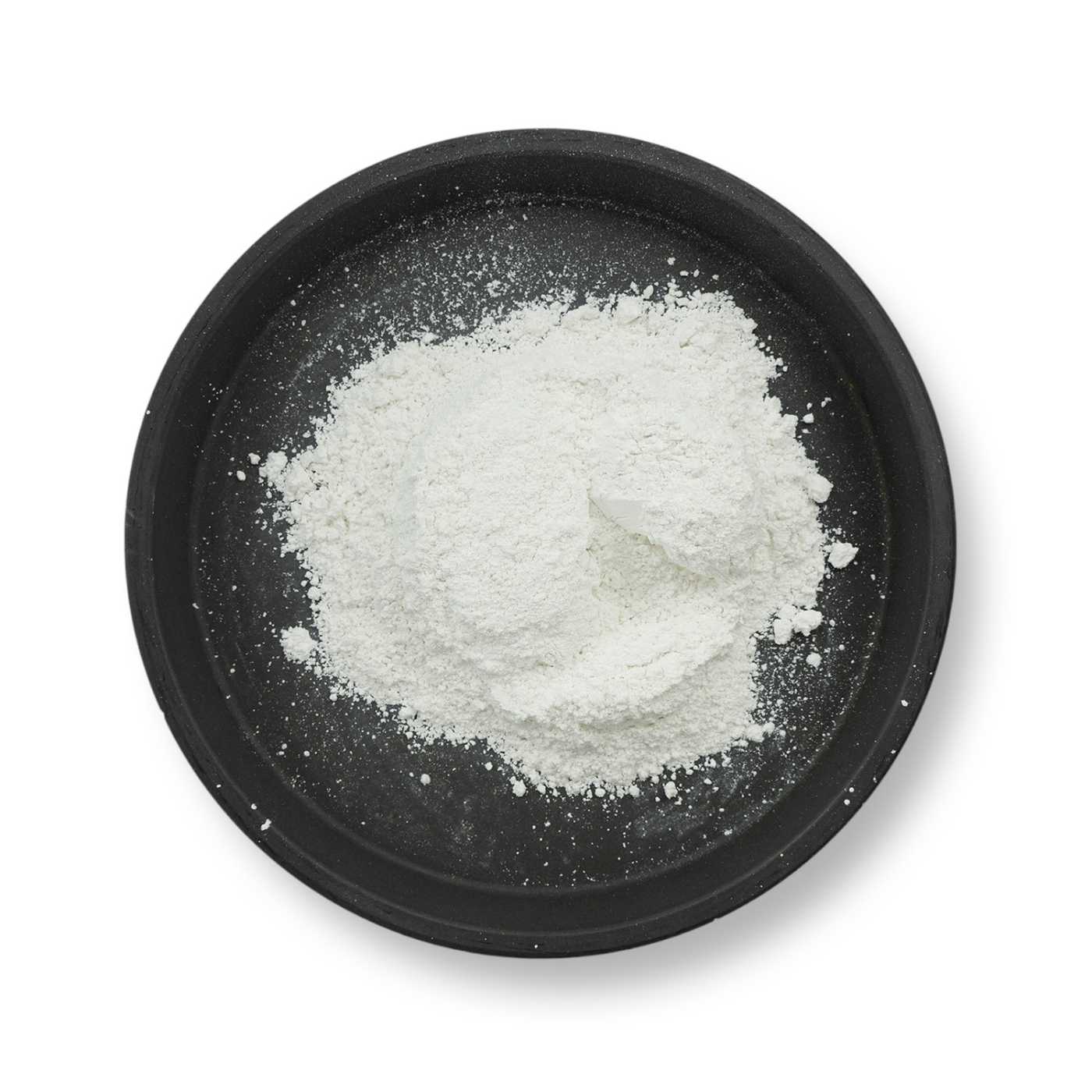
The pigment is based on tiny mica platelets coated with titanium dioxide. The platelets reflect light, and the titanium dioxide layer gives it a pearlescent shine. Red iron oxide tints the pigment brown.
The final effect depends on the base the mica is added to. In clear and translucent bases, such as gels, oils, lip balms or glycerine soap base, the shine comes out fully. In a white opaque cream, the base partly covers it and the colour looks more subdued.
The particles are 10–60 µm in size and the pigment contains no nanomaterials. The powder is odourless and does not change the fragrance of the finished product.
Key properties
- Dispersible in water, oil and glycols – the pigment does not dissolve in the base, it only disperses, and it suits water-based, emulsion and anhydrous formulations.
- Thermal stability up to 800 °C – it withstands candle pouring and working with hot soap base.
- Cosmetic-grade purity – it meets the requirements of Annex IV to Regulation (EC) No 1223/2009, including the limits for heavy metals and microbial purity.
- Wide range of applications – leave-on products for the face, the eye area, lips, body and nails.
Use in a formulation
Mica is added afterwards, to the finished or nearly finished mixture, and there is no temperature limit for this.
The usage rate is 1–30% and depends on how intense the shade and shine should be. A lower rate gives the product a shimmering hint. Higher rates belong in decorative cosmetics, where colour is the main purpose of the product. The recommended pH range of the formulation is 6–9.
The powder binds oils, absorbing 50–65 g of oil per 100 g. At higher rates in anhydrous products, for example in balms and lipsticks, the mixture may thicken or feel drier. Take this into account when putting the formulation together.
In thin liquids, the particles settle to the bottom over time. For sprays, oils and toners with a shimmering effect, we recommend testing the stability of the finished product or allowing for shaking before use.
Suitable for products such as
- Eyeshadows, highlighters and bronzers – loose and pressed, where glossy brown forms the main shade or complements matte pigments.
- Lipsticks, lip glosses and tinted lip balms – the pigment is also intended for lips.
- Body oils, butters and creams with a shimmering effect – a small amount is enough.
- Nail polishes and nail care.
- Soaps, bath bombs and salts.
- Hair cosmetics.
- Candles and hobby crafts – a glossy brown shade for wax as well as for art and hobby projects.
Good to know
It is worth testing the colour result on a small sample. On the skin, the shade looks different from how it looks in the jar.
Mica is compatible with other ingredients without restrictions. It can be mixed with other pearlescent and matte pigments to create your own shades.
The pigment is not classified as hazardous, but do not inhale the dust when working with it. Use a respirator and eye protection when weighing and mixing, and wash your hands after work.
Frequently asked questions
Is mica Chestnut Brown soluble in water or oil?
No, mica Chestnut Brown dissolves neither in water nor in oil; it disperses in both. It behaves the same way in glycols. The particles remain dispersed in the base, and they are what creates the colour and shine. The pigment therefore suits water-based, emulsion and anhydrous formulations, and it is added only to the finished or nearly finished mixture.
How much mica Chestnut Brown should be added to a product?
The recommended usage rate of mica Chestnut Brown is 1–30%. A lower amount gives the product a shimmering brown hint, a higher one the intense colour and shine expected from eyeshadows or lipsticks. We recommend testing the right rate on a small sample, because the result is affected by the colour and transparency of the base.
Can mica Chestnut Brown be used for eyeshadows and on the lips?
Yes, mica Chestnut Brown is intended for the face, the eye area, lips, body and nails. As a pigment, it meets the requirements of Annex IV to Regulation (EC) No 1223/2009, including the limits for heavy metals. It contains no nanomaterials or fragrance allergens. It suits loose and pressed eyeshadows, highlighters, lipsticks and lip glosses.
Is mica Chestnut Brown suitable for candles?
Yes, mica Chestnut Brown can also be used in candle making. The pigment is thermally stable up to 800 °C, so it withstands the pouring of hot wax. It is odourless and does not change the fragrance of the candle. We recommend testing the resulting shade and shine in your particular wax on a test candle.
Does mica Chestnut Brown affect the thickness of a balm or lipstick?
Yes, at a higher usage rate mica Chestnut Brown can thicken an anhydrous product. The powder binds oils, absorbing 50–65 g of oil per 100 g. The mixture may then feel thicker or drier. This applies especially to strongly coloured lipsticks and balms, where the proportion of pigment is high. Take this into account when putting the formulation together.