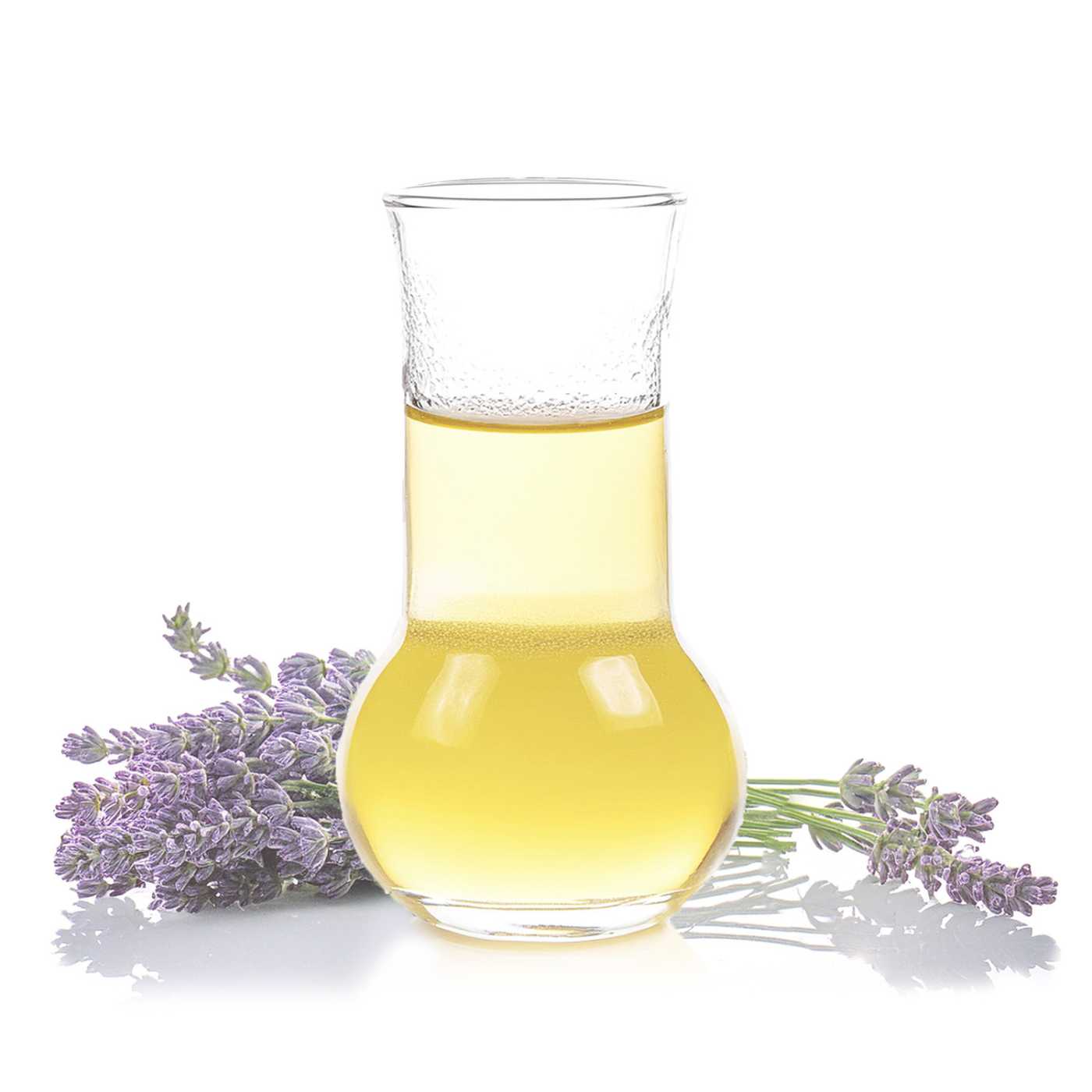
Essential oil from narrow-leaf lavender gives cosmetics, soaps and candles a floral-herbal scent that most people perceive as calming. It is obtained by steam distillation of lavender of European origin. In a formulation it primarily serves as a fragrance component; the manufacturer also attributes calming and cleansing effects on skin and scalp.
Suitable for body oils, creams, massage blends, hair care, soaps, candles and air fresheners. The oil is oil-soluble, so in aqueous products it is incorporated through a solubiliser or the oil phase of an emulsion. According to the manufacturer it is vegan and not tested on animals.
Key benefits
- Scent – floral with a herbal undertone. At the correct dosage it reads as natural in the finished product and does not mask other ingredients.
- Skin soothing – the manufacturer states a calming and cooling effect that helps reduce redness and discomfort on irritated or sun-stressed skin. These are manufacturer data for cosmetic use.
- Cleansing effect – according to the manufacturer it helps remove impurities and excess sebum from skin and hair. It is therefore added to cleansing gels, shampoos and scalp care products.
- Antimicrobial action – the manufacturer lists this as one of the oil's functions. In an aqueous product treat it as a supplement; it does not replace a preservation system.
- Relaxing aroma – lavender scent is associated with calm and rest. The manufacturer recommends it for body care and hair cosmetics.
Use in formulation
The oil is added at the end of production, to a cooled emulsion or oil blend. Higher temperatures volatilise the volatile components and alter the character of the scent. Into a cream it is stirred in during cooling of the emulsion. In anhydrous products (oils, balms, massage bars) it is sufficient to blend it into the oil phase after it has cooled.
In aqueous products such as tonics, mists or bath salts, the essential oil will not dissolve on its own. It requires a solubiliser (for example Polysorbate 20, Polysorbate 80 or PEG-40 Hydrogenated Castor Oil) and premixing before adding to the water phase. Without it the oil will float on the surface and there is a risk of undiluted oil contacting the skin. In bath salts it can also be dispersed in a carrier oil.
Dosage is governed by the product category according to IFRA. The limit differs for a lip balm, deodorant, face cream, shampoo or candle. Values for individual categories are listed in the product parameters and are used as the basis when designing a formulation.
First blend the essential oil into a small amount of carrier oil or solubiliser, then add it to the full batch. It will disperse more evenly and you avoid a locally high concentration in one part of the product.
Suitable for products such as
- Body oils and massage blends – dissolves in a carrier oil without additional excipients; the scent is released gradually during massage.
- Creams, body milks and facial tonics – into an emulsion via the oil phase, into a tonic via a solubiliser.
- Hair cosmetics – shampoos, conditioners, hair oils and serums, scalp care products. The manufacturer lists these among the recommended applications.
- Bar and liquid soaps, shower gels – rinse-off products with their own limit in IFRA category 9.
- Candles, scented waxes and air fresheners – lavender scent is used outside cosmetics as well; dosage in candles has its own IFRA category.
- Lip balms – only within the limit for IFRA category 1.
Good to know
- Undiluted oil is classified as a hazardous substance (GHS07 and GHS08 pictograms). Safety handling instructions can be found in the safety data sheet. Never apply it undiluted to skin.
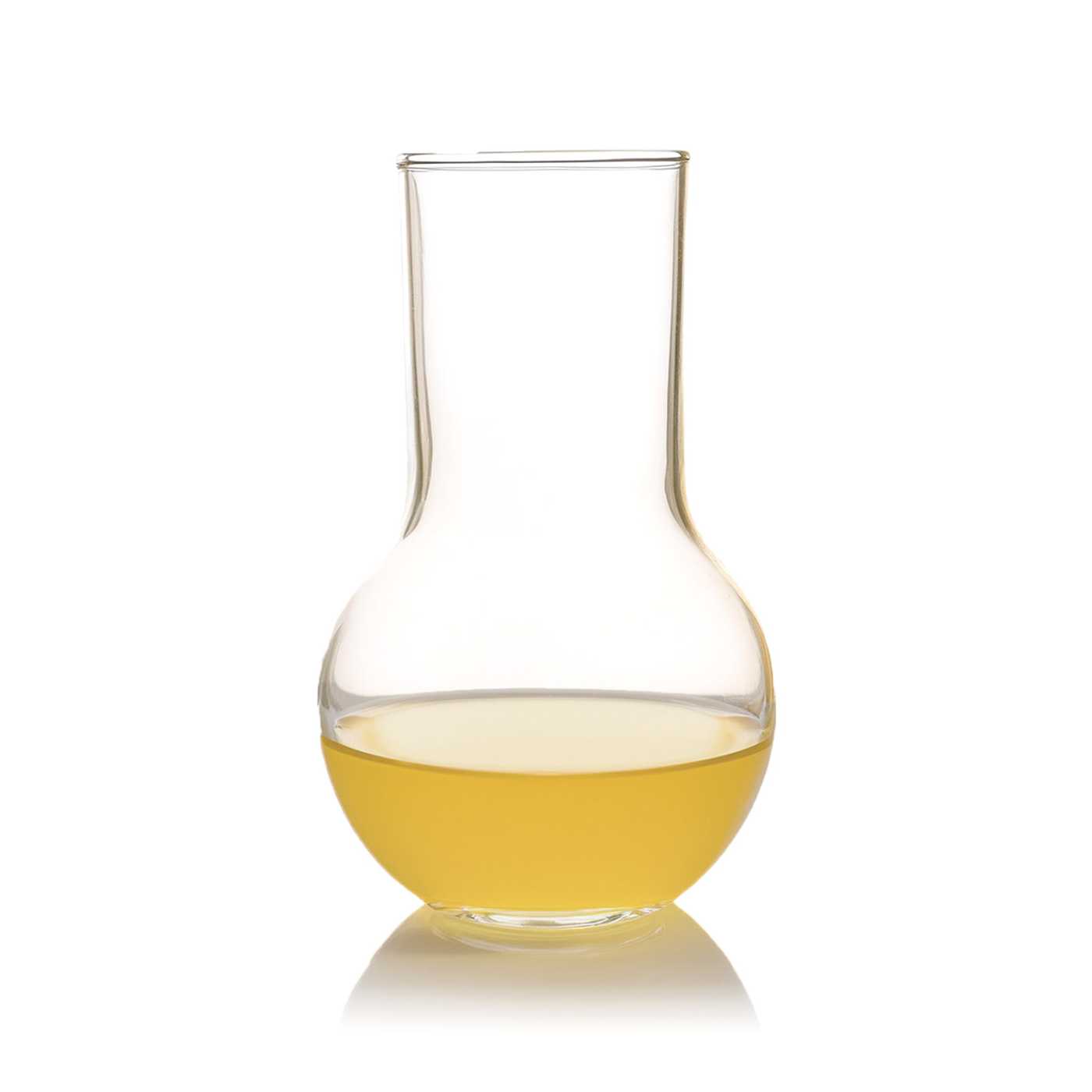
- The oil is colourless to pale yellow; at normal dosage it will not colour the finished product.
- For sensitive skin and in products for children start at the lower end of the dosage range. Before using the finished product we recommend a patch test on a small area of skin.
Before incorporating the oil into a leave-on face product, a lip product or cosmetics for children, verify the limit for the relevant IFRA category in the product parameters. The limit applies to the total lavender oil content in the product, even when combined with other fragrance components.
Essential oil, hydrolat and fragrance oil
An essential oil is the concentrated volatile fraction from steam distillation. It is used in small amounts and is oil-soluble. Lavender hydrolat is produced during the same distillation as the water phase; it is water-soluble and used directly as the water phase of tonics, mists and gels. Fragrance oil with a lavender scent is a composed blend of aroma compounds without the natural origin of an essential oil. The choice depends on whether you need the scent and cosmetic effect of an essential oil, a water component with a light fragrance, or a fragrance composition without a claim to natural origin.
Frequently asked questions
Is lavender essential oil water-soluble?
No, lavender essential oil is oil-soluble and does not dissolve in water. In tonics, mists or bath salts it is added via a solubiliser, premixed with it first and only then added to the water phase. Into creams and milks it is incorporated through the oil phase of an emulsion.
When is lavender essential oil added to a cream?
Lavender essential oil is added to the cooled emulsion at the end of production. At higher temperatures part of the volatile fragrance components evaporates and the scent of the finished cream will be weaker or altered. The oil is blended in during final cooling under constant stirring, in the same way as a preservative or other sensitive active ingredients.
How much lavender essential oil can be added to soap or cream?
There is no single universal figure; the maximum amount is determined by the product category according to IFRA. Bar soap, shower gel, body cream, face cream and lip balm each have different limits. Specific values for individual categories are in the product parameters and are used as the basis when designing a formulation.
Can lavender essential oil be used in candles?
Yes, candles of all types fall under IFRA category 12 and lavender essential oil is used in them. A test candle is recommended, with the scent checked after cooling and during burning. The oil is added to the melted wax only after it has partially cooled, so that the volatile components do not evaporate.
What is the difference between narrow-leaf lavender and lavandin?
Narrow-leaf lavender (Lavandula angustifolia) has a finer, more floral scent and is used primarily in face and body cosmetics. Lavandin is a hybrid of narrow-leaf and broad-leaf lavender; its scent is sharper with a camphor undertone. This oil is distilled from narrow-leaf lavender.