Polyglyceryl-4-oleate, 100 ml
Pre-order€22.43(€224.30/l)

BUTTERS 100 g
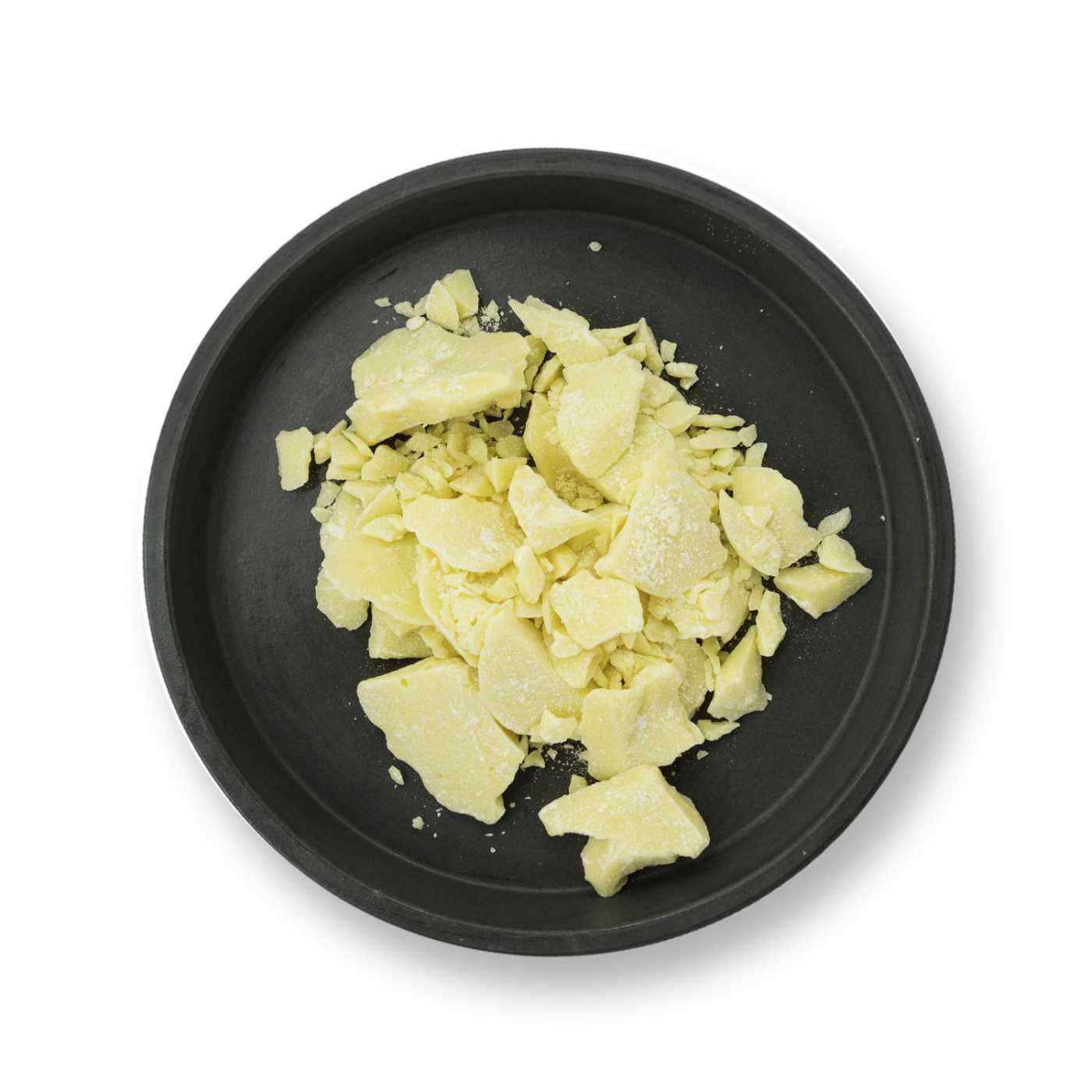
Deodorized cocoa butter gives balms, body butters and lip balms a firm consistency and leaves a protective film on the skin that slows the evaporation of water. full description
Lowest price in the last 30 days: €6.99
Deodorized cocoa butter gives balms, body butters and lip balms a firm consistency and leaves a protective film on the skin that slows the evaporation of water. It differs from unrefined cocoa butter in one essential point: after deodorization it is free of the chocolate scent, so the fragrance of the finished product is determined only by what you add to it. The raw material comes from the seeds of the cacao tree Theobroma cacao. It is obtained by mechanical pressing, filtration and subsequent deodorization, and it is supplied in both cosmetic and food grade.
The butter melts at approximately 30 – 34 °C. On the skin it slowly melts with body heat, while in the jar it stays solid even in a warmer room. It is added to the formulation into the oil phase, where it melts together with the other fats and waxes. The recommended processing temperature is up to 80 °C, which is enough to melt it even in combination with beeswax or candelilla wax. In emulsions it acts as a solid emollient: it increases viscosity and gives the cream a denser, more nourishing feel, which is why it is dosed lower in facial creams than in body ones.
The manufacturer permits dosing from 1 to 100 %, depending on what the butter is meant to do in the formulation. As a guide: 2 – 10 % in creams and lotions, 10 – 30 % in body butters and balms, 15 – 40 % in lip balms, and up to 100 % in anhydrous massage bars or pure balms. A high proportion of cocoa butter, however, produces a hard mass that becomes brittle at lower temperatures, which is why it is combined with softer butters (shea, mango) and liquid oils in body butters.
Cocoa butter solidifies in several crystalline forms. When it cools slowly, hard grains form in the balm or body butter; they do melt on the skin, but the product feels gritty. Heat the melted mixture evenly, pour it at the onset of setting and let it cool quickly, for example in the fridge. With whipped butters a brief setting and repeated whipping helps.
In cold-process soap, cocoa butter is added for a hard, long-lasting bar with a creamy, denser lather. At a higher proportion it can speed up trace and the mass sets faster, so keep that in mind with more demanding designs. In bath bombs and salts it is added as a fat that leaves the skin cared for after it dissolves in water, while also slightly firming up the pressed bomb.
The butter is insoluble in water and soluble in oils; you cannot incorporate it into water-based toners or gels without an emulsifier. When weighing, bear in mind that solid butter is easier to dose when grated or chopped into smaller pieces. It then melts faster and more evenly.
Anhydrous products do not require preservation, since the butter contains no water. In an emulsion the water phase is preserved in the usual way; the butter itself does not conflict with preservatives and has no known compatibility limitations.
On the face it is used at a lower proportion, rather in nourishing night creams or balms. With oilier skin, verify its suitability in the finished formulation. It suits products for sensitive skin precisely because it contains no fragrance allergens.
The difference between the melting point and the summer temperature can be small. Sticks and balms with a low proportion of wax soften at 30 °C, so for summer products increase the wax proportion slightly or add a harder wax, such as candelilla.
Food grade means that the raw material also meets the requirements for a food fat. In cosmetics you will appreciate this in lip balms and products for children.
Unrefined cocoa butter has a pronounced chocolate scent and a darker, more yellow shade. Both butters have the same fatty-acid composition and hardness; deodorization removes the volatile fragrance substances and part of the colouring. If the chocolate scent is meant to be part of the product, choose the unrefined one. If the product is meant to smell different or not at all, the deodorized one is more suitable.
Shea butter is softer, spreadable straight from the jar and melts at a lower temperature. Cocoa butter is hard and breaks when pressed, so in a formulation it forms the “backbone” while shea adds creaminess. In body butters the two are commonly combined.
Only customers with a delivered order can write reviews.