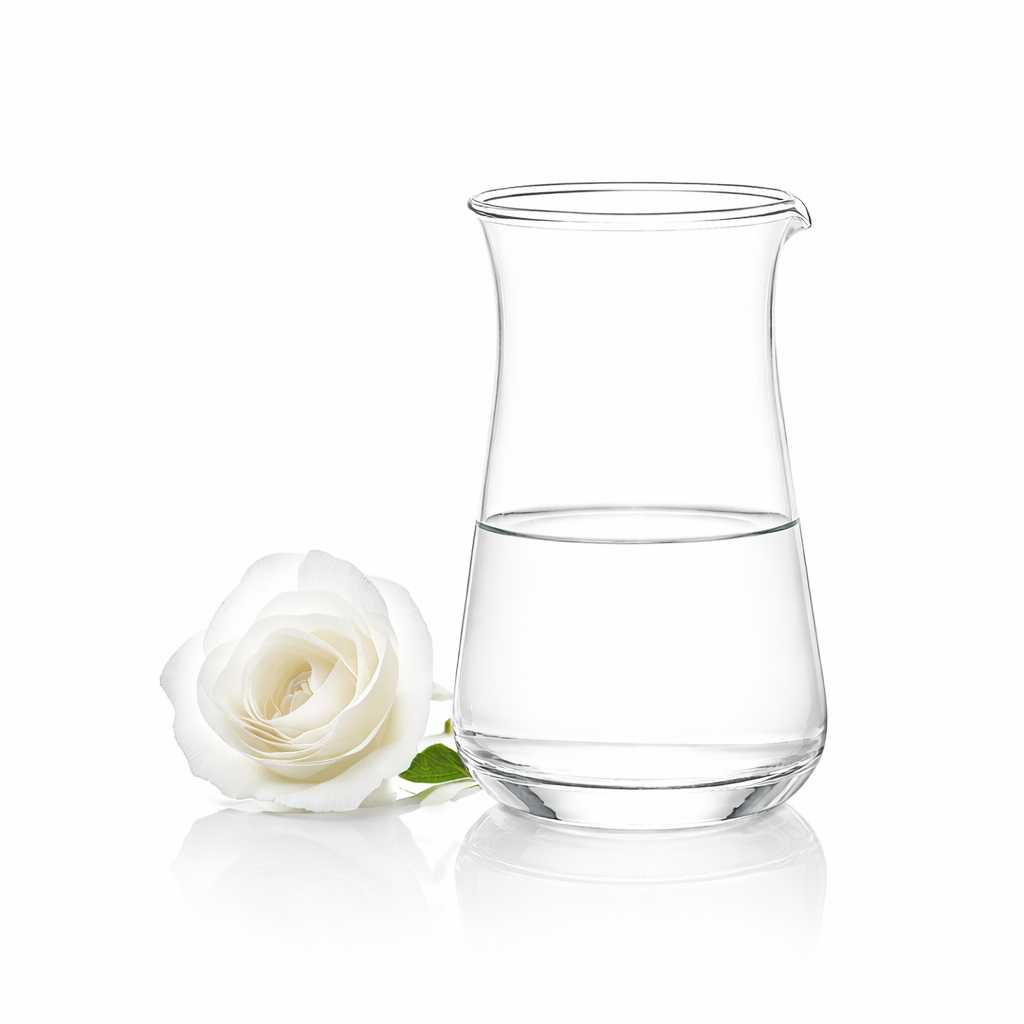
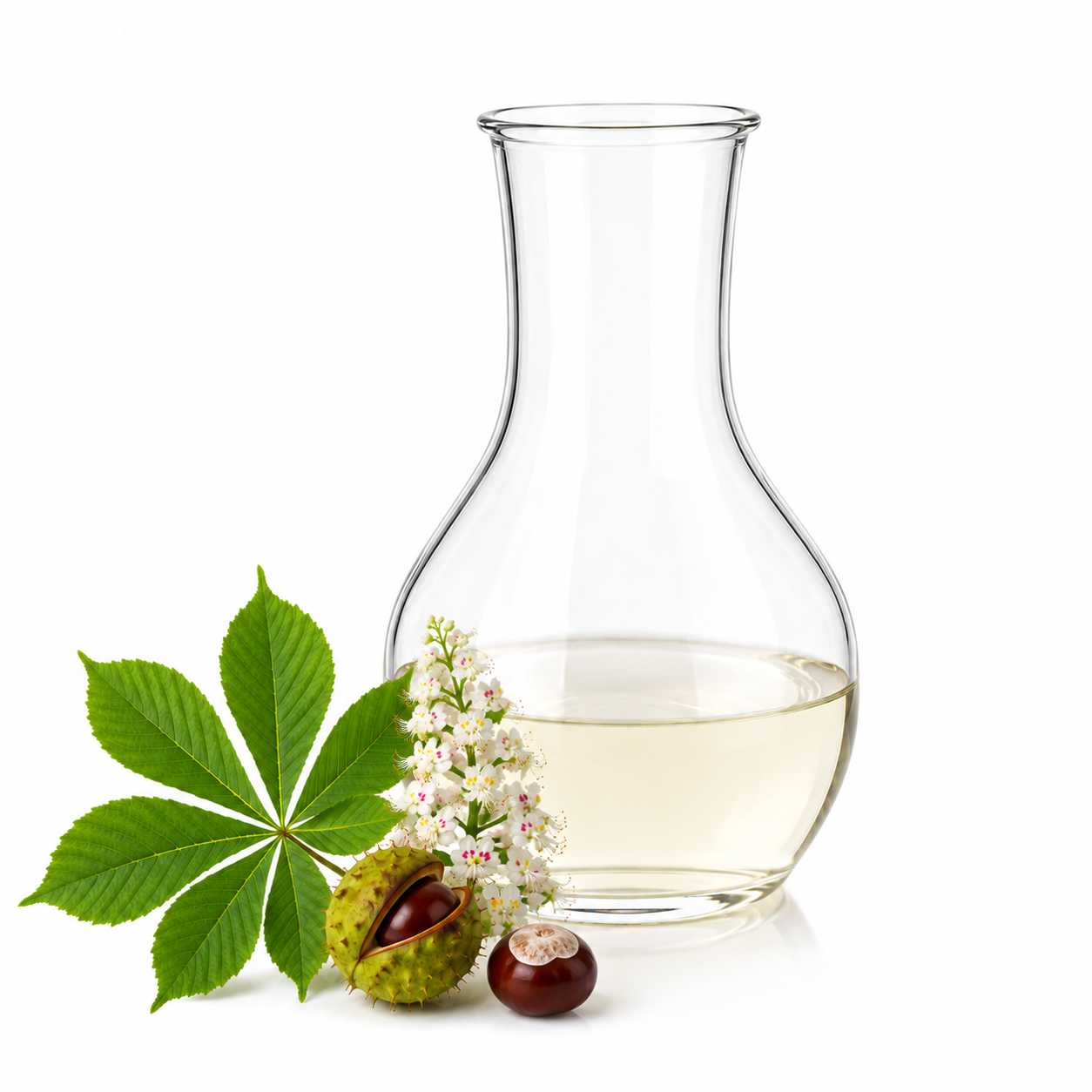
Rose Alba Floral Water BIO is a hydrosol obtained by hydrodistillation of Rosa alba flowers from European organic farming. In formulations it replaces part or all of the water, brings a natural rose scent and calms the skin while supporting its hydration. Used undiluted as a toner or as the water phase of serums, creams and masks for all skin types including sensitive skin and the eye area.
It contains no added alcohol and is processed without heat, making it suitable for simple cold-process formulations such as toners, mists and gels.
What it brings to the skin
- Calming – for sensitive skin it is a water base that calms and protects it, whether in a toner after cleansing or in a cream.
- Hydration support – as a water base it supplies moisture to the skin and prepares it for the next steps in care. In serums and creams it is combined with humectants such as glycerin or hyaluronic acid.
- Antioxidant action – in the water phase it supports protection of the skin against environmental influences. It does not protect the oil phase, which needs its own antioxidant.
- Brightening and evening of the tone – with regular use in a toner or mask the complexion appears fresher and more even.
- Mature skin care – in products targeting skin elasticity and vitality it forms the water phase that carries further active ingredients.
Use in formulation
The hydrosol belongs in the water phase. It mixes with water and with alcohol but not with oils, so it does not belong in anhydrous products without an emulsifier or solubiliser. The dosage range is 1 – 100 %. Used undiluted as a toner or facial mist, in emulsions and gels it replaces part or all of the distilled water.
The recommended processing temperature is up to 40 °C, so when making hot-process emulsions the entire water phase consisting of the hydrosol is not heated. In cold-process gels and toners it is added directly.
If the hydrosol is to make up most of the water phase of a cream, heat only a smaller portion of the water to emulsification temperature. Stir in the hydrosol only while the emulsion is cooling below 40 °C, so the scent is preserved.
It is compatible with a pH of 3.0 – 8.0, which covers acidic serums, standard facial toners and neutral emulsions. It tolerates electrolytes, both oxidising and reducing agents, and can be combined with perfume.
The preservation system protects the hydrosol itself, not the finished product. Every water-containing product in which the hydrosol is used needs its own preservative and verification of preservation efficacy.
Suitable for products such as
- Facial toners and mists – undiluted or supplemented with glycerin, without heat, with its own preservative.
- Serums and gels – water phase carrying active ingredients, including products for the eye area.
- Creams and facial lotions – water replacement in leave-on emulsions for sensitive and mature skin.
- Masks – for mixing clay and powder masks instead of water or as the base of a hydrogel mask.
- Scalp, body and hands – hair toners, after-wash rinses, refreshing body sprays and hand care products.
What is worth knowing
The hydrosol is colourless and will not affect the colour of the finished product. The scent is distinctly rosy but gentler than that of the essential oil; in creams with a stronger fragrance it recedes into the background. It contains fragrance allergens listed in Annex III of the Cosmetic Products Regulation, which must be taken into account when labelling the finished product.
The ingredient holds organic certification, contains no added alcohol and is suitable for both rinse-off and leave-on products. It has the consistency of water and can be filled into a spray bottle without any adjustments.
Rose hydrosol and rose essential oil
Both ingredients are produced during the distillation of rose flowers, but differ in what they carry from the distillation. The essential oil is a concentrated oil fraction. It is dosed in tenths of a percent, requires a solubiliser for the water phase and serves primarily as a fragrance component. The hydrosol is an aqueous distillate with water-soluble aromatic compounds; it is used at high percentages and directly replaces water. Its scent is more subtle, and it is also suitable where the essential oil would be too strong, for example around the eyes and on sensitive skin.
Frequently asked questions
Can rose alba hydrosol be used undiluted as a toner?
Yes, rose alba hydrosol is applied to the skin undiluted as a facial toner or mist. The recommended dosage range is 1 – 100 %, so it can make up the entire product. However, a finished product in a spray bottle that is used over a longer period or sold does need its own preservative and preservation verification.
Is rose alba hydrosol oil-soluble?
No, rose alba hydrosol does not mix with oils. It dissolves in water and in alcohol, so it belongs in the water phase. It cannot be added to anhydrous oil serums or balms without an emulsifier; in emulsions it joins the oil phase only during emulsification.
Does a cream containing rose alba hydrosol need to be preserved if the hydrosol is already preserved?
Yes, a finished product containing the hydrosol needs its own preservation system. The hydrosol's preservation based on benzyl alcohol, benzoic acid and dehydroacetic acid protects the ingredient itself. After dilution with other components and at a different pH it does not guarantee protection of the entire product. Choose a preservative according to the product type and verify its efficacy.
Can rose alba hydrosol be heated during emulsion manufacture?
Rose alba hydrosol is processed up to 40 °C and is not heated to standard emulsification temperatures. In a hot-process formulation, heat only a portion of the water and stir in the hydrosol while the emulsion is cooling. In cold-process toners and gels it is added without heating.
What is the difference between rose alba hydrosol and rose essential oil?
Rose alba hydrosol is an aqueous distillate used at high percentages as the water phase; the essential oil is a concentrated fragrance component dosed in tenths of a percent. Both ingredients come from the distillation of rose flowers. The hydrosol has a more subtle scent and is also suitable for sensitive skin and the eye area, where the essential oil is not typically used.
Is rose alba hydrosol suitable for sensitive skin and the eye area?
Yes, rose alba hydrosol is suitable for all skin types including sensitive skin and is also used in products for the eye area. It contains no added alcohol and has a calming effect. However, it does contain fragrance allergens from Annex III of the Cosmetic Products Regulation; for very reactive skin, test the product on a small area first.