+421 950 333 113info@handymade.store−10 %Shop now

BUTTERS 500 g

Cocoa Butter, Natural Unrefined, Organic, 500 g

Pack size100 g500 g1 kg5 kg10 kg

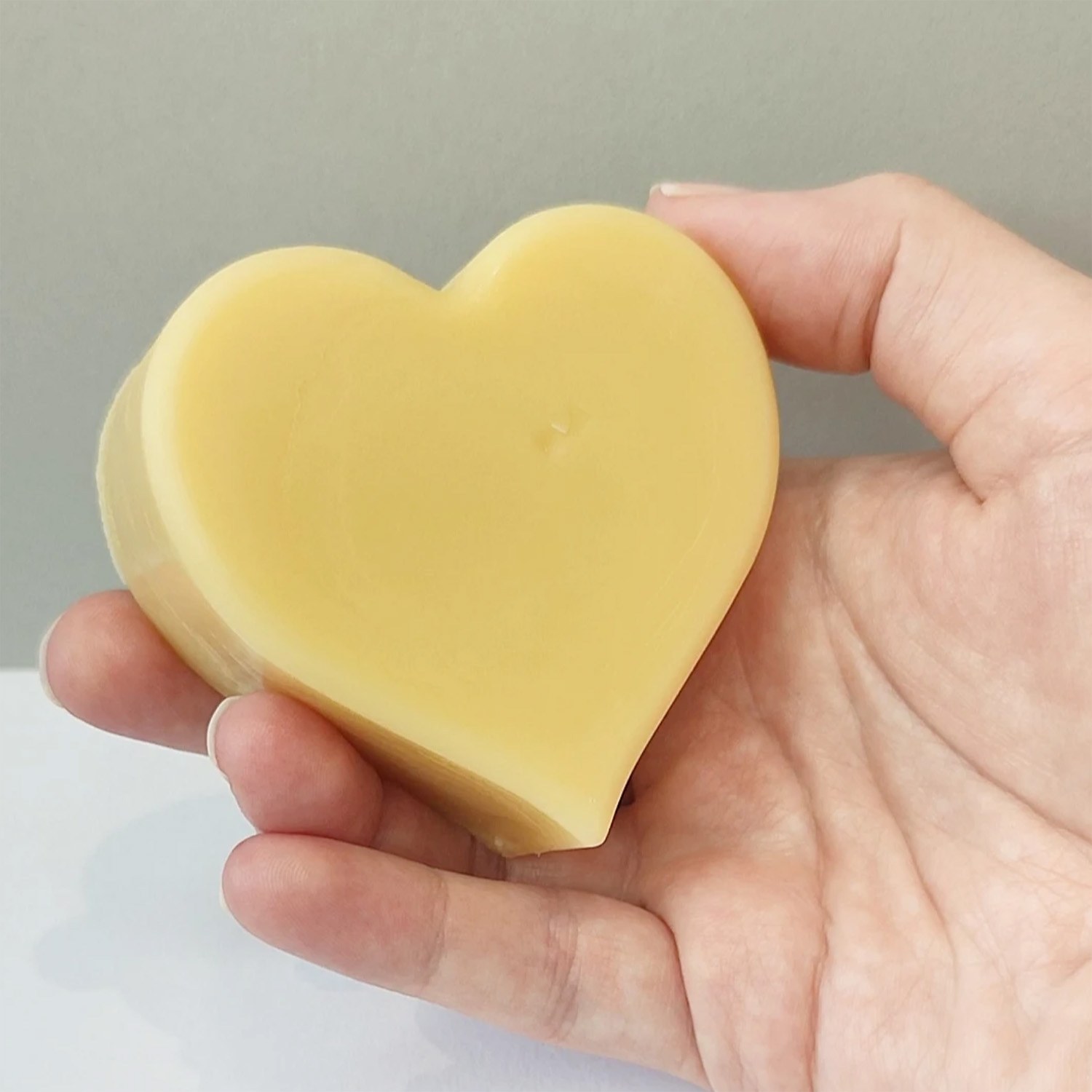
Cocoa butter is a hard vegetable butter from the seeds of the cacao tree (Theobroma cacao). It melts on contact with the skin and leaves a protective film on it. full description

AvailabilityIn stock · 196 packs
Product codeBUT501_500
BatchBB202608034
Best before04/2028
€29.99incl. VAT€59.98/kg

Lowest price in the last 30 days: €26.99

Product description

Cocoa butter is a hard vegetable butter from the seeds of the cacao tree (Theobroma cacao). It melts on contact with the skin and leaves a protective film on it. It gives firmness to balms, body butters and sticks, softens the skin and slows the loss of water from its surface. It is unrefined and certified organic, and it keeps its natural chocolate scent. It comes from South America.


How it works on skin and hair

Cocoa butter is an emollient. It fills the tiny irregularities on the skin surface, so the skin feels smoother and more supple to the touch. At the same time, the layer of fat prevents water from evaporating. By itself it does not supply water to the skin; it supports hydration by keeping water in the skin for longer.

It melts at 31.5–35 °C, which is roughly the temperature of the skin surface. In a jar or stick it holds its shape, and once applied it spreads like an oil. It is suited above all to dry and normal skin, and it is also used in products for sensitive skin and baby skin.

In hair care it softens the hair and makes it easier to comb. It is added to conditioners, masks and leave-in care for dry hair and scalp.


Key properties

  • Hardness – the fatty acids are mainly stearic acid (30–37%), oleic acid (31–39%) and palmitic acid (23–30%). This makes the butter hard, and it gives firmness to products.
  • Resistance to oxidation – it contains only 1.5–4.5% linoleic acid, so it is relatively resistant to oxidation.
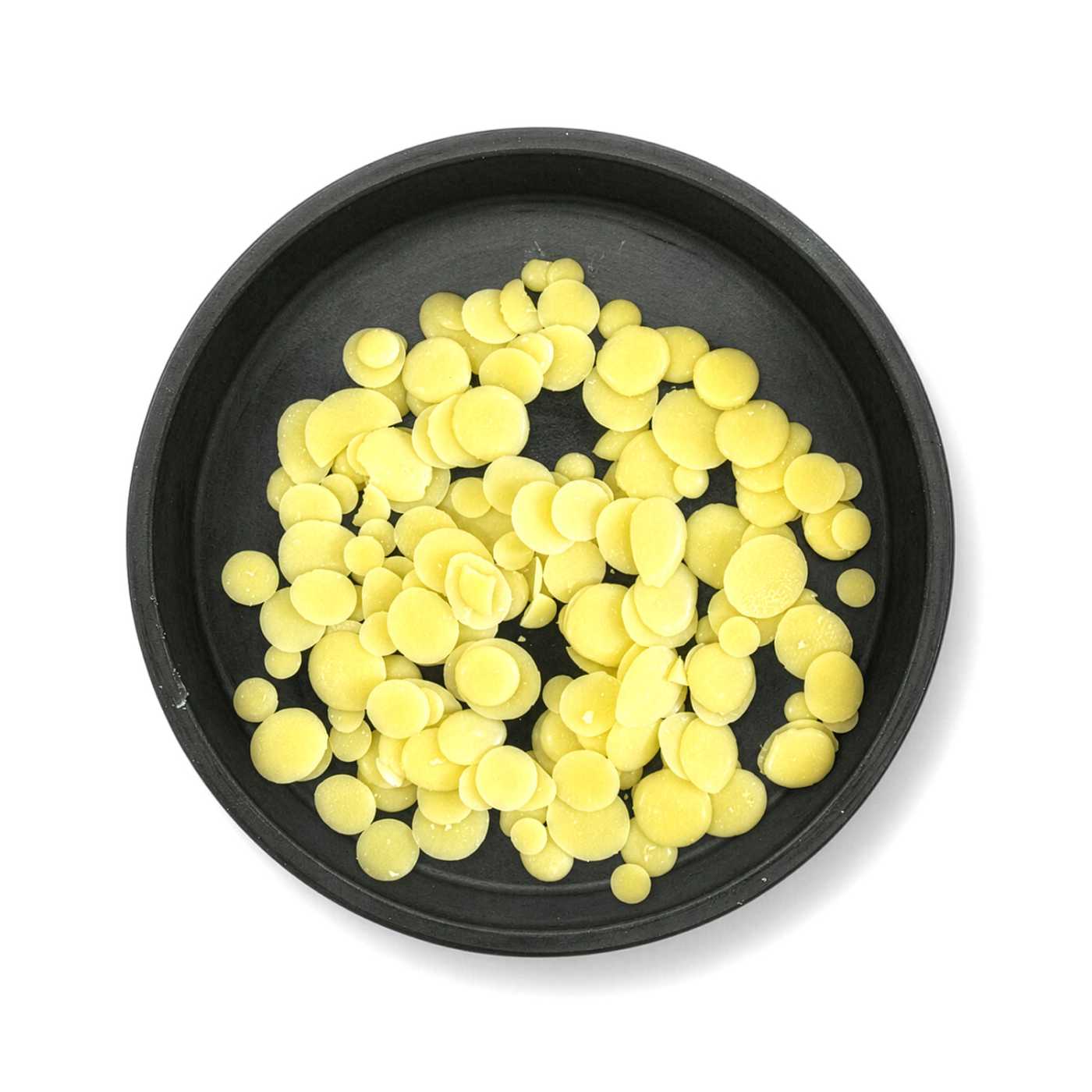
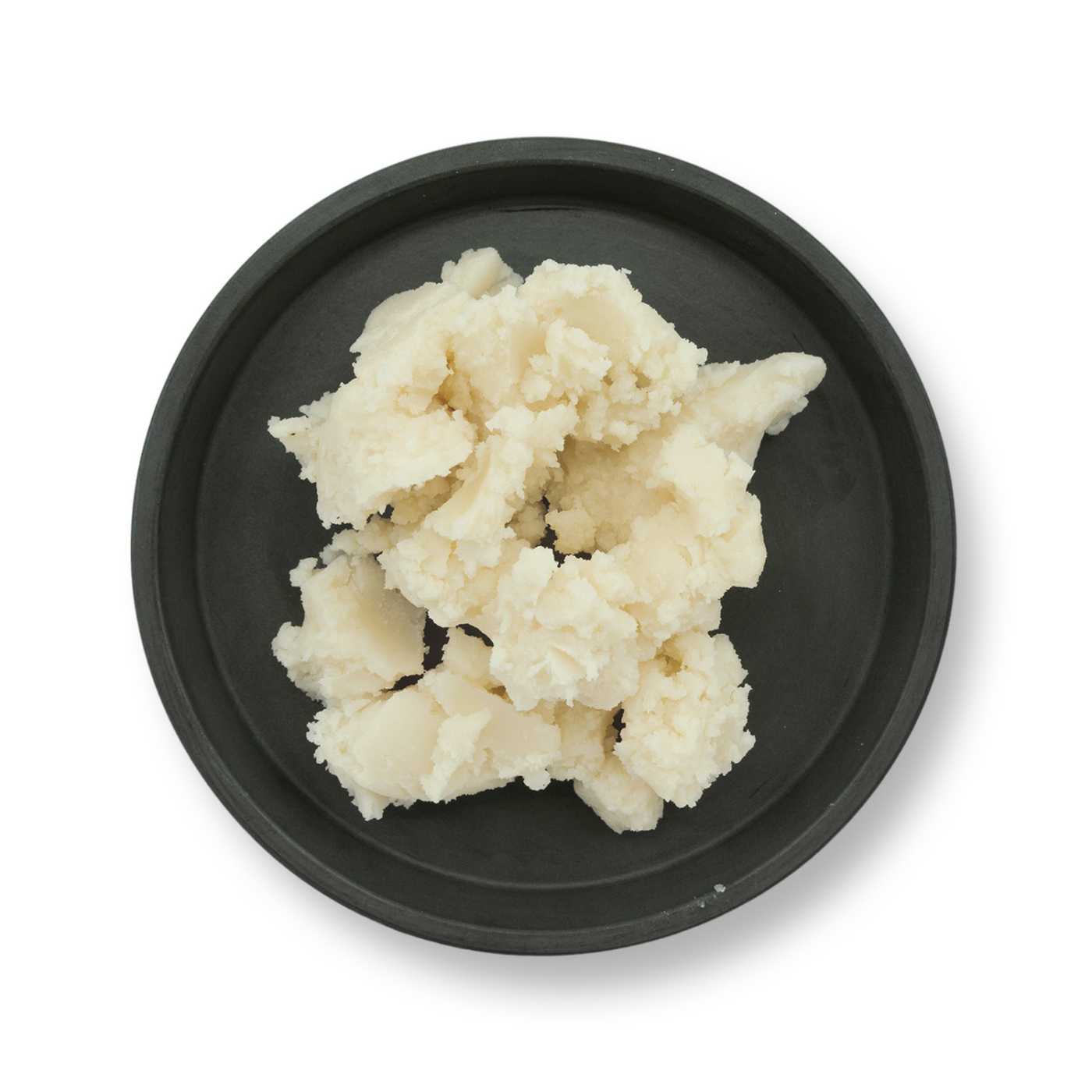
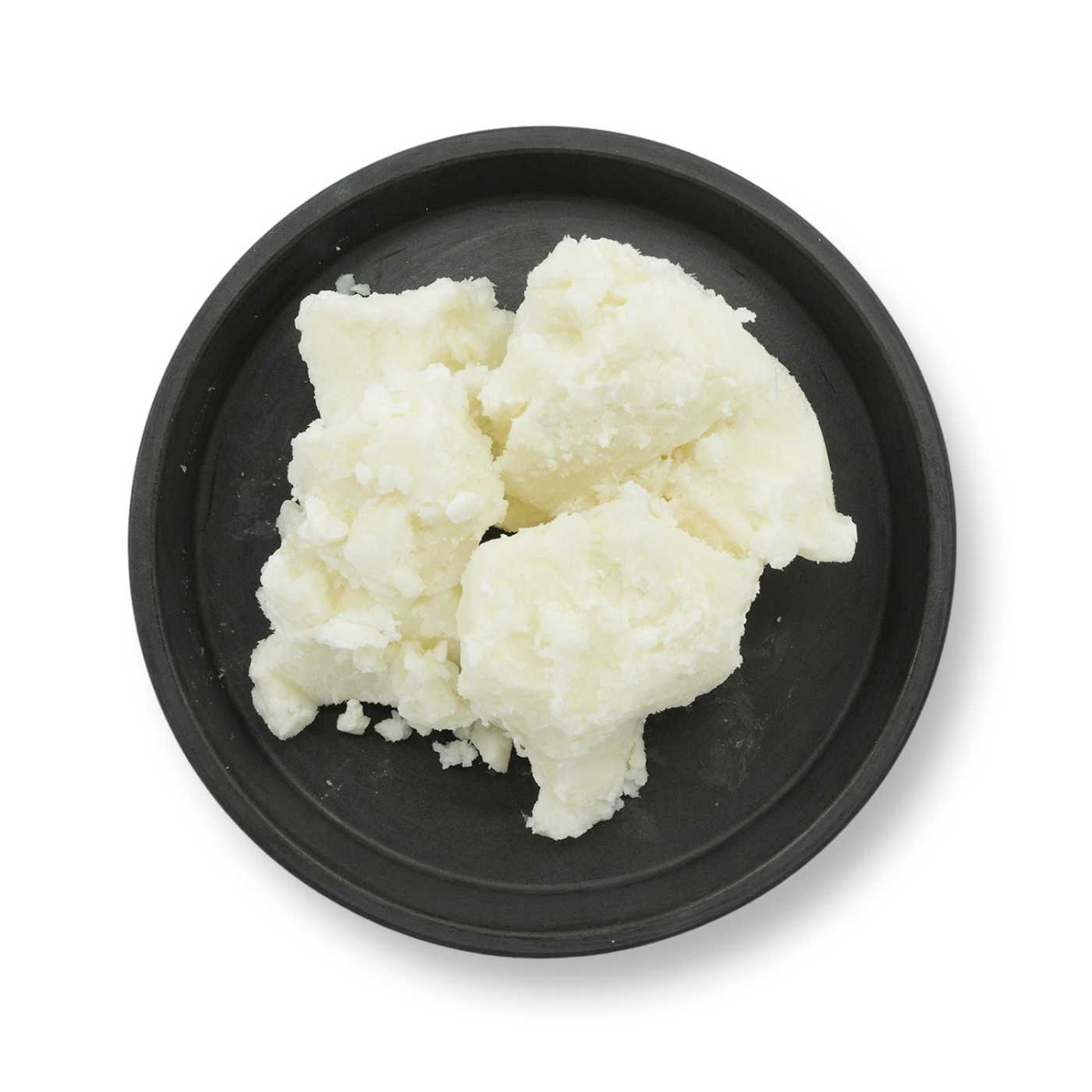
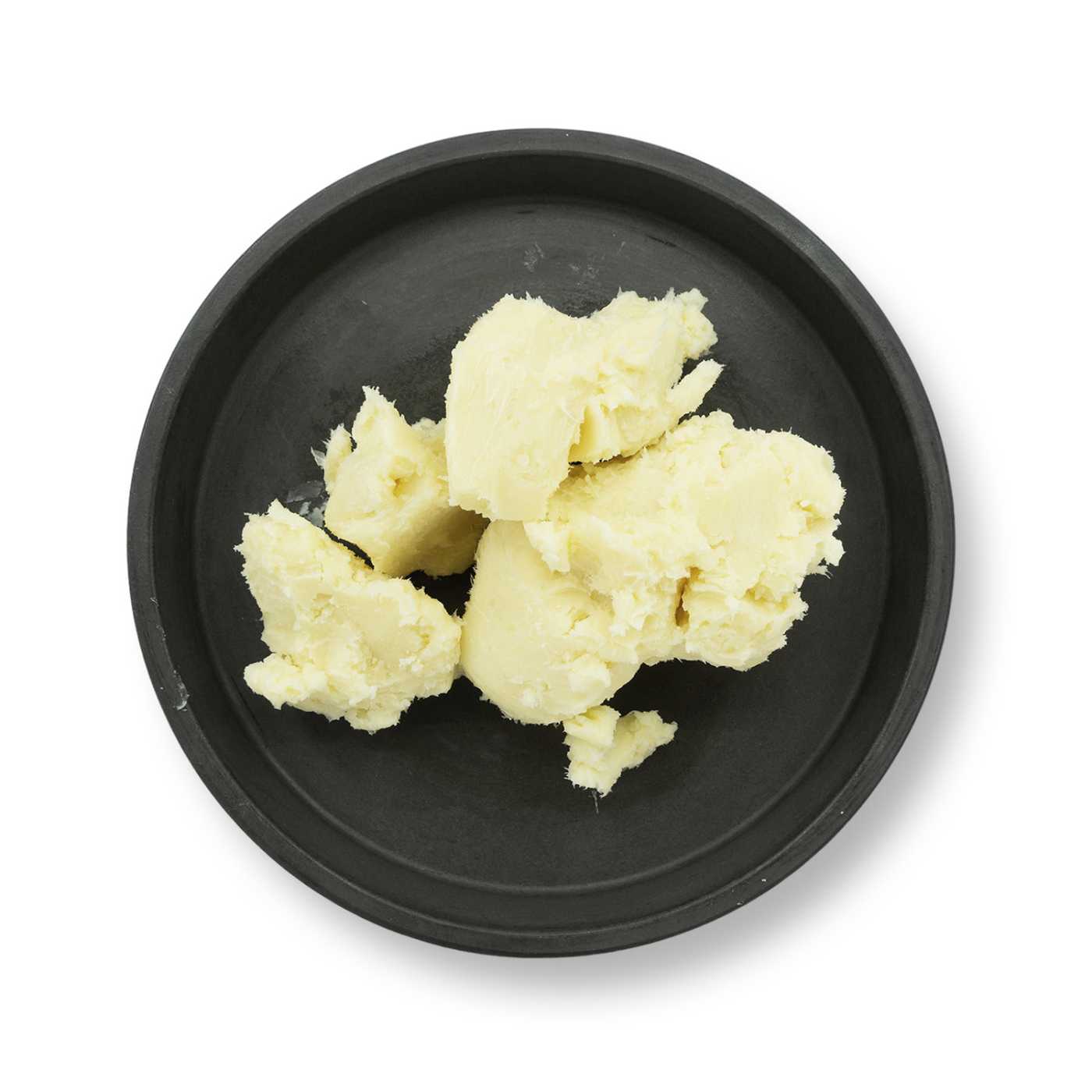
  • Scent and colour – unrefined butter is light yellow to ivory and smells of chocolate with a mild nutty note.
  • Origin and processing – it is obtained from fermented and roasted cacao beans by grinding, mechanical pressing and filtration. It comes from Peru and is both cosmetic grade and food grade.

Use in formulations

The butter dissolves in oils and is insoluble in water. In anhydrous products it is melted together with the other fats and waxes; in emulsions it belongs in the oil phase with the emulsifiers and fatty alcohols. It melts at a low temperature, and the recommended processing temperature is below 40 °C. Heat it only until it has melted completely.

The usage rate depends on the type of product. It can be used in the range of 1–100%, roughly as follows:

  • creams and cleansing emulsions – 5–8%
  • hair bars – around 5%
  • lip balms – 20–45%
  • balms – around 30%
  • scrubs – 34–70%
  • after-sun products – from 1%

In anhydrous recipes it is most often combined with sunflower and jojoba oil, mango butter and beeswax or rice wax. Lecithin or Polyglyceryl-3 Polyricinoleate is also added to it in cleansing oils and scrubs.


Suitable for products such as

  • lip balms and sticks, where it adds firmness
  • body butters and balms for dry skin on the hands and body
  • body lotions and creams with a richer texture
  • massage oils
  • scrubs and cleansing oils
  • conditioners, masks and leave-in hair care
  • soaps, with a saponification value of 188–198 mg KOH/g

Good to know

Graininess and a white coating are a well-known phenomenon with cocoa butter. The butter solidifies in several crystalline forms with different melting points. With insufficient tempering or during storage, it recrystallises into more stable forms. A white coating, known as fat bloom, appears on the surface, and the texture becomes grainy and loses its shine.

Controlled cooling, or seeding with stable crystals, helps give the product a smooth and glossy surface.

Oxidation is accelerated by daylight, heat and iron and copper ions. Metal containers that release these ions are not suitable for melting. The butter is stabilised by tocopherol, but its effect depends on the concentration.

The chocolate scent and yellowish tint carry over into the finished product. With white creams and delicate fragrances, you need to allow for them at the recipe design stage.


Frequently asked questions

At what temperature does cocoa butter melt?
Cocoa butter melts at 31.5–35 °C. It is solid at room temperature, but on the skin it softens and spreads like an oil. During production, it only needs to be heated just above its melting point; the recommended processing temperature is below 40 °C. Prolonged heating does not benefit the butter, as it accelerates its oxidation.
Why is a balm with cocoa butter grainy or covered with a white coating?
Graininess and a white coating are caused by cocoa butter recrystallising into more stable crystalline forms. This happens with insufficient tempering or during storage. The product then loses its smooth and glossy appearance. Controlled cooling, or seeding with stable cocoa butter crystals, helps the stable form to develop.
How much cocoa butter goes into a cream and how much into a lip balm?
Cocoa butter is used in creams and cleansing emulsions at 5–8%, and in lip balms at 20–45%. Balms contain around 30% and scrubs 34–70%. The higher the proportion, the harder the product and the stronger its chocolate scent.
Does unrefined cocoa butter smell of chocolate?
Yes, unrefined cocoa butter has a characteristic chocolate, slightly nutty scent. Refining and deodorisation remove the scent and colour of the butter, while the unrefined butter keeps them. The scent carries over into the finished product and is pronounced at higher usage rates. It can be used as a natural fragrance for balms and body butters.
Is cocoa butter soluble in water?
No, cocoa butter is insoluble in water; it dissolves in oils and fats. In creams and body lotions it is added to the oil phase, where it melts together with the emulsifier, and it is only combined with the water phase through emulsification. In anhydrous products it is melted together with the oils and waxes.
Can cocoa butter be used in soap?
Yes, cocoa butter is also used in soap making. The saponification value is 188–198 mg KOH/g. The high proportion of stearic and palmitic acid makes cocoa butter a hard fat.

Parameters

INCI
Theobroma Cacao Seed Butter
CAS No.
84649-99-0 / 8002-31-1
EC number
283-480-6
Product colour
Light yellow
Country of origin
Peru
Appearance
Butter
Function in formulation
Emollient
Recommended processing temperature
< 40 °C
Application area
HairScalpBodyHands
Recommended usage rate
1 - 100 %
Application type
Leave-on
Biodegradability
Readily biodegradable
Certifications
Organic certification
Natural Index (NI ISO 16128)
1,00
Natural Origin Index (NOI ISO 16128)
1,00
Organic content
100 %
Renewable Carbon Content (RCC)
100 %

Product documentation

CoACertificate of Analysis
batch BB202608034PDF ↓
batch BB202605008PDF ↓
TDSTechnical Data Sheet
Physical parameters and processingPDF ↓
SDSSafety Data Sheet
Available for purchased products —
Download all (ZIP)

3 PDF files in one archive

Learn how to work with it

From our blog
Hana C.12 Nov 2026SK

Verified purchase

Fragrant butter. I'm satisfied with it.

Translated automatically

Ľubica G.12 Oct 2026SK

Verified purchase

Variant: Kakaové maslo, prírodné nerafinované, BIO 100 g

Great cocoa butter in practical pellets that melt faster than large chunks of cocoa butter

Translated automatically

Mirka20 Aug 2026SK

Verified purchase

It has a beautiful cocoa scent that carries over into the finished product as well, I'm very happy with it (the previous cocoa butter I used from another brand couldn't be smelled at all, the difference is big in my opinion).

Translated automatically

Miriam20 Aug 2026SK

Verified purchase

when I need a fluffy texture for whipped butters, one of my favourite hard butters, in combination with other butters a perfect silky finish on the skin

Translated automatically

Nadežda D.20 Nov 2026CS

Verified purchase

(9 reviews)