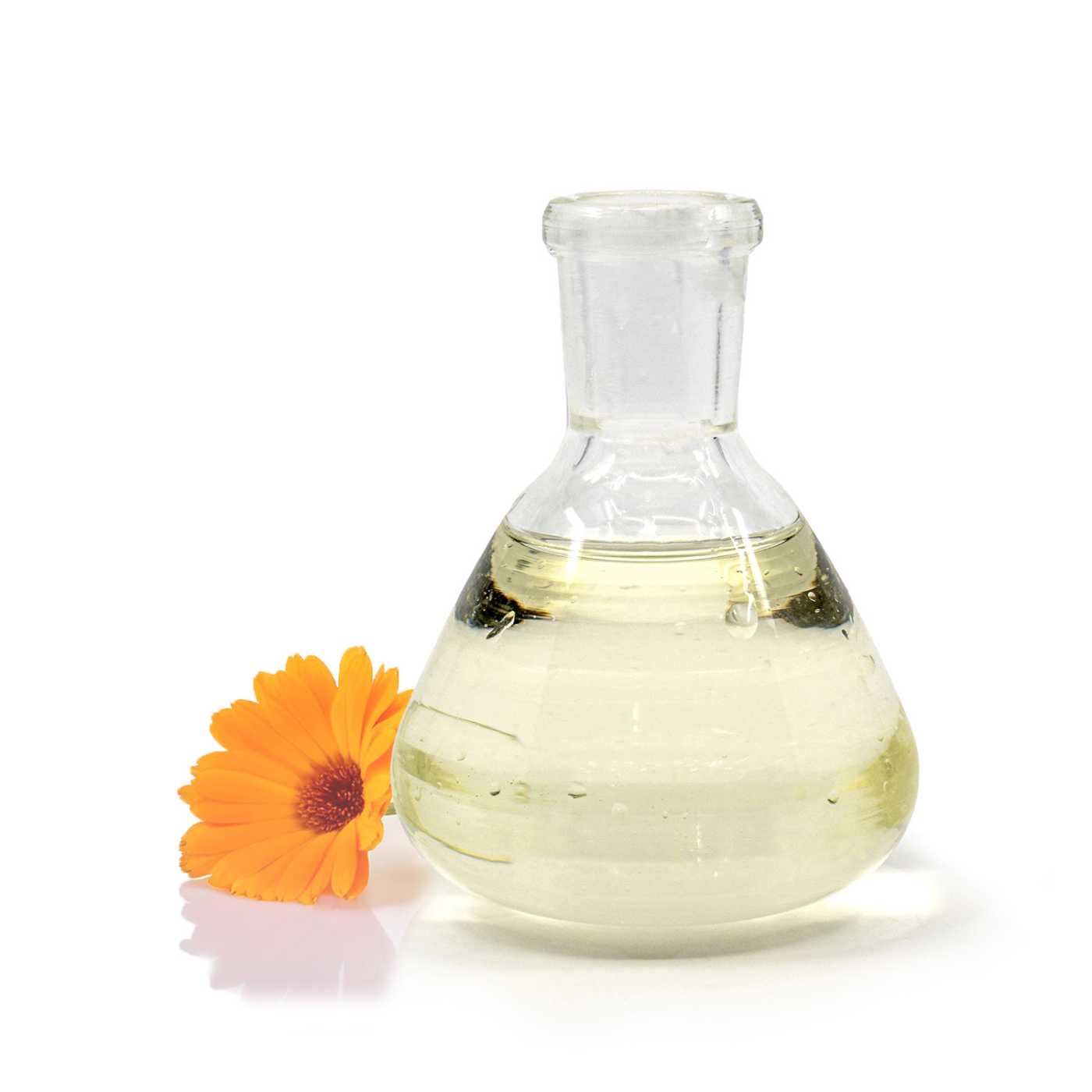
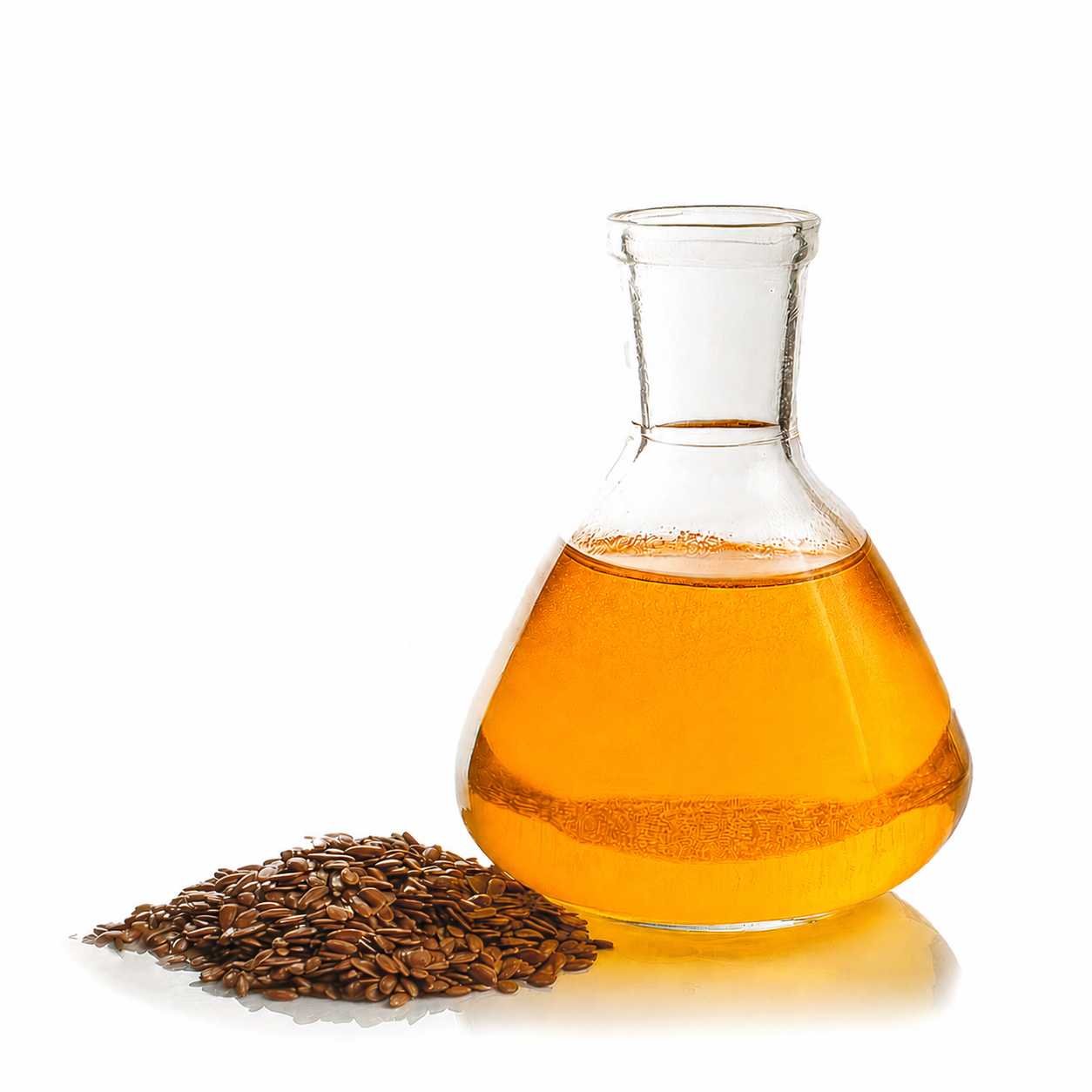
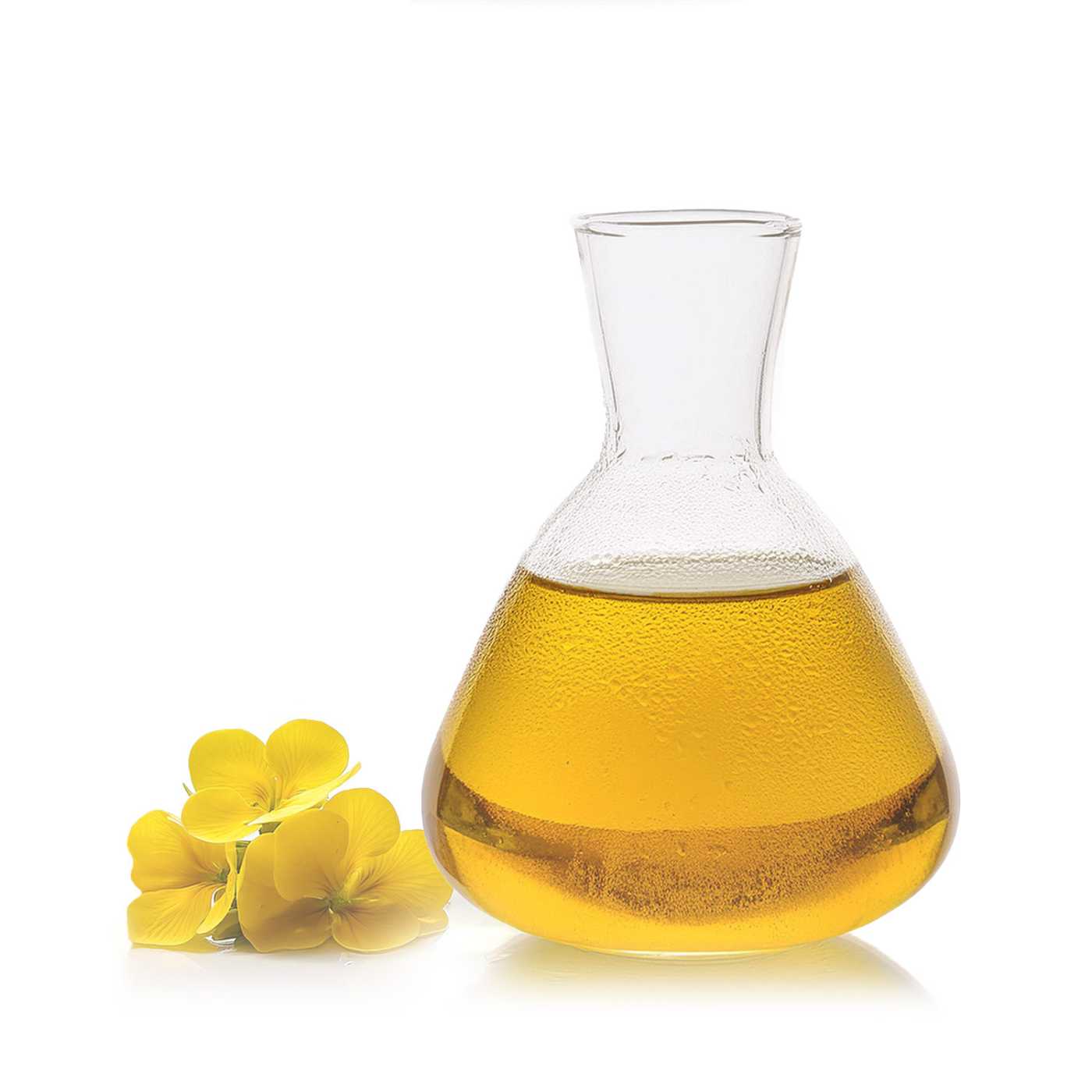
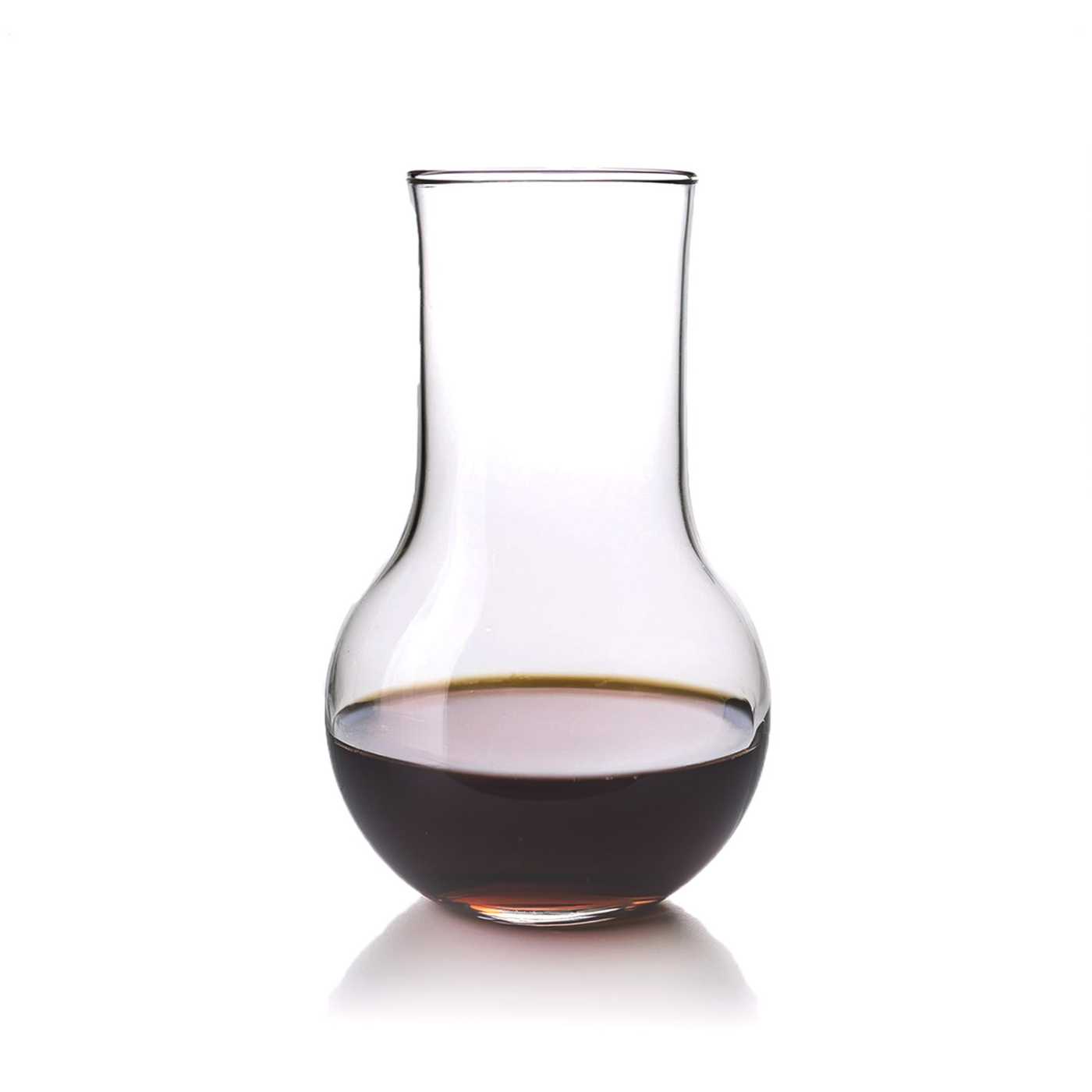
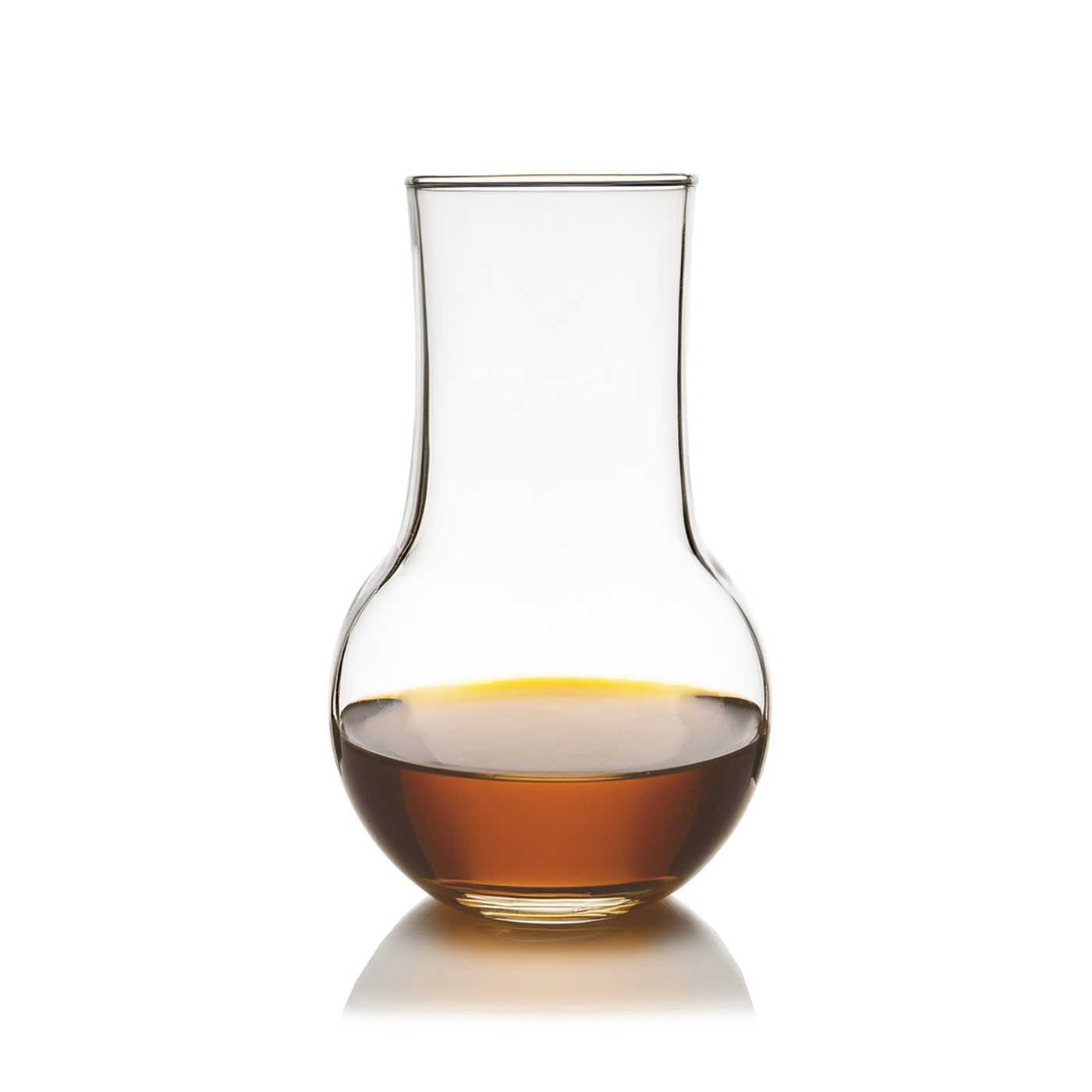
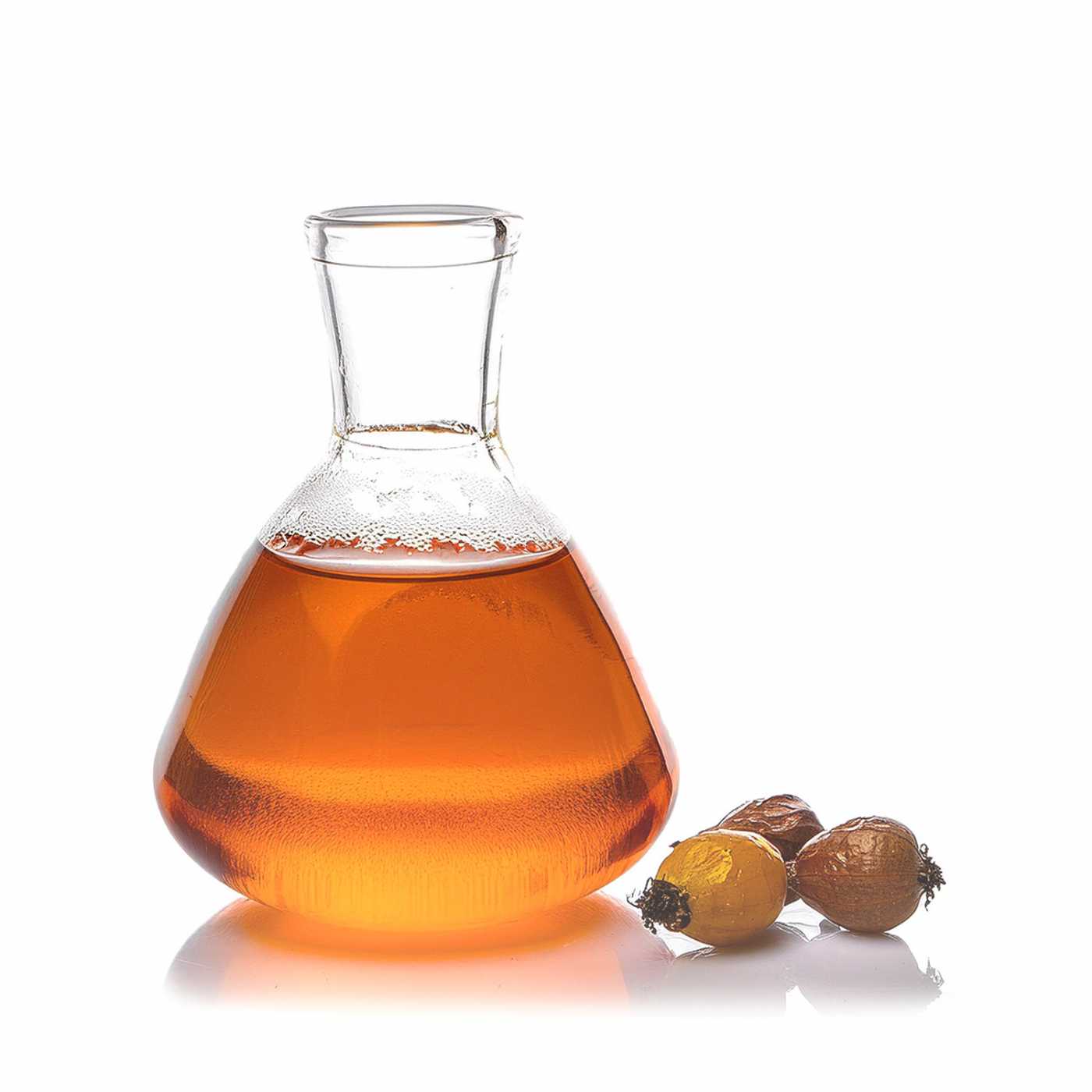
Calendula, macerated in sunflower oil transfers oil-soluble substances from calendula flowers into the oil phase. It softens and soothes the skin and is used mainly in the care of dry and sensitive skin, the body and the scalp.
It can form part of the oil phase of a cream or butter, but it can also be used on its own as a body or face oil. The ingredient is of vegetable and European origin and holds the Vegan certificate.
How the macerated oil is made
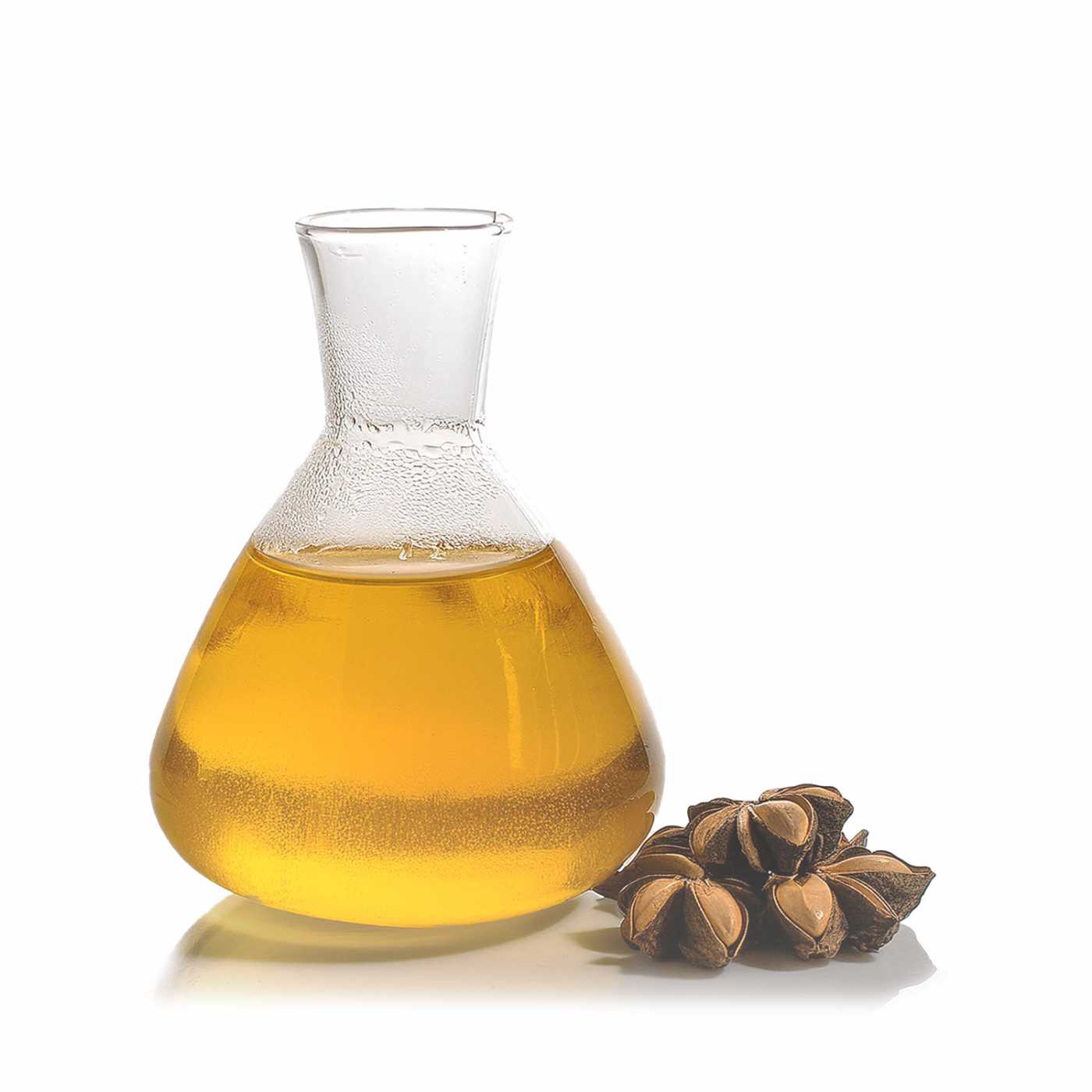
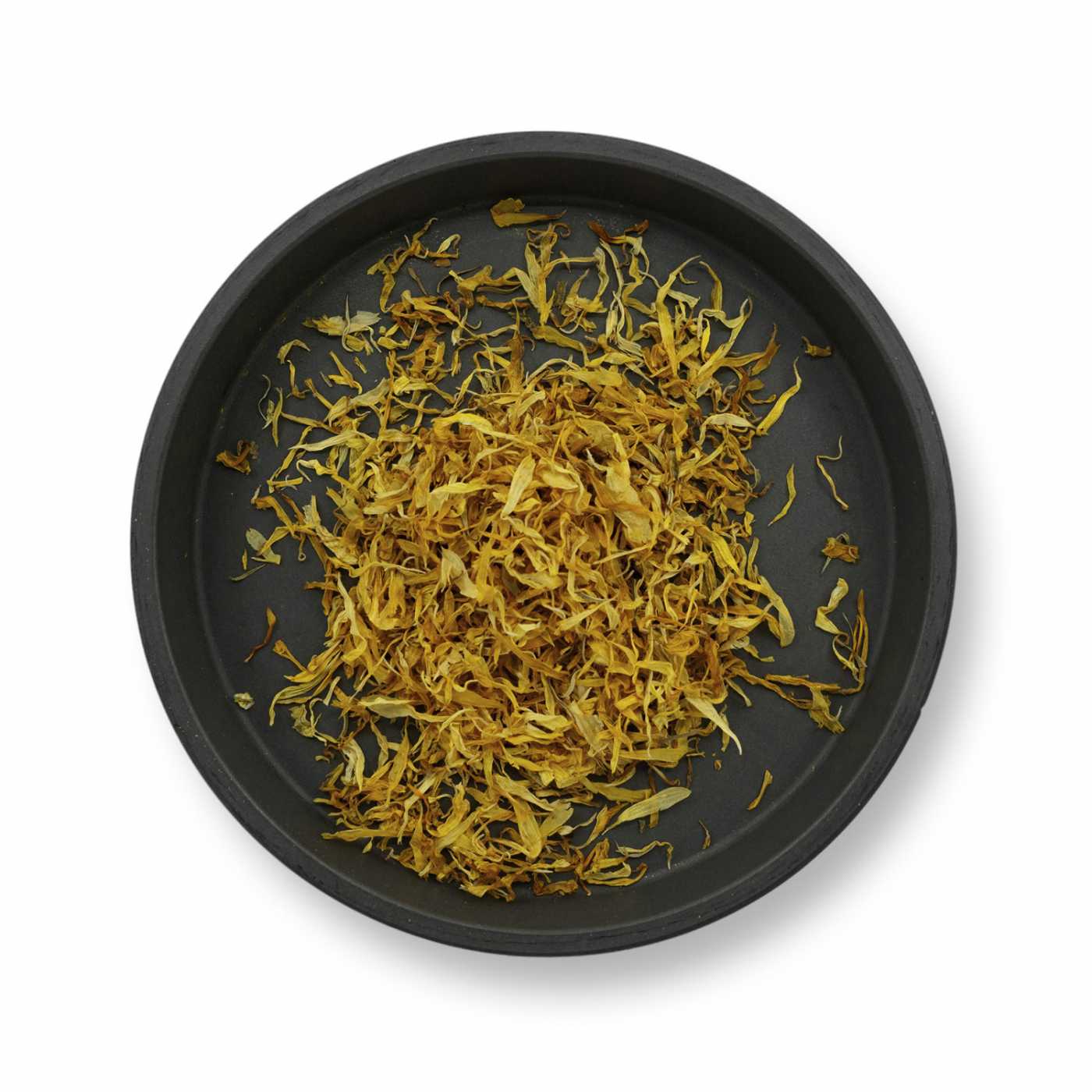
The macerated oil is produced by maceration. Dried calendula flowers are mixed with refined sunflower oil in a ratio of 20% flowers to 80% oil, left to macerate for 7–10 days, and the oil is then filtered. During maceration, the oil takes up fat-soluble substances from the flowers. These include carotenoids, which give it a yellow to golden colour. The scent is herbal and floral.
The fatty acid composition corresponds to sunflower oil. Linoleic acid (48–75%) predominates, followed by oleic acid (14–42%).
Key benefits
- Softening the skin – the oil forms a film on the skin surface that limits water loss. Afterwards, the skin feels softer and suppler to the touch.
- Soothing – in cosmetics, calendula is used for skin prone to irritation and redness. The macerated oil therefore has its place in products for sensitive and problem skin, including acne-prone skin.
- Scalp care – it softens dry scalp and eases the itching and flaking associated with dryness.
- Nourishing the hair – it supplies the hair with lipids, leaving it smoother and shinier.
- Antioxidants from the flowers – the carotenoids in calendula are antioxidants. The macerated oil is also added to oils and creams for mature skin.
Use in a formulation
The macerated oil belongs in the oil phase. It mixes without restriction with other vegetable oils, butters and waxes and tolerates formulations with a pH of 3–9.
The usage rate is 5–100%. In creams and lotions, it forms part of the oil phase; in body and face oils, it can be the main ingredient or the entire product. It is used in both rinse-off and leave-on products.
During processing, the temperature should not exceed 80 °C.
In emulsions, add the macerated oil to the oil phase only at a lower temperature and do not expose it to prolonged heating.
It dissolves in oils and is insoluble in water. For water-based products such as toner or face mist, it needs an emulsifier or solubiliser.
Suitable for products such as
- body oils and body butters
- face oils and oil serums
- face creams and masks
- facial cleansing oils
- hair oils and scalp products
- toners and face mists with a solubiliser or emulsifier
Good to know
Sunflower oil with a high proportion of linoleic acid oxidises easily. When the oil oxidises, the calendula carotenoids also break down faster and the macerated oil loses its golden colour. If a finished product fades or changes its scent, the cause is usually oxidation of the carrier oil. The ingredient specification permits a peroxide value below 15 meq O2/kg and free fatty acids below 1%.
Protect the finished product from light, heat and air. In a blend with more stable oils that have a higher proportion of saturated fatty acids, the macerated oil retains its colour for longer.
The colour is also affected by pH. Calendula carotenoids are more stable in neutral to alkaline environments; in acidic products, the golden shade may fade sooner. The macerated oil should not come into contact with strong acids, alkalis or oxidising agents.
The ingredient contains no preservatives, alcohol or fragrance allergens listed in Annex III of Regulation (EC) No 1223/2009. It is not classified as hazardous under the CLP Regulation.
Frequently asked questions
Is calendula oil macerated in sunflower oil water-soluble?
No, calendula macerated oil is oil-soluble and does not dissolve in water. In a formulation, it belongs in the oil phase together with other oils and butters. It can be incorporated into water-based products, such as a toner or face mist, only with the help of an emulsifier or solubiliser.
How much calendula macerated oil should I add to a cream or body oil?
Calendula macerated oil is used at a rate of 5–100%. In creams and body lotions, it replaces part of the oil phase; in body butters and oil serums, it can make up most of the oils. It can also be used undiluted as a body, face or hair oil. At a higher usage rate, its yellow colour and herbal-floral scent are also carried into the product.
Can calendula macerated oil be heated?
Yes, but the temperature during processing should not exceed 80 °C. When making emulsions, add it to the oil phase only at a lower temperature so that it is not exposed to heat for long. The sunflower oil in the macerated oil oxidises easily and heat is one of the influences it needs to be protected from. The flash point of the macerated oil is above 280 °C.
What is the difference between calendula macerated oil and sunflower oil?
Calendula macerated oil is sunflower oil in which dried calendula flowers have been macerated for 7–10 days. The oil takes up fat-soluble substances from them, including carotenoids, which give it a golden colour. A herbal-floral scent is added as well. The fatty acid composition stays the same as in sunflower oil, with linoleic acid predominating.
Why does a product with calendula macerated oil fade or change its scent?
The most common cause is oxidation of the sunflower oil, which contains a lot of linoleic acid. During oxidation, the calendula carotenoids also break down and the golden colour is lost. Protecting the product from light, heat and air and combining it with more stable oils helps. In acidic formulations, the colour may fade sooner than in neutral ones.
Is calendula macerated oil suitable for sensitive skin?
Yes, calendula macerated oil is used in products for sensitive, problem and acne-prone skin and for sensitive scalp. It moisturises, soothes and softens the skin. On dry scalp, it eases the itching and flaking. It contains no alcohol or fragrance allergens listed in Annex III of the Cosmetics Regulation.