Spend over €100 for discounted shipping!

+421 950 333 113info@handymade.store

Candle fragrance oils

Spruce Hemlock Essential Oil, 100 ml

Pack size10 ml100 ml500 ml1 l

Hemlock spruce essential oil is obtained by steam distillation of the needles of the North American conifer Tsuga canadensis, known in Slovak as jedľovec kanadský. full description

AvailabilityIn stock · 9 packs
Product codeEON029_100
Batch23280
Best before05/2029
€29.39incl. VAT€293.90/l

Lowest price in the last 30 days: €29.39

Product description

Hemlock spruce essential oil is obtained by steam distillation of the needles of the North American conifer Tsuga canadensis, known in Slovak as jedľovec kanadský. In a formulation it does two jobs at once: it gives the product a forest fragrance and also acts as an active ingredient with a soothing and slightly warming character. It is most useful in massage and body oils, creams, and hair and scalp products.

The manufacturer describes the fragrance as earthy and woody. In English-speaking countries this oil is sold as hemlock spruce. The Slovak name Jedľa smreková refers to a resemblance to fir and spruce, but botanically the tree belongs to the genus Tsuga, not to the European spruces or firs. The oil contains no added alcohol or preservatives.


What it brings to a formulation

  • Soothing the skin – according to the manufacturer, the oil has soothing properties and helps to ease redness and a feeling of irritation. It makes the most sense in body and face products.
  • Warming sensation – the manufacturer states that it creates a mild warming feeling on the skin. This is why the manufacturer recommends it for massage oils and creams intended for relaxation.
  • Scalp and hair – in hair care, the manufacturer describes it as an ingredient that refreshes the scalp. It is suitable for hair oils and scalp products.
  • Aromatic effect – according to the manufacturer, the earthy, woody fragrance has a calming and “grounding” effect. In a product it can therefore also be used as the only fragrance component with a forest character.

Use in a formulation

The oil is lipophilic. It mixes with vegetable oils, butters and waxes, so it is added directly to anhydrous products and to the oil phase of emulsions. For toners, sprays and other water-based products, it must first be worked into a solubiliser, otherwise it separates and forms a film on the surface.

In creams and lotions it is added at the very end of production, once the emulsion has cooled. The recommended processing temperature is below 40 °C. At higher temperatures some of the volatile components evaporate and the fragrance of the finished product weakens or changes.

Weigh out the oil in advance and, for emulsions, add it to the already cooled mixture while stirring continuously. When making balms and solid oils, add it to the melted base just before pouring, once the base is no longer hot.

The usage rate depends on the type of product. The maximum amount for individual categories (body oils, face creams, shampoos and others) is set by IFRA standards, and the values for this oil are given in the product parameters. As with any essential oil, work with a low usage rate and always in dilution. The oil is strongly aromatic, so for the first test we recommend starting at the lower limit and judging the fragrance only after a day or two, once it has settled in the finished product.

The substance is classified under the CLP Regulation and carries pictograms for flammability, irritation and sensitisation, serious health hazards, corrosivity and environmental hazard. Do not apply it undiluted to the skin, and when working with larger quantities follow the safety data sheet.


Suitable for products such as

  • Massage and body oils – the warming character and woody fragrance are most useful here, and the oil mixes easily into a carrier oil.
  • Creams and body lotions – as both a fragrance and an active component, added to the cooled emulsion.
  • Hair oils and scalp products – according to the manufacturer it refreshes the scalp, and in oil wraps and hair serums it is used at a low rate.
  • Shampoos and shower gels – as a fragrance component of rinse-off products, in an amount according to the relevant IFRA category.

Good to know

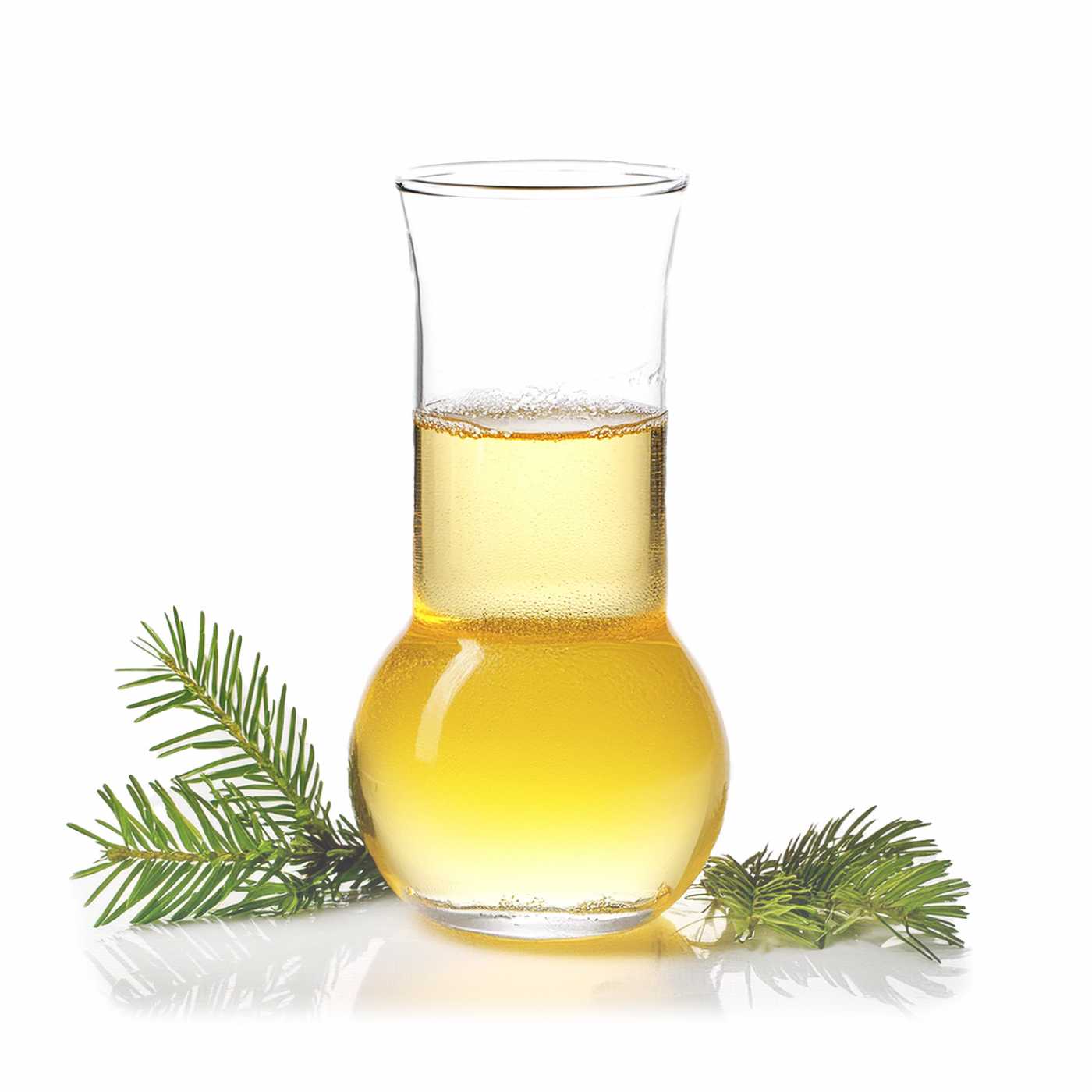
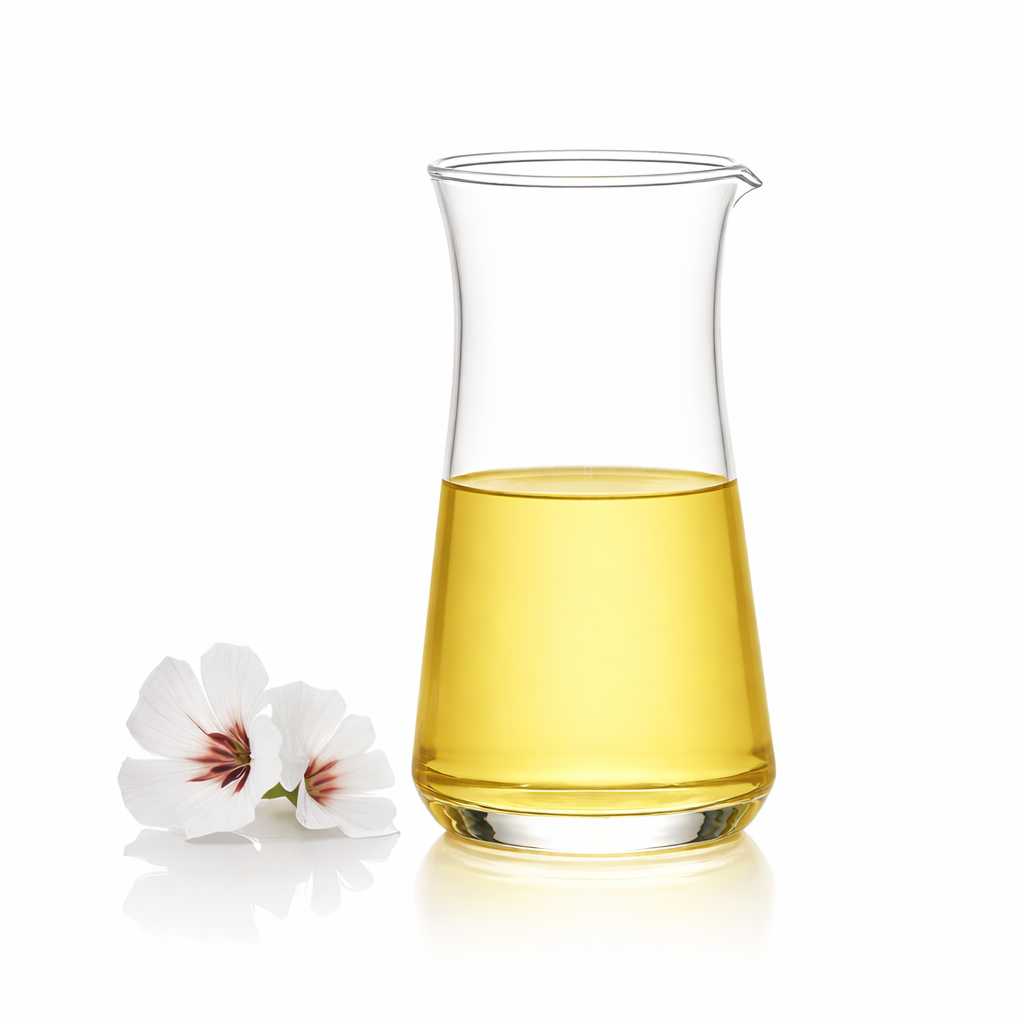
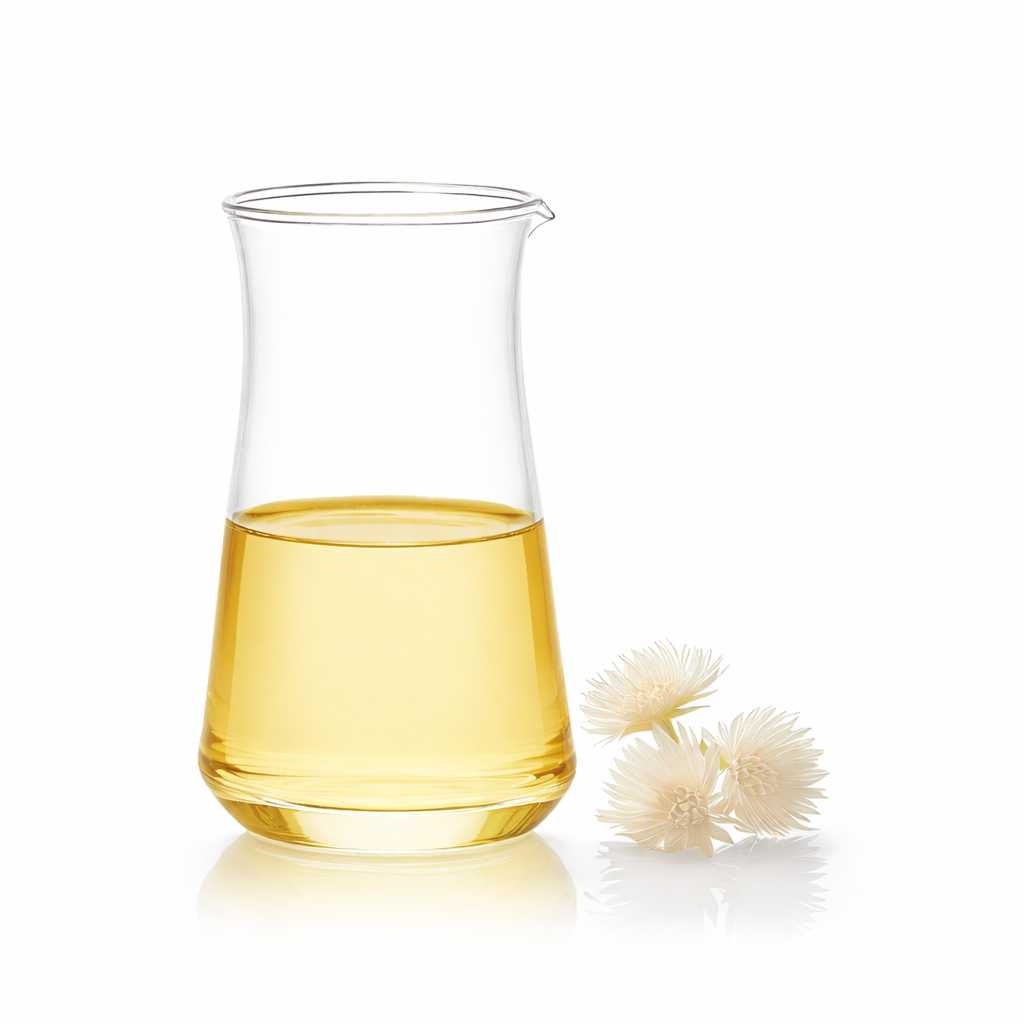
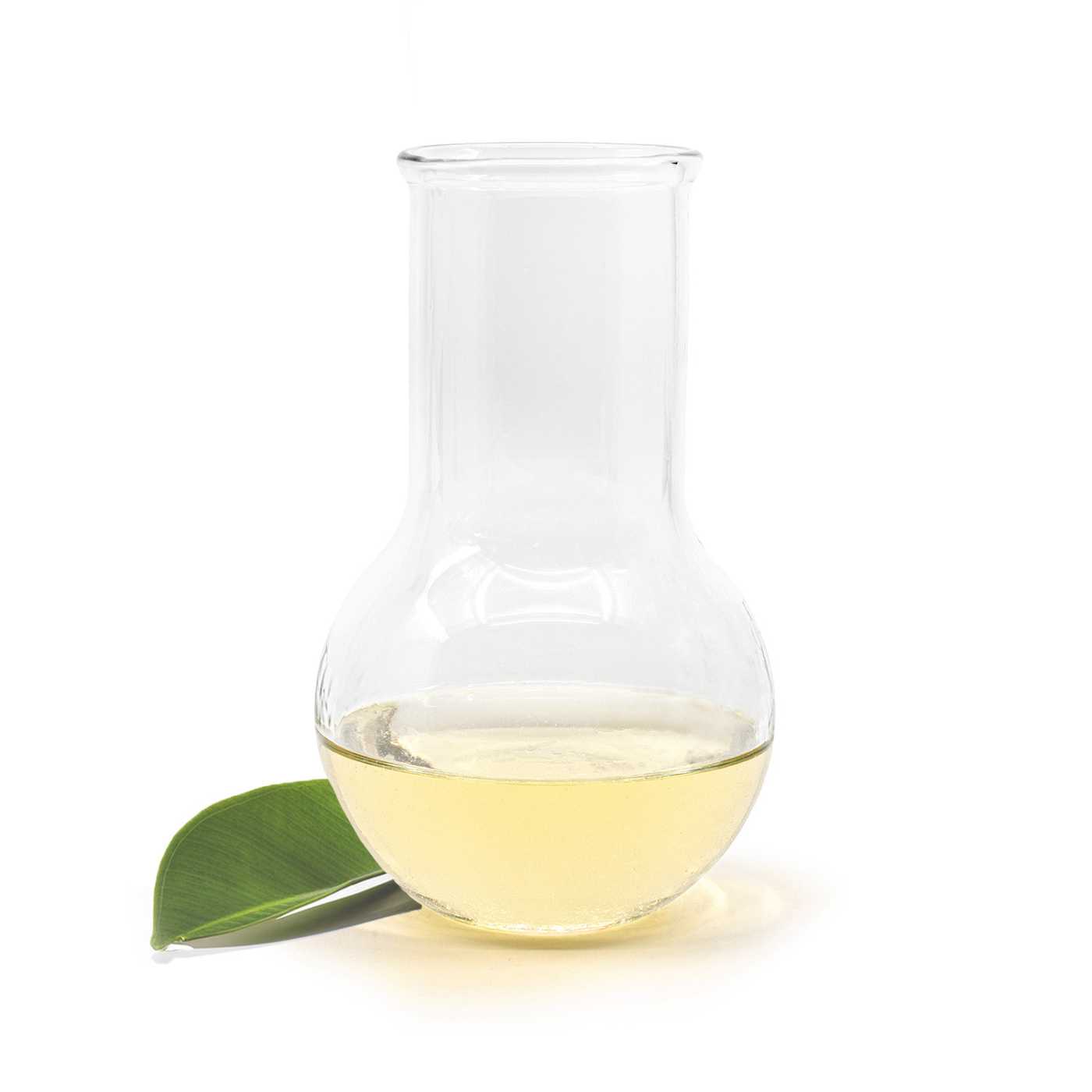
The colour of the oil ranges from colourless to yellow. At a low usage rate it has only a small effect on the colour of the finished product, but for light and white creams we recommend a test batch.

The fragrance may develop differently in a finished emulsion than in the pure oil. The perception is influenced by the carrier oil, the emulsifier and the other fragrance components. Before larger production, let a test batch rest for several days and only then decide on the final usage rate.

The oil does not replace a preservative. Water-based and emulsion products need a separate preservative system, and we recommend checking its compatibility in the finished formulation.

Separate, stricter IFRA limits apply to products for children, lip products and eye products. Before adding the oil to such a formulation, check whether it is permitted at all for the given category and in what amount.

We recommend testing the tolerance of the finished product on a small area of skin, as this is an ingredient with the potential for sensitisation.


Frequently asked questions

Is hemlock spruce essential oil soluble in water?
No, hemlock spruce essential oil does not dissolve in water and, on its own, separates out of a water-based product. For toners, sprays and hydrosol-based products it is added through a solubiliser, in which it is first mixed, and only then is the mixture stirred into the water. It dissolves without problems in oils, butters and the oil phase of emulsions.
At what temperature is hemlock spruce essential oil added to a cream?
Hemlock spruce essential oil is added to the cooled emulsion, at a temperature below 40 °C. A higher temperature evaporates the volatile components and changes the fragrance of the finished product. The oil is therefore one of the last ingredients stirred into a cream, together with other heat-sensitive substances.
How much hemlock spruce essential oil can be put into a product?
The maximum usage rate of hemlock spruce essential oil is set by IFRA standards according to the product category, and you will find the values for this oil in the product parameters. Massage oils, face creams and shampoos each have a different limit. In every case you work in dilution, and for a first formulation it is sensible to start at the lower limit.
Can hemlock spruce essential oil be used undiluted on the skin?
No, hemlock spruce essential oil is not applied undiluted to the skin. Under the CLP Regulation the substance is classified, among other things, as irritant and sensitising, so it is always worked into a carrier oil, cream or other base in the amount that IFRA permits for the given type of product. Protect your skin and eyes during production.
What is the difference between hemlock spruce essential oil and spruce essential oil?
Hemlock spruce essential oil comes from the North American tree Tsuga canadensis, whereas spruce oils are distilled from species of the genus Picea. Despite the Slovak name, it is therefore not a spruce, and the two oils cannot be considered the same raw material. The manufacturer describes the fragrance of this oil as earthy and woody. In a formulation it is handled in the same way as other coniferous oils.
Is hemlock spruce essential oil suitable for hair care?
Yes, the manufacturer states that hemlock spruce essential oil can be used in hair oils and scalp products, where it is intended to have a refreshing effect. It is mixed directly into a hair oil, and into a shampoo it is added as a fragrance component in an amount according to the IFRA category for rinse-off products. For water-based hair sprays a solubiliser is required.

Parameters

INCI
Tsuga Canadensis Leaf Oil
Product colour
ColourlessYellow
Country of origin
Canada
Processing method
Steam distillation
Odour
Woody
Appearance
Liquid
Recommended processing temperature
< 40 °C
Application area
FaceHairScalpBody
Natural Index (NI ISO 16128)
1,00
Natural Origin Index (NOI ISO 16128)
1,00
Renewable Carbon Content (RCC)
100 %
Volume
100 ml

Product documentation

CoACertificate of Analysis
batch 23280PDF ↓
TDSTechnical Data Sheet
Physical parameters and processingPDF ↓
IFRAIFRA Certificate
batch 23280PDF ↓
batch 2501080PDF ↓
AllergensAllergen Declaration
batch 23280PDF ↓
batch 2501080PDF ↓
SDSSafety Data Sheet
Available for purchased products —
Download all (ZIP)

6 PDF files in one archive

Adam V.11 Oct 2026SK

Verified purchase

Variant: Esenciálny olej, Jedľa smreková, 10 ml

Katalin C.11 Oct 2026HU

Verified purchase

Variant: Esenciálny olej, Jedľa smreková, 10 ml