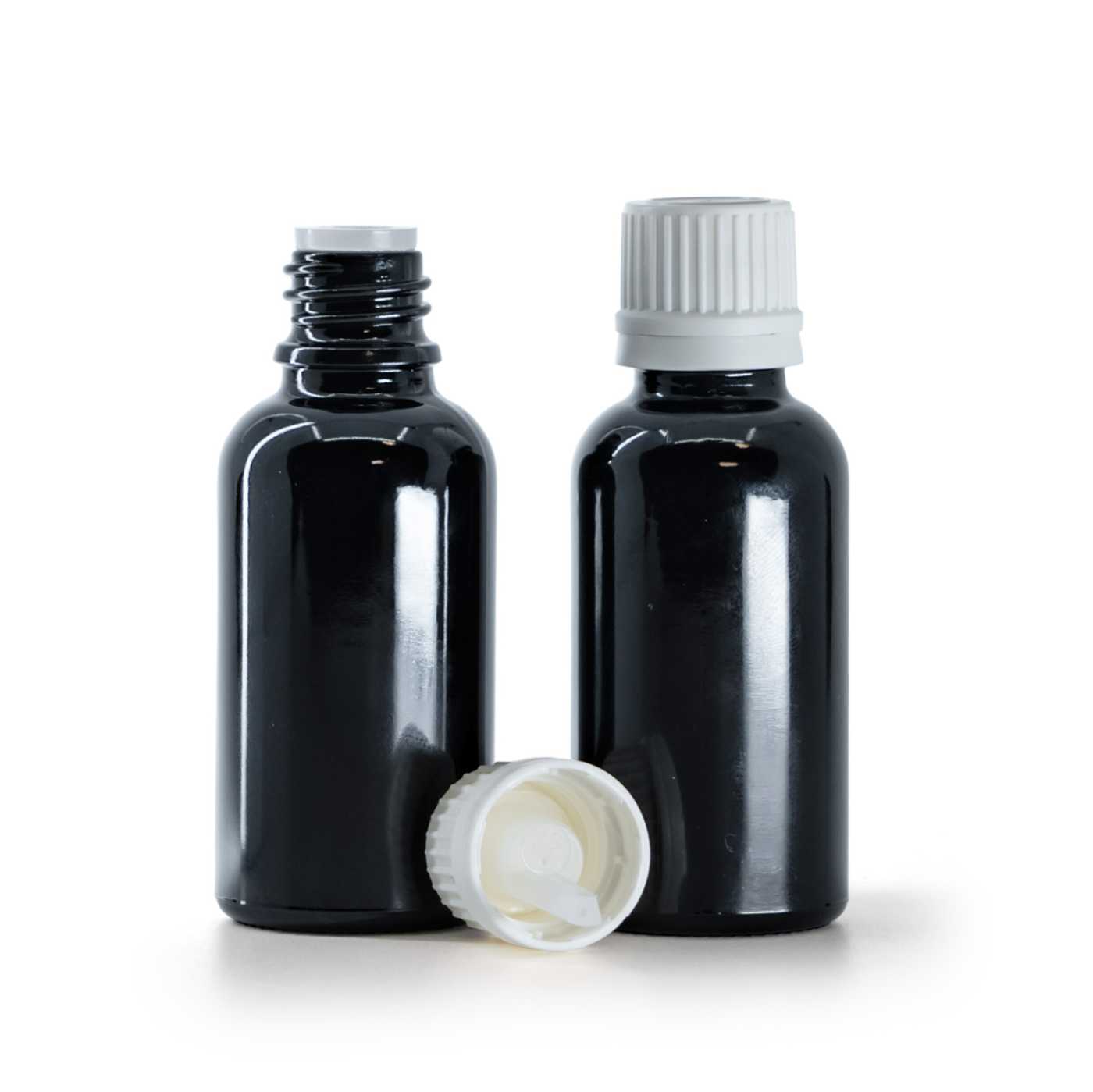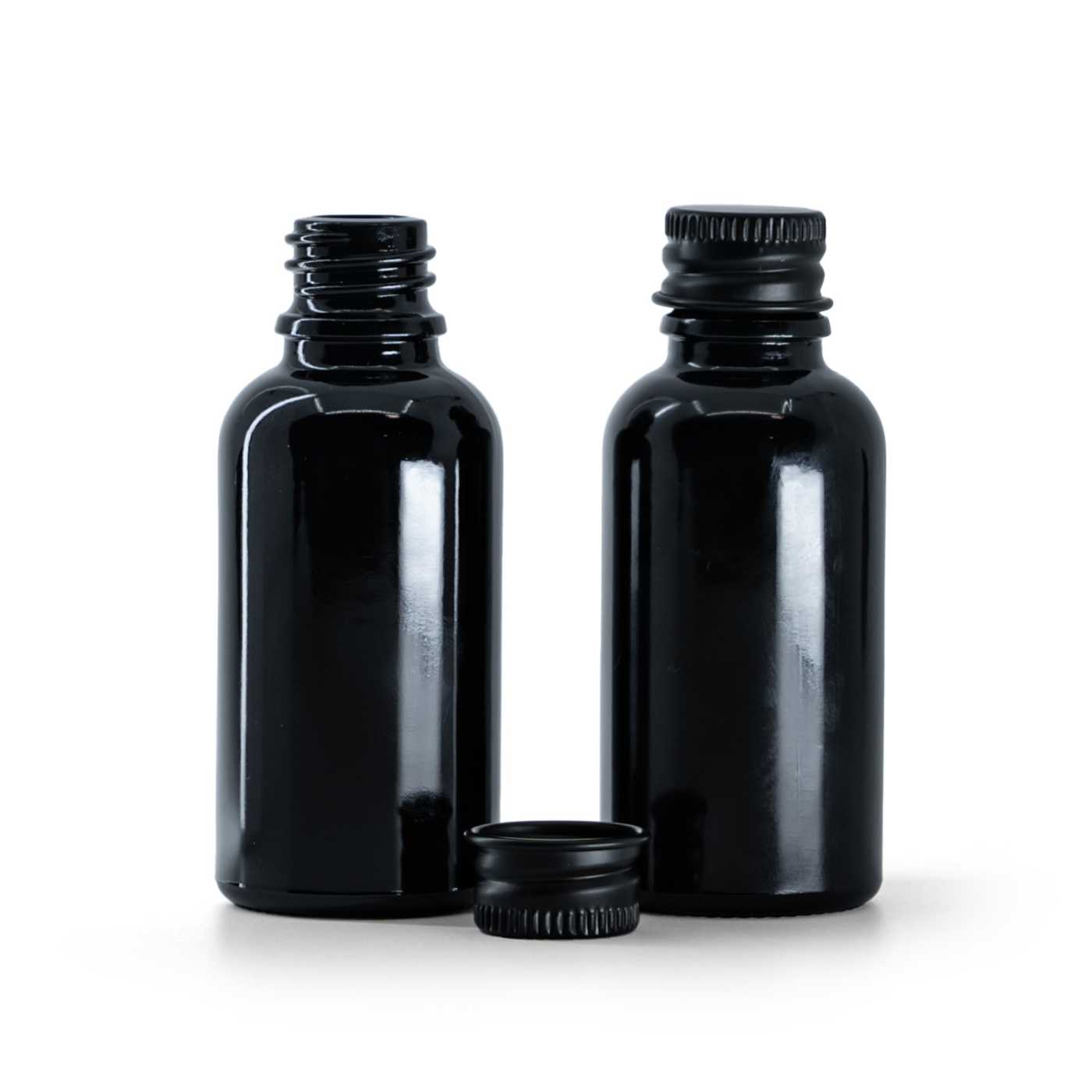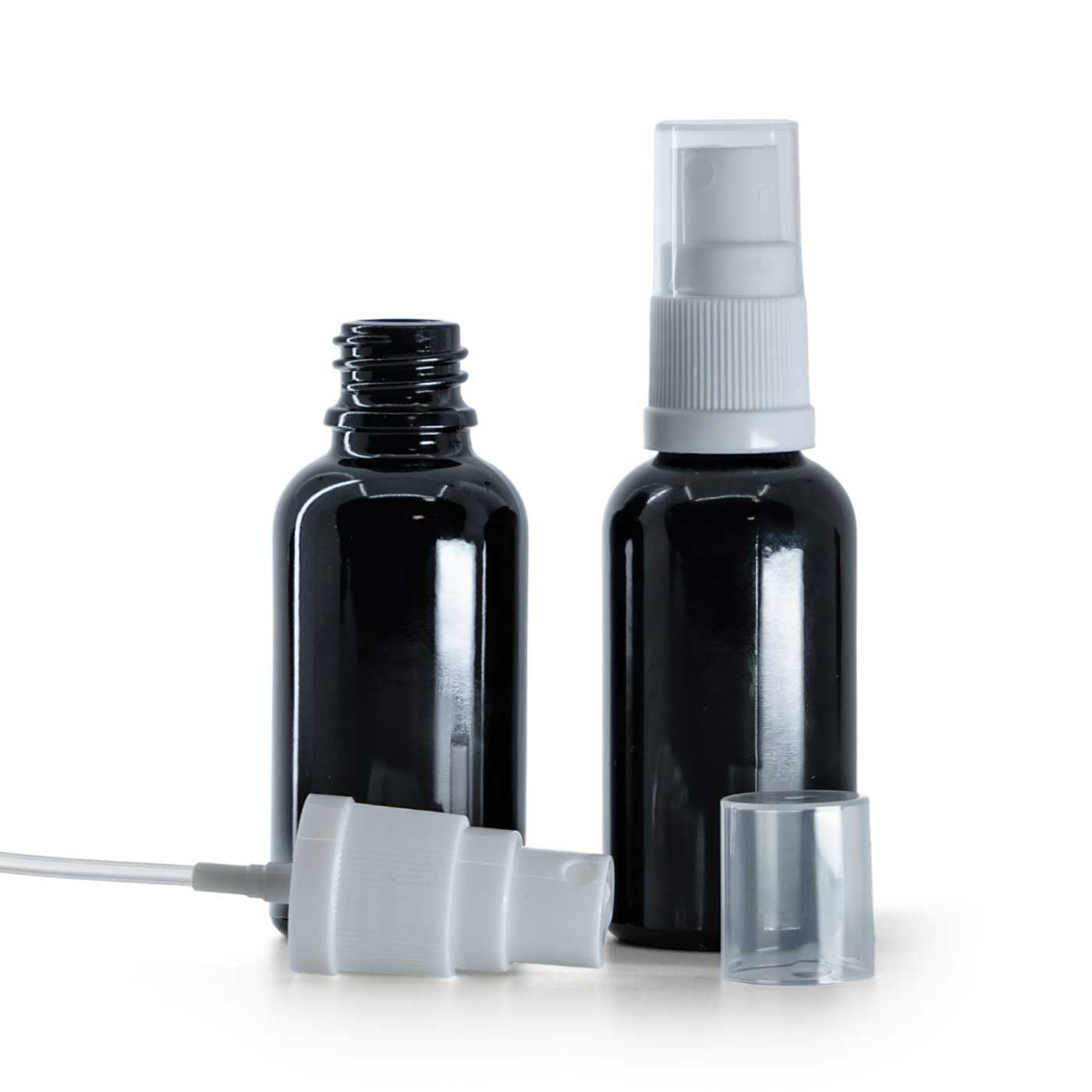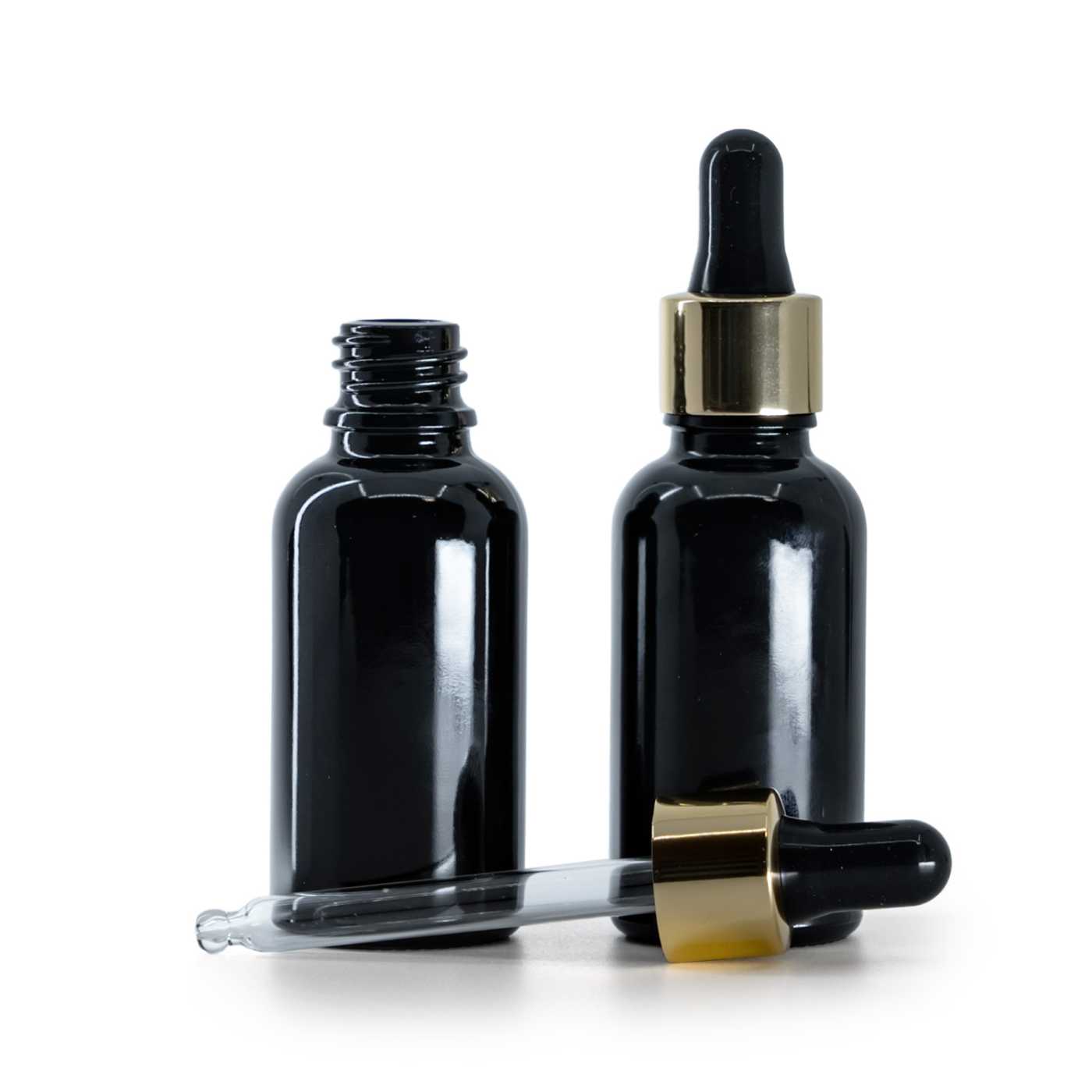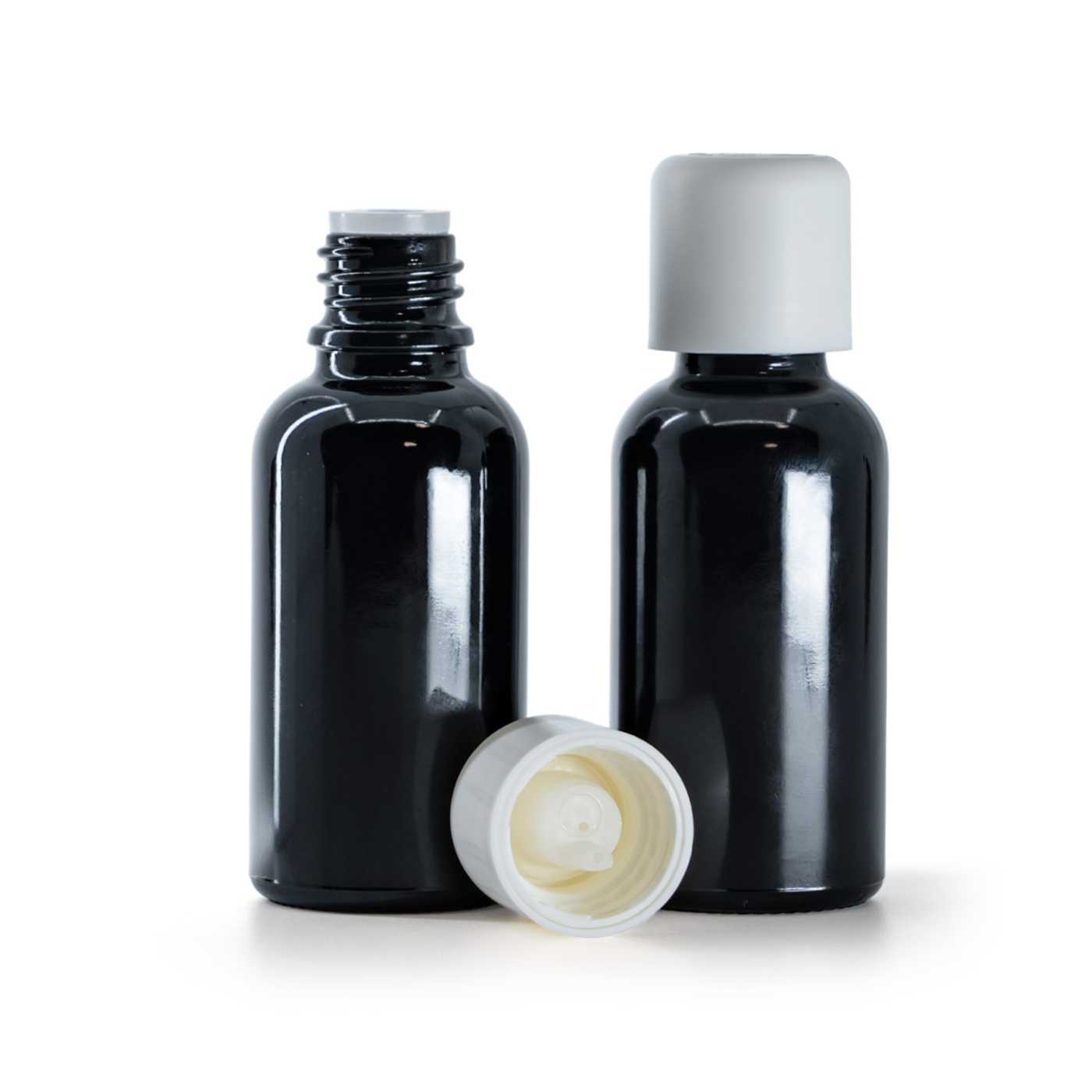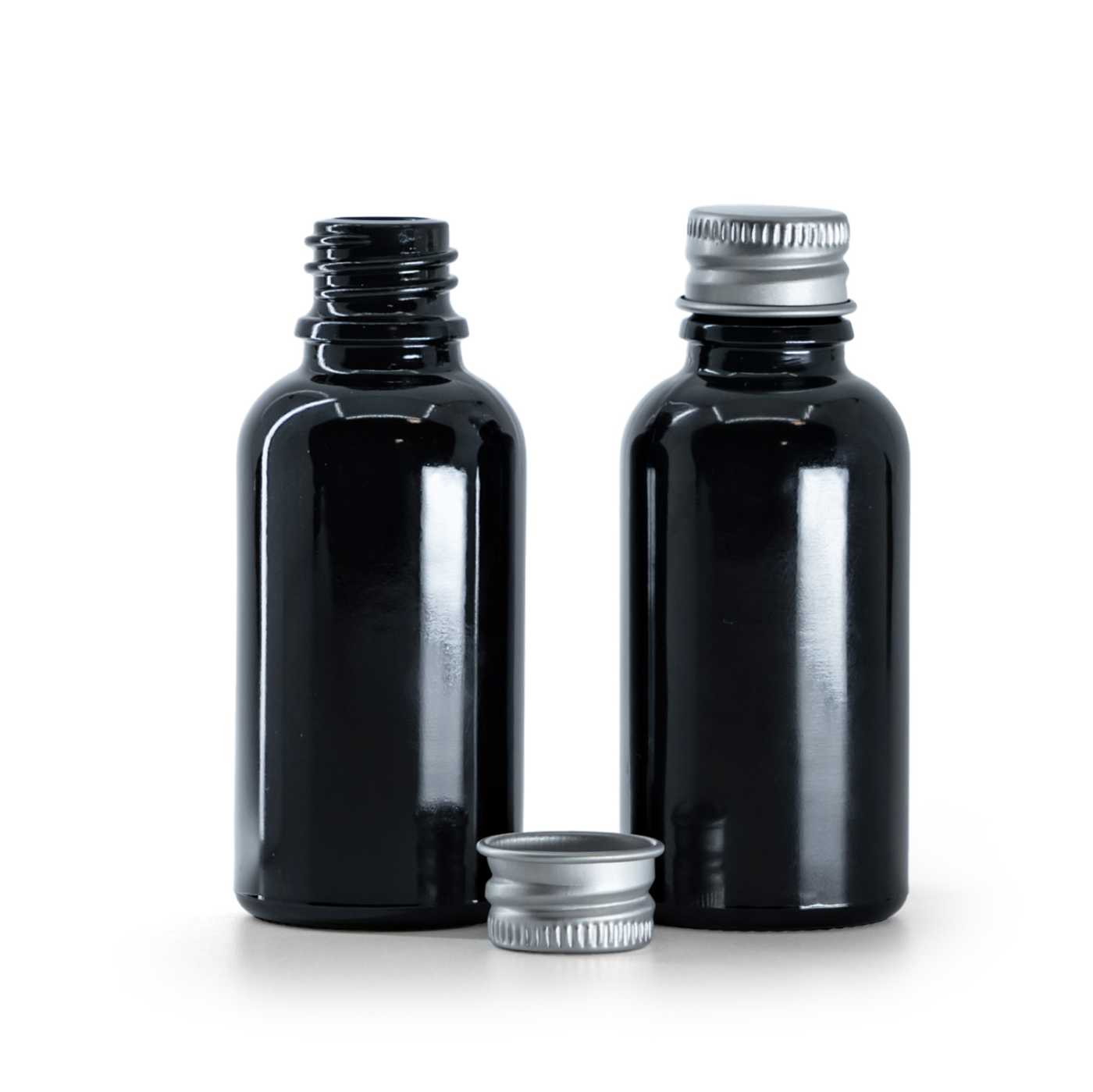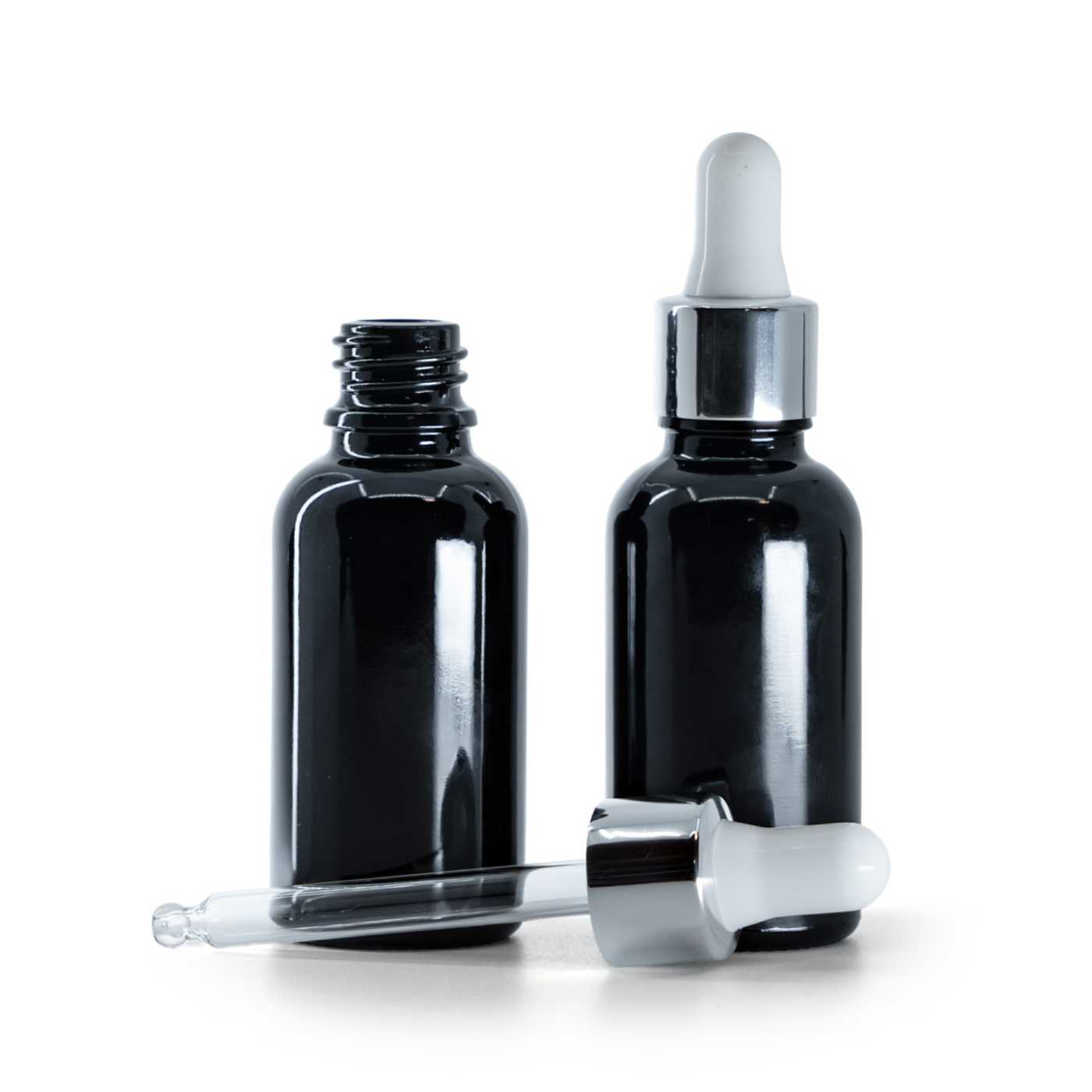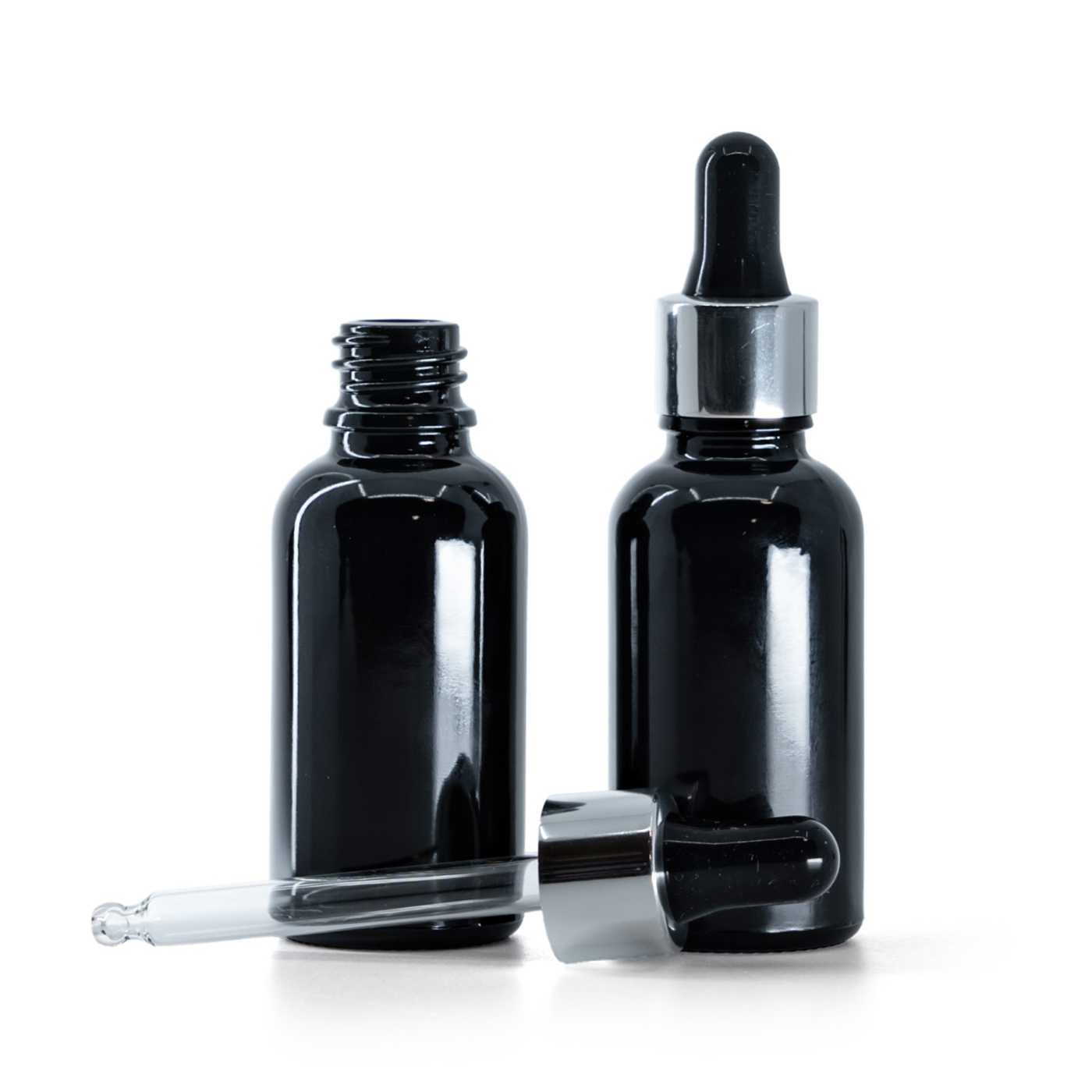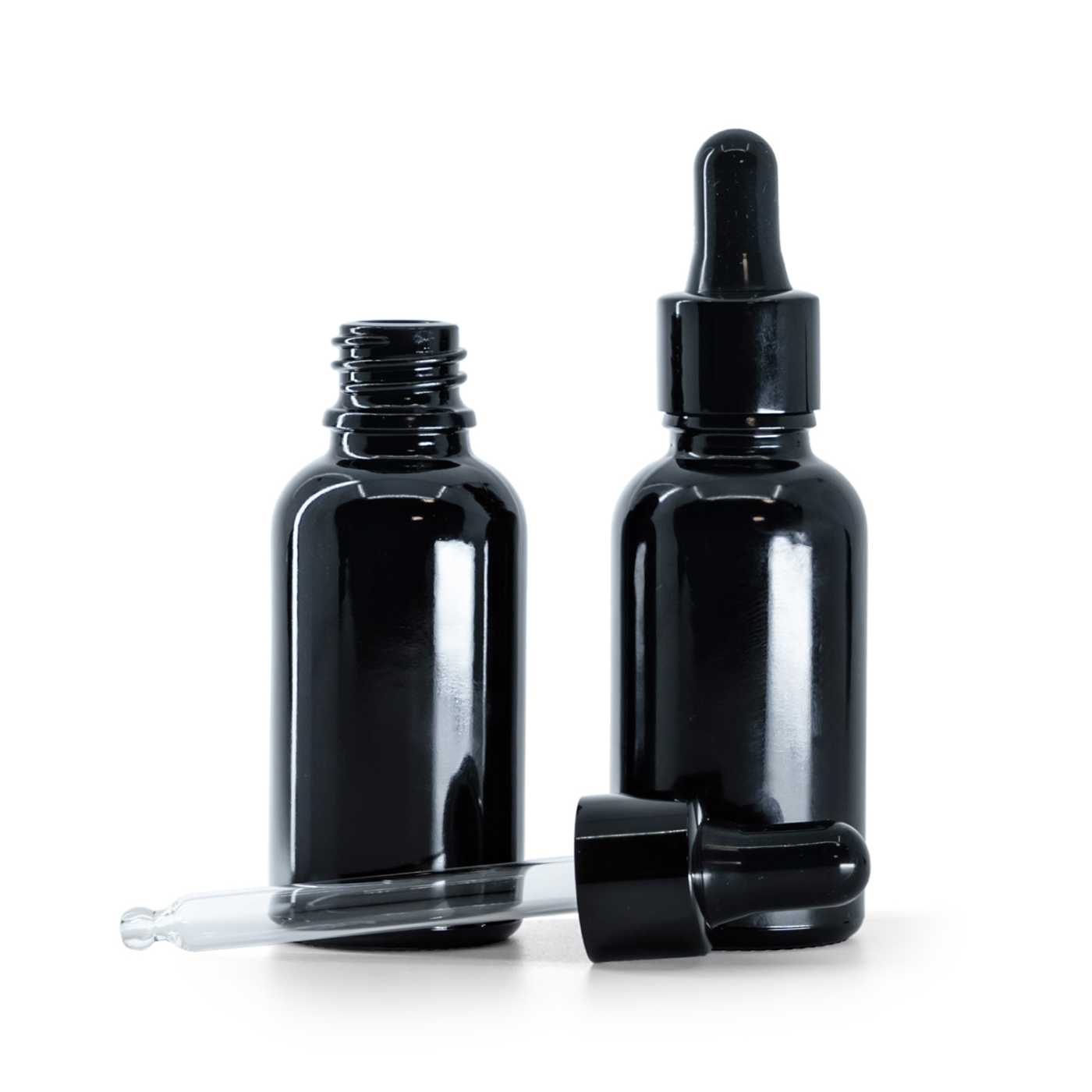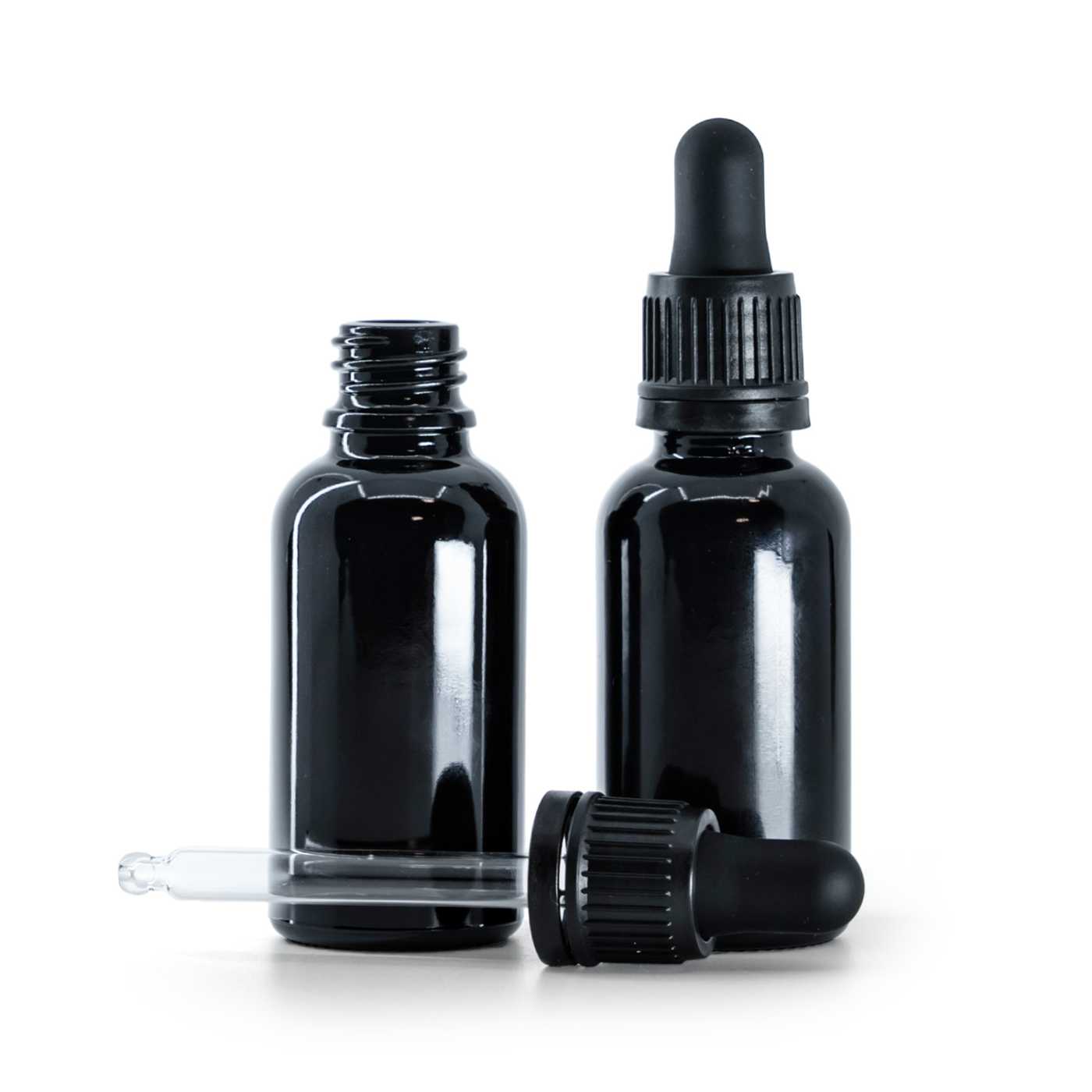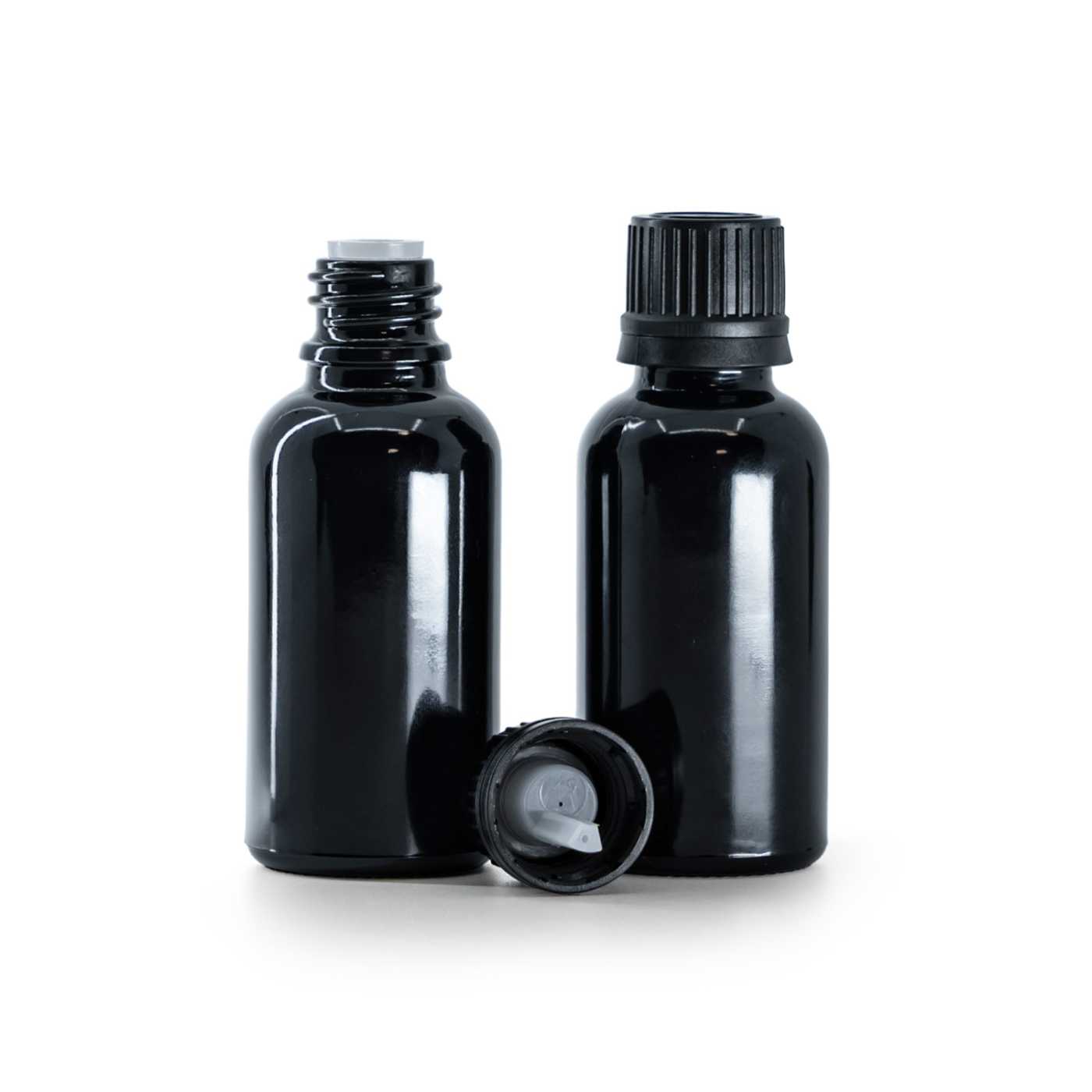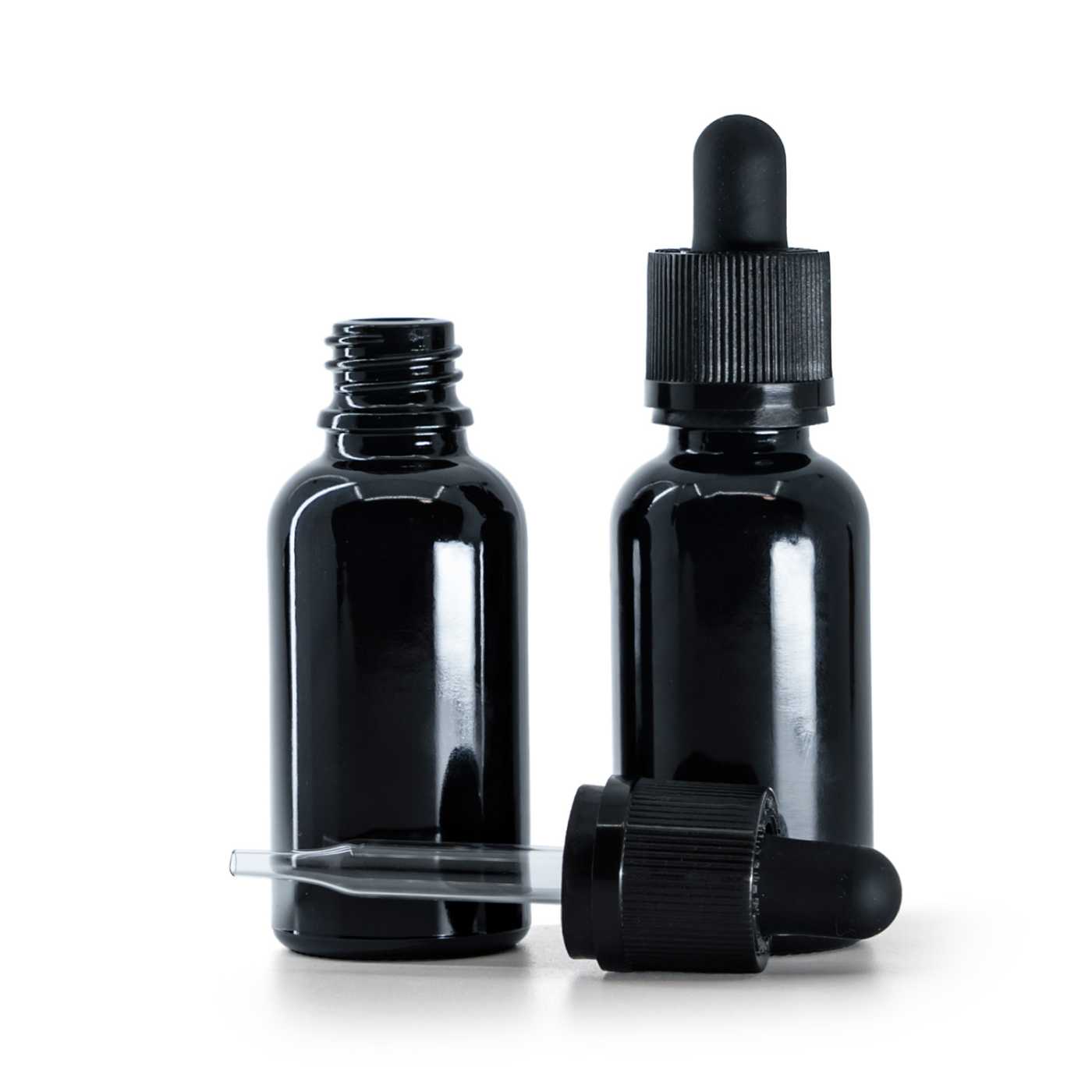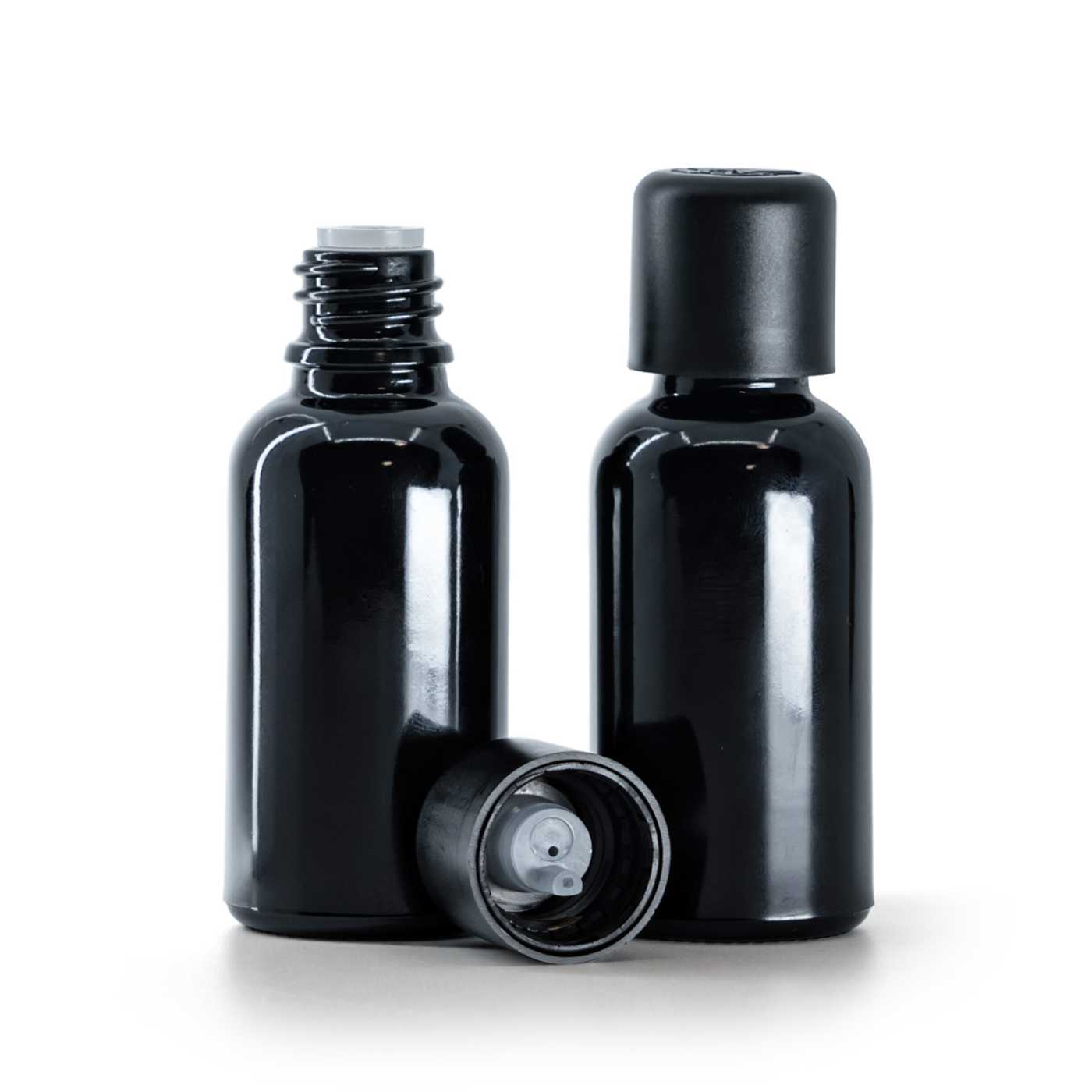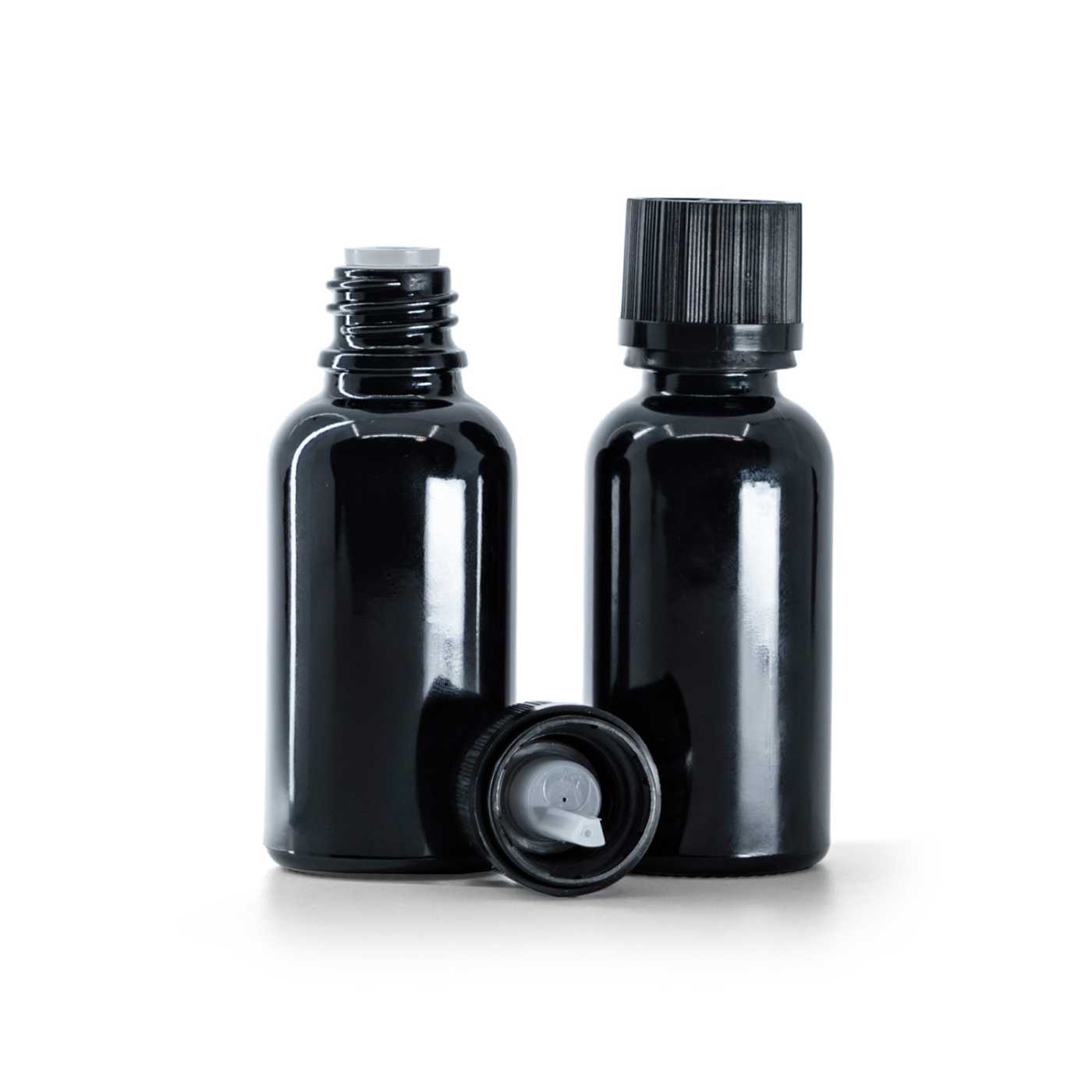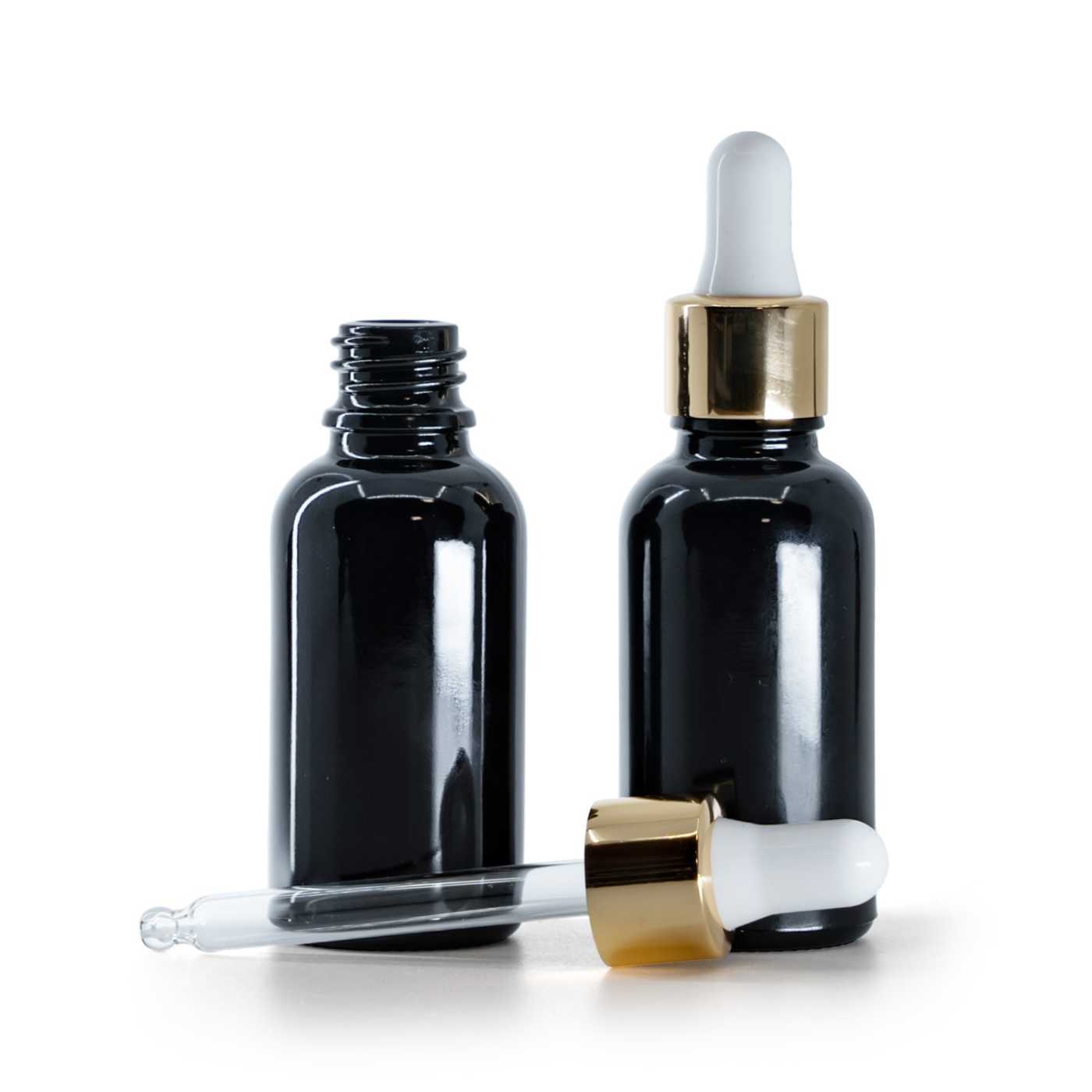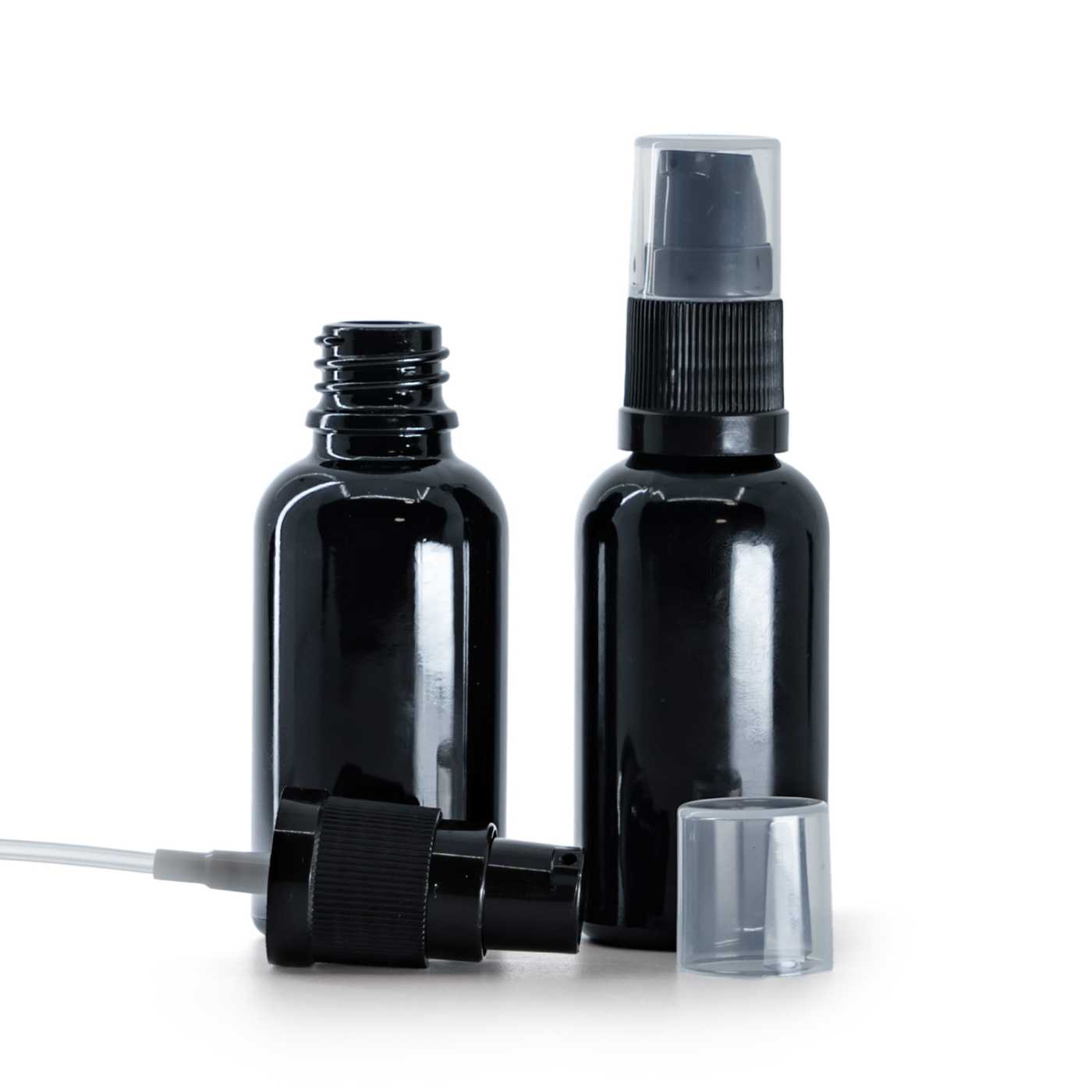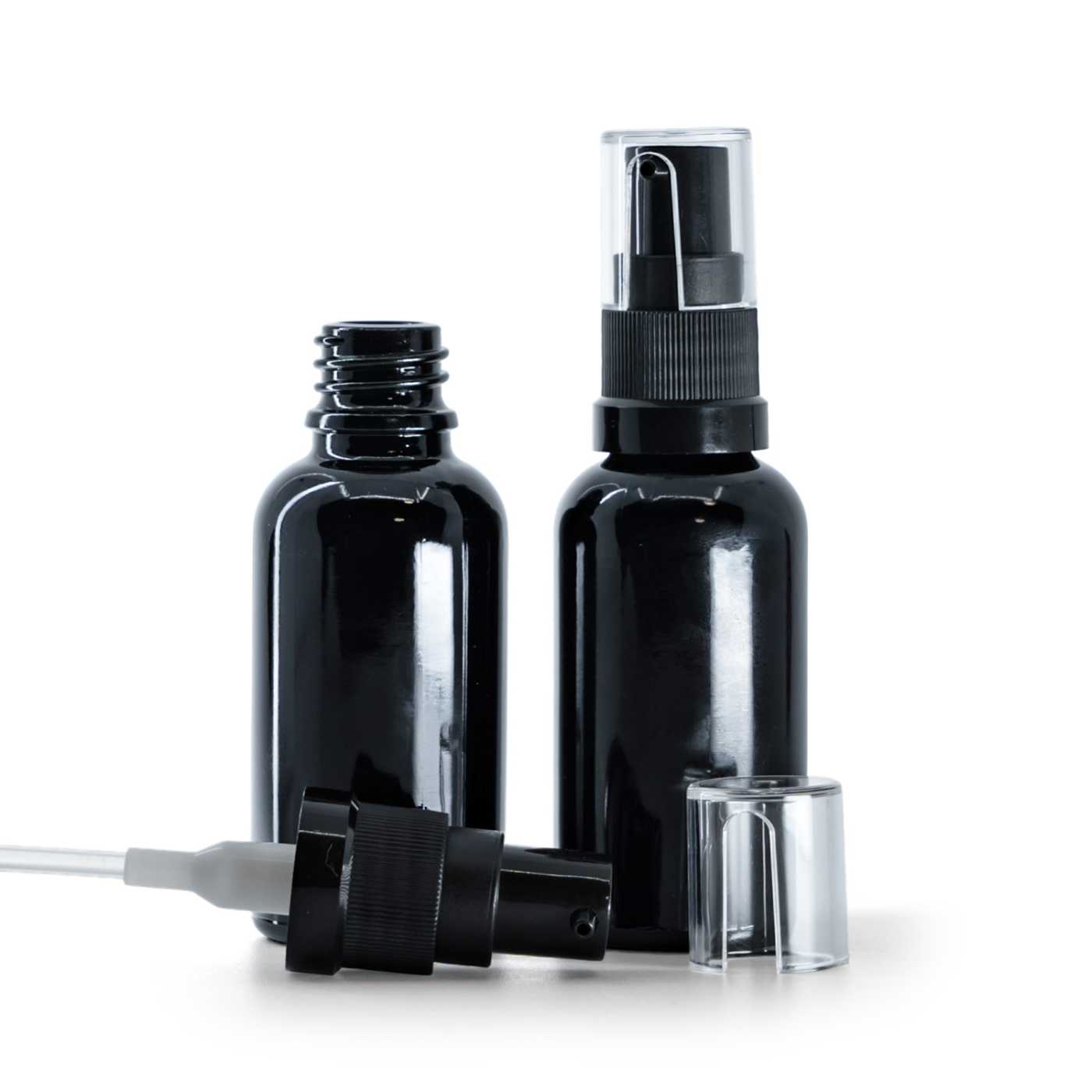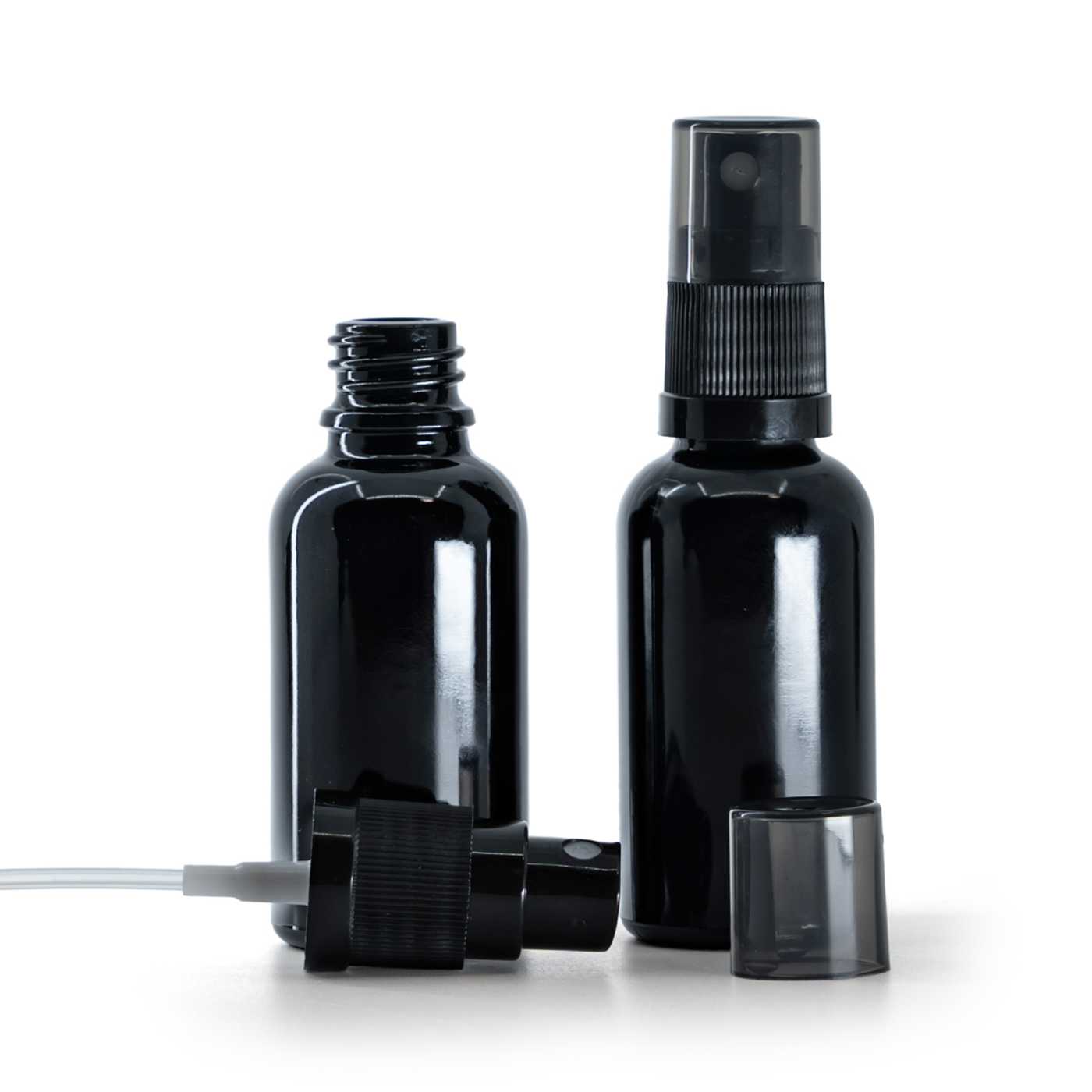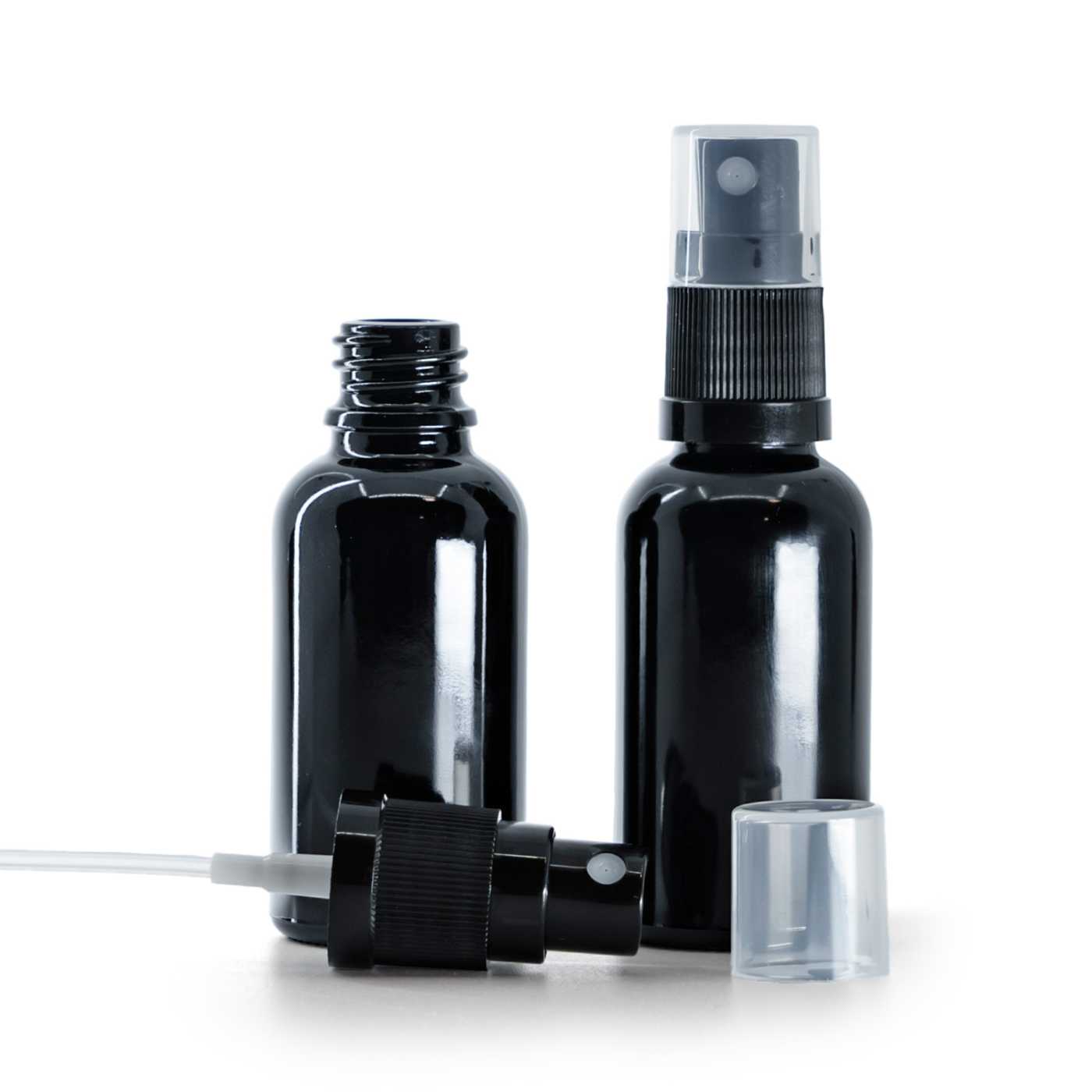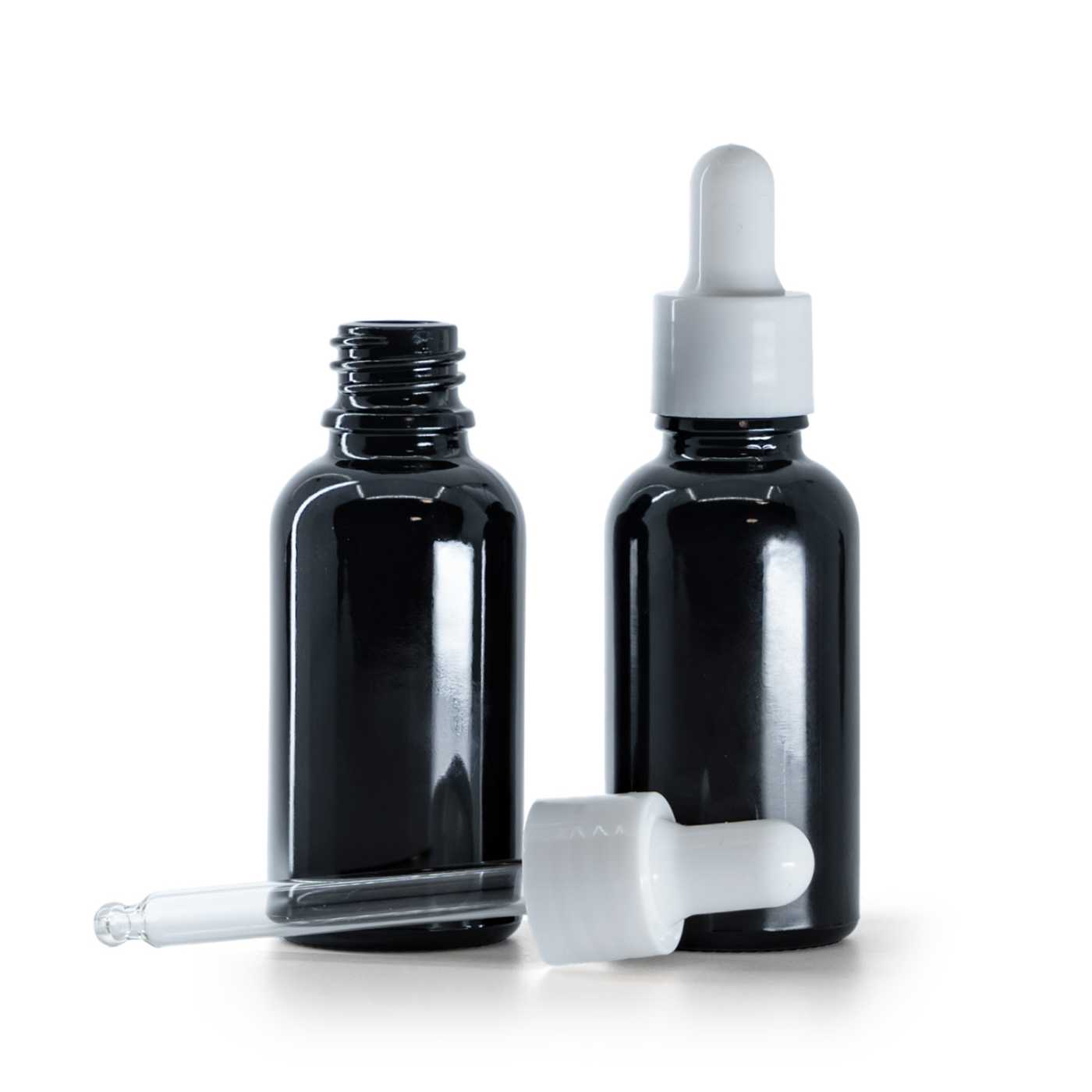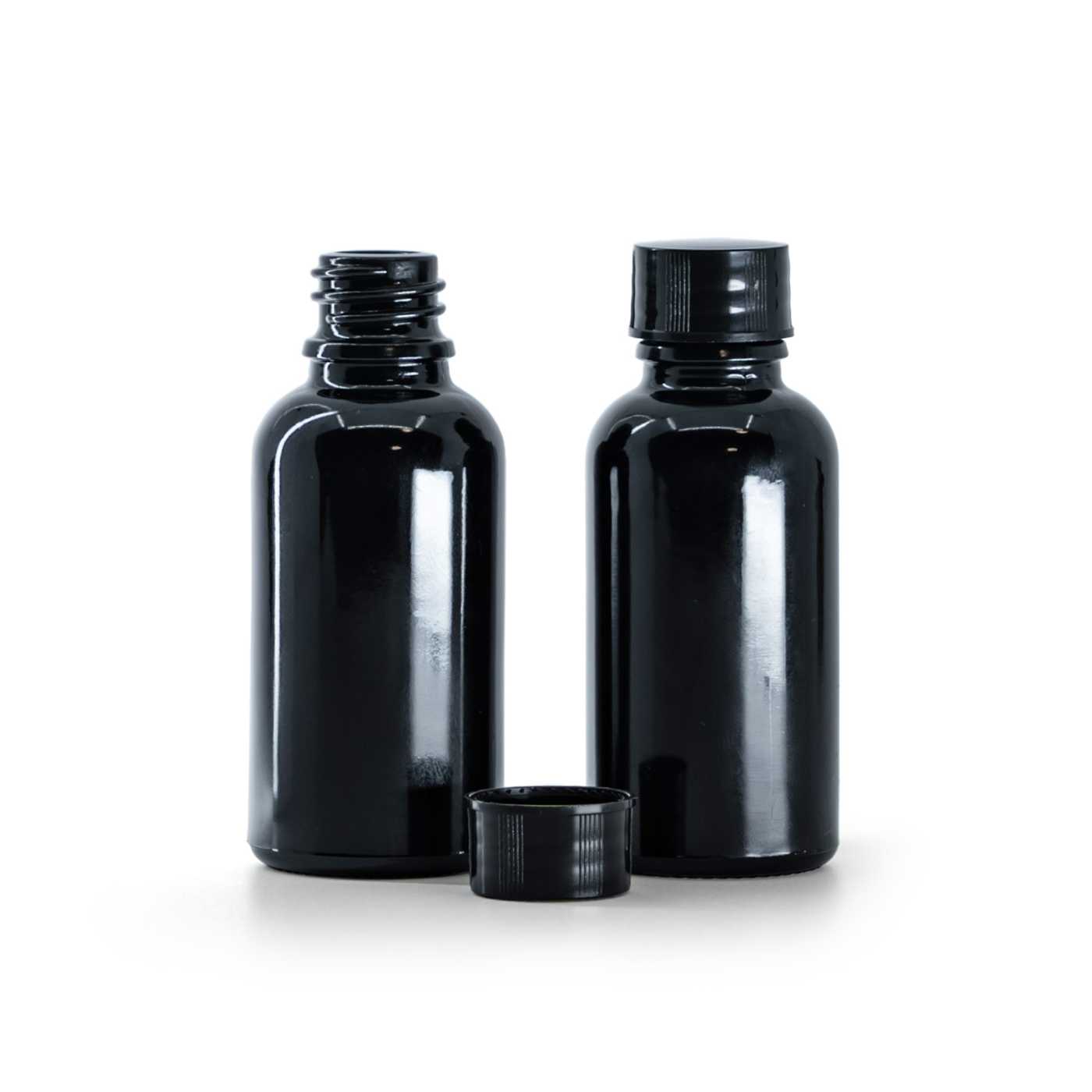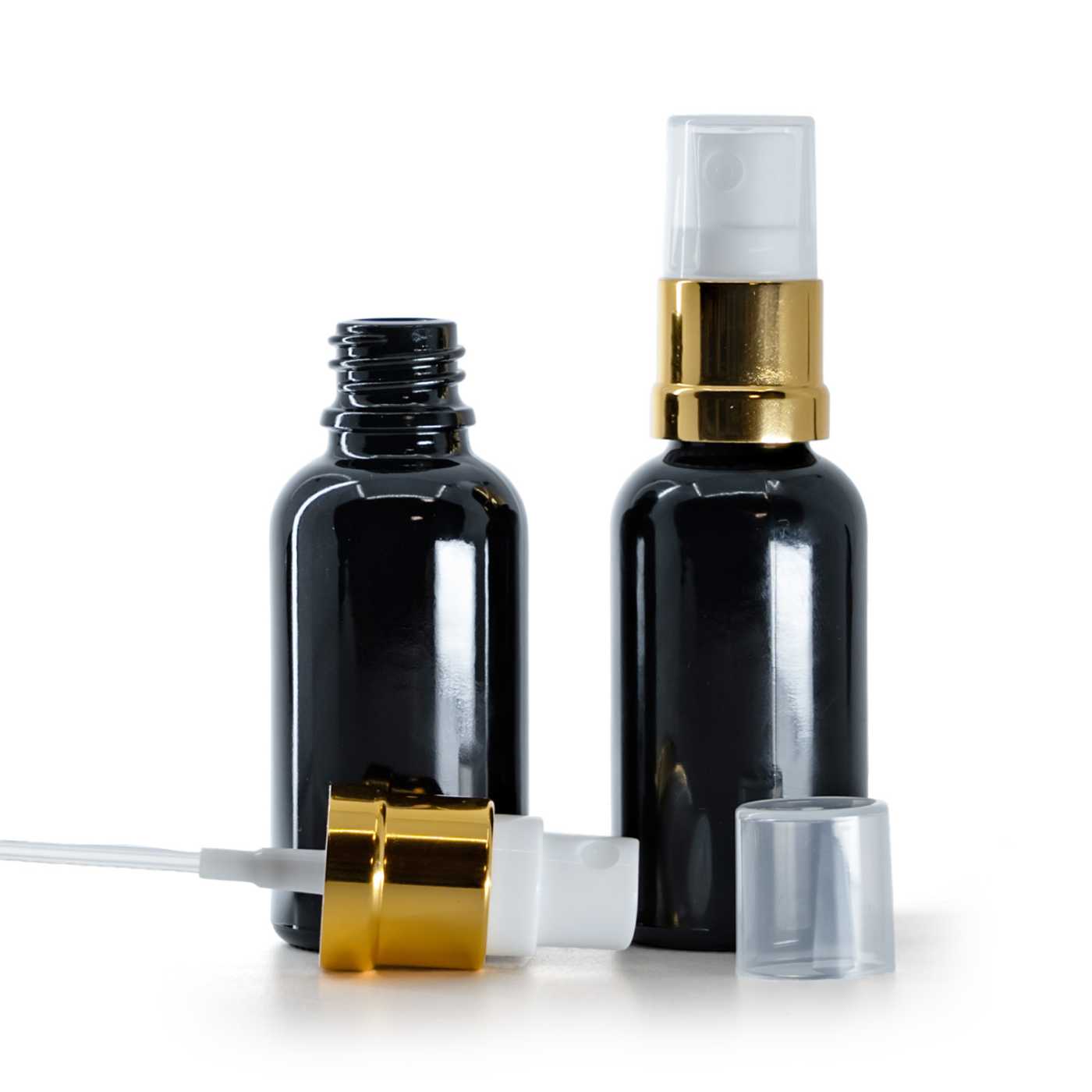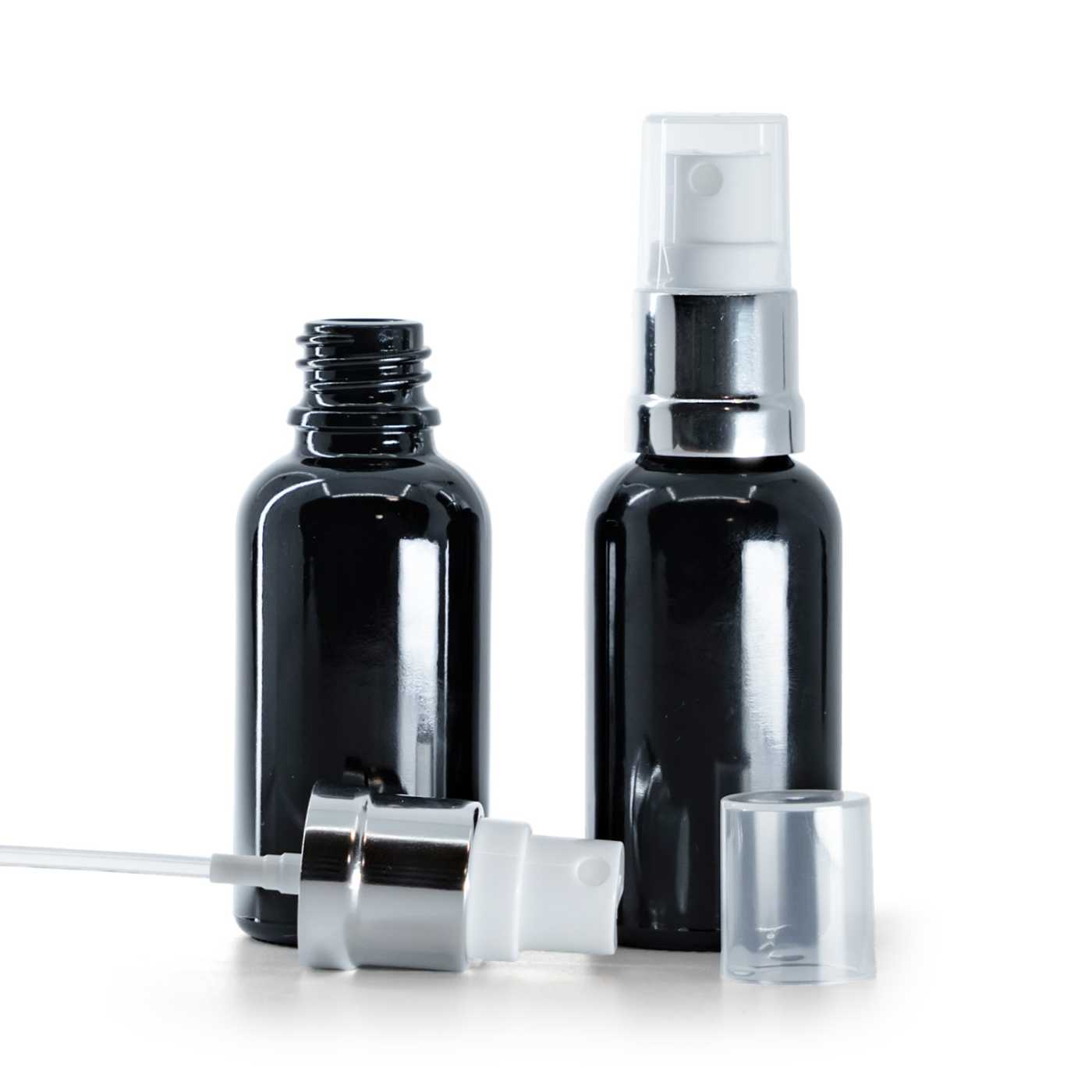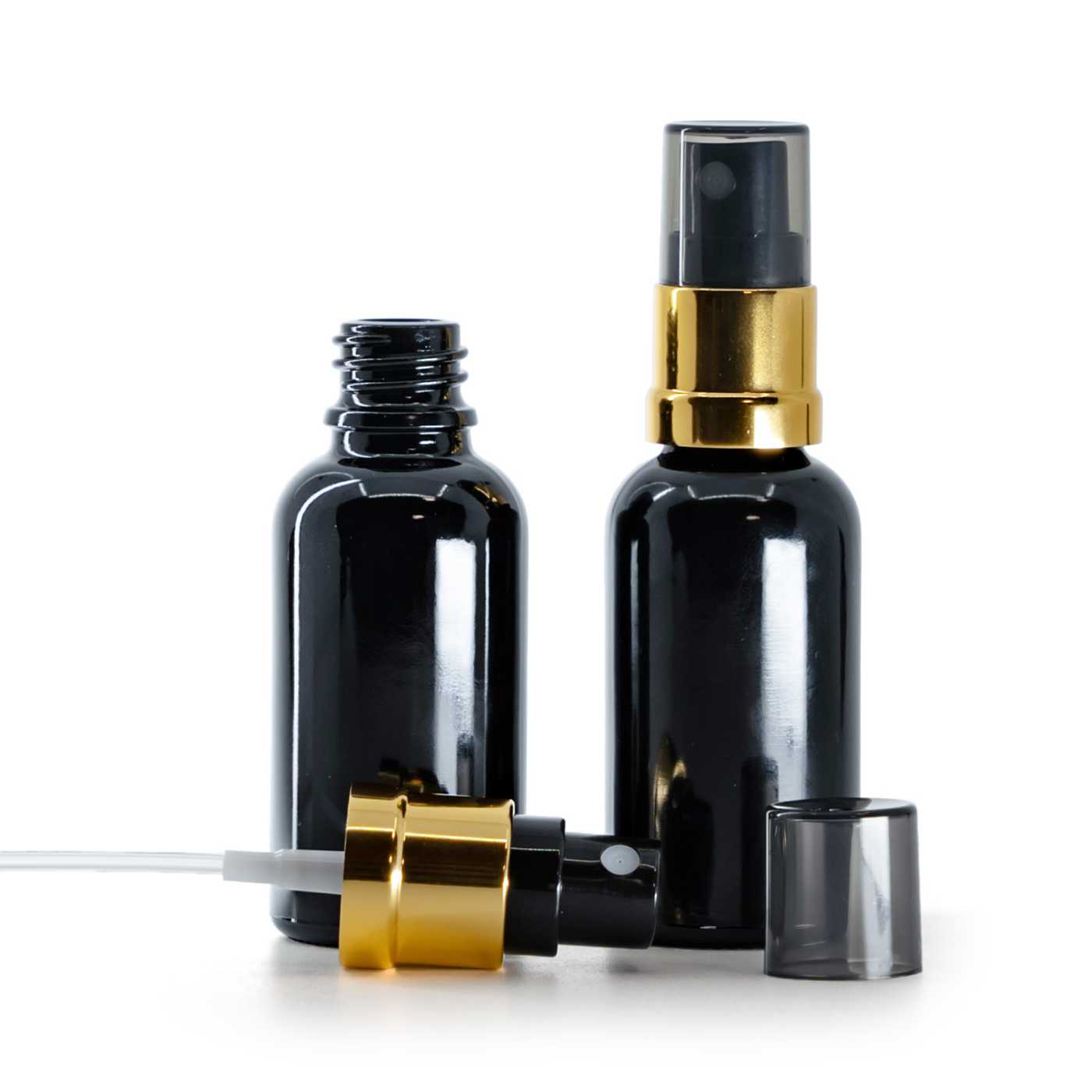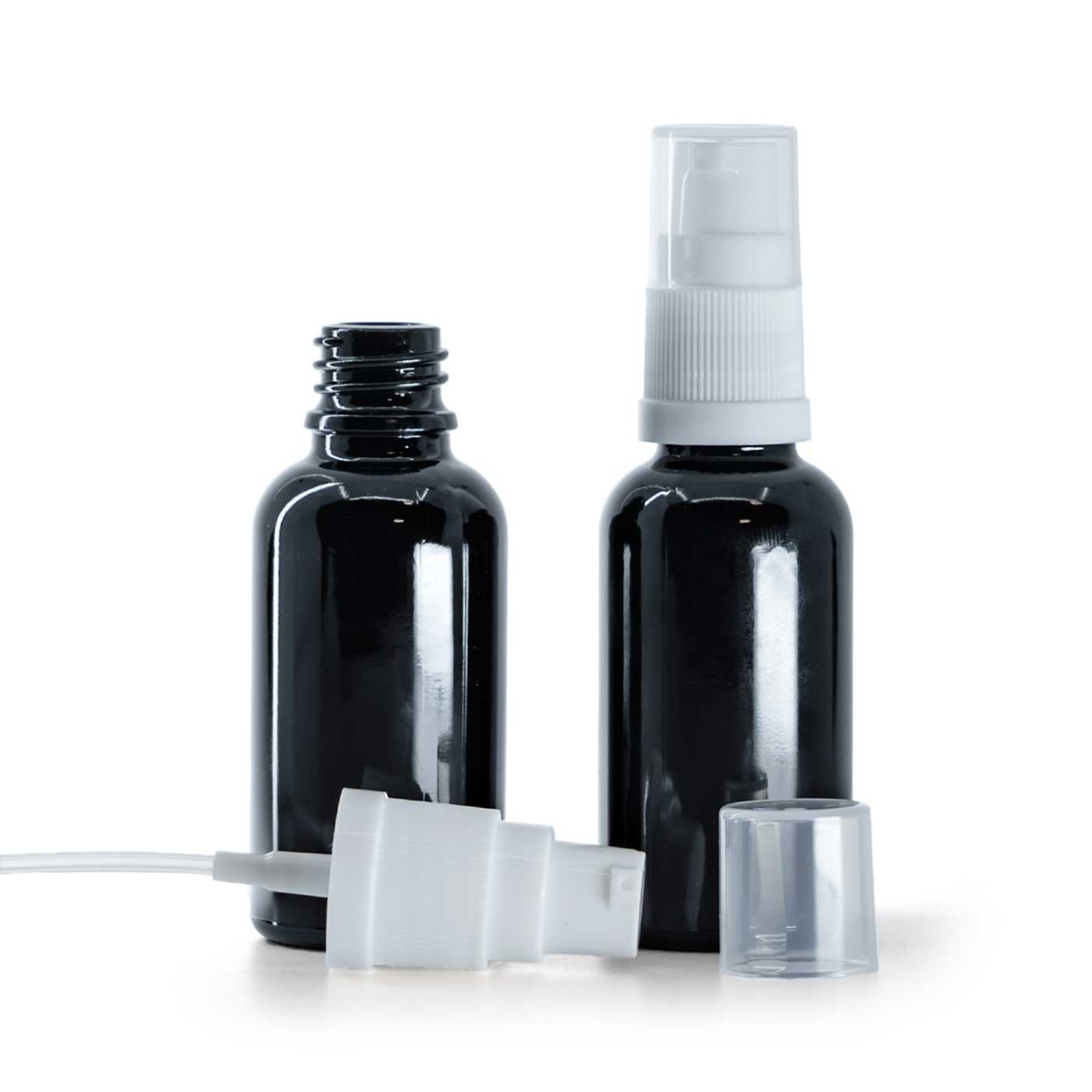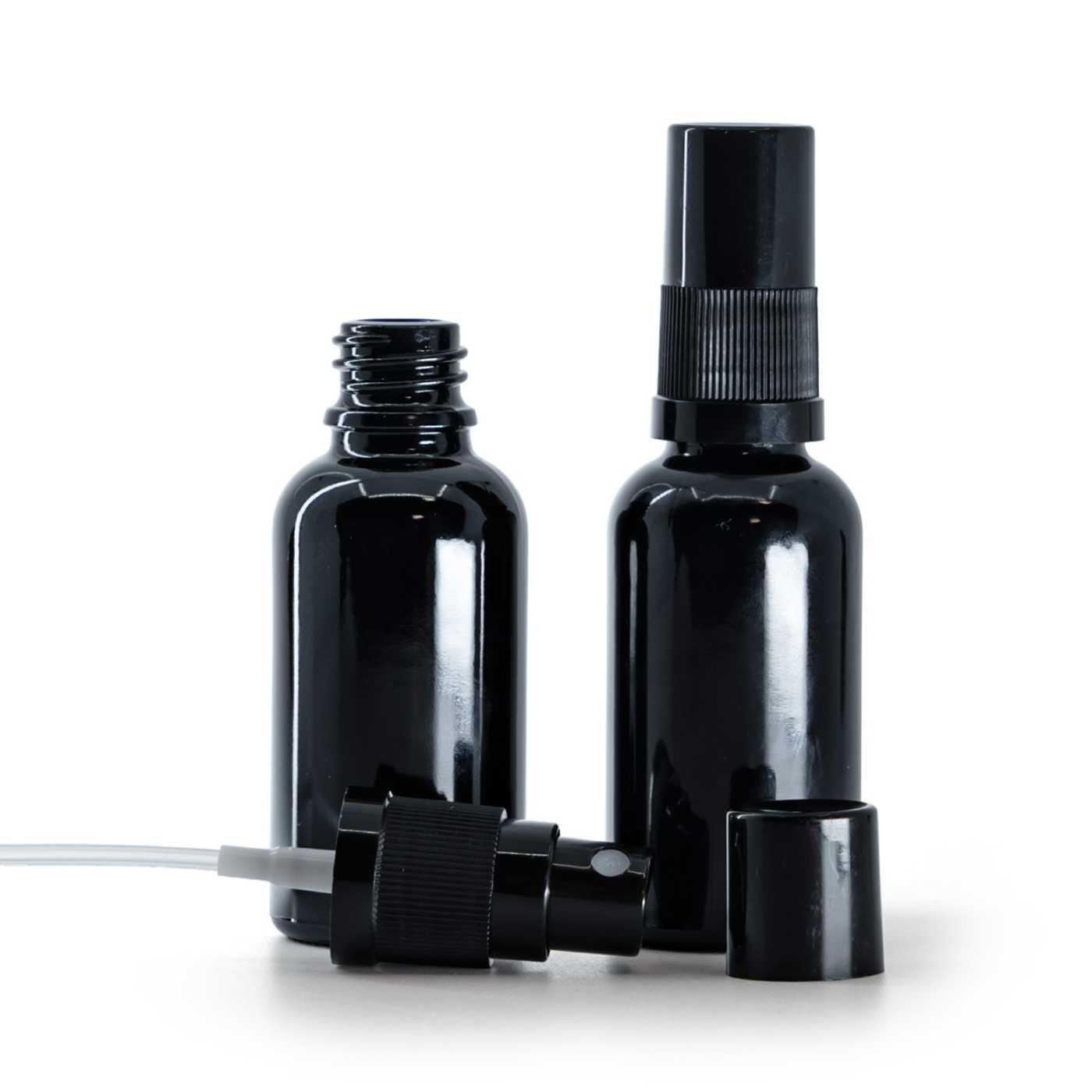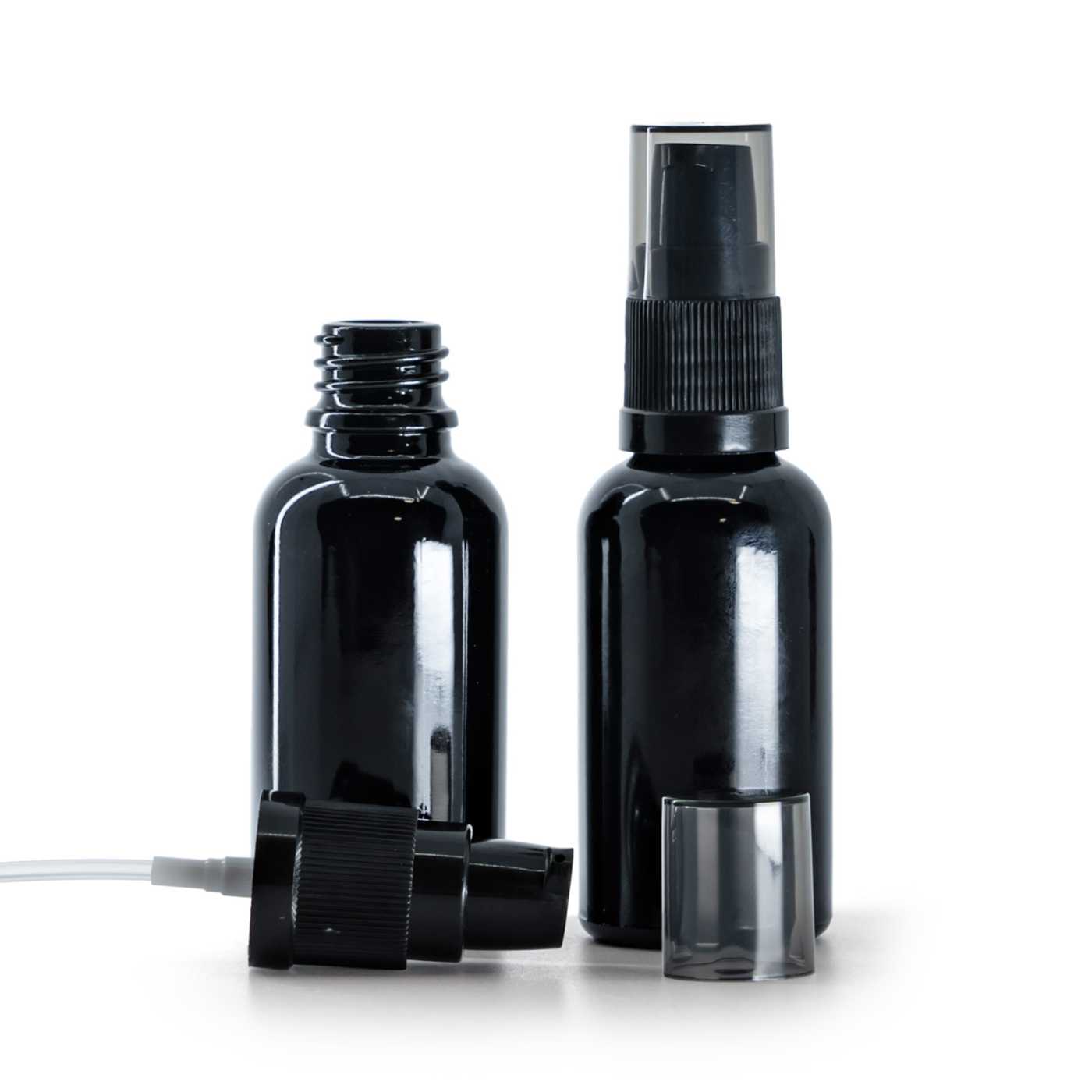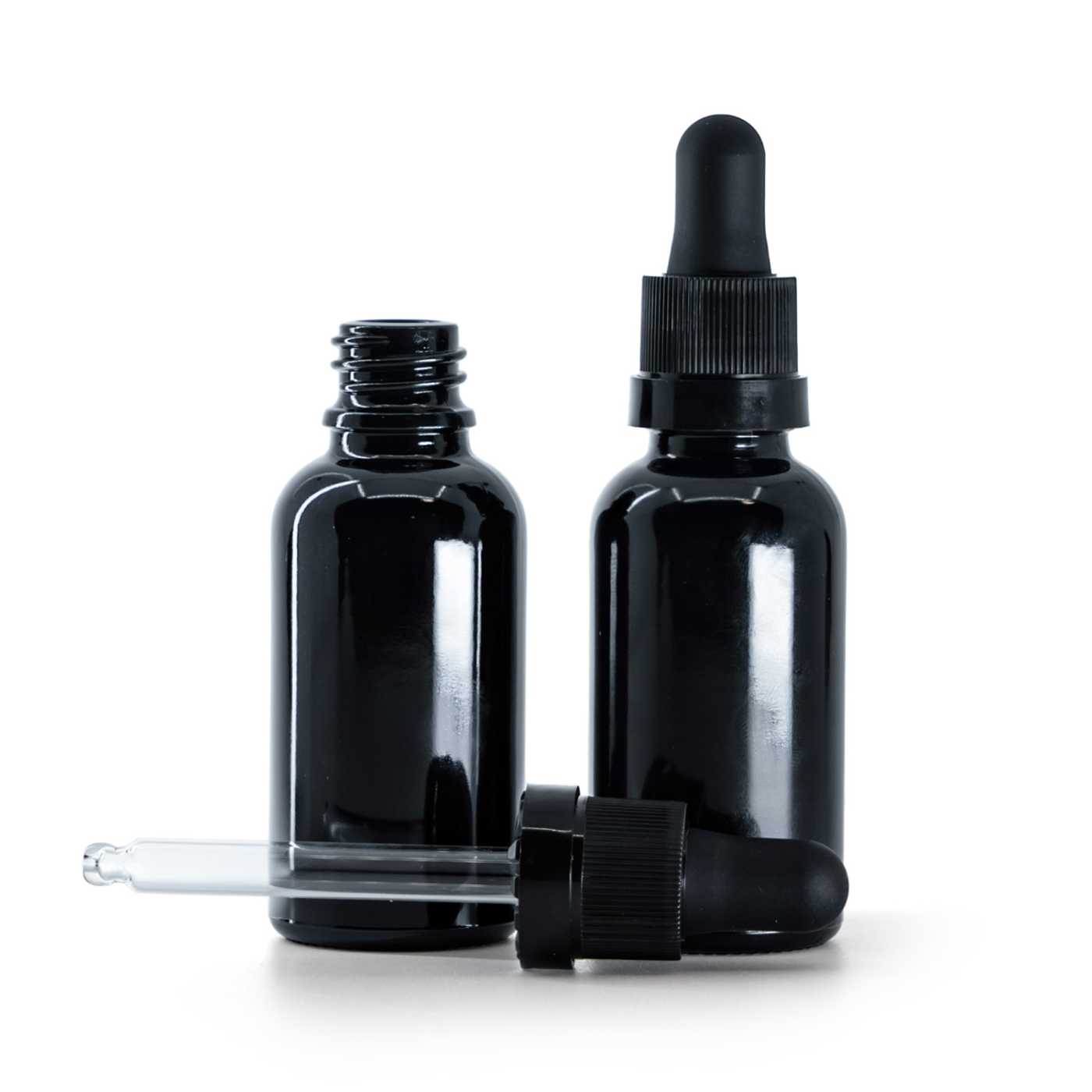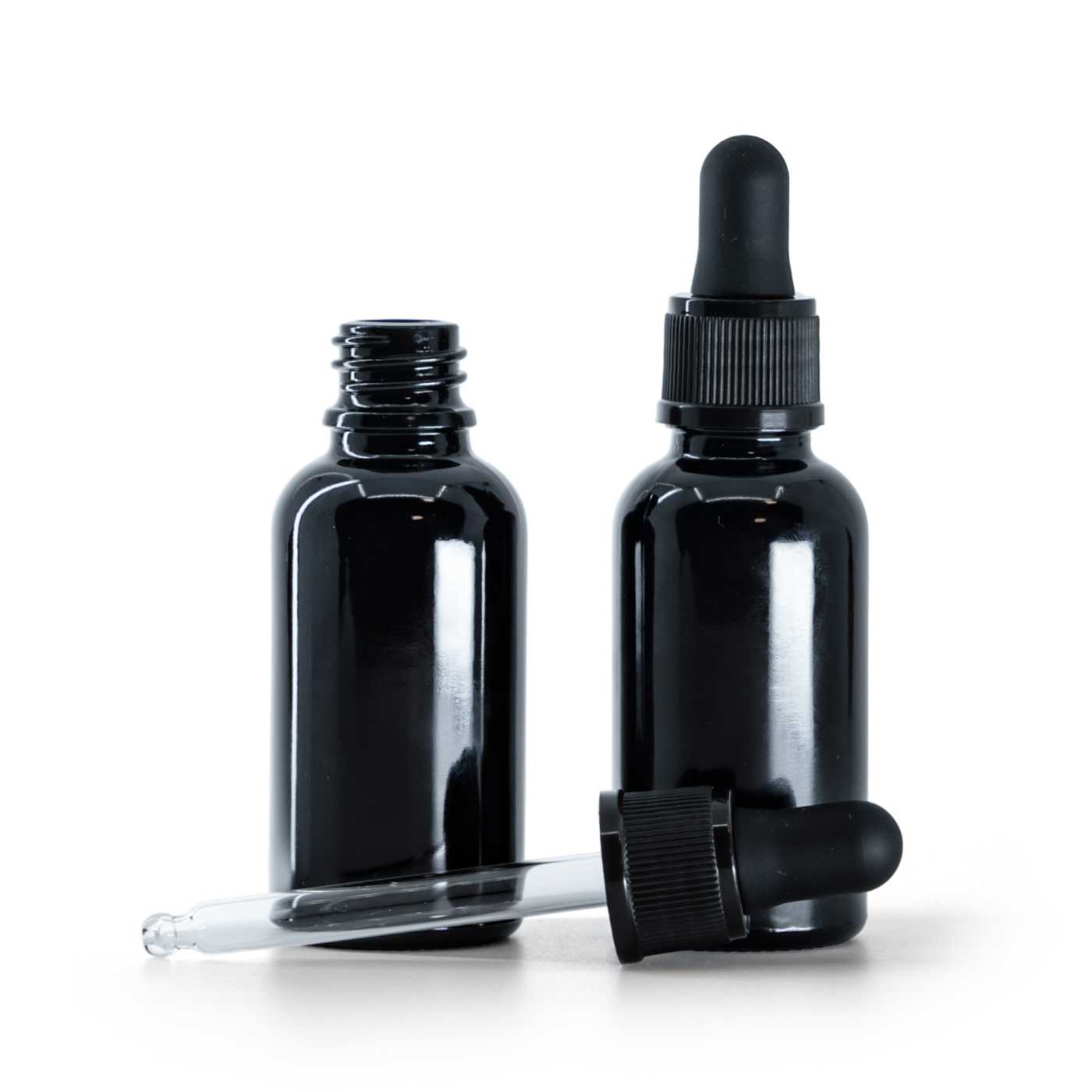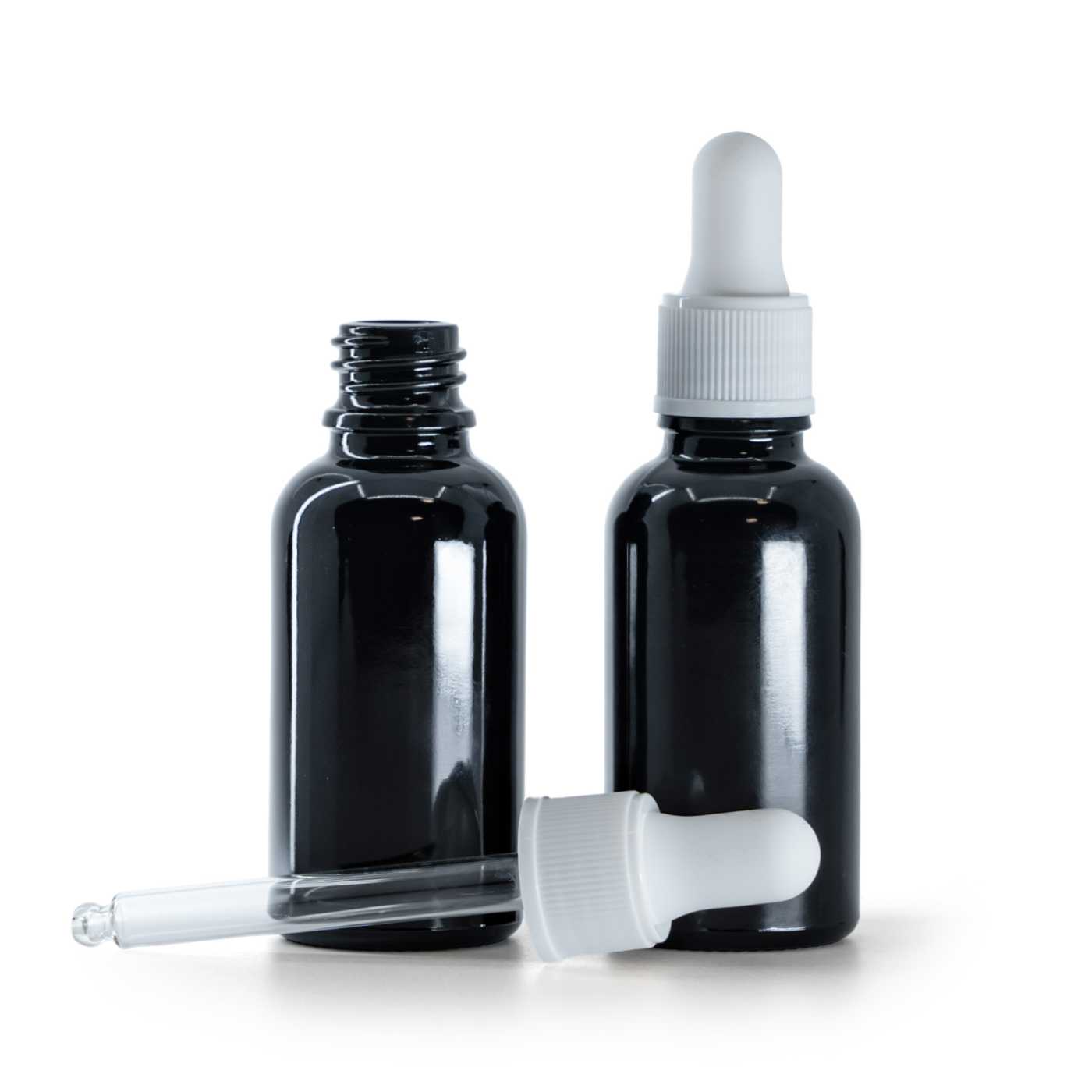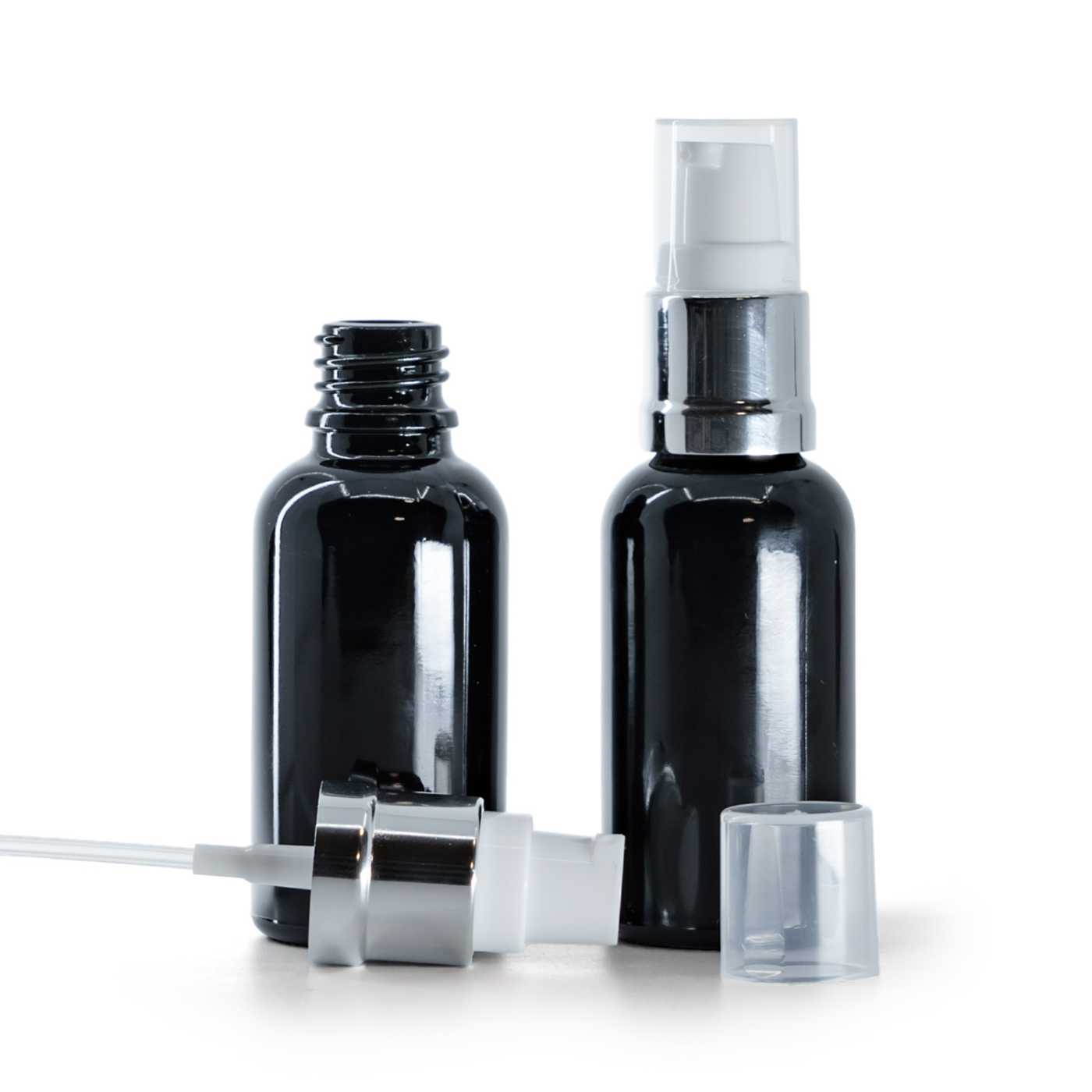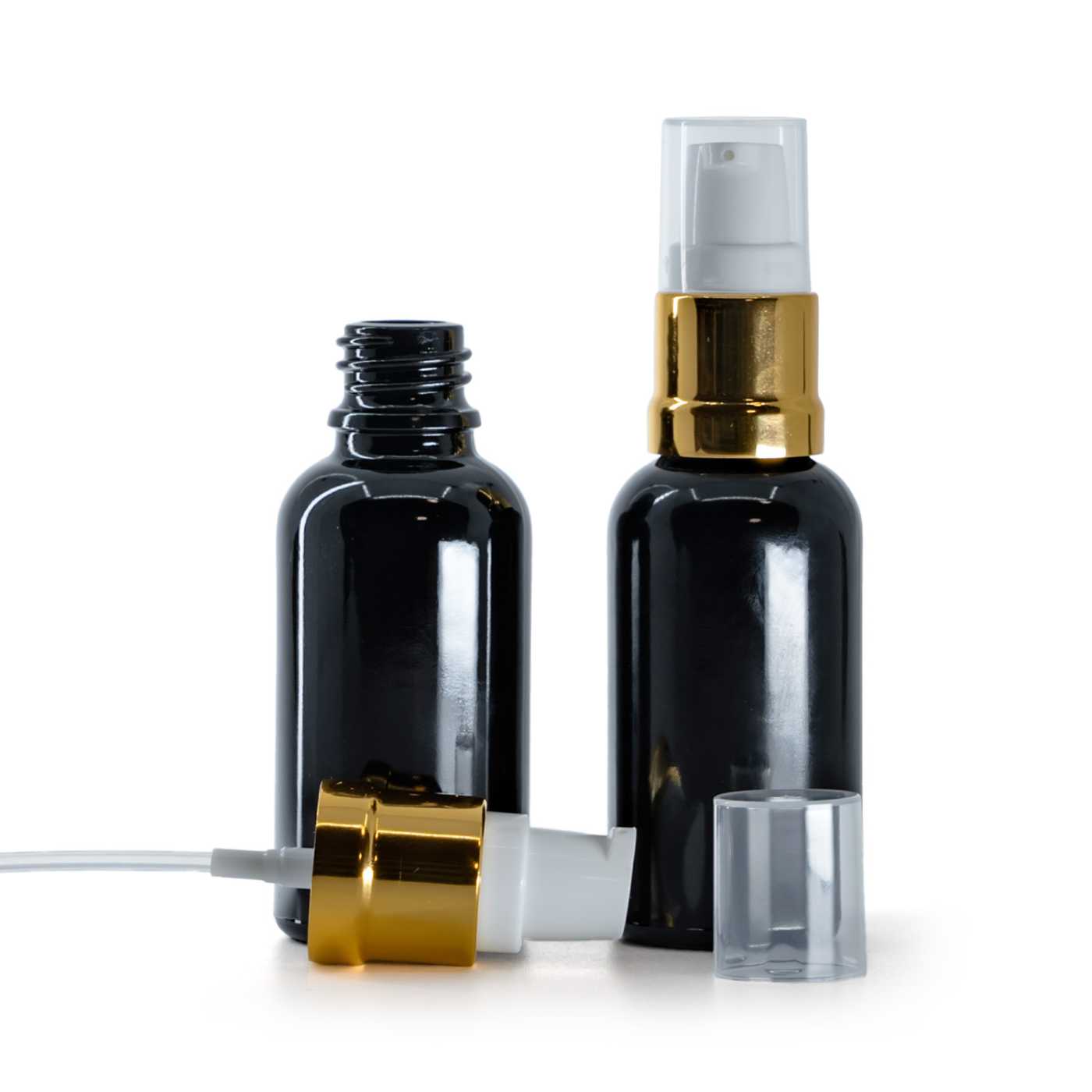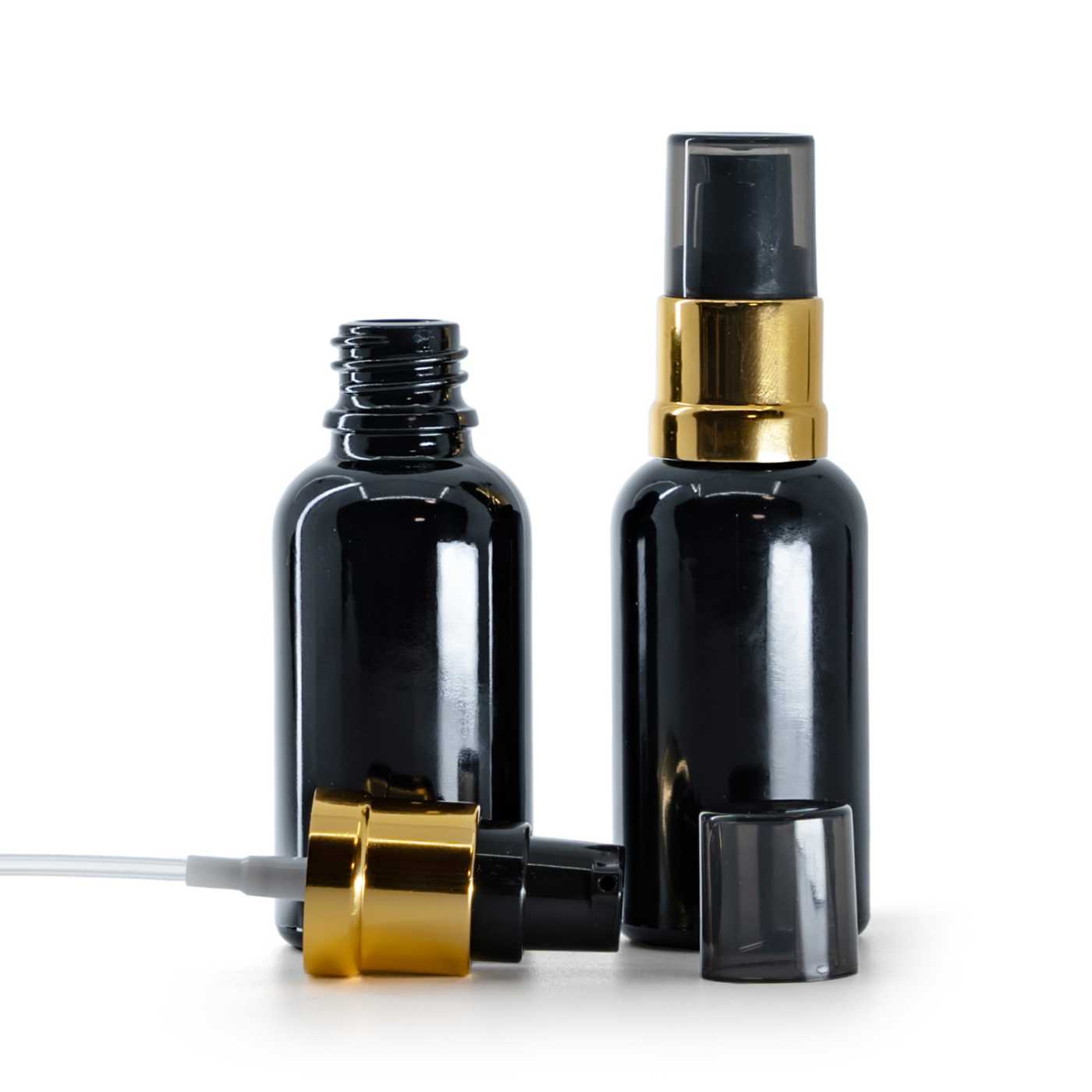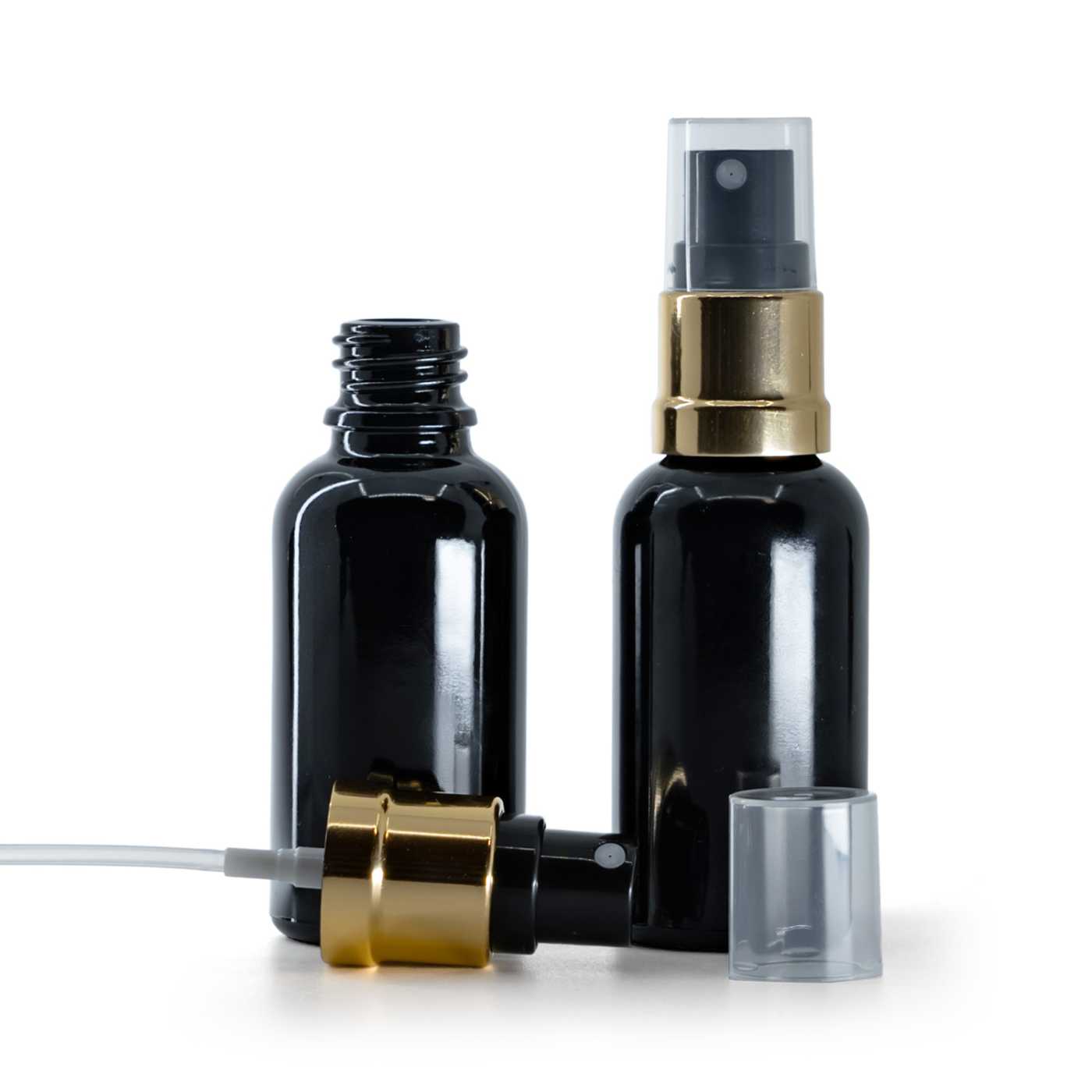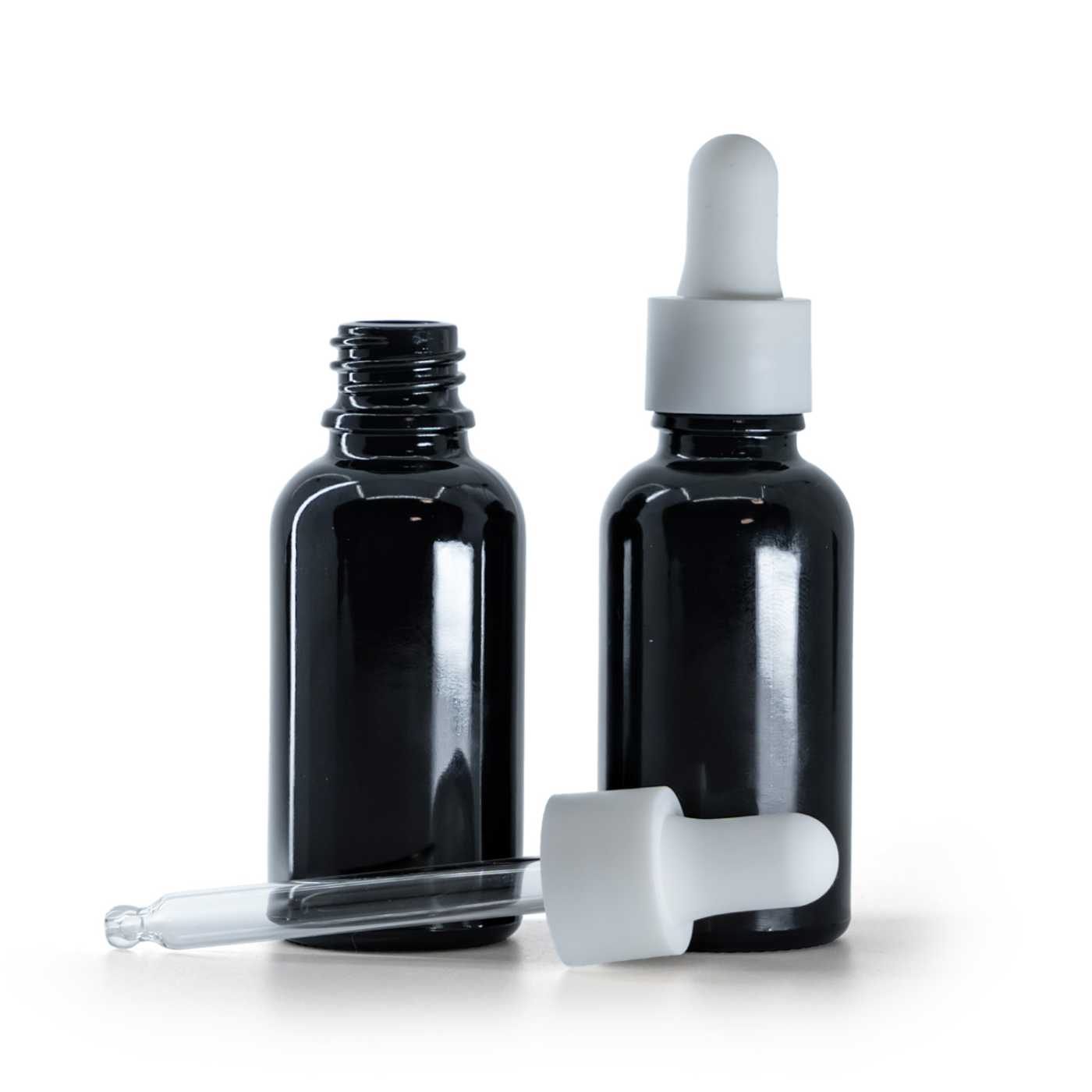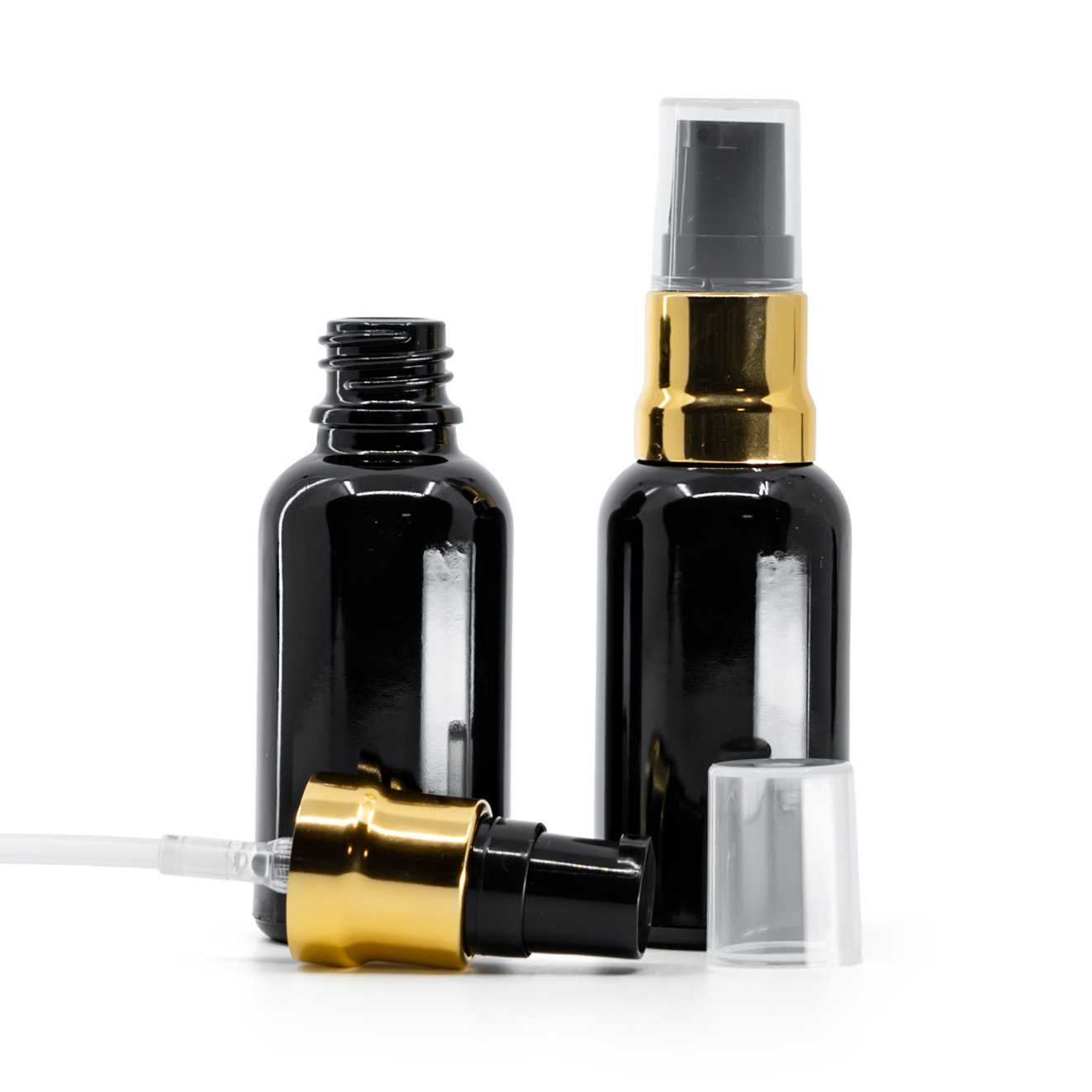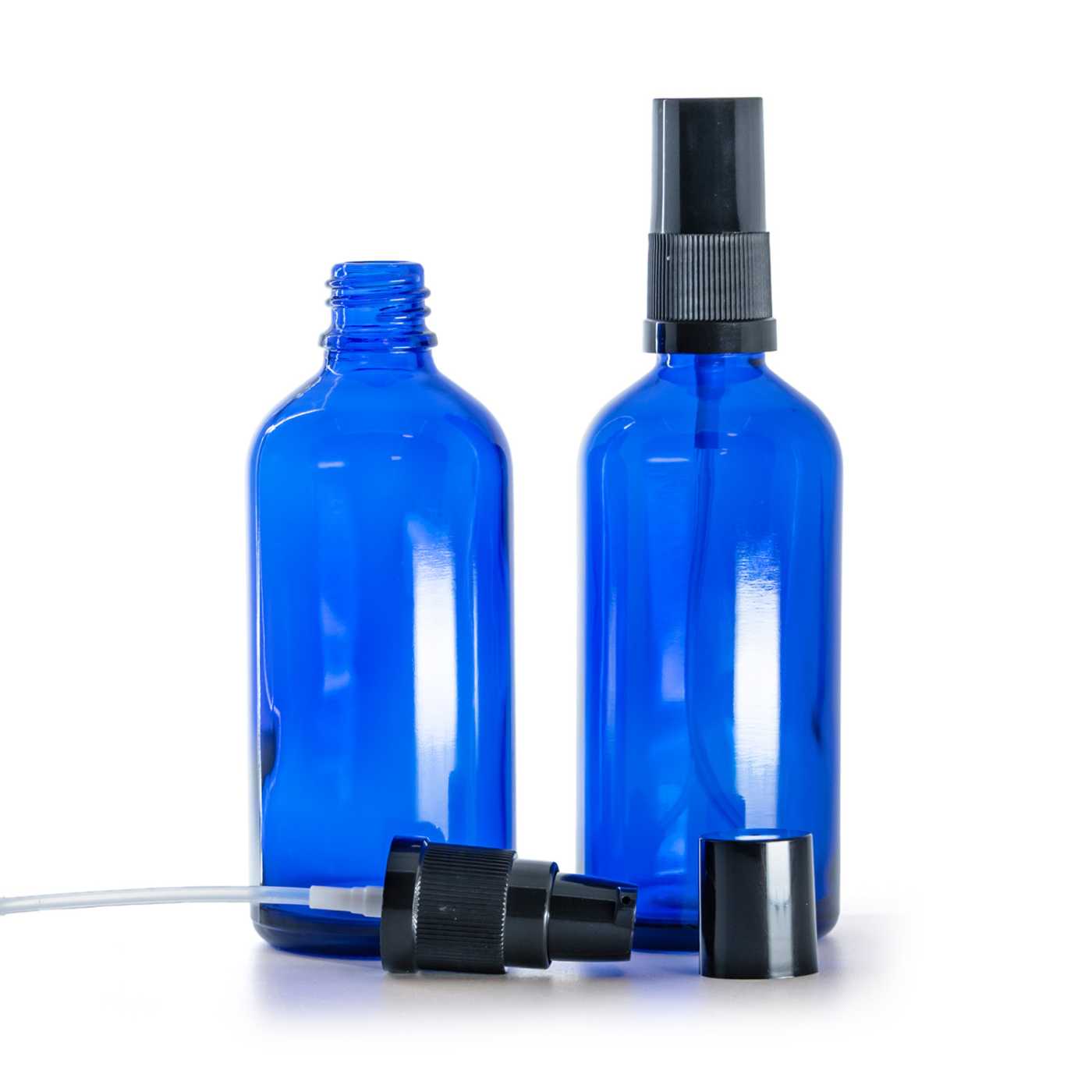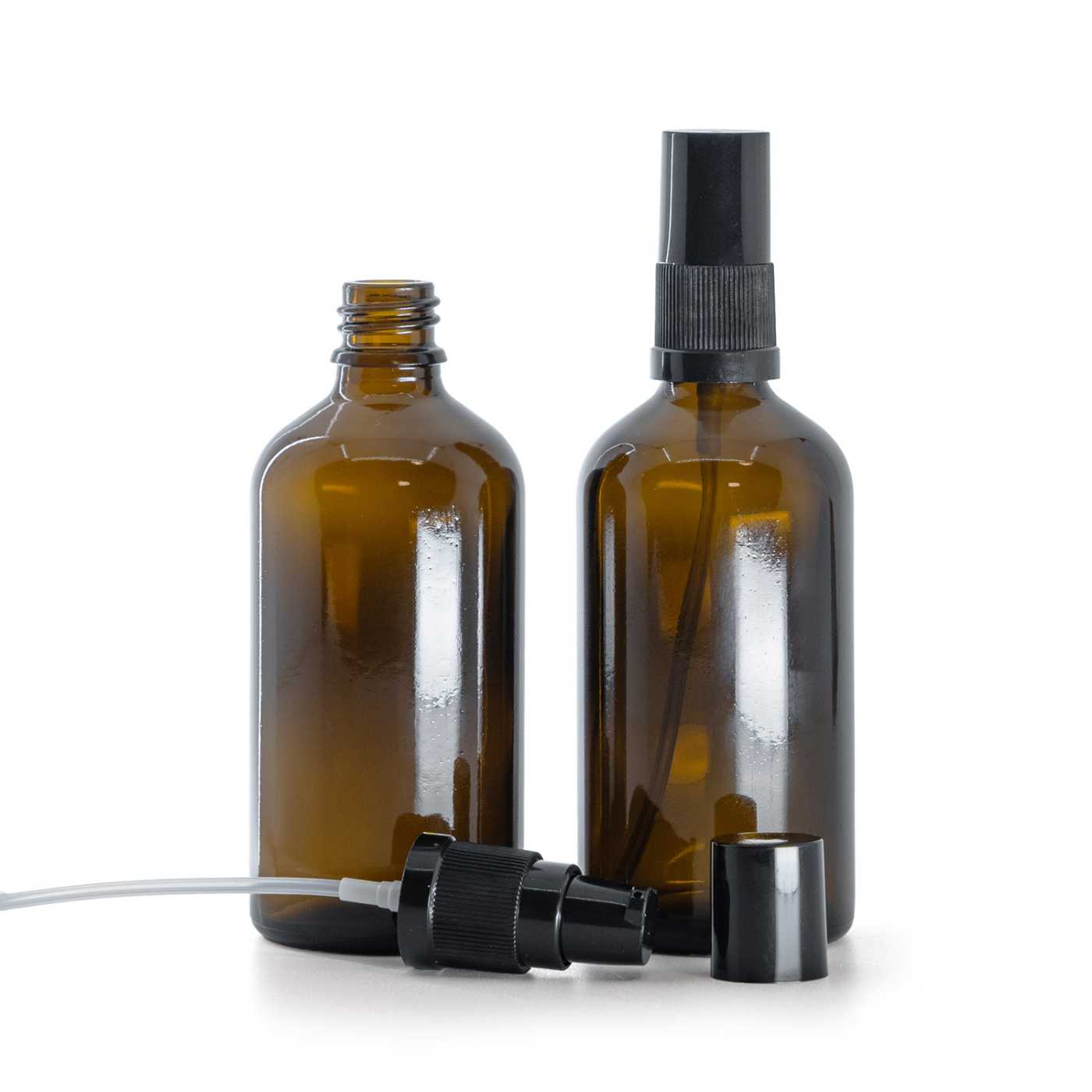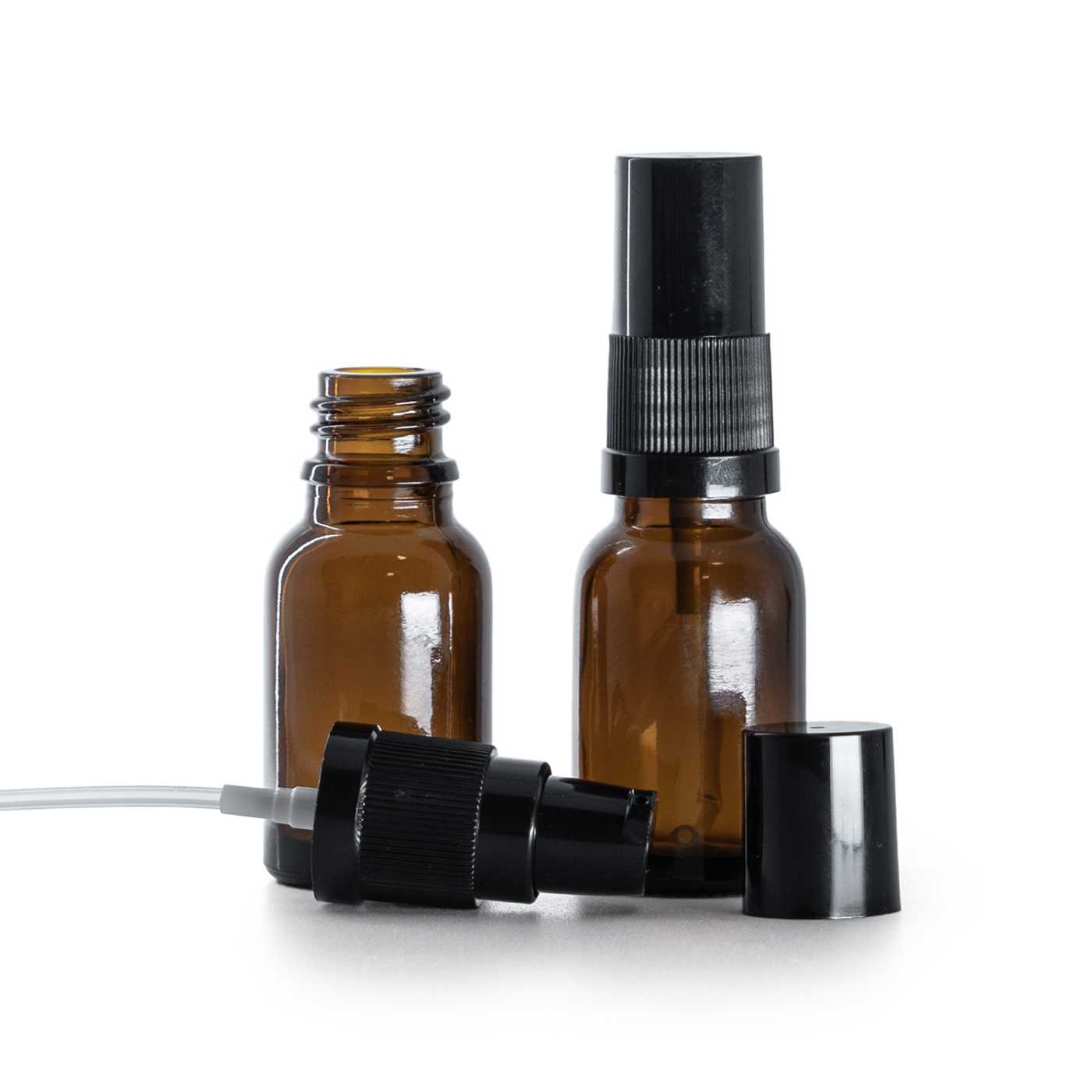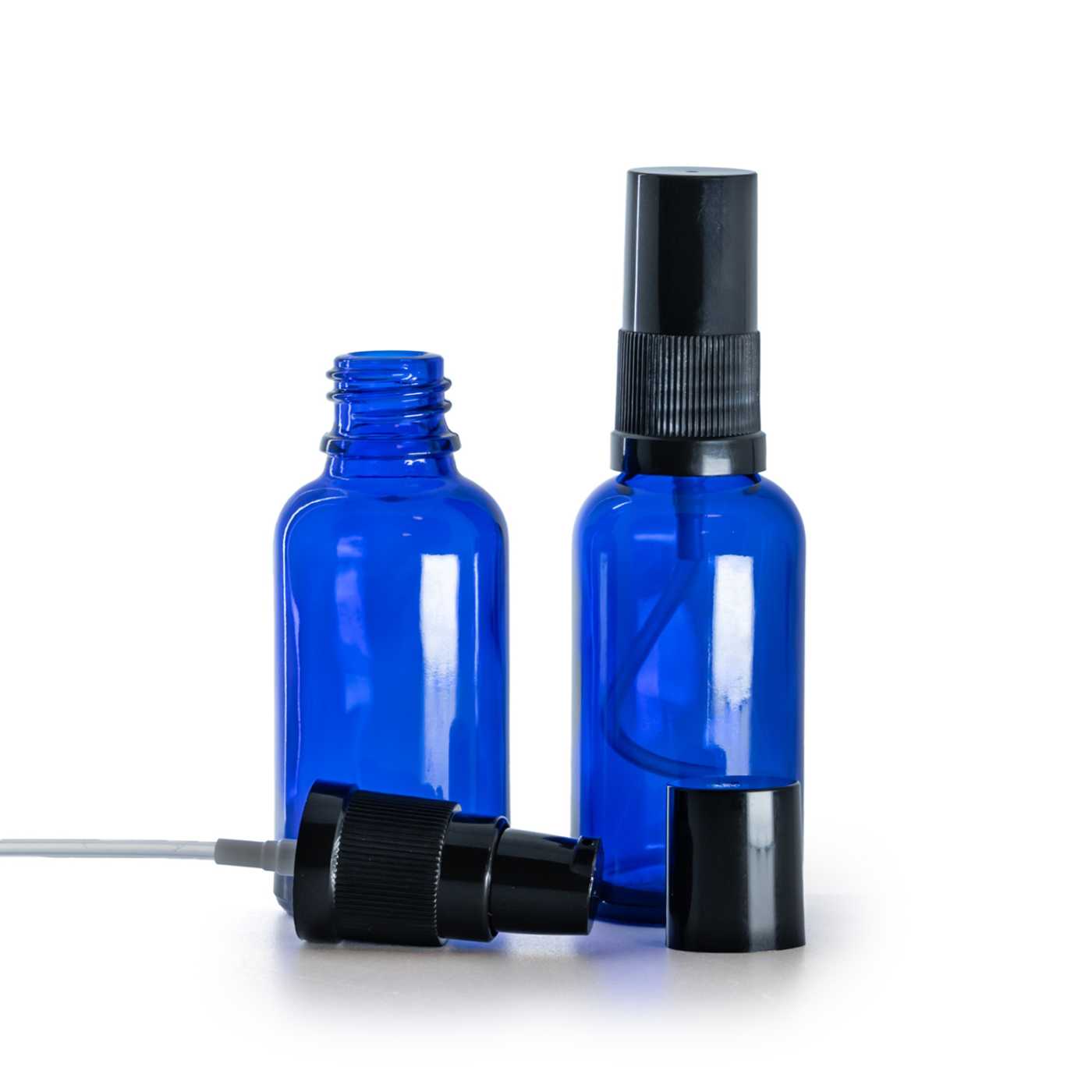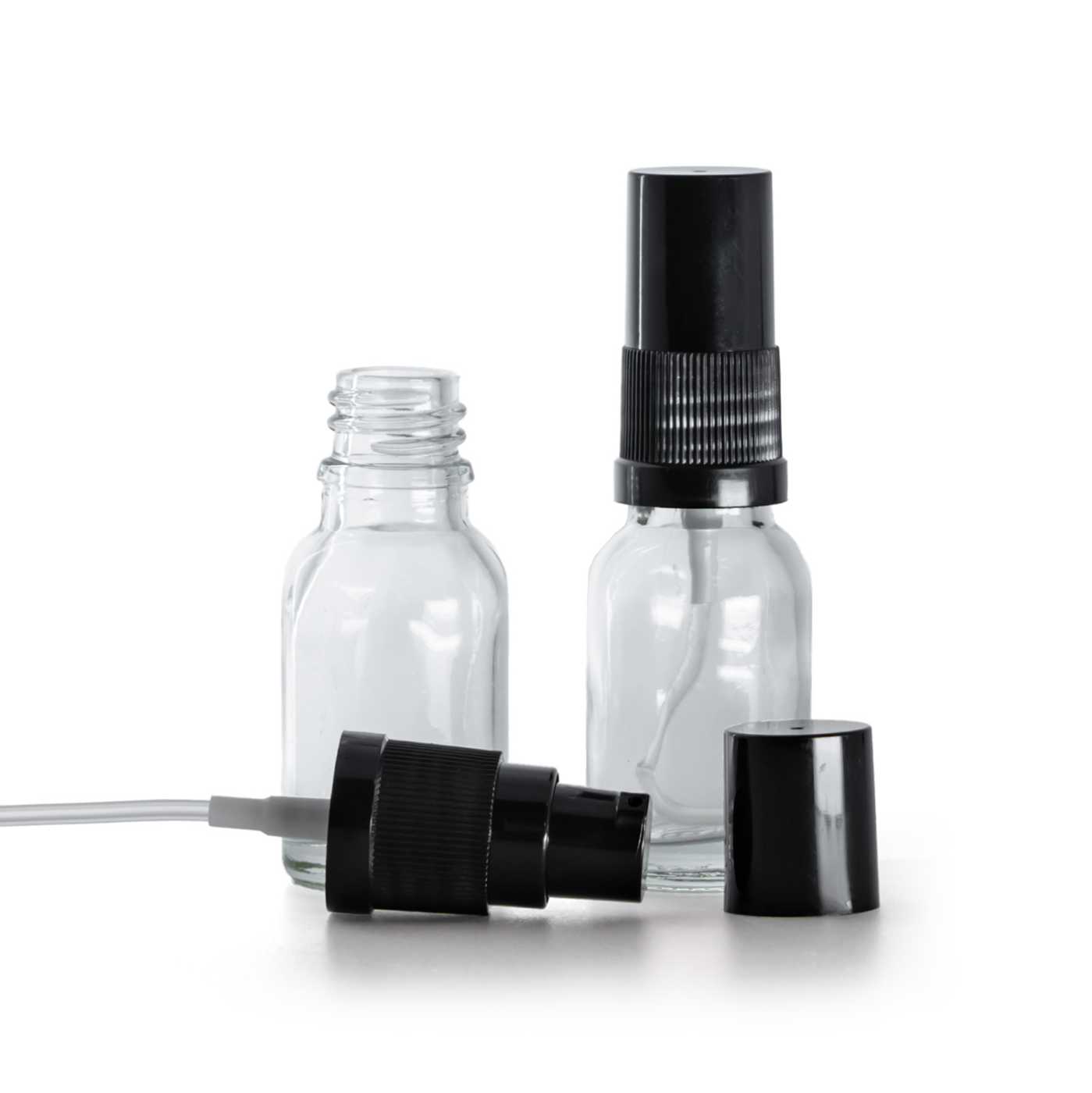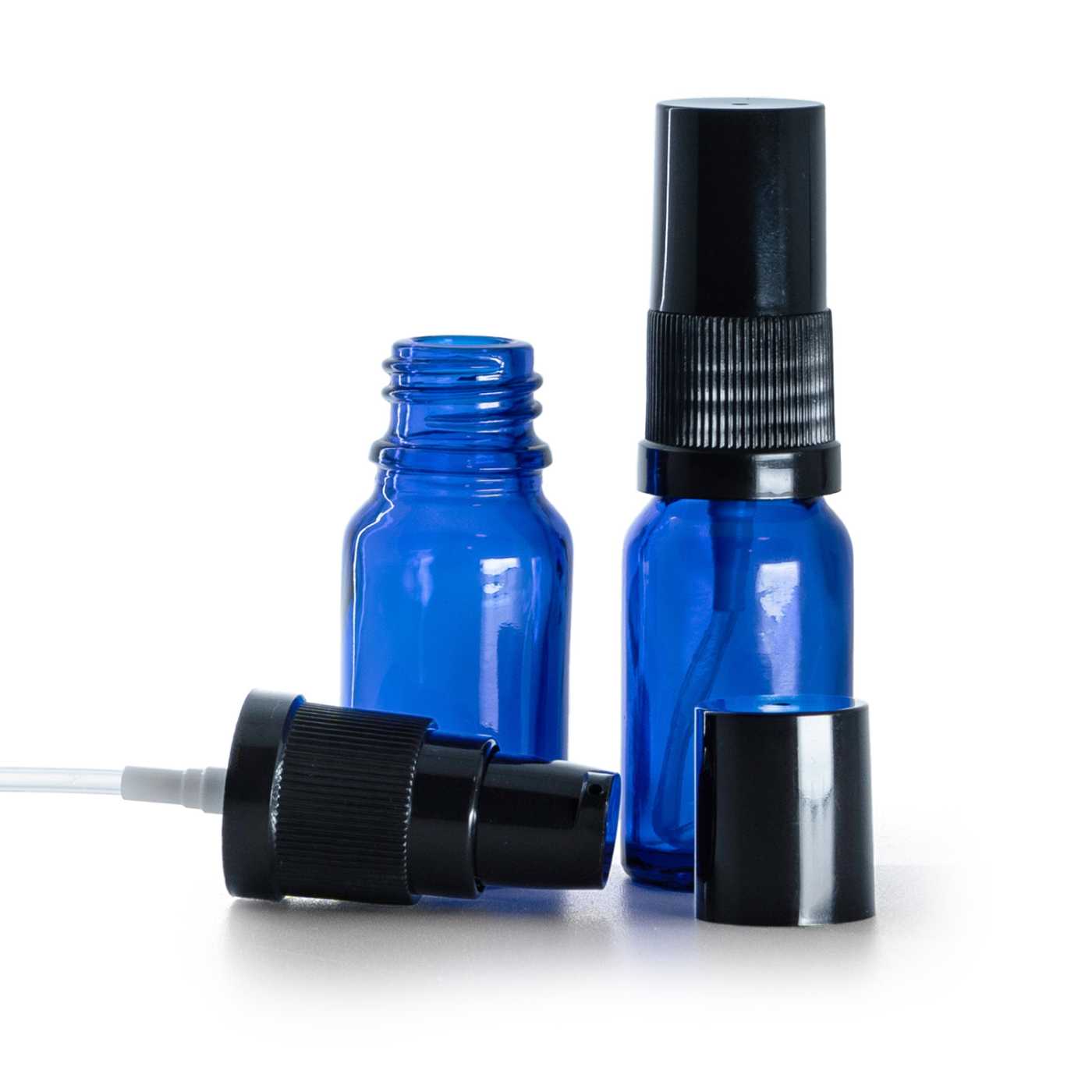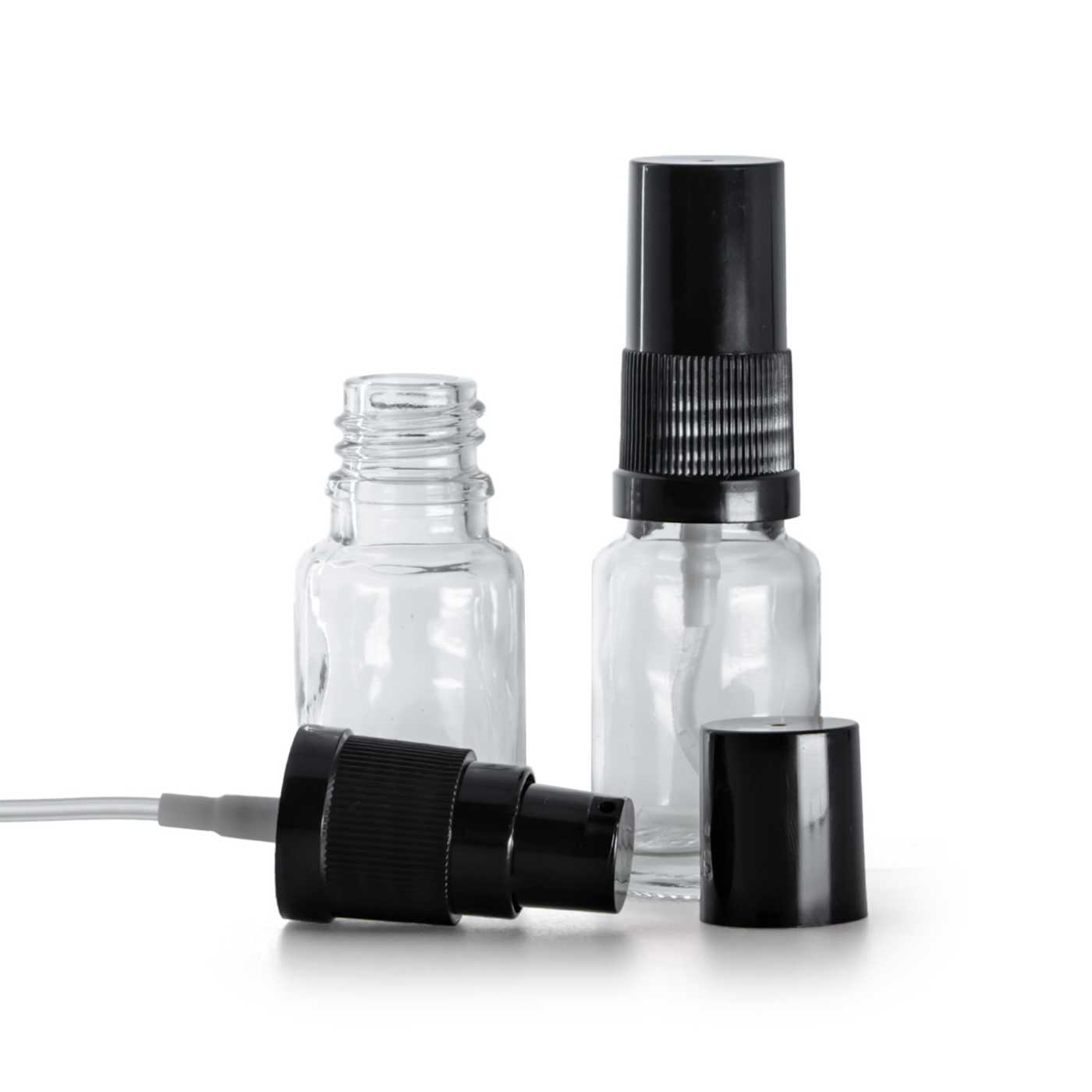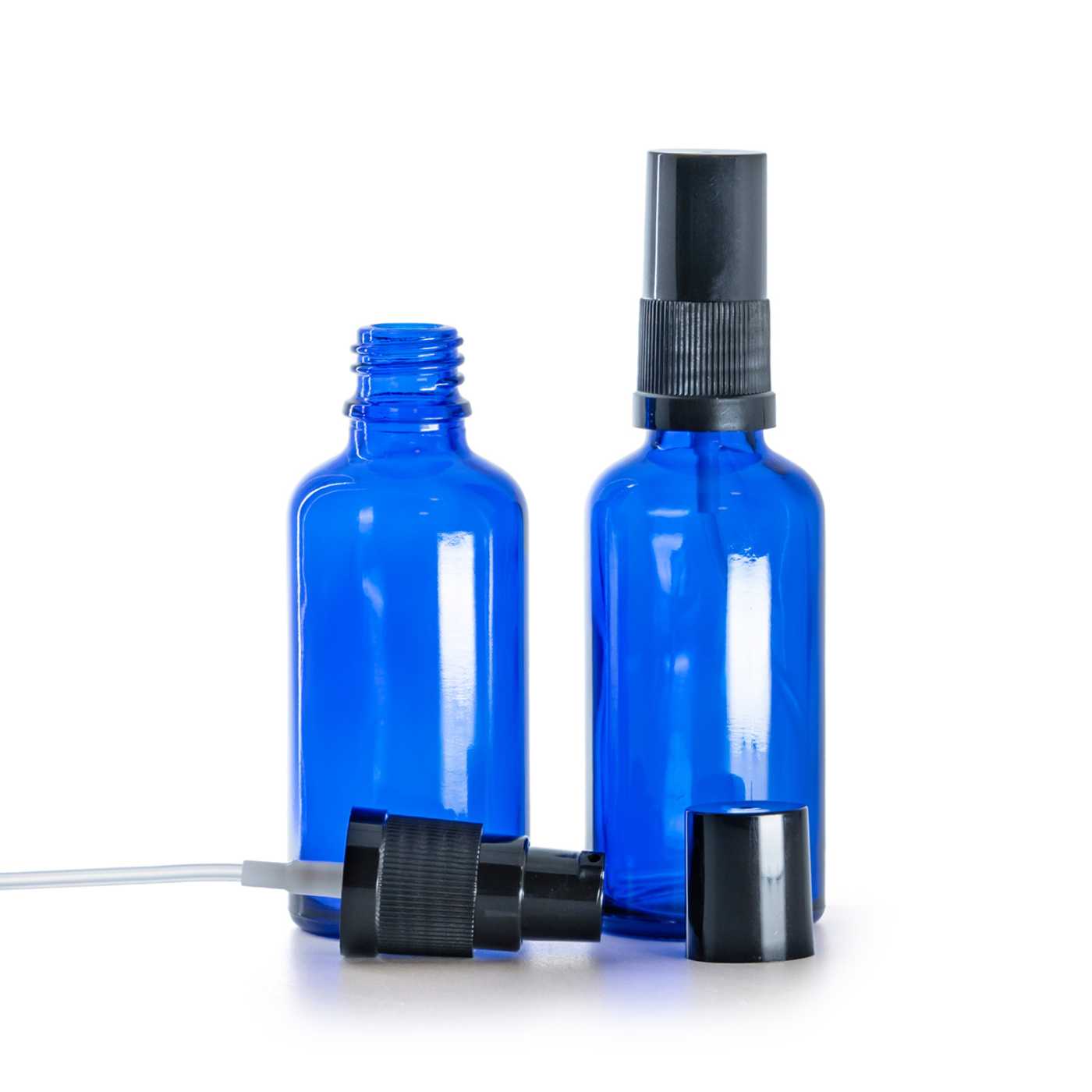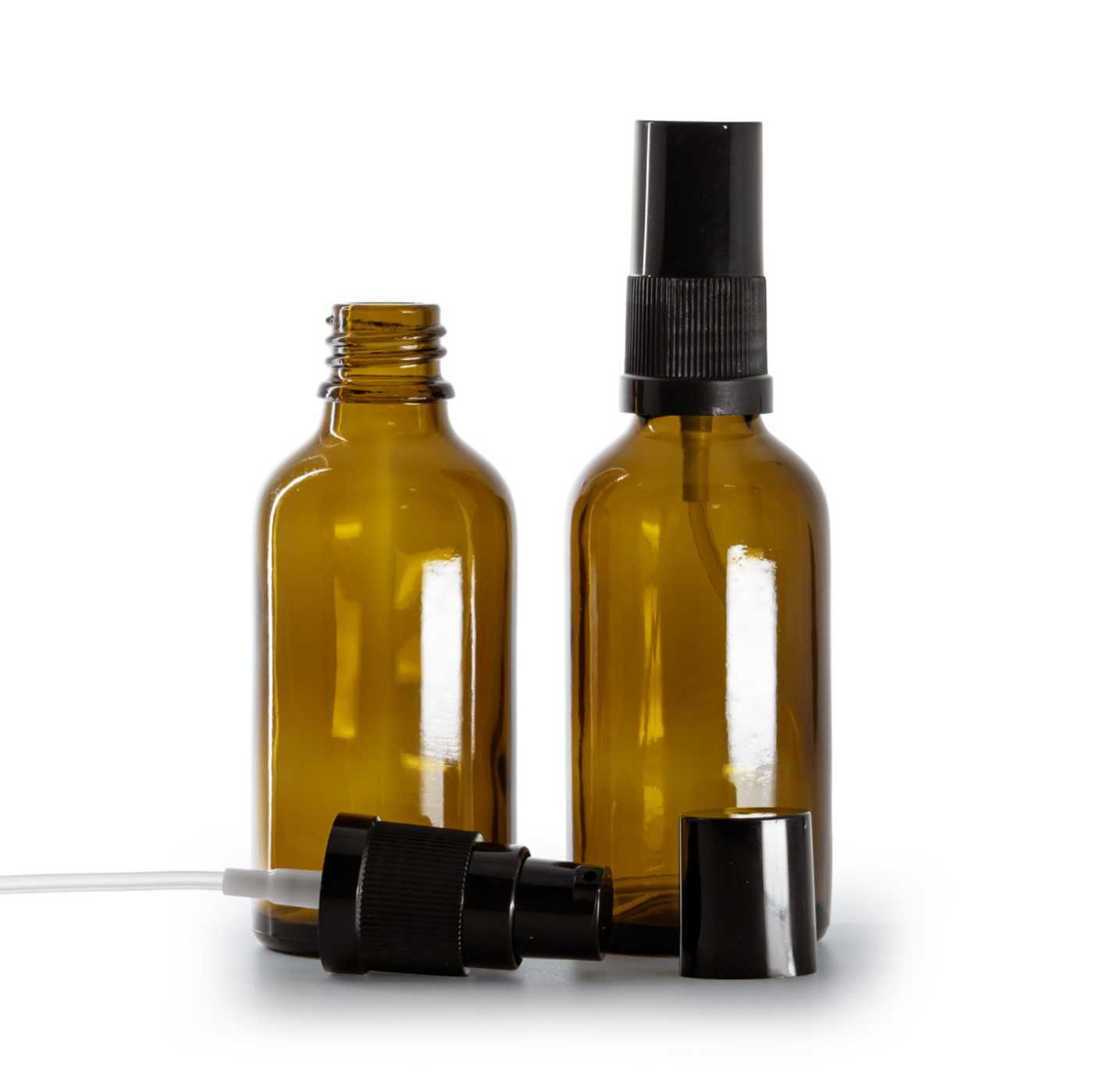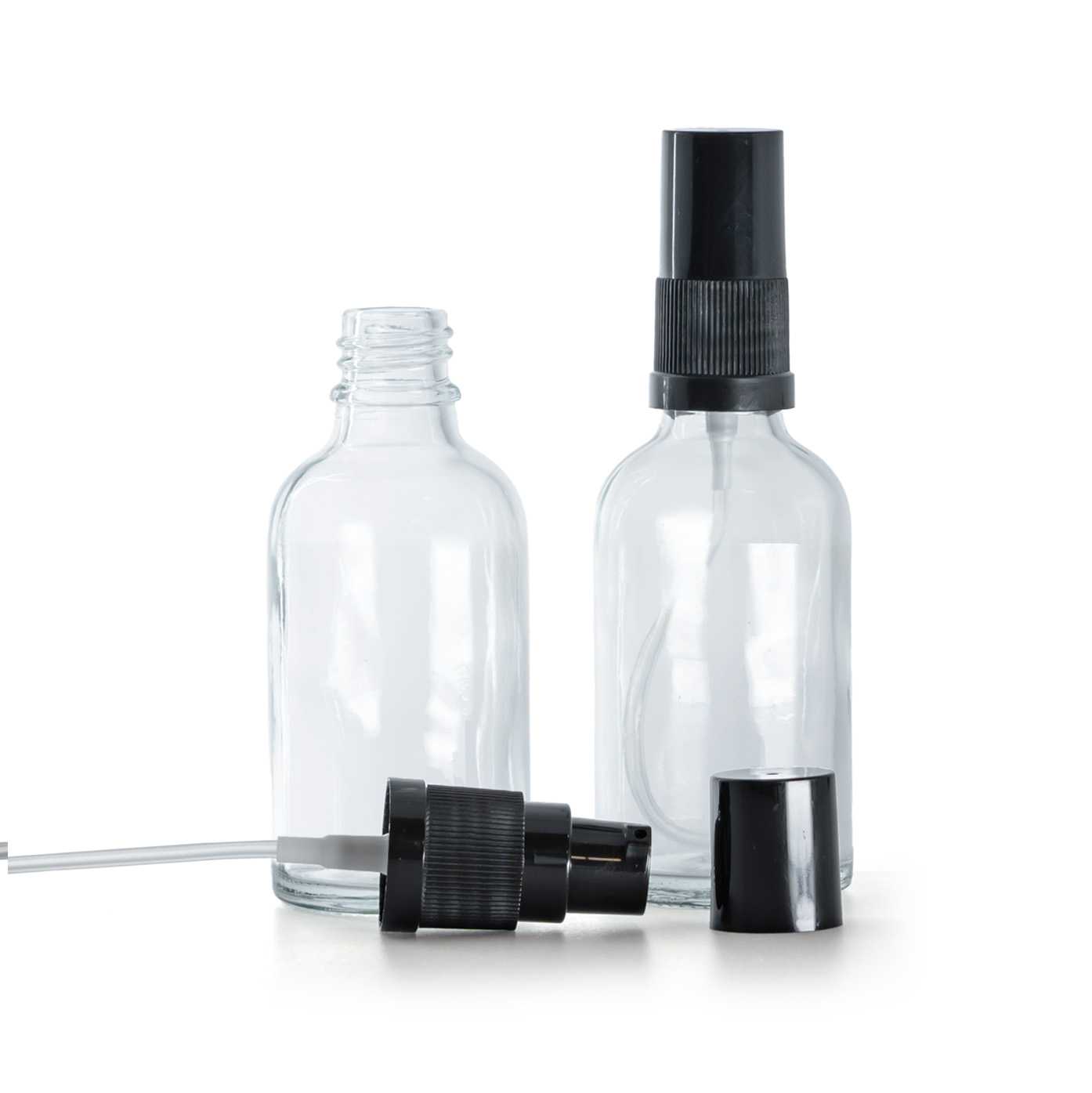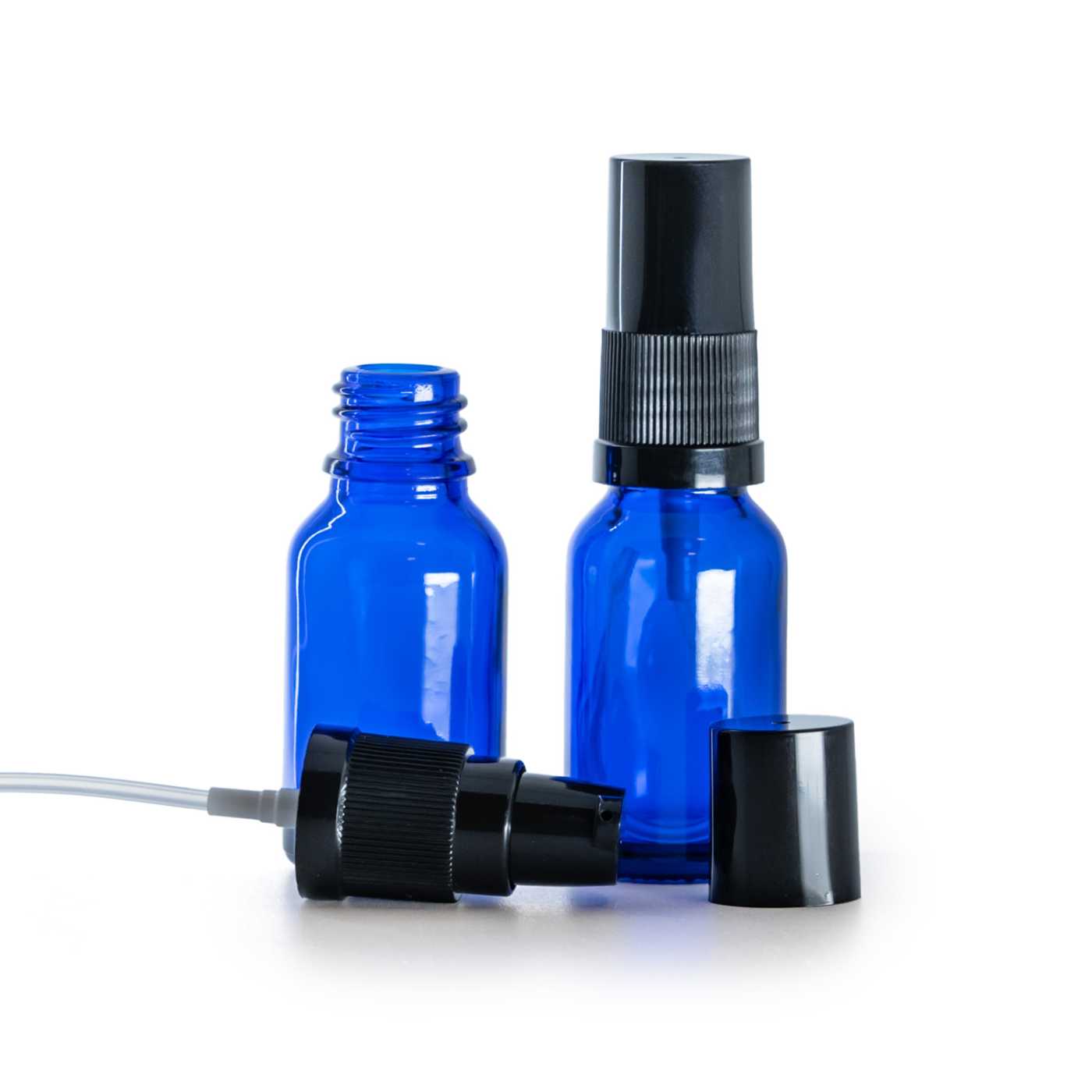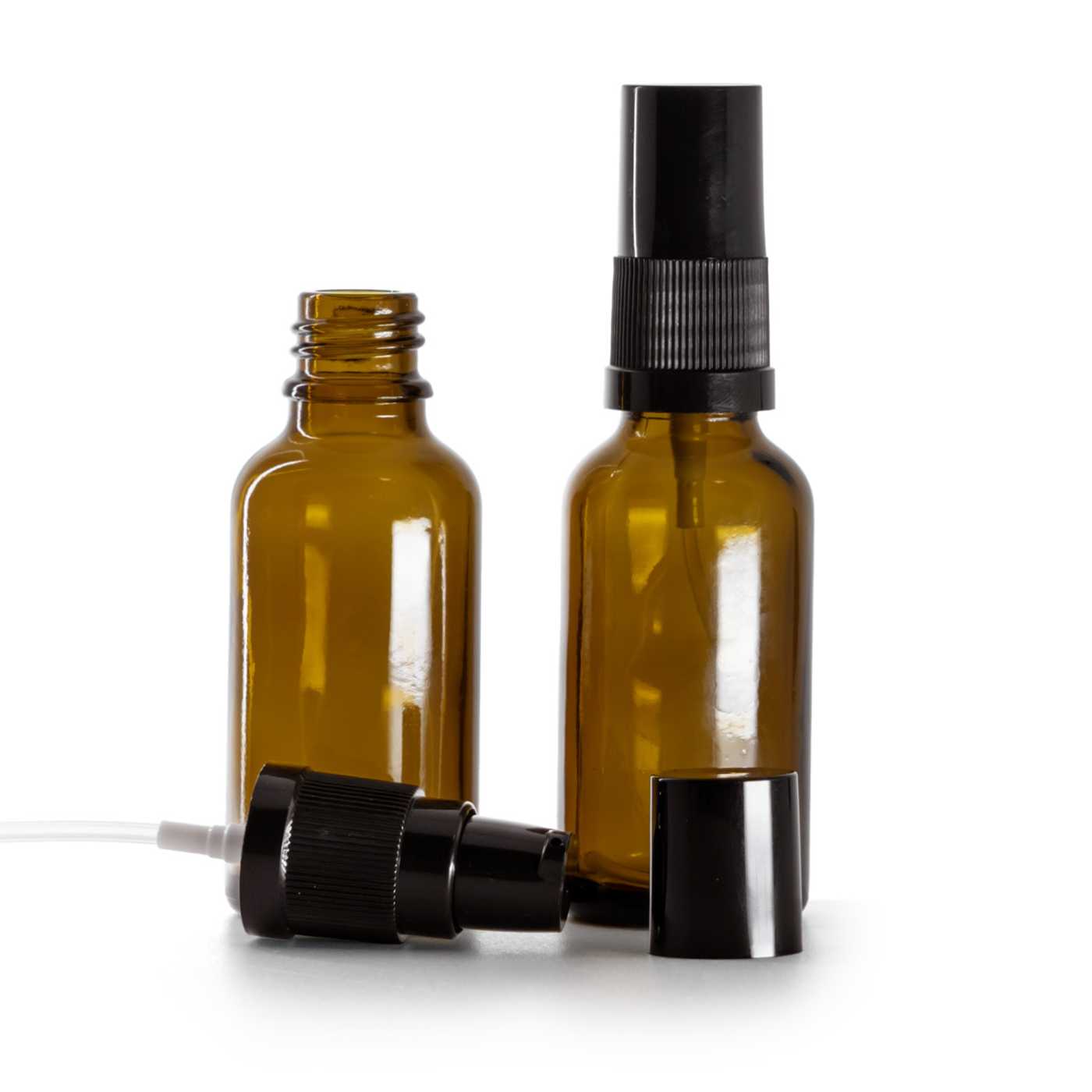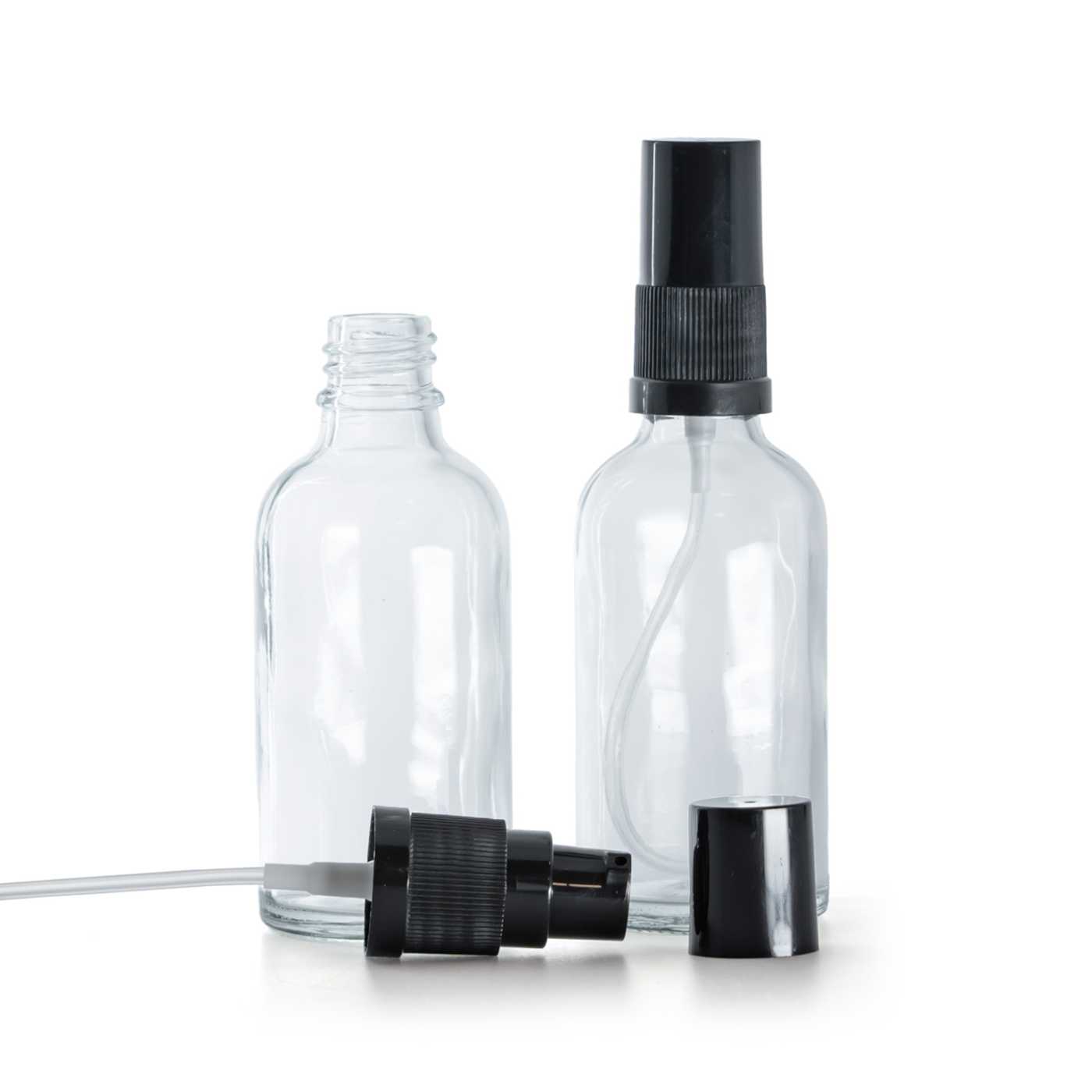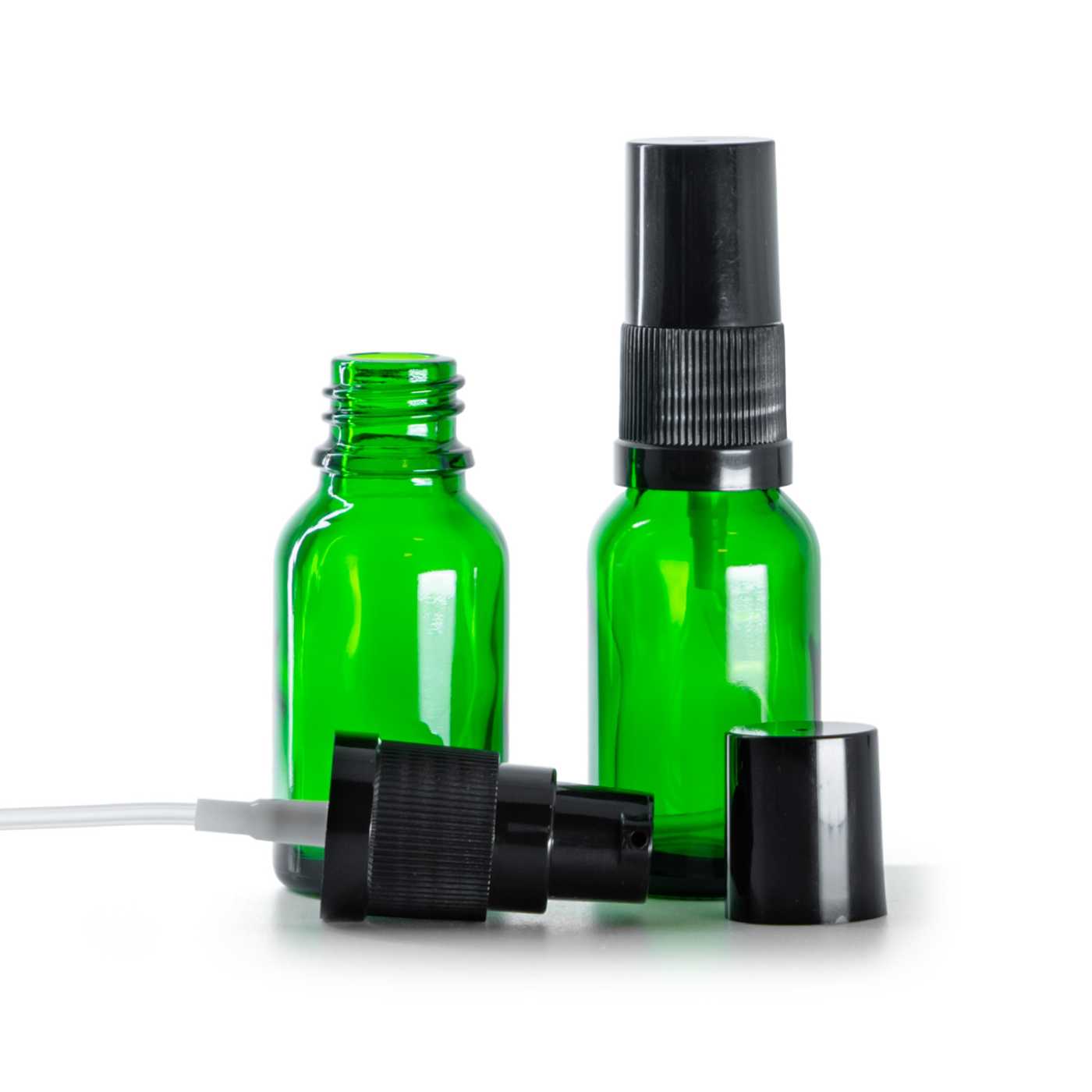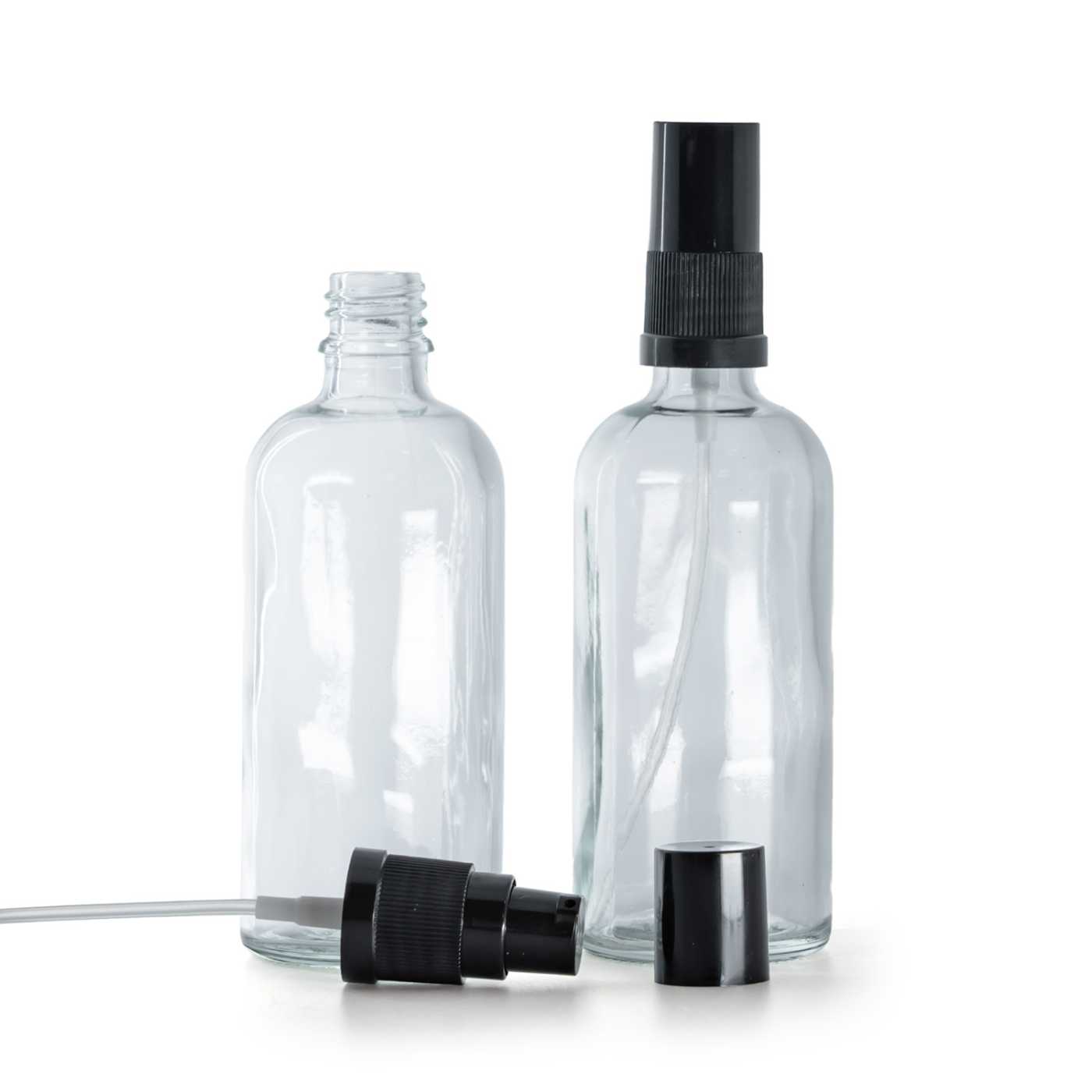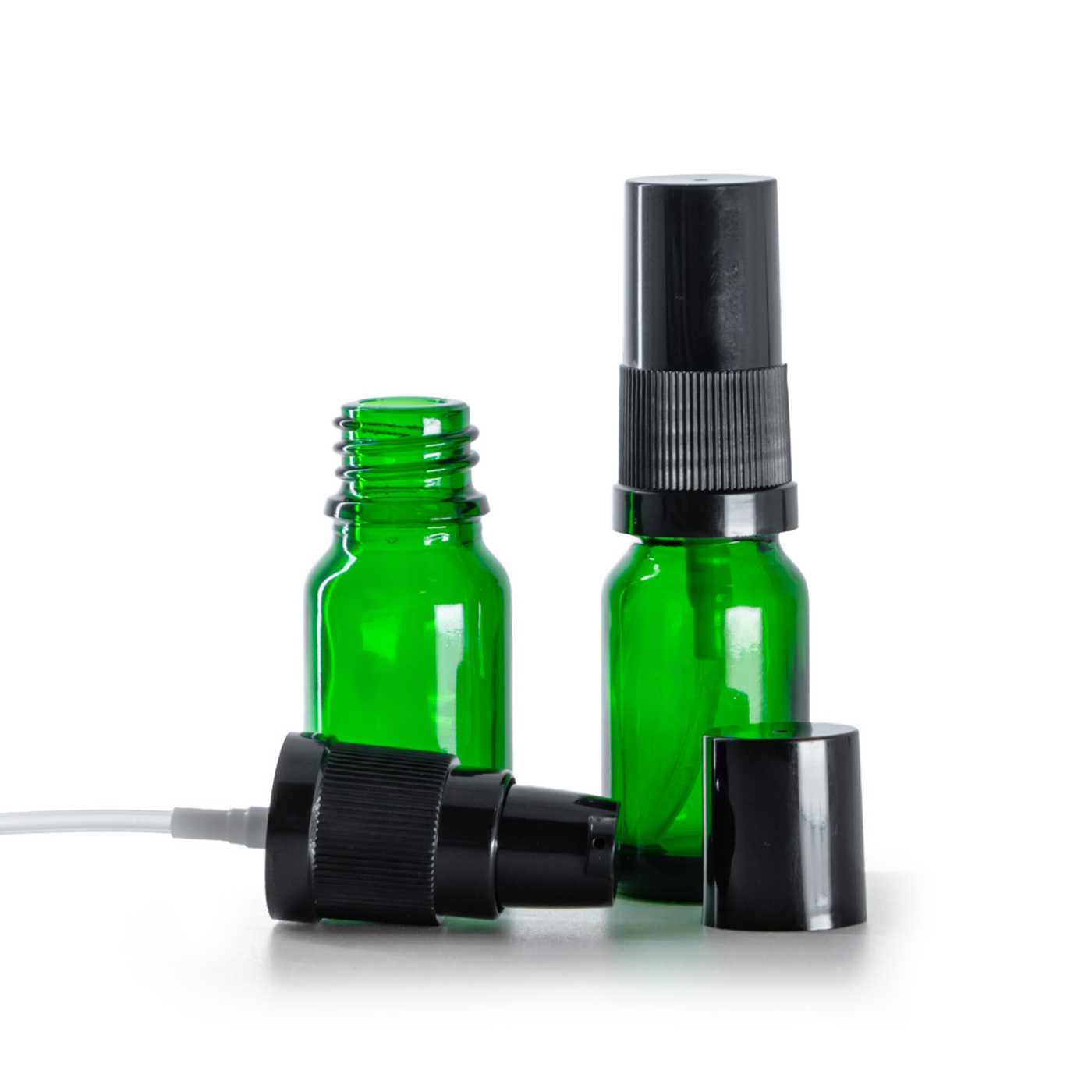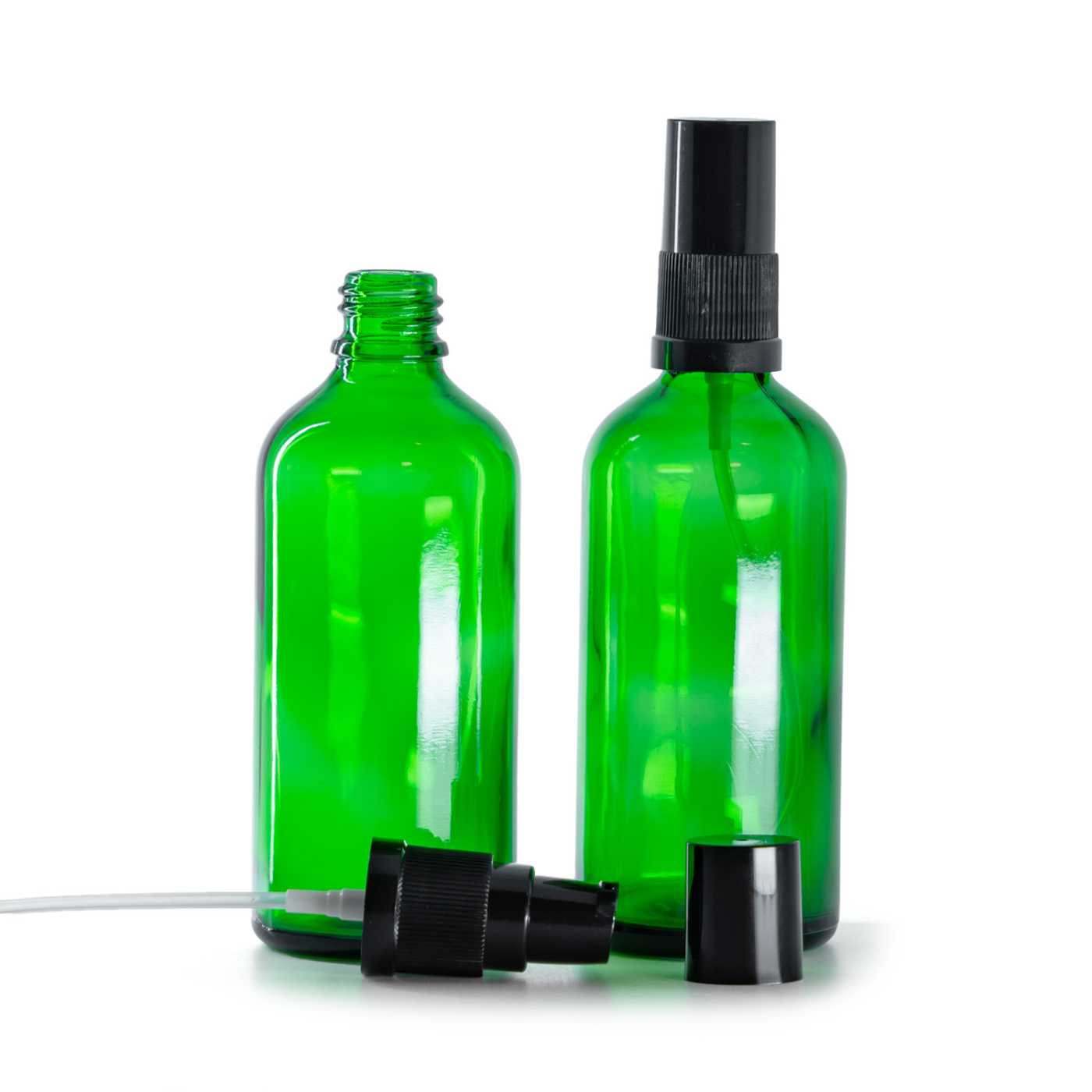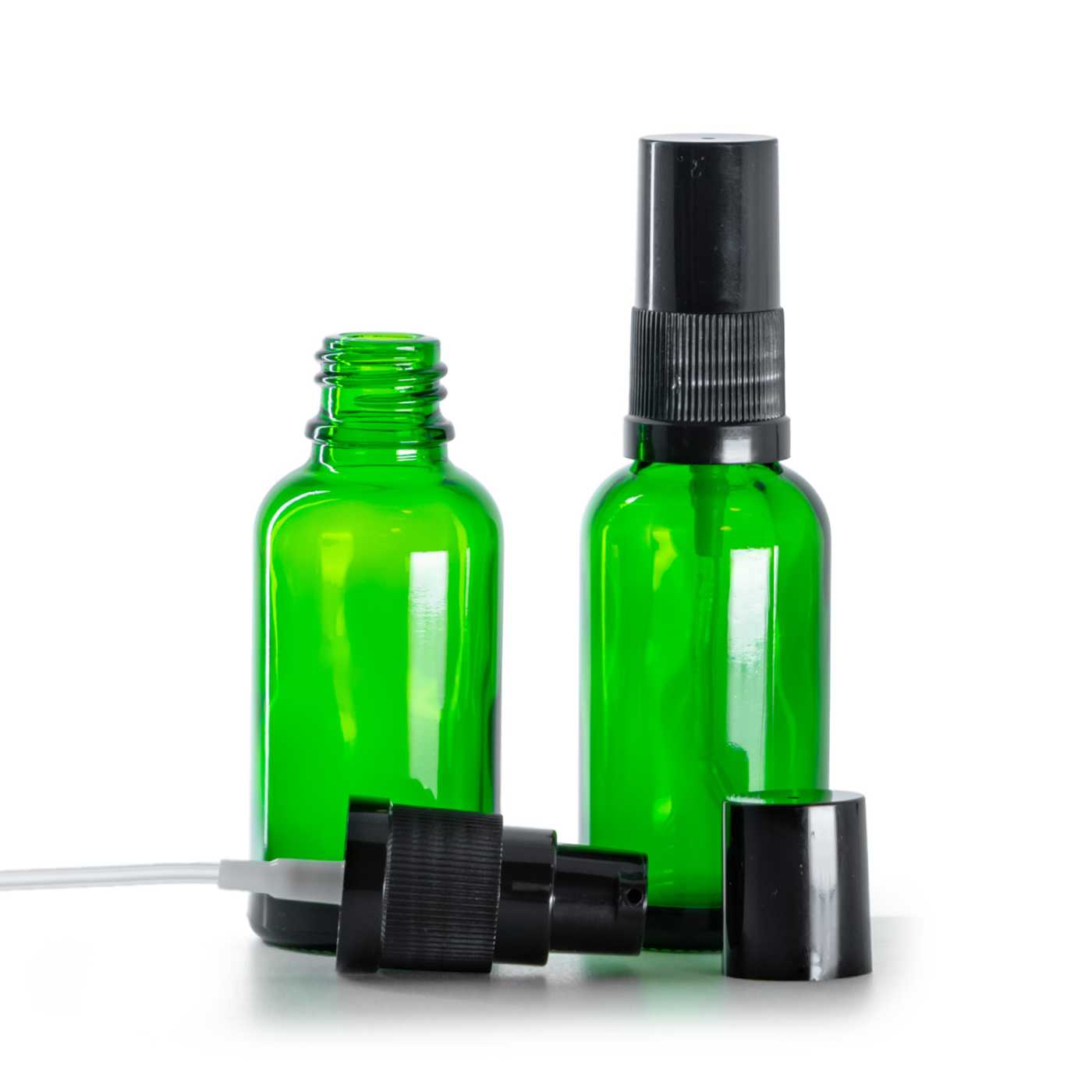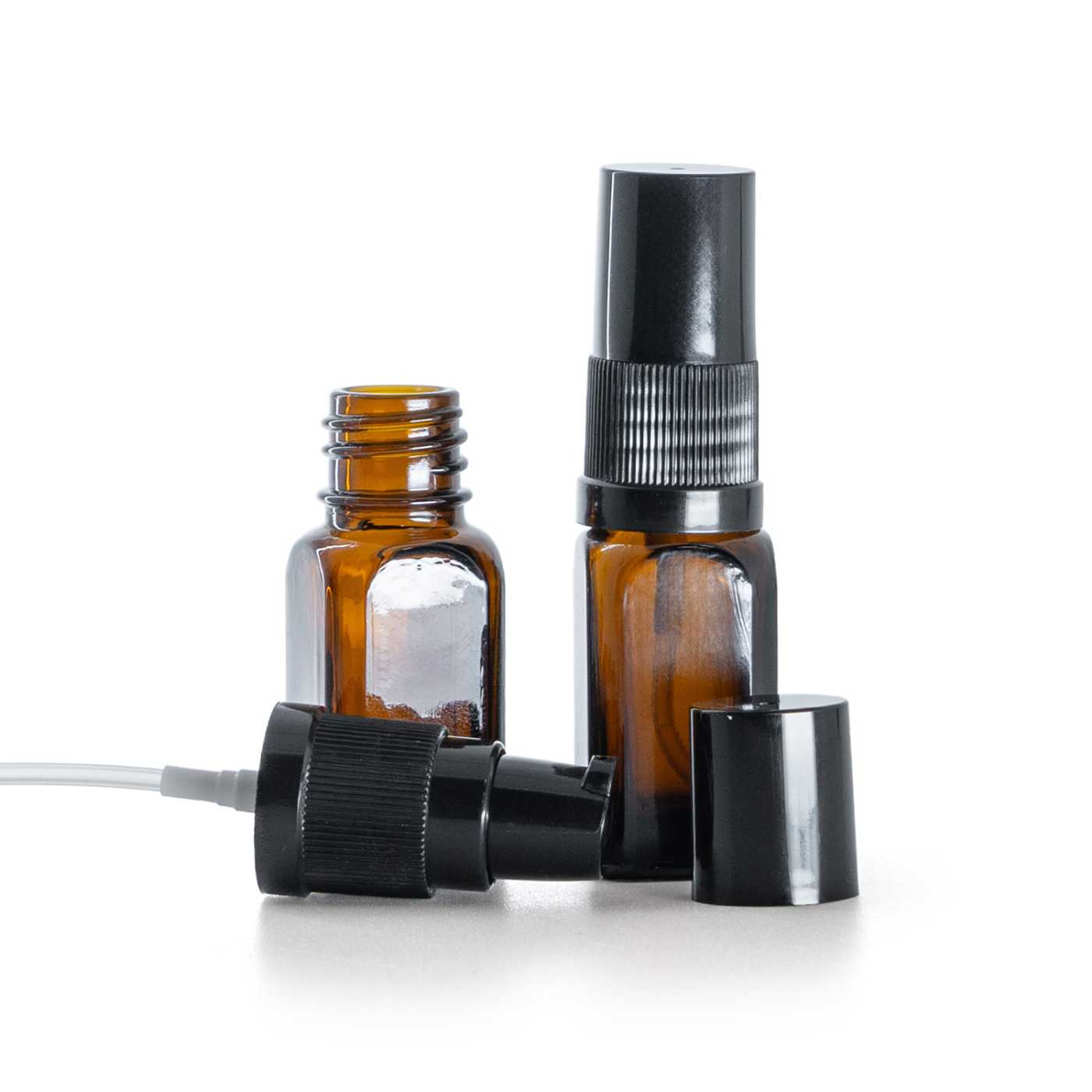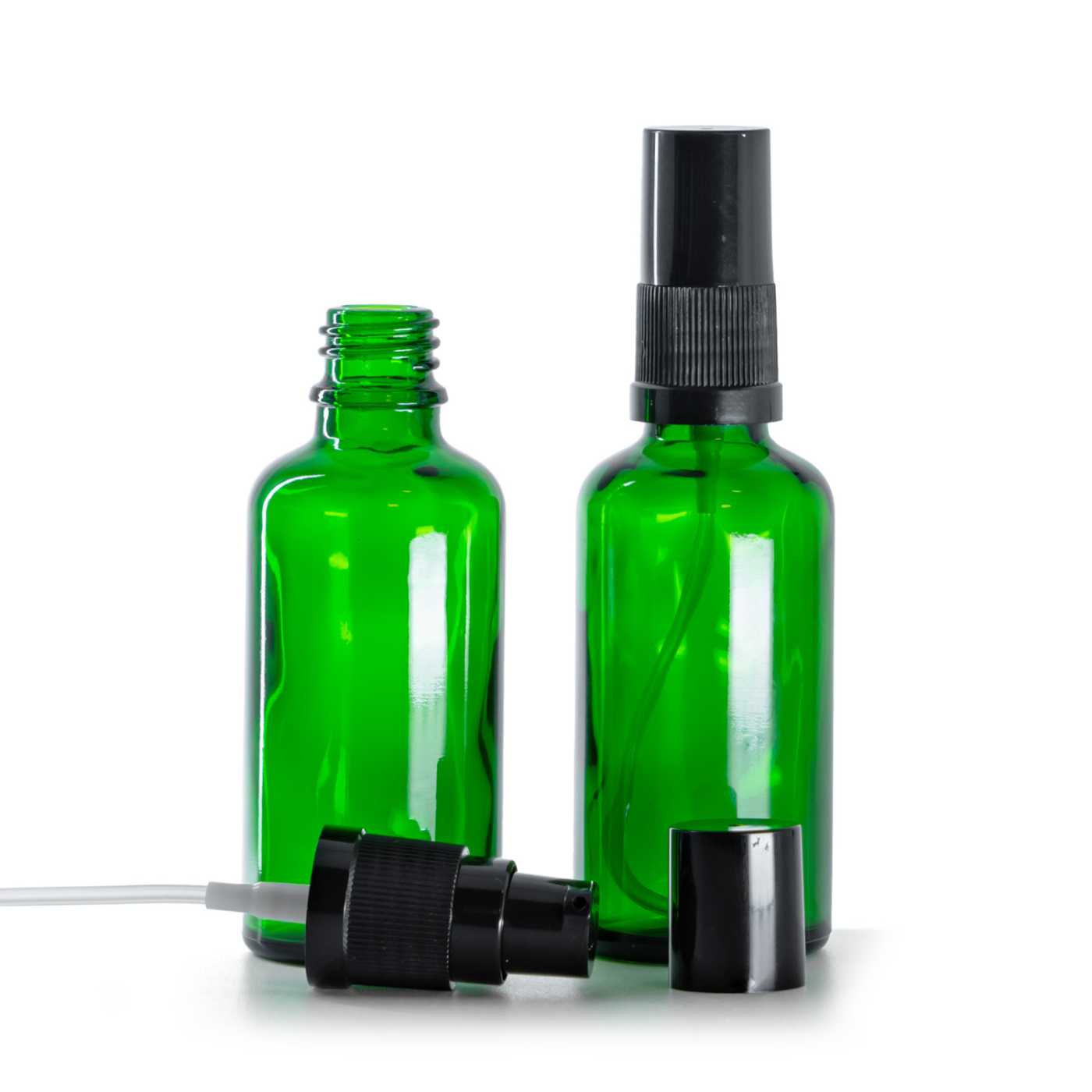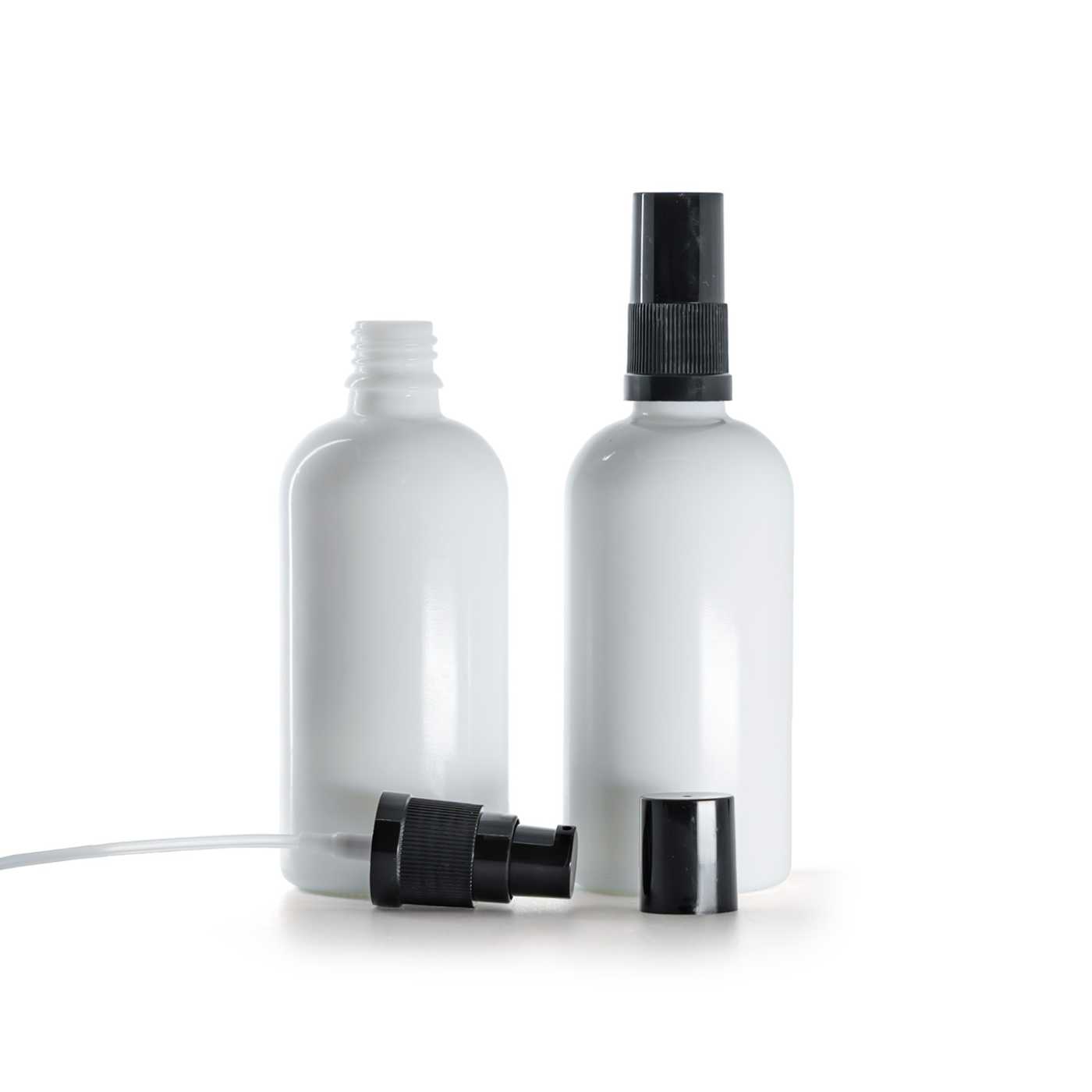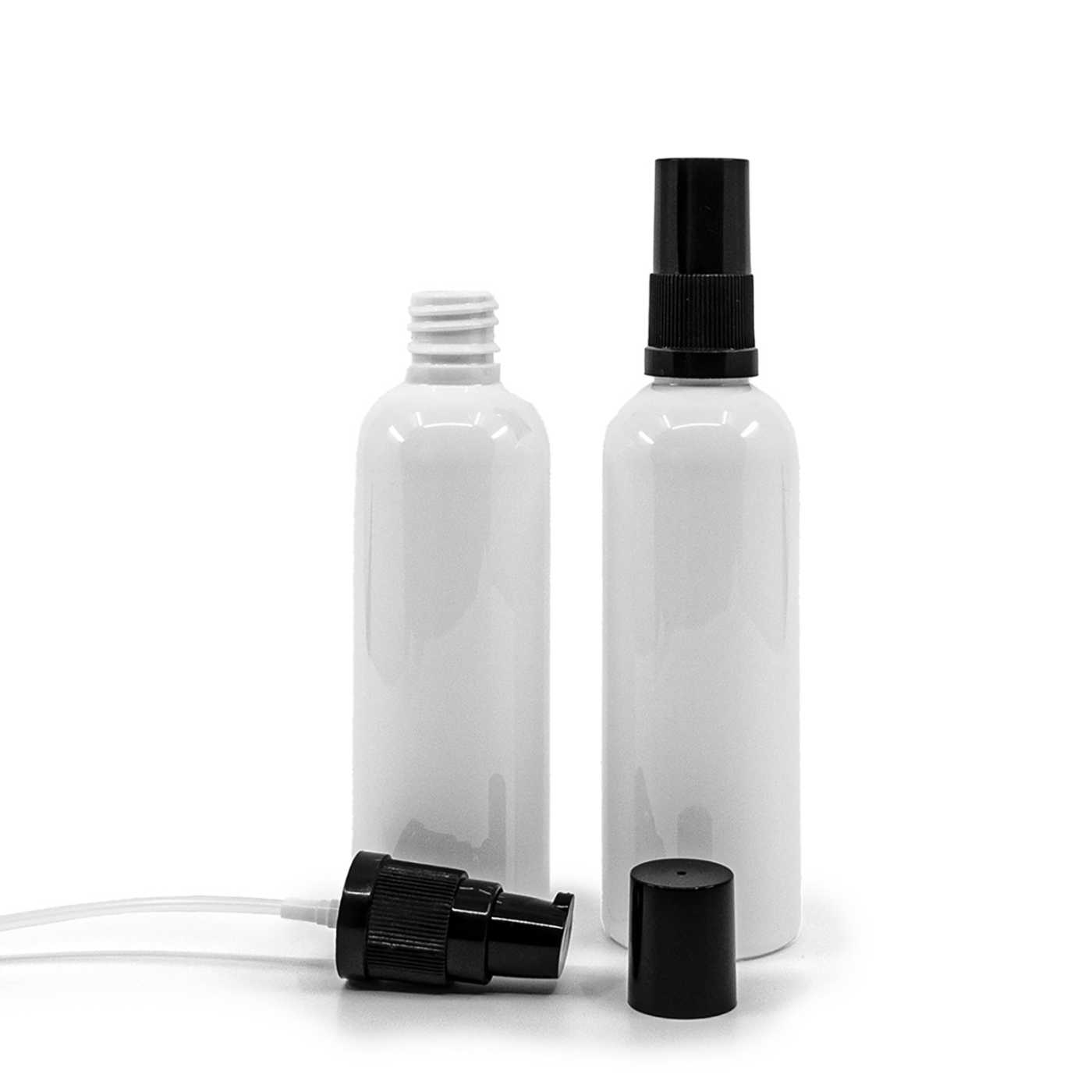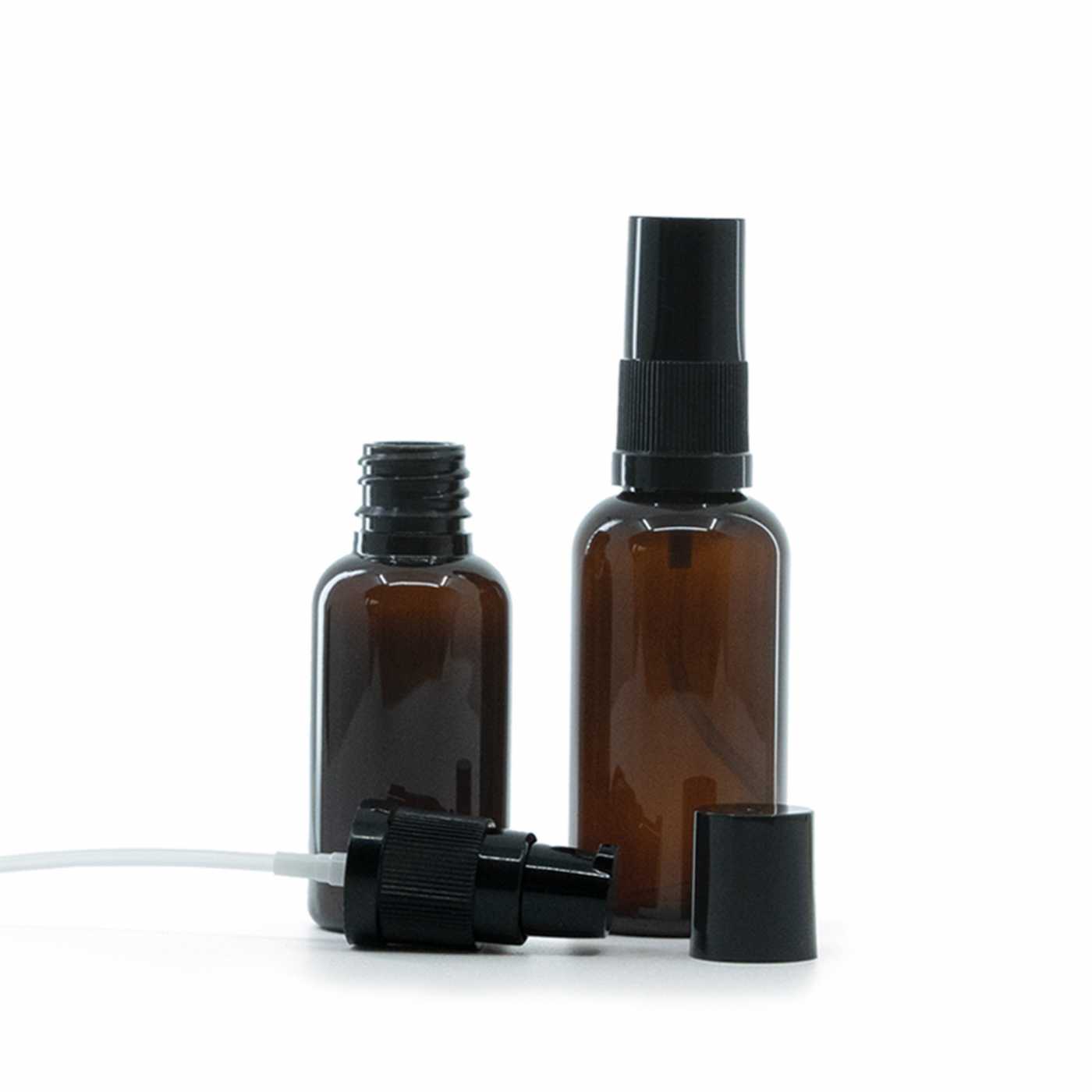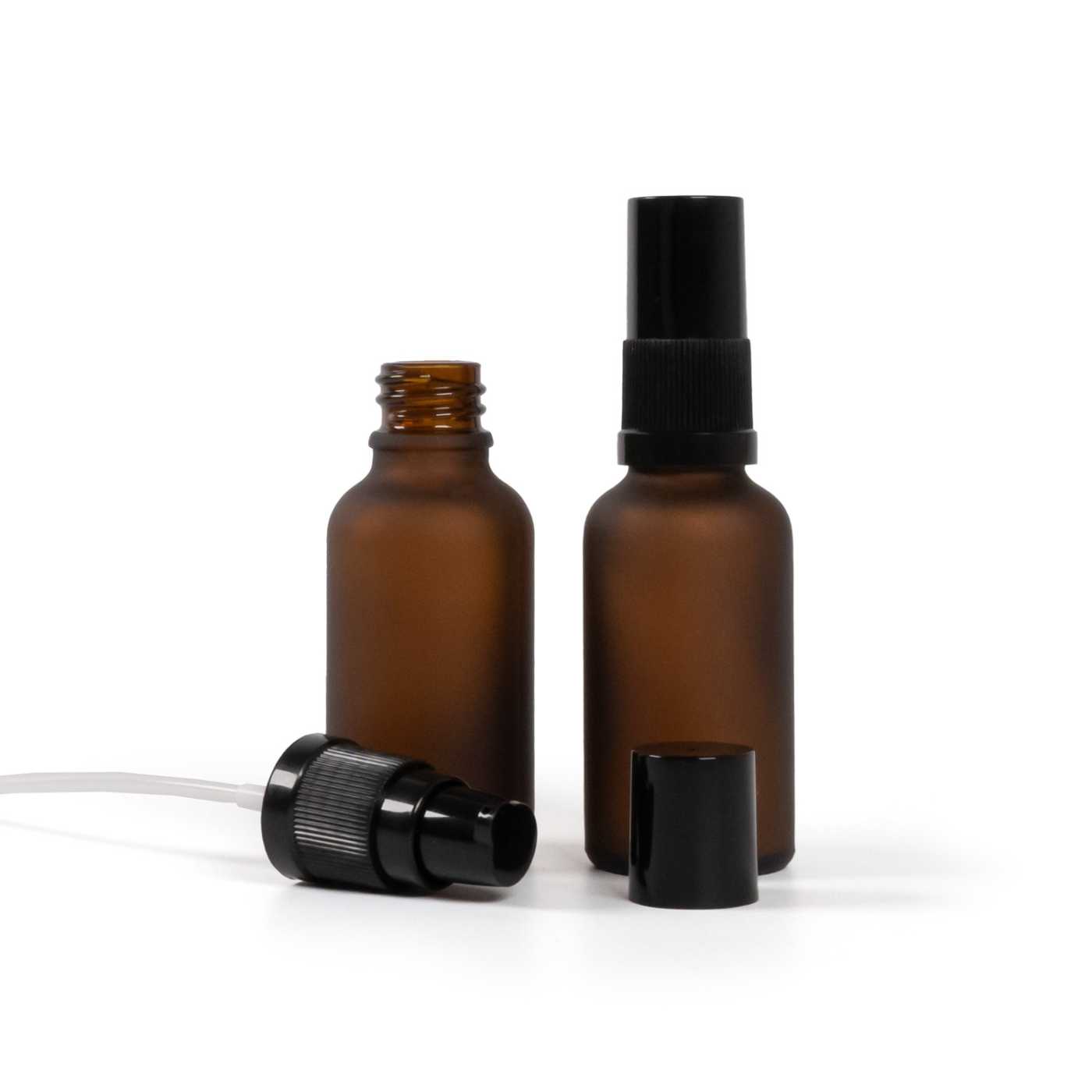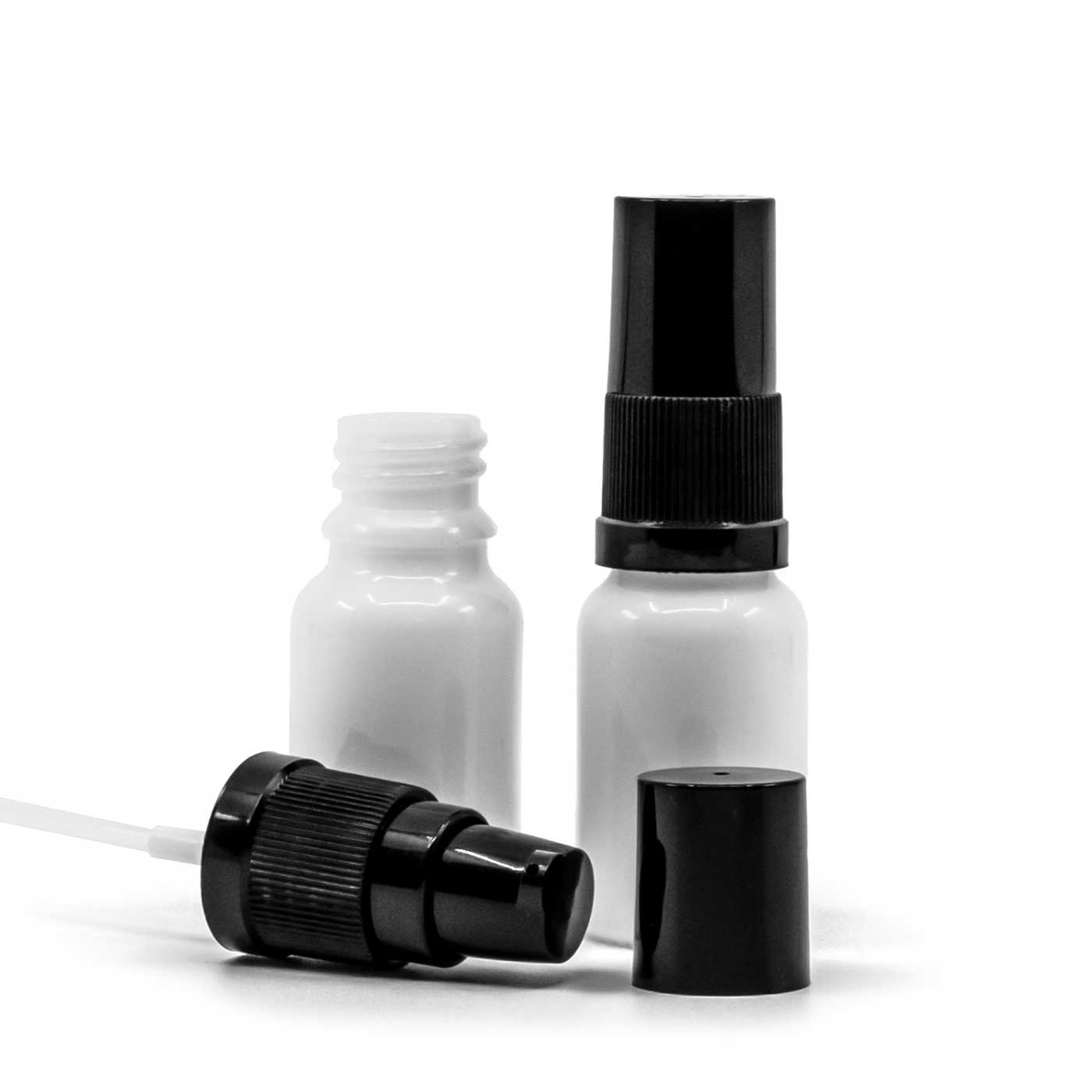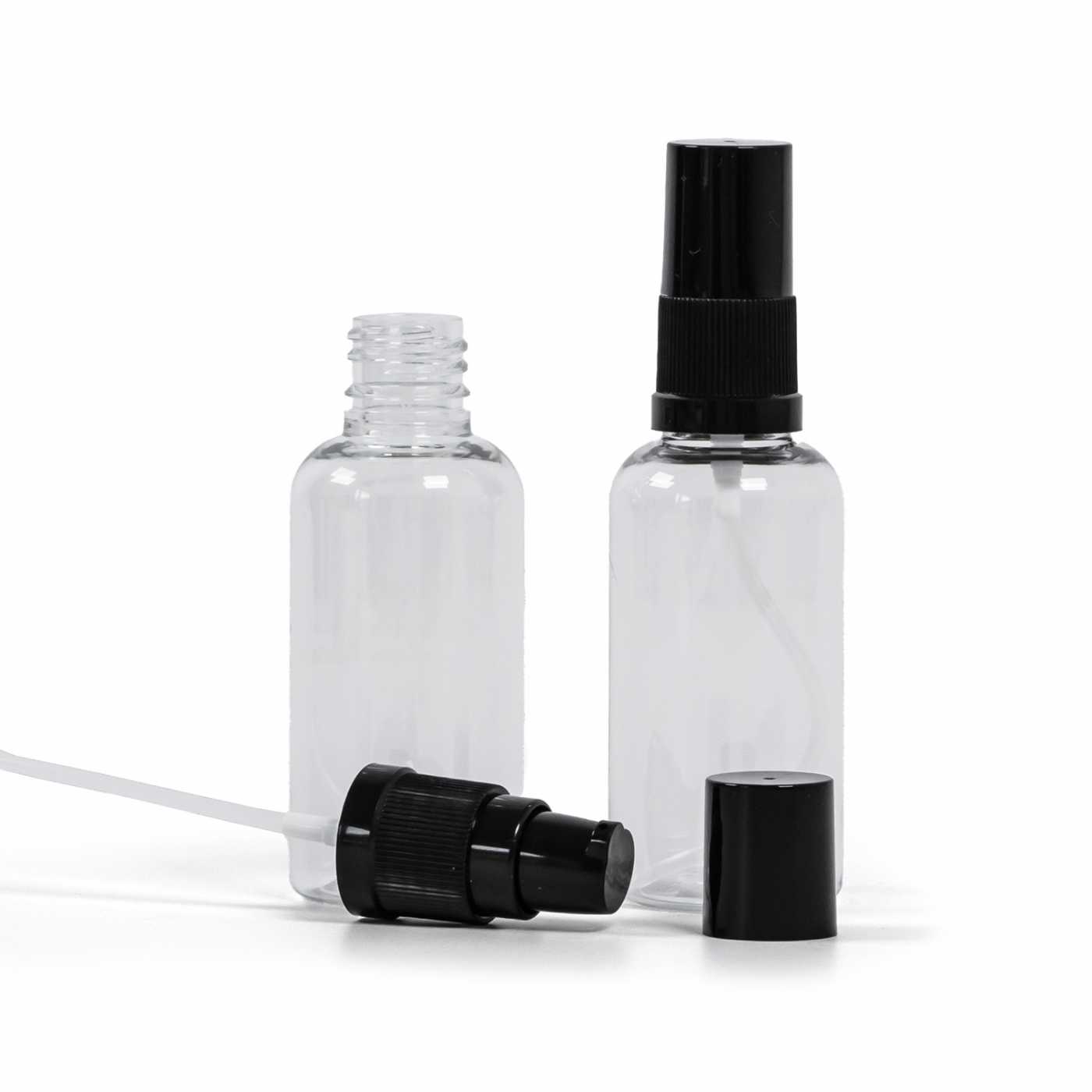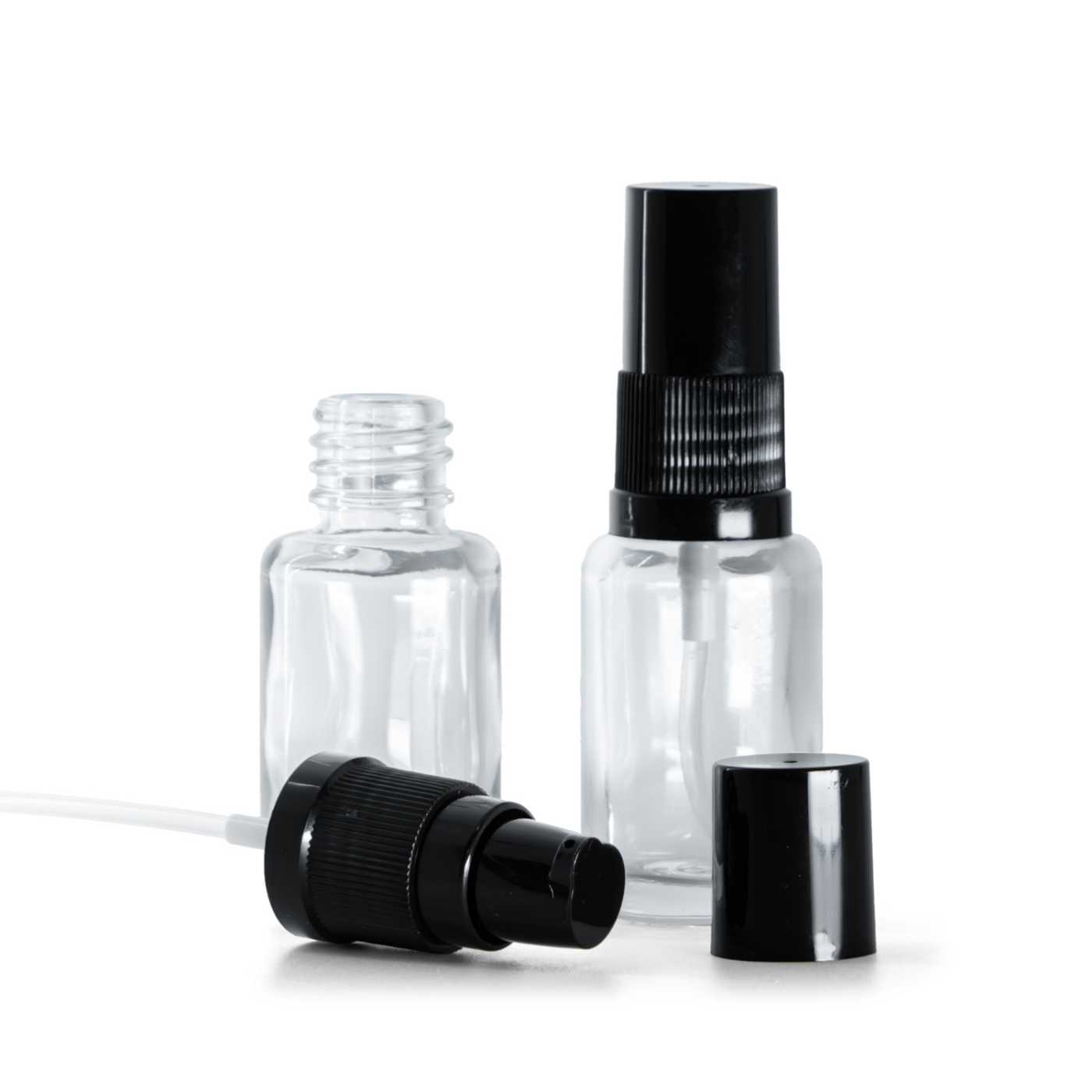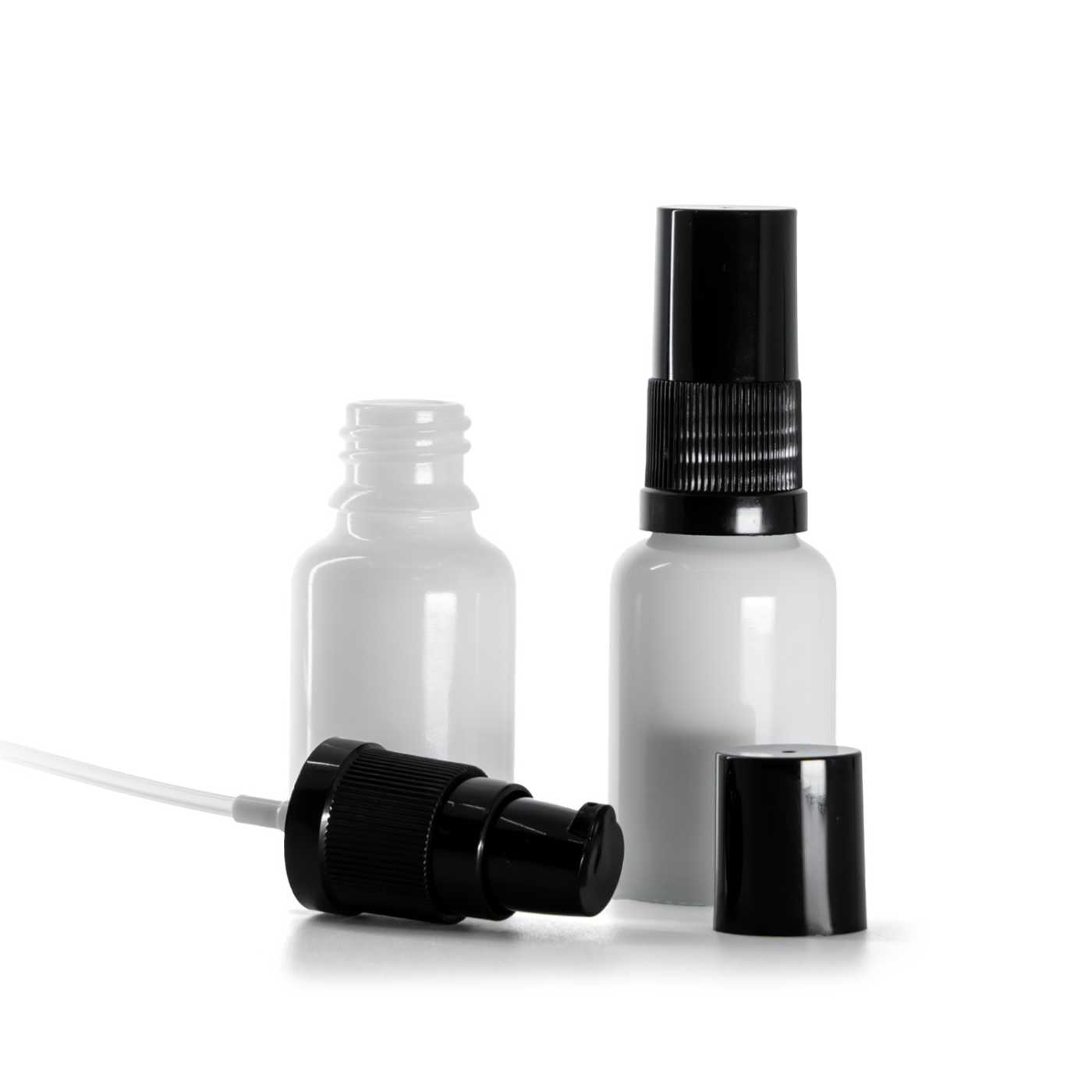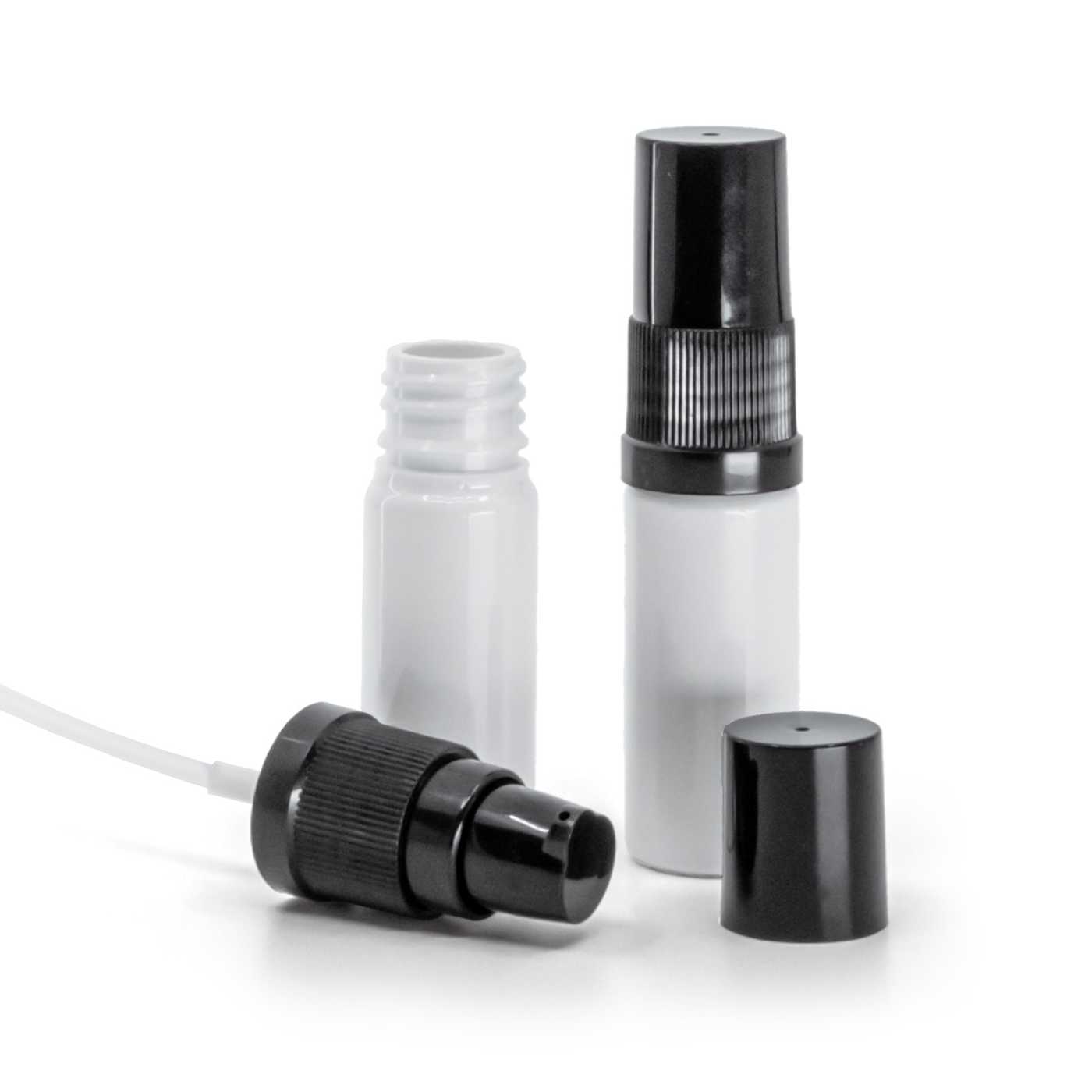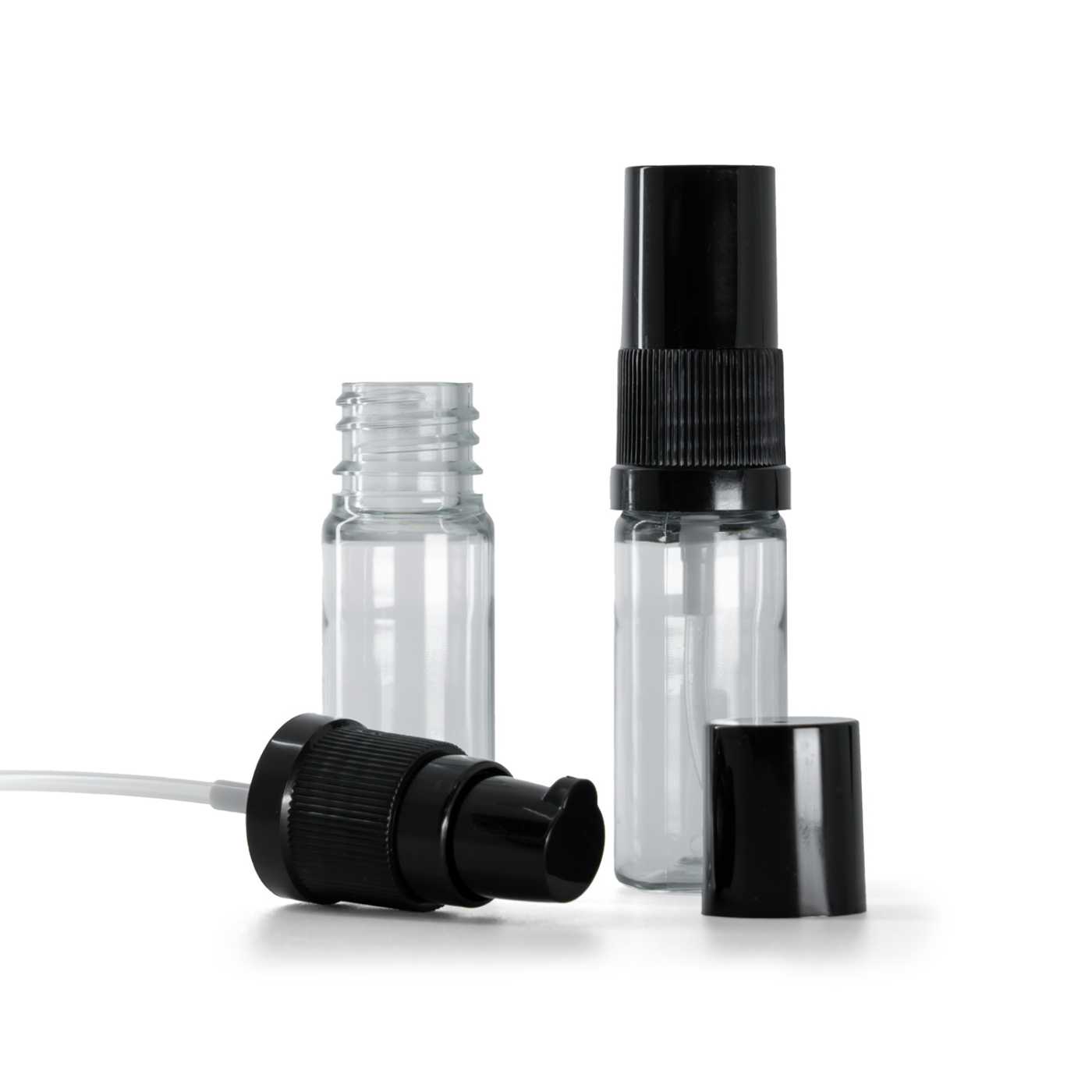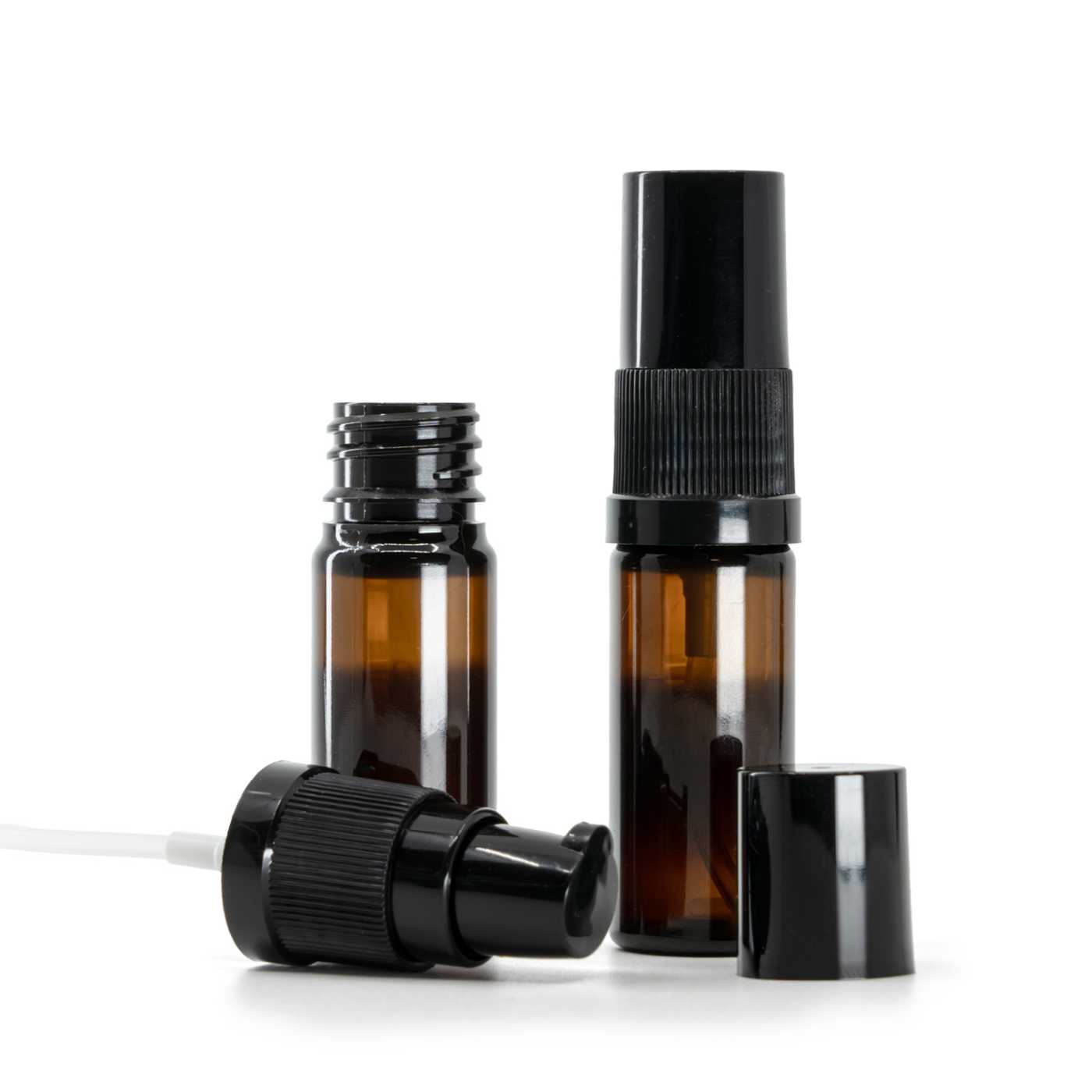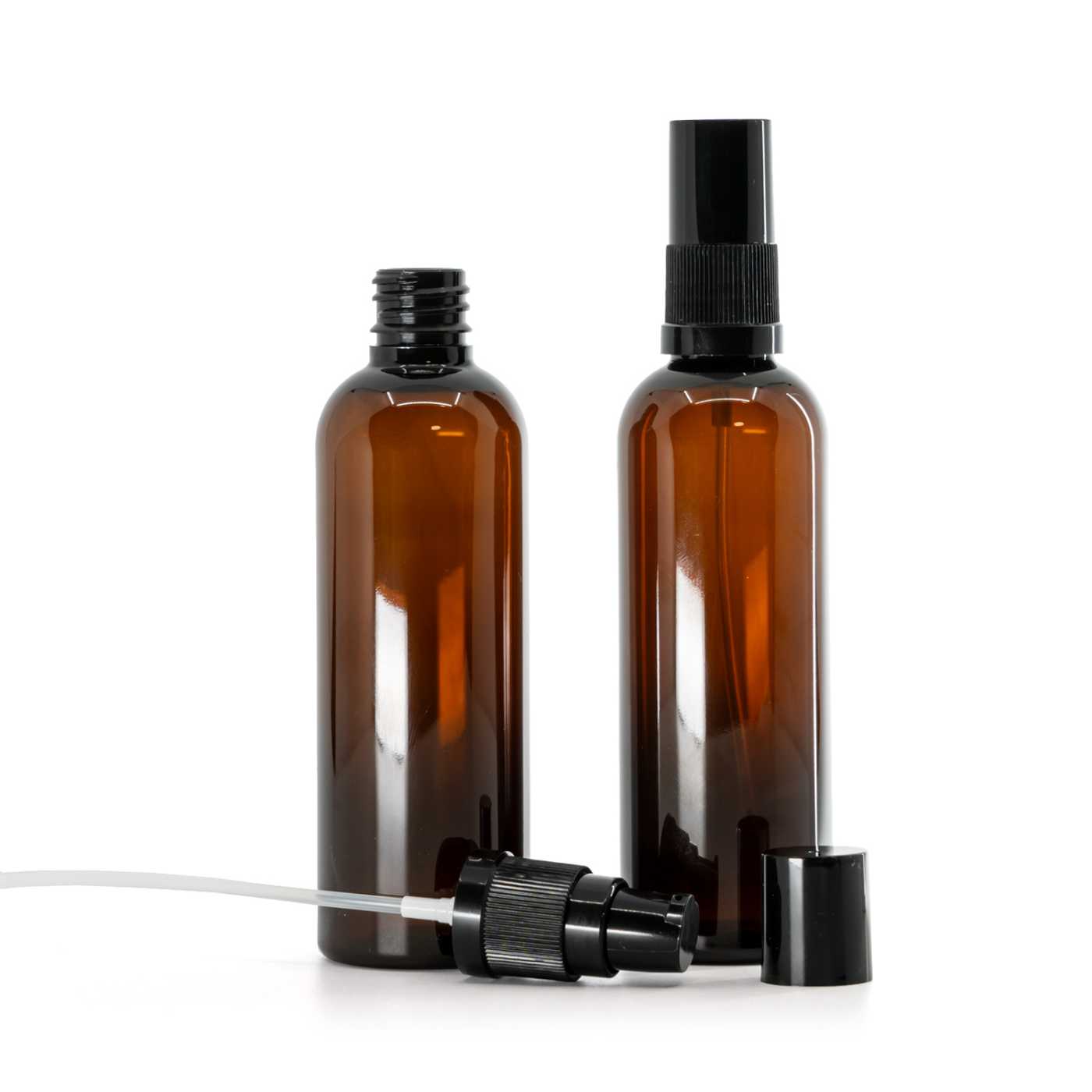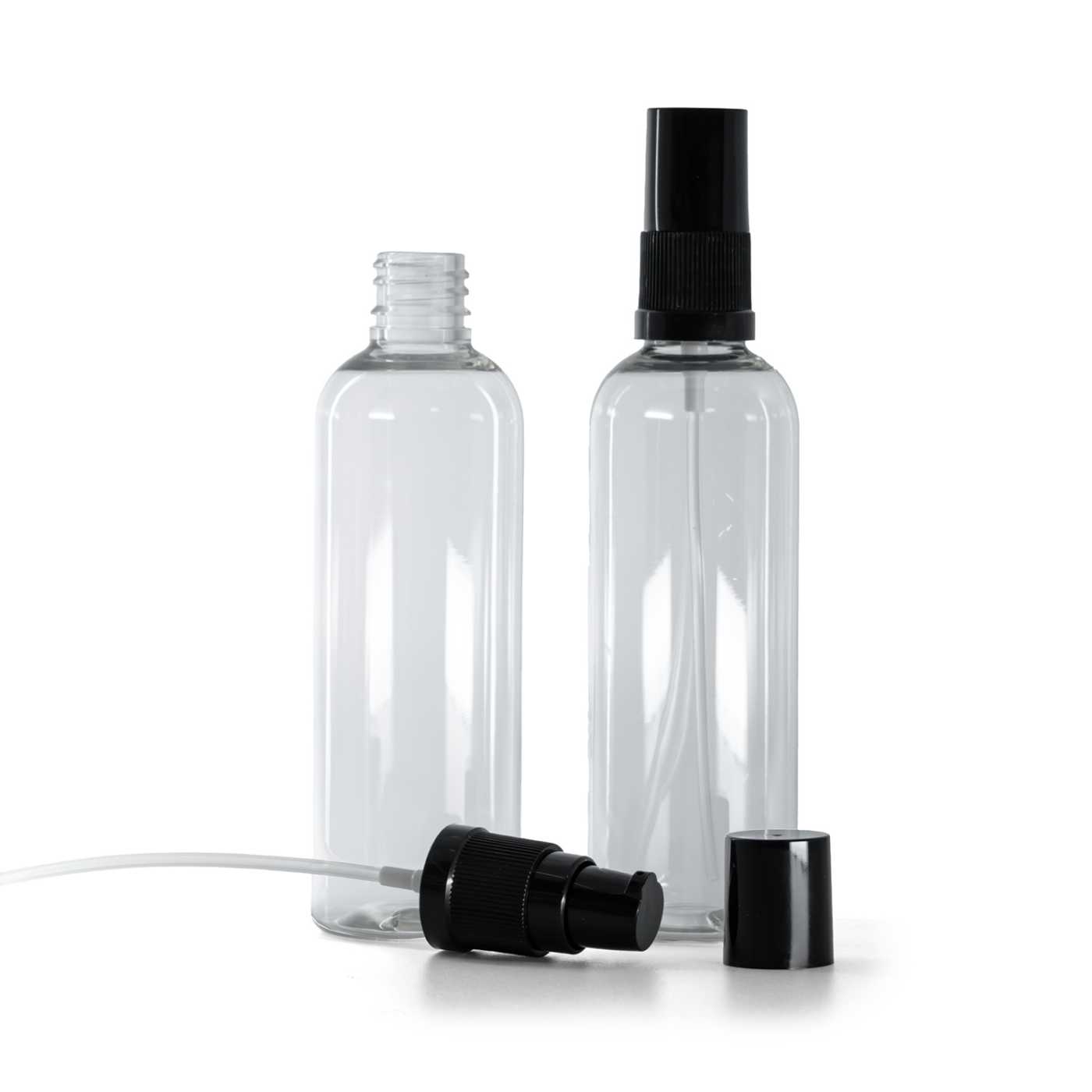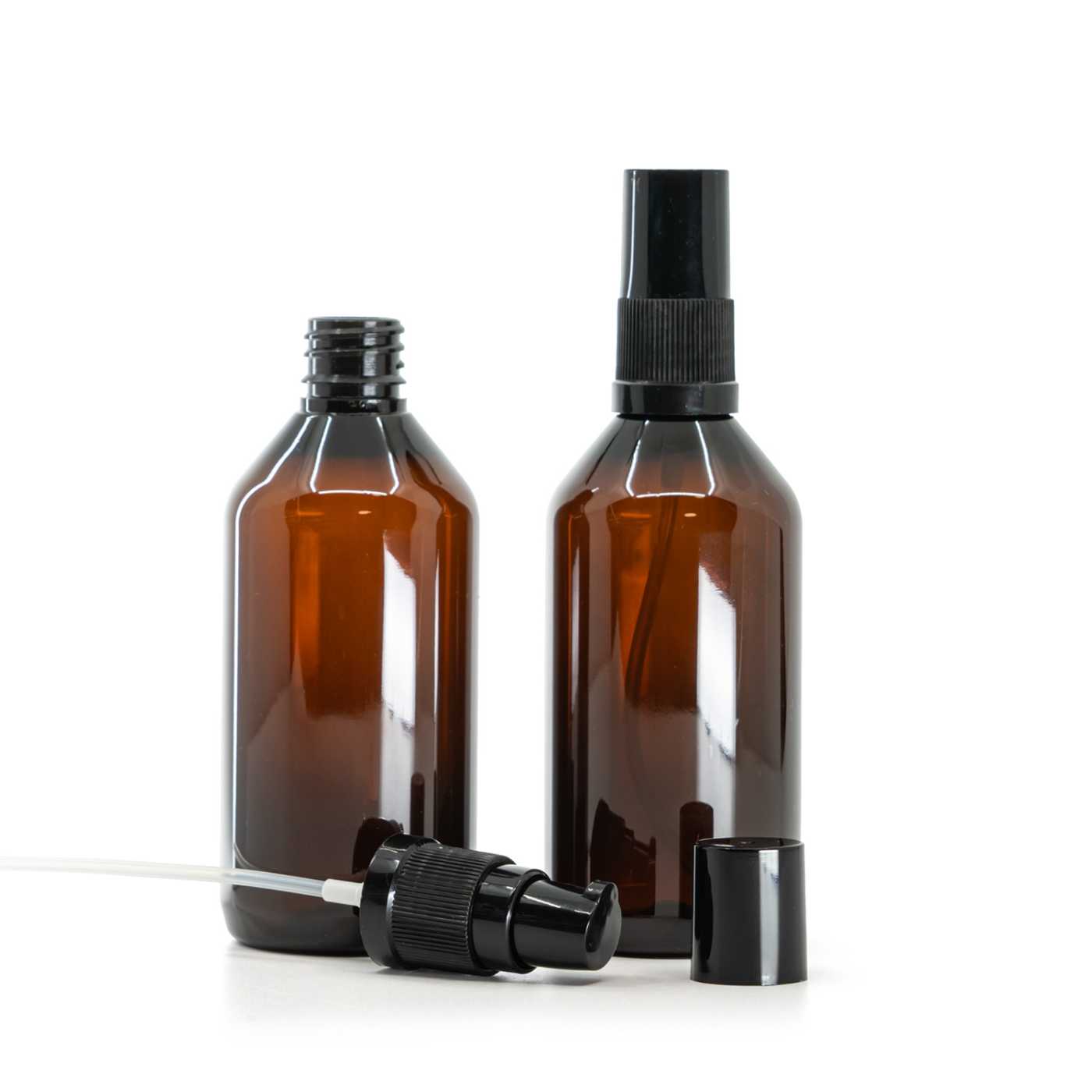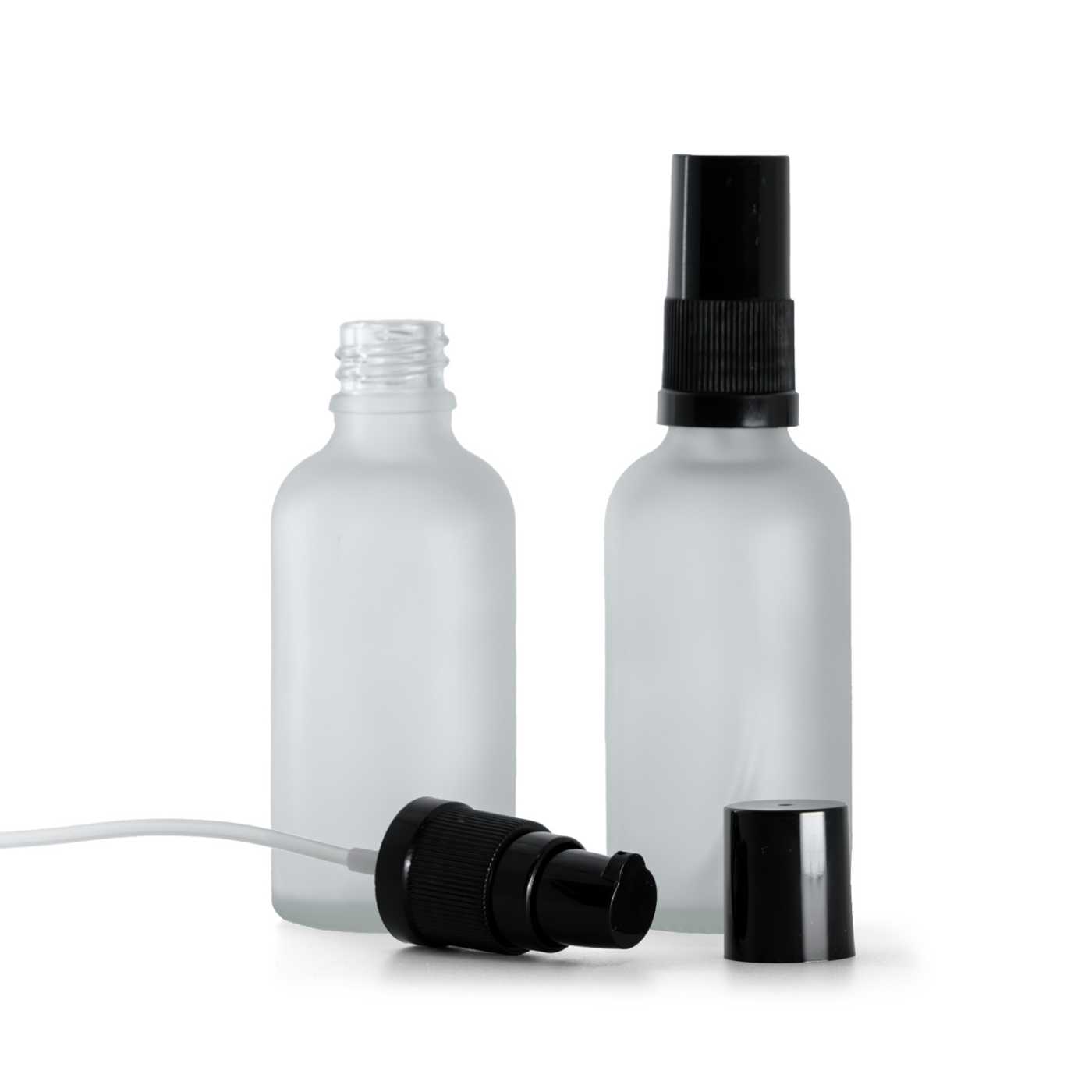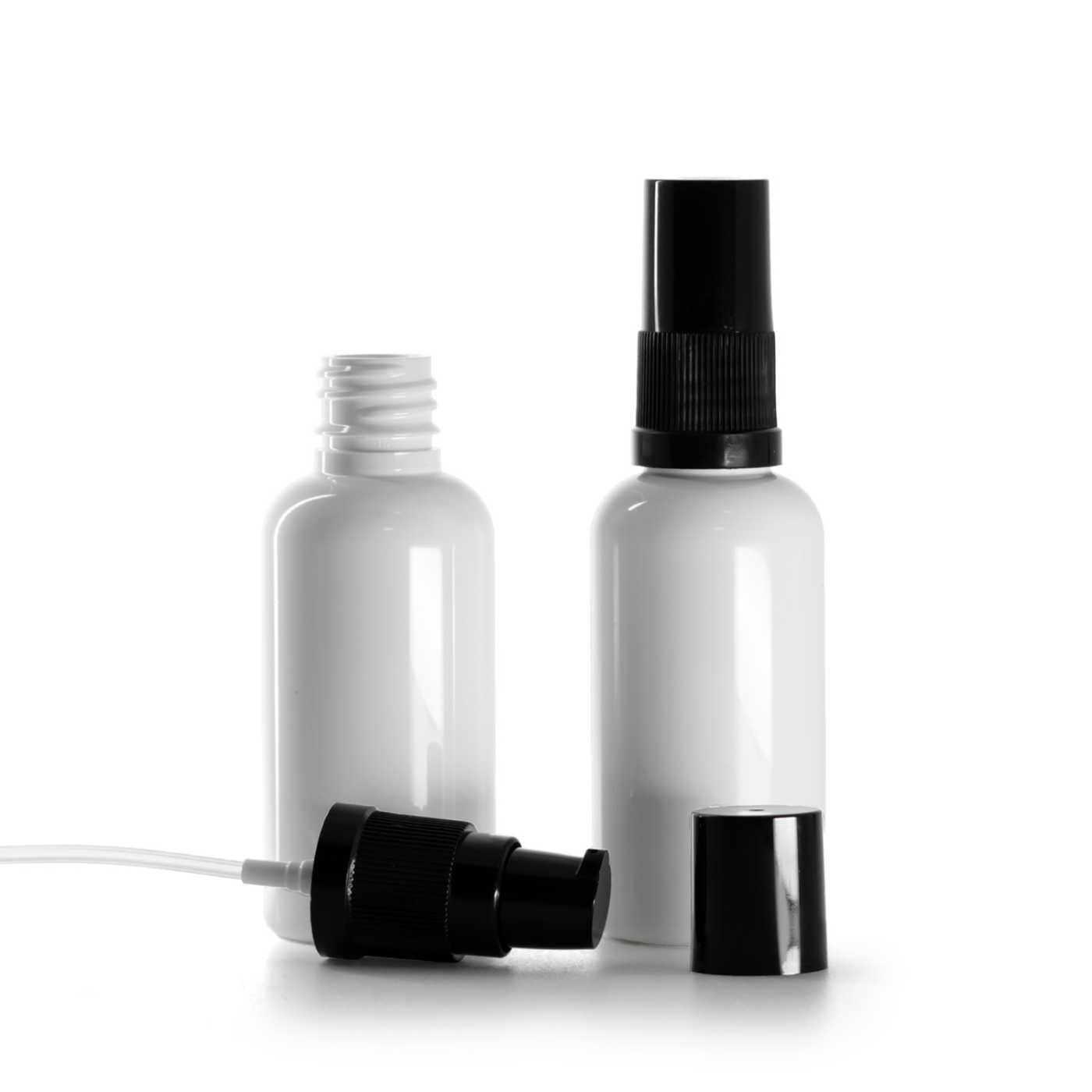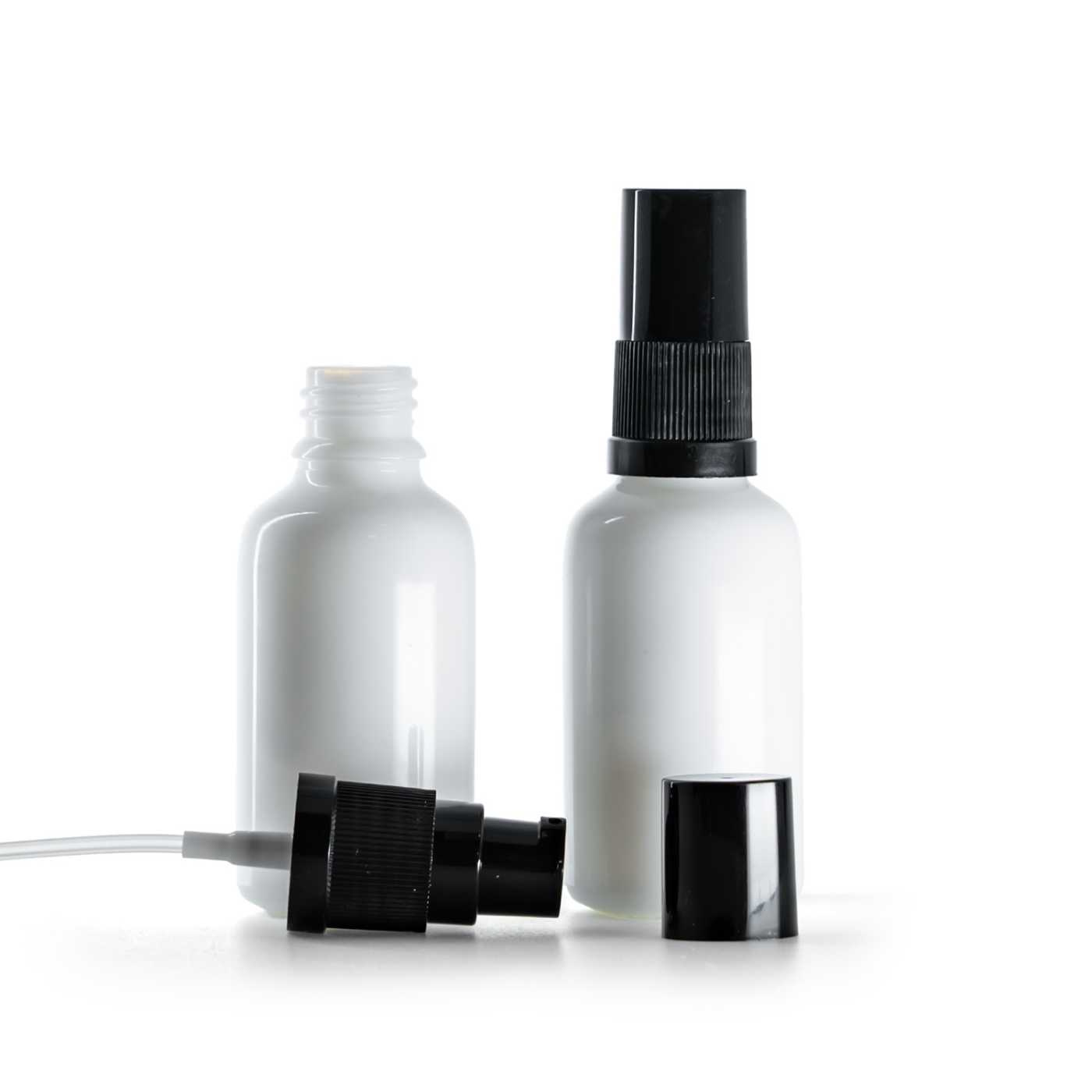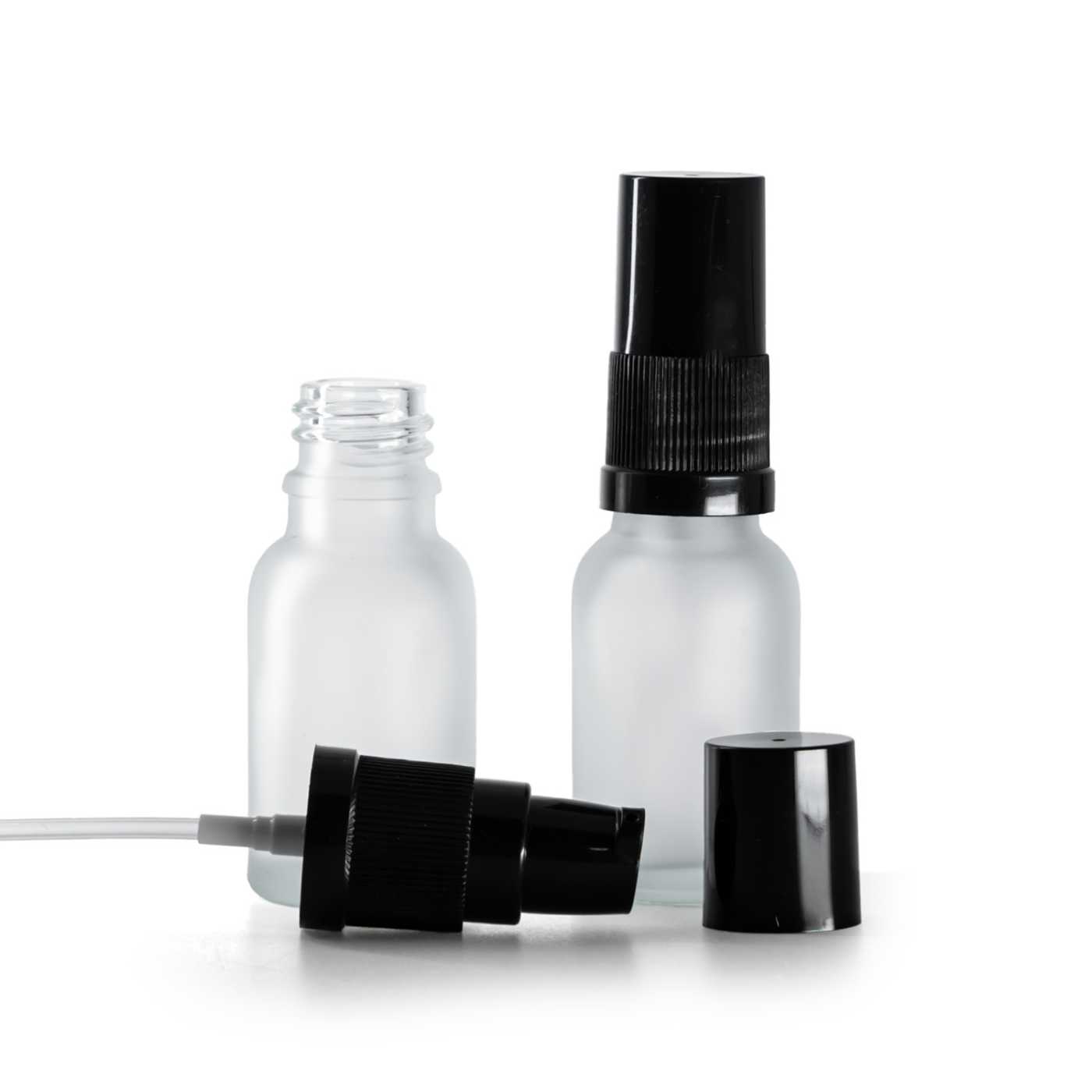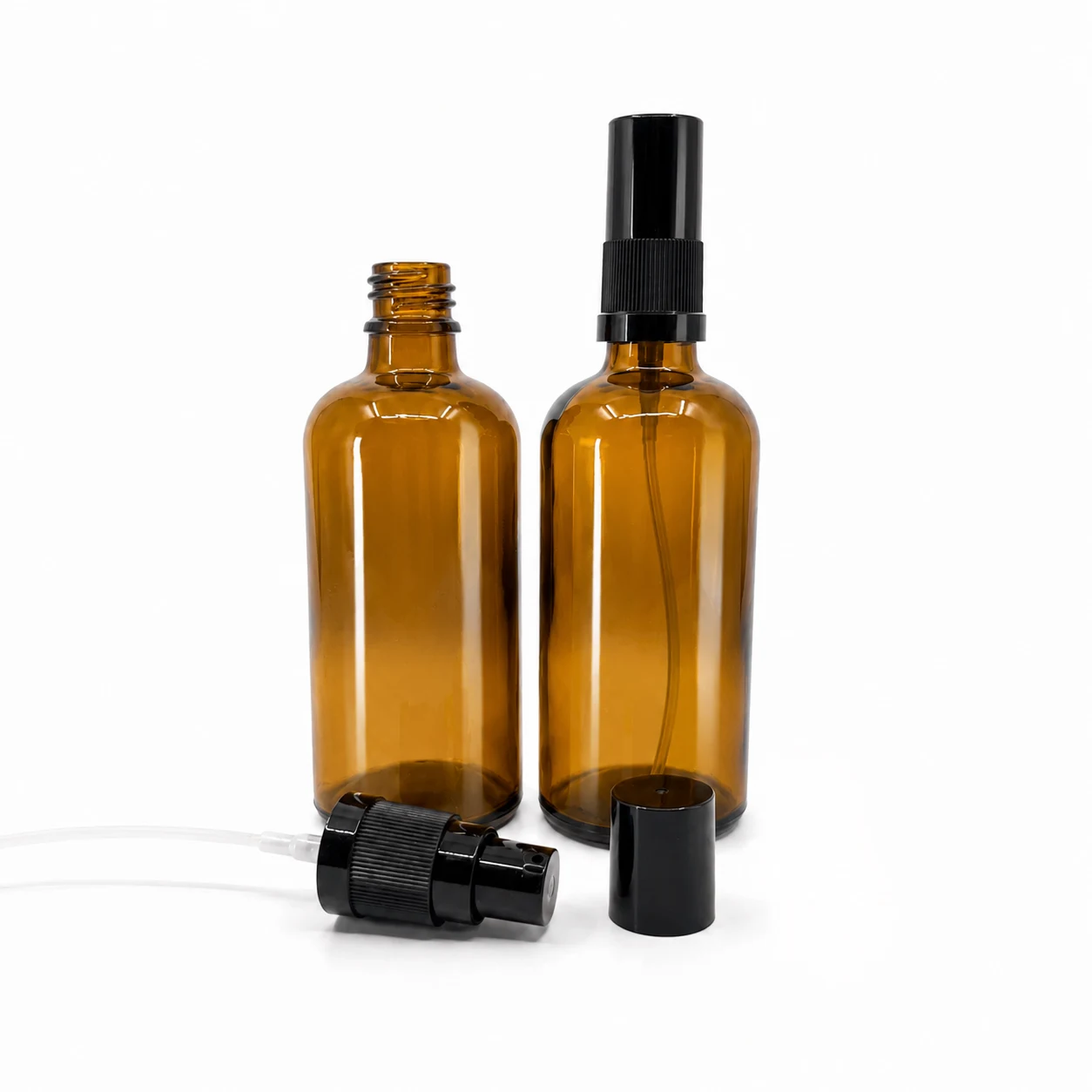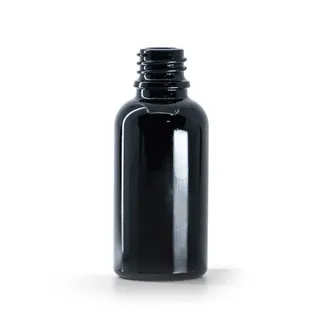
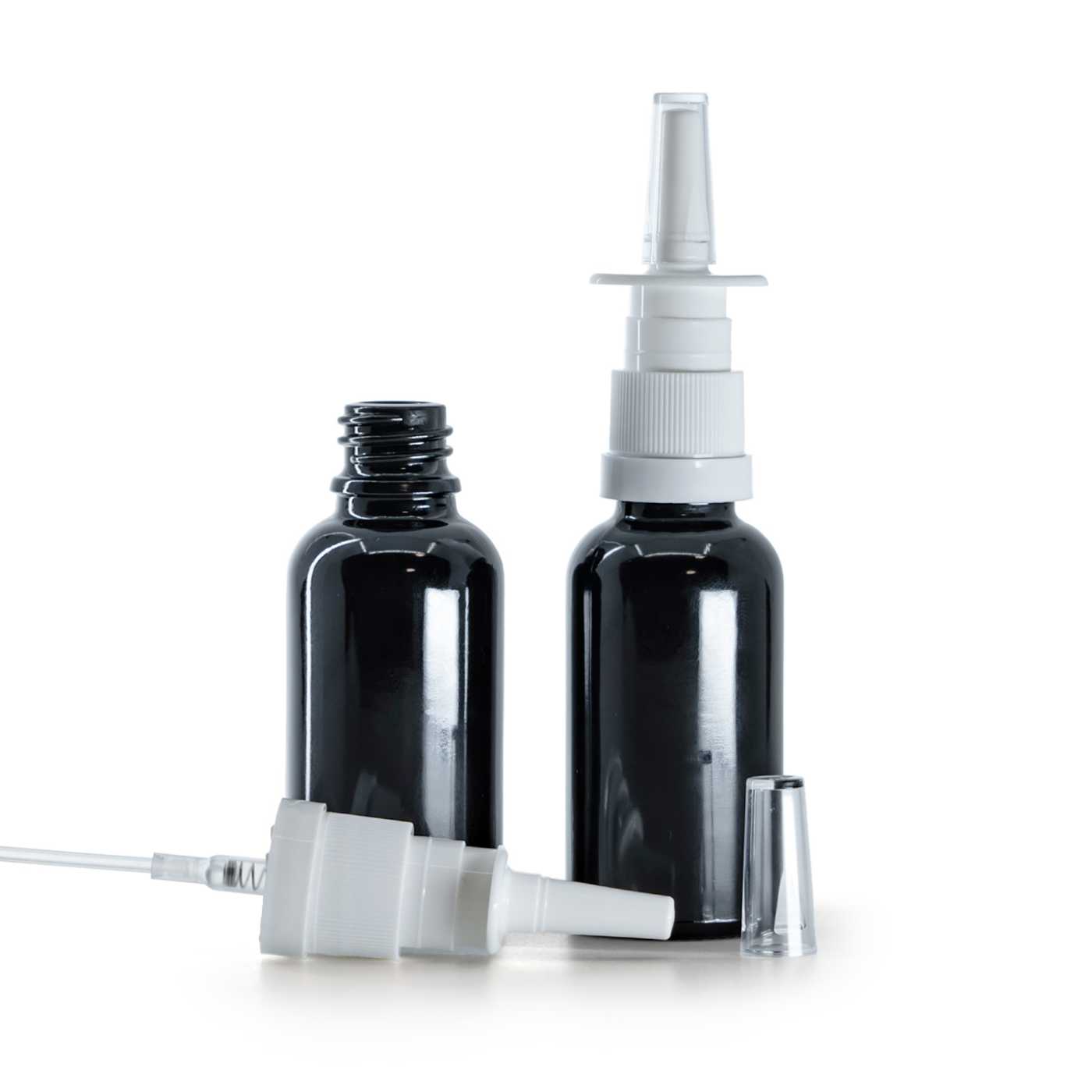
Gloss Black Glass Bottle, White Nasal Spray, 30 ml
Pre-order€1.40

GLASS BOTTLES 30 ml
Pack size10 ml15 ml30 ml50 ml100 ml
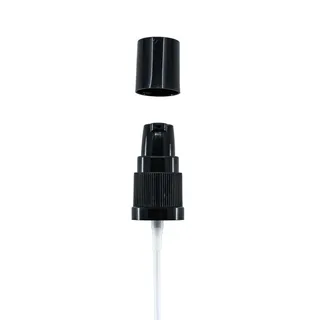
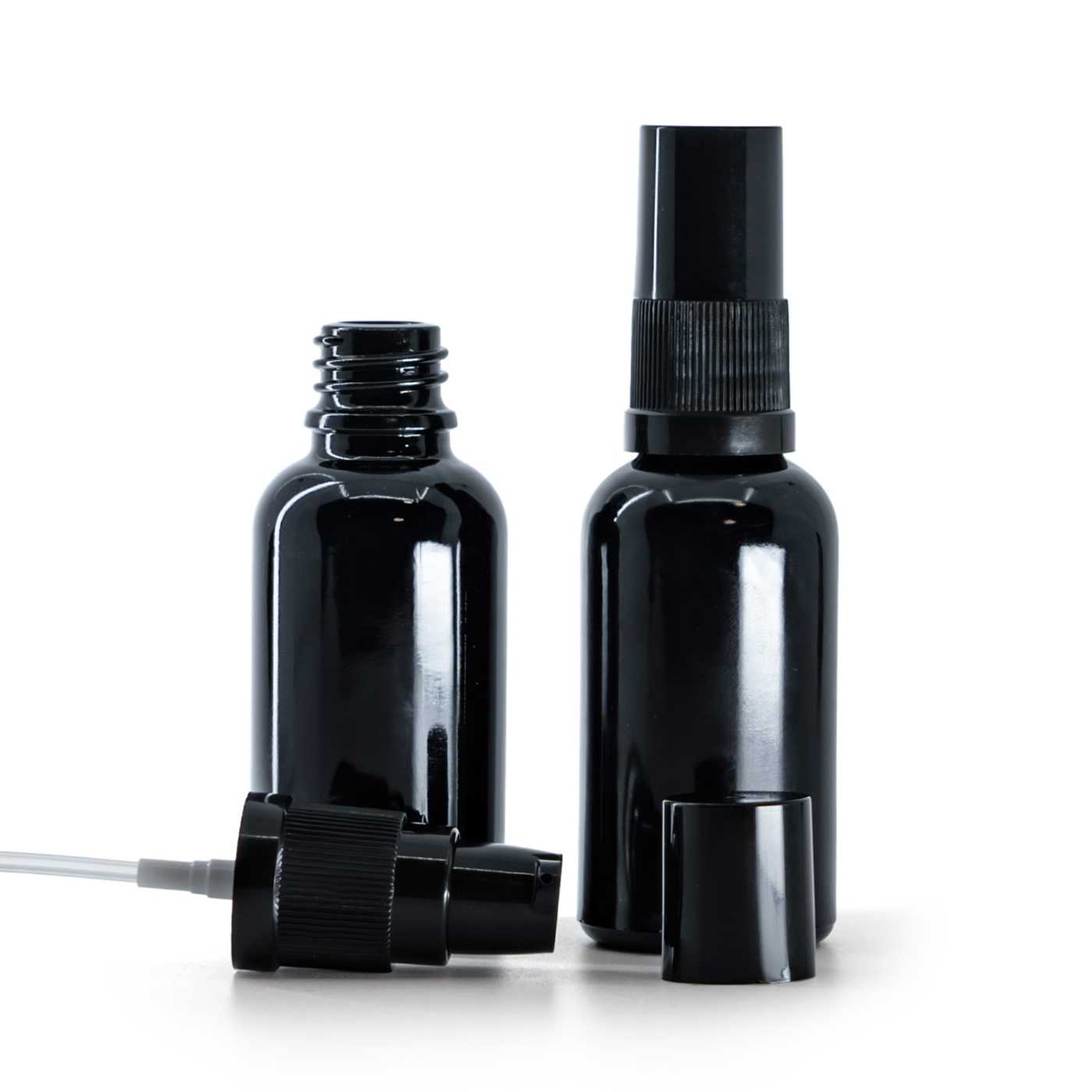
Glass cream dispenser bottle 30 ml is a ready-made combination of a black glossy glass vial and a plastic pump dispenser with a black cap, designed for creams, facial emulsions and body lotions in small packaging. full description
Lowest price in the last 30 days: €0.92
Total for 1 pcs: €0.92
Quantities add up across all combinations of this bottle.
Glass cream dispenser bottle 30 ml is a ready-made combination of a black glossy glass vial and a plastic pump dispenser with a black cap, designed for creams, facial emulsions and body lotions in small packaging. The opaque black glass protects the contents from light, the dispenser pumps the product without reaching fingers into the bottle, and the overall appearance is cohesive in black. The 30 ml volume is practical for facial and eye creams, serums with a creamy texture or concentrated products used in small doses.
The set is declared as suitable for contact with cosmetics. The direct food contact certificate applies separately to the glass bottle only; the set as a whole is intended for cosmetic products.
The cream dispenser is designed for products of a creamy to liquid consistency that can pass through the tube and mechanism: facial and eye creams, light to medium-density emulsions, body lotions, creamy serums, hand creams in travel size, or gel creams. Thanks to the smaller volume, it is also suitable for more expensive formulations with a higher proportion of active ingredients, where customers will appreciate that the contents are not exposed to light or air as they would be in an open jar.
The set is less suitable for very thick ointments, balms and butters that the dispenser cannot draw up, and for watery tonics where the dose is difficult to control. For these products, jars or bottles with a spray or dropper are a better fit.
Before filling, test the consistency of the product directly in this dispenser. The emulsion should be fluid enough for the dispenser to draw it up reliably even after several days, when the viscosity has stabilised.
Nominal volume is the amount for which the bottle is designed for standard filling. Total volume to the brim is the physical capacity up to the neck. Both figures are listed in the specifications. The difference between them is the allowance for the tube and dispenser mechanism and for any expansion of the contents when the temperature changes. The bottle should therefore be filled to the nominal volume, not to the brim. If overfilled, the contents will be pushed out through the thread when the dispenser is attached, and the closure will not seal properly.
Before first filling, wash both the bottle and the dispenser, disinfect with isopropyl alcohol or ethanol and allow to dry completely. Residual moisture inside would dilute the product and burden the preservative system.
Do not fill the glass with hot product. Allow the emulsion to cool to room temperature. A sudden temperature difference can damage the glass, and warm contents in a sealed bottle would create a vacuum as they cool.
If the dispenser tube extends below the level of the base, trim it so that it ends just above the bottom. The dispenser will then draw out almost all of the contents and will not jam. The dispenser is made of polypropylene, which handles common cosmetic ingredients well. For formulations with a high proportion of essential oils or solvents, we recommend testing the behaviour of the mechanism with the specific formula in advance.
The opaque glass does not show how much product remains. It is advisable to include an approximate number of doses on the label or in the instructions, or to note that a weaker pump stroke indicates that the contents are running low. Label dimensions are listed in the specifications; the glossy black surface requires an adhesive with good adhesion to glass.
Once attached, tighten the dispenser straight and firmly, but without excessive force. Cross-threading or an incompletely tightened closure are the most common causes of leakage during transport.
The bottle can be reused after thorough cleaning. The dispenser is more difficult to clean, so we recommend a new one when changing the product. For waste sorting, glass goes into the glass collection; the plastic dispenser is removed and sorted separately as plastic.
Closures with the same neck type, as listed in the specifications, and other ready-made combinations are available in the Handymade range. When putting together your own combination, we recommend verifying the seal, dispensing performance and packaging behaviour with the specific formulation.
Only customers with a delivered order can write reviews.