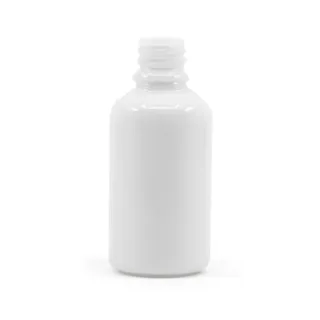
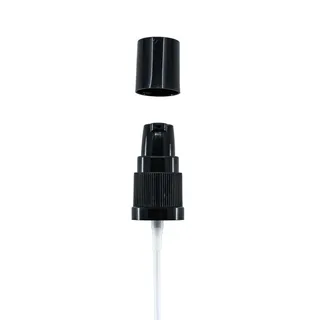
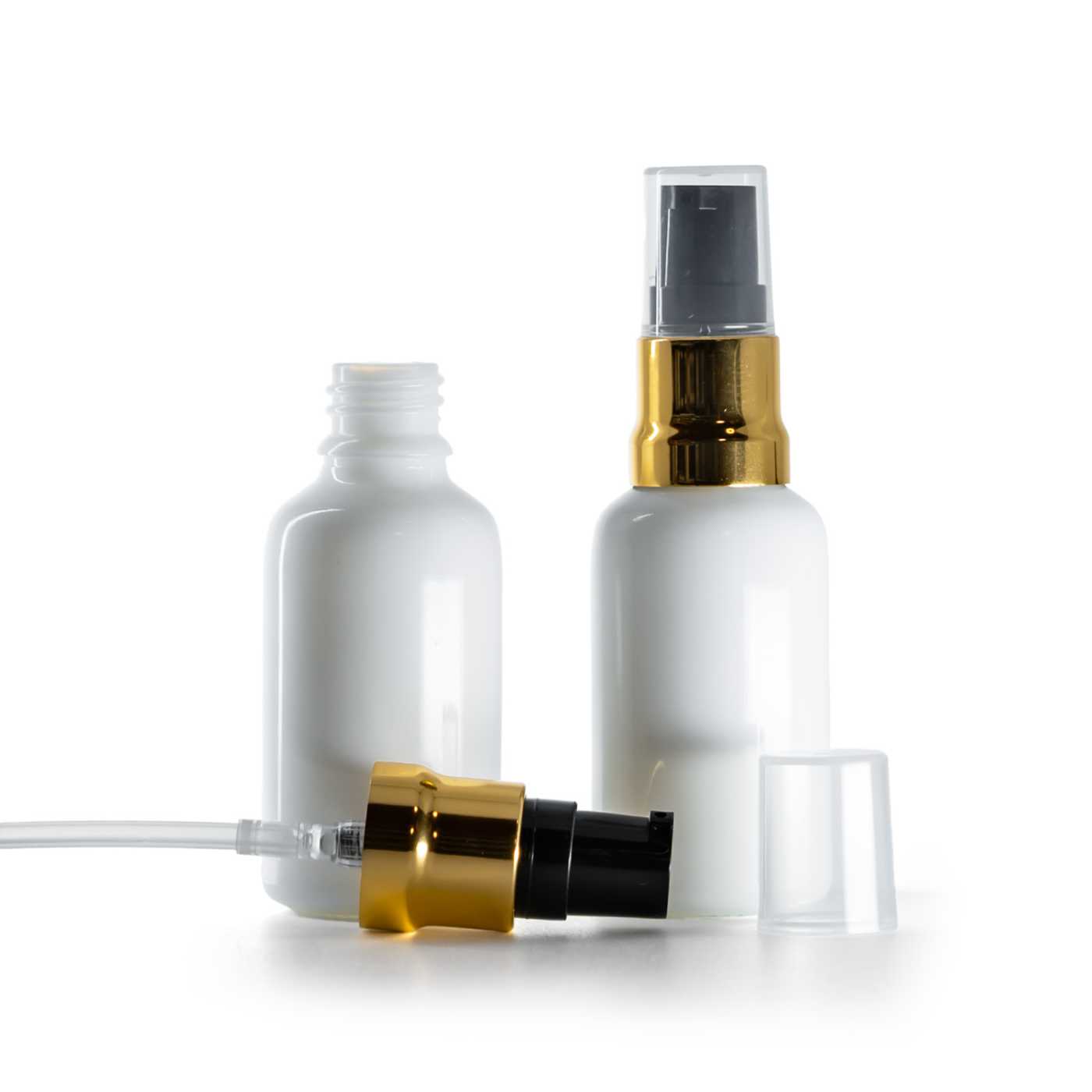
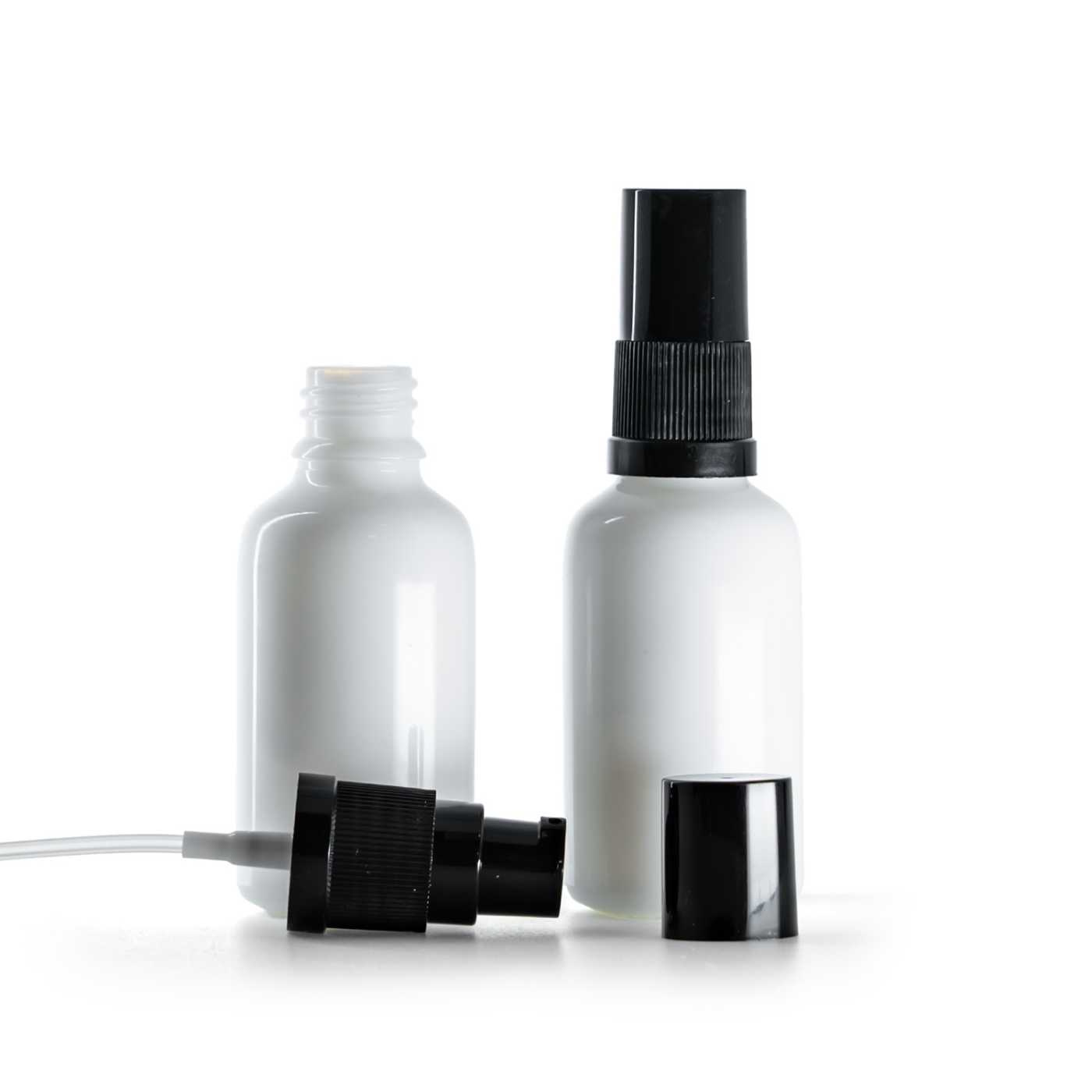
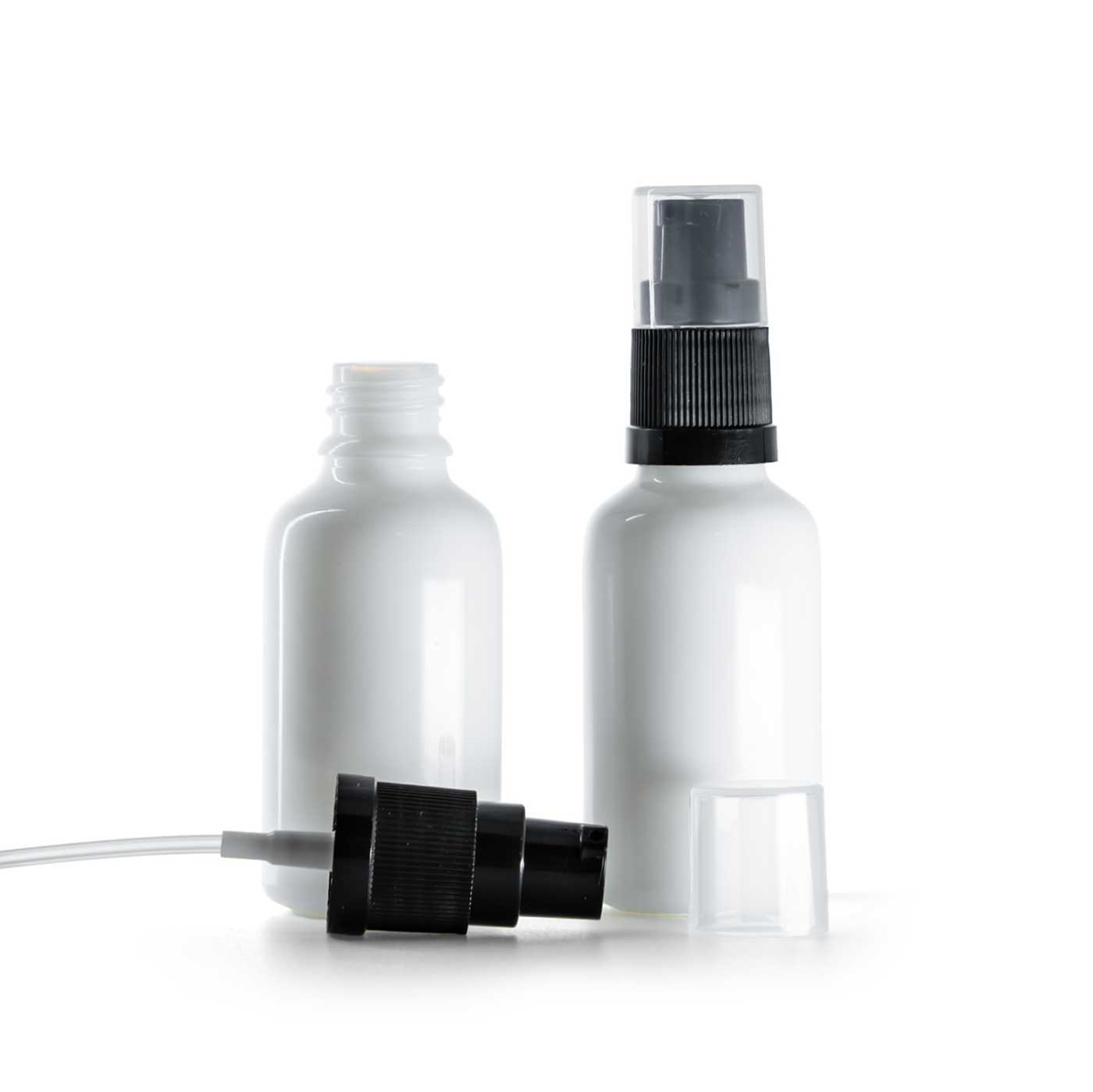
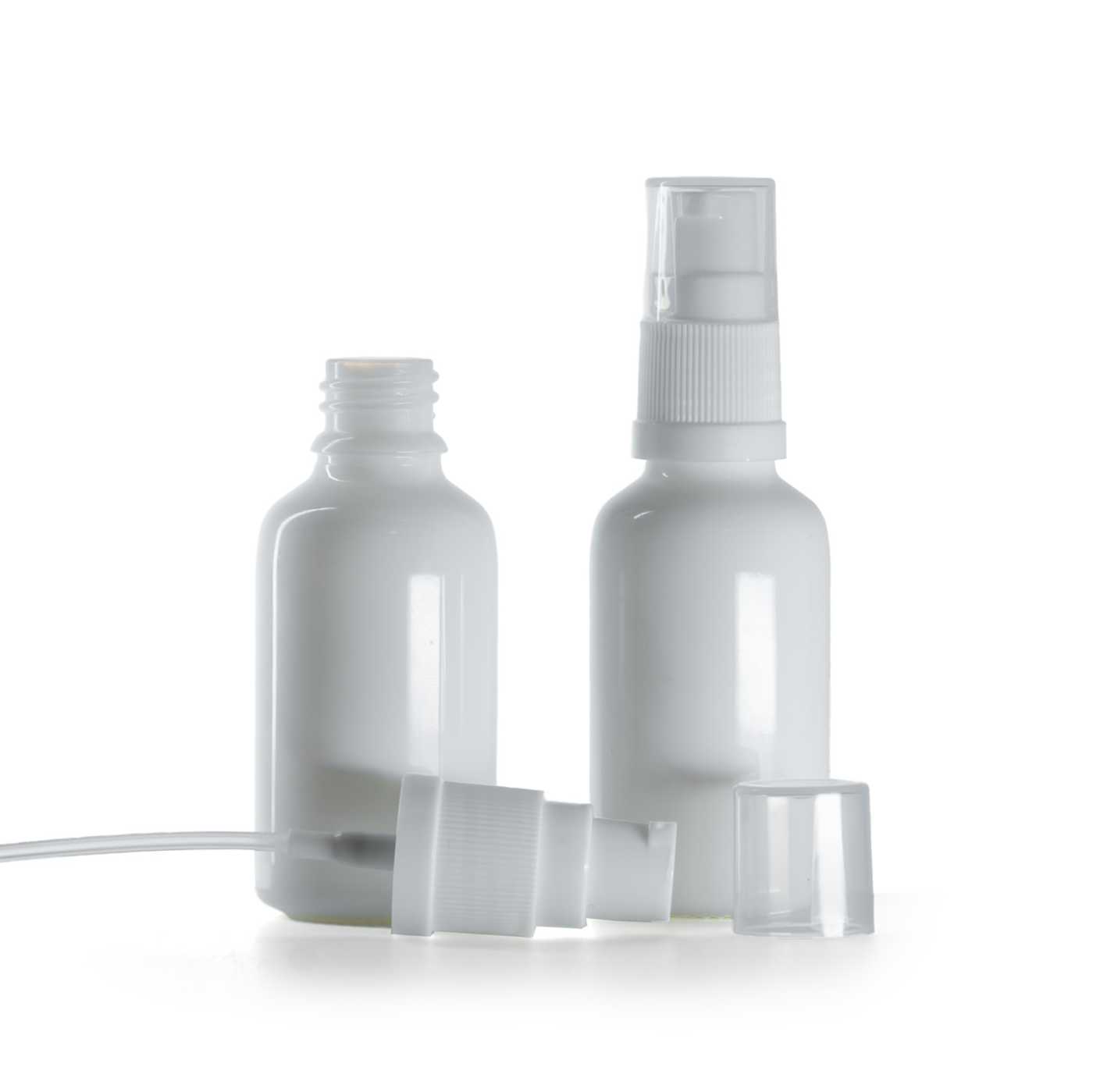
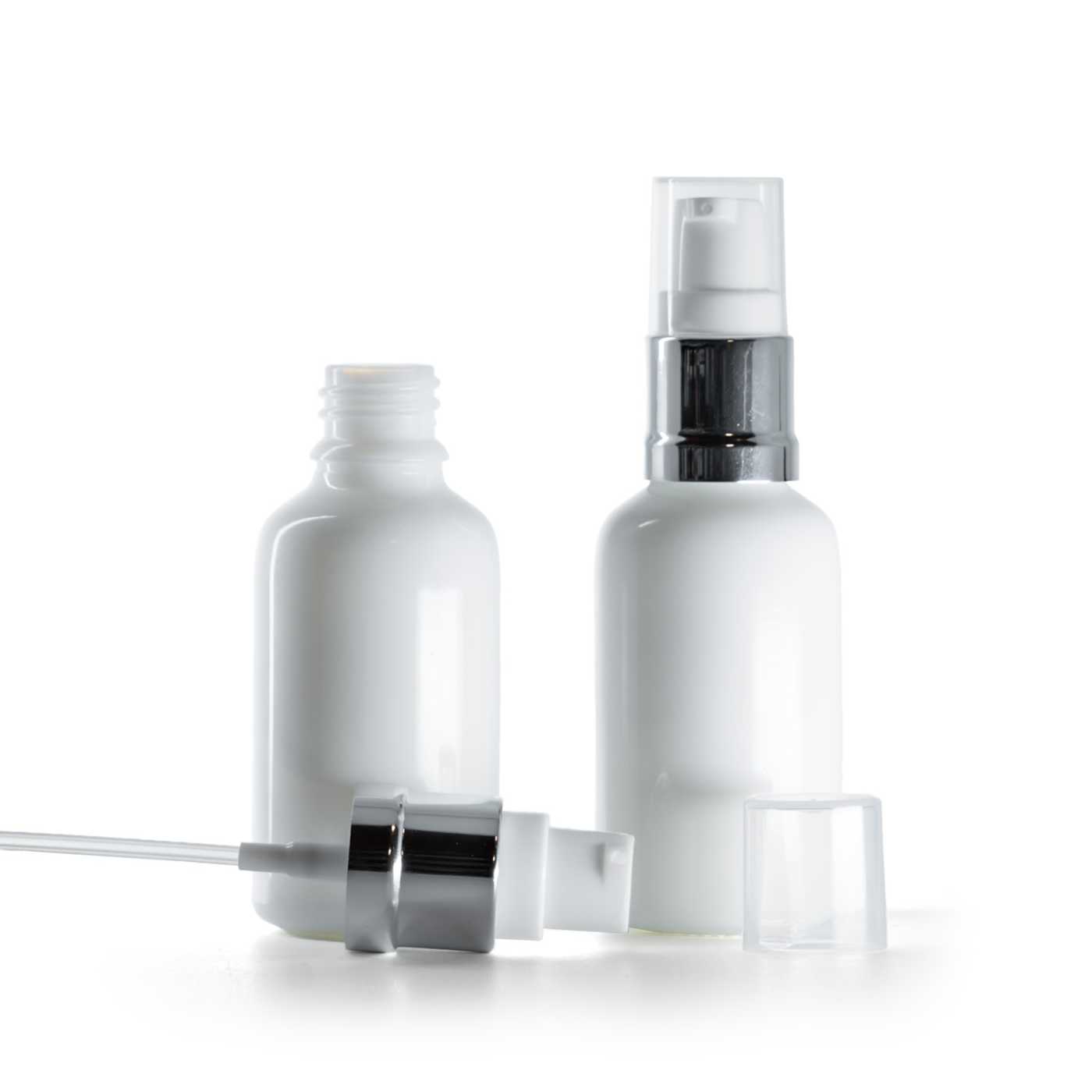
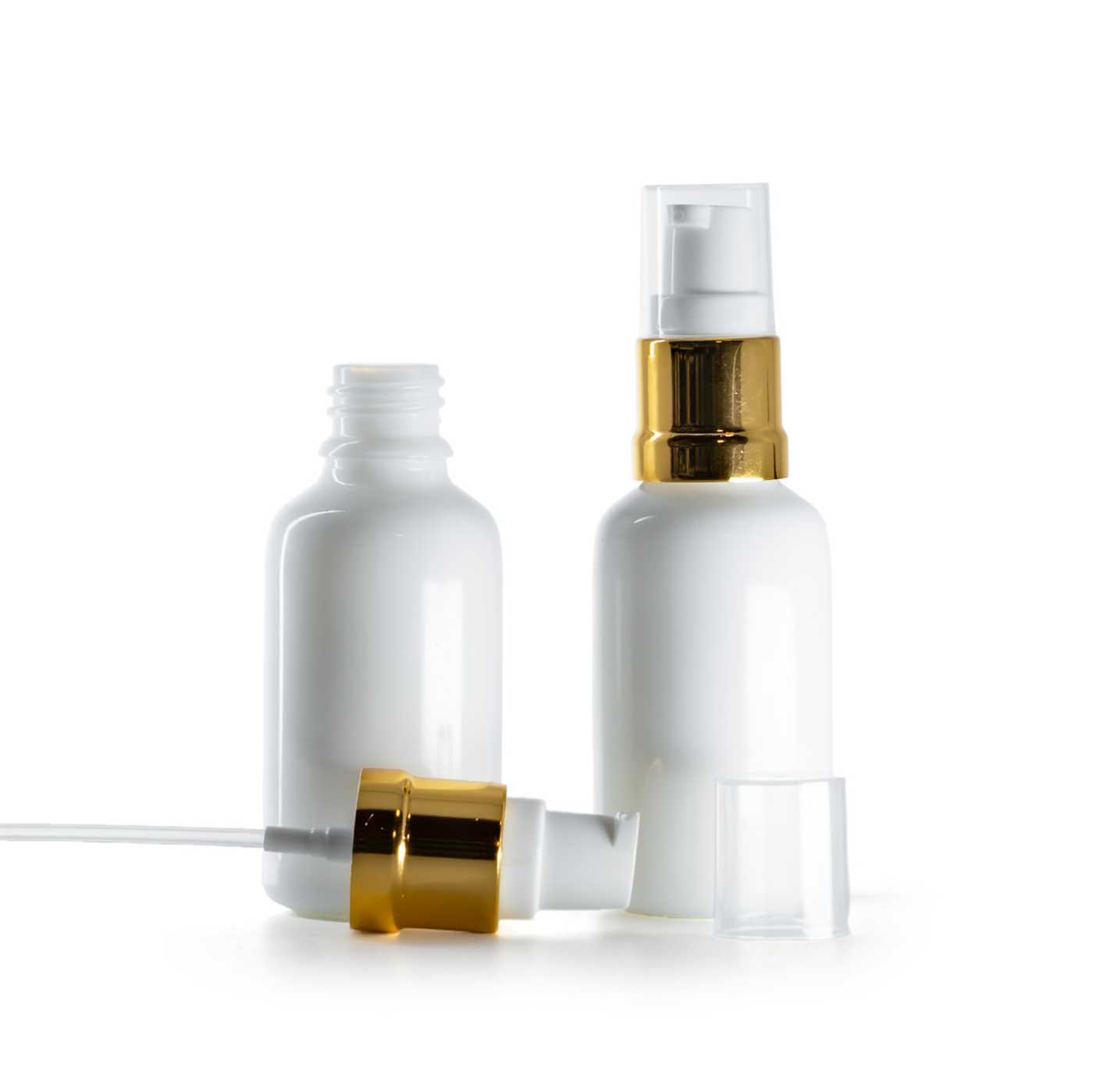
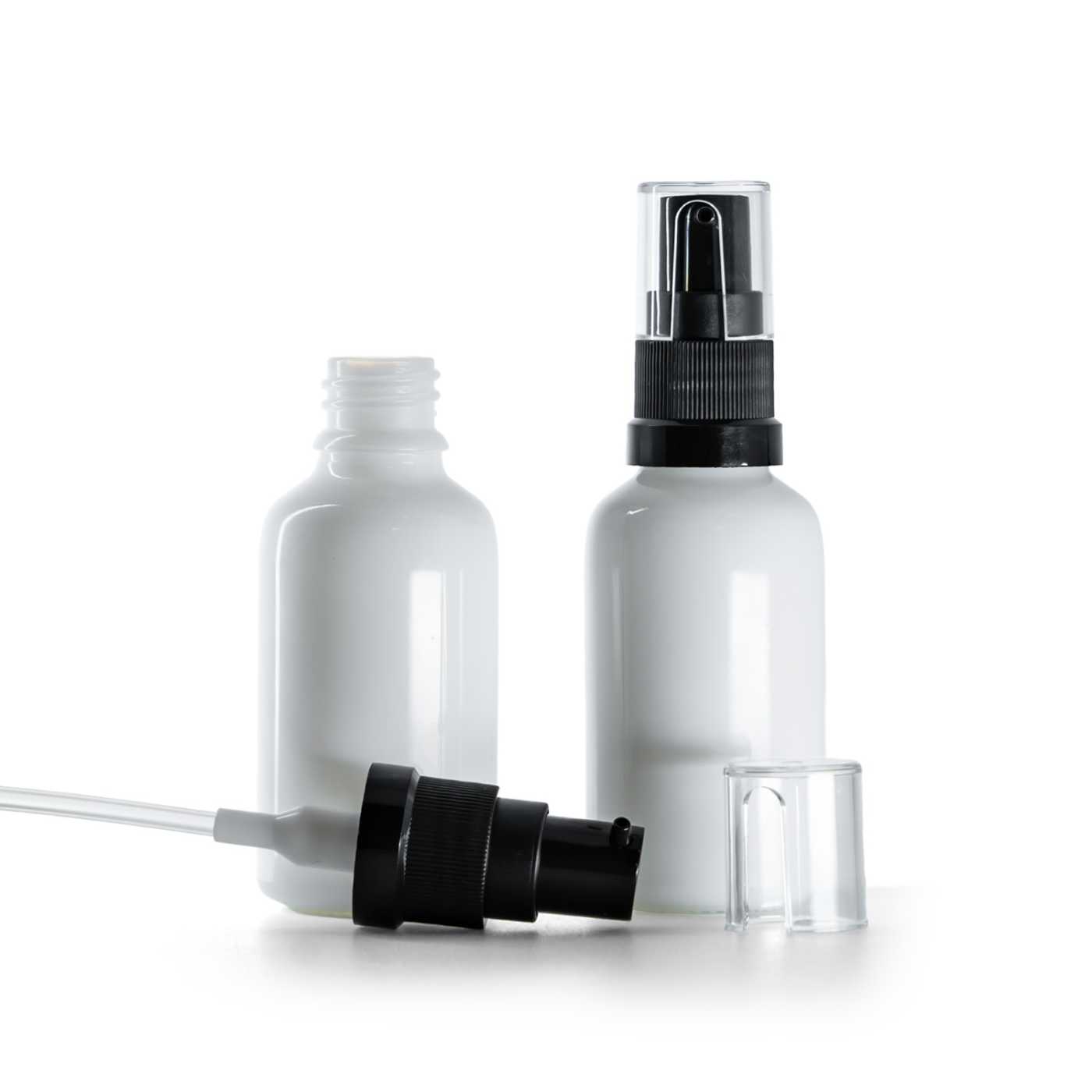
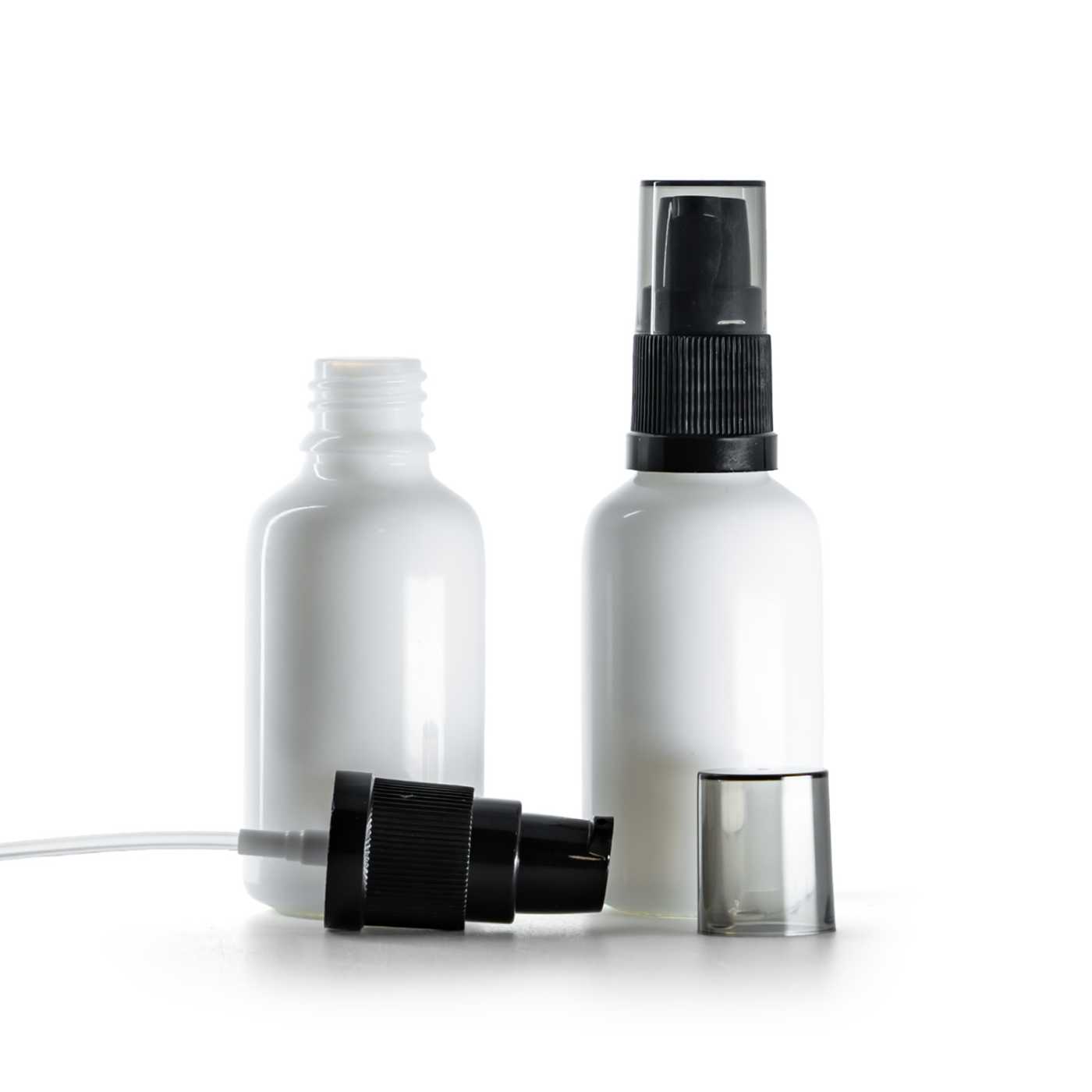
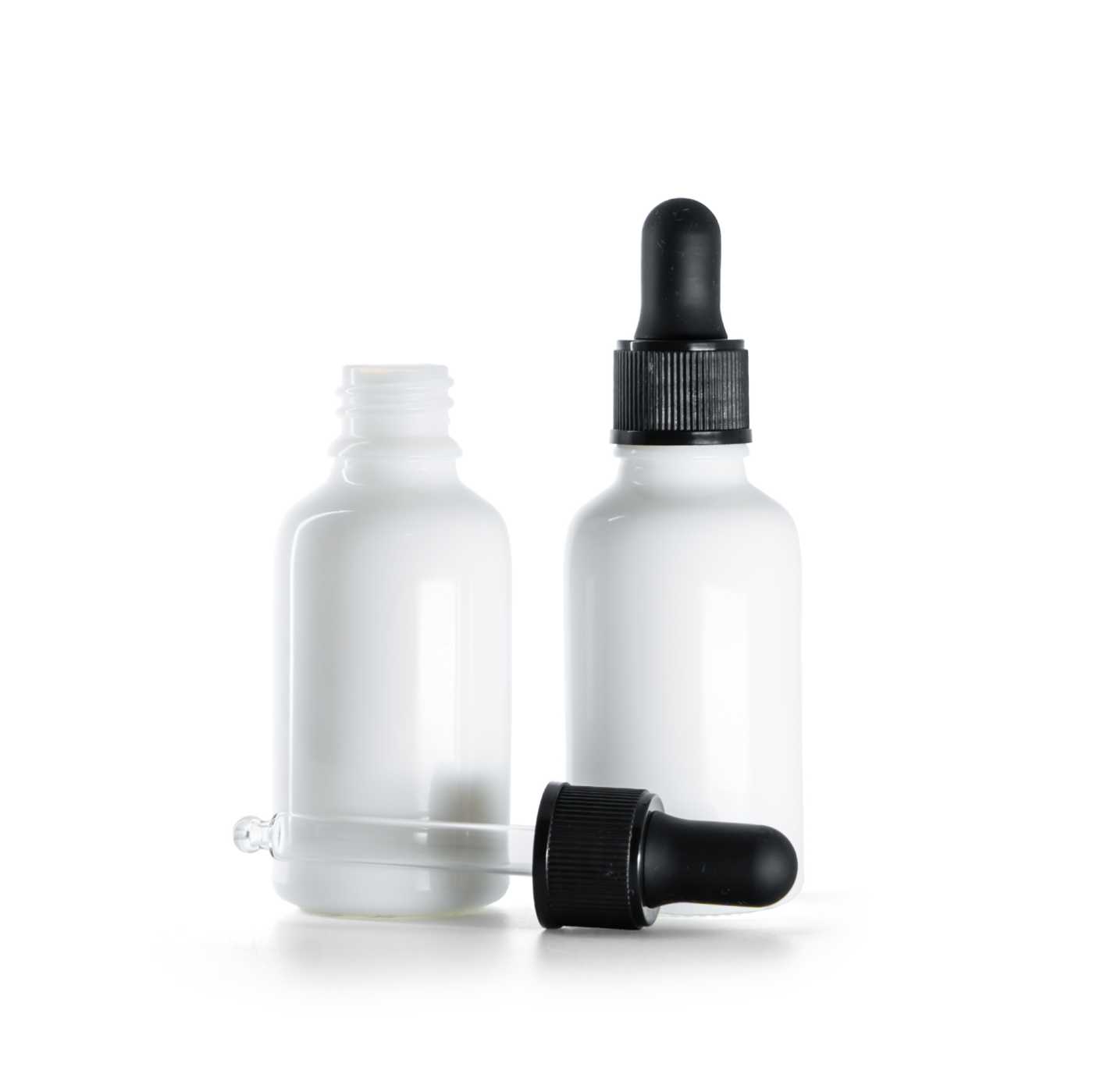
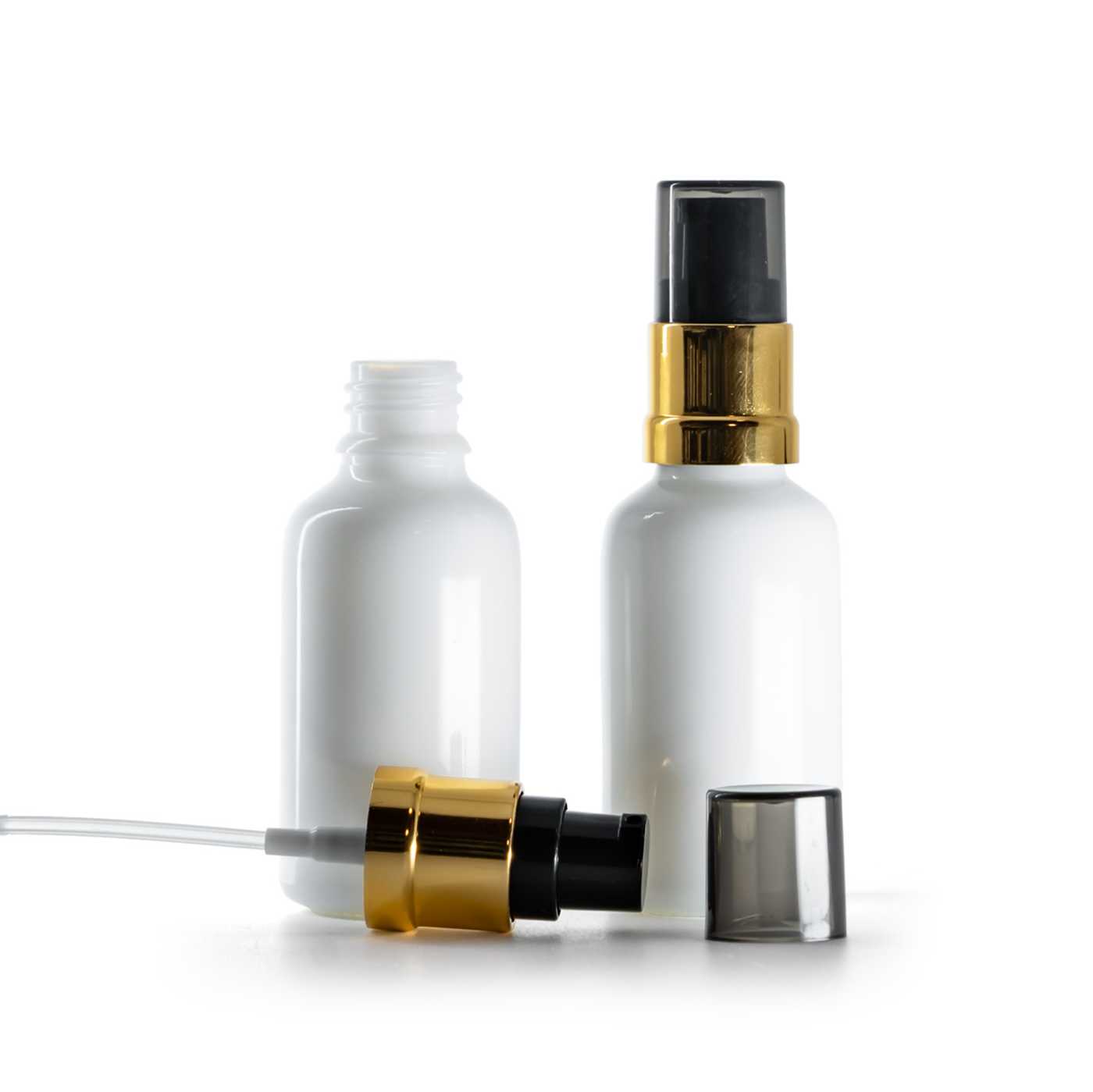
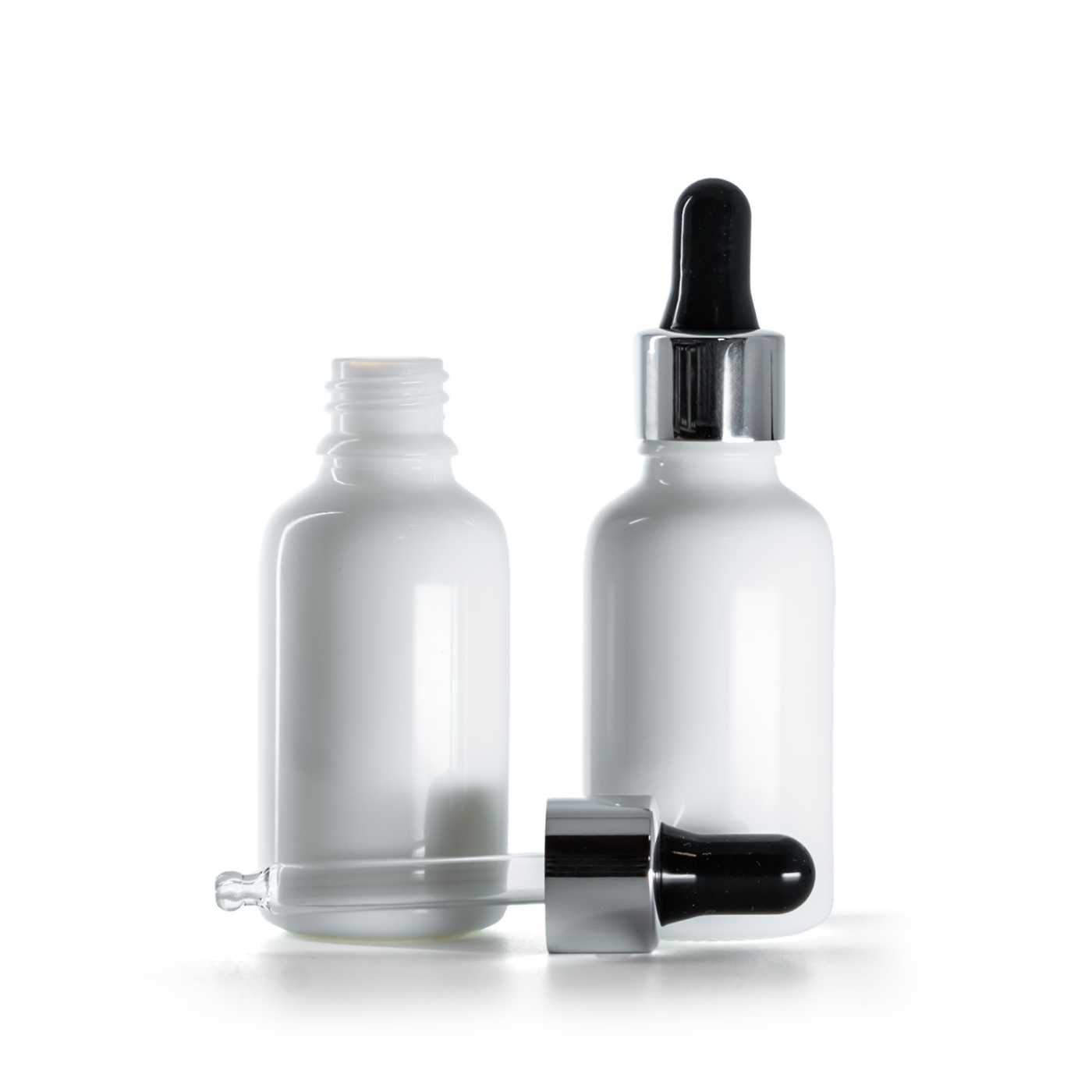
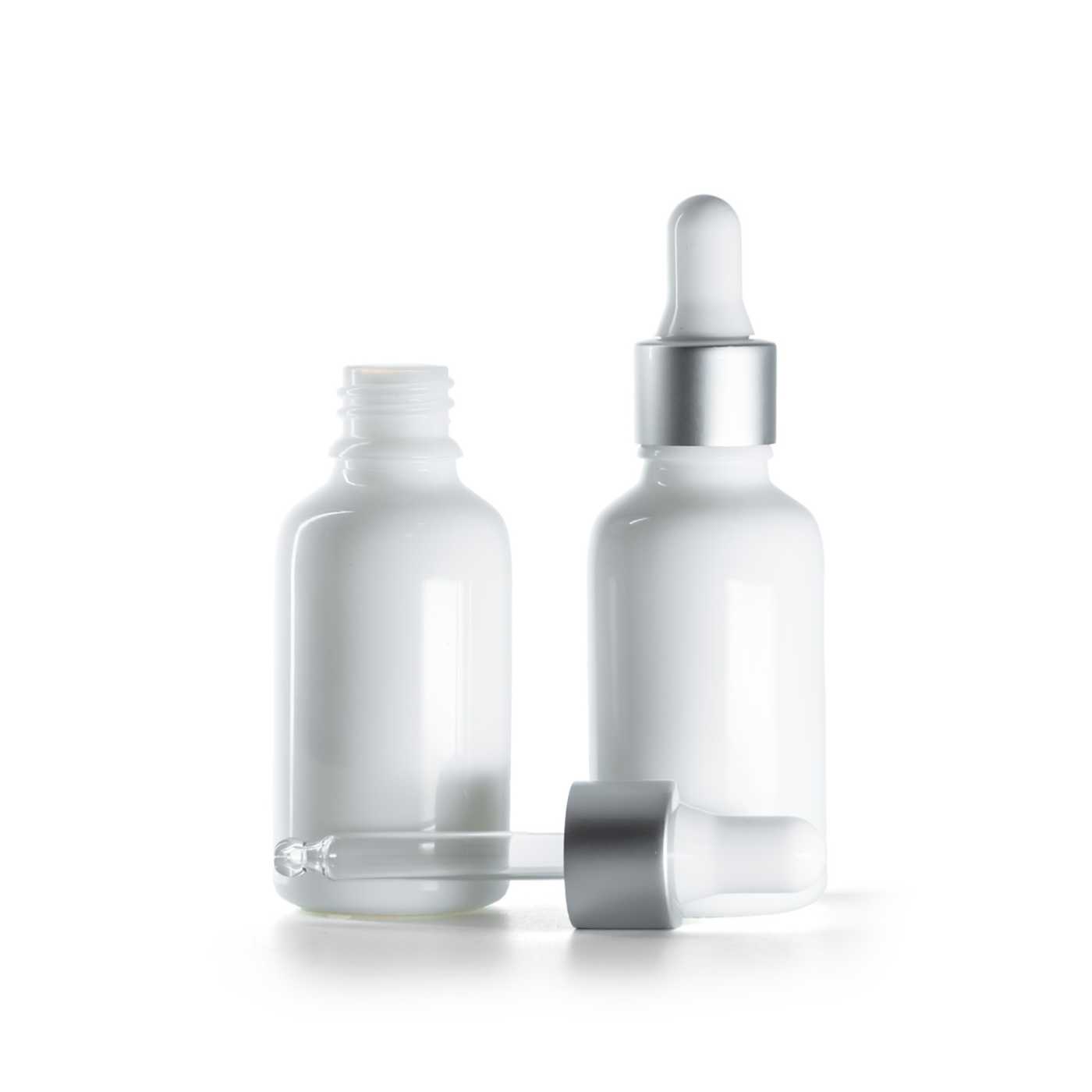
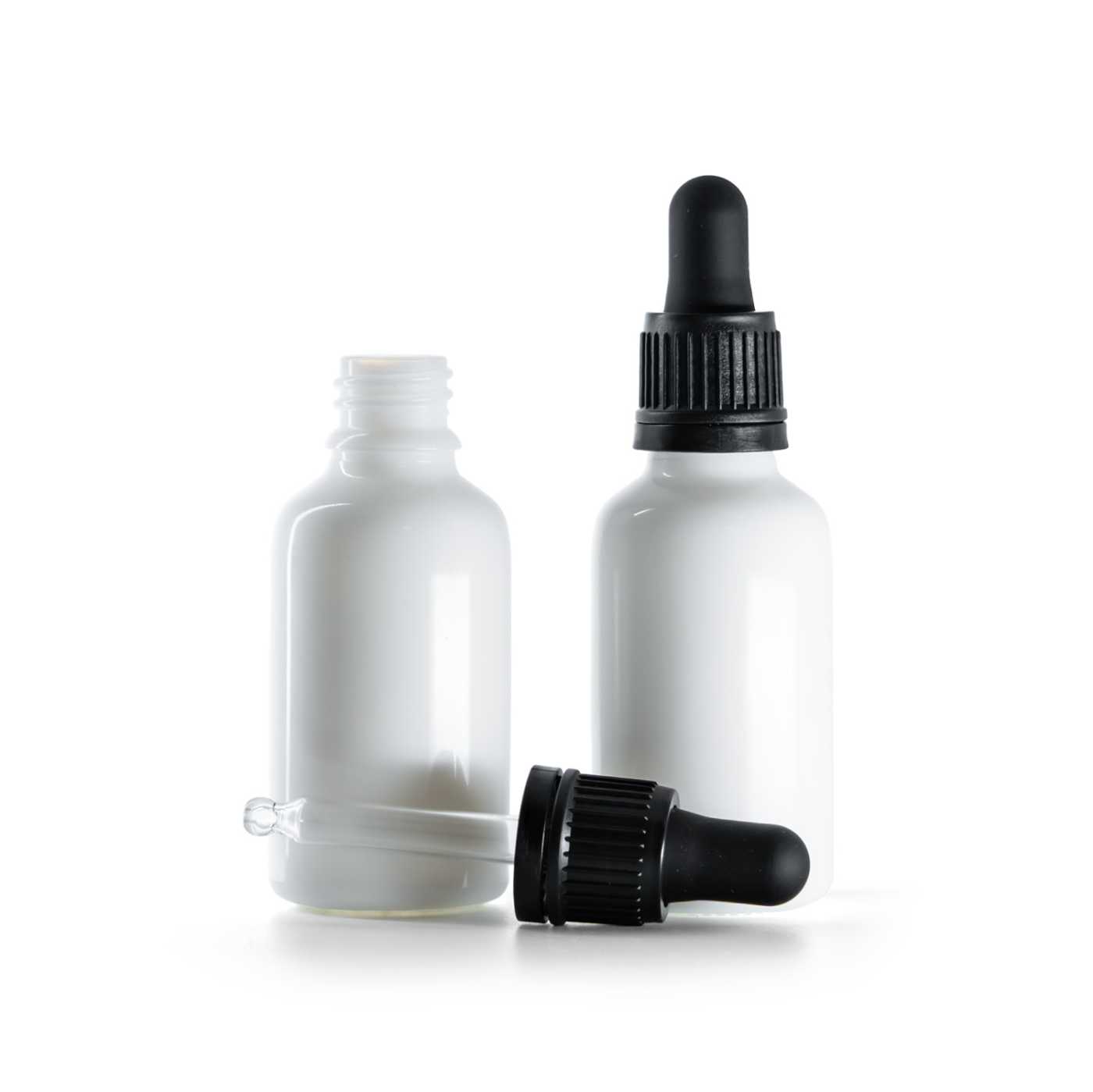
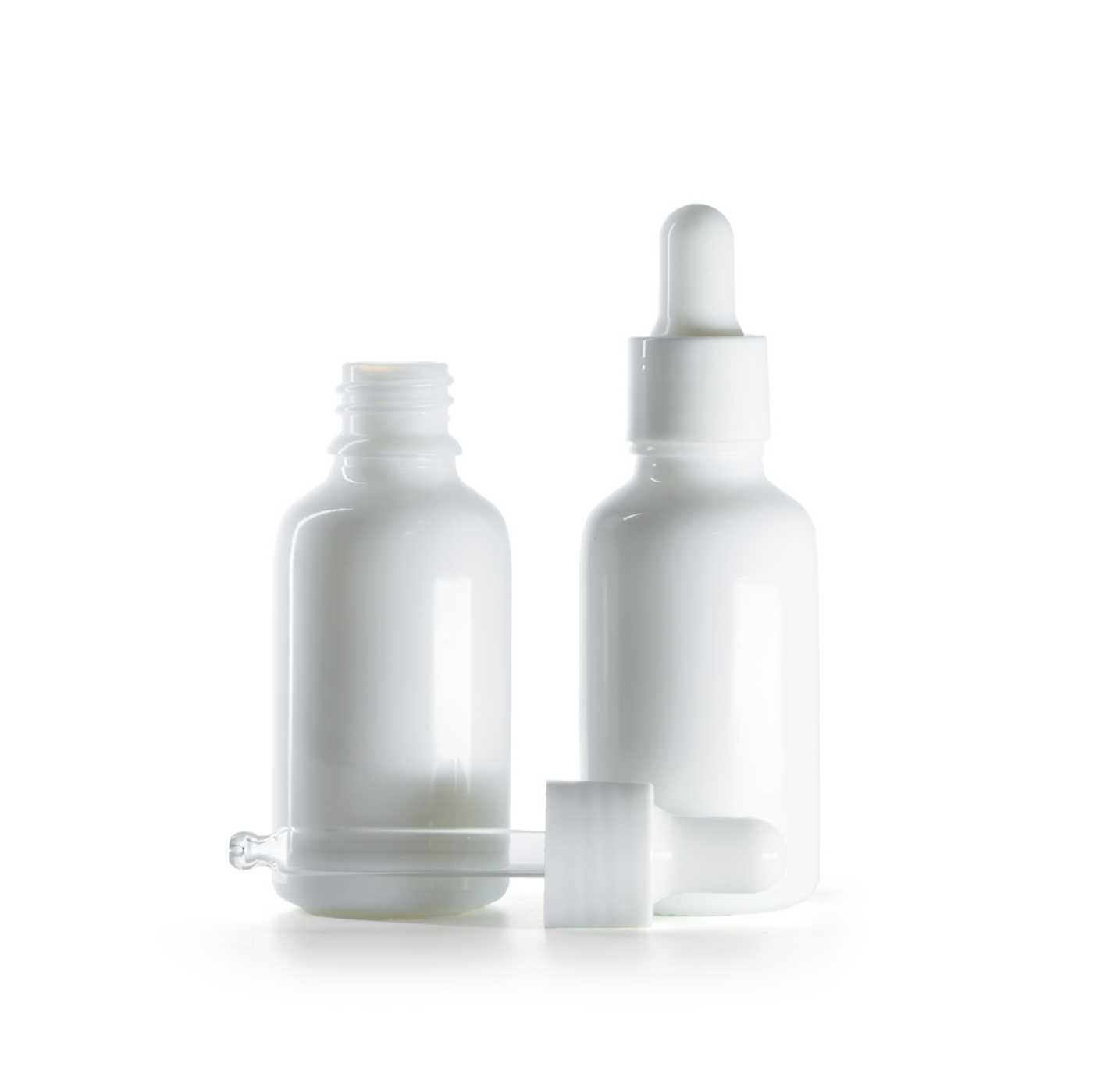
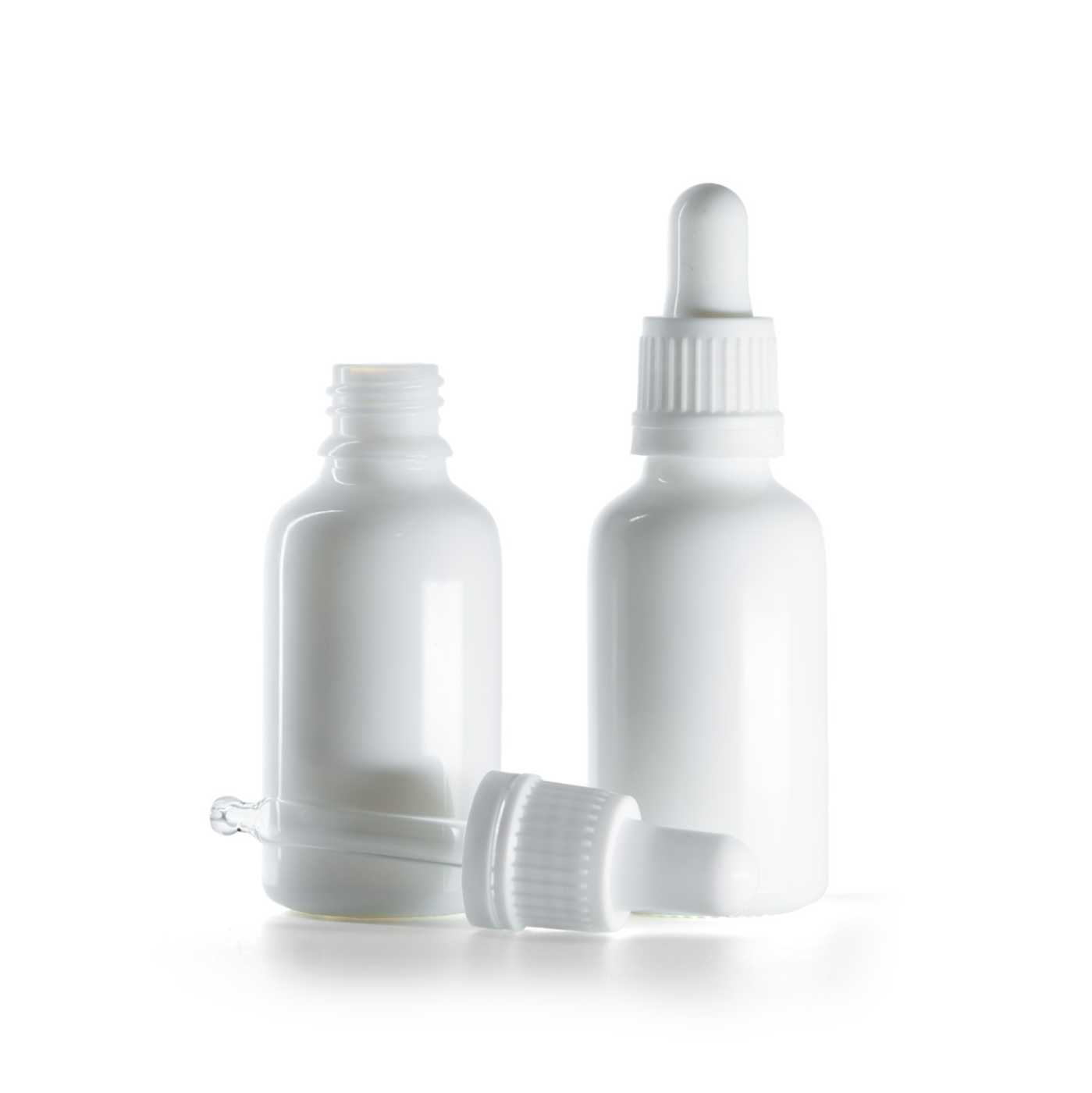
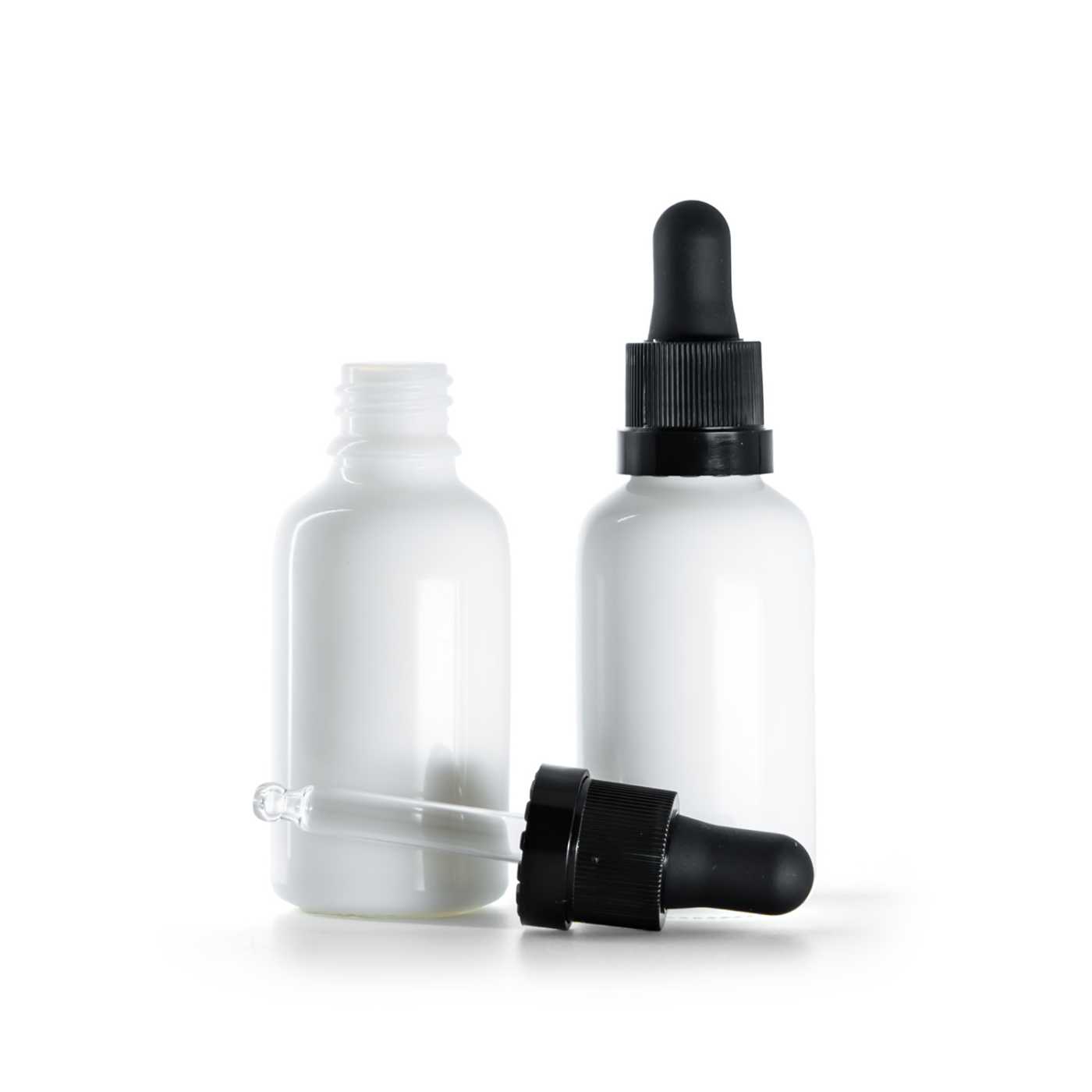
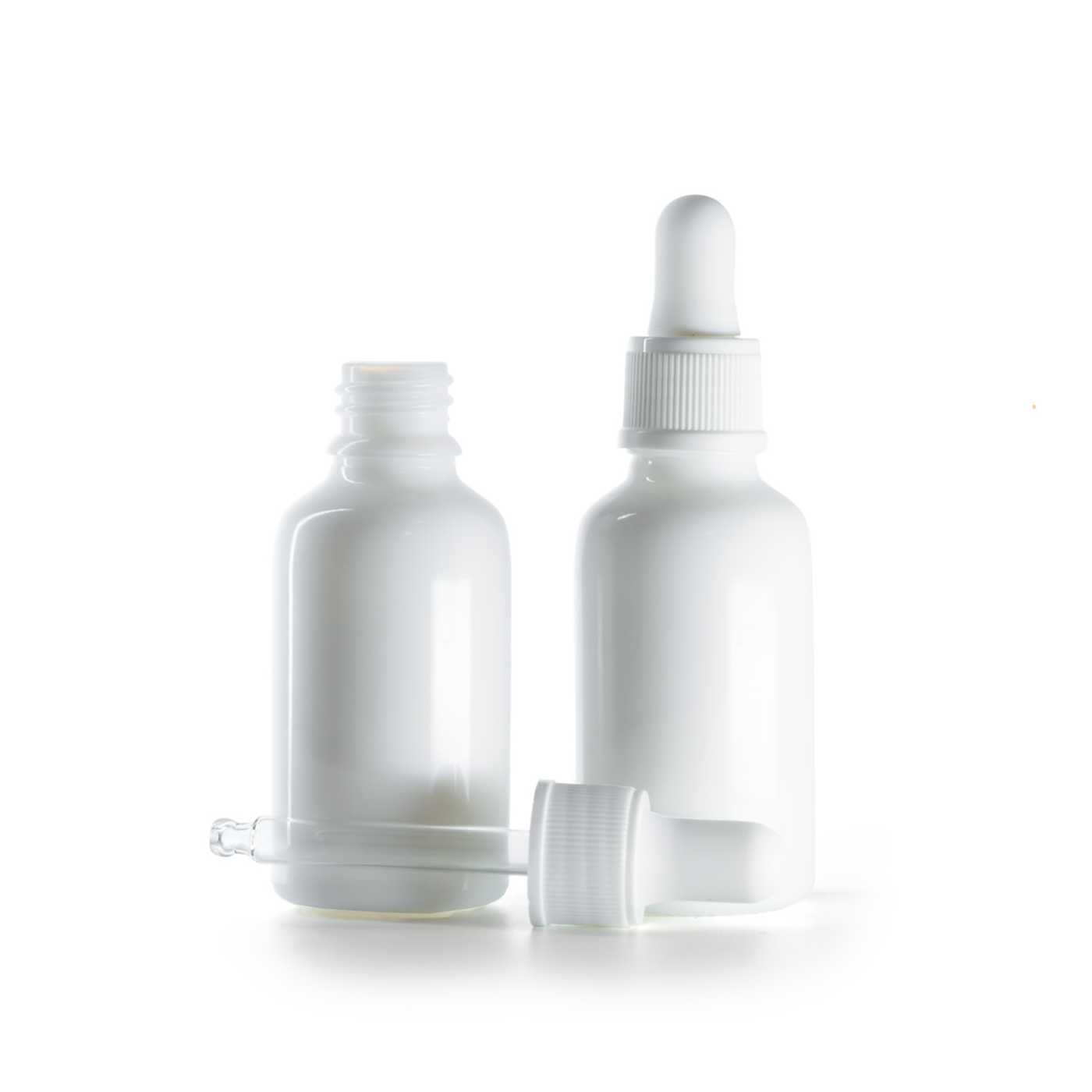
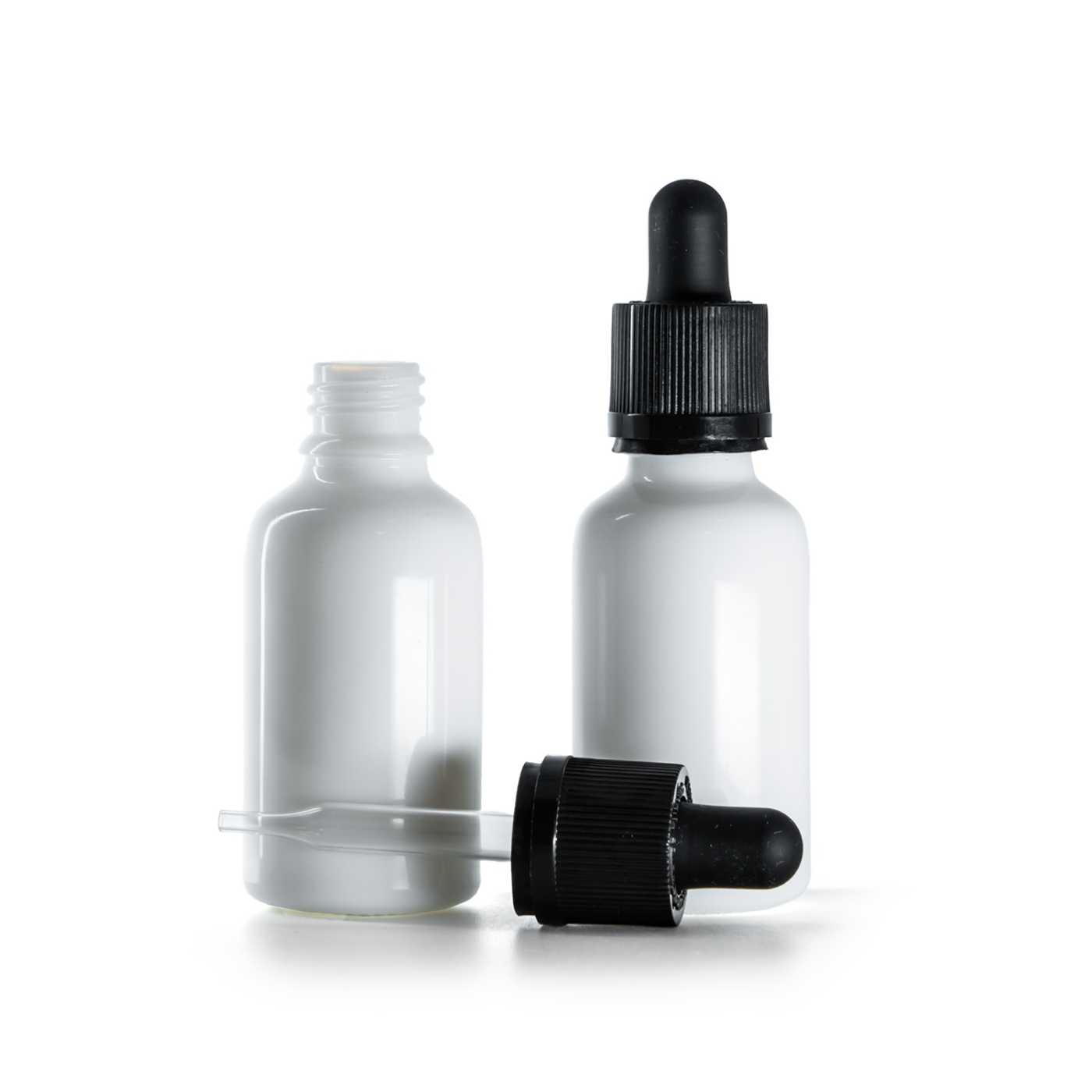
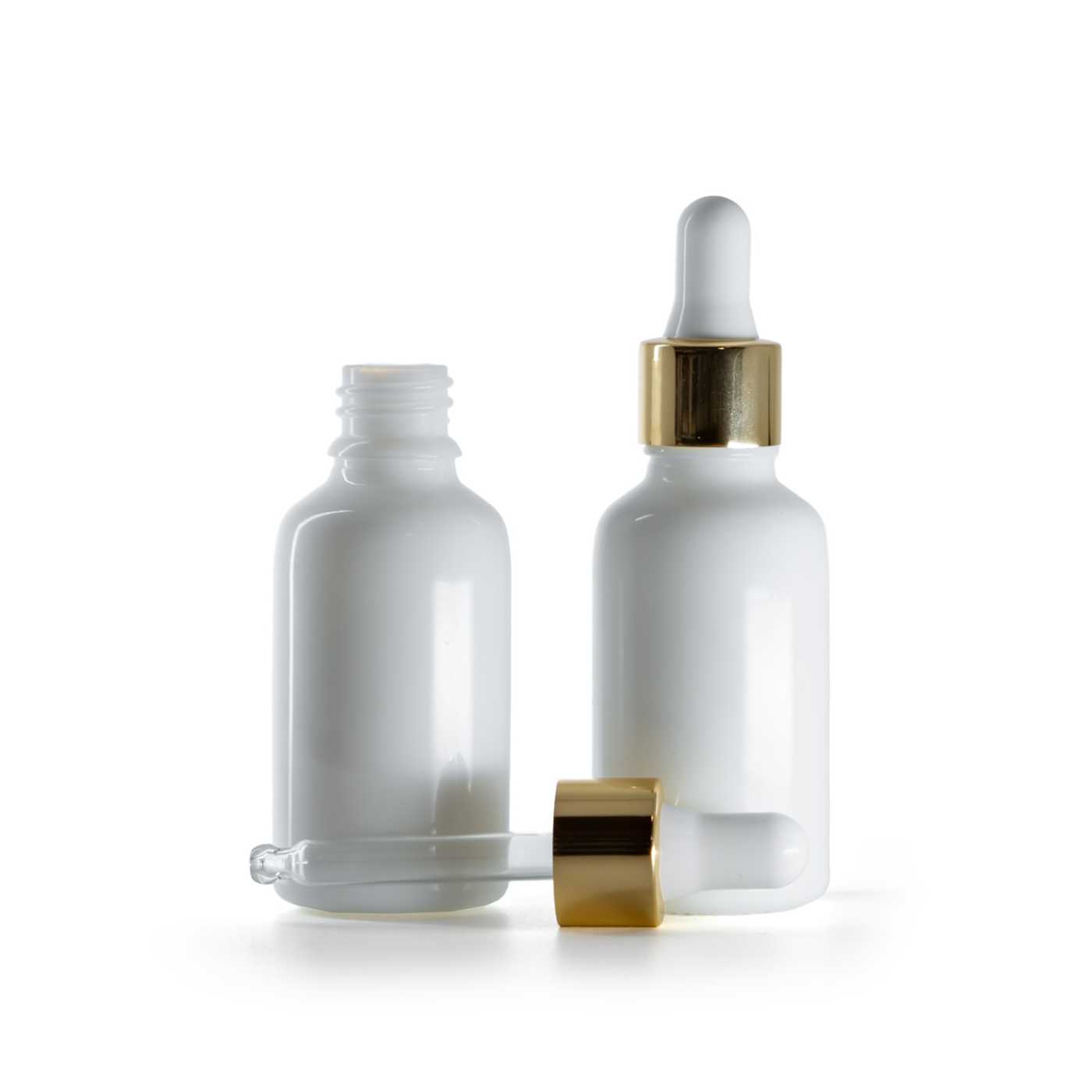
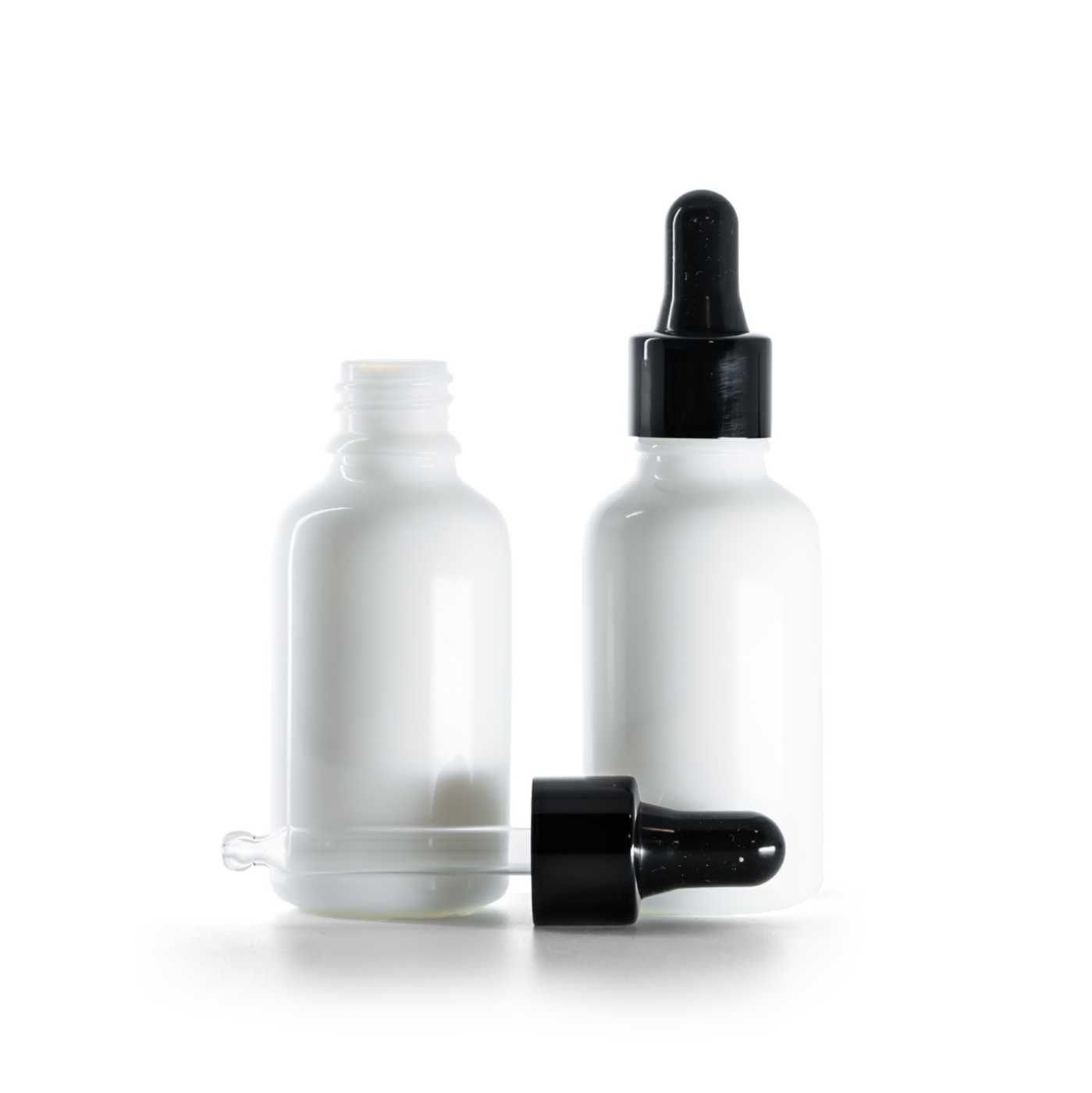
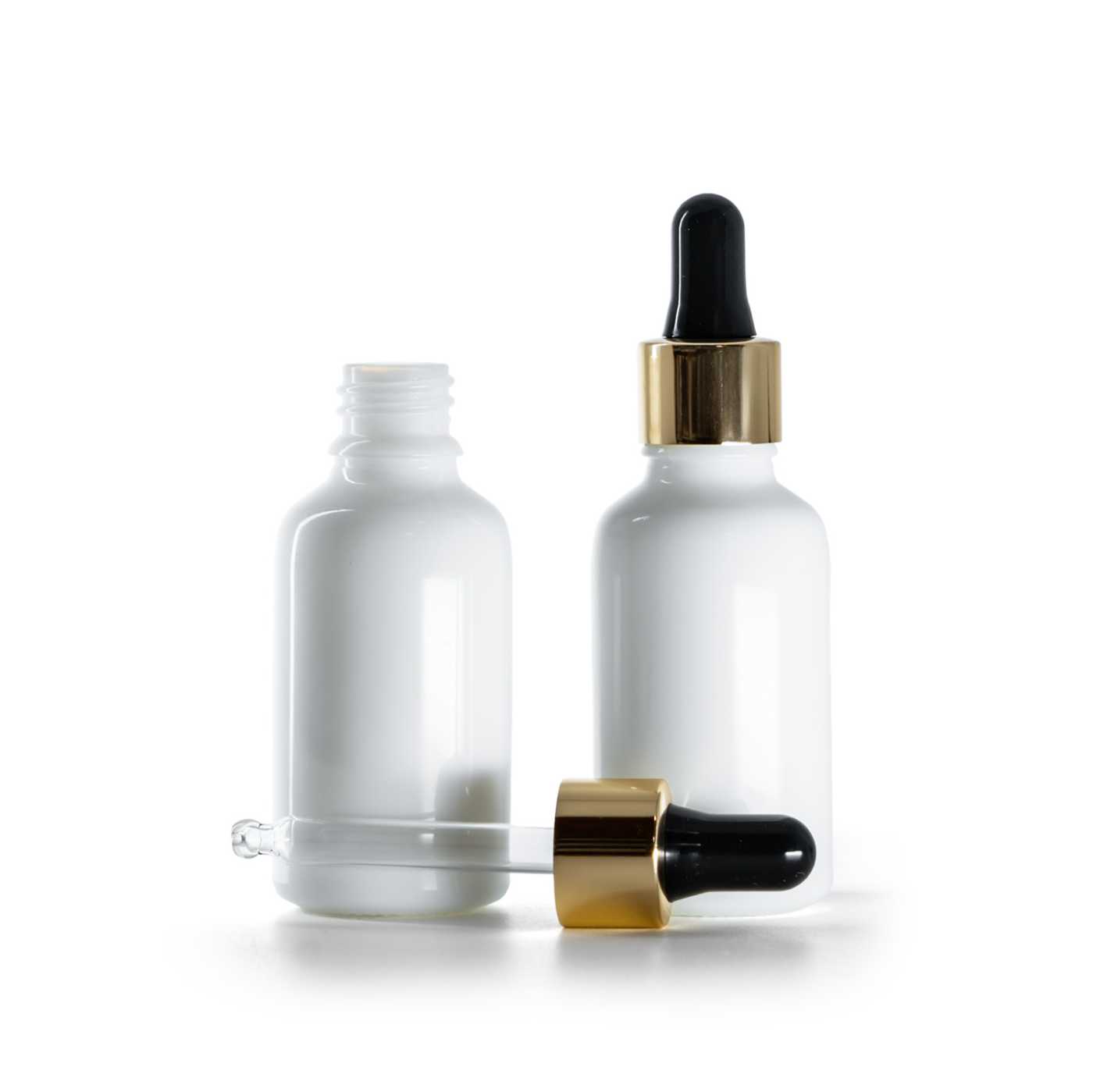
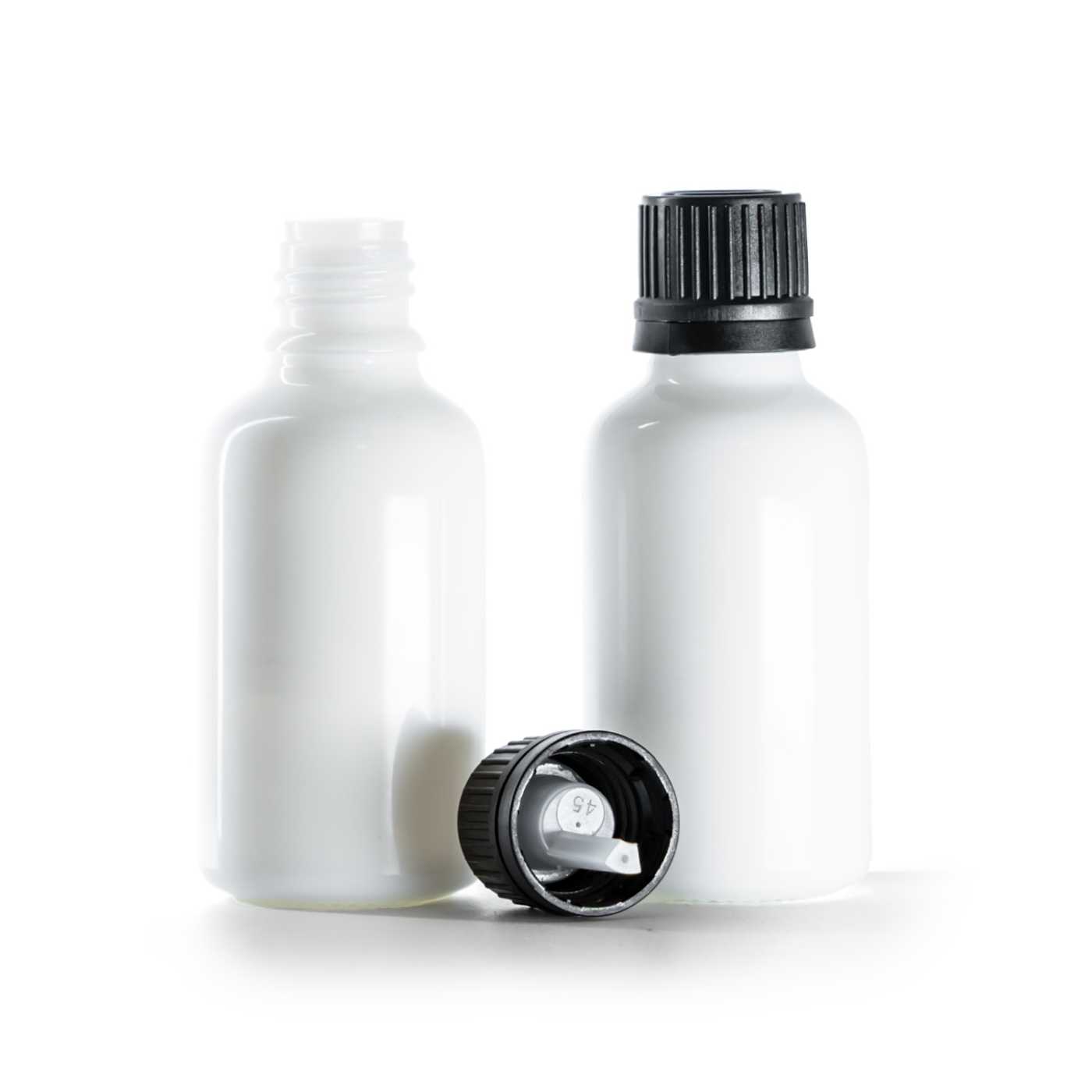
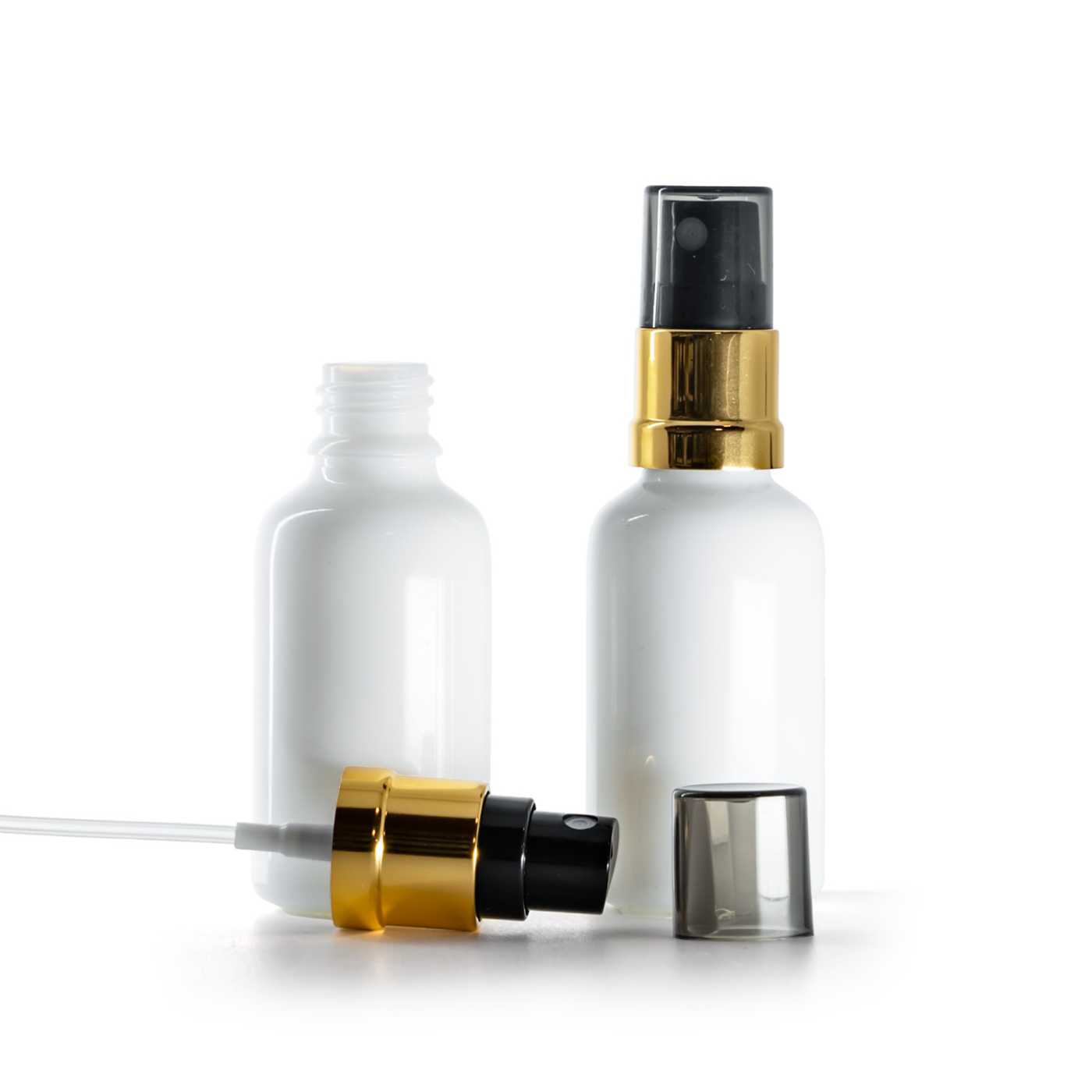
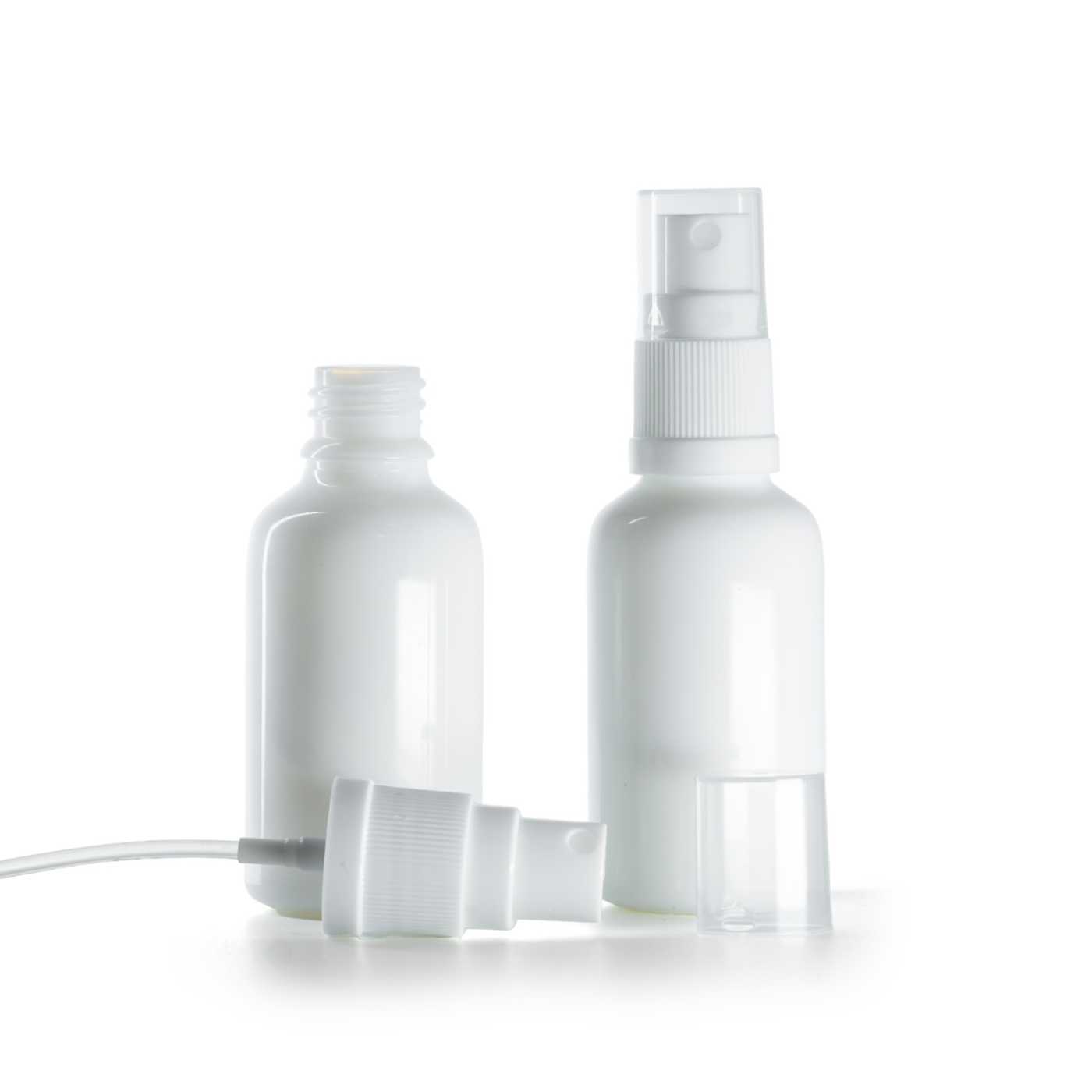
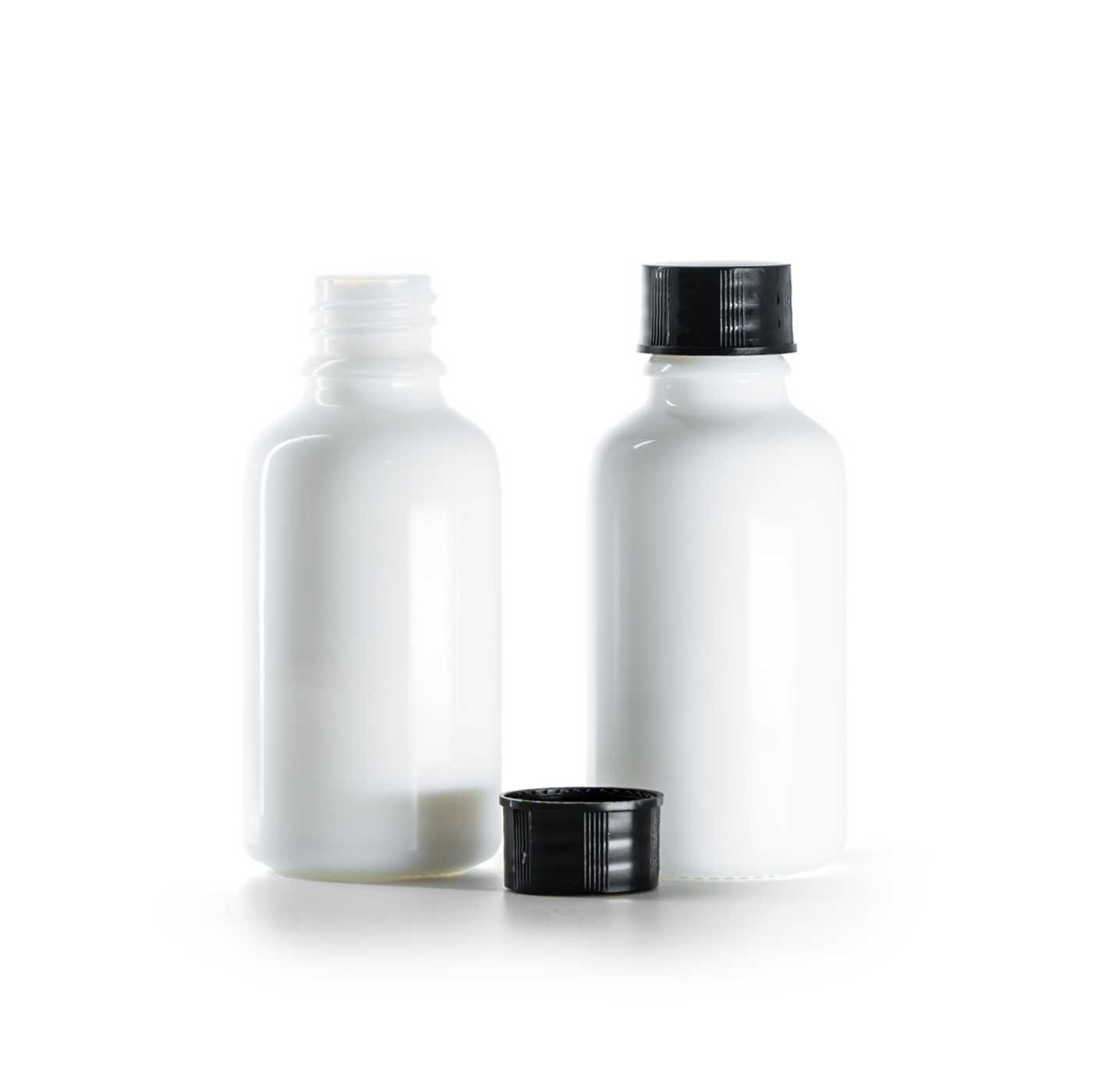
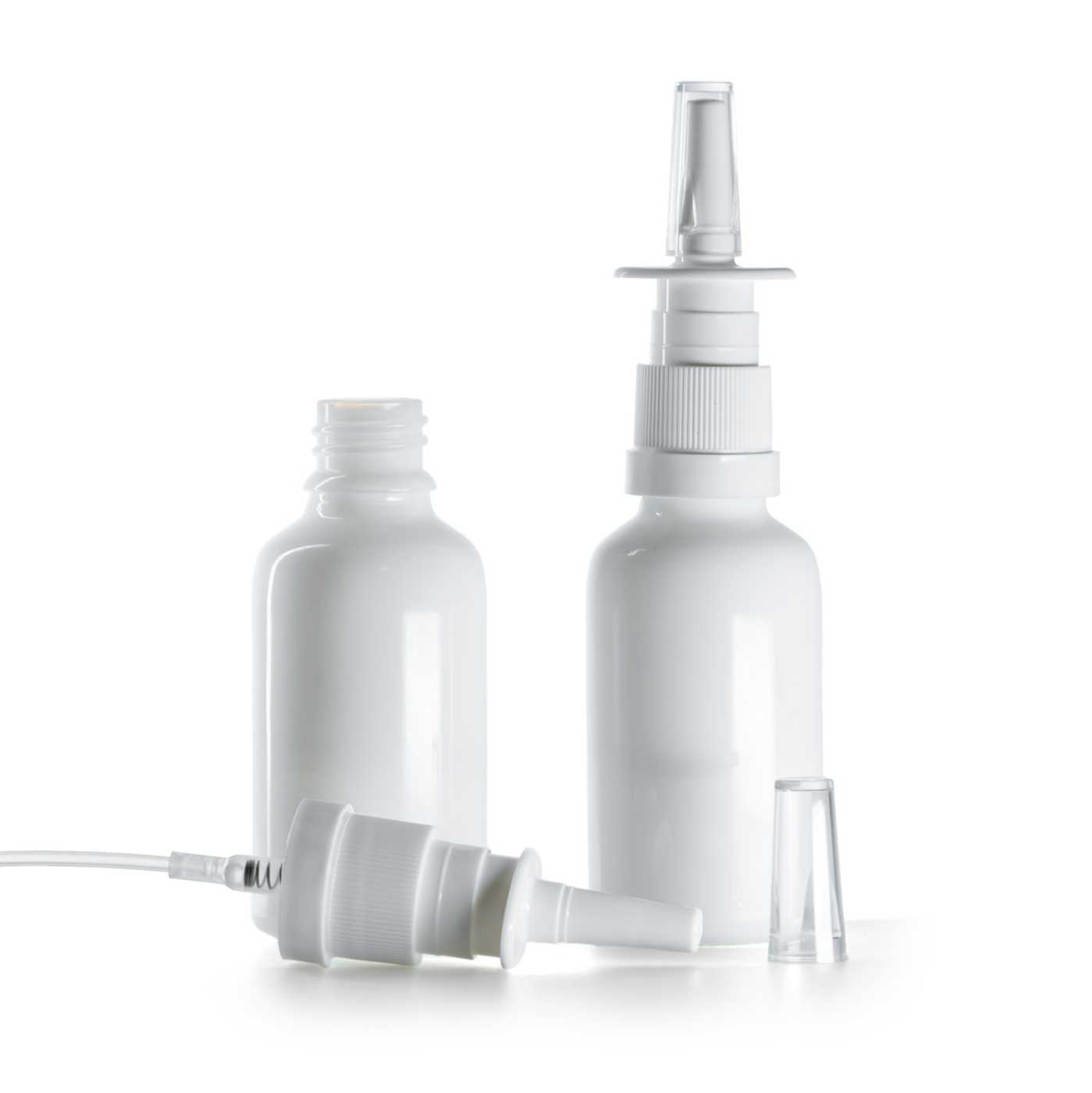
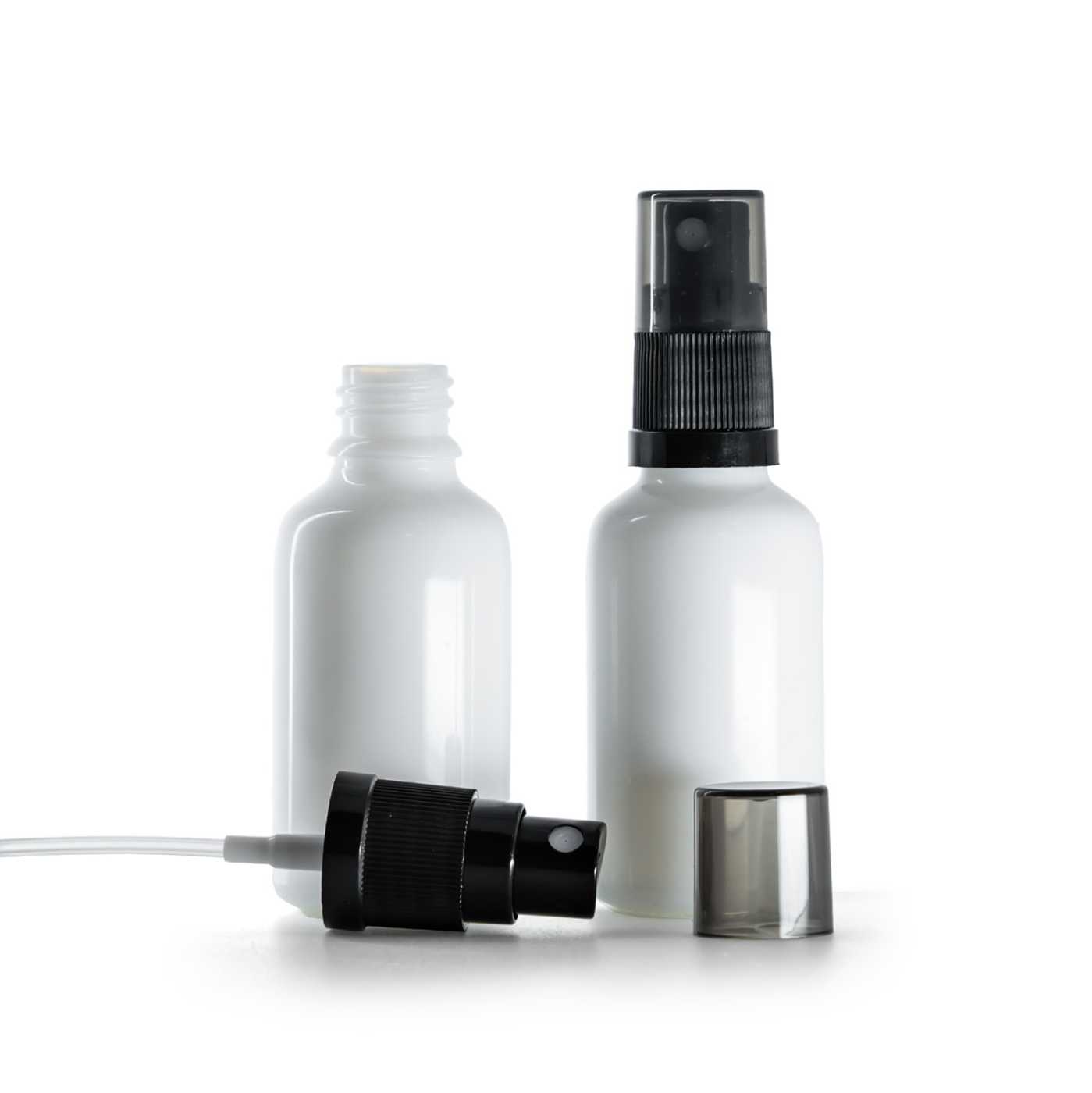
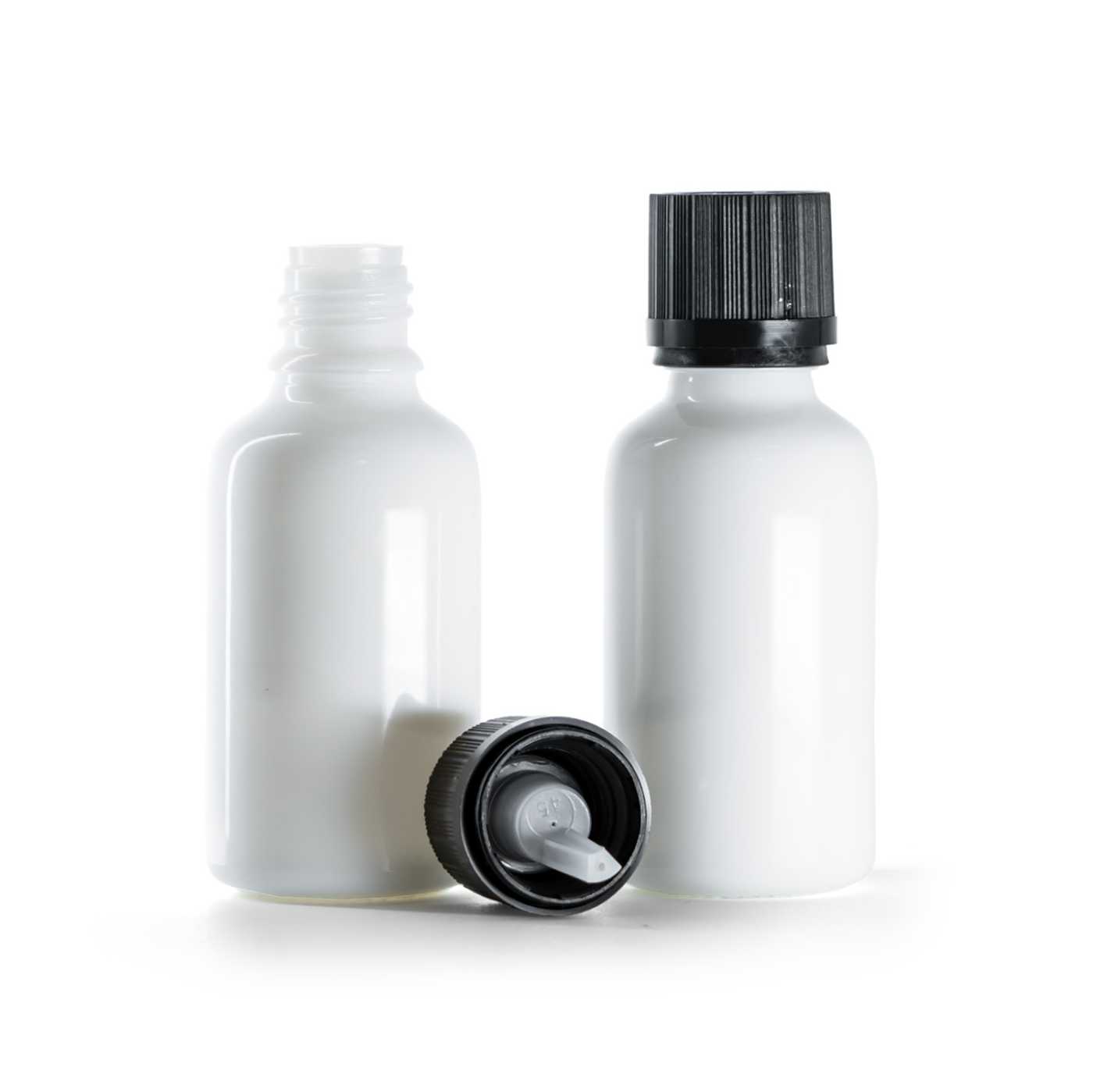
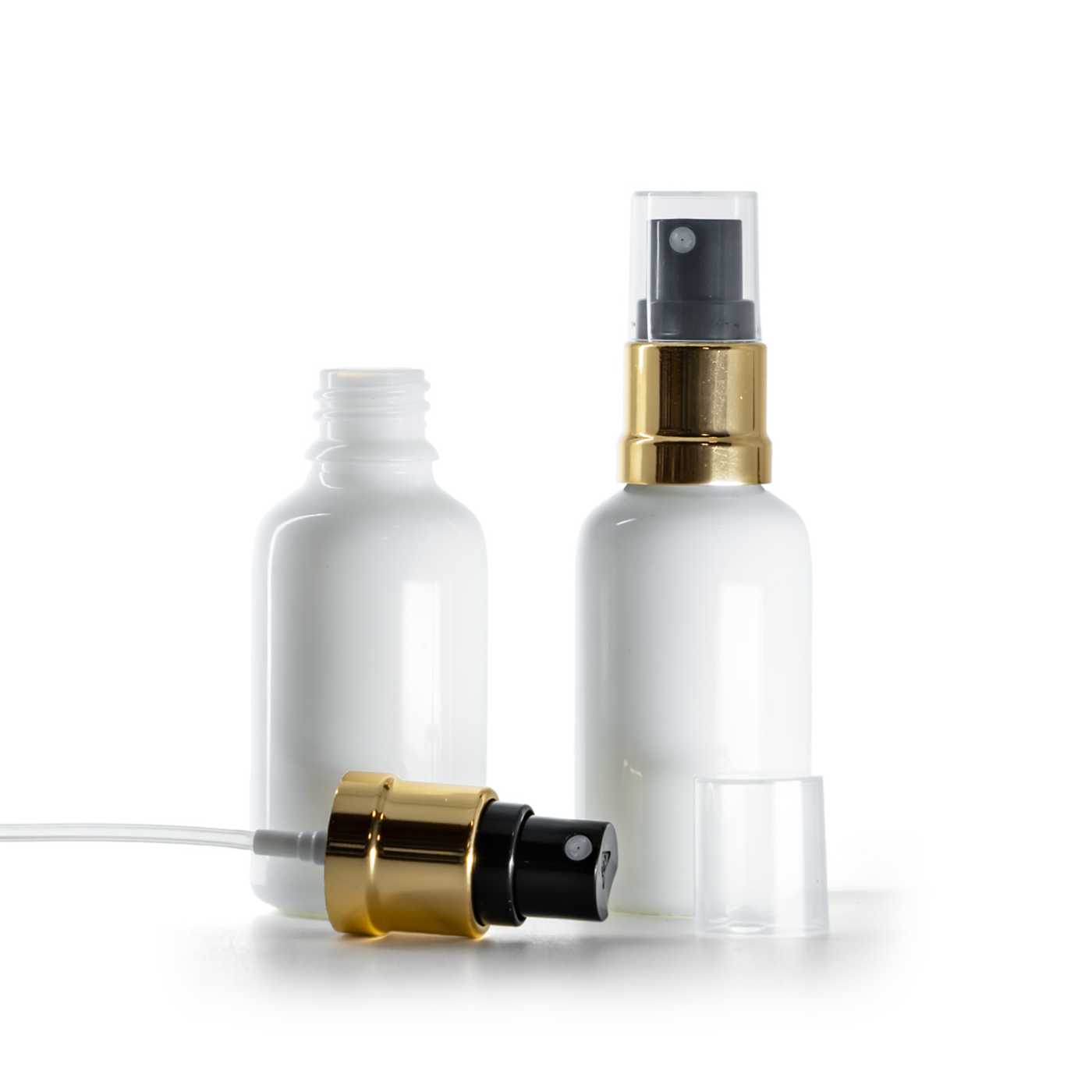
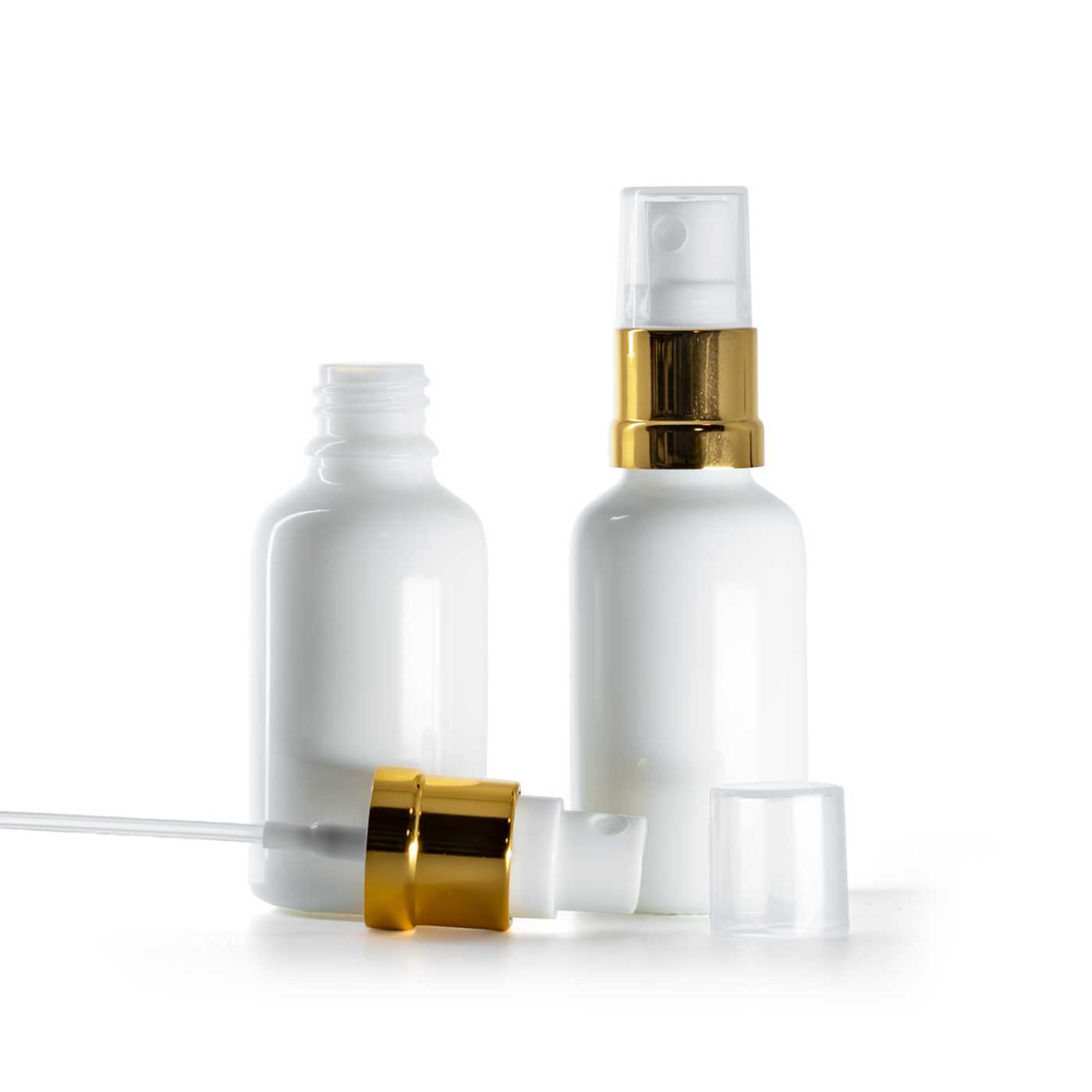
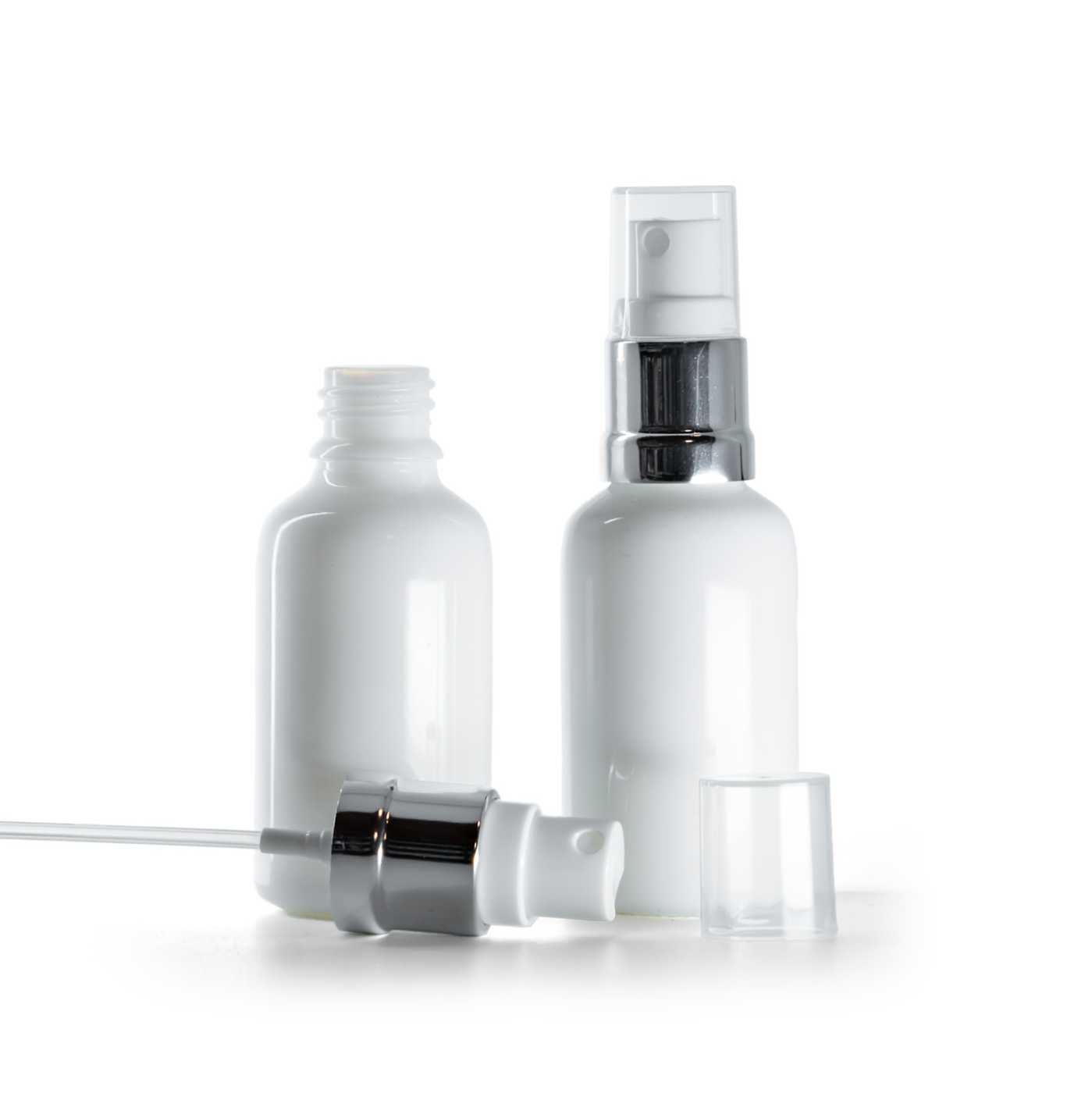
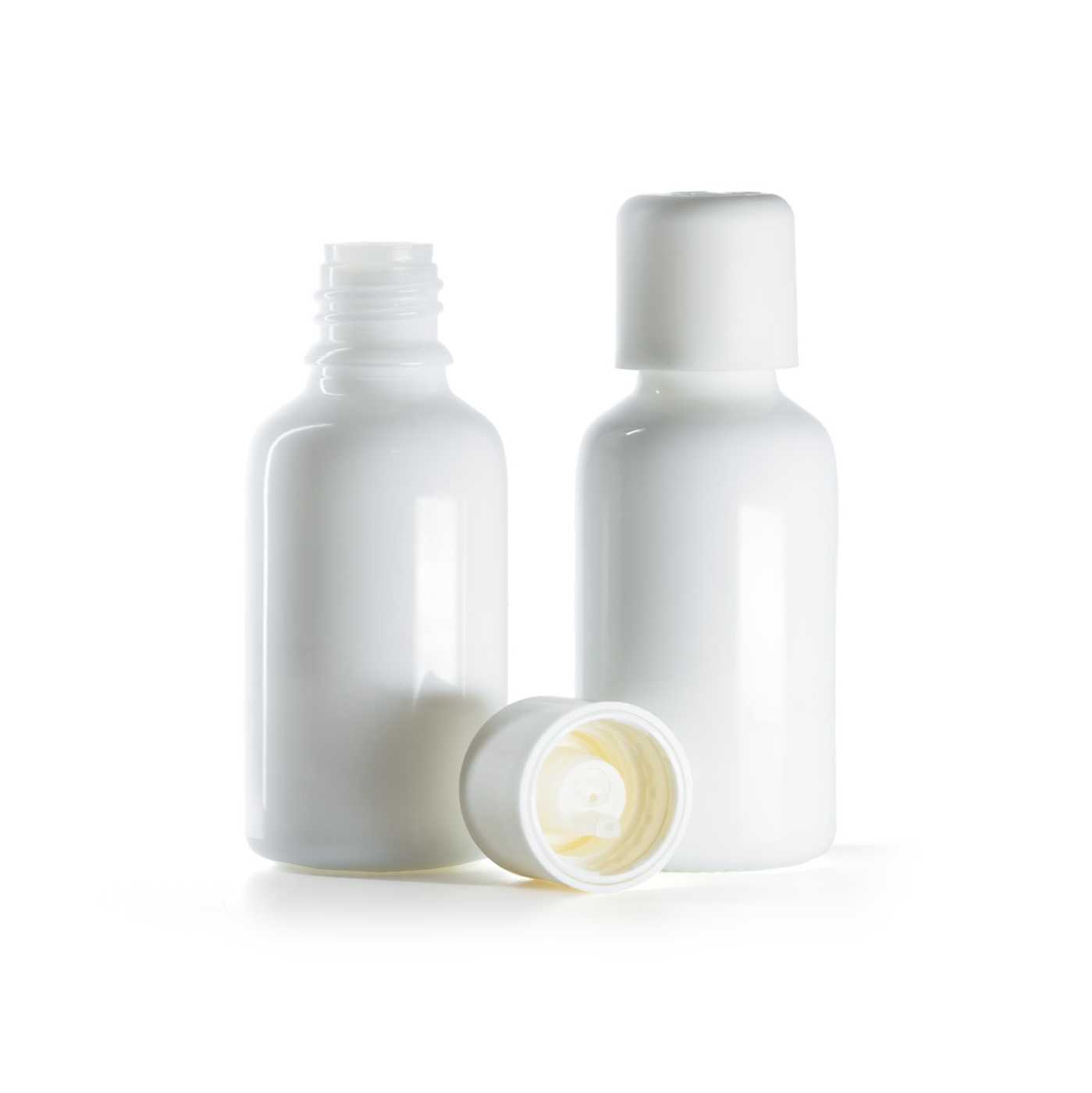
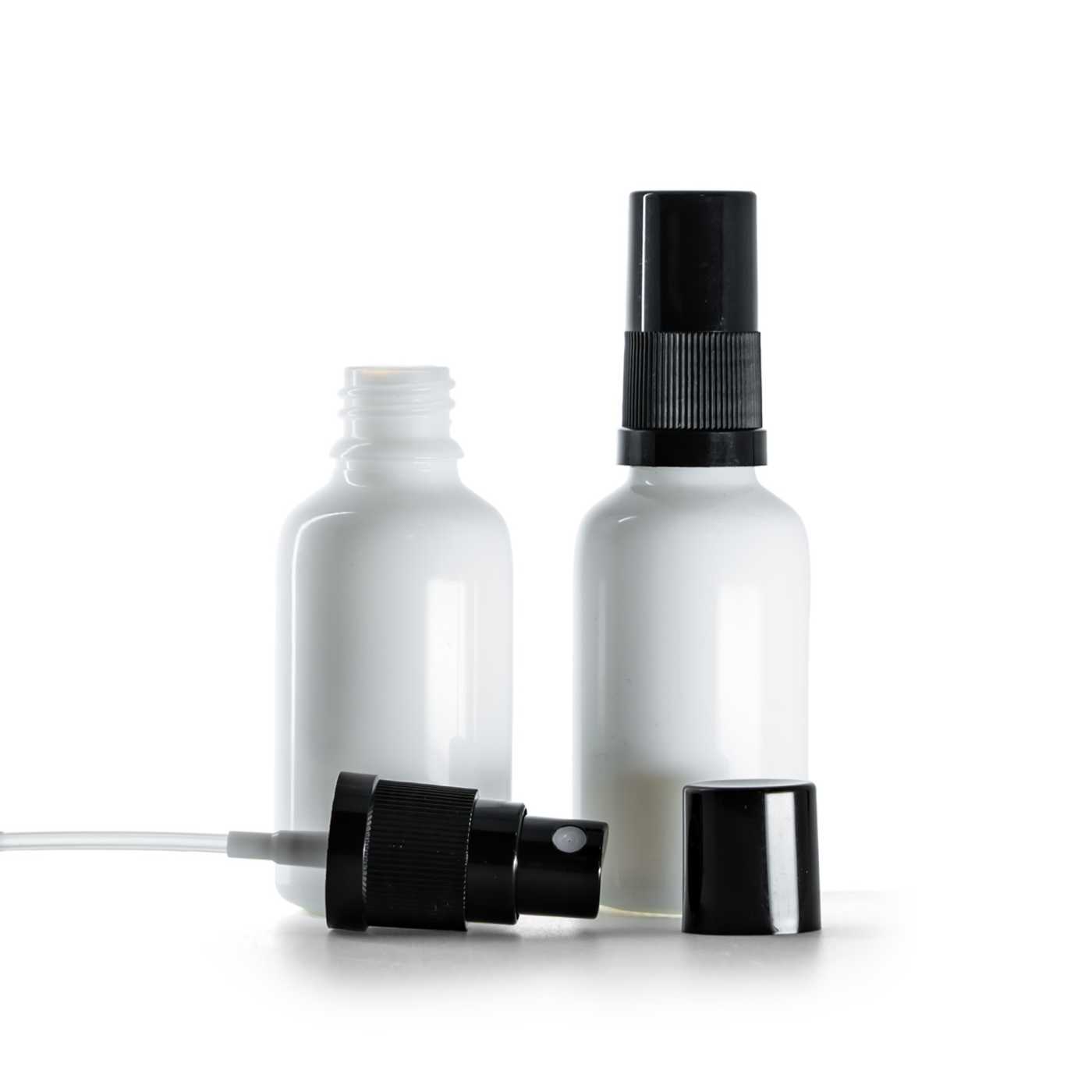
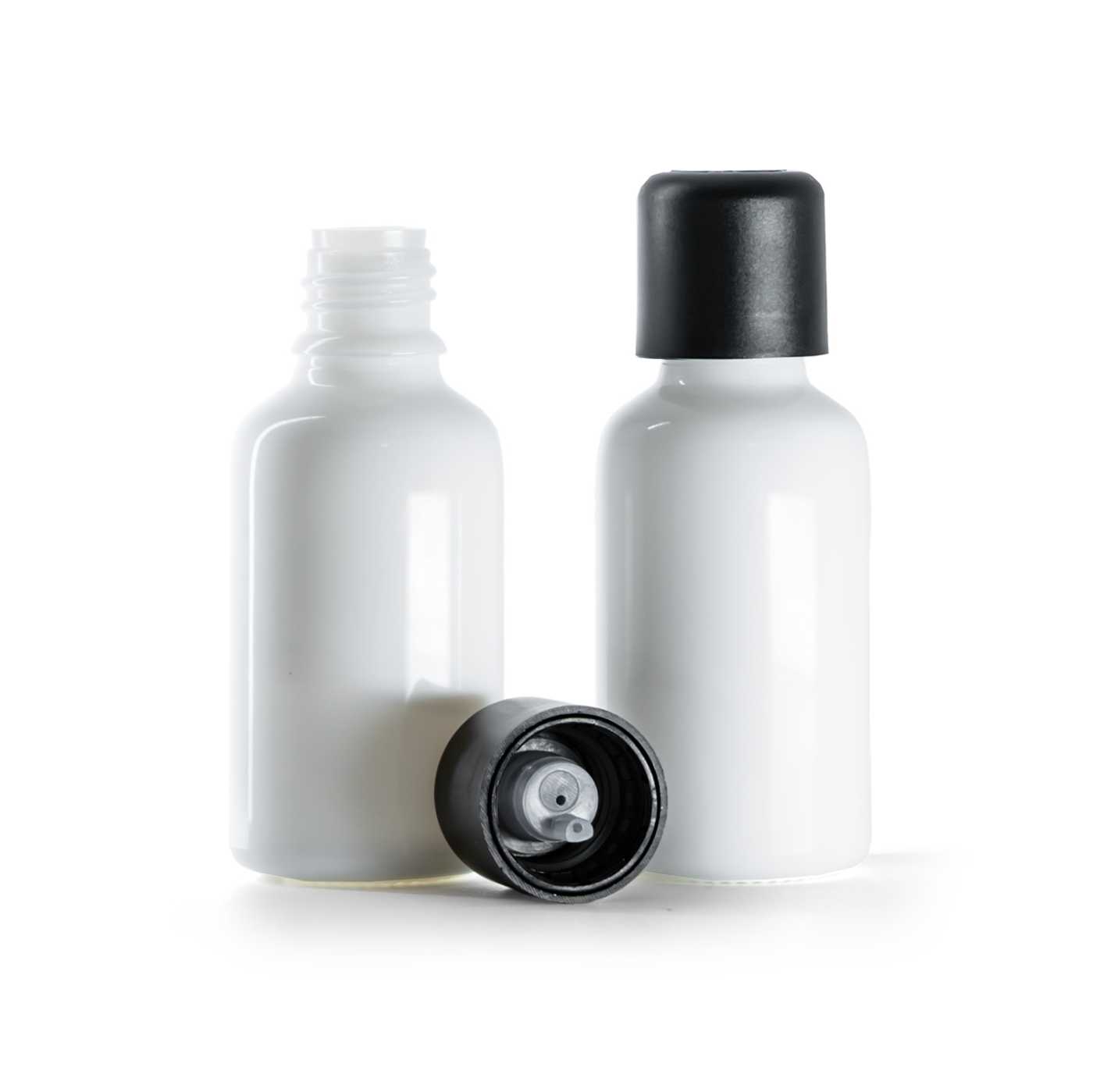
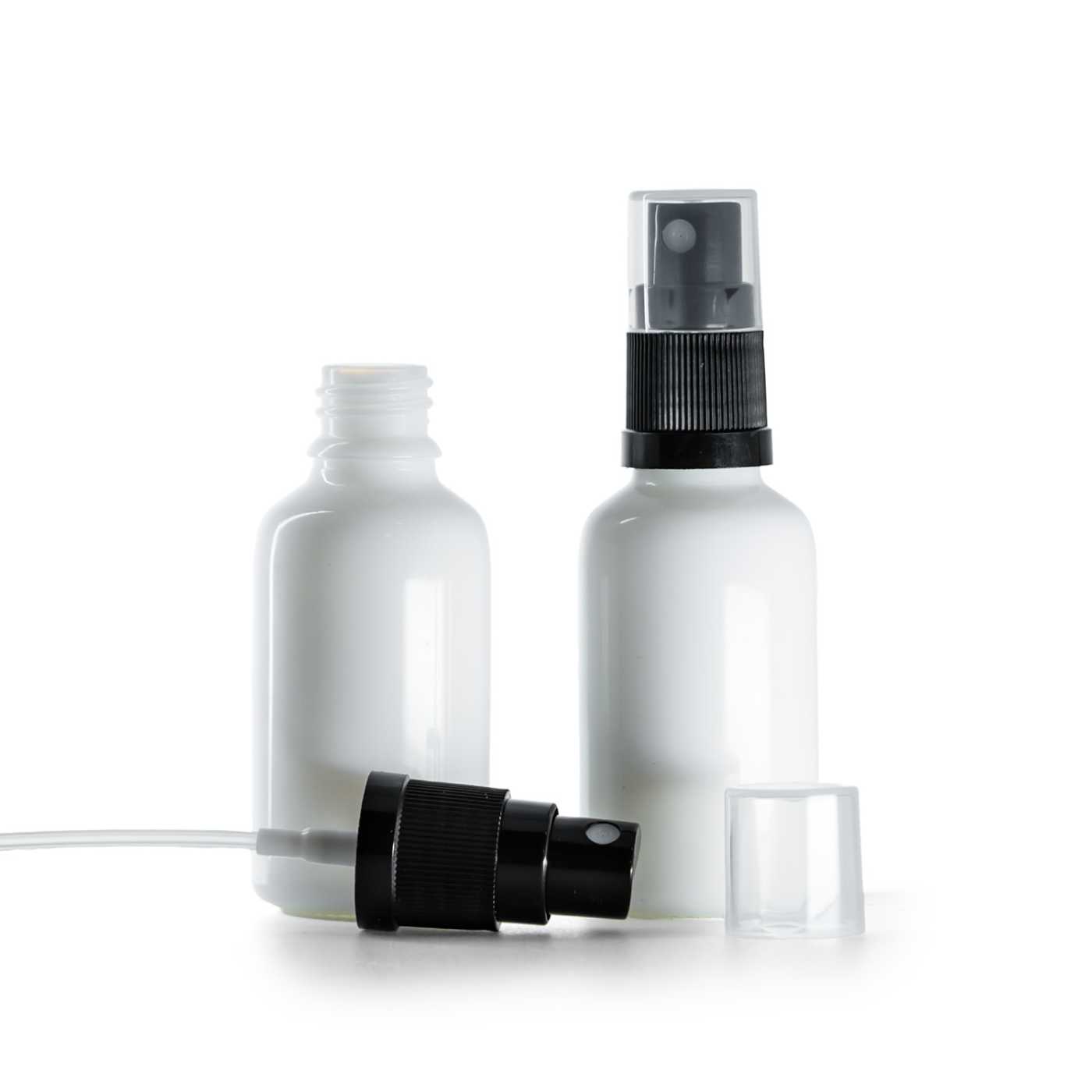
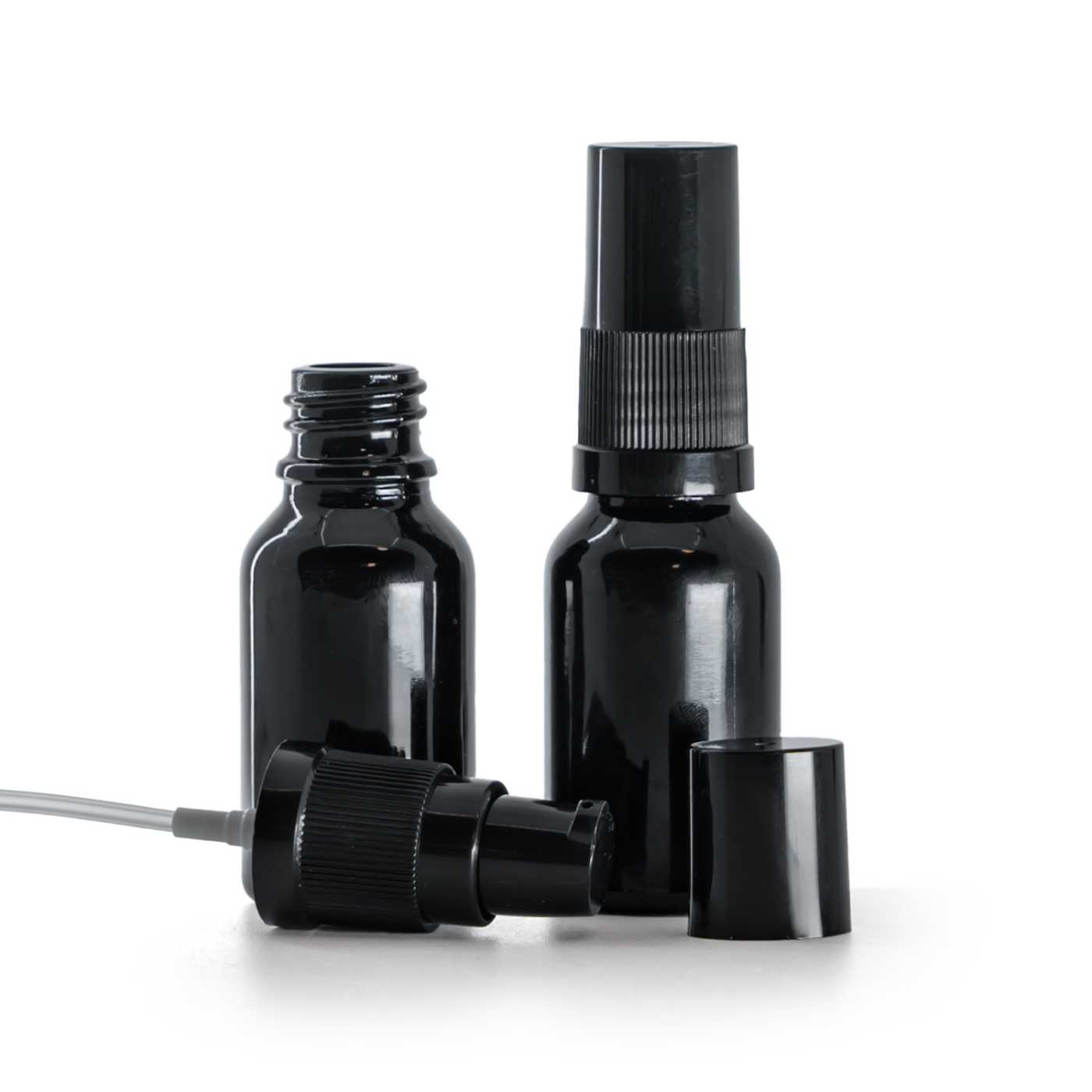
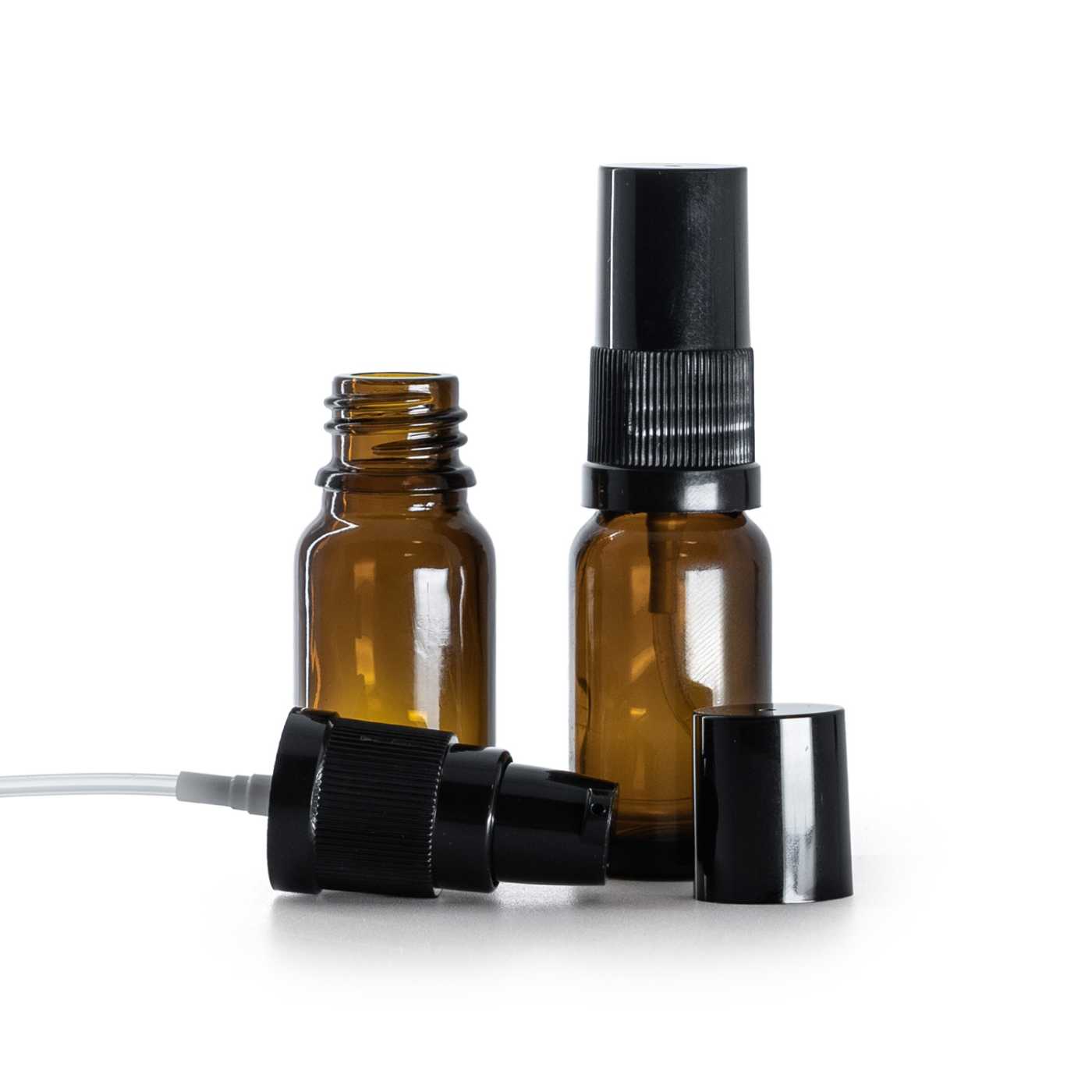
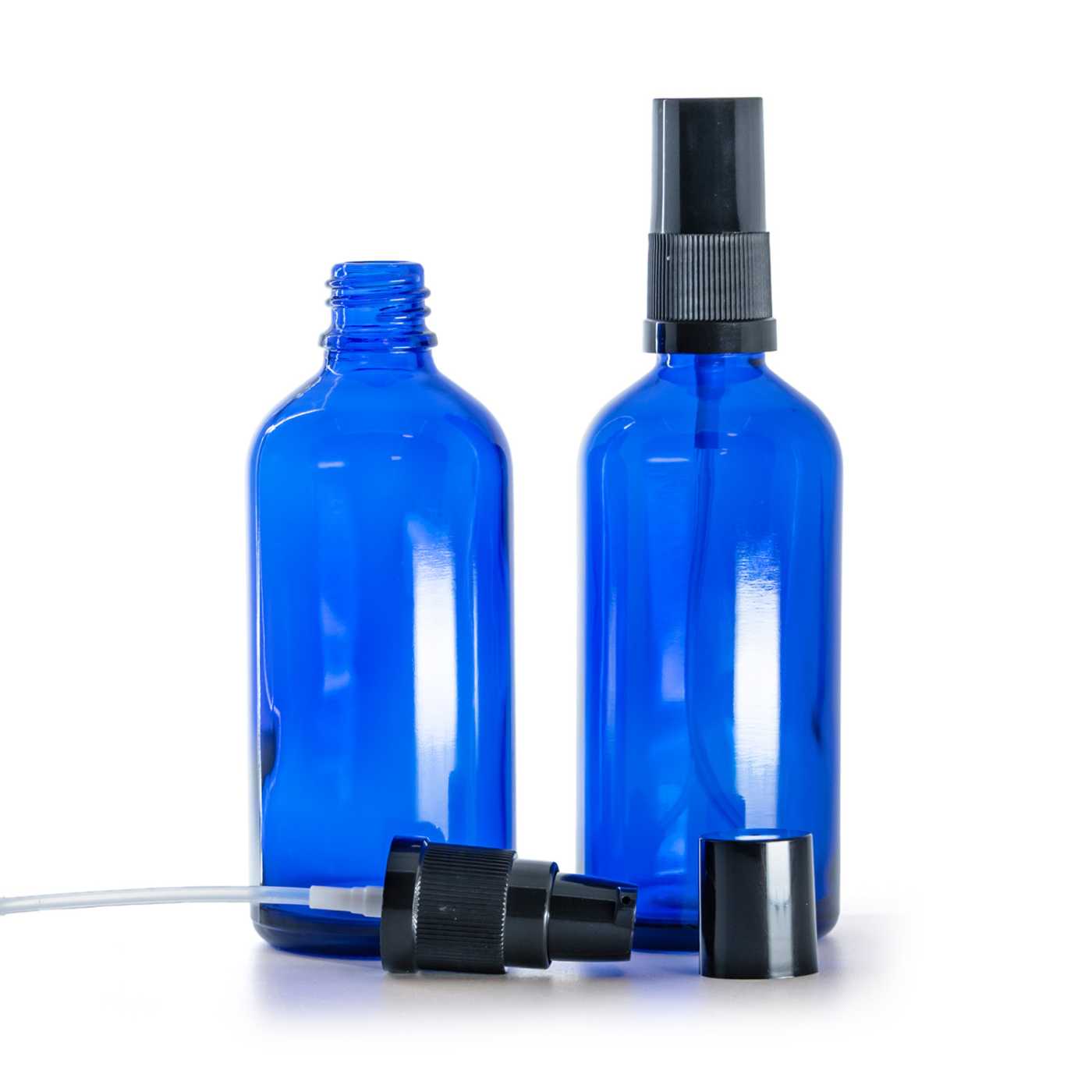
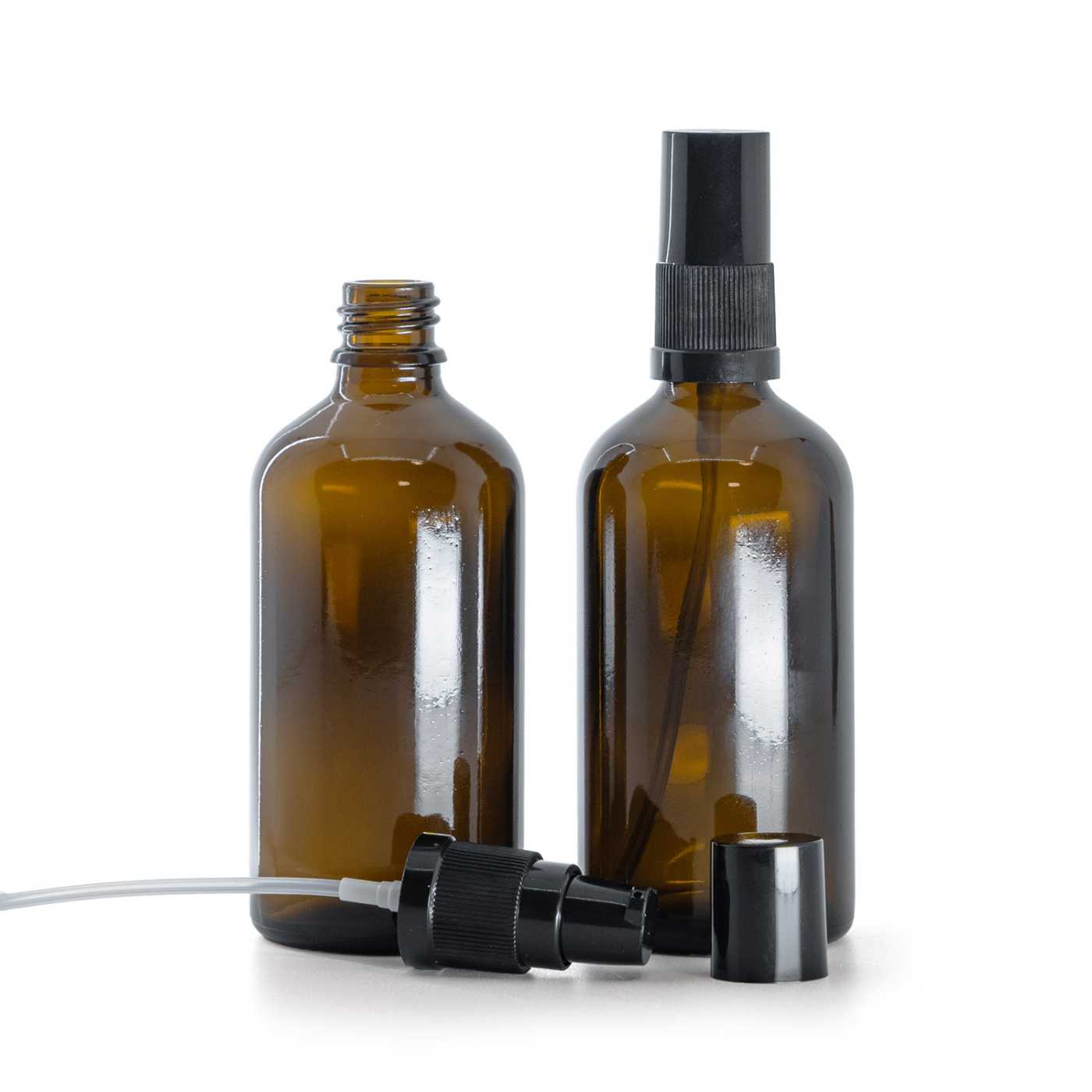
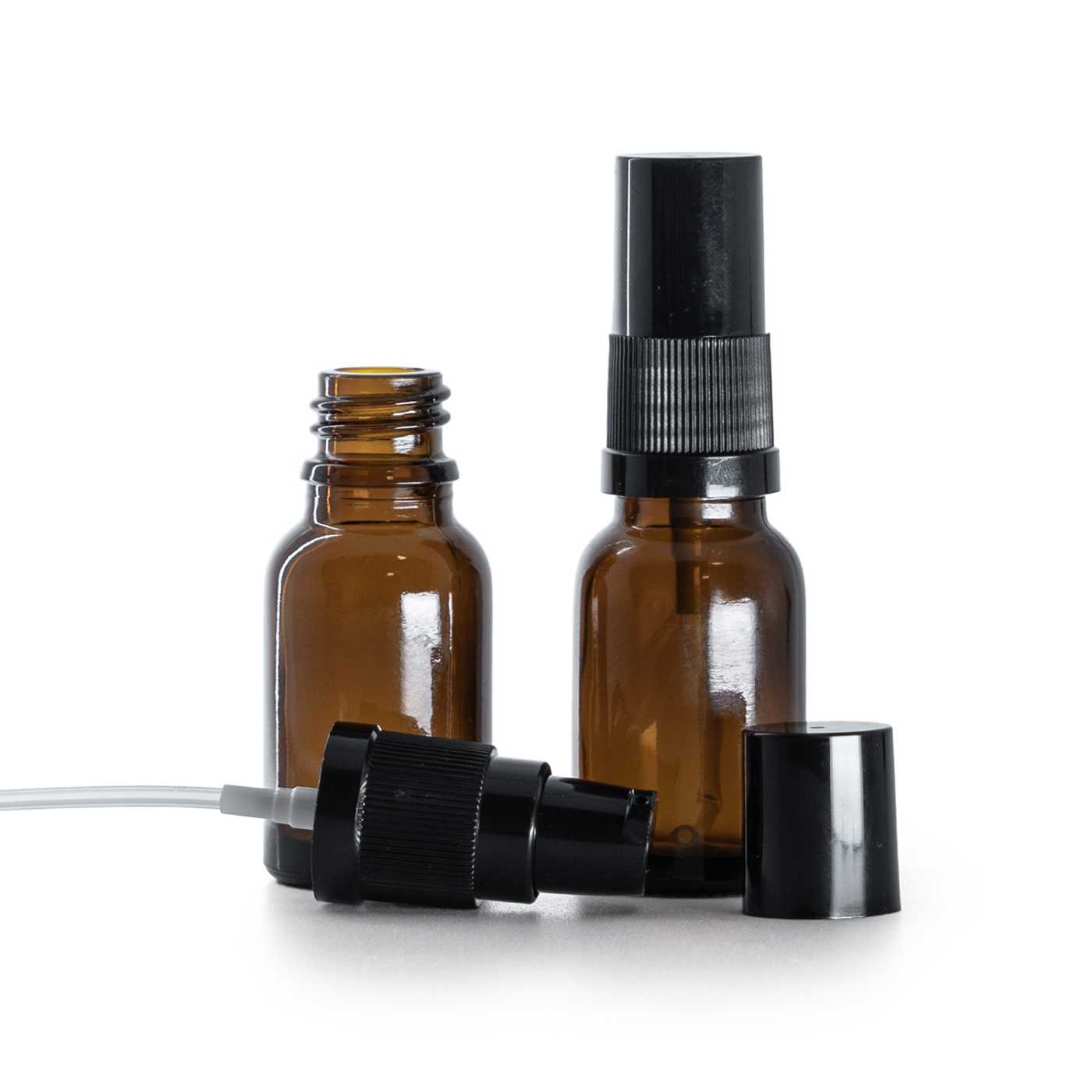
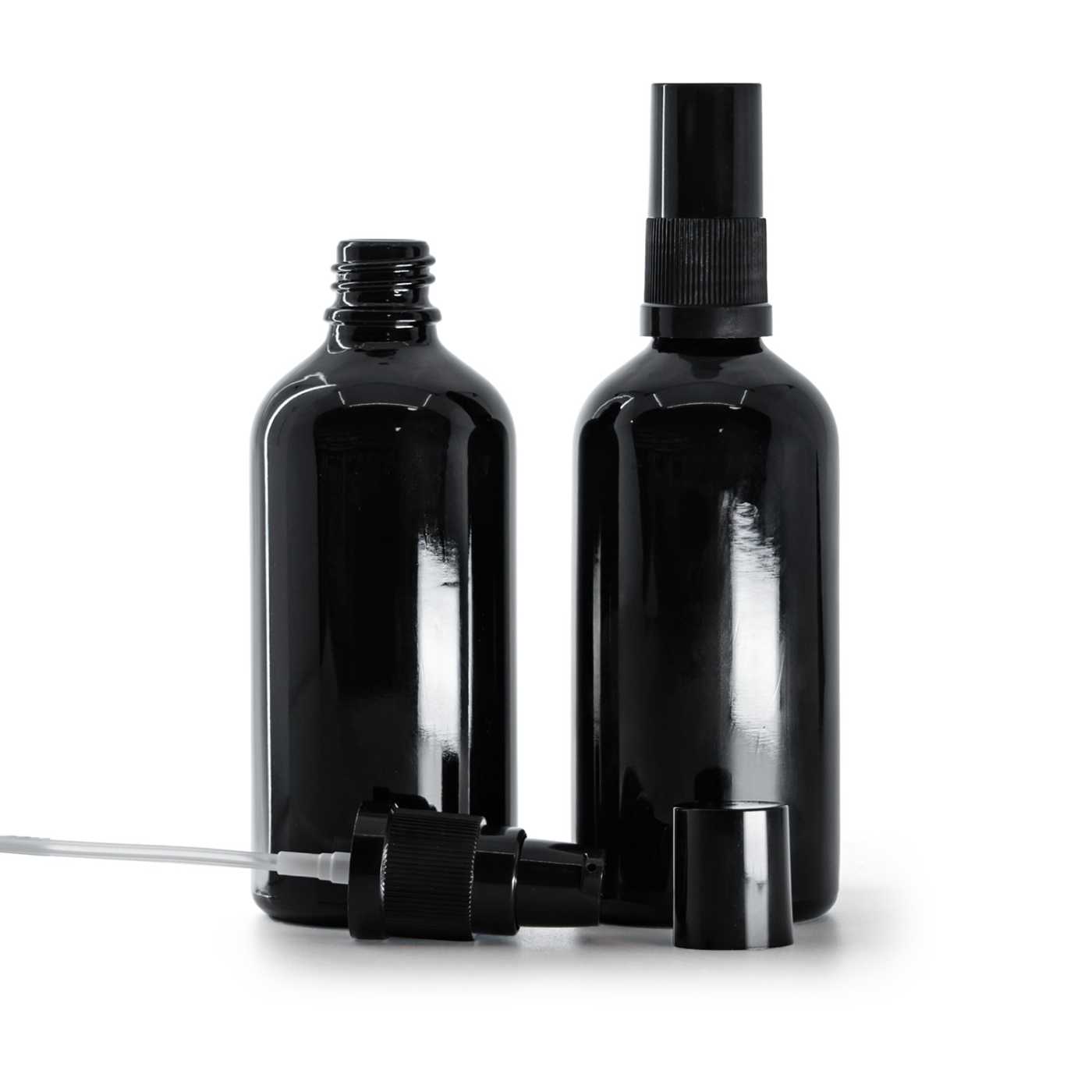
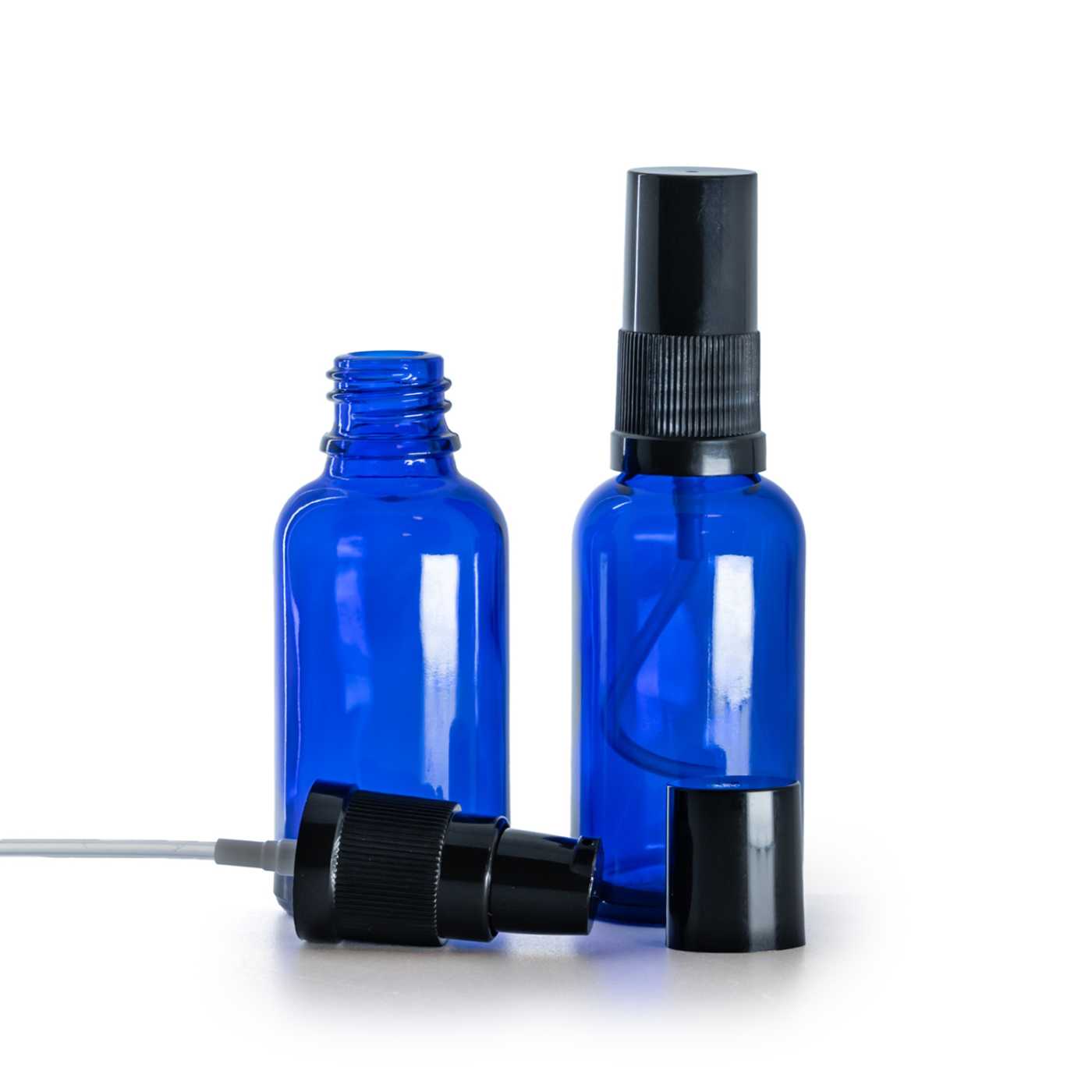
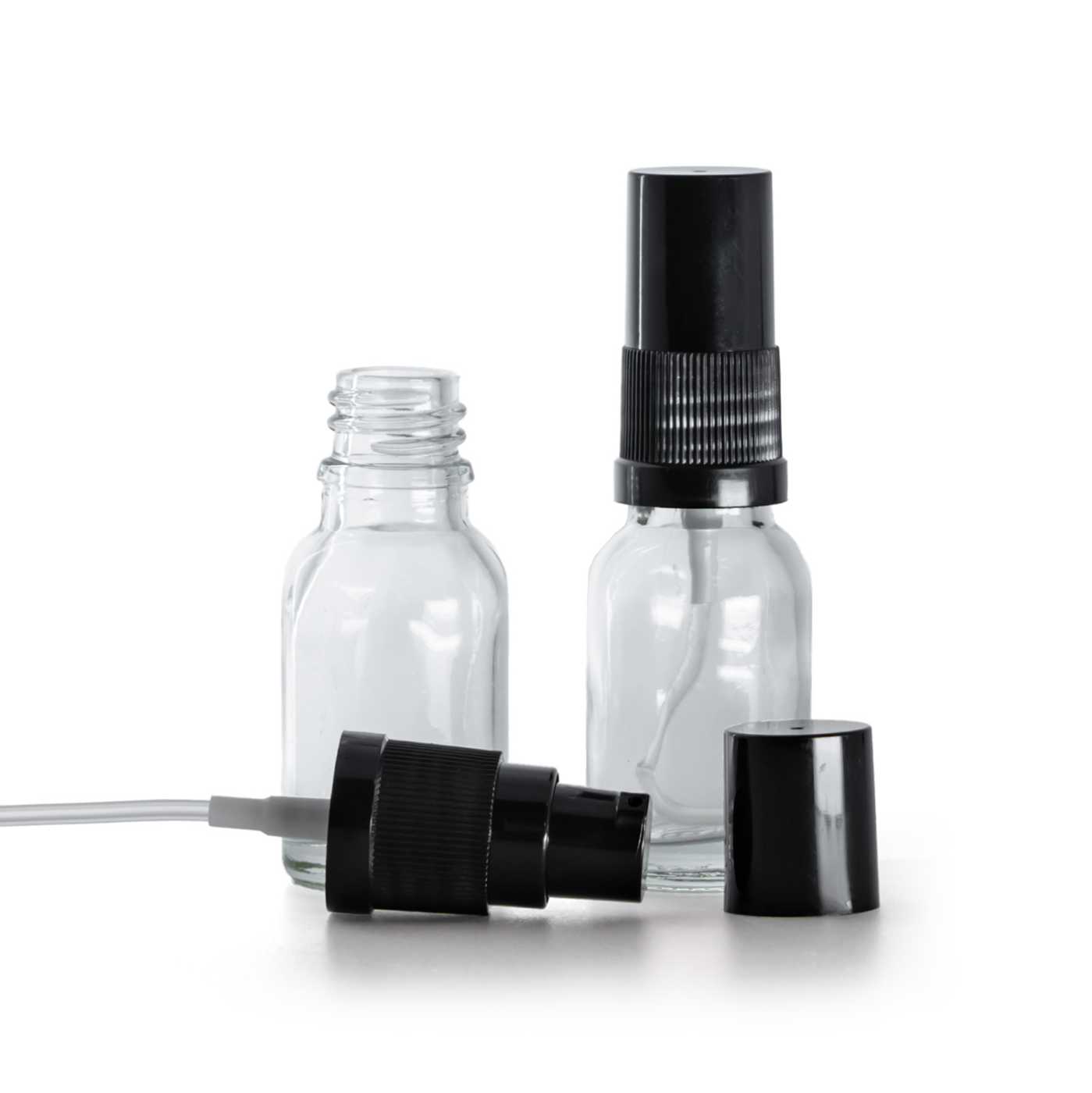
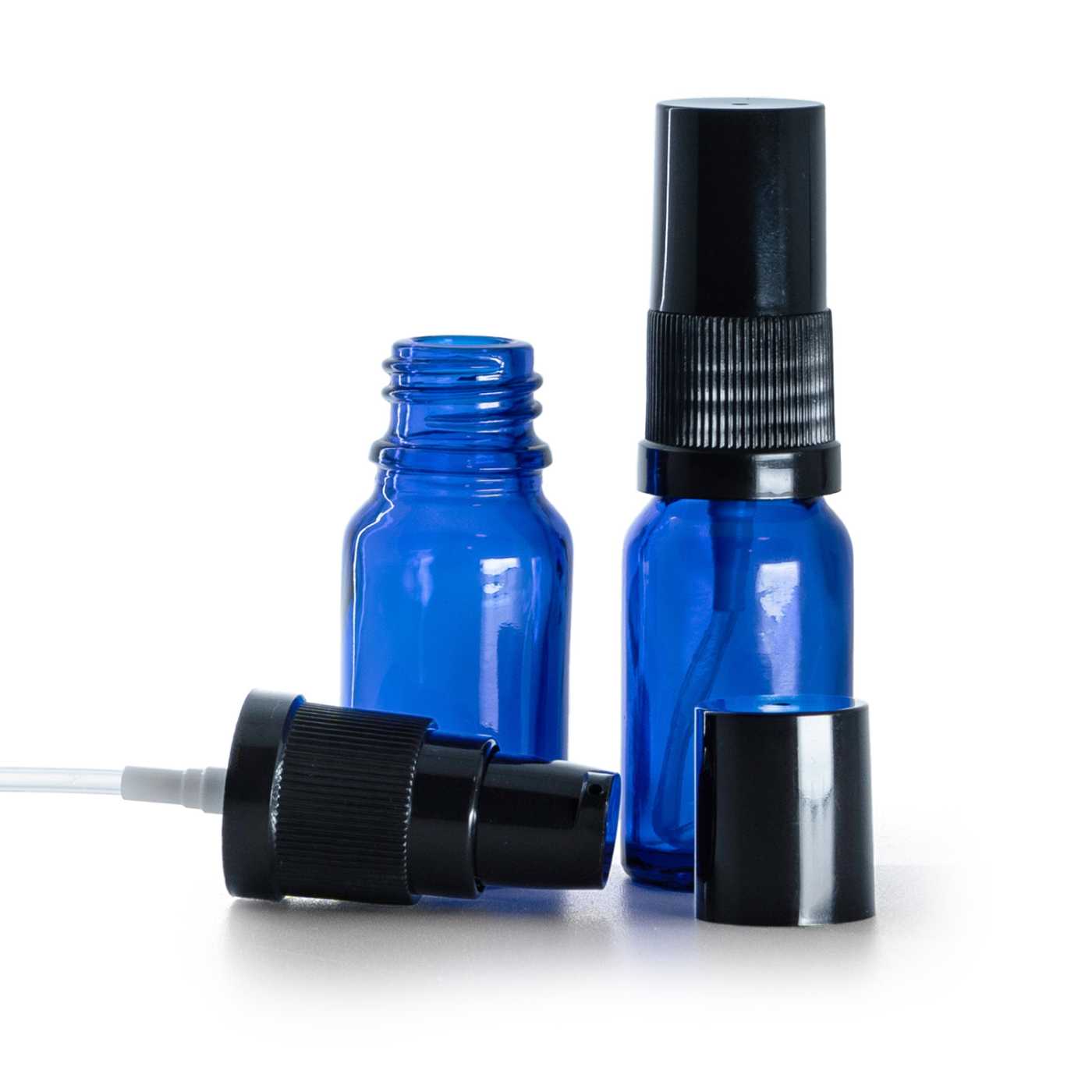
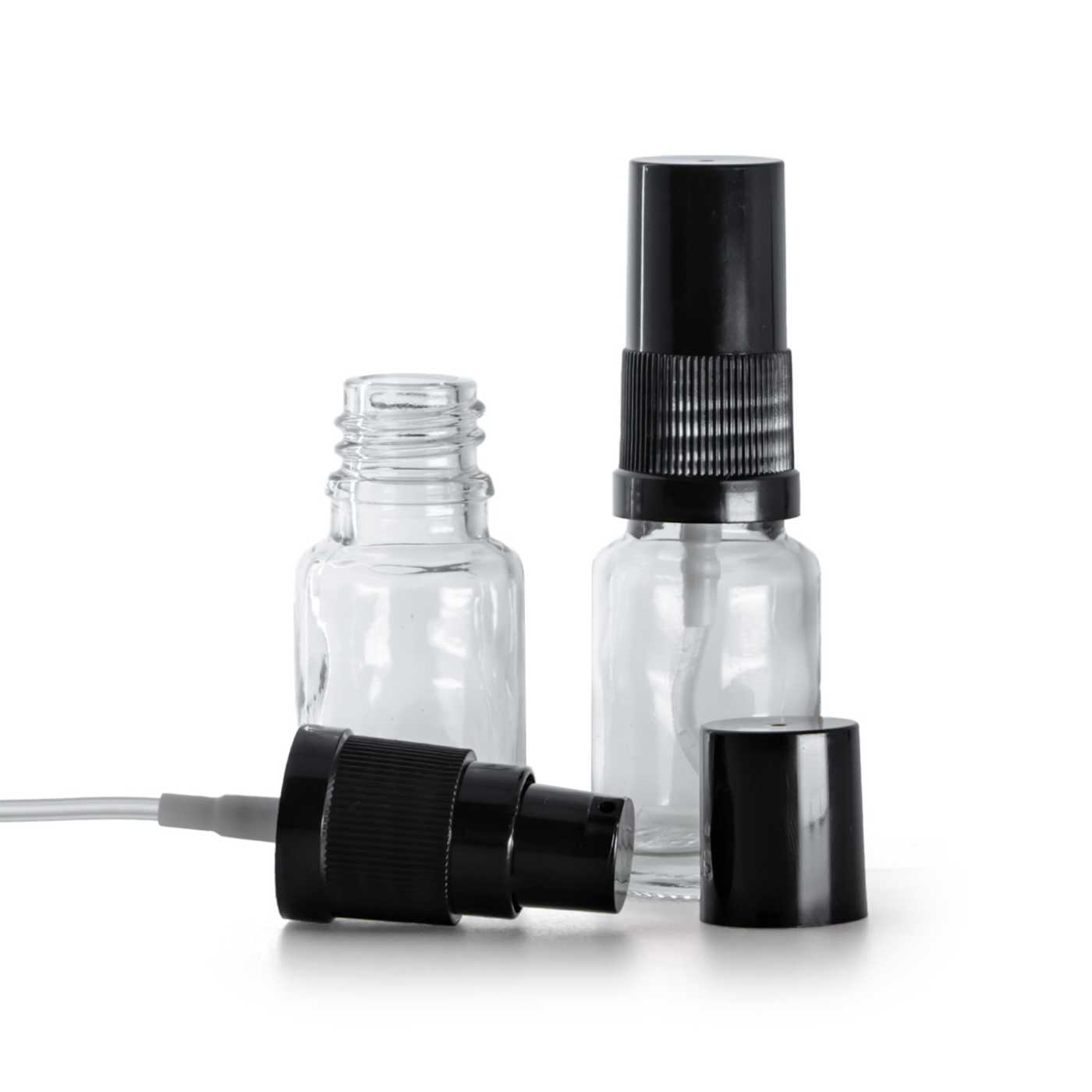
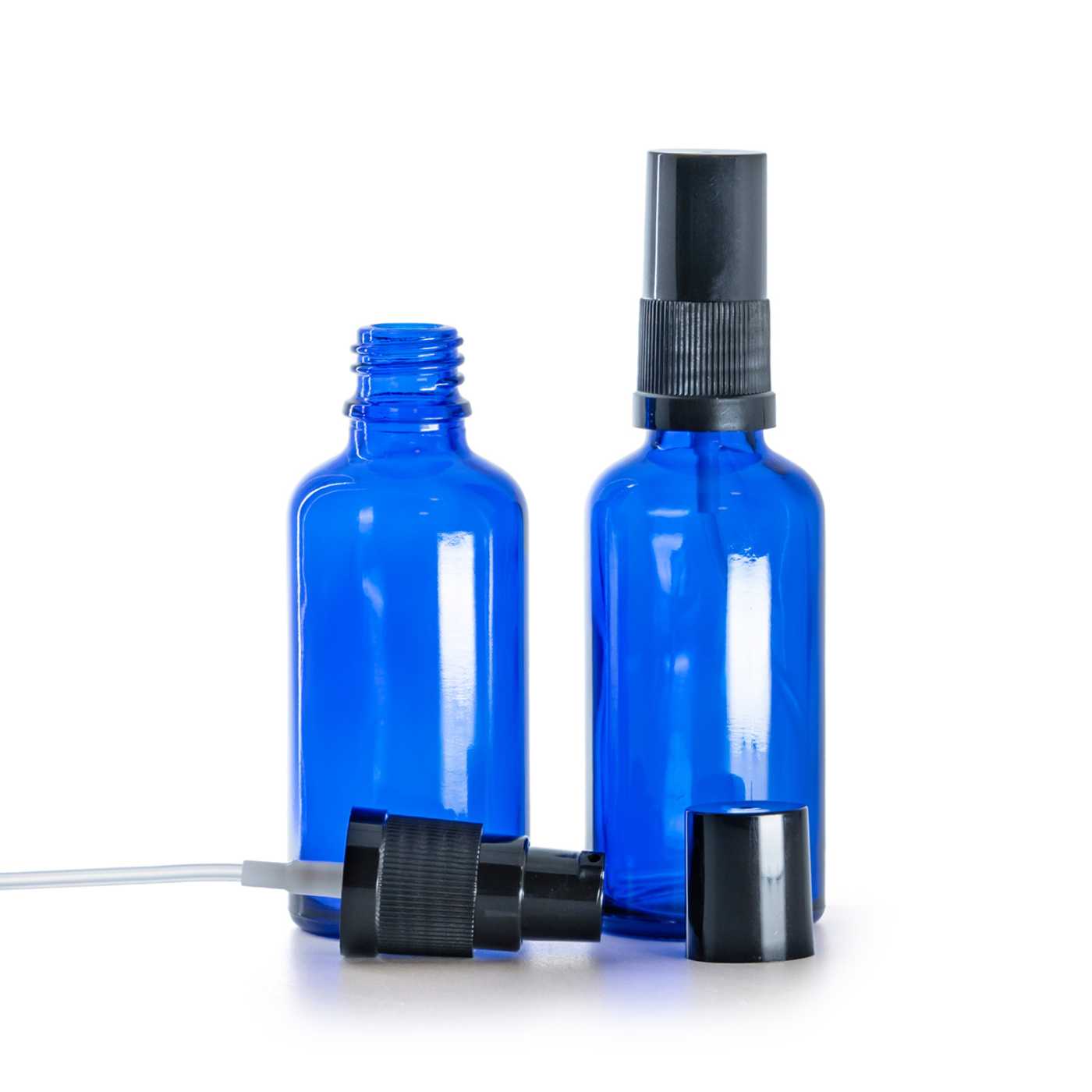
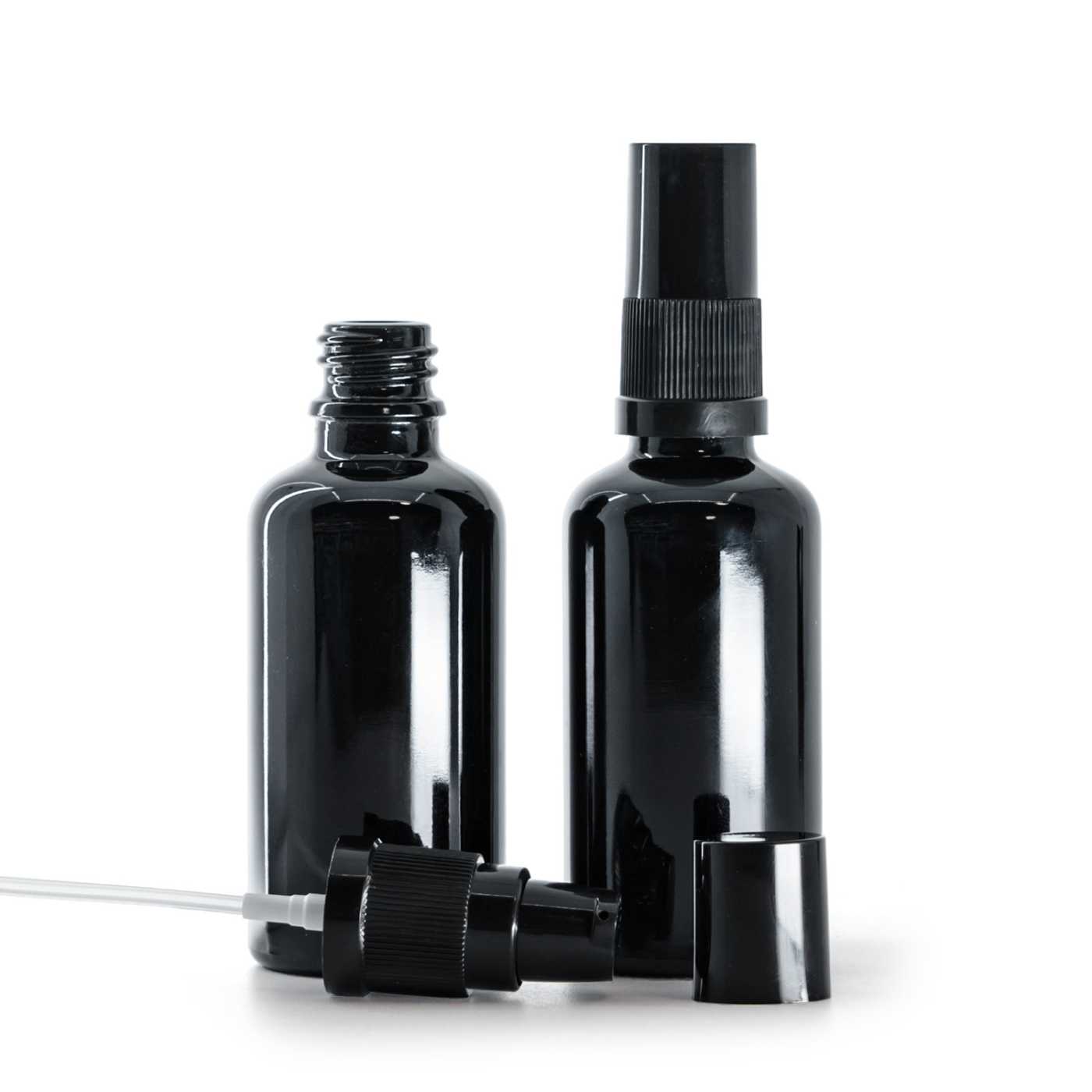
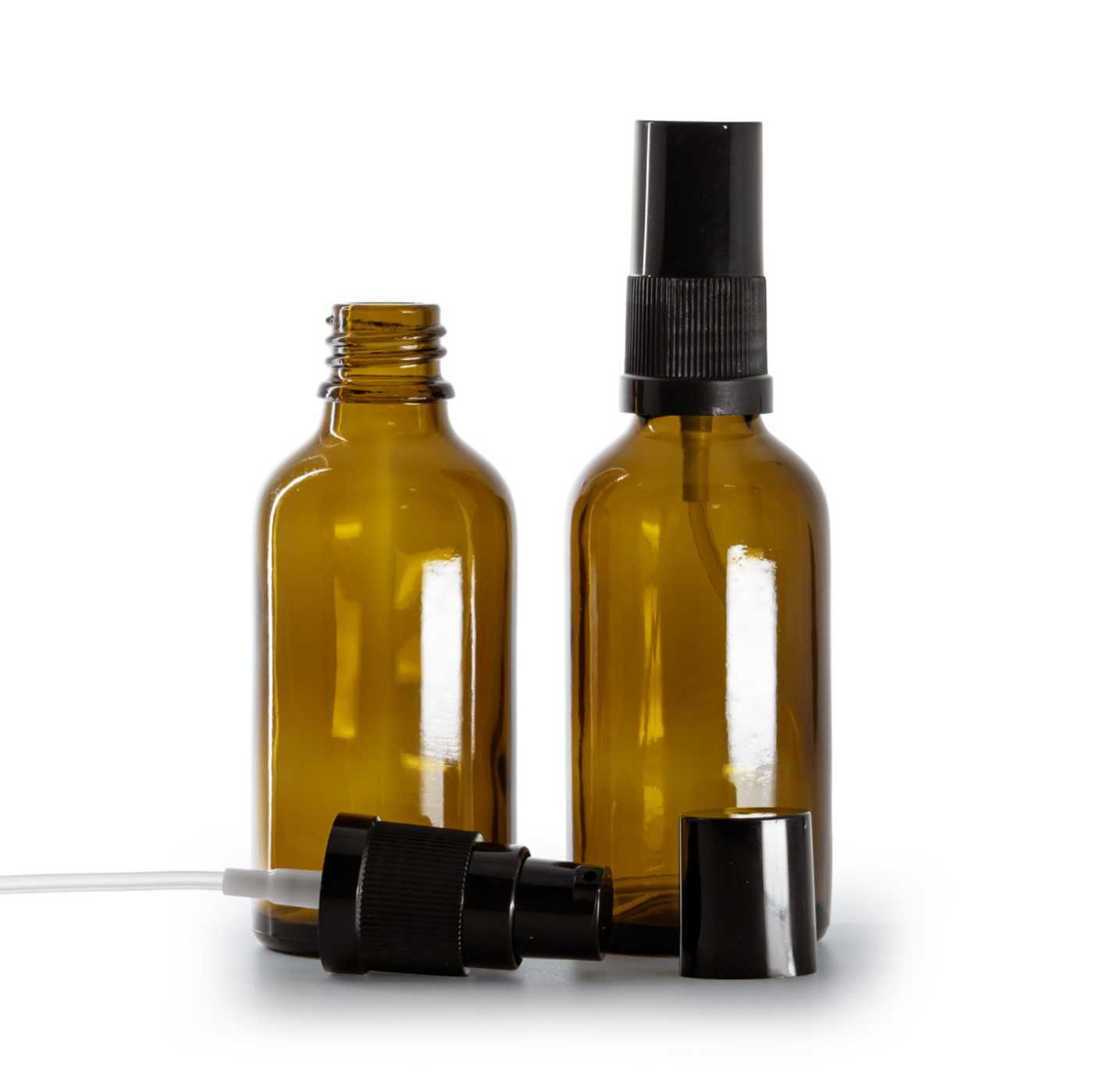
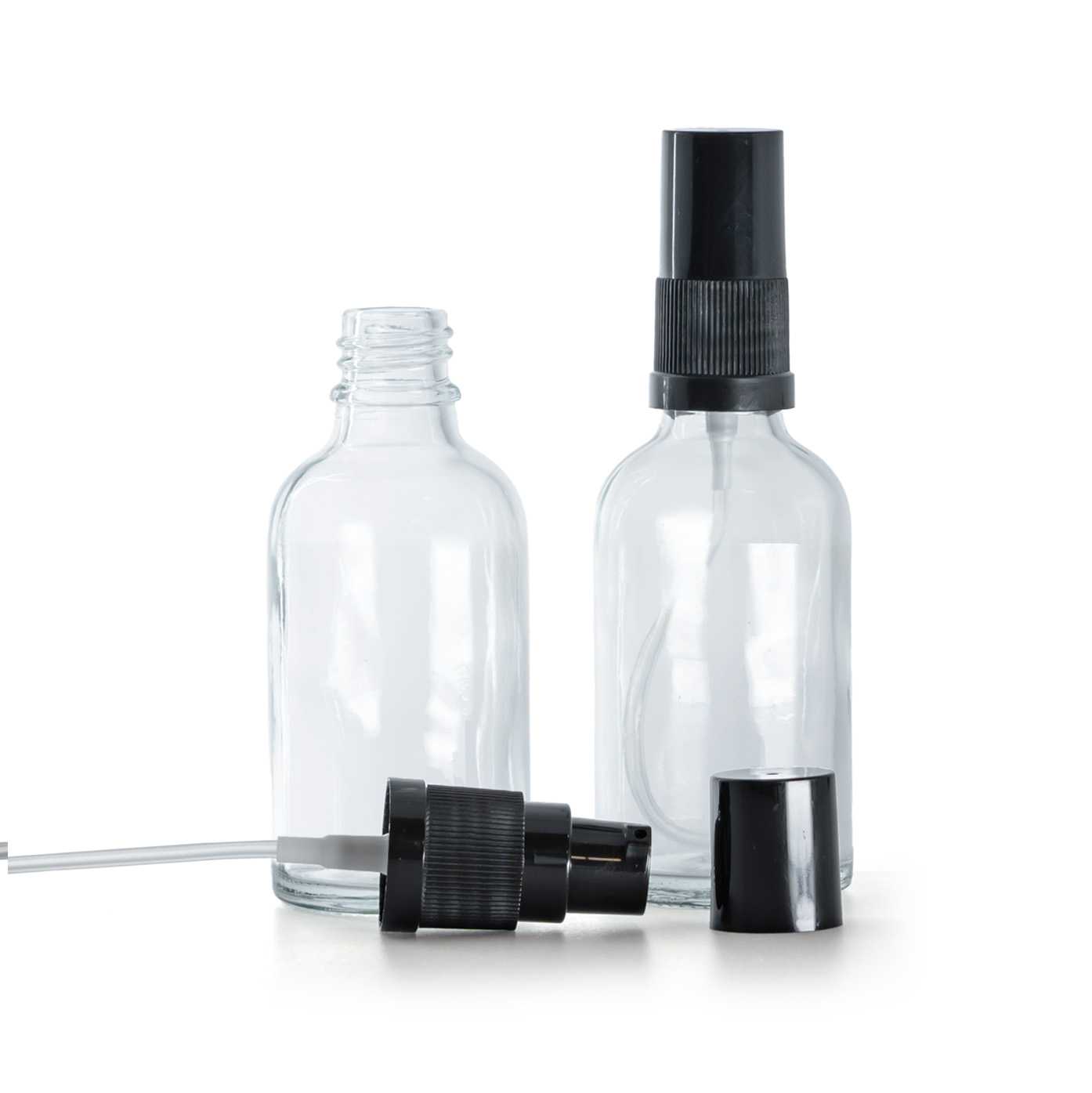
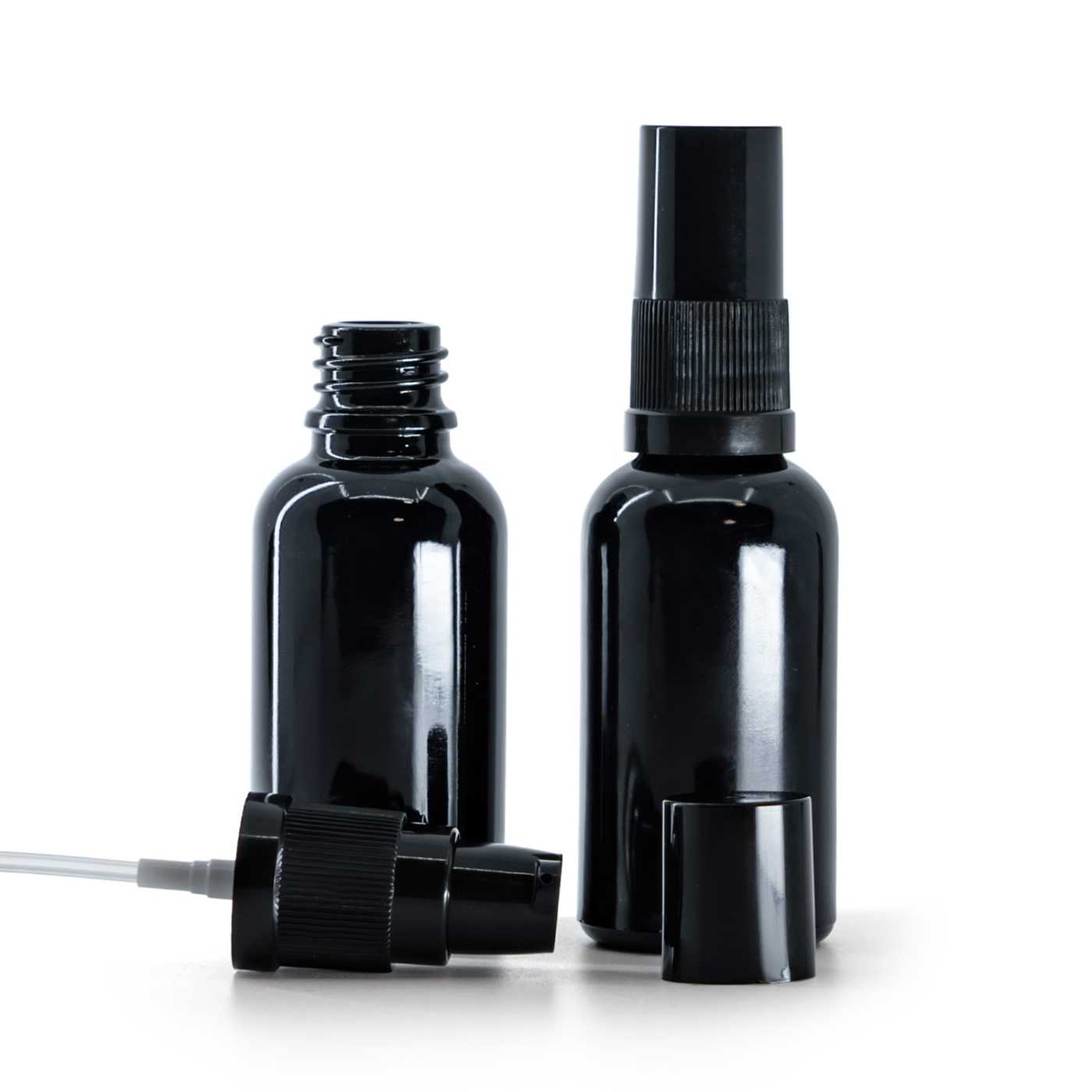
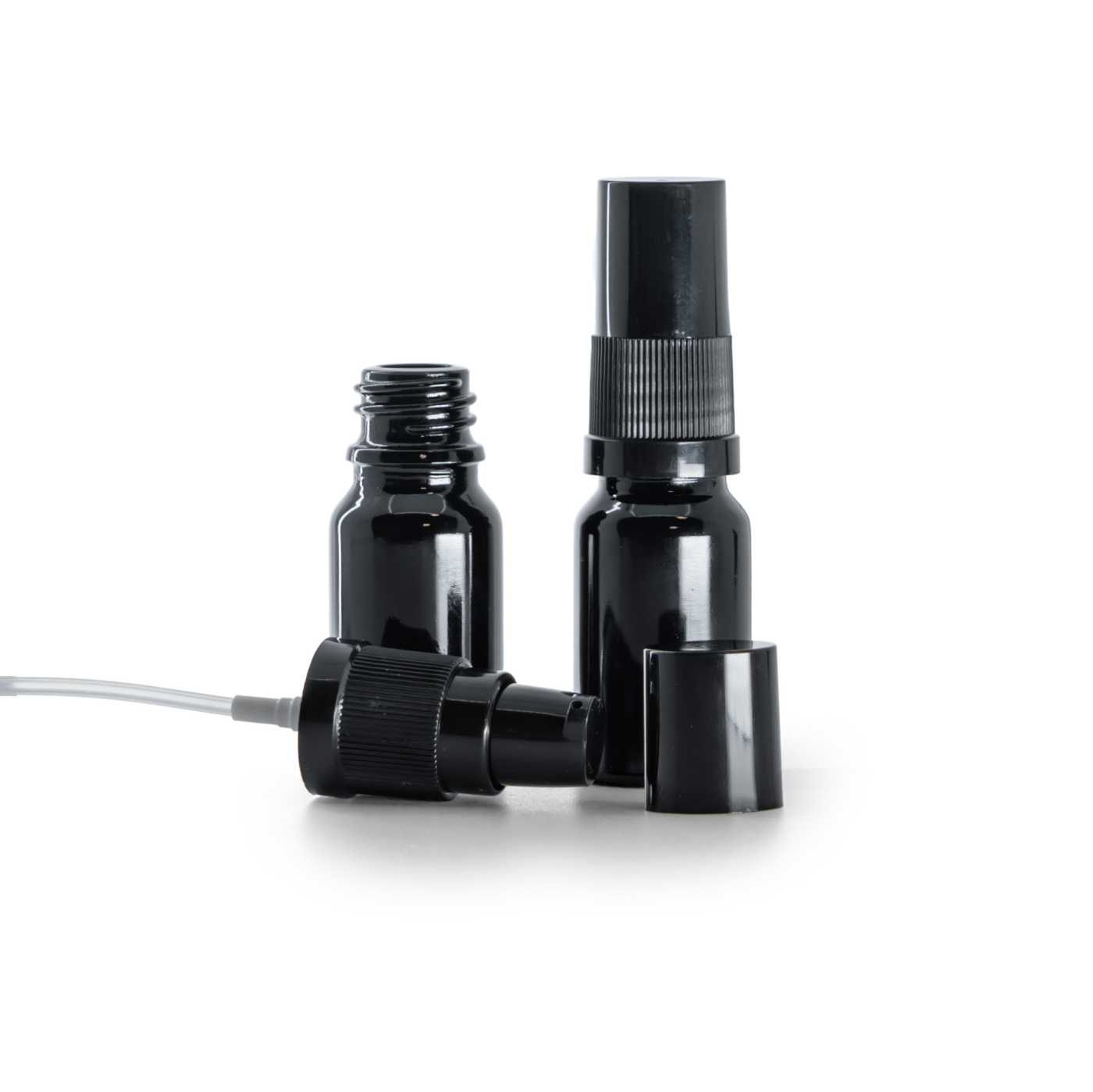
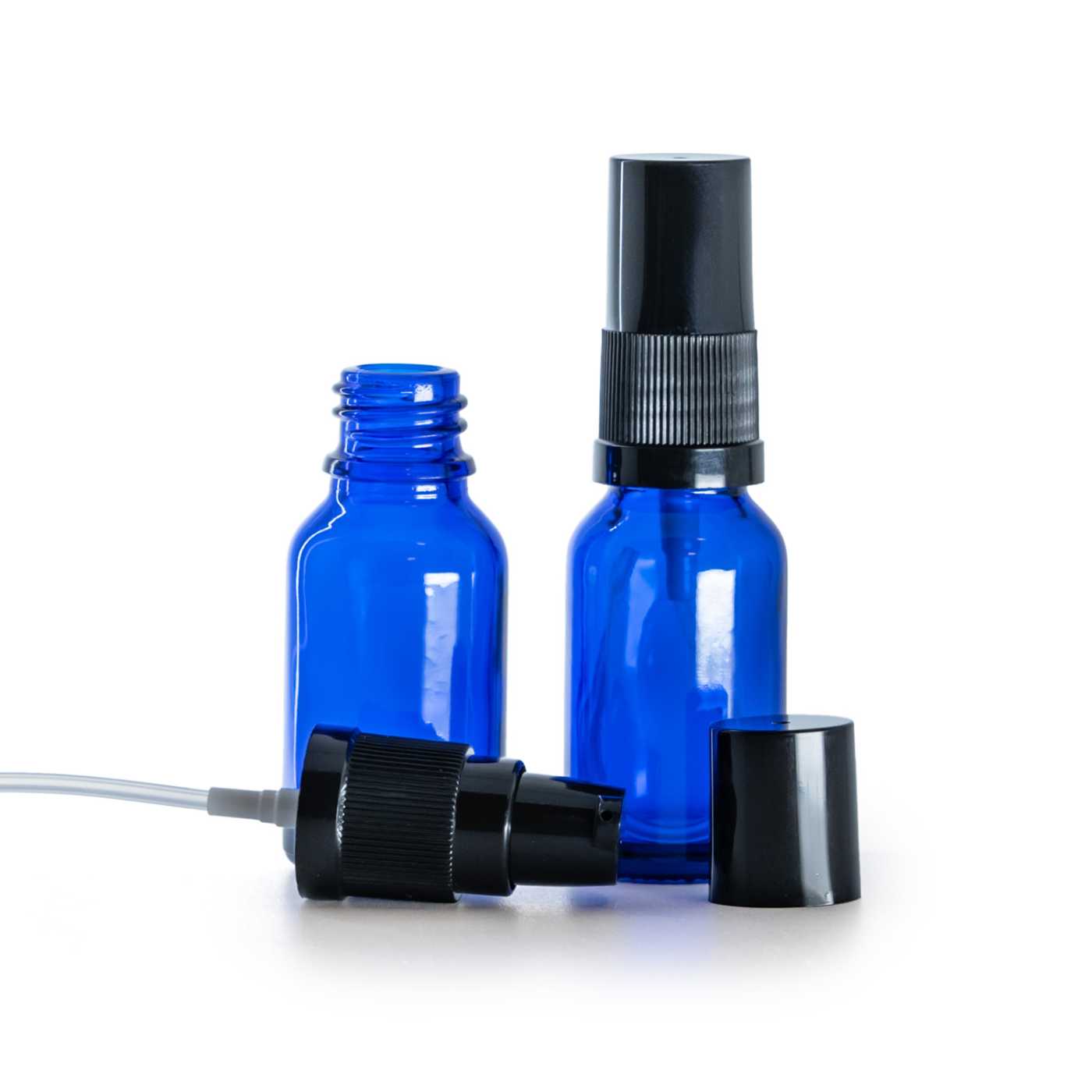
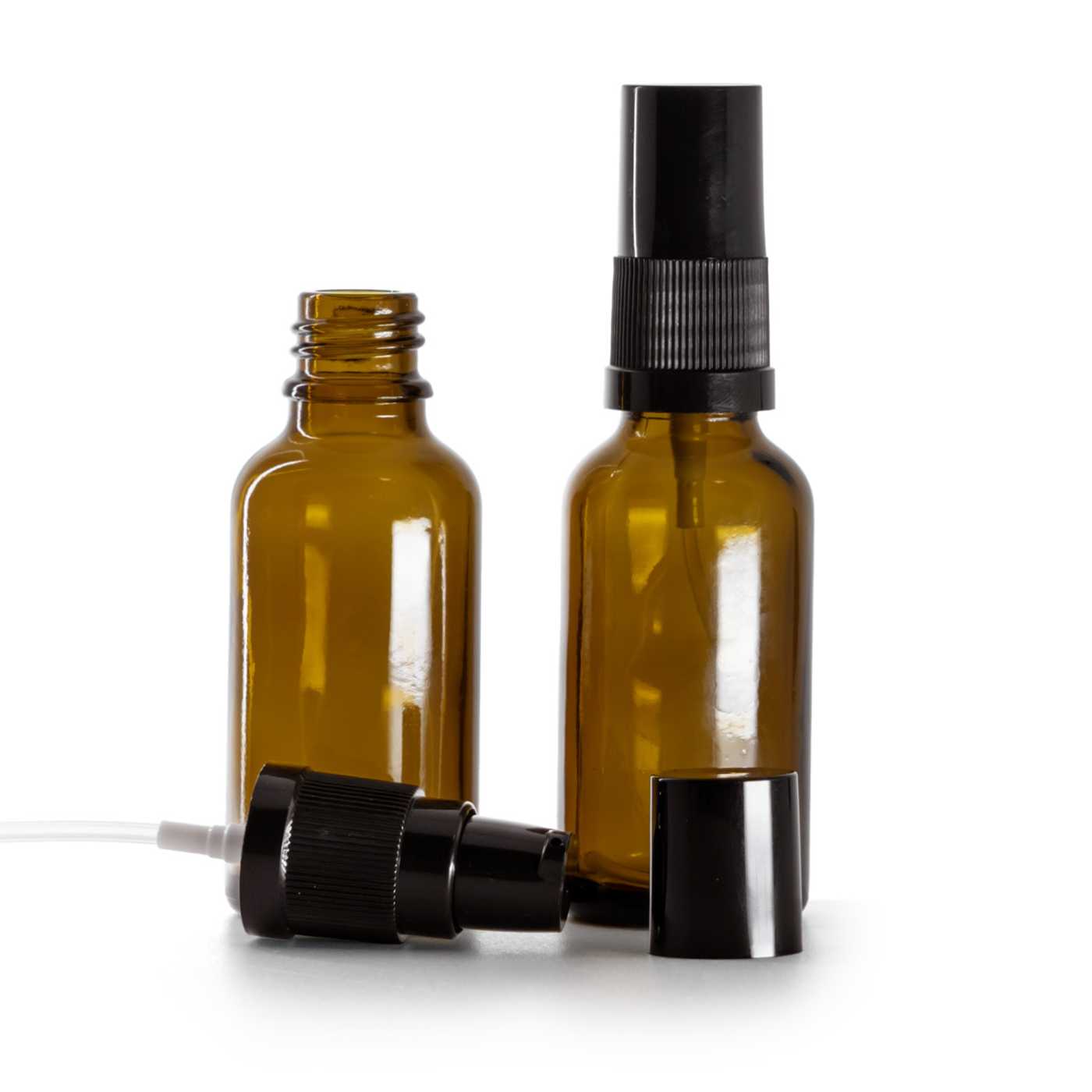
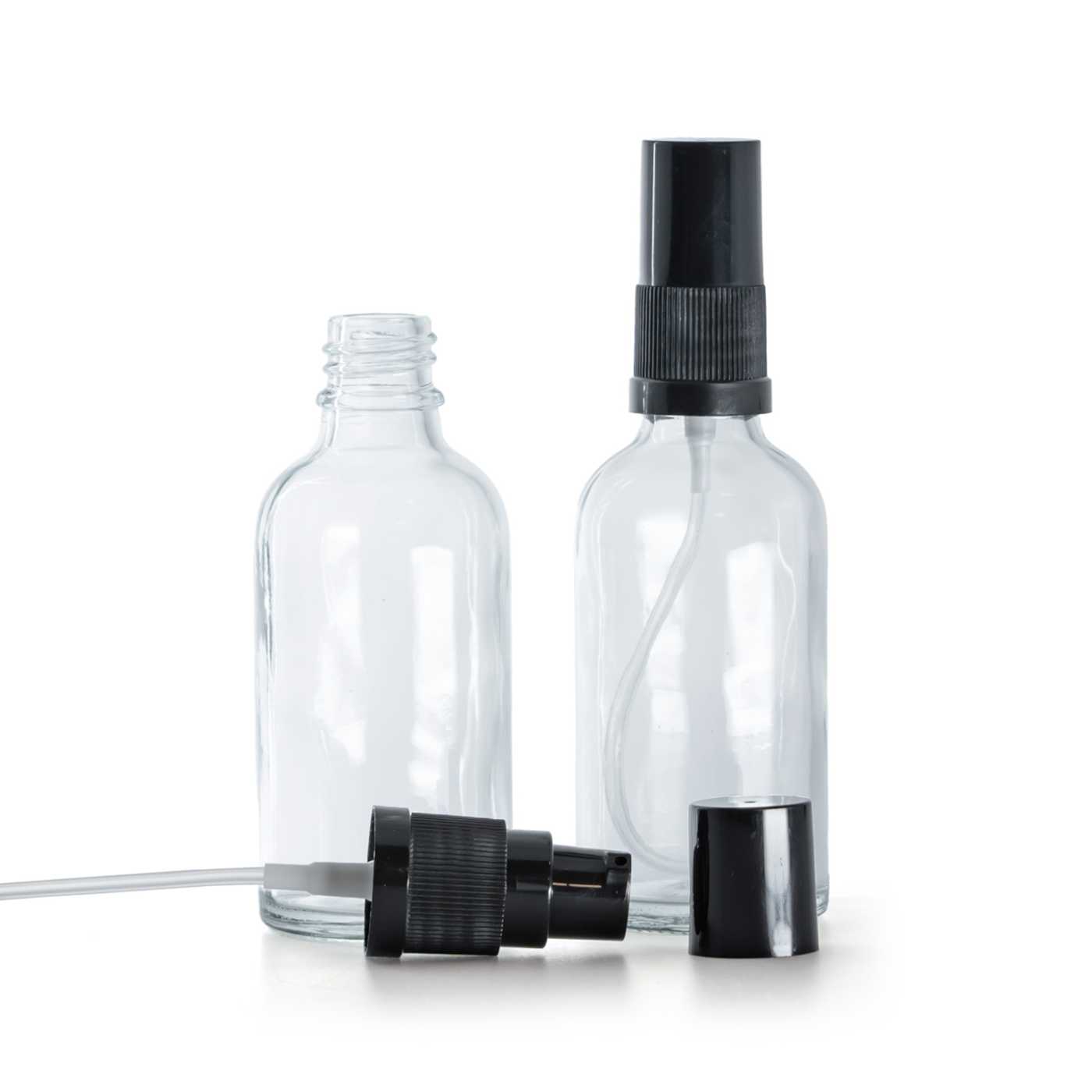
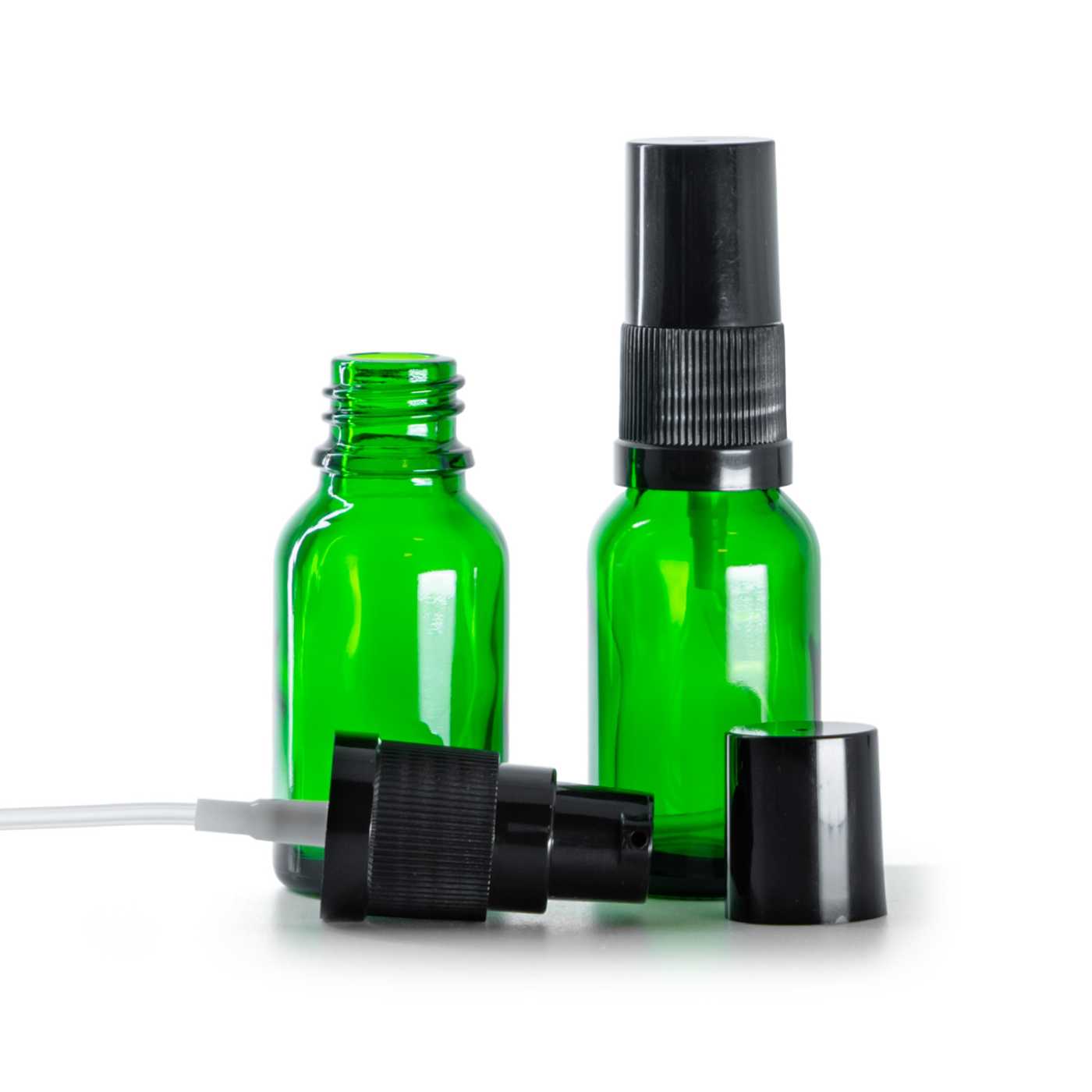
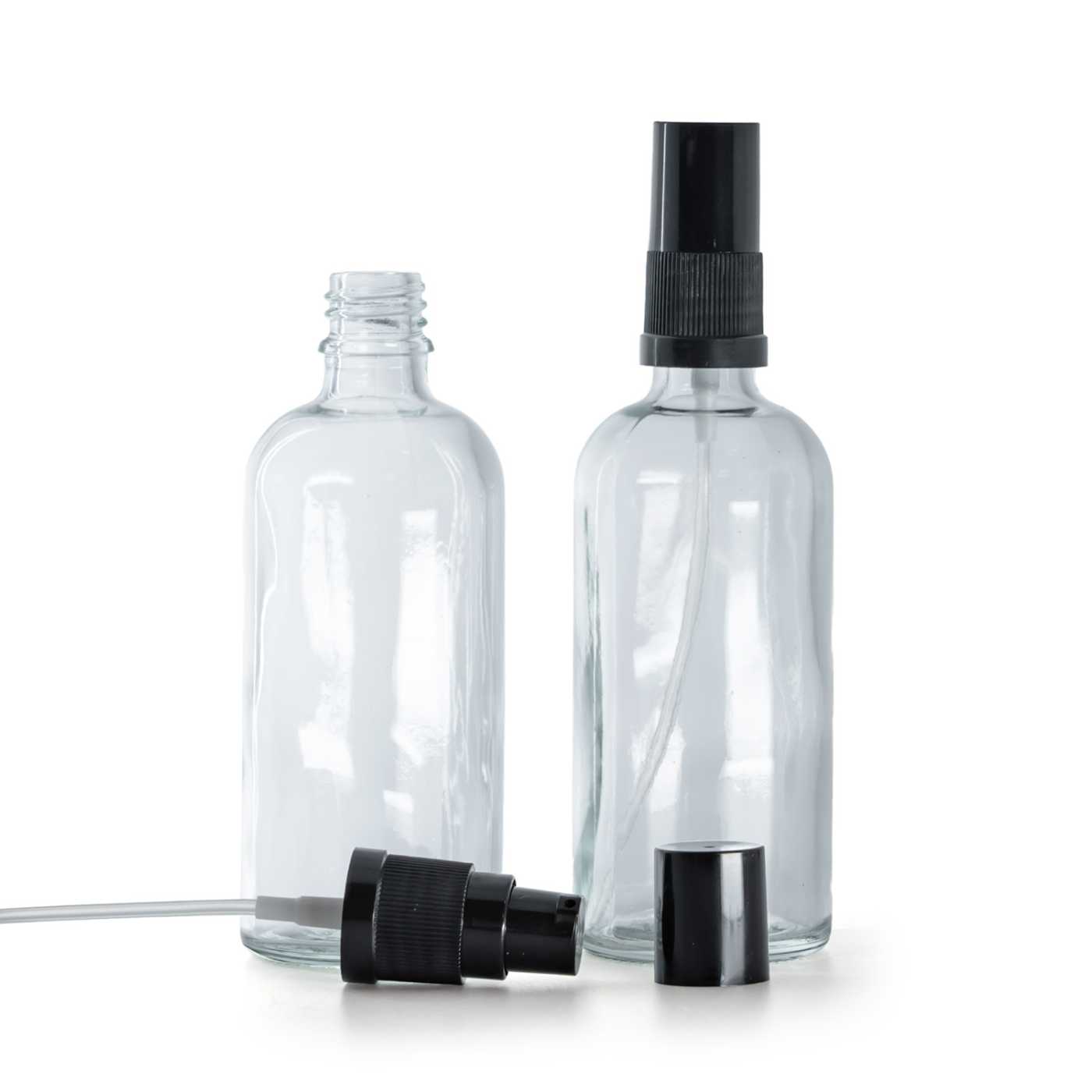
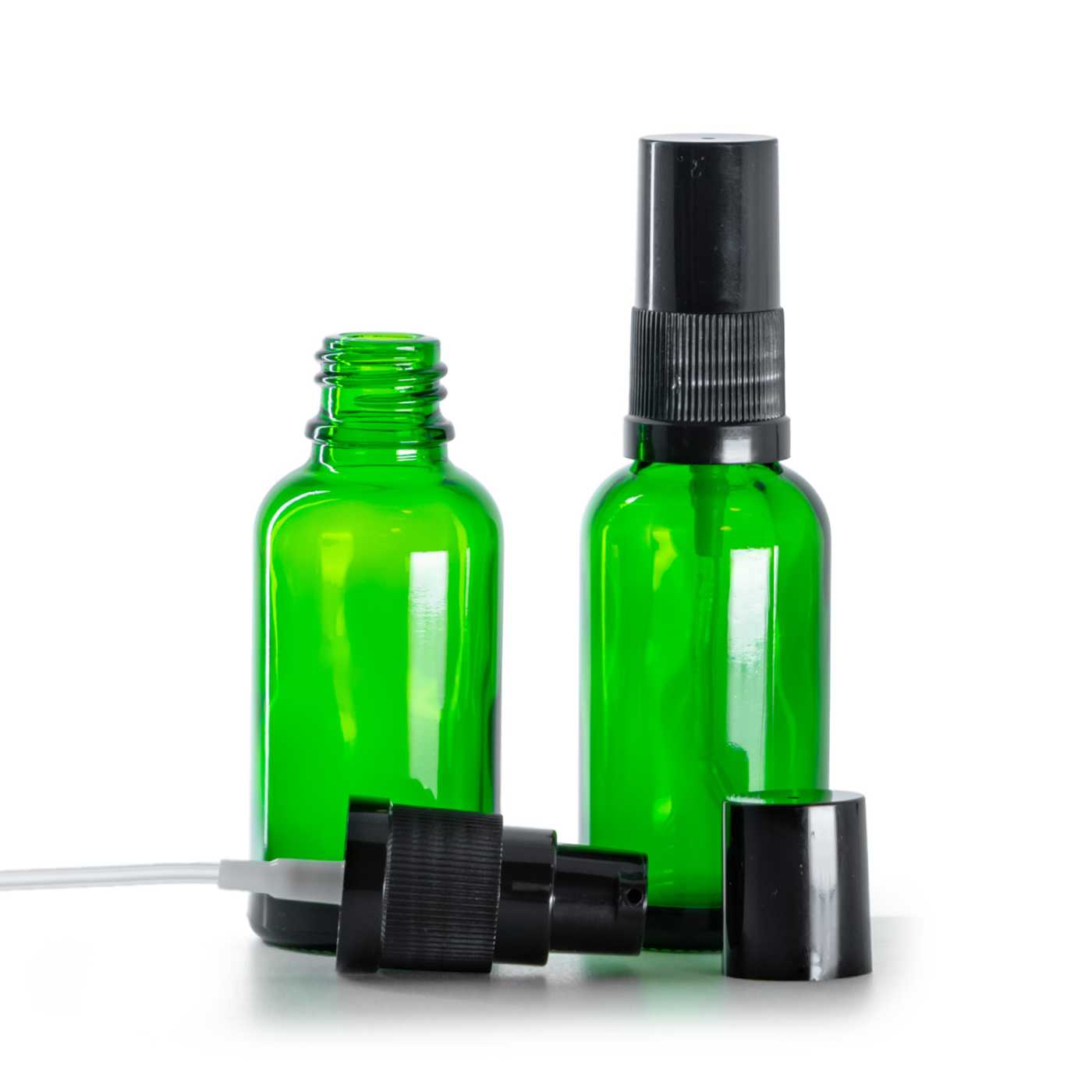
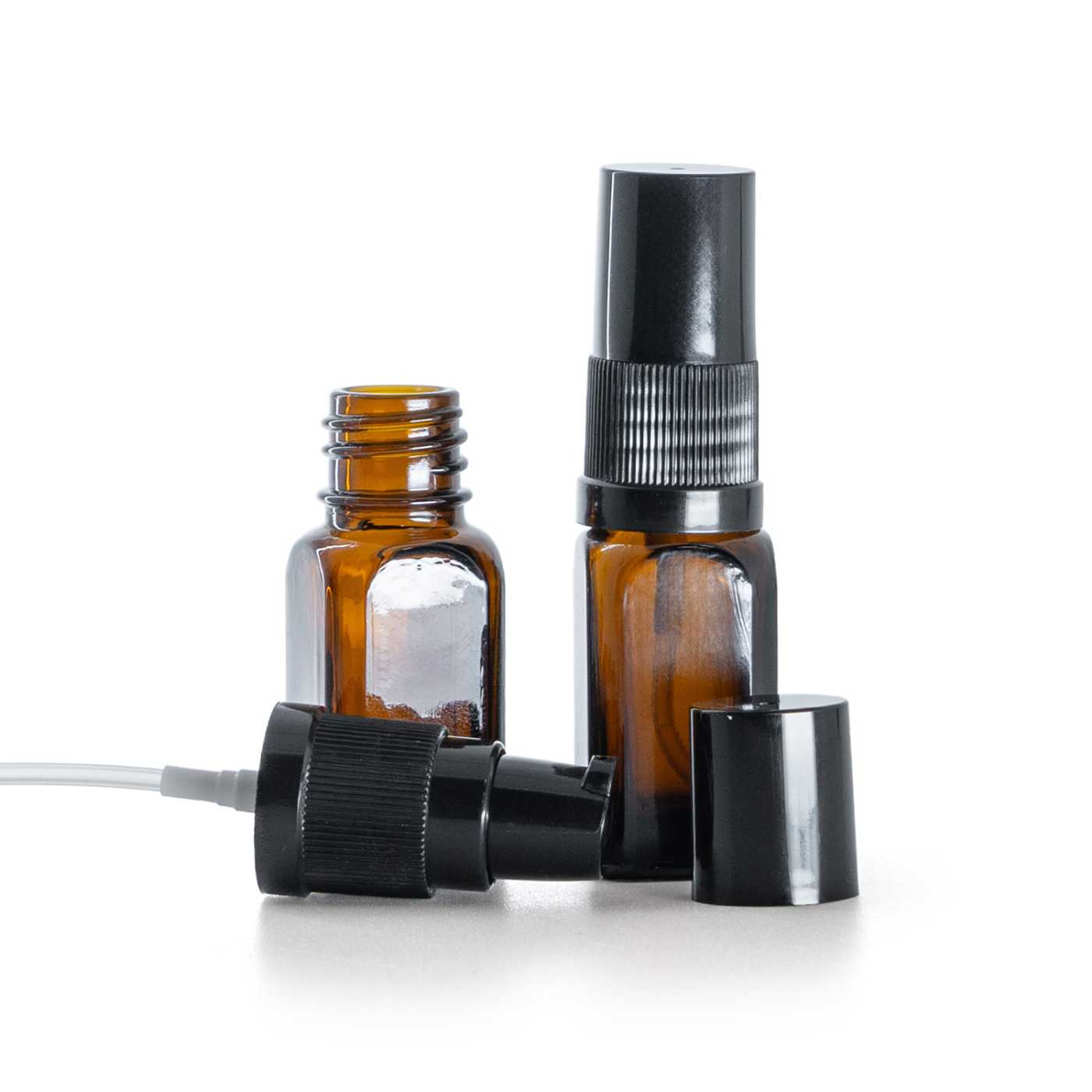
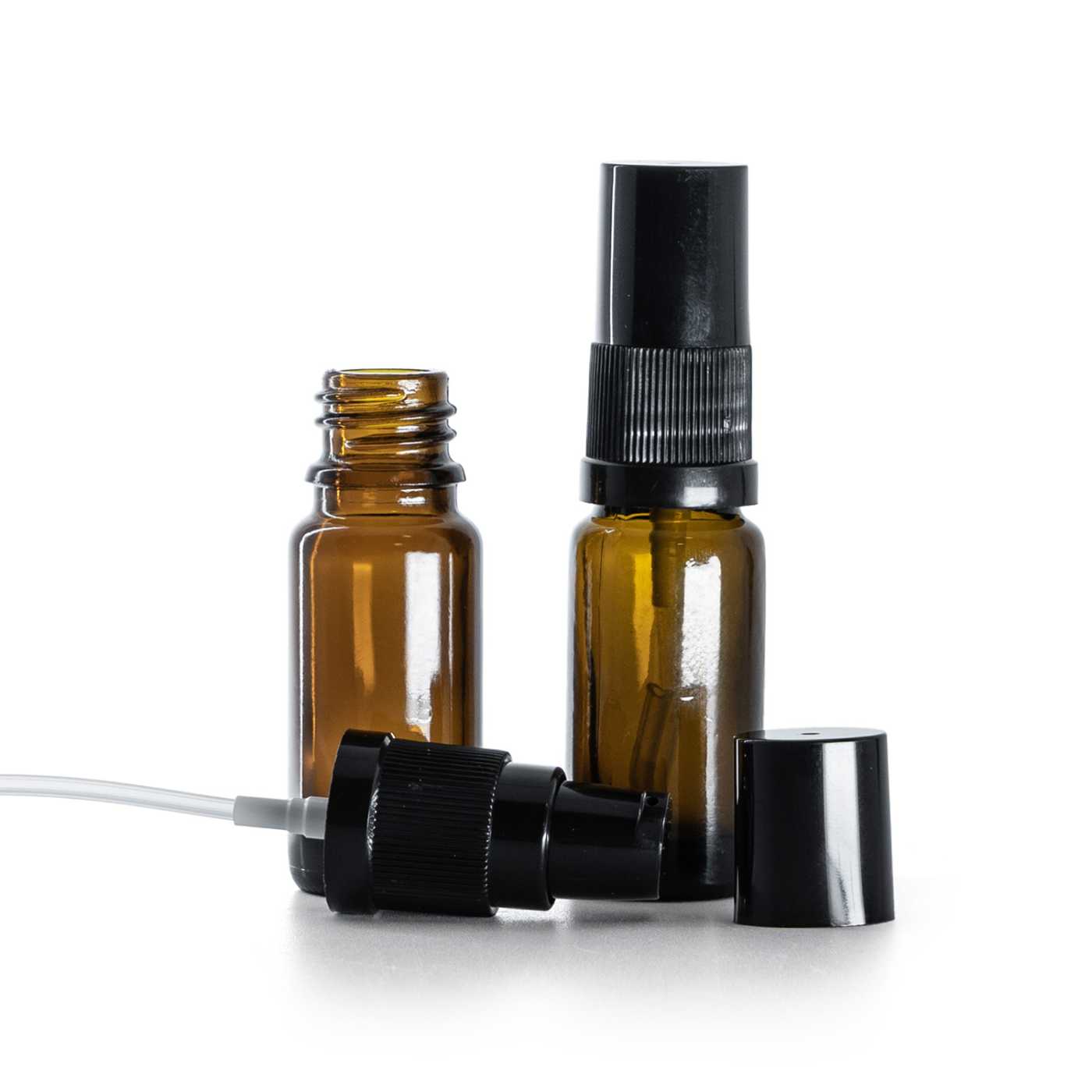
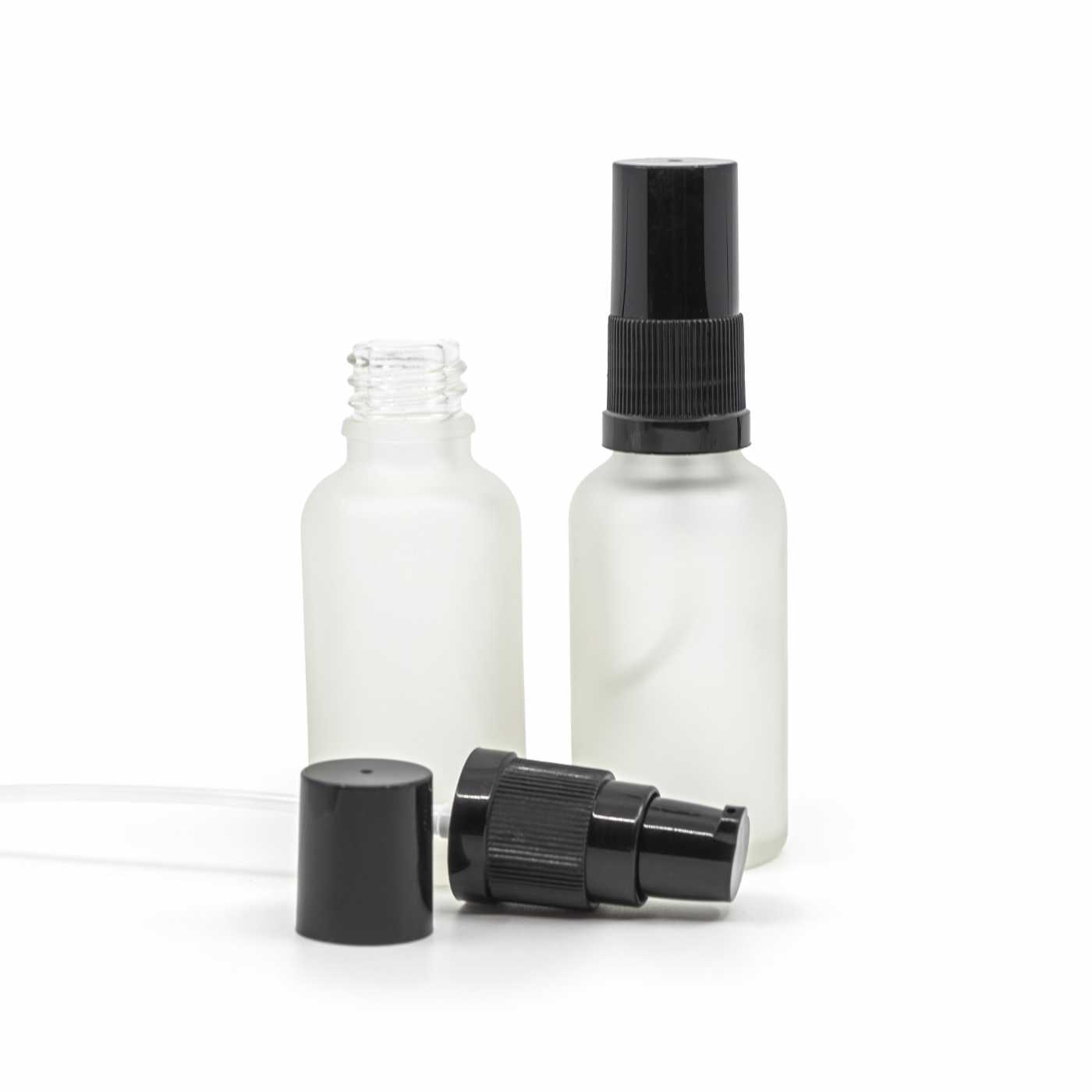
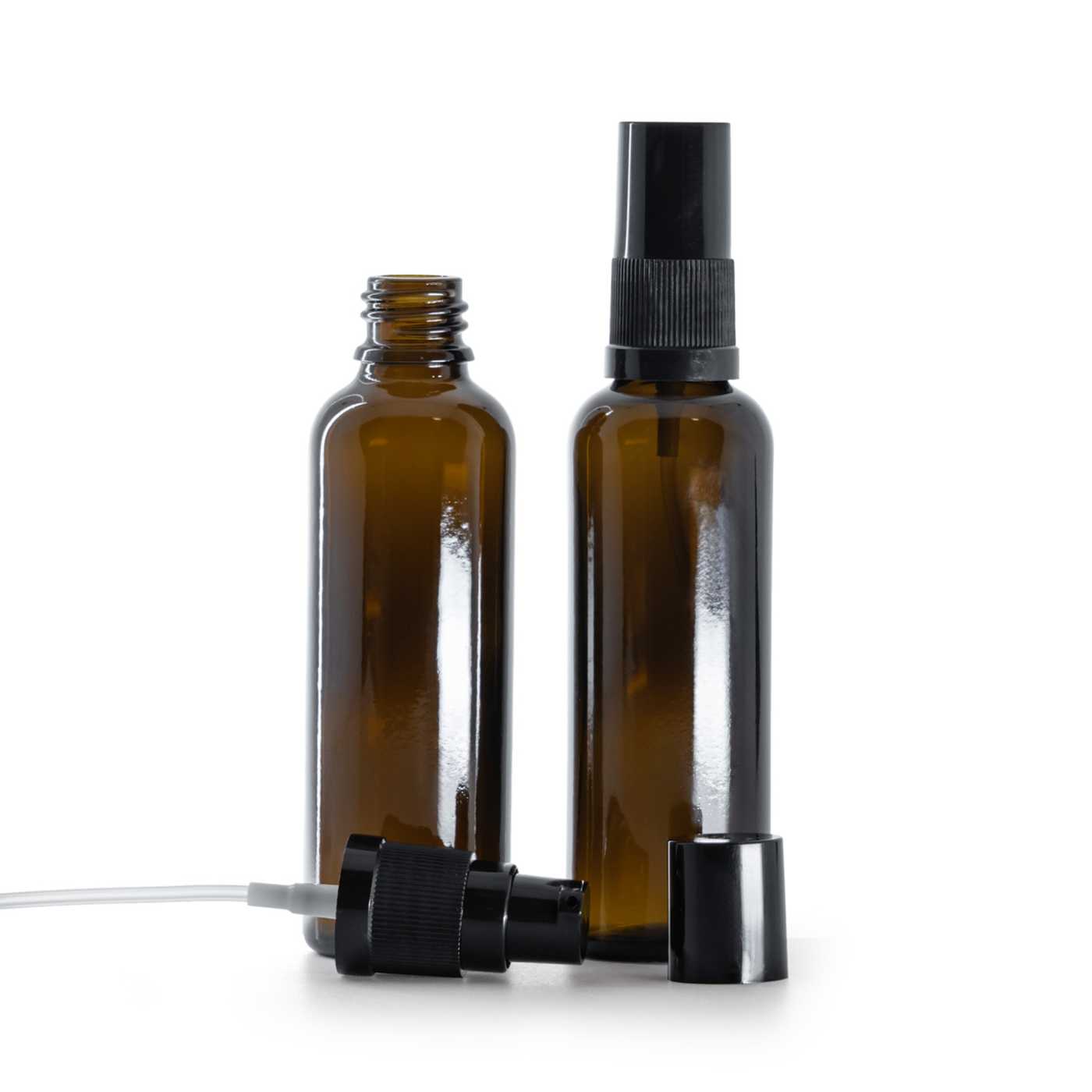
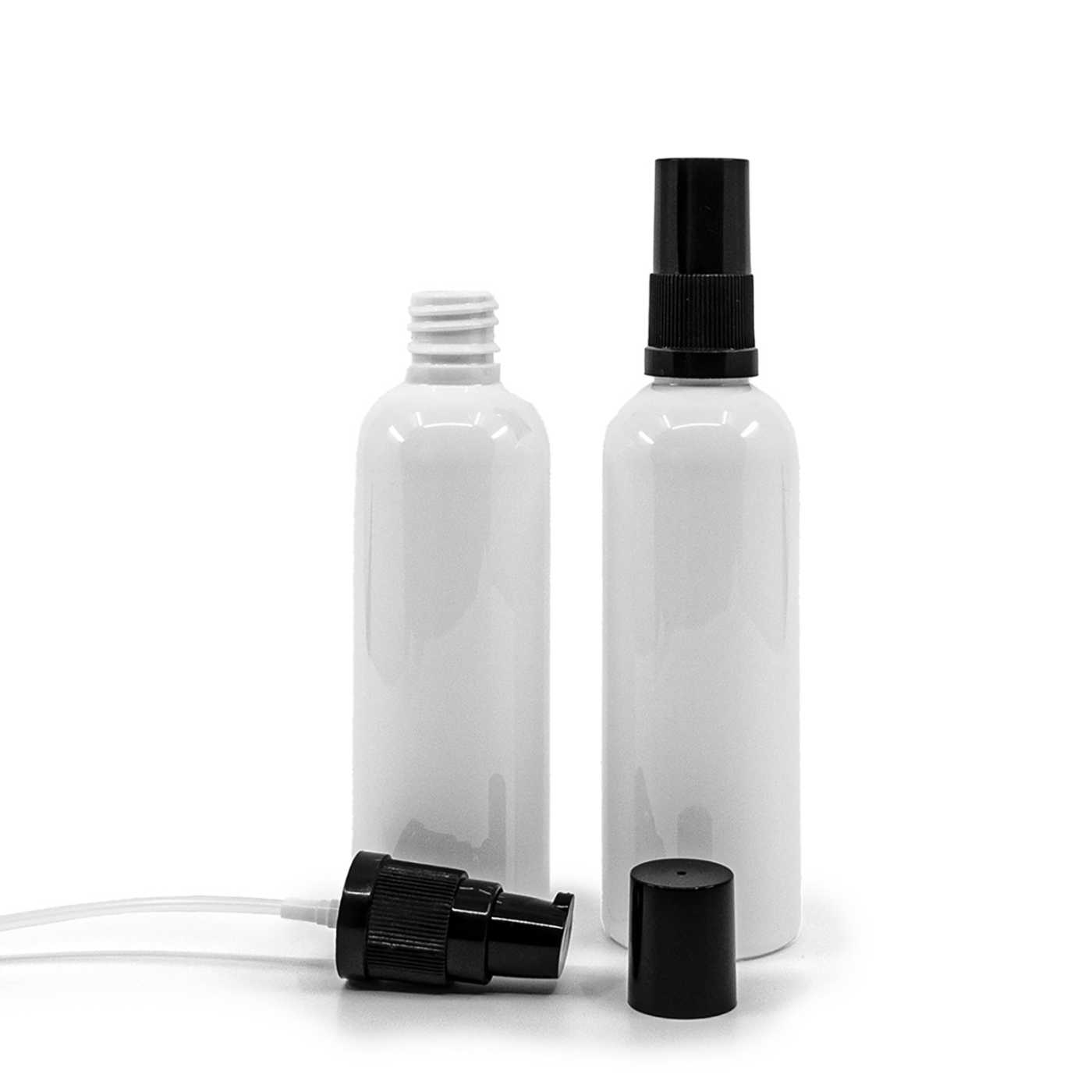
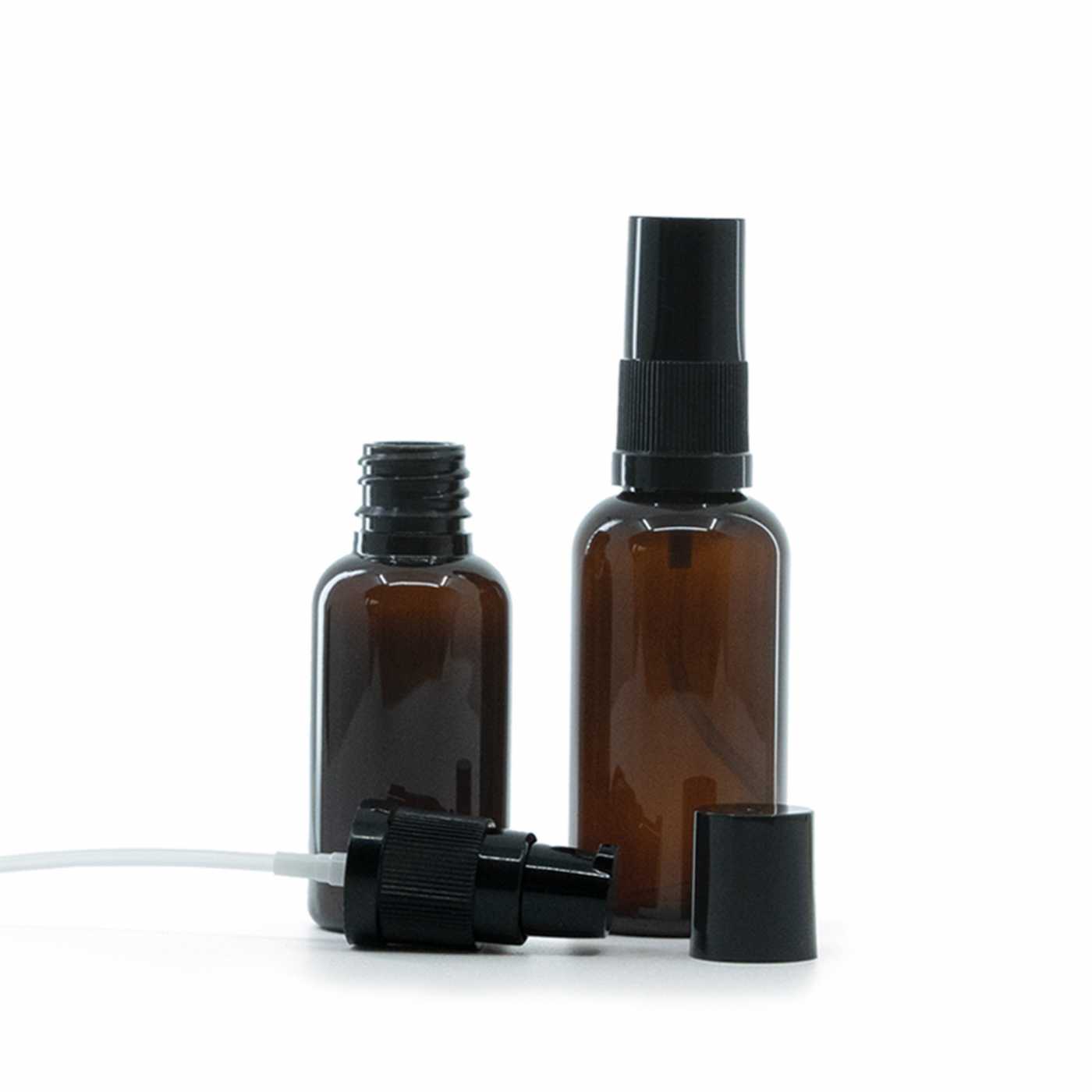
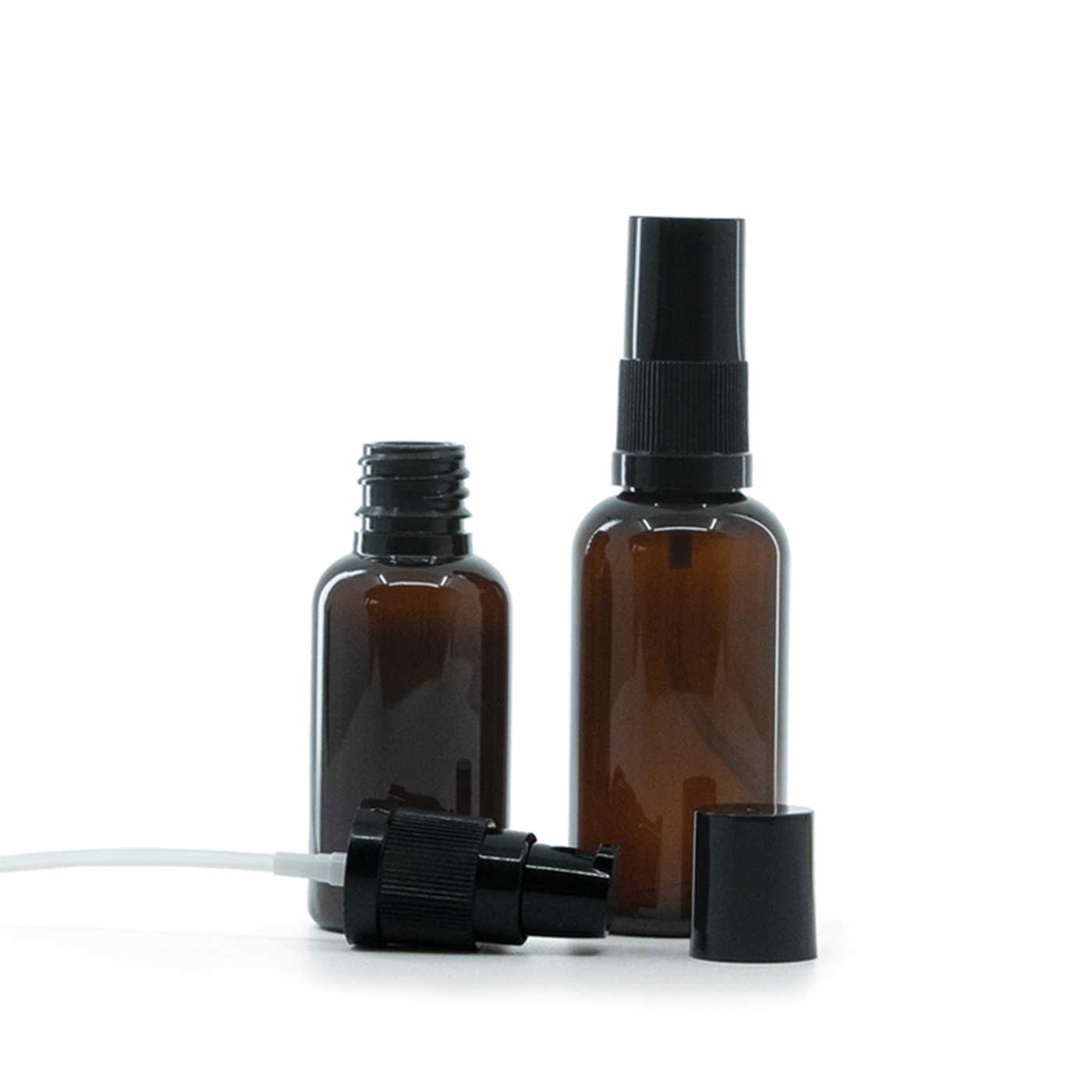
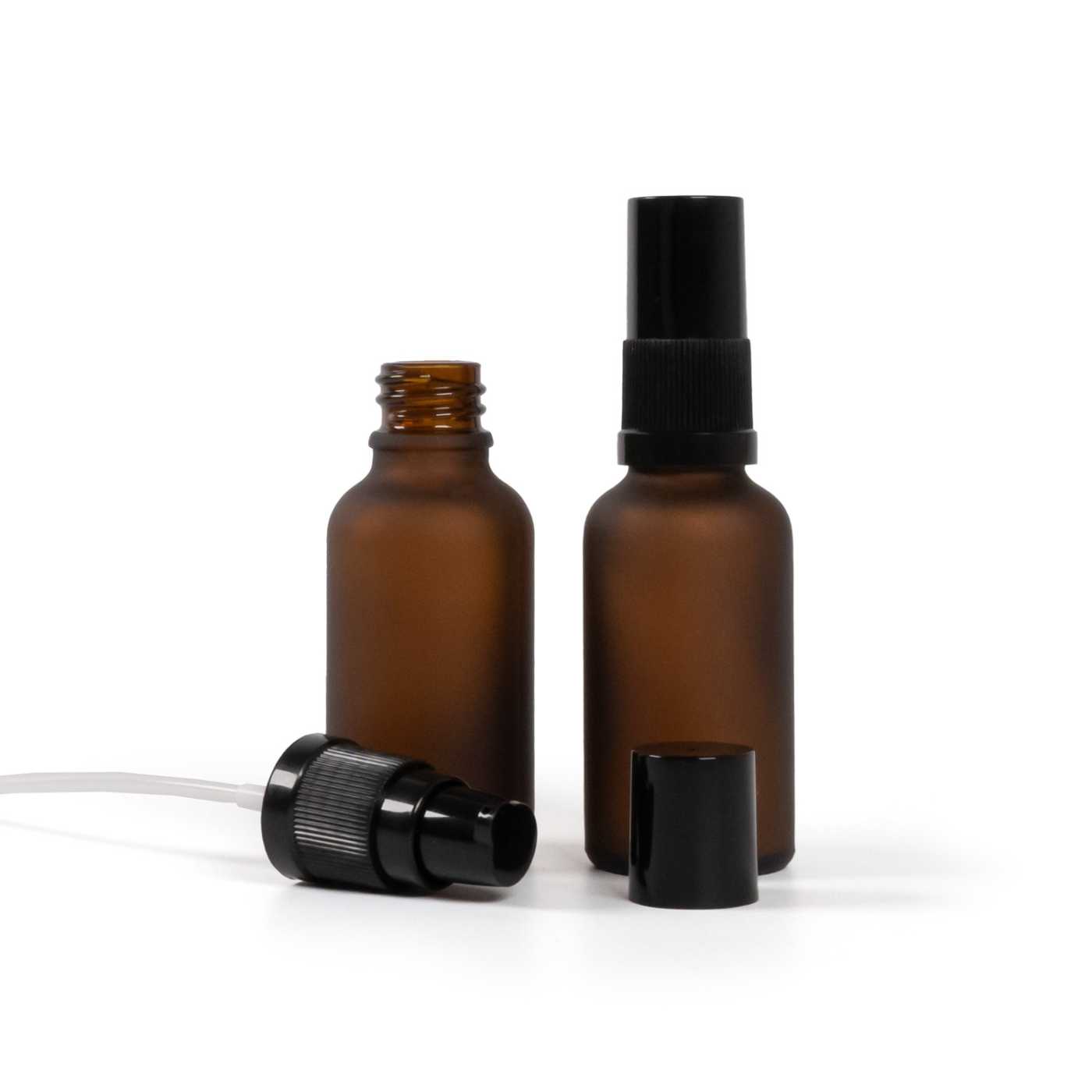
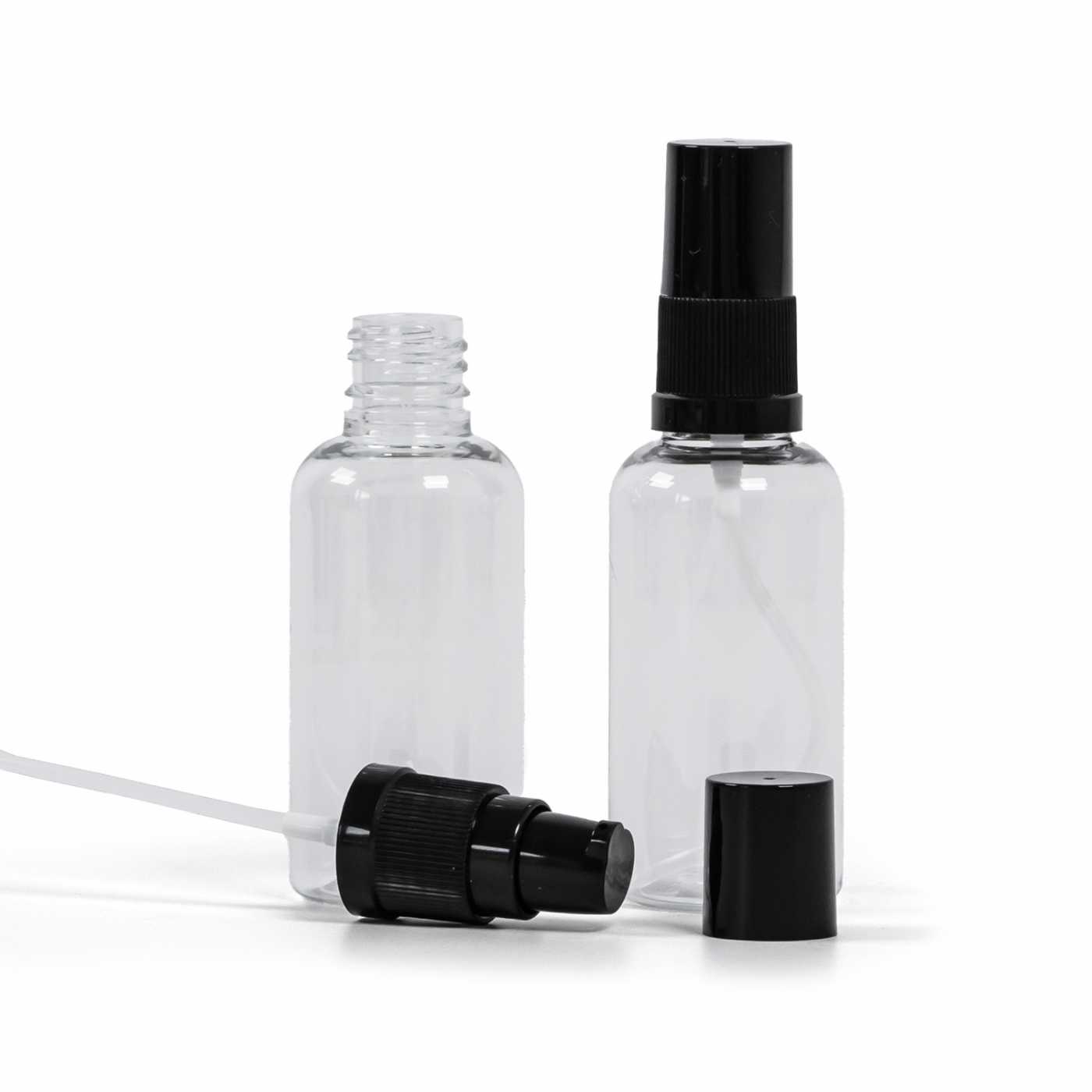
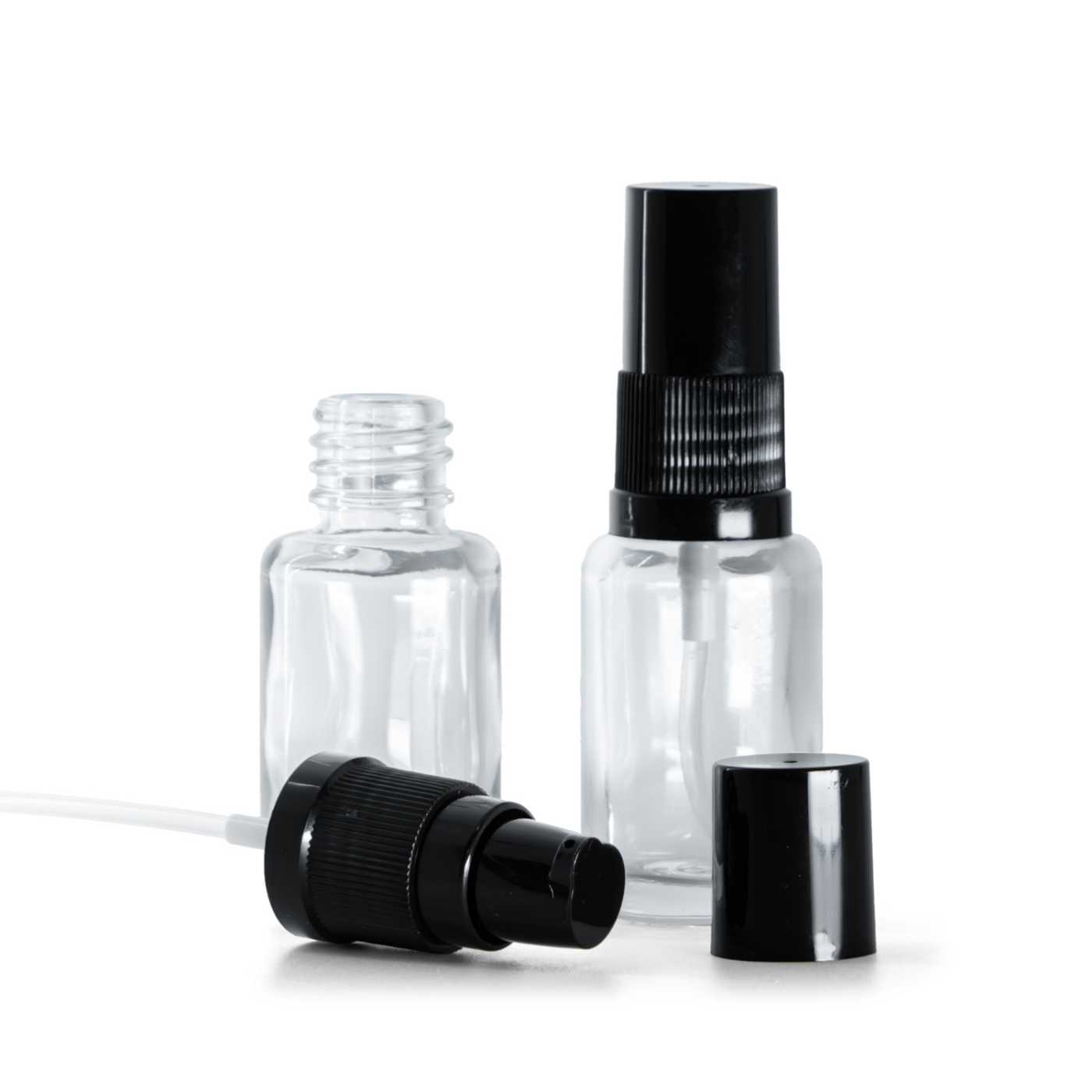
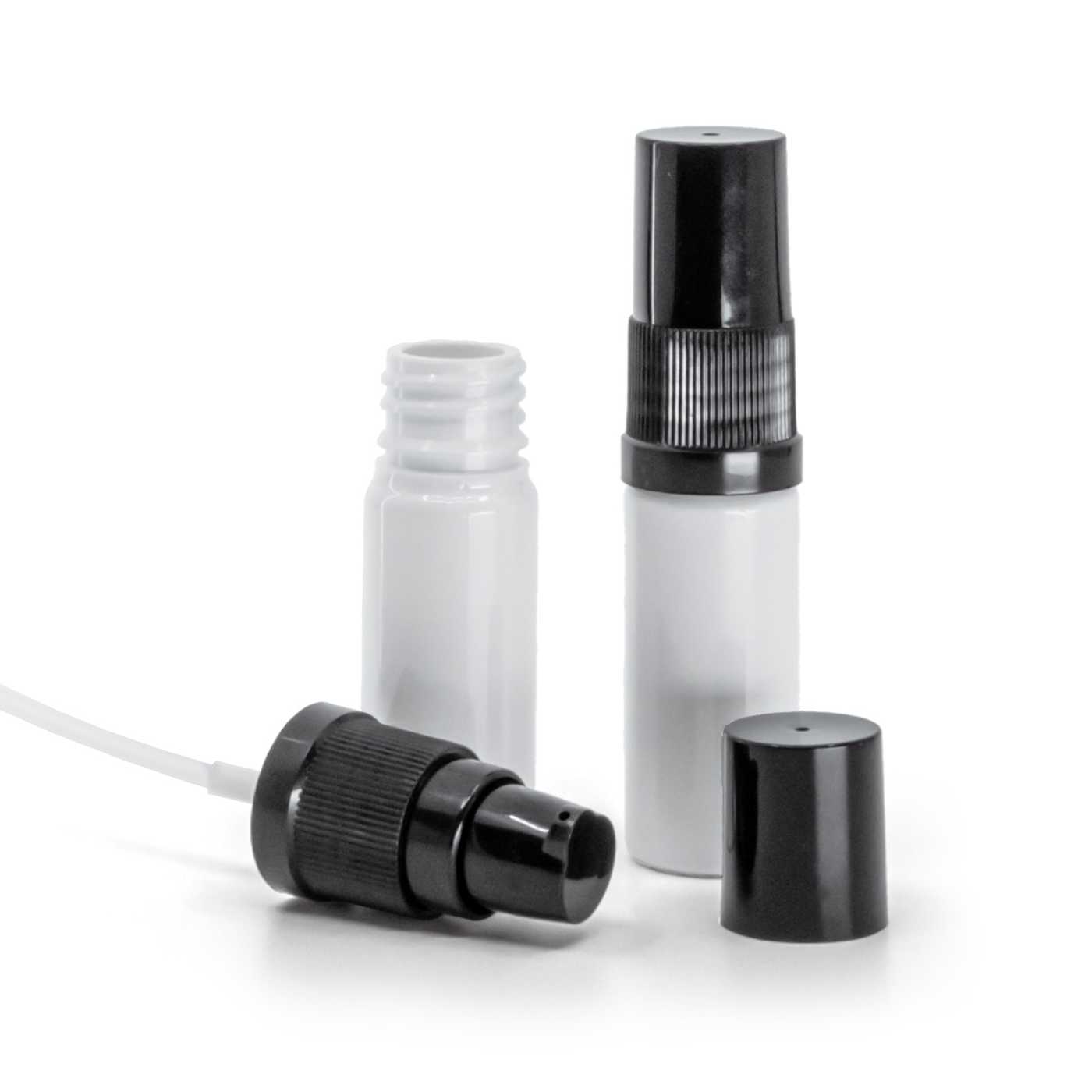
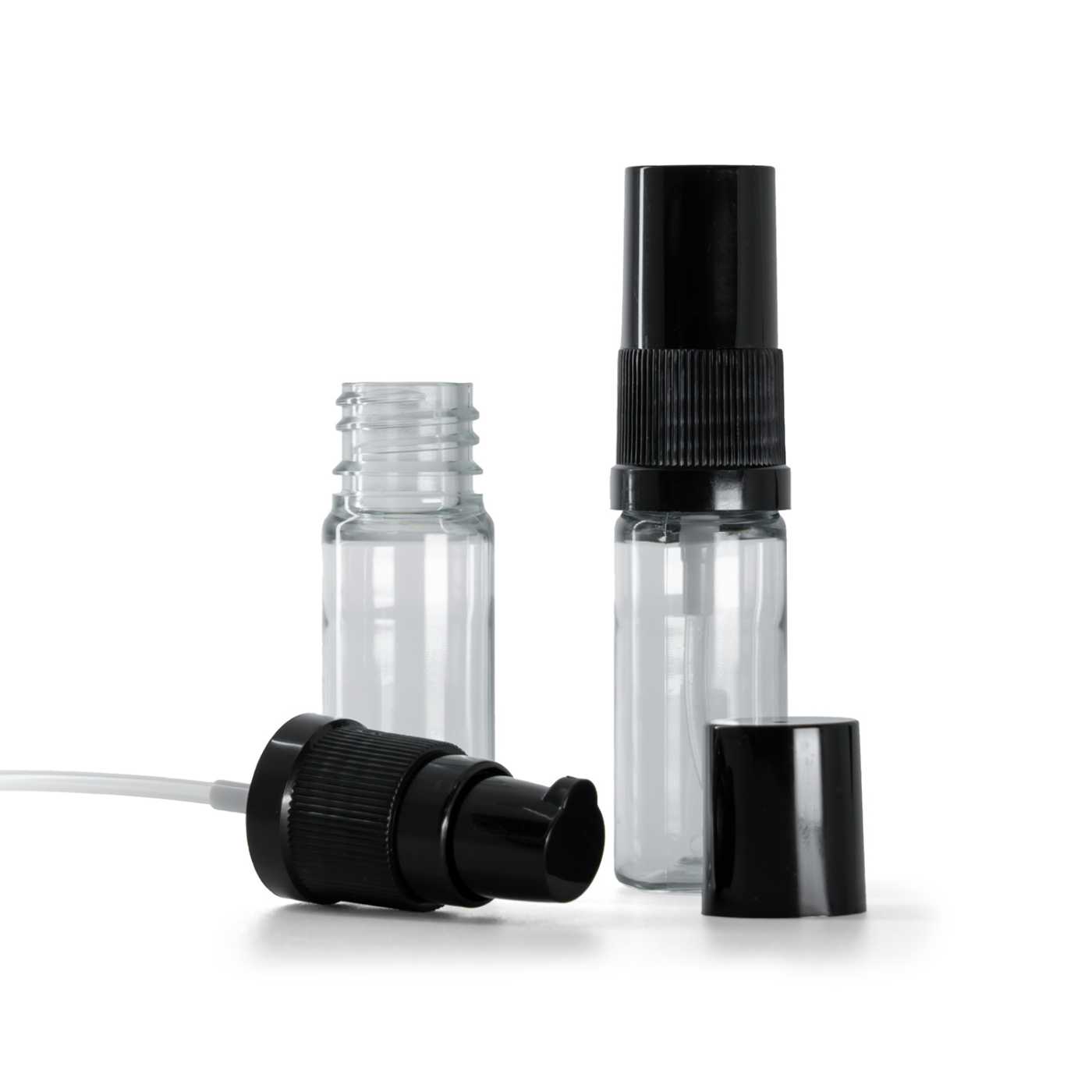
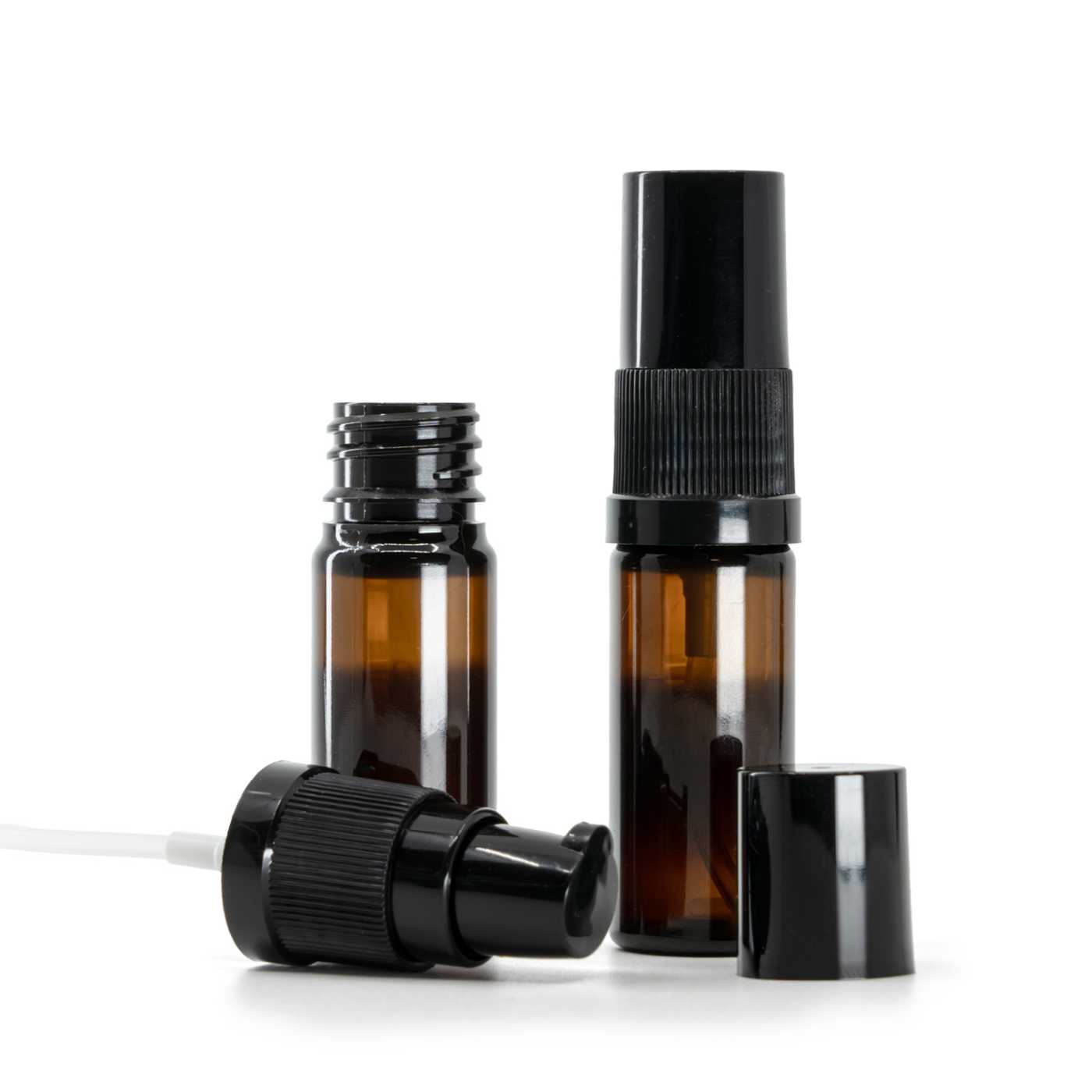
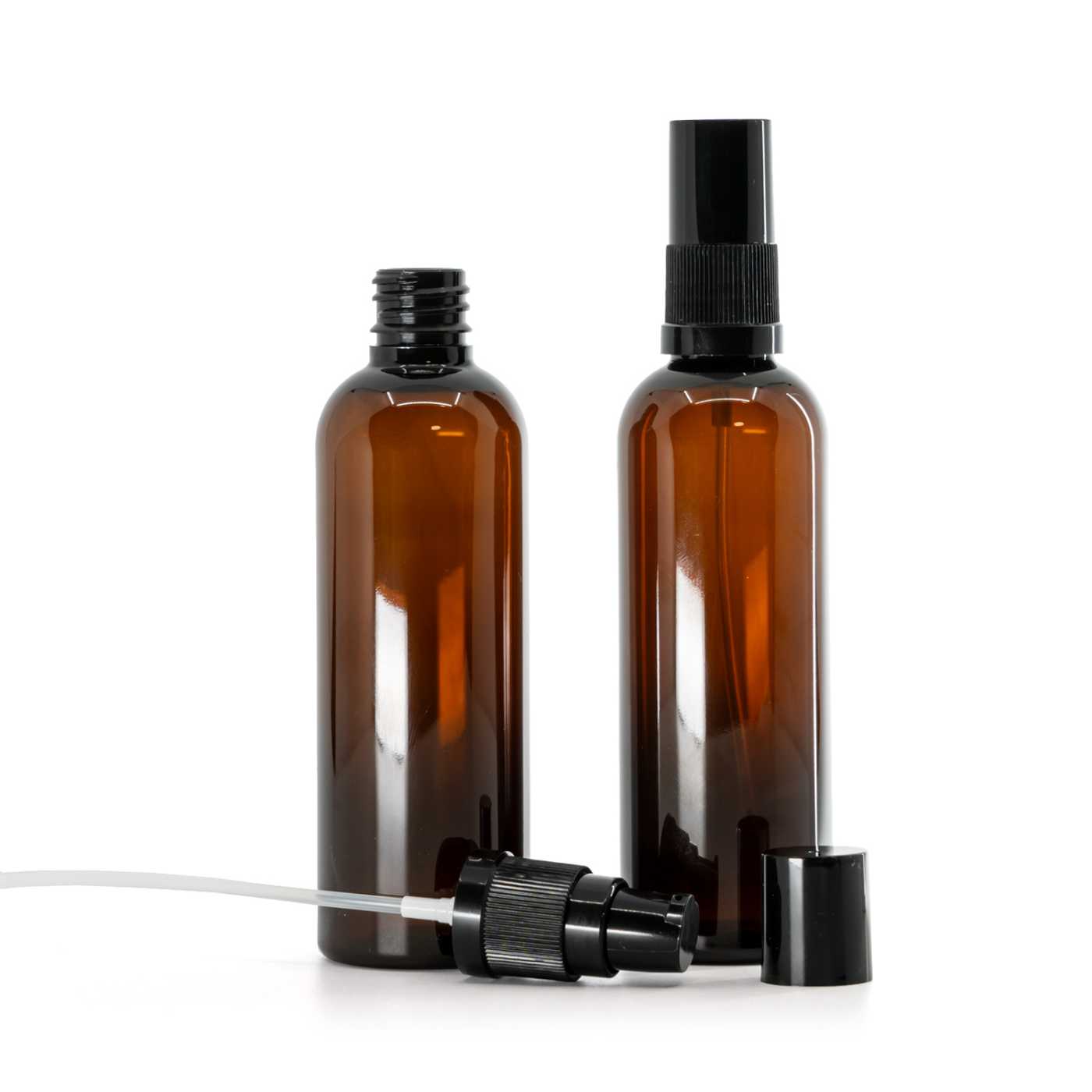
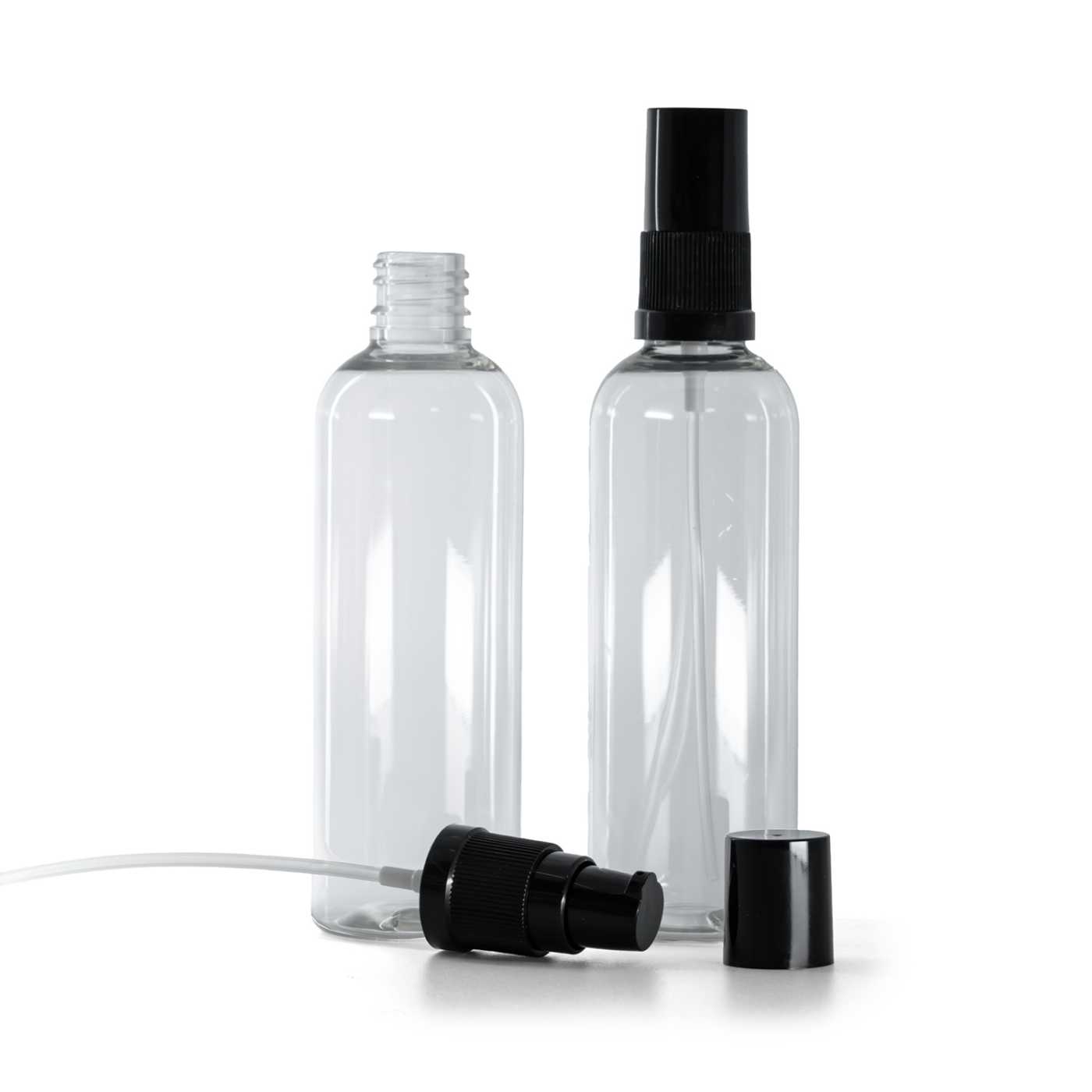
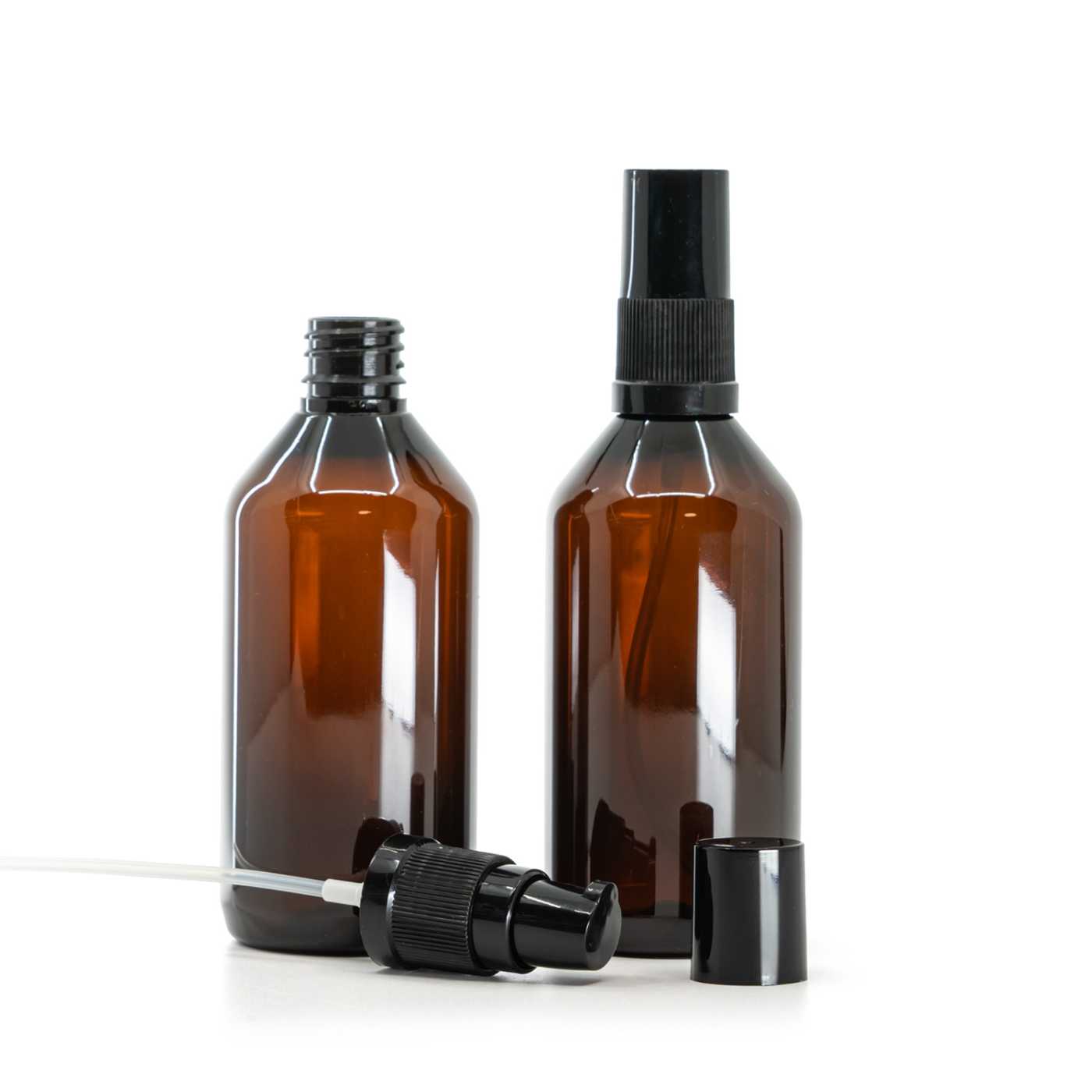
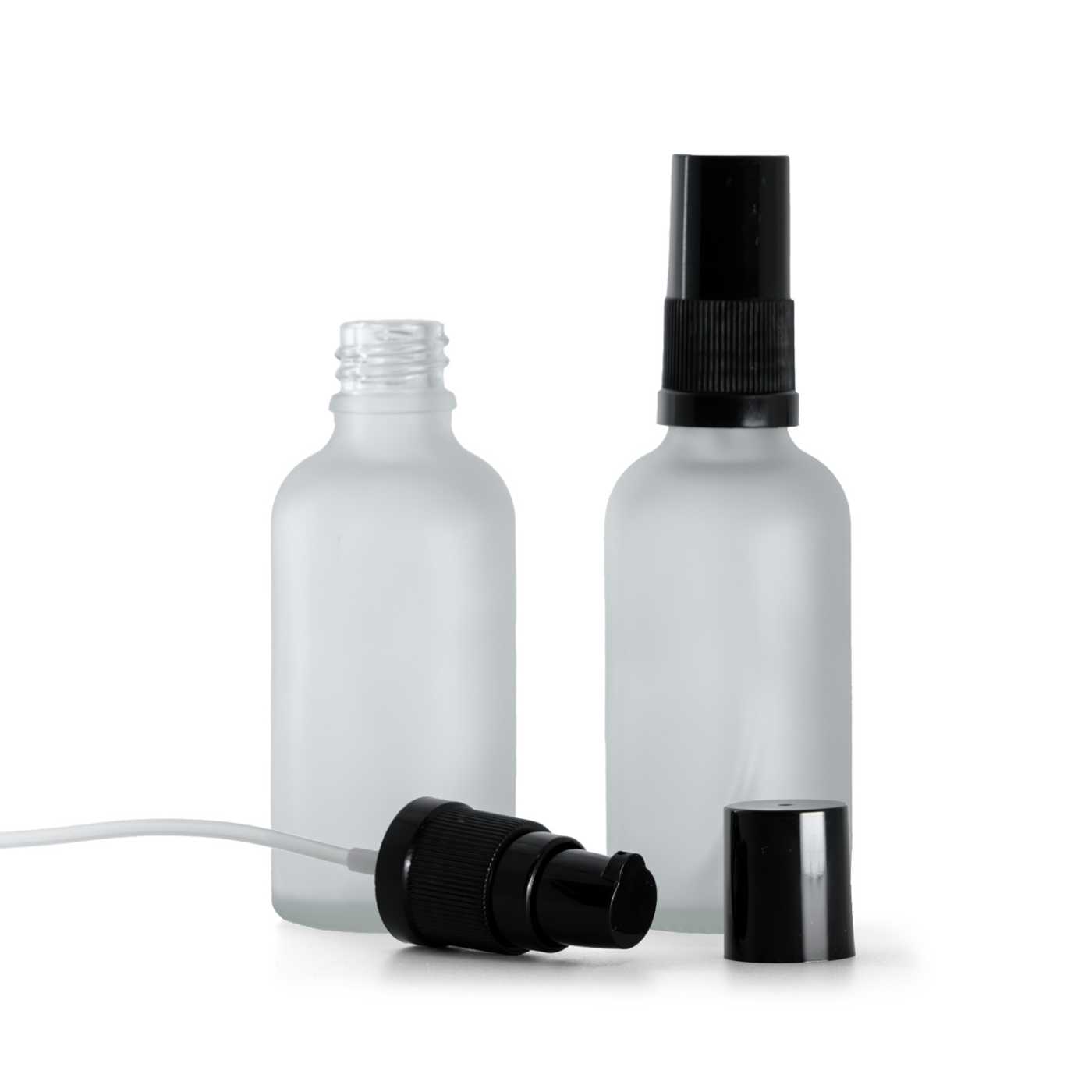
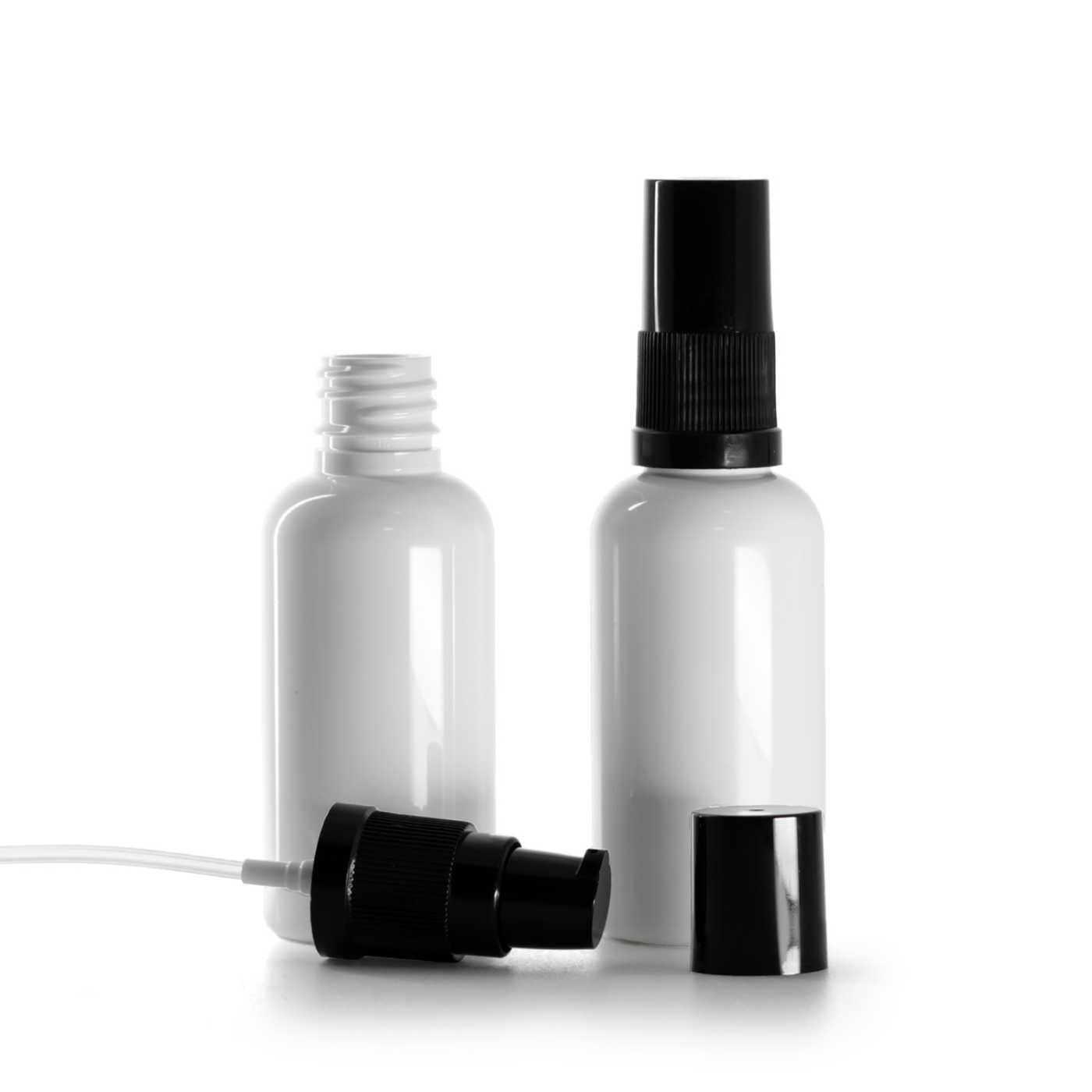
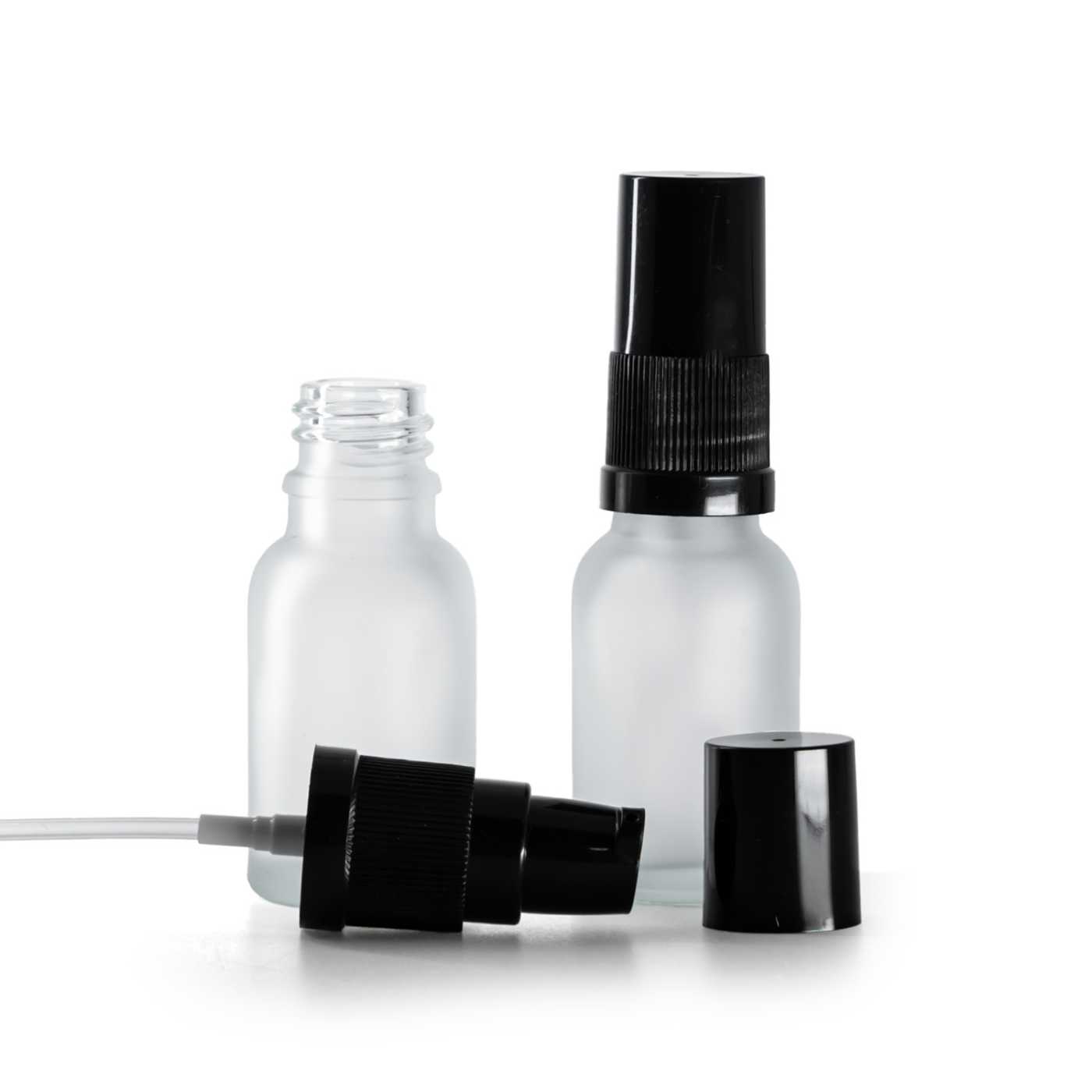
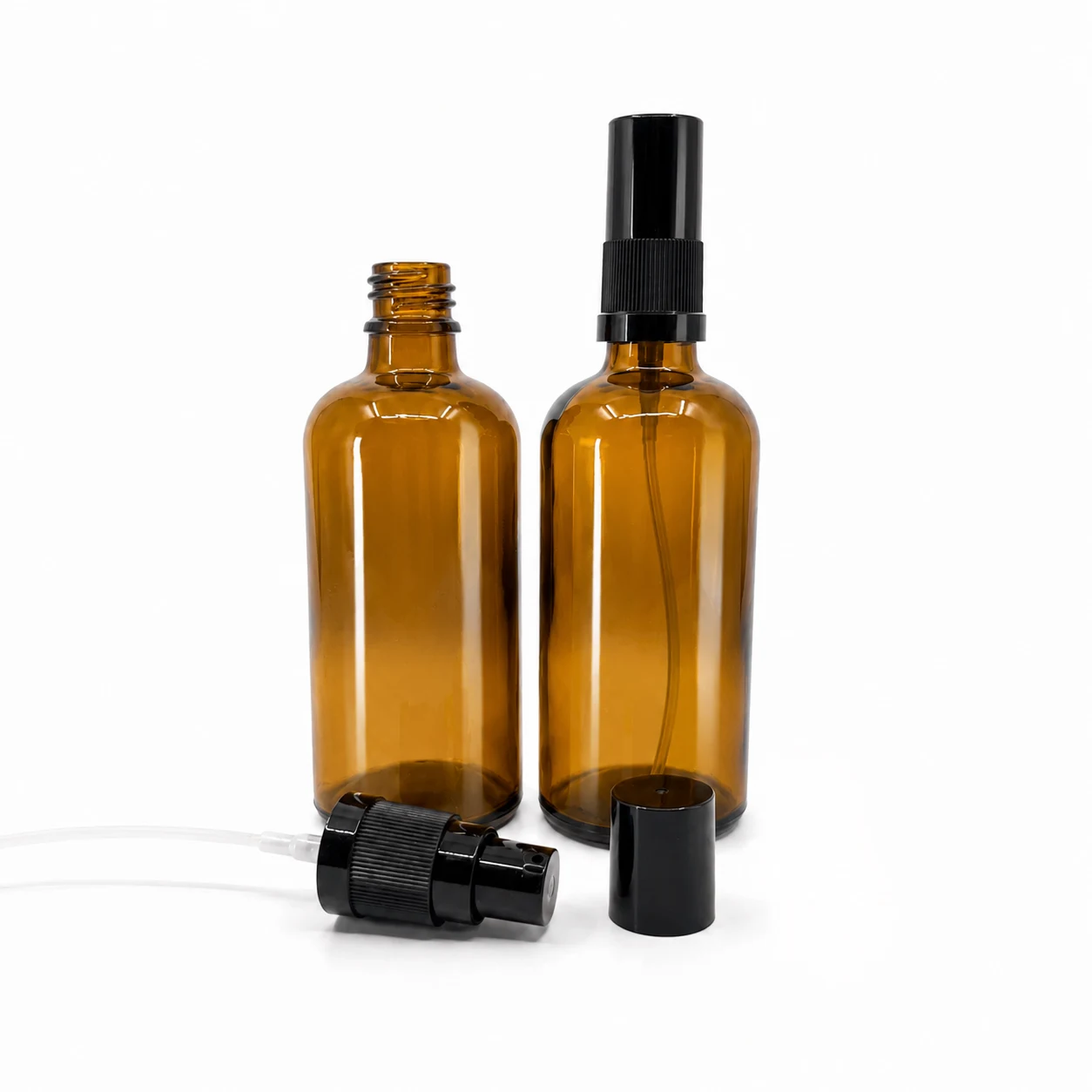
Glass pharmaceutical bottle, white, lotion pump with black top, 30 ml
A bottle made of white glass with a nominal volume of 30 ml and a fitted lotion pump with a black top. The set is designed for thicker cosmetic products that are dispensed in small doses without dipping your fingers into the packaging: face and eye creams, thicker serums, body and face lotions, gel creams or BB creams. White glass is opaque and lets less light through to the contents than clear glass, which you will appreciate with emulsions containing oils and light-sensitive active ingredients. The contents cannot be seen from the outside, and the packaging looks uniform even with different shades of filling.
Both the bottle and the pump are suitable for contact with cosmetic products, and the declaration of conformity is available with the product. The set as a whole is not approved for contact with food.
What the set includes
- Glass pharmaceutical bottle – a shape with a straight body and a narrower neck, in white glass. “Pharmaceutical bottle” refers to the shape of the bottle, which is common in cosmetics for creams and serums.
- Lotion pump – a polypropylene (PP) pump with a tube that draws the contents up from the bottom. One press dispenses approximately 0.14 ml, which corresponds to a dose of eye cream or a small dose of face cream. For a larger amount, press several times.
What it is suitable for
A pump with a tube works best with medium-thickness emulsions that can be drawn up and hold their shape once dispensed: light to medium-thick creams, lotions, gel creams and thicker serums. The pump cannot draw up very thick balms, butters and anhydrous pastes, or it becomes clogged by them over time. With liquid contents (toners, hydrolates, clear oils) the pump does work, but the dose is less precise and some of the contents may drip after pressing. A dropper or a fine mist sprayer is more suitable for such fillings.
The 30 ml volume suits products that are used up within a few weeks: eye cream, décolleté cream, hand cream for your handbag, a serum for targeted skin treatment. It is also suitable for samples and test batches before production in larger packaging.
Nominal volume and total volume
The nominal volume is the amount the packaging is designed for under normal filling. The total brimful volume is the physical volume of the bottle up to the neck, and you will find it in the parameters. The difference between them provides a reserve for the tube and the pump mechanism and for the expansion of the contents with temperature changes. Fill up to the nominal volume, not to the brim. If the bottle is overfilled, the contents are pushed out through the neck when the pump is screwed on, and the thread seals less well.
Fill thicker creams into the bottle through a small funnel with a wider spout or from a piping bag. This avoids air bubbles, which the pump would later draw up instead of cream.
Preparation and filling
Before the first filling, wash the bottle and the pump, disinfect them with isopropyl alcohol (IPA) or ethanol and leave them to dry completely. Moisture inside would get into the finished emulsion.
If the tube of the pump reaches the bottom and bends, shorten it with a straight cut so that it ends just above the bottom. A bent tube draws up poorly and part of the contents remains unused. After screwing on the pump, prime it by pressing it several times until it starts to dispense cream. The first presses only push air out of the mechanism.
Do not pour a hot or warm emulsion into the bottle. Let it cool to room temperature and only then fill. Warm contents put a strain on both the glass and the plastic mechanism, and moisture condenses under the closure.
Good to know
- Preservation – compared with a jar, the pump limits contact of the contents with fingers and air, but it does not replace a preservative in products with a water phase. This is not an airless system; air enters the bottle with every press.
- Residue at the bottom – the tube does not draw up absolutely everything. A small amount of cream remains below its end, so take this into account with smaller batches.
- Essential oils and solvents – the pump is declared for contact with common cosmetic preparations. For formulations with a higher proportion of essential oils or with solvents, we recommend checking how the pump behaves with the specific formulation.
- Reuse – after washing and disinfection, the bottle can be filled again. Rinse the pump by pumping warm water through it and leave it to dry. If the mechanism becomes clogged with dried cream, it dispenses unevenly and it is better to replace it.
- Another closure – you will find closures with the same neck type (stated in the parameters of the bottle) and ready-made combinations in the Handymade range. If you make your own combination, we recommend checking the tightness and dispensing.
- Recycling – glass and the plastic pump are sorted separately. Take the set apart before disposal.
Frequently asked questions
Does a white glass bottle protect the contents from light?
Yes, white glass is opaque and lets less light through to the contents than clear glass. Creams with vegetable oils, vitamins or other light-sensitive active ingredients are better protected in it than in clear packaging. However, the glass does not protect against heat, so keep the bottle away from direct sunlight and heat sources.
How much cream does the lotion pump dispense per press?
One press of the pump dispenses approximately 0.14 ml. For eye cream this is usually one dose, and two to three presses are normally used for the whole face. The actual amount depends on the thickness of the cream and on whether the pump was properly primed before use.
Is a bottle with a lotion pump suitable for an oil serum or a toner?
No, a lotion pump is not the best choice for liquid contents. The pump is designed for thicker emulsions. It does draw up an oil or a water-based toner, but the dose is imprecise and the liquid drips after pressing. A dropper is suitable for liquid serums, and a fine mist sprayer with the same neck type for toners.
Why does the lotion pump not dispense anything at first?
Before first use, the pump needs to be primed with several presses until the air is pushed out of the mechanism and the tube. If no cream comes out even after six to eight presses, check whether the tube is bent against the bottom of the bottle and whether the contents are too thick to be drawn up.
Can I fill a glass pharmaceutical bottle with cream that is still warm?
No, let the emulsion cool to room temperature before filling. Warm contents put a strain on both the glass and the plastic mechanism of the pump. Filling when cool also limits the moisture that would condense under the closure and get into the cream.
How much cream actually fits into a 30 ml bottle?
The bottle is filled up to the nominal volume of 30 ml, not to the brim. The total brimful volume is somewhat larger and we state it in the parameters, but the difference provides a reserve for the tube of the pump and the expansion of the contents. If the bottle is overfilled, some of the cream is pushed out through the neck when the pump is screwed on, and the thread seals less well.