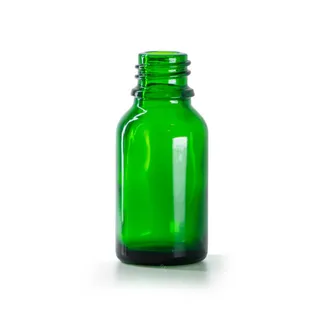
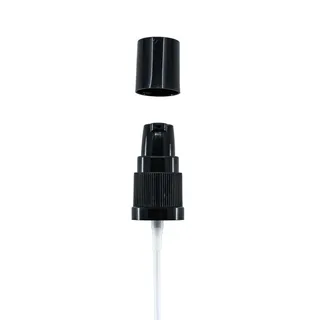
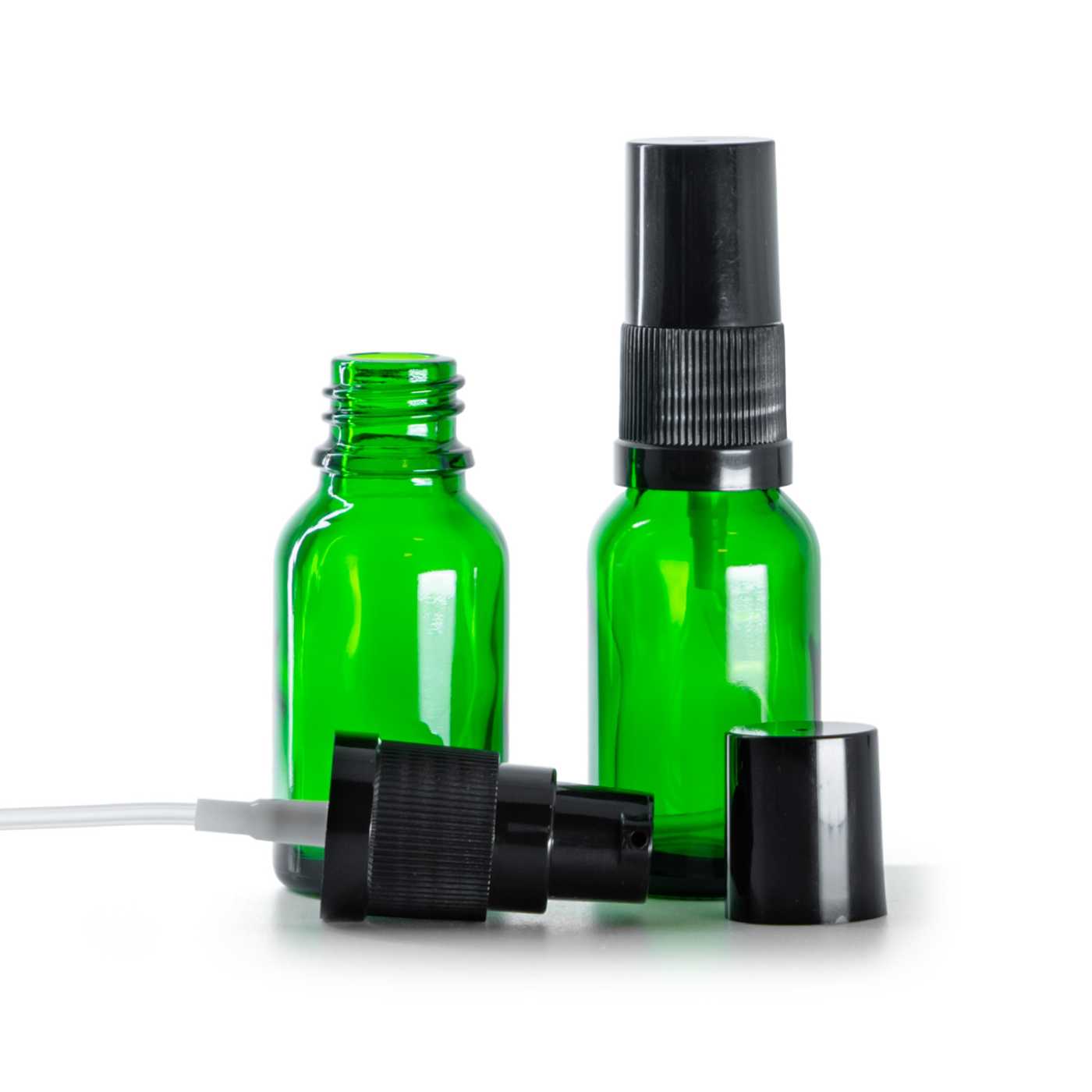
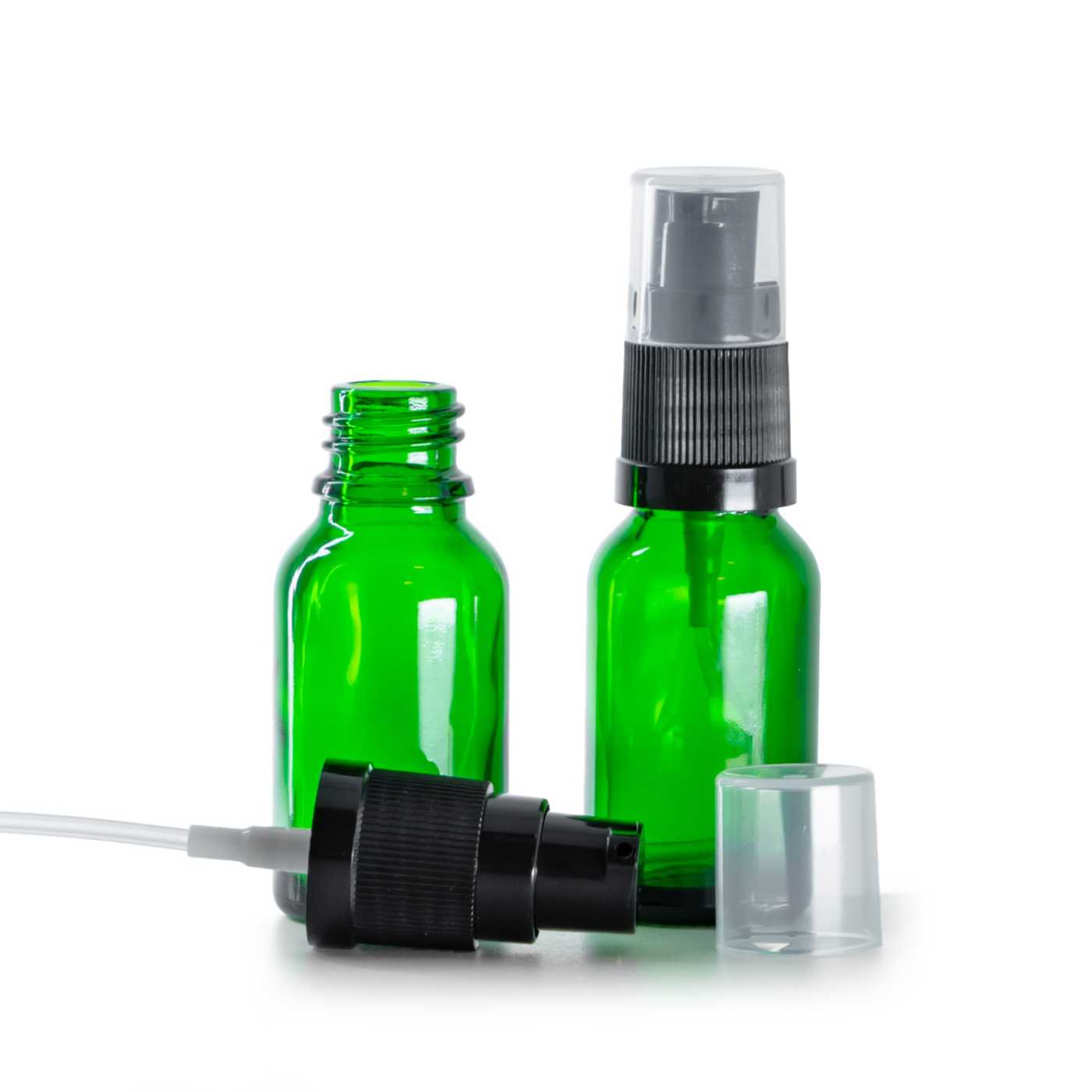
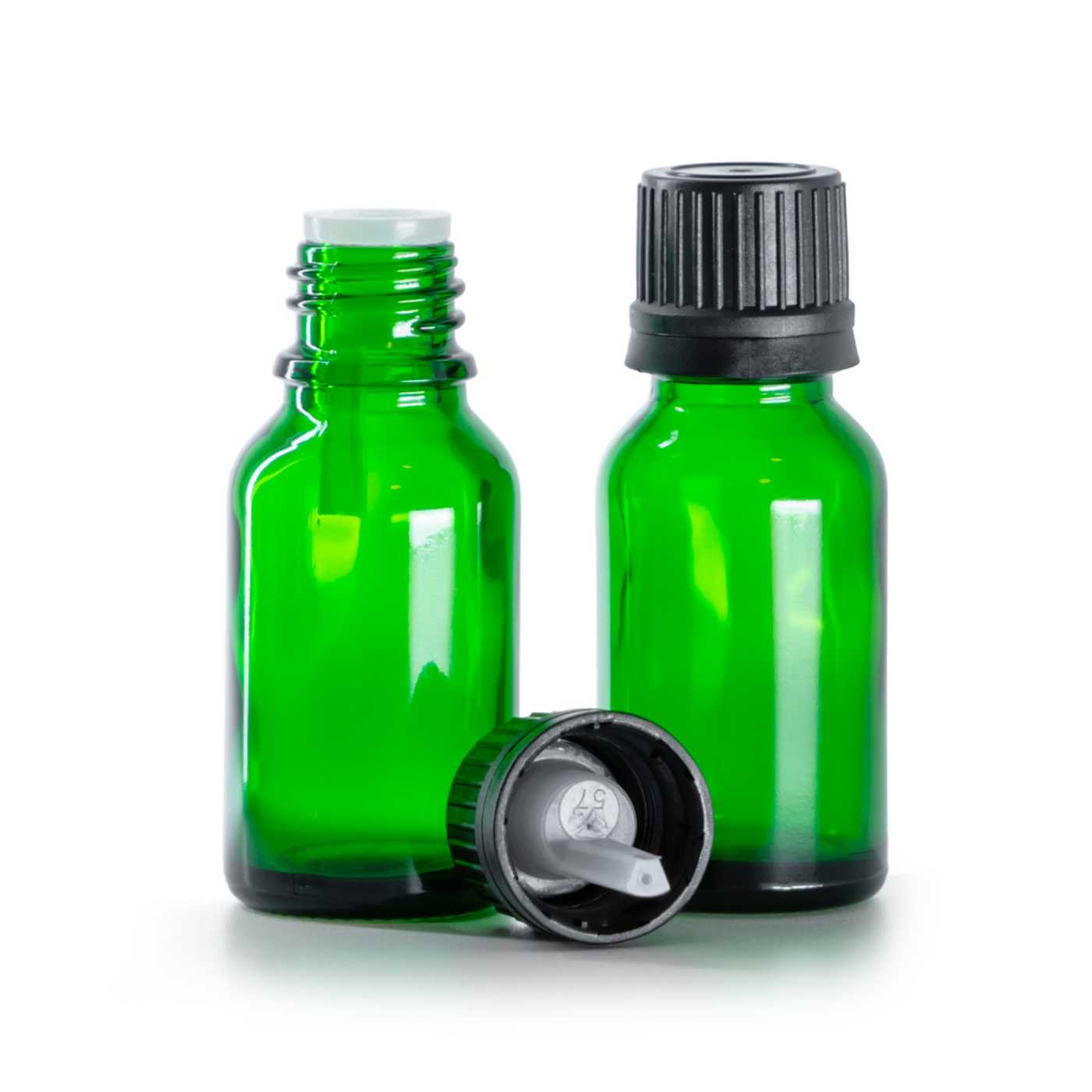
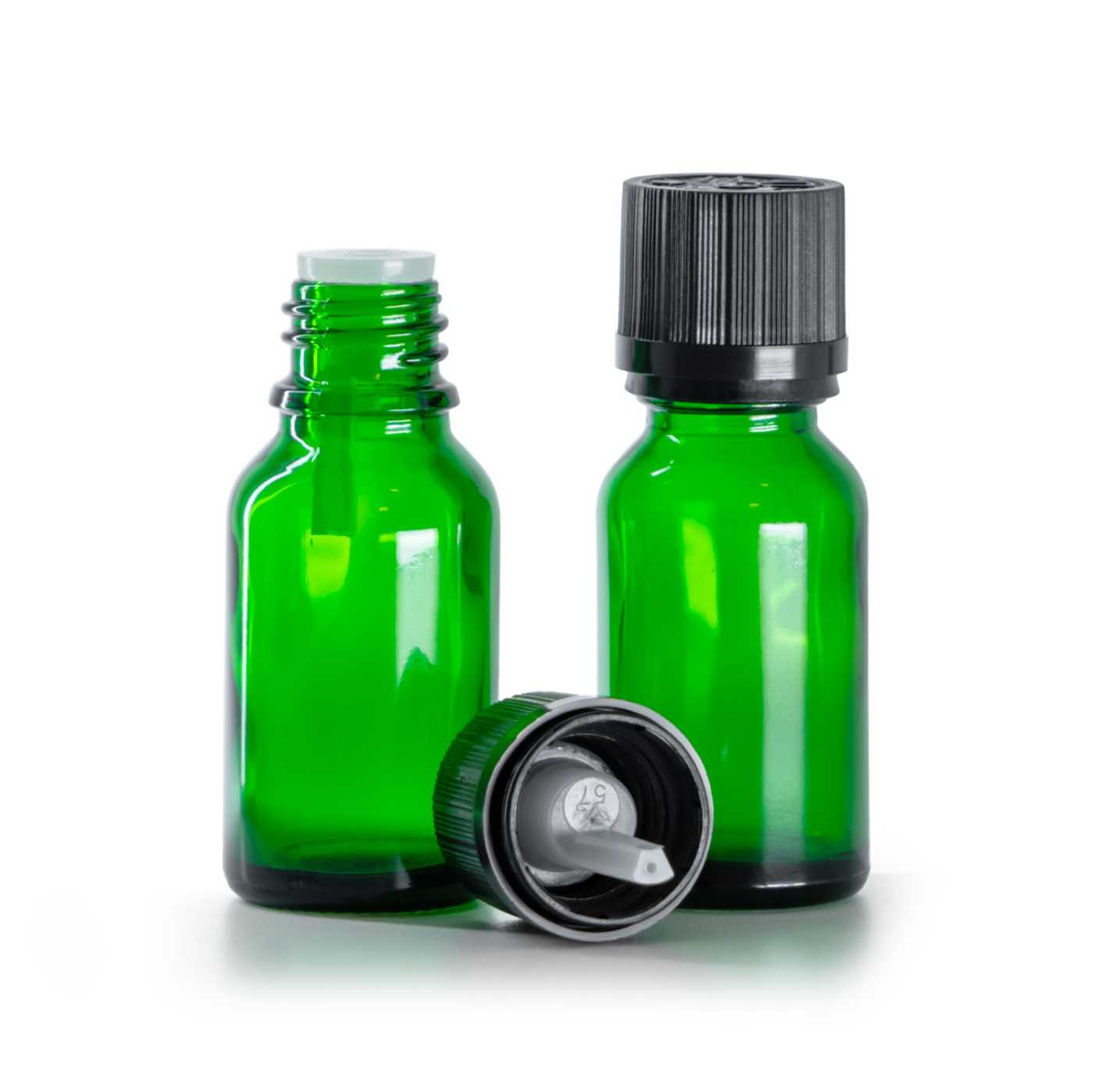
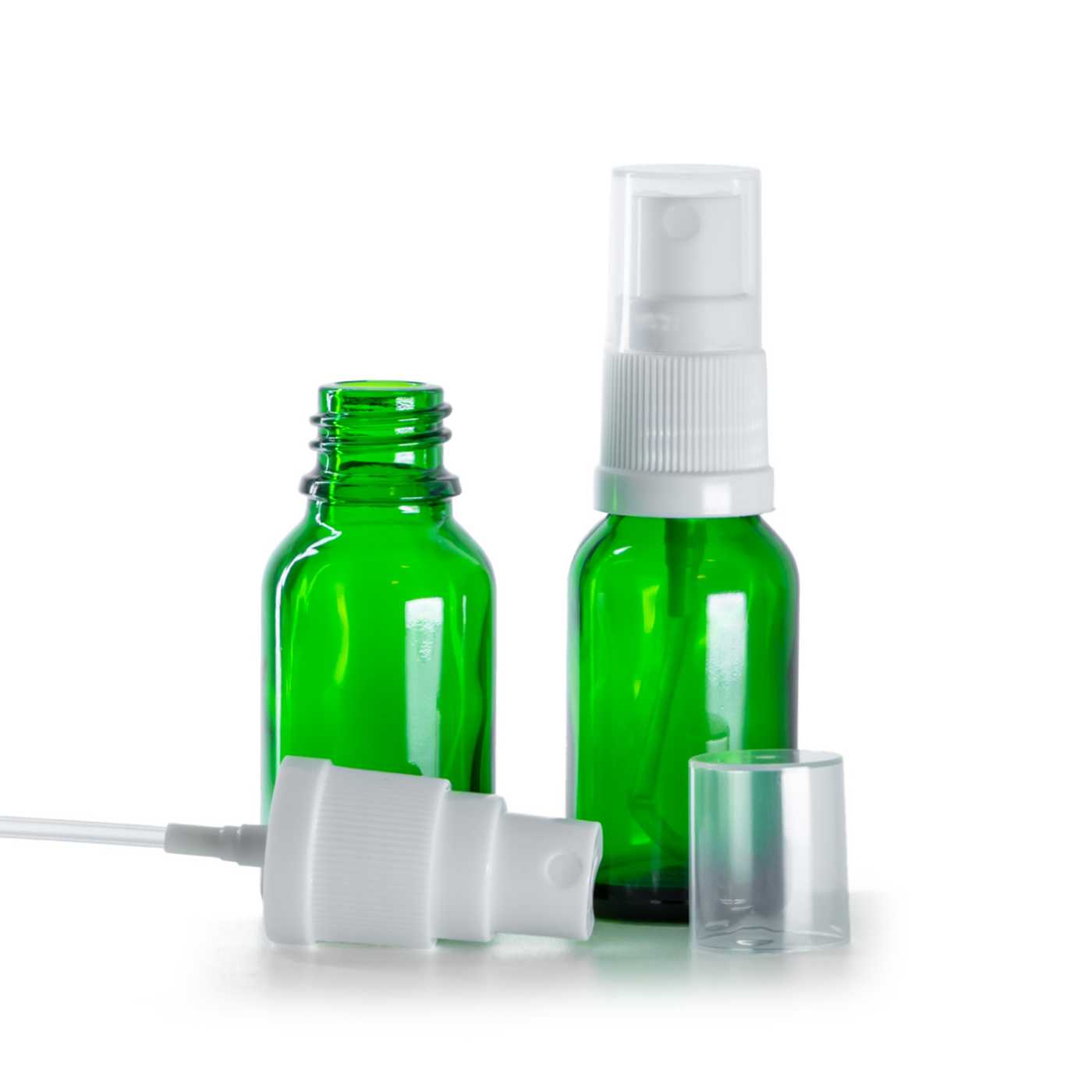
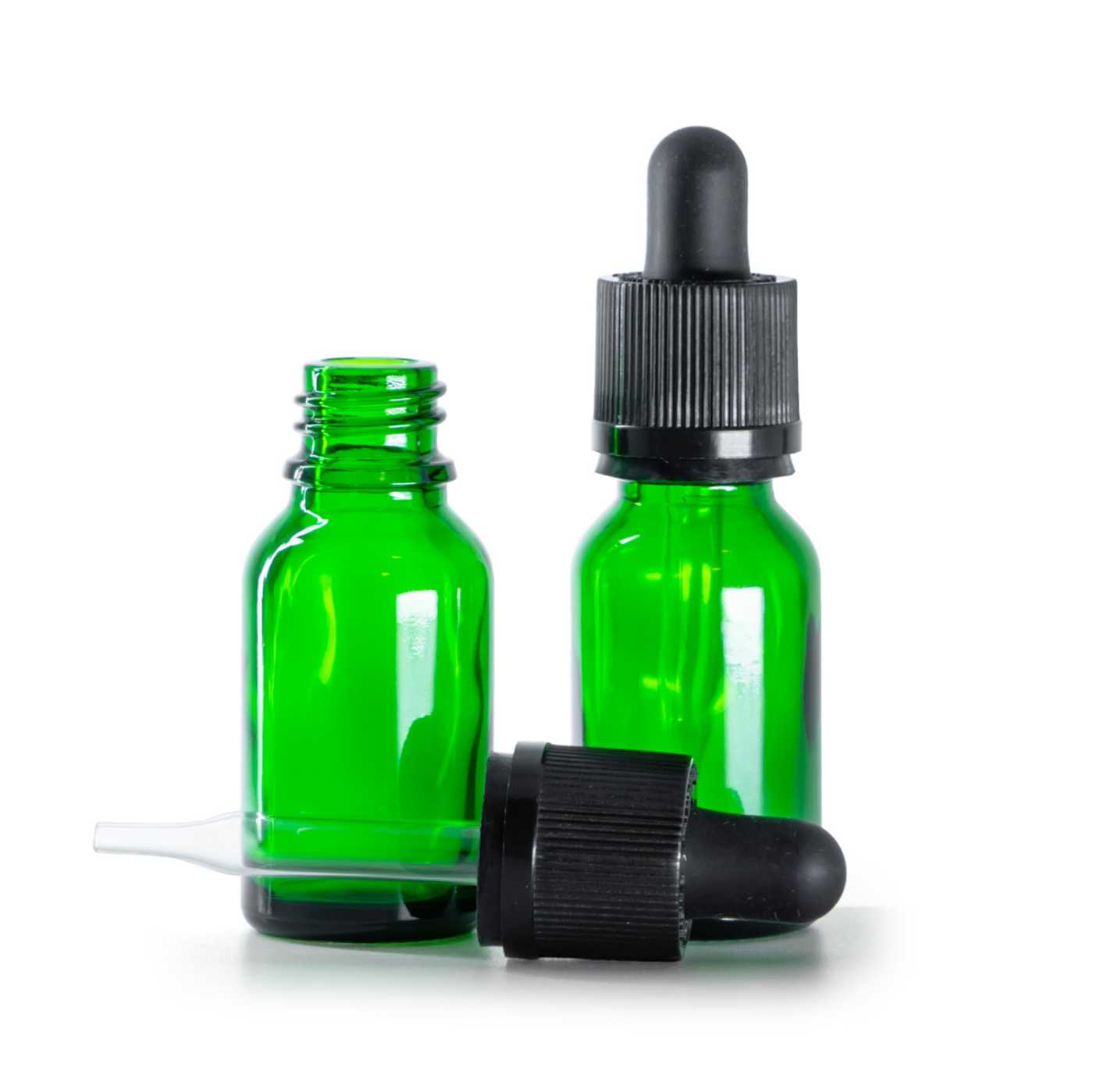
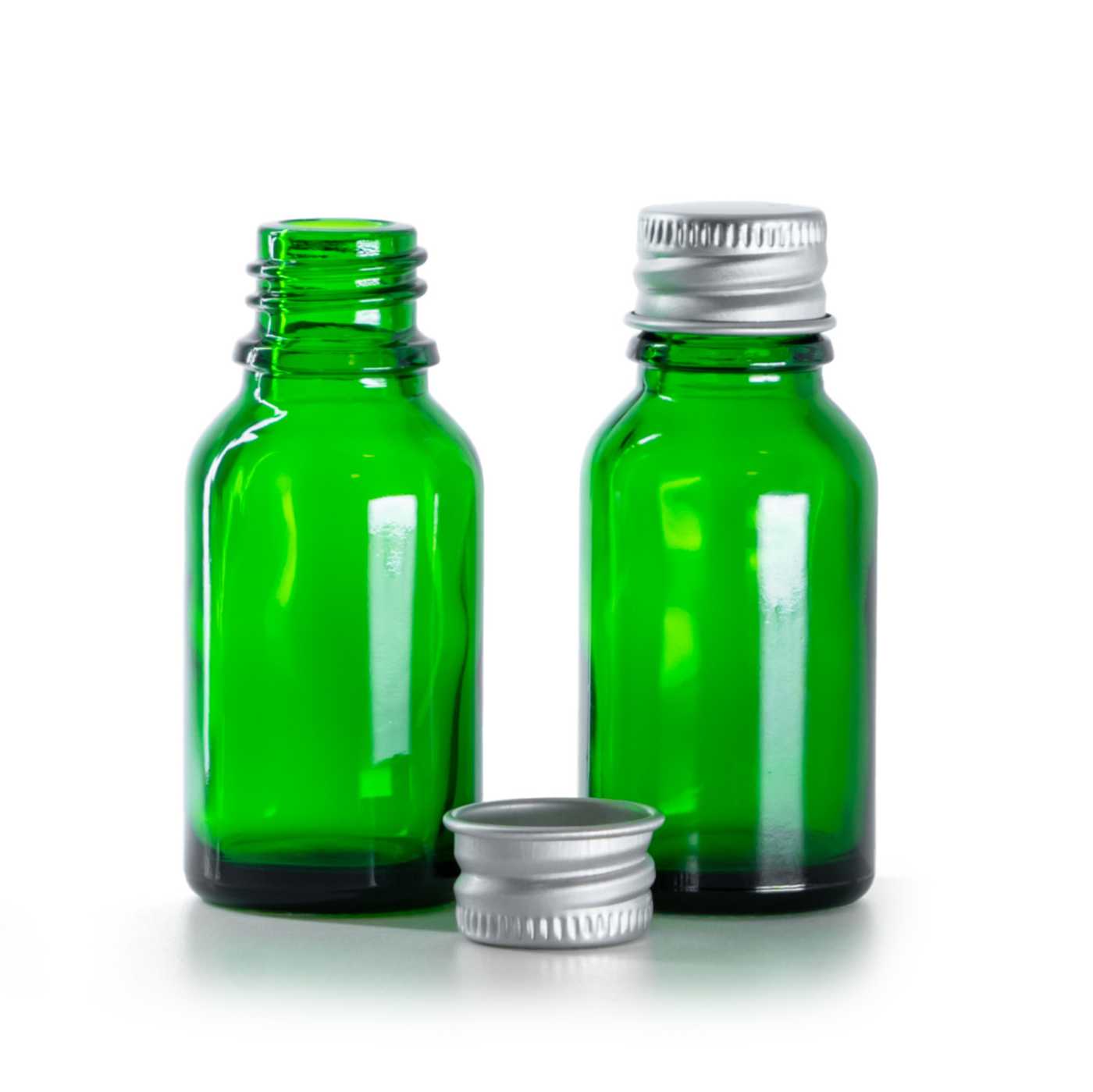
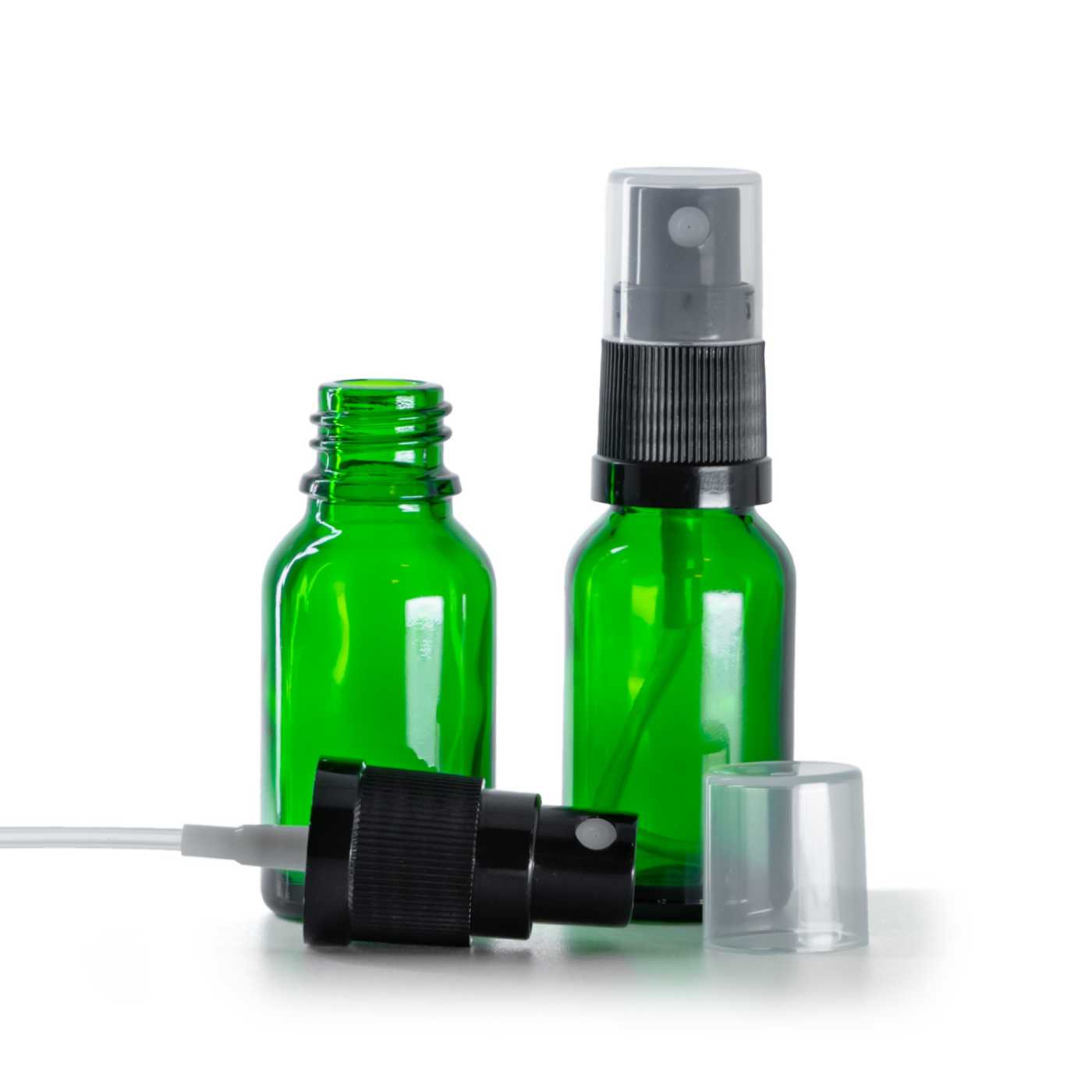
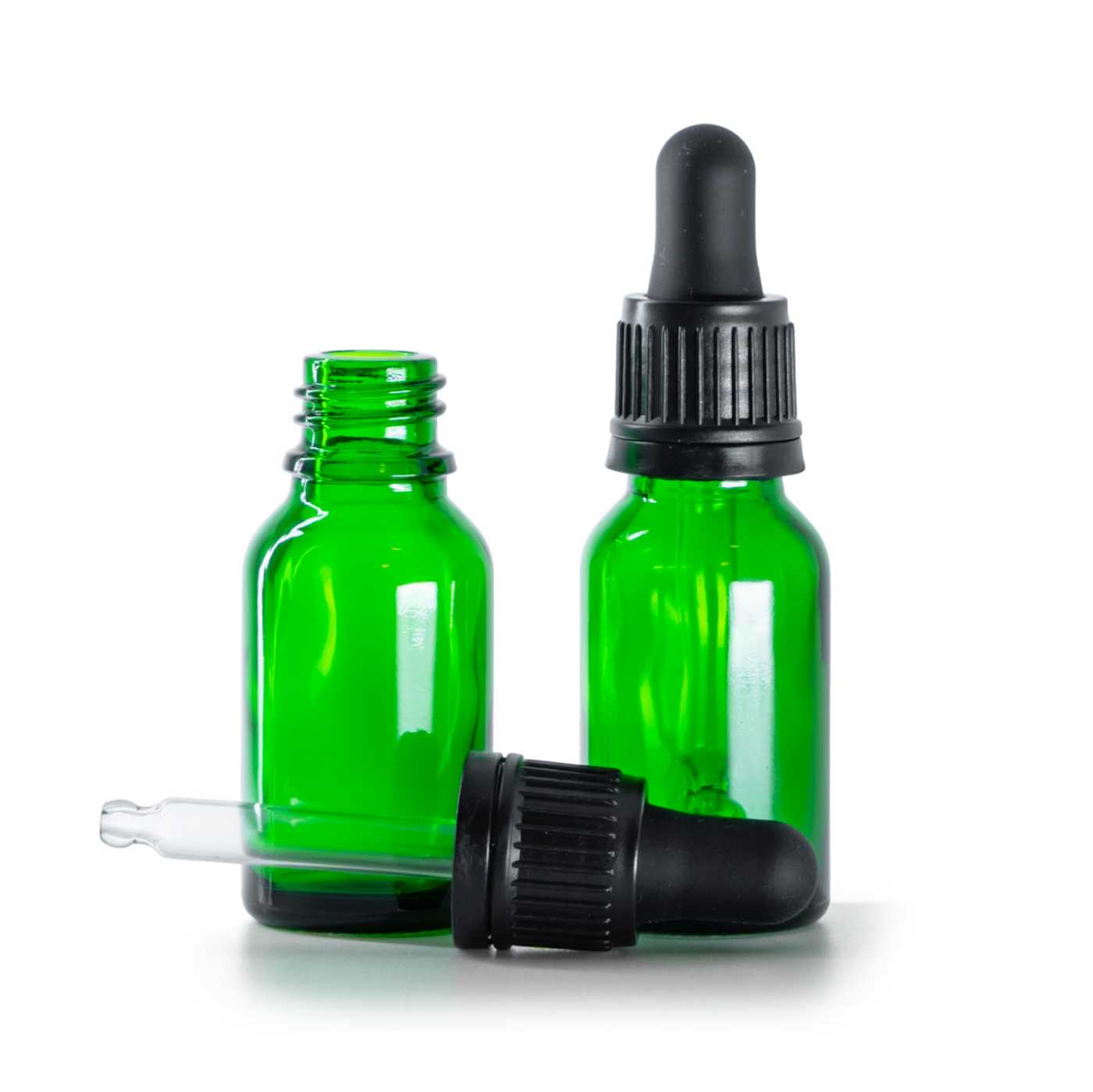
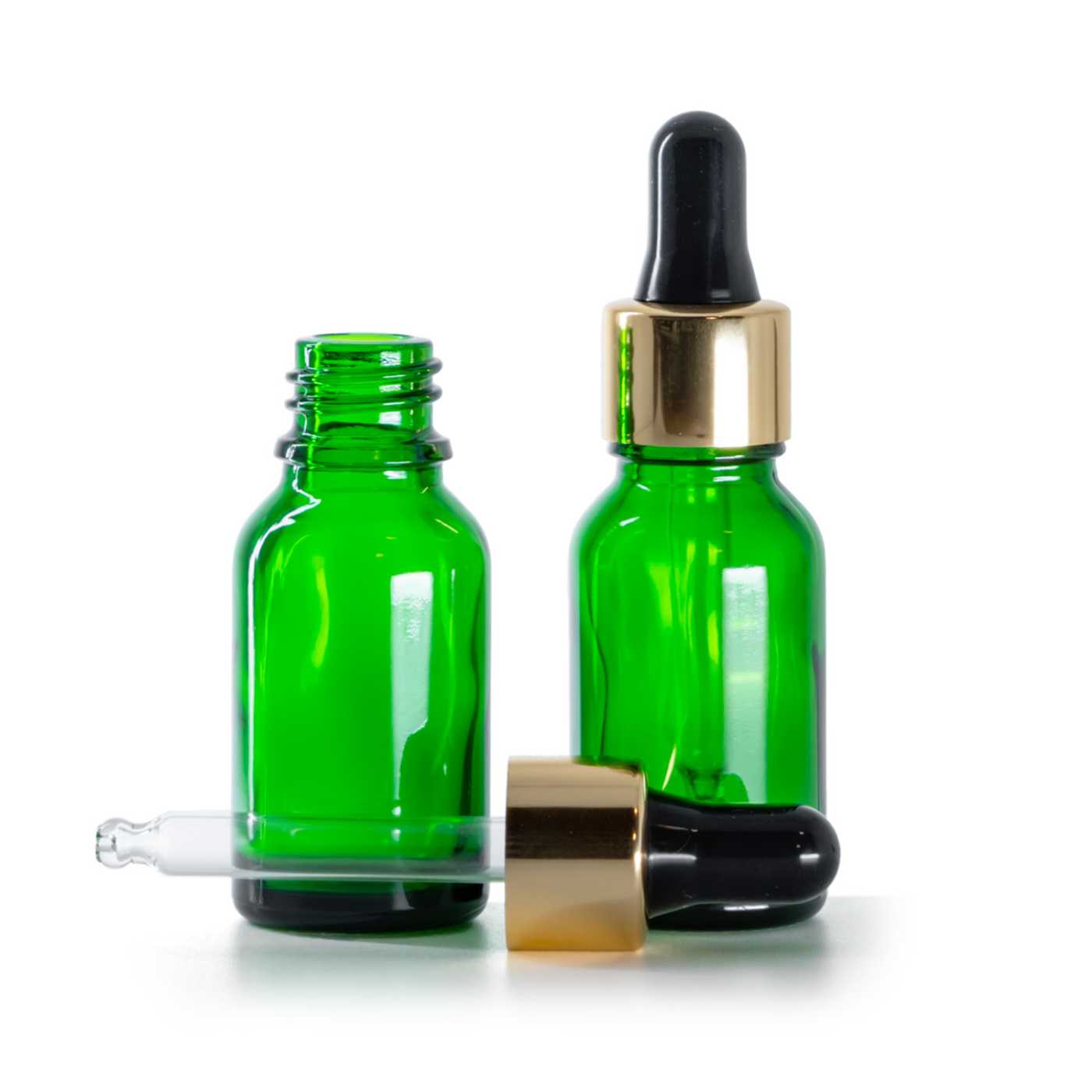
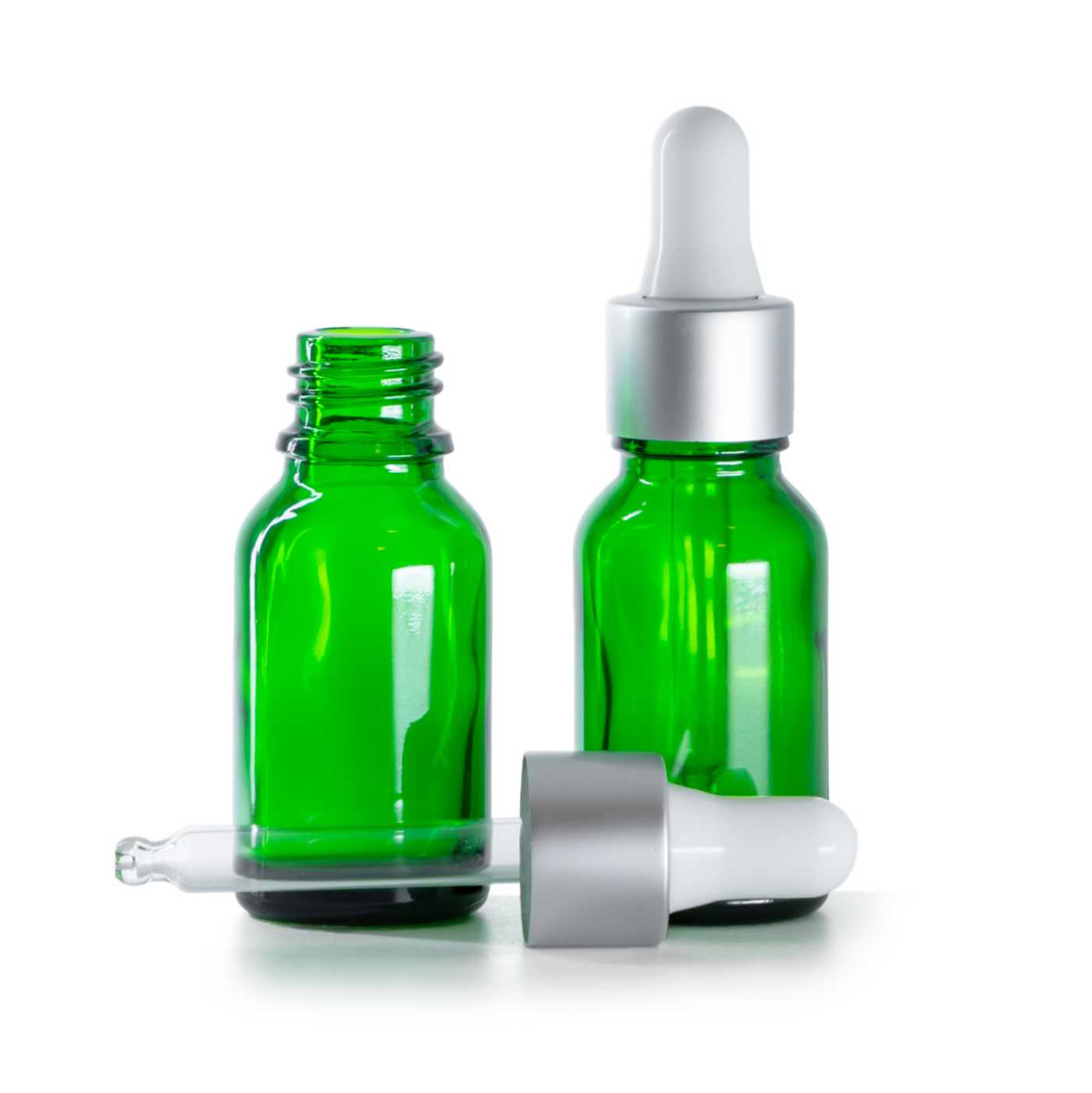
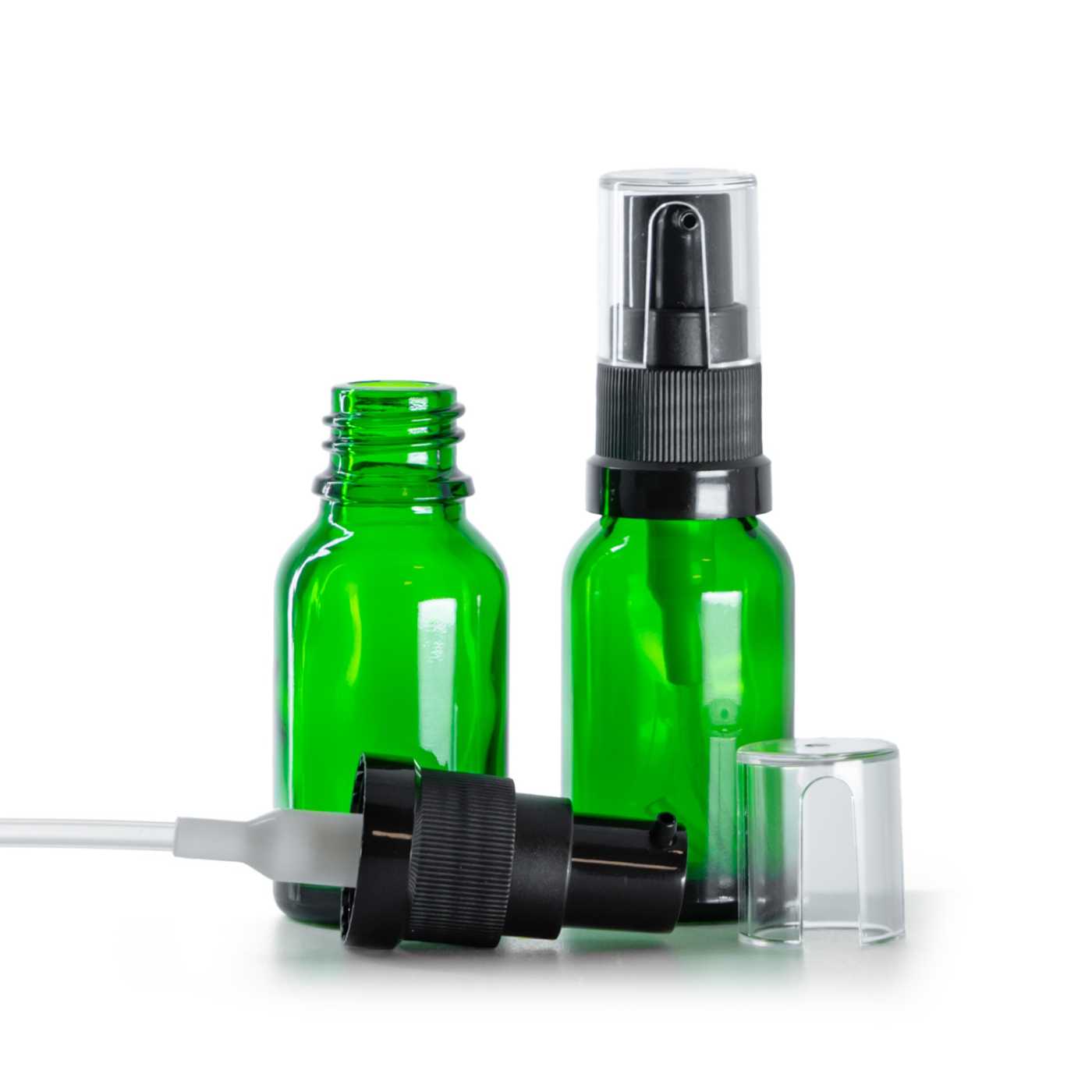
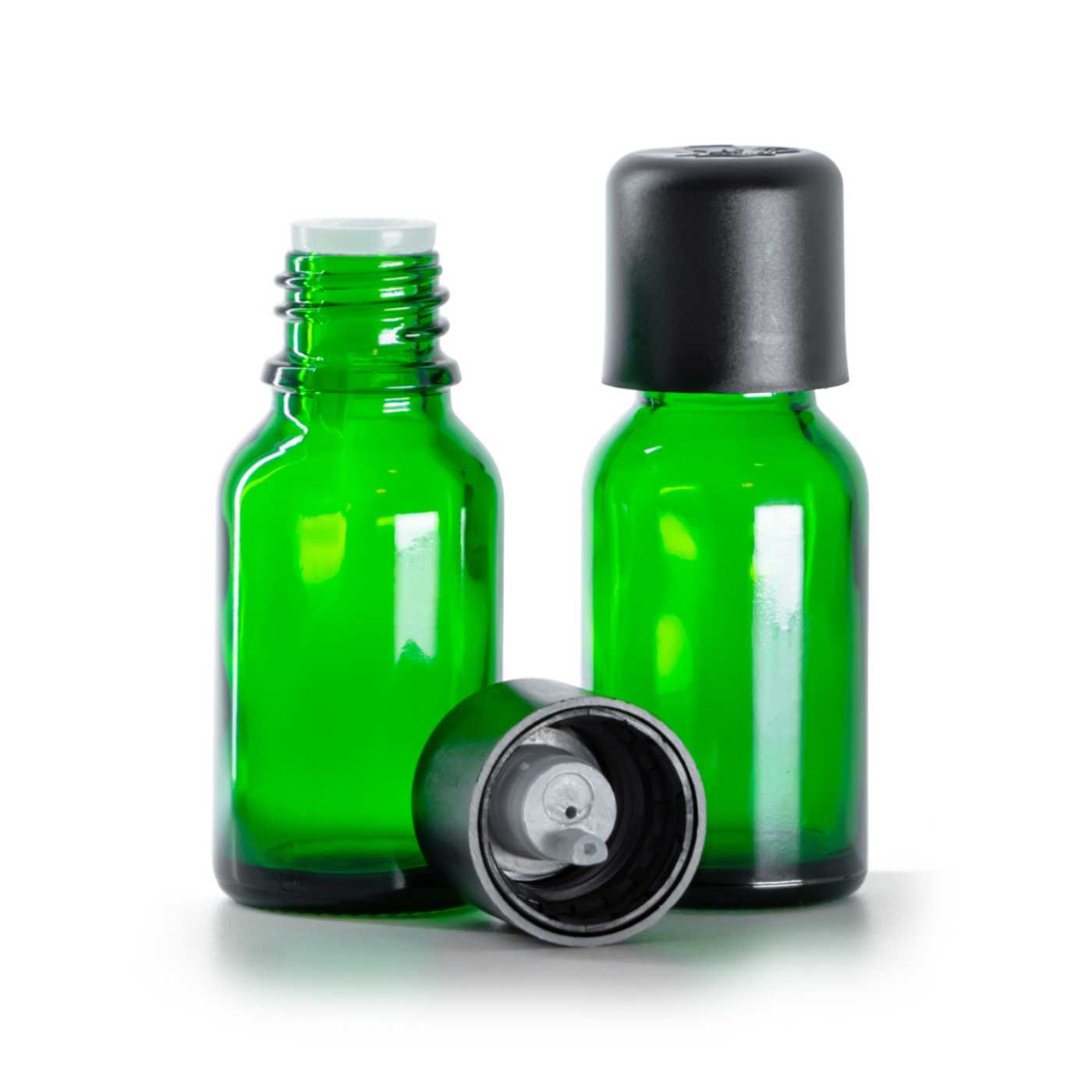
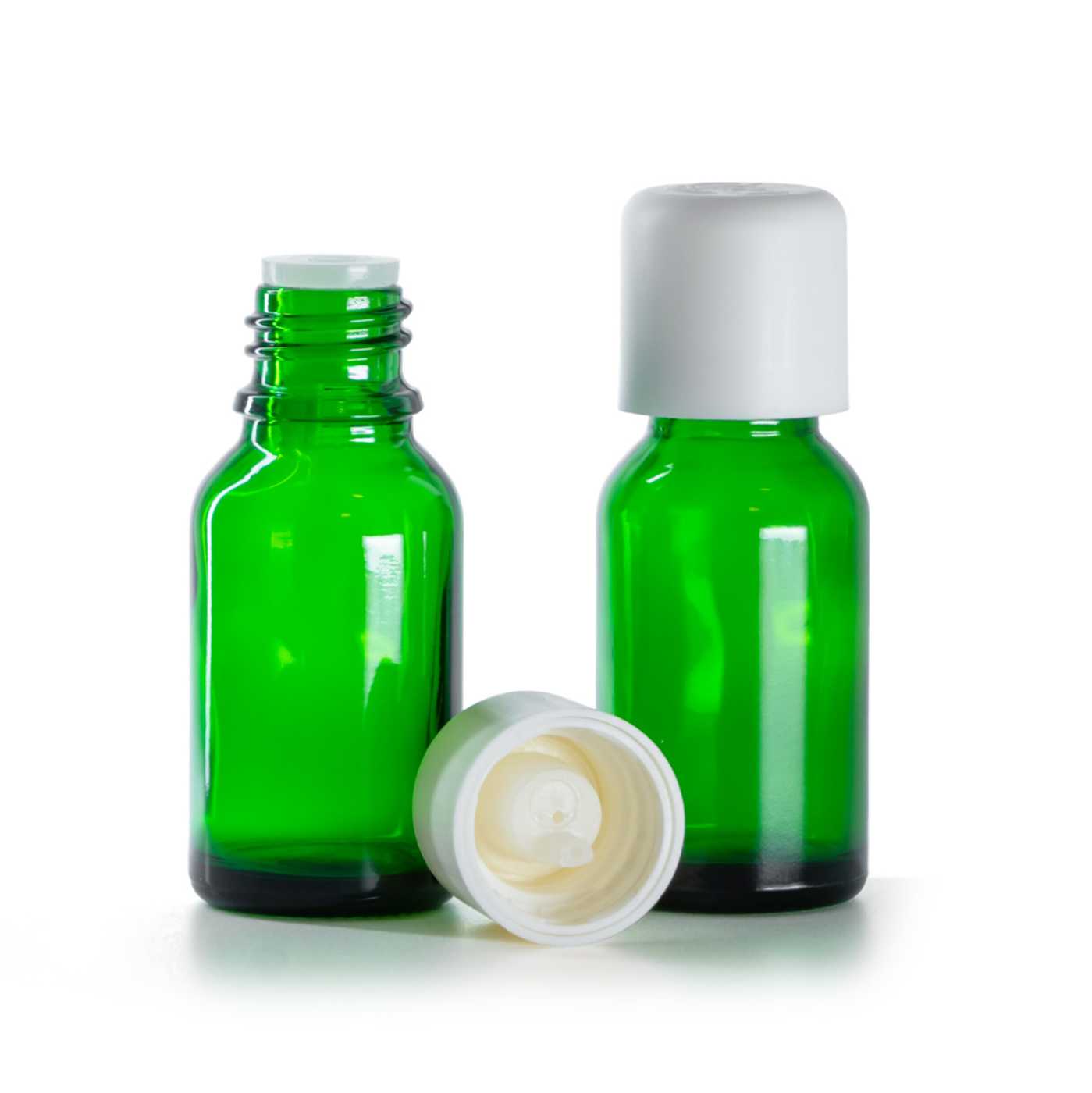
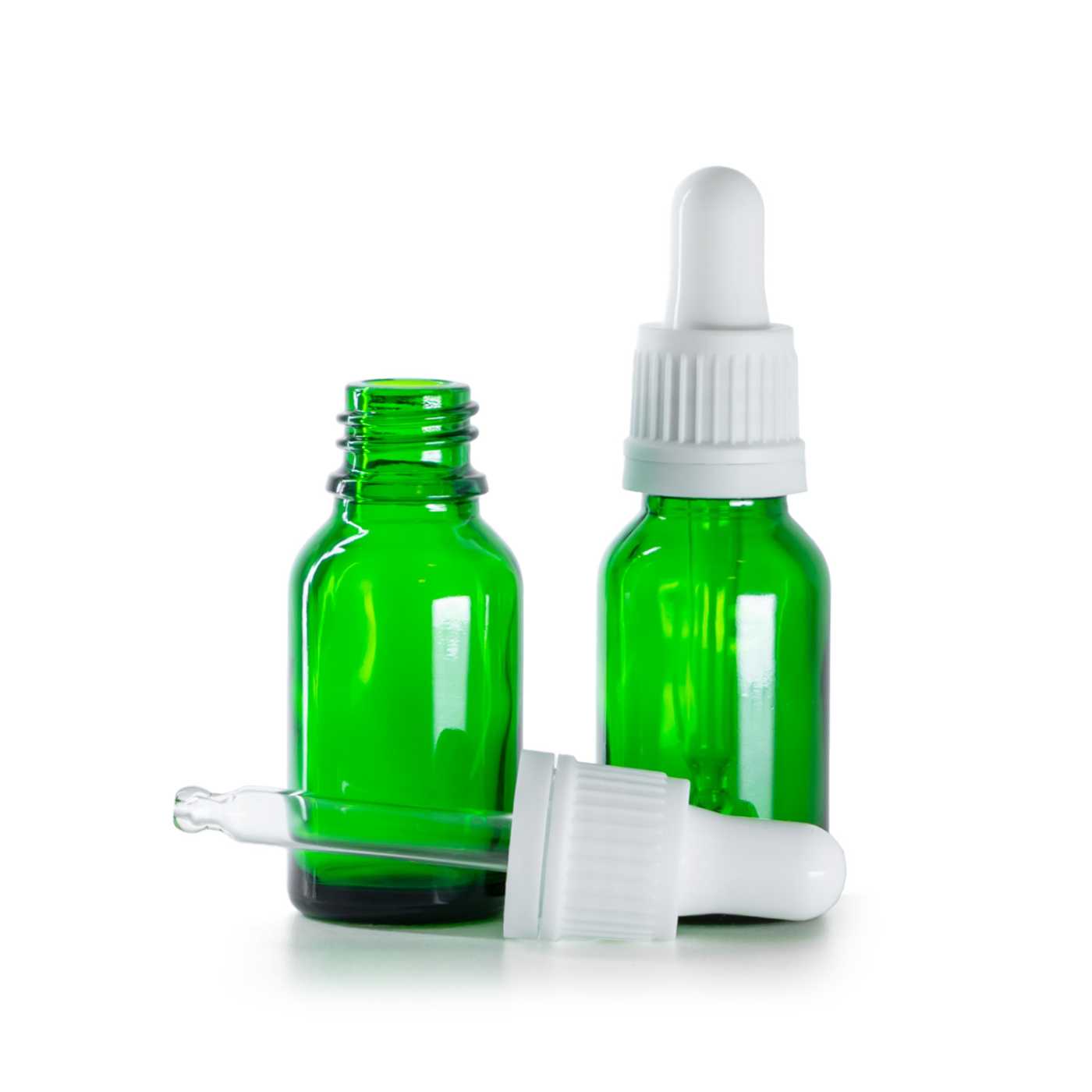
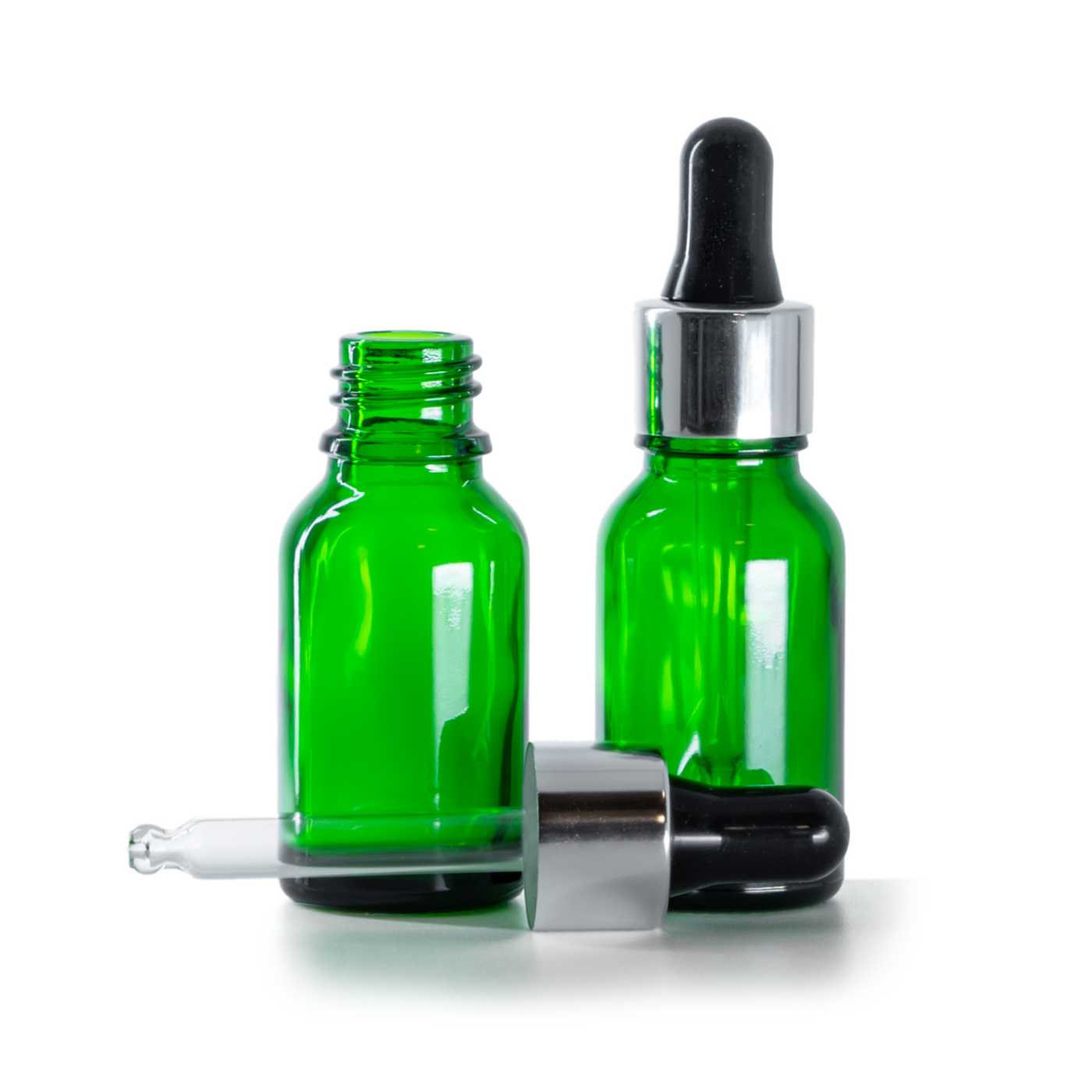
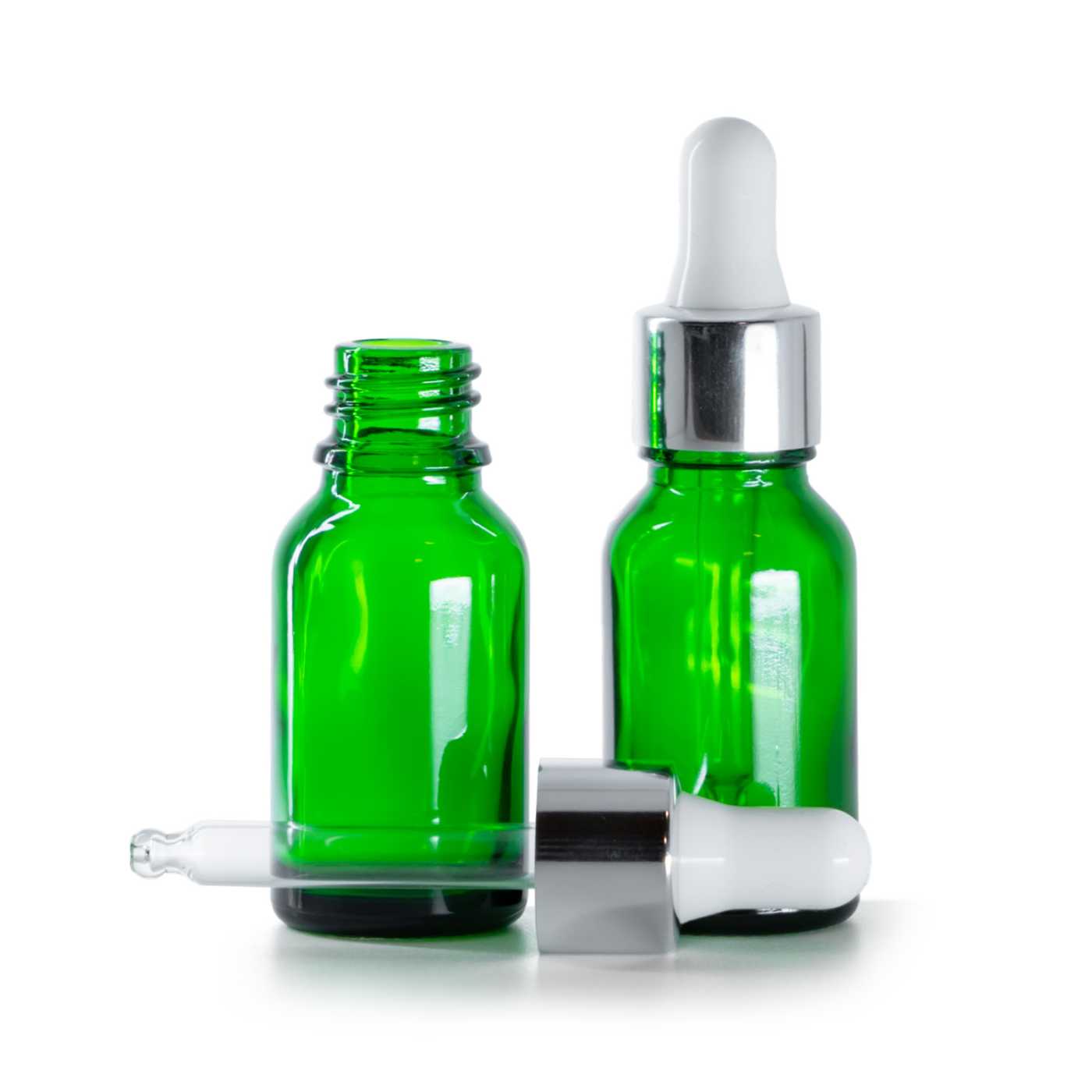
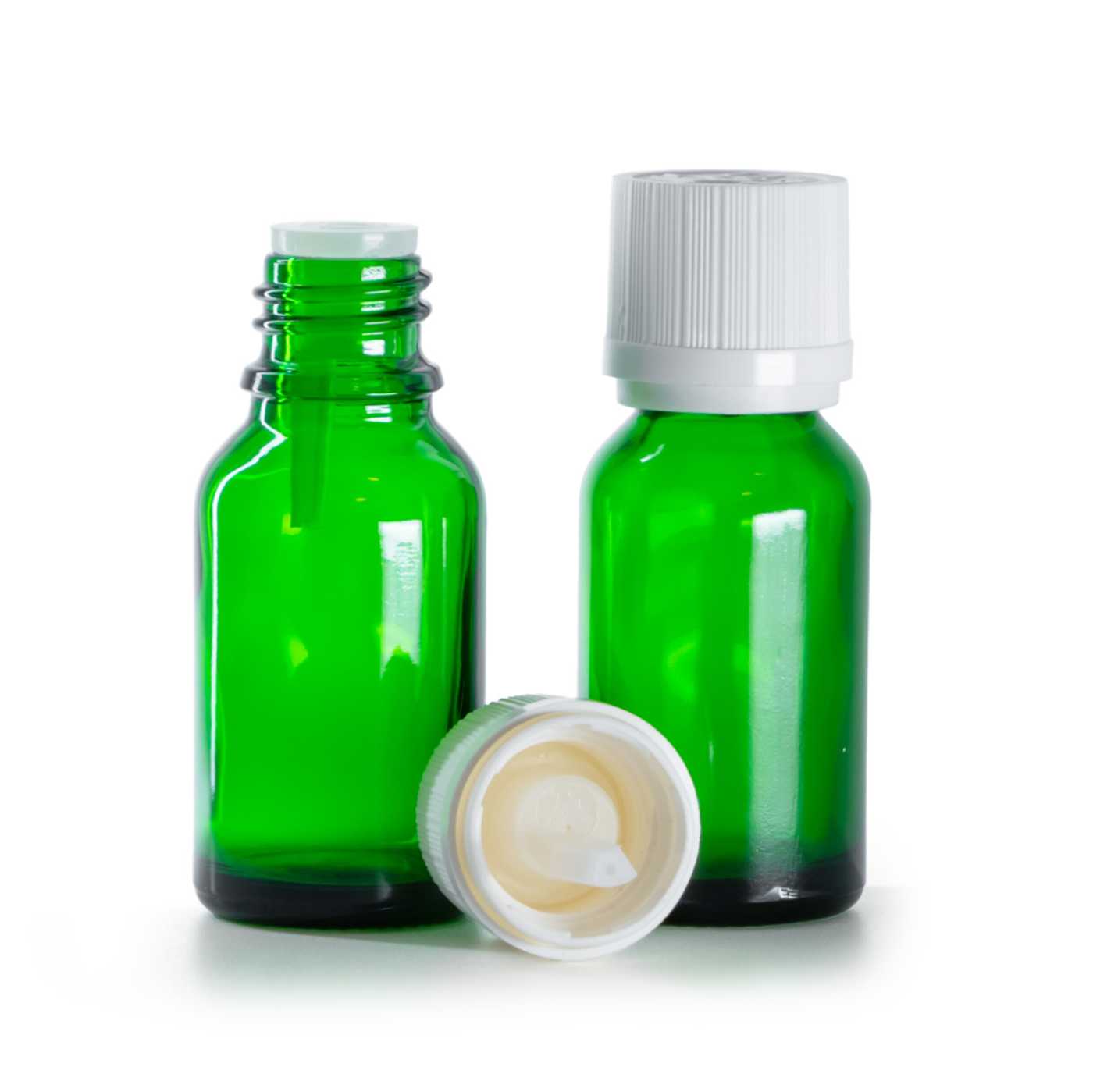
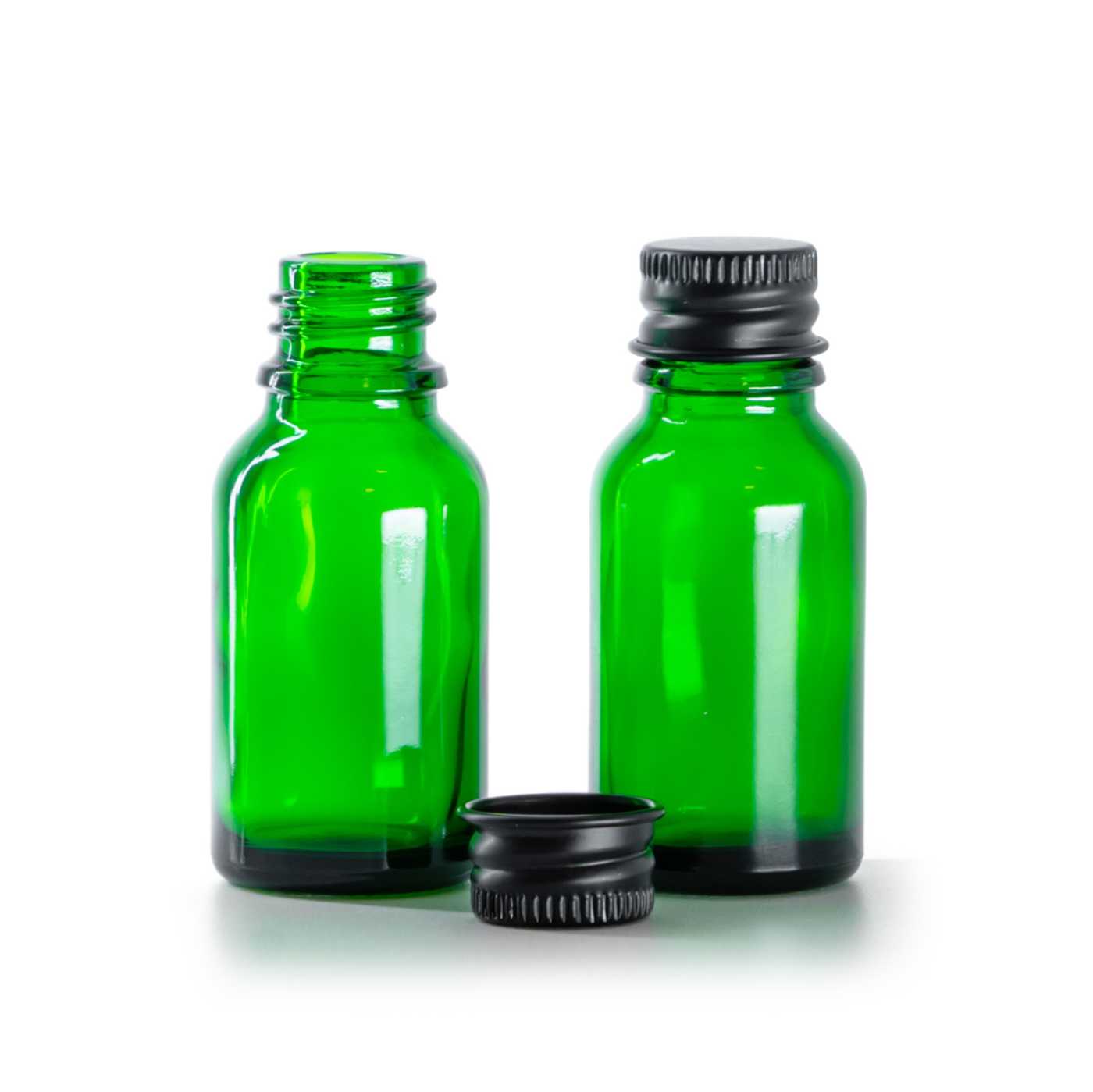
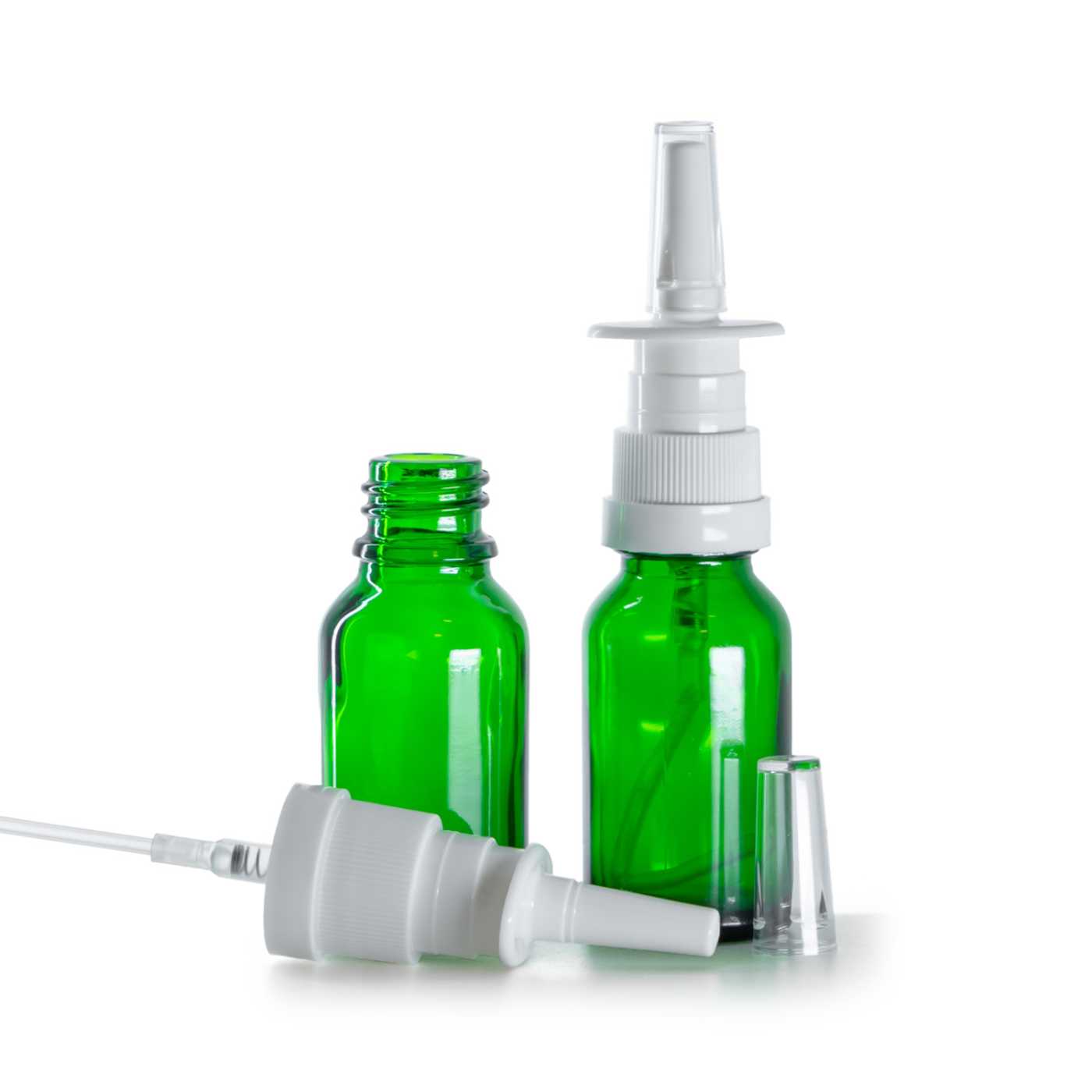
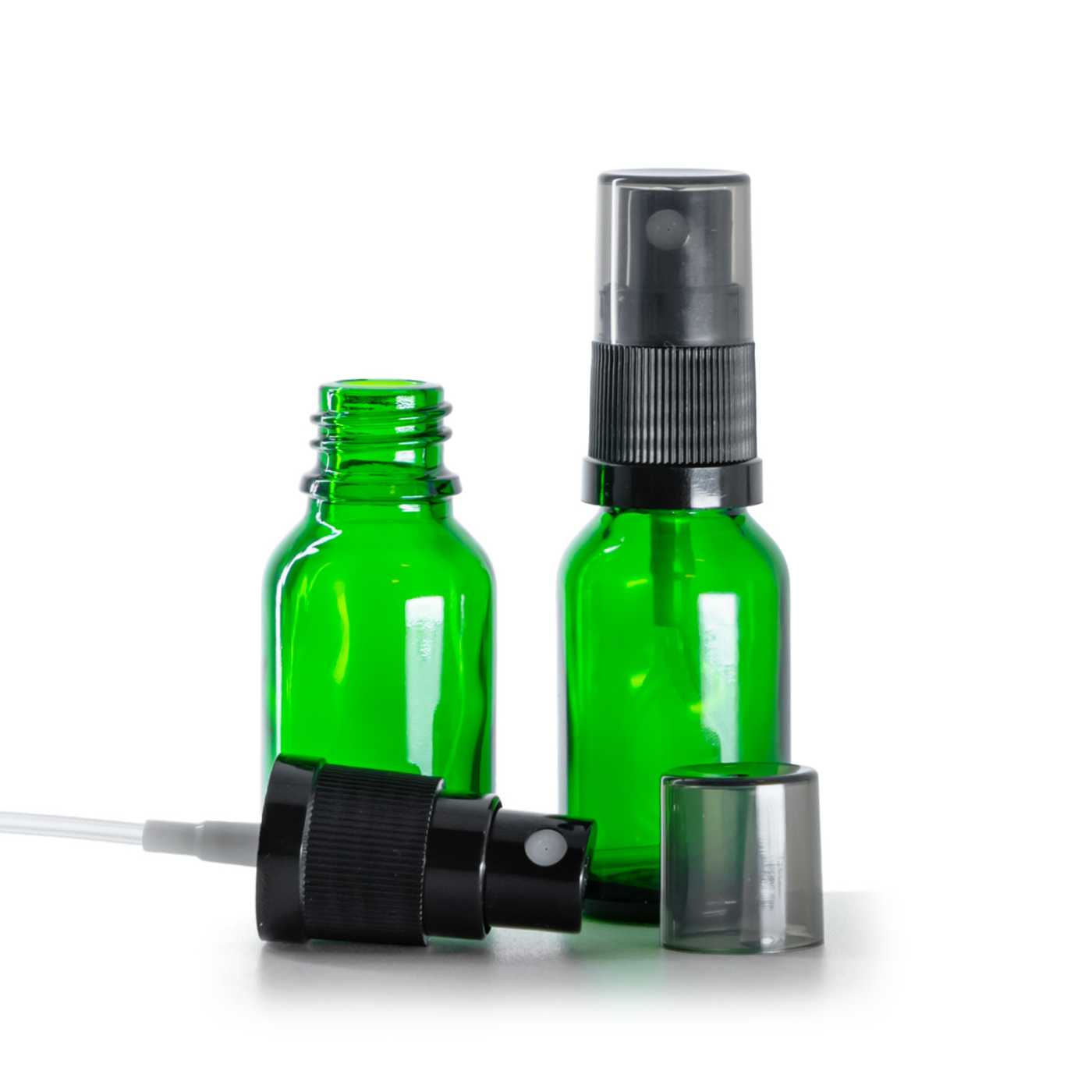
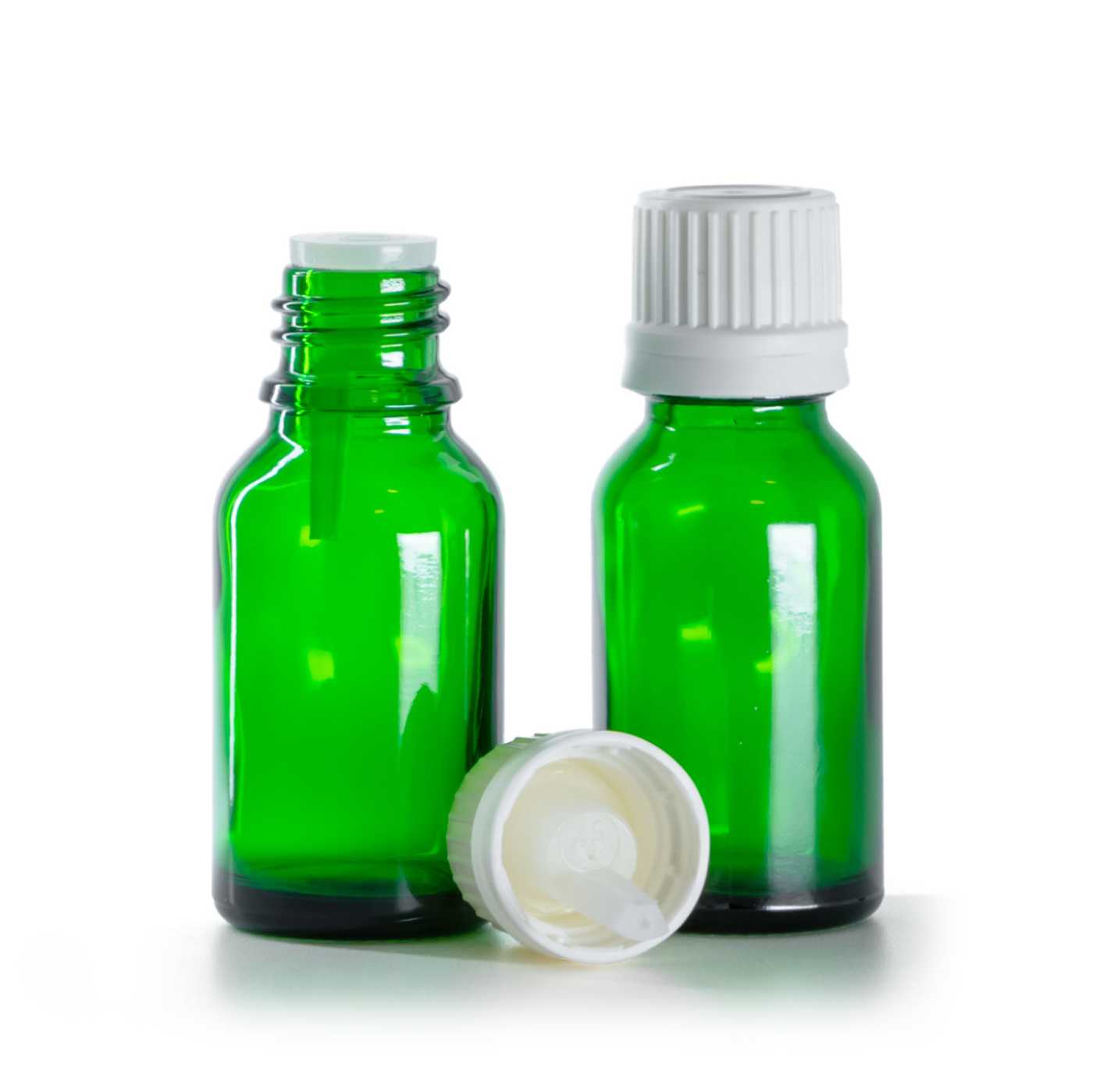
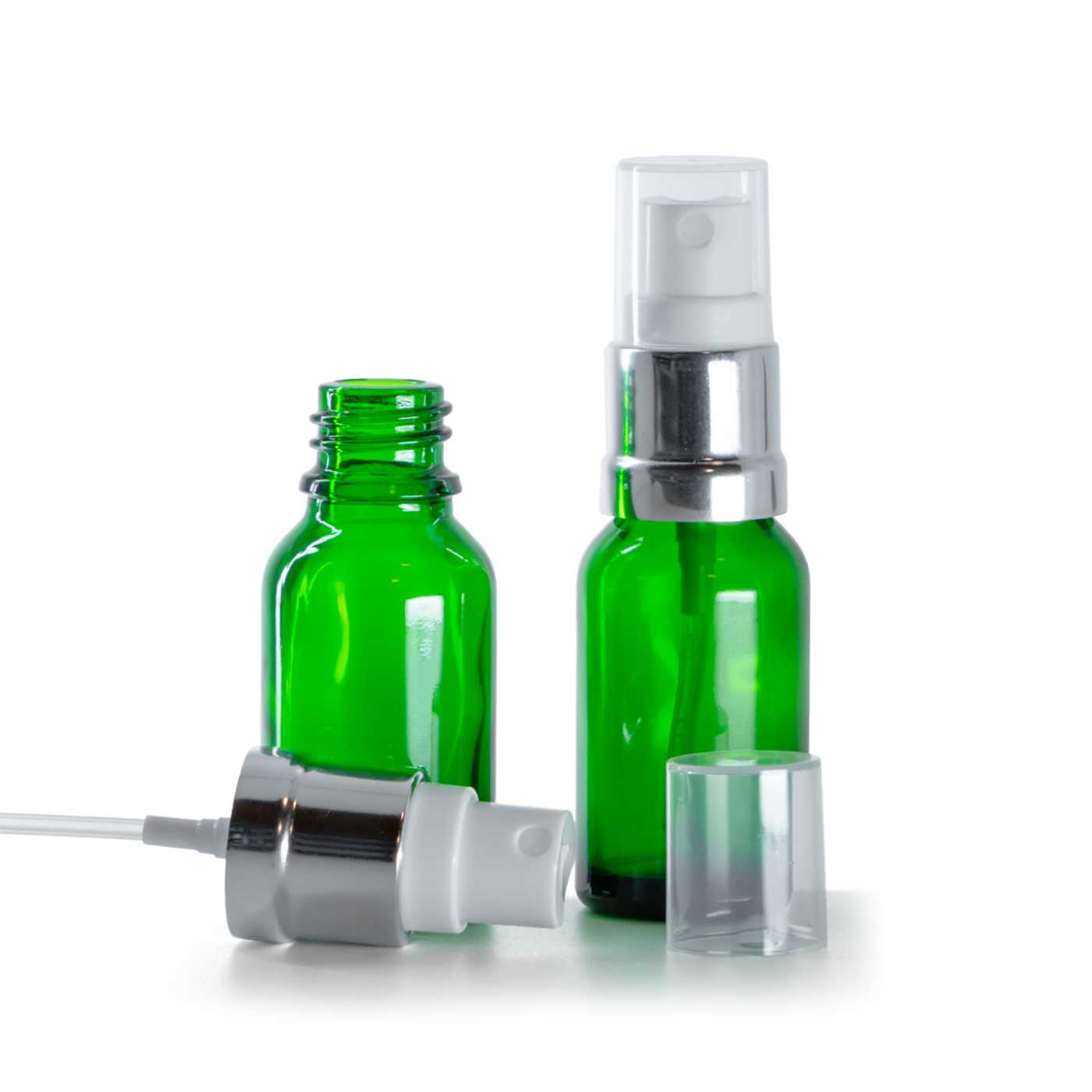
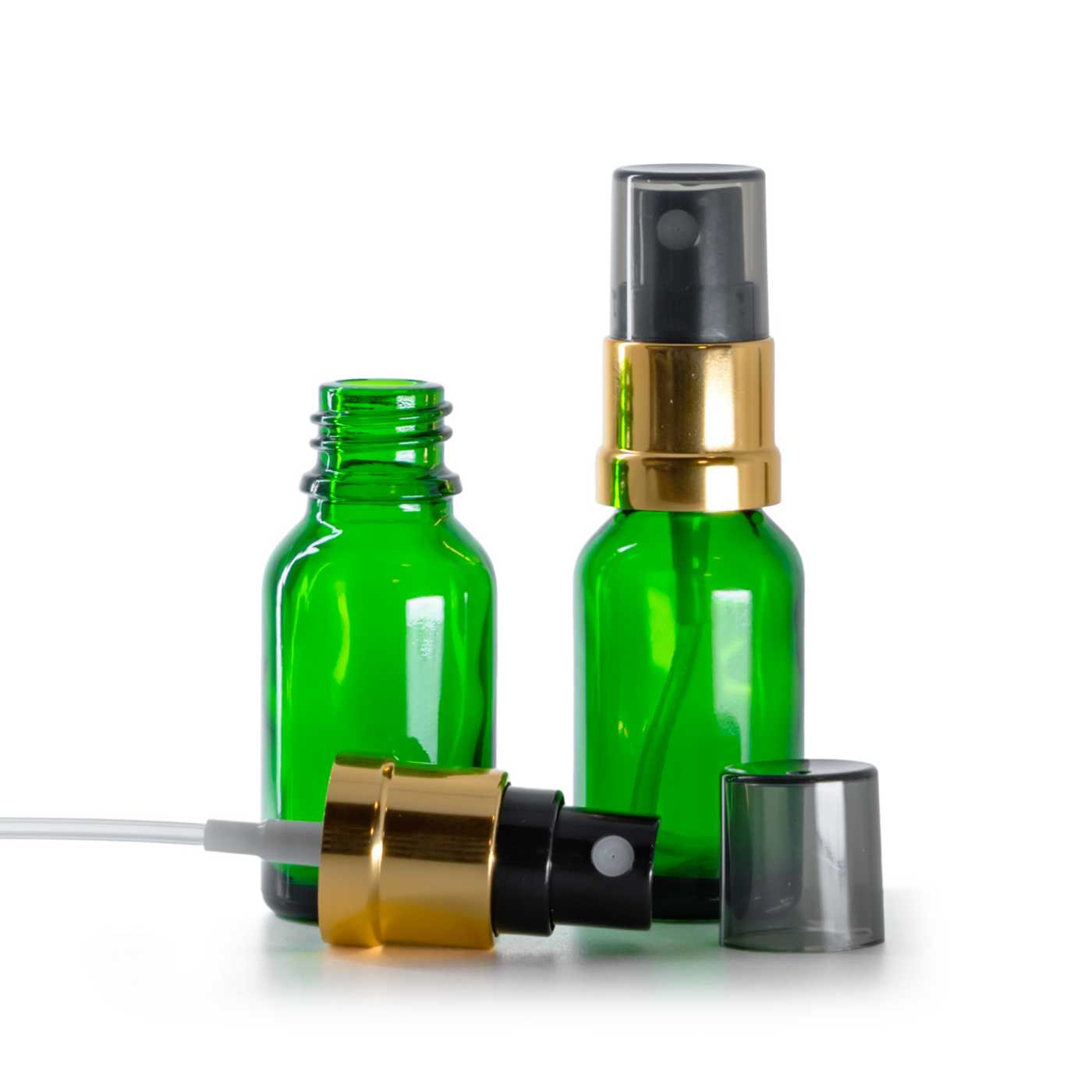
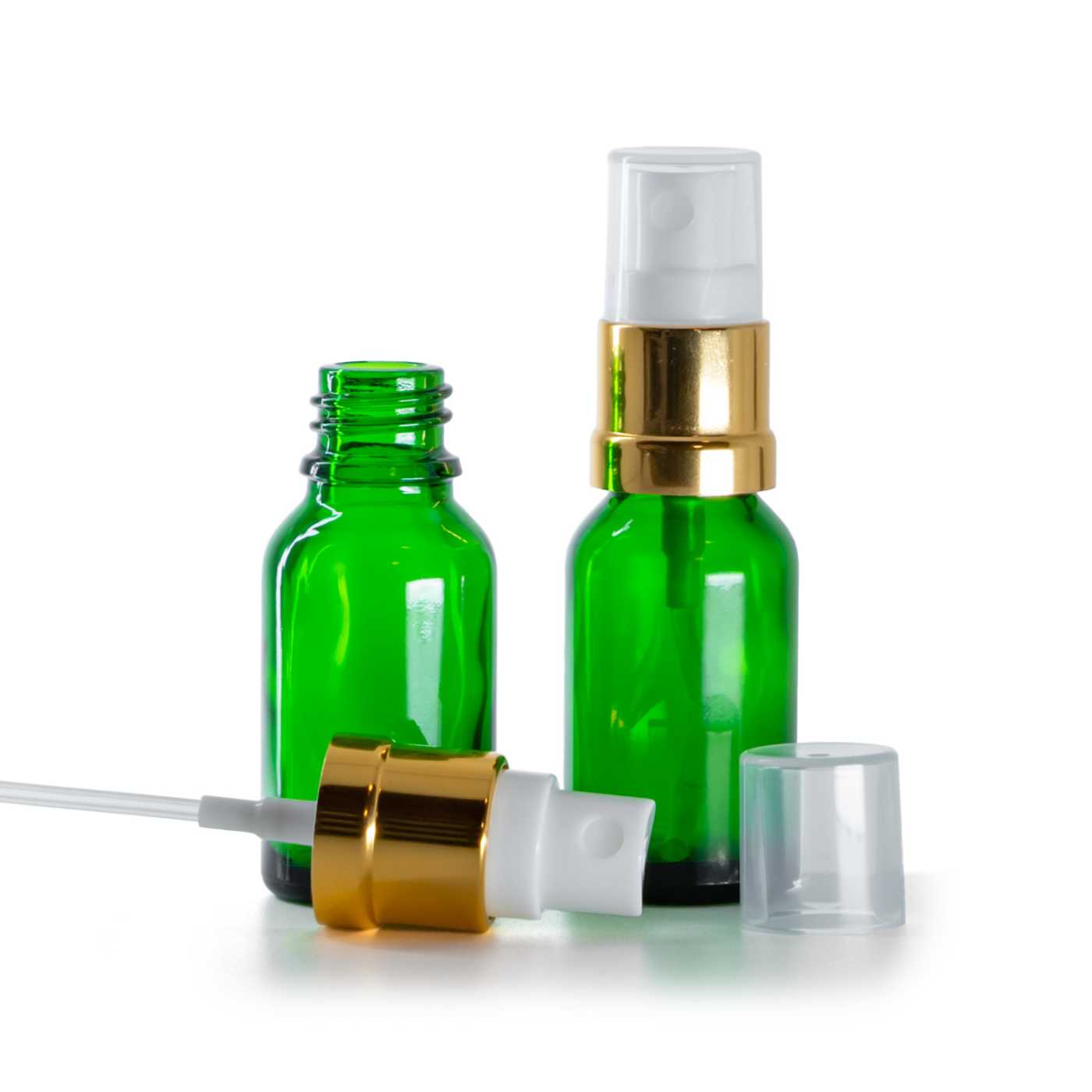
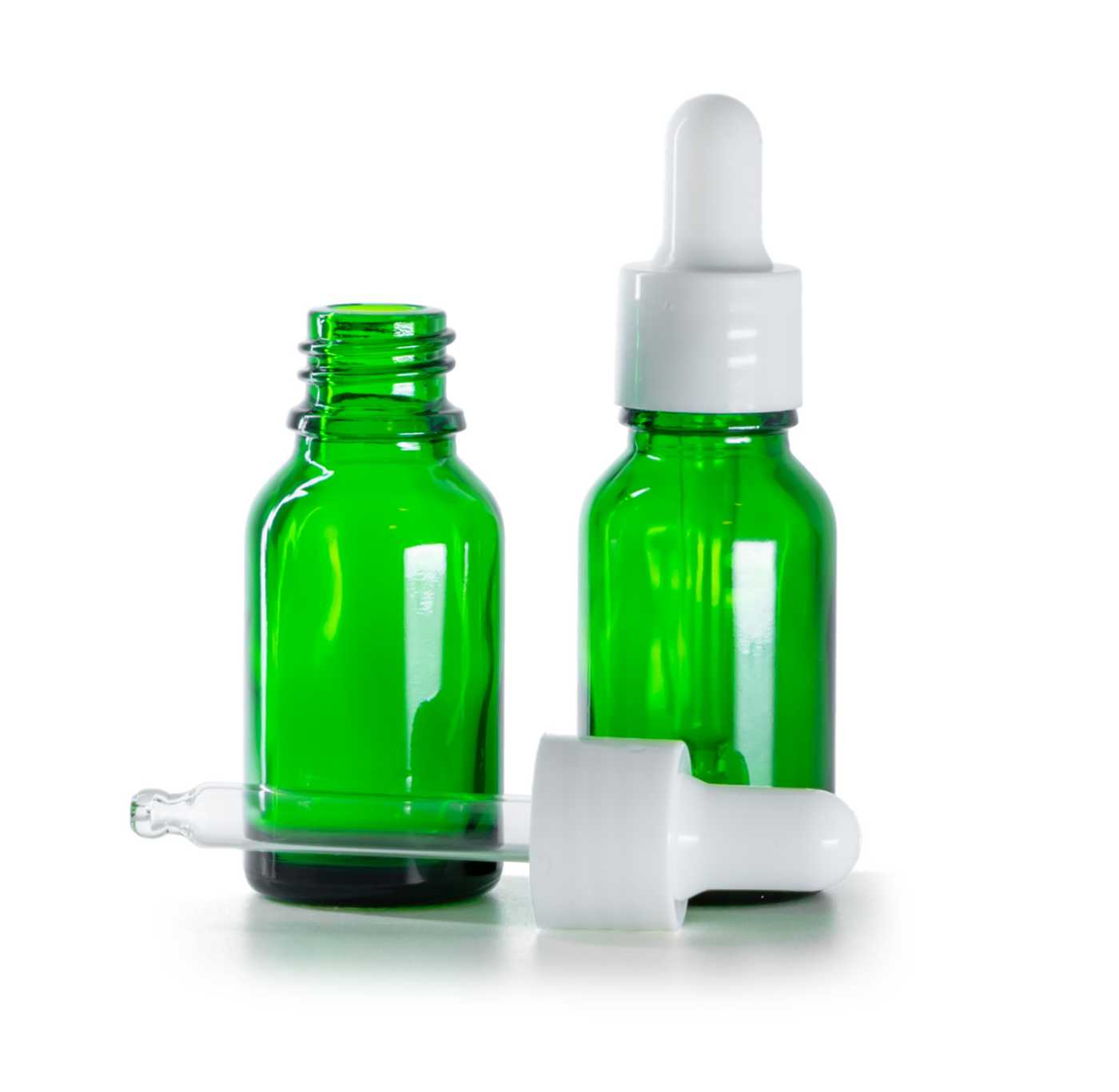
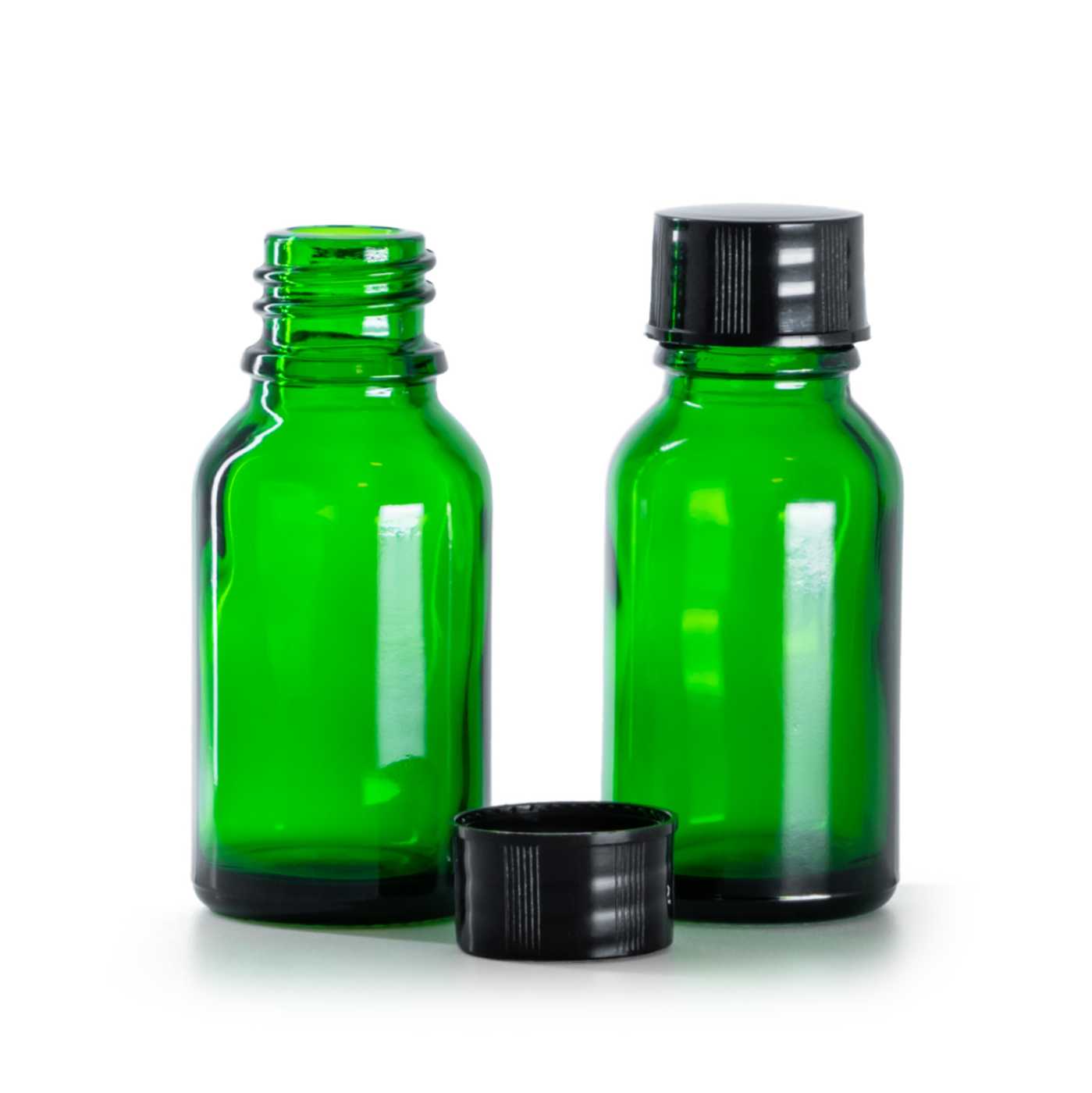
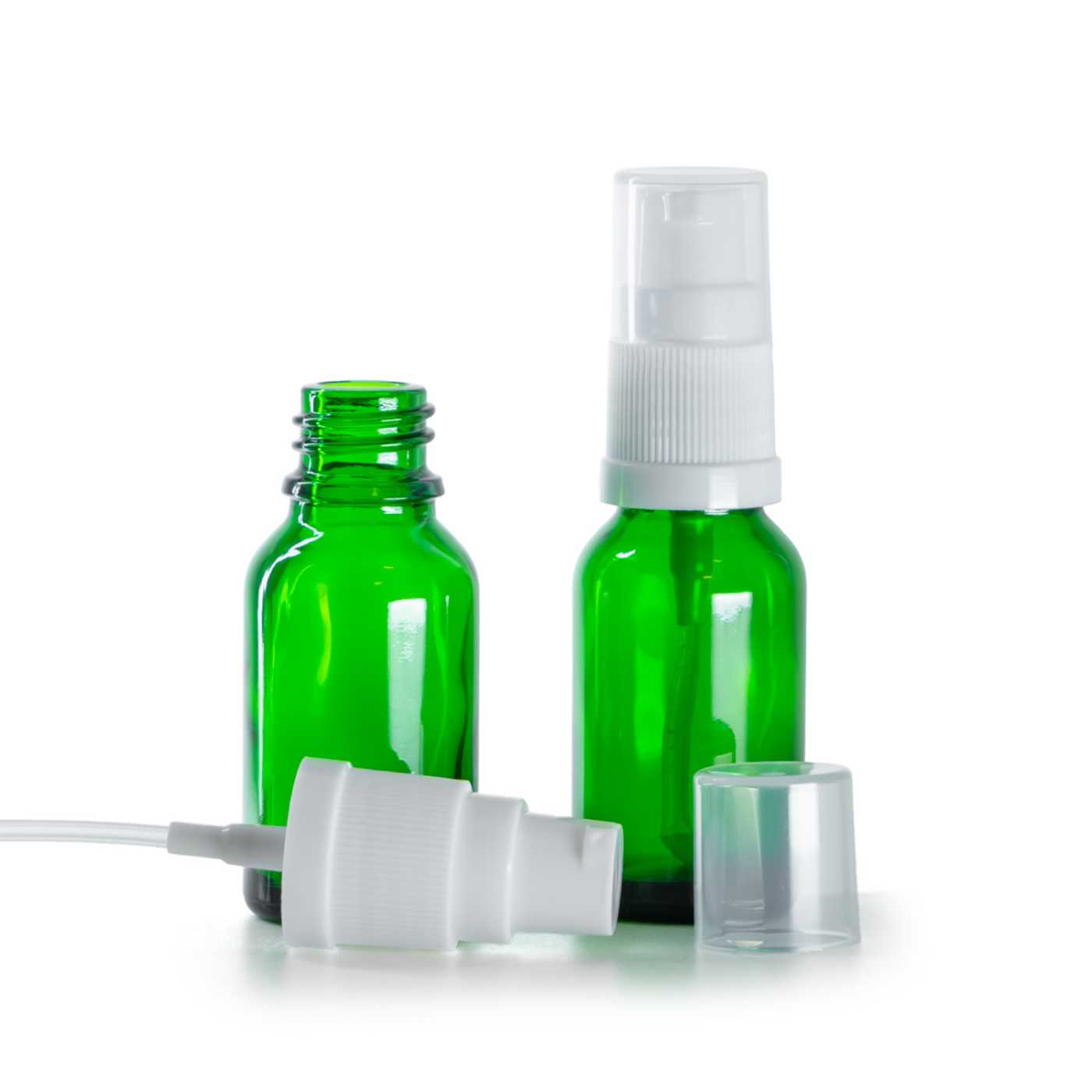
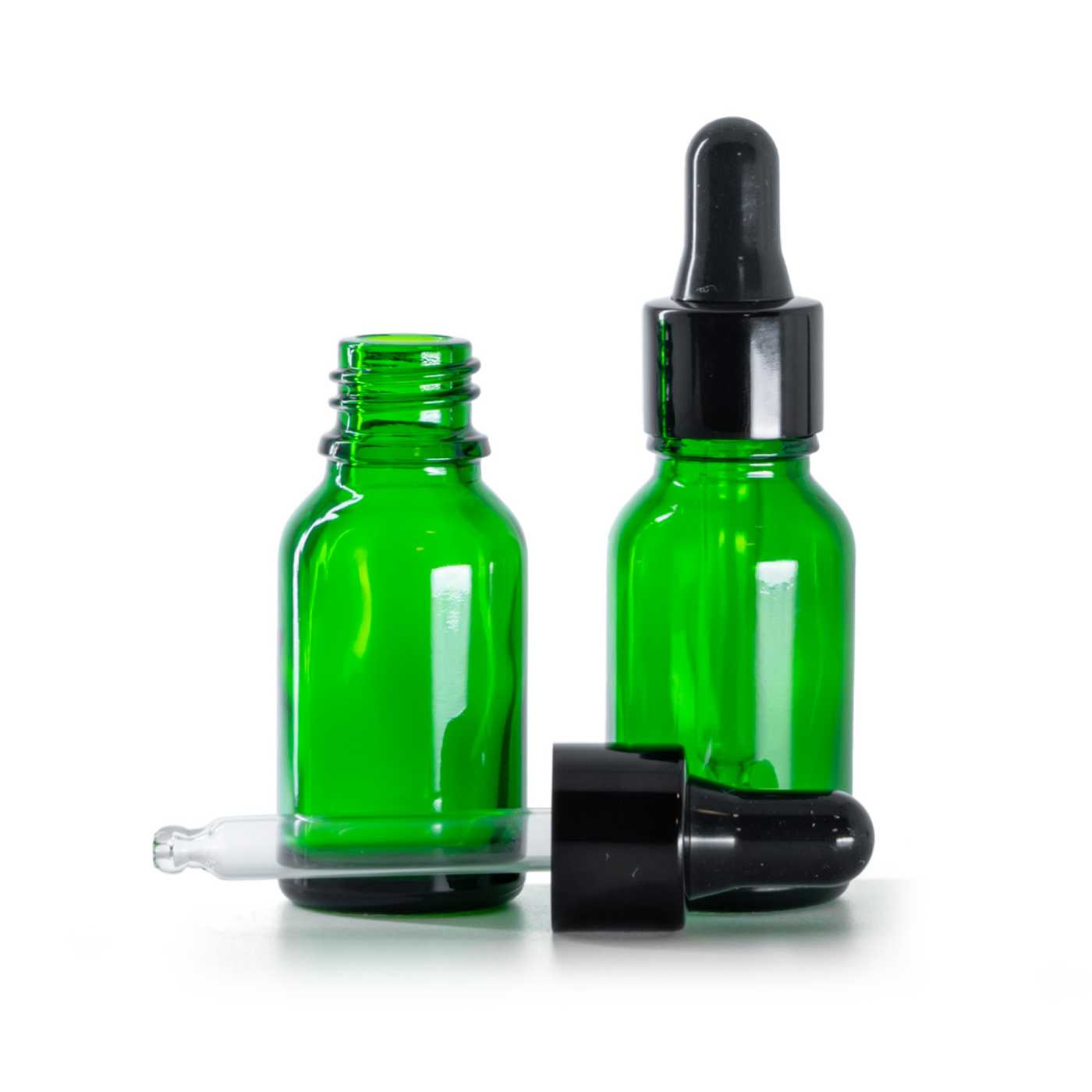
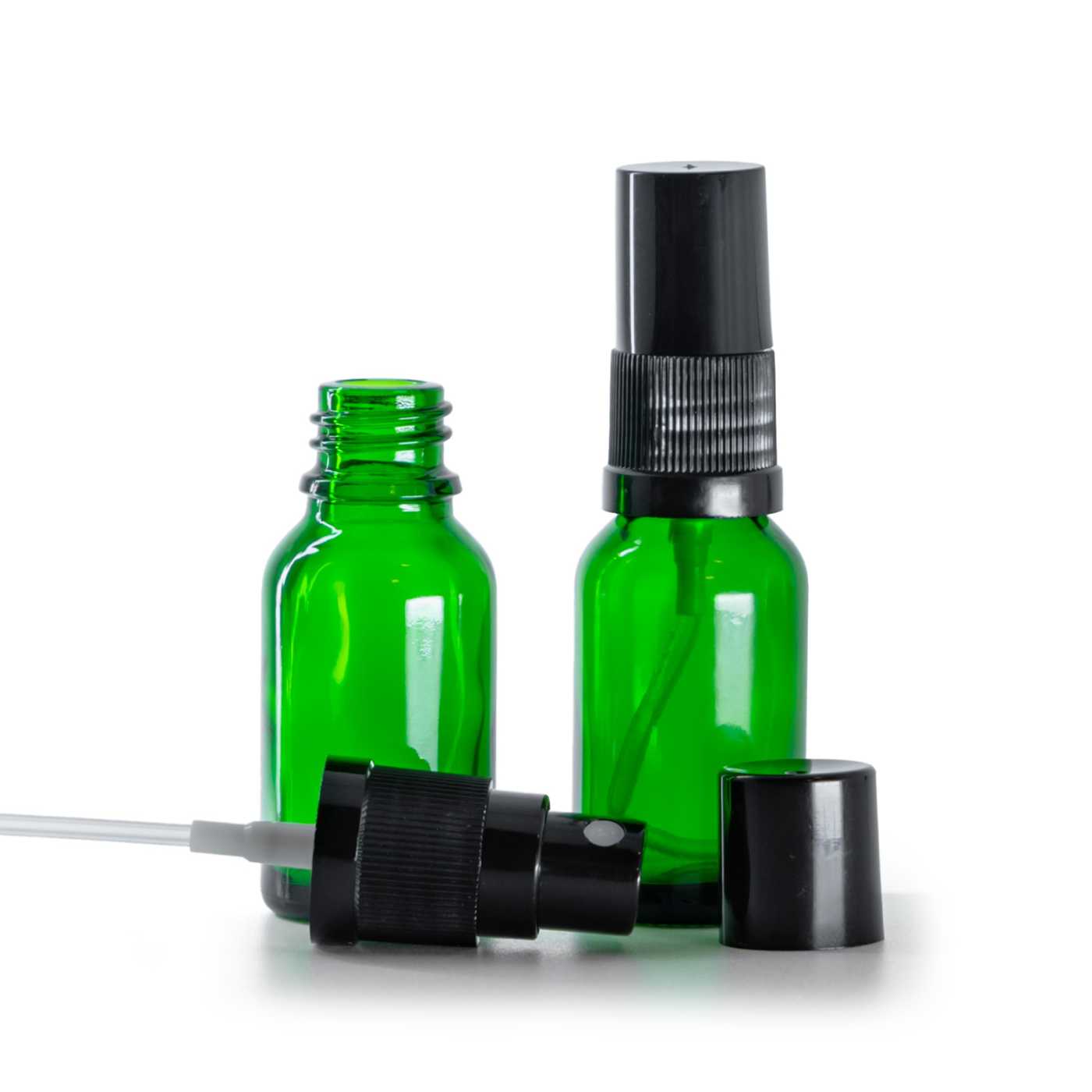
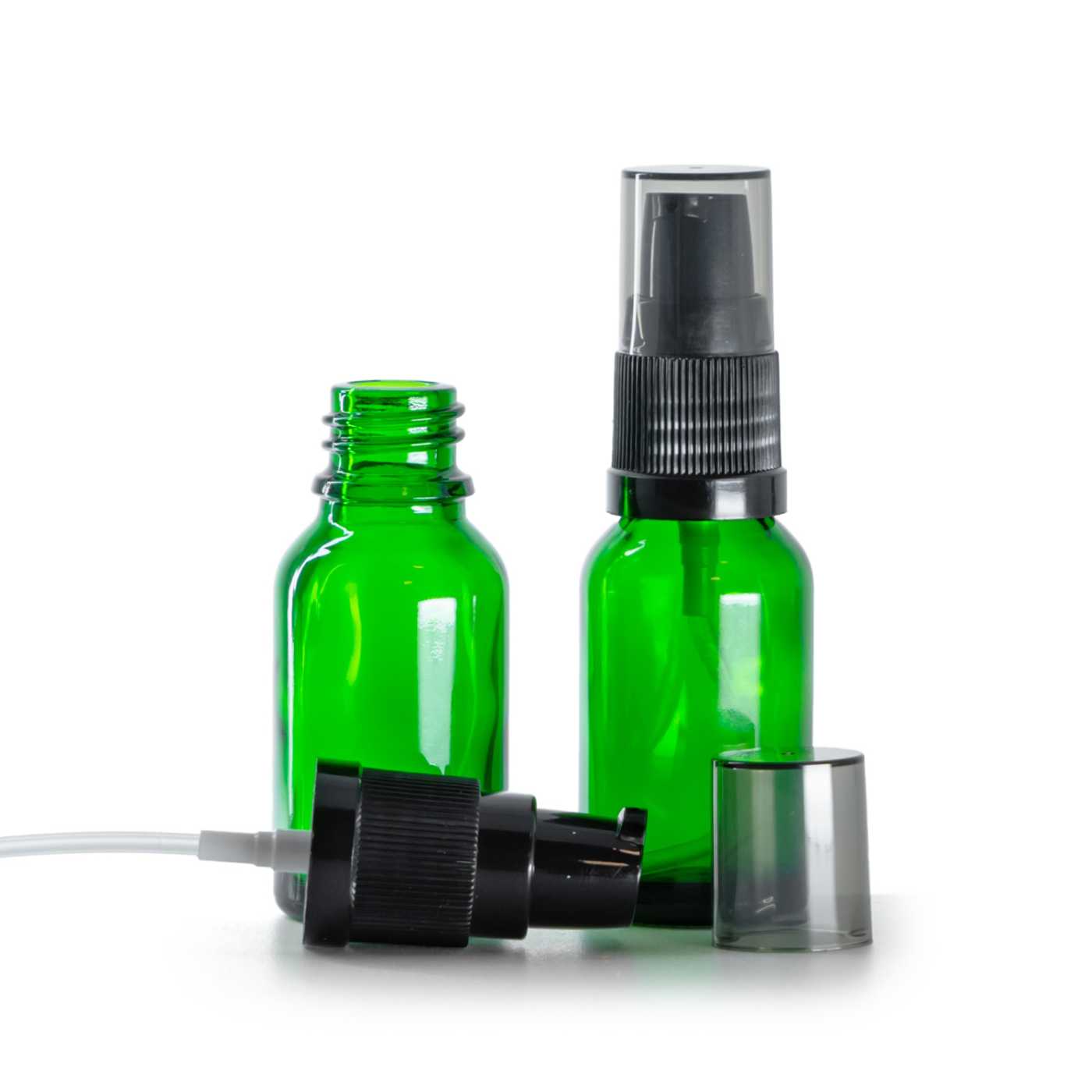
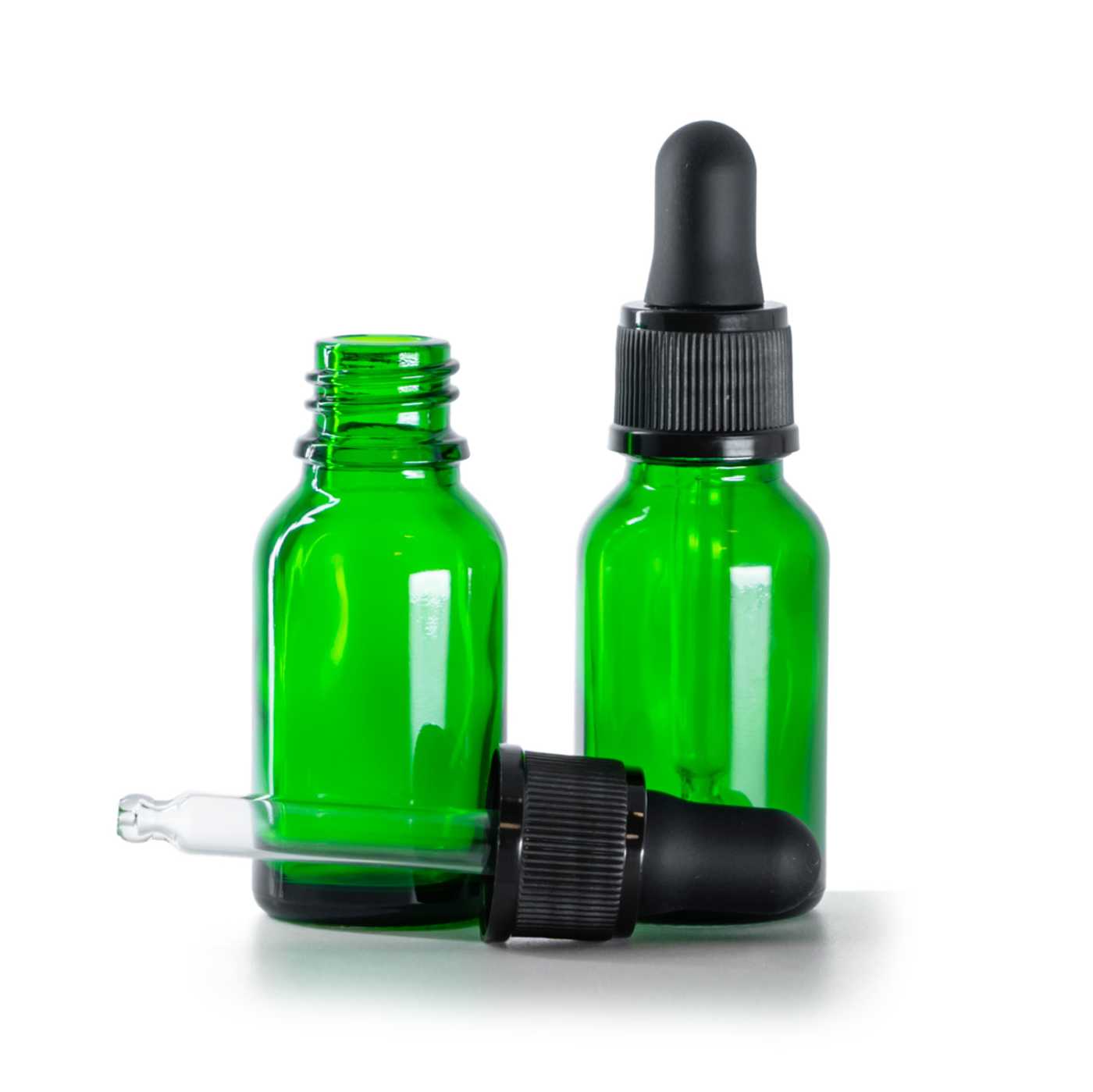
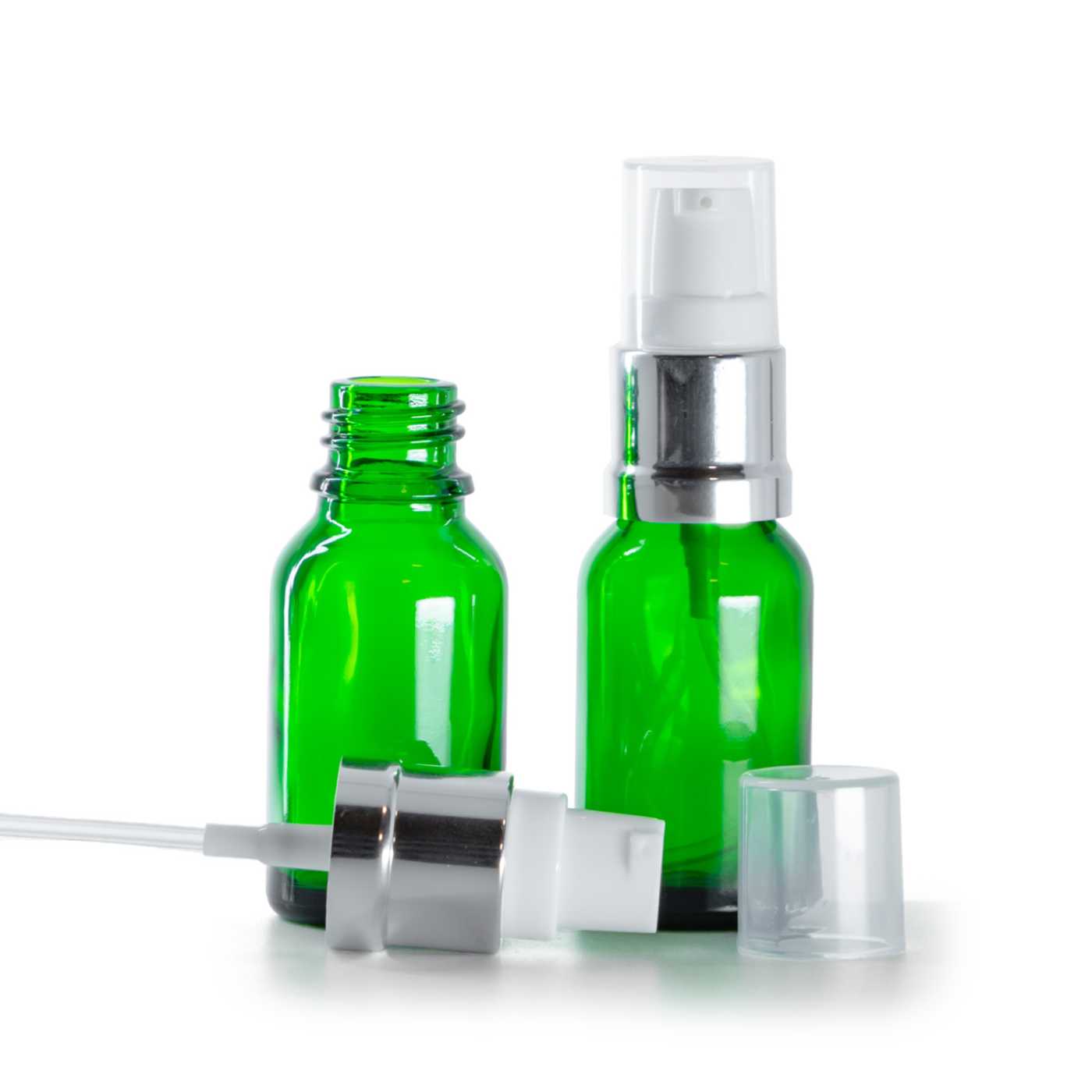
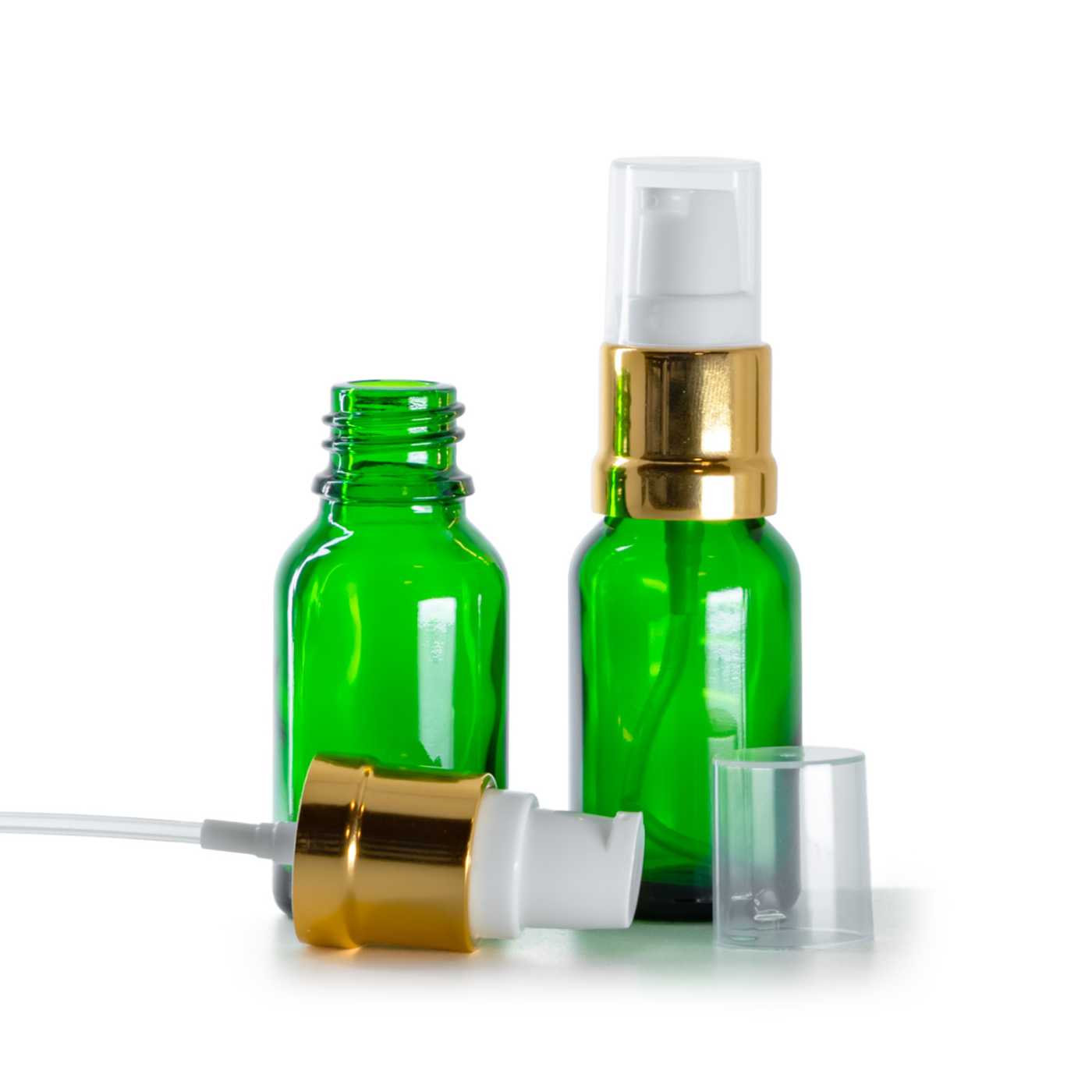
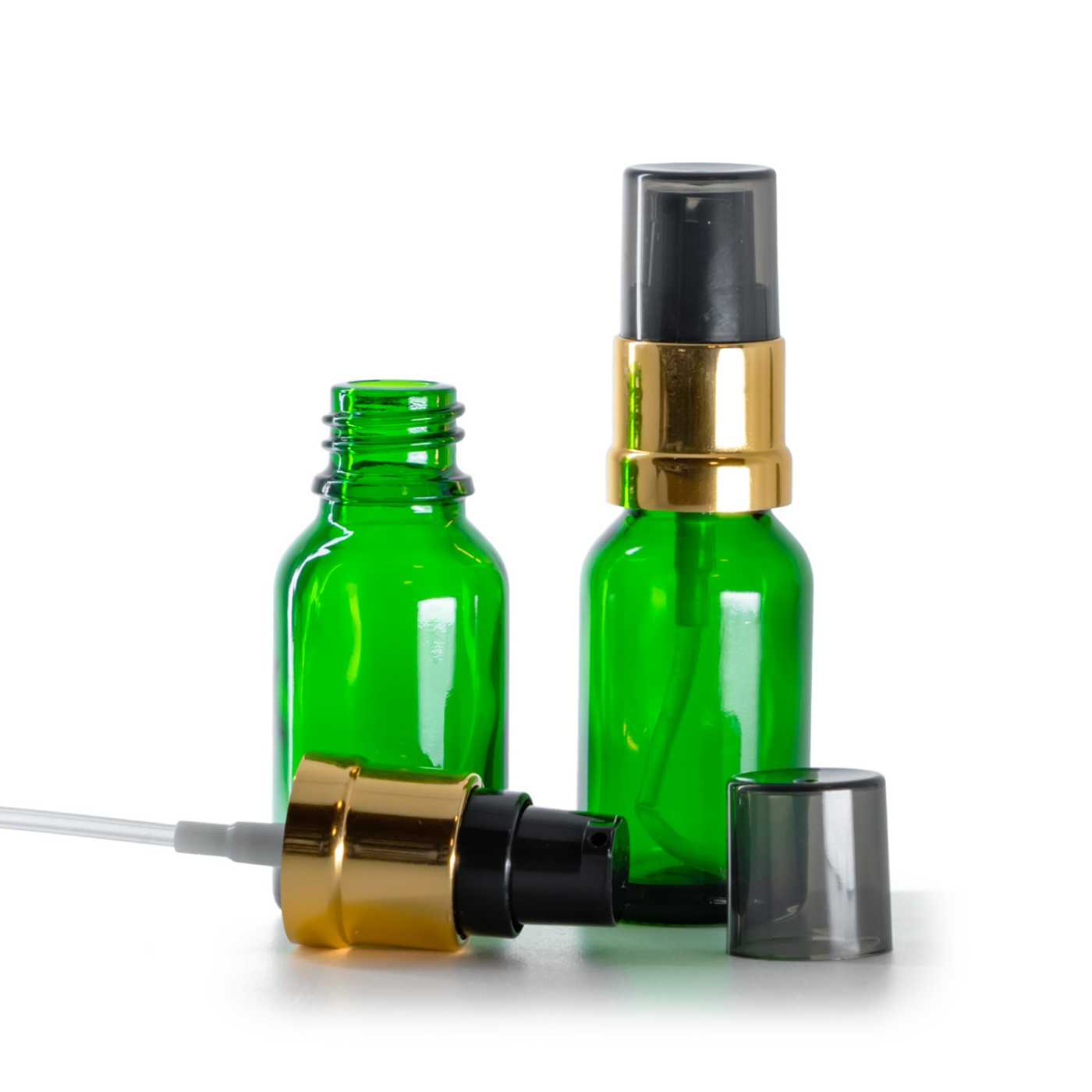
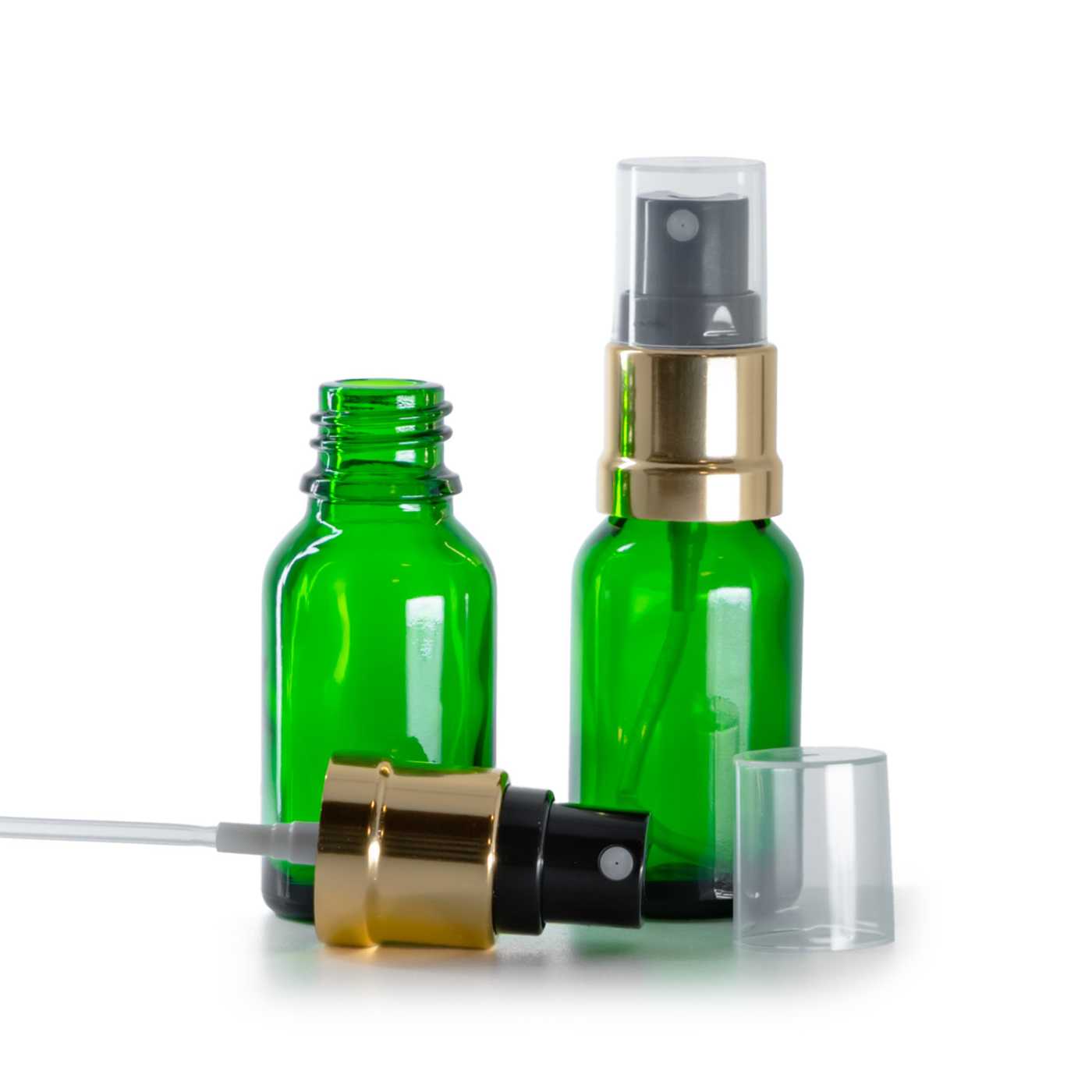
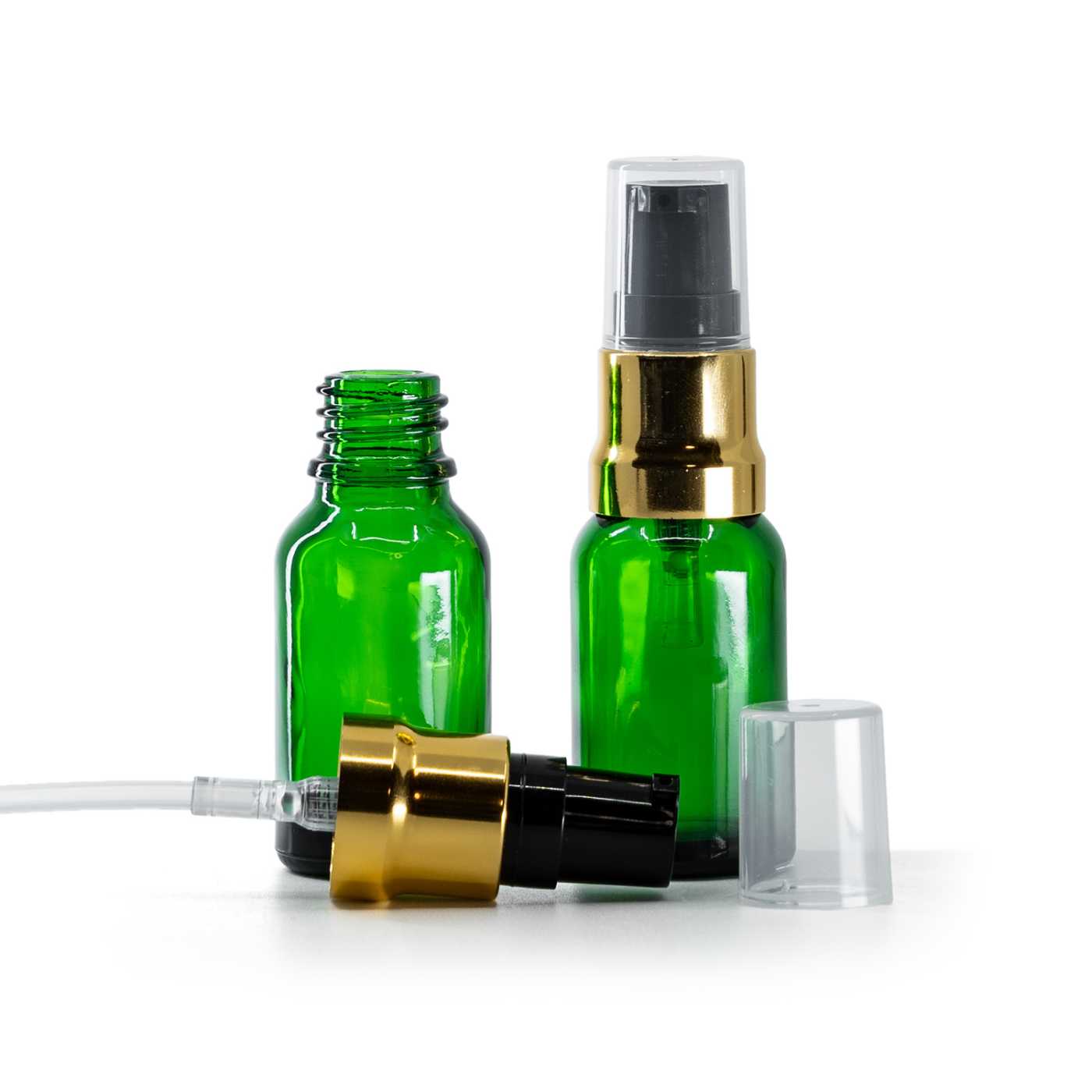
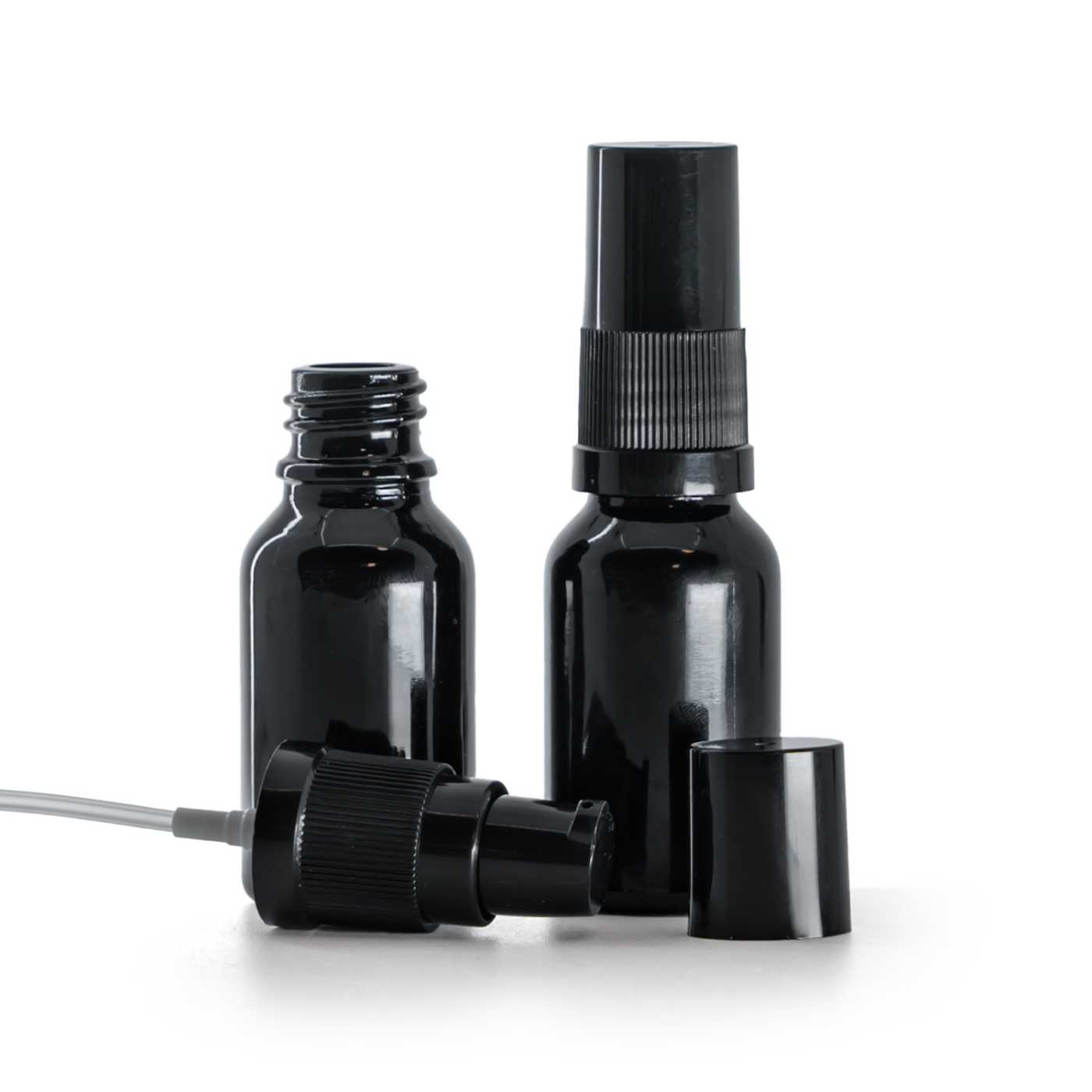
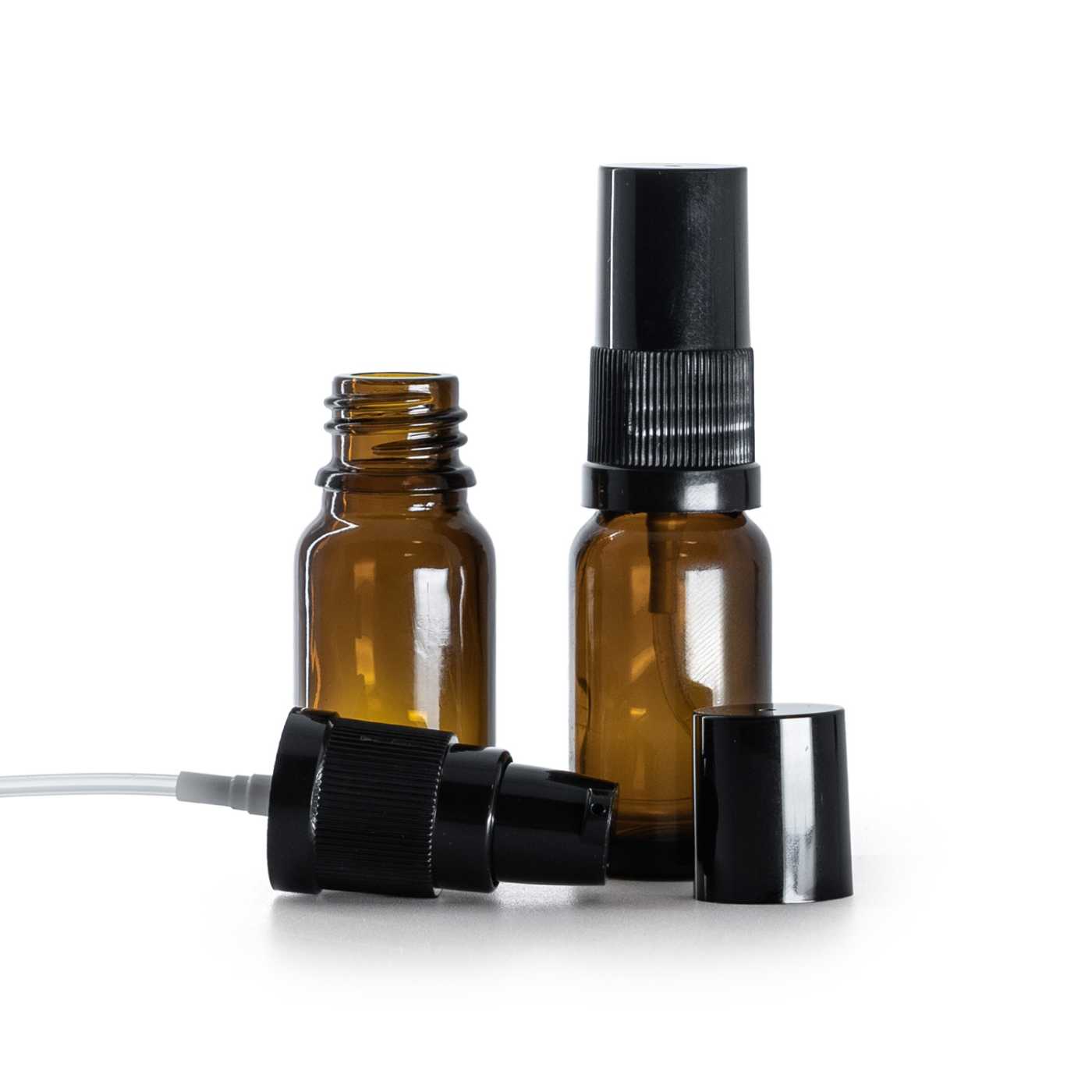
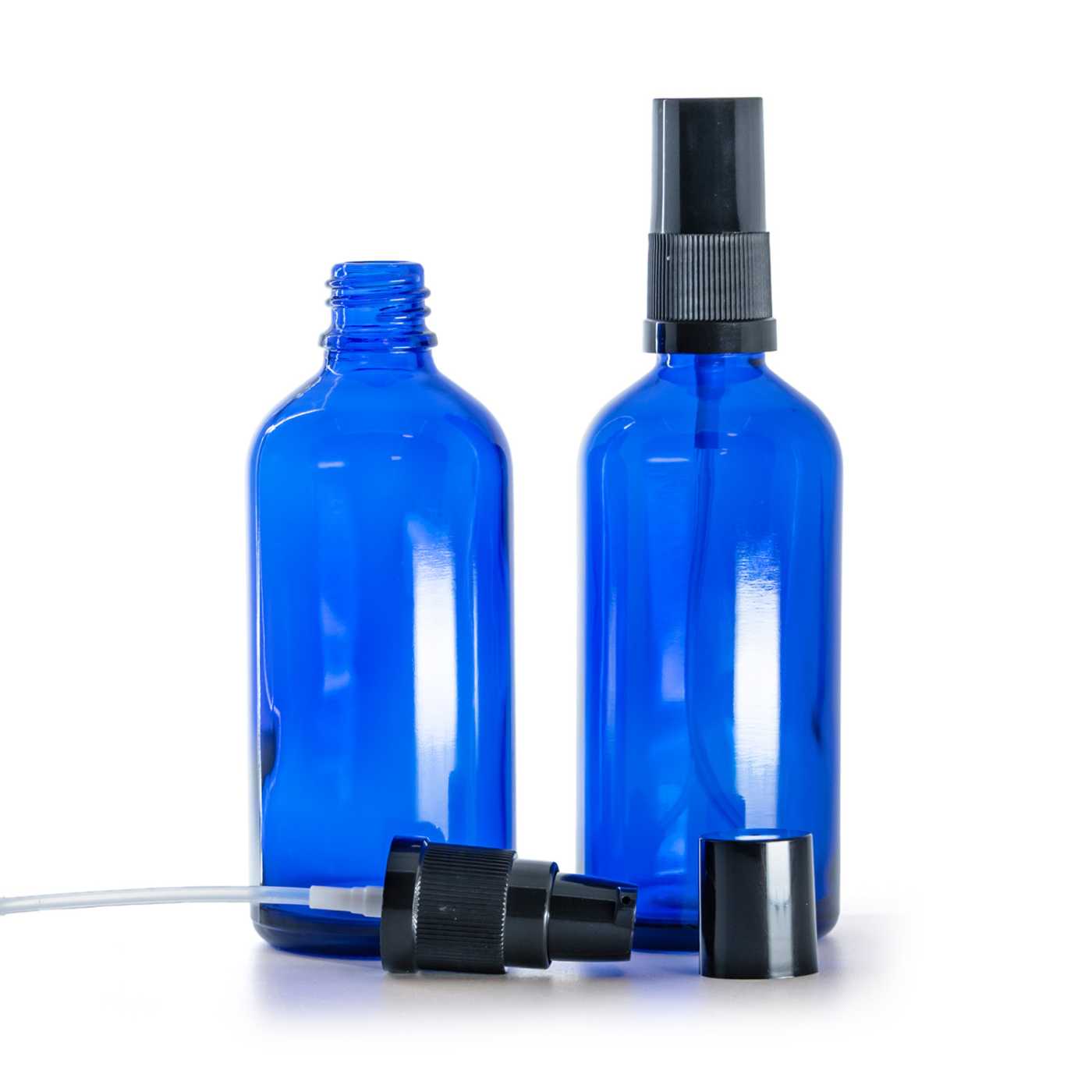
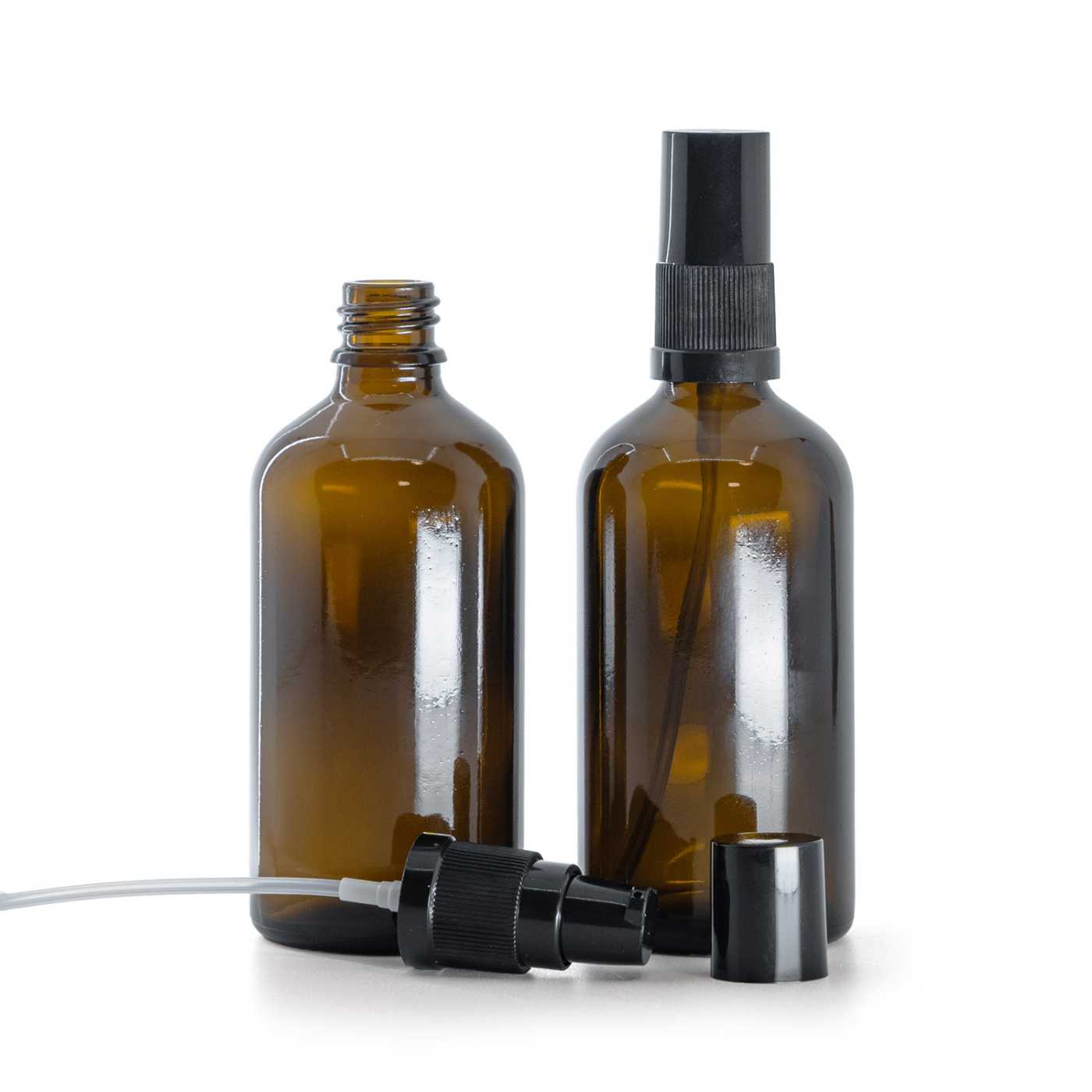
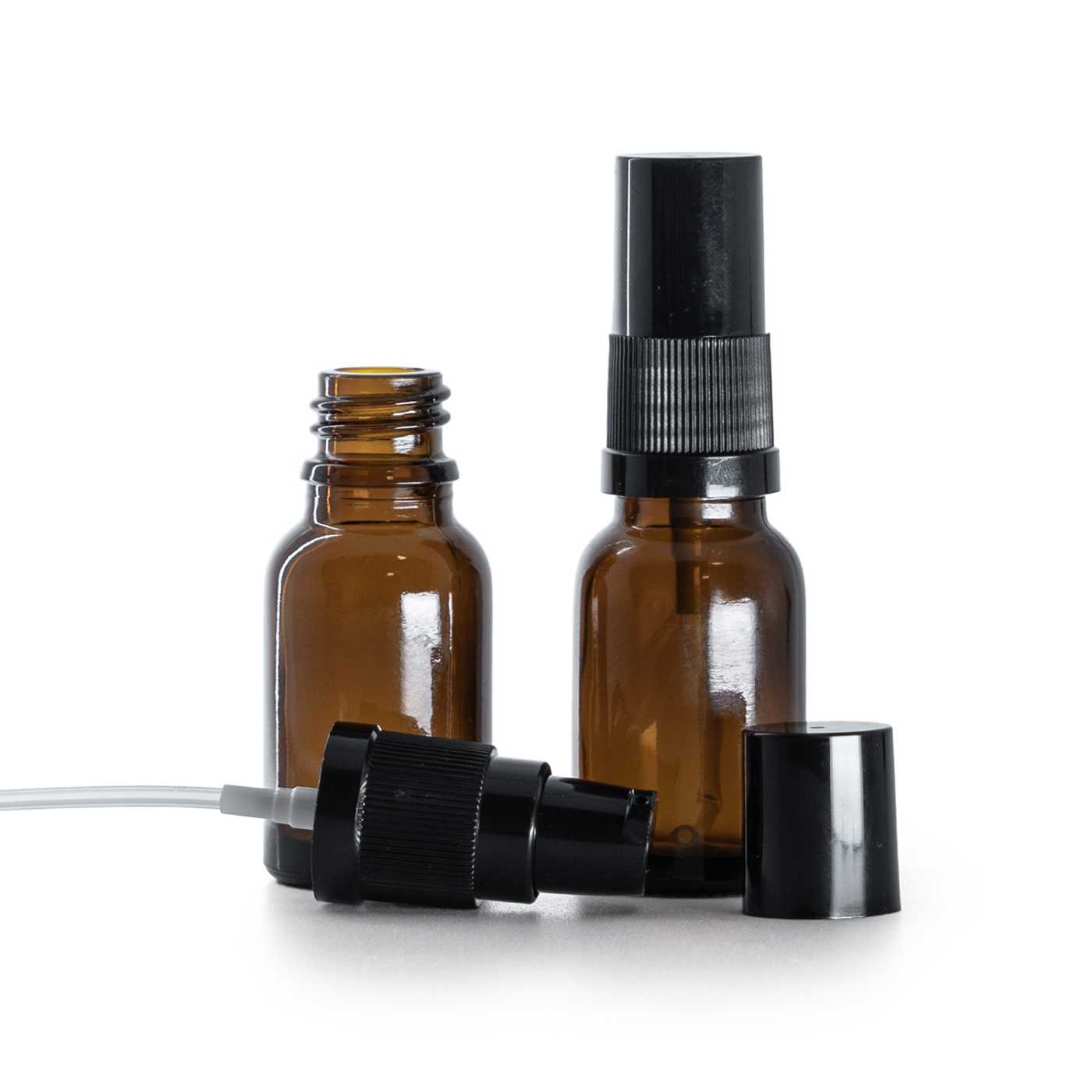
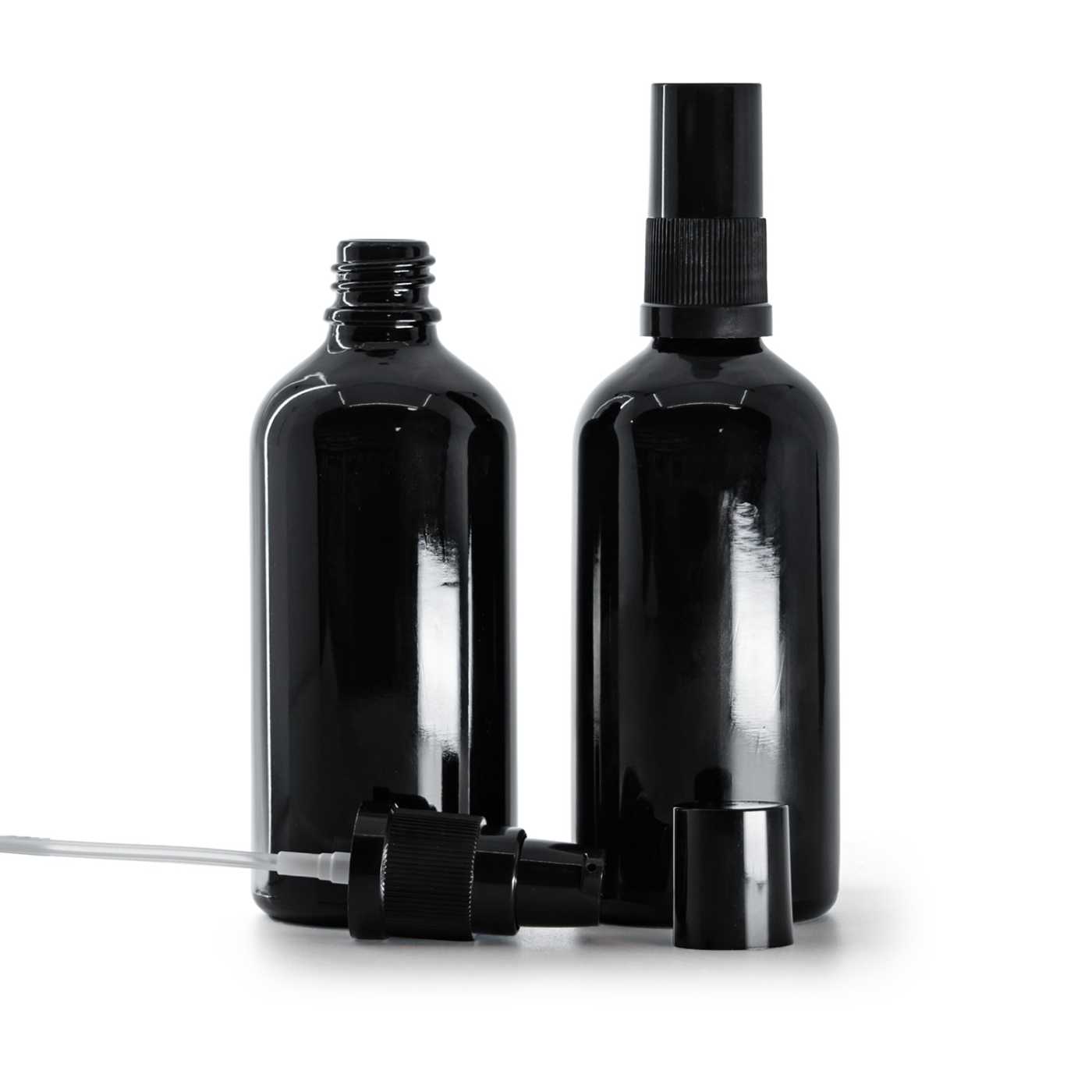
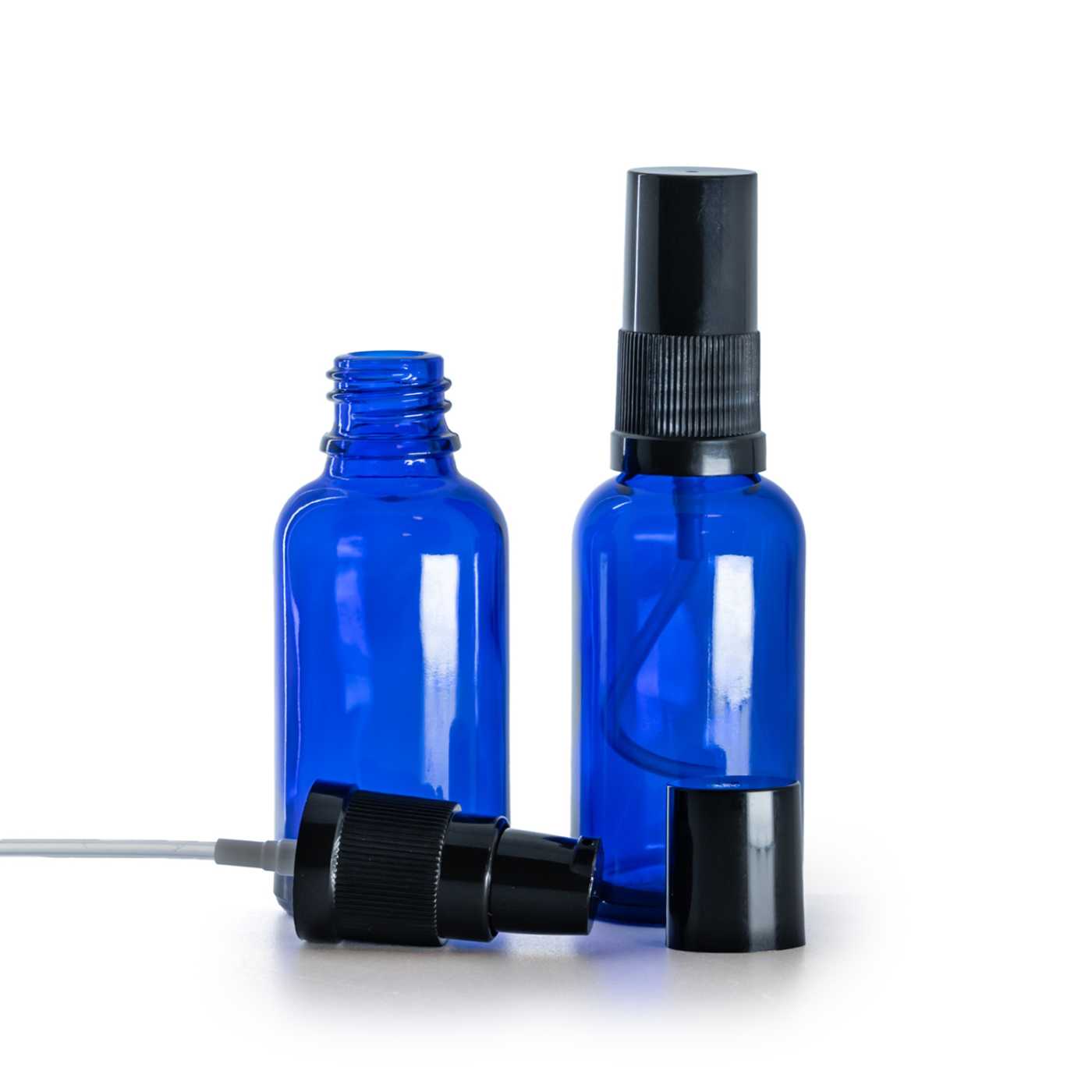
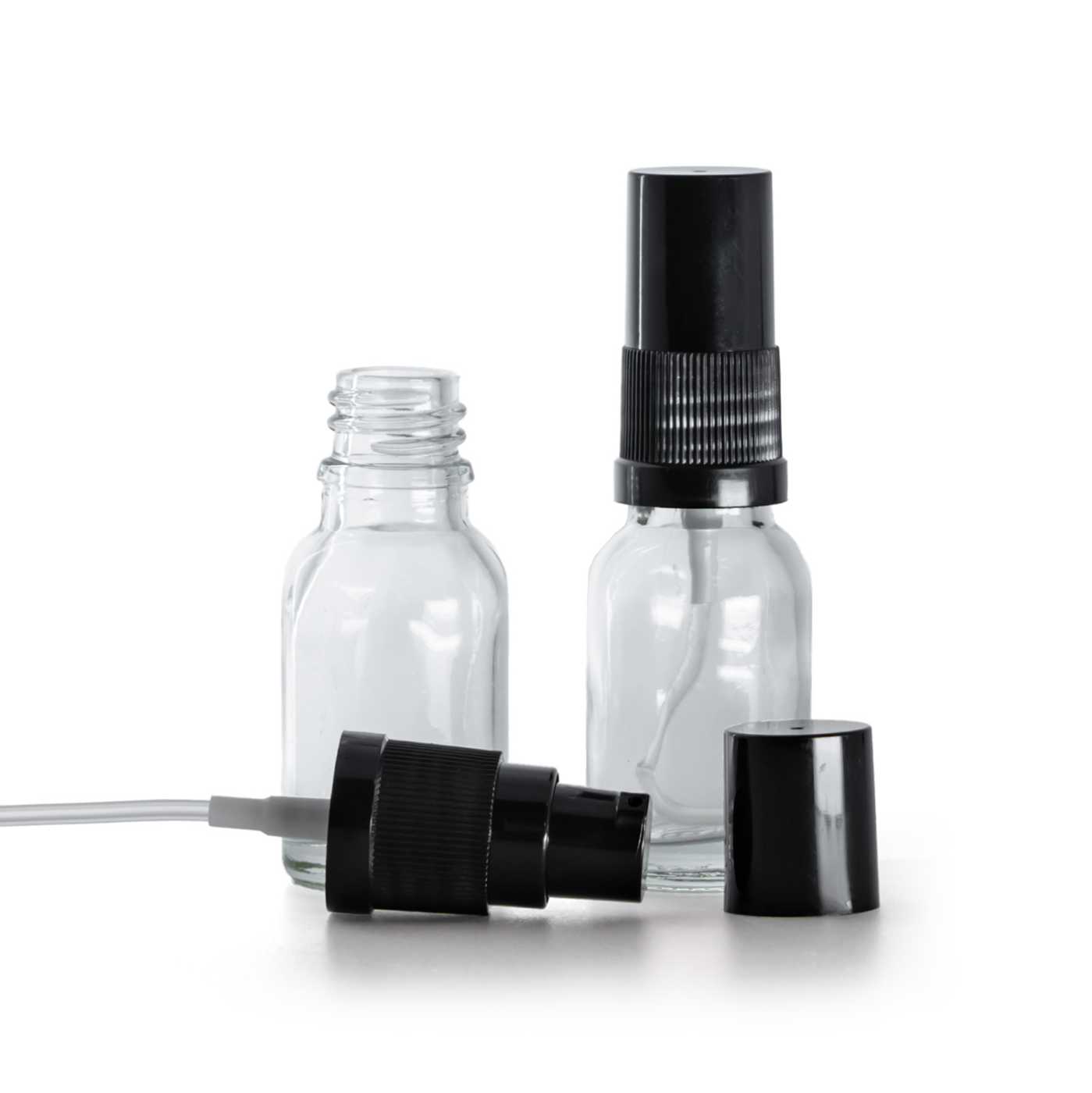
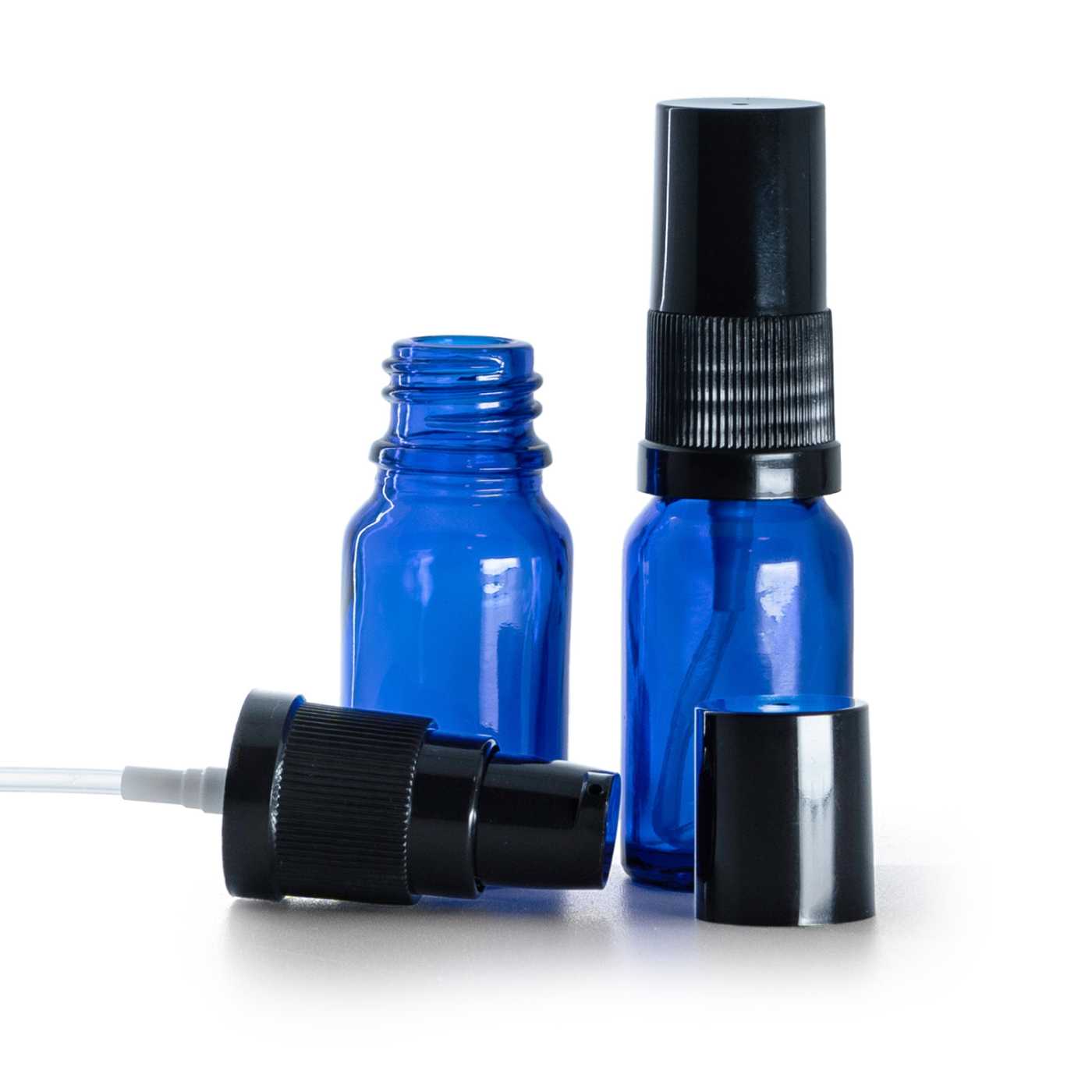
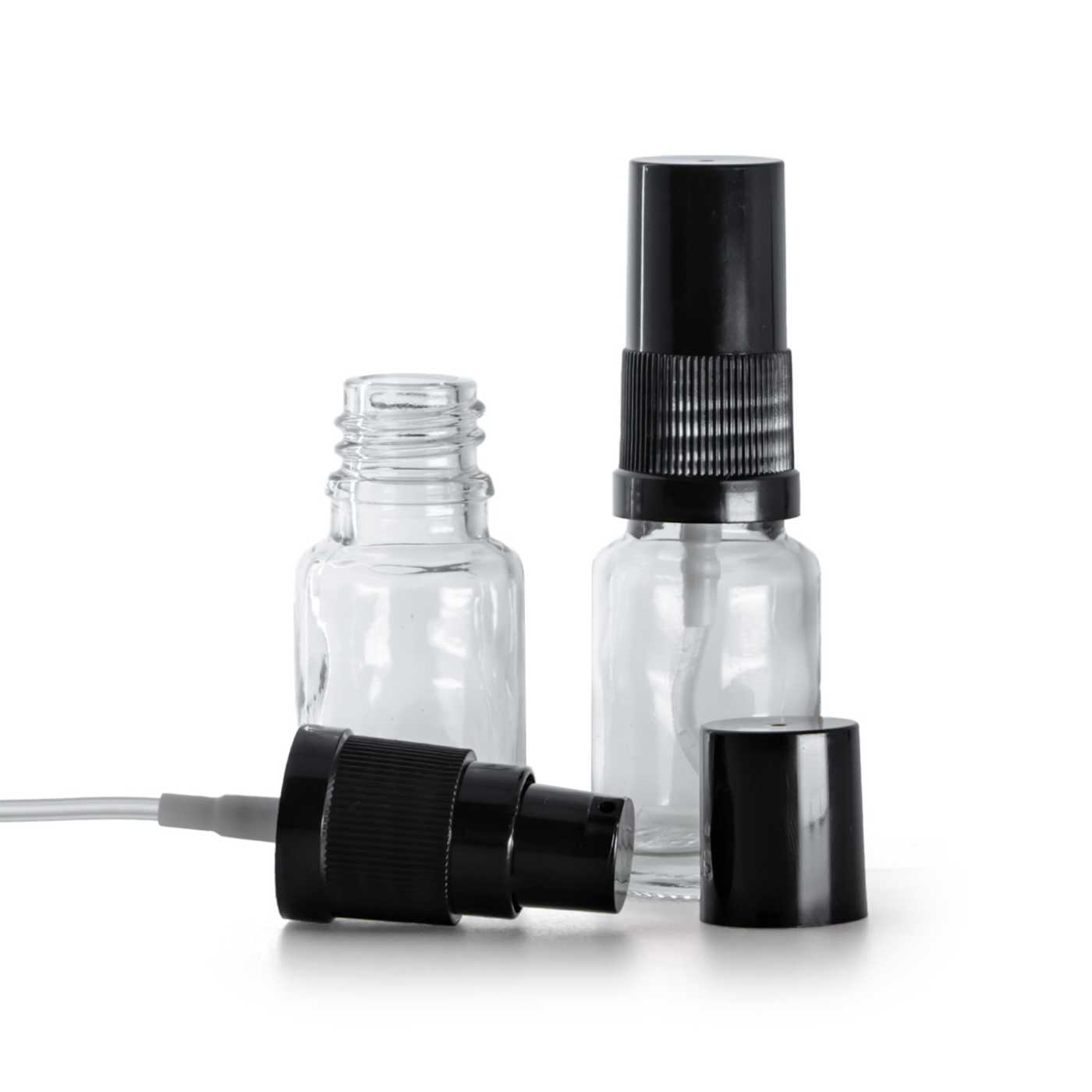
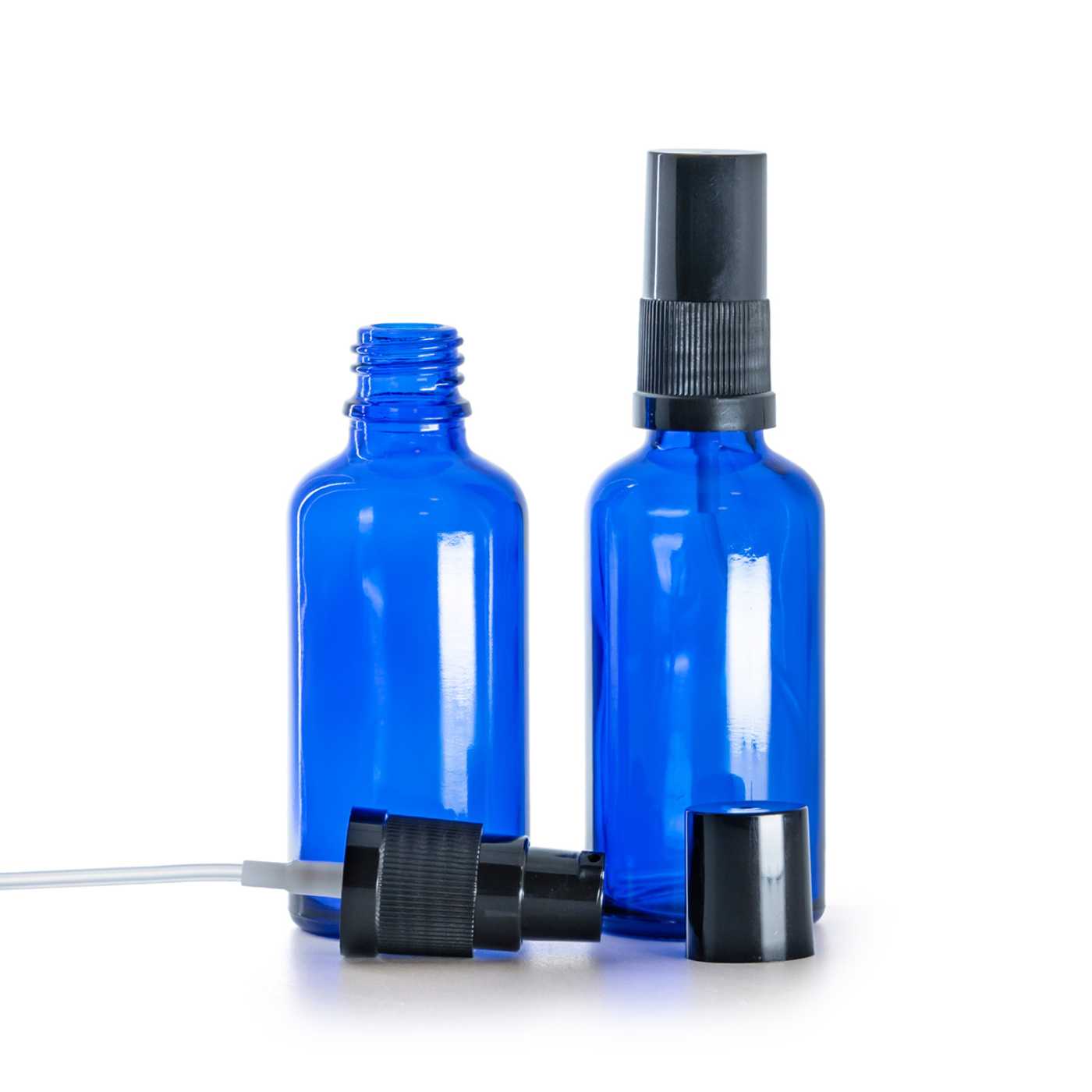
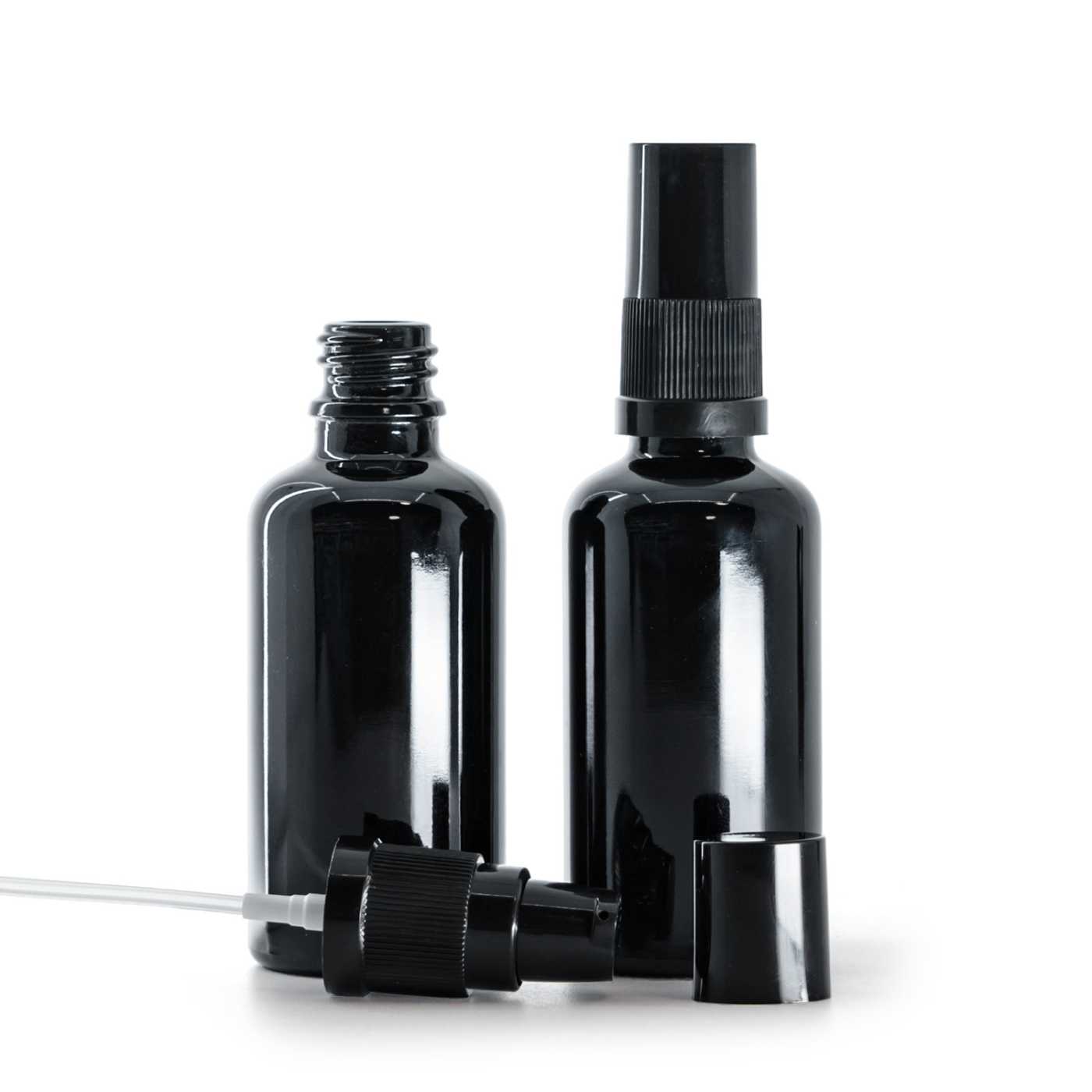
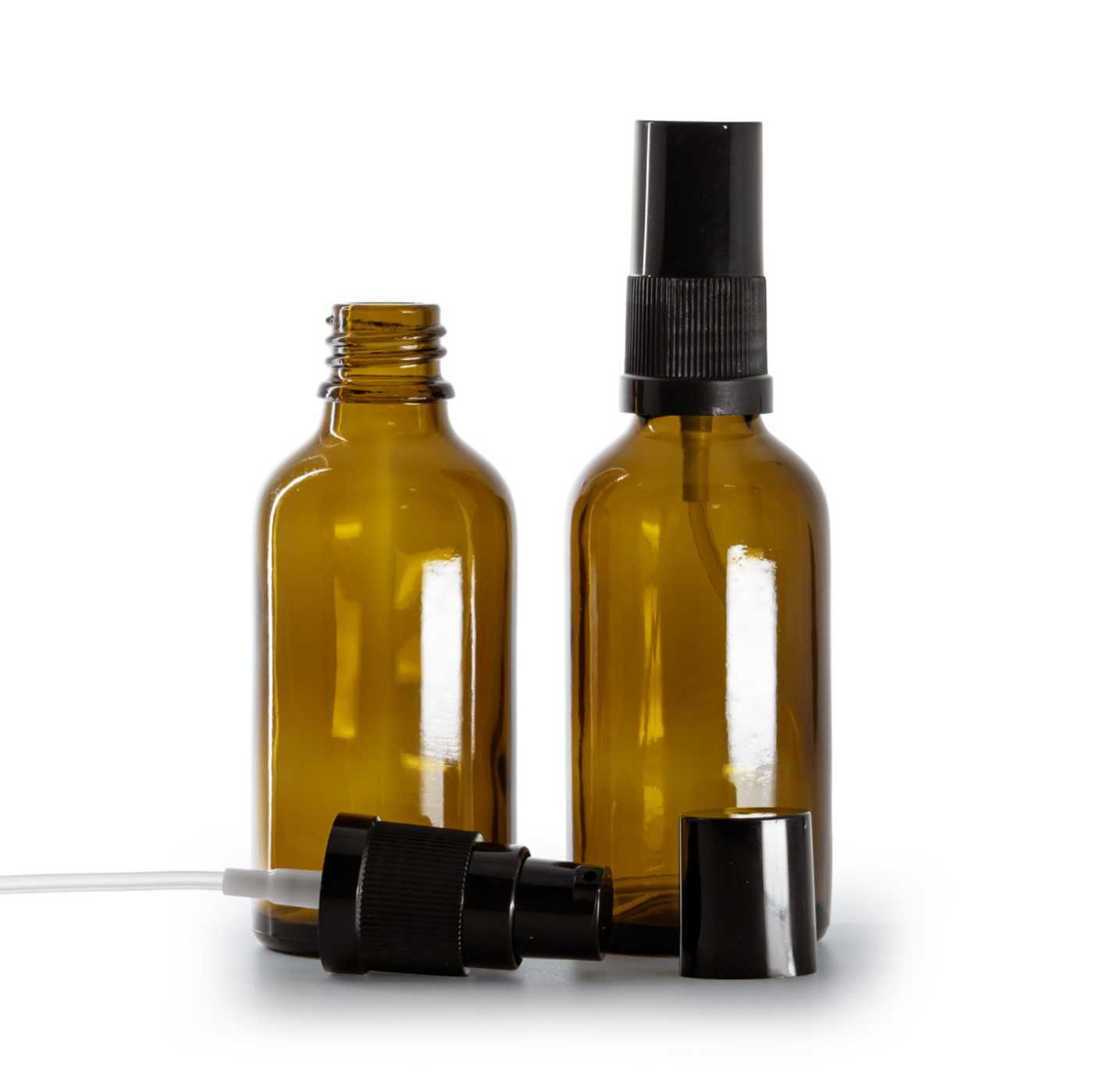
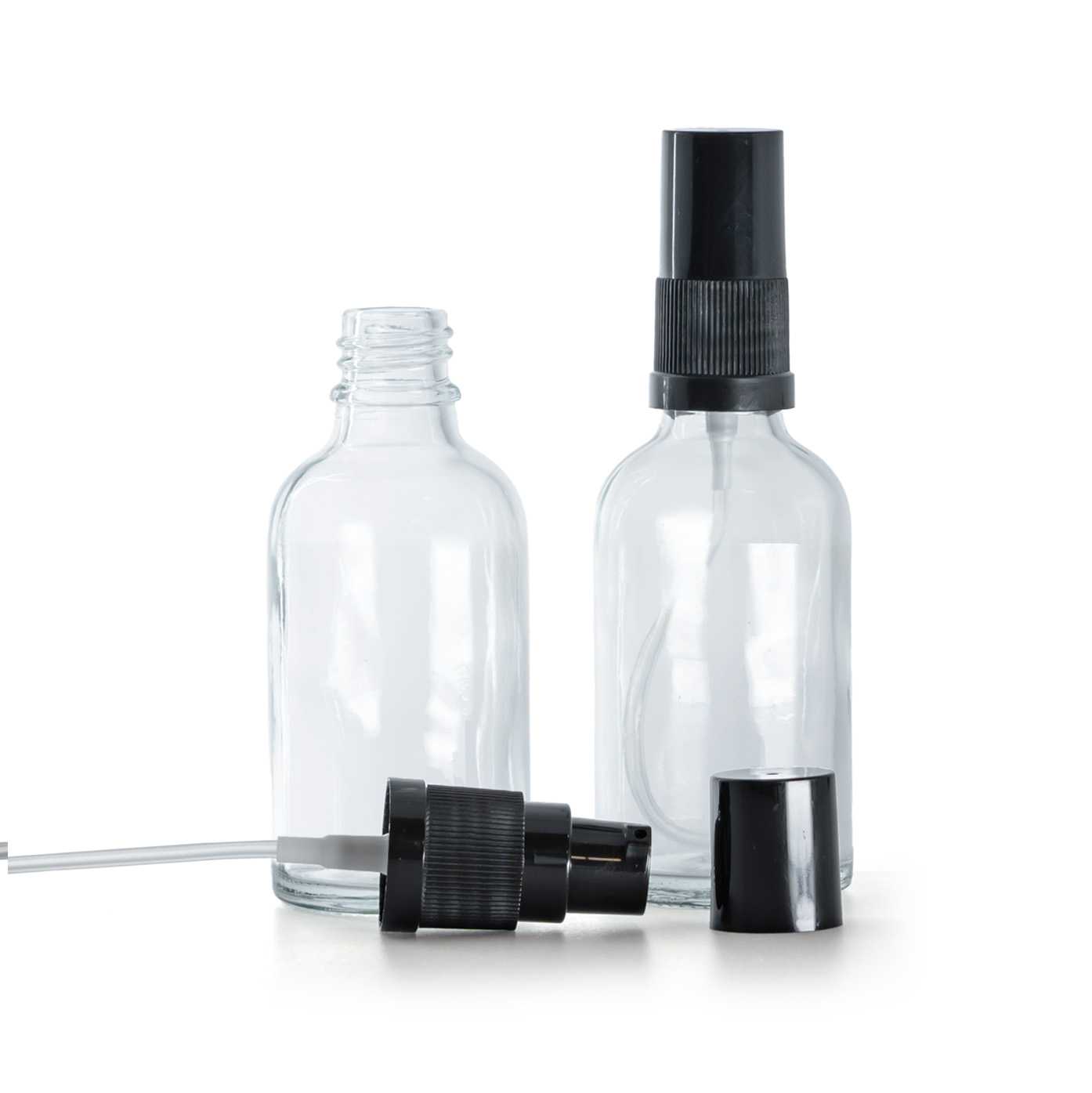
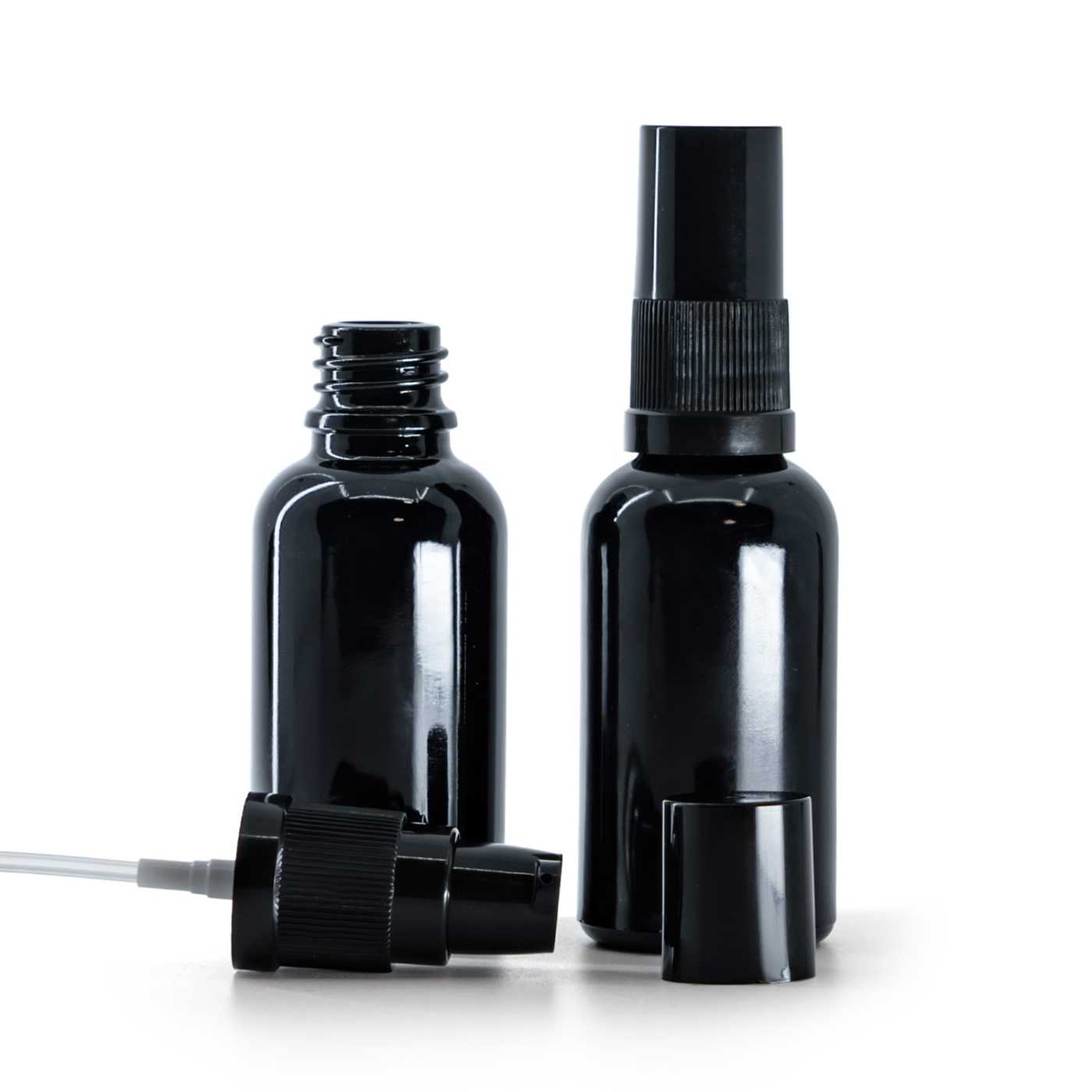
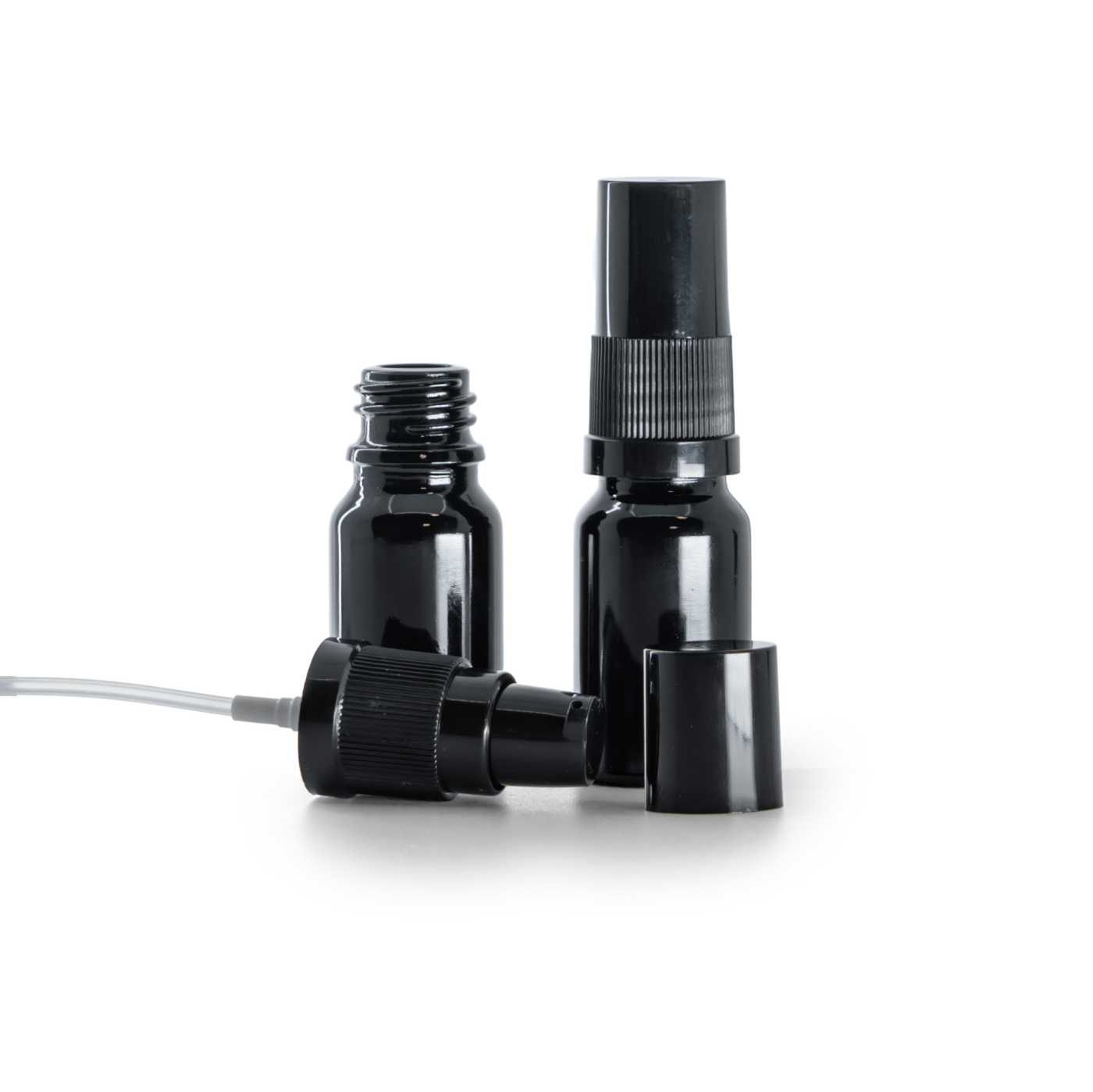
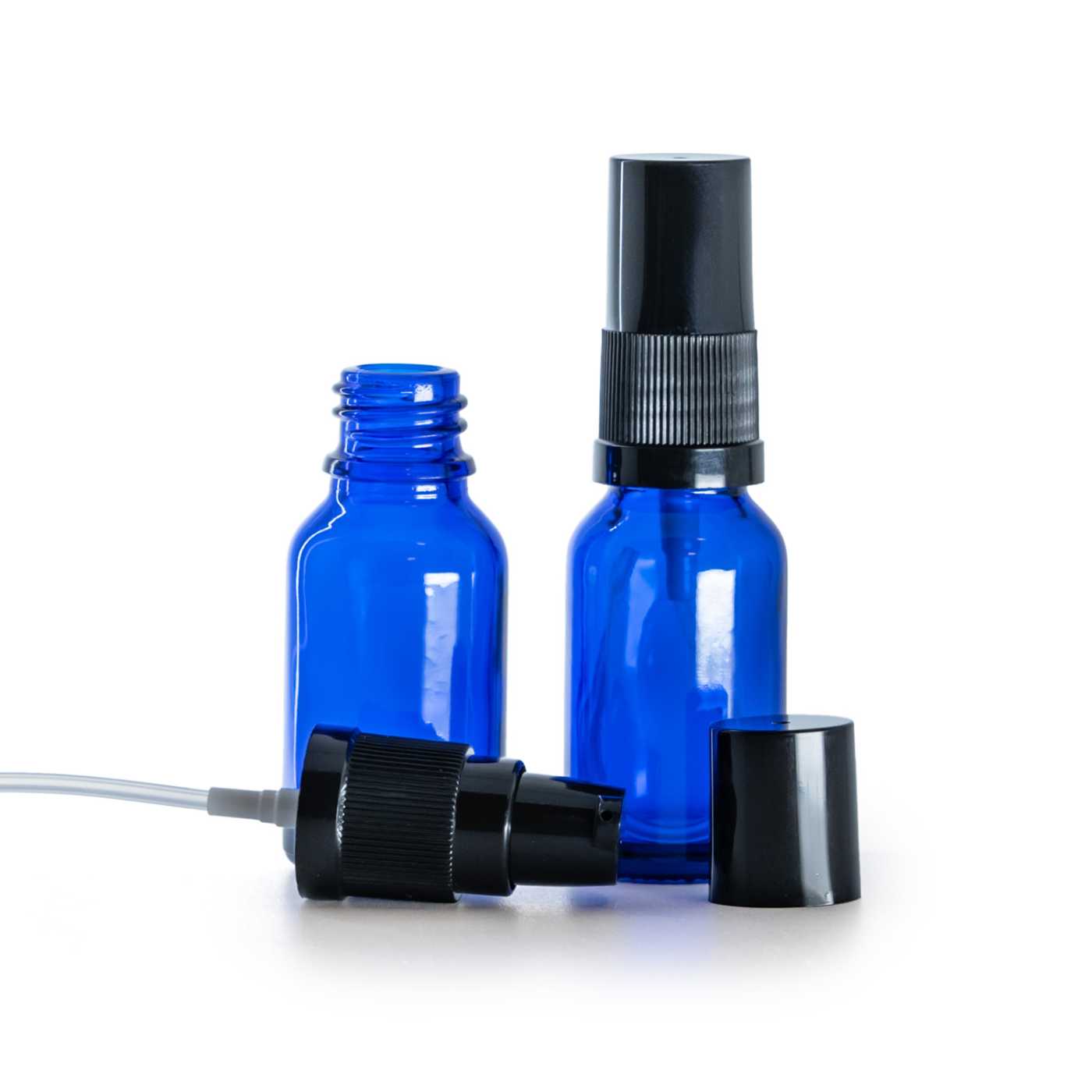
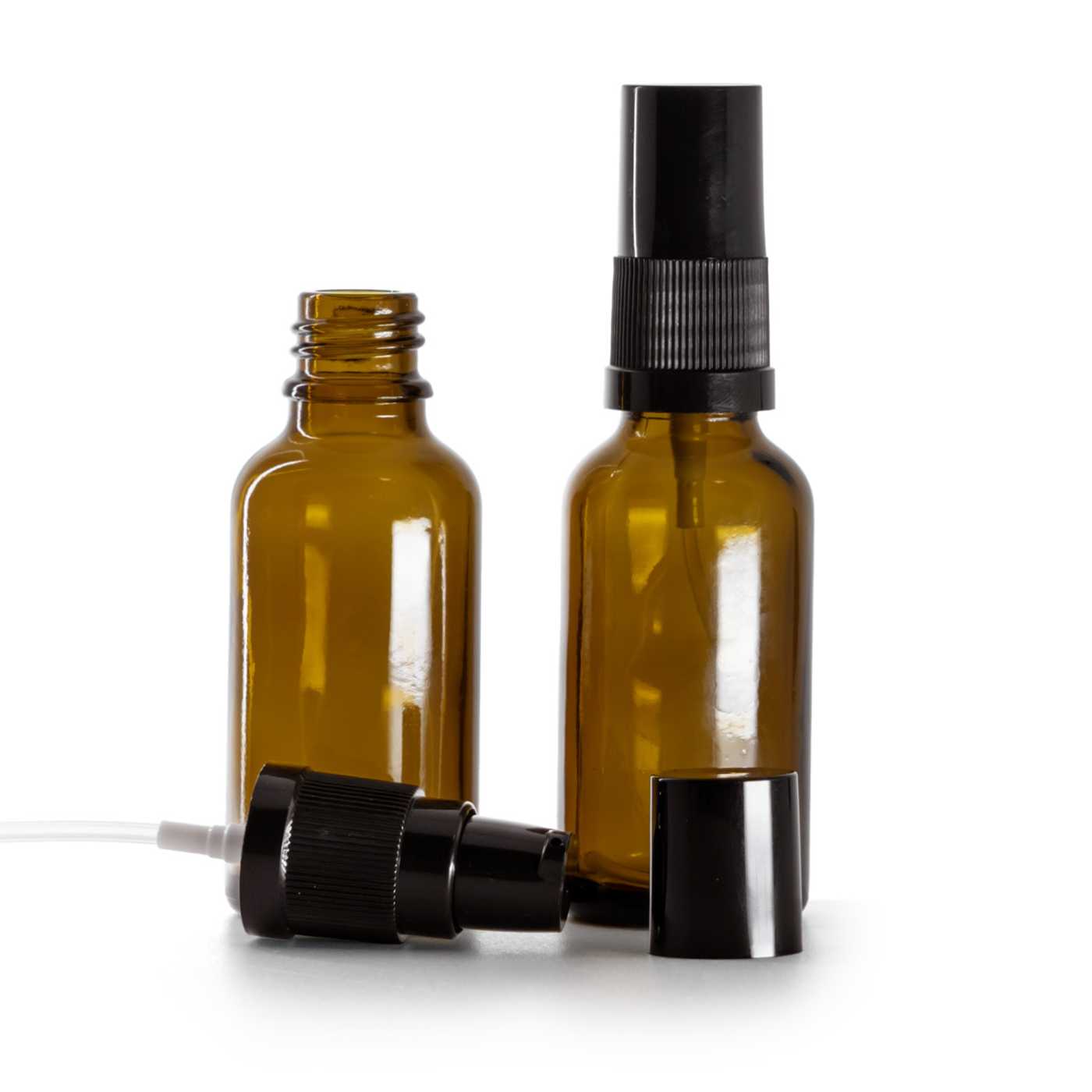
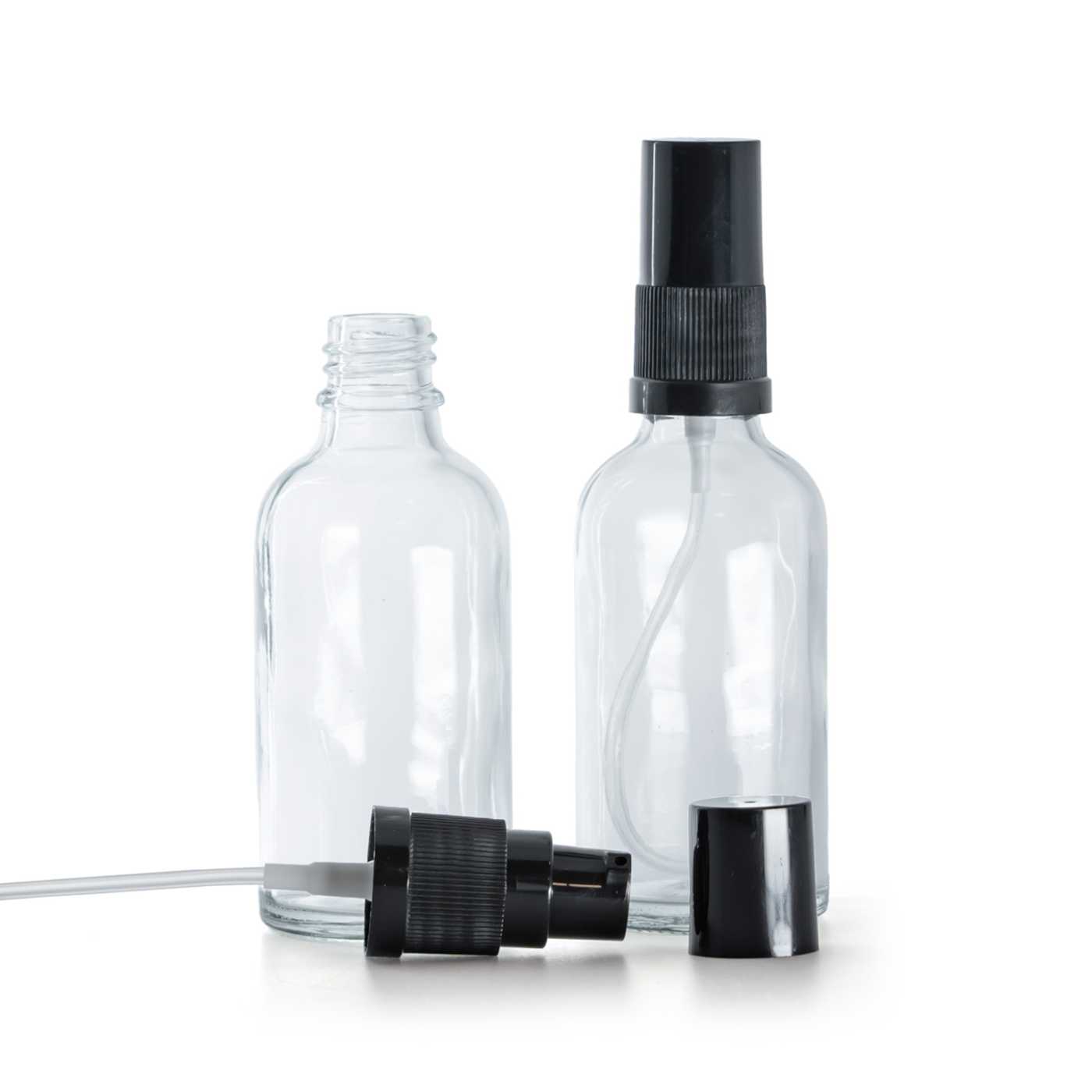
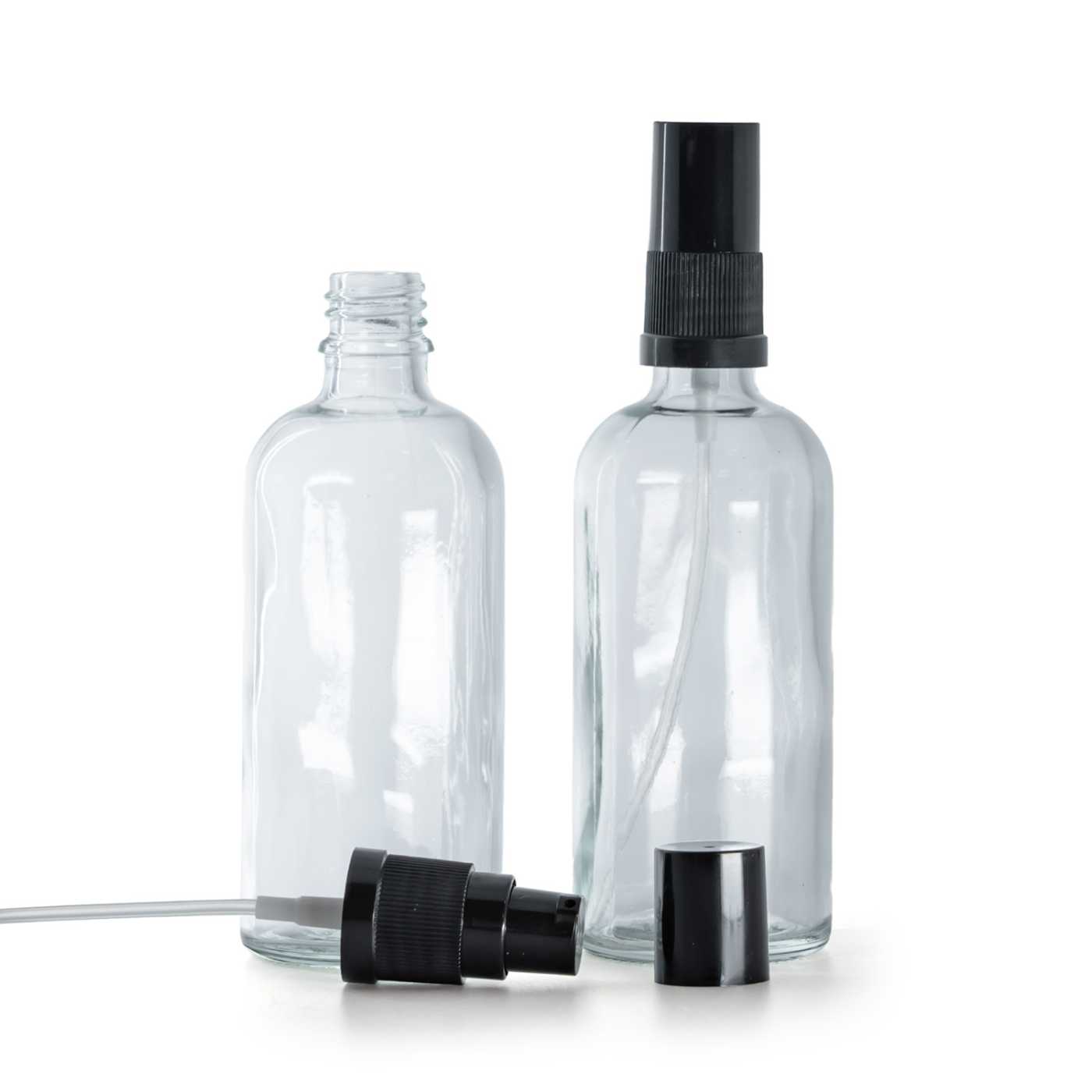
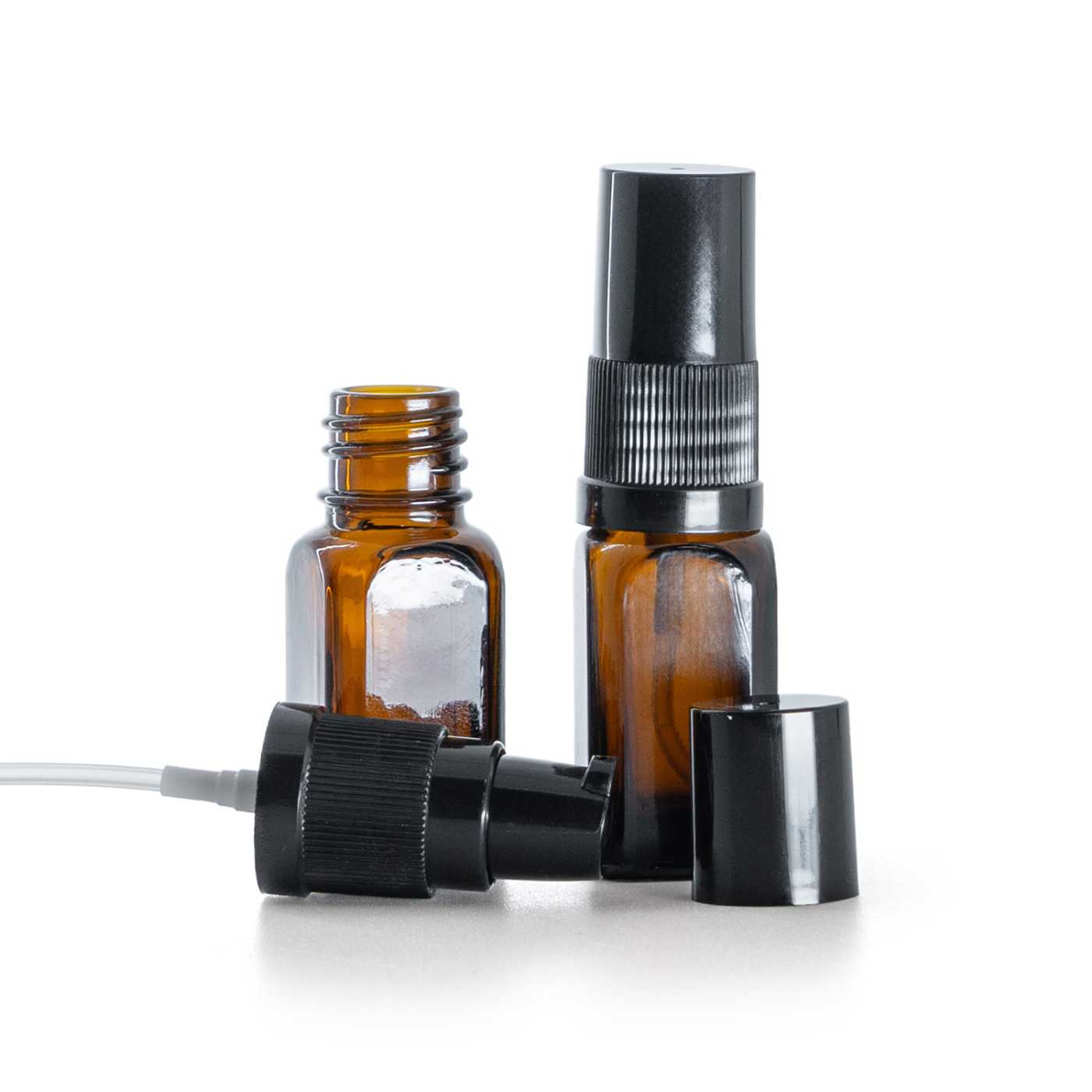
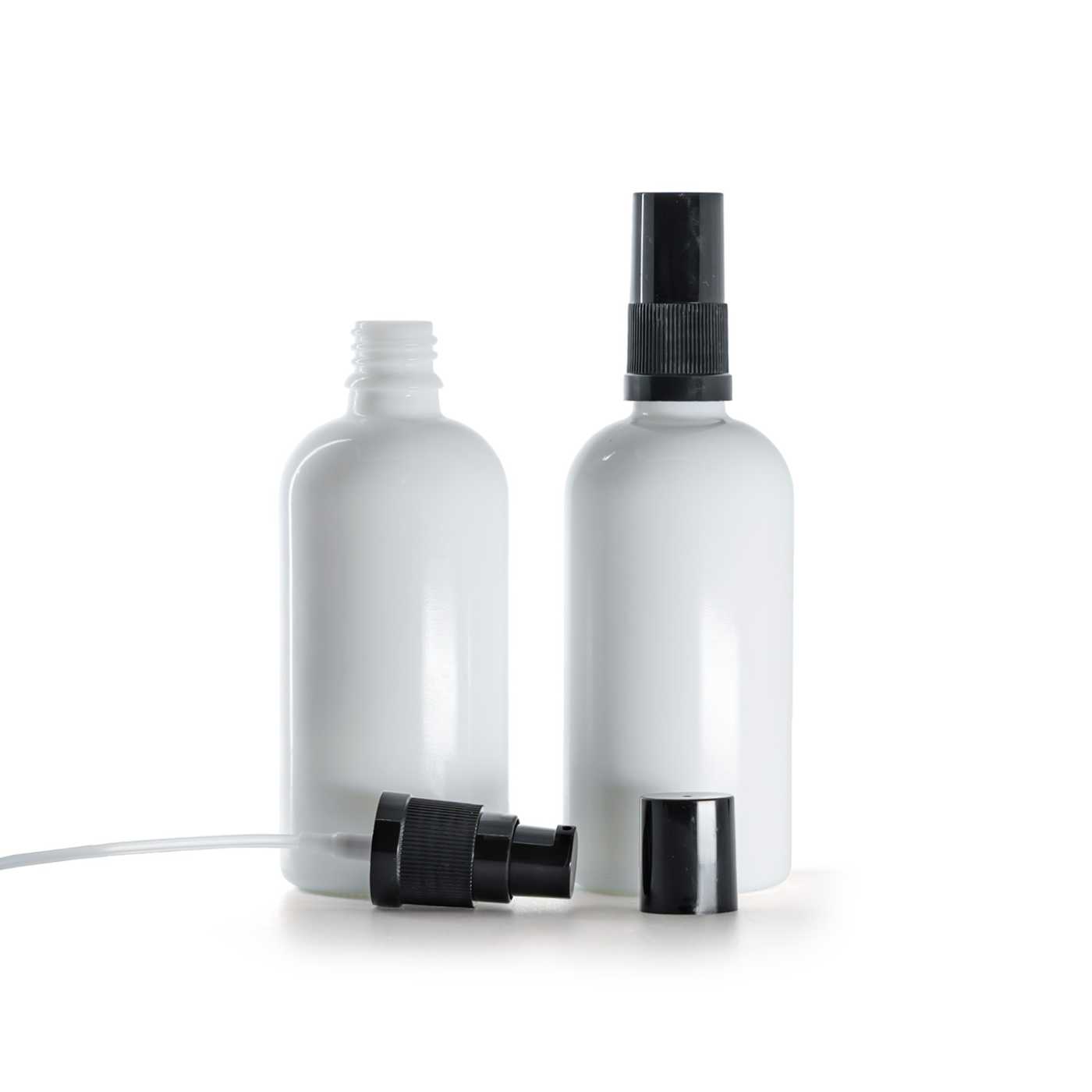
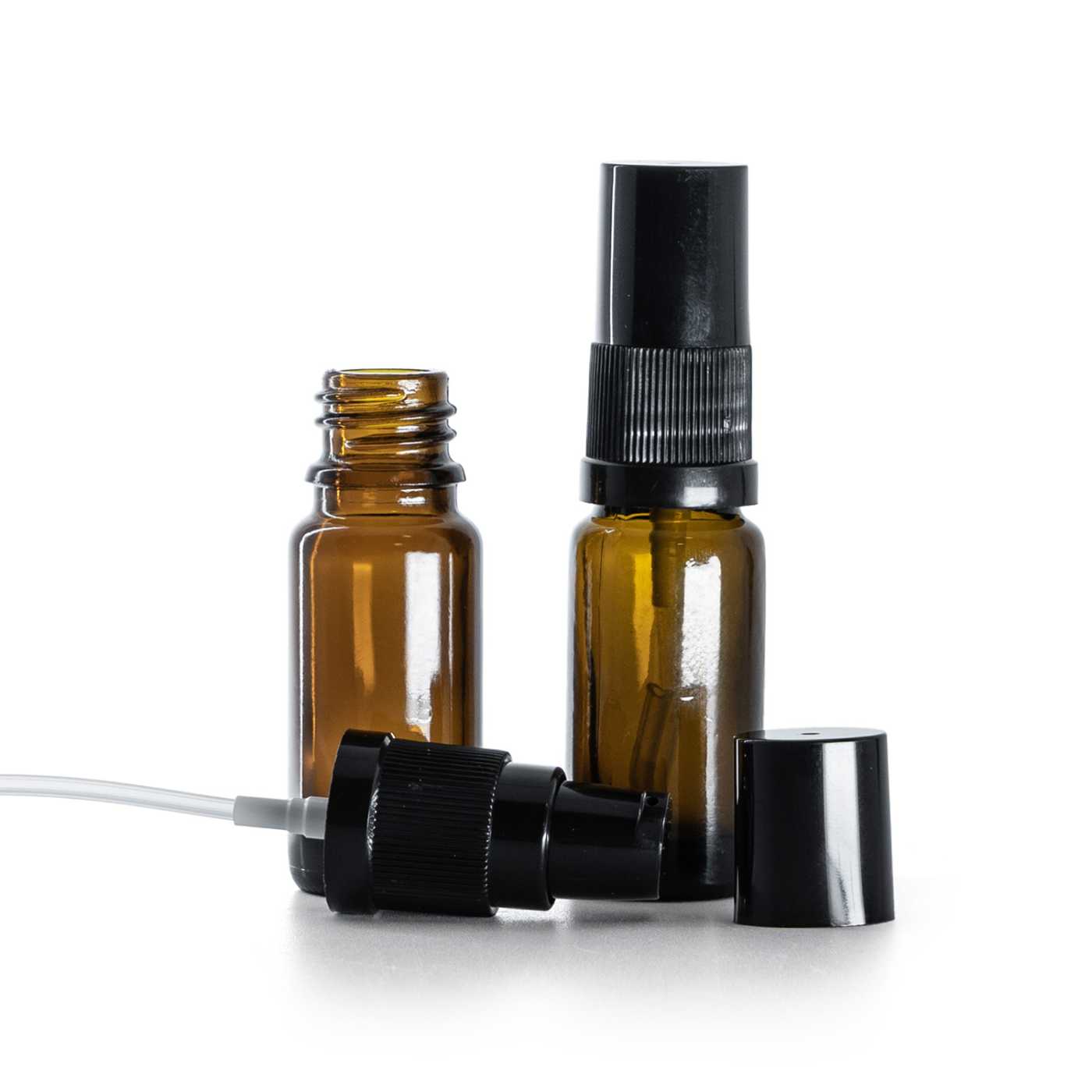
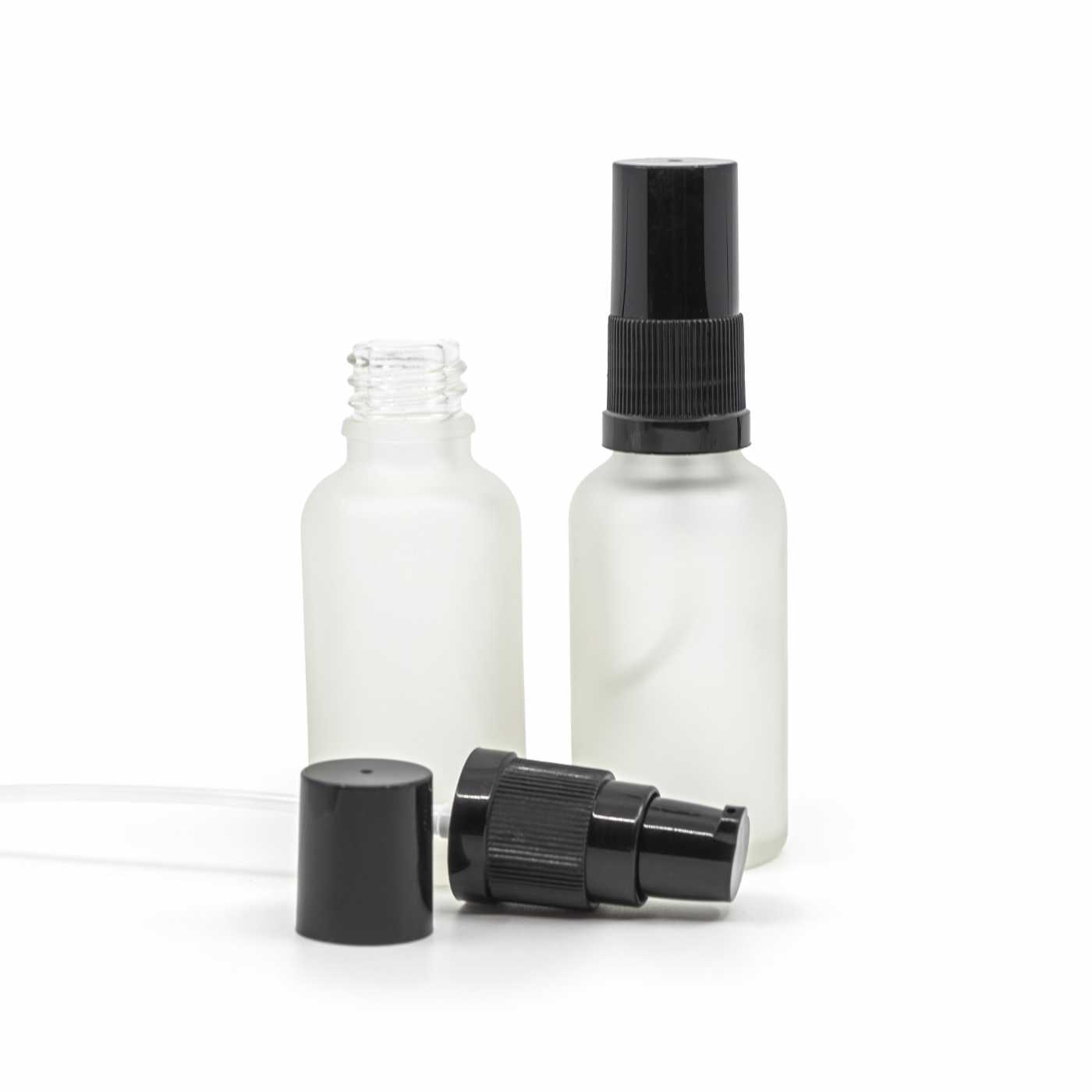
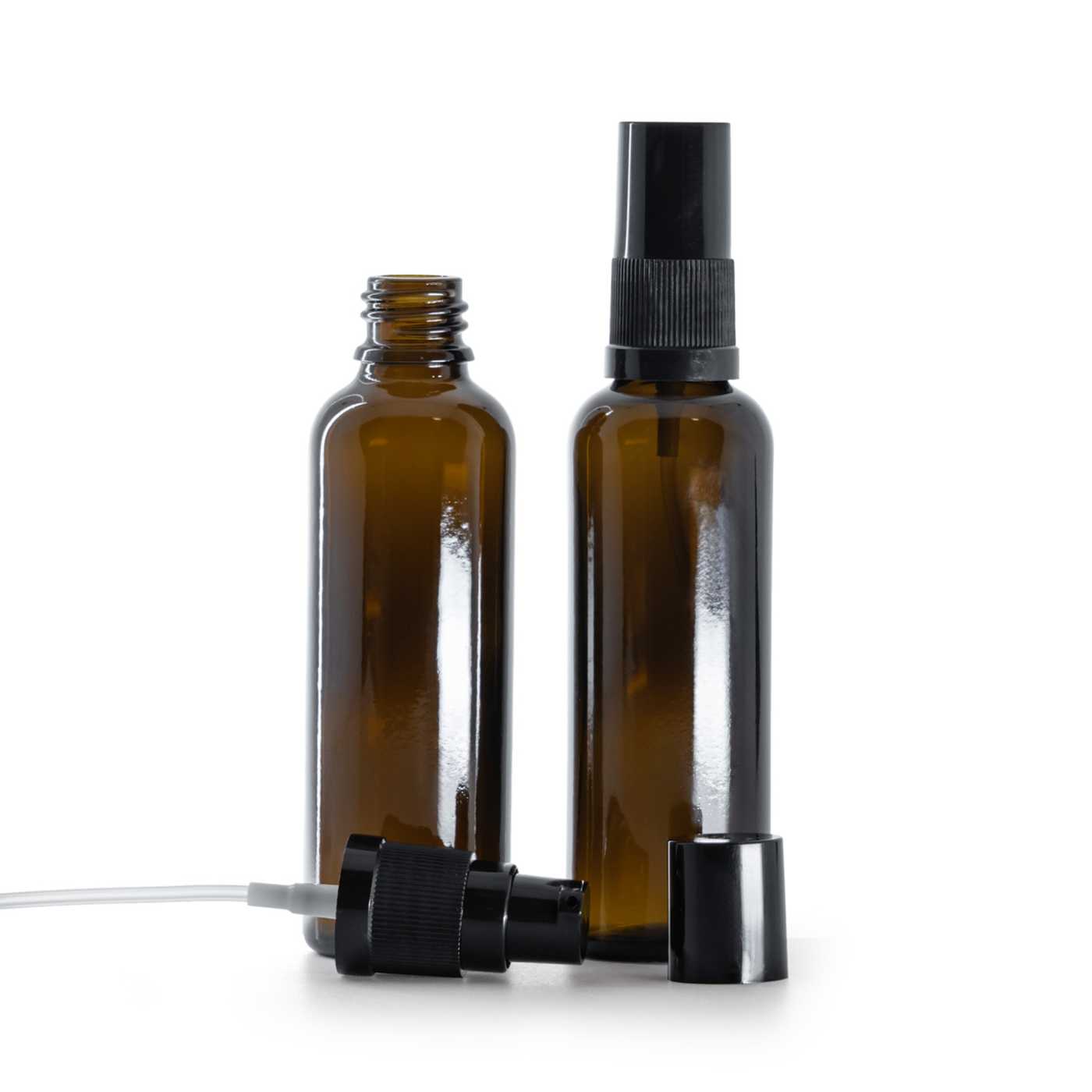
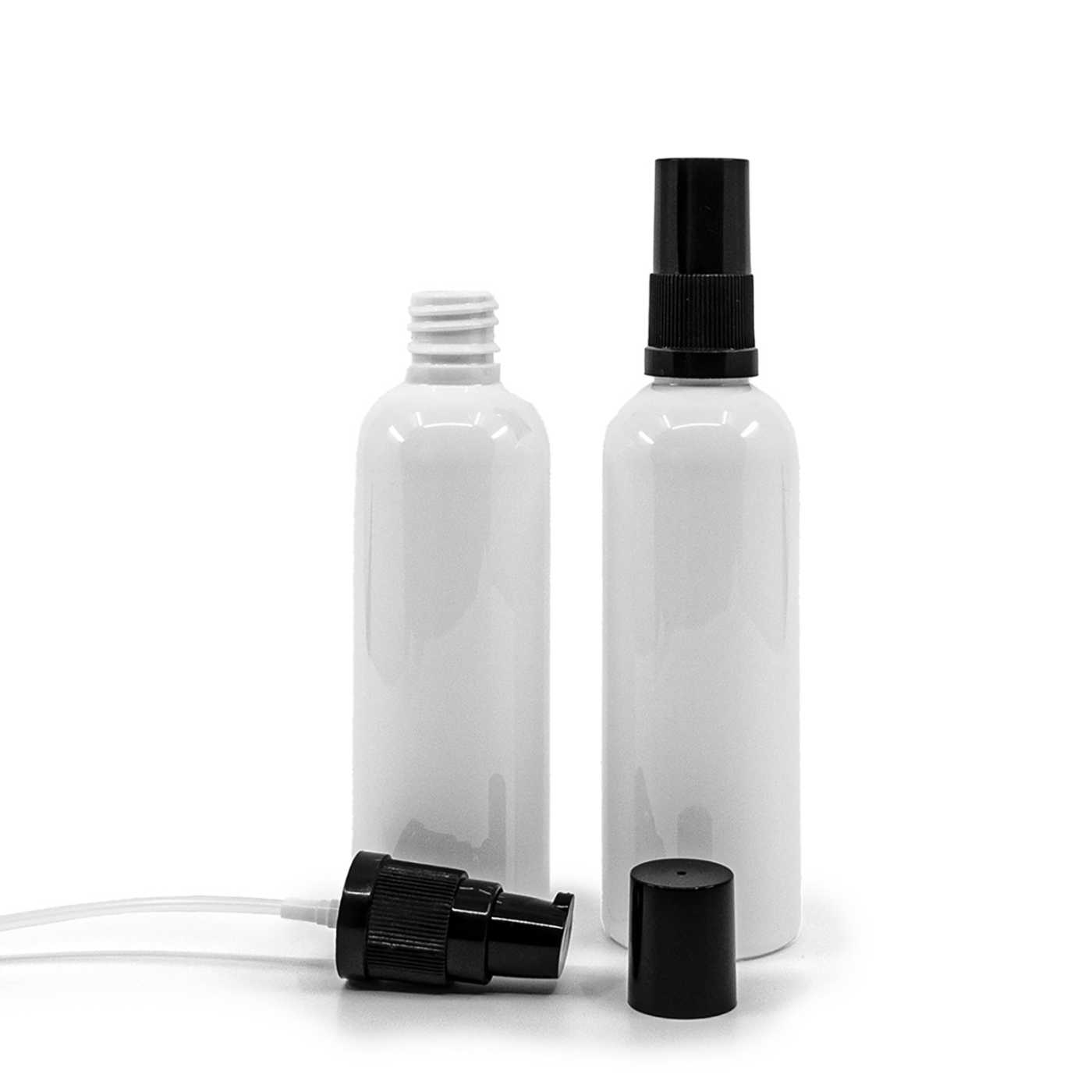
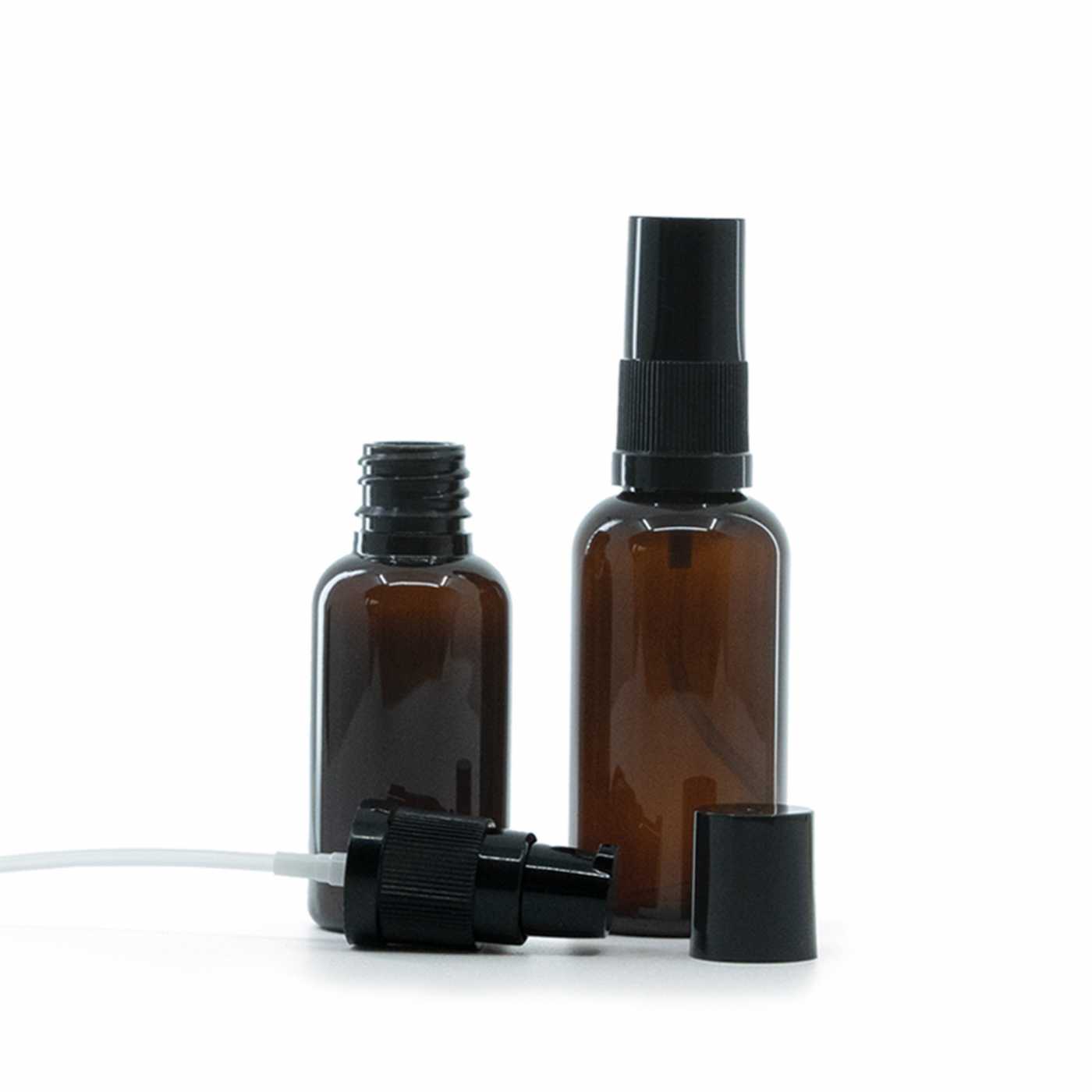
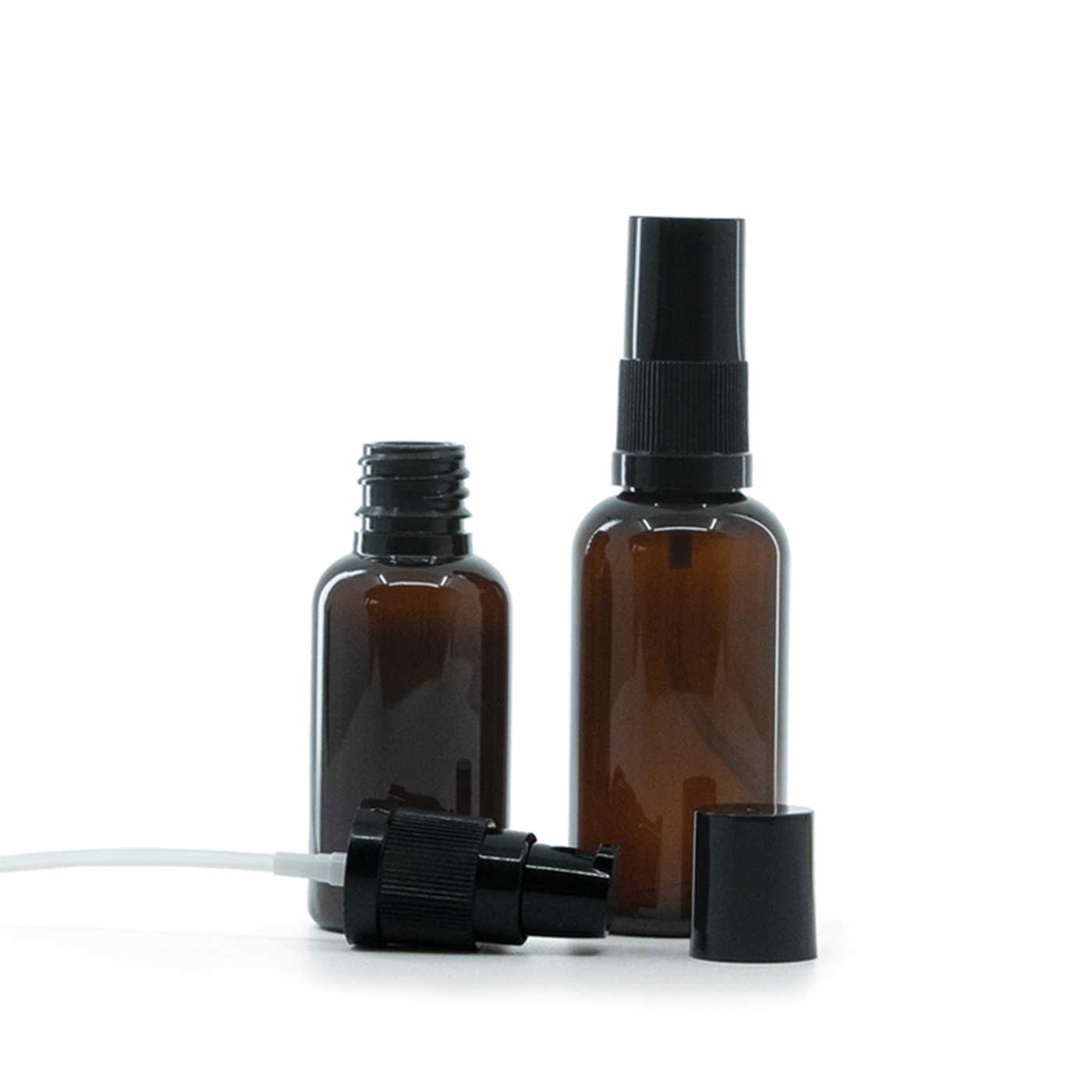
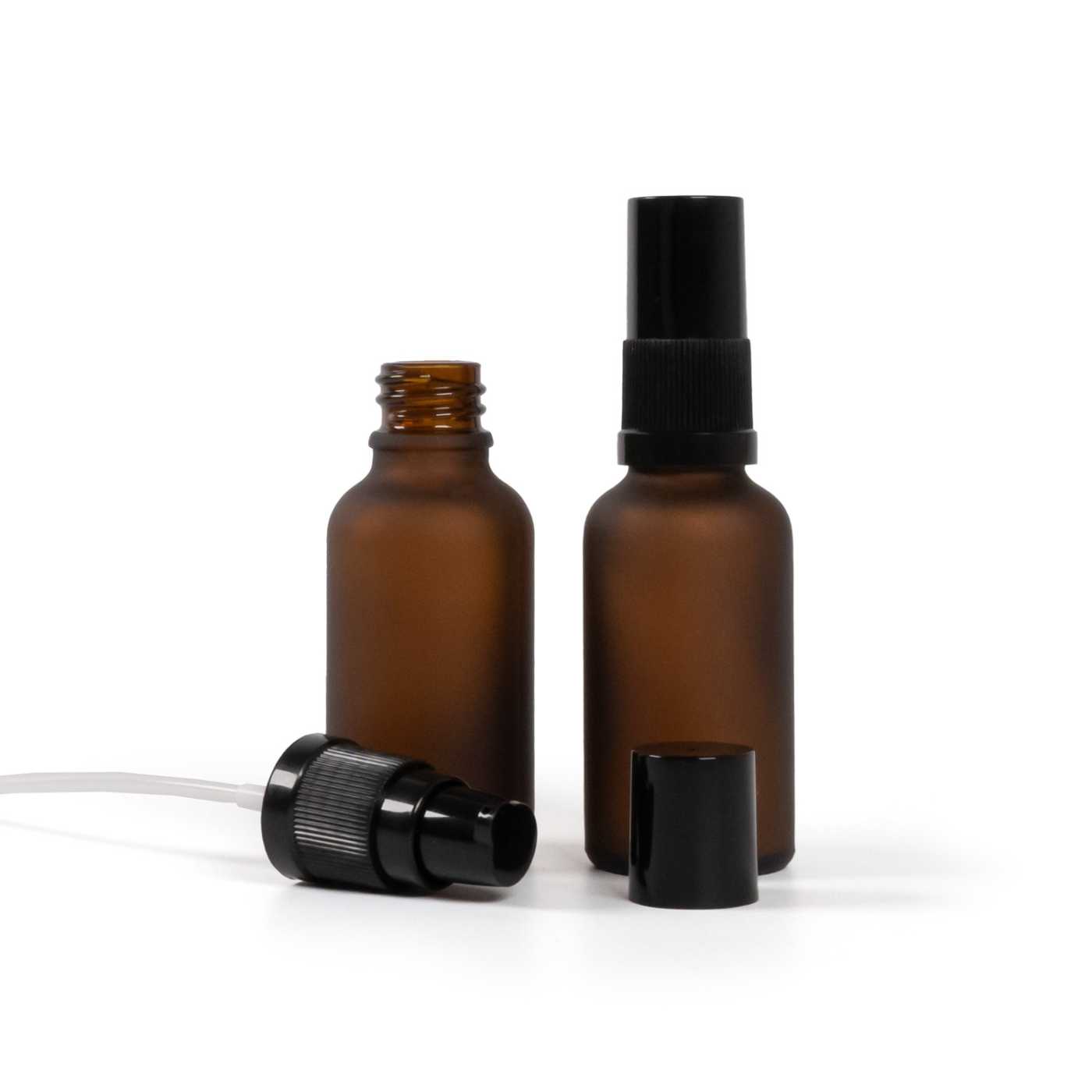
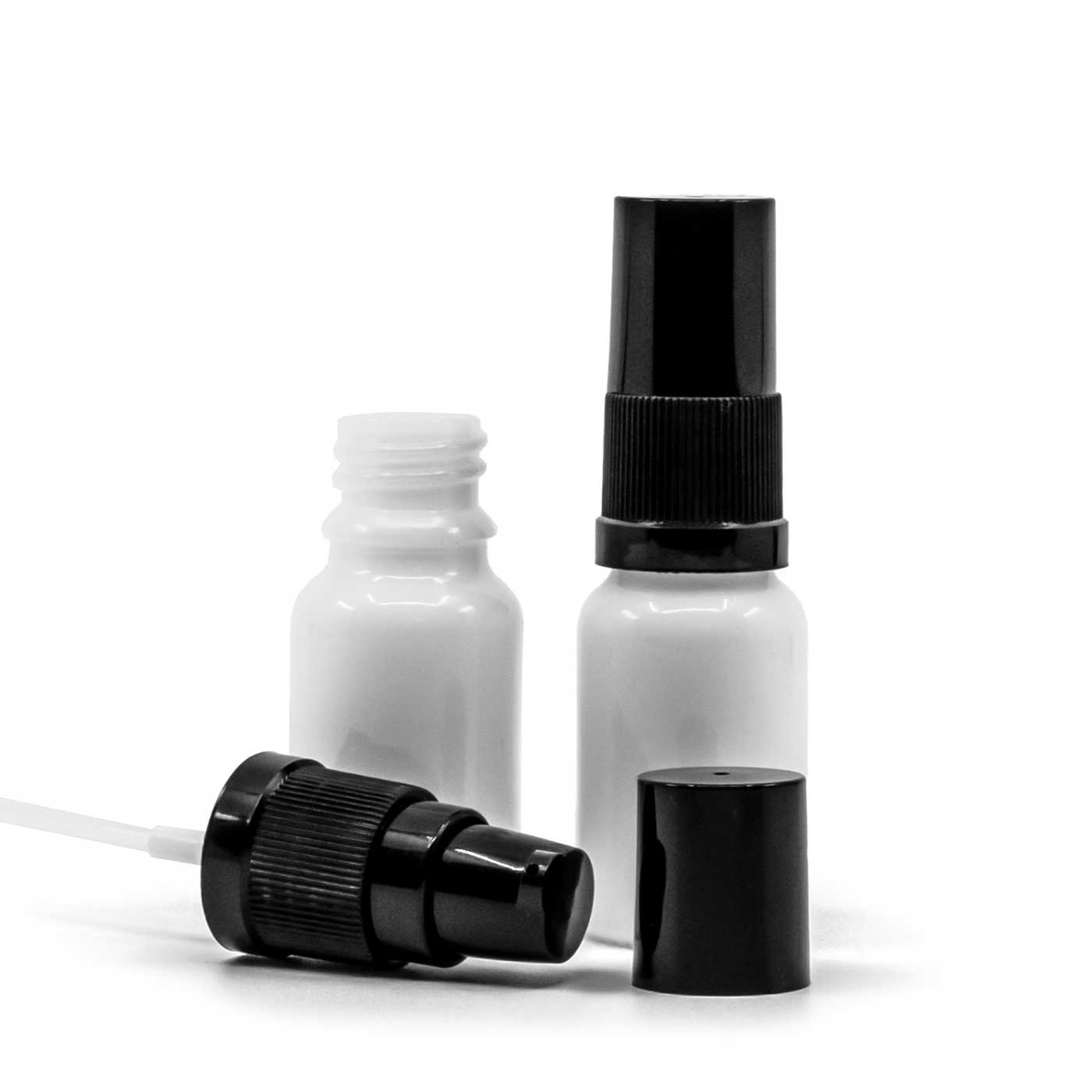
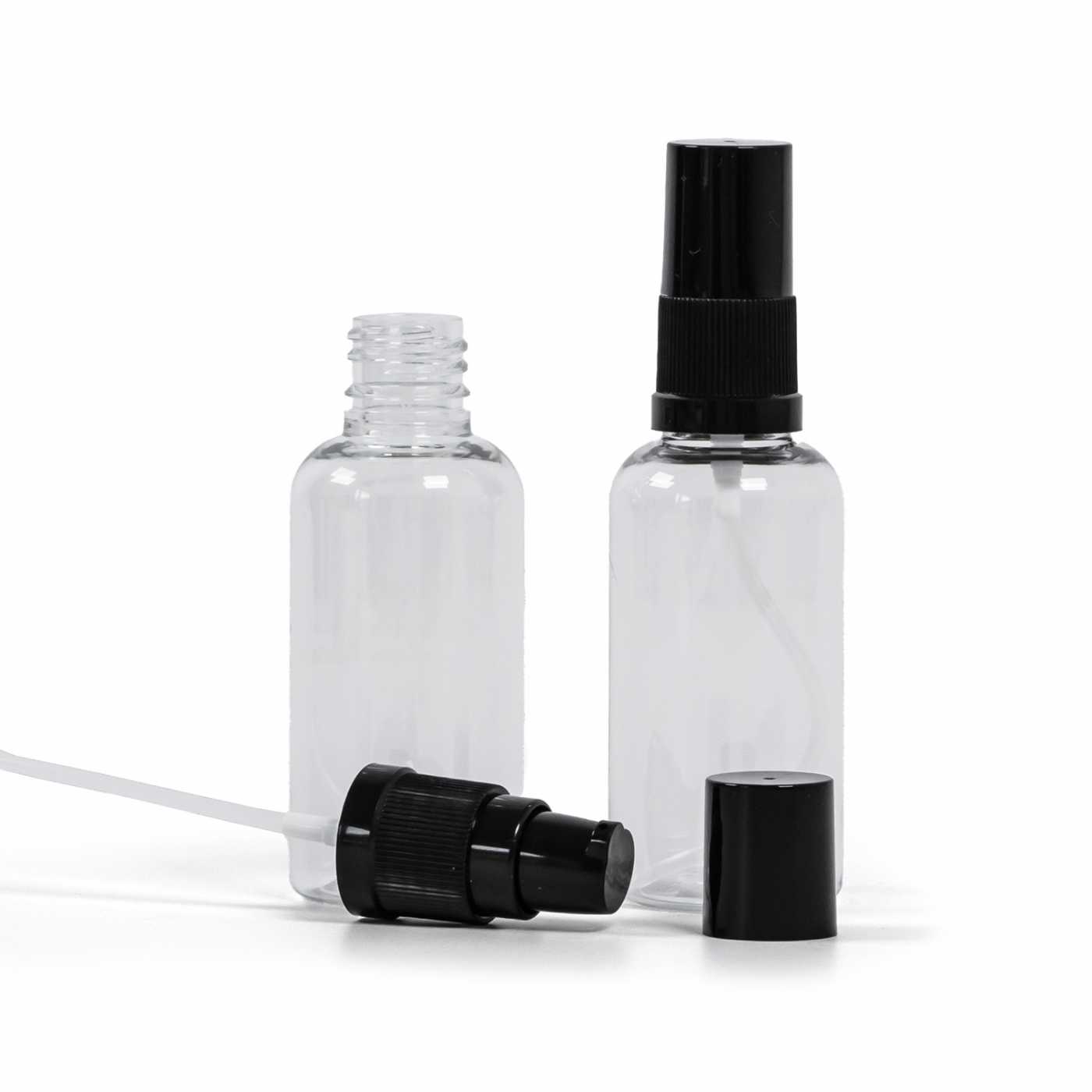
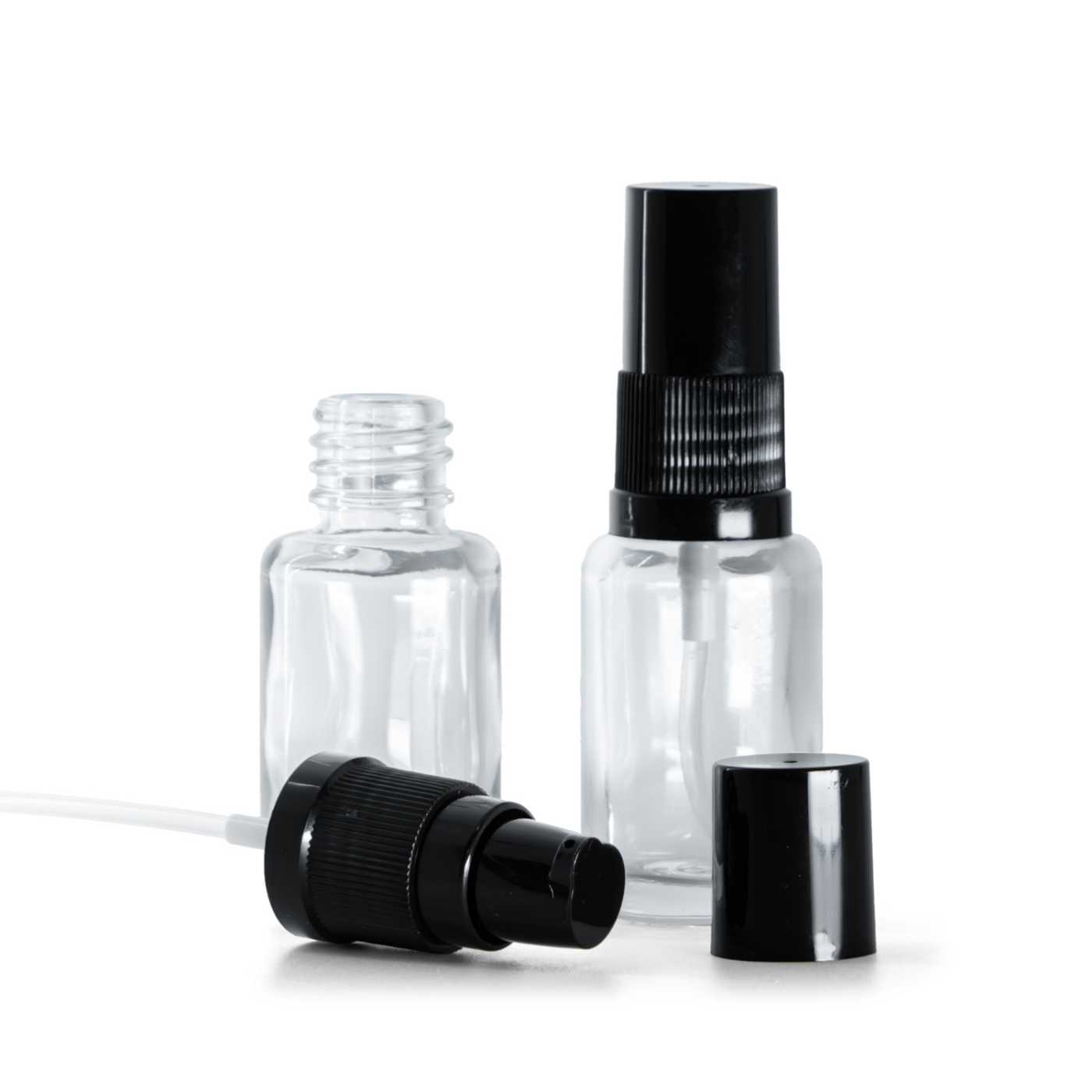
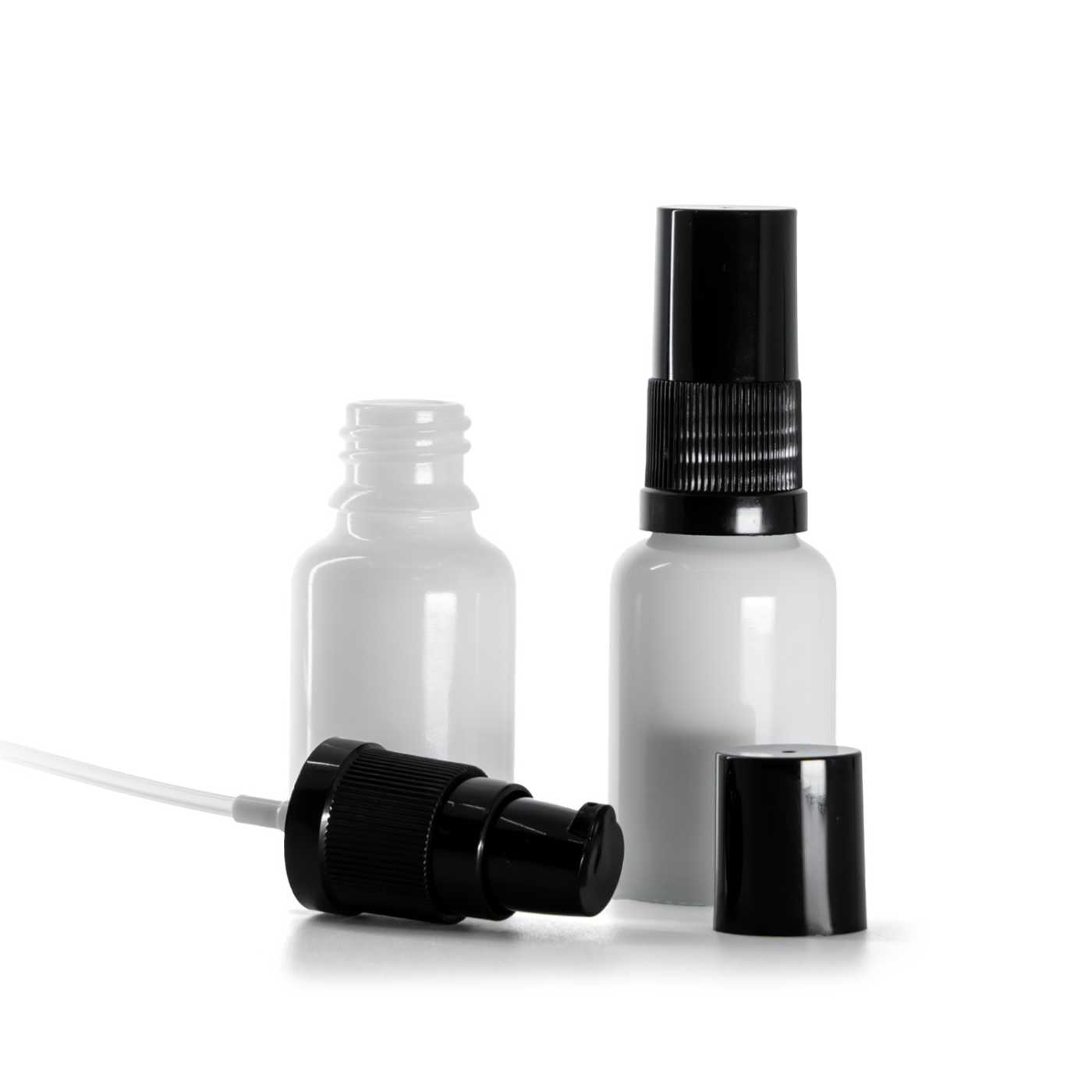
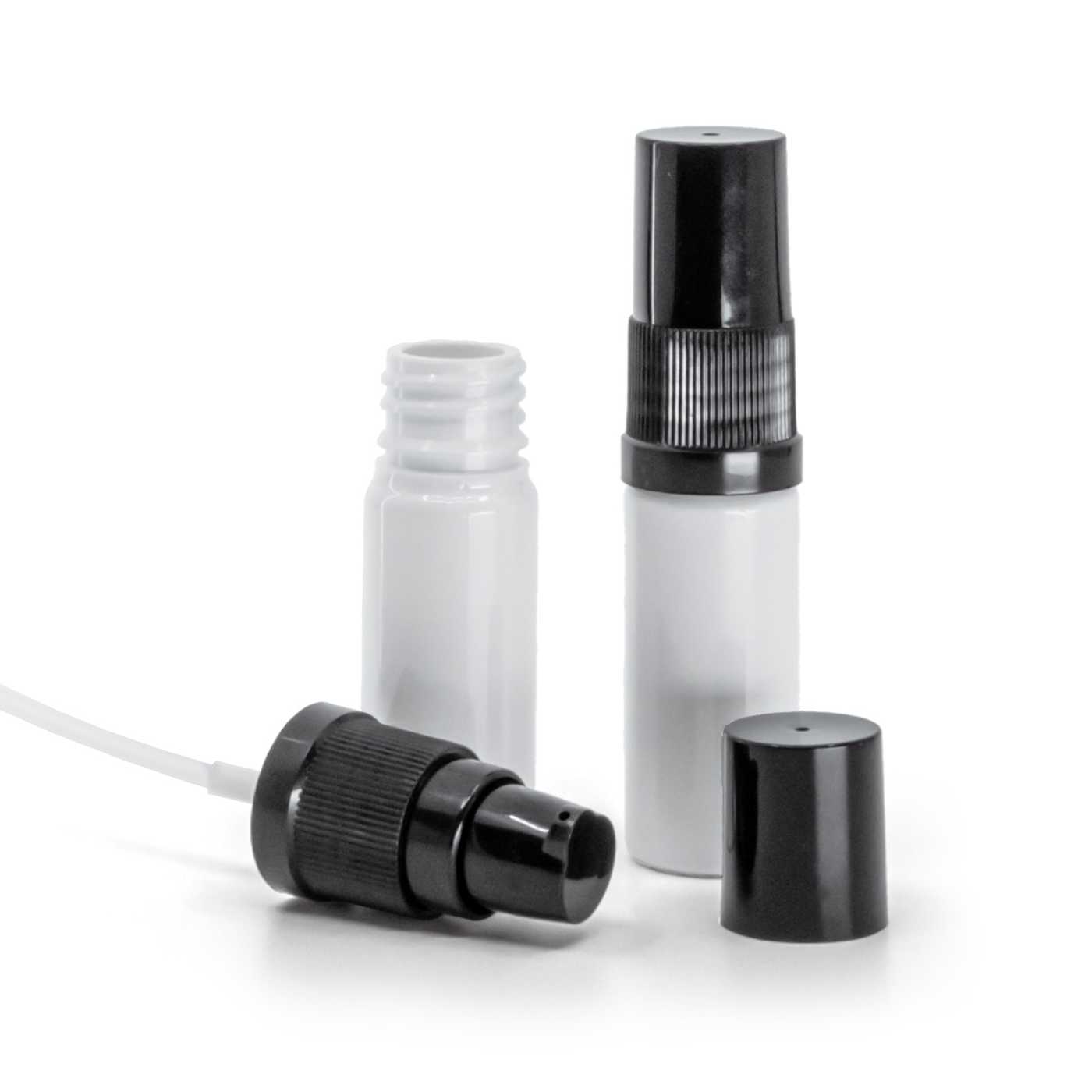
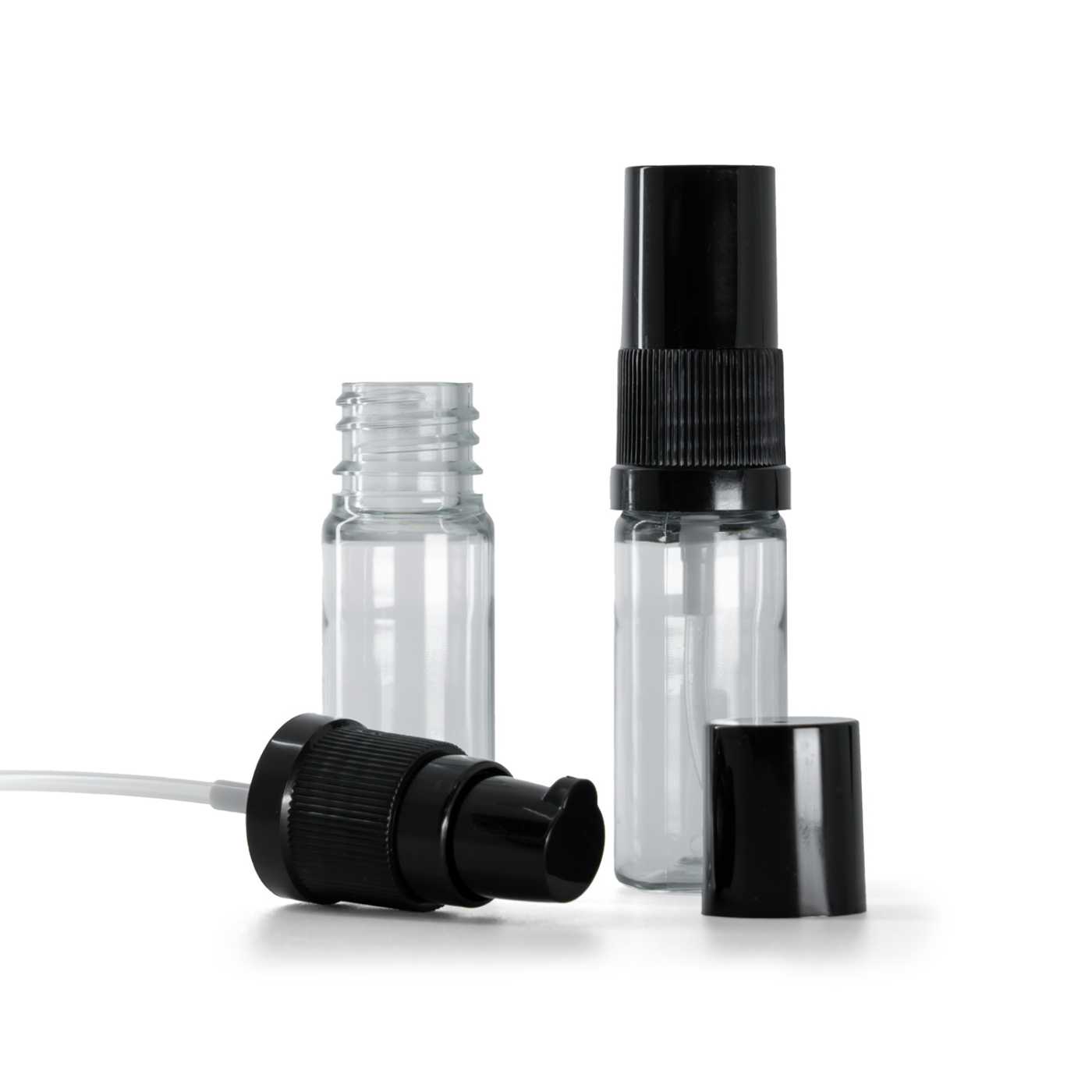
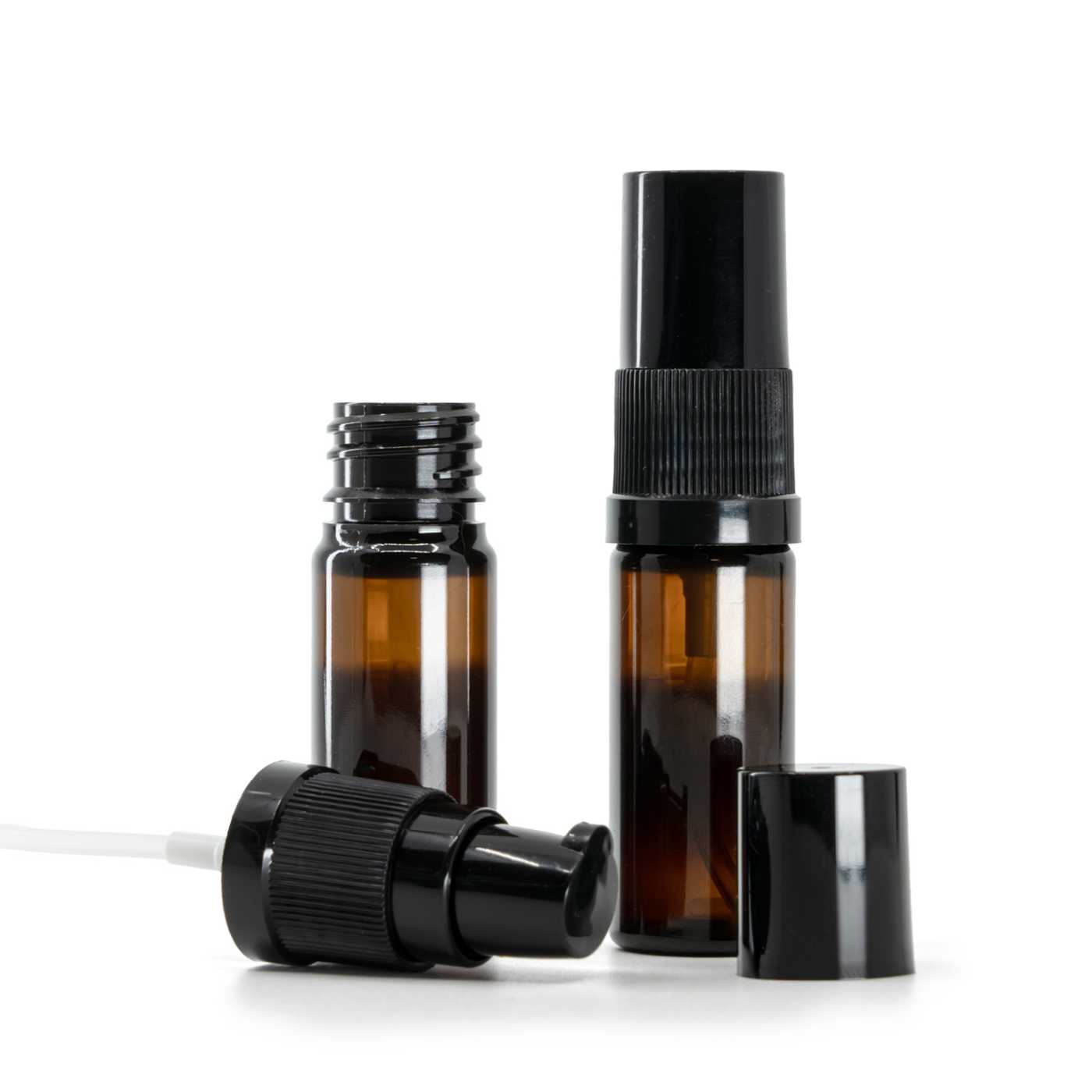
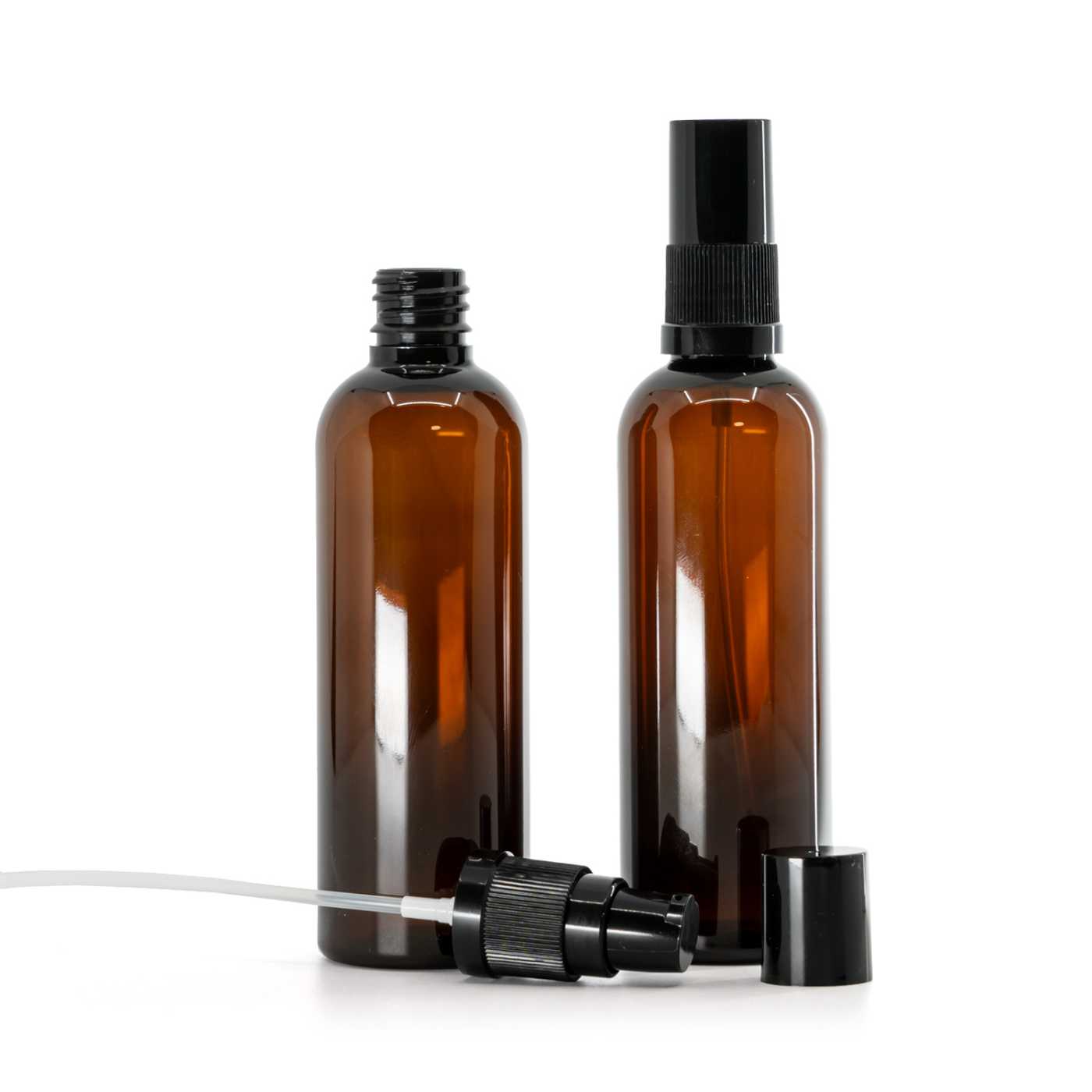
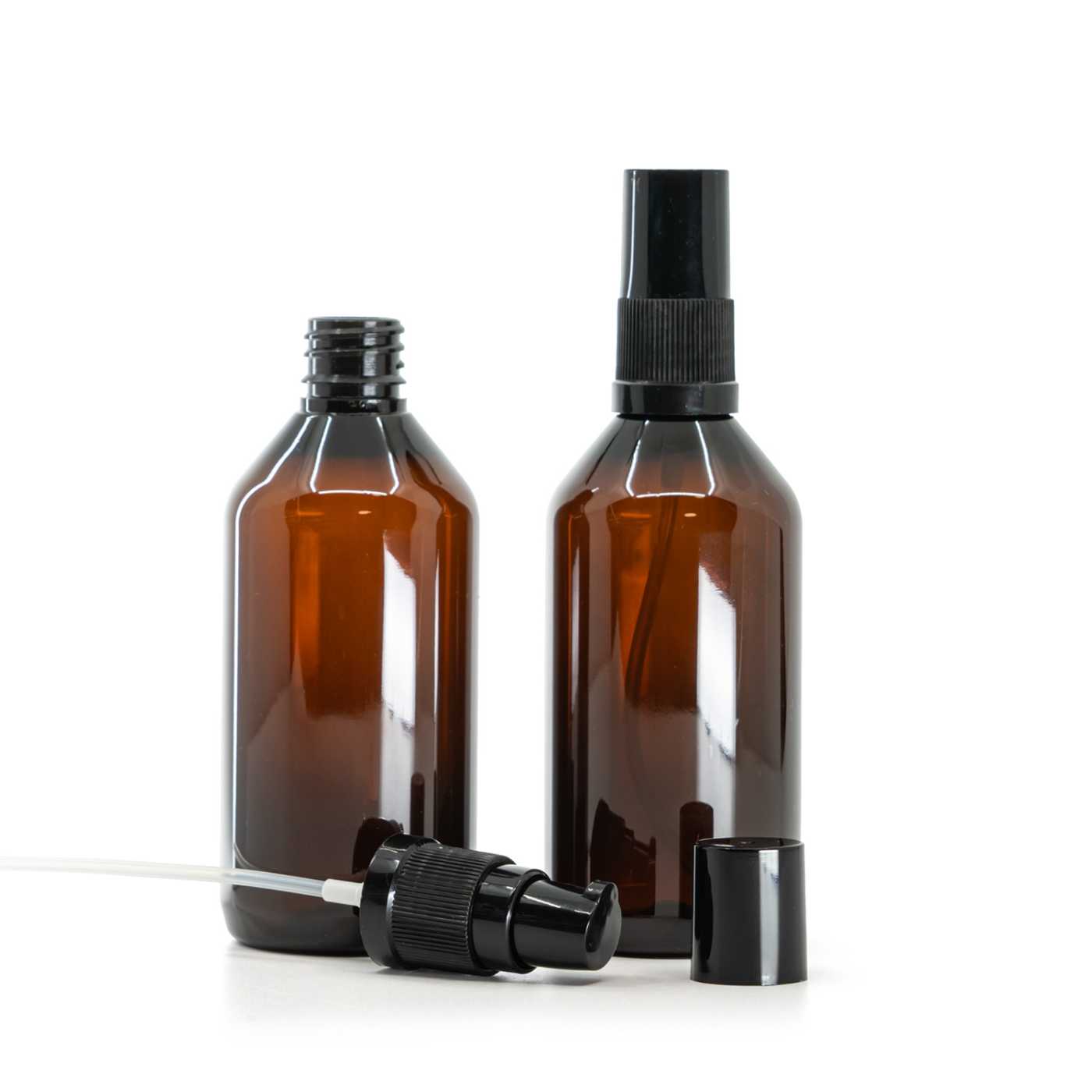
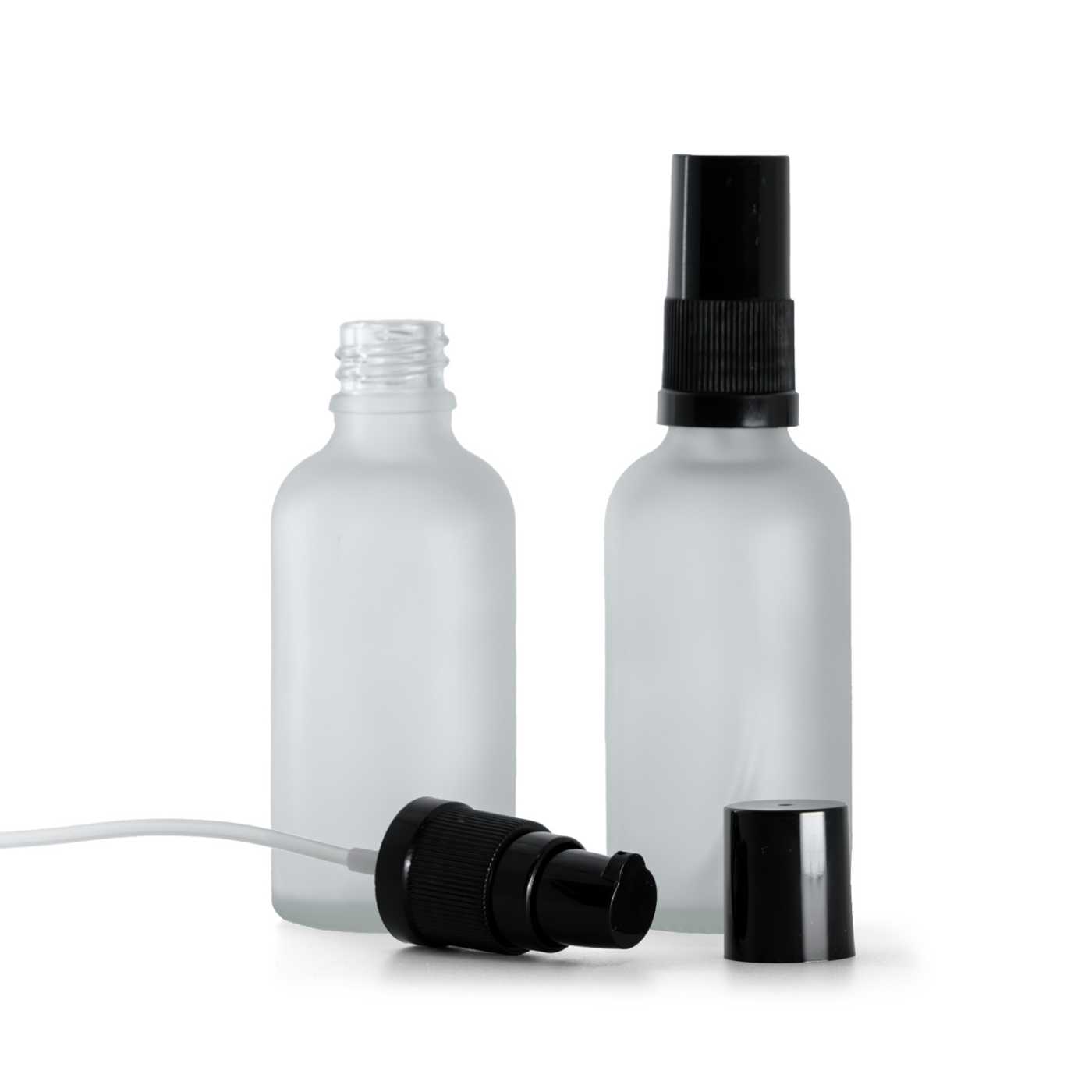
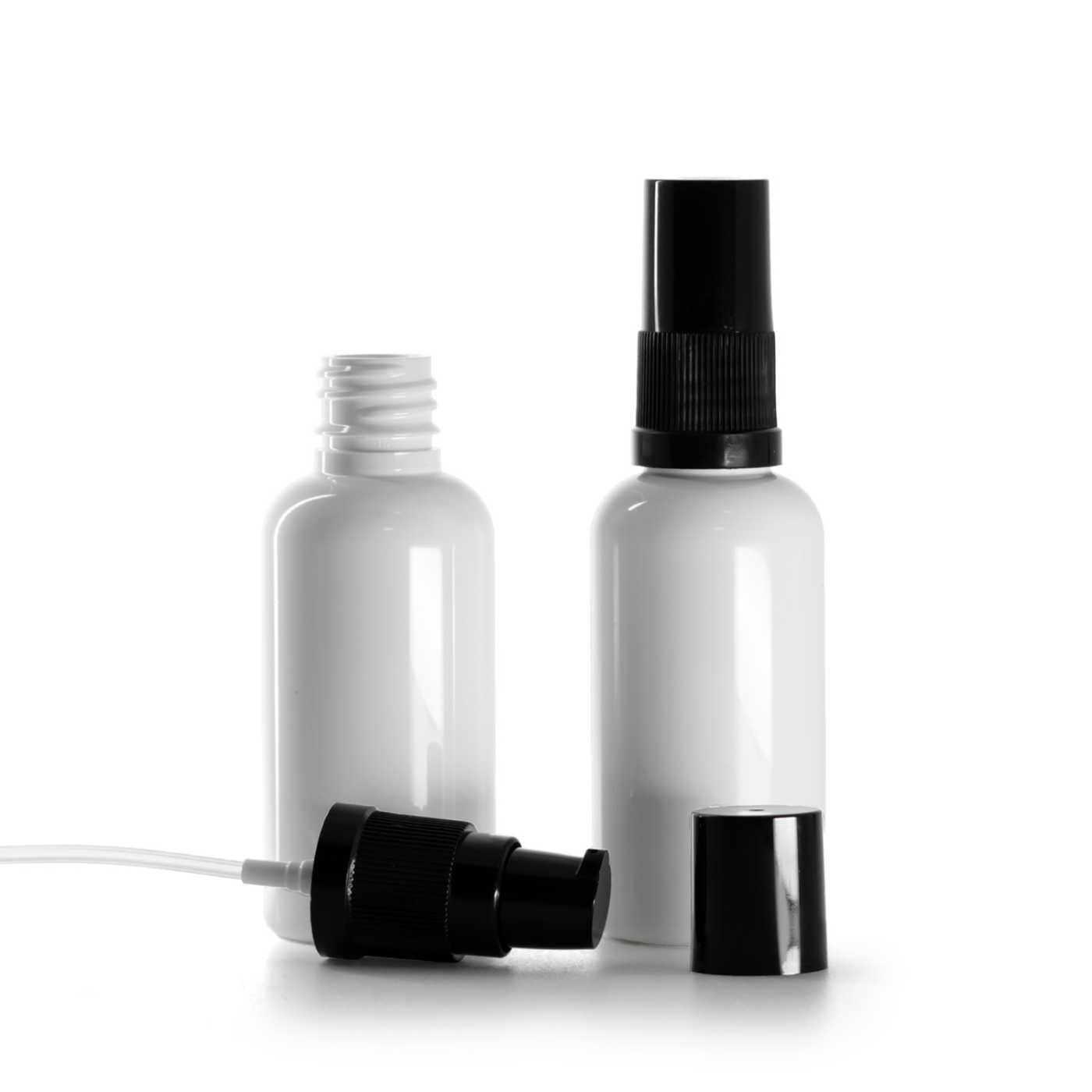
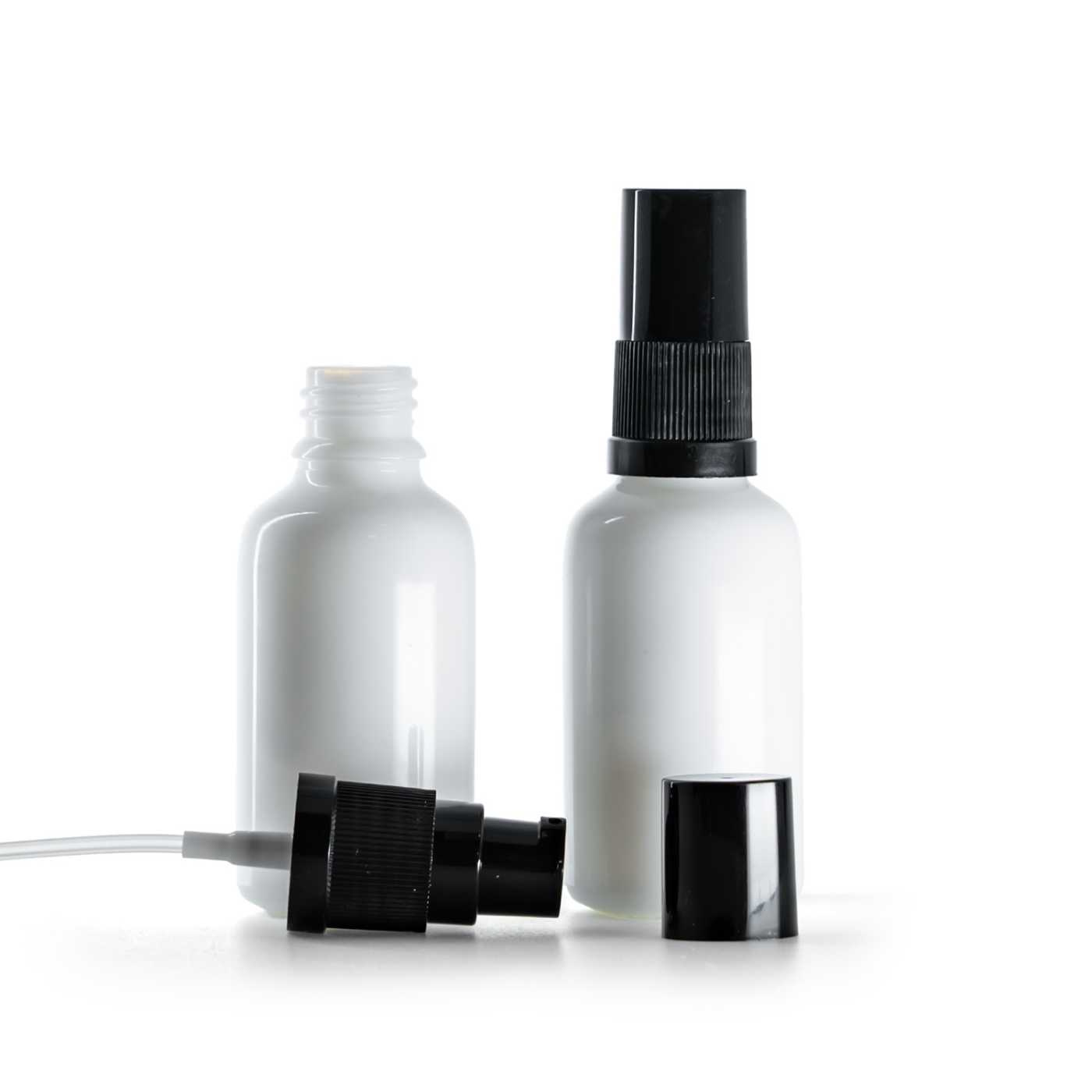
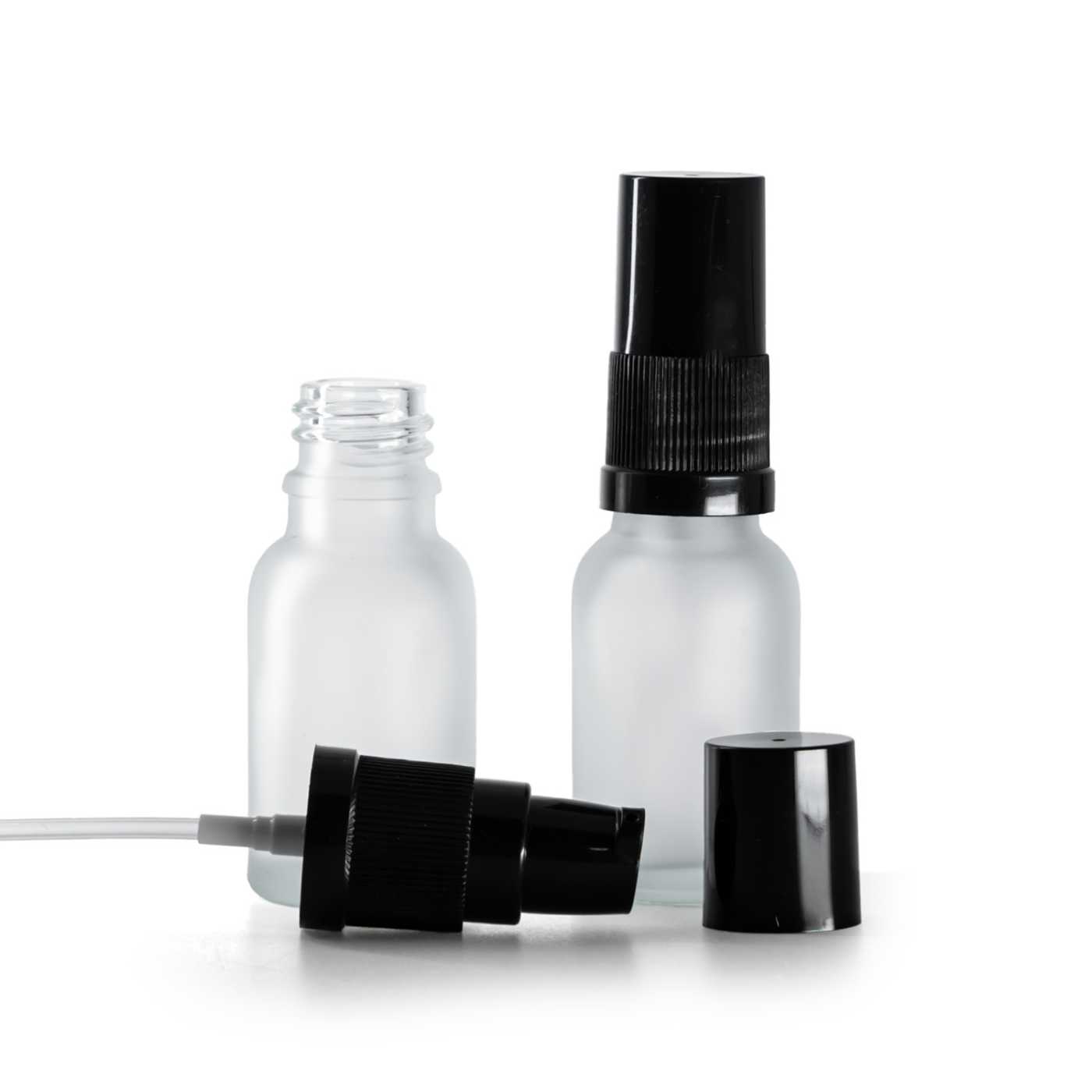
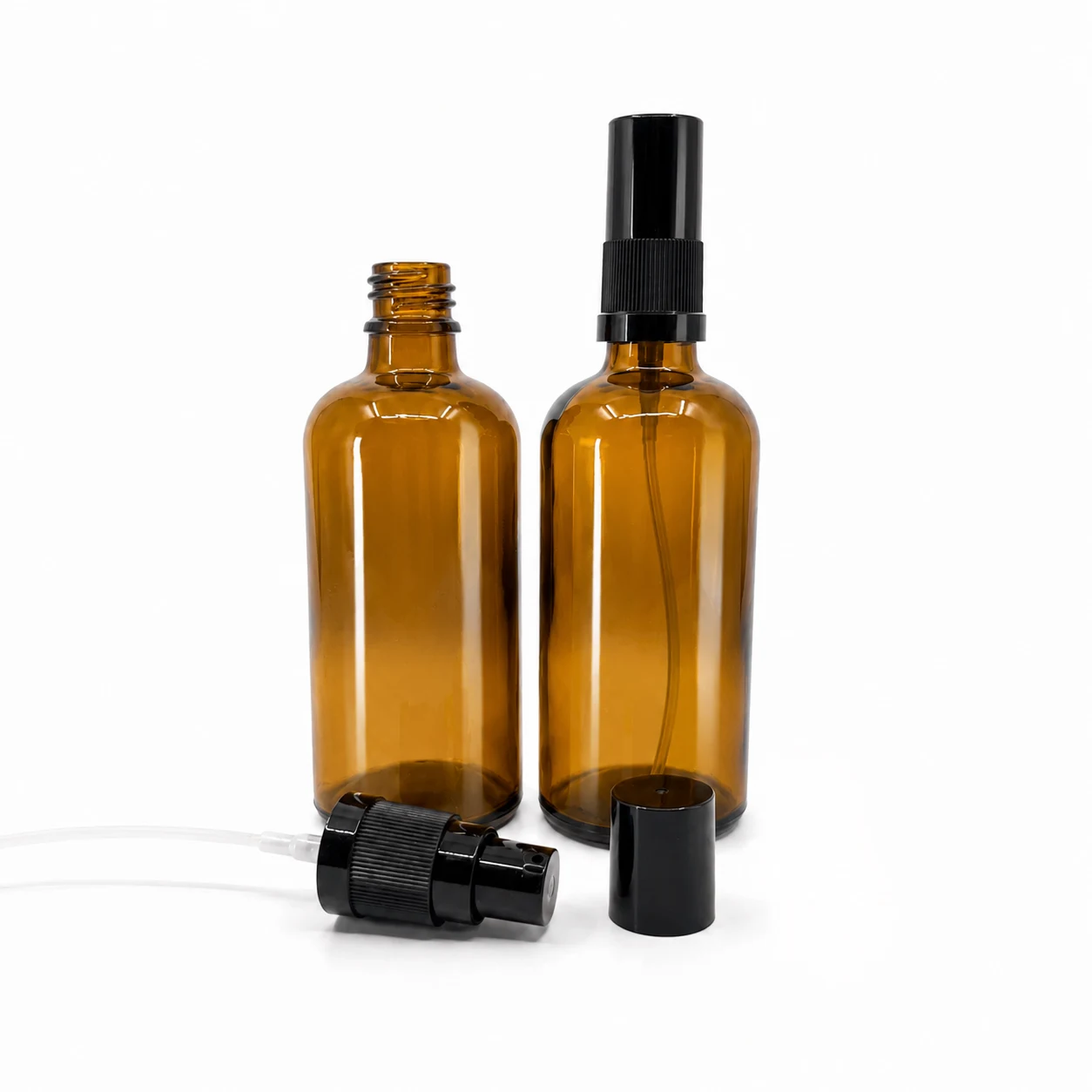
Glass bottle, green, cream dispenser with black top, 15 ml
The small green glass bottle with a black cream dispenser is a complete packaging and closure set for preparations that are applied in small doses and used up quickly: eye creams, facial serums, spot treatments, samples or travel sizes. Green glass reduces light exposure to the contents, making it suitable for formulations with more sensitive ingredients such as vegetable oils, vitamins or extracts. The dispenser delivers a small, repeatable amount with each press, which is practical for concentrated preparations where economical application matters.
The set is declared as suitable for contact with cosmetic products. The declaration of conformity and test certificates are listed with the product.
Why choose this set
- Light protection – green glass lets through less light than clear glass, helping to extend the stability of formulations prone to oxidation. The contents remain partially visible, so you can see how much is still in the bottle.
- Hygienic dispensing – the contents are not taken with fingers from an open container but pushed through the dispenser. This reduces the risk of introducing contaminants into the product and the preparation is exposed to air less.
- Precise dose – each press delivers a small, approximately equal amount. With eye creams and concentrated serums, only as much is applied as needed.
- Glass without interaction with the contents – glass does not react with common cosmetic ingredients including vegetable and essential oils, making it suitable for formulations with a higher proportion of lipids or active substances.
- Sturdy and stable packaging – the heavier bottle stands securely and looks premium even without additional decoration.
For which products is it suitable
The cream dispenser with tube is designed for liquid to medium-viscosity textures that can be drawn up and pushed through a small opening. In practice, this means:
- eye creams and light creams for the eye or lip area,
- facial serums and O/W emulsions with low to medium viscosity,
- spot treatments for blemishes applied locally,
- oil serums for the face, hair or cuticles,
- concentrated treatments where the dose is measured in drops, not palmfuls.
Thicker creams, butters or balms that do not flow at room temperature will not be drawn up by the dispenser or will clog it over time. For such textures, a jar or wider container is more suitable. Very thin aqueous solutions may be dispensed unevenly. In that case, a spray or dropper is more appropriate.
Before filling a larger batch, test the behaviour of your specific formulation in this set. Fill one bottle, let it stand for a few days and test the dispensing. You will find out whether the dispenser delivers the contents evenly and whether the tube reaches the contents all the way to the bottom.
Nominal and total volume
With packaging you will encounter two volumes. Nominal volume is the amount the bottle is intended to hold during normal filling. Total volume to the brim is the physical volume of the bottle up to the neck and is slightly larger. The difference between them is the allowance for the dispenser tube, air and any expansion of the contents when the temperature changes. The bottle is therefore filled to the nominal volume, not to the brim. An overfilled bottle would overflow when the dispenser is screwed on or the dispenser might not seat correctly.
What is good to know when filling and using
- Preparation before first filling – wash both the bottle and the dispenser before use, disinfect with isopropyl alcohol or ethanol and allow to dry completely. Residual water in the tube could dilute the first dose or promote the growth of microorganisms in an unpreserved product.
- Tube length – before fitting the dispenser, check that the tube does not extend past the bottom. If it does, trim it so that it ends just above the bottom. A tube that is too long will bend and the dispenser will draw poorly.
- Filling temperature – glass can withstand heat, but sudden temperature changes are not good for it. Fill emulsions and creams only after they have cooled to room temperature. This also protects the plastic dispenser and prevents the contents from condensing under the closure.
- First presses – after screwing on the dispenser, you need to press several times until the tube fills and starts delivering the contents. Take this into account when estimating the number of doses in a package.
- Residue at the bottom – the tube does not reach all the way to the bottom, so a small amount will remain in the bottle that cannot be pushed out. With expensive active ingredients it is good to inform the customer about this and point out that the residue can be tapped out after unscrewing the dispenser.
- Reuse – the glass bottle can be used again after thorough washing and disinfection. The dispenser is harder to clean because the contents remain in the tube and mechanism. Rinse it with warm water or ethanol, and when changing the formulation it is better to use a new one.
- Label – the bottle has a smooth cylindrical body that labels well.
- Recycling – glass goes in the glass bin, the plastic dispenser in the plastic bin. Unscrew them from each other before disposal.
The set is intended for cosmetics. Neither the bottle nor the dispenser has a food contact certificate, so do not use it for household oils, syrups or other food products.
Closure selection and combinations
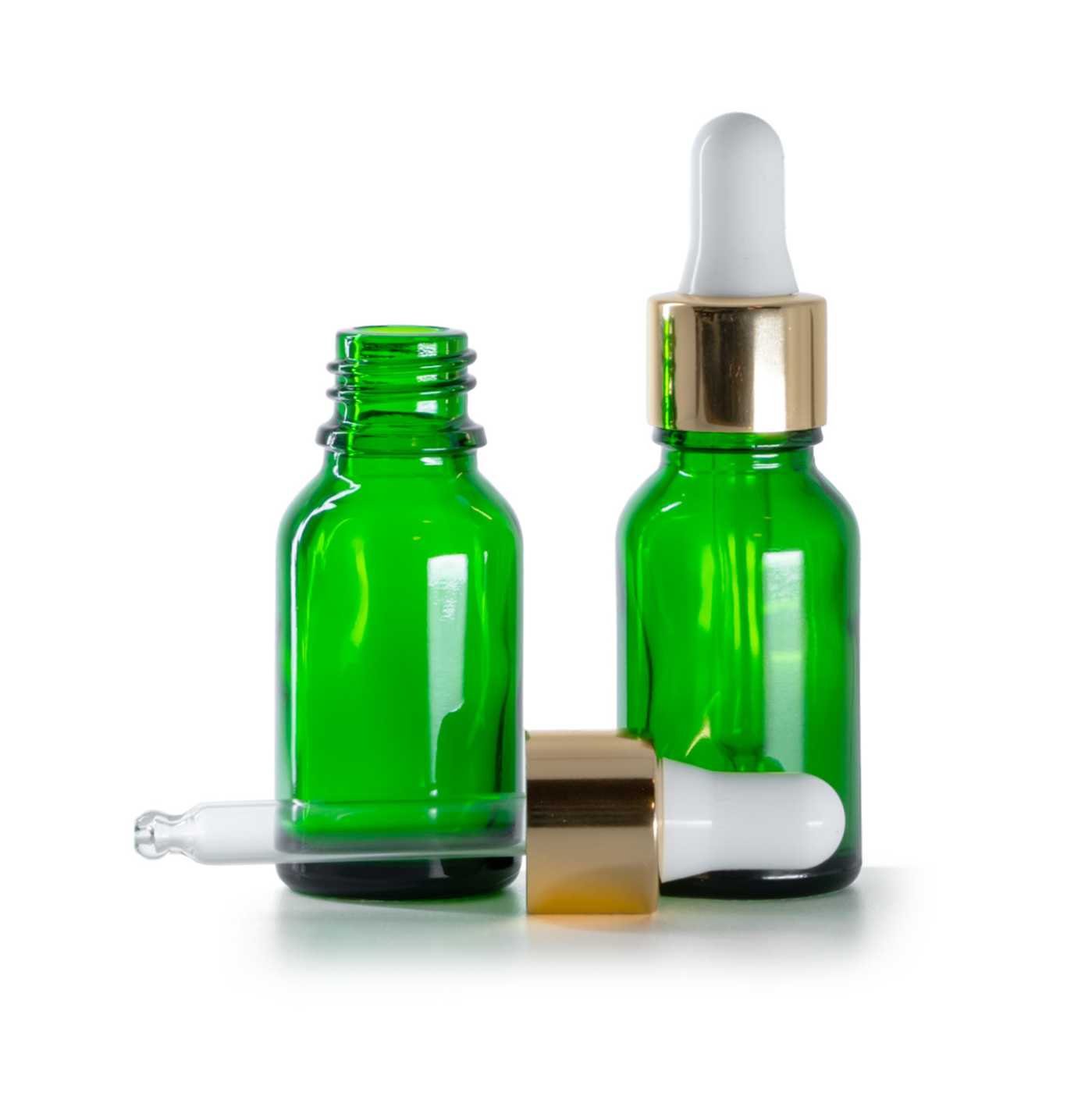
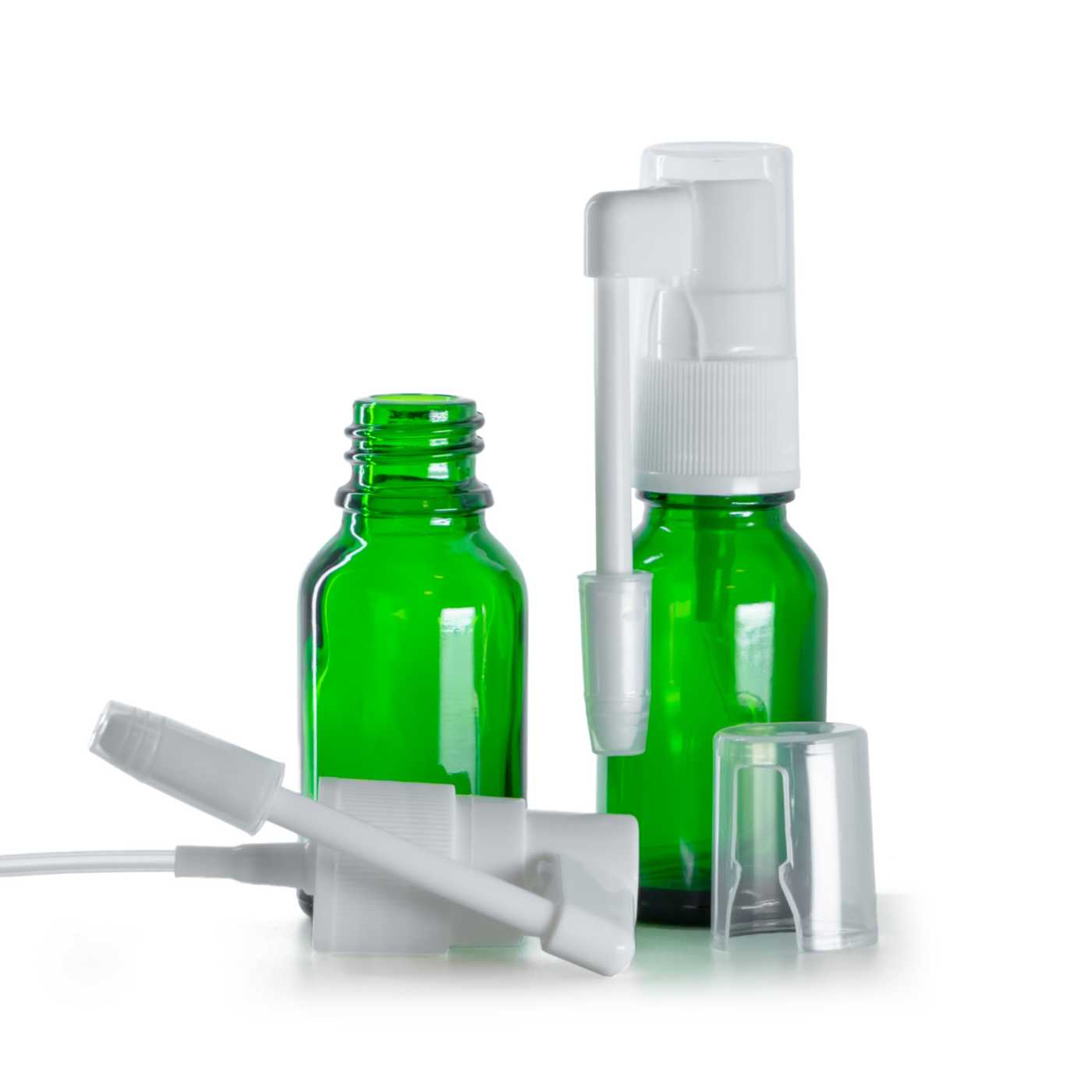
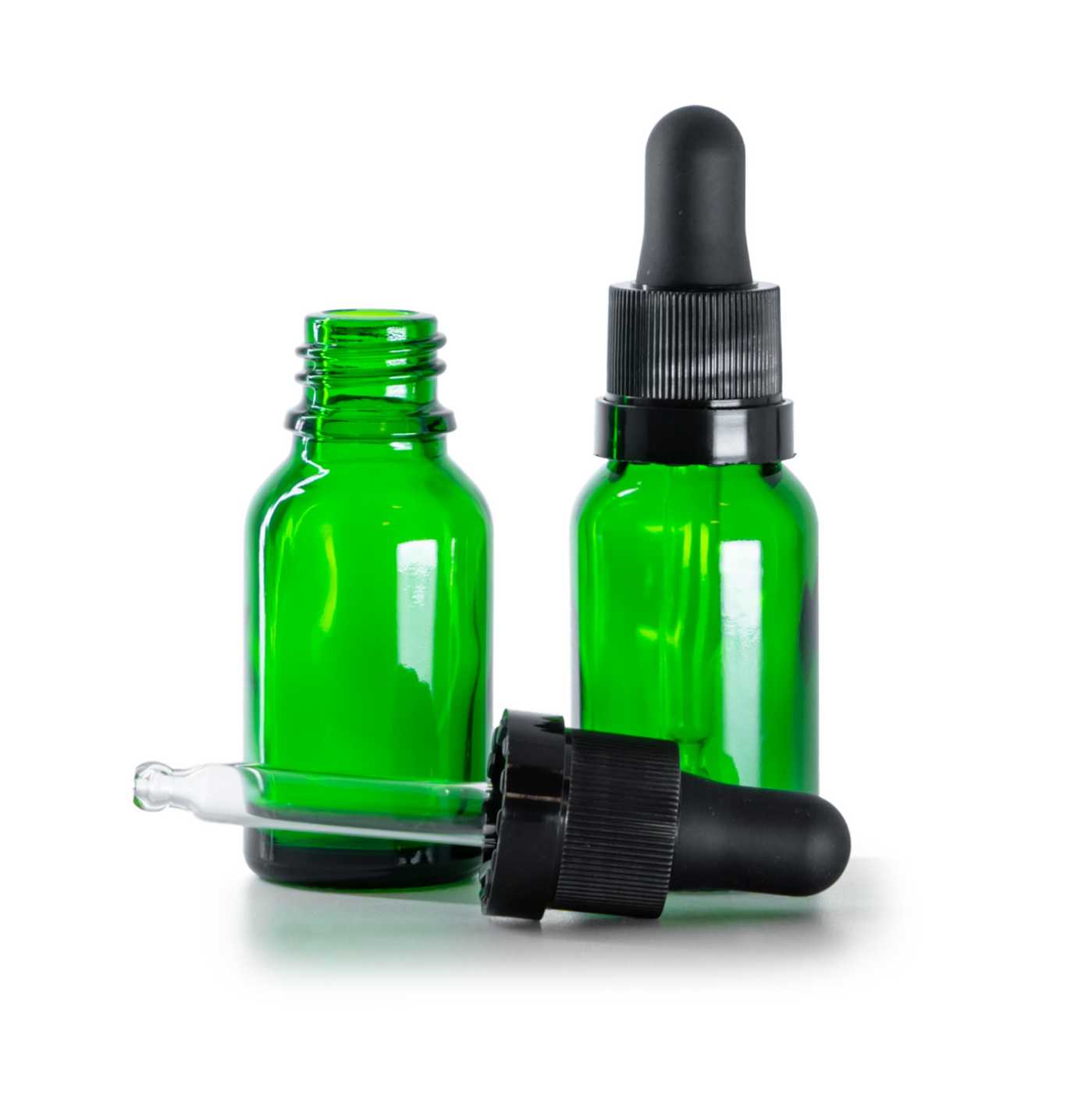
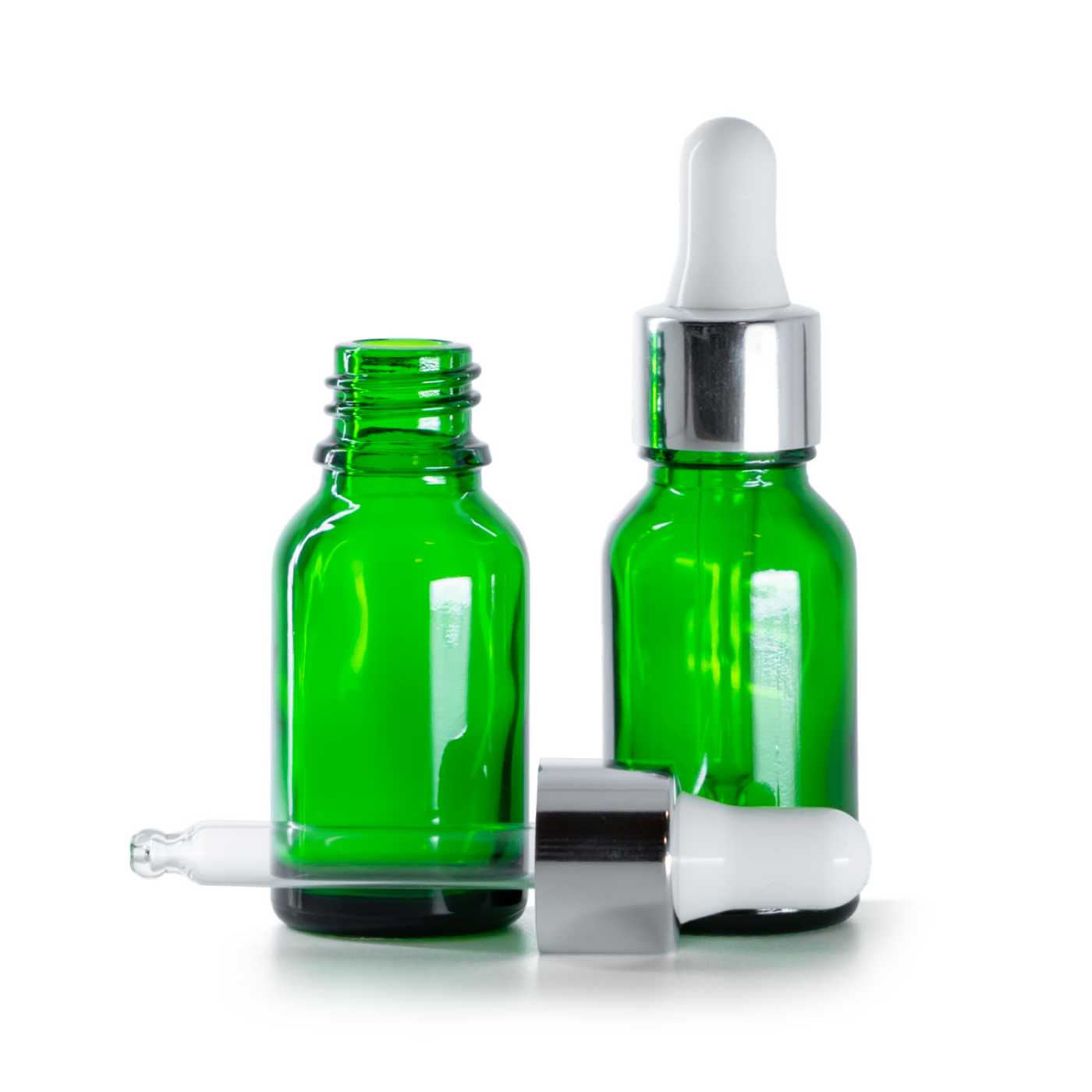
The set consists of a green bottle and a cream dispenser with the corresponding neck. If you need the same bottle with a different closure, such as a dropper or cap, closures with the same neck type and ready-made combinations can be found in the Handymade range. With your own combination, always verify the seal, dispensing and behaviour of the packaging with the specific formulation.
Frequently asked questions
Does green glass protect the contents from light as well as brown glass?
Green glass reduces light, but somewhat less than brown. For ordinary creams, serums and oil preparations with a stabilised formulation the protection is sufficient and the contents remain partially visible. For very sensitive ingredients, such as high concentrations of vitamin C or unstabilised oils, brown glass or storage away from direct light is preferable.
How thick a cream can the cream dispenser with tube handle?
The cream dispenser works with liquid to medium-viscosity textures that flow at room temperature, such as serums, emulsions and light creams. Thick creams, butters and balms will not be drawn through the tube or will clog the dispenser. If you are unsure, fill one bottle and test the dispensing after a few days.
How much product fits in the glass bottle with dispenser, 15 ml?
The bottle is filled to its nominal volume, which is stated in the name and in the parameters. The total volume to the brim is slightly larger, but this allowance is for the dispenser tube and air, not for the product. If filled to the brim, the contents would overflow when the dispenser is screwed on and the mechanism might not seat correctly.
Is the glass bottle with cream dispenser suitable for oil serums?
Yes, glass does not react with vegetable or essential oils and the dispenser draws up oil textures without problems. With very thin oils, bear in mind that the dispenser will deliver the dose quickly and may slightly "splatter". If you want more precise dosing by drops, consider the same bottle with a dropper.
Can the glass bottle with dispenser be washed and used again?
The glass bottle yes. After washing and disinfecting with ethanol or isopropyl alcohol it is ready for refilling. The dispenser cannot be cleaned thoroughly because some of the contents remain in the tube and mechanism. Rinse it with warm water and when changing the product or after prolonged use it is better to use a new dispenser.
Does cosmetics in a glass bottle with dispenser need to be preserved?
Yes, if the formulation contains water it needs a preservative regardless of the packaging. The dispenser does reduce contact of the contents with fingers and air, but it is not airtight like an airless container, so on its own it does not guarantee microbiological stability. Anhydrous oil serums do not need a preservative, but may benefit from an antioxidant.