Spend over €100 for discounted shipping!

+421 950 333 113[email protected]

BUTTERS 100 g

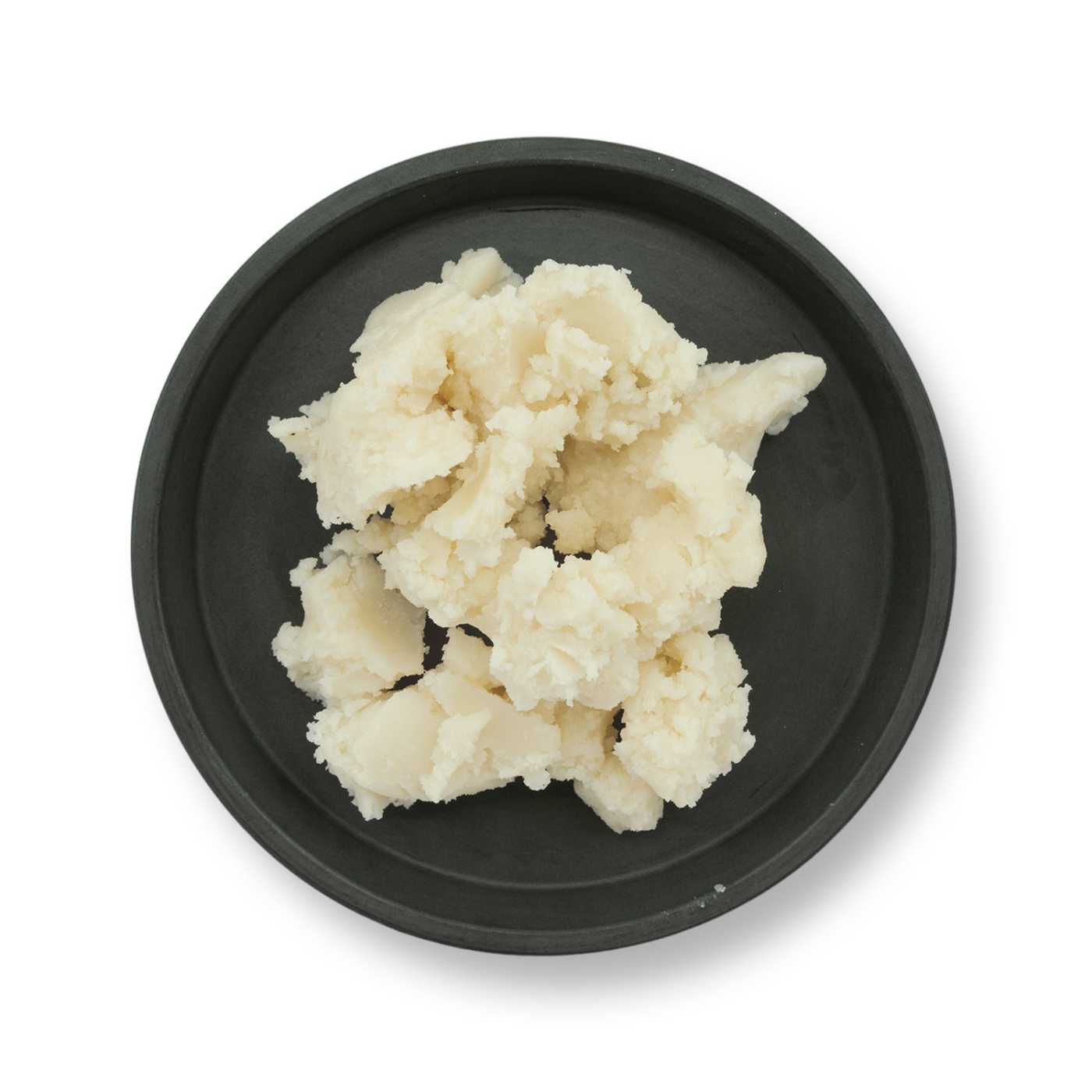
Mango Butter, Refined, 100 g

Pack size100 g500 g1 kg2.5 kg

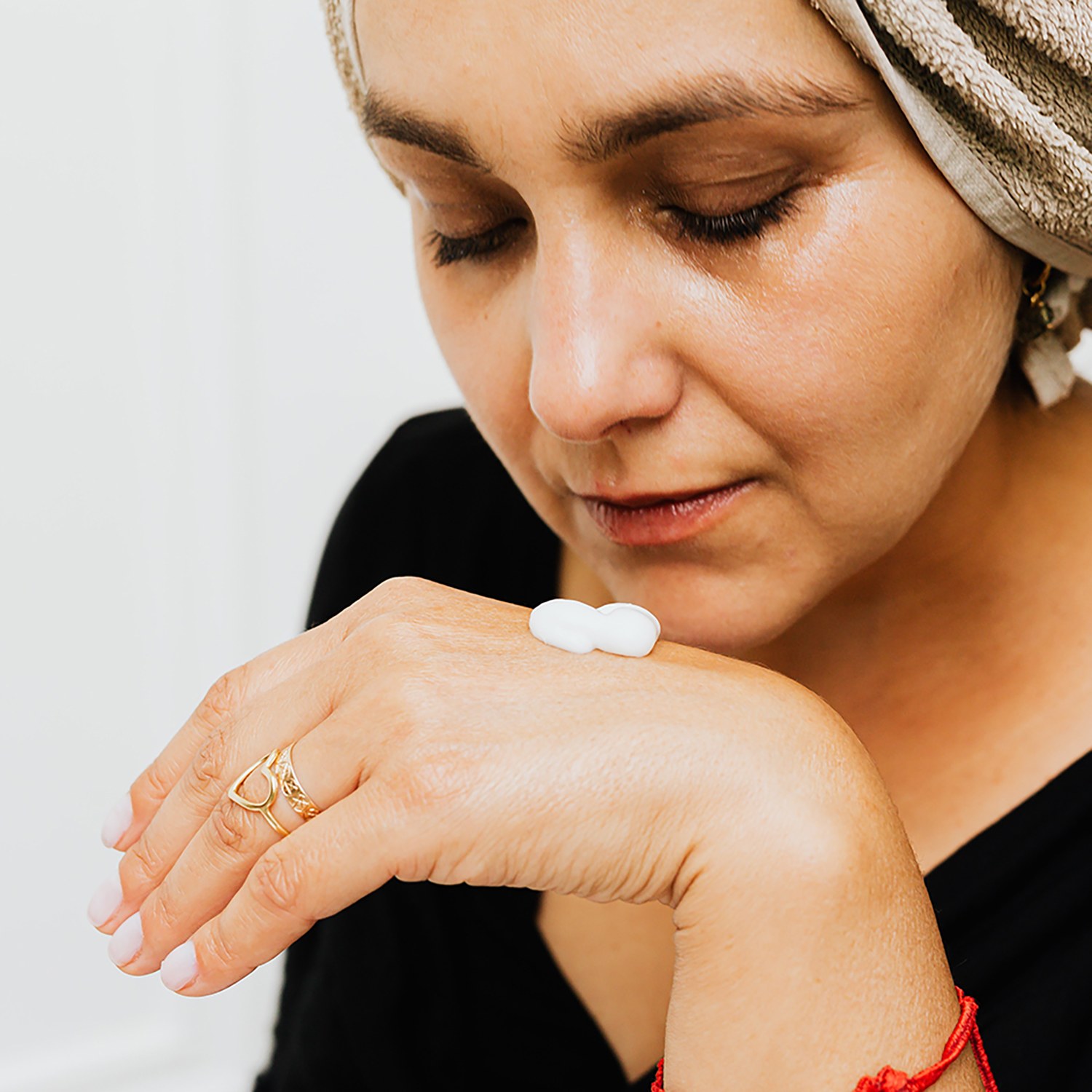
Mango butter softens dry and rough skin and brings a firmer, creamy texture to the formulation, which melts quickly on the skin without leaving a heavy greasy film. full description

AvailabilityIn stock · 592 packs
Product codeBUT605_100
Batch23796
Best before07/2028
€3.14incl. VAT€31.40/kg

Lowest price in the last 30 days: €3.14

Product description

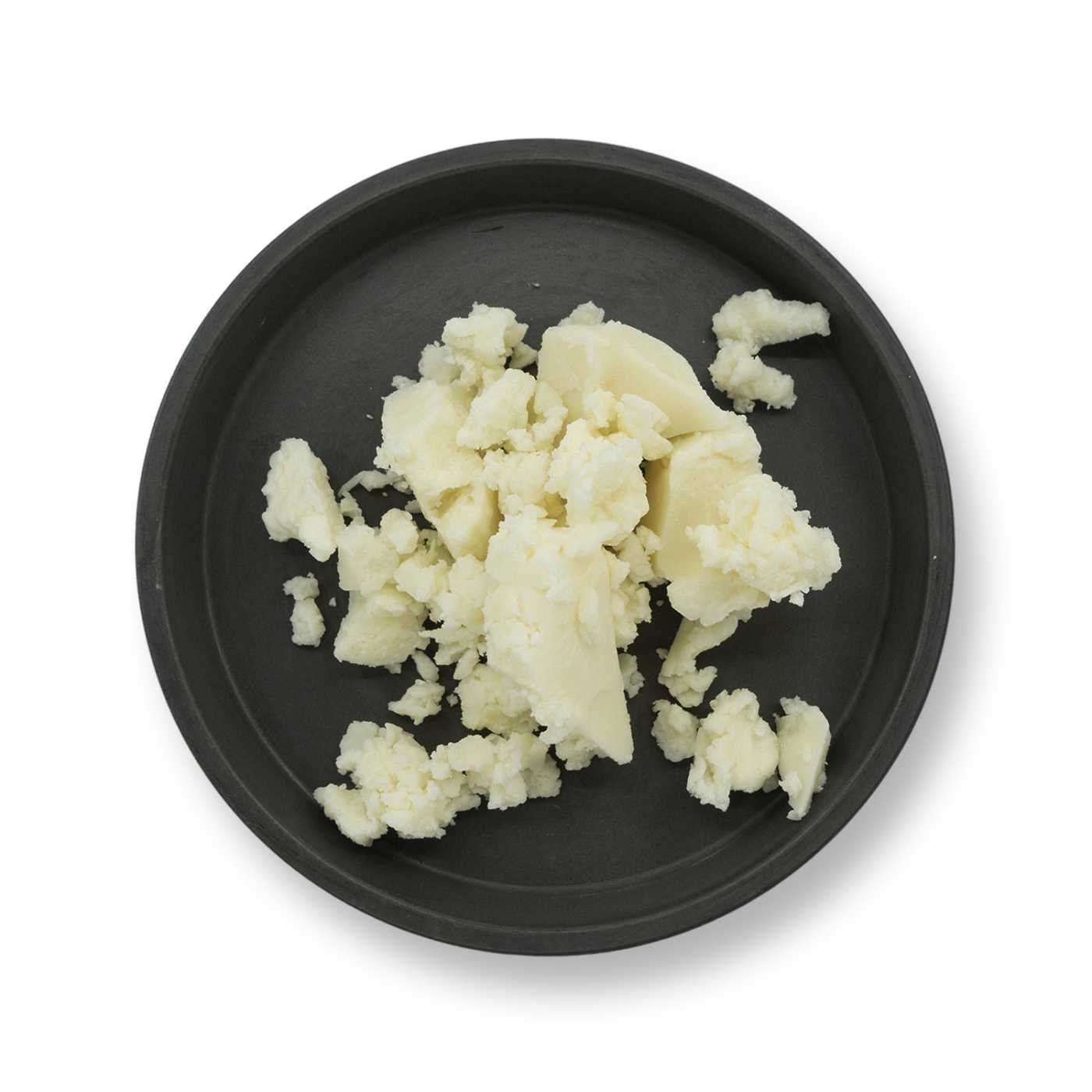
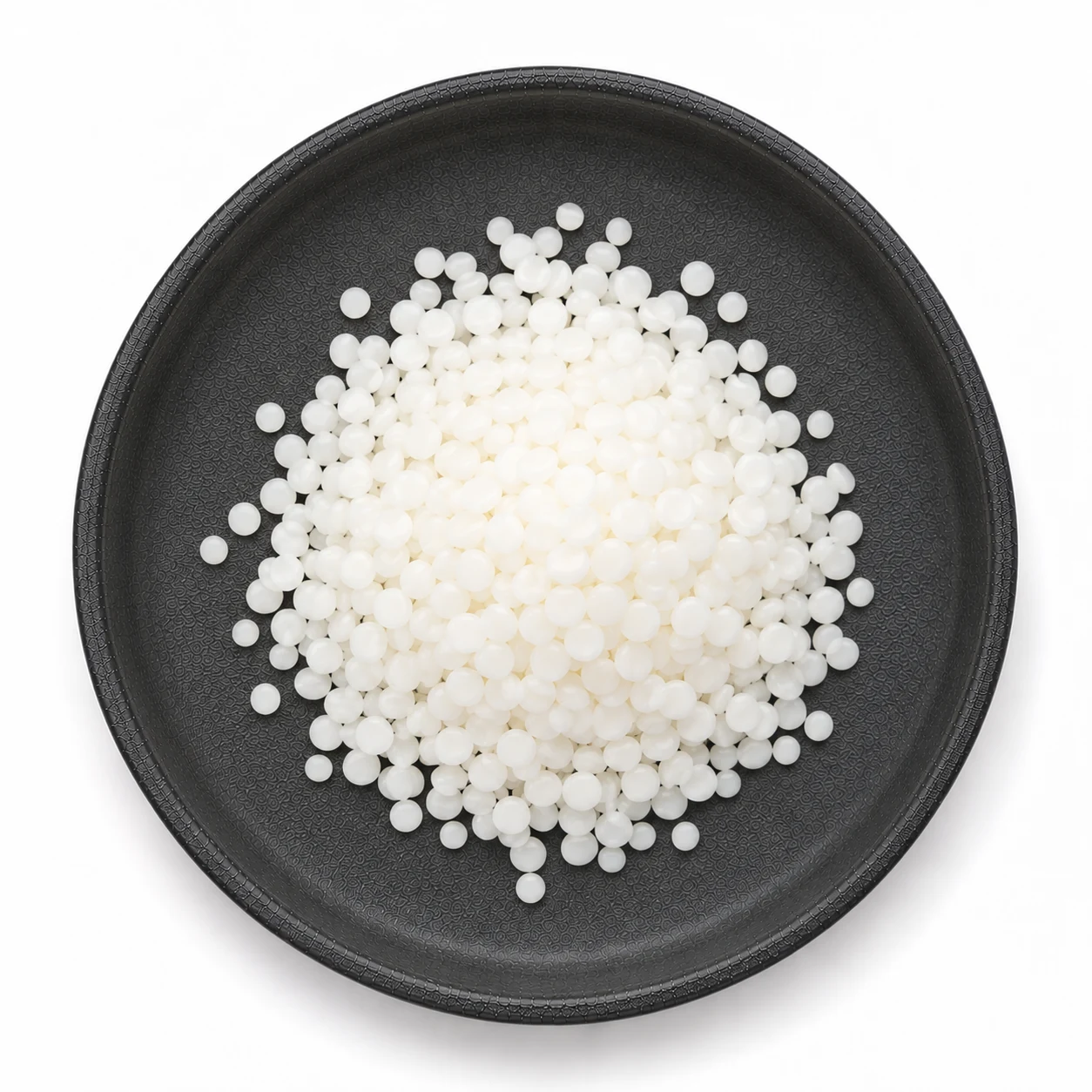
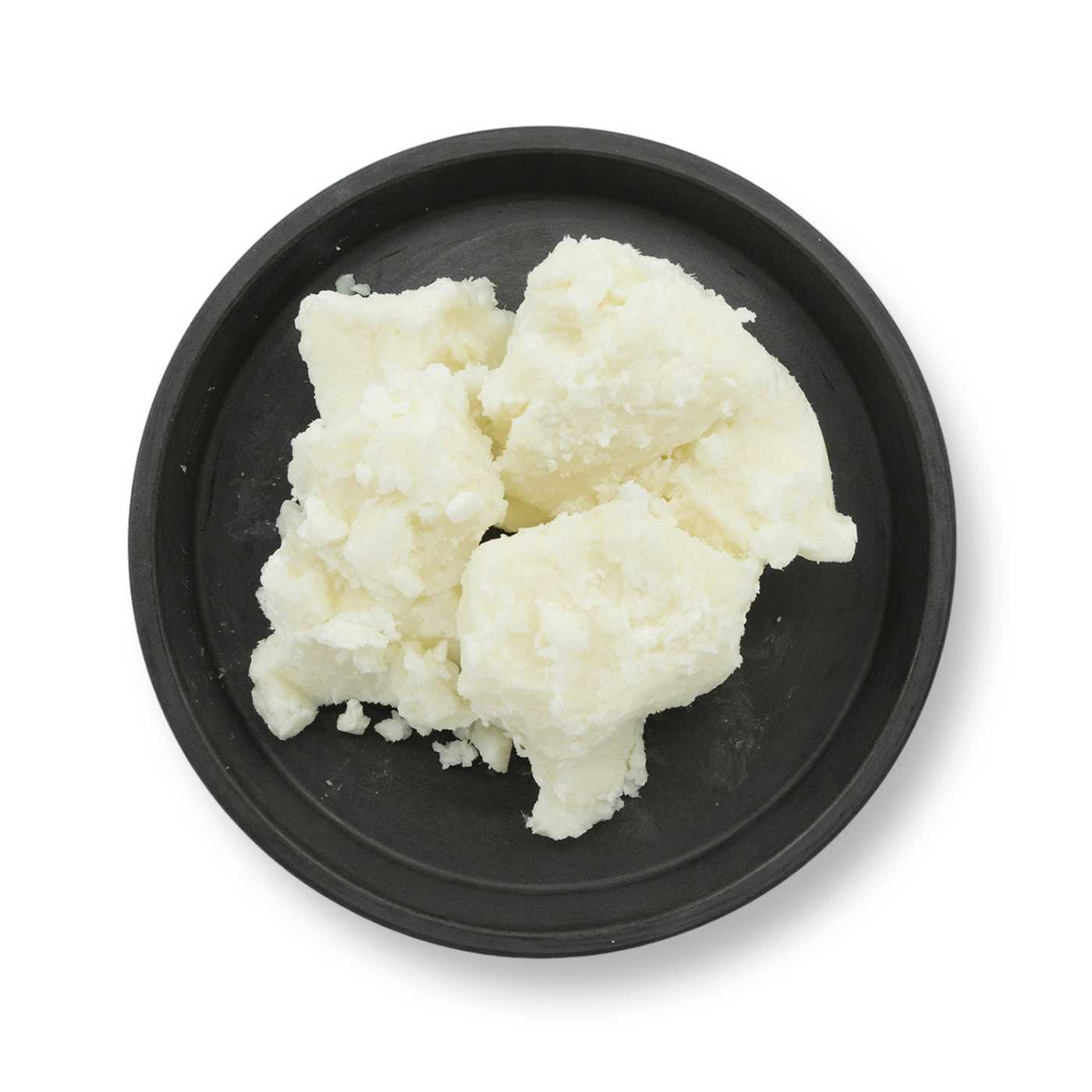
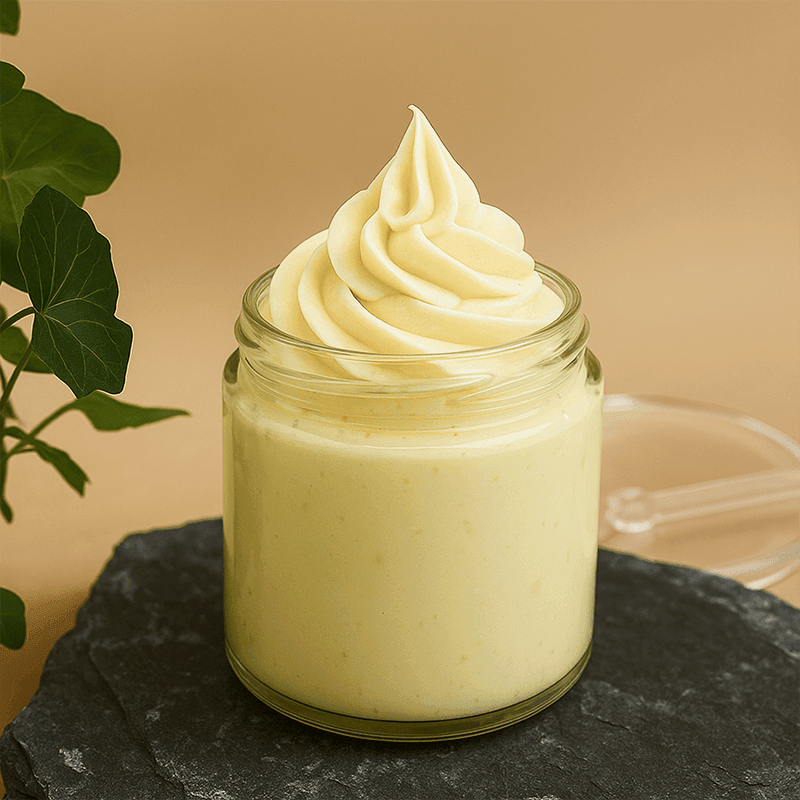
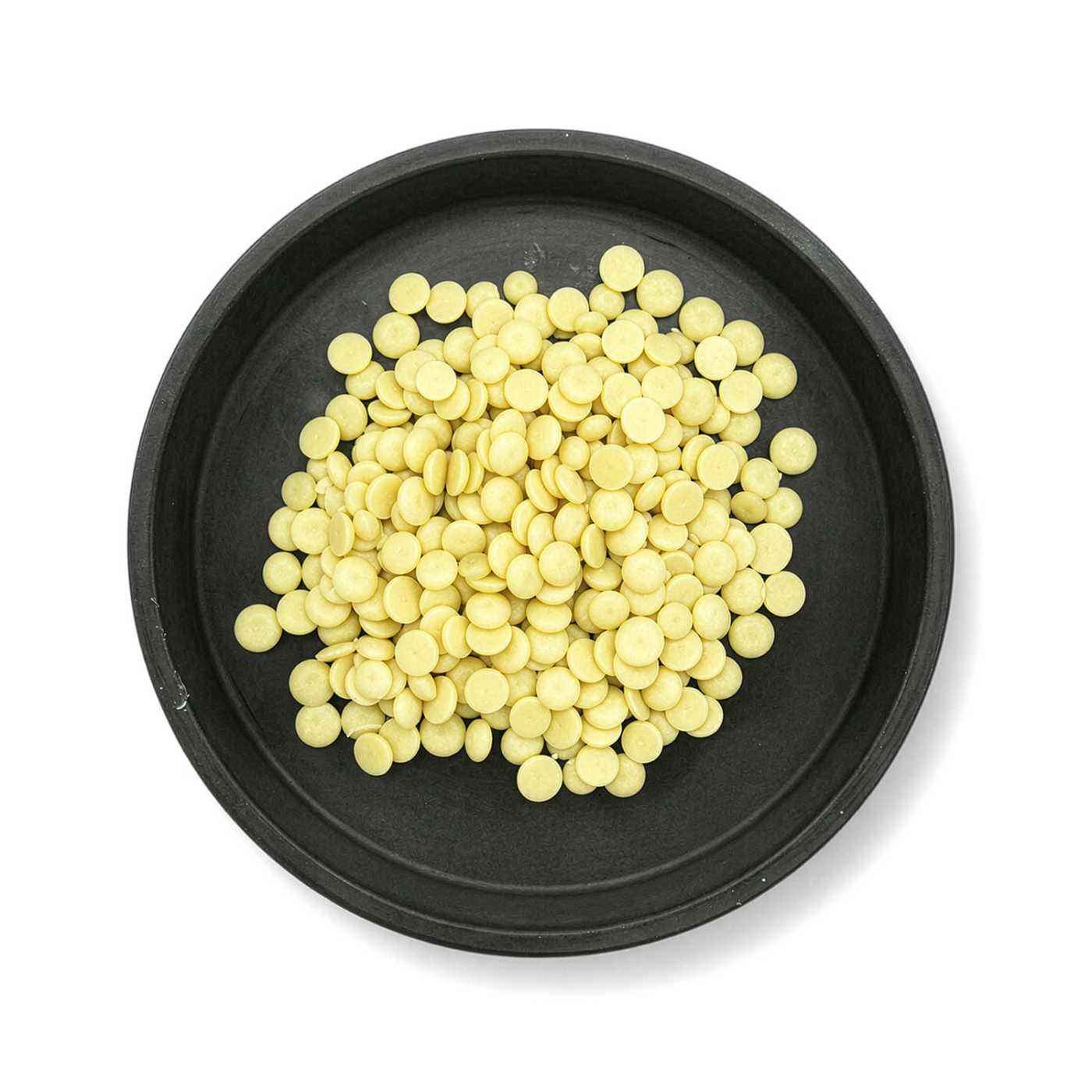
Mango butter softens dry and rough skin and brings a firmer, creamy texture to the formulation, which melts quickly on the skin without leaving a heavy greasy film. It is obtained by pressing the kernels of Mangifera indica fruits and subsequent refining, after which it remains almost odourless and colourless. In the formulation, it therefore does not affect the fragrance or the shade of the finished product.

In the formulation, it works as an oil phase emollient. On the skin, it forms a thin layer that slows down water evaporation, smooths the surface and relieves the feeling of tightness. It is suitable for lip balms, body butters, solid creams, soap and care for dry hair.


Key benefits

  • Firm consistency without wax – a high content of stearic acid gives the butter its firmness, while oleic acid provides a smooth glide during application. Solid products therefore hold their shape with less wax.
  • Fast absorption – the butter melts at skin temperature and, according to the manufacturer's data, absorbs without a greasy residue.
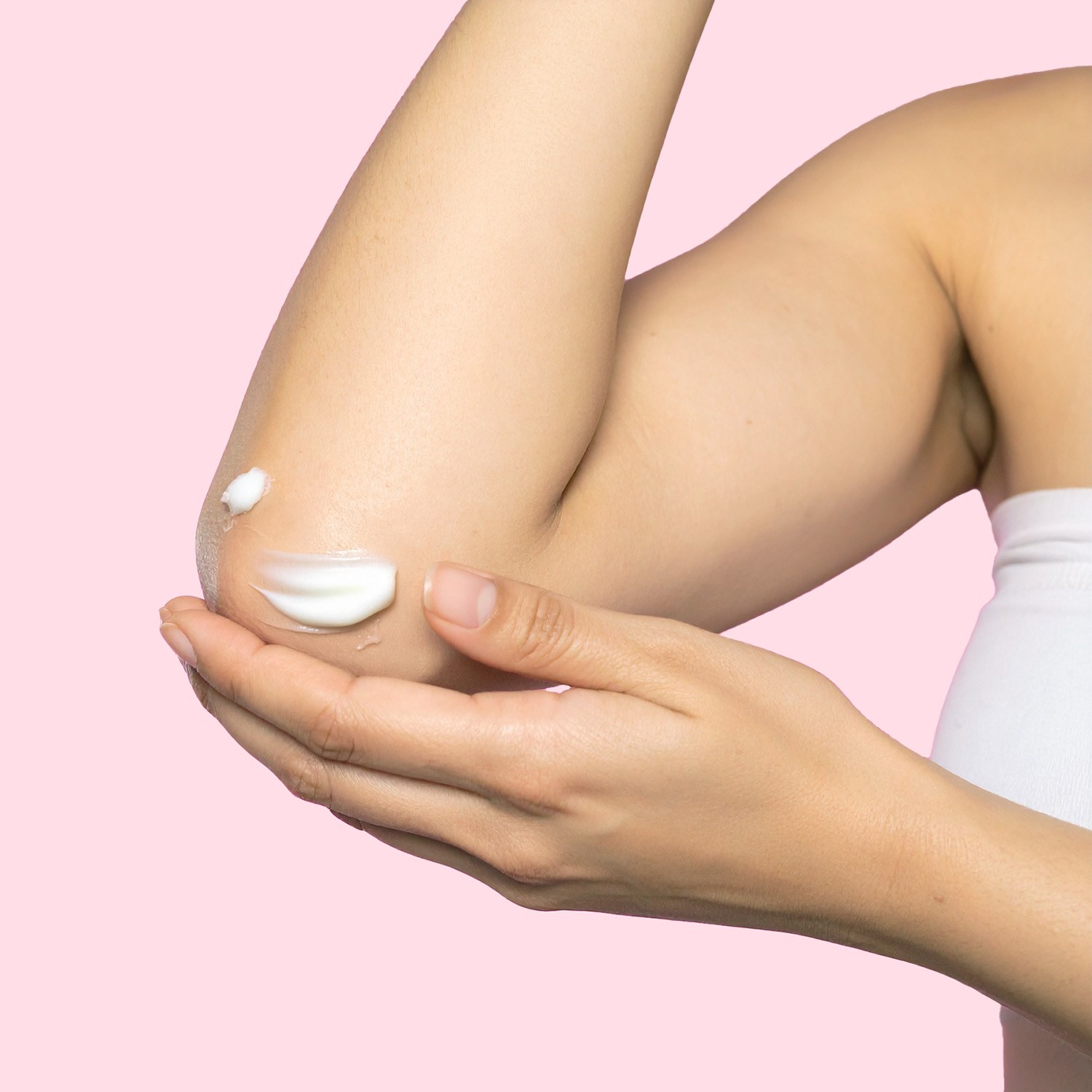
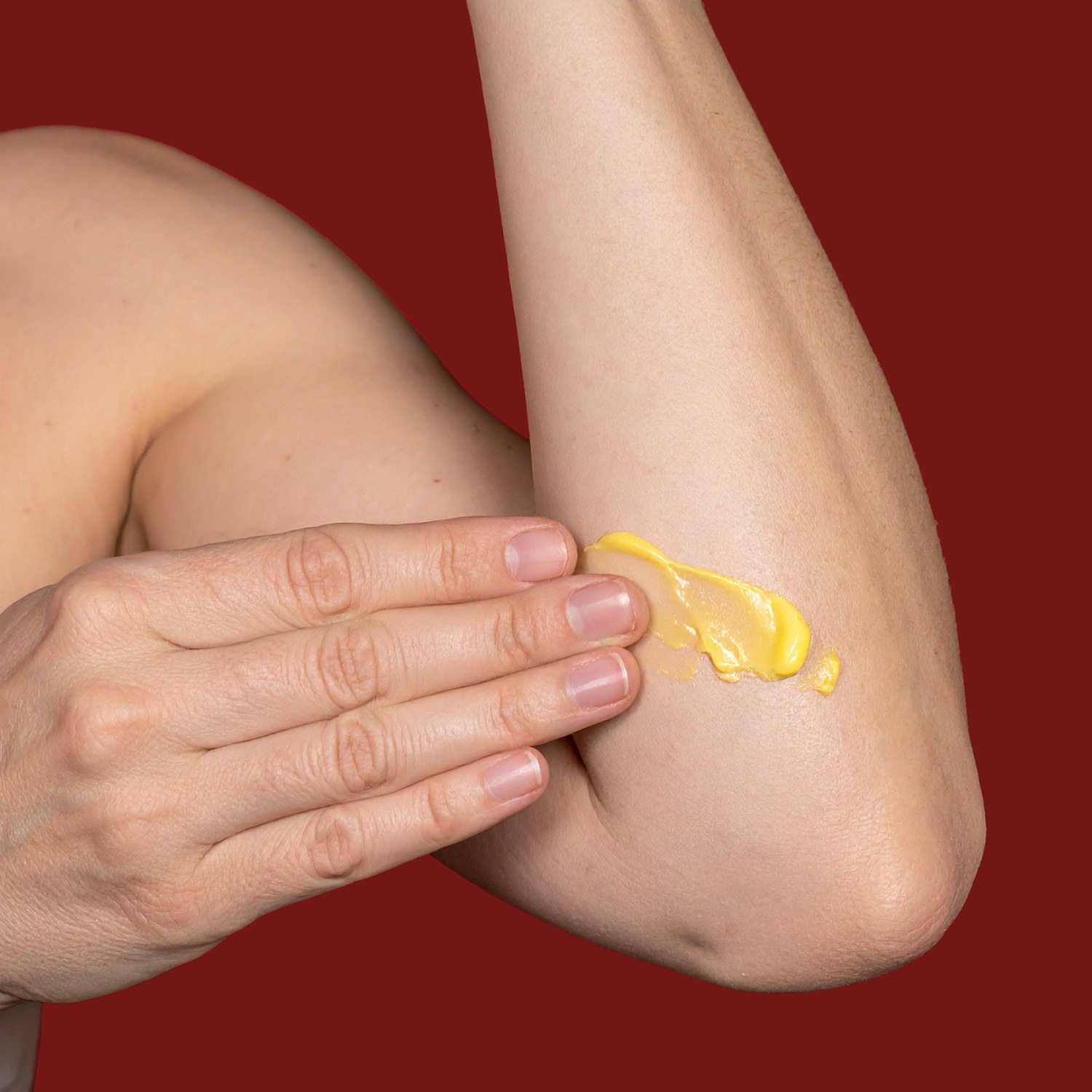
  • Skin barrier support – the occlusive film limits moisture loss, which is especially appreciated for dry, cracked skin on hands, lips or elbows.
  • Antioxidant action – according to the manufacturer, it contains antioxidants, supports skin elasticity and reduces the visibility of fine lines. In the finished product, this will manifest depending on the overall composition and dosage.
  • Neutral scent and colour – refined butter does not mask essential oils or fragrance compositions and will not colour light creams or balms.
  • Hair care – in masks and leave-in creams for ends, it smooths dry hair and makes detangling easier.

Use in formulation

The butter belongs in the oil phase. It melts in the range of approximately 30 – 40 °C; when making emulsions and balms, it is melted together with the other fats and waxes. The processing temperature should not exceed 80 °C, as prolonged overheating damages the accompanying substances in the butter. The recommended dosage range is 1 – 100 %. In creams and body milks, lower proportions are used; in body butters and solid creams, higher ones; in its pure form, it can also be used on its own.

Firmness does not depend on quantity alone. Mango butter is firmer than shea butter and softer than cocoa butter, so in most formulations it serves as a compromise between the two. In lip balms, it replaces part of the wax. In summer months, however, it is worth keeping at least a small proportion of wax in the formulation to prevent the balm from softening in a bag or pocket.

Butters with a high proportion of stearic acid tend to grain when they cool slowly. After melting, cool the mixture quickly, for example in the refrigerator, and allow solid products to set all at once. Whipped butters should be whipped when semi-solid, not liquid.

In cold process soap, it increases bar hardness and contributes to a creamy, stable lather. Enter the saponification value of 180 – 195 mg KOH/g into the soap calculator; the exact value for the batch can be found in the analytical certificate of the delivery.

The iodine value of the butter is relatively low, so it resists oxidation better than liquid oils with a high proportion of unsaturated acids. In formulations with linseed, hemp or grape seed oil, firmer butters are combined for exactly this reason, to make the mixture more stable.


Suitable for products such as

  • Lip balms and masks – firmness without excess wax and without a scent undertone that would interfere with the aroma.
  • Body and whipped butters – the main component of the solid phase; combined with a liquid oil, it gives a lighter texture that absorbs quickly.
  • Solid creams and sticks – together with wax and oil, it forms the base of anhydrous hand, elbow and foot creams.
  • Creams and milks for dry and mature skin – oil phase emollient in O/W and W/O emulsions.
  • Hair masks and leave-in creams for ends – smoothing dry and brittle hair.
  • Cold process soap – bar hardness and creamy lather.

Good to know

Anhydrous products – that is, balms, solid creams and body butters without a water phase – do not require a preservative, provided that no water gets into them during production or use. Emulsions with a water phase always require a preservative. An antioxidant, such as tocopherol, will slow down yellowing of the mixture if the formulation contains sensitive liquid oils.

Compatibility is unrestricted; the butter blends with all common vegetable oils, waxes, esters and oil extracts. It does not dissolve in water, so it does not belong in tonics, hydrolate sprays or gels without an emulsifier. The butter holds Vegan and Kosher certification and contains no palm oil ingredients.

Compared to shea butter, mango butter is firmer, less greasy and free from the characteristic nutty scent. Cocoa butter is even harder, melts at a higher temperature and, even in refined form, tends to have a subtle chocolate undertone. The choice depends on the firmness and skin feel you expect from the product.


Frequently asked questions

Is mango butter water-soluble?
No, mango butter is only soluble in oil; it does not dissolve in water. In emulsions, it is added melted into the oil phase, and the combination with the water phase is achieved by an emulsifier. It does not belong in water-based tonics, hydrolates or gels without an emulsifier, as the mixture would separate.
What is the difference between mango butter and shea butter?
Mango butter is firmer, absorbs faster and in refined form has no scent of its own; shea butter is softer, greasier and smells nutty when unrefined. Both work as oil phase emollients and are often combined: mango butter gives the product firmness, shea butter a richer, more nourishing feel on the skin.
Why does mango butter grain in a balm and how can I prevent it?
Graining is caused by slow cooling, during which some of the fatty acids crystallise before the rest of the mixture. After melting, cool the mixture quickly, for example in the refrigerator, and allow solid products to set all at once. A grainy product has not spoiled; only the crystal structure has changed. Simply re-melt it and cool it quickly again.
Is mango butter suitable for cold process soap?
Yes, mango butter is commonly added to cold process soap, where it increases bar hardness and contributes to a creamy, stable lather. Enter a saponification value of 180 – 195 mg KOH/g into the soap calculator; the exact value for the batch is stated in the analytical certificate of the delivery. Thanks to its low iodine value, it resists oxidation better than liquid oils.
Does refined mango butter smell of mango?
No, refined mango butter is almost odourless and does not smell of fruit. The refining process also removes odour compounds, so the butter will not affect the scent of essential oils or fragrance compositions in the finished product. A fruity scent must be added to the formulation via a separate fragrance ingredient.
Does a product containing mango butter need a preservative?
A preservative is only needed when the product contains water or a water phase. Anhydrous balms, solid creams and body butters can do without a preservative, provided that no water gets into them during production or use. Creams, milks and other emulsions require a preservative regardless of the type of butter used.

Parameters

INCI
Mangifera Indica Seed Butter
CAS No.
90063-86-8
EC number
290-045-4
Product color
WhiteYellow
Country of origin
India
Appearance
Butter
Formulation phase
Oil phase
Function in formulation
Emollient
Recommended processing temperature
< 80 °C
Recommended dosage range
1 – 100 % %
Application type
Leave-onRinse-off
Certifications
Vegan
Manufacturer's certificate
Kosher
Natural Index (NI ISO 16128)
1,00
Natural Origin Index (NOI ISO 16128)
1,00
Organic content
0 %
Renewable Carbon Content (RCC)
100 %

Product documentation

CoACertificate of Analysis
batch 23796PDF ↓
TDSTechnical Data Sheet
Physical parameters and processingPDF ↓
MSDSSafety Data Sheet
Available for purchased products —
Download all (ZIP)

2 PDF files in one archive

Learn how to work with it

From our blog
Jaroslava11 Oct 2026SK

Verified purchase

Variant: Mangové maslo, rafinované, 1 kg

I haven't opened this particular package yet, but I've already ordered it several times, it's excellent for dry skin, especially in winter, I'll use it for soufflés.

Translated automatically

Fr.1 Oct 2026SK

Verified purchase

Variant: Mangové maslo, rafinované, 100 g

Excellent. But it depends on the use :) it doesn't work for me on hands. I put it into hair masks and solid shampoo.

Translated automatically

Roxana/Maria2 Sept 2026EN

Verified purchase

amazing quality and price — Thank you for offering so good quality at such a good price. IAmazing quality, sortiment and communication. The girls that answer to e mails are always cheerful and helpful, super smart! Love you guys, you make my days happier and formulating easier.

Vlasta20 Aug 2026EN

Verified purchase

Great product, fast delivery, and excellent customer support!

MICHAELA K.30 Sept 2026CS

Verified purchase

Variant: Mangové maslo, rafinované, 500 g
(5 reviews)