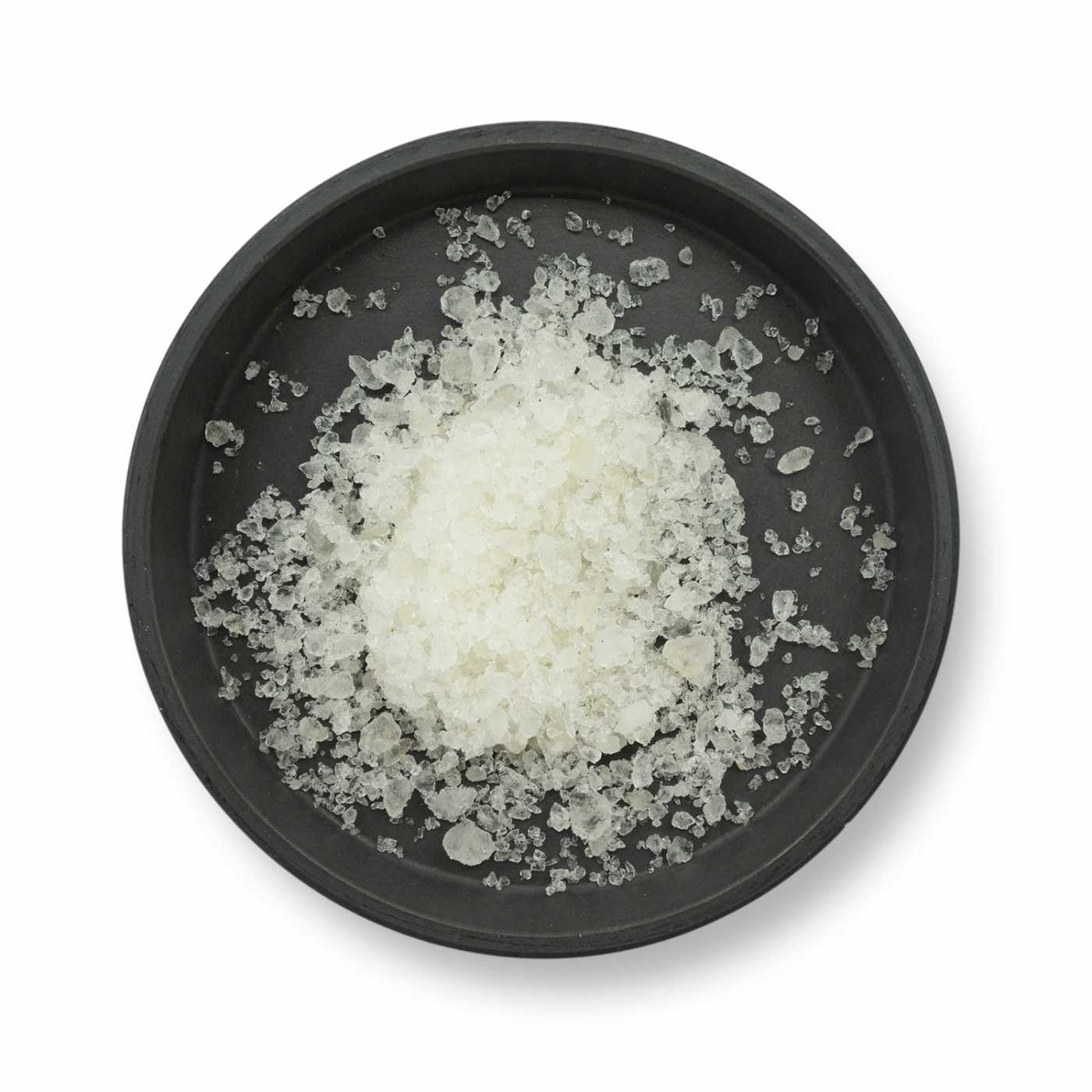
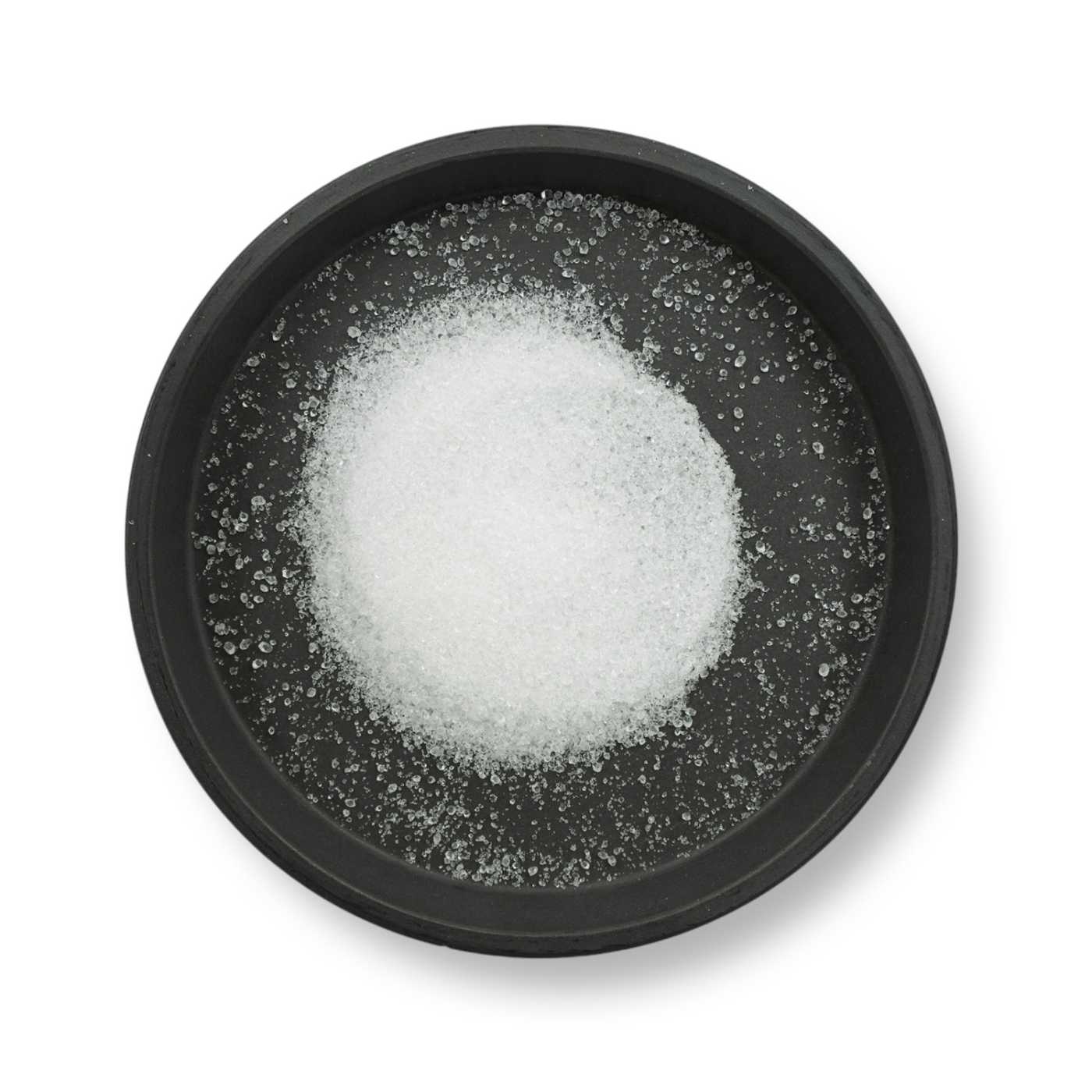
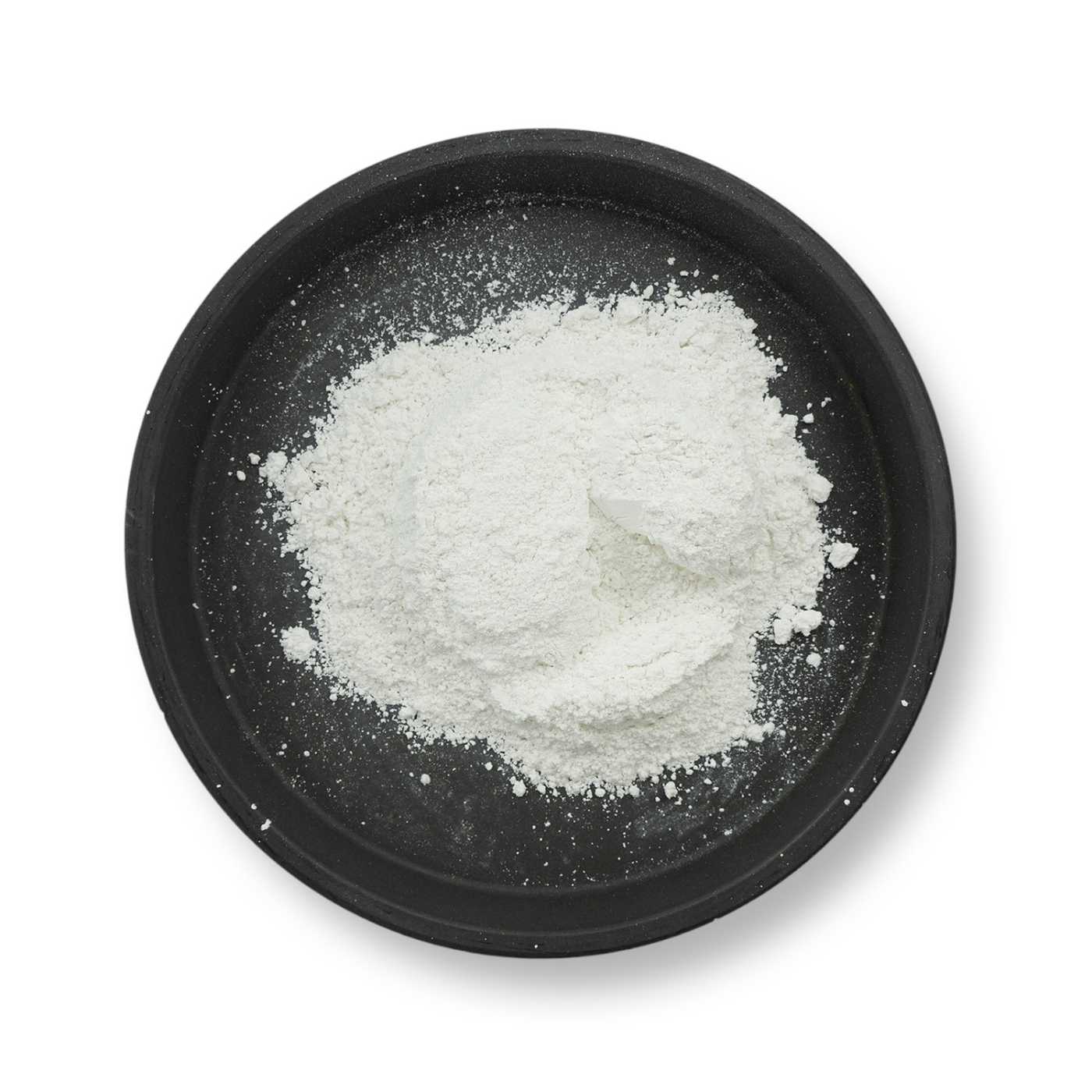
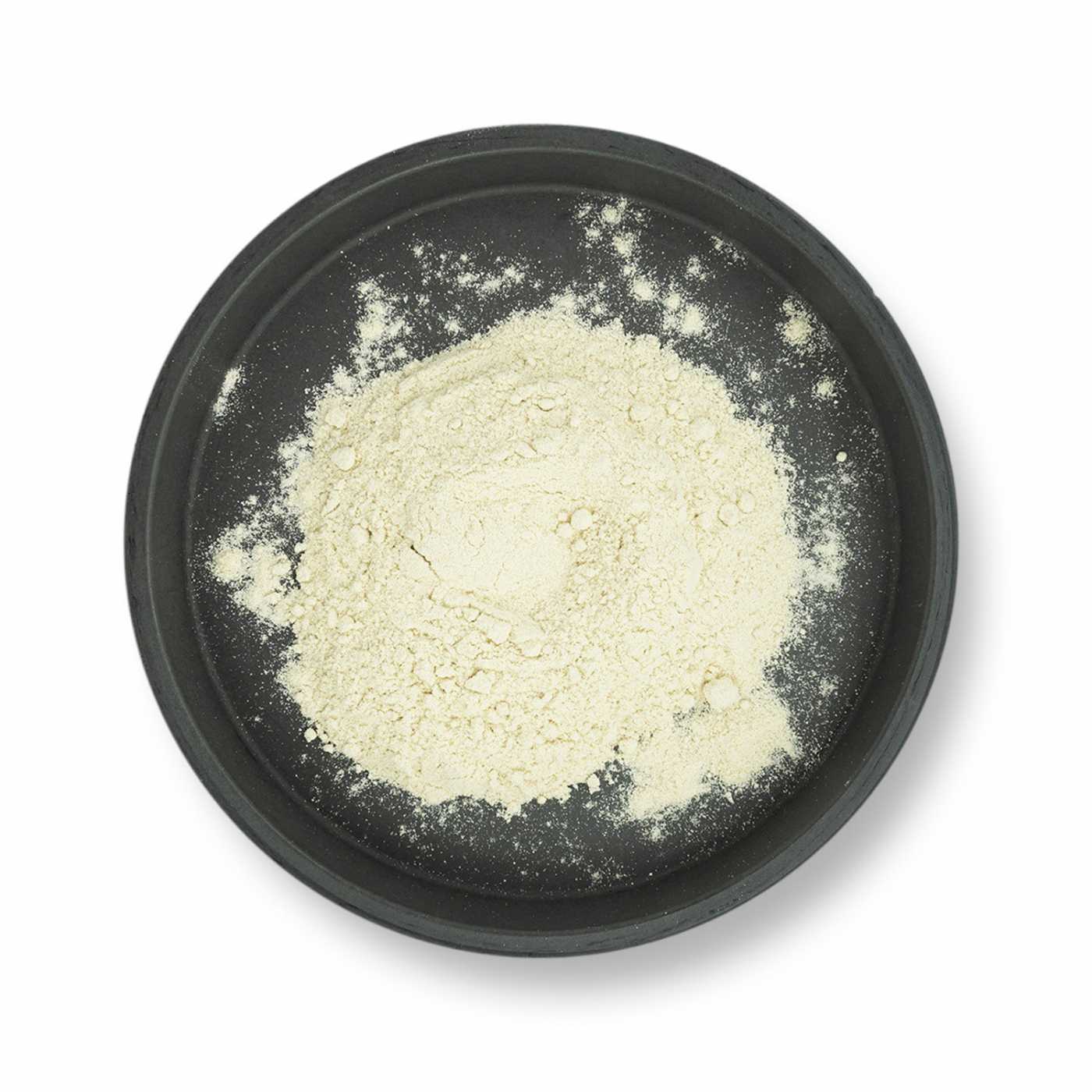
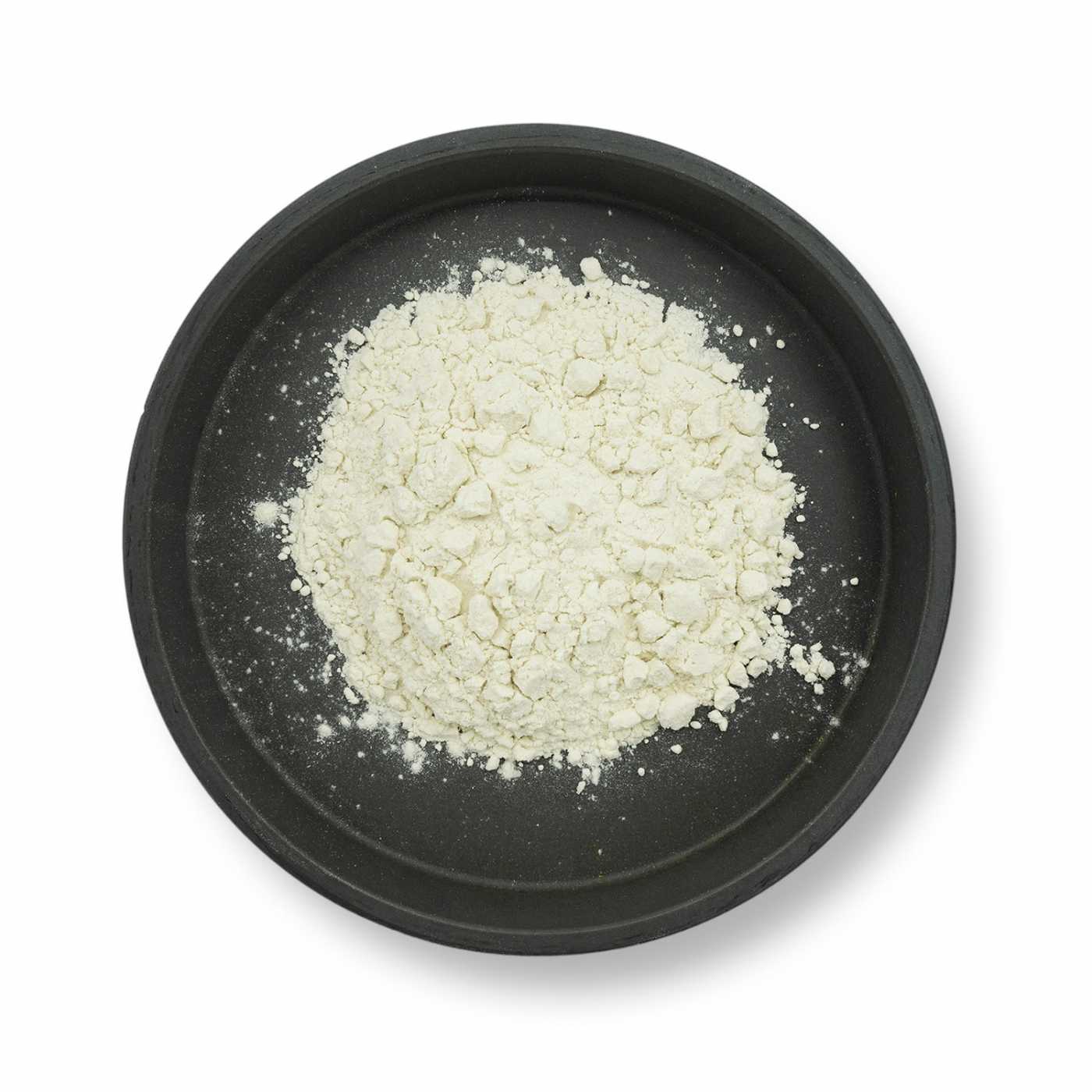
Dead Sea salt gives bath and shower products minerals that are practically absent from table salt or ordinary sea salt. The greater part consists of magnesium and potassium chlorides, while sodium chloride is present in only a low proportion. This composition is behind its long tradition in the care of skin prone to eczema and atopy.
The raw material is obtained by drying and crystallising water from the Dead Sea, with no added substances. Depending on the usage rate, it serves three roles in a formulation: an active ingredient in toners and baths, an abrasive ingredient in scrubs and a thickener in surfactant systems, where it acts as an electrolyte.
What it brings to the formulation
- Care of eczema-prone and atopic skin – baths with Dead Sea salt are among the traditional approaches for dry, irritated and itchy skin. A cosmetic product does not treat the condition, but a mineral bath helps soothe irritation and the skin feels more pleasant to the touch after bathing.
- Anti-inflammatory effect – used for problem and oily skin, for example in body scrubs for the back or in baths for skin prone to impurities.
- Exfoliation – the crystals mechanically remove dead skin cells. The intensity depends on the grain size and on the base. In an oil scrub the grains stay intact, whereas in an aqueous base they gradually dissolve and act more gently.
- Regeneration – after a bath or a scrub with longer contact, the skin feels smoother and calmer. This is used mainly in body care and in foot products.
- Thickening of surfactant systems – dissolved salt increases the viscosity of shower gels and shampoos with anionic and amphoteric surfactants. The degree of thickening depends on the specific combination of surfactants, so it is verified in the finished formulation.
Use in a formulation
The salt dissolves in water and belongs in the water phase, or it can be incorporated afterwards at the end of production. There is no need to heat it, as it dissolves even in cold water. At a higher usage rate, lukewarm water and longer stirring help. The recommended pH range of the finished formulation is 5–8.
Usage rate by product type:
- Toners and facial waters – 1–5%. Dissolve the salt in part of the water, stir and only then combine it with the rest of the formulation. The raw material contains an insoluble fraction that may settle at the bottom, so filter the solution as needed.
- Scrubs – 20–70%. In oil-based and anhydrous scrubs, the salt is simply mixed into the base without heating. For facial scrubs it is usually ground finer, while a coarser grain suits the body.
- Bath salts and bombs – up to 100%. It is used on its own or in a blend with other salts, with added hydrosol or essential oil, which is mixed in a carrier oil or solubiliser before adding.
- Shower gels and shampoos – low usage rate, dissolved in water and added only to the finished surfactant base. The exact amount is verified in a sample.
When thickening a shower gel, add the salt solution in small portions and let the viscosity settle after each one. Surfactant systems have a maximum thickening point, and beyond it further salt lowers the viscosity again.
Salt is an electrolyte. Gels based on carbomers and some emulsions lose viscosity or break down after electrolytes are added. When combining it with polymeric thickeners or emulsifiers, we recommend verifying stability in a sample and using the salt at the lower end of the range.
Suitable for products such as
- Bath salt – on its own or as the main ingredient of a blend, where it provides magnesium and potassium.
- Bath bombs and fizzing cubes – as the mineral ingredient alongside baking soda and citric acid.
- Body and facial scrubs – oil scrubs for the body, finer variants for the face and décolletage area.
- Shower gels and shampoos – as a thickener and mineral ingredient for a scalp prone to excess sebum.
- Toners – low usage rate for oily and problem skin.
- Foot and hand baths – higher concentrations with short contact.
Good to know
Dry salt and anhydrous scrubs do not need a preservative. Toners, shower gels and all products containing water are preserved as usual; the presence of salt does not protect them from microbial growth.
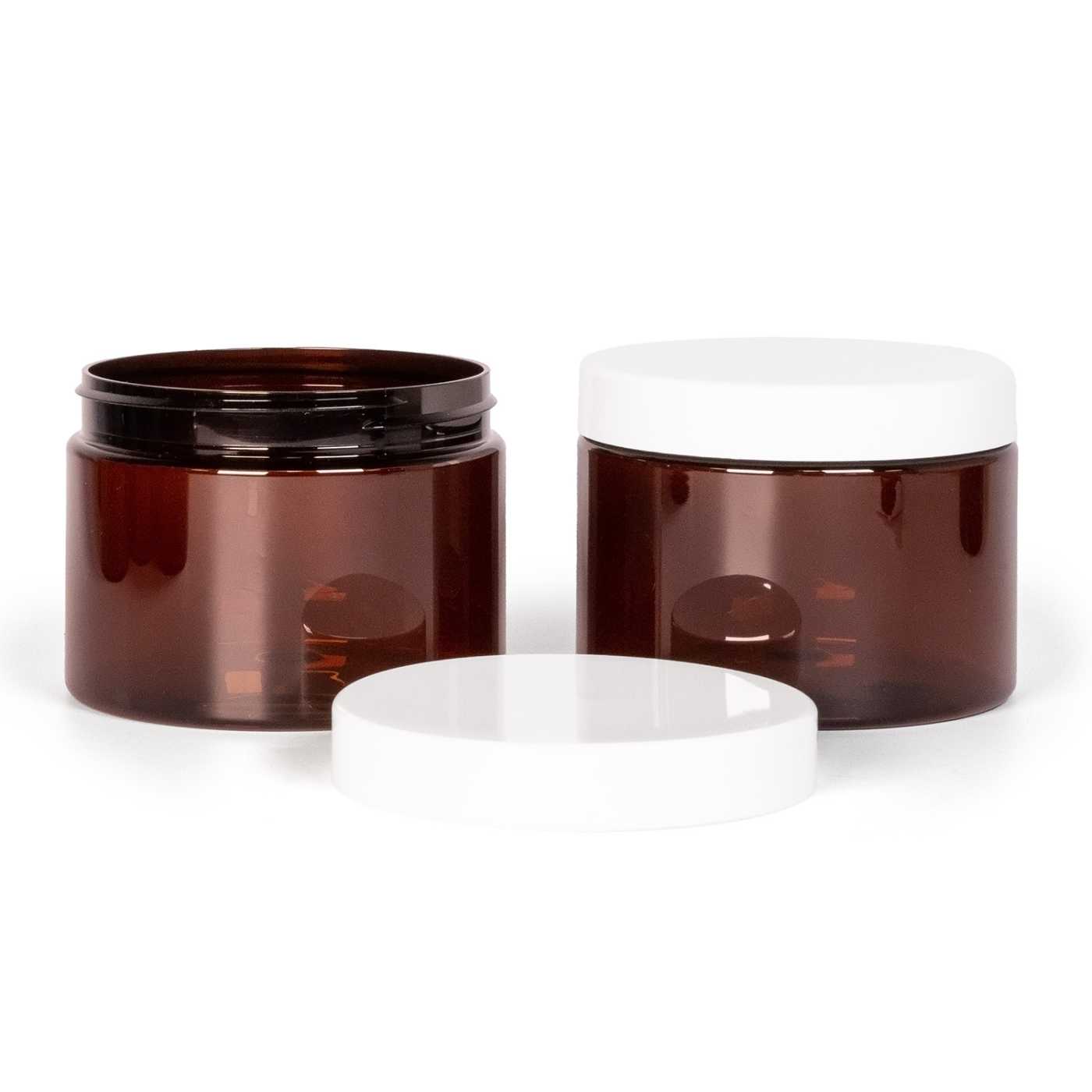
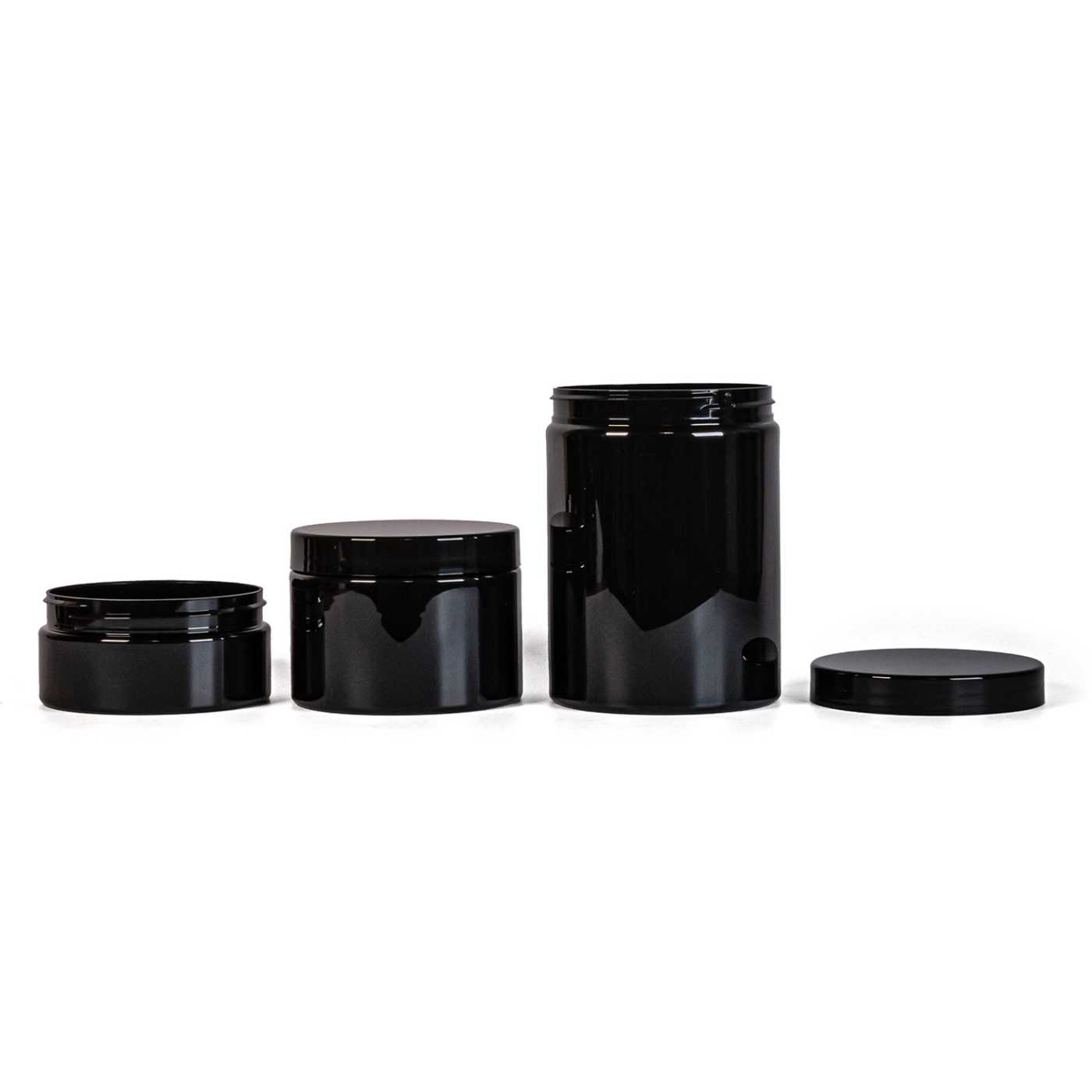
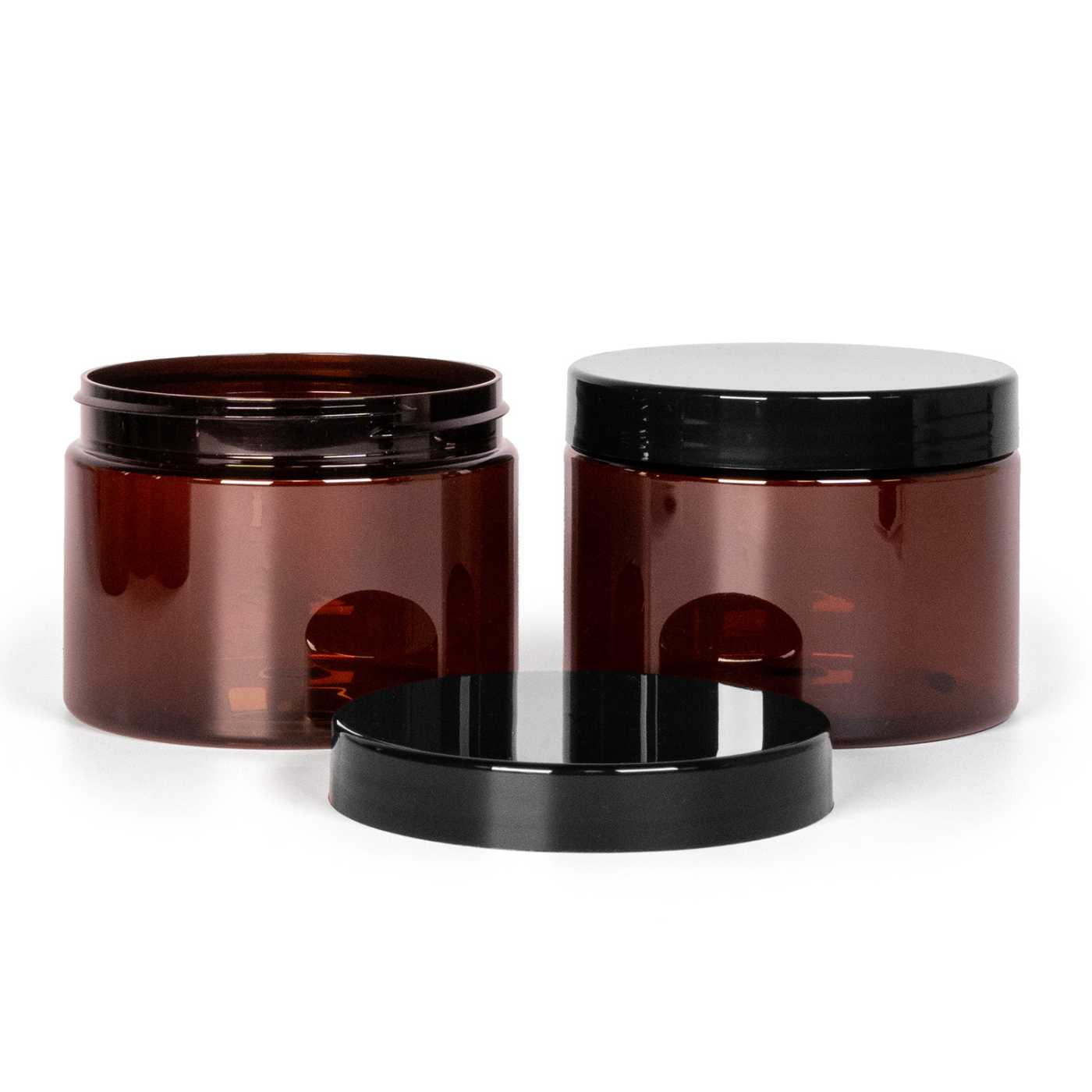
A high proportion of magnesium salts means the raw material readily binds moisture from the air. For this reason, pack finished bath salts and bombs in tightly sealed packaging, otherwise the crystals clump together and the bombs may react prematurely.
The raw material is of mineral origin and contains no materials of animal origin, parabens or known skin allergens. The substance is not classified as hazardous under the CLP Regulation, so a safety data sheet is not required. Products made with it are intended for rinse-off use. Toners call for a low usage rate, and we recommend starting at the lower end of the range.
Dead Sea salt, sea salt and Epsom salt
Ordinary sea salt is almost pure sodium chloride. In a scrub it works as an abrasive and in a shower gel as a thickener, but its mineral contribution is small. Dead Sea salt has the opposite ratio: magnesium and potassium chlorides predominate and sodium chloride makes up only a small part. Epsom salt (Magnesium Sulfate) contains magnesium in the form of sulfate; it contains no potassium, bromine or calcium. For a mineralised bath with a broader salt composition, Dead Sea salt is therefore suitable, and Epsom salt where magnesium alone is the goal.
Frequently asked questions
Is Dead Sea salt soluble in water?
Yes, Dead Sea salt dissolves even in cold water. At higher concentrations, lukewarm water and longer stirring help. The raw material contains an insoluble fraction that may settle at the bottom, so we recommend filtering clear toners. The salt does not dissolve in oils and remains in the form of crystals.
How much Dead Sea salt is added to a scrub?
In scrubs, Dead Sea salt is used at 20–70%. Lower values suit gentler facial scrubs, higher ones body scrubs with an oil base. The grains remain intact only in an anhydrous base; in a scrub containing water the salt gradually dissolves and the abrasive effect weakens.
Can Dead Sea salt be used in a facial toner?
Yes, Dead Sea salt is added to toners at 1–5%. It is dissolved in part of the water and combined with the rest of the formulation, and the pH of the finished toner should be kept within the range of 5–8. Such toners suit oily and problem skin. A toner contains water, so it must be properly preserved.
Does Dead Sea bath salt need a preservative?
No, dry Dead Sea bath salt does not need a preservative. Preservation is necessary only for products containing water, such as toners or shower gels. With dry salt, tight packaging is more important, because magnesium salts bind moisture from the air and the crystals may clump together.
What is the difference between Dead Sea salt and Epsom salt?
Dead Sea salt is a mixture of magnesium, potassium, sodium and calcium chlorides, while Epsom salt is pure magnesium sulfate (Magnesium Sulfate). Dead Sea salt therefore brings a broader mineral composition to a bath, including potassium and bromine, whereas Epsom salt provides only magnesium. Both dissolve in water and are used in bath salts and scrubs.
Does Dead Sea salt thicken shower gel?
Yes, Dead Sea salt increases the viscosity of shower gels and shampoos with anionic and amphoteric surfactants. It is added dissolved in water, in small portions, to the finished surfactant base. Every surfactant system has its maximum thickening point, and beyond it further salt thins the gel again, so the suitable amount is verified in a sample.