Floral Water, Sage, 100 ml
Pre-order€4.29(€42.90/l)

Candle fragrance oils
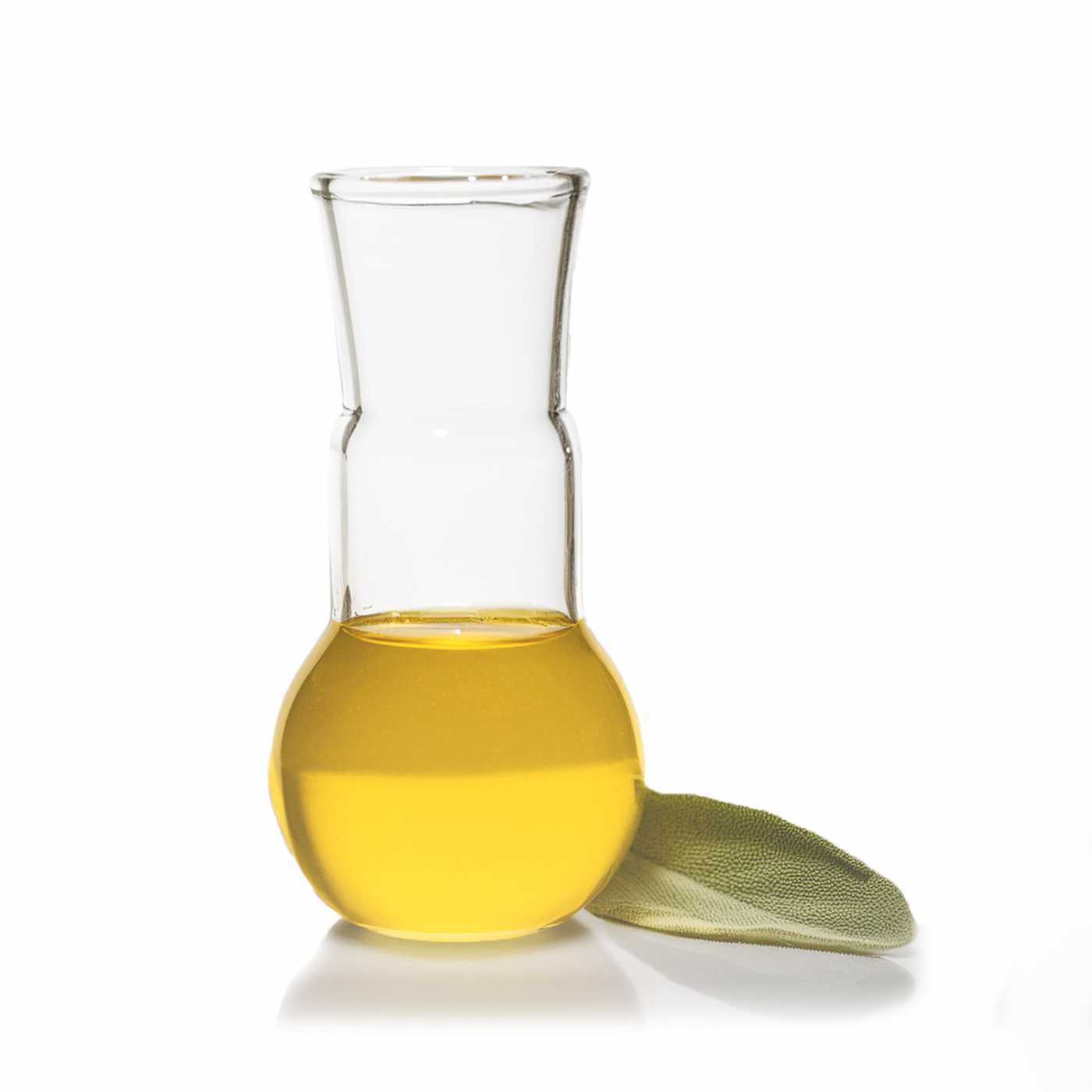
Clary sage essential oil gives cosmetics a floral-herbal fragrance with a woody undertone . It is used mainly in products for oily and problem skin and in hair care for hair that quickly becomes greasy. full description
Lowest price in the last 30 days: €377.99
Clary sage essential oil gives cosmetics a floral-herbal fragrance with a woody undertone. It is used mainly in products for oily and problem skin and in hair care for hair that quickly becomes greasy. Besides its fragrance, it is also valued for its soothing and astringent action on the skin.
The oil is of European origin and is obtained by steam distillation. The distillate is combined with natural fragrance components, and the blend is mixed and filtered. The ingredient is vegan and is COSMOS Approved for natural cosmetics.
The fragrance is formed mainly by linalyl acetate and linalool, complemented by germacrene D and a small amount of sclareol.
In perfumes, massage oils and aromatherapy, the fragrance of clary sage is associated with relaxation and calm. In formulations, it is often combined with lavender or tea tree essential oil.
The main function of the oil in a formulation is fragrance. However, clary sage is also credited with properties for which it is chosen for specific types of products.
How strongly these properties show in the finished product depends on the whole formulation.
These two essential oils must not be confused, as they differ in composition. Common sage oil contains toxic thujone and has restricted use in cosmetics. Clary sage does not contain thujone. A formulation intended for one oil cannot be transferred to the other.
The oil is oil-soluble. It is mixed directly into anhydrous products such as face and body oils, massage oils or balms. In emulsions, it is added through the oil phase. Water-based products, for example toners and body sprays, need a solubiliser.
It is added during the cooling phase as one of the last ingredients, or afterwards into the finished base. It does not belong in the hot phase, as high temperatures do not suit it.
In formulations, it is used at a low rate, approximately 0.05–0.6%, most often around 0.2%. Lower values are common in serums, scrubs, lotions and creams, higher ones in rinse-off products such as cleansing products and shampoos.
The maximum amount in the finished product is determined by the IFRA limit for the given product category. The limits for all categories are listed in the IFRA certificate in the Product documentation section.
Linalyl acetate and linalool oxidise in air. This produces hydroperoxides, which irritate and sensitise the skin considerably more than the fresh oil, even though the fragrance may not change noticeably. An old, frequently opened or half-empty oil is therefore riskier for sensitive skin.
Limit contact with air for both the ingredient and the finished product. Close the bottle tightly after each use, pack the product in airless packaging and add an antioxidant to the formulation, for example tocopherol.
The oil must not come into contact with strong acids, alkalis or oxidising agents. In the usual amount in a product, it is stable under normal conditions and does not react with water.
The ingredient is subject to the CLP Regulation and is labelled with the GHS07 pictogram (irritant, sensitisation). The flash point is 81 °C. Work with it away from flames and heat sources, in a ventilated space and with protective equipment.
Fragrance allergens are listed on the label of the finished product if their content exceeds 0.001% in leave-on products and 0.01% in rinse-off products. Under Regulation (EU) 2023/1545, sclareol has also been added to this list. For new products this applies from 31 July 2026, and for products already placed on the market from 31 July 2028.
Only customers with a delivered order can write reviews.