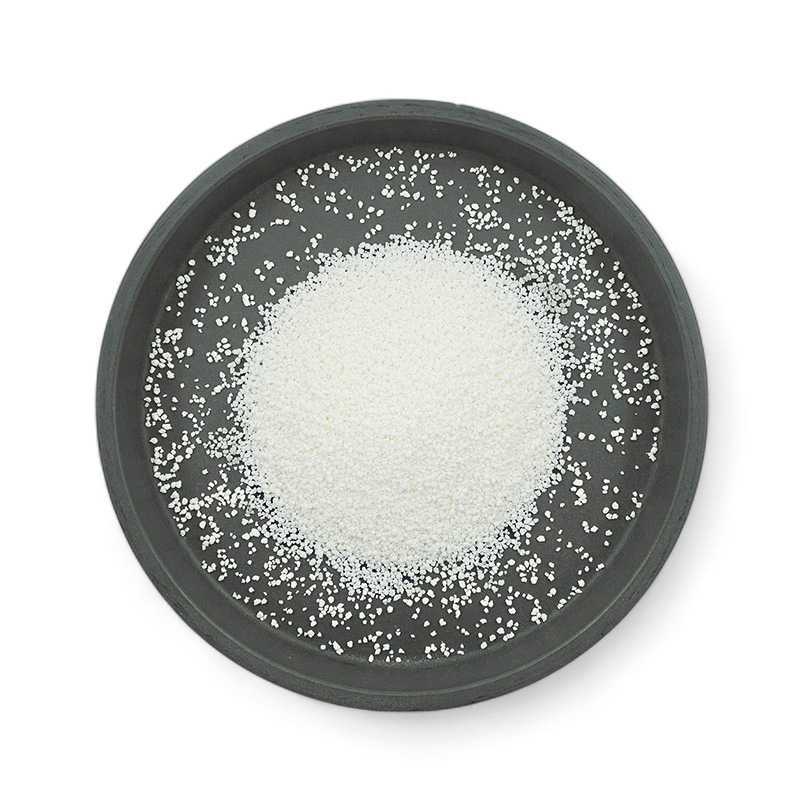
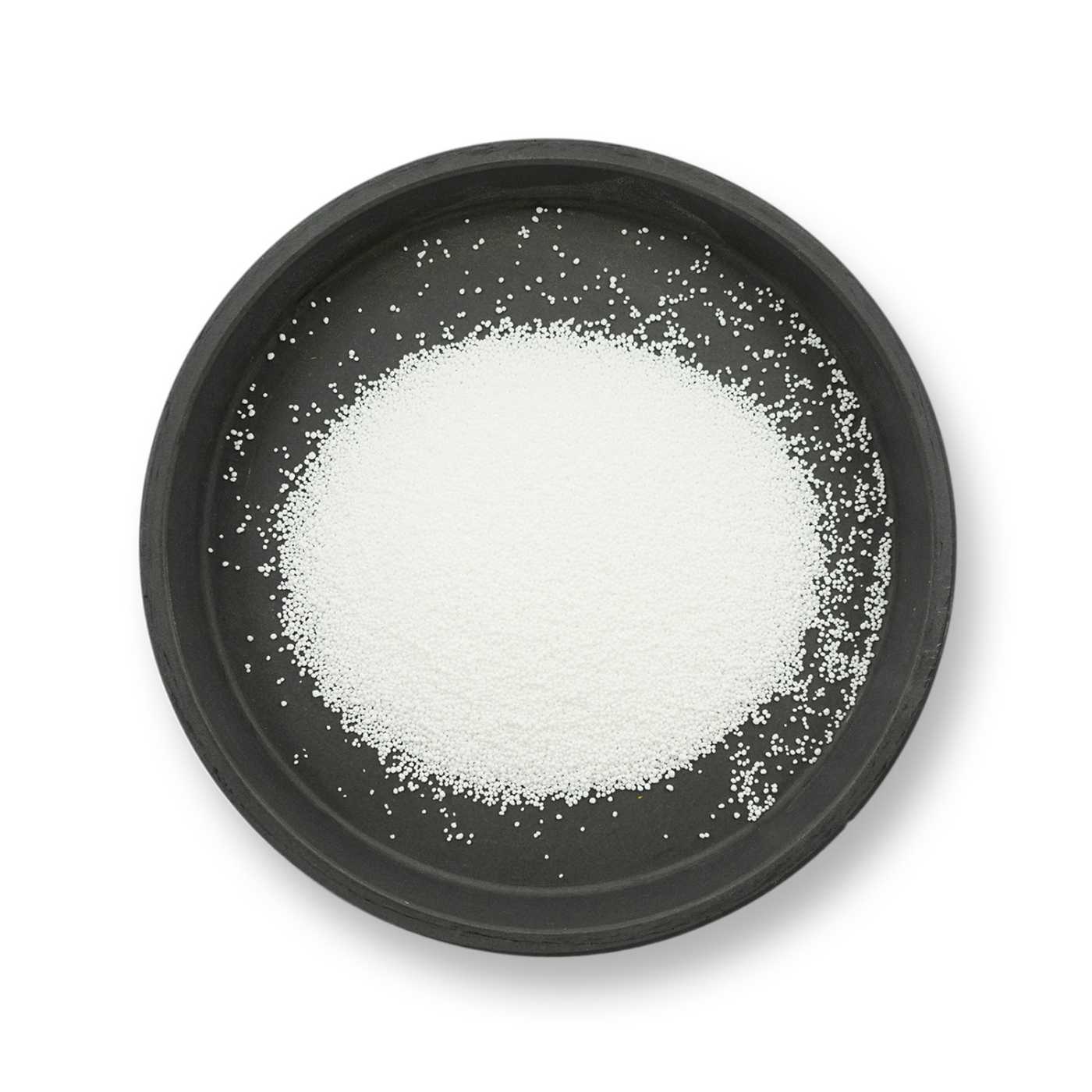
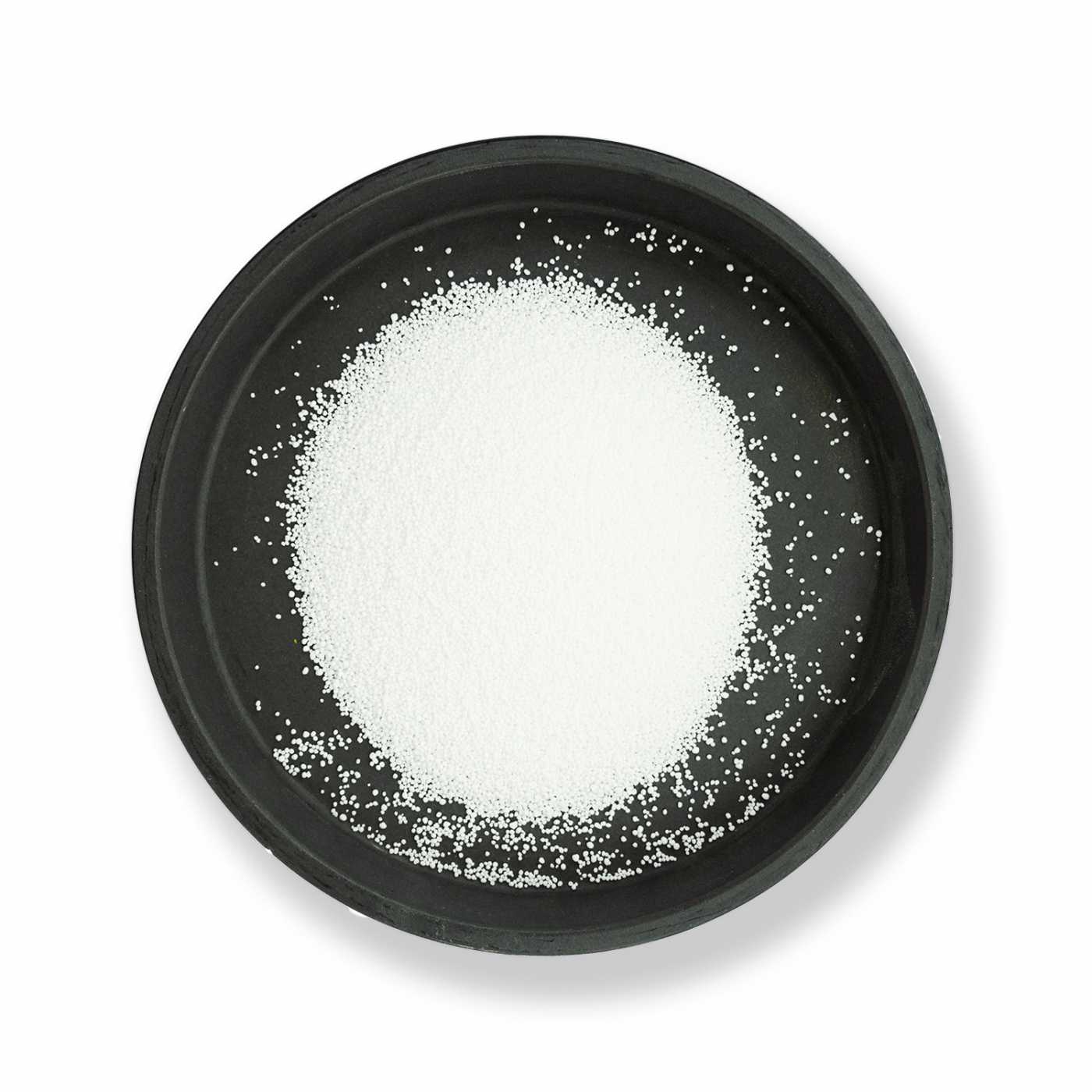
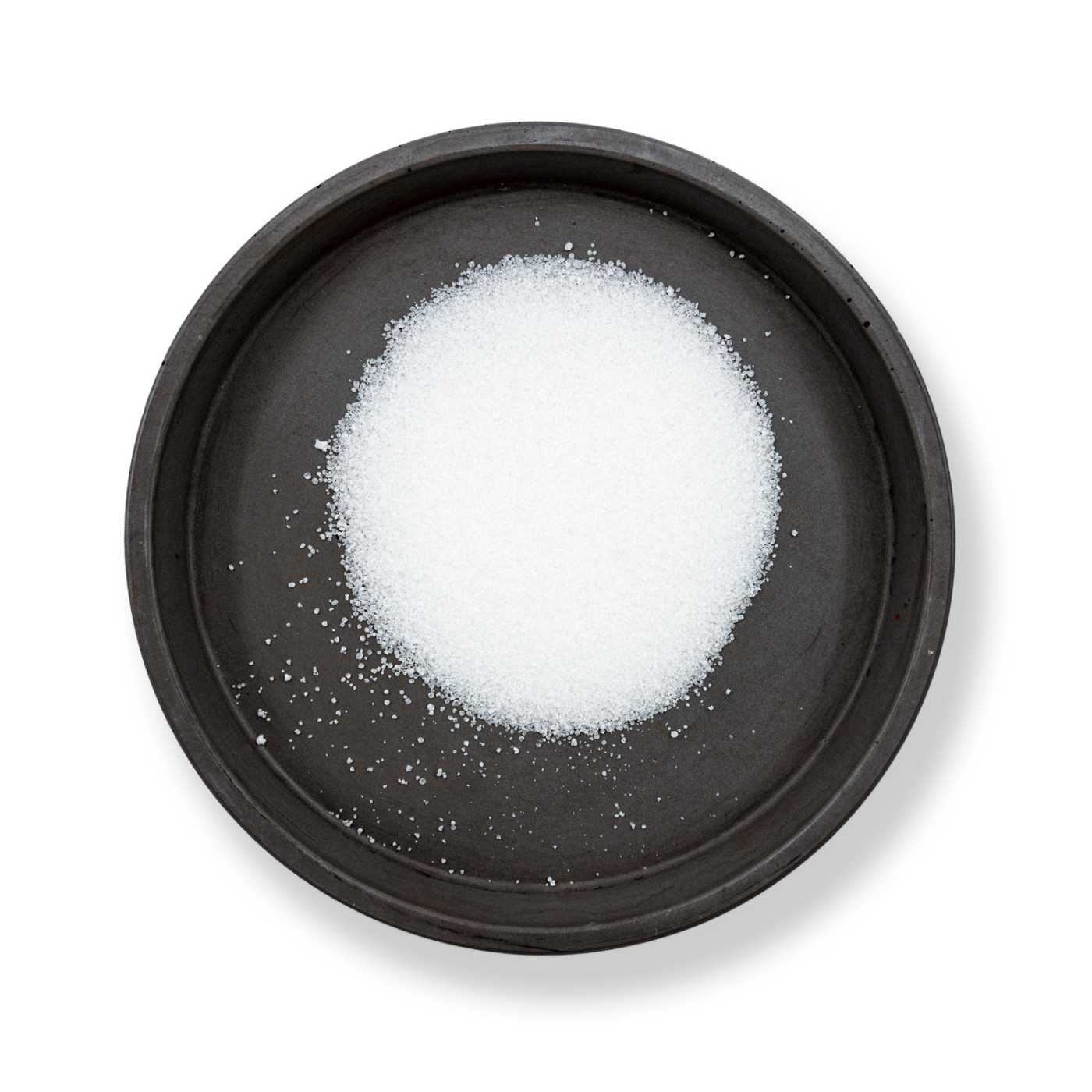
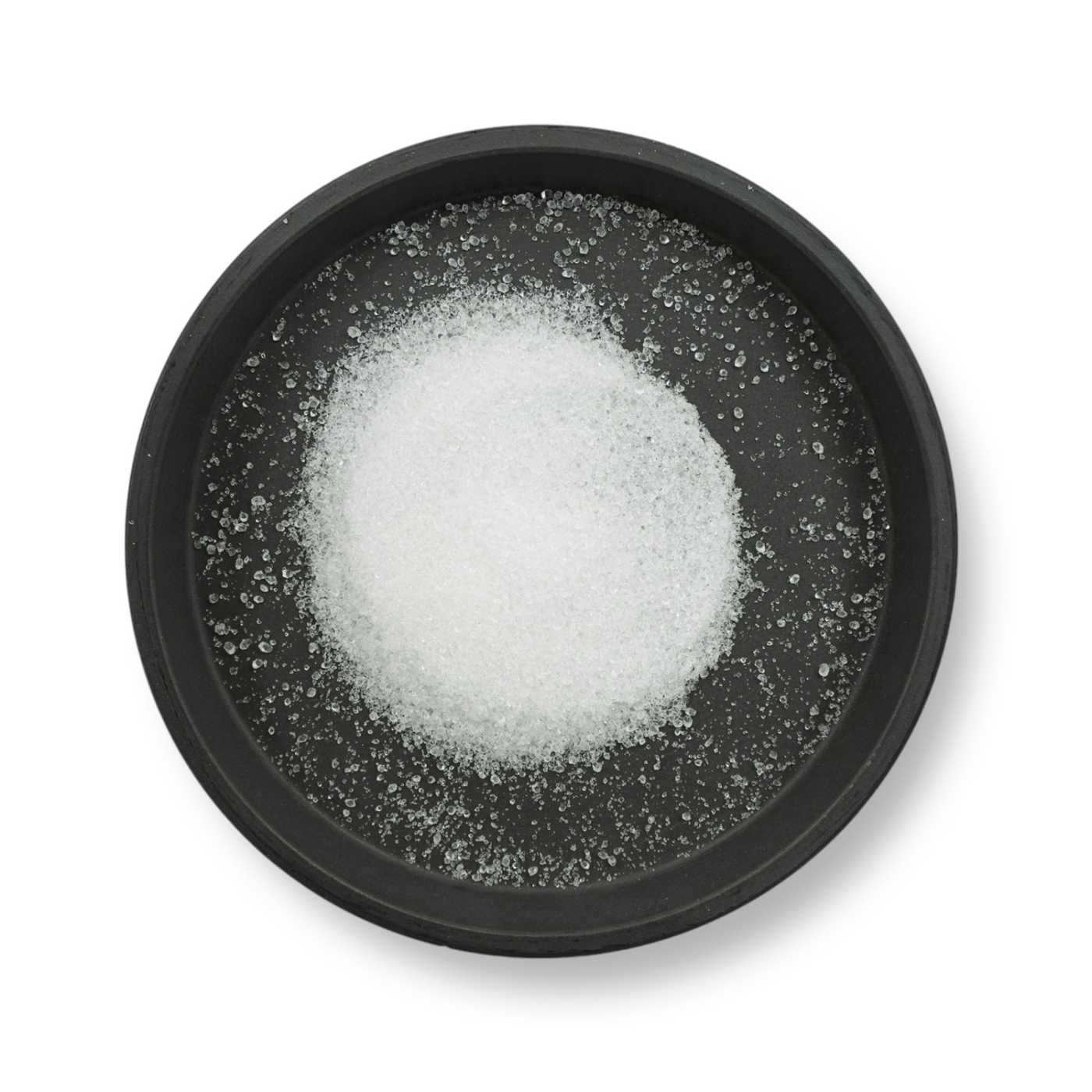
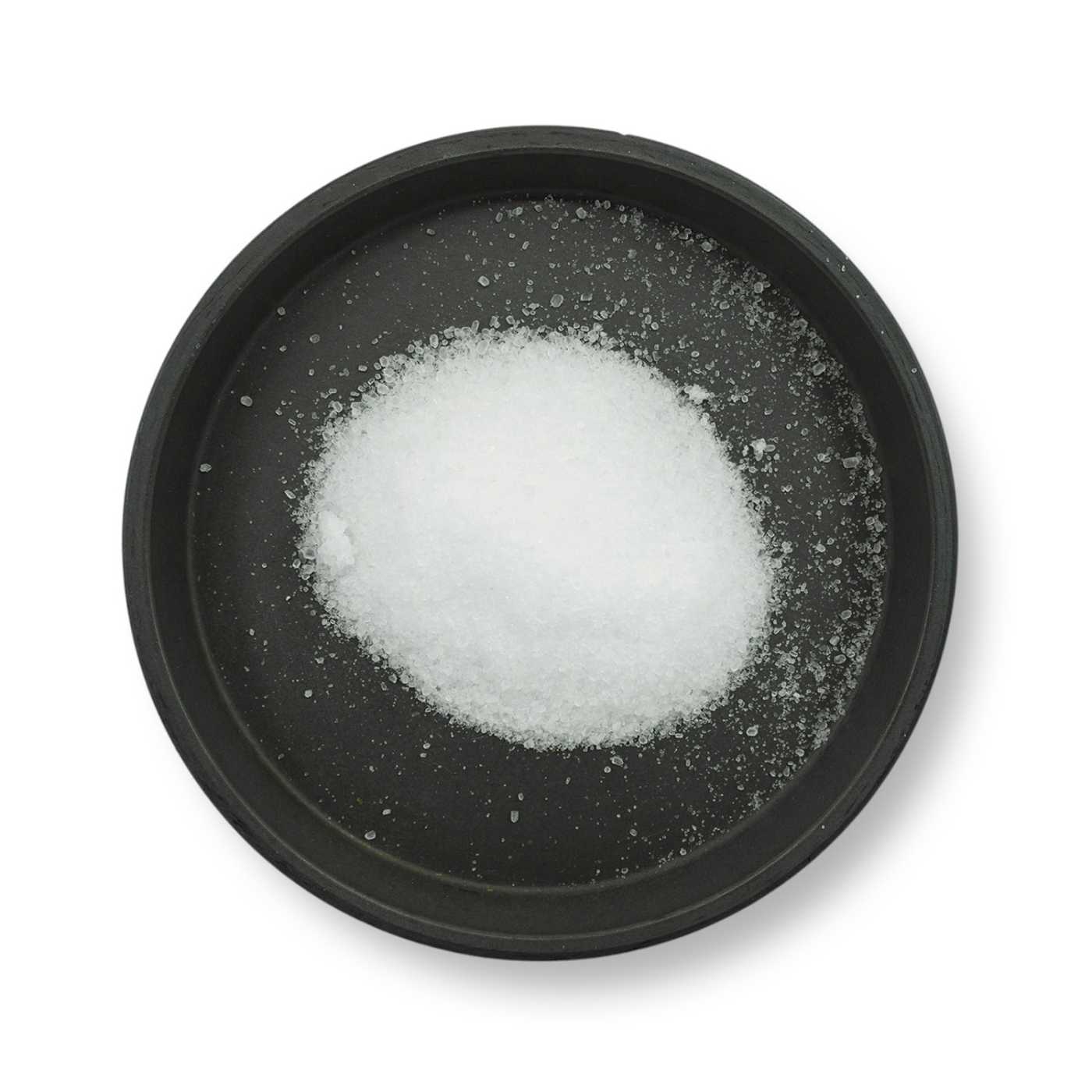
With TAED, sodium percarbonate bleaches already at 30 – 40 °C, without waiting for a hot wash. Percarbonate alone releases hydrogen peroxide in water, which only becomes fully effective at high temperatures. With the activator, peracetic acid forms in the wash solution within the first few minutes, acting faster and at the temperatures of standard wash programmes. Manufacturers of household laundry and cleaning products thus get more from oxygen bleach and do not need to rely on heating the water.
TAED is blended into dry mixes: powder detergents, stain removers, dishwasher tablets and all-purpose cleaning powders. It does not bleach on its own. In a formulation it only makes sense together with percarbonate or another source of hydrogen peroxide.
How it works as an activator
Percarbonate breaks down in water into sodium carbonate and hydrogen peroxide. Hydrogen peroxide reacts with TAED and releases peracetic acid. The remainder of the molecule leaves as diacetylethylenediamine, which, like TAED itself, is readily biodegradable. Peracetic acid is a stronger oxidising agent than hydrogen peroxide and its effect is noticeable from approximately 30 °C.
The result is white laundry that greys less, reduced stains from sweat, tea, coffee, fruit or grass, and fewer odours in the washing machine. The reaction takes place in an alkaline environment (approximately pH 9 – 11), which the mixture of percarbonate and soda creates on its own, so no pH adjustment is needed.
Use in formulation
- Ratio to percarbonate – approximately 1 part TAED to 4 – 5 parts sodium percarbonate (by weight). In a finished washing powder this corresponds to roughly 2 – 8 %, depending on how much percarbonate the formulation contains. A higher proportion of activator will not increase the effect; the excess has nothing to react with.
- Solubility – TAED is sparingly soluble in water and dissolves slowly. This is not an issue in the washing machine. For soaking and hand cleaning, first dissolve the mixture in warm water and only then add the textile or crockery.
- Temperature – best results are obtained in the range of 30 – 60 °C. Above 60 °C percarbonate already works sufficiently on its own; below 20 °C the reaction slows down considerably.
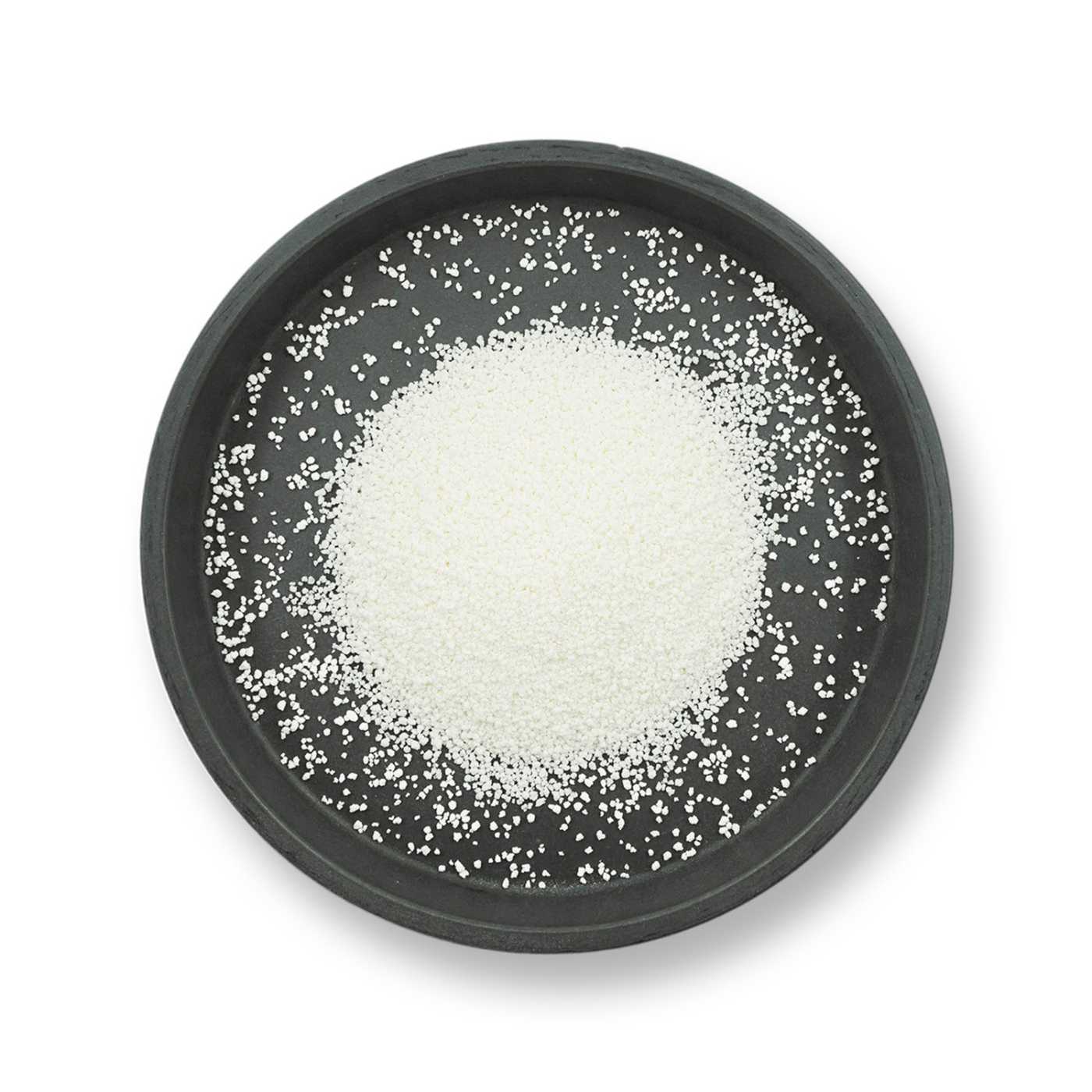
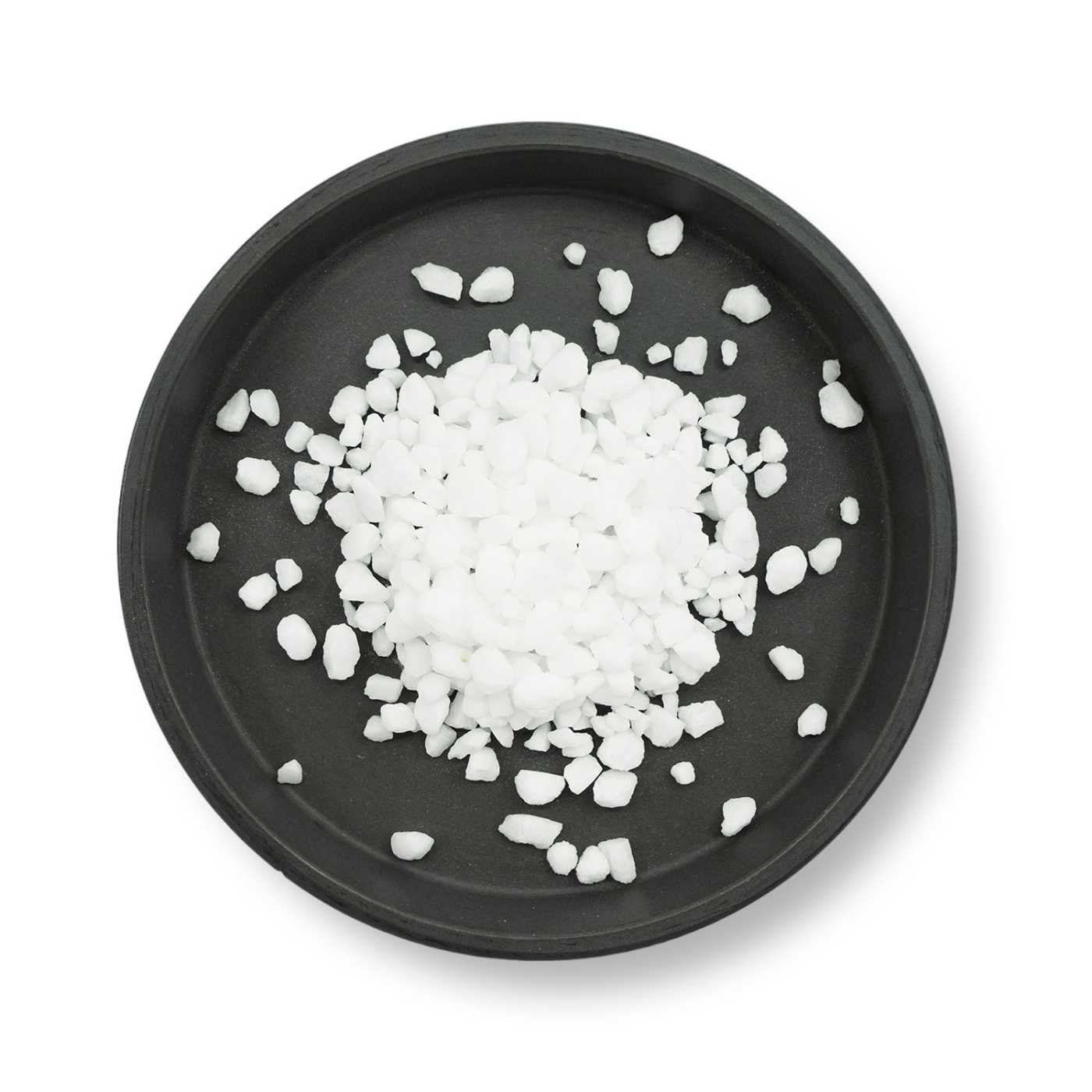
- Mix form – TAED is a free-flowing granulate and belongs exclusively in dry powders and tablets. Moisture triggers the reaction already in the packaging, so it is mixed from dry ingredients into a dry, well-sealable container.
- Compatibility – combines without problems with soda, zeolites, salt, powder surfactants and citric acid in tablets. It does not belong in the same mixture as chlorine bleaches.
For a homemade washing powder, a base of soda and percarbonate has proved effective, with TAED blended in last. Verify the dosage with a test wash at 40 °C. If white laundry is still greying, increase the proportion of percarbonate, not the activator.
Suitable for products such as
- Laundry powder for white and light-coloured cotton fabrics – bleaching and stain removal at 30 – 40 °C without chlorine.
- Stain remover and soaking powder – a more concentrated mixture of percarbonate and TAED for pre-washing and soaking yellowed items.
- Dishwasher tablets and powder – tea and coffee stains in mugs, greyed plastics.
- Cleaning powder for the kitchen and bathroom – grout lines, chopping boards, drains and kitchen textiles, where the oxidising effect combined with odour suppression is useful.
- Washing machine cleaner – removing deposits and odour from the drum and seal.
Good to know
Peracetic acid is more aggressive than hydrogen peroxide, so the mixture with TAED is not suitable for wool, silk or leather. Oxidising bleaches damage these materials. For coloured textiles, we recommend a colourfastness test in a hidden area, especially before soaking.
Do not leave aluminium cookware or items with metal parts in the solution for long; the oxidising solution may dull the surface.
The raw material is of technical grade and is intended for laundry and cleaning products that are rinsed off. It is not suitable for cosmetics or leave-on preparations.
Store the dry mixture of percarbonate and TAED only in a completely dry container. If water enters the mixture, oxygen begins to be released and pressure builds up in a tightly sealed package. Never mix with chlorine bleaches or concentrated acids.
Frequently asked questions
Is TAED soluble in water?
TAED is sparingly soluble in water and dissolves slowly. In the wash solution this is not an obstacle; the granulate dissolves gradually during washing and continuously reacts with the hydrogen peroxide from percarbonate. For soaking or hand cleaning, it helps to first disperse the mixture in warm water and add the textile or crockery only afterwards.
How much TAED is added to sodium percarbonate?
Approximately 1 part TAED to 4 – 5 parts percarbonate by weight is the recommended ratio. In a typical washing powder this represents roughly 2 – 8 % of the mixture. A higher dosage will not improve the effect; the activator needs hydrogen peroxide from percarbonate to react. If bleaching is insufficient, it is better to increase the proportion of percarbonate.
What is the difference between TAED and sodium percarbonate?
Sodium percarbonate is the oxygen bleach itself, releasing hydrogen peroxide in water. TAED does not bleach; it is an activator: it reacts with hydrogen peroxide and converts it into peracetic acid, which acts faster and at a lower temperature. Percarbonate can be used on its own; without a source of hydrogen peroxide, TAED has no function in a formulation.
Does TAED work in cold washing?
At cold wash temperatures of around 20 °C and below, TAED works only to a limited extent; the reaction with hydrogen peroxide slows down considerably. Best results are obtained at 30 – 60 °C. Compared to percarbonate alone, which requires hot water, it shifts the effective bleaching temperature downwards, but it does not replace fully cold washing.
Can TAED be used on coloured laundry and wool?
The mixture with TAED can be used on coloured cotton and synthetics, but not on wool, silk or leather. Oxidising bleaches damage these fibres. Peracetic acid is stronger than hydrogen peroxide alone, so for coloured items we recommend a colourfastness test in a hidden area and a shorter soaking time.
Can TAED be added to liquid laundry gel?
No, TAED belongs only in dry powders and tablets. In a liquid environment it begins to react with moisture and any hydrogen peroxide already present in the packaging, loses its effectiveness, and the released oxygen may increase pressure in the bottle. For liquid products, oxygen bleaching is handled differently – for example by a separate powder added only at the time of washing.