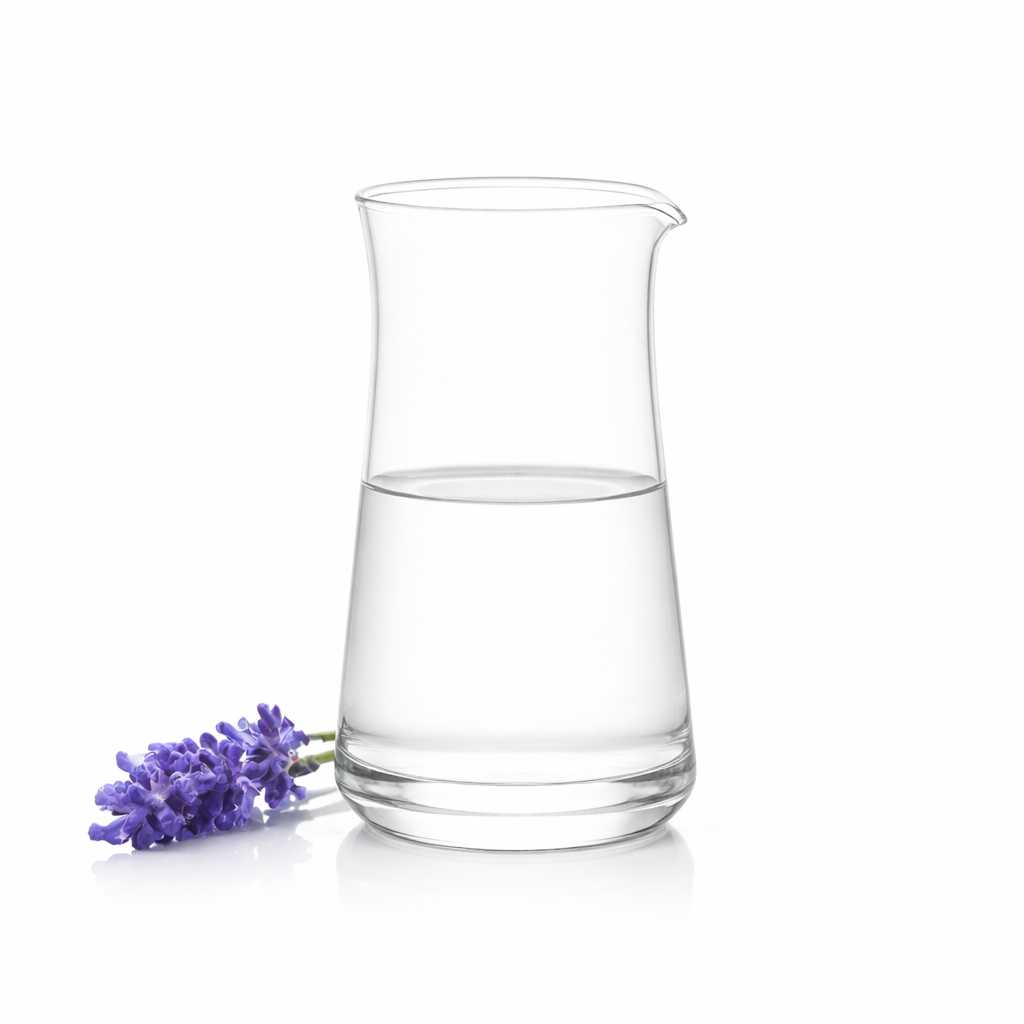
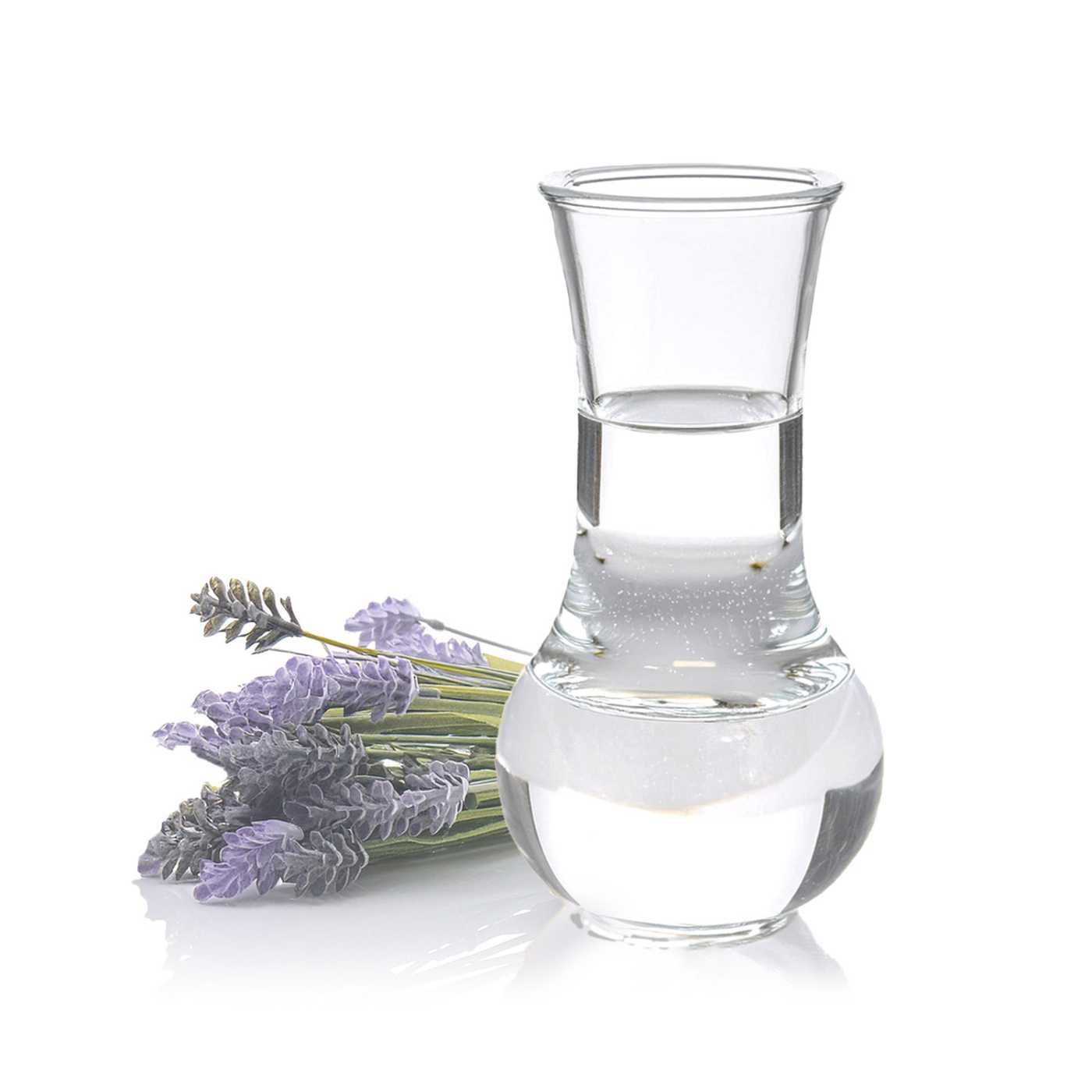
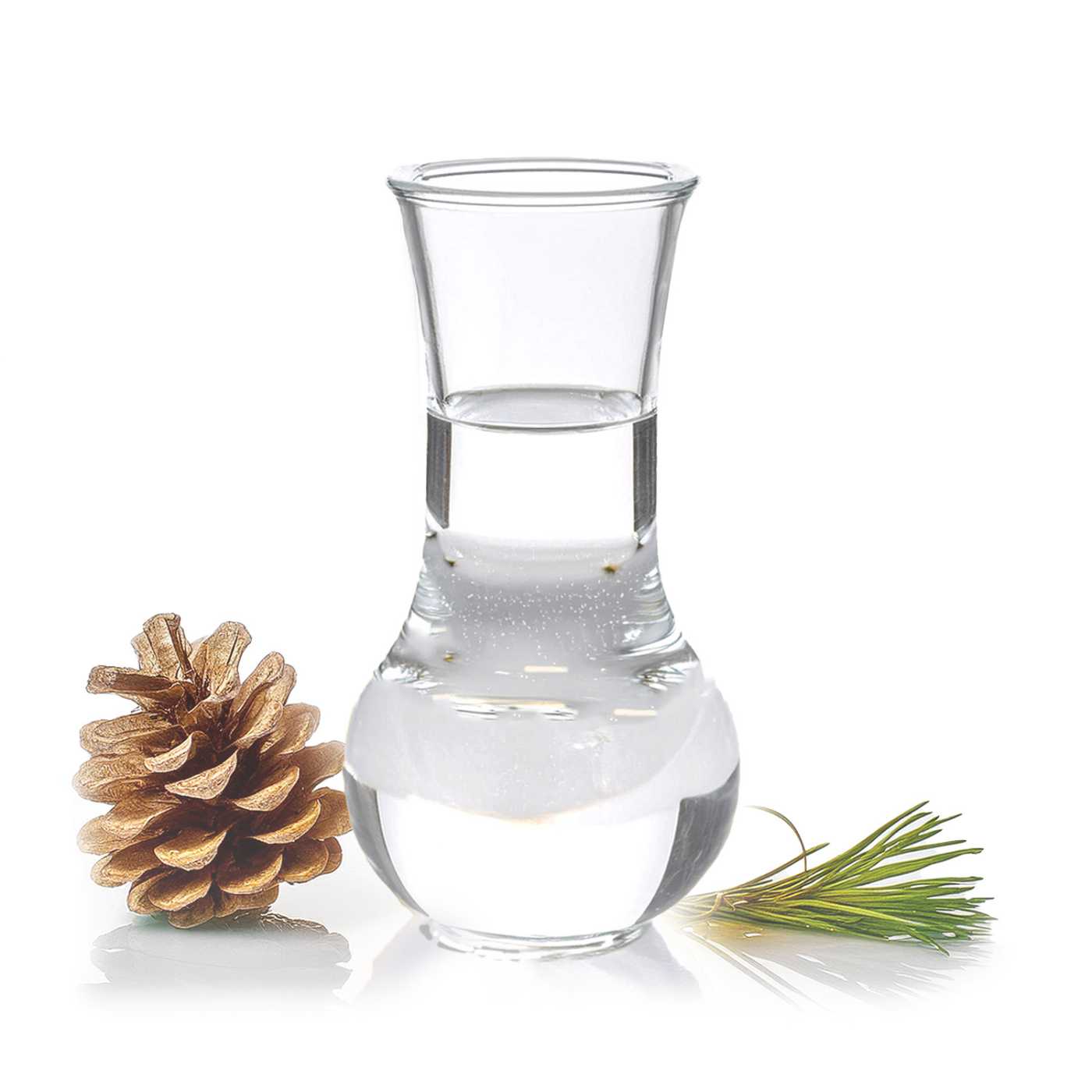
Lavender floral water replaces ordinary water in a formulation and brings the water-soluble components of lavender into it. It soothes the skin, supports its hydration and is also suitable for skin prone to acne. It is obtained by steam distillation of the flowers of narrow-leaved lavender (Lavandula angustifolia) of European origin.
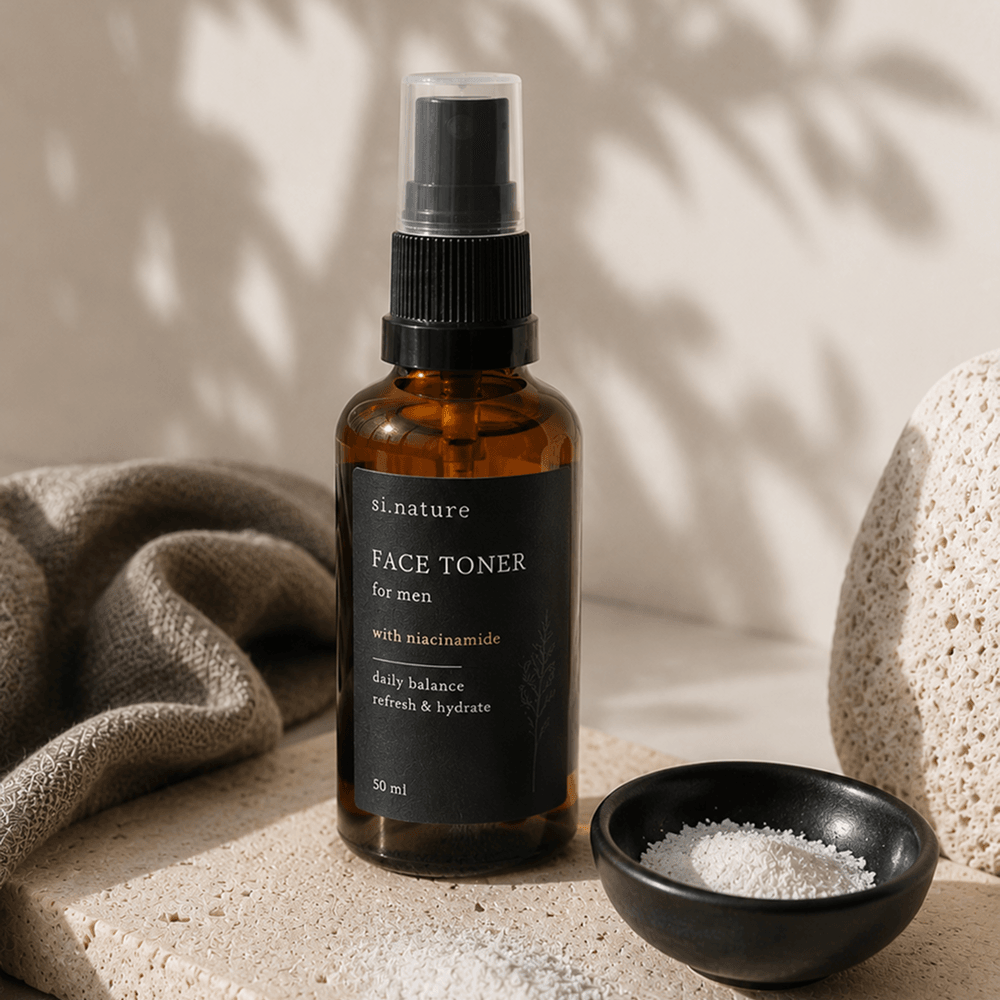
The hydrosol is preserved, so it can be used on its own as a facial toner, not only as a component of a formulation.
What lavender water does for the skin
- Soothing – it eases the feeling of irritation and tightness, for example after shaving, after sun exposure or on sensitive skin that reacts with redness.
- Hydration – in a formulation it acts as a humectant and replenishes water in the skin. In toners and serums it is combined with glycerine, betaine or hyaluronic acid.
- Skin barrier restoration and regeneration – it supports the skin during recovery, so it is used in after-shave and post-cleansing products and in children’s cosmetics.
- Skin prone to acne – it is credited with an antimicrobial and anti-inflammatory effect, which makes it a suitable base for toners and light gels for oily and problematic skin.
- Fragrance and carrier – it lightly scents the finished product without the addition of essential oil and also serves as a carrier for other water-soluble active ingredients.
Use in a formulation
The hydrosol belongs in the water phase. It mixes with water and aqueous ingredients in any ratio and does not dissolve in oil, so it cannot be incorporated into anhydrous and purely oil-based products. The usage rate is from 1 to 100%. At a lower proportion it supplements the water in an emulsion, at a higher one it forms the base of toners, mists and hair waters. The recommended pH range of the formulation is 3.0–8.0.
Heat does not benefit it. In emulsions it is therefore usually added only at the cool-down stage. If the recipe requires heating the whole water phase, the hydrosol can be divided: heat part of it with the other water ingredients and stir in the remainder after cooling.
Add the hydrosol to the emulsion only after it has cooled, while stirring constantly. This preserves both the lavender scent and the active components.
It tolerates acidic and neutral pH, electrolytes, common preservatives, fragrance and oxidising and reducing agents, so it can be combined with most water-soluble active ingredients, including acidic ingredients. We recommend checking the behaviour of a specific combination in the finished formulation.
The preservative system protects the hydrosol itself, not the finished product. Every product containing water in which the hydrosol is mixed with other ingredients needs its own preservation and verification of its efficacy.
Suitable for products such as
- Facial toners and mists – the hydrosol can form the entire water base, or it can be supplemented with a humectant and a solubilised fragrance component.
- Light creams and gel creams for sensitive, normal and oily skin, where it replaces the water in the emulsion.
- Serums and gels for skin prone to acne, in combination with niacinamide, panthenol or allantoin.
- After-shave and after-sun products, which make use of its soothing effect.
- Hair waters and scalp sprays, on their own or with other water-soluble ingredients.
- Children’s cosmetics that should have only a light scent, without added essential oils.
- Rinse-off products such as hair rinses and cleansing gels, where it supplements the water phase.
The difference between lavender hydrosol and essential oil
Steam distillation of lavender produces two products at once. The essential oil separates on the surface, and beneath it remains the hydrosol, that is, condensed steam with a small amount of water-soluble aromatic compounds. The essential oil is highly concentrated, is used in a small amount, belongs in the oil phase and must be solubilised or emulsified in the finished product. The hydrosol is aqueous and mild, even sensitive and children’s skin tolerates it, it can be used undiluted and it gives a weaker fragrance. In a recipe they therefore work as two different raw materials with different usage rates.
Good to know
It contains fragrance allergens listed in Annex III of Regulation (EC) No 1223/2009. When placing a finished product on the market, their content must be taken into account in the labelling.
The substance is not classified as hazardous under the CLP Regulation and is exempt from the REACH registration obligation. It contains no ingredients of animal origin, parabens or GMO ingredients and has not been tested on animals.
Frequently asked questions
Is lavender hydrosol soluble in water?
Yes, lavender hydrosol is fully soluble in water and mixes with the water phase in any ratio. It does not dissolve in oil, so it cannot be incorporated into anhydrous products, oil serums or balms. In emulsions it replaces part or all of the water, and in toners or mists it can form the base on its own.
How do you add lavender hydrosol to a cream?
It is added to a cream as part of the water phase, ideally after the emulsion has cooled. Part of the water in the recipe is replaced with the hydrosol, or it can be used instead of all the water. If it is added cold, stir it in gradually while mixing constantly so that it disperses evenly in the emulsion.
Is lavender floral water suitable for sensitive and children’s skin?
Yes, lavender floral water is suitable for both sensitive and children’s skin. Unlike the essential oil, it contains aromatic compounds only in a small amount and has a soothing effect. However, it contains natural fragrance allergens, so for very reactive skin we recommend testing it first on a small area.
Does a product with lavender hydrosol need to be preserved?
Yes, a finished product with lavender hydrosol must be preserved. The preservative system in the hydrosol protects only the raw material itself. After mixing with other ingredients, especially oils, extracts or thickeners, the preservative is diluted and is no longer sufficient. The exception is undiluted hydrosol used as a facial toner.
What is the difference between lavender hydrosol and lavender essential oil?
The hydrosol is the aqueous product of distillation, while the essential oil is its concentrated oil part. The hydrosol is used at 1 to 100% and belongs in the water phase, whereas the essential oil is used in a small amount, belongs in the oil phase and needs a solubiliser in water-based products. The hydrosol is also milder and suits applications where the essential oil is not appropriate.
At what pH is lavender hydrosol stable?
Lavender hydrosol is stable in the pH range of 3.0 to 8.0, which covers common facial toners, creams and mildly acidic products. It tolerates electrolytes and oxidising and reducing agents, so it does not require any special adjustments to the recipe. When combining it with atypical ingredients, we recommend verifying stability in the finished product.