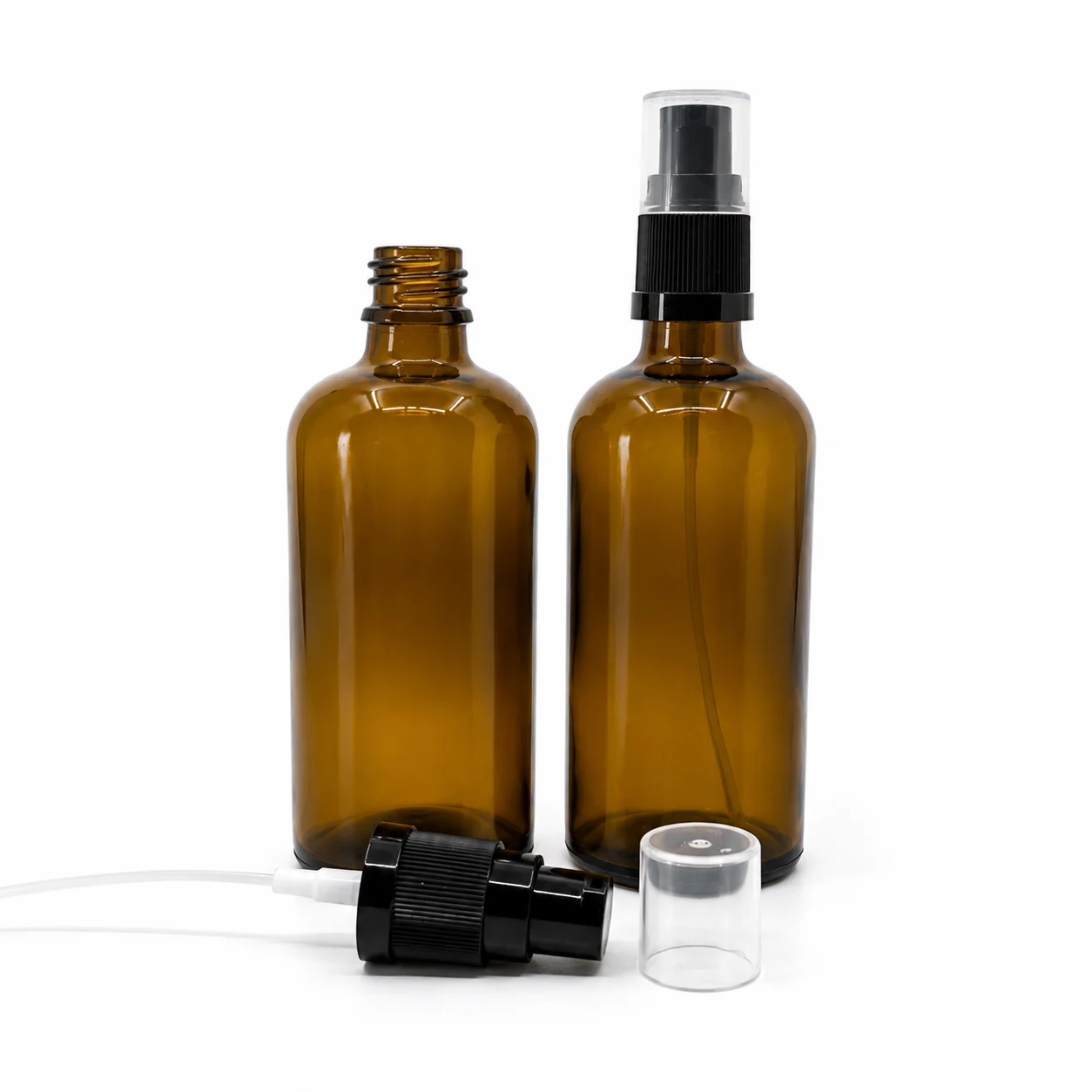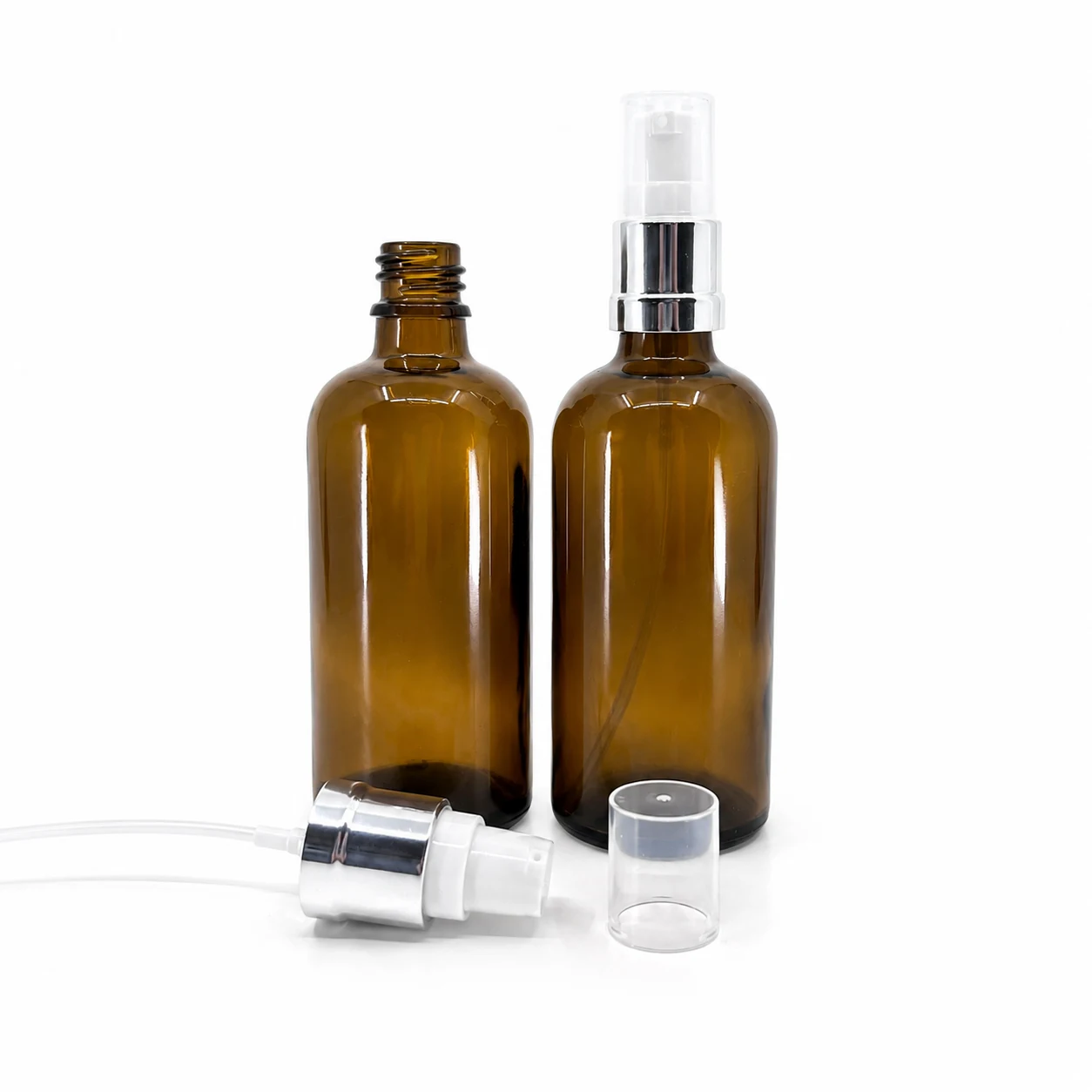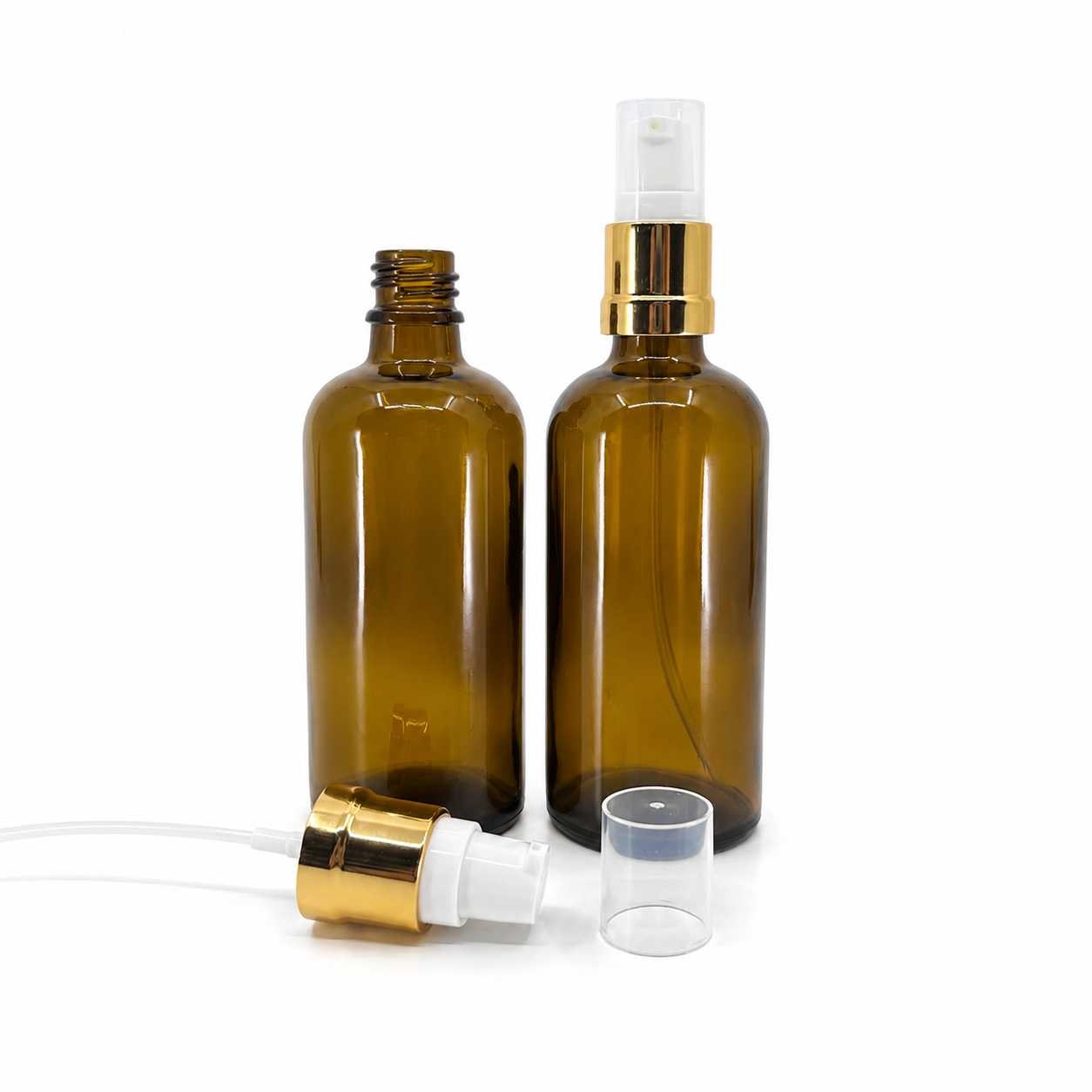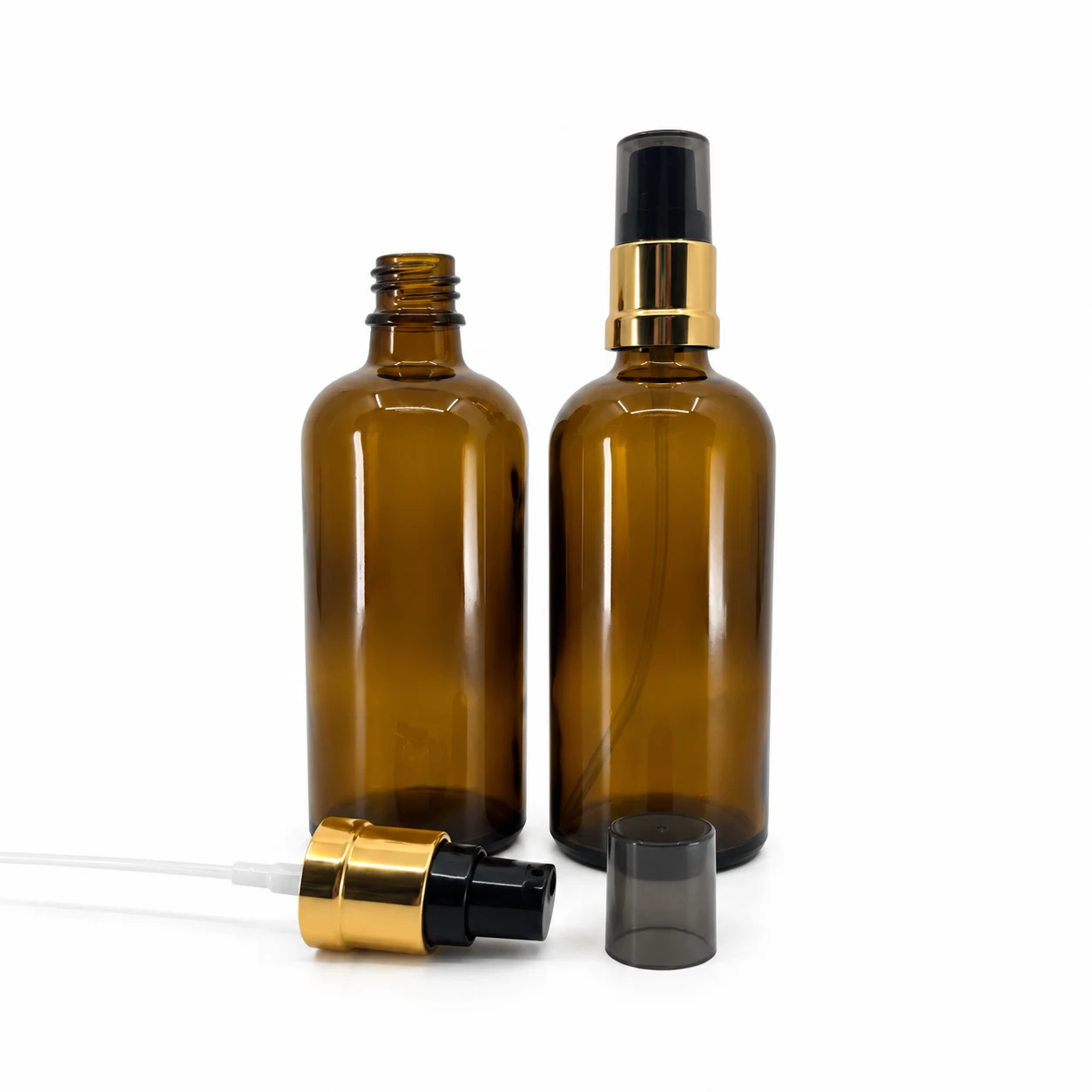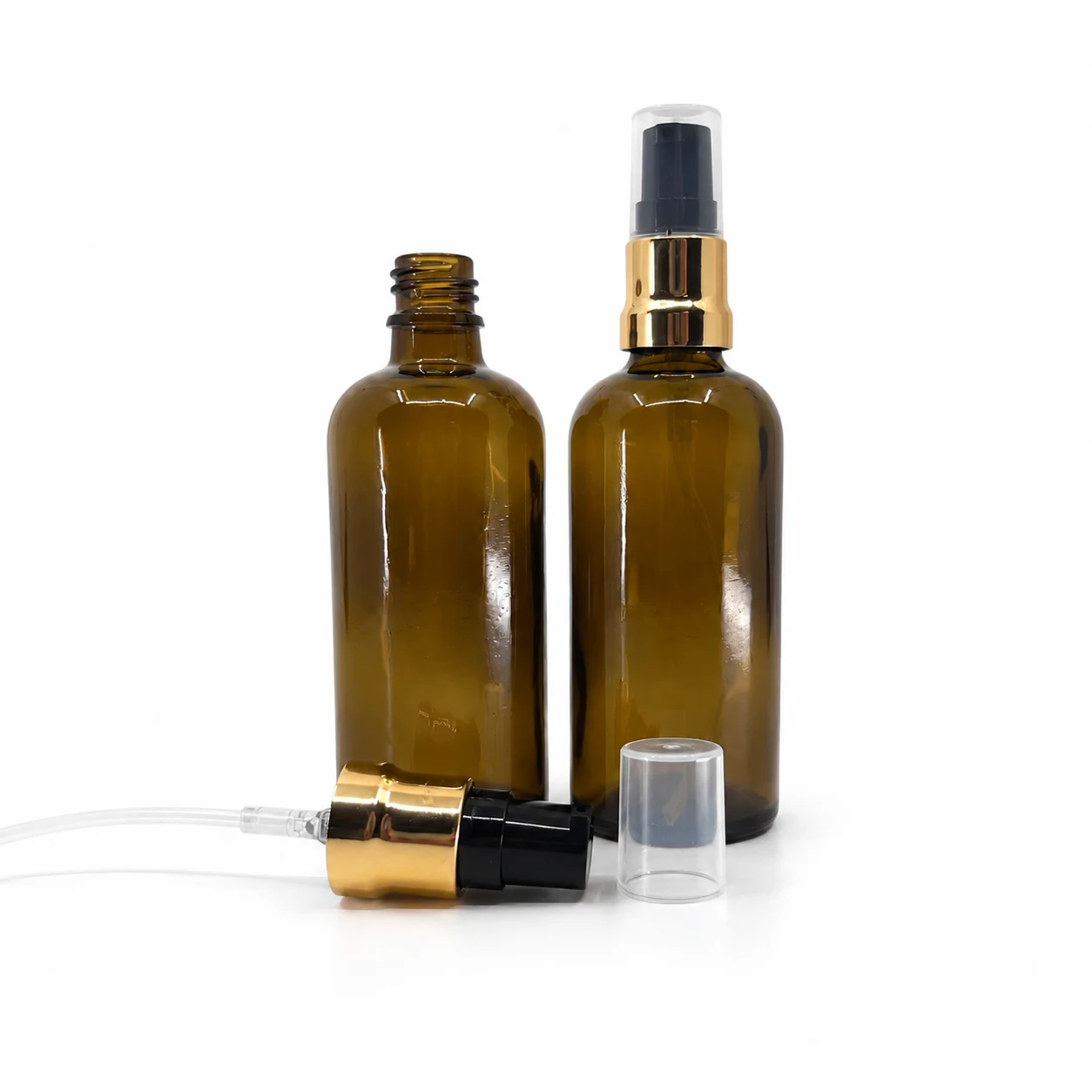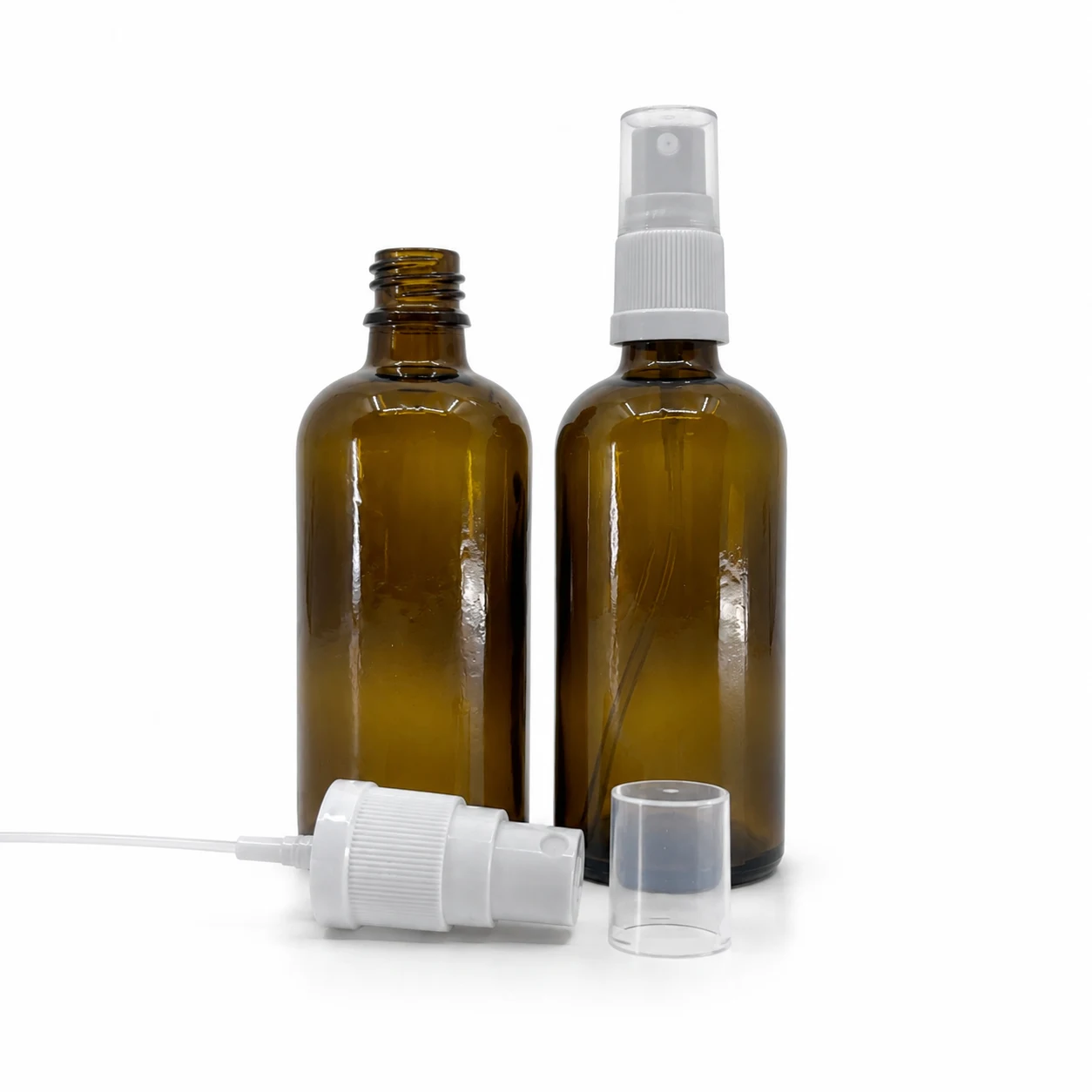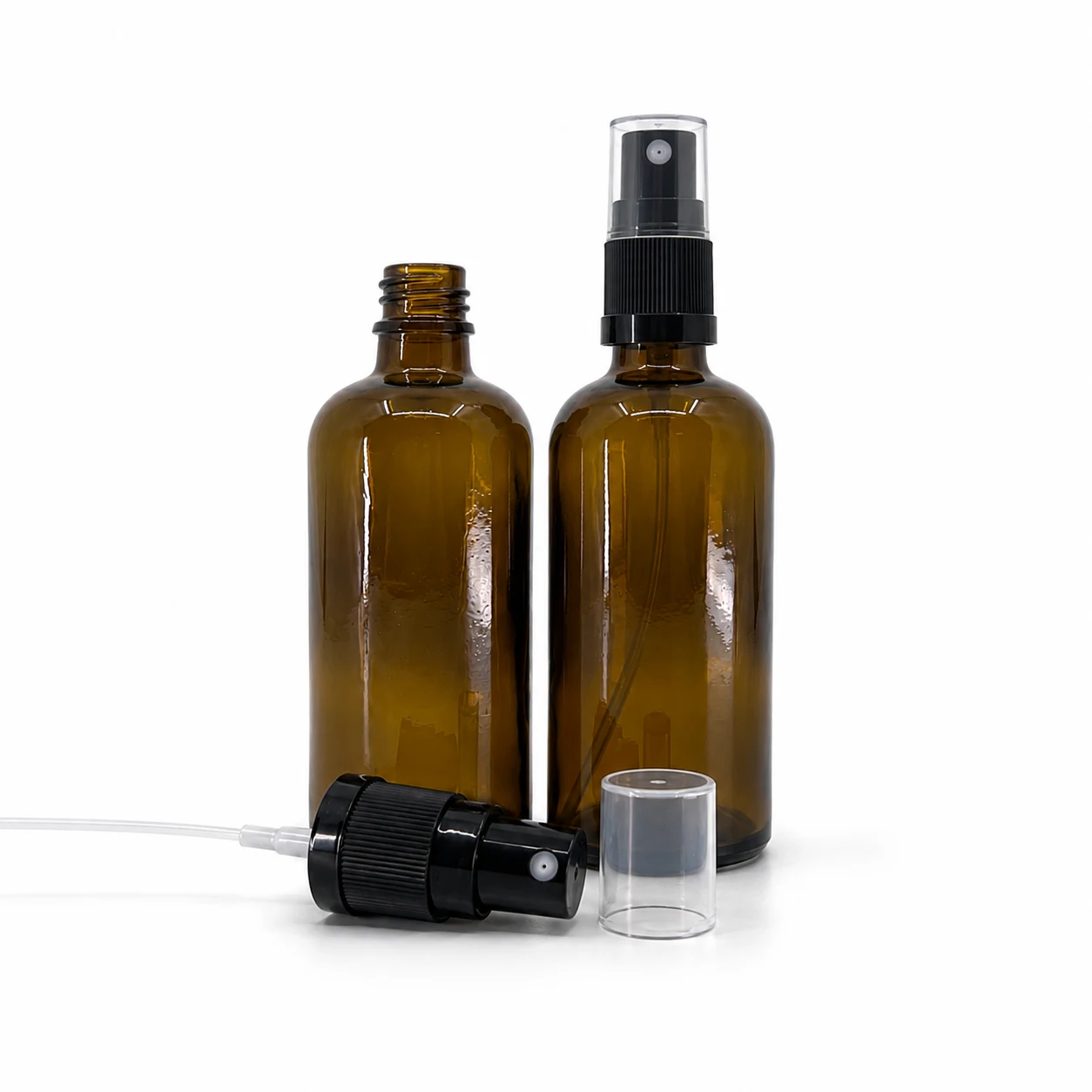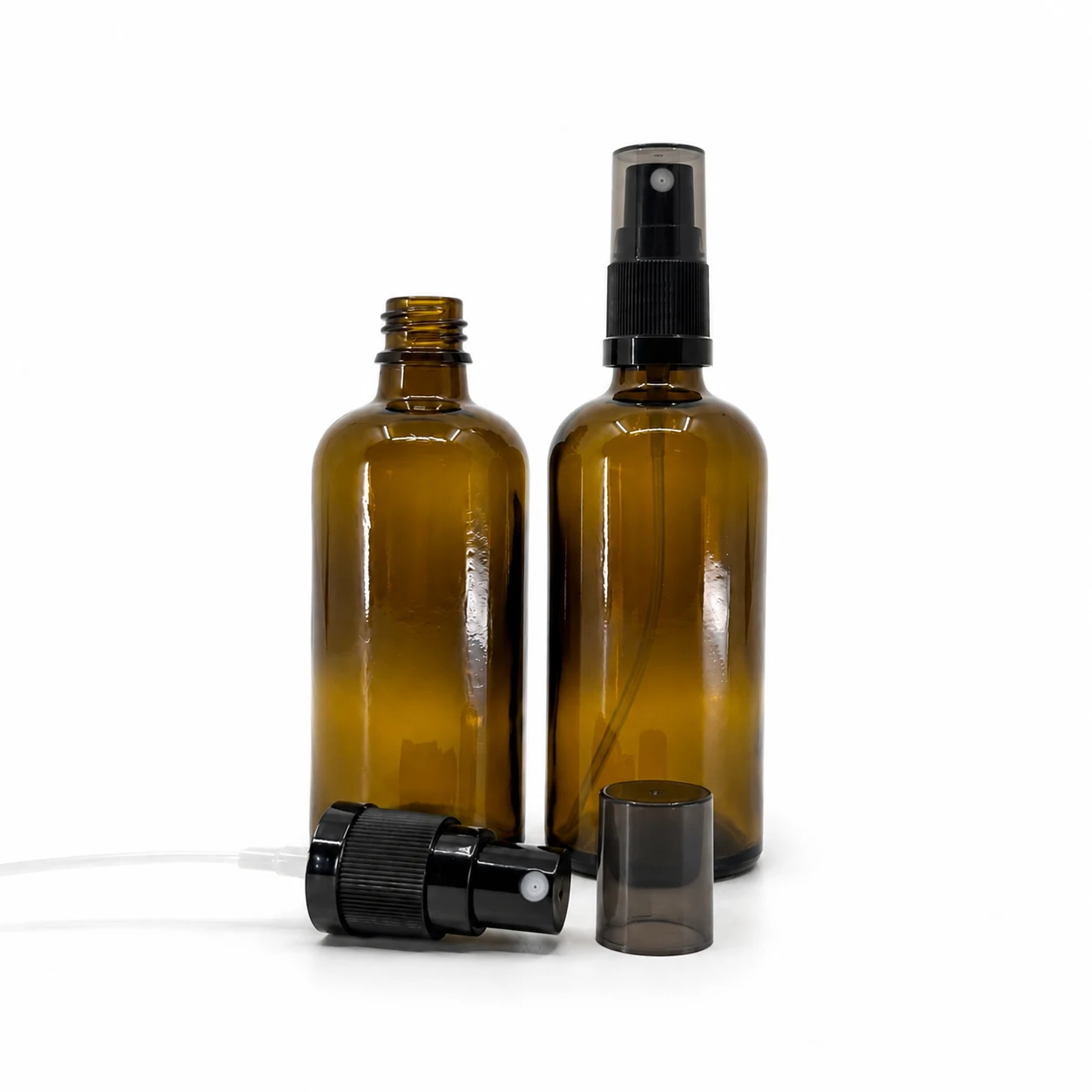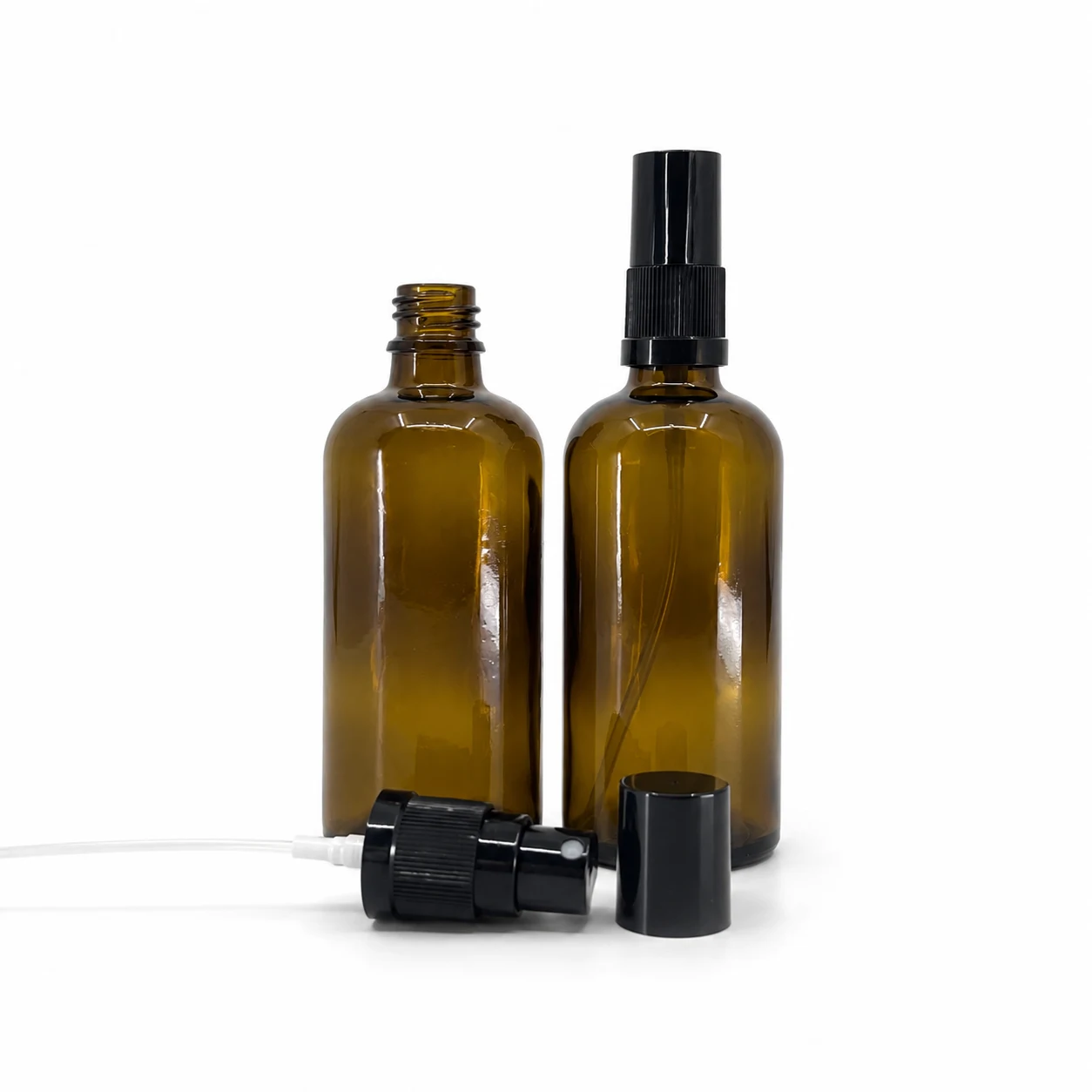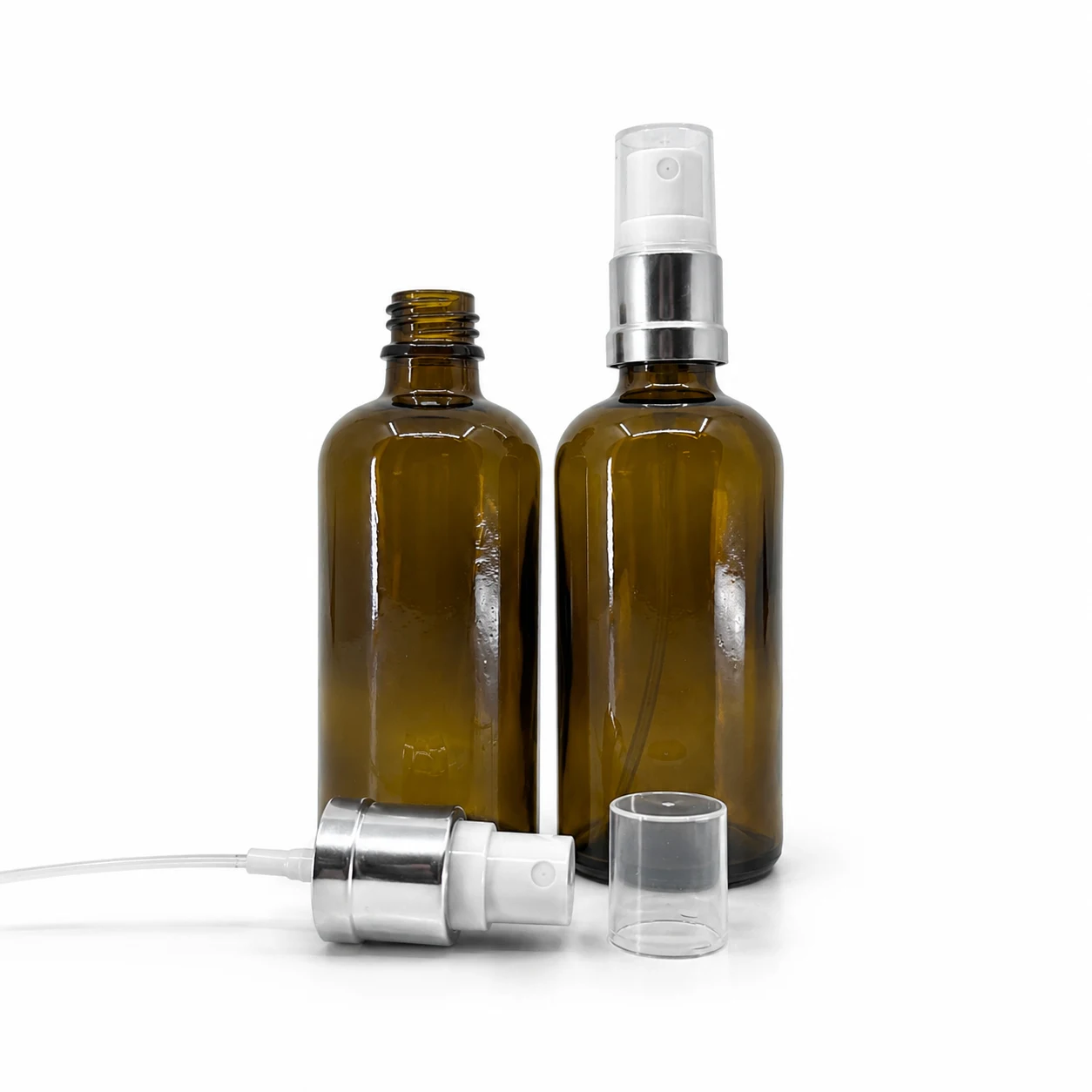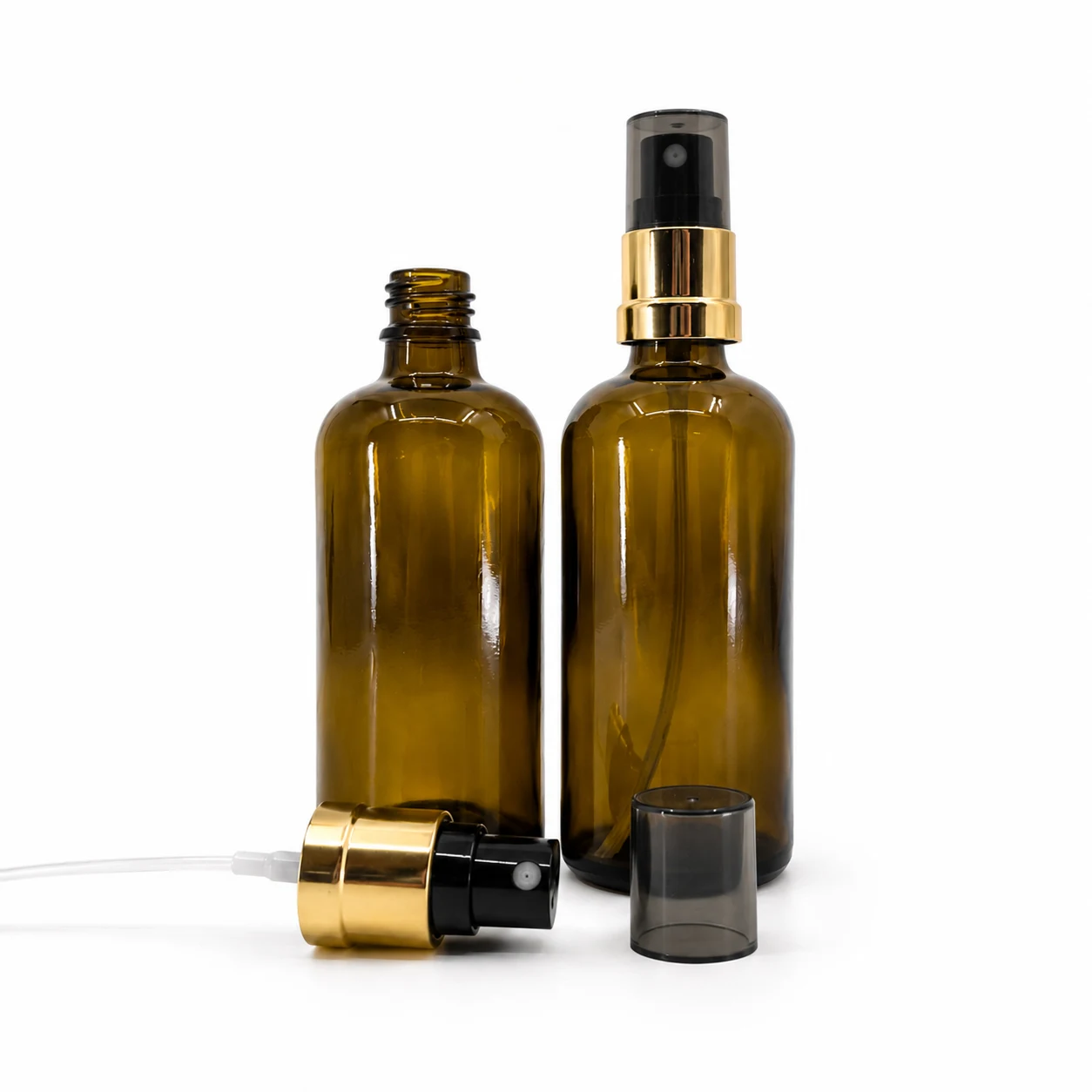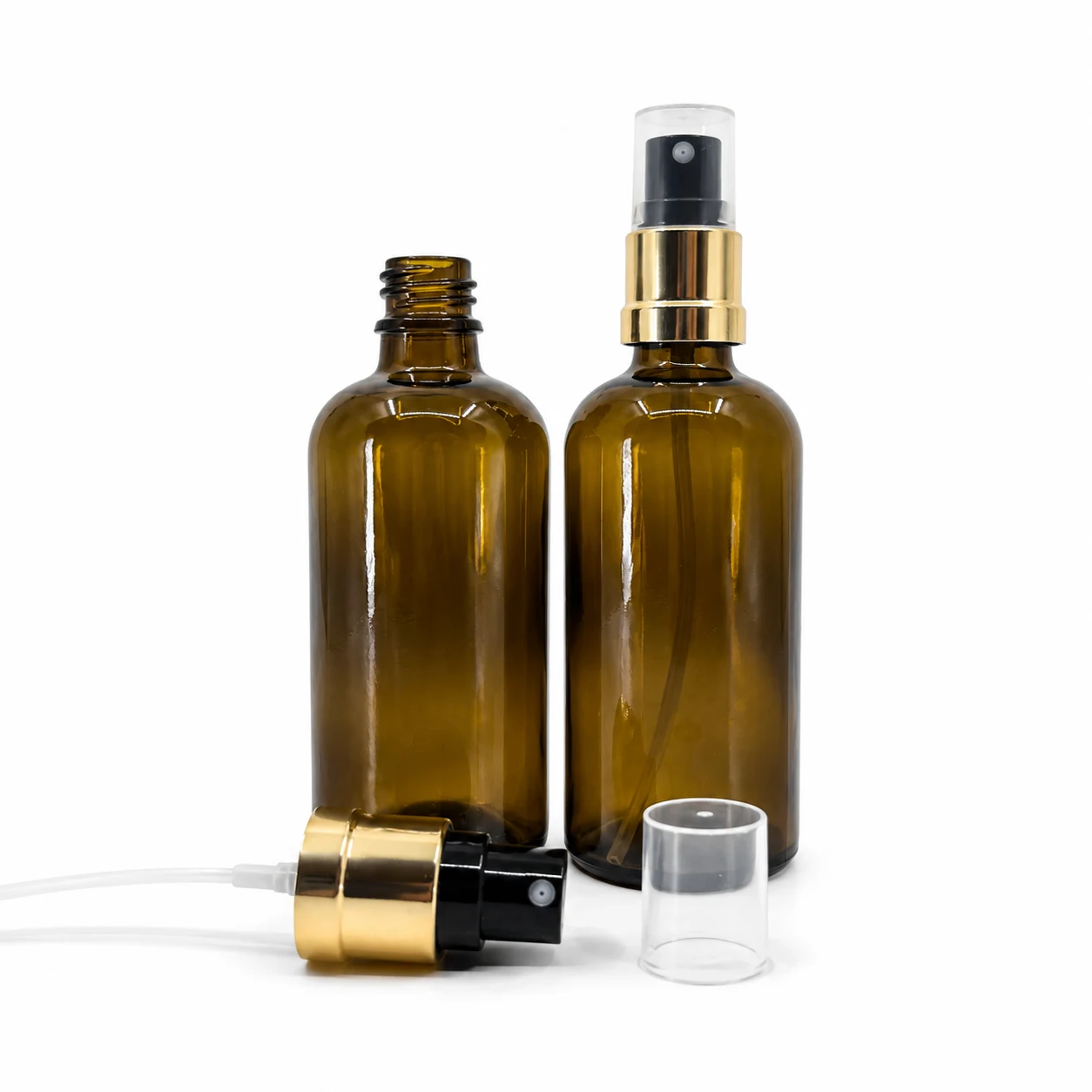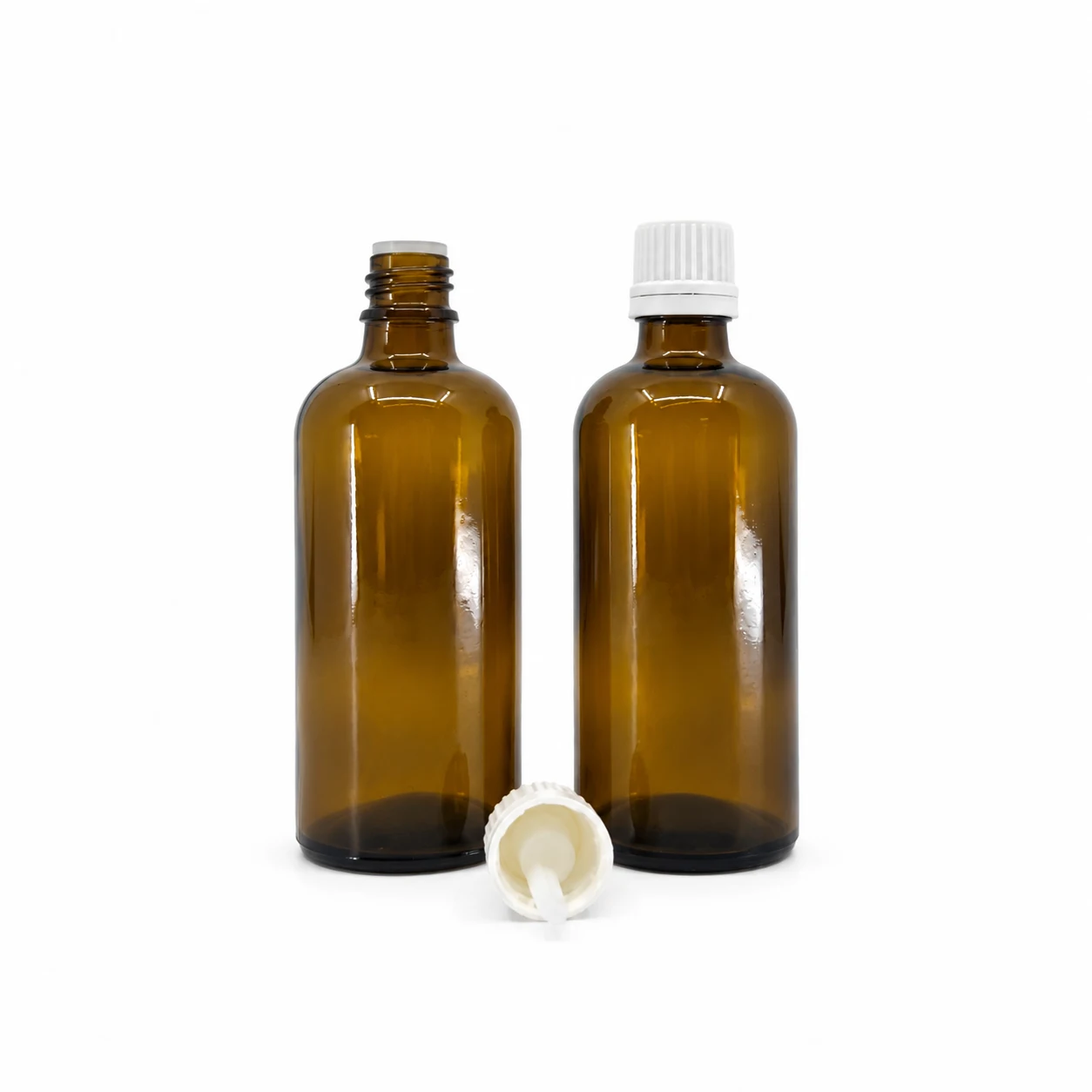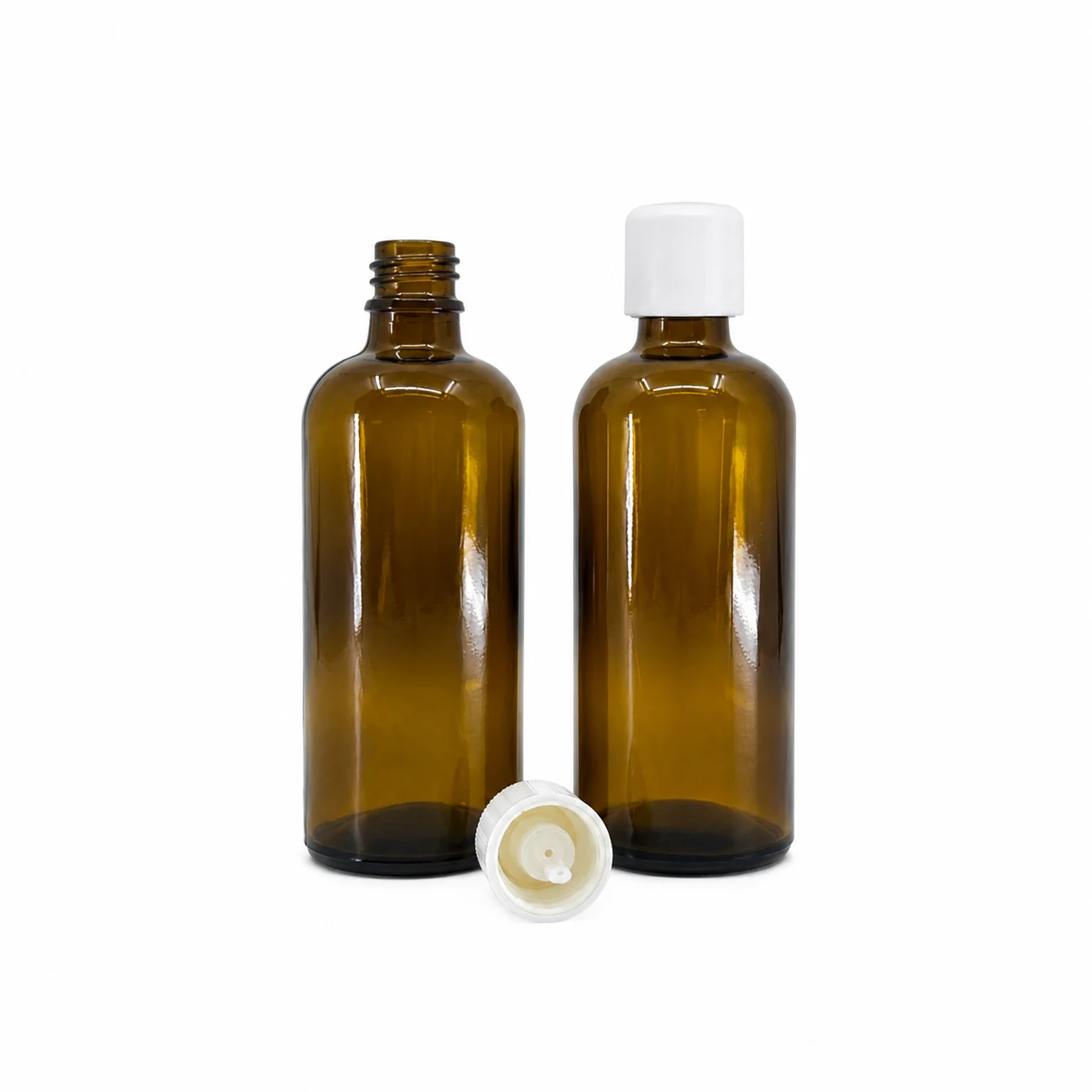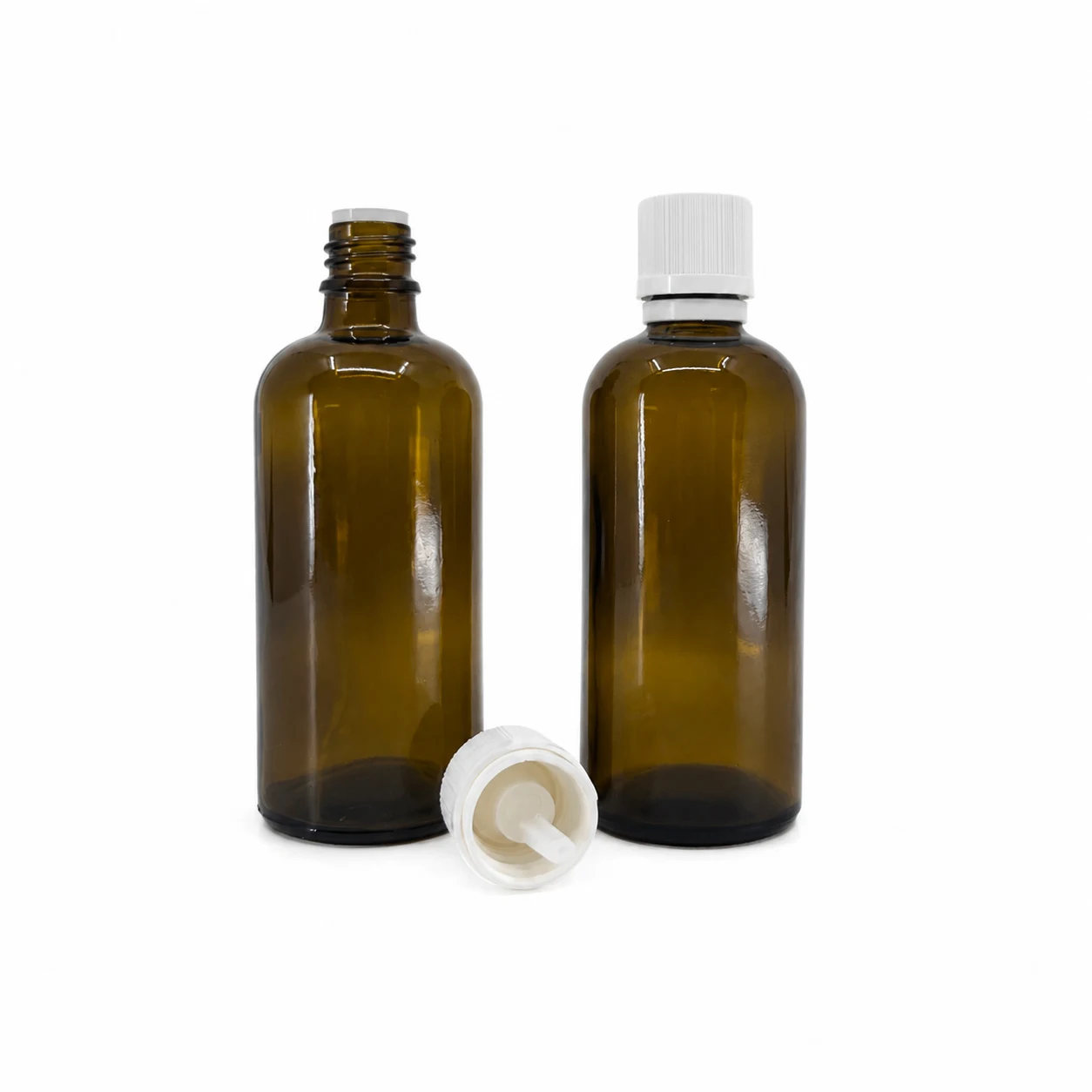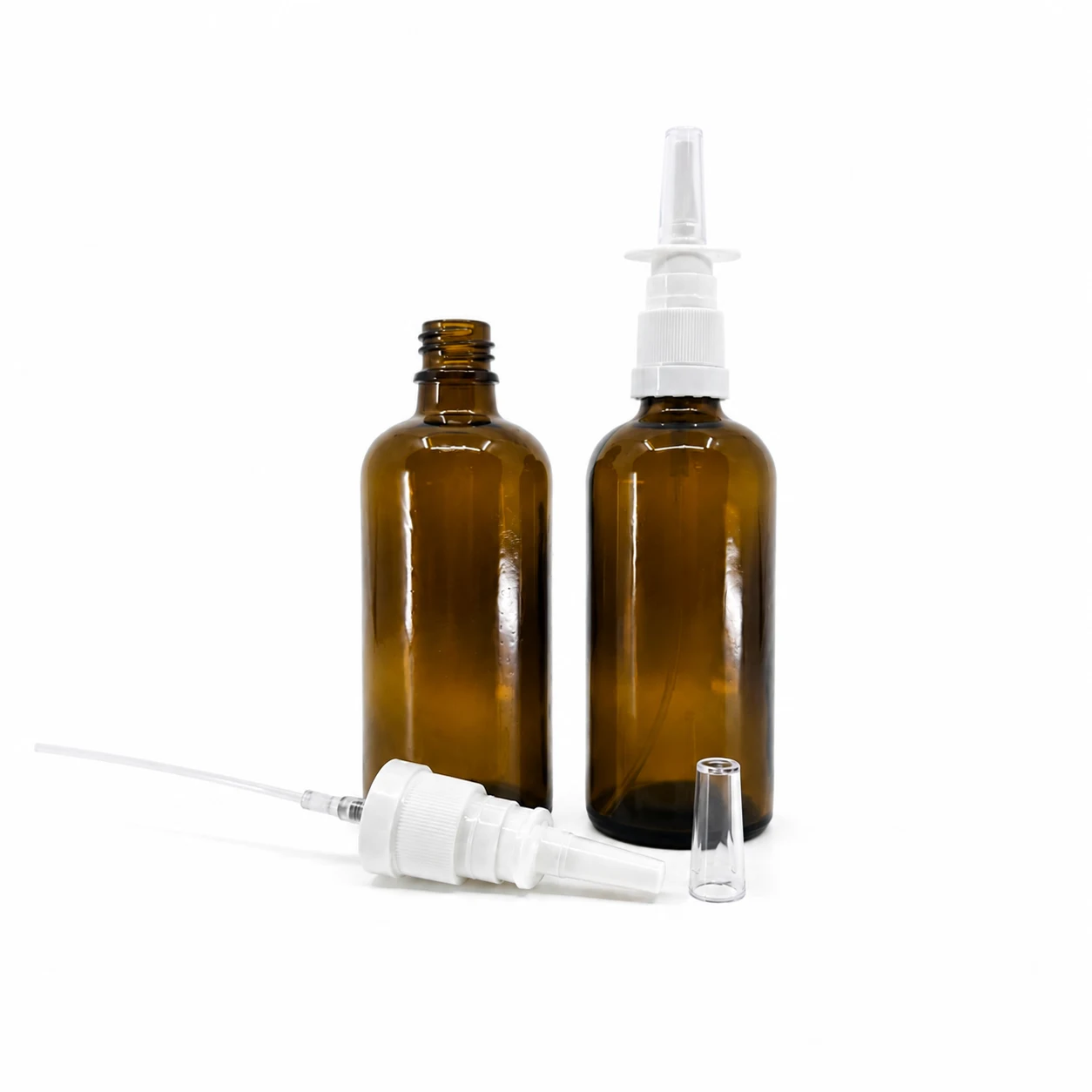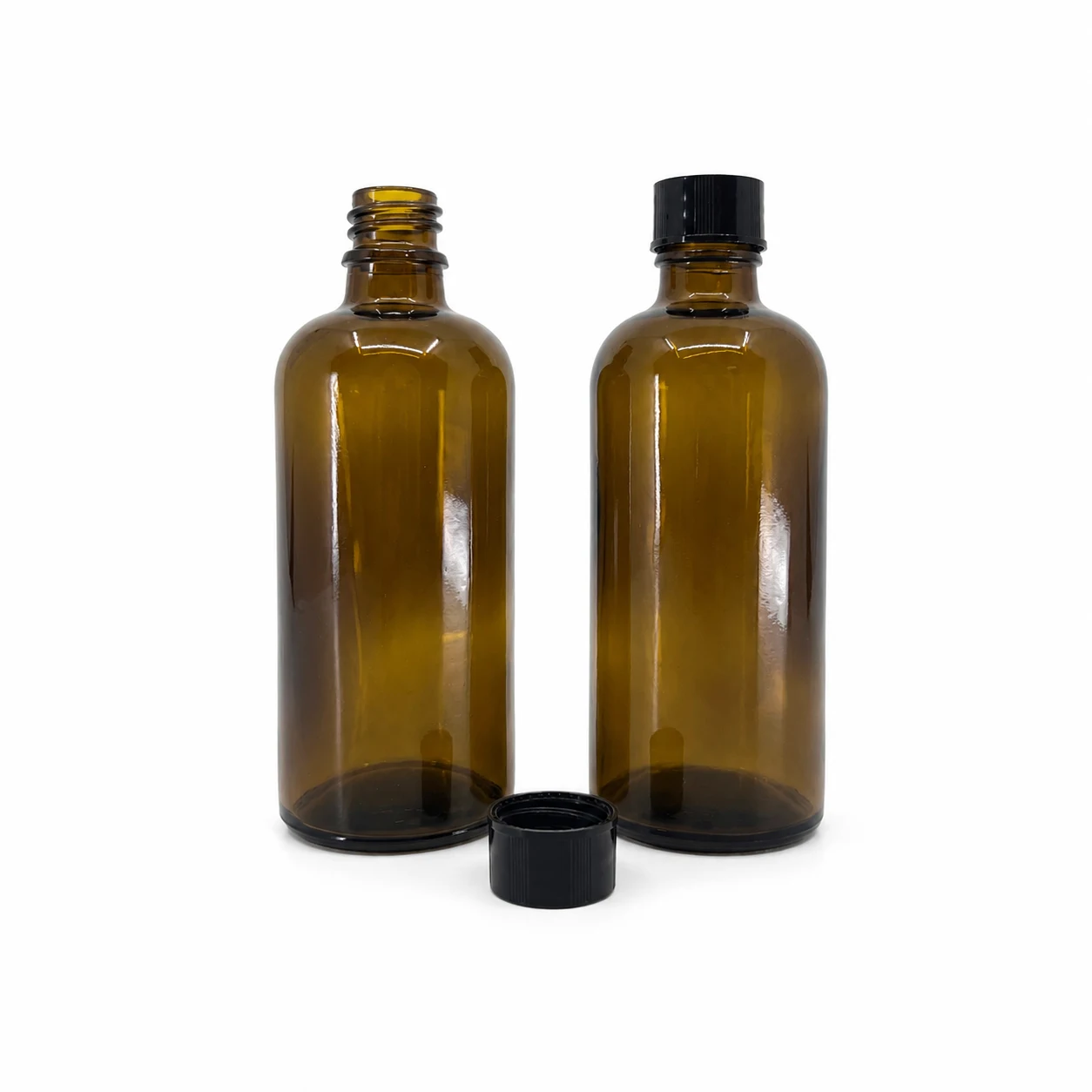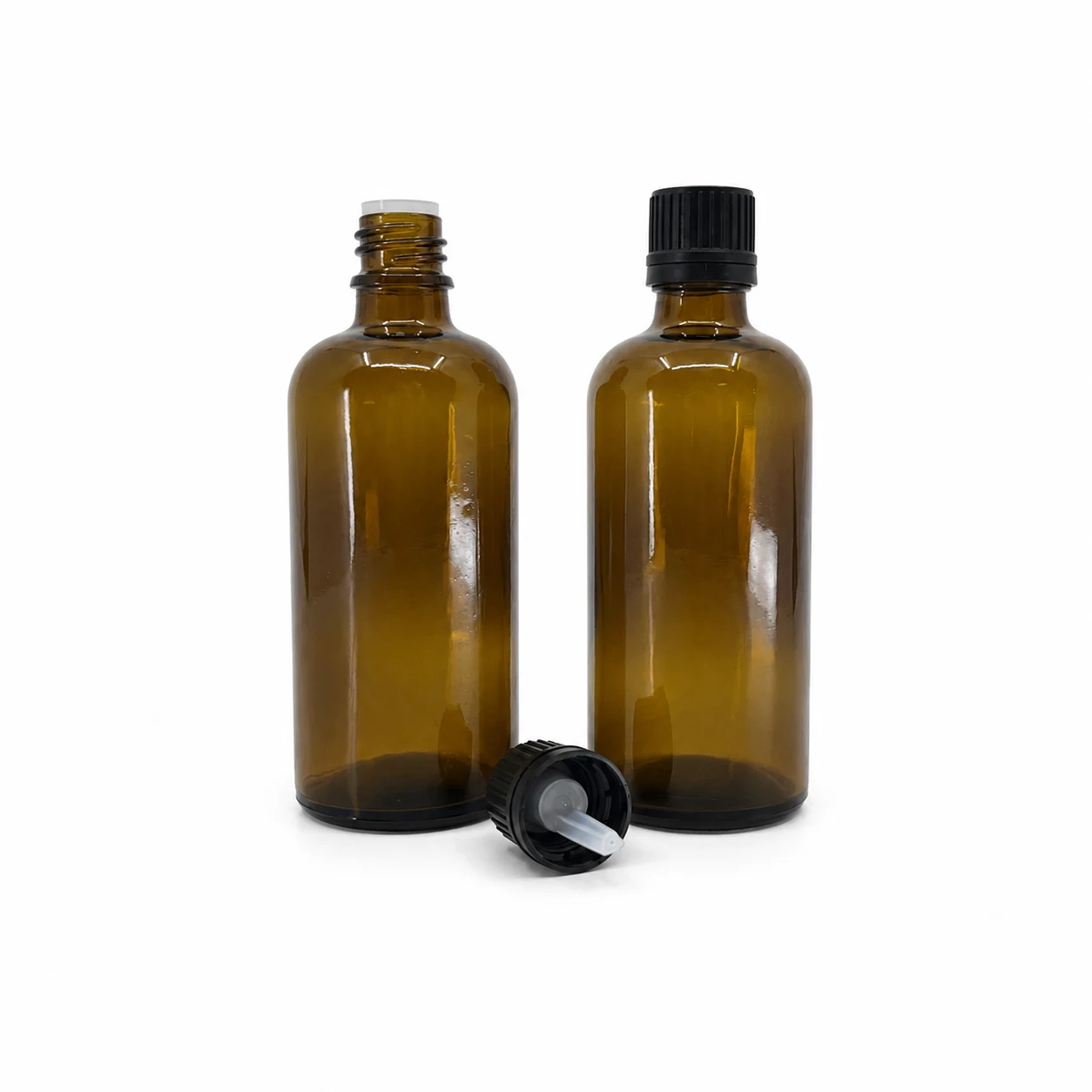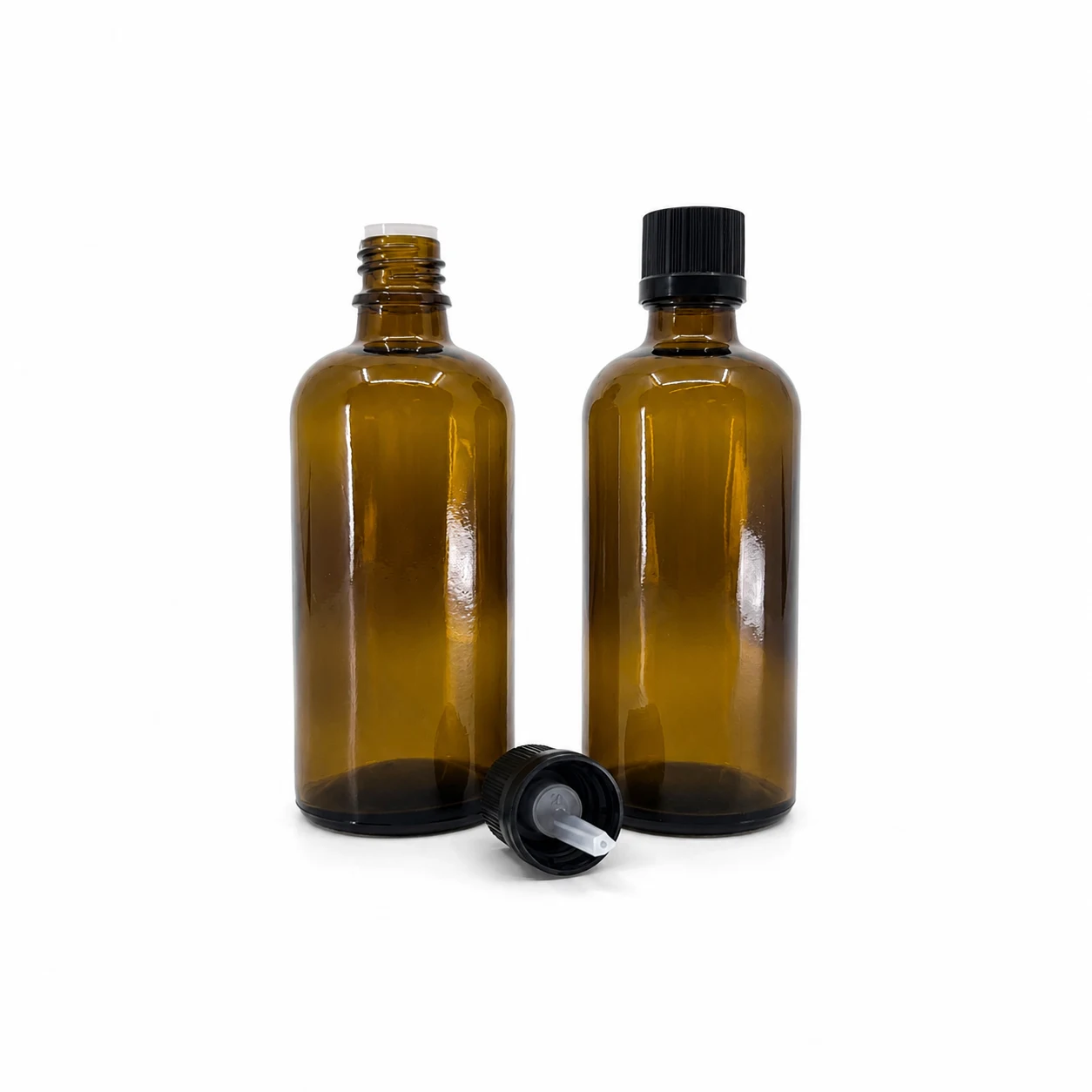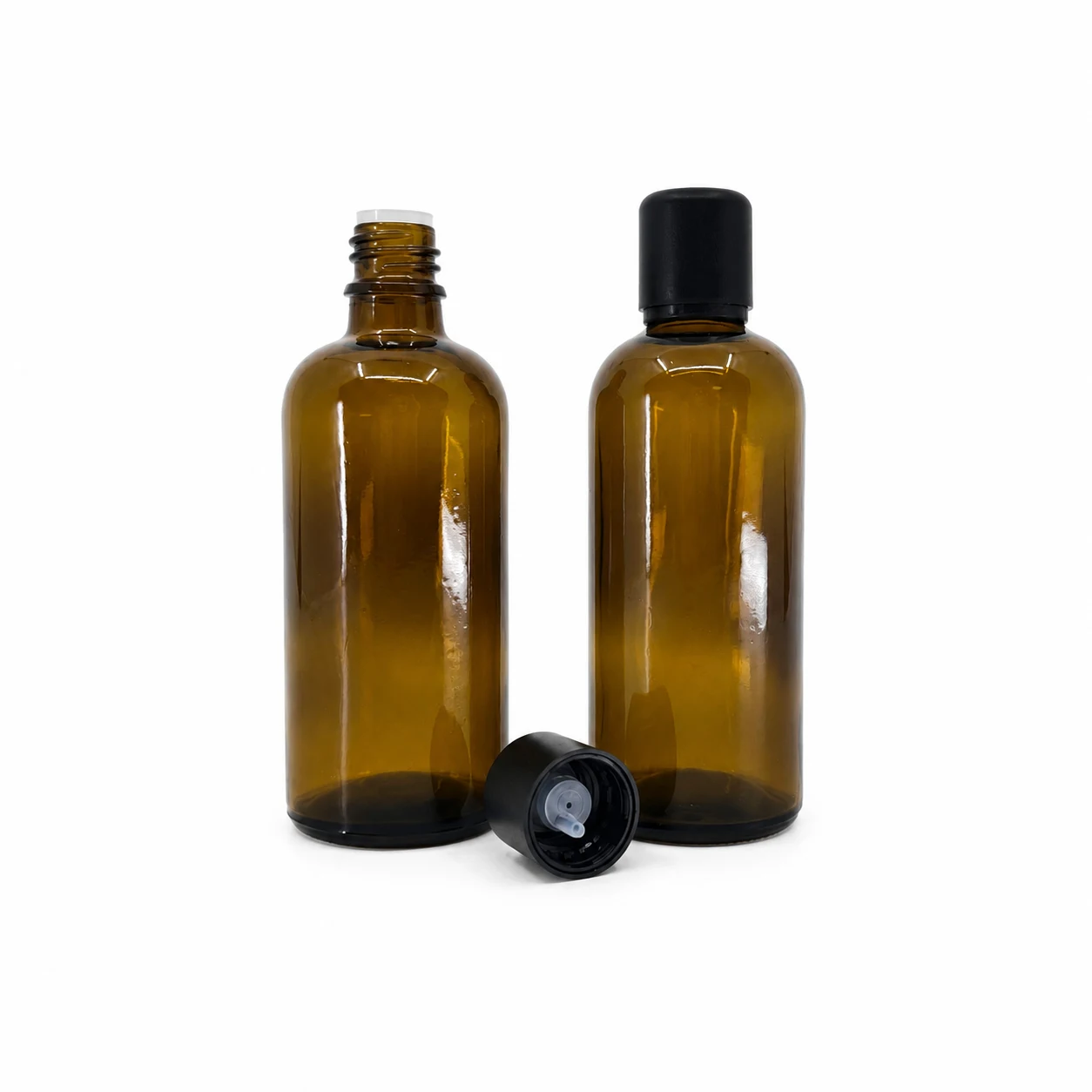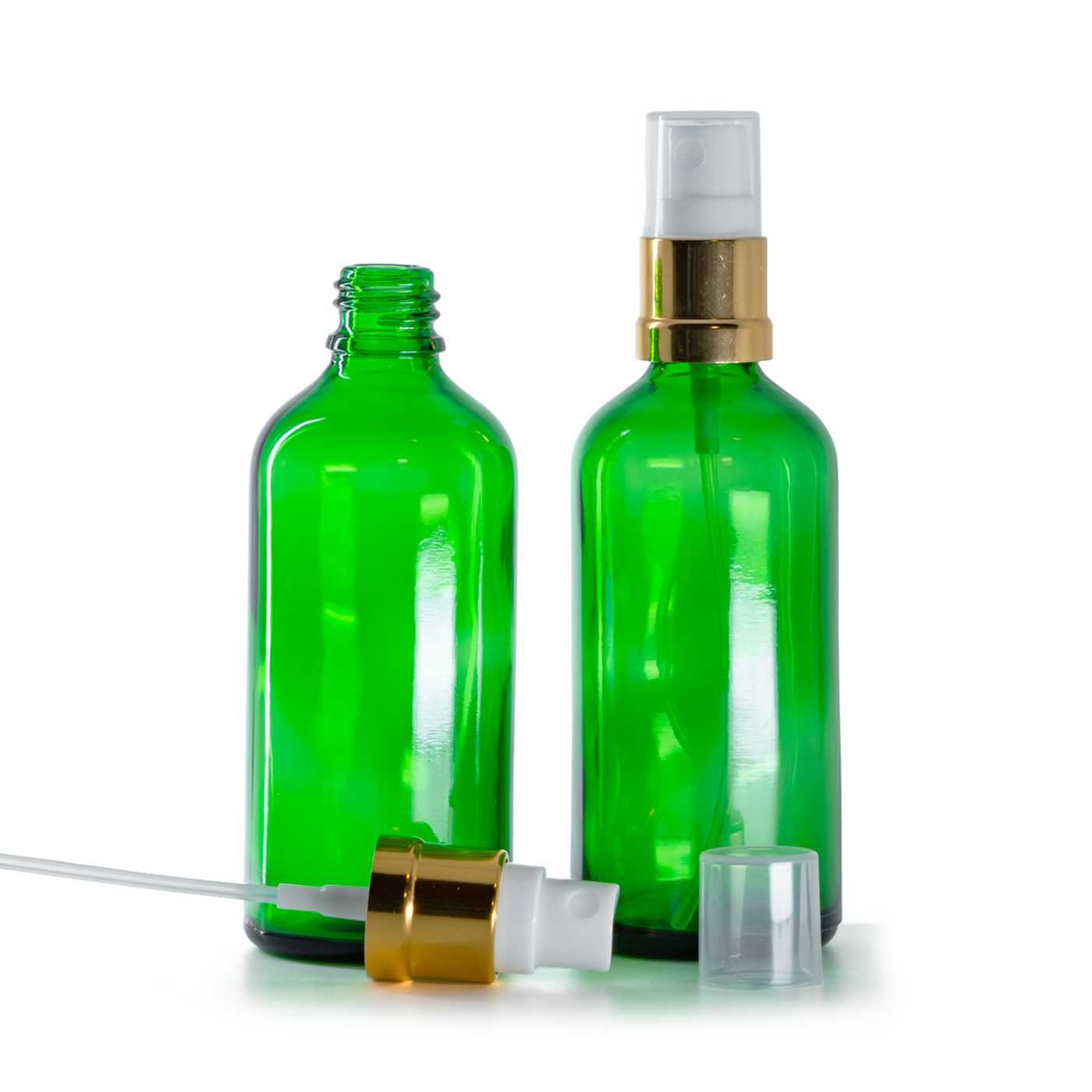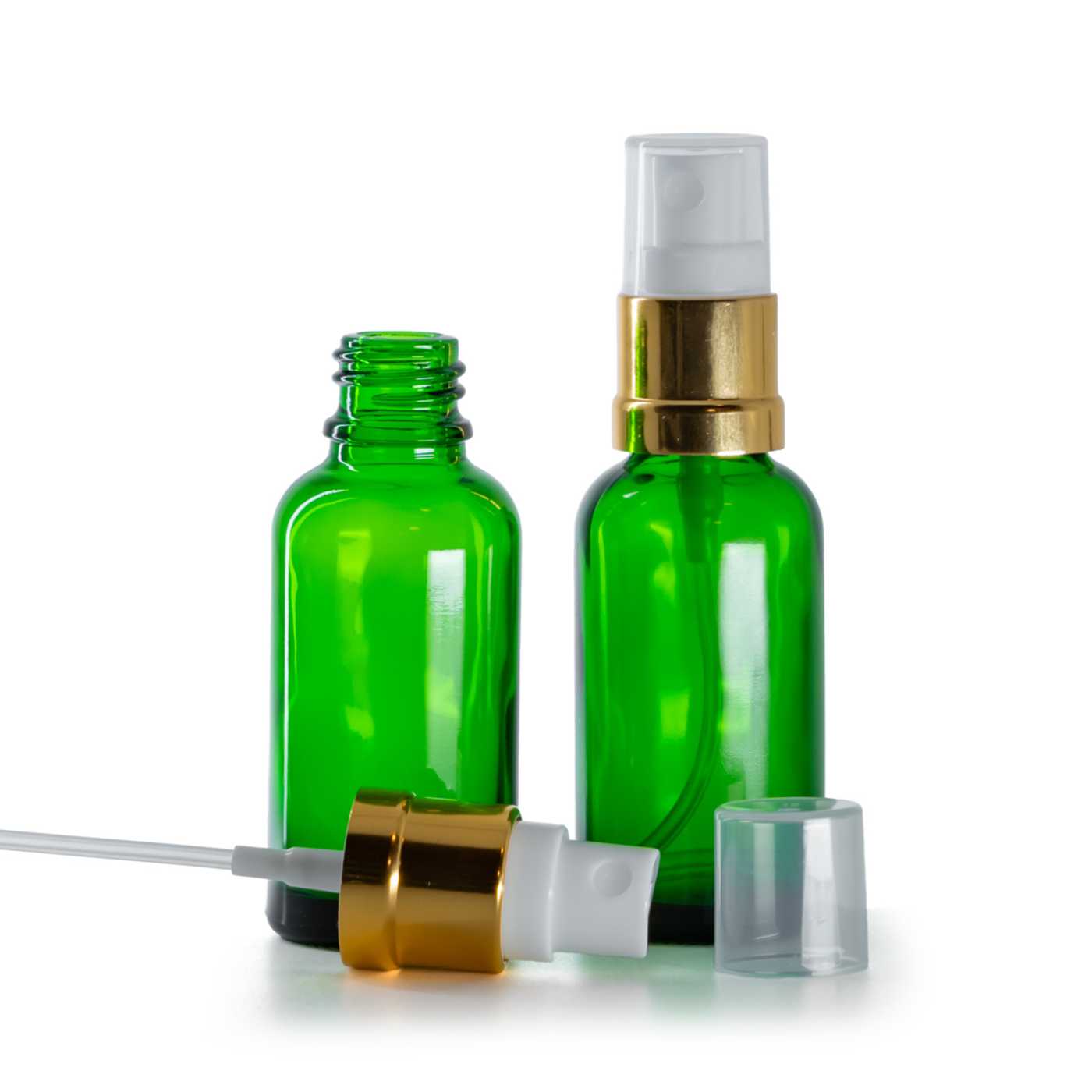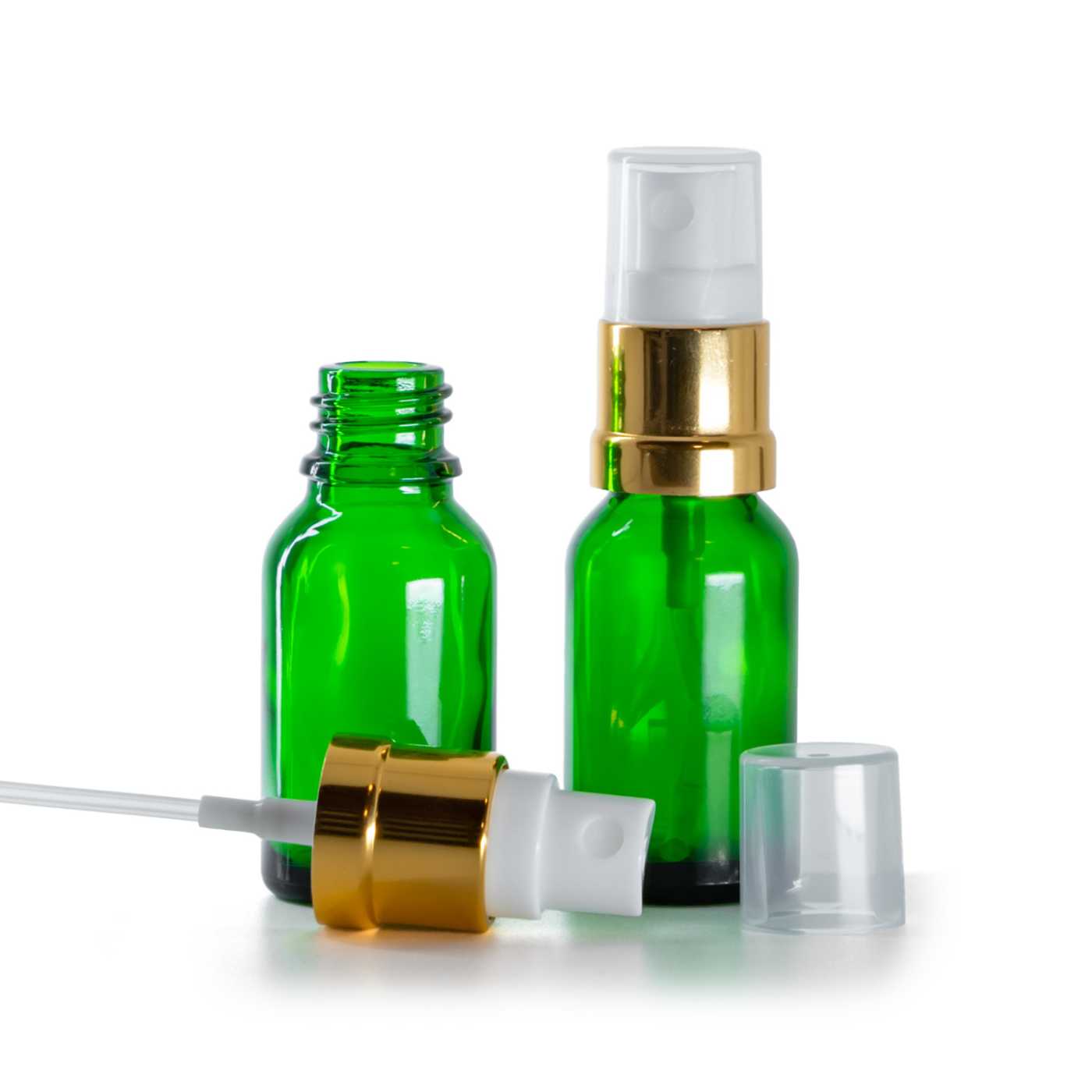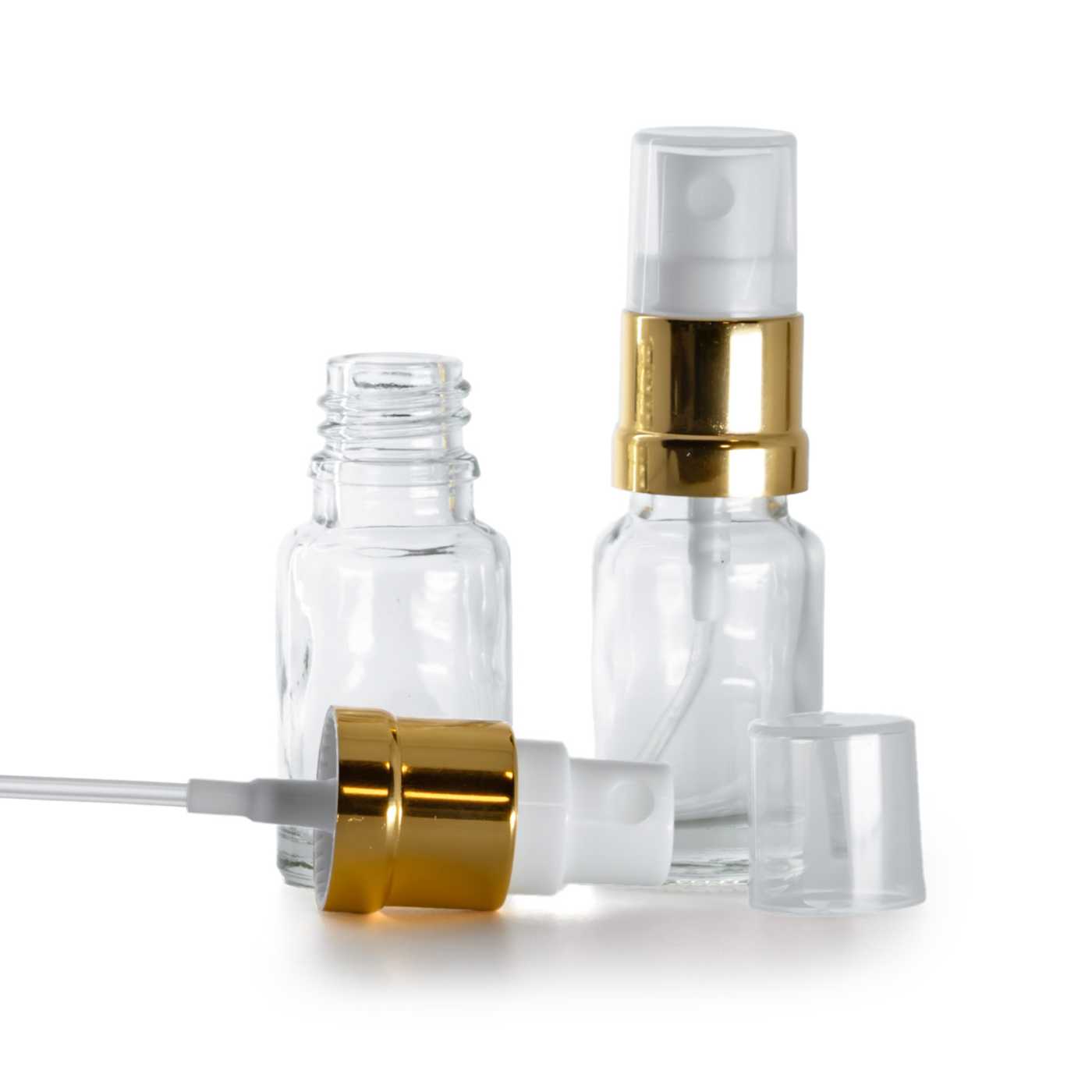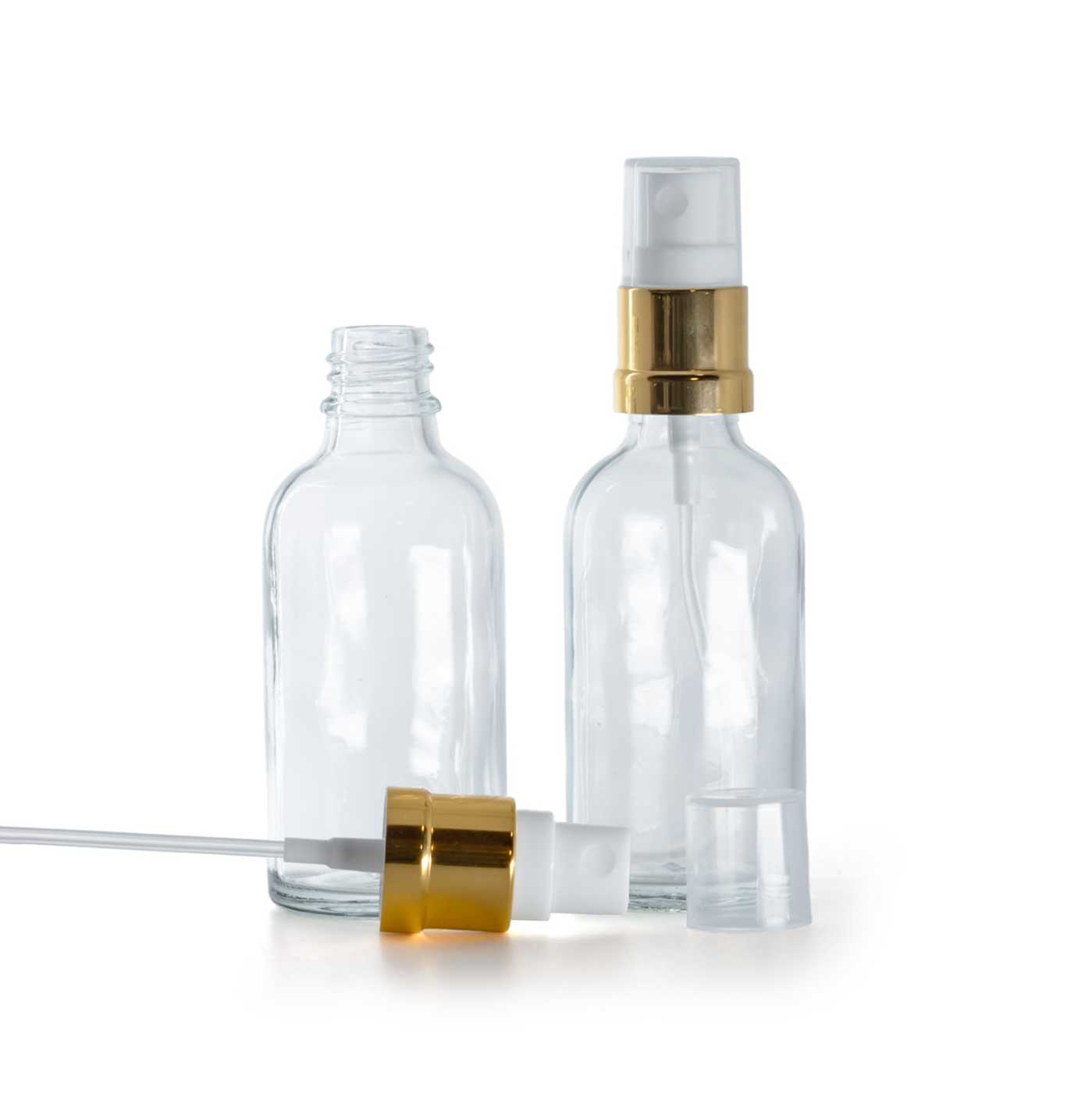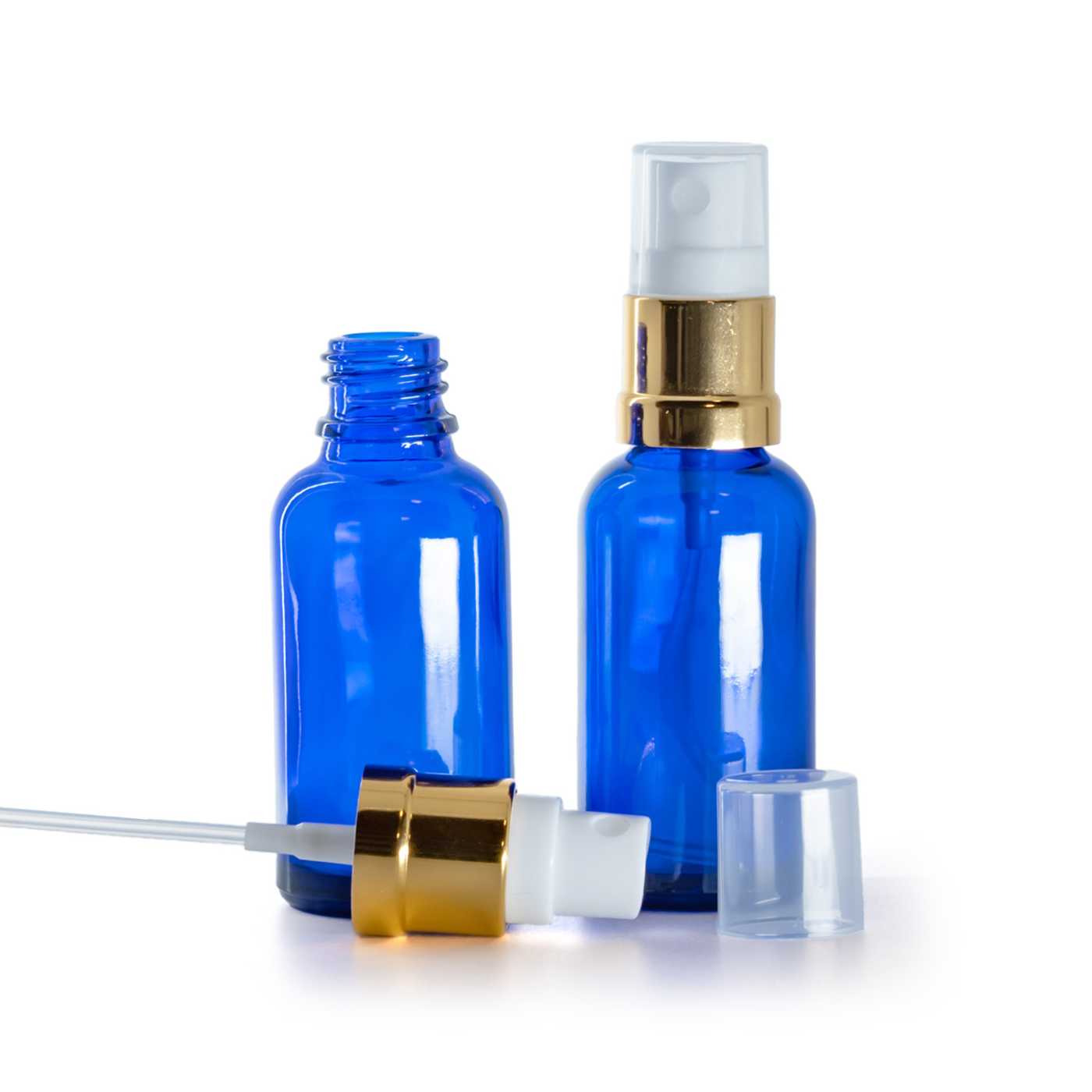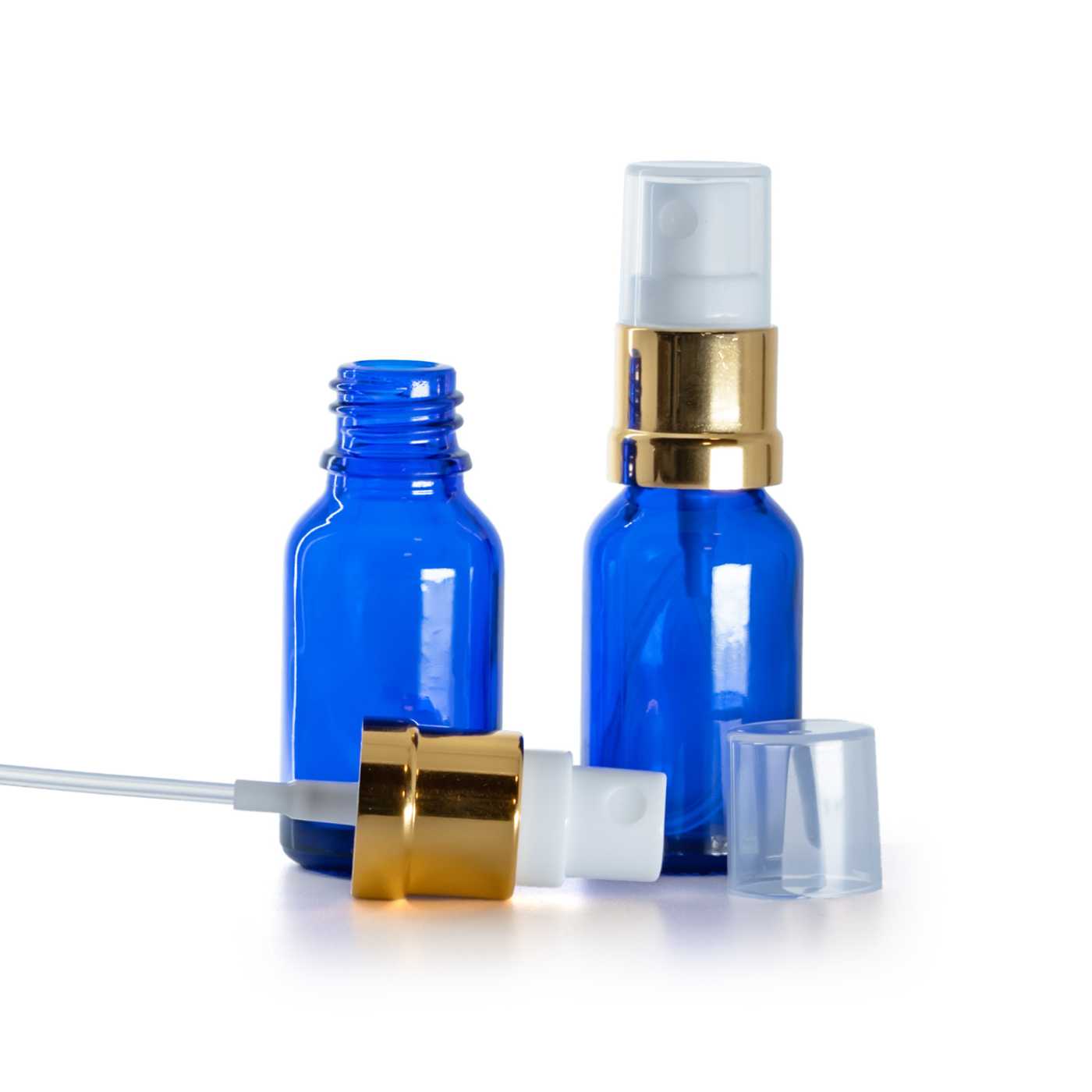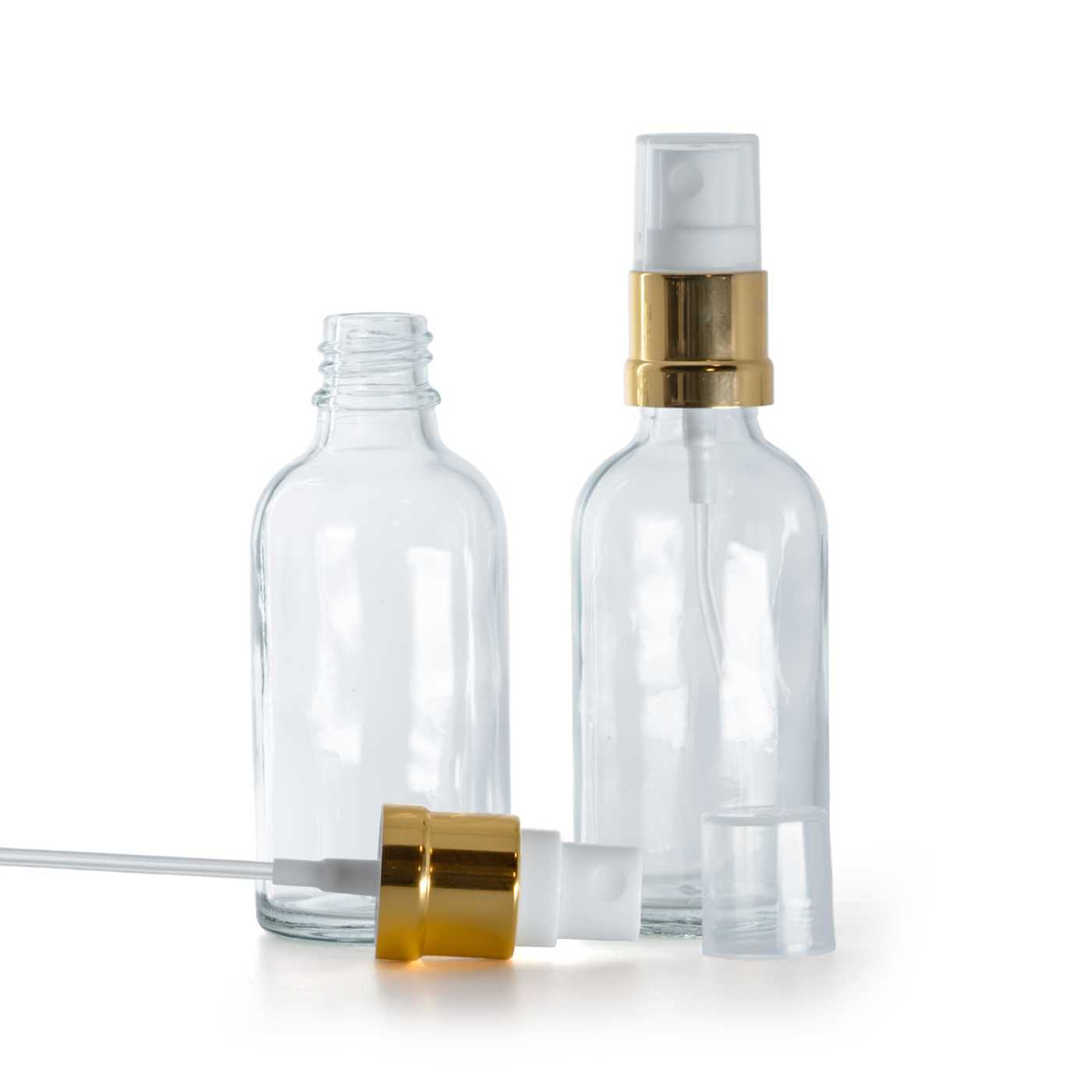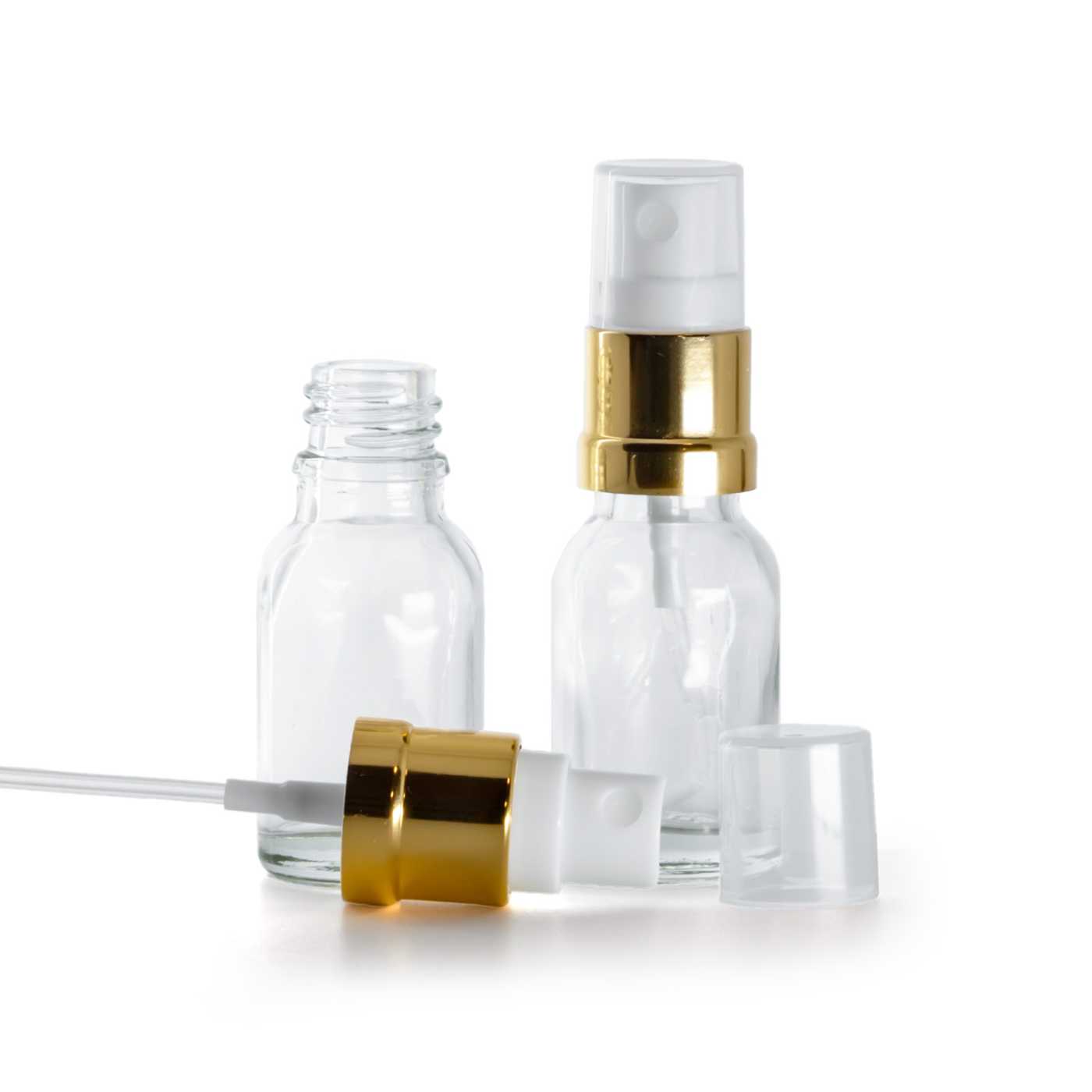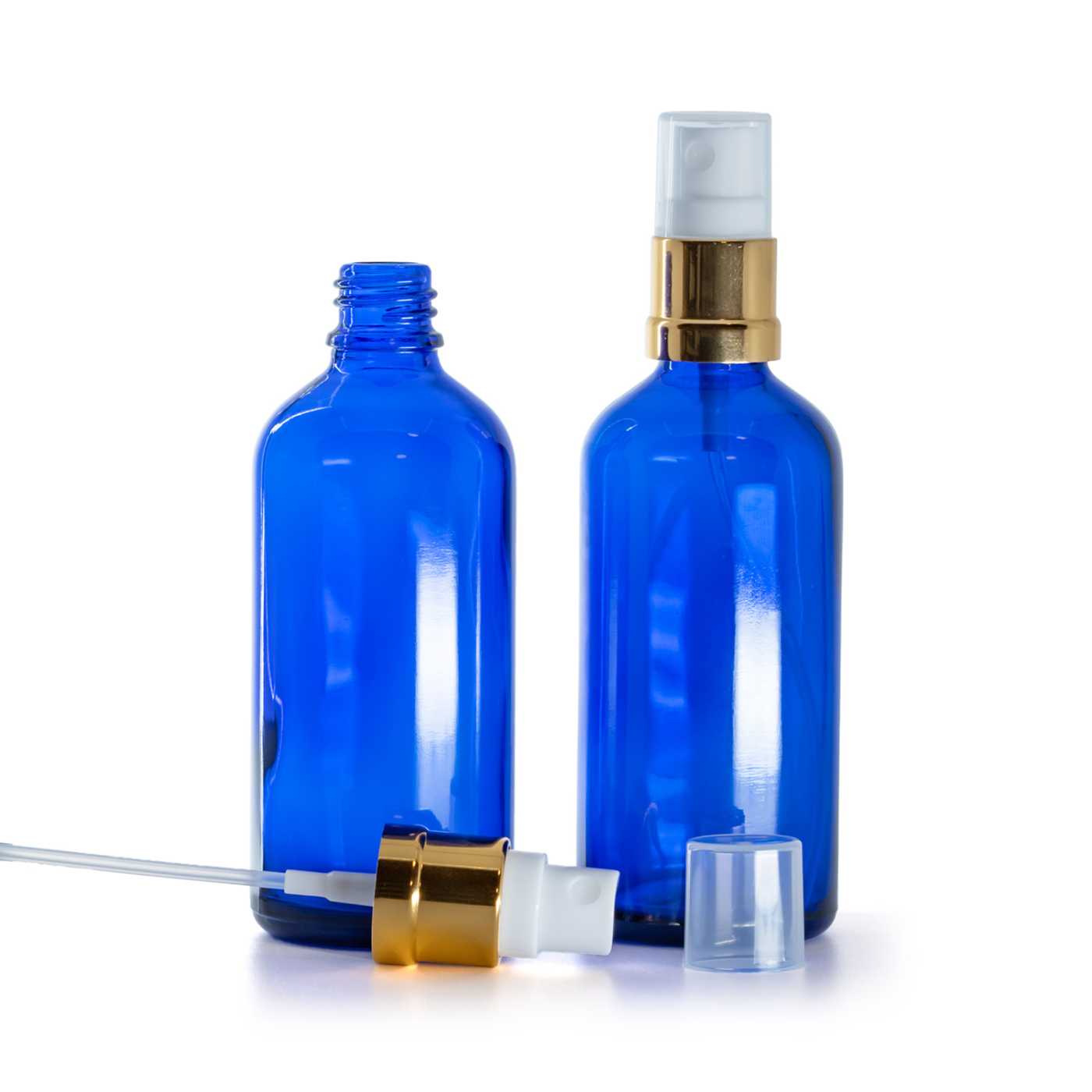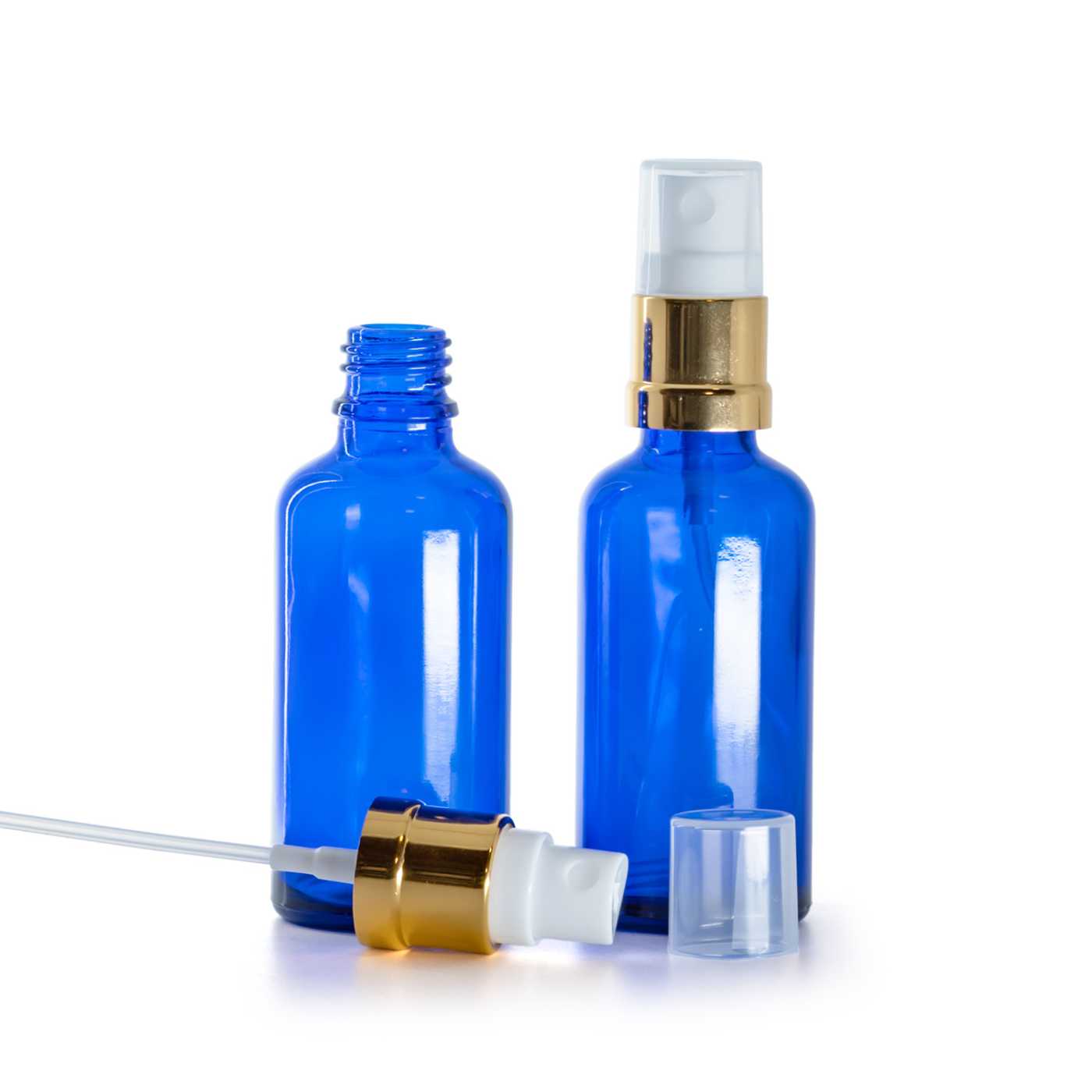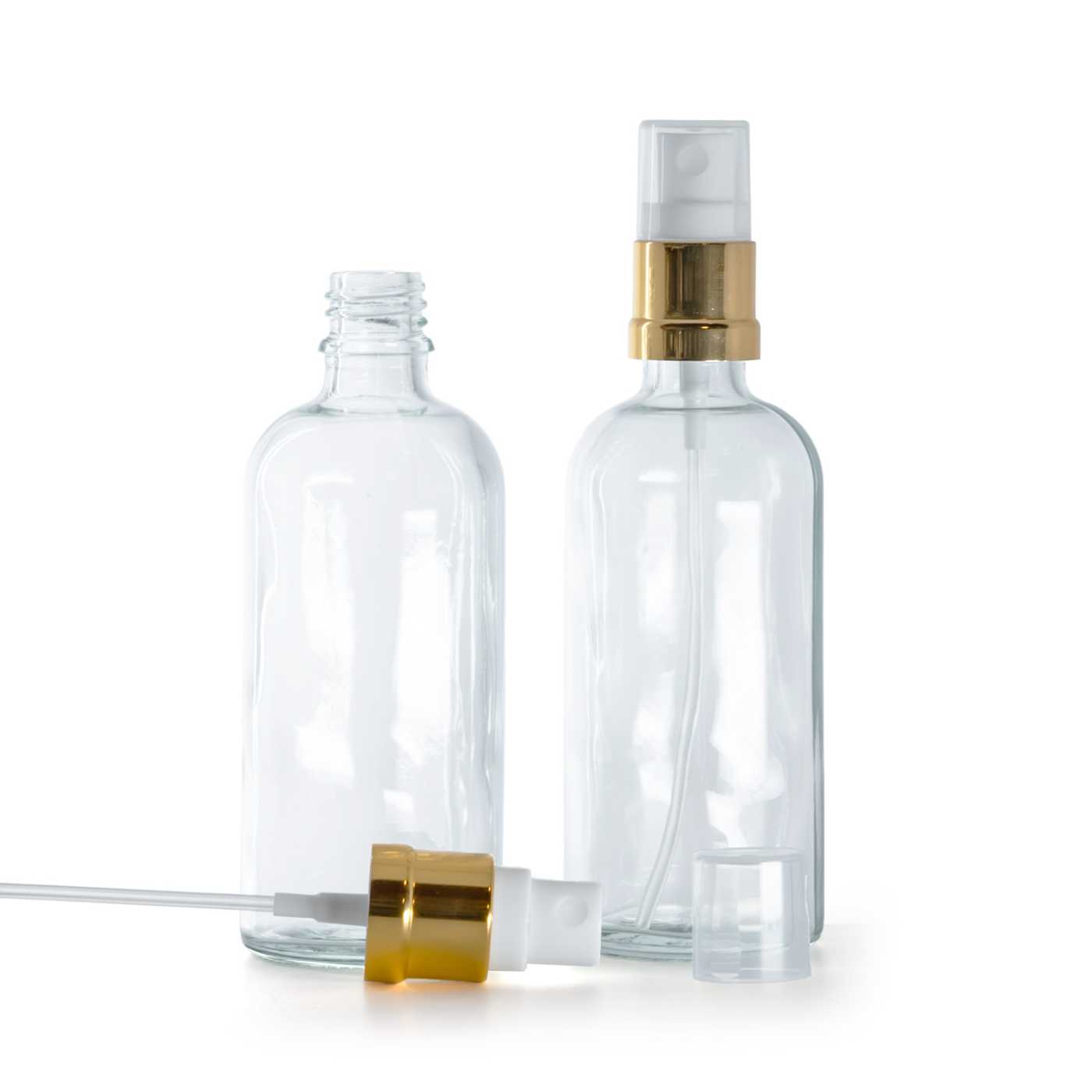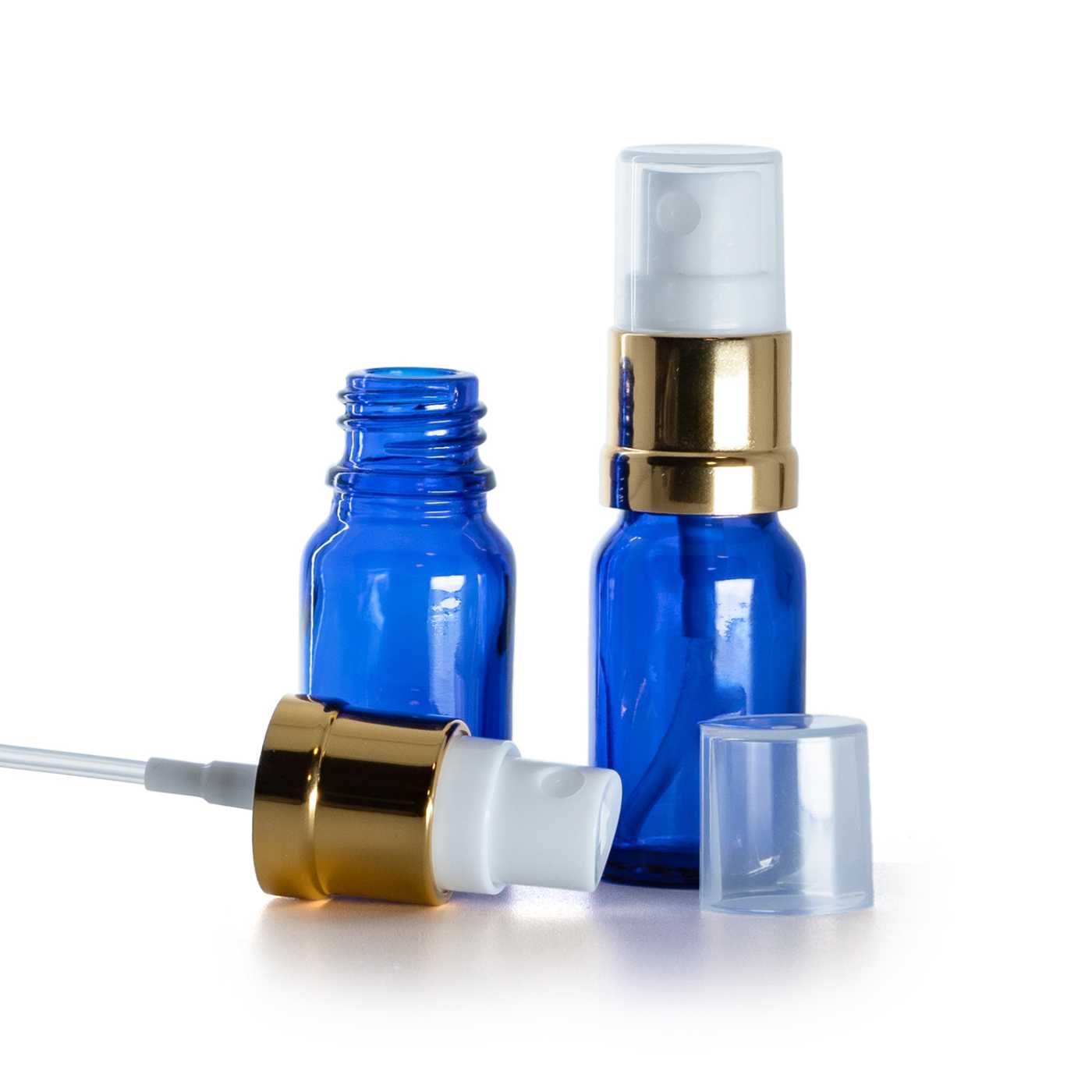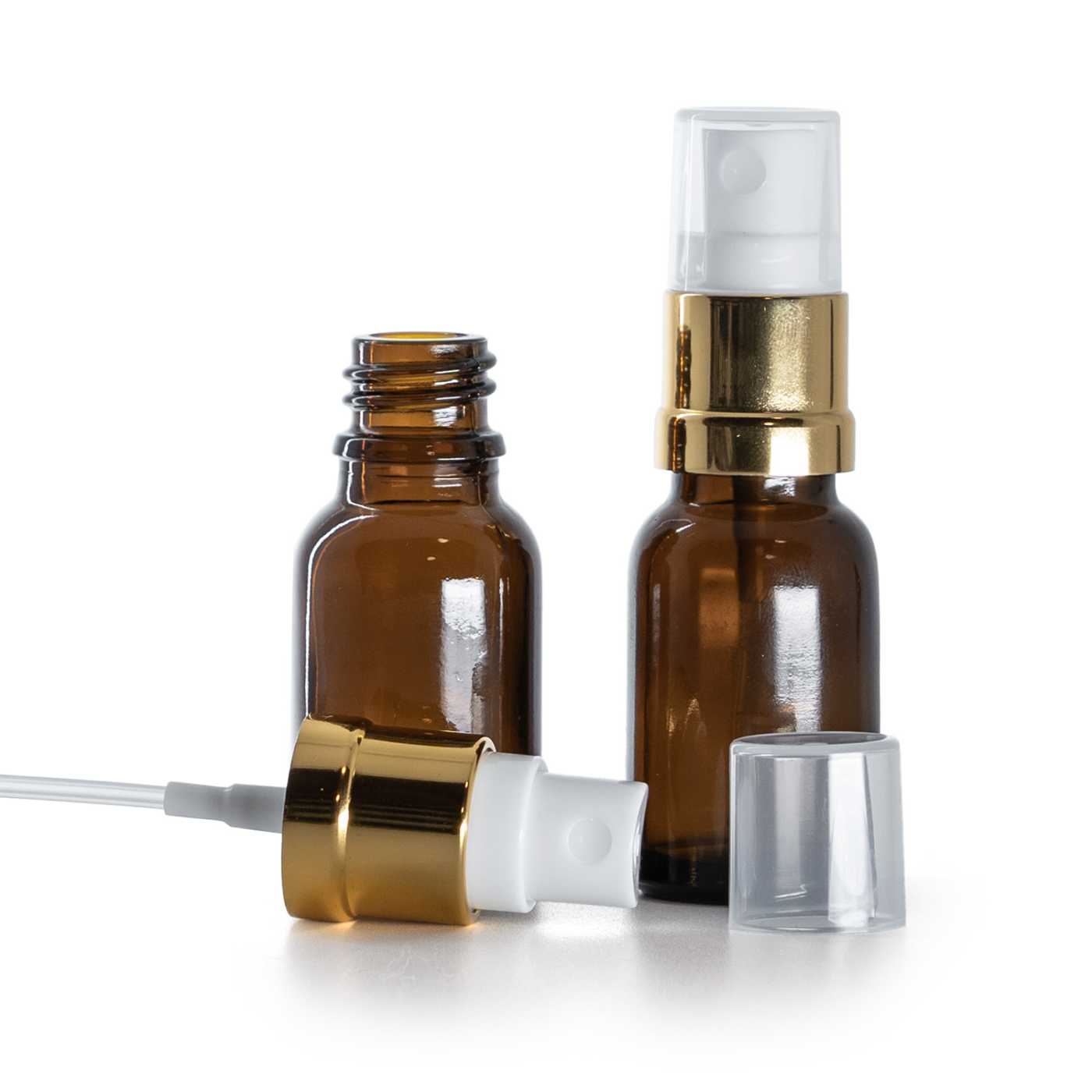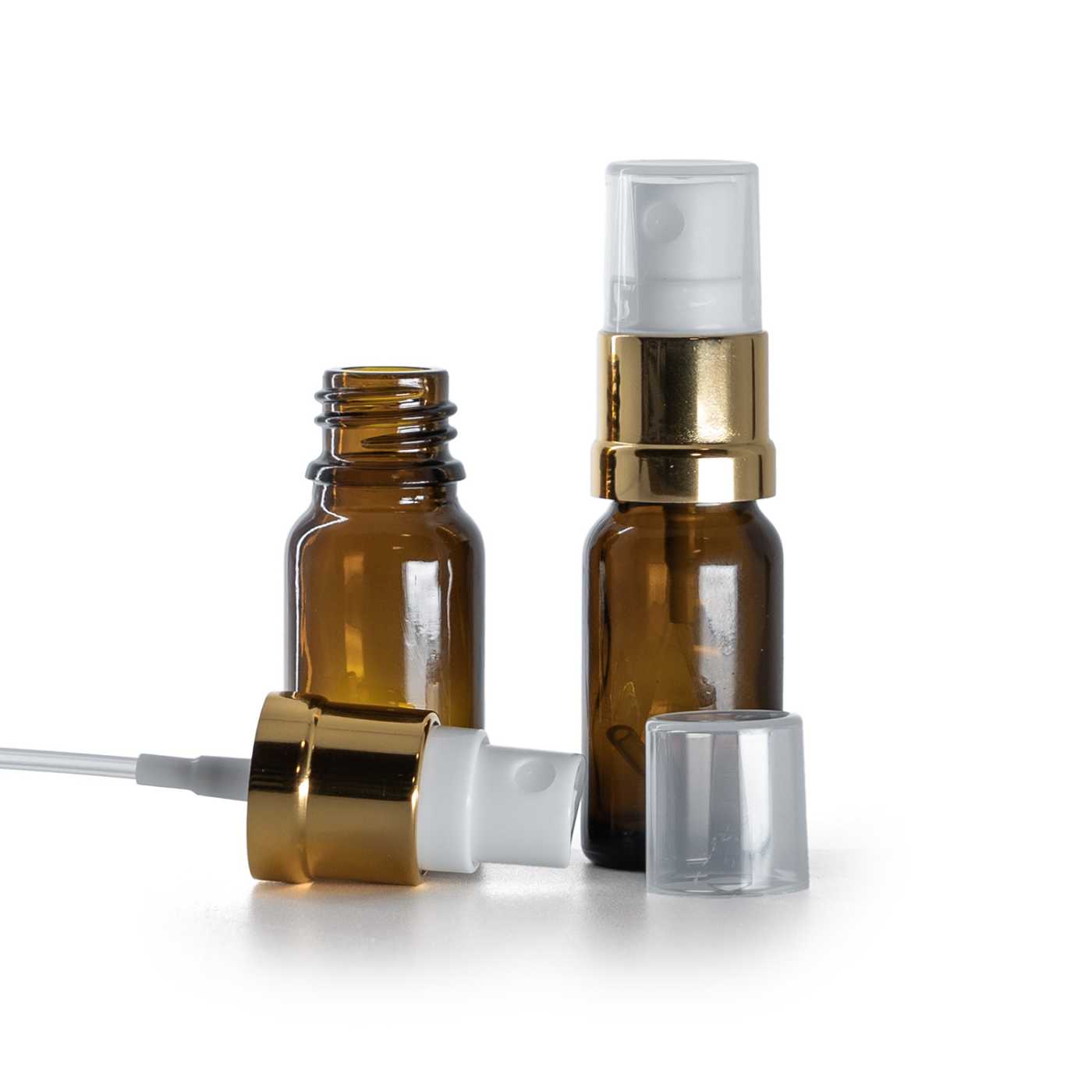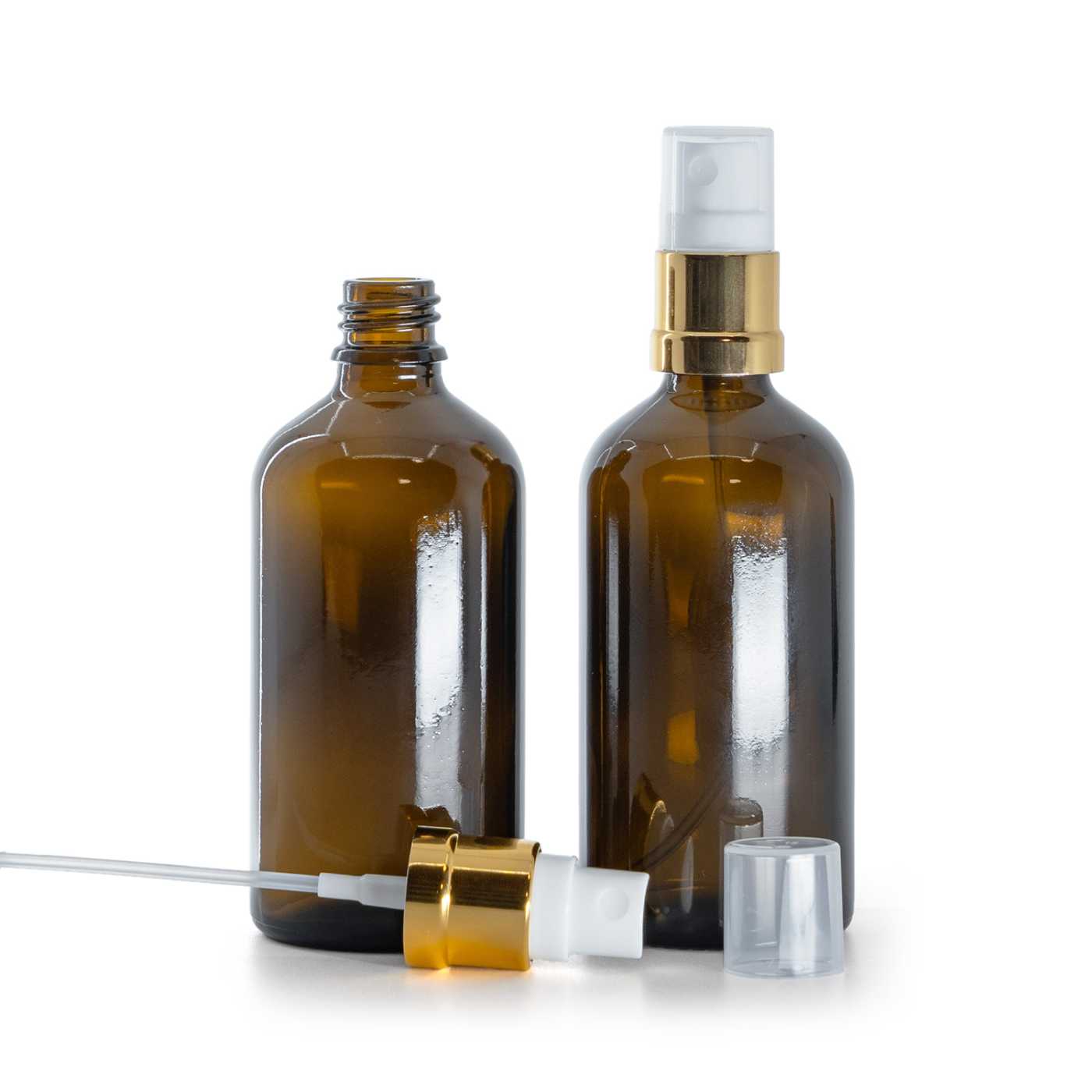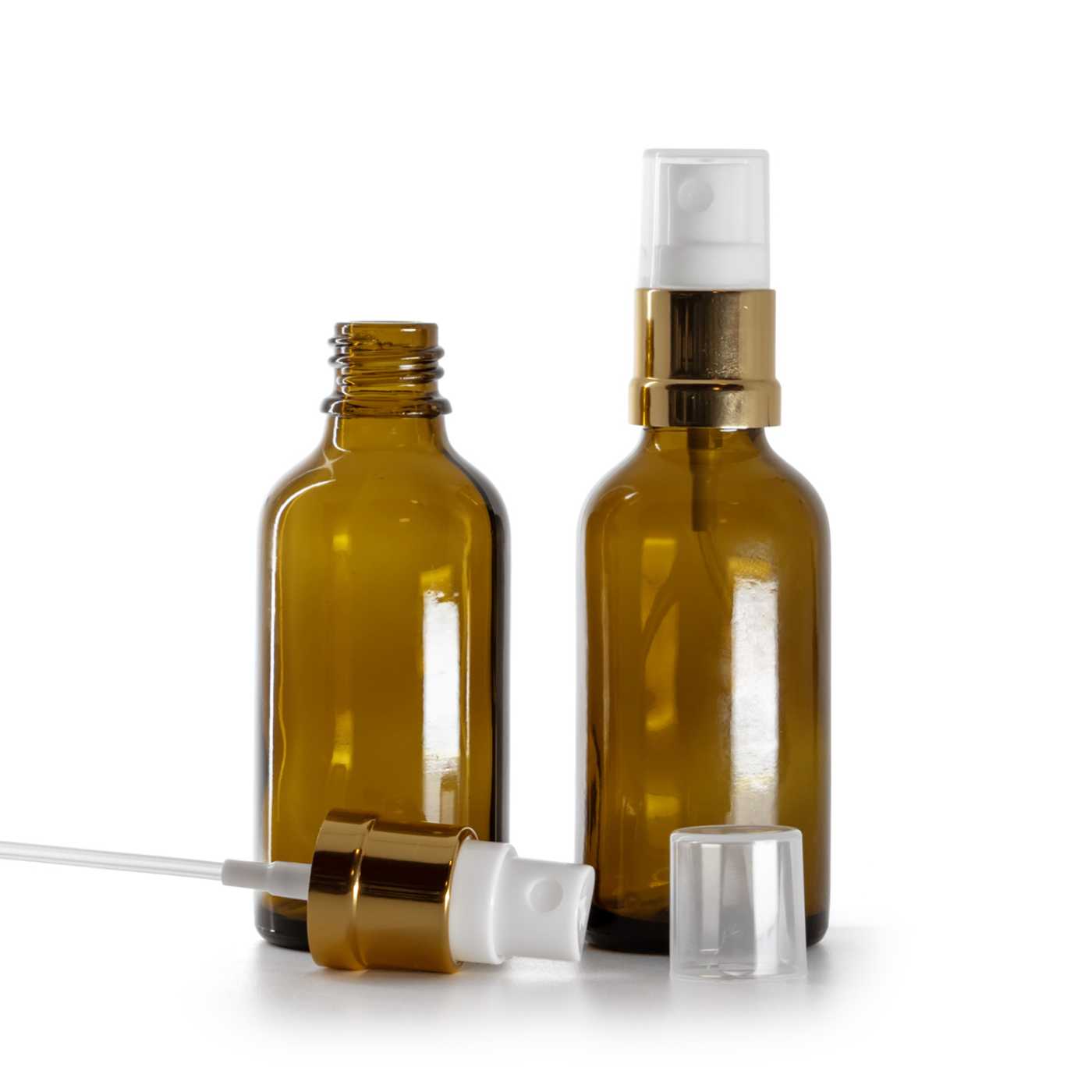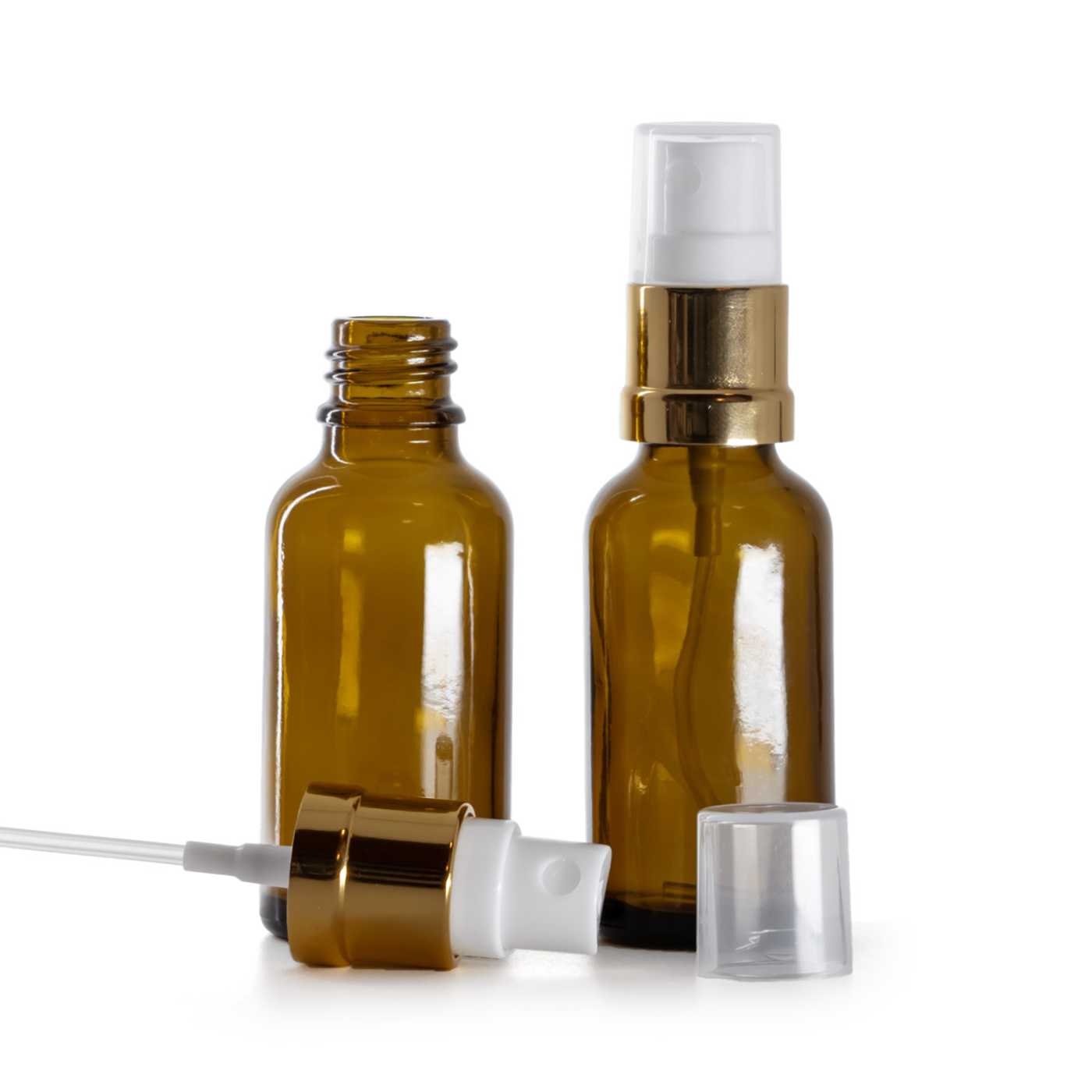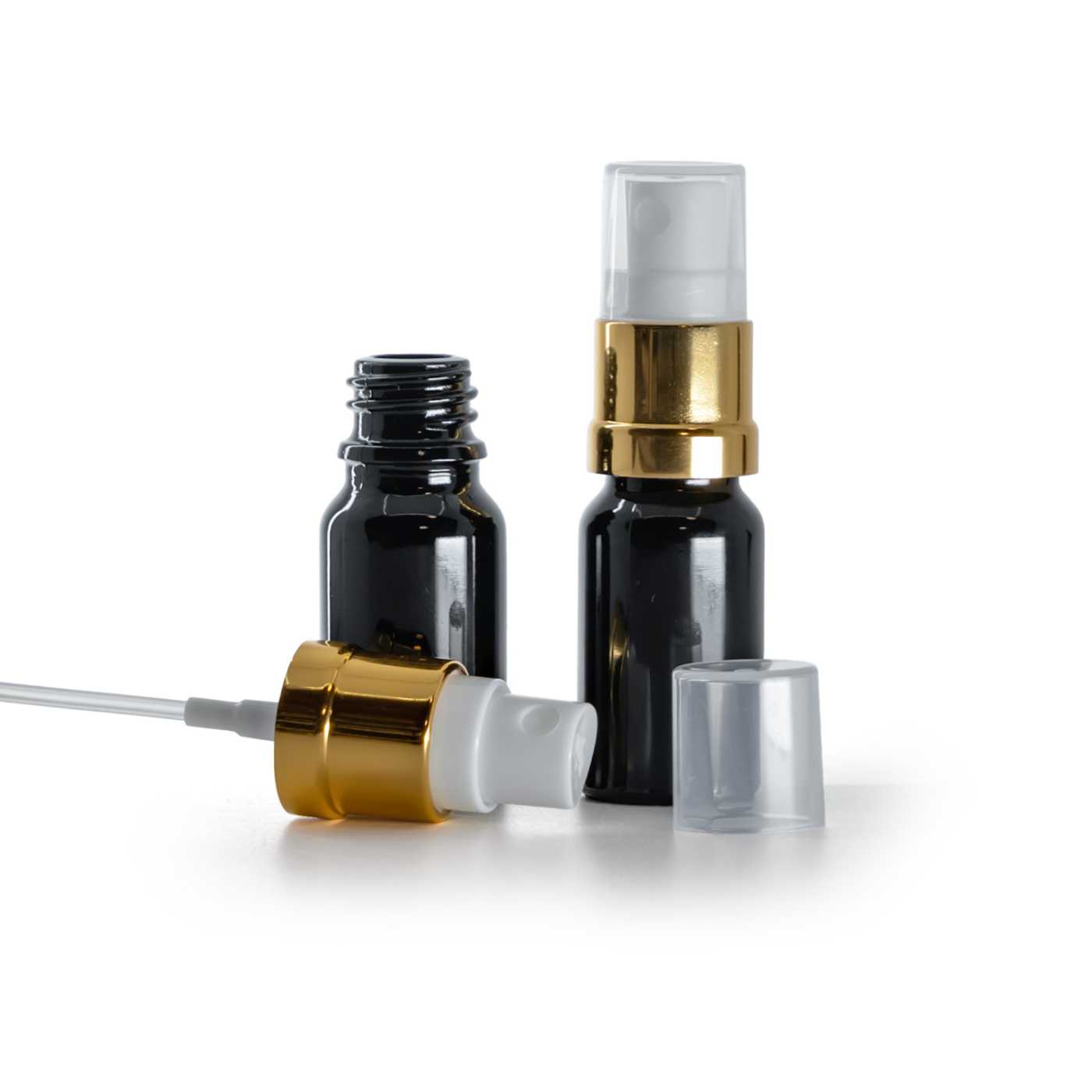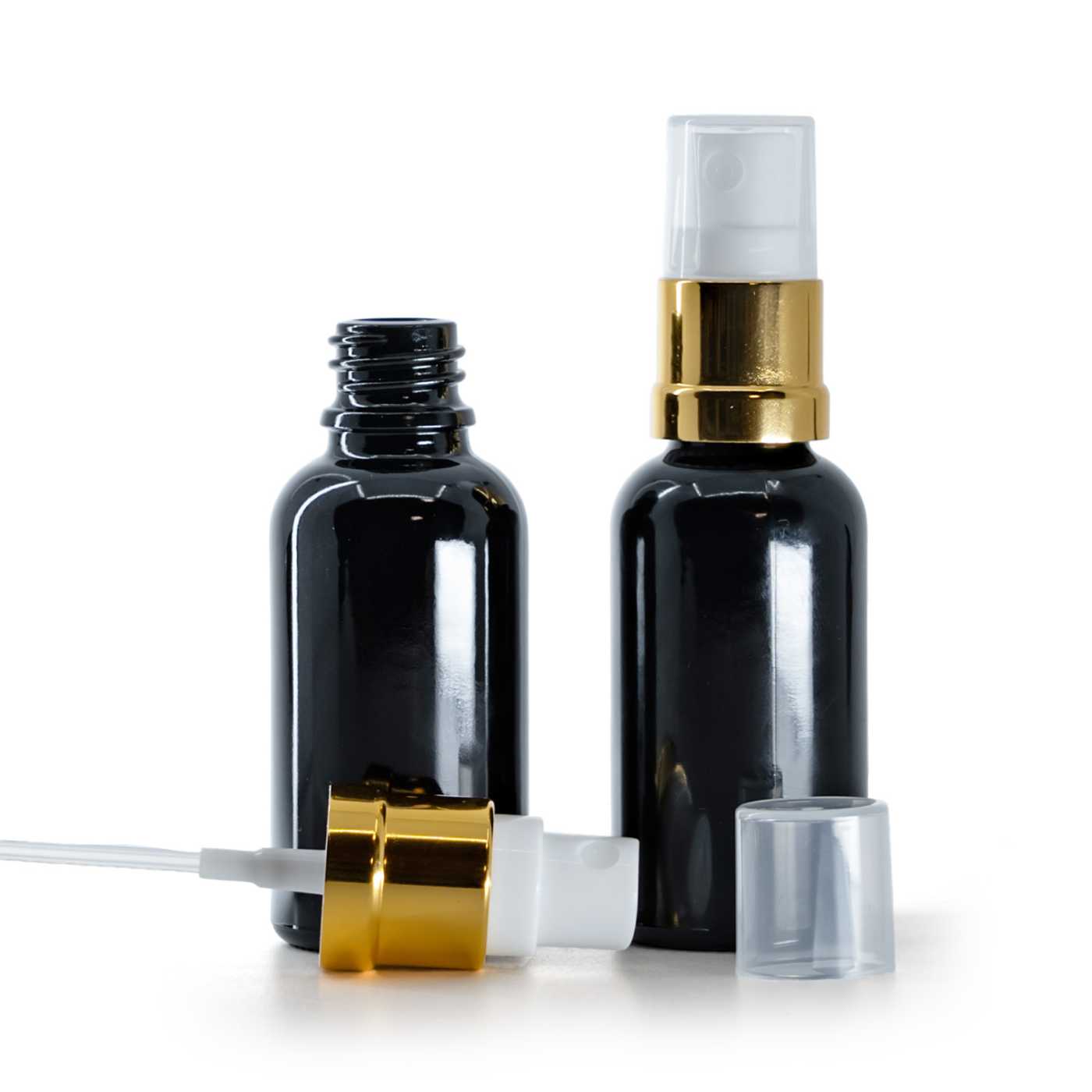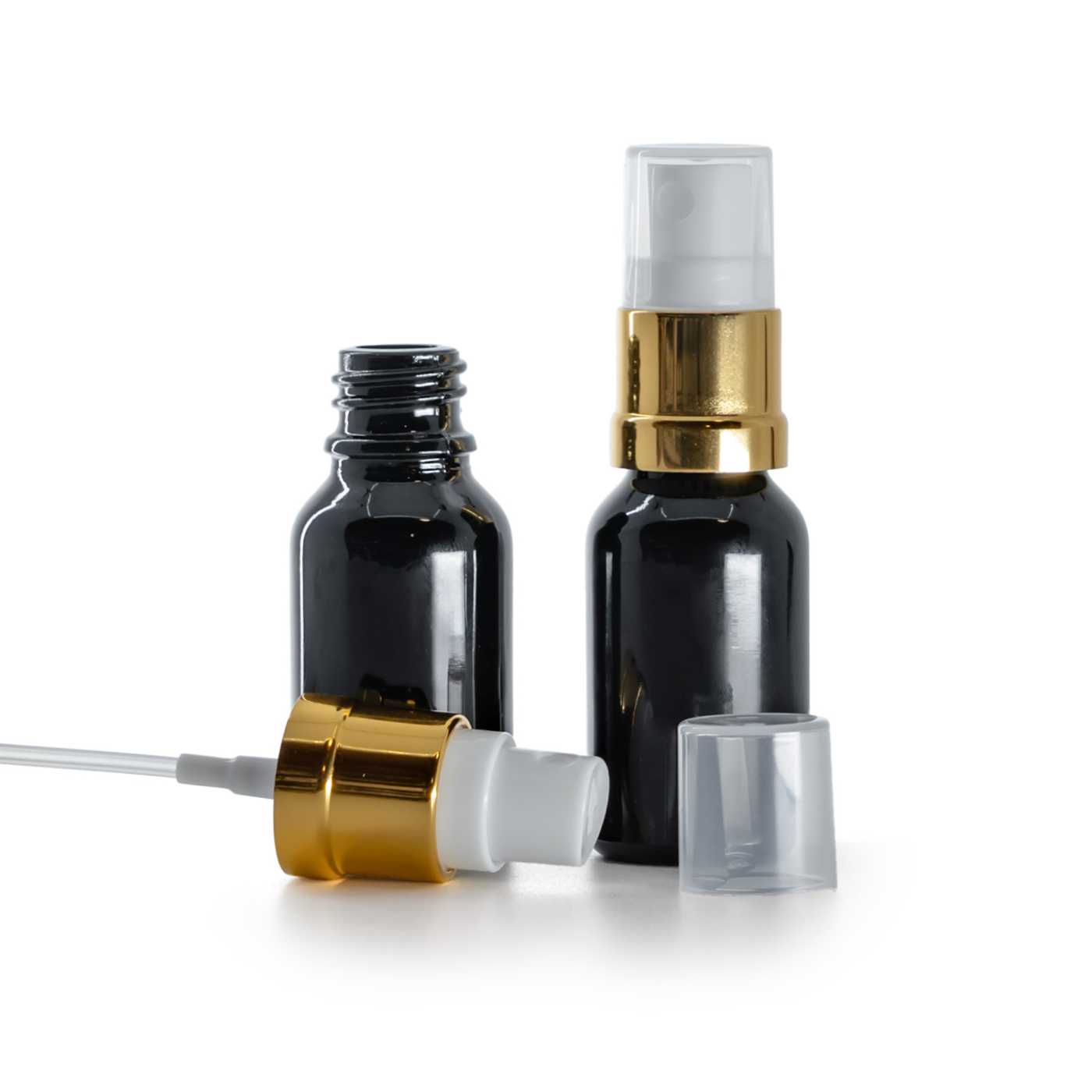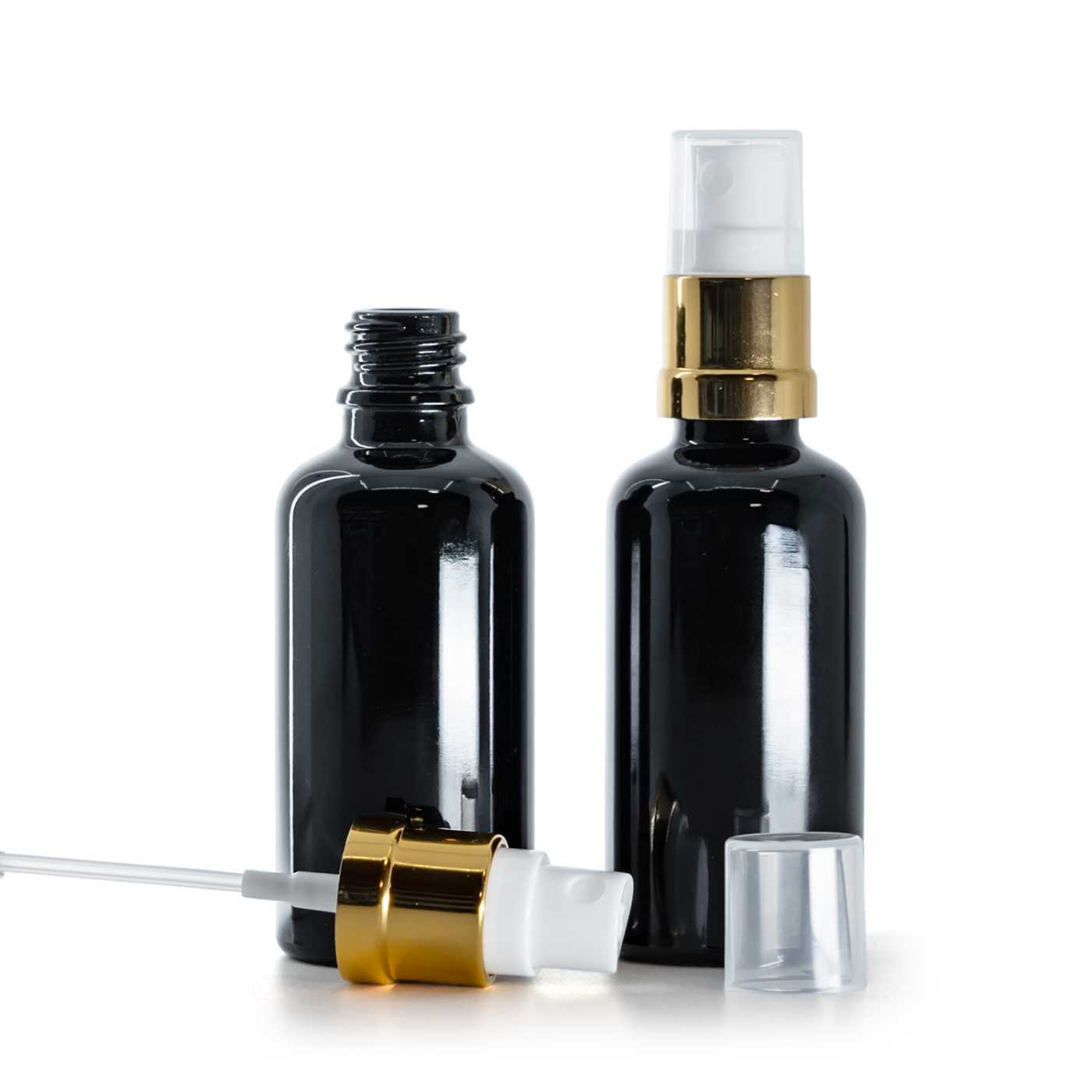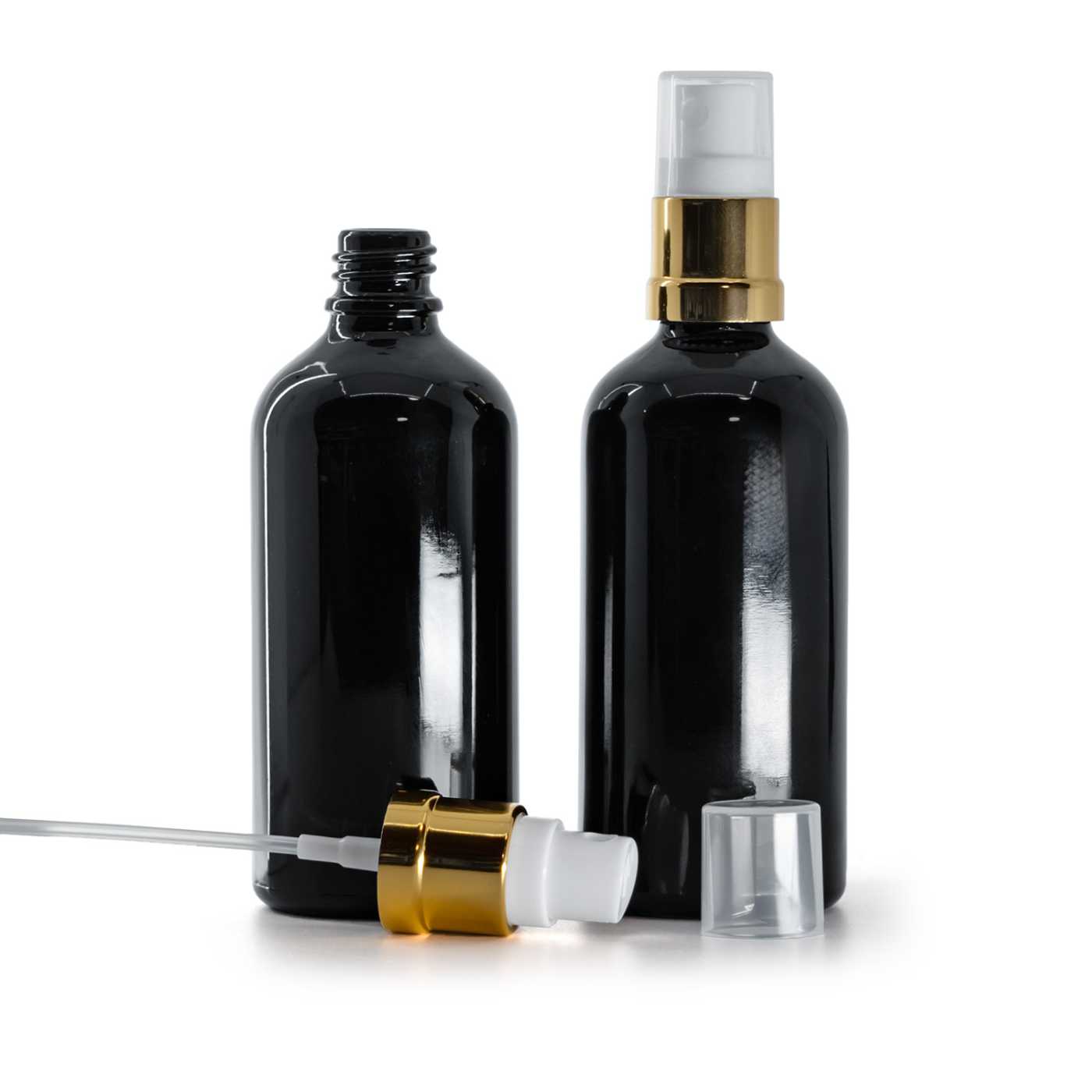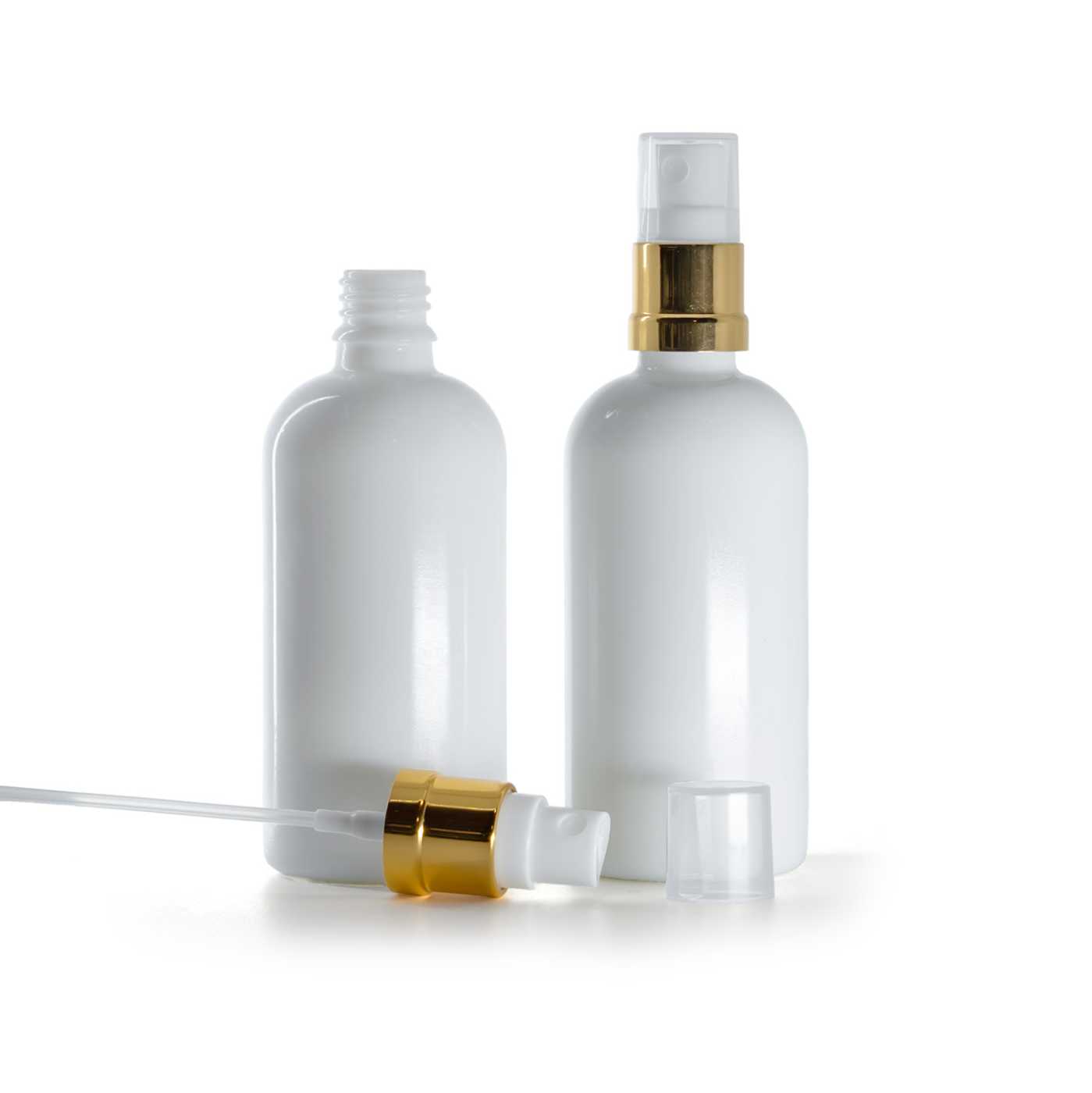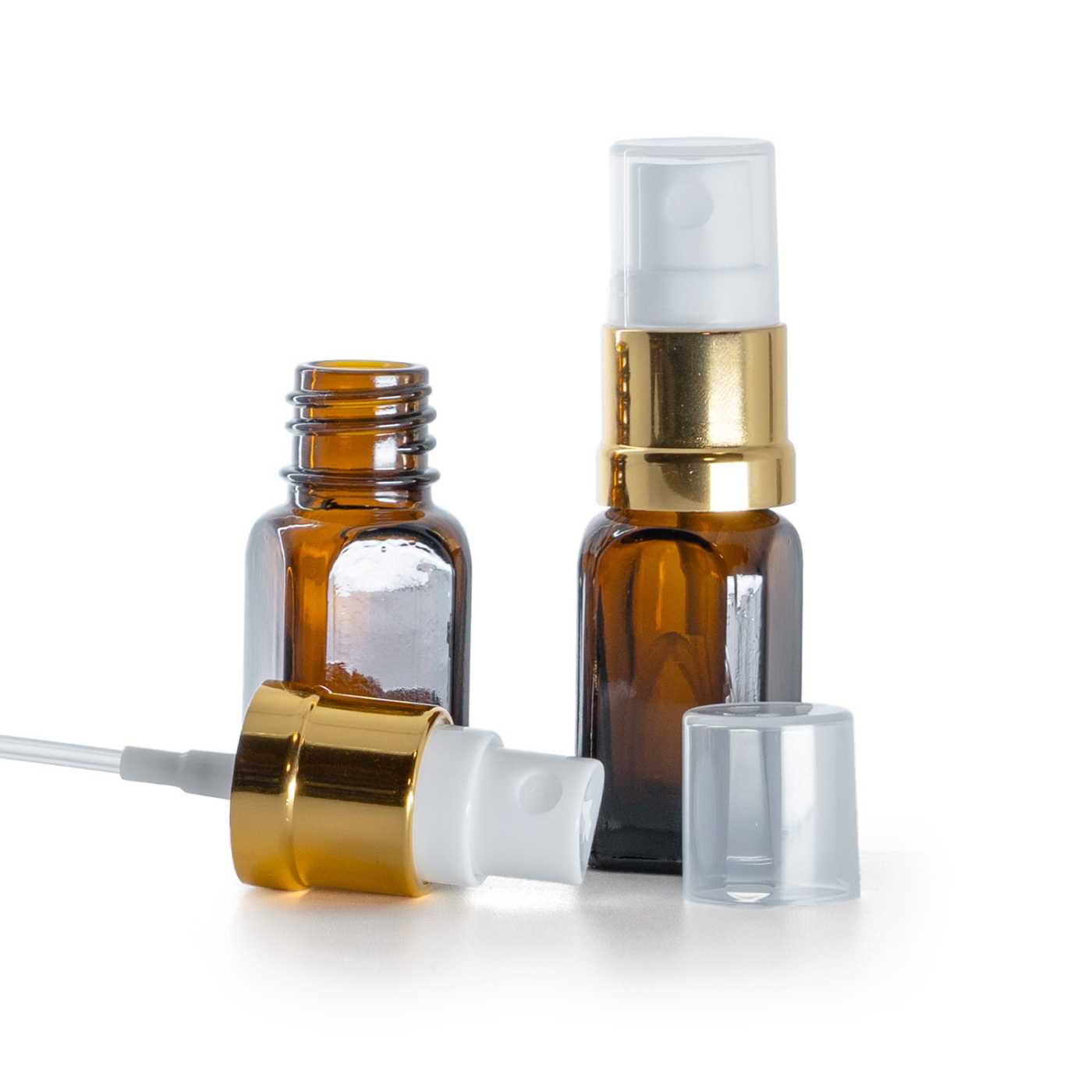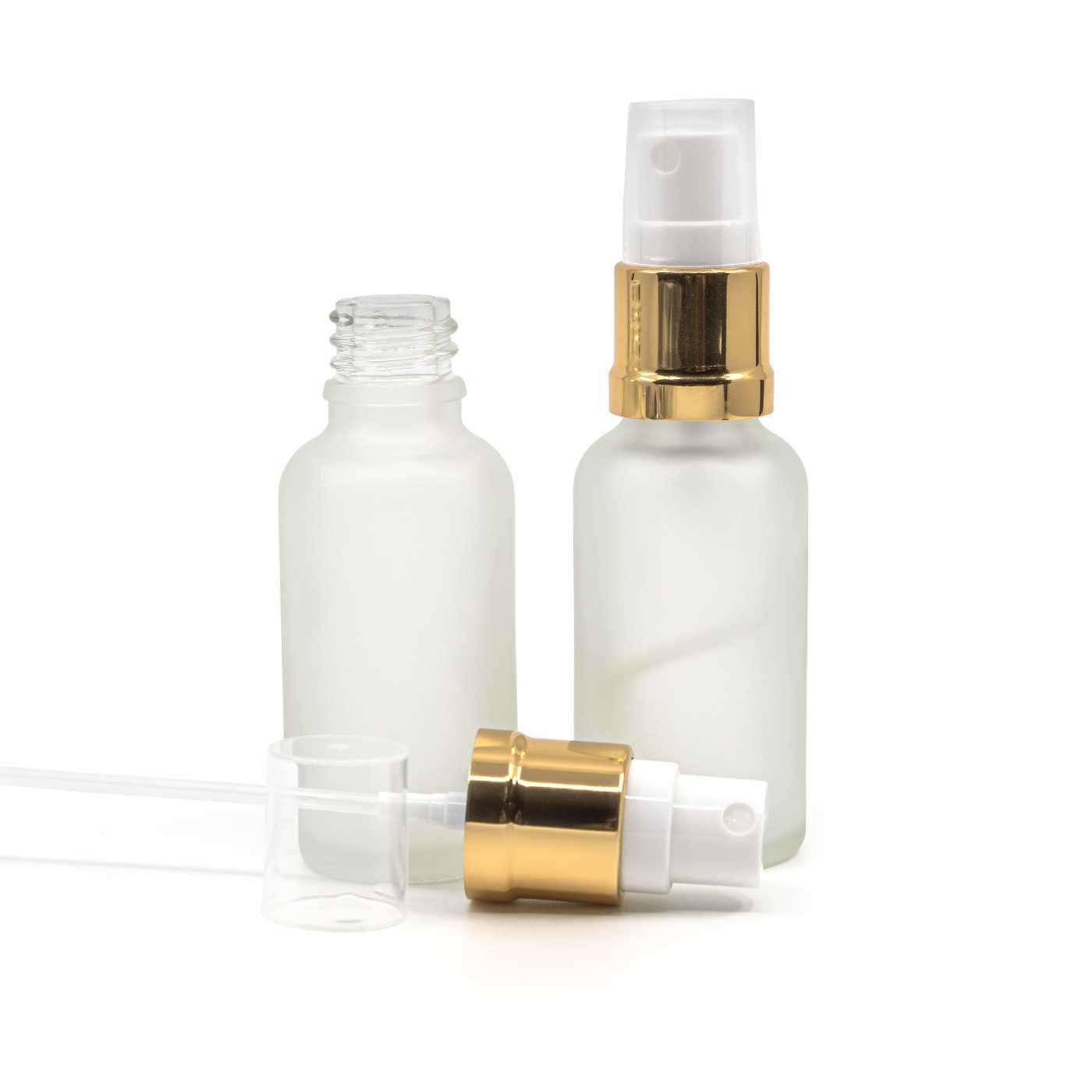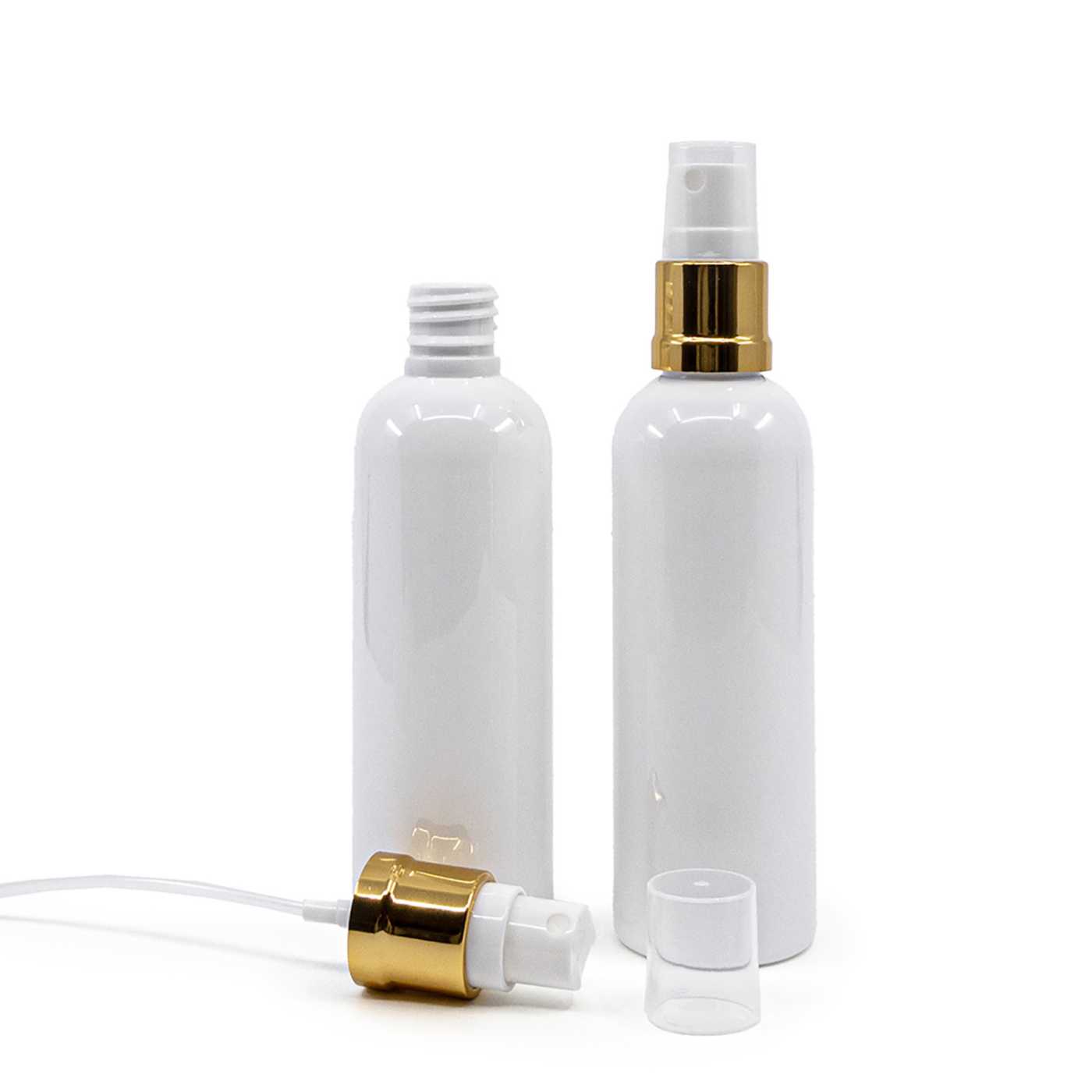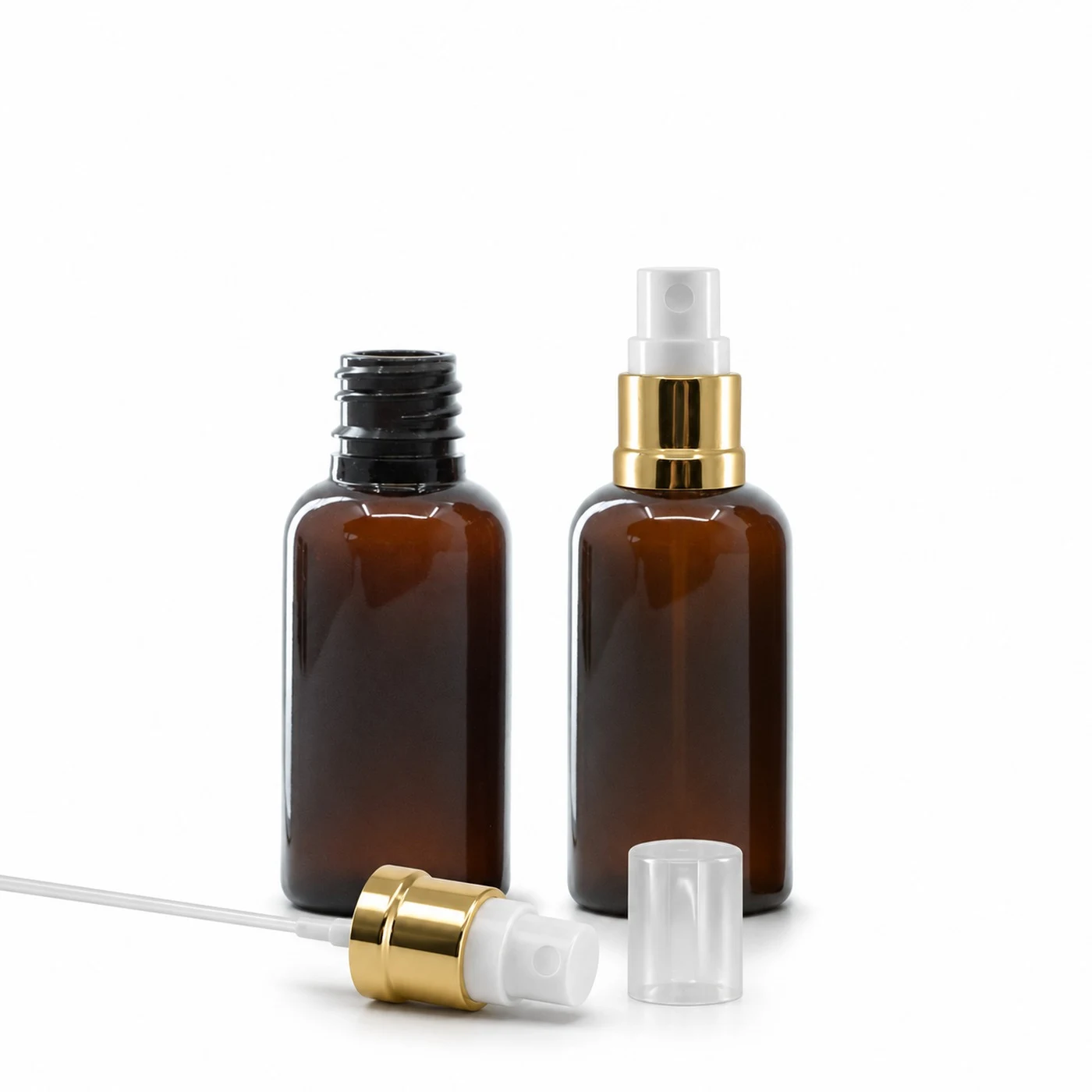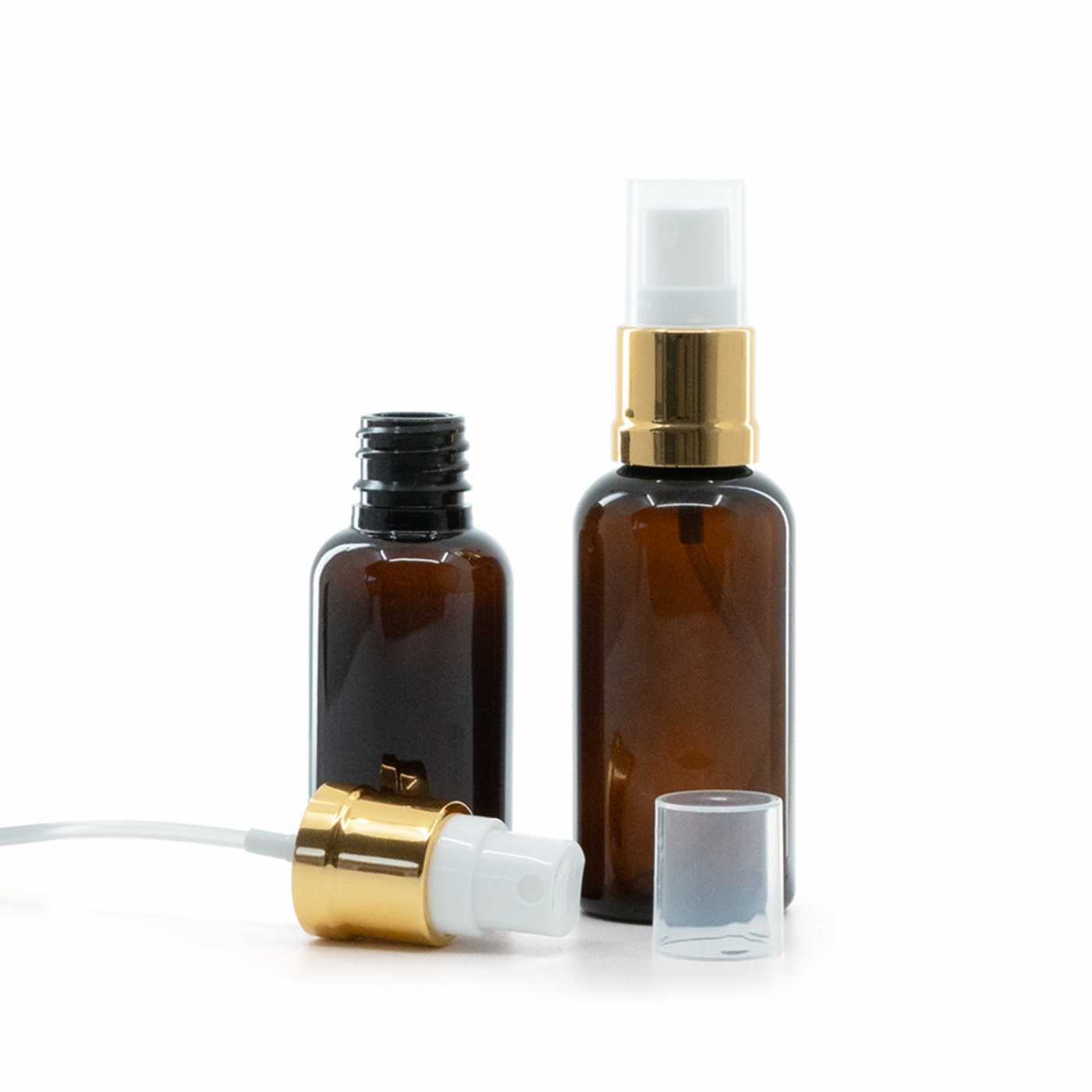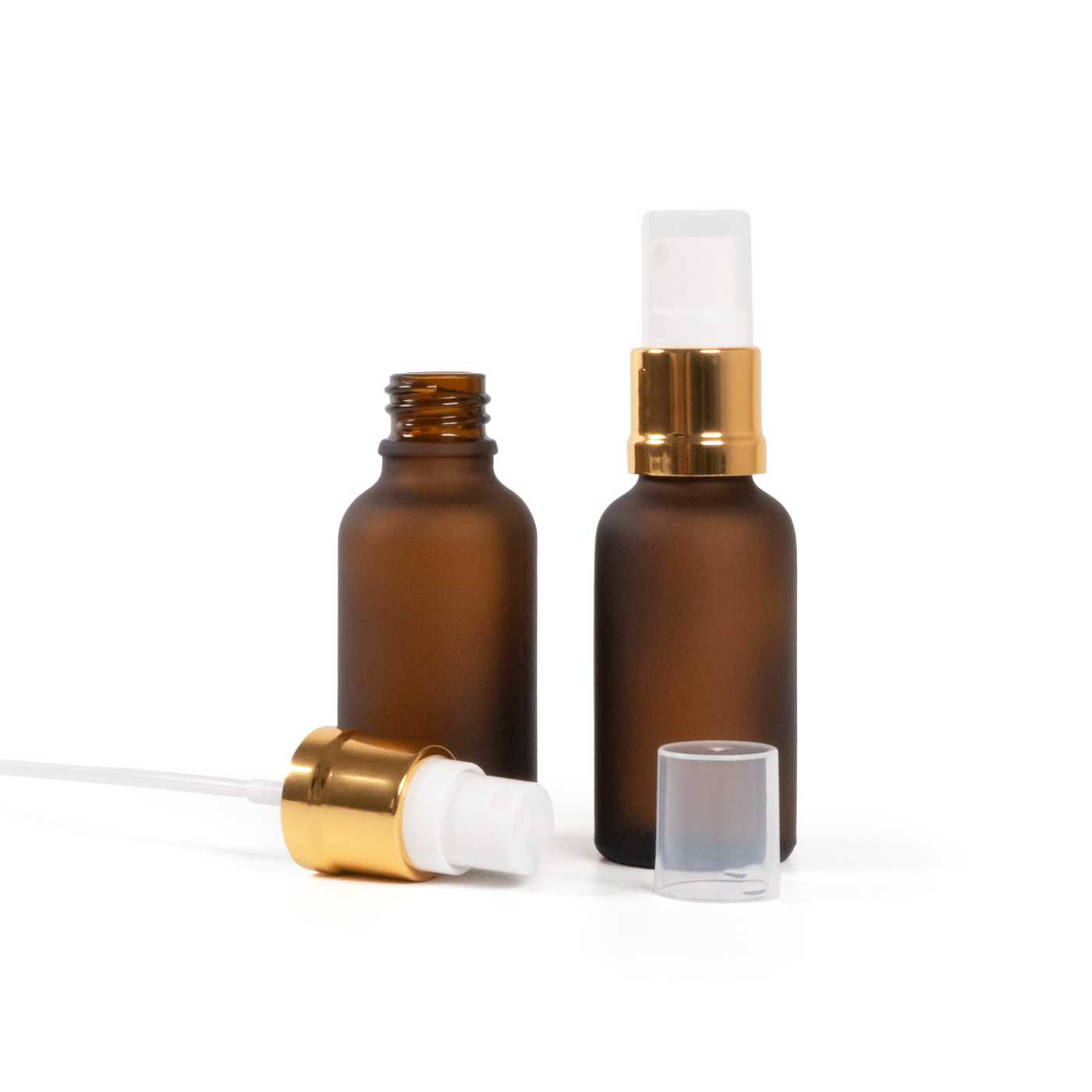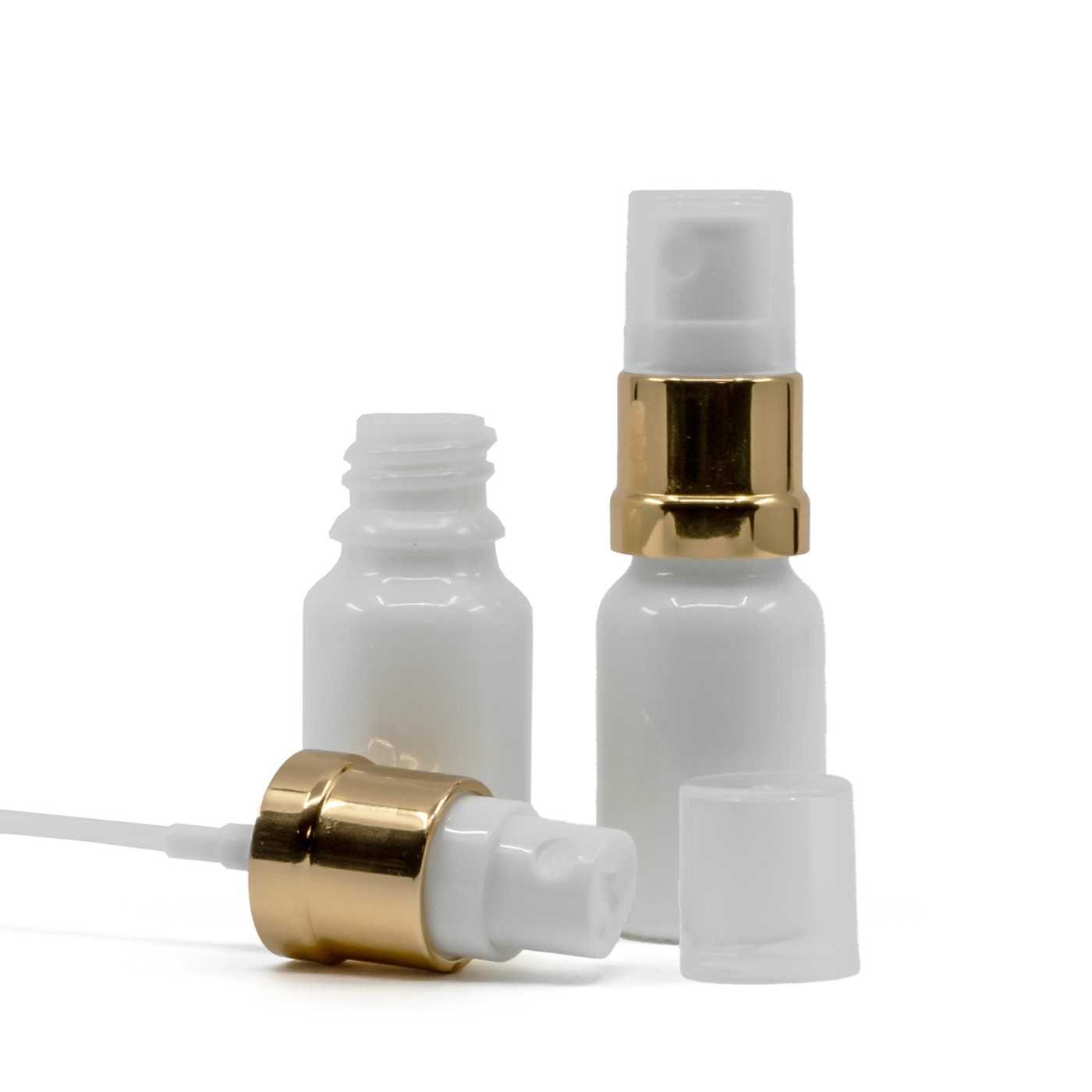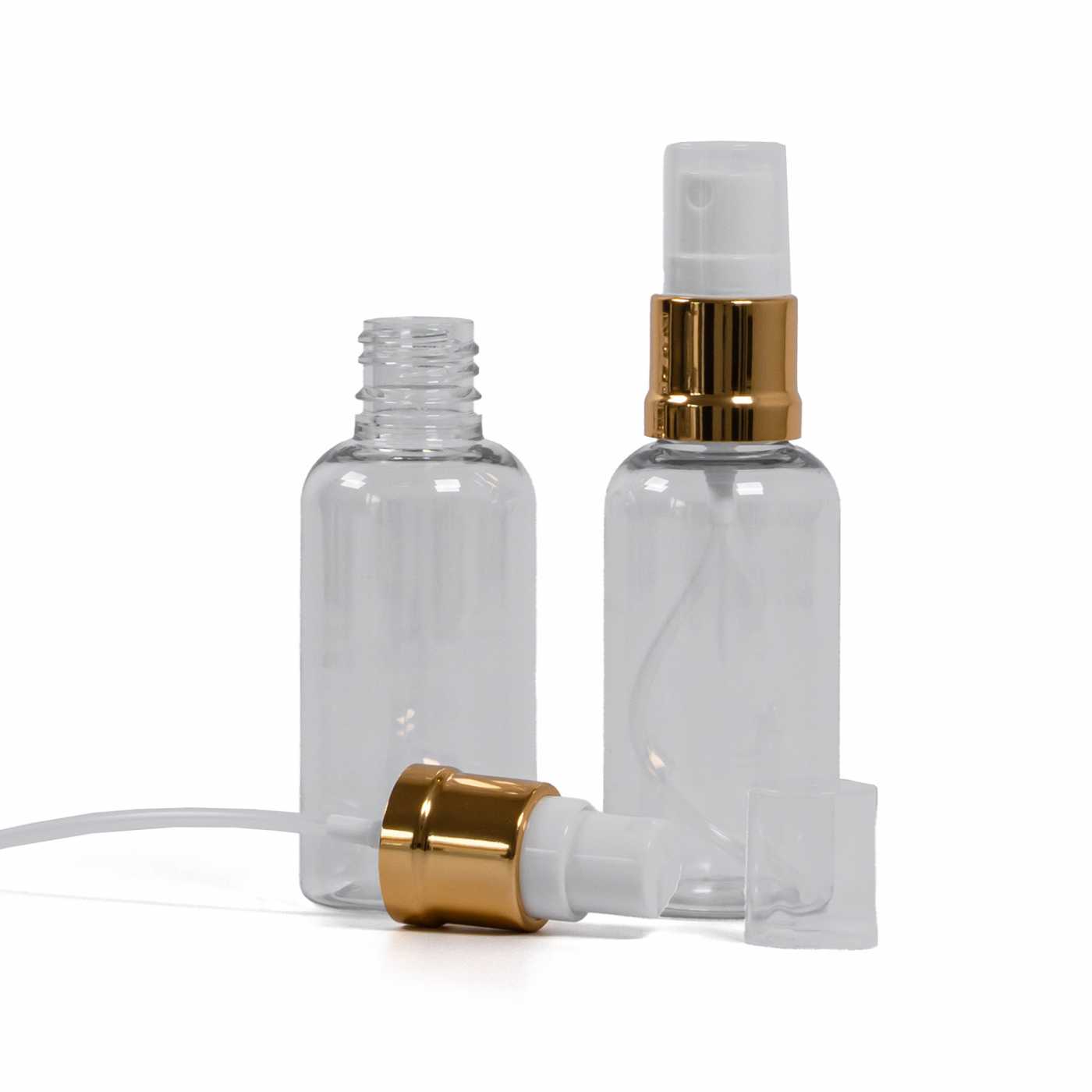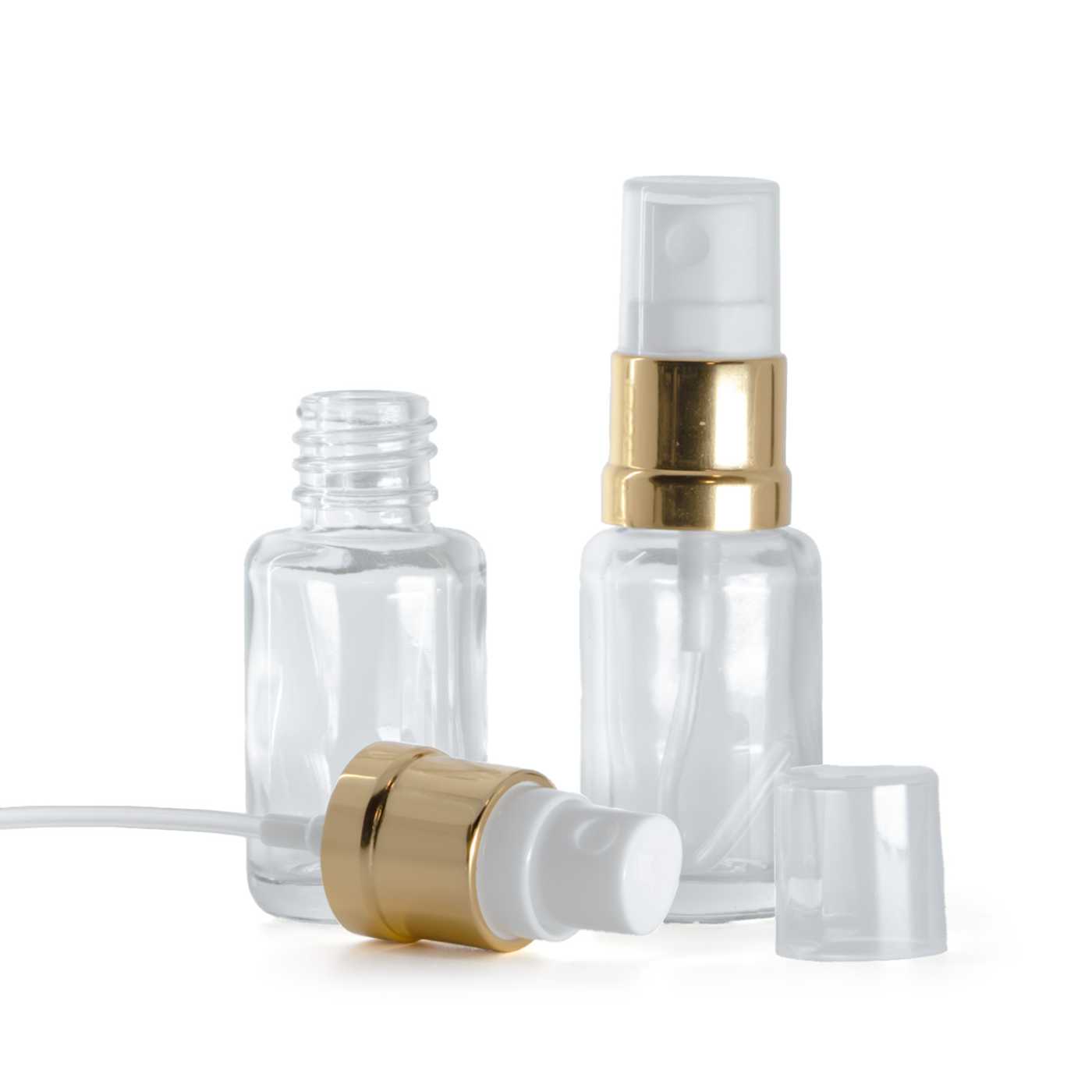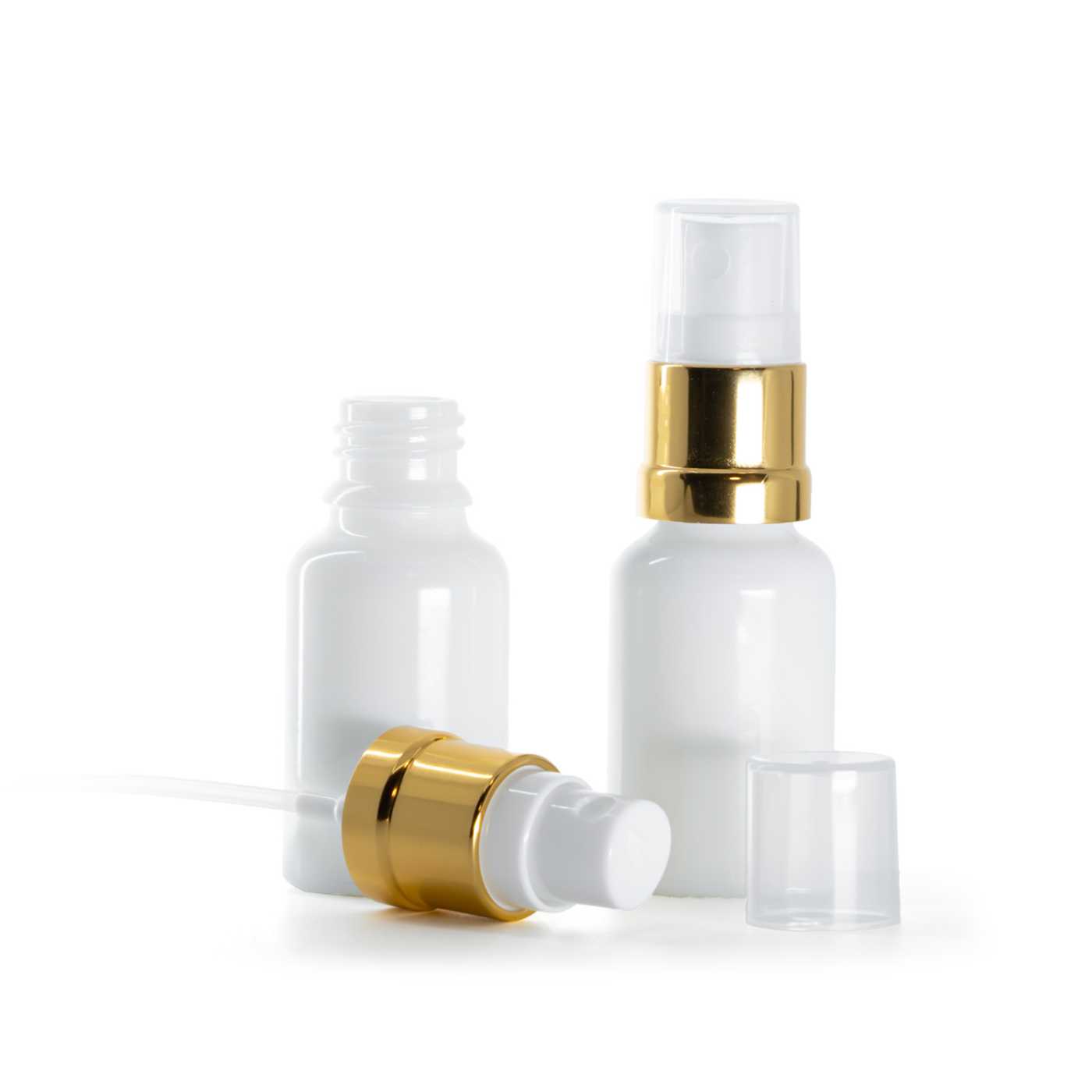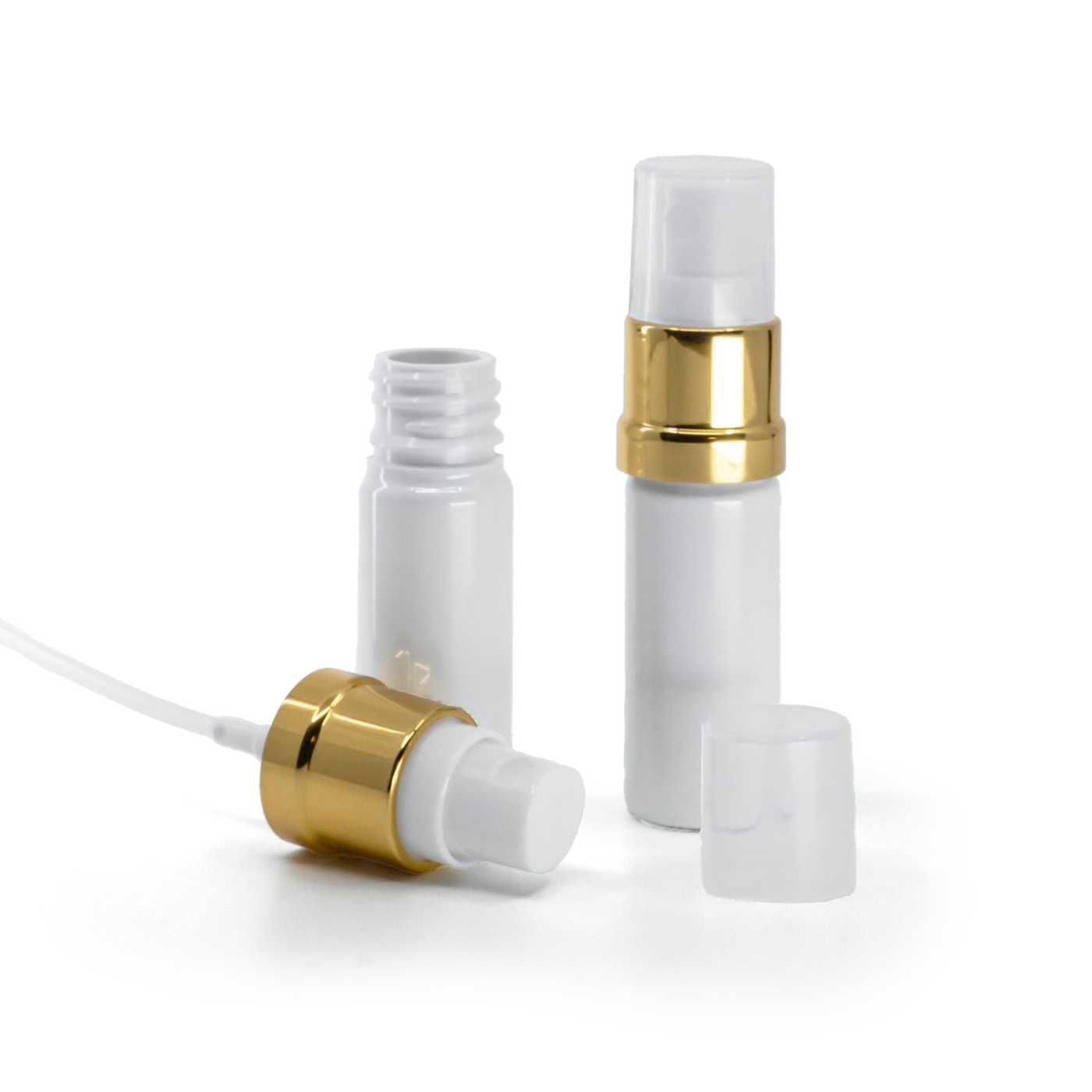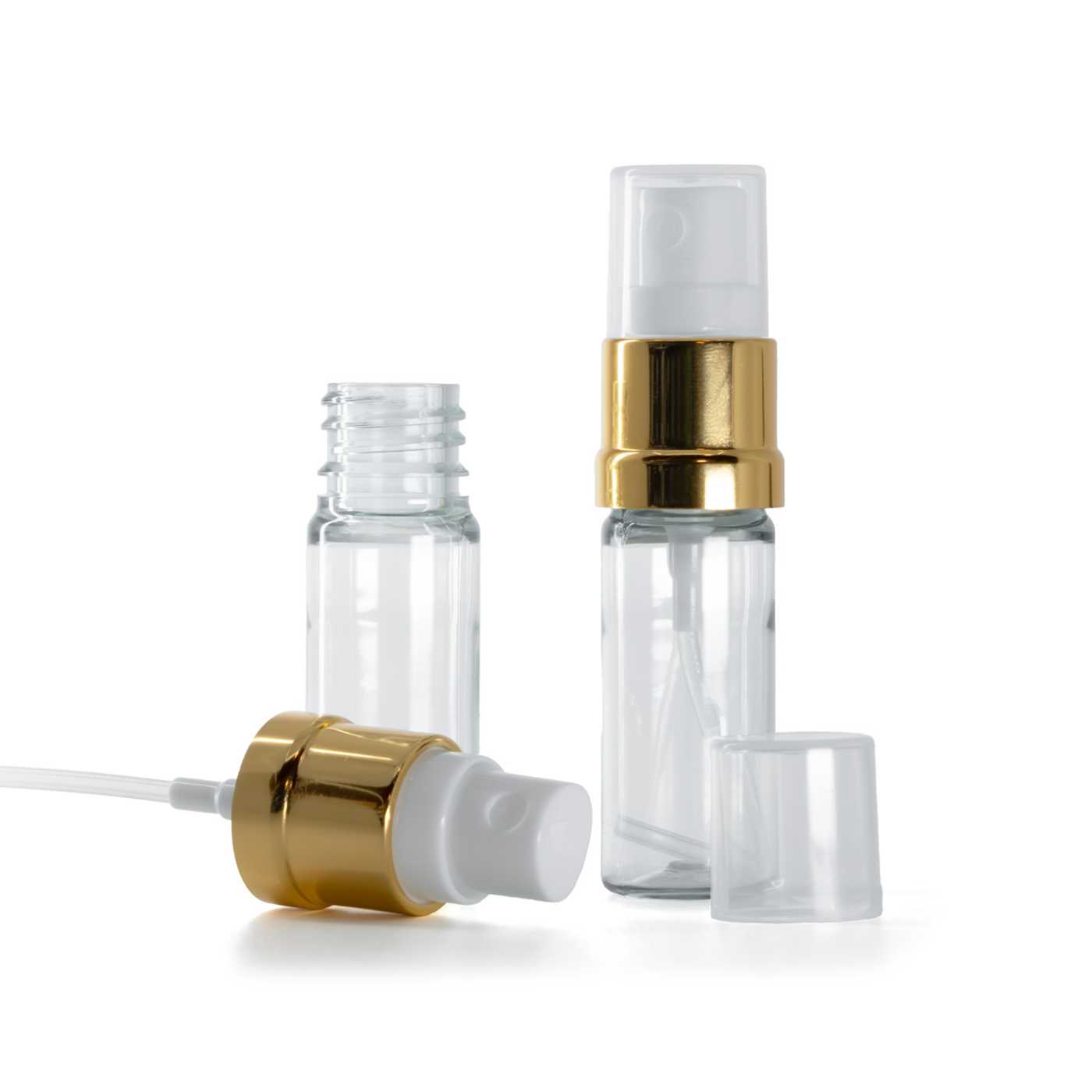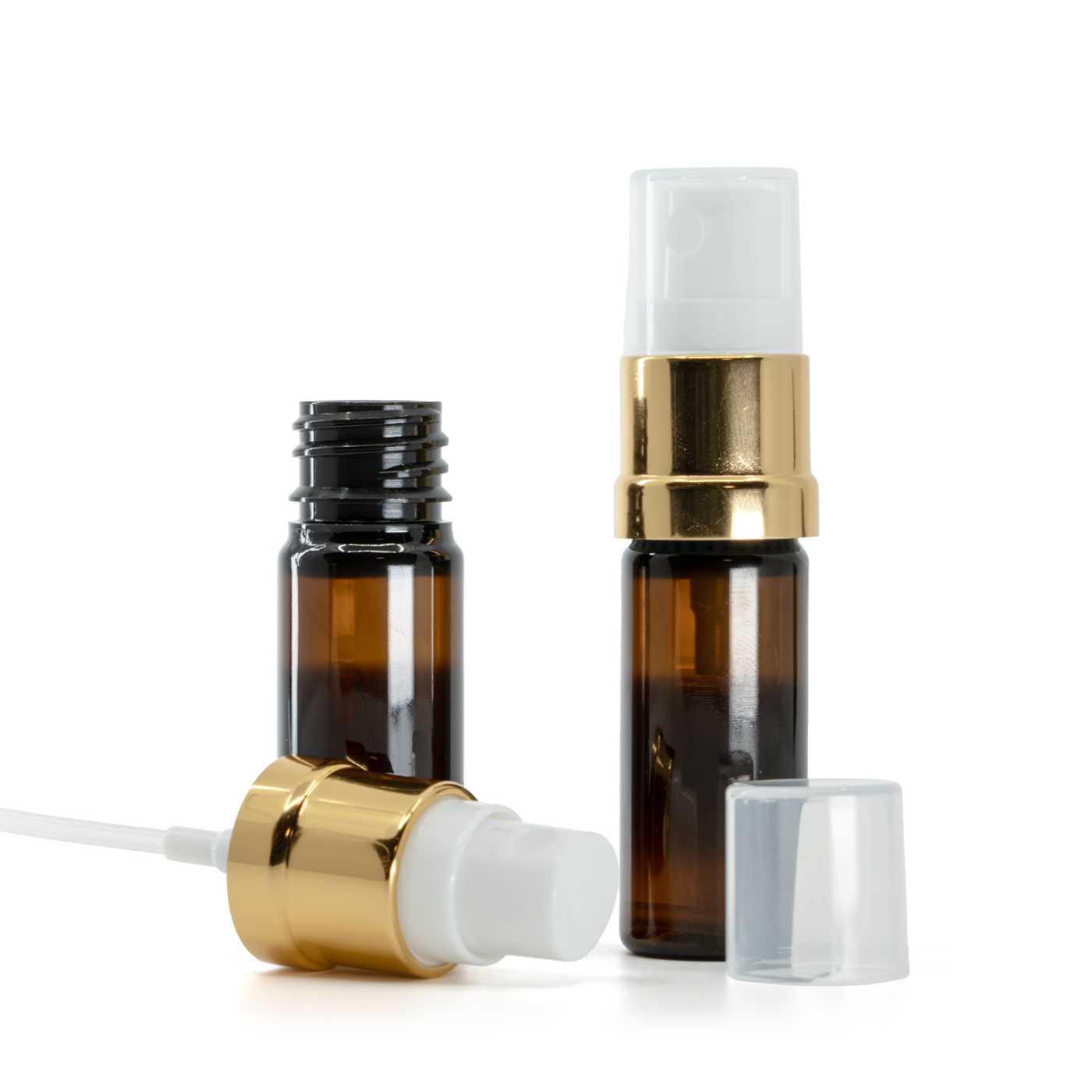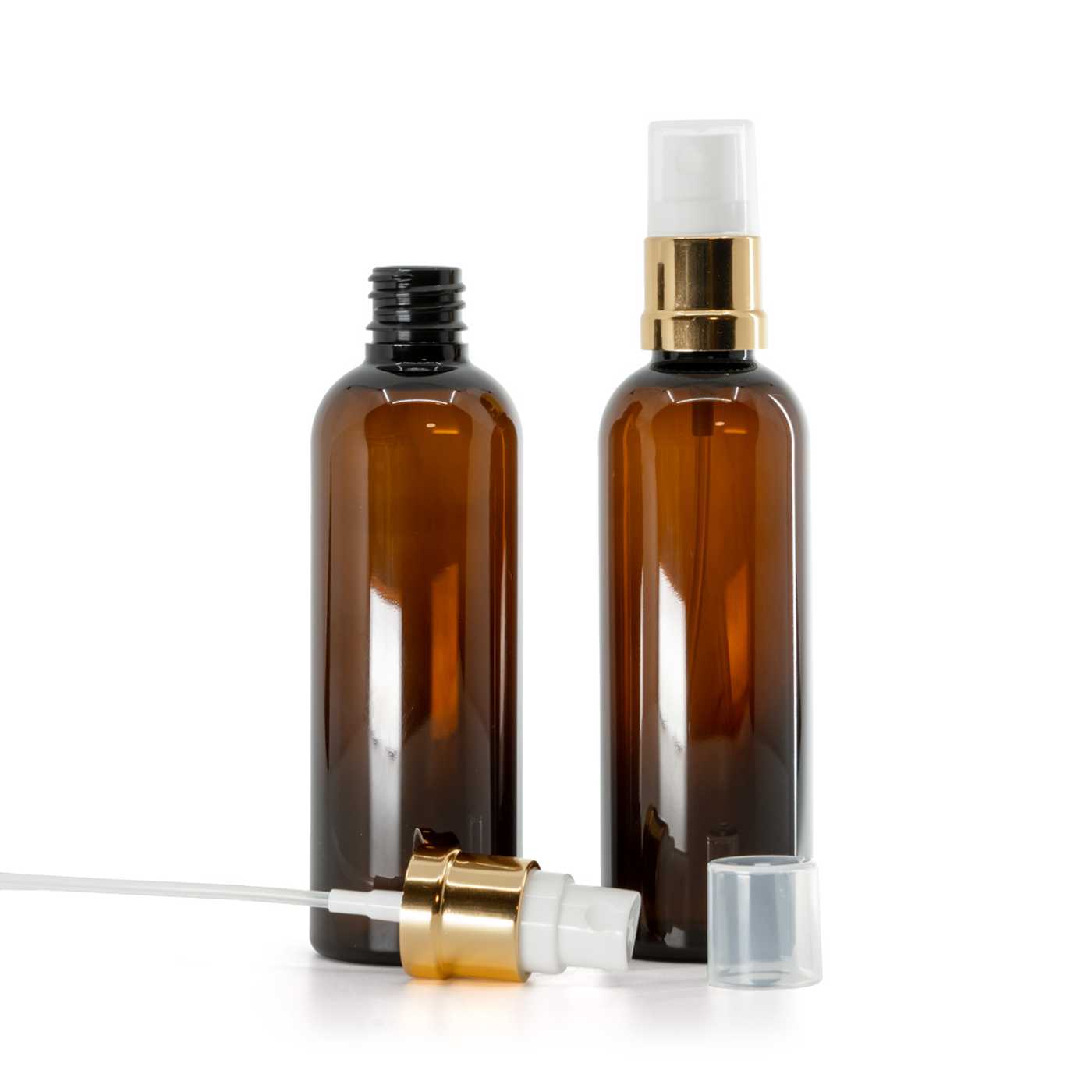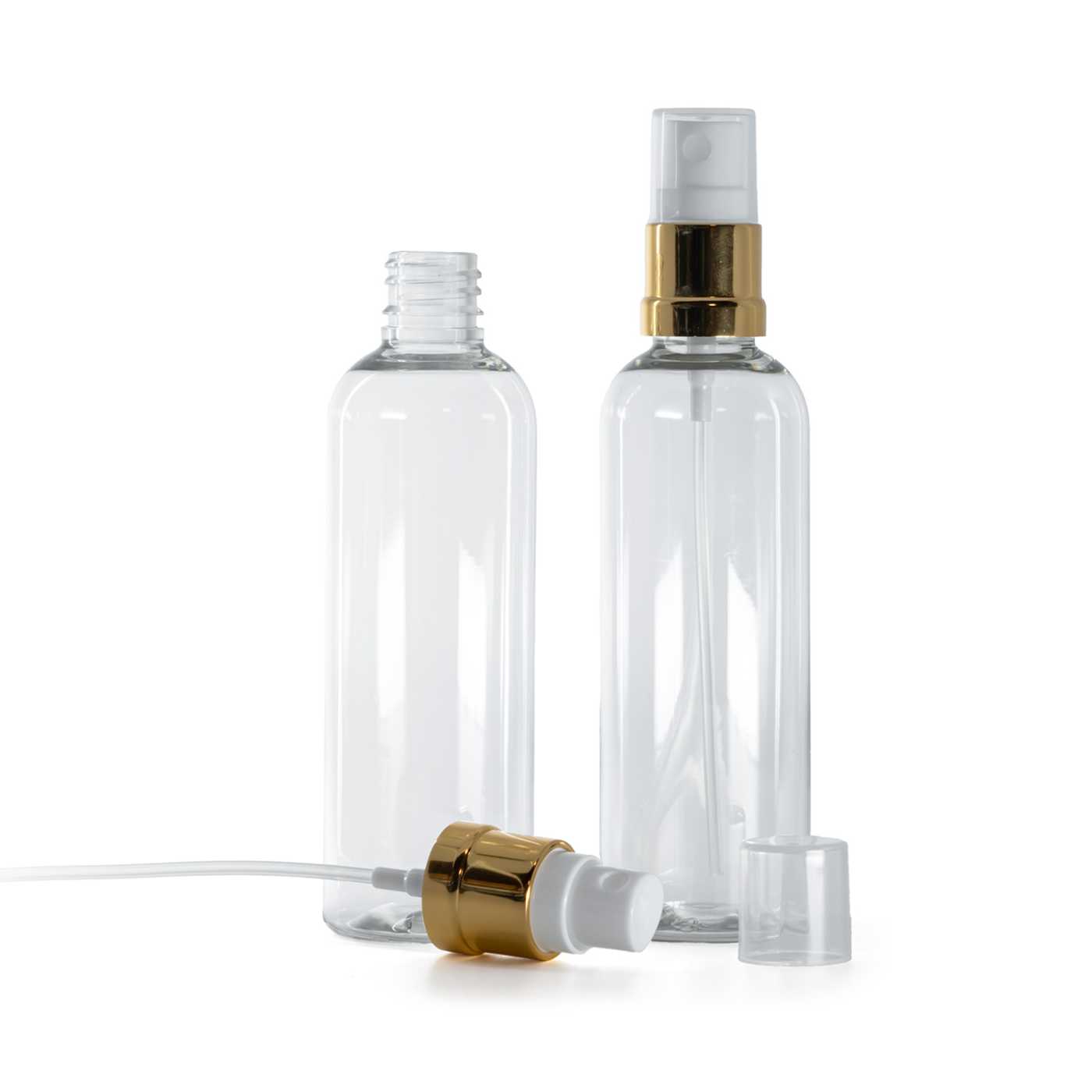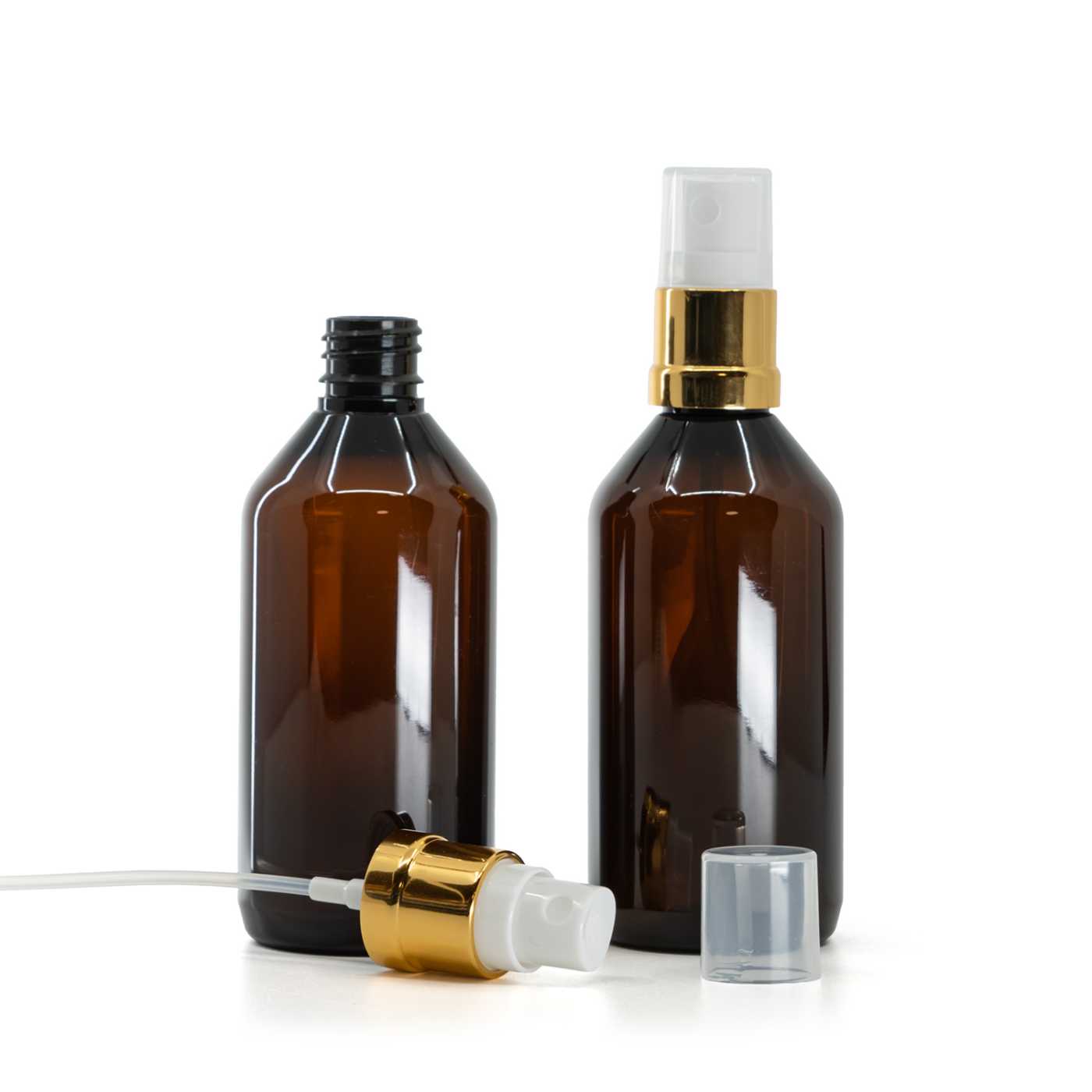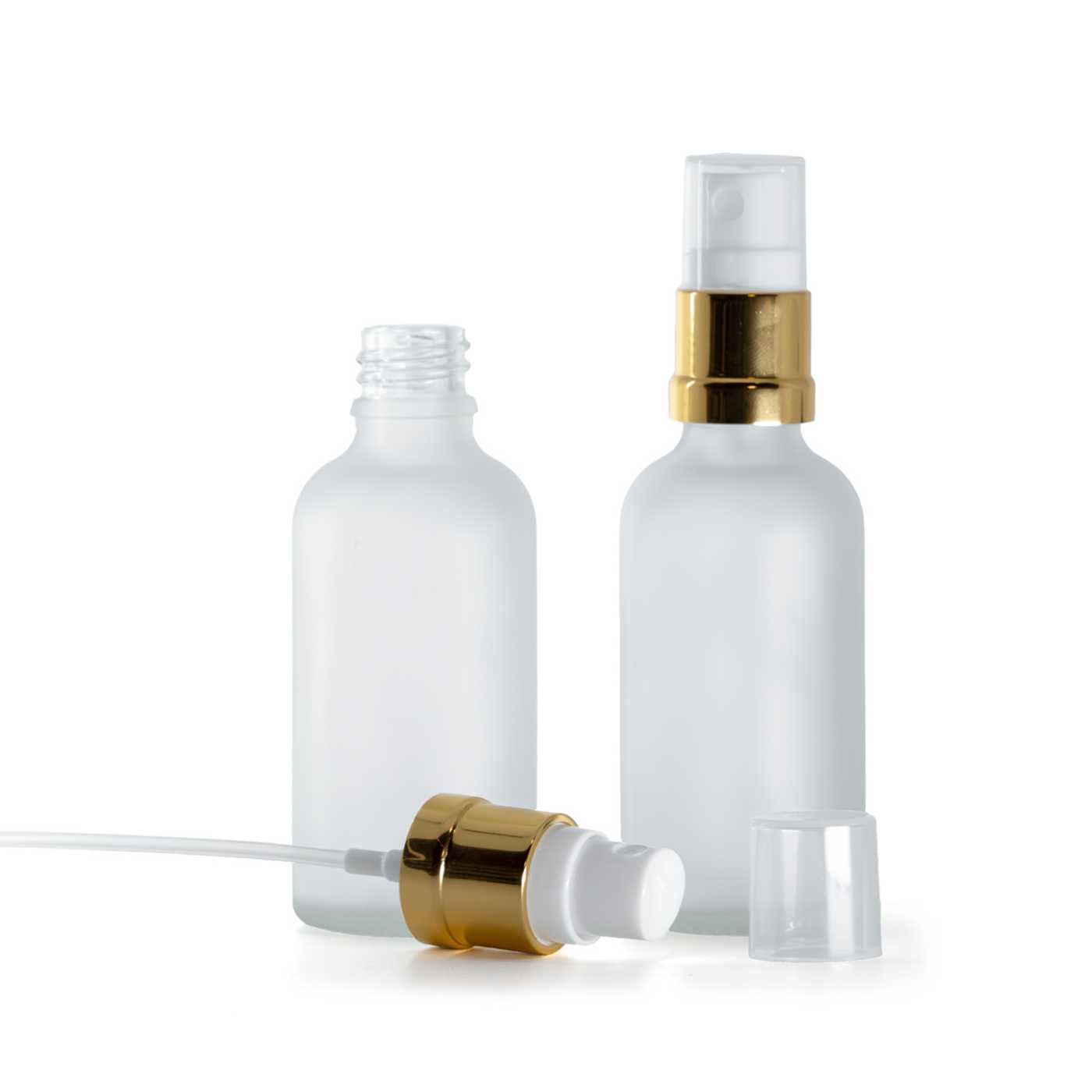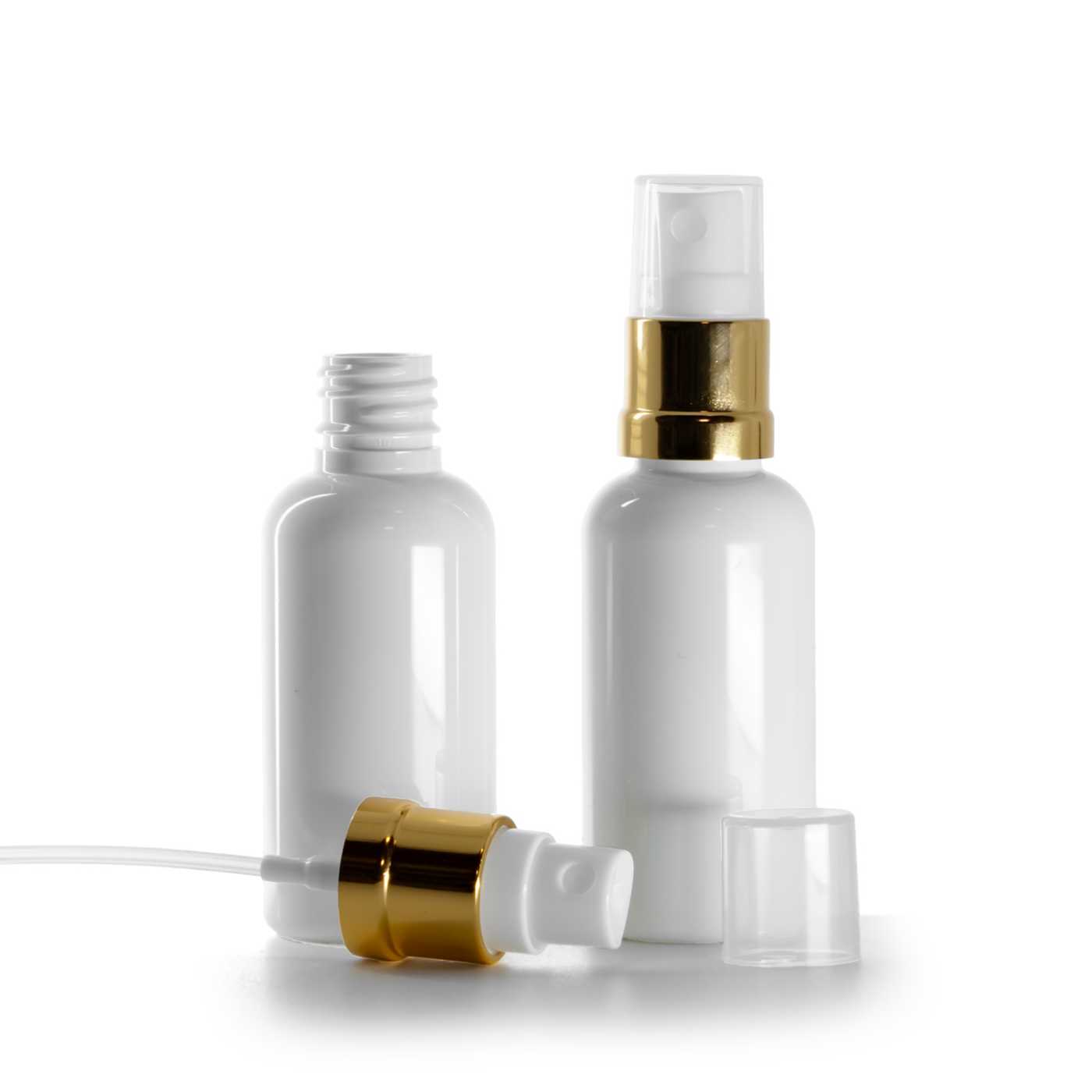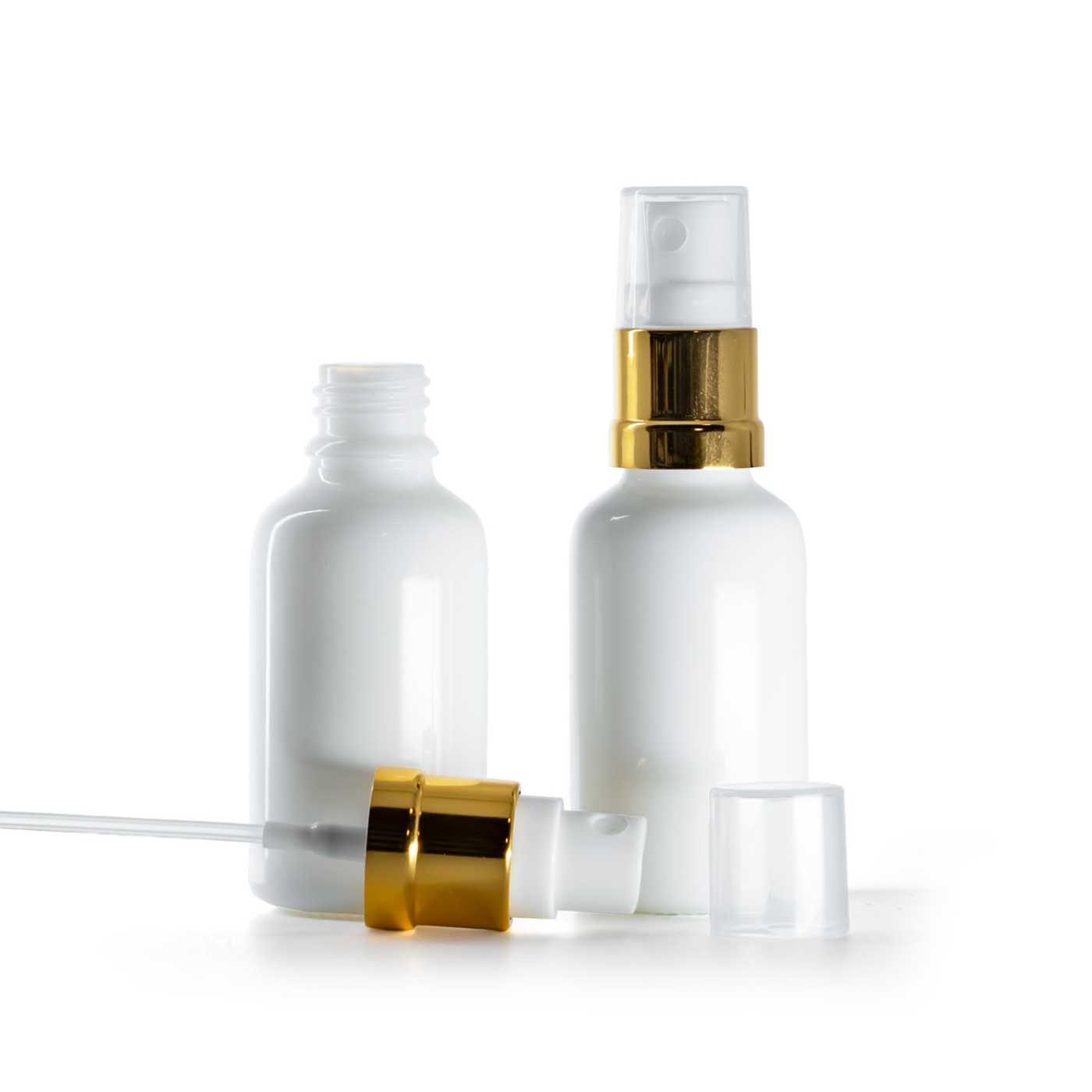
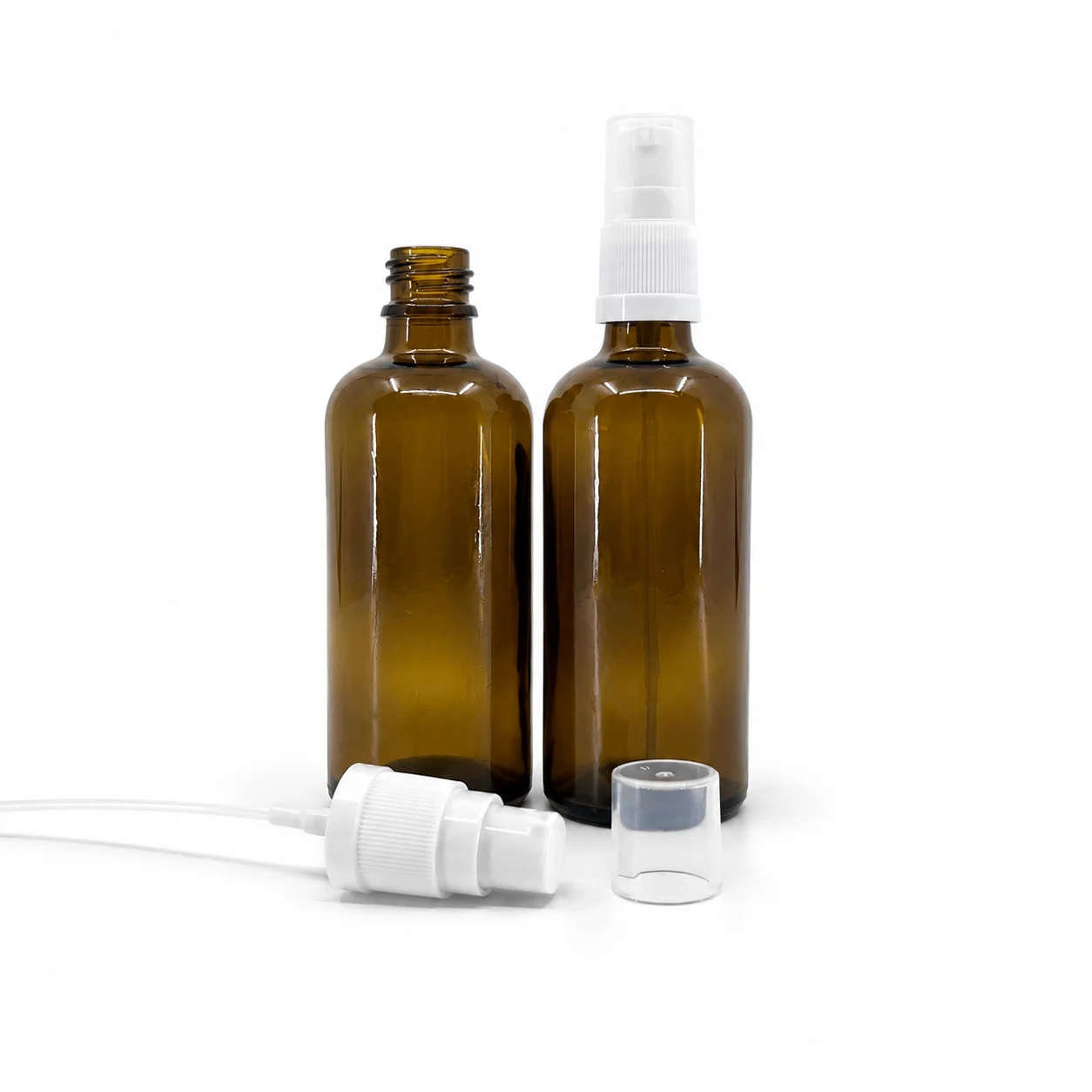
Glass bottle, vial, type B, white dispenser, 100 ml
Pre-order€0.88

GLASS BOTTLES 100 ml
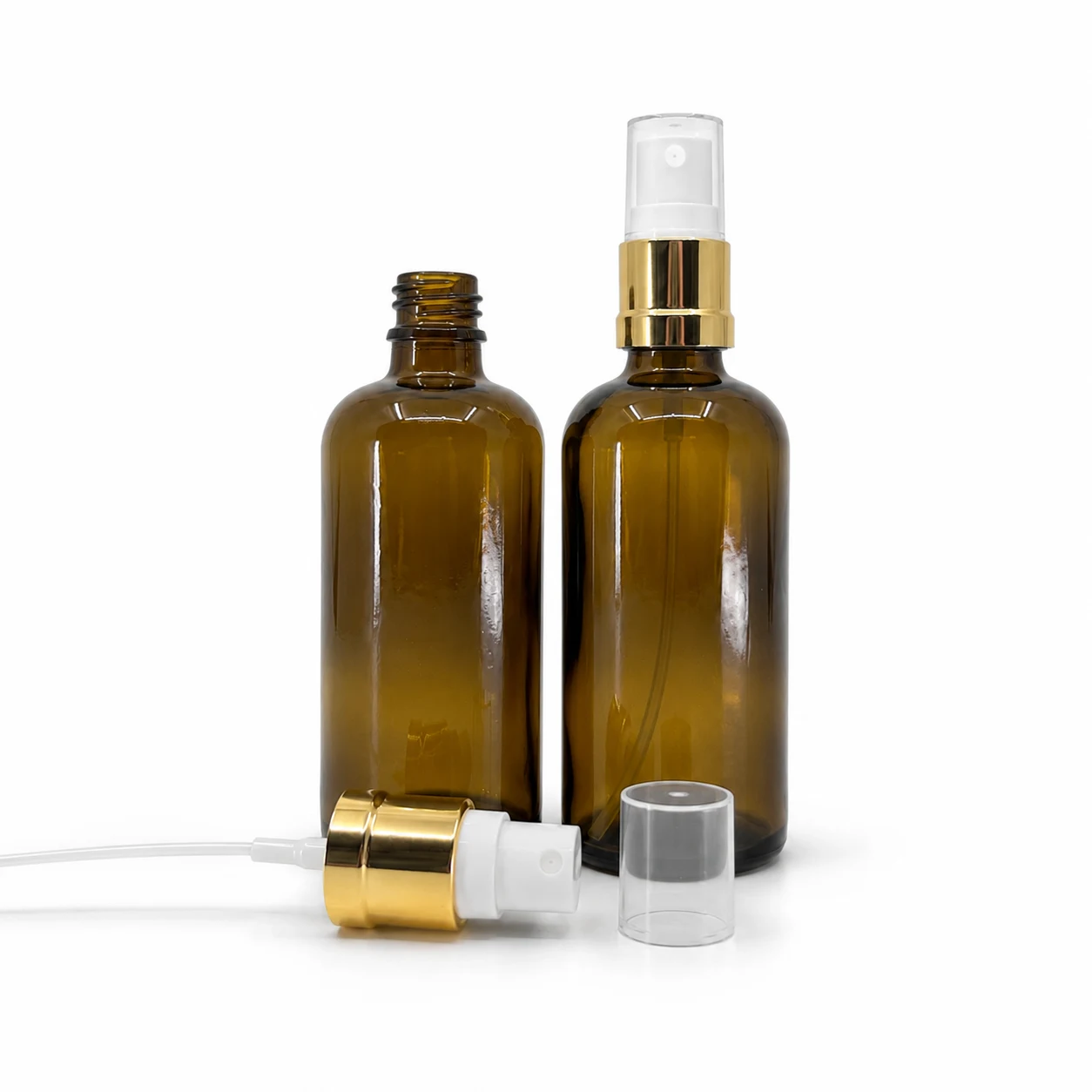
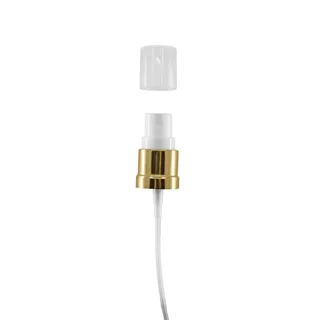
Glass bottle in the shape of a vial with a capacity of 100 ml and a white-gold spray pump form a complete packaging for thin, liquid products applied as a fine mist: hydrolats, face waters, tonics, hair and body sprays,… full description
Lowest price in the last 30 days: €1.19
Total for 1 pcs: €1.19
Quantities add up across all combinations of this bottle.
Glass bottle in the shape of a vial with a capacity of 100 ml and a white-gold spray pump form a complete packaging for thin, liquid products applied as a fine mist: hydrolats, face waters, tonics, hair and body sprays, or room fragrances. The bottle and closure do not need to be sourced separately — the thread of the spray pump and the length of the dip tube are matched to the bottle.
Glass does not react with its contents, does not absorb fragrance, and is easy to clean. The shiny white-gold spray pump works well for products where packaging appearance matters, such as gift sets. The set is declared as suitable for contact with cosmetic products. The glass bottle alone holds a food-contact certificate; the complete set is intended for cosmetics.
The spray pump delivers approximately 0.14 ml per press. This dose is suitable for gentle application to the face, hair, or into a space. The dip tube reaches the bottom of the bottle, so the contents can be used almost entirely without residue. On first use, press the pump several times into the air until the mechanism is primed.
A full bottle yields approximately 700 presses. This figure helps estimate how long the product will last for the customer and assists in setting the recommended usage dosage on the label.
The spray pump screws onto the neck and seals by thread when tightened. The quality of atomisation depends on the viscosity of the contents. Thin water-based and alcohol-based solutions produce a fine mist; thicker liquids come out more as a stream or strain the mechanism.
Gels, thick oils, and products with undissolved particles (plant sediment, glitter, clays) can clog the nozzle. Such formulations should be filtered before filling or paired with a different type of closure.
Two volumes are stated for the bottle. The nominal volume is the quantity the container is designed to hold under normal filling conditions — in this case 100 ml. The total brim-full volume is the physical capacity of the bottle up to the neck and is slightly larger. The difference between the two provides headspace for the dip tube and spray mechanism and for expansion of the contents with temperature changes. The bottle should therefore be filled to the nominal volume, not to the brim. Overfilling would cause the contents to overflow through the neck when the spray pump is fitted.
Preparing the container. Before the first fill, wash the bottle, disinfect it with izopropylalkohol or etanol and leave to dry completely. The sprayer is disinfected by spraying alcohol through the mechanism, then also left to dry. Residual water in the container puts unnecessary strain on the product's preservation system.
Glass and temperature. Glass does not tolerate sudden temperature changes. Allow hot contents to cool before filling and do not rinse the bottle alternately with hot and cold water.
Compatibility with contents. Glass is resistant to alcohol and essential oils. However, the dip tube and internal parts of the spray pump are made of plastic and are also in contact with the contents. For formulations with a high proportion of essential oils or solvents, we recommend performing a test with a filled sample and monitoring the seal, dispensing, and condition of the plastic parts for several weeks.
Labelling. The cylindrical body of the bottle has a smooth surface for a label. The dimensions needed for label design are listed in the product parameters. The label adheres to dry, degreased glass.
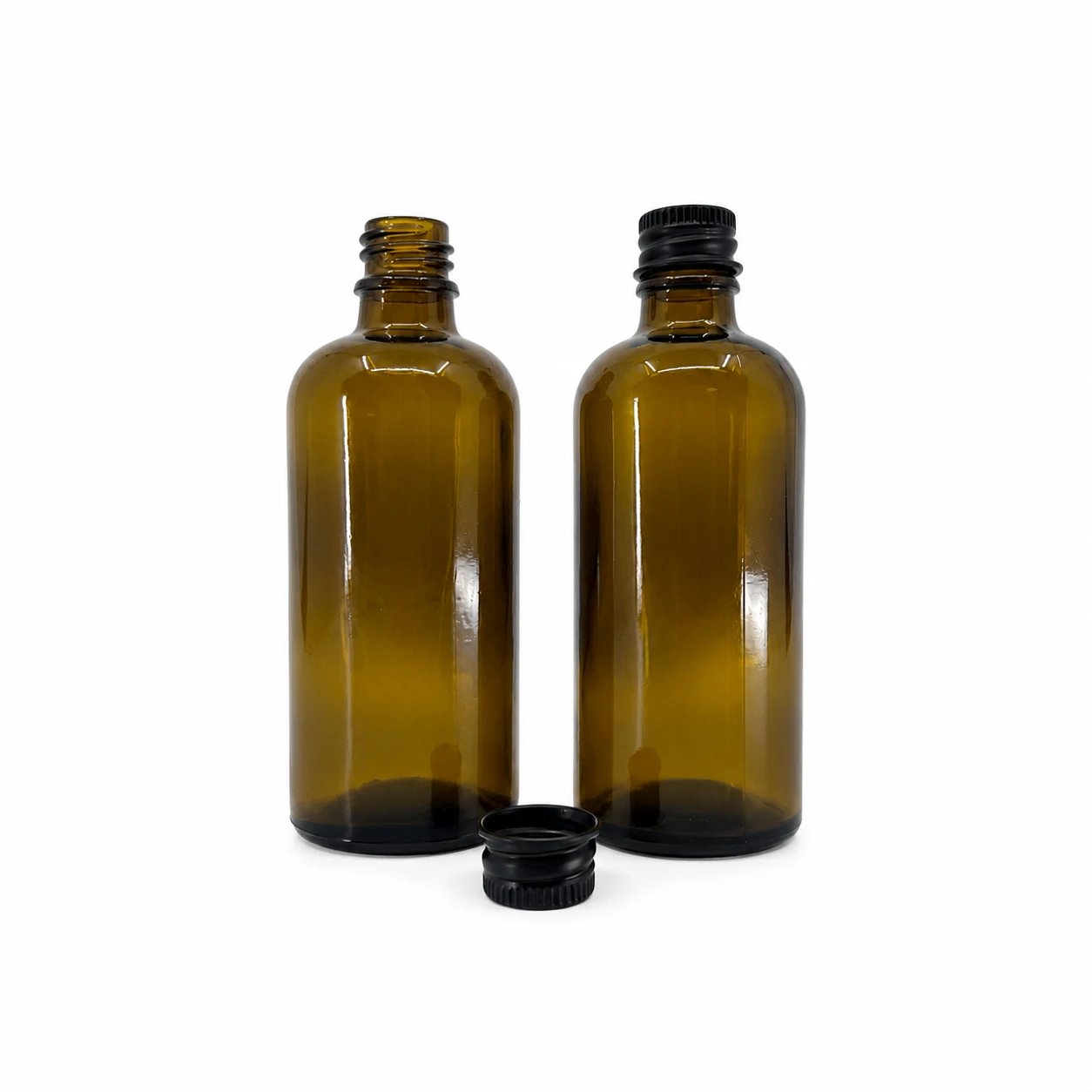
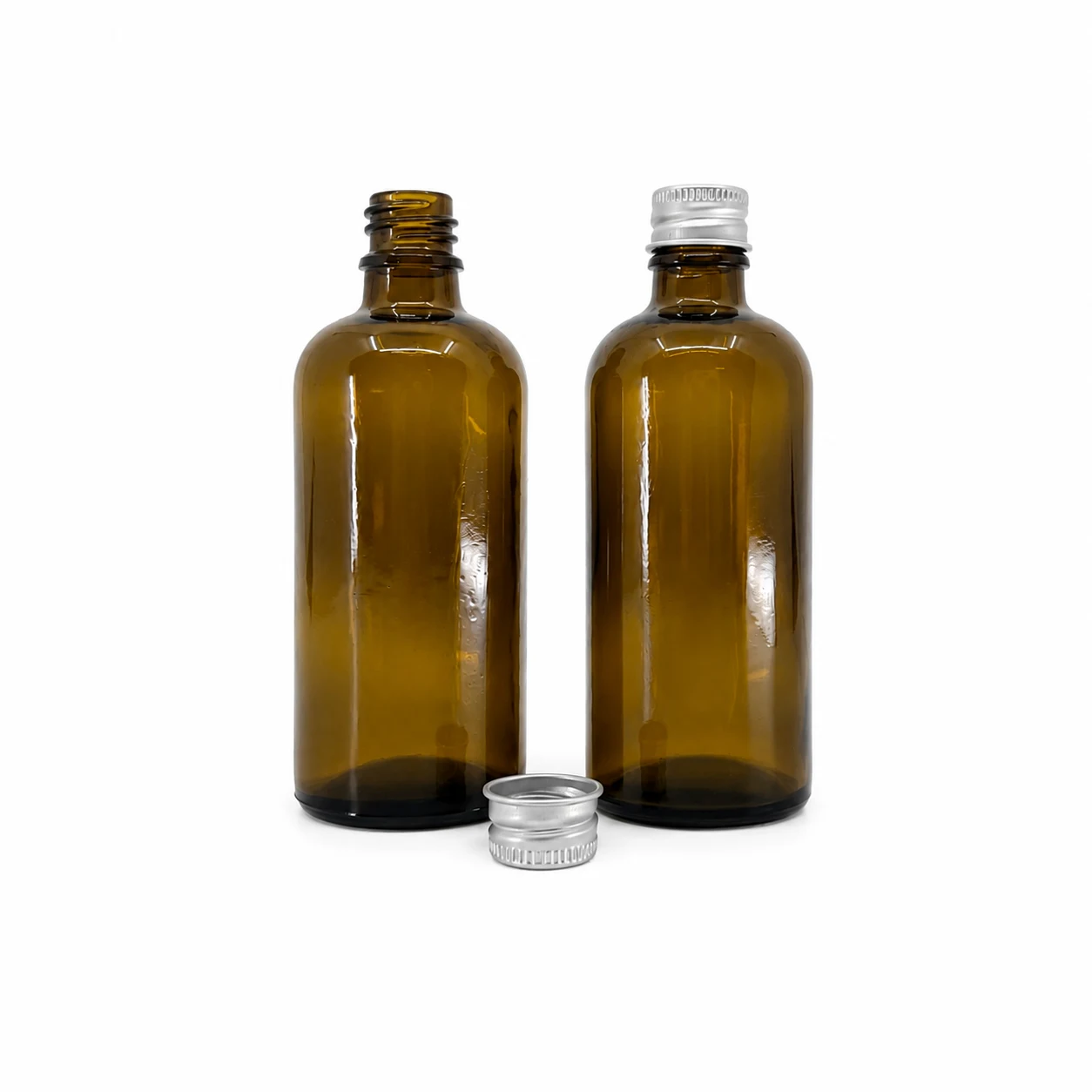
Other closures. Closures with the same neck type as stated in the parameters, and further ready-made combinations, are available in the Handymade range. For a custom combination, we recommend verifying the seal and dispensing performance with the specific formulation.
Recycling. The glass bottle belongs in sorted glass waste once empty. The spray pump is composed of multiple materials and should be separated from the bottle before sorting.
Only customers with a delivered order can write reviews.