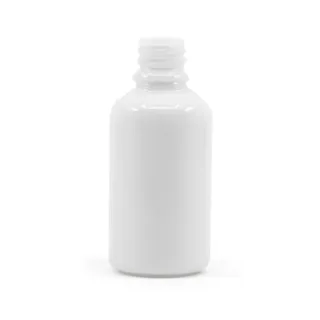
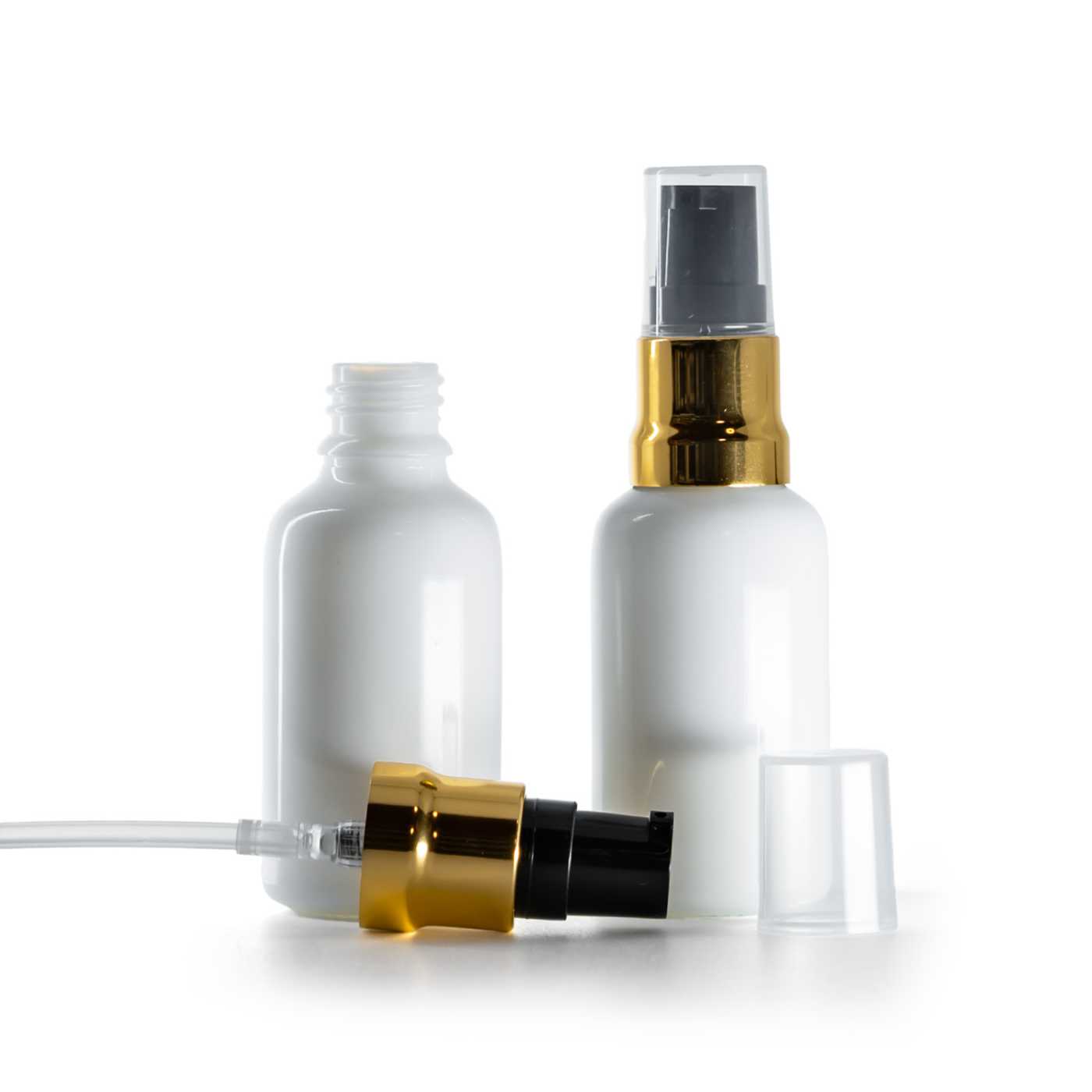
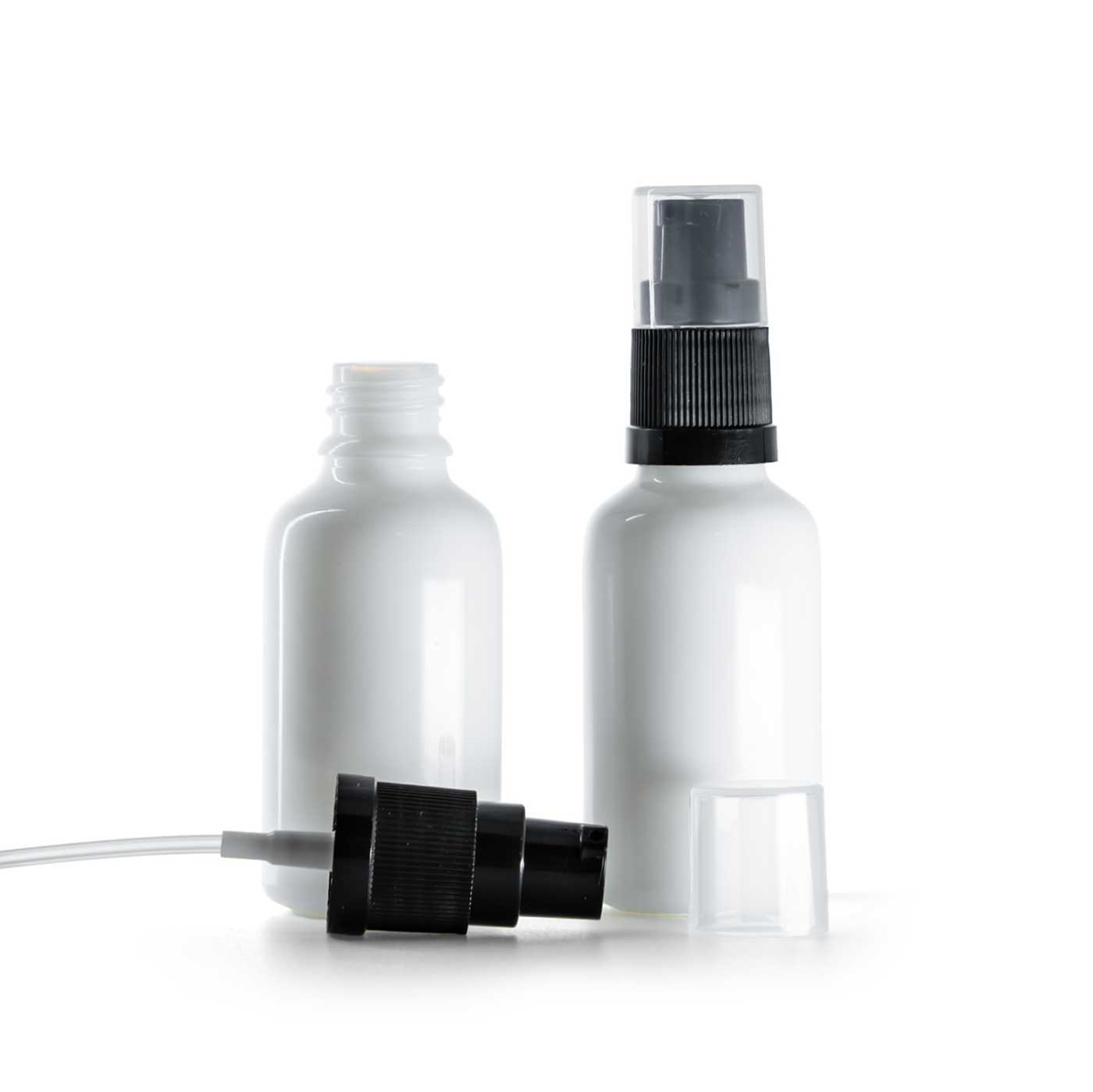
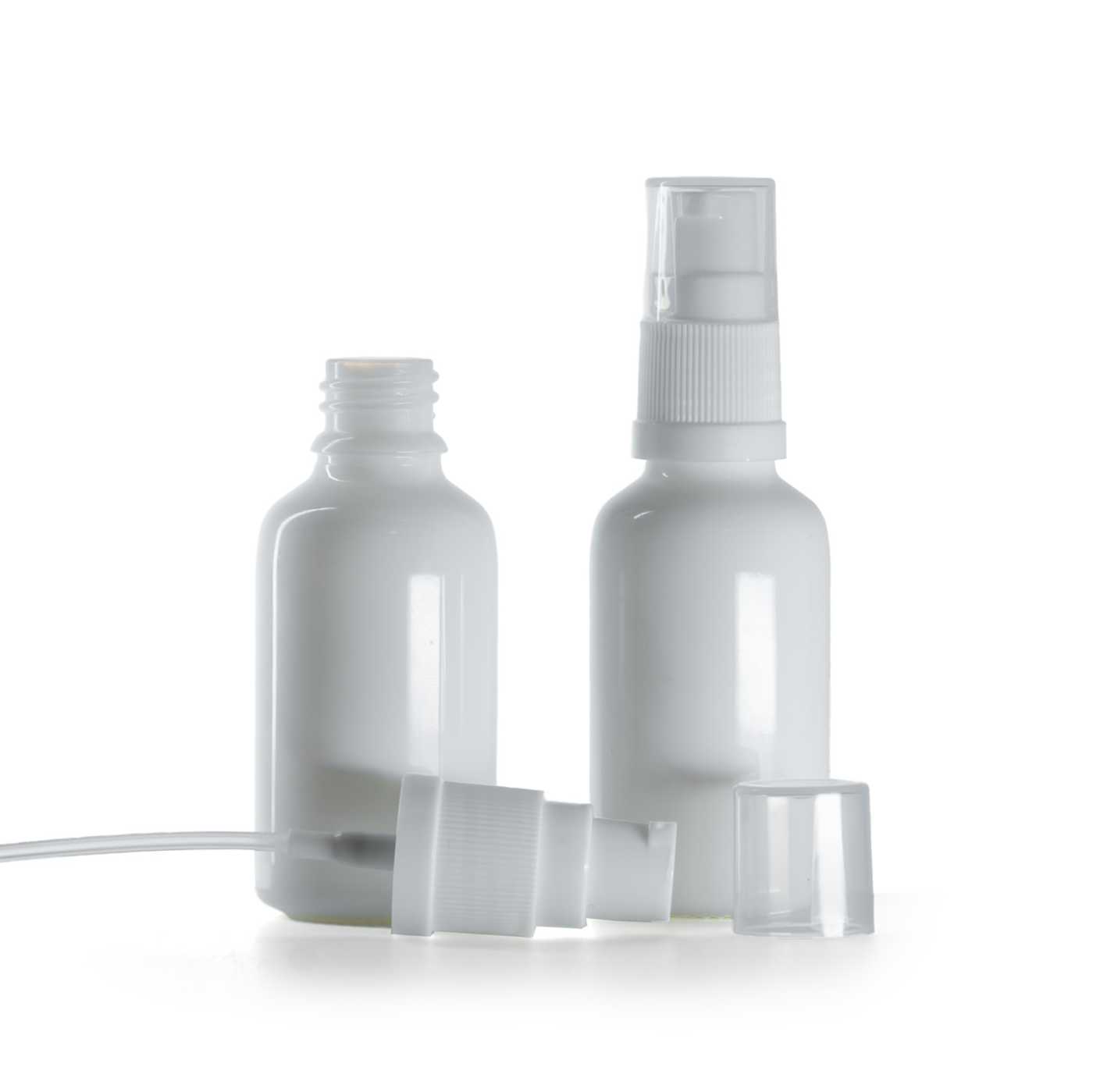
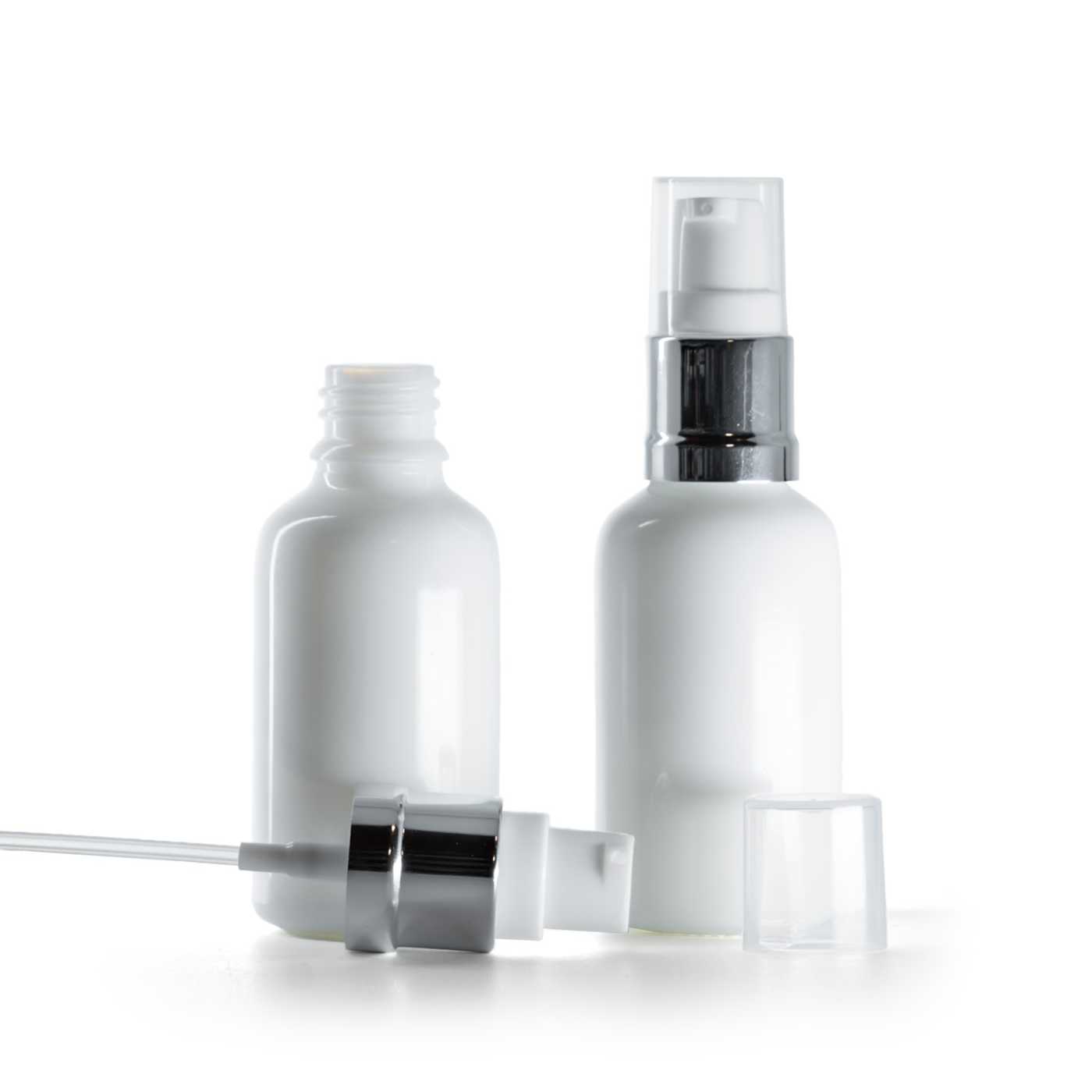
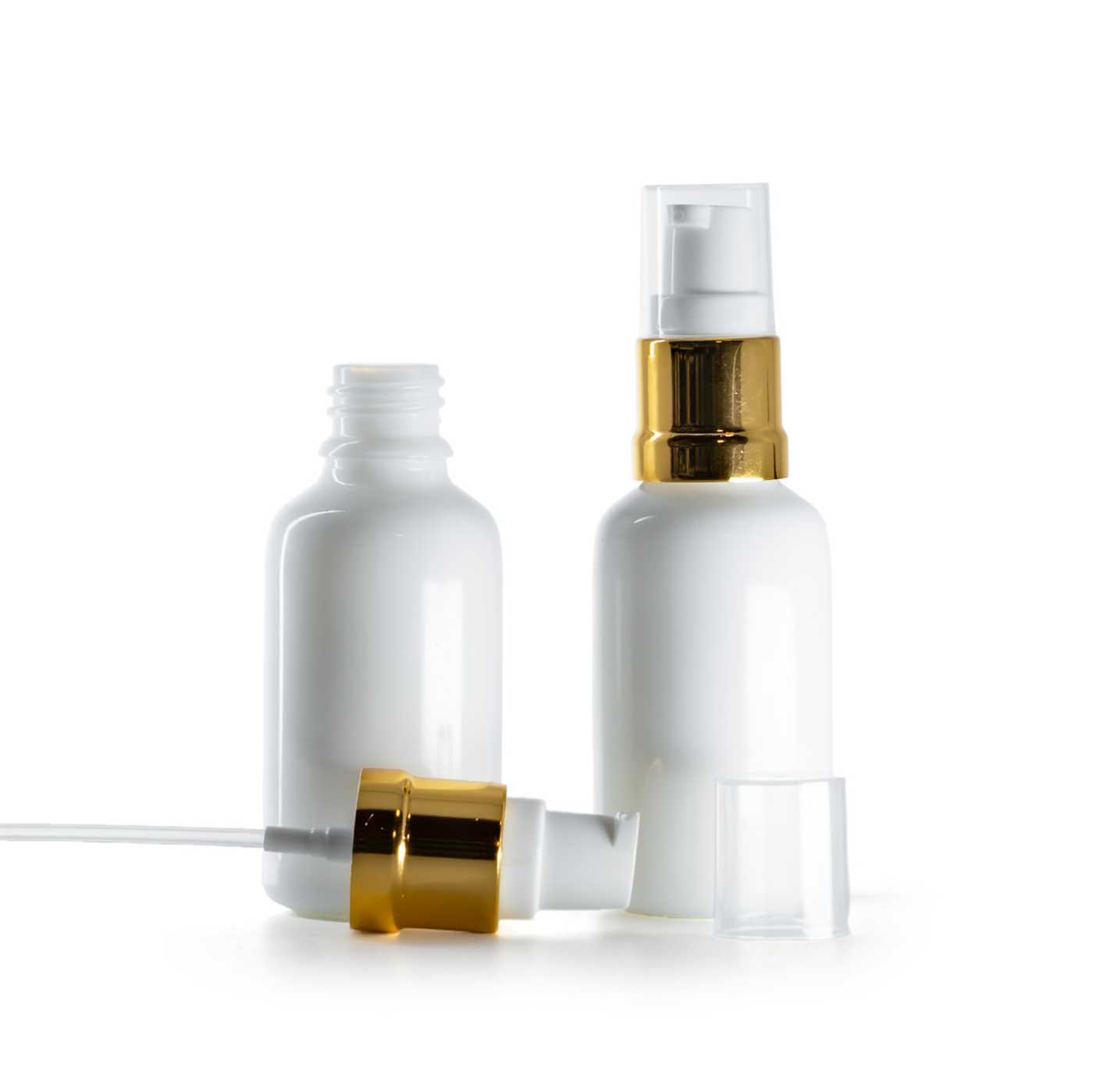
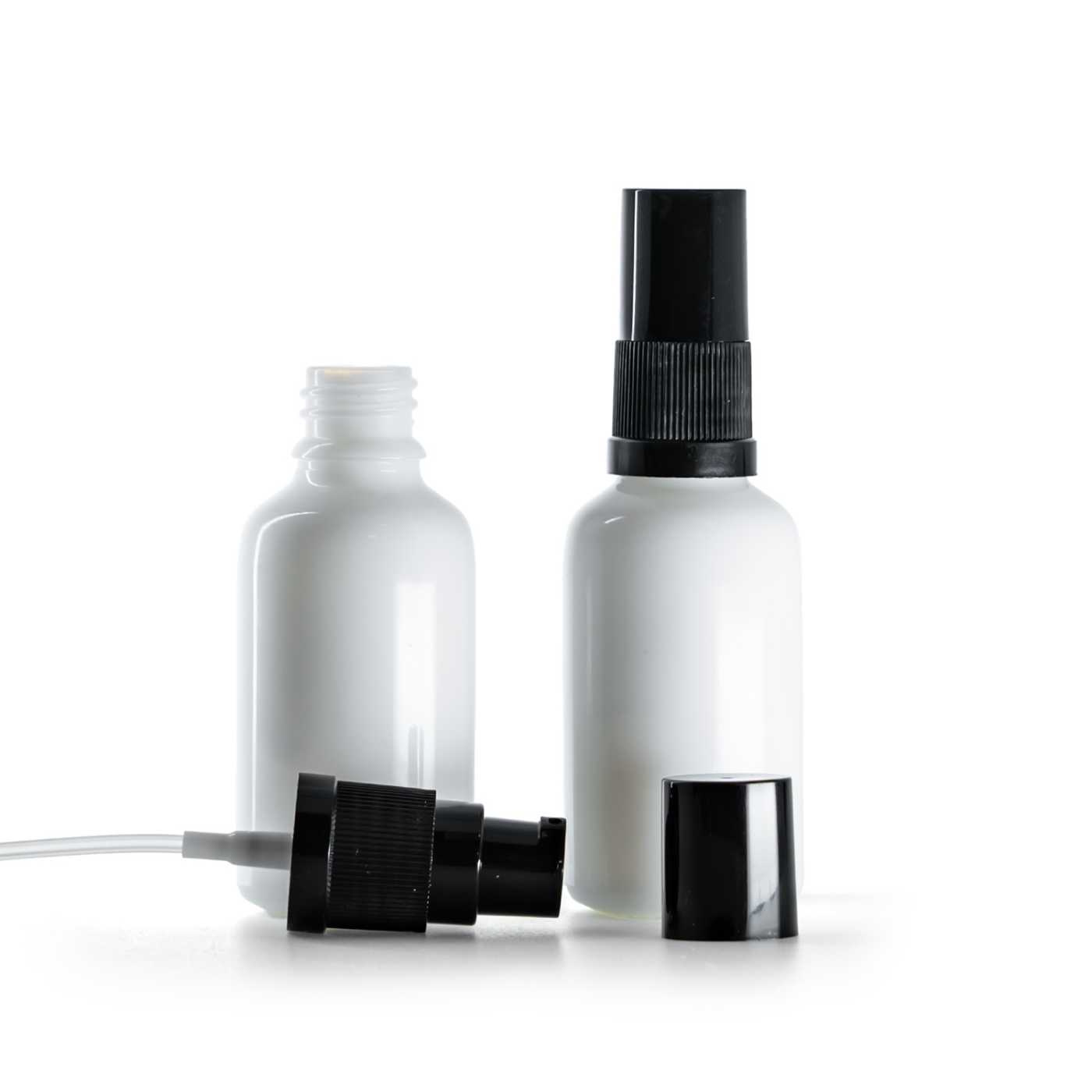
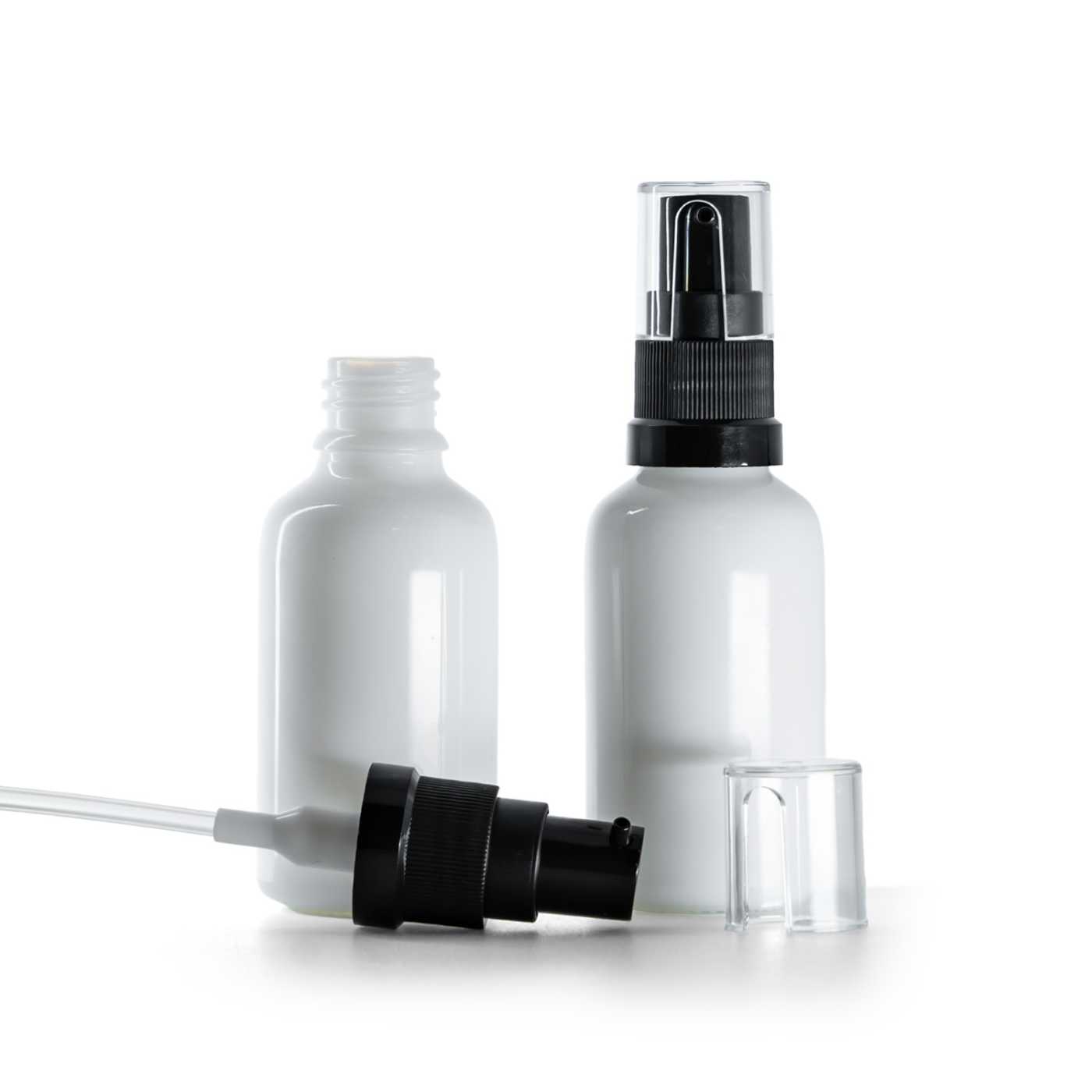
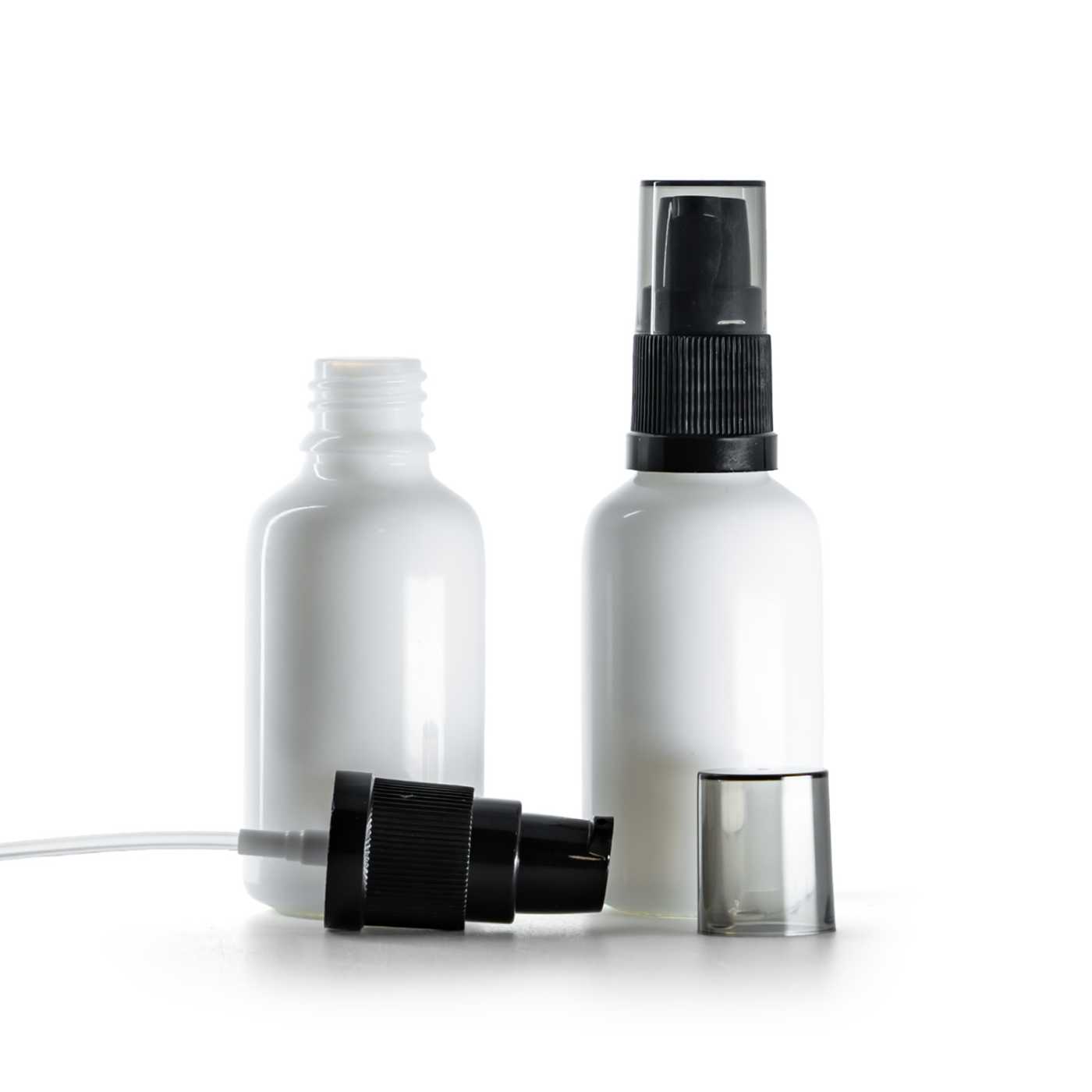
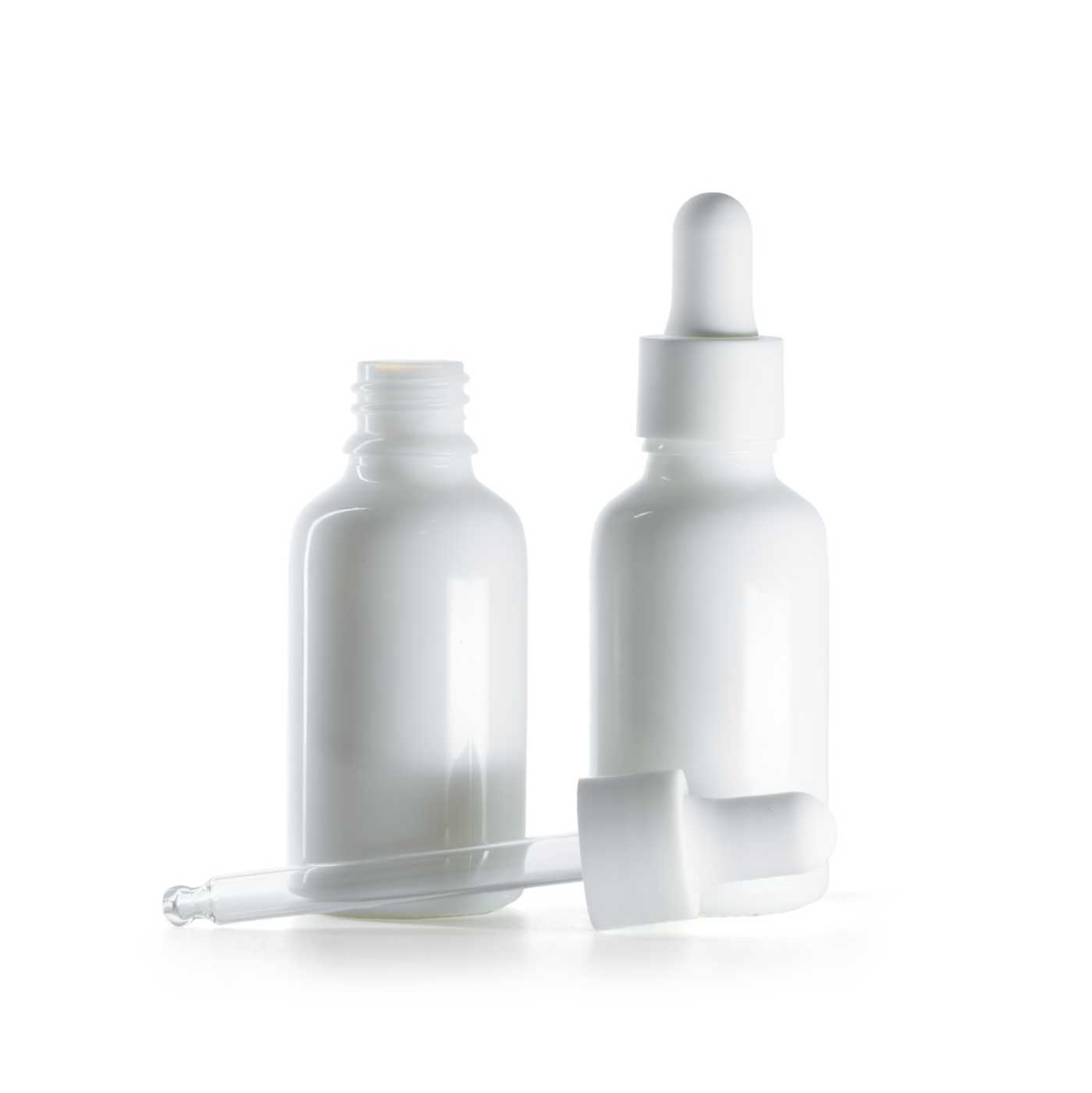
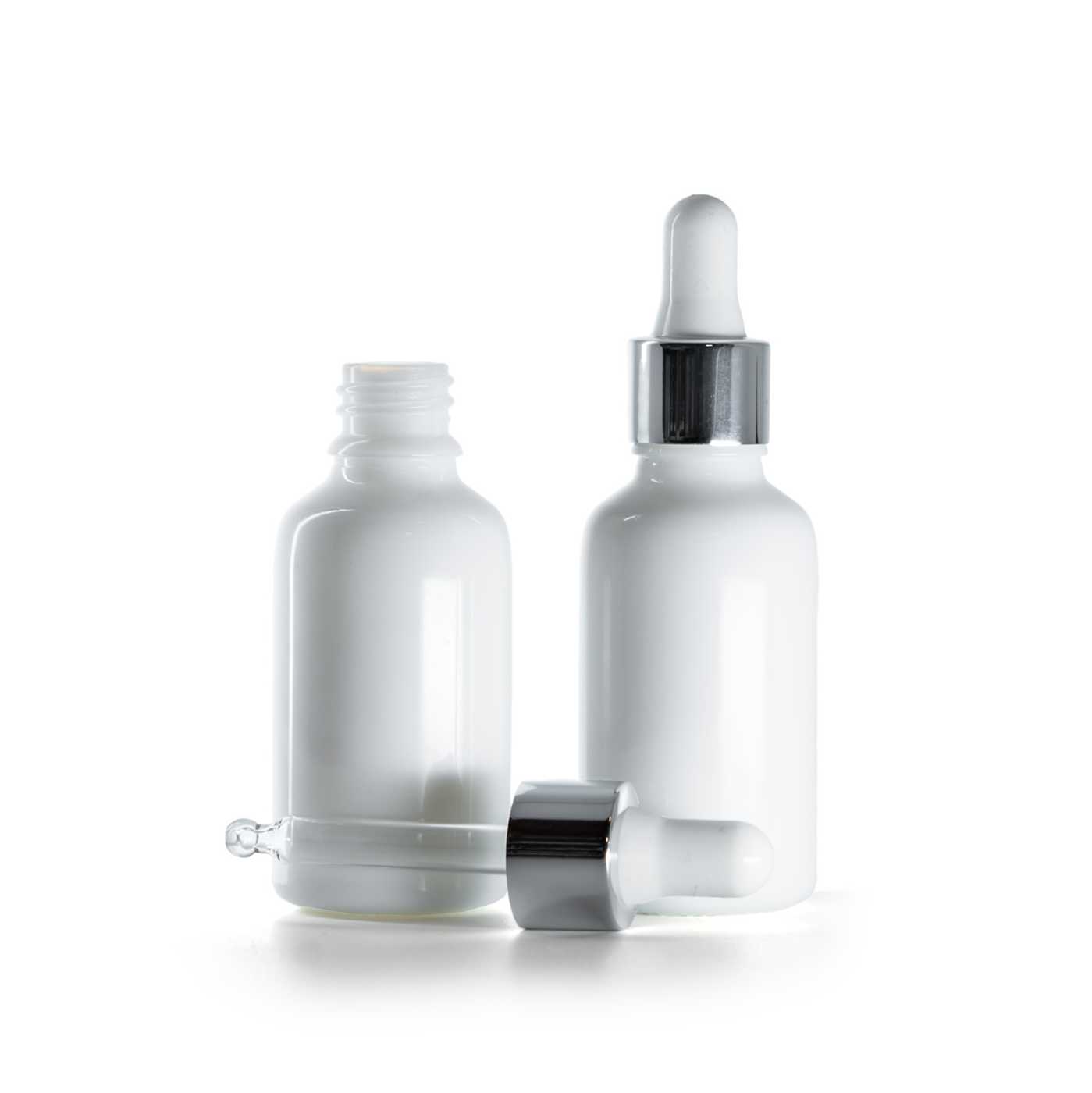
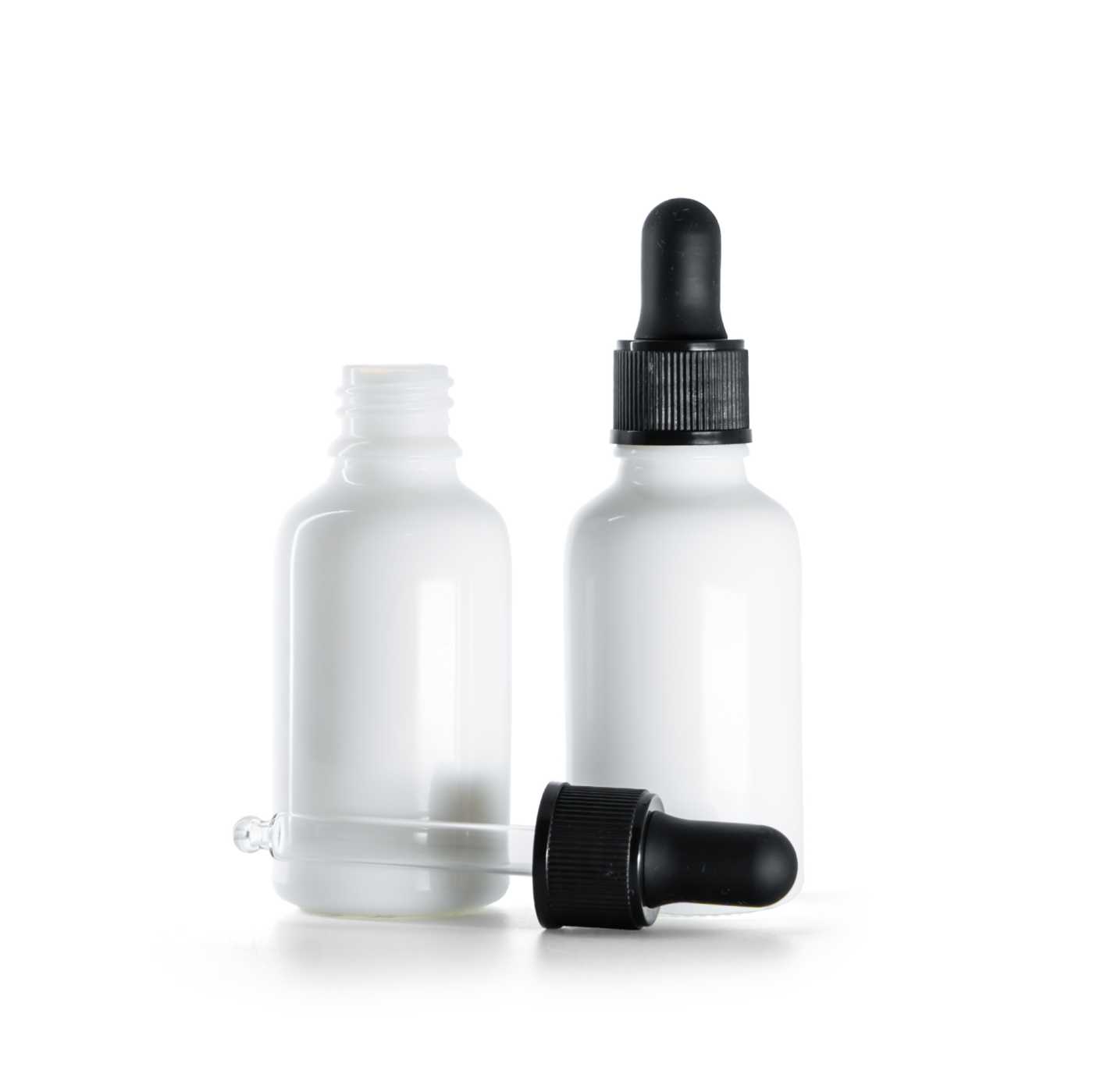
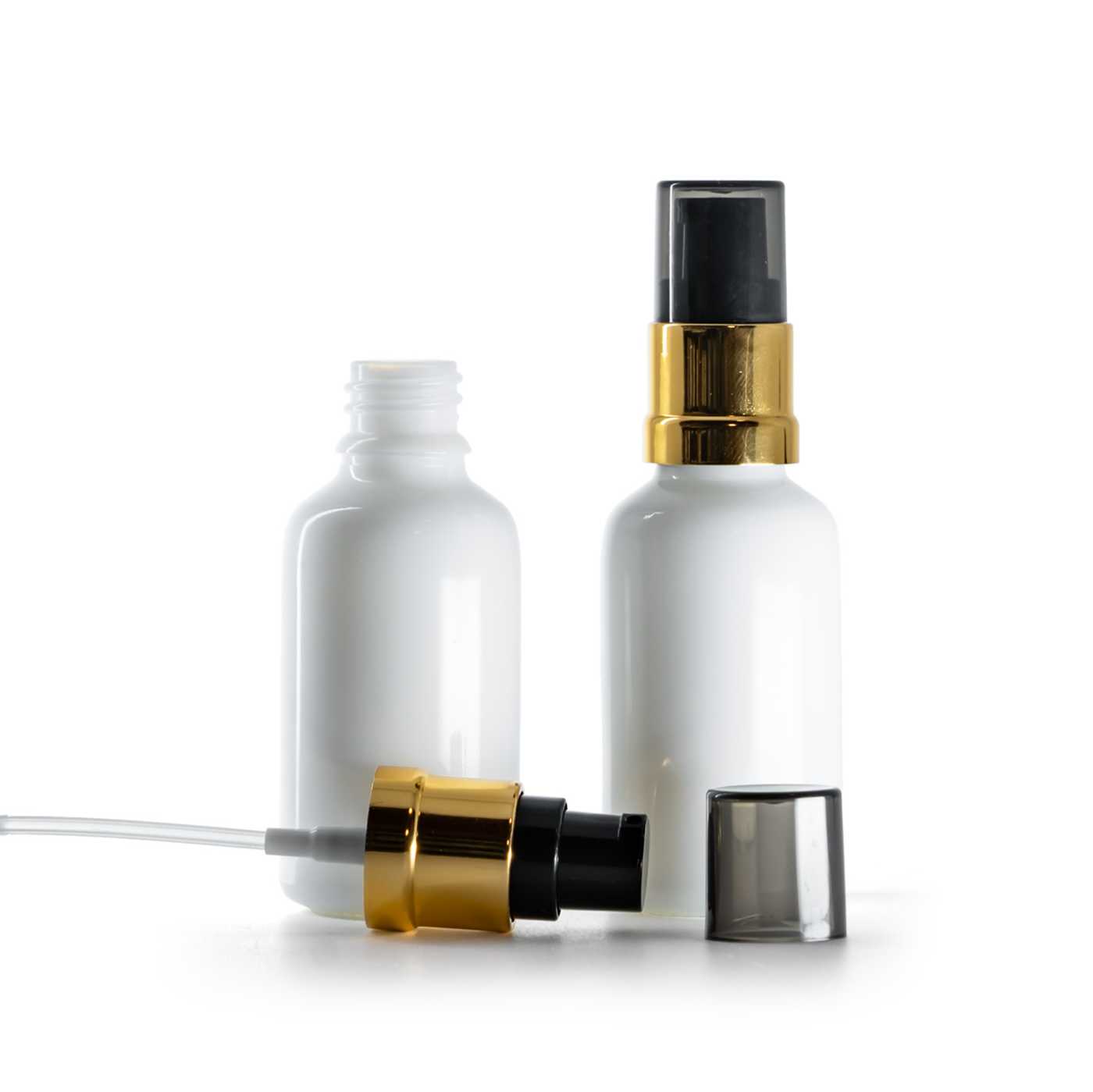
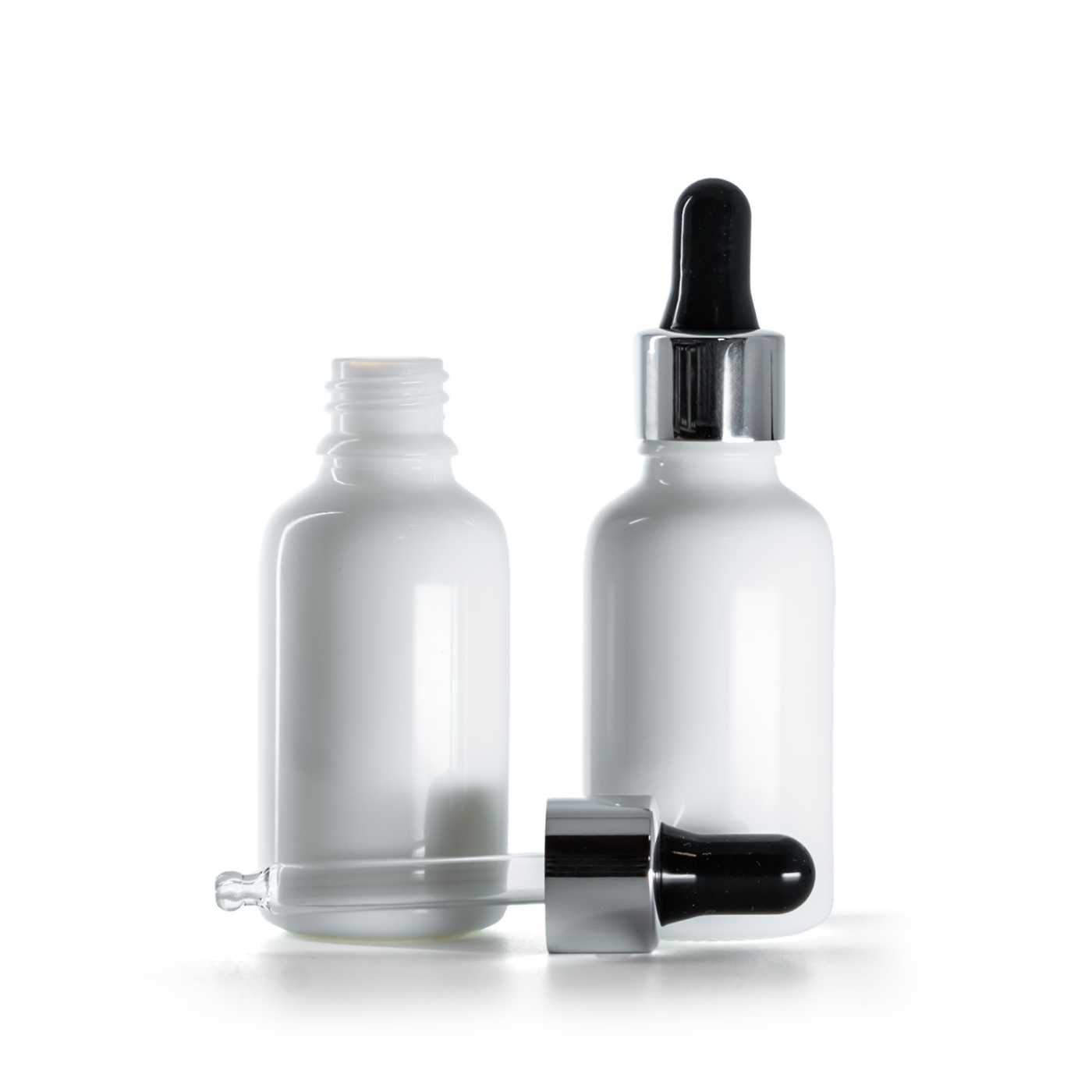
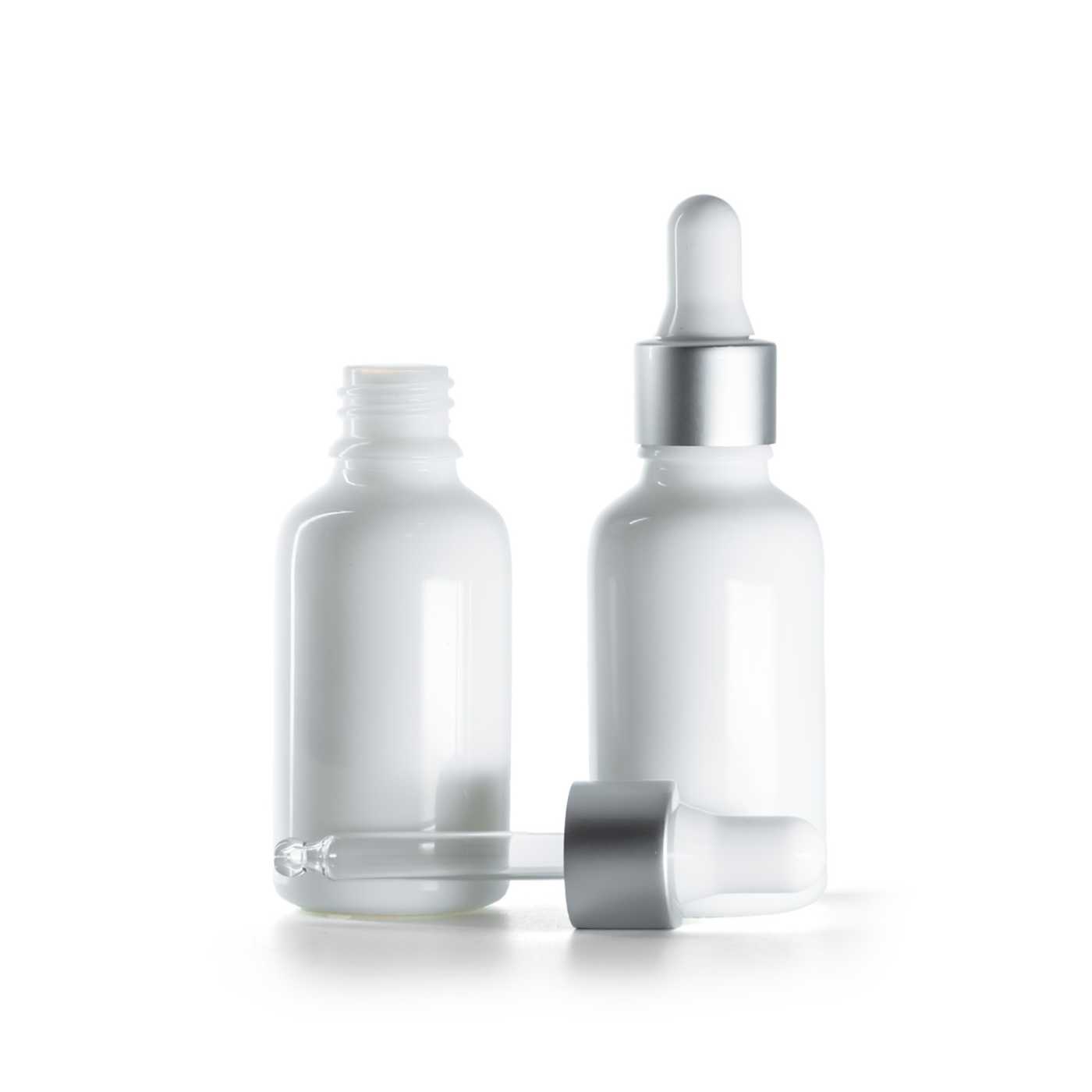
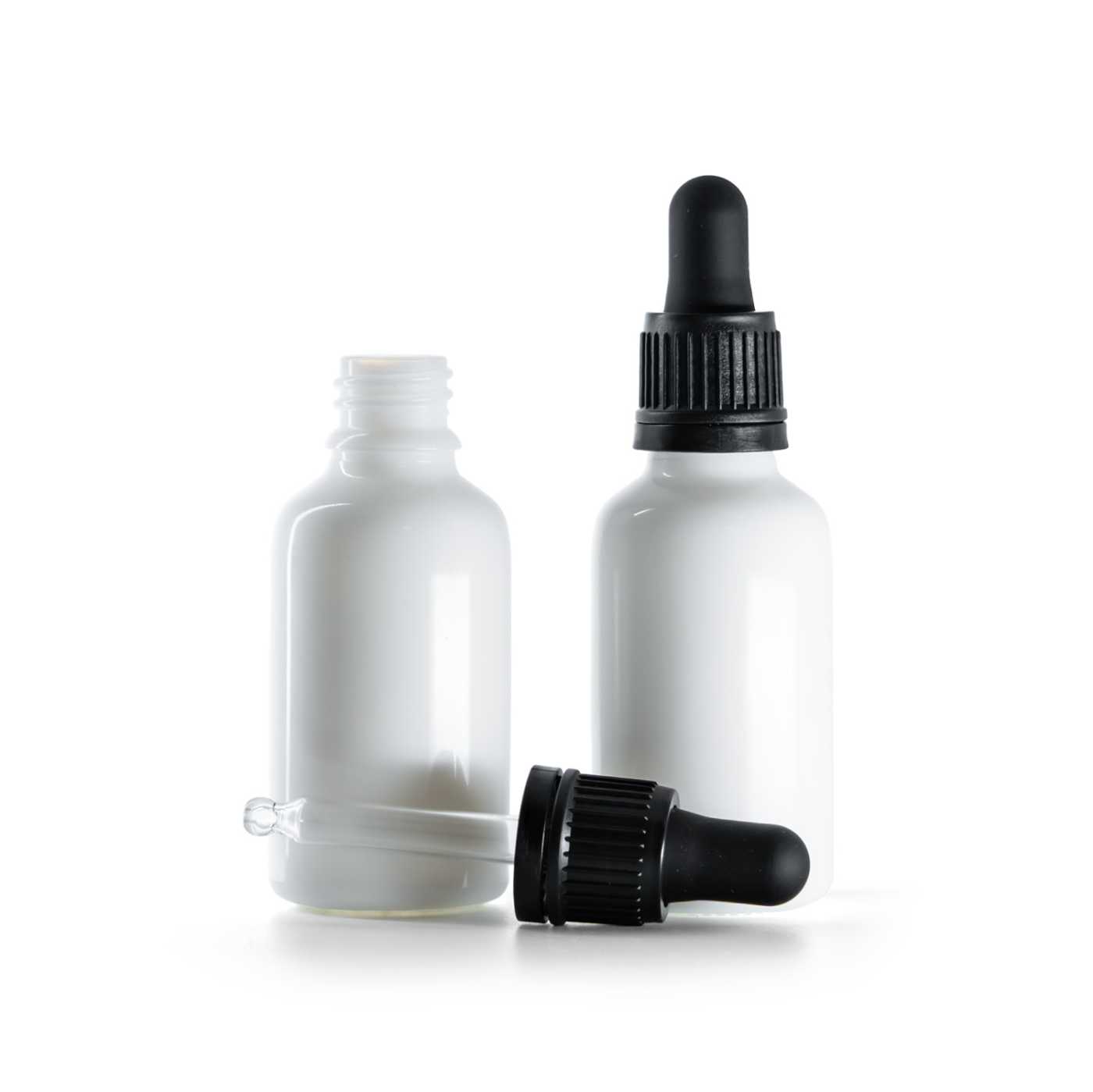
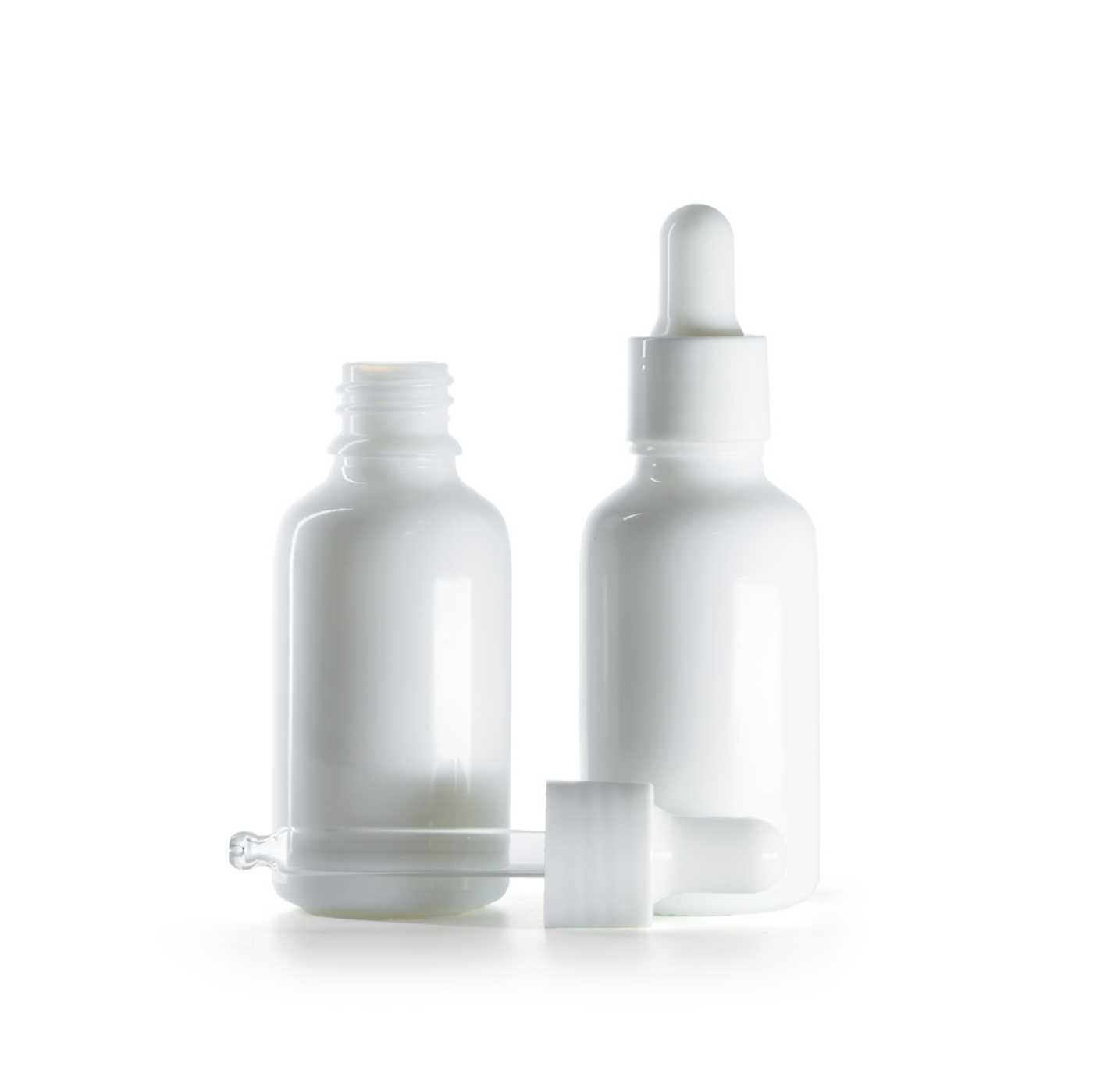
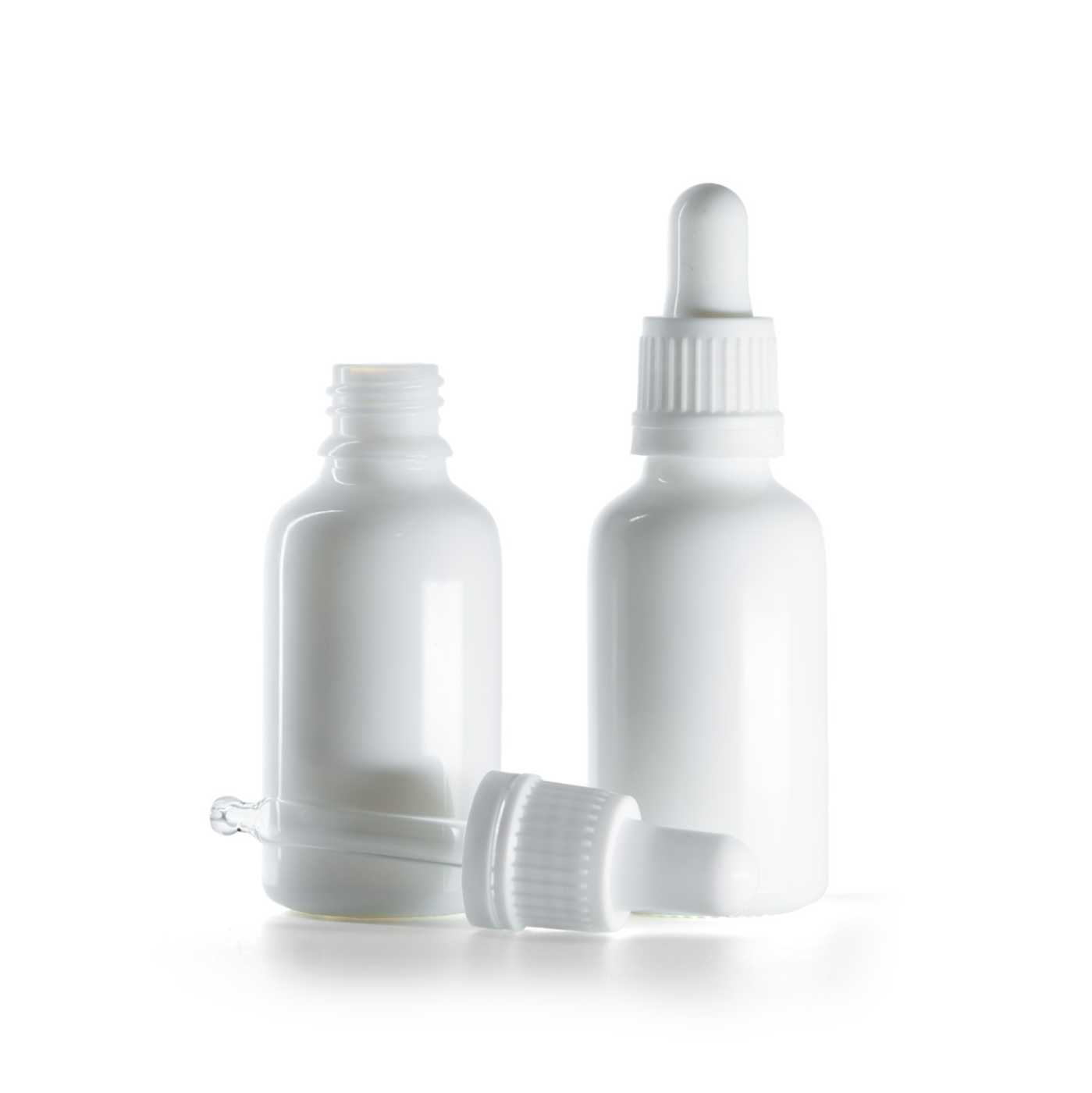
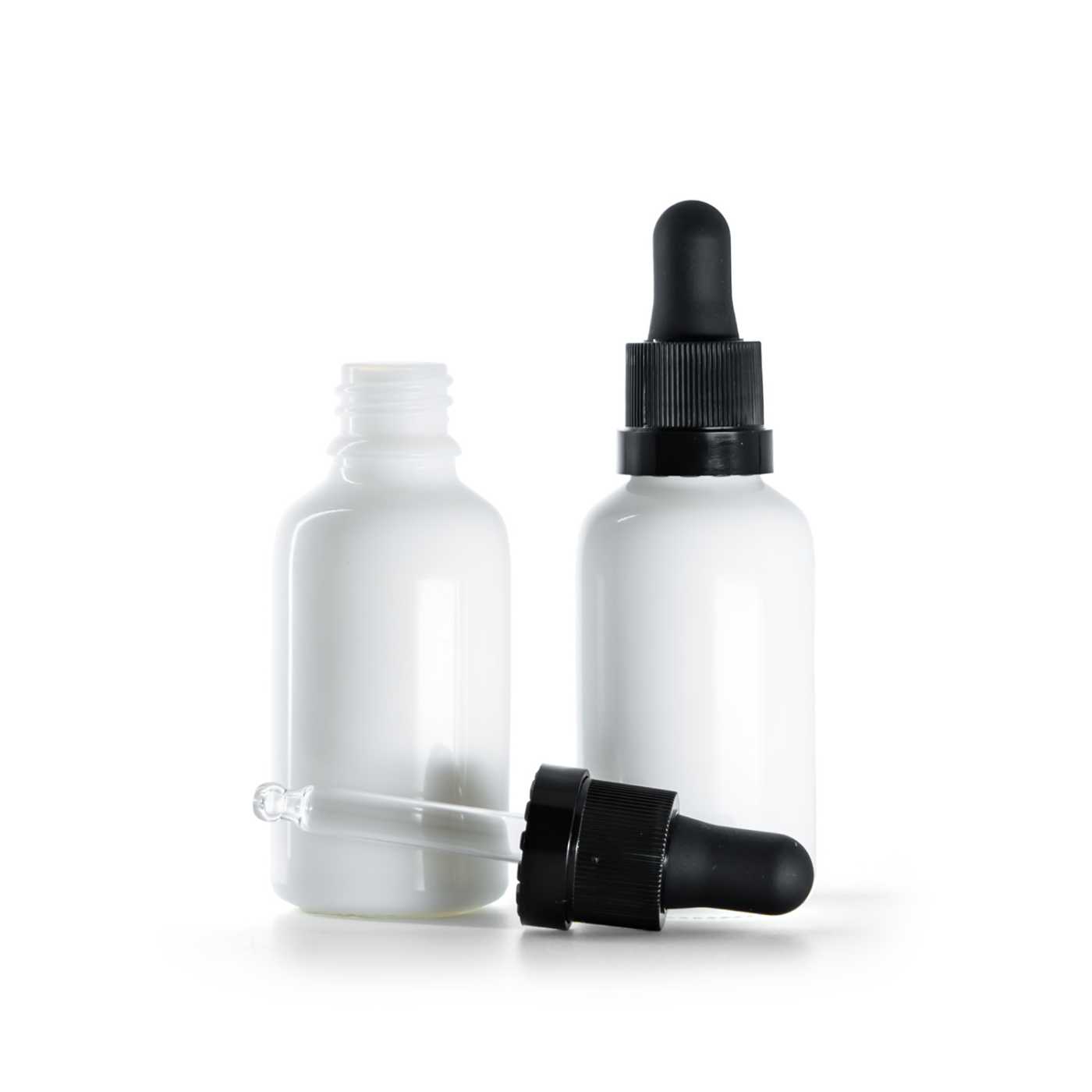
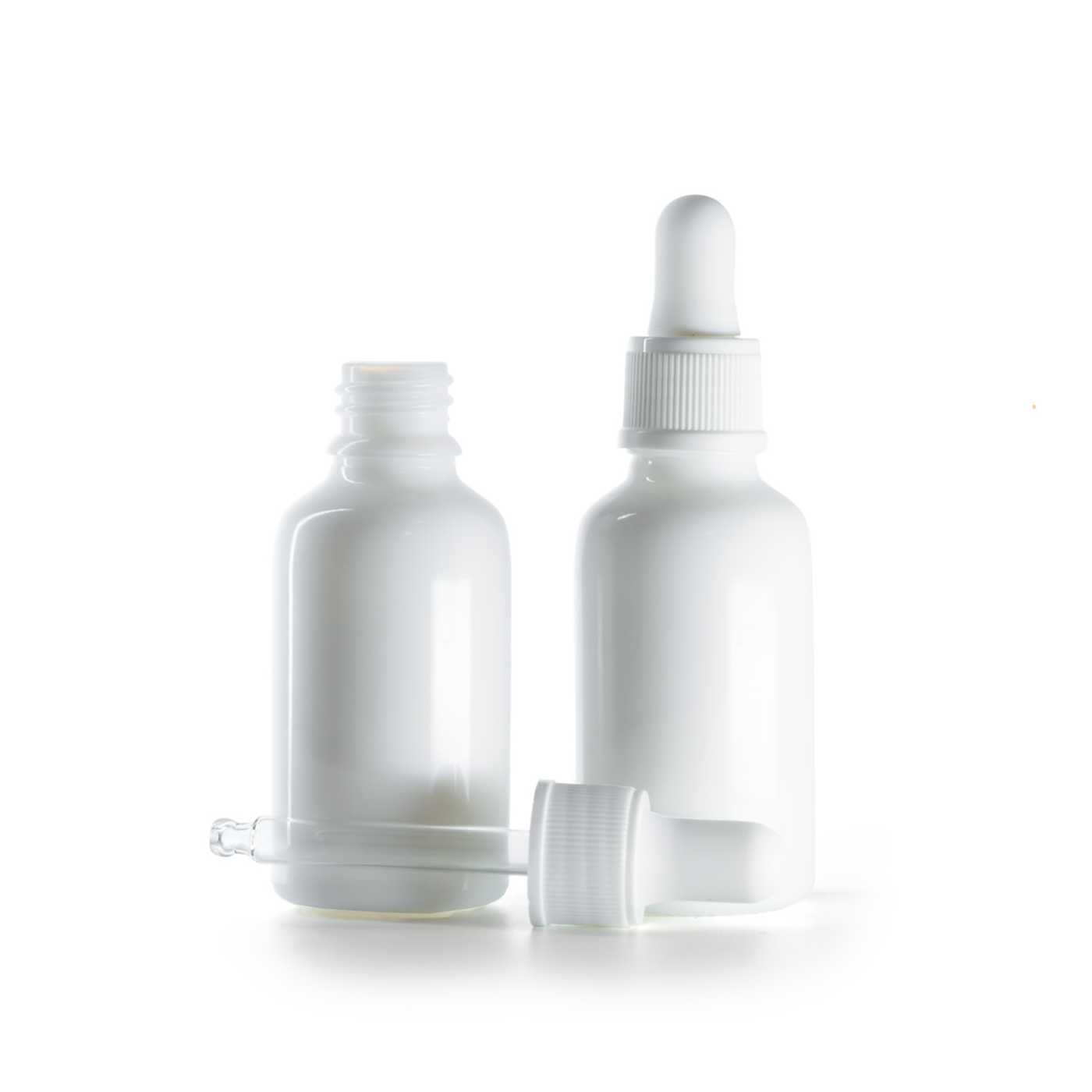
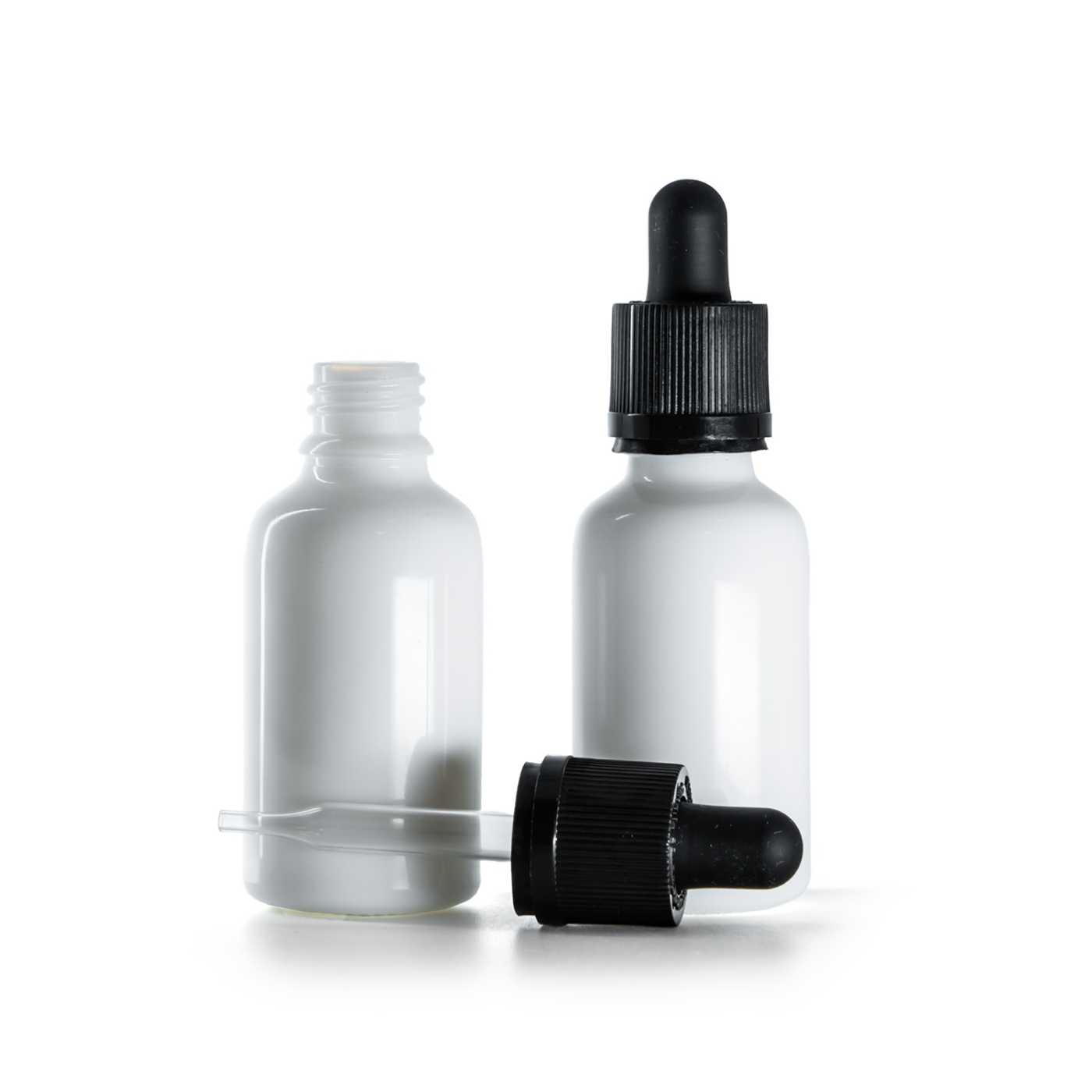
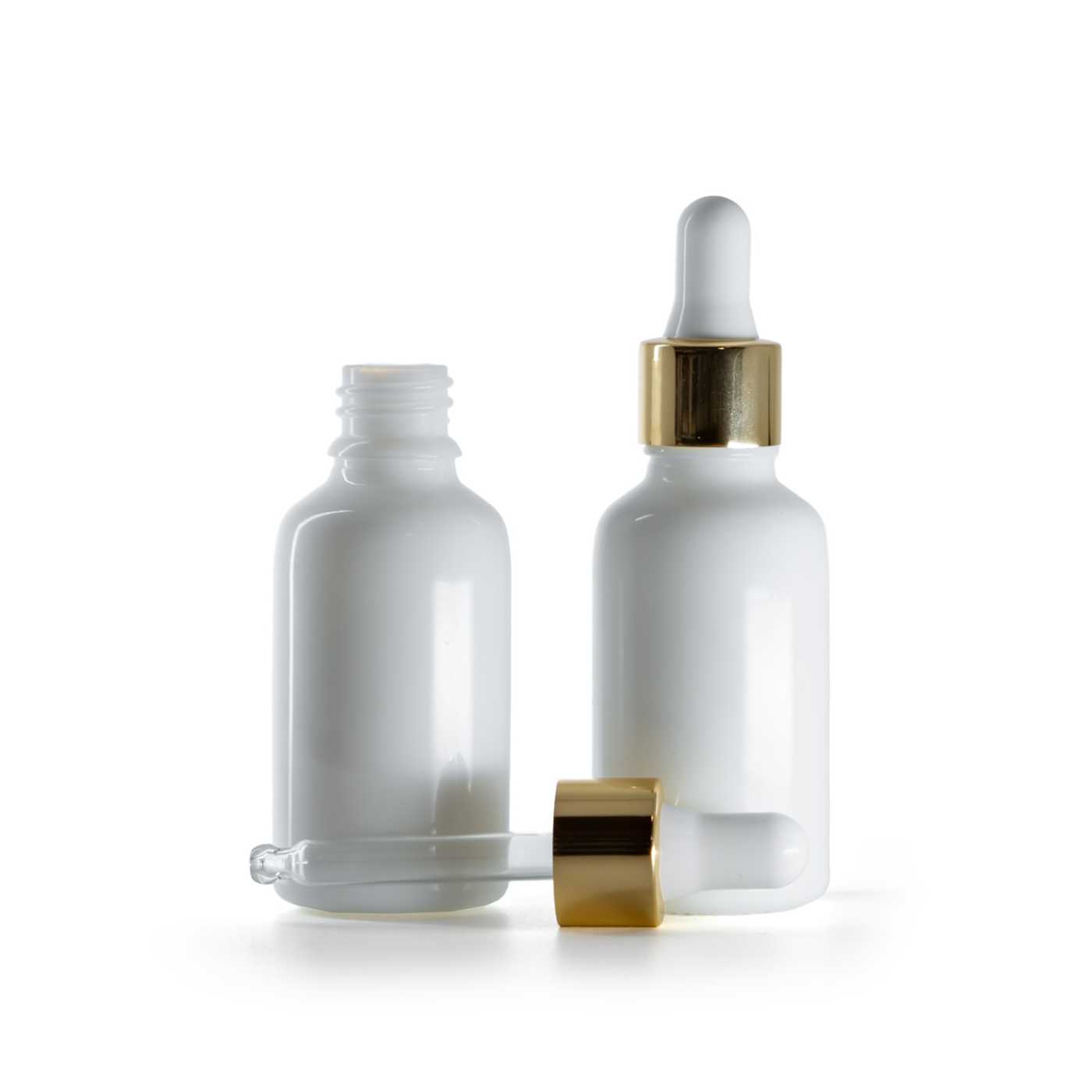
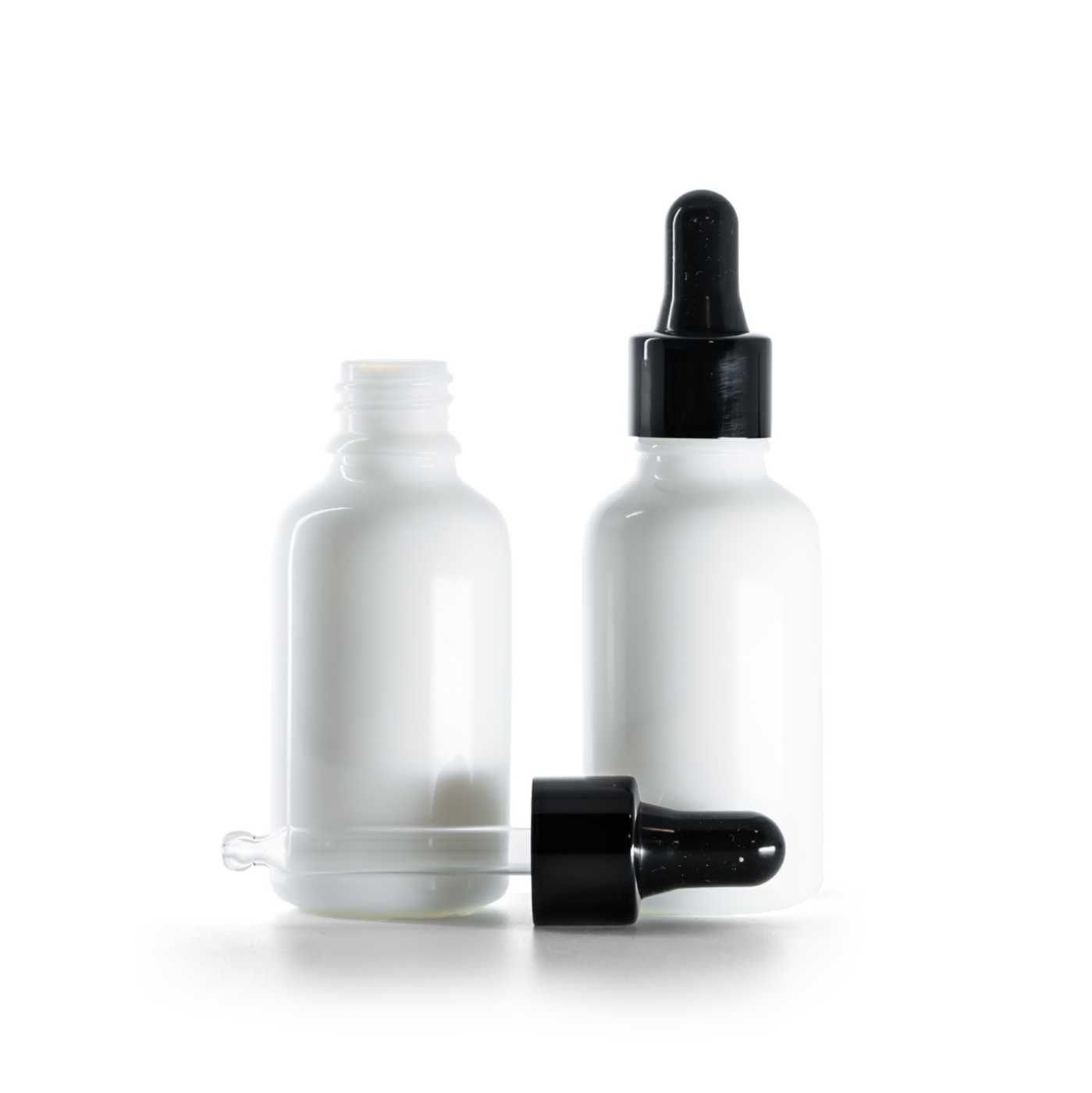
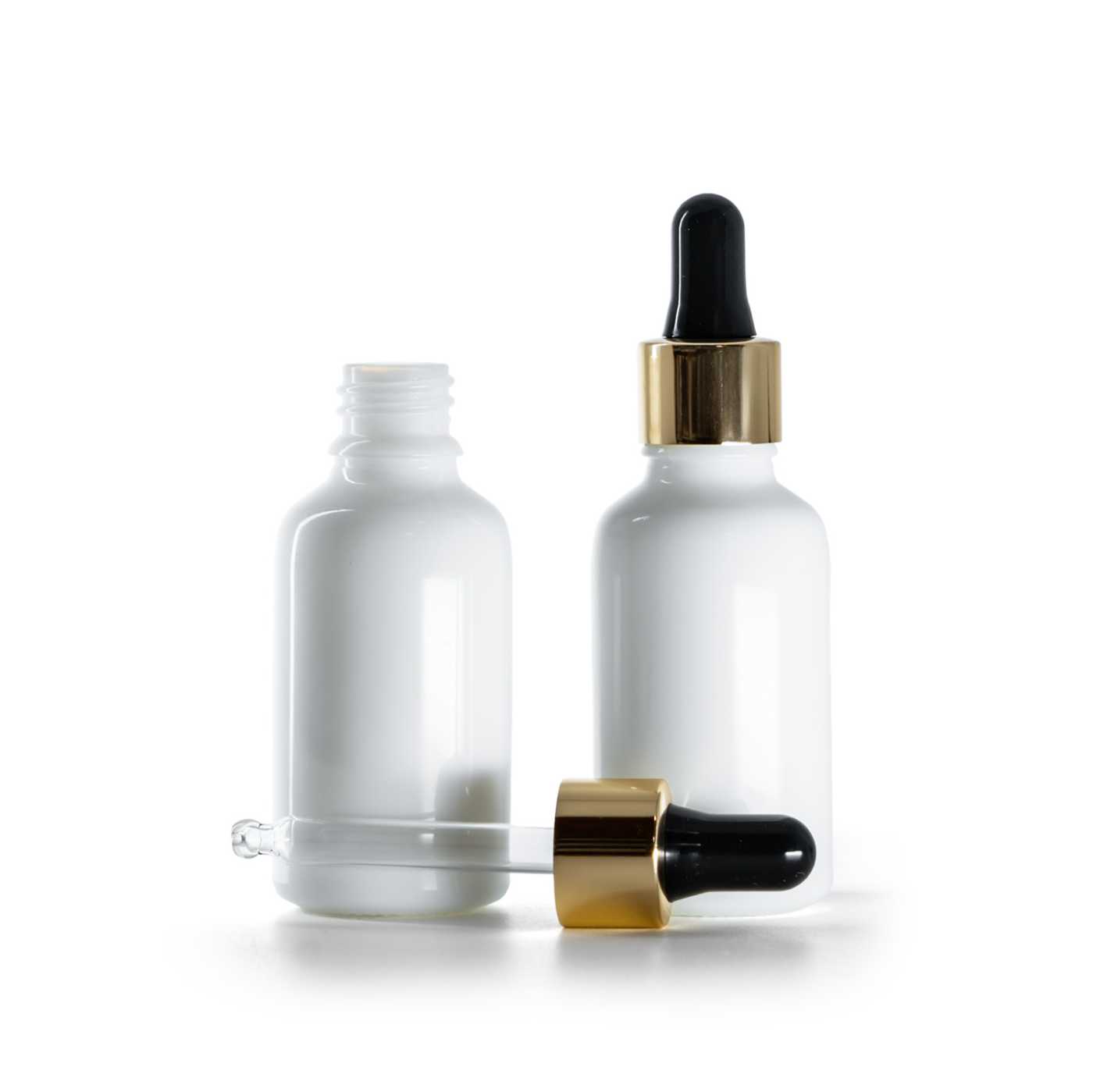
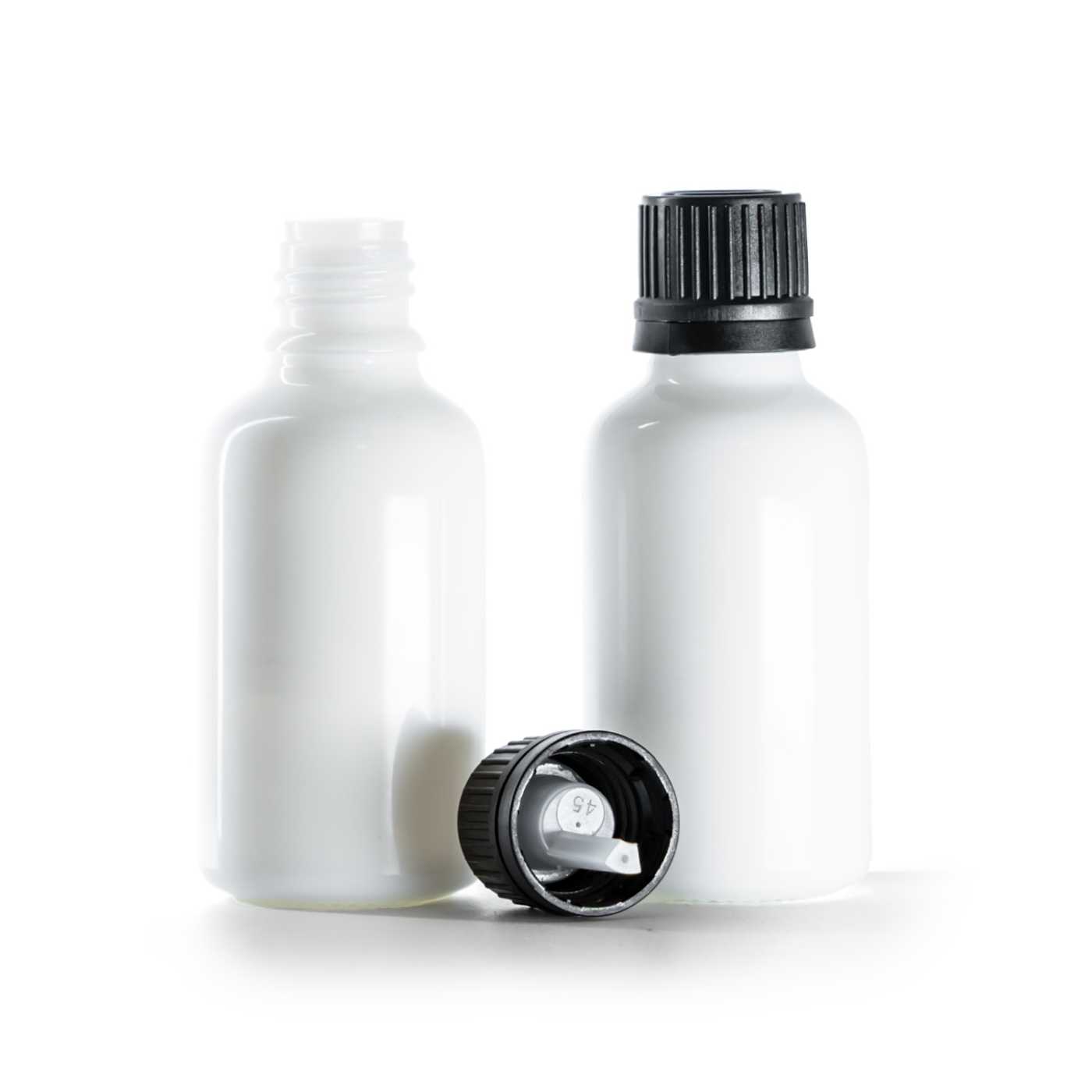
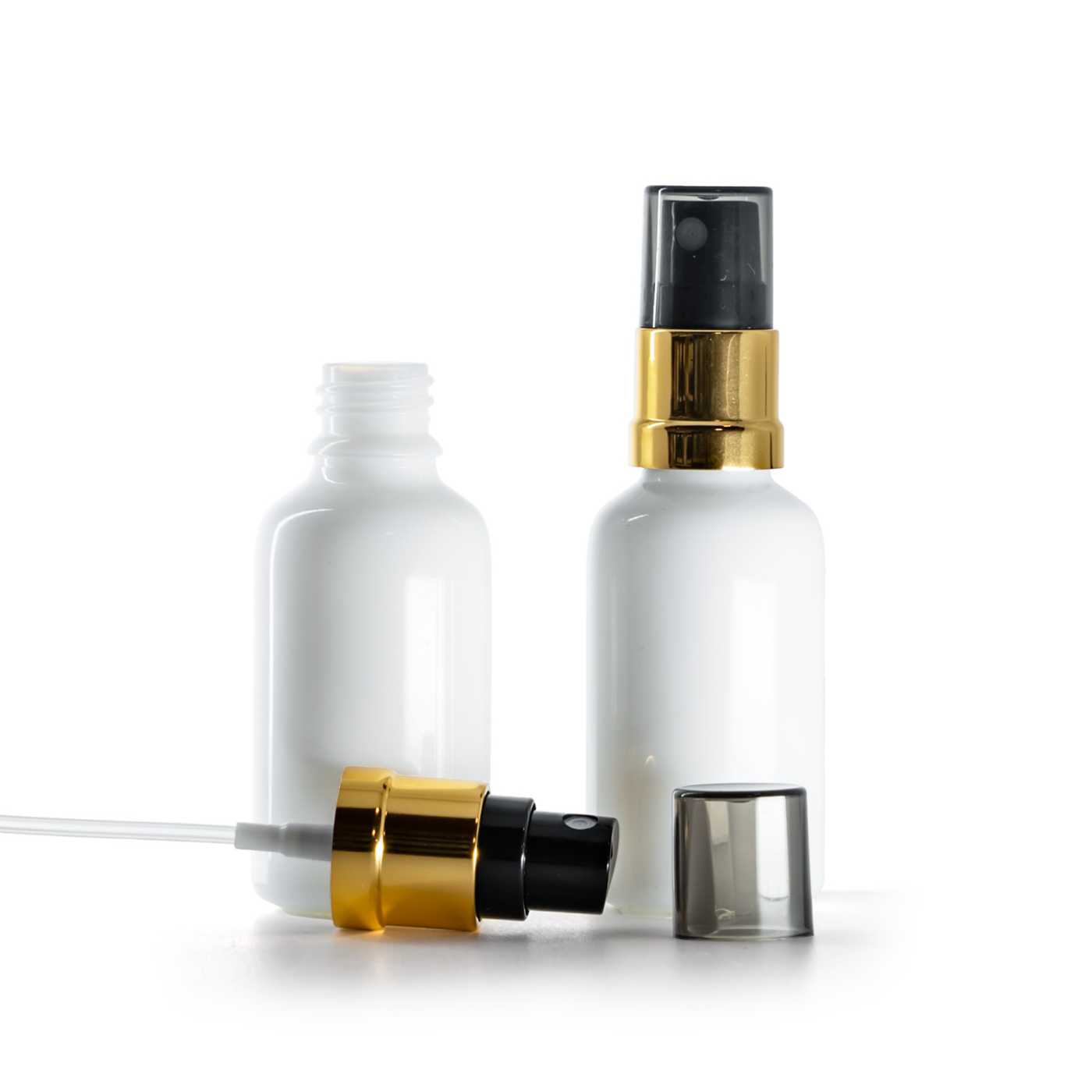
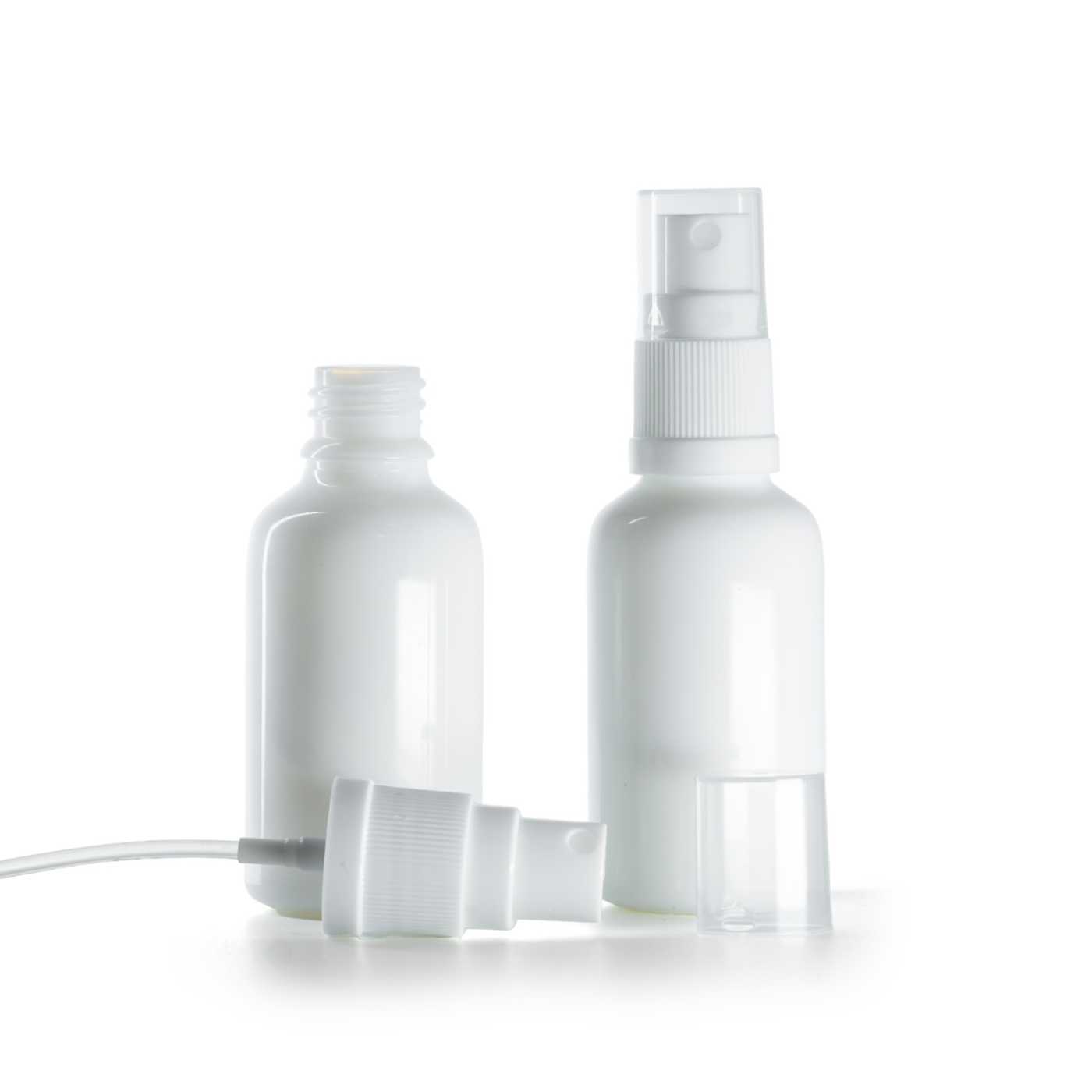
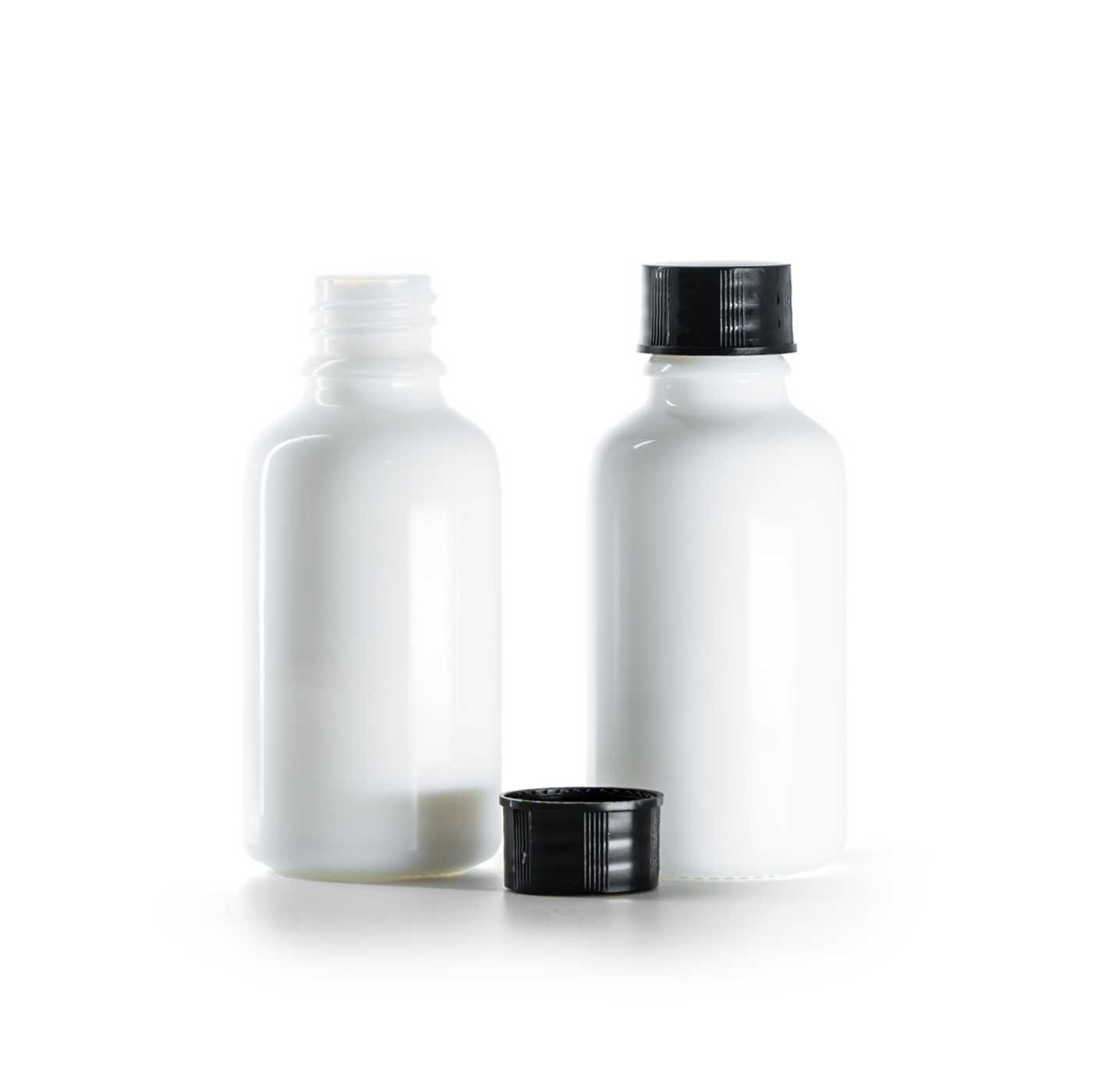
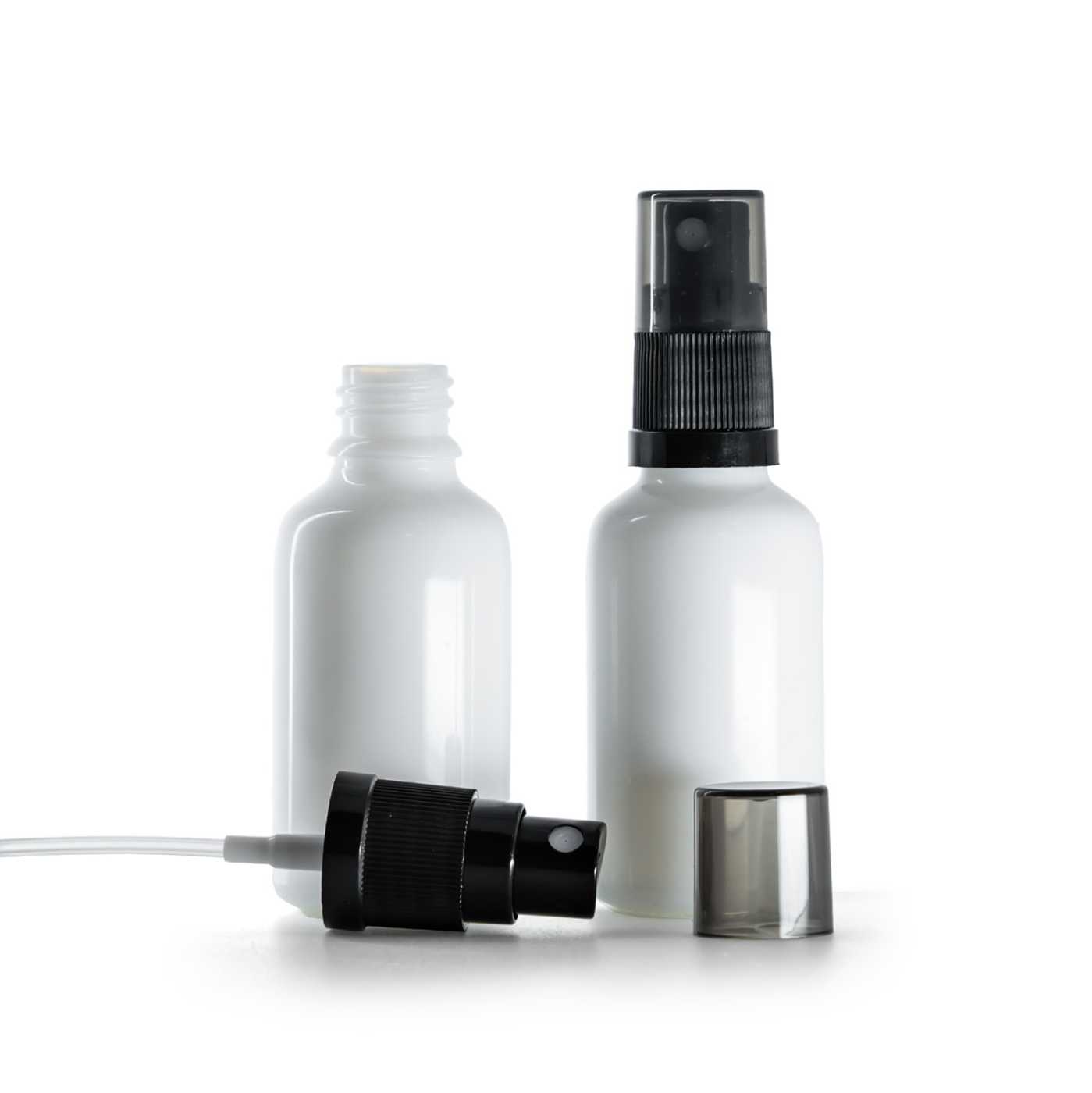
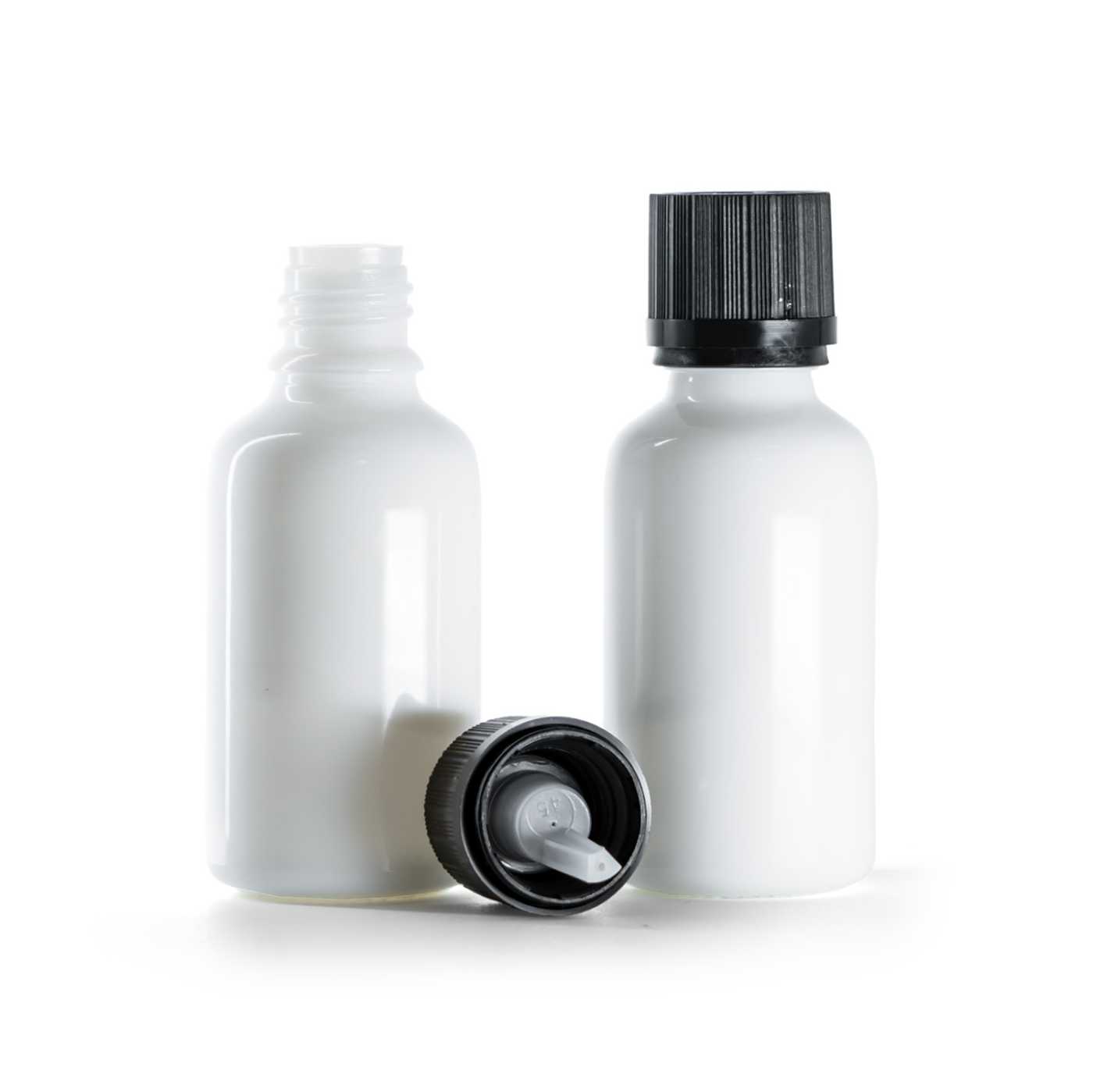
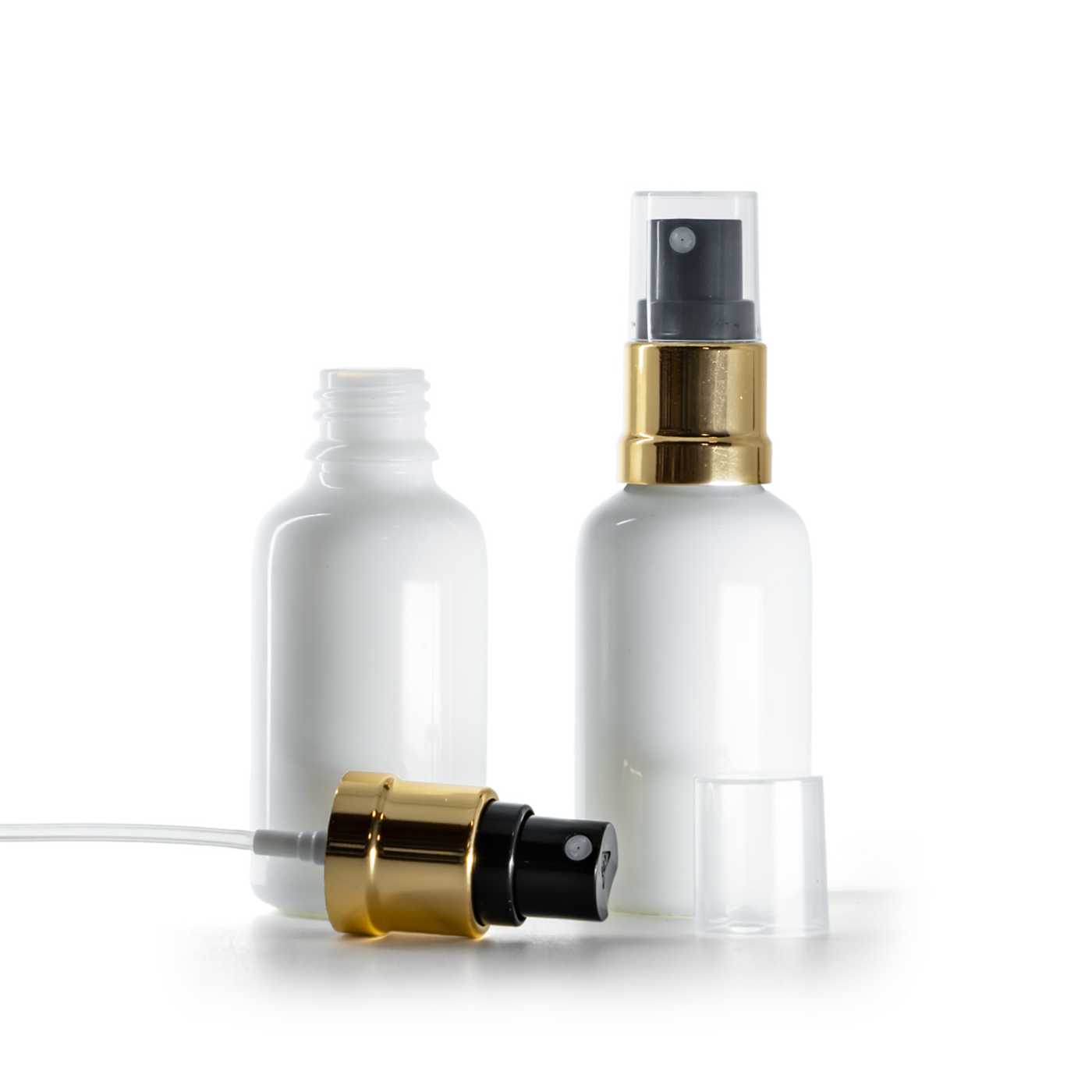
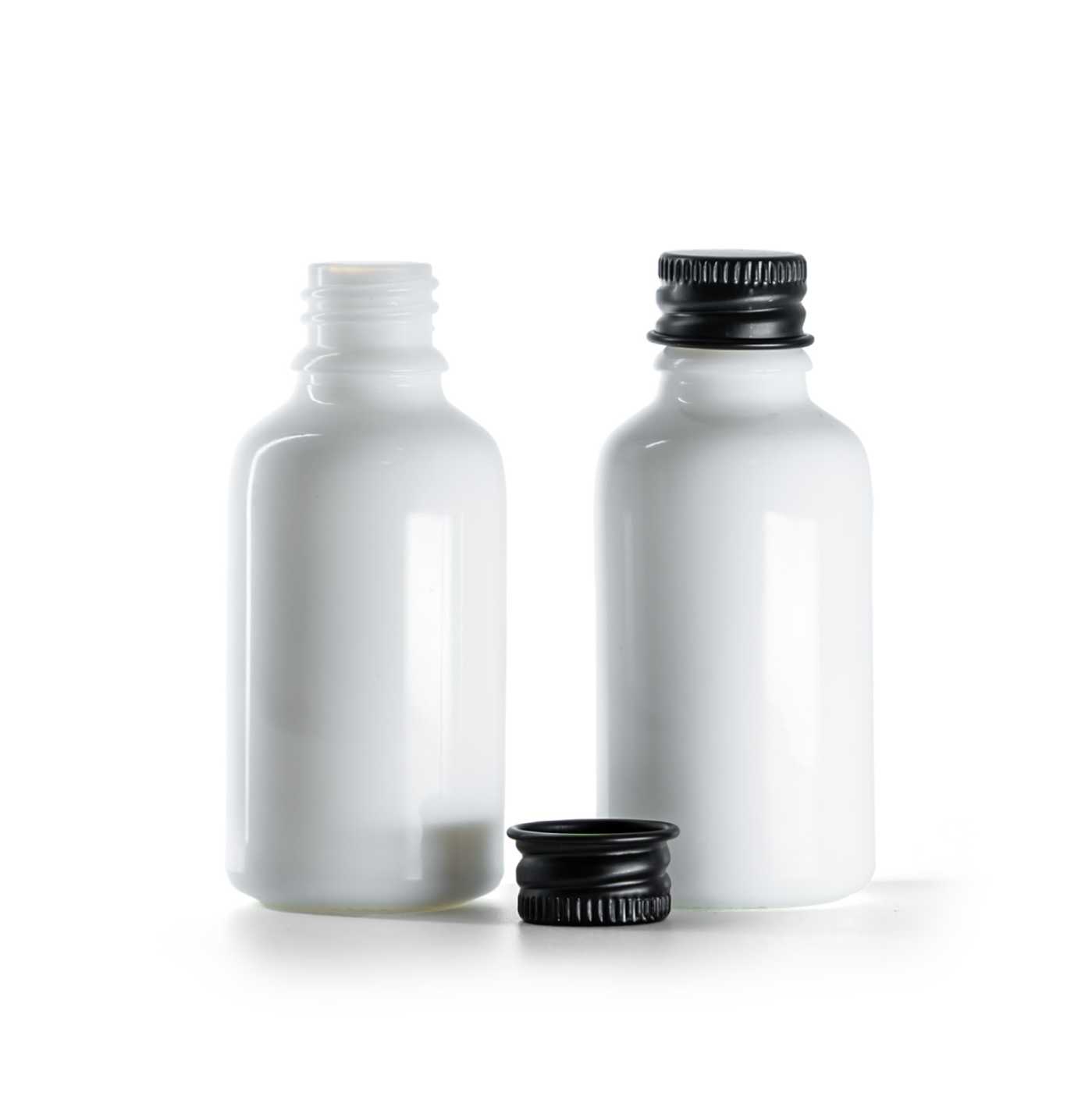
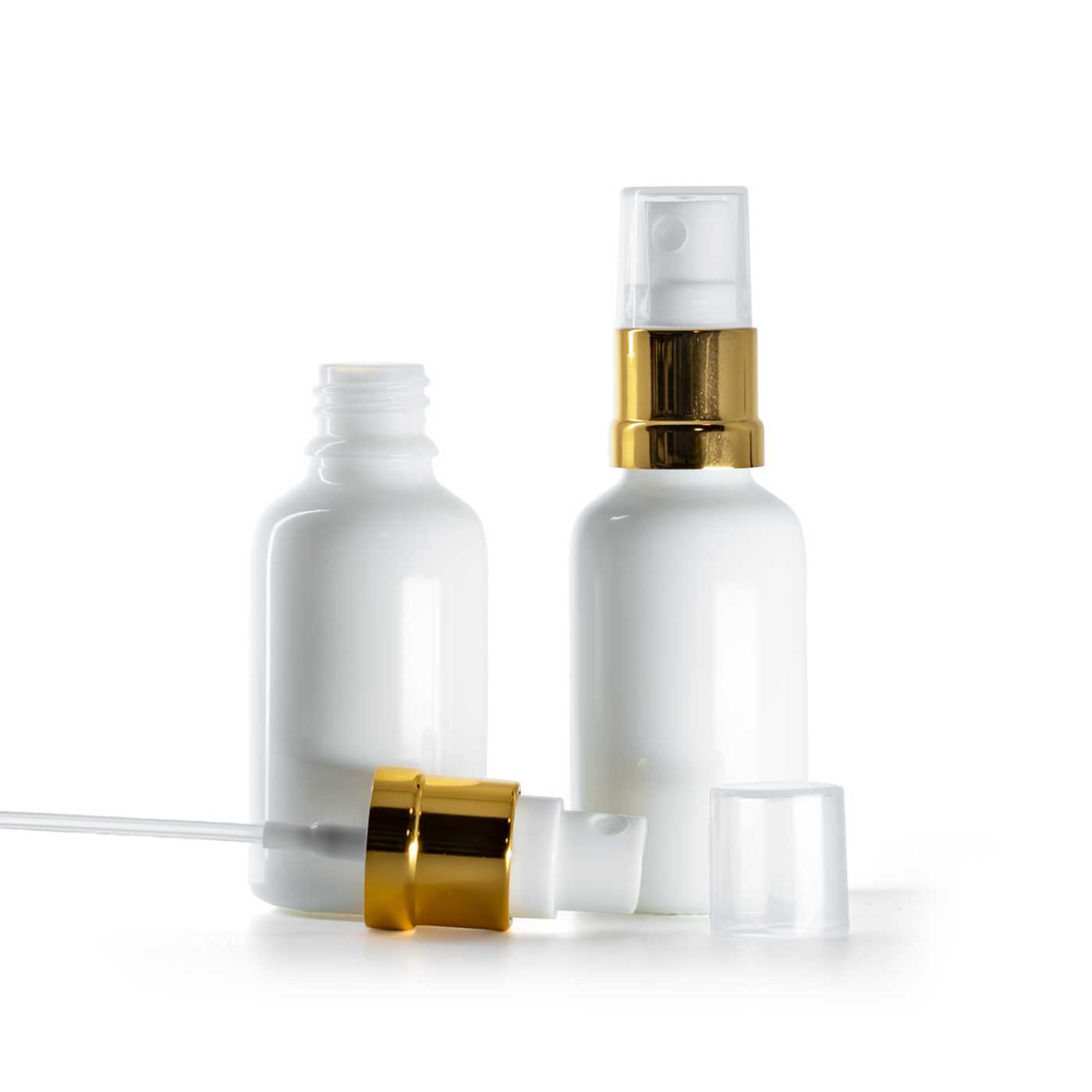
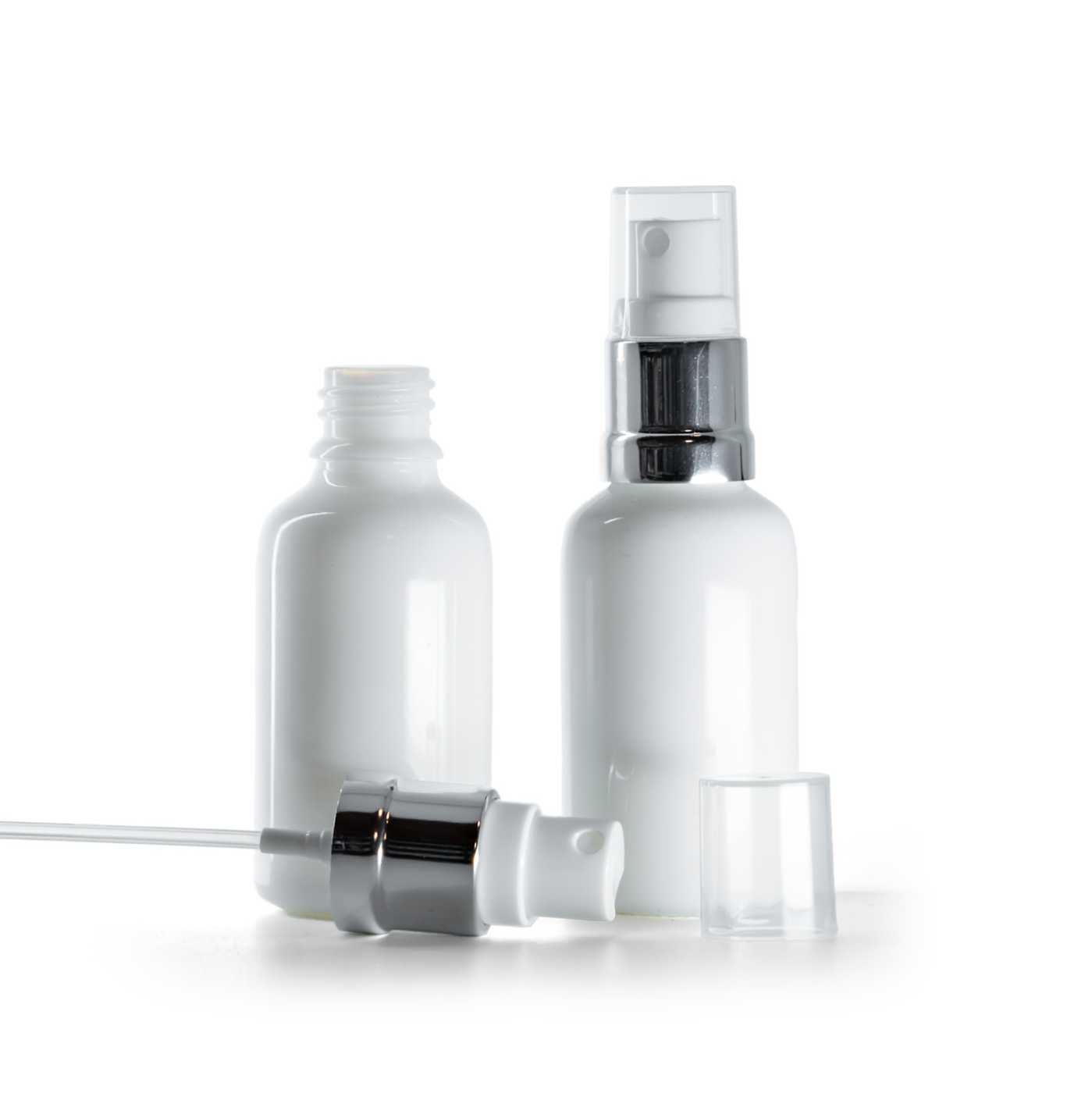
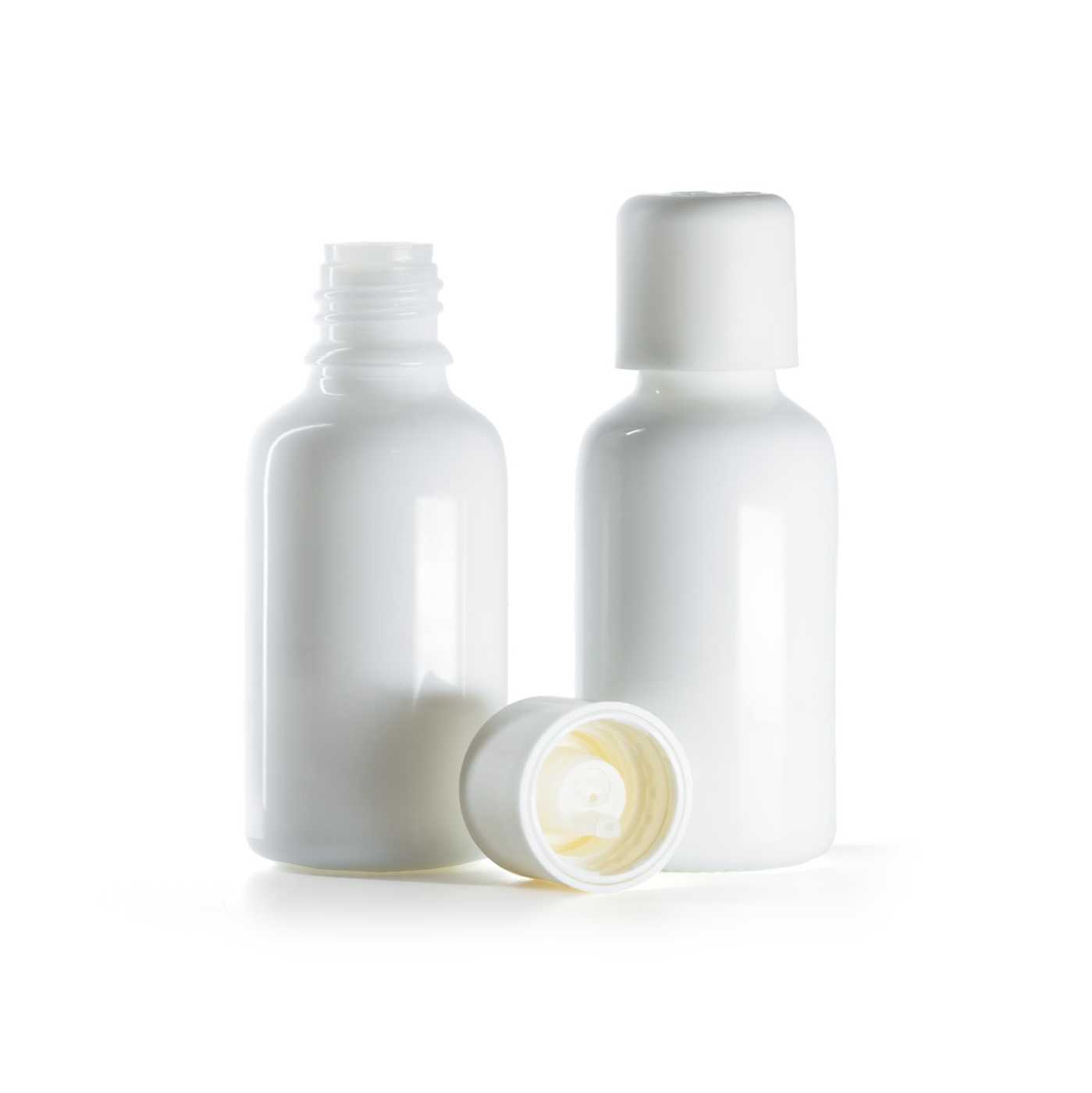
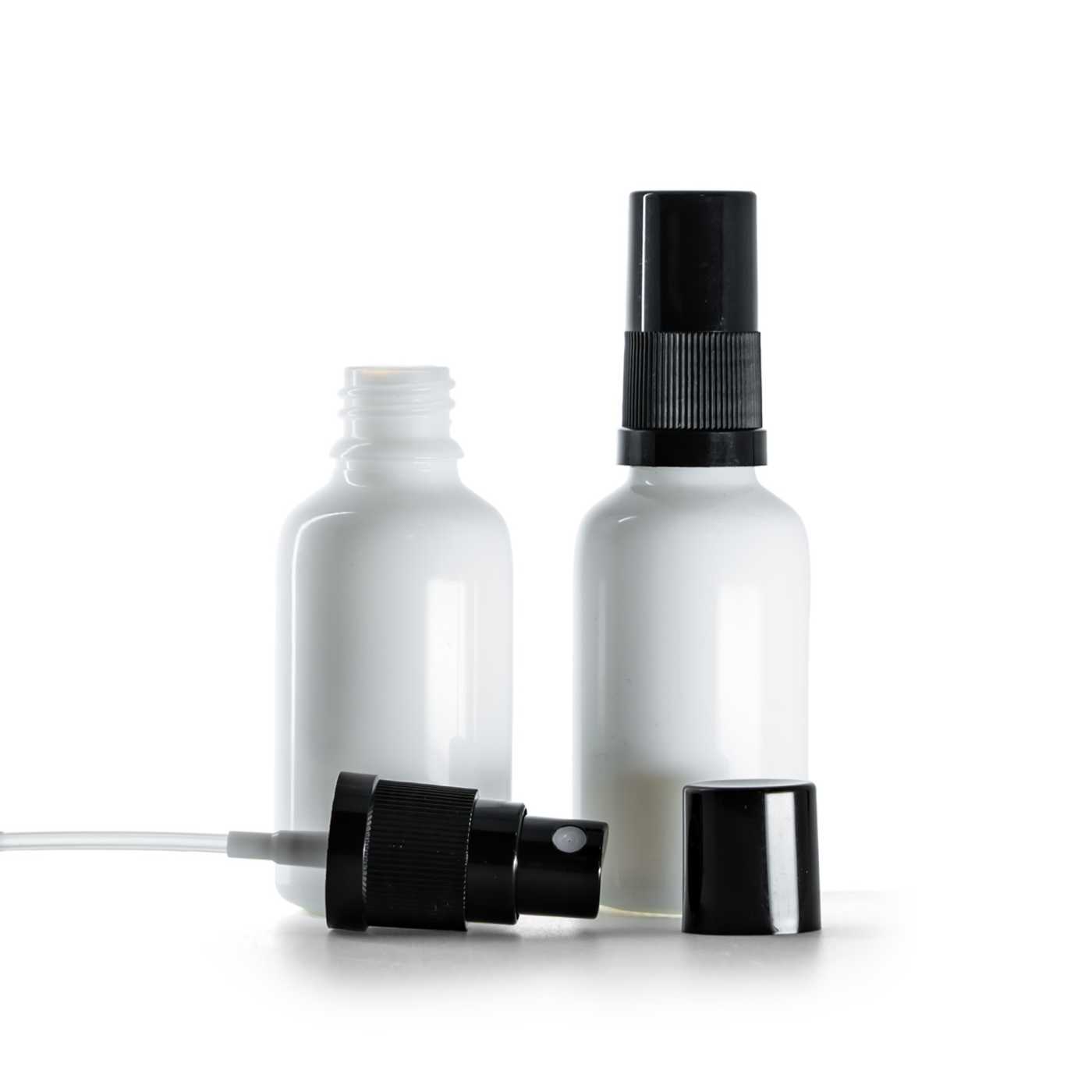
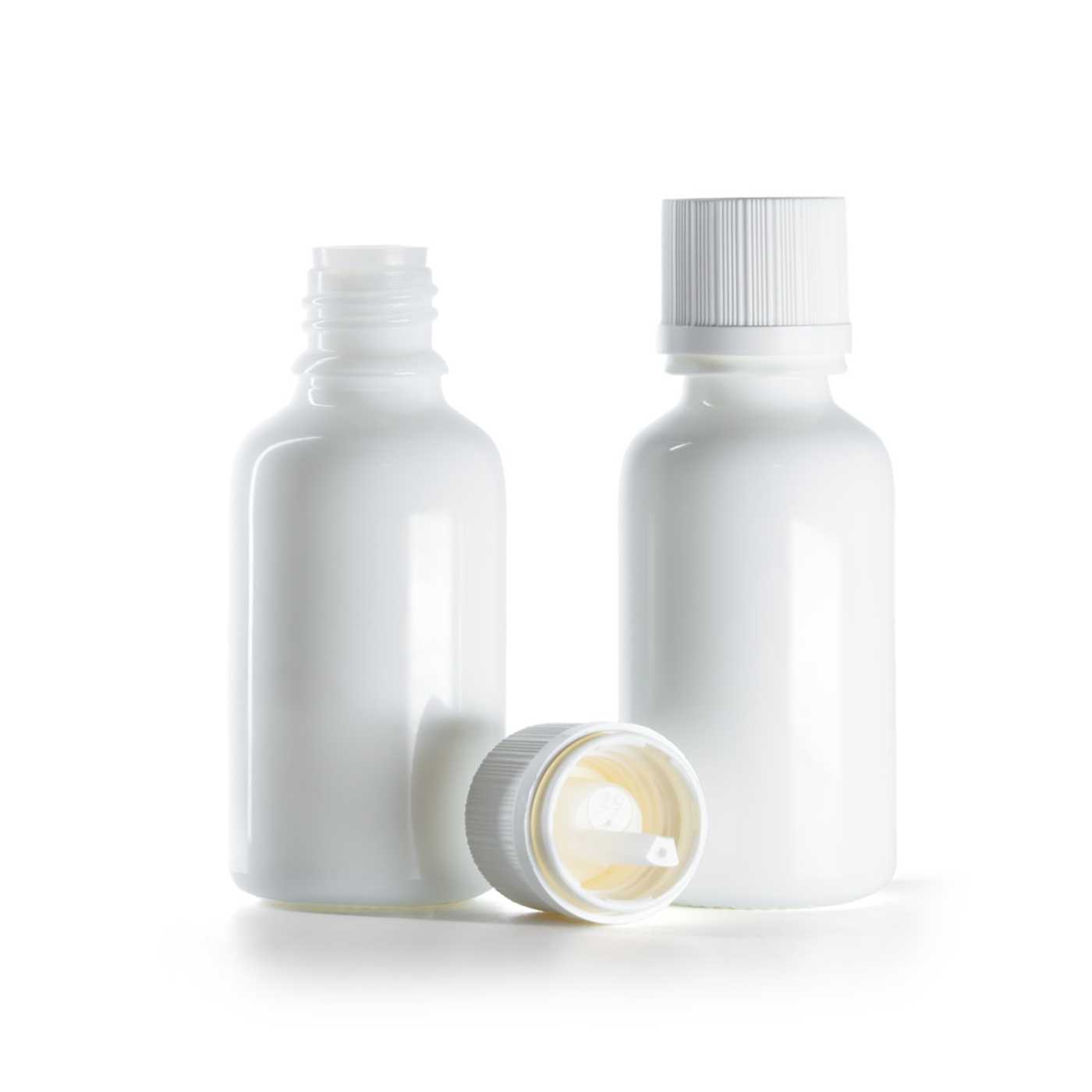
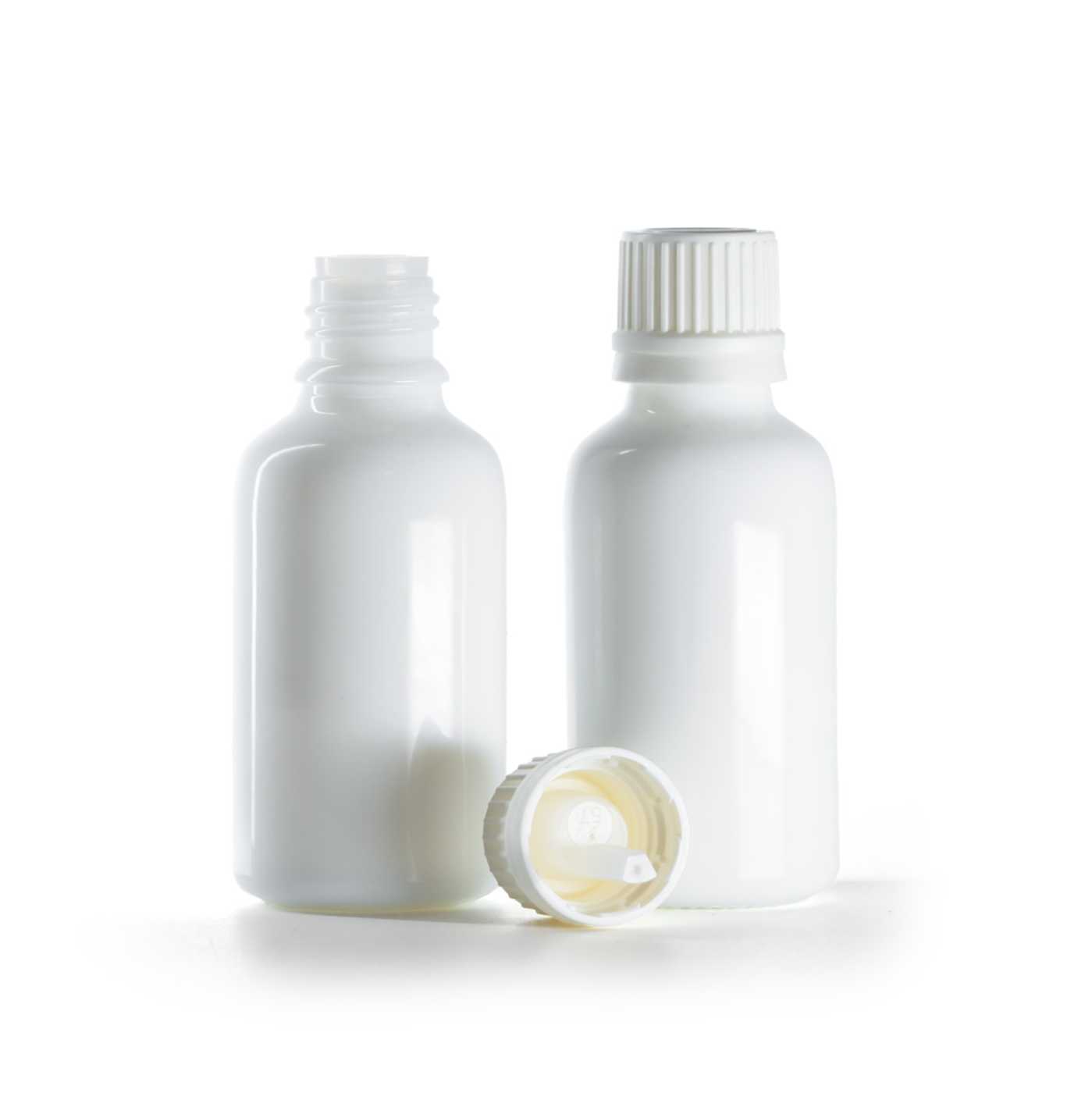
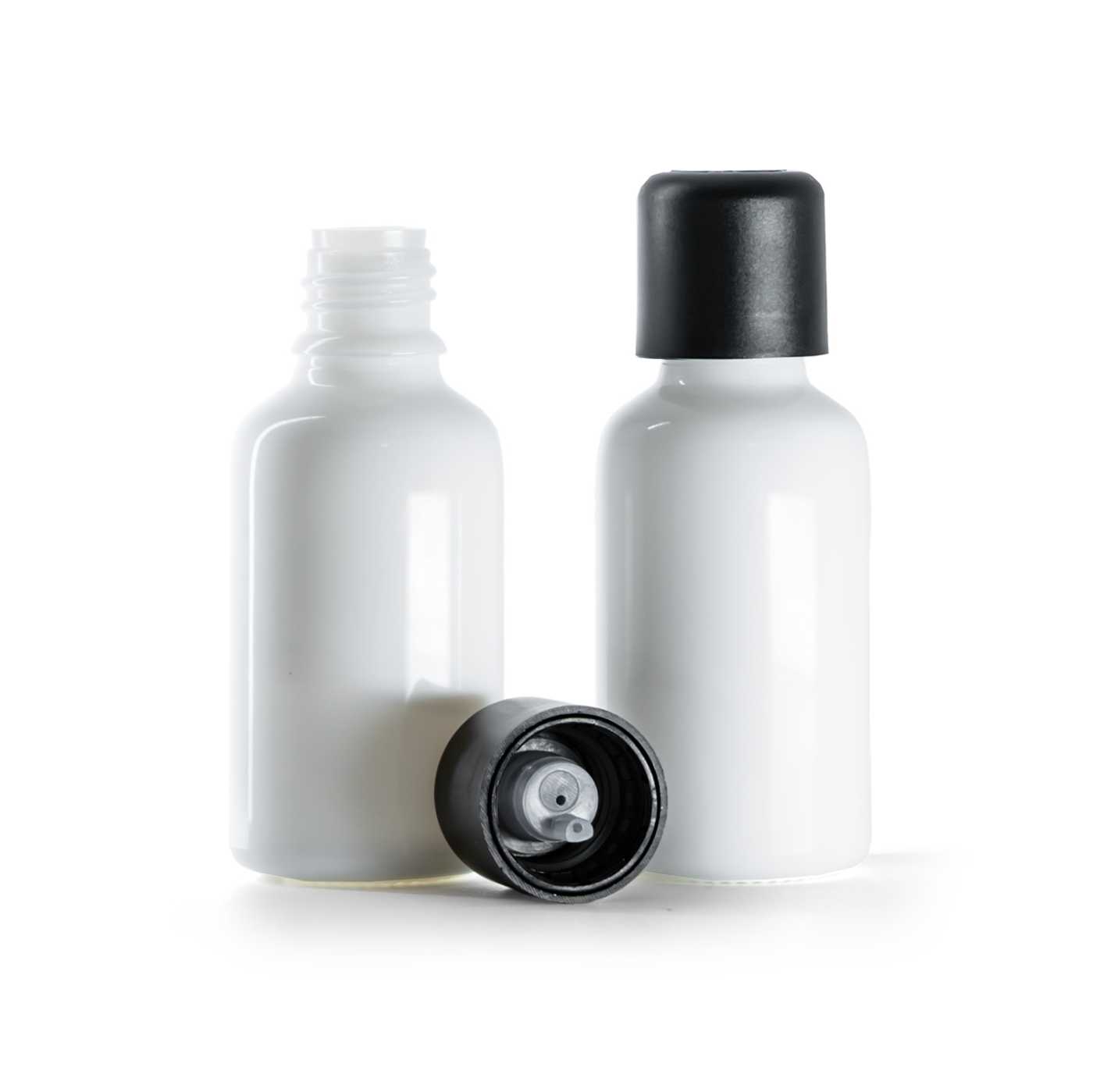
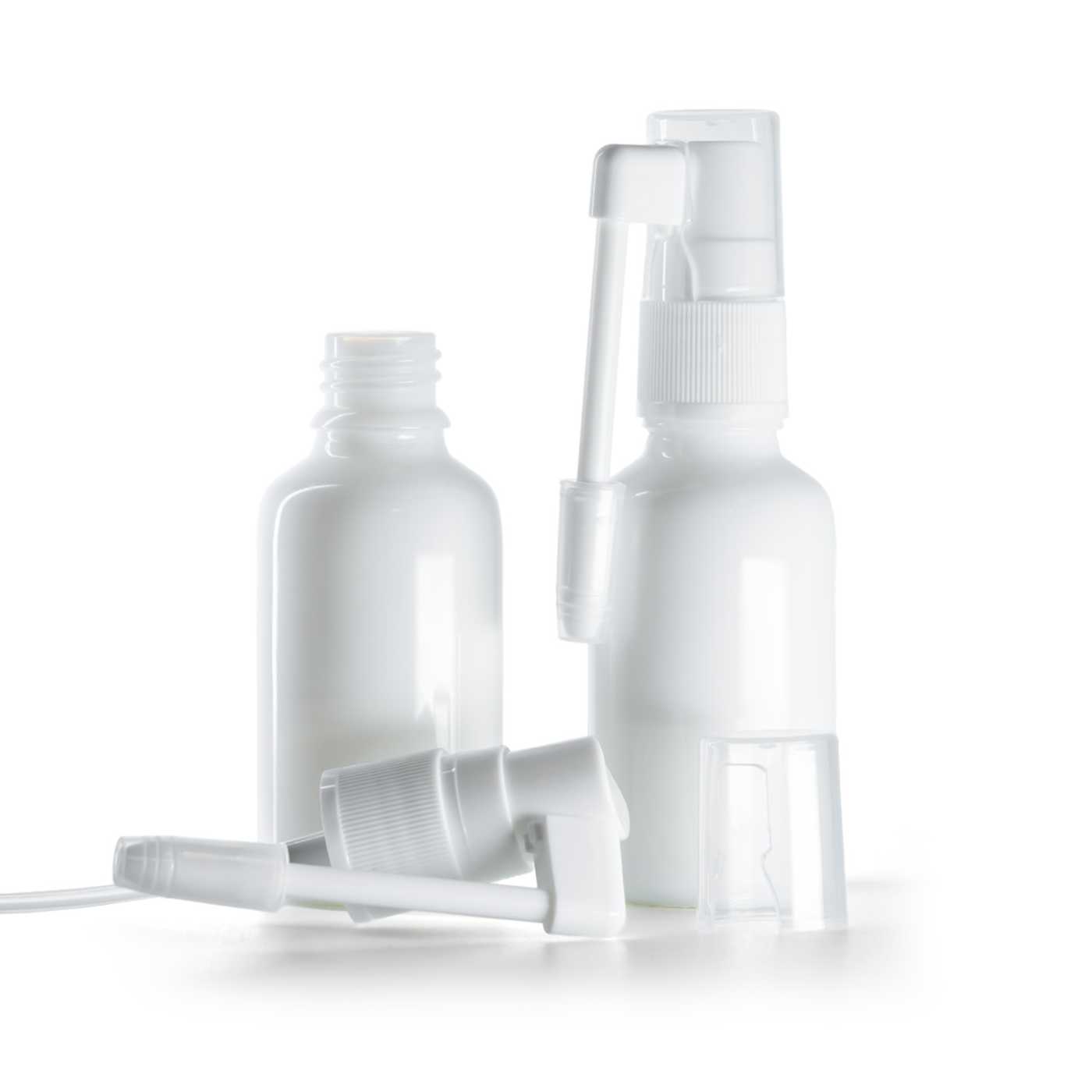
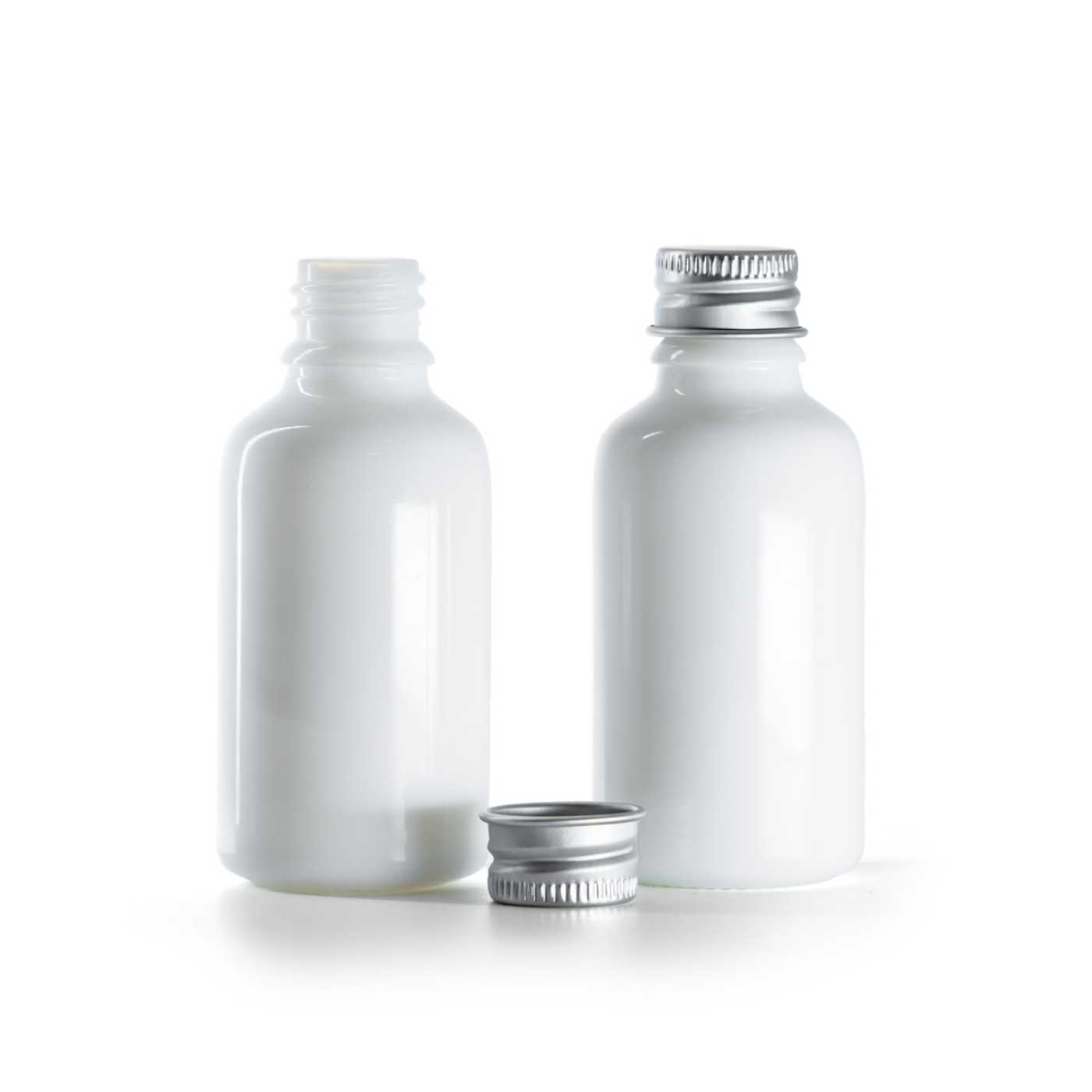
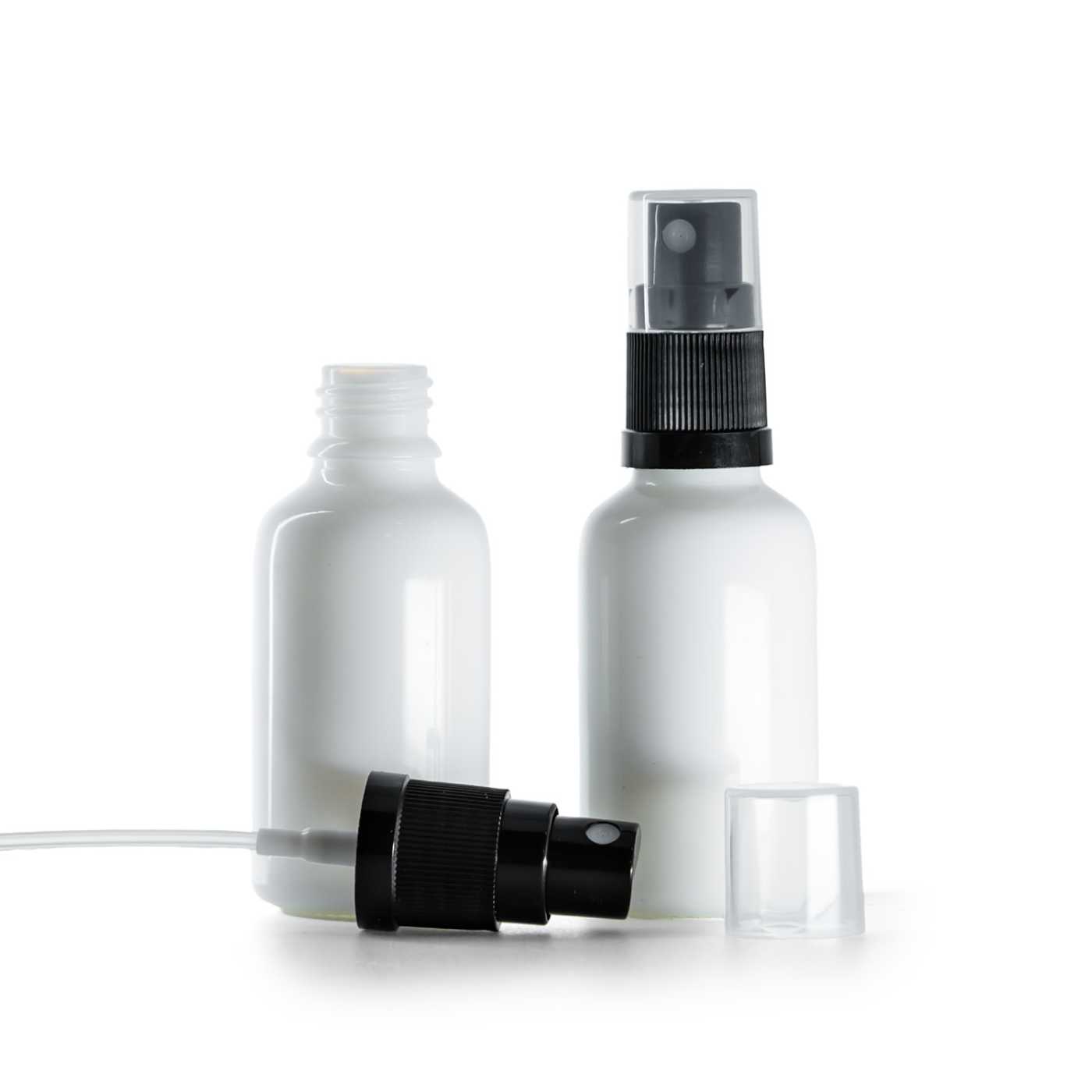
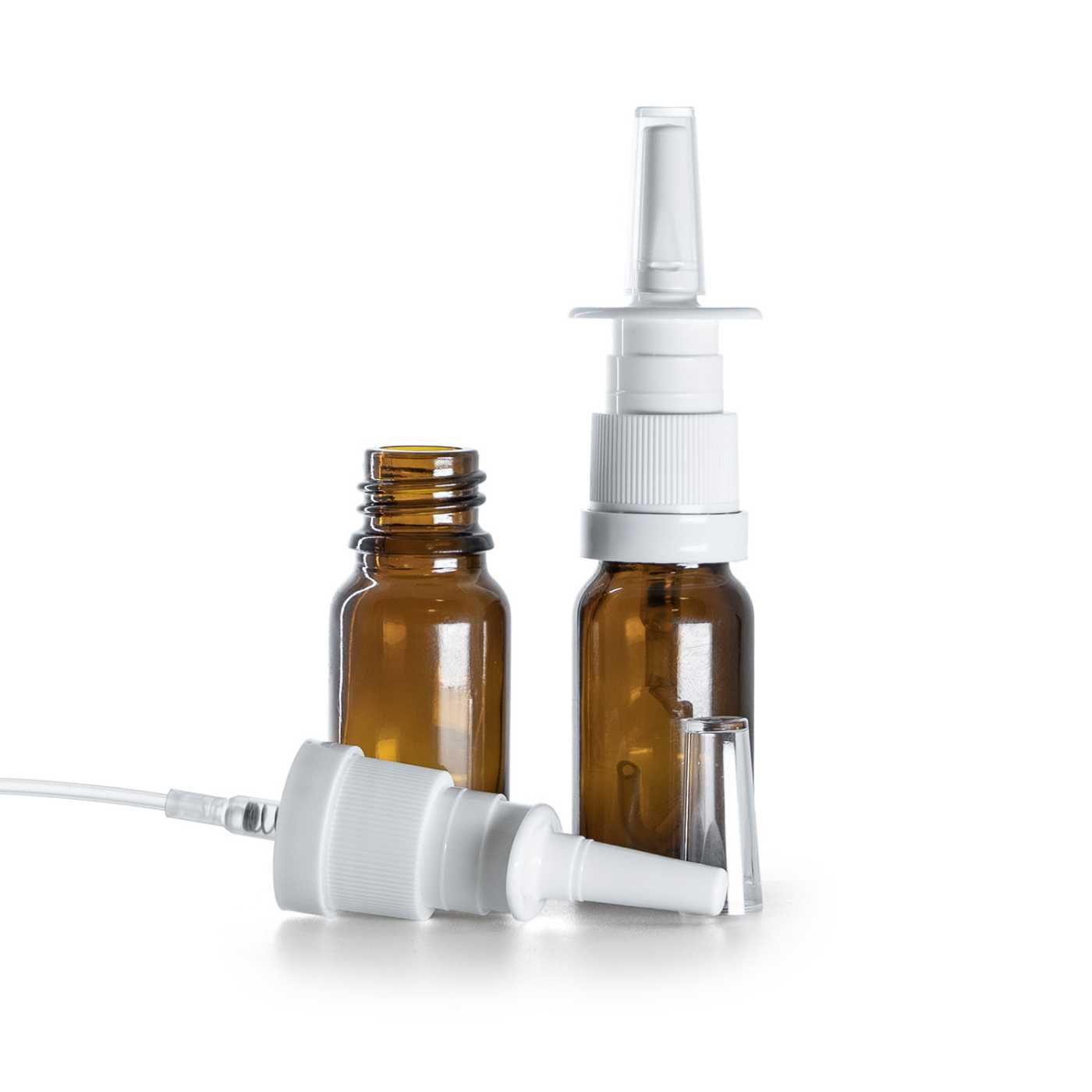
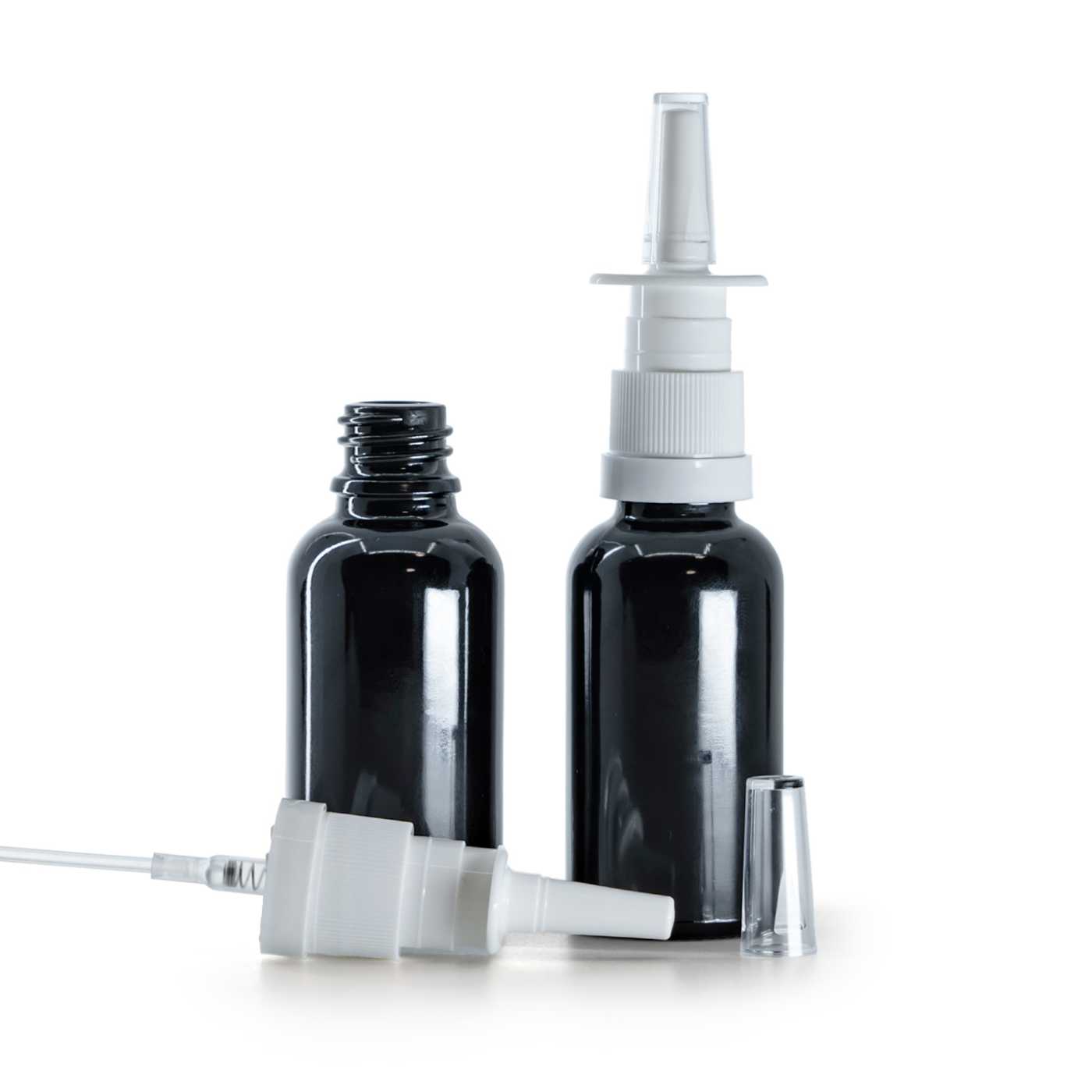
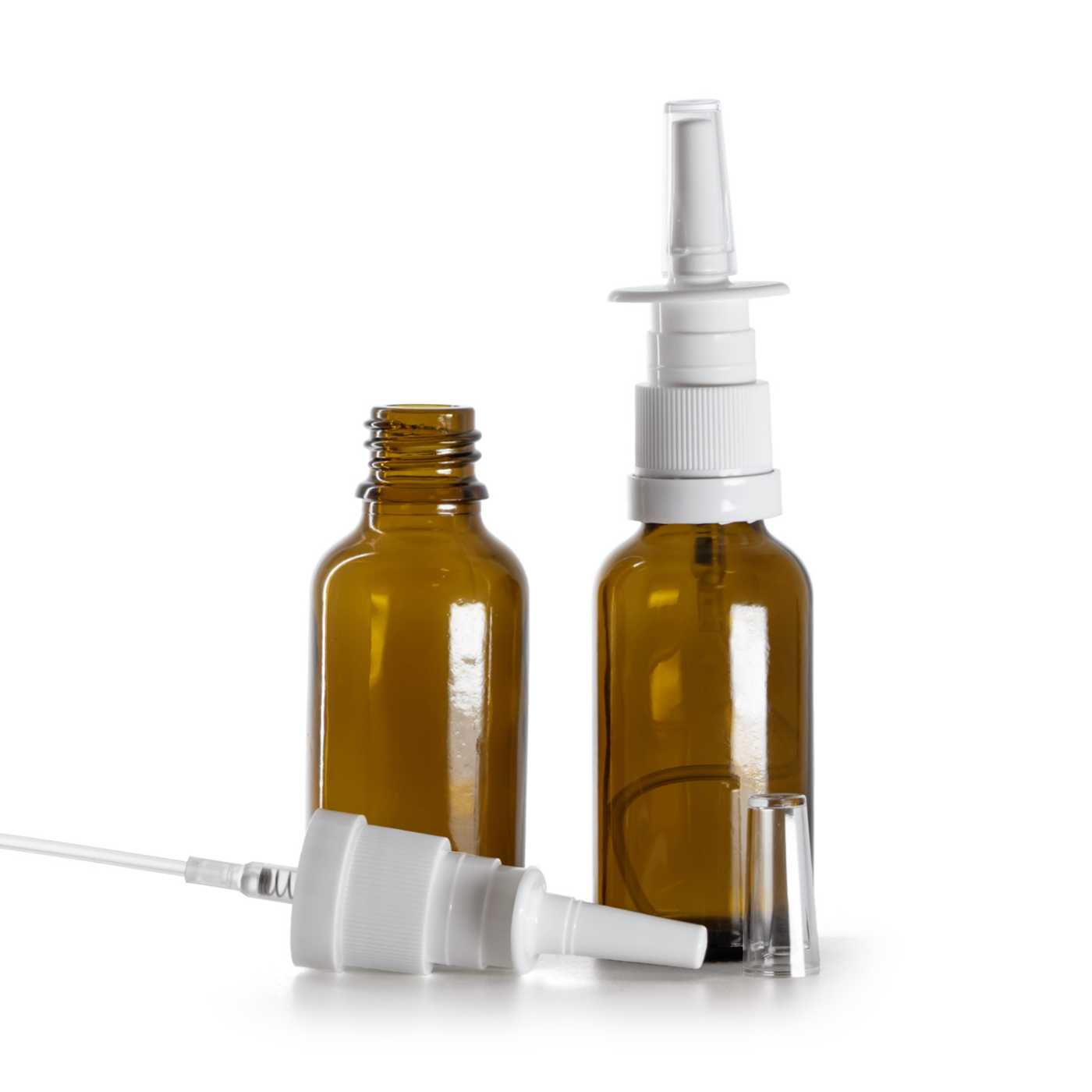
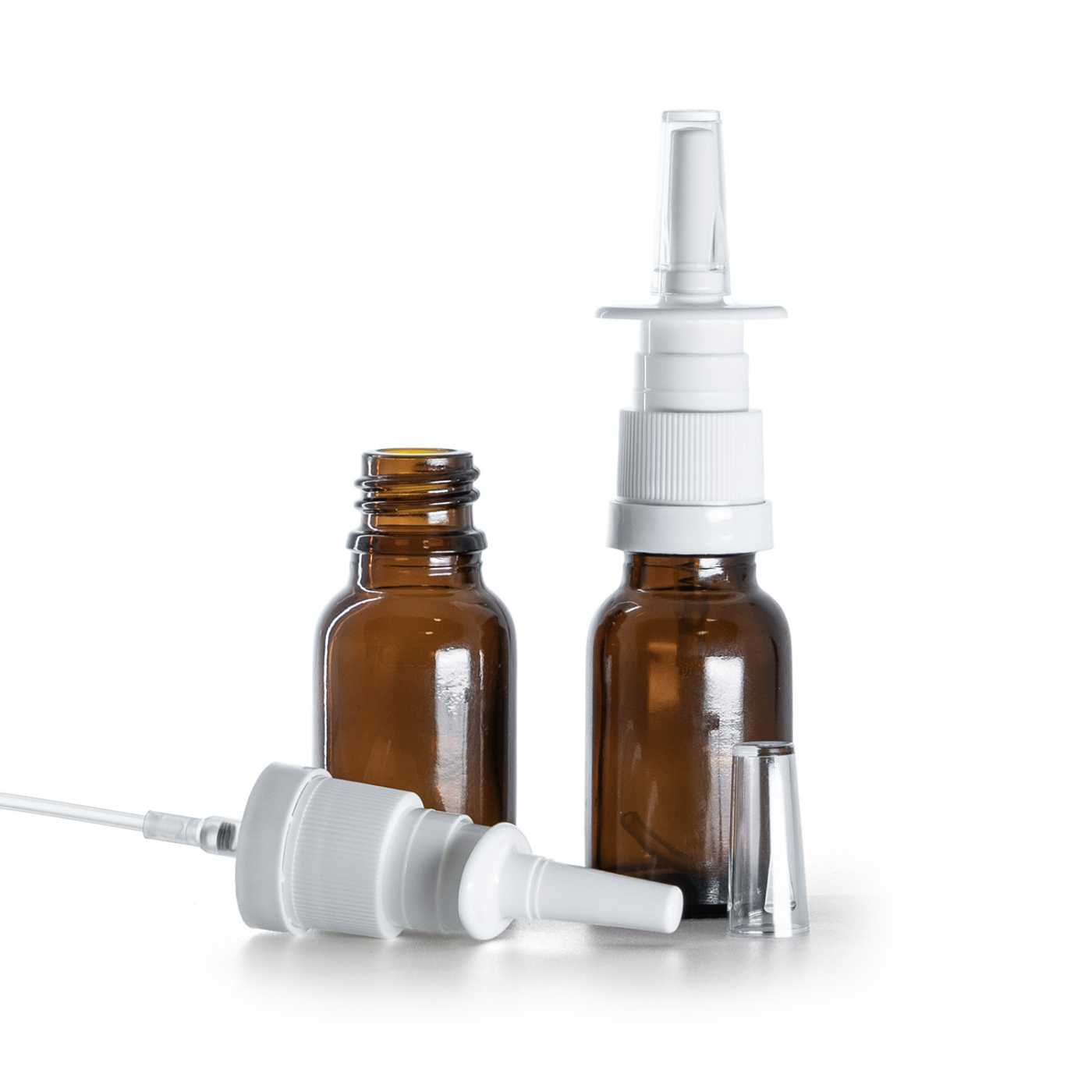
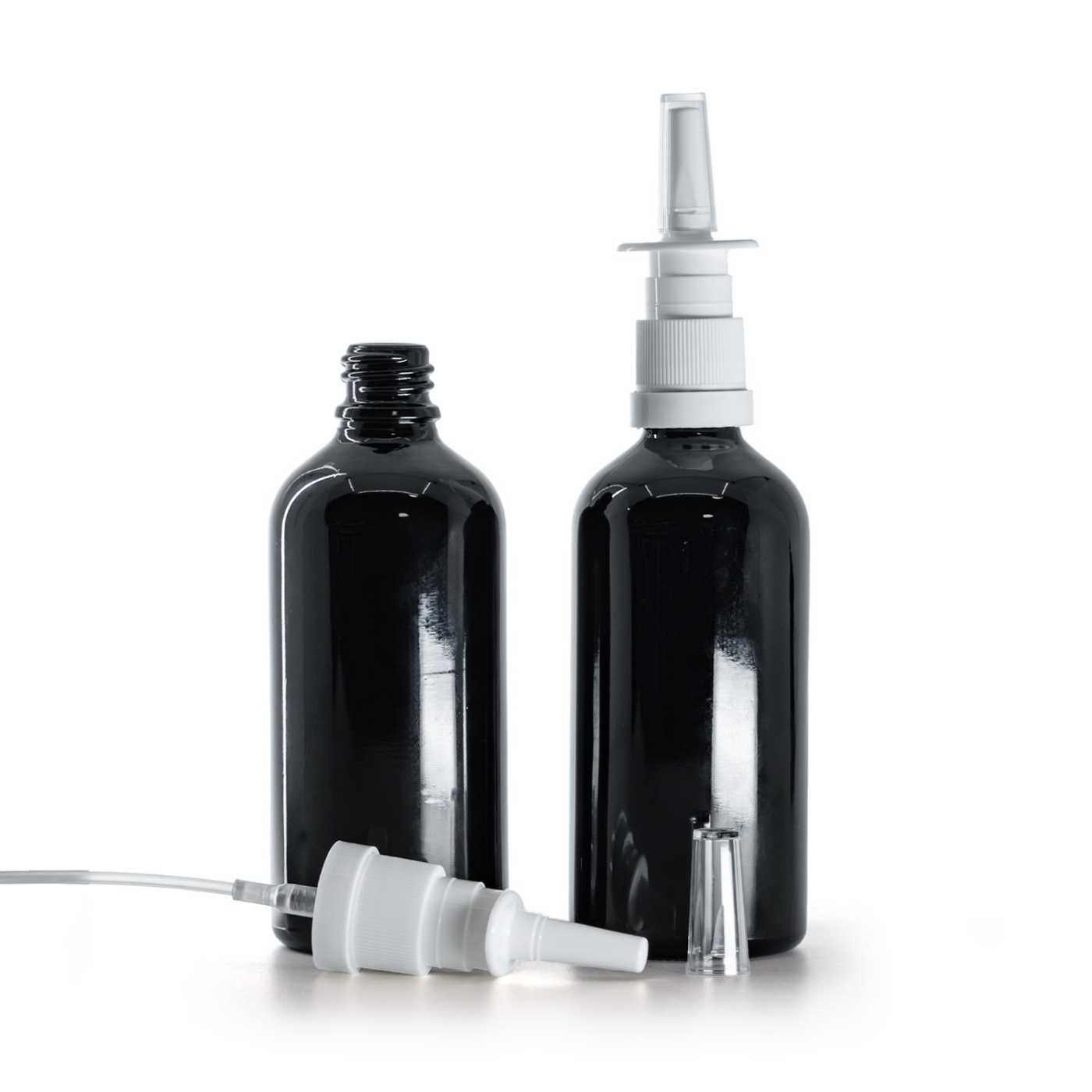
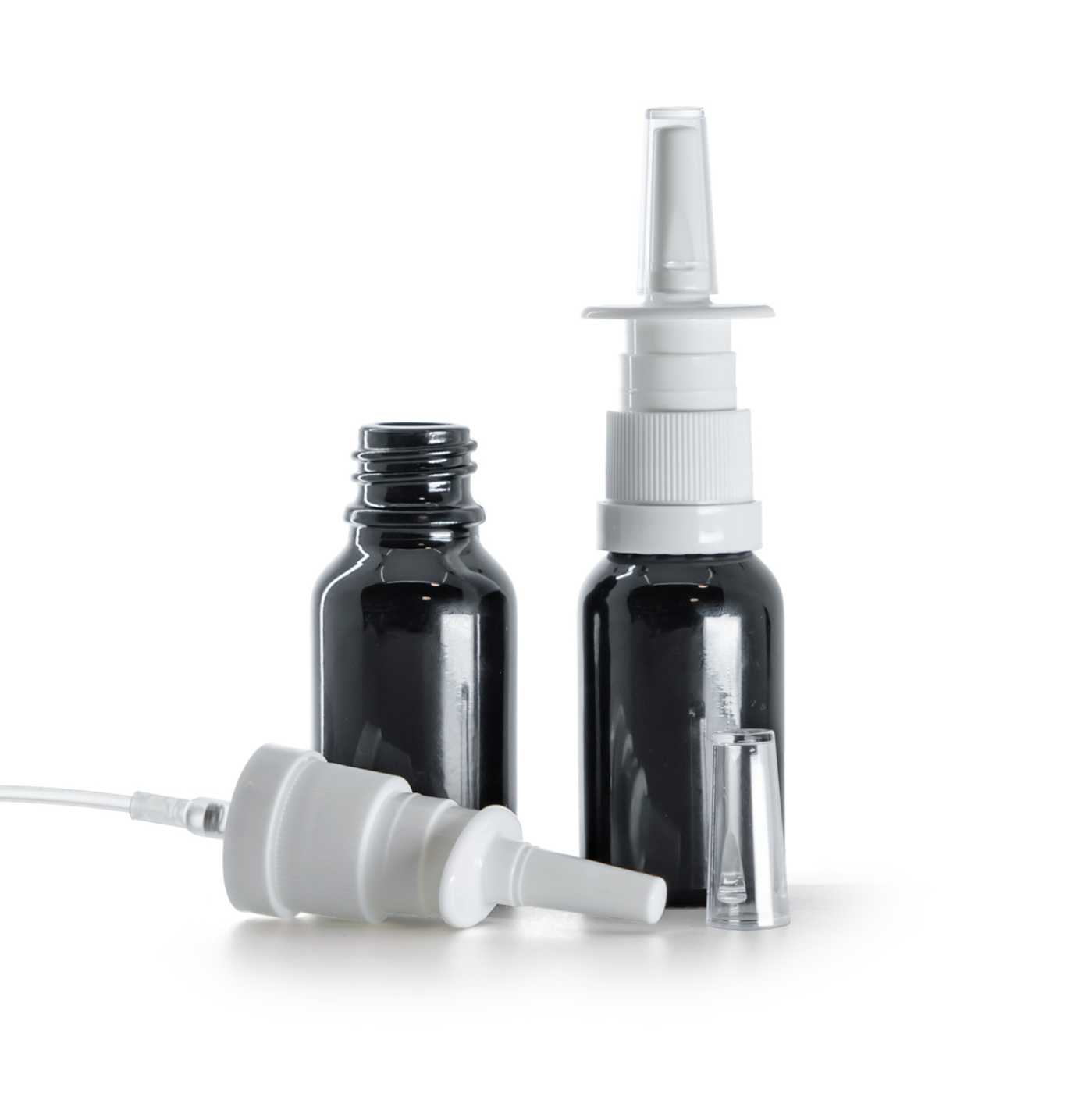
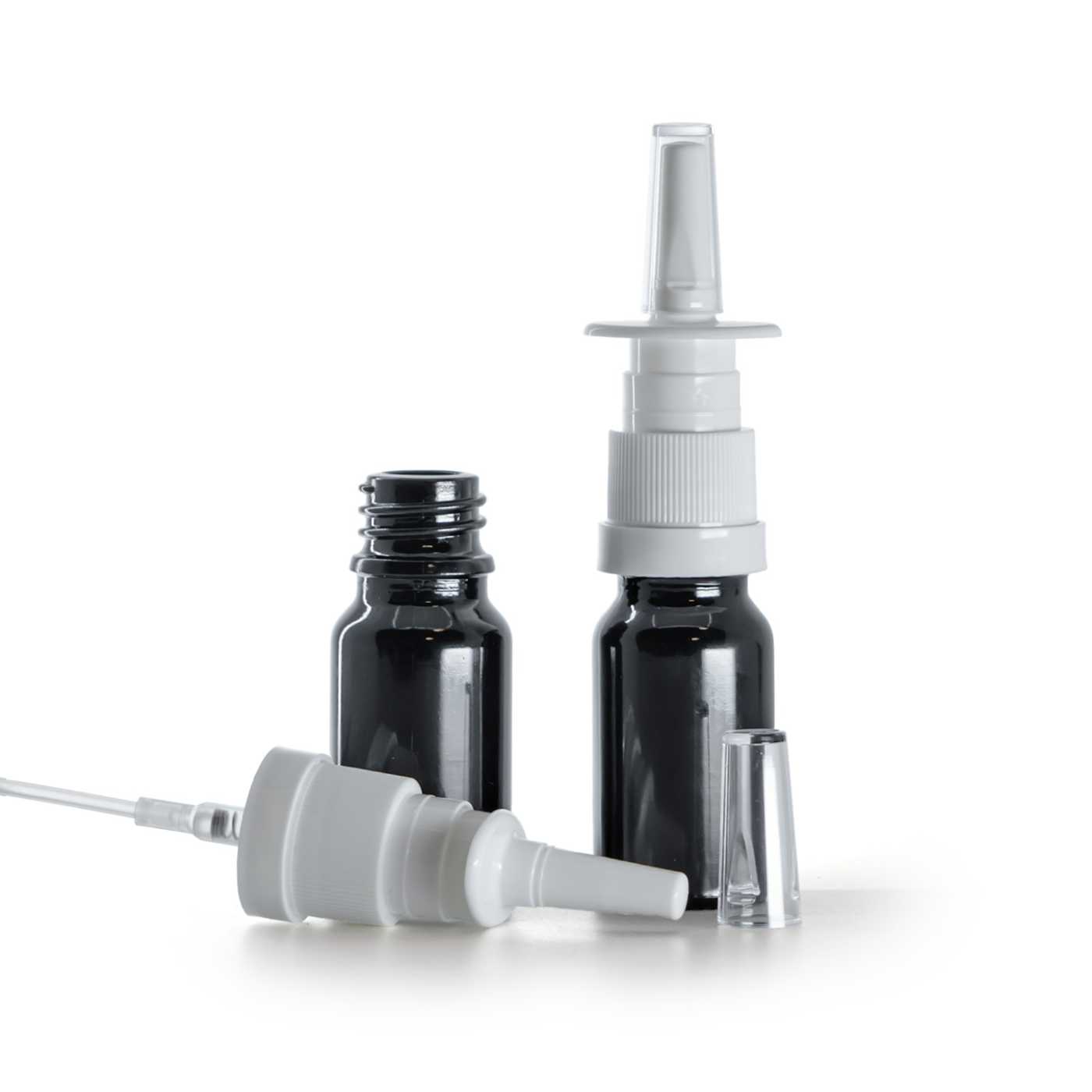
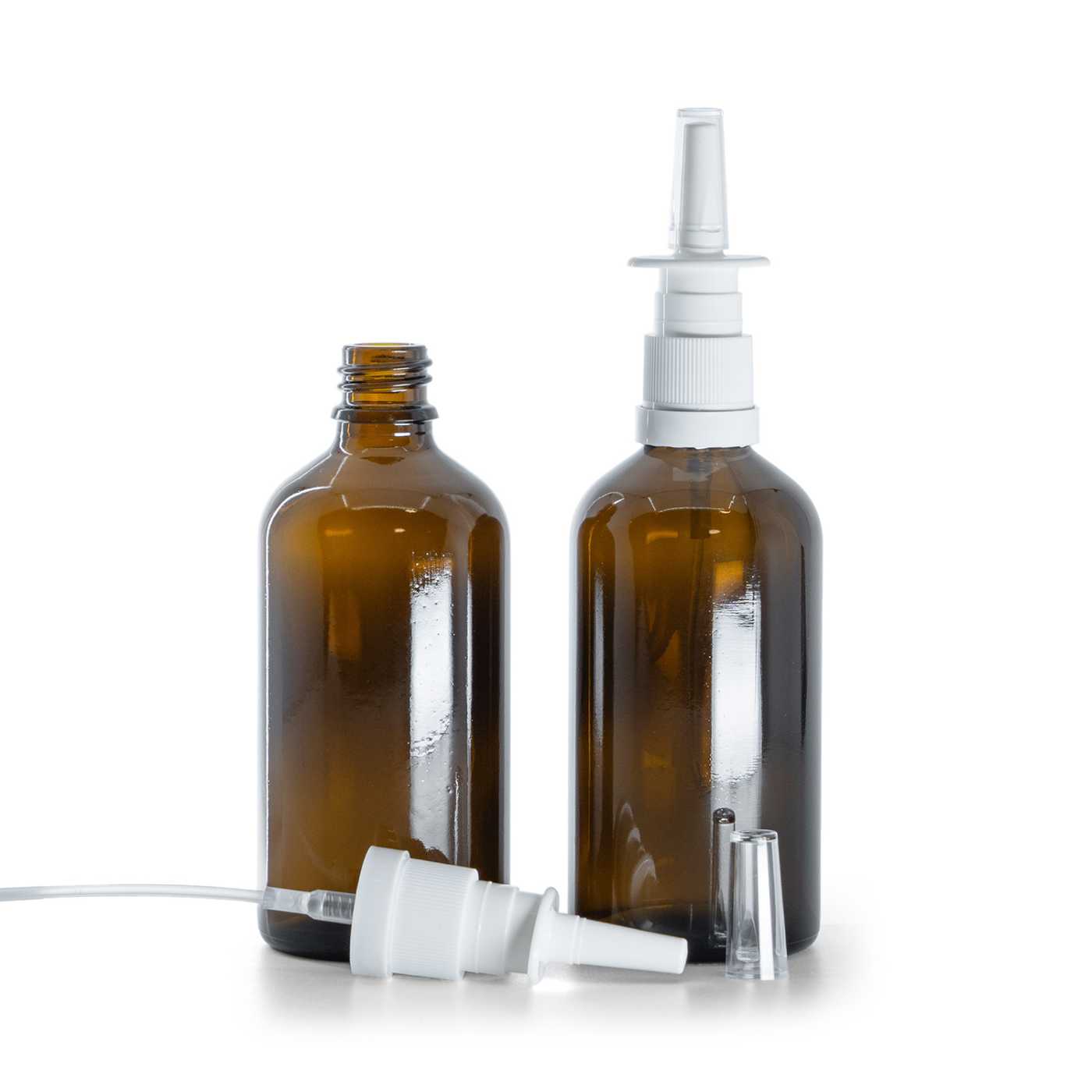
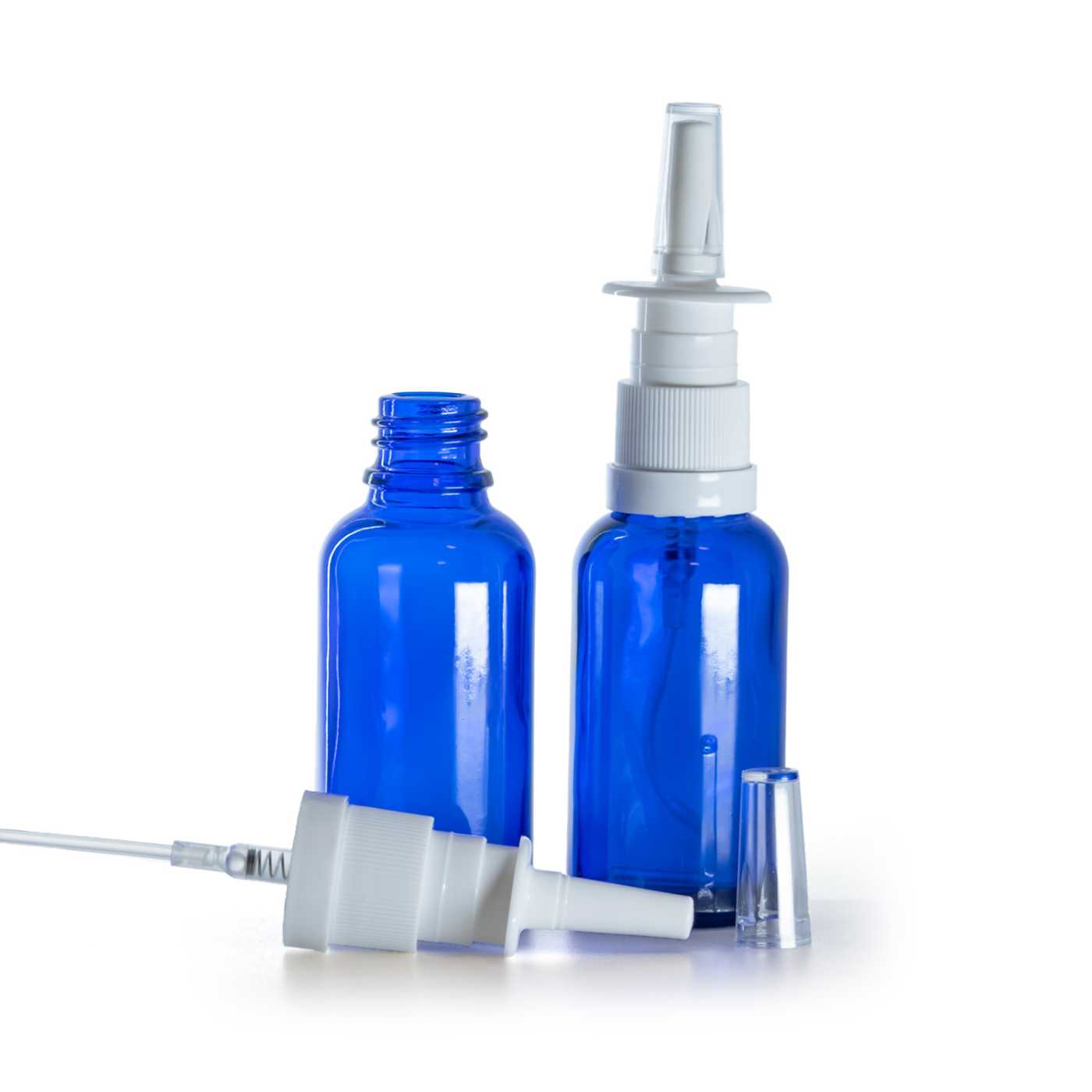
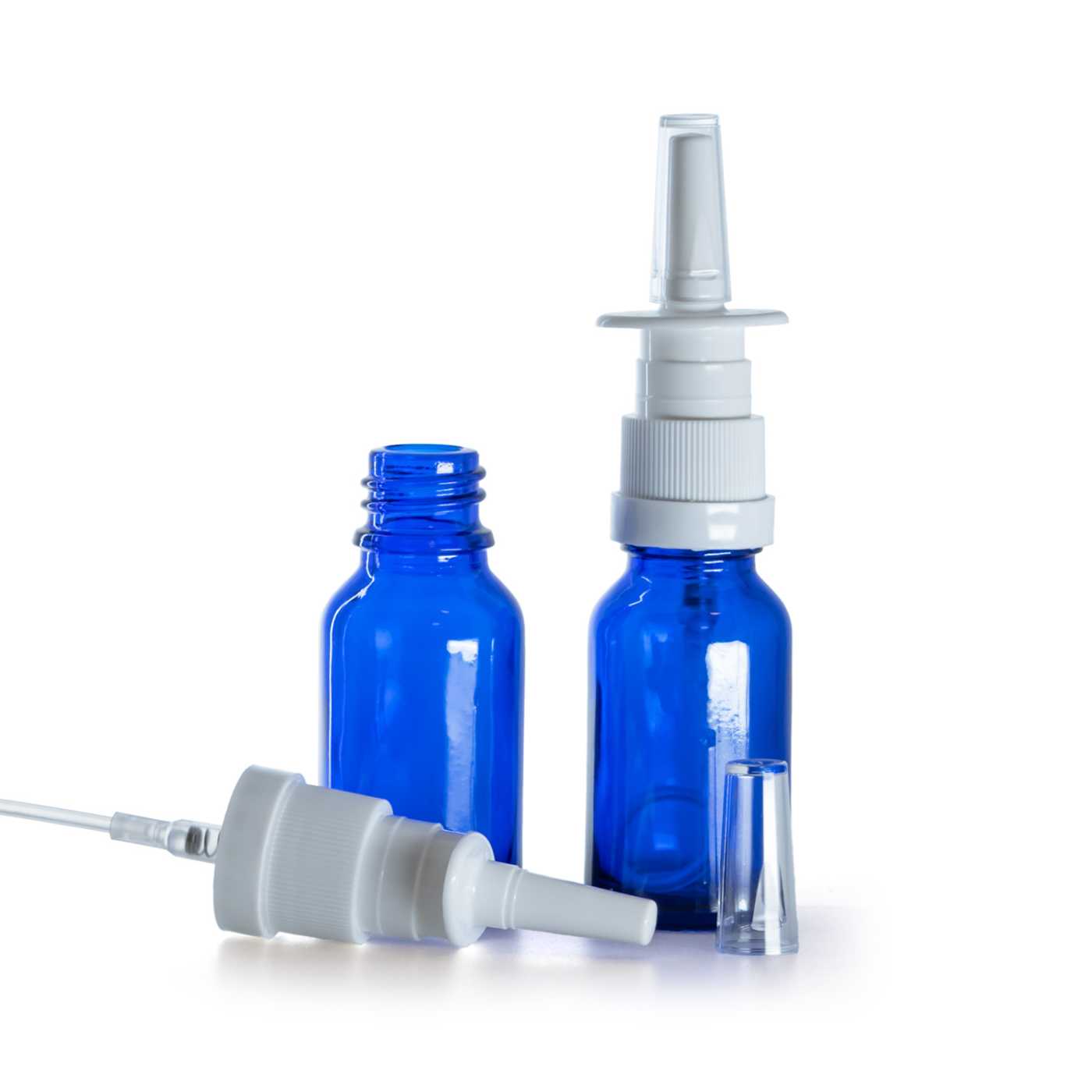
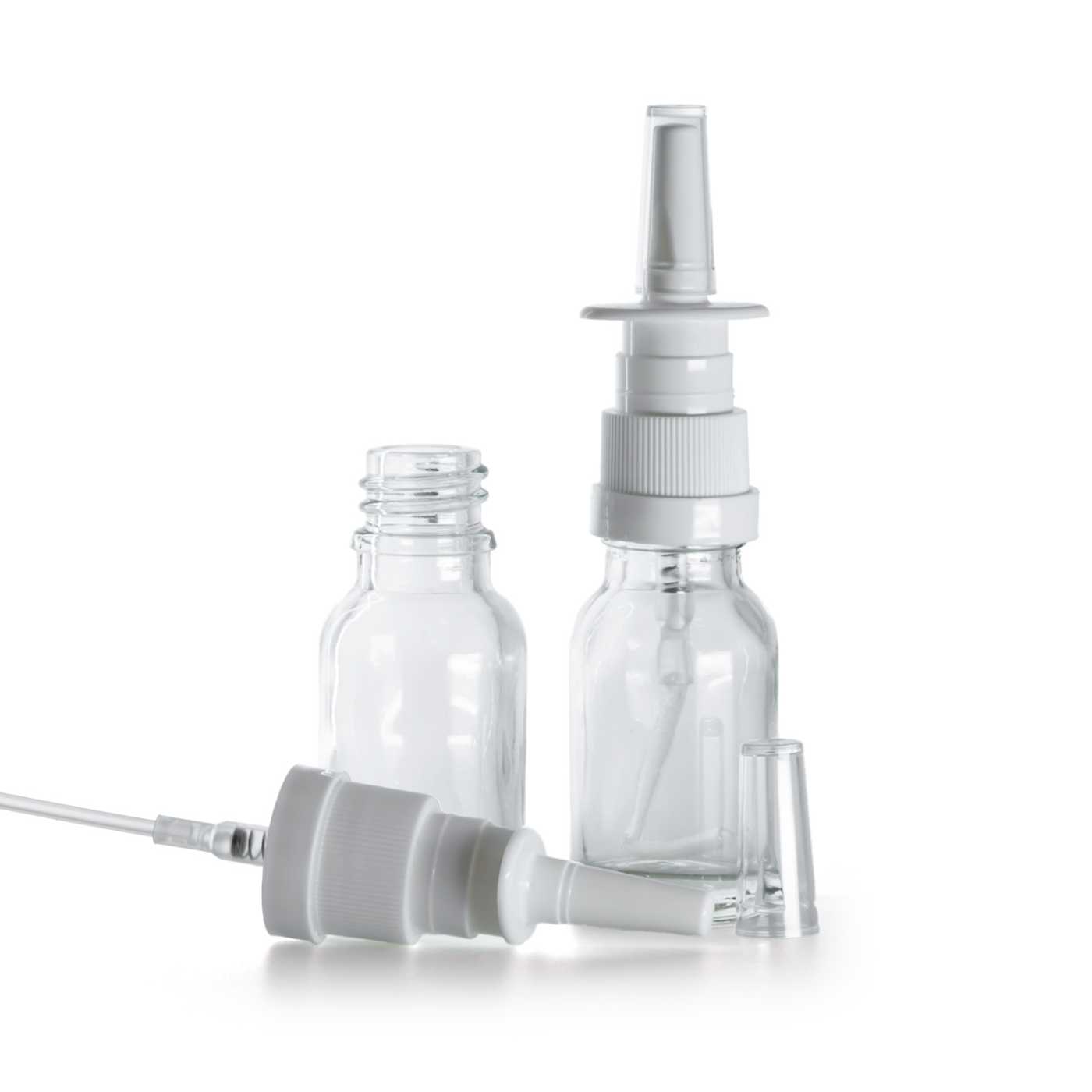
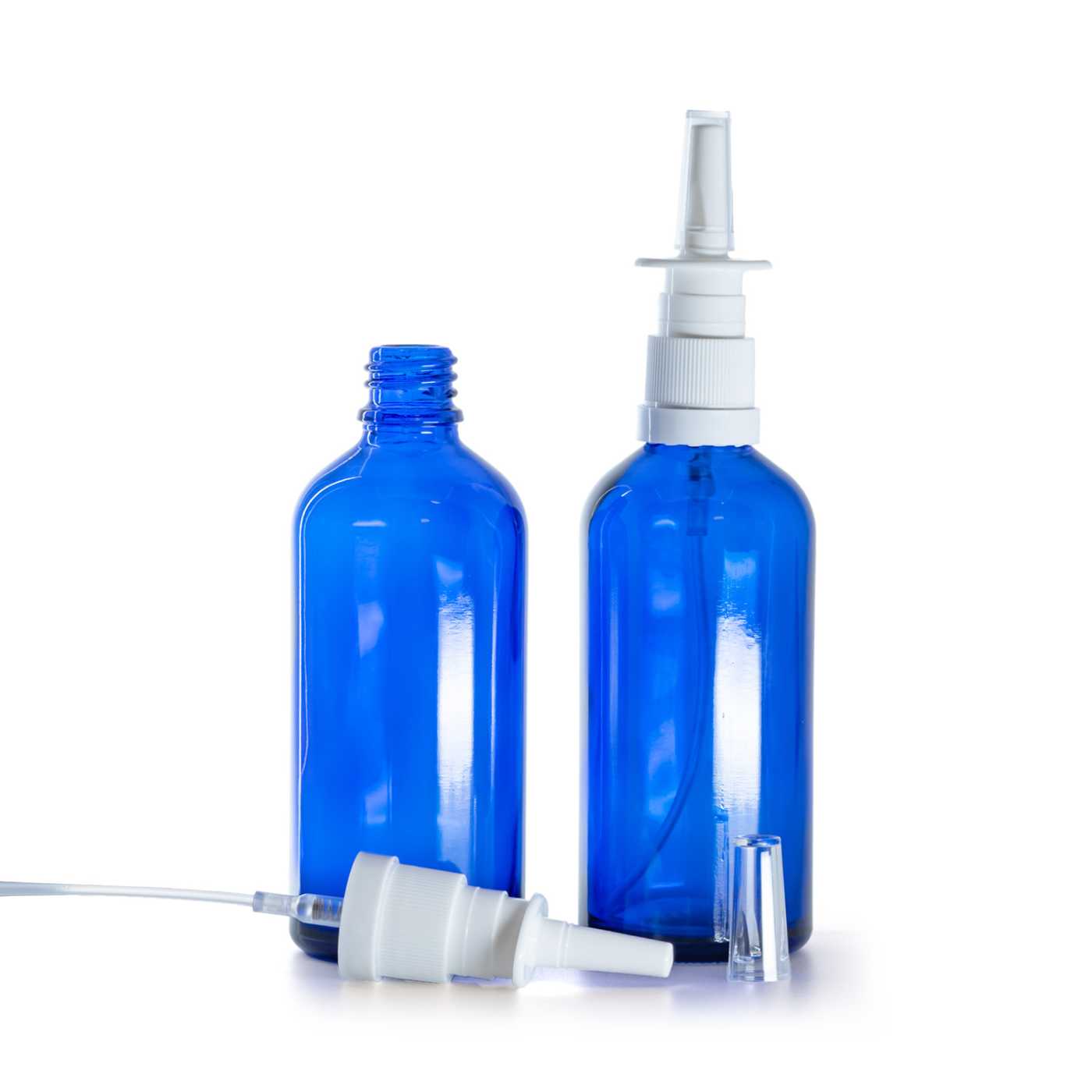
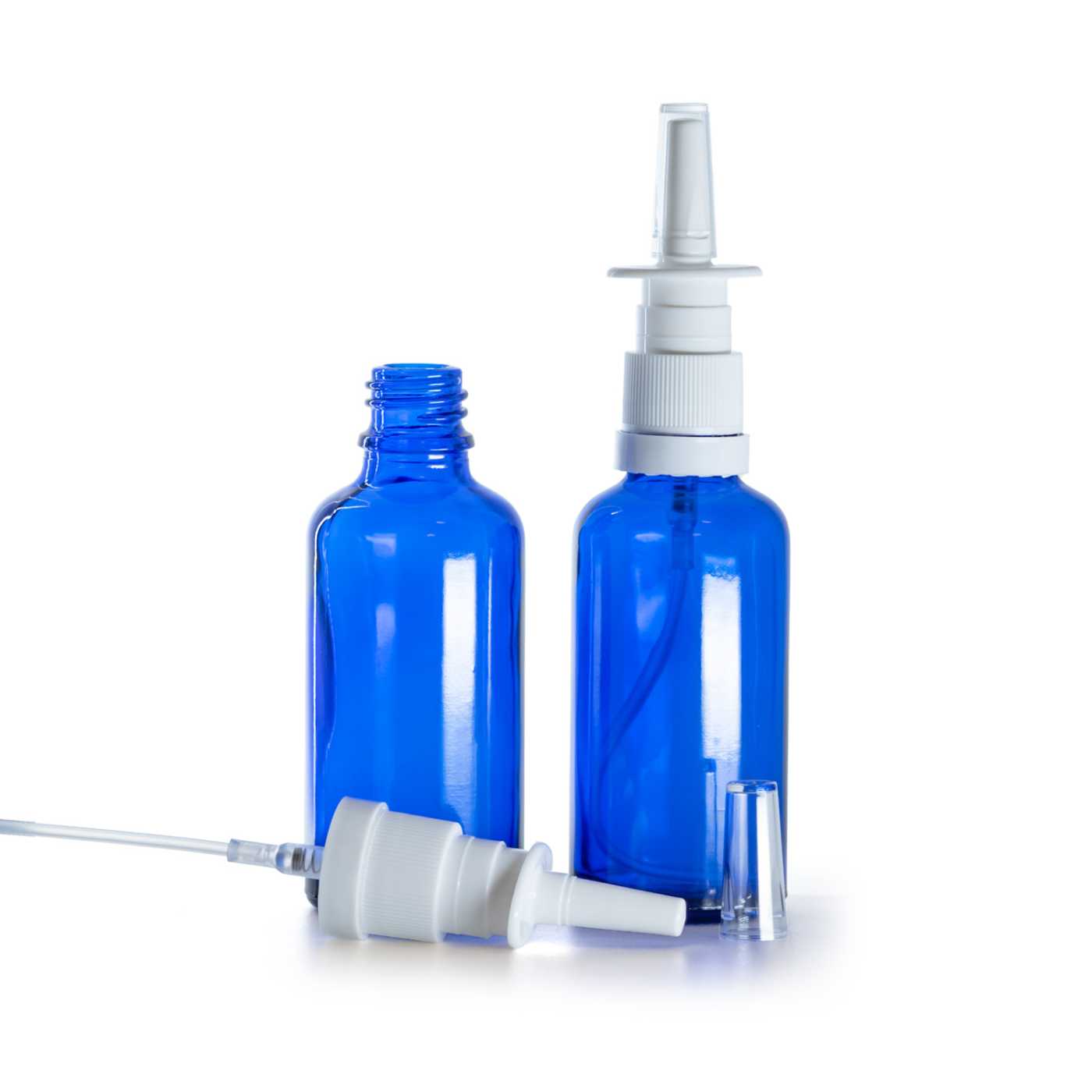
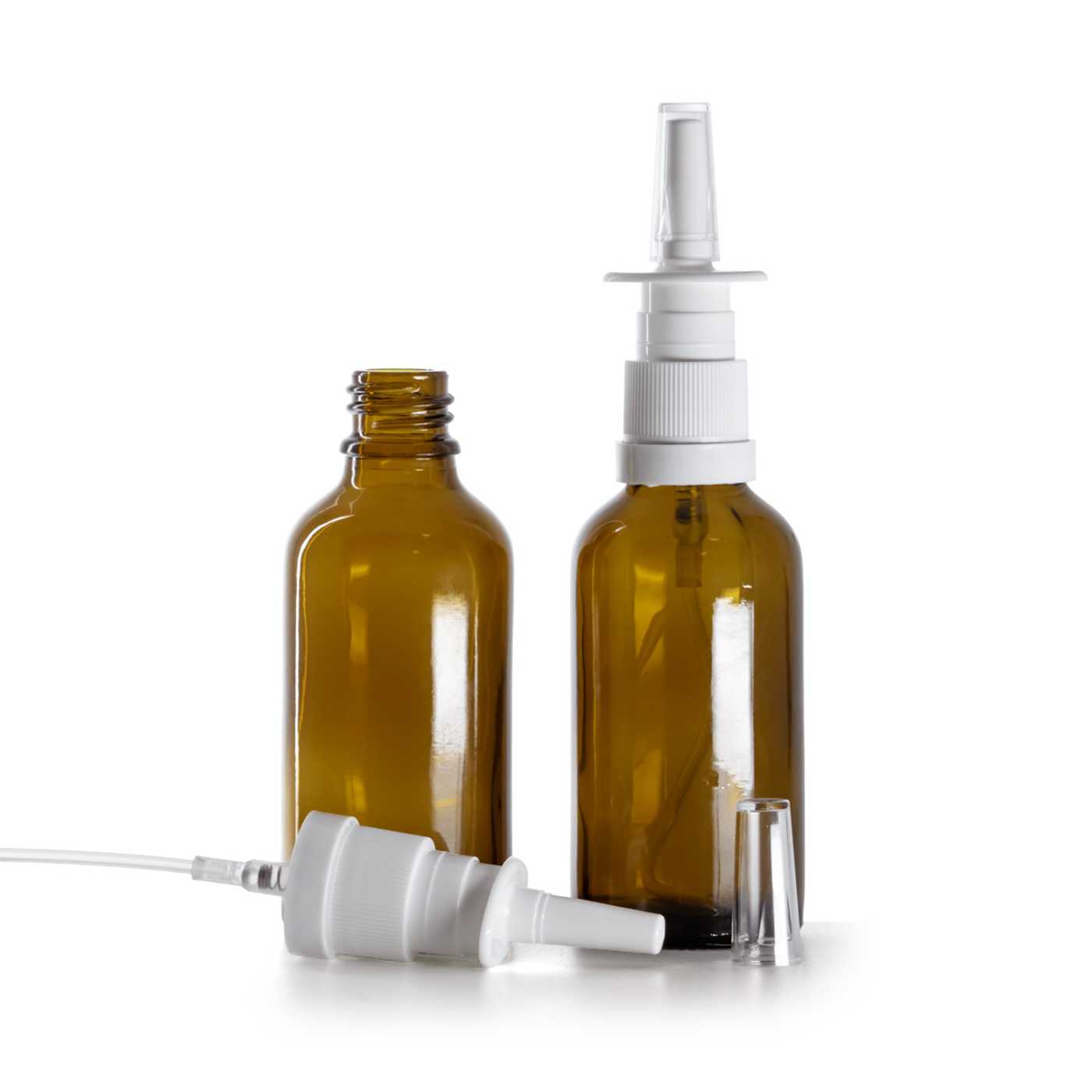
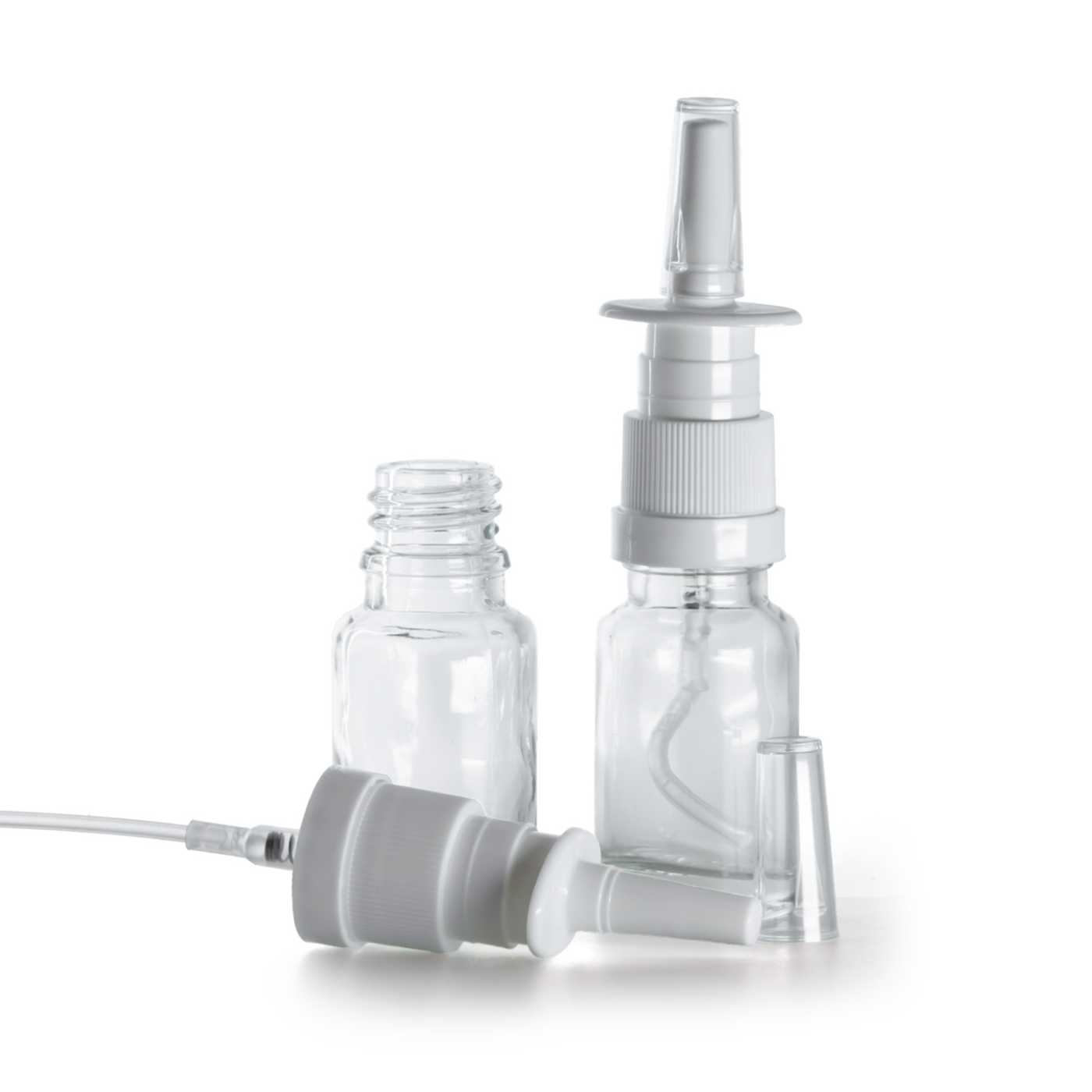
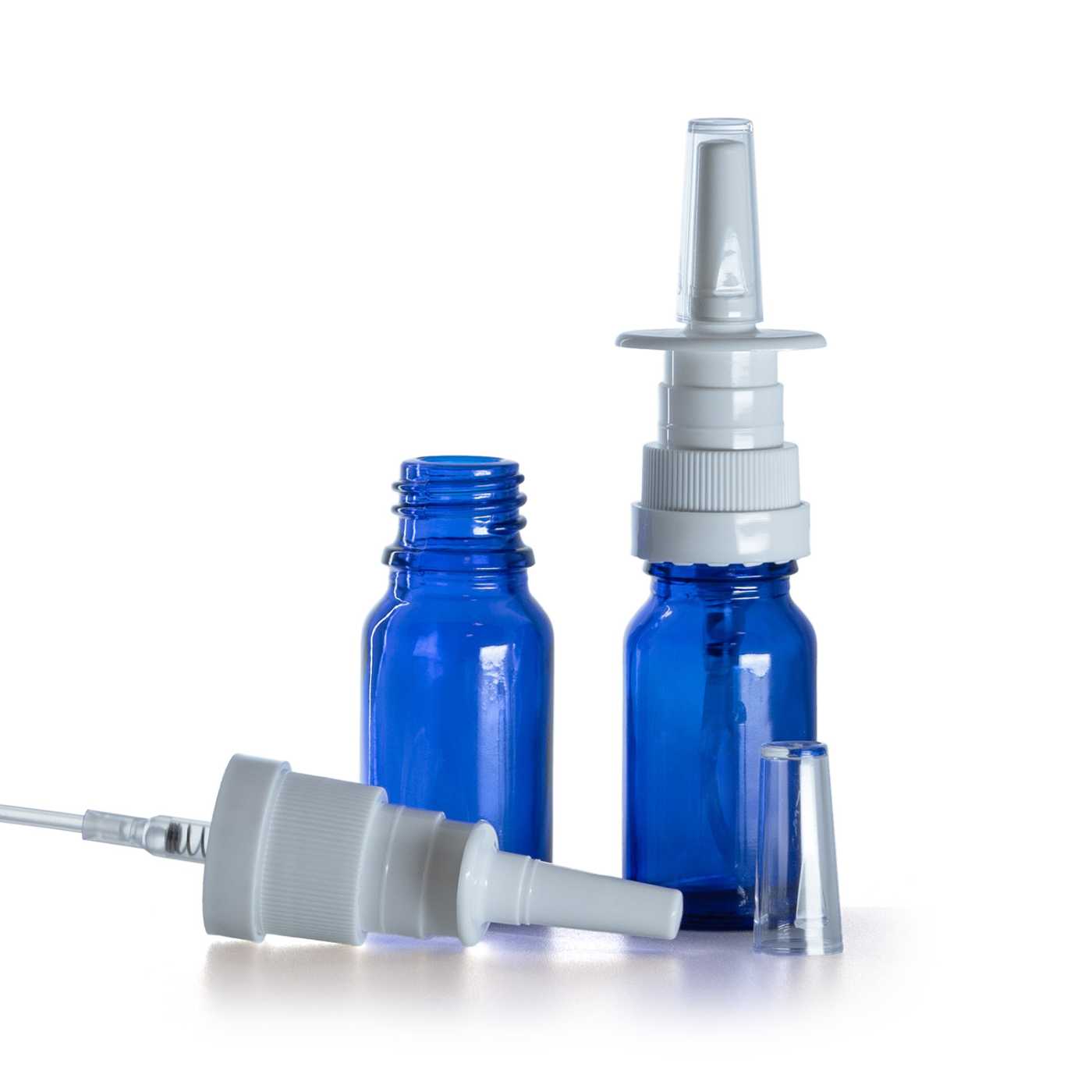
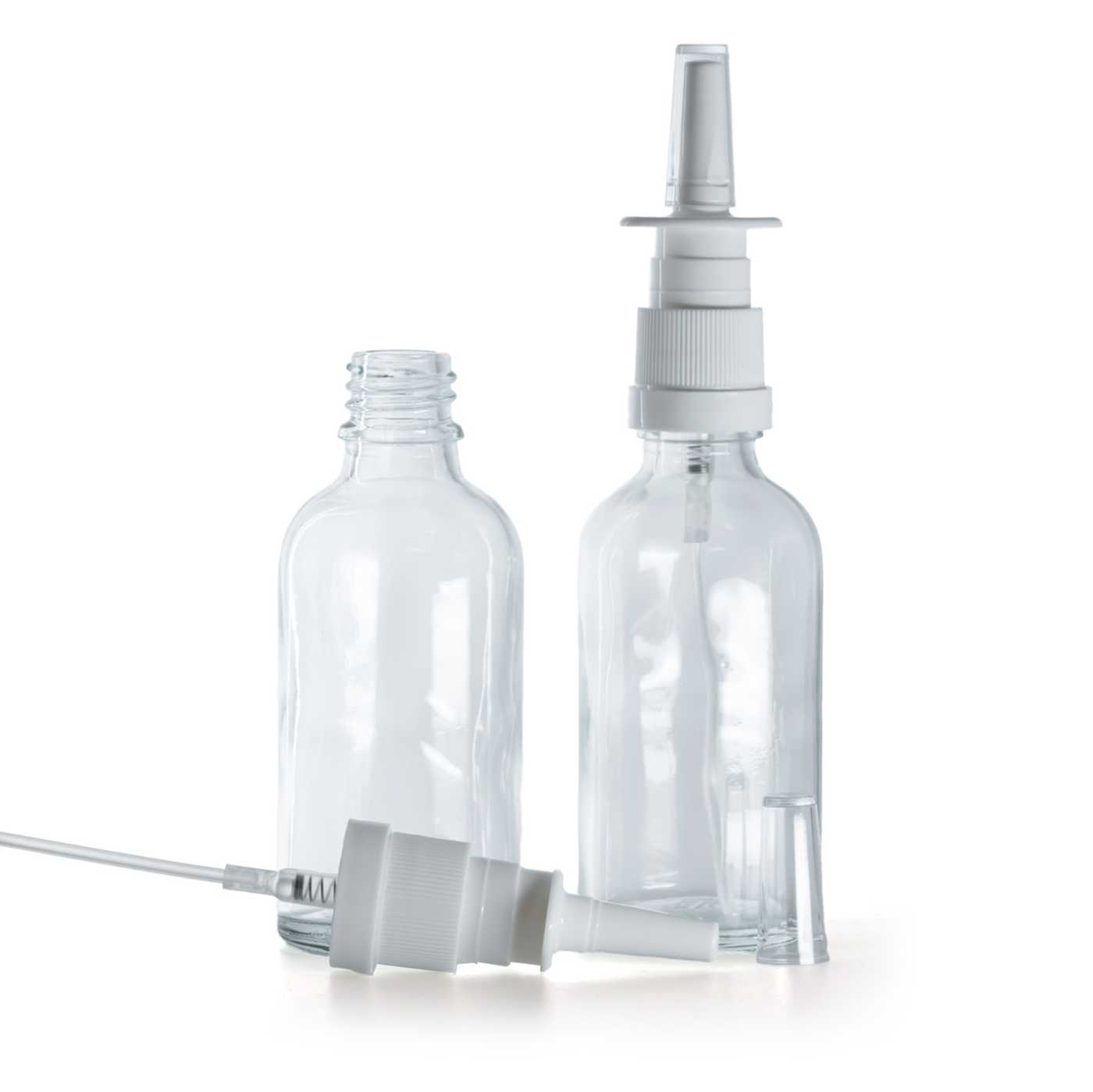
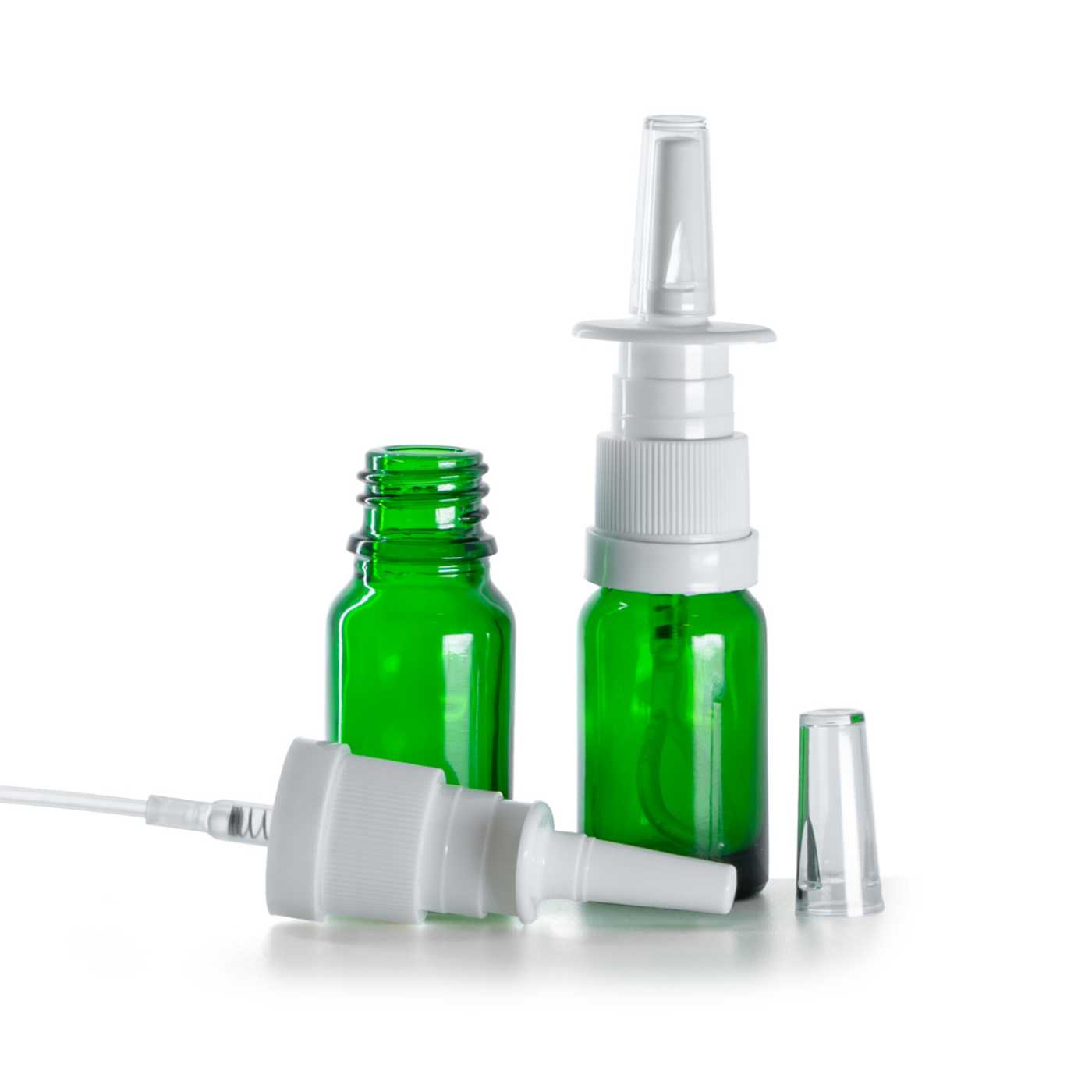
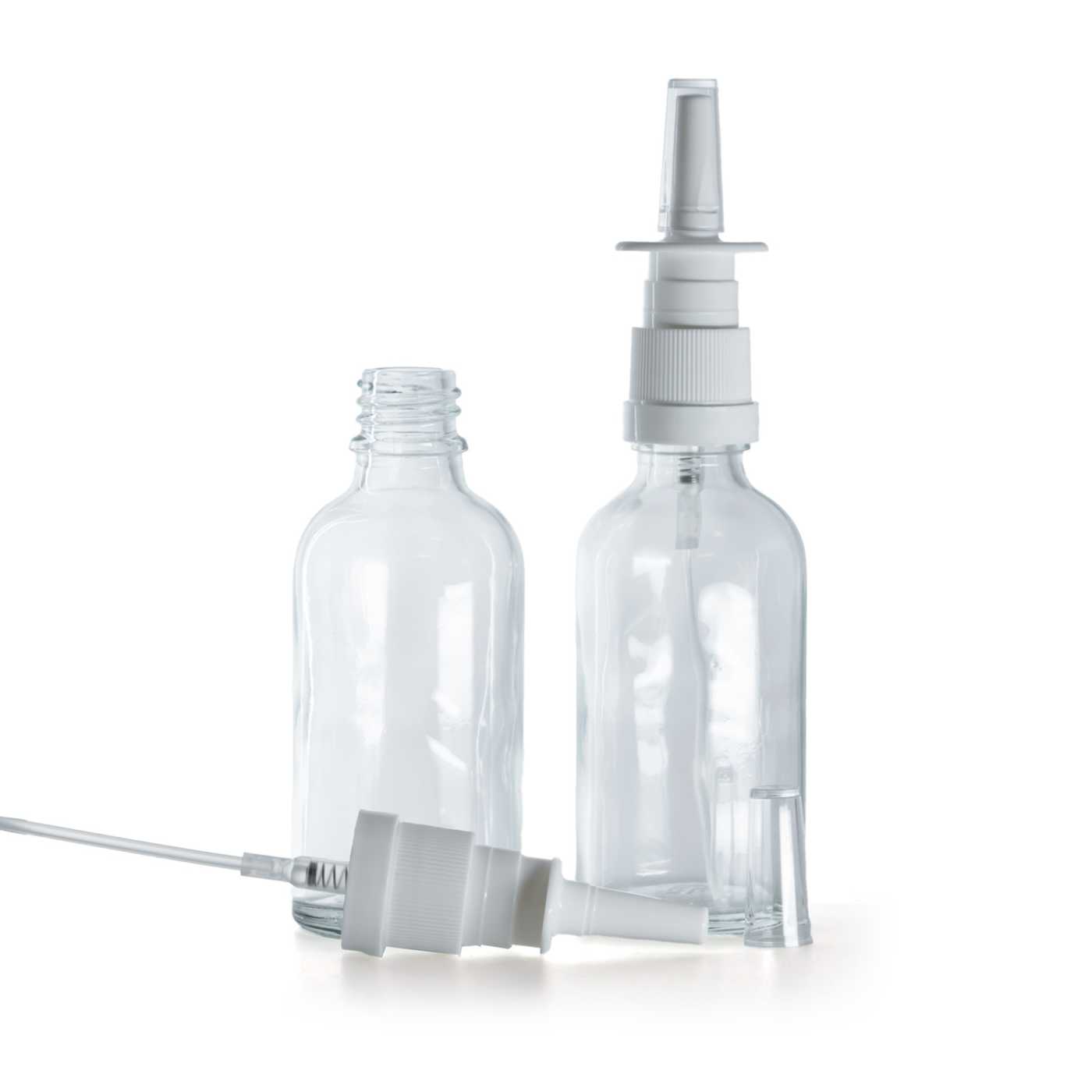
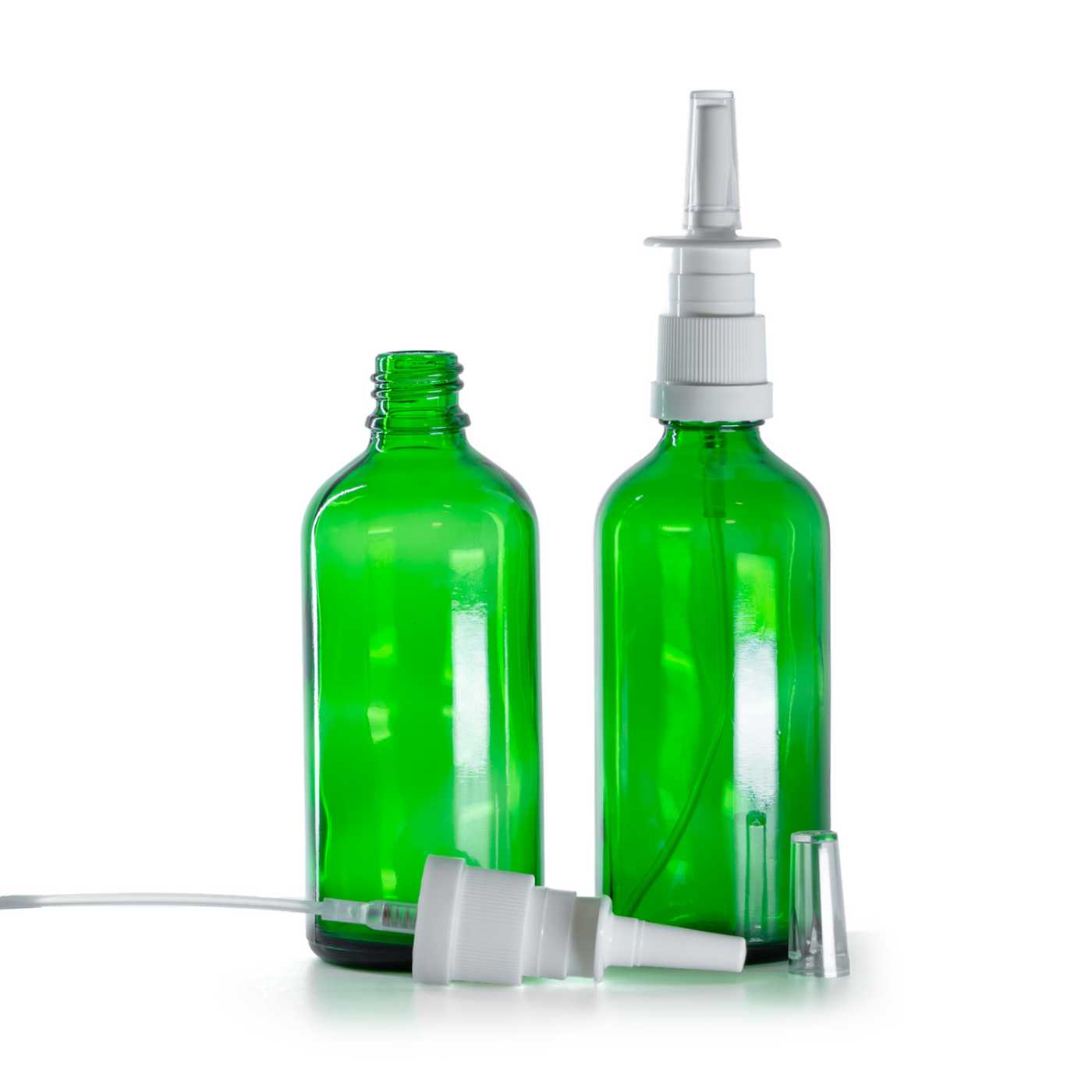
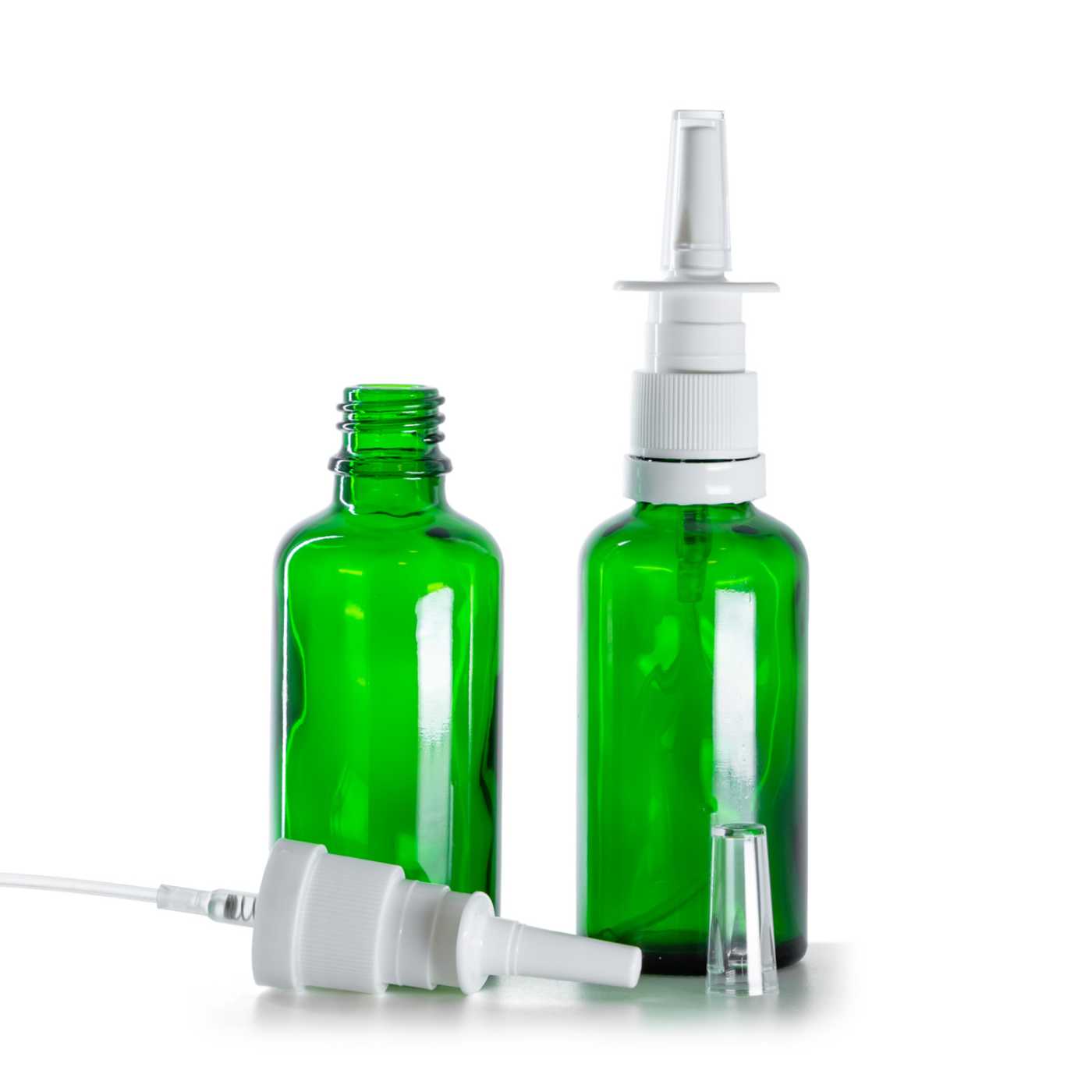
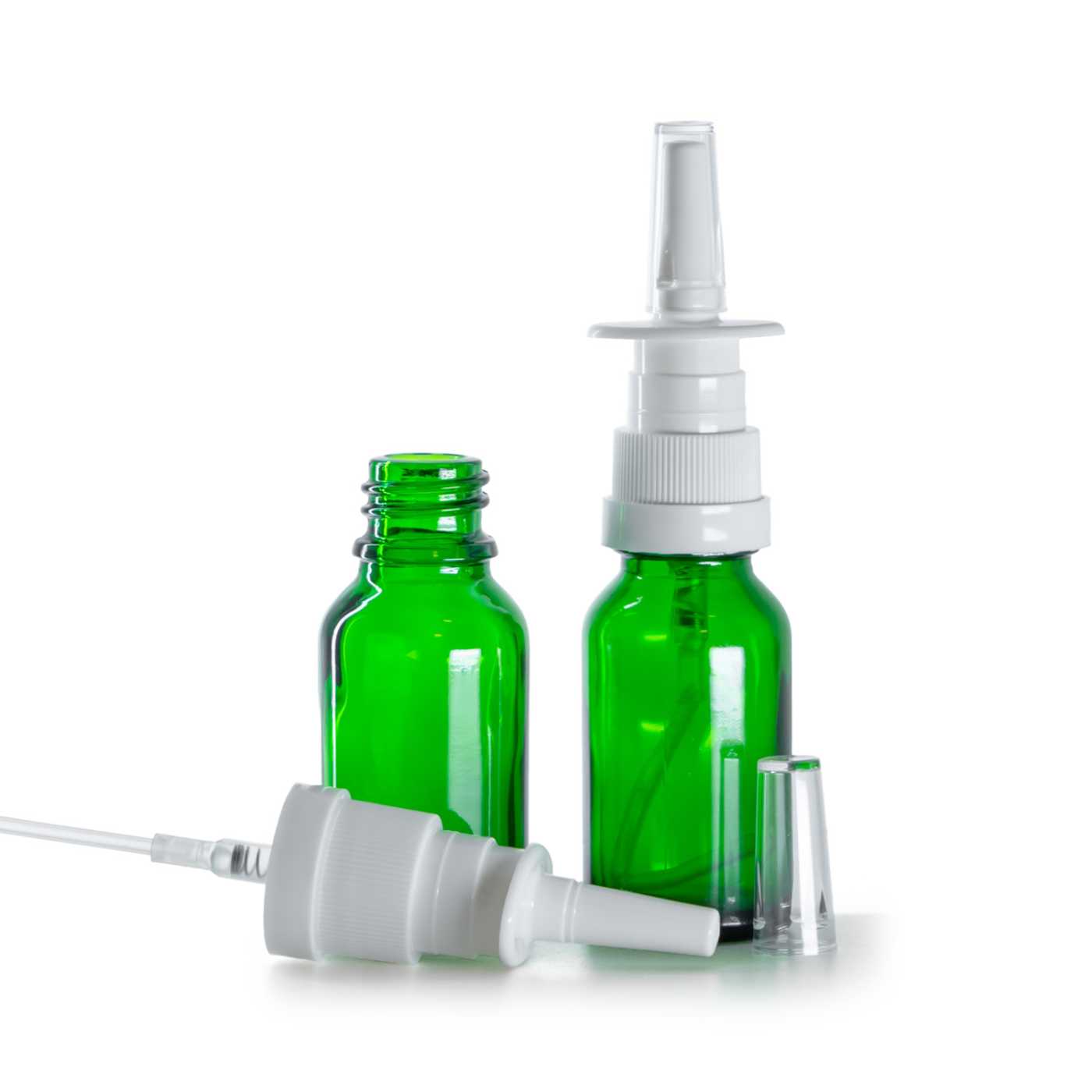
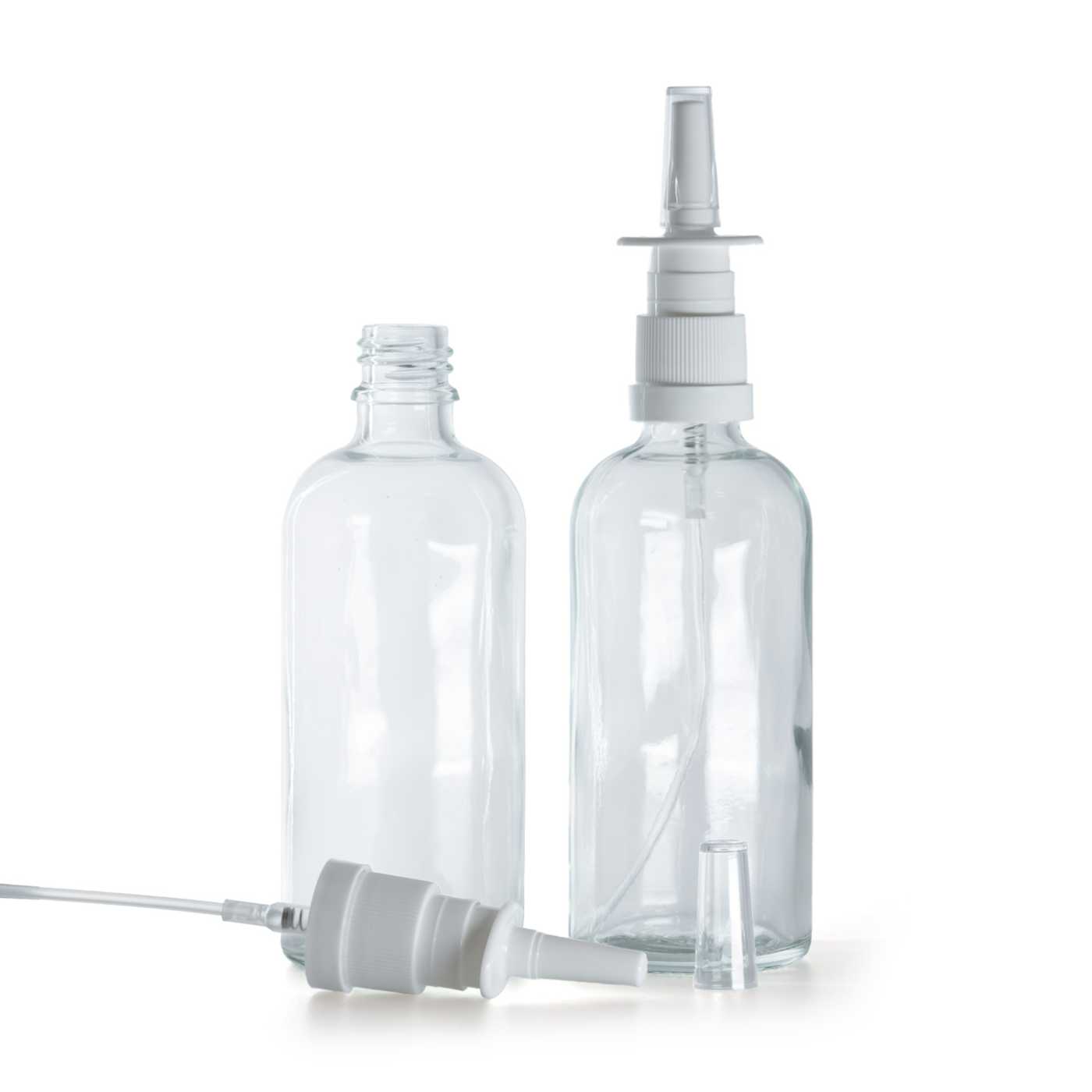
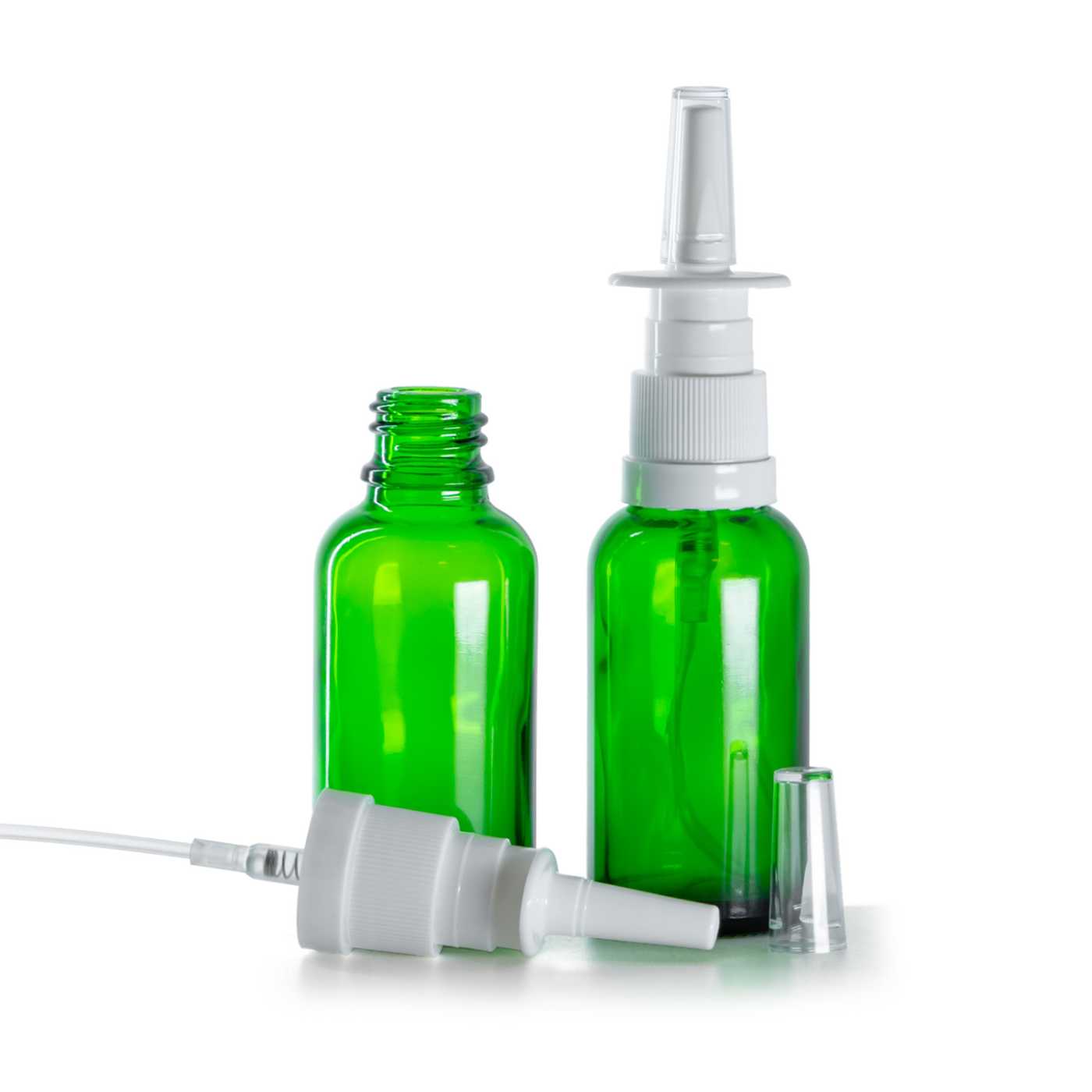
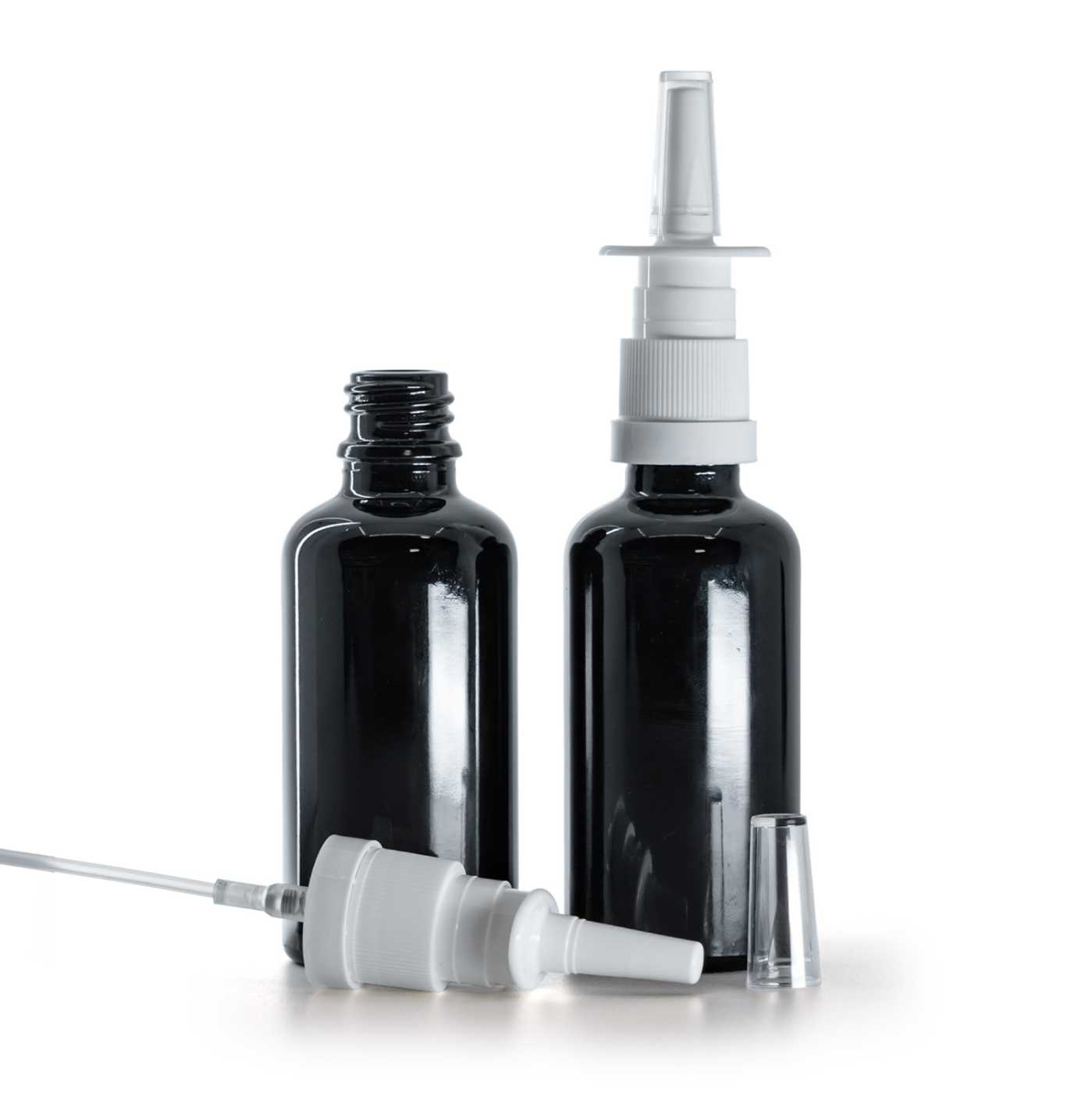
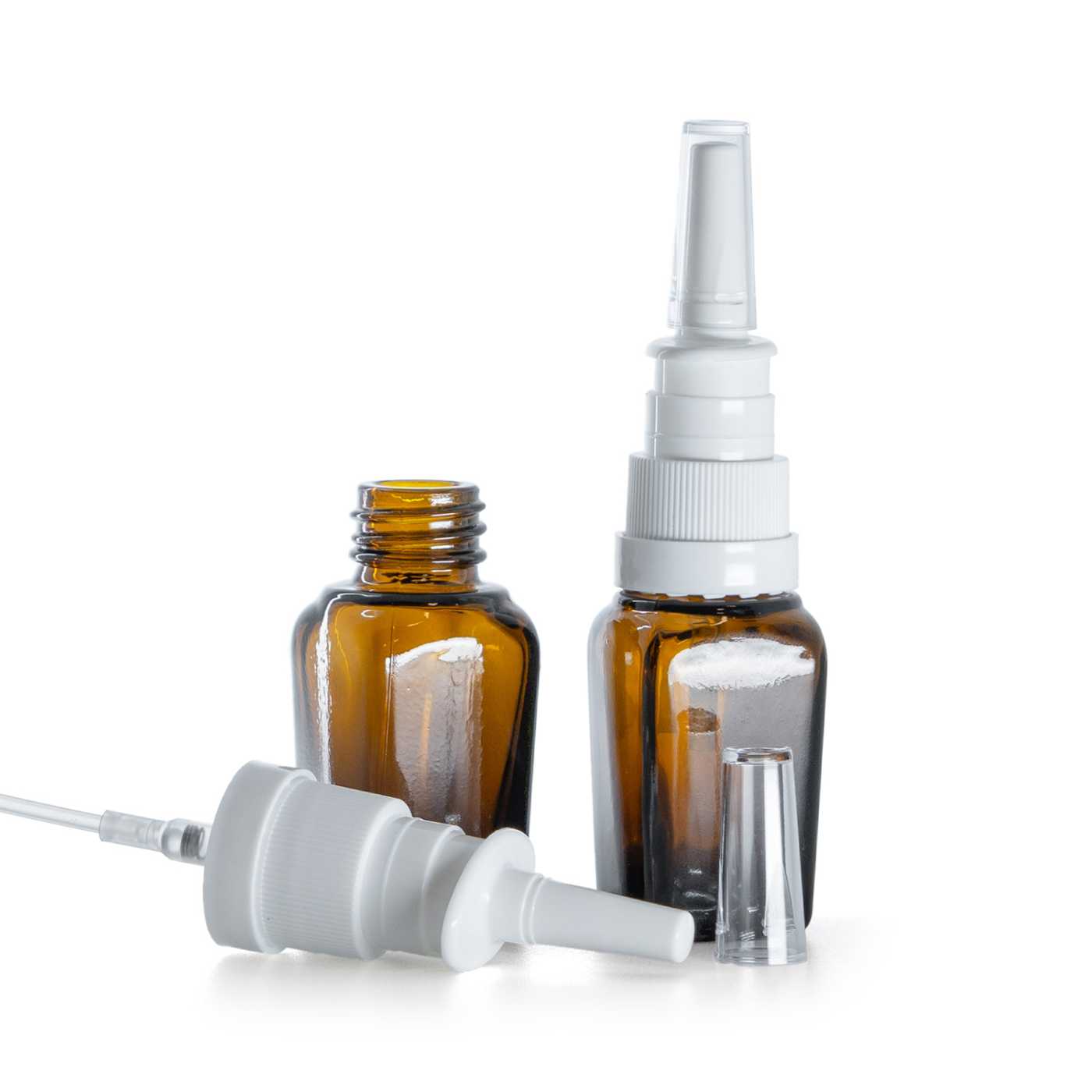
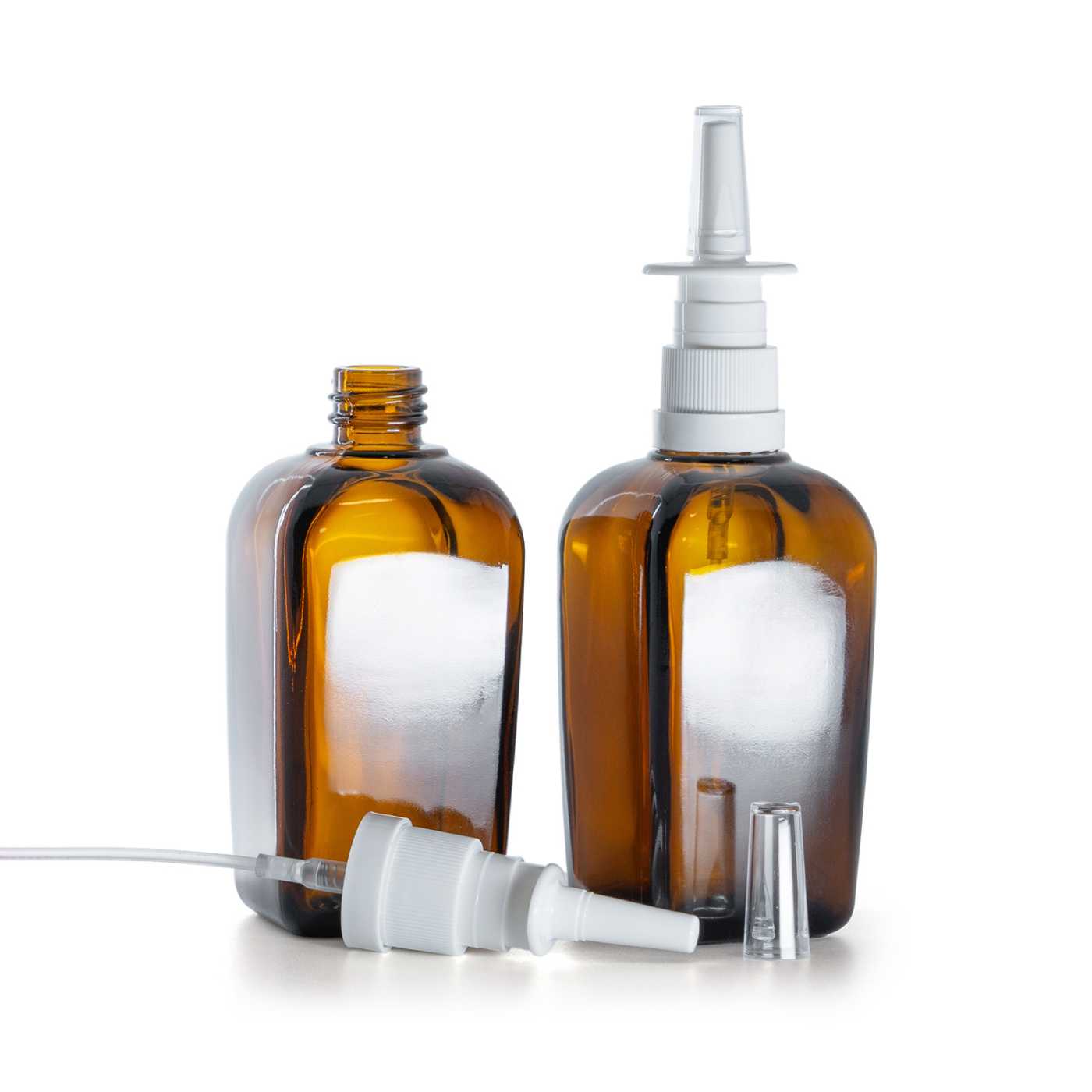
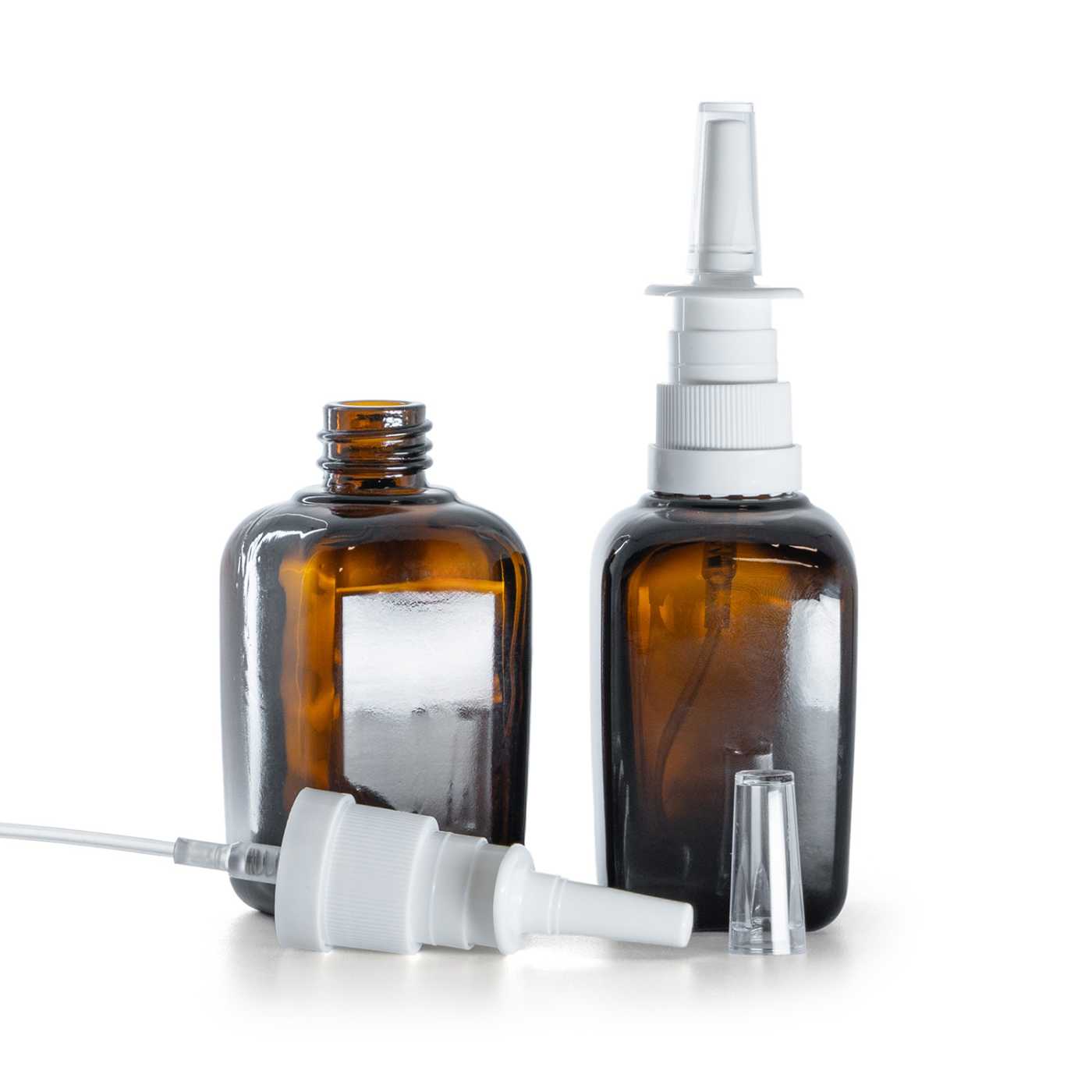
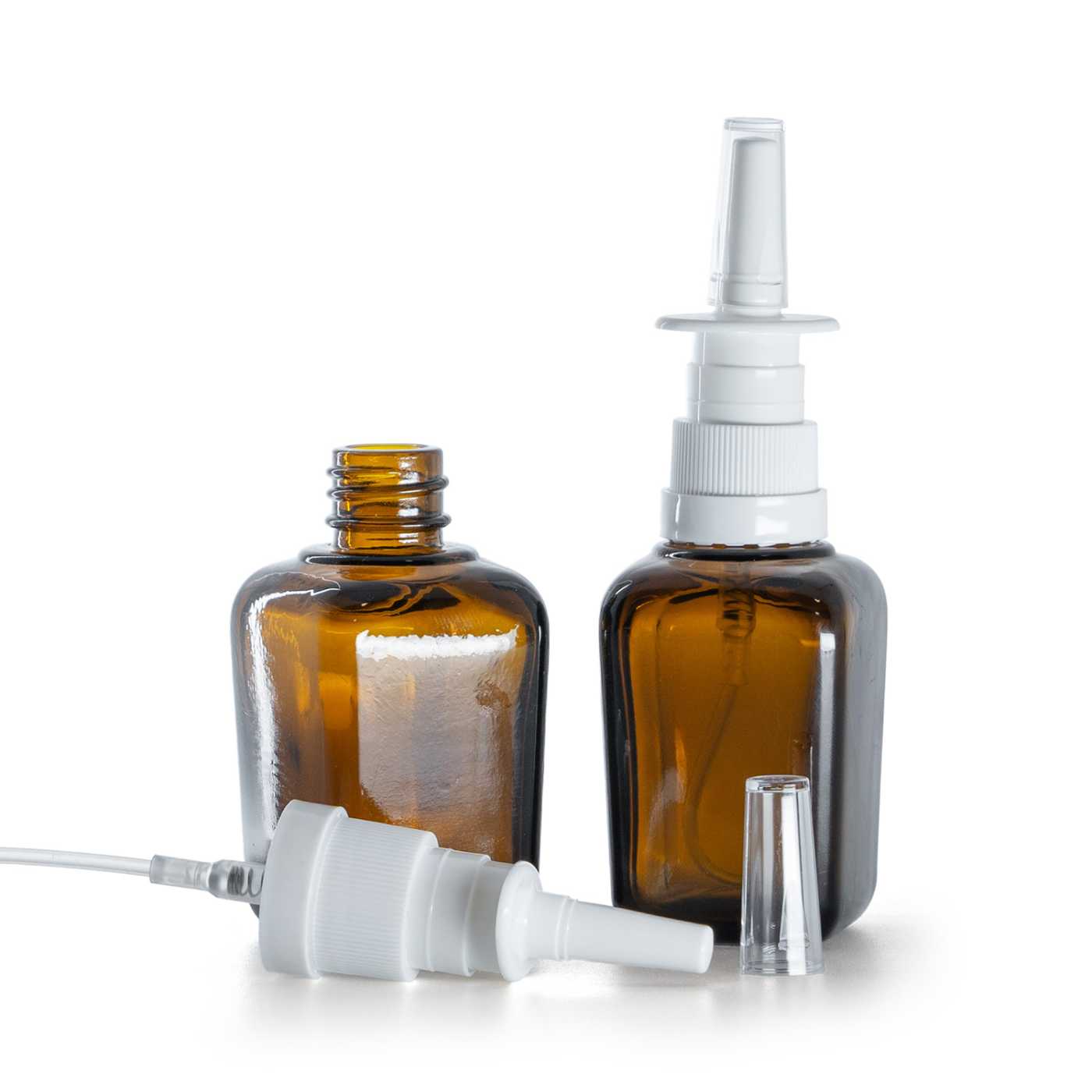
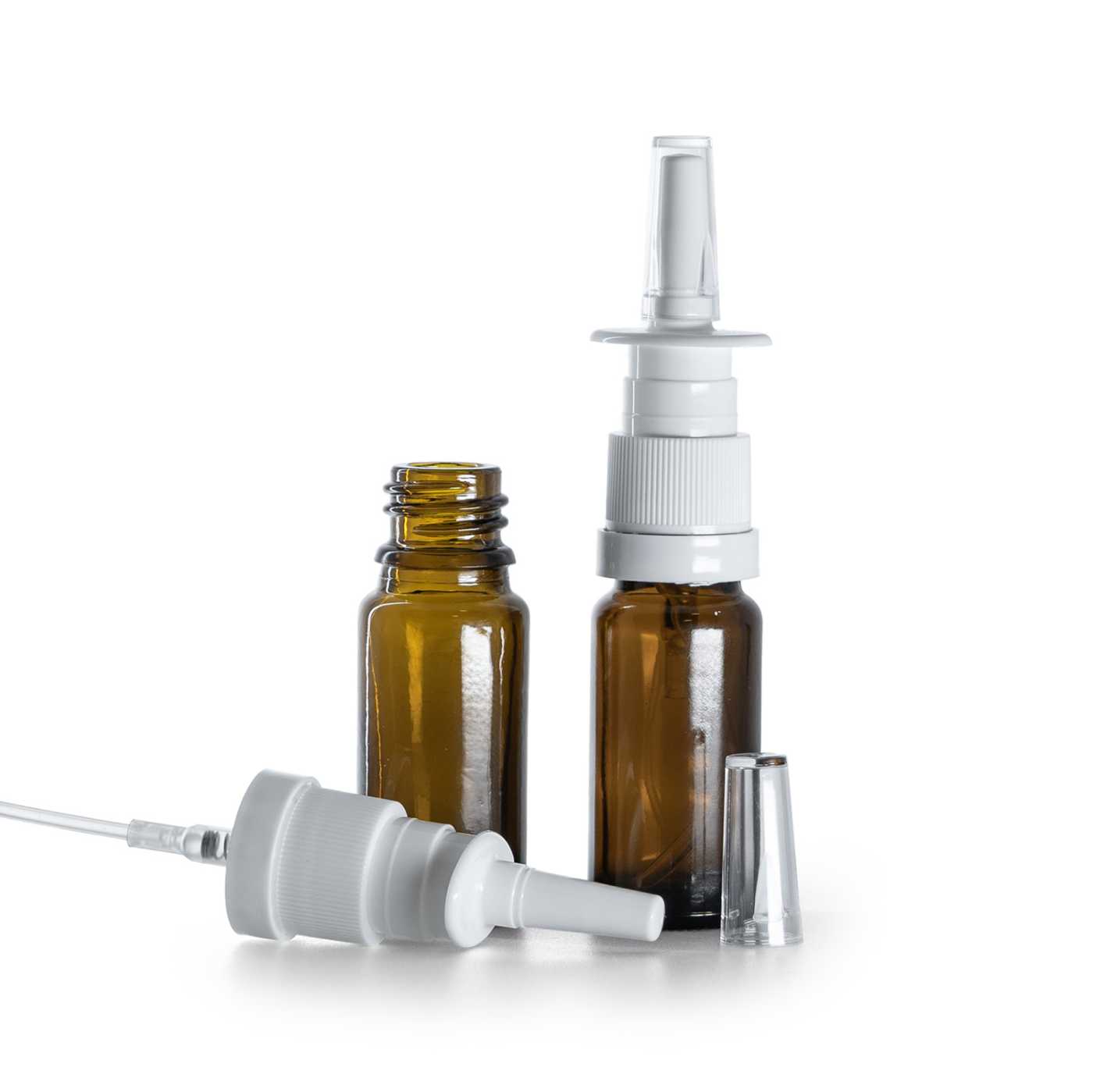
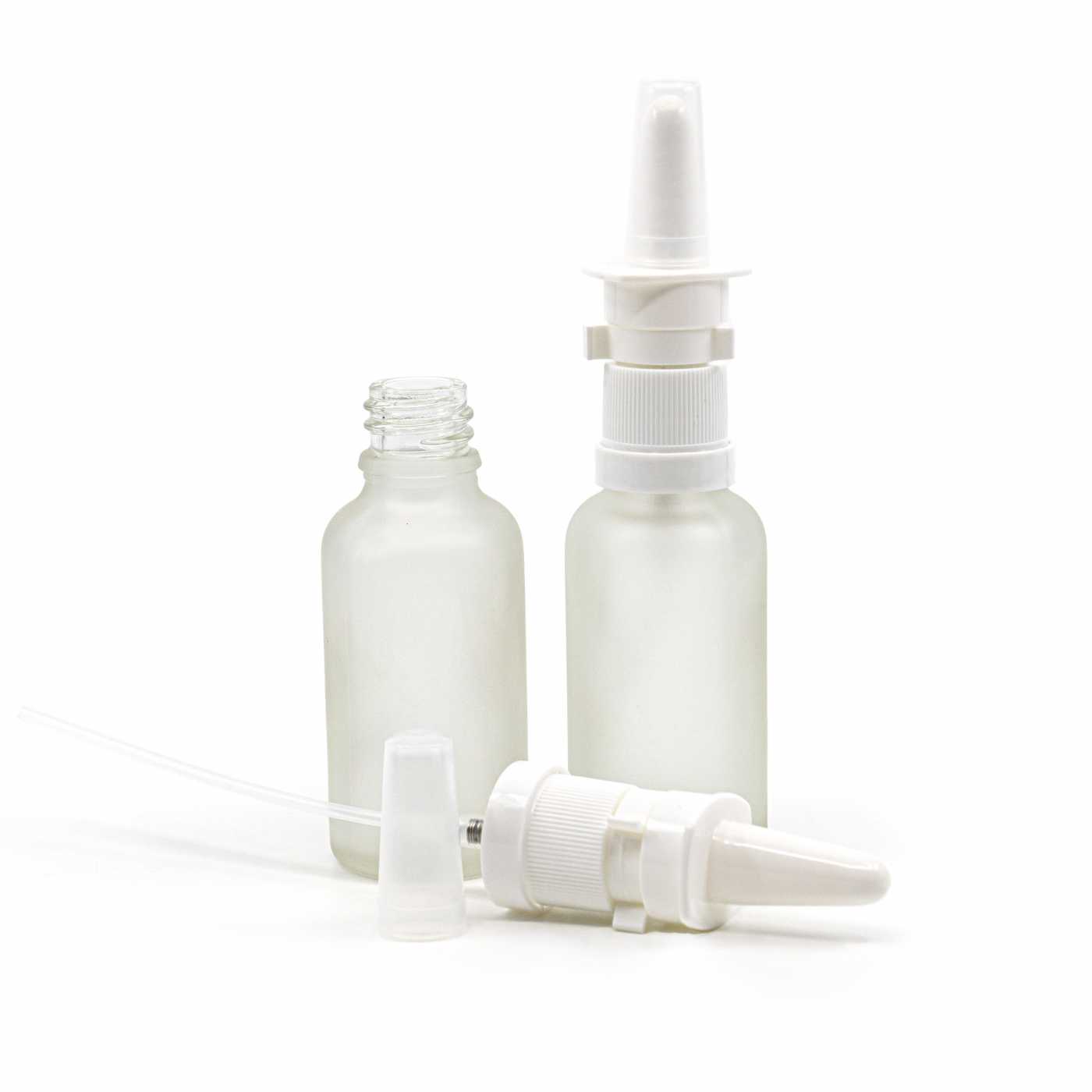
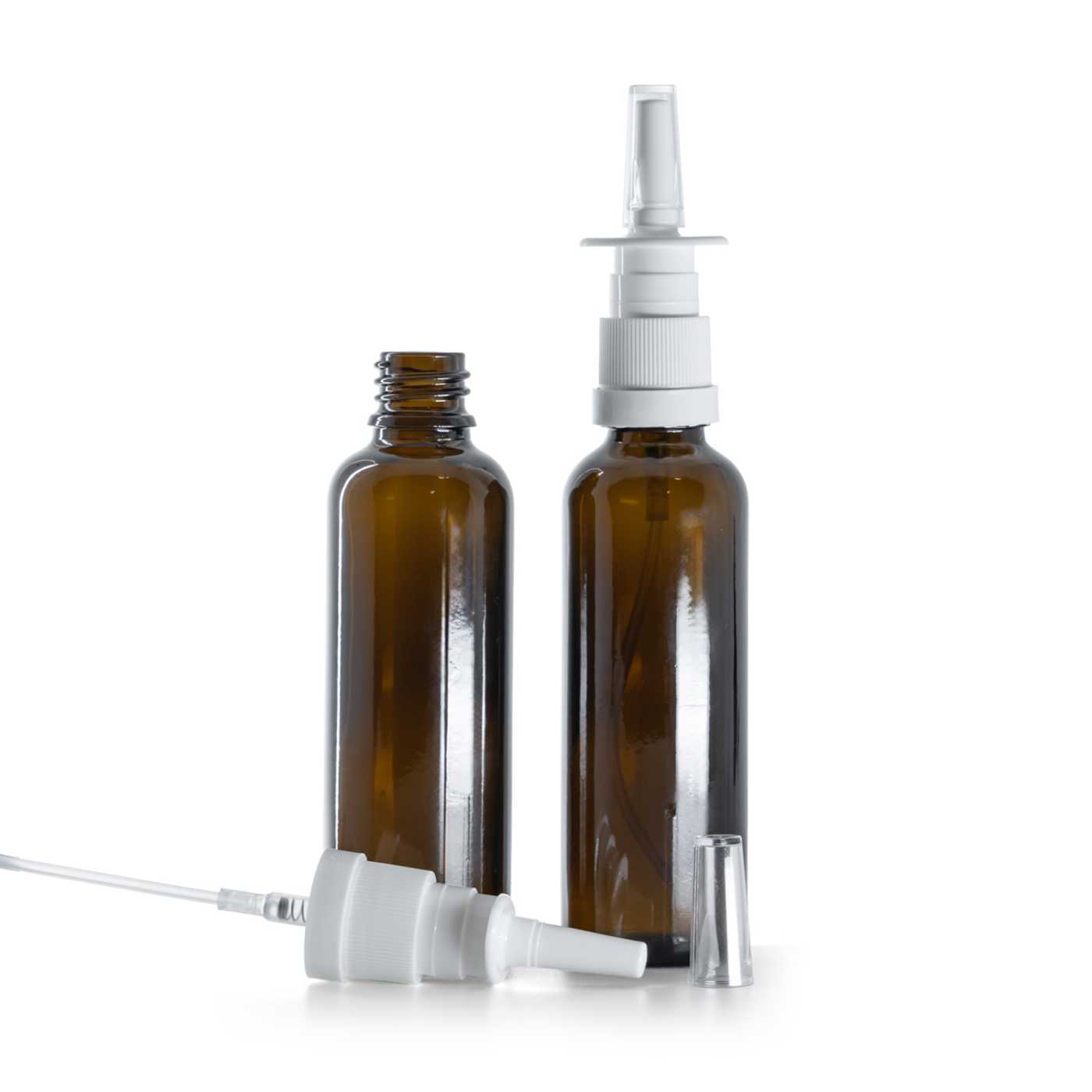
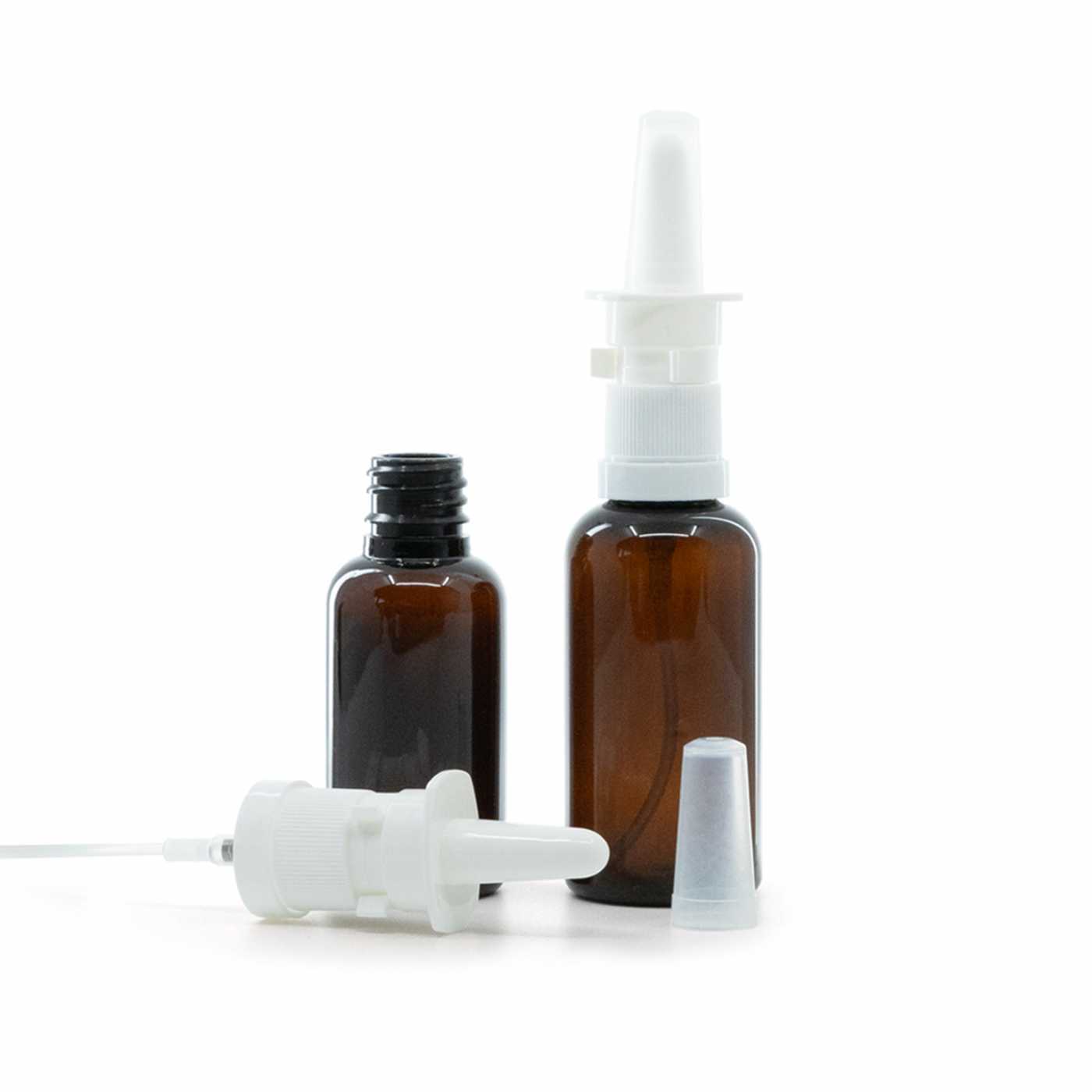
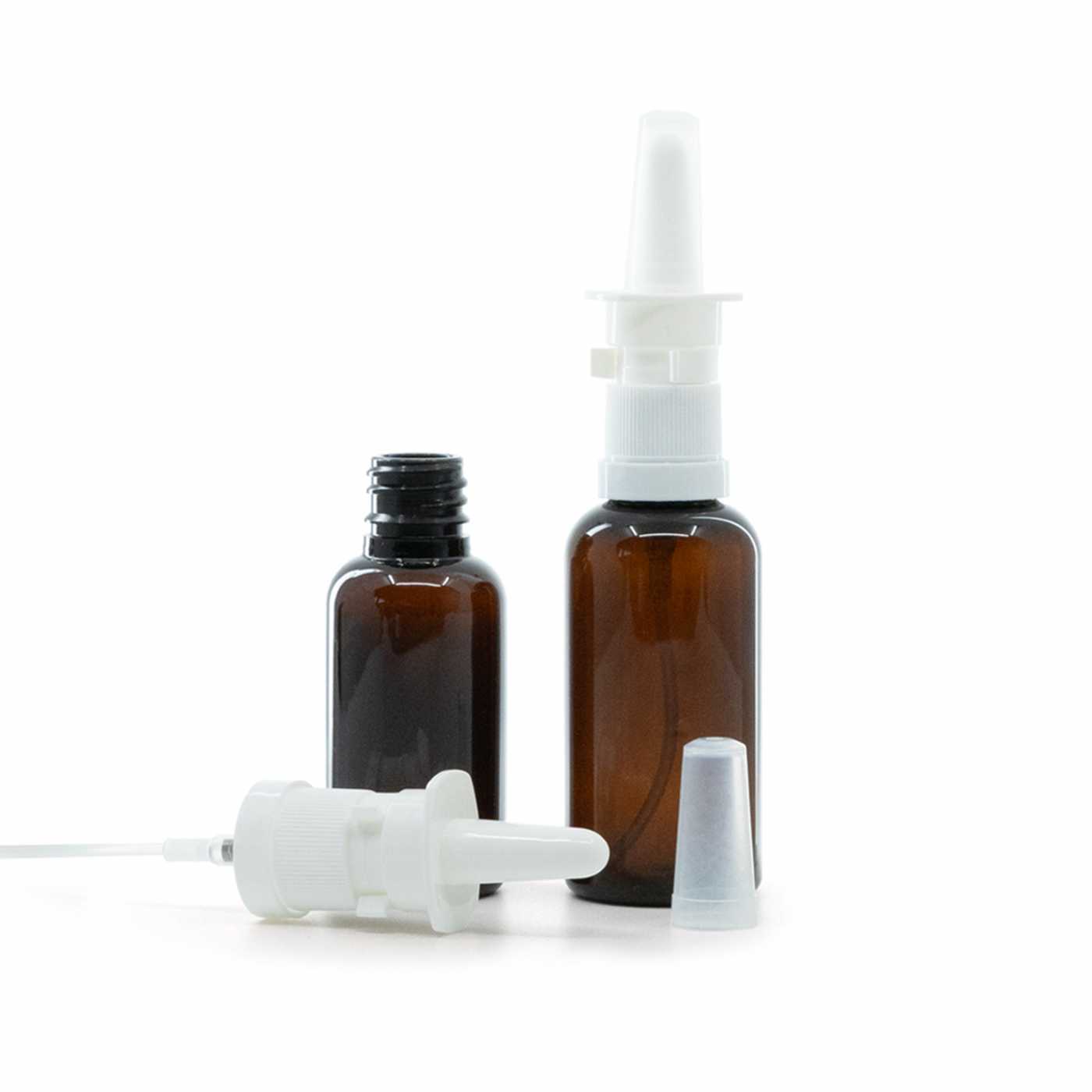
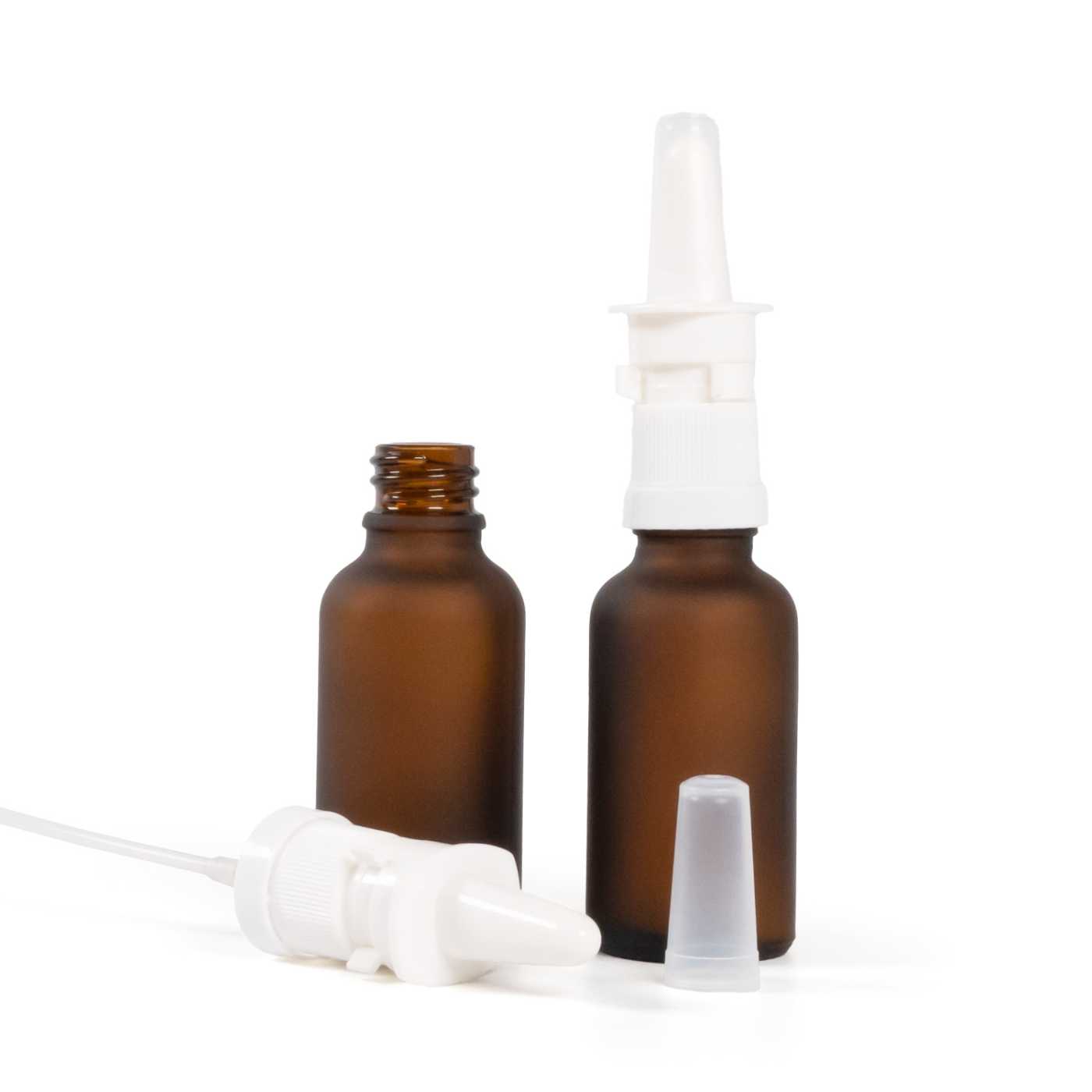
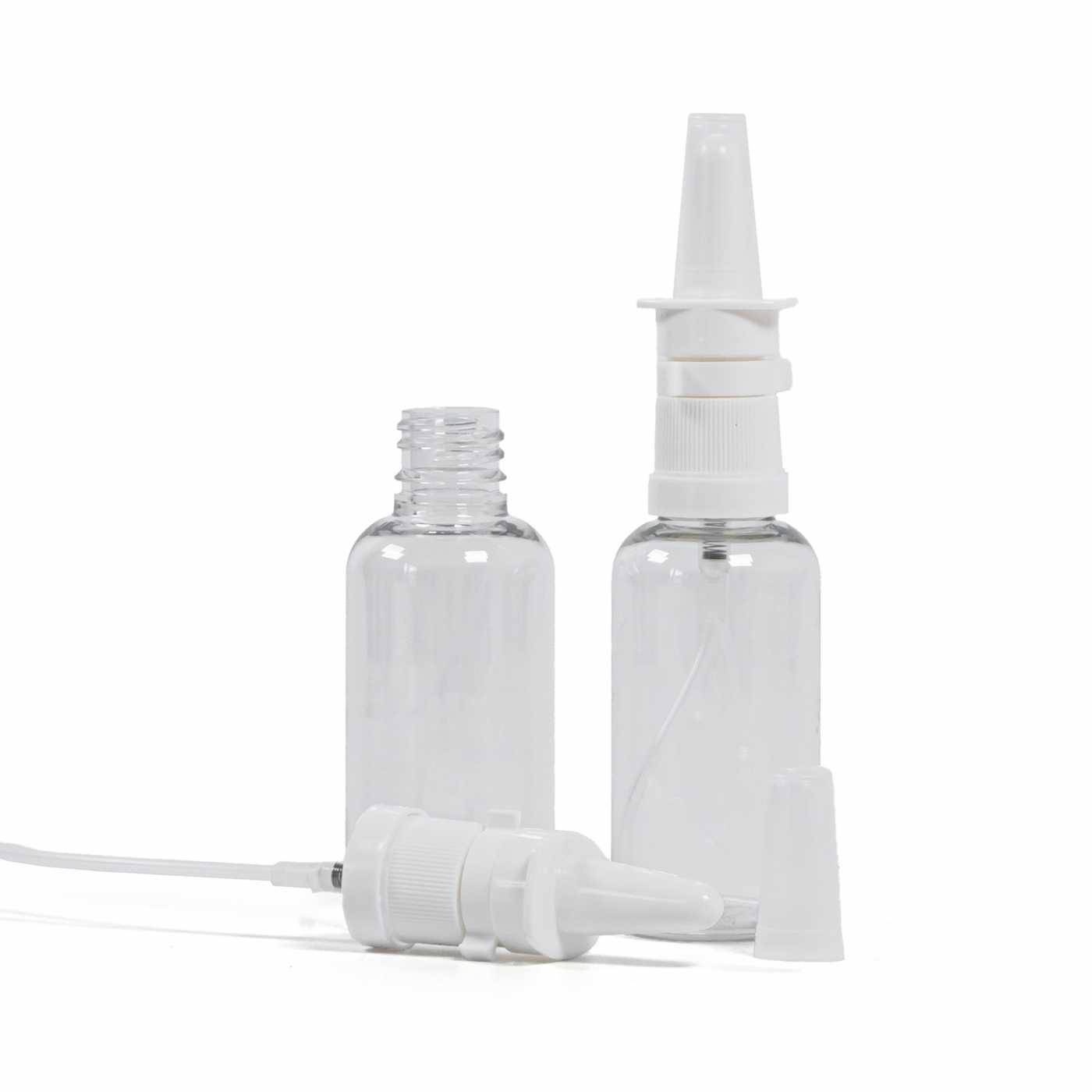
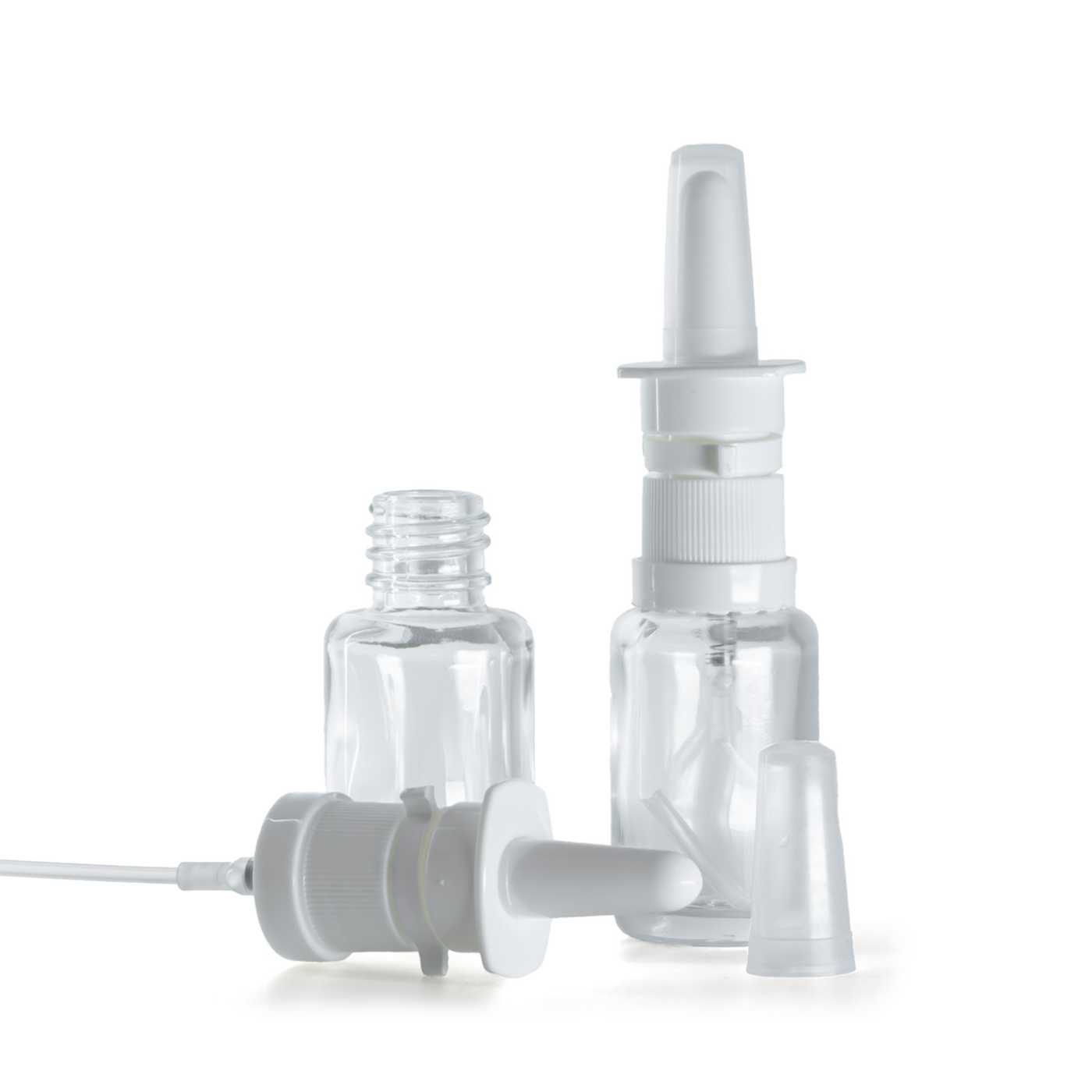
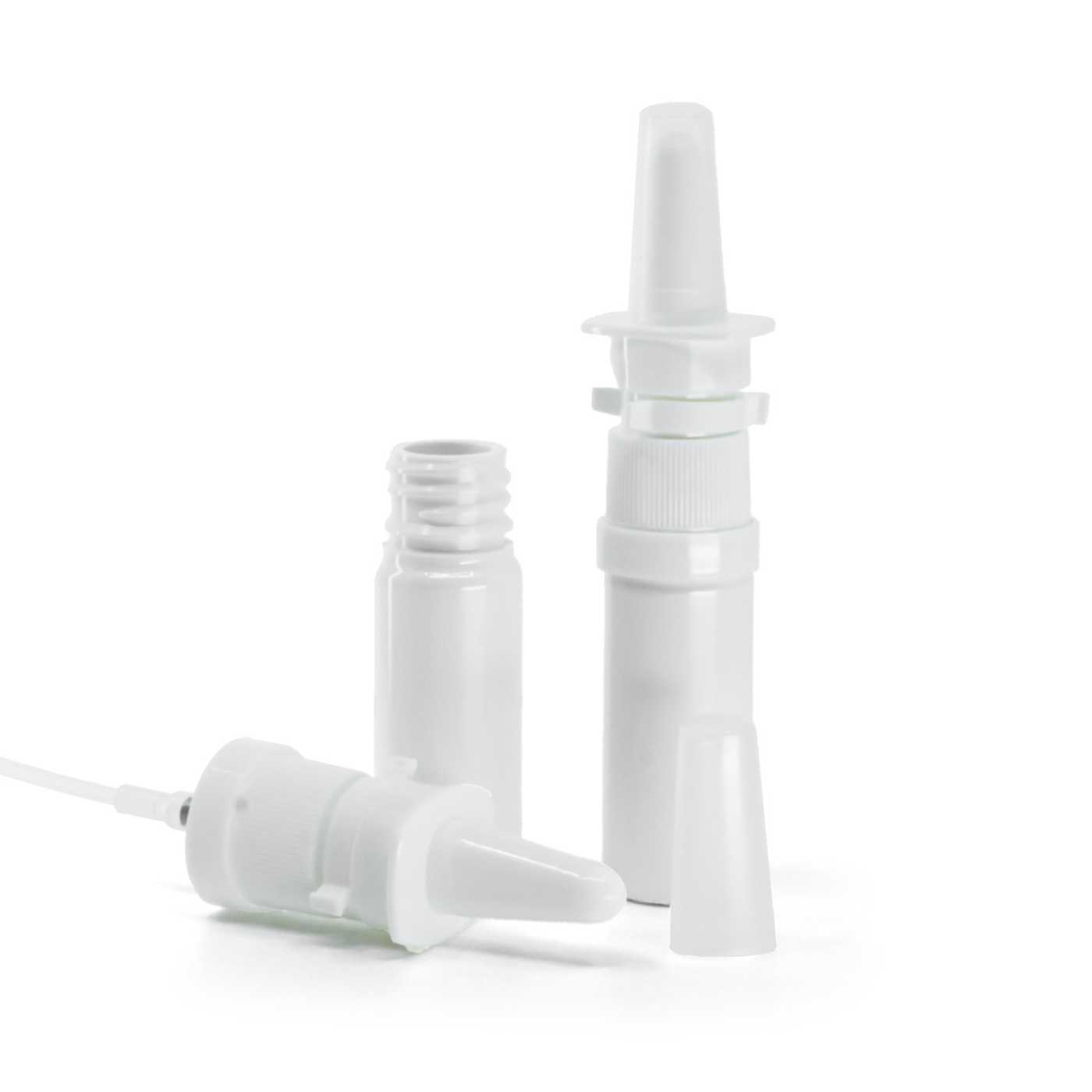
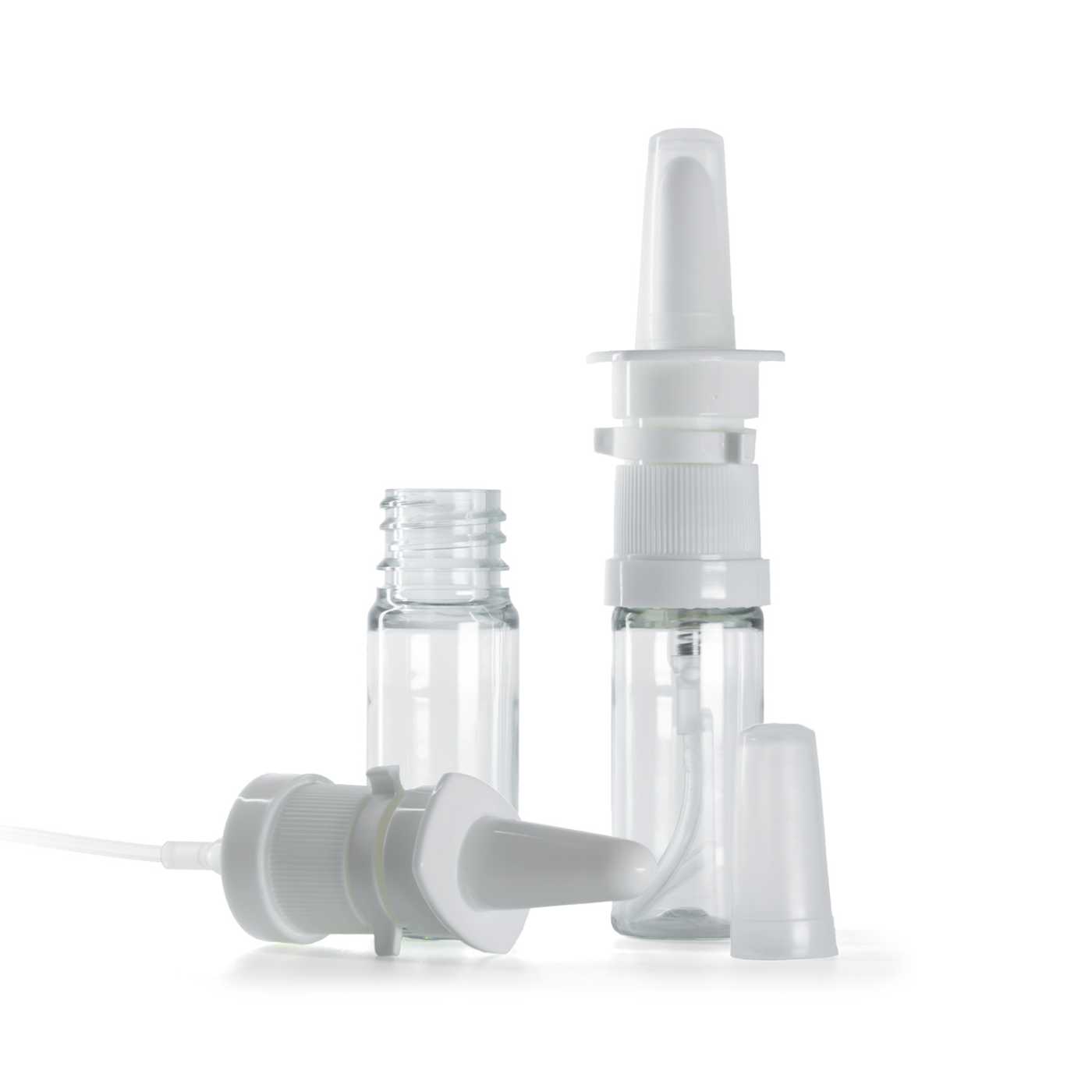
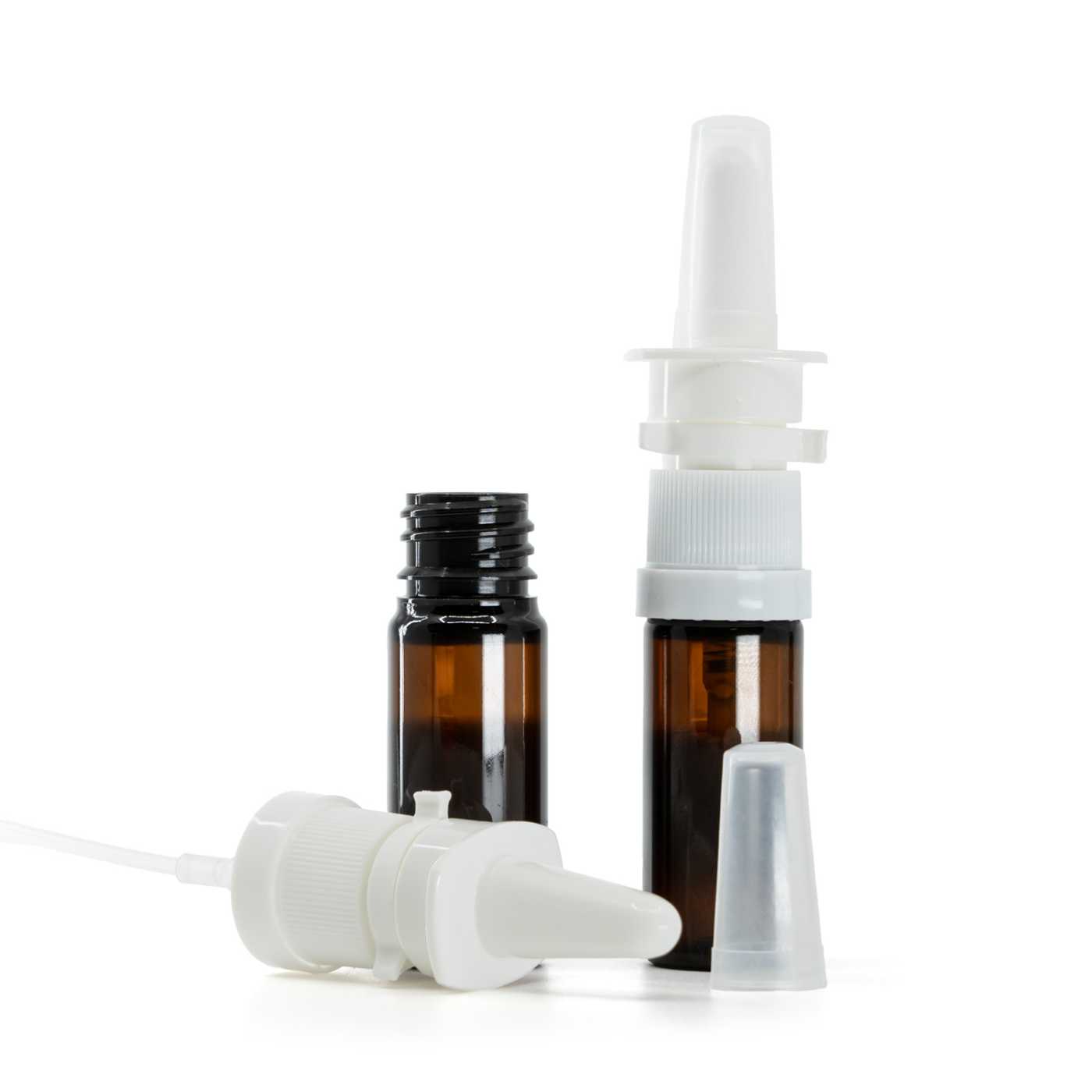
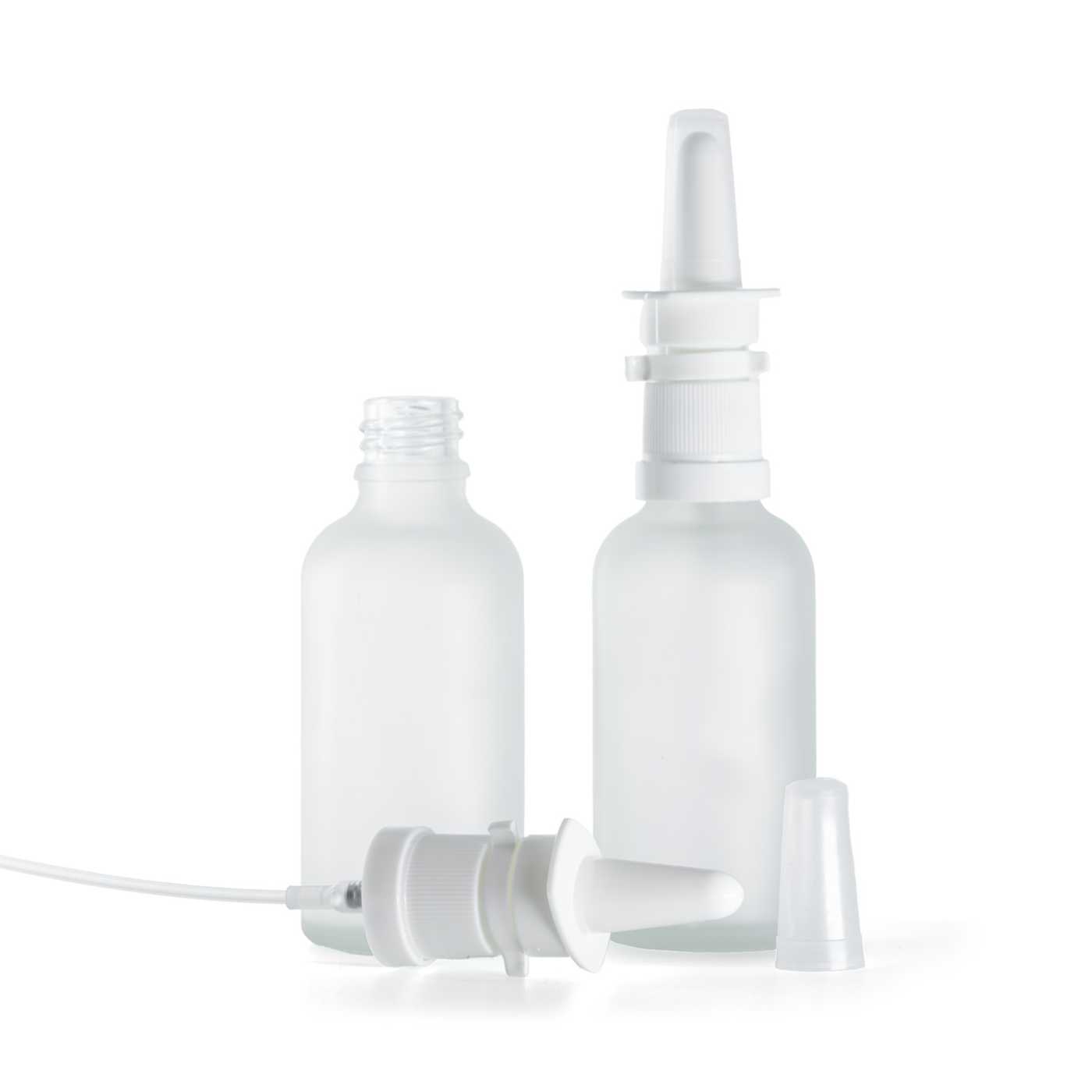
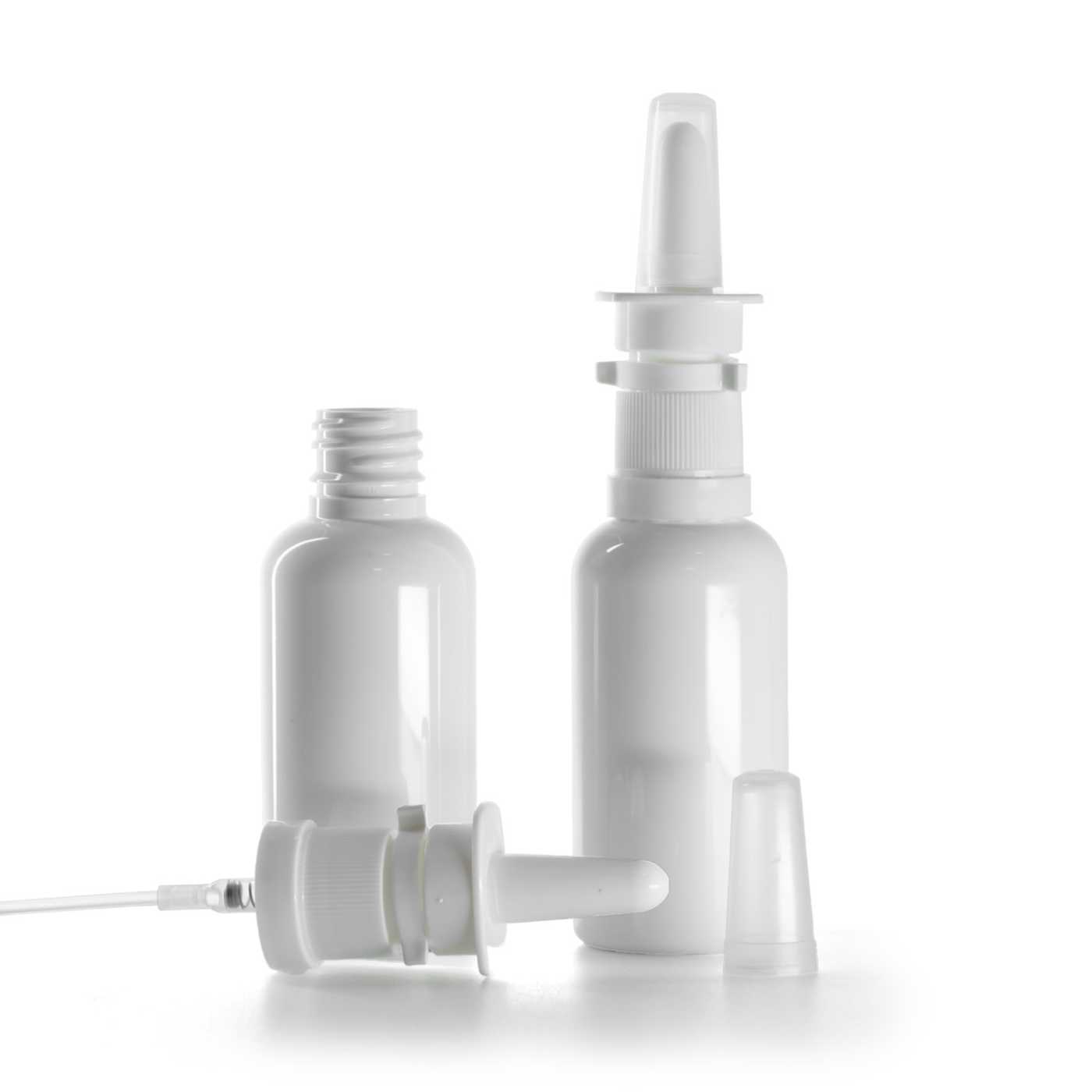
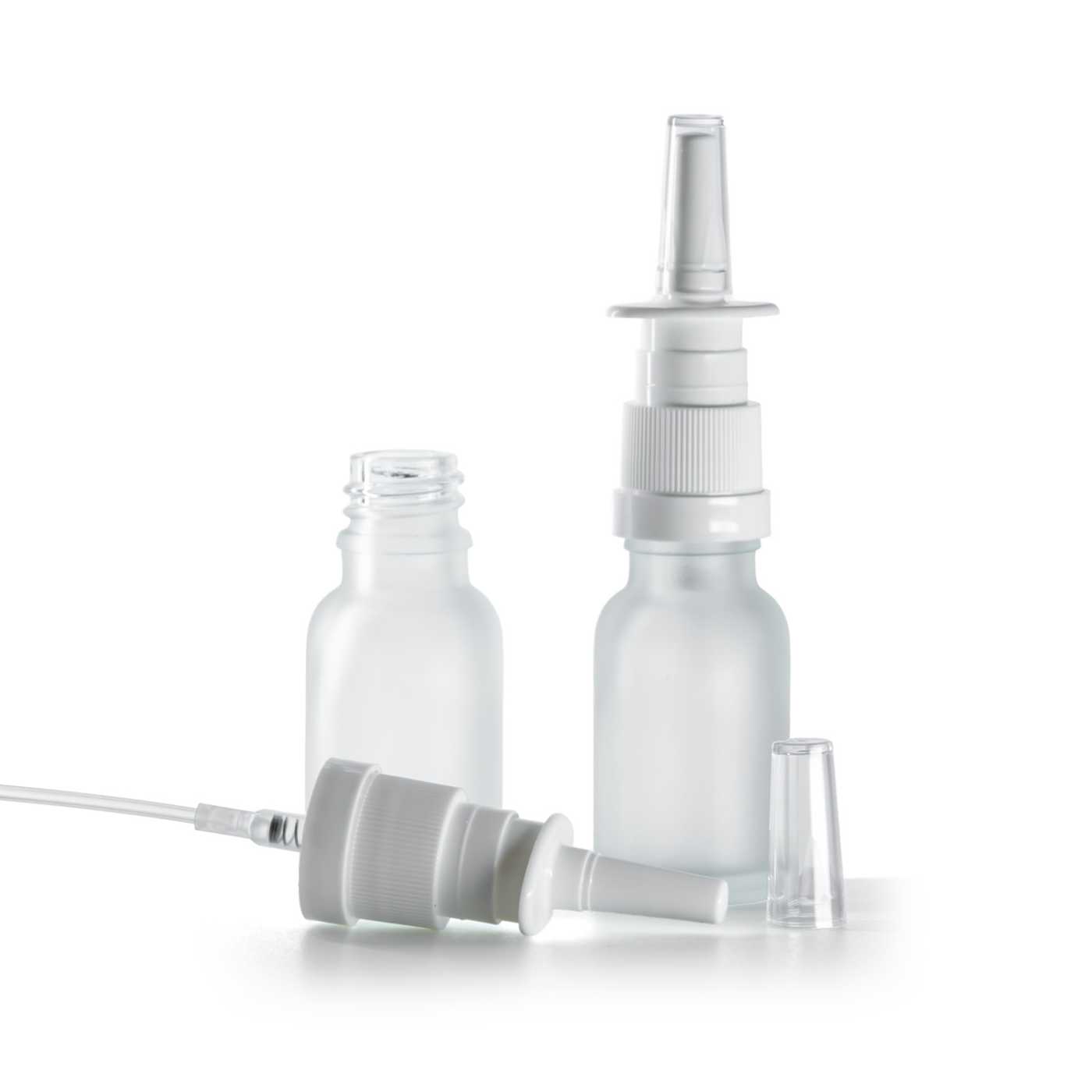
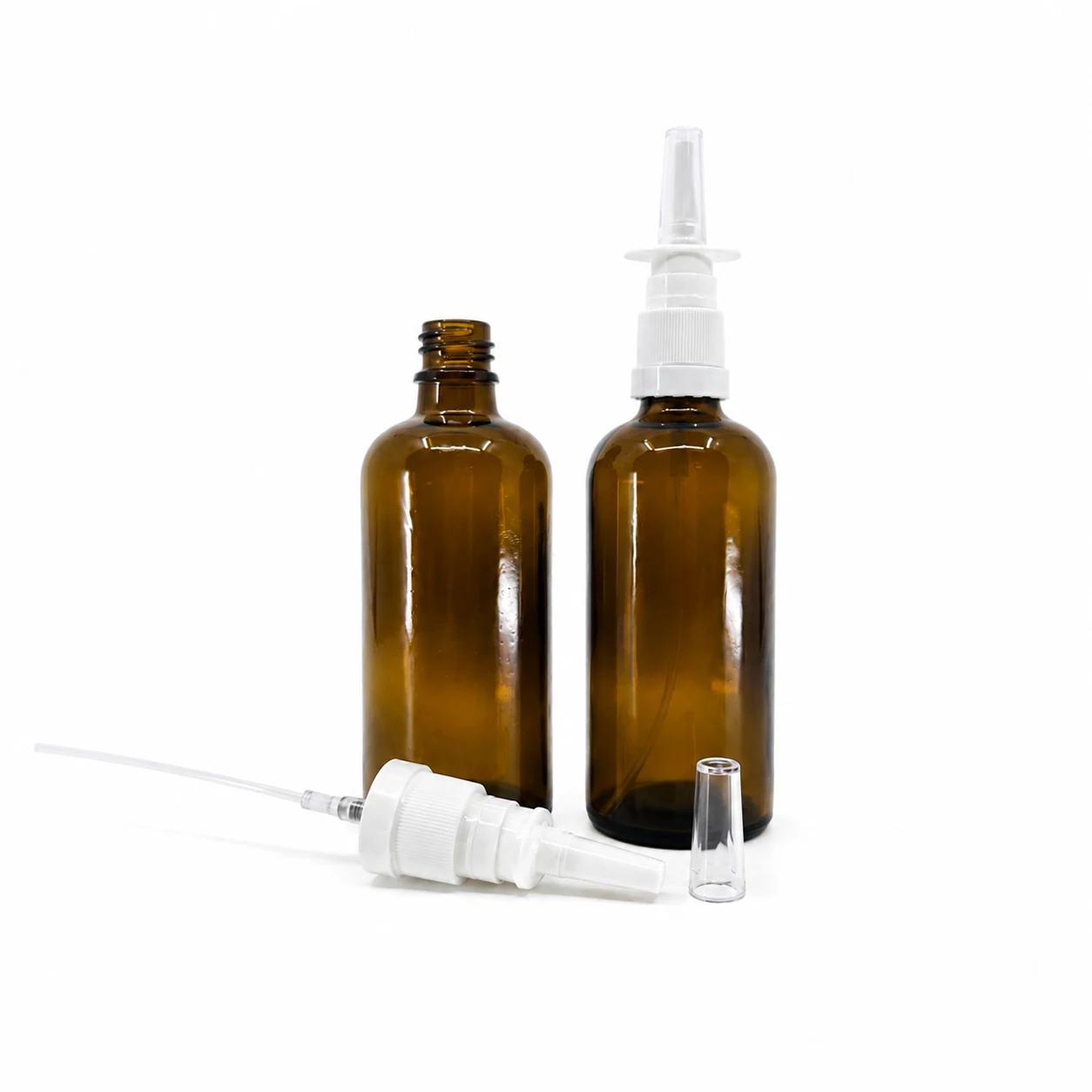
Glass bottle, vial, white, nasal spray 30 ml
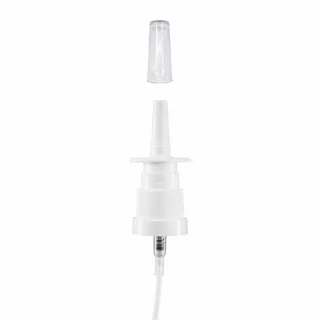
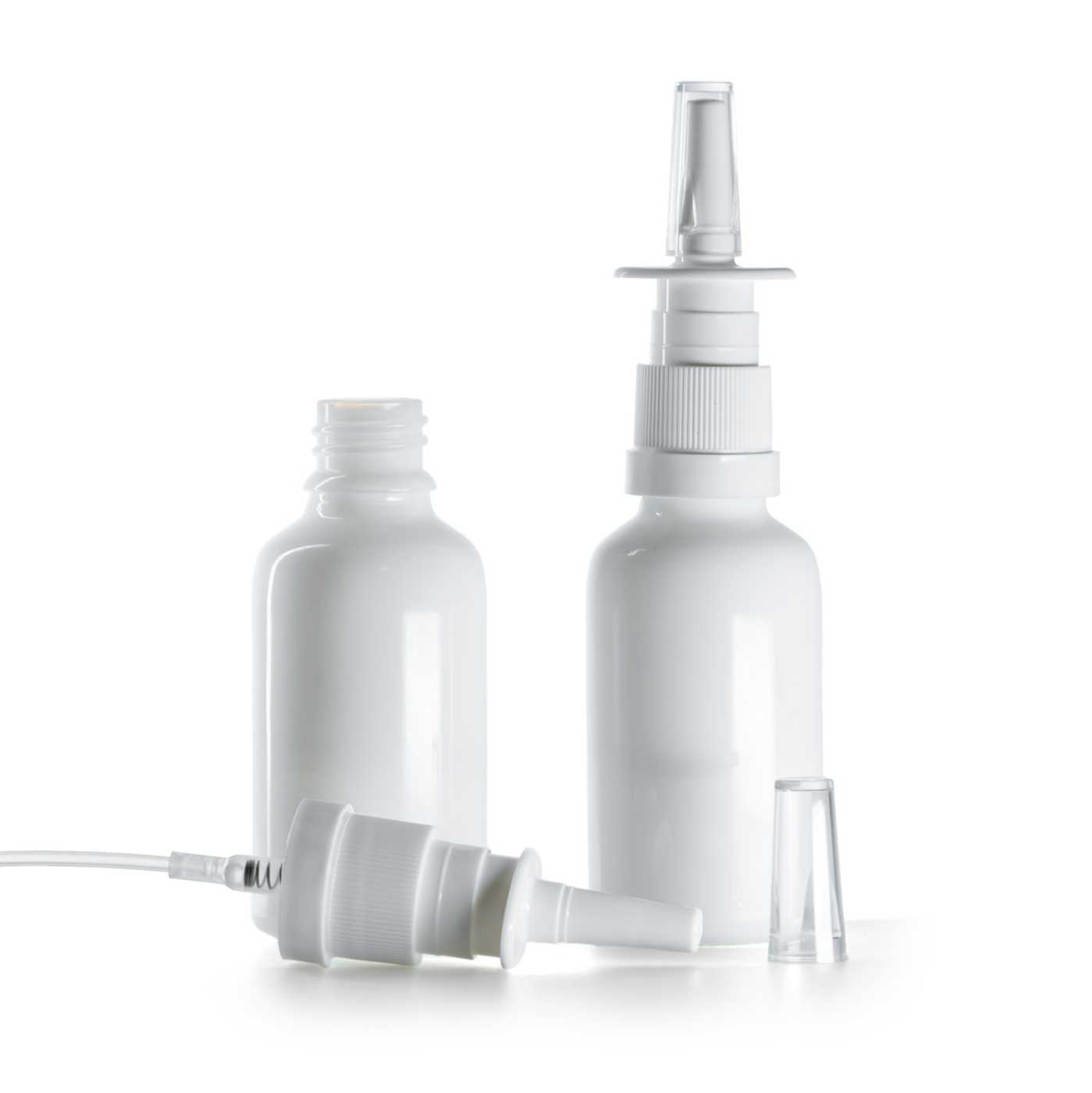
Glass bottle with nasal spray 30 ml is a complete packaging and dispenser set for preparations applied precisely and in small amounts. The white glass vial with a nominal volume of 30 ml has a mechanical dispenser with a long narrow nozzle that releases the same small dose of fine mist with each press. It is suitable for thin aqueous cosmetic preparations – hydrosol mists, tonics, refreshing sprays for the face or scalp, or small travel-size versions of favourite sprays. White glass filters light, making it suitable for formulations with more sensitive ingredients such as hydrosols, aqueous extracts, or infusions.
The bottle and dispenser are declared as suitable for contact with cosmetic products; the declaration of conformity and certificate are available with the product. The set is not approved for contact with foodstuffs and is therefore not intended for homemade syrups or food extracts.
How the set works
- Dosing – the dispenser works as a mechanical pump: the tube draws the contents from the bottle and the narrow nozzle disperses them into a fine mist. One press releases approximately 0.12 ml, allowing even application without overdosing.
- Targeted application – the extended nozzle directs the mist precisely onto a smaller area, for example onto the scalp at the parting or onto small areas of the face where a standard spray would cover unnecessarily wide.
- Protection of contents – white glass filters light, does not react with the contents, and does not absorb odours. The disadvantage of an opaque container is that the remaining contents are not visible; with regular use it helps to weigh the bottle occasionally or note the filling date.
- Secure closure – the dispenser screws onto the neck and the nozzle is covered by a cap after use, which prevents residues from drying in the nozzle and protects it from contamination.
Suitable for products such as
- Hydrosol and toning mists – thin aqueous preparations pass through the nozzle without issues and targeted dosing saves the contents.
- Scalp sprays – aqueous solutions with active ingredients, infusions or tonics for the scalp, where the parting needs to be targeted rather than the entire hair.
- Light aqueous serums in spray form – preparations with low viscosity, for example containing glycerin, panthenol or hyaluronic acid at low concentration.
- Travel and trial sizes – the small volume is suitable for formulation samples, stability testing or travel packaging.
The dispenser is designed for thin contents. Thick serums, gels, emulsions and oils will not disperse through the nozzle and may block the pump. With oily or alcoholic contents, it is advisable to check the behaviour of the plastic parts of the dispenser with the specific formulation.
Nominal and total volume
Nominal volume is the volume the bottle is designed for during standard filling. Total volume to the brim is the physical volume up to the neck. The difference forms a reserve for the tube and the pump body, which submerge into the contents when screwed on, and for the expansion of the contents with temperature changes. Fill to the nominal volume, not to the brim – if overfilled, the contents will spill through the neck when the pump is screwed on.
Good to know
- The tube is longer than the bottle – the dispenser is supplied with a tube designed also for taller containers. Before the first assembly, shorten it so that the end touches the bottom and bends slightly. Make the cut at an angle with a sharp knife or scissors so that the tube does not stick to the bottom and draws the contents to the end.
Shorten the tube gradually and test-fit the dispenser after each cut. A tube that is too short leaves unused residue at the bottom; one that is too long will kink and the pump draws air.
- Preparation before first filling – wash the bottle and dispenser, disinfect with isopropyl alcohol or ethanol and allow to dry completely. Flush the dispenser with a few presses of clean water and then with a disinfectant solution; water residue in the tube would dilute the first doses.
- First priming – after assembly, press the pump several times without product until the tube fills and the mist starts to come out evenly.
- Preservation of contents – aqueous preparations require a preservative just as in any other container. The pump reduces contact of the contents with air more than an open bottle, but it does not replace the preservation system.
- Dispenser materials – the pump combines plastic parts and a steel spring. With strongly acidic or saline contents, verify before extended use that the spring and plastics behave stably; the glass itself is resistant to such contents.
- Reuse – the bottle can be used again after washing and disinfection. Rinse the dispenser with clean water and allow to dry; if the mist weakens over time or the nozzle sprays unevenly, it is clogged and the dispenser needs to be replaced.
- Even a label with a transparent background stands out on white glass.
- Closures – the dispenser fits the neck with the thread type specified in the parameters; further closures with the same neck type and ready-made combinations can be found in the Handymade range. For a custom combination, we recommend verifying the seal and dispensing with the specific formulation.
- Recycling – the glass bottle goes in the glass recycling; the dispenser consists of several materials, so it should be separated from the bottle before disposal.
Glass is sensitive to sudden temperature changes and impacts. Do not fill the bottle with hot contents and allow them to cool before filling; the bottle may break when dropped on a hard surface even at a small volume.
Frequently asked questions
Does a white glass vial protect the contents from light?
Yes, white glass filters light and the contents are not visible from outside, which supports the stability of light-sensitive ingredients. It is therefore more suitable than clear glass for hydrosols, aqueous extracts or preparations containing vitamins. Light protection does not replace a preservative or antioxidant; it only limits one of the degradation factors.
What contents can be dispensed with a nasal spray with a narrow nozzle?
Only thin, watery preparations with a viscosity close to water – hydrosols, tonics, aqueous solutions of active ingredients or light hair sprays. Thick serums, gels, emulsions and oils will not disperse through the nozzle and may clog the pump. If the formulation contains a thickener or a higher proportion of oil, test the dispensing in advance.
Why is the 30 ml bottle filled only to the nominal volume and not to the brim?
The nominal volume accounts for the space needed for the tube and the body of the dispenser, which are submerged in the contents once screwed in, and for the reserve for expansion of the contents with temperature changes. If filled to the brim, the contents will leak through the neck when the dispenser is screwed on and flow into the thread. An overfilled bottle also seals less well.
Is the nasal spray suitable for alcoholic or oily contents?
The glass bottle tolerates alcohol and oil without problems; for the dispenser it depends on the plastic parts and the viscosity of the contents. Thin alcoholic tonics generally pass through the nozzle well; oils do not disperse into a mist and strain the pump. For contents with a higher proportion of alcohol or solvents, we recommend verifying the stability of the dispenser with the specific formulation before extended use.
Does an aqueous preparation in a nasal spray need a preservative?
Yes, every aqueous preparation in this set requires a preservation system regardless of the type of container. The pump reduces contact of the contents with air and fingers more than an open bottle with a cap, but air enters the tube during dispensing and the contents are not sterile. The preservative is chosen according to the pH and composition of the formulation.