
A cosmetic label can be beautiful, minimalist, scientific, green, luxurious and very persuasive. It can promise hydration, radiance, purity, renewal, active ingredients, naturalness, softness and professional care.
But a label is not just a nice design. It is a combination of mandatory information, composition, marketing claims, symbols, icons, certifications and the impression the product is meant to create. And this is exactly where it pays to switch on your common sense.
Not everything expensive is automatically good. Not everything cheap is automatically bad. Not every “star” active ingredient is present in the product in a high amount. And not every green pack means you are holding an ecological or natural cosmetic in your hand.
The good news is that you can learn to read a label. You do not have to know every ingredient by heart. It is enough to know where to find the important information, what to pay attention to and which words should make you a little more alert.
The front sells, the back explains
The front of the pack is designed to catch your eye. Its role is to tell you in a few seconds why the product should interest you. That is why you will often find statements such as:
- With hyaluronic acid.
- With aloe vera.
- With argan oil.
- Dermatologically tested.
- Natural.
- Clean beauty.
- Free from parabens.
- For sensitive skin.
- With active ingredients.
These statements are not necessarily bad. The problem arises when they sound stronger than what is actually supported by the product composition.
The back of the label is less sexy, but often far more useful. There you will find the Ingredients, warnings, shelf life, manufacturer or responsible person, batch number and other details that help you understand the product more realistically than the slogan on the front.
Did you know?
Did you know? The statement “dermatologically tested” is a marketing claim that must be substantiated. However, it does not automatically mean that the product is suitable for everyone.
Every cosmetic product placed on the EU market must be safe under normal or reasonably foreseeable conditions of use and must have a professional safety assessment. This, however, is not the same as the “dermatologically tested” claim.
If a brand uses this claim, it should be able to support it with relevant testing or documentation. At the same time, a dermatologically tested product may still not suit some individuals, especially in cases of sensitive skin, allergies or intolerance to specific ingredients.
A label is not just the composition
When you say “read the label”, many people imagine only the list of ingredients. That is very important, but it is not the only piece of information worth tracking. On a cosmetic label, pay particular attention to:
What the product is and what it is for.
Who the manufacturer or responsible person is.
What the nominal content is.
What the minimum durability date or PAO symbol is.
What the warnings for use are.
What the batch number is.
What the composition is in the form of Ingredients.
Whether fragrance allergens are listed, where relevant.
Whether the product uses certifications, icons or marketing claims.
If any of these details are missing or appear unclear, it does not automatically mean a problem, but it is good to be cautious.
INCI does not tell you everything, but it tells you a lot
The list of ingredients is indicated on cosmetics as Ingredients: followed by a list of ingredients according to the INCI system, the common ingredient nomenclature used for the labelling of cosmetic products.
INCI does not show the exact percentage of all ingredients. It shows their order according to their proportion in the product at the time of addition to the formulation.
The first ingredients usually make up the largest part of the product. Ingredients below 1 % may be listed in any order after the ingredients above 1 %. This means that INCI is a good rough map, but not a precise percentage calculator.
In practice:
- The first ingredients often indicate what the base of the product is.
- An ingredient at the end of the list may be present at a low concentration.
- A low concentration does not automatically mean that the ingredient is useless.
- Some active, preservative, fragrance or technological ingredients work even in small amounts.
- Read INCI as context, not as a complete recipe.
You do not know exactly how much active ingredient is in the product
This is one of the most important points when reading cosmetics.
If the packaging states “with hyaluronic acid”, “with niacinamide”, “with aloe vera” or “with argan oil”, this does not automatically mean that there is a high amount of this ingredient. It means that the ingredient is present in the product and the manufacturer considers it important for the communication of the product.
Without the percentage being stated, however, you do not know exactly how much is actually in the product. A star ingredient may represent a significant part of the formulation, but it may also be used in a smaller amount as a supporting, sensorial or marketing-friendly ingredient.
At the same time, you should not read INCI too simplistically. Not every active ingredient has to be present in a product at a high level to make sense. Some substances are used specifically at low concentrations because they work best that way, are recommended at those levels by the raw material supplier or have a pronounced effect even at low dosage.
A good example is hyaluronic acid. In cosmetics it is often used at relatively low concentrations, and yet it can significantly influence hydration, the skin feel and the viscosity of the product.
Simple rule: an ingredient at the end of the INCI list is not automatically useless, but a claim on the front of the pack also does not automatically mean a high concentration.
How to read claims on the front of the pack
Treat claims on the front of the pack as an invitation, not as complete proof of efficacy.
If a product highlights, for example, hyaluronic acid, aloe vera, vitamin E, peptides, ceramides or botanical extracts, also look at the broader context:
- What type of product is it?
- Where does the given ingredient appear in the Ingredients list?
- Does the manufacturer state a percentage or provide a more detailed explanation?
- Does this ingredient make sense in this type of product?
- Does the product come across as a list of trendy substances with no clear logic?
- Is the brand trustworthy and able to communicate professionally?
You do not have to approach every claim suspiciously. It is, however, good not to consider it the entire story of the product.
The front of the pack tells you what the brand wants to emphasise. The composition, directions for use and overall brand communication help you understand whether it makes sense.
Beware of overly simple conclusions
If an ingredient is listed near the end of the Ingredients list, it often means that it is present in a lower amount. However, this does not automatically mean that it is meaningless.
Many active, preservative, antioxidant, fragrance or technologically important ingredients are used at low concentrations. Some can influence stability, scent, texture, pH, viscosity or the overall feel of the product even at low dosage.
INCI is an excellent guide, but it is not a complete formulator’s protocol. That is why it is good to read the label critically, but not in an oversimplified way.
Active ingredients are not automatically a guarantee of a better product
Active ingredients are important, but they do not make a good product on their own. It depends on their concentration, form, stability, pH, compatibility with other ingredients, packaging type and the overall formulation.
In cosmetics it is not enough to simply “add an active ingredient”. It is also crucial whether it is used in a meaningful amount, whether it remains stable during use and whether the formulation can deliver it to where it is meant to act. Skin is not an open gate and an active ingredient does not reach its target site just because it is written on the label.
This is why the whole system of the formula matters: an appropriate aqueous or oil phase, the correct pH, an emulsifier, solvents, humectants, stabilisers, preservation, texture and the packaging type. All these factors can determine whether an active ingredient in a product really works or is just a nice word in marketing communication.
A good product is not just a list of trendy ingredients. A good product is a well thought-out formula in which the ingredients make sense together.
A product with one well-chosen active ingredient in the right form and a well-designed formulation can be better than a product with a long list of modern ingredients on the label, but each only in a symbolic or poorly incorporated amount. You can also look at our range of active ingredients and their descriptions.
Use common sense: price, active ingredients and formulation reality
With cosmetics, it pays to use your common sense.
A high price on its own does not mean that a product is automatically higher quality, more effective or better formulated. Sometimes you are paying for development, quality raw materials, testing and good packaging. At other times a large part of the price is made up by the brand, marketing, distribution, advertising or a sense of luxury created by the packaging.
The opposite extreme also applies. If a very cheap product promises a long list of actives, exotic extracts, vitamins, peptides, acids and oils all at once, it is wise to read the label realistically. This does not automatically mean that the product is bad, but it is possible that several of these ingredients are present only in low or trace amounts.
A good product does not have to be the most expensive one. And a cheap product is not automatically bad. What matters is whether the formulation makes sense, whether the brand communicates proportionately and whether the claims on the pack correspond to what can be read from the composition.
In practice, ask yourself these questions:
- Is the main claim of the product supported by the composition?
- Does the packaging feature too many “star” active ingredients at once?
- Does the product promise a realistic cosmetic effect or an instant miracle?
- Does the price seem reasonable considering the product type, pack size and composition?
- Can the brand explain why specific ingredients are used in the product?
Good cosmetics do not have to shout. It is often enough if they have a well-designed base, a reasonable amount of effective ingredients, a stable formulation and fair communication without big promises that the composition cannot deliver.
Marketing words that should be read with care
Some words on cosmetics sound attractive. The problem is that without context they often do not say enough.
Some are regulated, some have to be substantiated, some are more of a marketing shortcut. Therefore, it is worth asking: What exactly does the brand mean by this? Can it be verified? Does it relate to the composition or only to the impression created by the packaging?
| Word | What it may suggest | What to watch out for | What to verify |
|---|---|---|---|
| Natural | The product may contain natural or naturally derived ingredients. | It does not automatically mean a certified, gentler, safer or more effective product. A natural ingredient can be functional but also irritating. A synthetic ingredient, in turn, can be very well studied and stable. | Is there a certification, methodology or explanation of what the brand considers natural? |
| Bio / organic | The product or part of it may be based on organic ingredients. | The word BIO on its own is not enough. Certified organic cosmetics should clearly state the standard or certification body. | Is something like COSMOS Organic, Ecocert or another relevant certification stated? |
| Clean beauty | The brand wants to communicate a simpler, “cleaner” or more selective composition. | This is a marketing term without a unified legal definition. Each brand can interpret it a bit differently. | Does the brand explain what it includes in this philosophy and what it excludes? |
| Chemical-free | The brand is trying to communicate a more natural or gentler product. | From a scientific perspective this is meaningless. Everything around us, including water, plant oils and skin, is made of chemical substances. | Is the brand replacing expert explanation with fear-mongering? |
| Free from parabens | The product does not use parabens as preservatives. | This does not automatically say anything about the quality of the entire formulation. The product must be preserved appropriately, safely and stably regardless of whether it contains parabens or another preservation system. | Is the product water-based? If so, how is preservation handled? |
| Dermatologically tested | The product was tested under dermatological supervision or was the subject of a tolerance test. | It does not mean the product will be suitable for everyone or that it cannot cause an individual reaction. | Is the brand using this claim as a substitute for clear composition and warnings? |
| Hypoallergenic | The product is formulated to reduce the risk of an allergic reaction. | It does not mean zero allergy risk. Everyone can react individually. | Does it contain fragrance, essential oils or known allergens? |
| For sensitive skin | The product may be designed to be gentler, with sensitive skin in mind. | Sensitive skin is not one universal category. Some people react to fragrance, others to acids, preservatives, plant extracts or a high content of active ingredients. | Is the product fragrance-free? Does it have a simpler composition? Does it contain potentially irritating ingredients? |
| Eco / green / sustainable | The brand wants to communicate a more environmentally friendly approach. | A green packaging colour, a leaf in the logo or the word eco are not enough. Sustainability may relate to the composition, packaging, production, logistics, recyclability or certification. | What exactly is sustainable? The packaging? The raw materials? The production? A certification? |
| Recyclable packaging | The packaging material is technically recyclable. | Technical recyclability does not mean the pack will actually be recycled in every collection system. The material, material combinations, the label, the pump, the closure and local sorting options all matter. | Is the packaging a single material? Can the pump or label be separated? Does the brand state the packaging material? |
| Professional / clinical | The product wants to appear technical or high-performance. | The word clinical or professional on its own says nothing about the concentration of active ingredients or the quality of the formulation. | Are specific actives, percentages, pH, tests or at least a clear explanation of the effect given? |
| With active ingredients | The product contains functional ingredients. | This claim on its own says nothing about the amount, stability, form or efficacy of the active ingredients. | Which active ingredients? In what form? Does their use make sense in this formula? |
| Toxin-free / free from toxins | The brand is trying to create a feeling of safety. | It is often a fear-based claim. Cosmetics on the EU market must be safe for normal use. The word toxin is often used imprecisely in marketing. | Does the brand explain specific substances, or does it only create the impression that other cosmetics are dangerous? |
| Vegan | The product does not contain ingredients of animal origin. | Vegan does not automatically mean natural, ecological, hypoallergenic or gentler. | Is this the brand’s own claim or a certification? How does the brand define a vegan composition? |
| Cruelty-free | The brand communicates that it does not test on animals. | In the EU there are strict rules for testing cosmetics on animals, but certifications such as Leaping Bunny have their own rules and control mechanisms. | Is it a certified label or the brand’s own claim? |
Greenwashing and cleanwashing
Greenwashing
is a situation in which a product appears more ecological, natural or sustainable than it actually is.
Cleanwashing
is a similar phenomenon, but connected to the language of purity, safety and “toxins”. The product presents itself as “clean” and other products as automatically suspicious or harmful.
Examples:
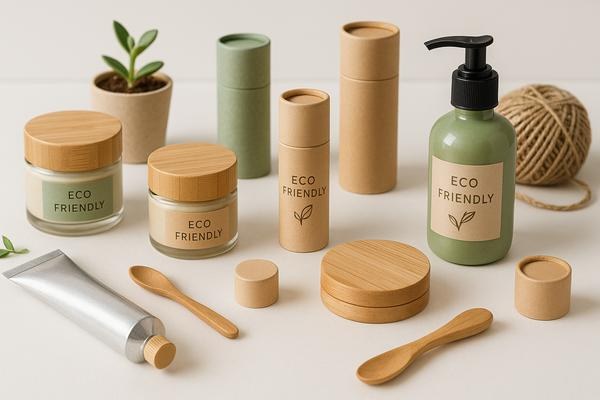
- A green pack does not mean an ecological product.
- The word natural does not mean certified natural cosmetics.
- The claim chemical-free in cosmetics makes no scientific sense.
- Free from parabens does not automatically mean a better composition.
- Recyclable packaging does not mean it will actually be recycled.
- Eco design does not necessarily mean a lower environmental footprint.
- Toxin-free often plays more on fear than on expert explanation.
With fair cosmetics, the gap between marketing and reality should be as small as possible.
Certifications: when a logo really means something
On the pack you may find various marks and symbols. Some are just graphic elements used by the manufacturer, others represent independent certifications.
Among the well-known certification systems in cosmetics are, for example, COSMOS, Ecocert, the EU Ecolabel or Leaping Bunny.
COSMOS
uses designations such as COSMOS Organic and COSMOS Natural for certified cosmetic products.
Ecocert
is one of the well-known certification bodies in the field of natural and organic cosmetics.
EU Ecolabel
is an environmental label of the European Union for products that meet defined environmental criteria.
Leaping Bunny
is a programme focused on the cruelty-free standard and on verifying brands’ commitments in the area of no animal testing.
- Independent certification
The brand or product has been inspected according to the rules of a specific organisation.
- Brand’s own icon
It may be true, but it is not automatically an independent verification.
- Graphic symbol without explanation
It may look trustworthy but may have no real certification value.
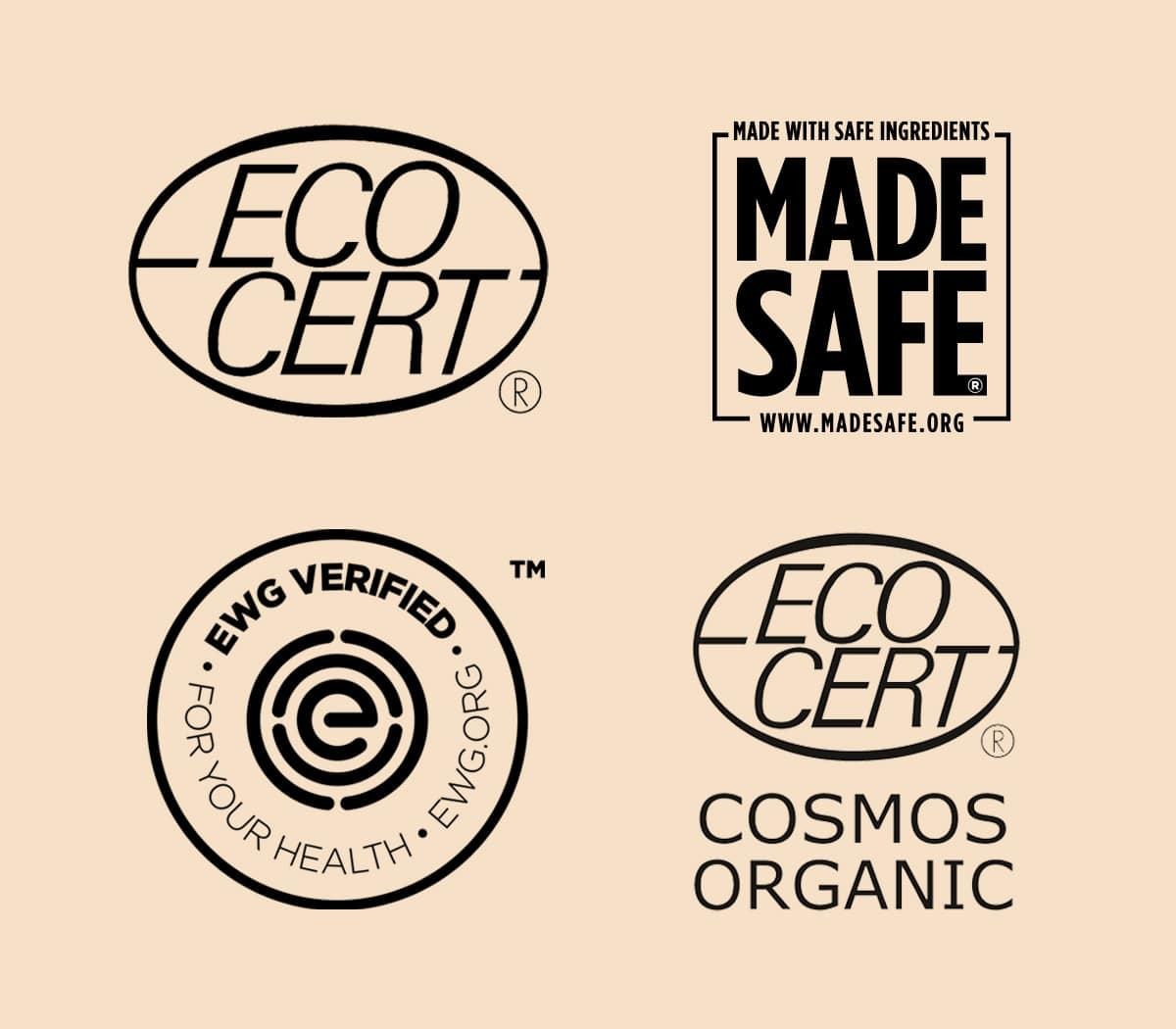
Trust a symbol only after verifying it
On the pack you often find several marks next to each other and at first glance they all look equally credible. The difference lies in who is behind them. Real value is found only in a symbol that refers to an independent certification with clear rules.
If you cannot find the name of an organisation next to a mark, or an explanation of what exactly it verifies, treat it only as a graphic element. A nice symbol in itself guarantees nothing.
If a brand uses its own icons such as “vegan”, “natural”, “eco”, “clean” or “planet friendly”, it should be able to explain what exactly they mean and on what basis they are used.
BIO cosmetics: it is not enough that the pack looks natural
BIO or organic cosmetics should not be just a matter of green packaging, a botanical illustration or a pretty name.
If a product carries a certified designation such as COSMOS Organic, it must meet the rules of the specific certification scheme and pass inspection.
For the consumer, the practical rule is simple:
- If a product claims to be BIO, look for what this is based on.
- If it has a certification, it should be clearly stated.
- If it only has a green design and the word natural, it is not automatically certified BIO cosmetics.
- If a brand uses its own designations, it should be able to explain what they mean.
- A high proportion of ingredients of natural origin is not automatically the same as certified organic cosmetics.
Perfume and allergens: they do not automatically mean a problem, but you need to know how to read them
A fragrance may be listed in the ingredient list as Parfum or Aroma.
The manufacturer can decide whether to list the fragrance composition in general terms or in more detail. Mandatory allergens, however, must be listed separately if they exceed the limits set by legislation.
Allergens do not automatically mean that a product is bad. They mean that it contains substances that may be important for people with sensitivities or allergies.
It is also important to know that allergens can come from natural ingredients. An essential oil may be natural, but it can still contain allergens. Natural origin therefore does not automatically mean zero risk of irritation.
Examples of fragrance allergens you may find in an ingredient list:
Linalool
Limonene
Citral
Geraniol
Citronellol
Coumarin
Eugenol
If you have sensitive skin or known allergies to fragrance ingredients, it is worth watching the fragrance and allergens more closely. Fragrance compositions can contain dozens of different substances, and some of them are regulated allergens that must be listed separately in the Ingredients list at certain concentrations. The mere presence of an allergen, however, does not automatically mean a problem or an unsuitable product. What matters is knowing your own sensitivity and noticing which ingredients your own skin reacts to. Reading labels regularly will, over time, help you recognise the recurring substances that suit you or, on the contrary, cause irritation. This allows you to make more informed decisions and choose products that better match the needs of your skin.
Colourants and CI numbers
Colourants are not listed in the ingredient list as “pink colourant”, “blue colour” or “red pigment”. At the same time, they do not use a standard INCI name in the style of botanical or functional ingredients.
Cosmetic colourants are identified by a CI number, i.e. a Colour Index number. It is the CI number that serves as the standardised designation of a colourant in the Ingredients list.
| Colourant | Designation in Ingredients |
|---|---|
| Mica | CI 77019 |
| Titanium Dioxide | CI 77891 |
| Red Iron Oxide | CI 77491 |
| Yellow Iron Oxide | CI 77492 |
| Black Iron Oxide | CI 77499 |
| Ultramarine Blue | CI 77007 |
| Chromium Oxide Green | CI 77288 |
| Manganese Violet | CI 77742 |
With mica shades, it is often not only CI 77019 that is listed, because a specific shade may also contain other pigments, for example CI 77891, CI 77491, CI 77492 or CI 77499. That is why you should always go by the technical documentation of the specific colourant.
For decorative cosmetics that exist in several shades, the designation may contain or +/- may also be used, provided it corresponds to the specific product and its composition.
The PAO symbol and the durability date
On the label, it is also worth checking the durability information.
The minimum durability date is used for products with a minimum durability of 30 months or less.
For products with a longer durability, the PAO symbol is usually used instead — the open-jar symbol stating how long the product can be used after opening. You may see, for example:
6M
6 months after opening
12M
12 months after opening
24M
24 months after opening
This means 6, 12 or 24 months after opening.
Caution: PAO is not an invitation to use a product forever. If the smell, colour or consistency changes, or the product becomes contaminated, it is better not to use it, even if the PAO has not yet formally expired.
Nominal content: what 50 ml or 100 g means
The nominal content tells you how much product is in the pack at the time of packaging. It is most often given in millilitres or grams. Examples:
30 ml
50 ml
100 g
250 ml
For the consumer, it is important to know that the nominal content is not the “size of the pack” or the impression of how full the bottle looks.
Some packs may appear larger than the actual amount of product inside. That is why it pays to look at the number, not just at the shape or size of the packaging.
Why it is a good idea to choose known and verified brands
With cosmetics, it is wise to choose brands that are traceable, communicate clearly and have earned a certain degree of trust.
This does not have to mean only large international brands. A known and verified brand can also be a local manufacturer with a transparent composition, clear contact details, good communication and a responsible approach to production.
A verified brand should be able to answer the basic questions:
- Who manufactures the product or places it on the market?
- What is its composition?
- What is the product intended for?
- How is it used?
- Is the product labelled correctly?
- Are the claims on the packaging proportionate?
- Can the brand explain why it used specific ingredients?
Why local cosmetics can be a very good choice
Local brands often have closer contact with their customers and can communicate in more concrete terms.
They do not have to carry the same corporate costs as large global brands, such as big advertising campaigns, multi-level distribution networks, internationally scaled packaging or massive marketing budgets.
This can mean that a smaller brand can put a decent amount of quality ingredients, or more functional actives, into a single product without having to hide a large part of the price in corporate overheads.
Of course, this does not automatically apply to every local brand. Here too you need to read the label, watch the composition and notice how the brand communicates.
Buying locally also has a broader meaning. It supports the domestic market, the business environment, craftsmanship, smaller brands and the people who often stand behind the product personally.
With a good local brand, you are not just buying a cream, serum or soap. You are also supporting a more transparent relationship between manufacturer and customer.

How to recognise a fair brand
A fair brand does not have to shout the loudest. Instead, it communicates clearly, professionally and without unnecessary scaremongering.
A fair brand:
- Does not exaggerate effects.
- Does not use fear as its main selling argument.
- Does not claim that cosmetics cure diseases.
- Can explain its composition.
- Does not misuse the words natural, clean, eco or toxin-free without context.
- States a traceable manufacturer or responsible person.
- Does not hide behind empty claims.
- Does not pretend that one trendy ingredient makes up the whole product.
- Can say what the product does, but also what it does not do.
How to read a label in 30 seconds
When shopping, you do not have to run a laboratory analysis. A quick scan is enough.
- Look at what the product is and what it is for. Is it a serum, cream, shampoo, scrub or oil?
- Check the first 5 ingredients in the INCI. These usually tell you the most about the base of the product.
- Find the star ingredient from the front of the pack. Is it at the beginning, in the middle or at the end? Take this as a rough guide, not as definitive proof of efficacy.
- Look for Parfum or Aroma. With sensitive skin, it is good to know whether the product is fragranced.
- Watch the allergens. Especially if you know you react to certain fragrance ingredients.
- Check the PAO or the durability date. The 12M symbol means the product should be used up within 12 months of opening.
- Look at the warnings. These are particularly important for exfoliating, fragranced or active products.
- Verify who is responsible for the product. A transparent brand does not hide.
What to remember
The label is not your enemy. It is a map of the product. It may not tell you absolutely everything, but it can reveal a lot.
The INCI will not give you the exact percentages of all the active ingredients, but it will show you which ingredients form the base of the product. Claims will not tell you the whole truth, but you can compare them with the composition. Certifications help you judge whether something is an independently verified standard or just a pretty icon. The manufacturer’s contact details tell you whether a traceable brand stands behind the product.
The goal is not to fear every ingredient. The goal is not to be misled by every pretty word.
Good cosmetics do not need the loudest marketing. It is often enough if they have a meaningful composition, clear directions for use, proportionate claims and a label that does not lead the customer up the garden path.
Frequently asked questions: How to read a cosmetic label
The most common practical questions about reading a cosmetic label — from INCI through fragrance and allergens to PAO and marketing claims.
What is the most important thing to check on a cosmetic label?
The most important things to check are what the product is, who is responsible for it, what its composition is, how it is used, what its durability is and whether it contains fragrance or allergens that may be relevant for you.
Can you tell the exact percentage of active ingredients from the INCI list?
No. The INCI shows the order of ingredients by their proportion, but it does not state the exact percentages of all substances. For ingredients below 1 % the order can be looser, so the INCI should be read as a rough guide, not as a precise recipe.
Does an ingredient at the end of the INCI mean it is useless?
Not always. An ingredient at the end of the list is often present at a low concentration, but that does not mean it is automatically meaningless. Some active, preservative, antioxidant or technological substances work precisely in small amounts.
Are natural cosmetics automatically better?
Not automatically. Natural origin can be an advantage, but on its own it does not say everything about efficacy, stability, safety or suitability for a particular skin type. What matters is the formulation as a whole.
What does Parfum mean in the composition?
Parfum stands for a fragrance composition. It can be a synthetic, natural or combined fragrance, depending on the composition. If it contains regulated fragrance allergens above the set limits, these must be listed separately in the ingredient list.
Are allergens in cosmetics a problem?
Not automatically. Allergens are important information mainly for people with a sensitivity or a known allergy. They can also come from natural essential oils or plant extracts.
What does the PAO symbol 12M mean?
The PAO symbol 12M means that the product is recommended to be used up within 12 months of opening. However, if the smell, colour or consistency changes, or the product becomes contaminated, do not use it even before this period has expired.
How do I recognise greenwashing in cosmetics?
Be alert with general words such as eco, natural, clean, toxin-free or sustainable if the brand does not explain what exactly it means by them. Fair claims should be specific, verifiable and proportionate.
Is it better to buy cosmetics from local brands?
Local cosmetics can be a very good choice if the brand is transparent, responsible and able to explain its composition. Buying locally also supports the domestic market and smaller businesses. It still holds, though, that you need to read the label and pay attention to the actual composition.
What is the simplest way to read a label quickly?
Look at the product type, the first few ingredients in the INCI, the fragrance, allergens, durability, warnings and the responsible person. Then compare the main marketing claims with what you actually see in the composition.
Once you can read a label, you also know what makes sense to put into your own formulation. Take a look at our active ingredients and their descriptions — with the exact composition, dosage and an explanation of what they are for.