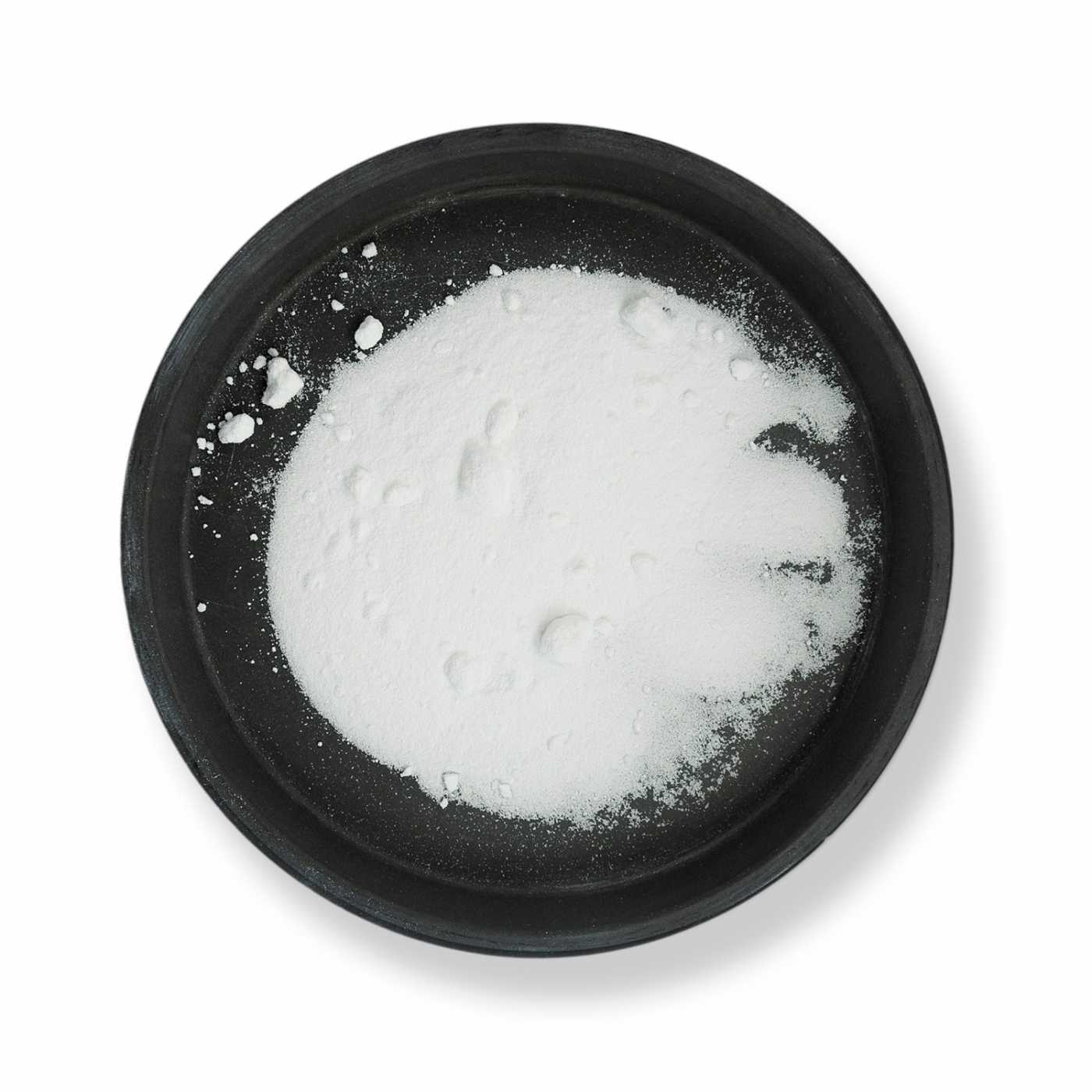
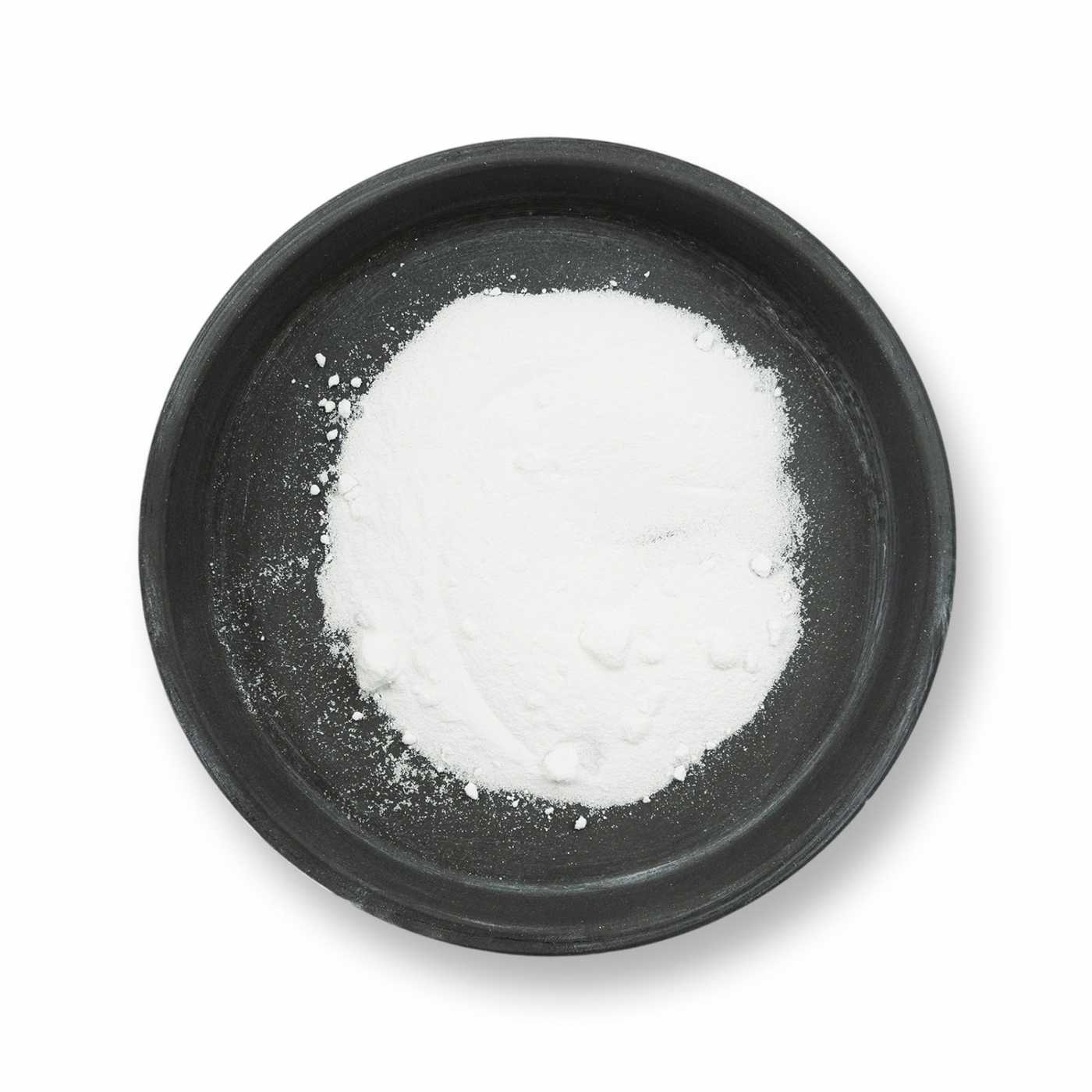
Natrosol 250 HHR PC is
hydroxyethylcellulose – a non-ionic, water-soluble cellulose derivative intended for adjusting the rheology of cosmetic formulations. It is produced by chemical modification of plant cellulose: the cellulose is first activated in an alkaline medium and subsequently reacts with ethylene oxide, forming a partially substituted cellulose ether with hydroxyethyl groups. This modification improves water solubility and makes it possible to create clear to transparent gel systems with a pleasant slip.
The abbreviation
HEC stands for
Hydroxyethylcellulose, i.e. hydroxyethylcellulose. The designation
HHR for Natrosol 250 denotes a very high-viscosity grade with delayed hydration:
HH indicates very high viscosity and
R indicates a surface-treated type with slower onset of hydration, which allows the powder to disperse more easily in water without forming lumps. The abbreviation
PC means
Personal Care, i.e. a quality grade intended for personal care and cosmetic applications.
It is a
thickener, stabilizer, film-forming agent and viscosity modifier, particularly suitable for aqueous gels, serums, cleansing products, shampoos, conditioners and emulsion systems, where it helps to create a smooth, uniform and easily processable texture.
Key benefits
- Effective thickening of the aqueous phase – increases the viscosity of aqueous solutions and helps to form stable gels.
- Non-ionic character – is well compatible with many cationic, anionic and non-ionic cosmetic ingredients.
- Good tolerance to electrolytes – also suitable for formulations that contain salts, surfactants or active substances in the aqueous phase.
- Clear to transparent solutions – with proper hydration it enables the preparation of visually clear gels and serums.
- Pseudoplastic behavior – during mixing or spreading the formulation spreads more easily, and after resting it again retains a thicker consistency.
- Film-forming effect – can leave a fine protective film on the skin and hair without a pronounced greasy feel.
- Improved formulation stability – helps to limit particle sedimentation and supports a uniform texture of the finished product.
- Suitable for cold and hot process – soluble in both cold and hot water, with the R type facilitating dispersion without immediate clumping.
Suitable for products such as
- face gels and moisturizing gel serums,
- water-based serums with humectants, extracts and active substances,
- shower gels, cleansing gels and foaming preparations,
- shampoos and mild hair cleansing products,
- conditioners and hair gels,
- emulsion creams and lotions to support viscosity and stability,
- shaving gels and foams, where slip and a more stable foam are desired,
- masks, peeling gels and suspension systems with fine insoluble particles.
Use in formulation
- The recommended dosage in cosmetic formulations is usually approximately 0,2–2,0 %, depending on the desired viscosity, product type and content of electrolytes or surfactants.
- For light serums and fluid gels a lower dosage is often used, while higher amounts may be necessary for thicker gels or stabilization systems.
- It is soluble in both cold and hot water. The best processing method is to sprinkle the powder evenly into the intensely stirred aqueous phase and allow it to hydrate fully.
- The R type has delayed hydration, so it is first well dispersed and only then gradually increases the viscosity. This helps to limit lump formation.
- It is miscible with common humectants such as glycerin, propanediol or sorbitol; pre-dispersing the powder in glycerin can facilitate its incorporation into the aqueous phase.
- It is compatible with many surfactant systems used in shampoos, shower gels and cleansing products.
- It is compatible with a wide pH range of common cosmetic formulations, most often approximately in the range of pH 4–8.
- In emulsions it is usually added to the aqueous phase as an auxiliary thickener and stabilizer, not as the primary emulsifier.
- After incorporation it is advisable to allow the formulation time for complete hydration and viscosity equilibration; the final thickness may only manifest after a certain time.
- For formulations with higher content of salts, acids, cationic conditioning agents or a high content of active ingredients it is recommended to verify stability in a small pilot batch.
Safety and storage
- When working with the powdered raw material it is recommended to avoid excessive dust formation and not to inhale dust particles.
- Use clean utensils and observe standard hygiene rules when manufacturing cosmetics.
- The finished formulation containing water must be appropriately preserved according to the overall composition of the formula.
- Store in a dry place, well closed, away from direct sunlight and sources of moisture.
- After opening always close the packaging carefully so that the raw material does not absorb moisture and its flowability is not impaired.
FAQ
Is Natrosol 250 HHR PC also suitable for nature-oriented cosmetics?
Yes, it may be suitable for nature-oriented formulations because it is derived from plant cellulose. At the same time, it is a chemically modified cellulose derivative, therefore its suitability for a specific certification depends on the rules of the given certification scheme.
Why does the viscosity not increase immediately after adding it to water?
With grades that have delayed hydration, gradual thickening is intentional. The powder is first dispersed in the water and only then begins to hydrate, which facilitates processing and reduces the risk of lump formation.
Can hydroxyethylcellulose replace an emulsifier?
No, hydroxyethylcellulose is not a full-value emulsifier. In emulsions it helps to improve the viscosity and stability of the aqueous phase, but the connection of the oil and water phases must be ensured by a suitable emulsifying system.
Is it also suitable for products containing alcohol?
At low to medium alcohol content it may be usable, but a higher proportion of alcohol can reduce hydration and affect the final viscosity. For alcohol-based formulations it is advisable to carry out a small stability test.
Why can the finished gel become thicker over time than during manufacture?
Hydration of the polymer may continue even after mixing has stopped. Therefore, the viscosity often only stabilizes after the formulation has stood for some time, and final evaluation of the texture is appropriate after the system has fully equilibrated.
Is Natrosol 250 HHR PC suitable for hair care cosmetics?
Yes, it is suitable for shampoos, hair gels, conditioners and styling products. It helps to adjust the consistency, support even application and can contribute to a gentle film-forming effect on the hair.
Also see other
thickeners and stabilizers offered by Handymade.sk.